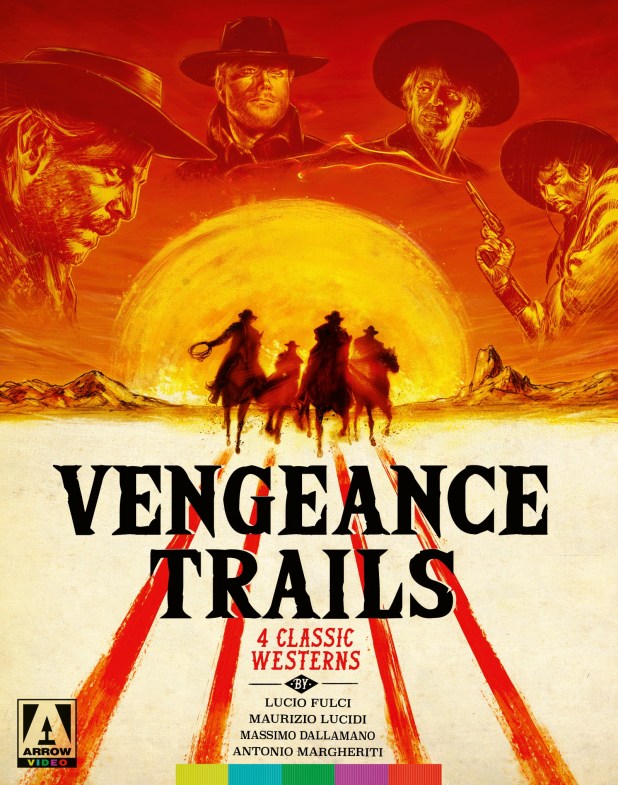
Arrow Video’s Vengeance Trails

Italian westerns are an amazing genre because somehow, they take the west out of the west, transporting it to Cinecittà studios and various dusty settings around southern Italy and Spain. They were made by directors who often had never been to the actual west themselves, but were able to see either the archetypes within their stories or the dollar signs at the box office.

These are grimy, rough, dirty and bloody films that begin the decline of heroism and moral certainty in Italian genre cinema. Starting in the peplum, we have heroes like Maciste and Hercules who may have foibles, yet are men of courage and conviction. The next Italian exploitation trend is the Eurospy fim, knockoffs of the higher budget Bond films, in which everyone has a license to kiss kiss bang bang. The Italian western comes next, following the lead of Leone, Ringo and Django. Then there’s the giallo, in which hero, villain, gender and motive are as fluid as the gels that pour neon hues into the color palettes of these affairs. By the time we arrive at the poliziotteschi — a time in whch the heroes are as uncompromisingly sinister as the villains they are hunting — not to mention the cannibal, zombie and Filmirage time of Italian low budget gutchurning horror — morality is pretty much dead.

Where John Wayne, Tom Mix, Roy Rogers, Lash LaRue and so many other Hollywood cowboys made the west into a land of legend, Italian westerns tend to make once upon a time in the west — pardon the pun — into anything but myth.

Between 1964 and 1978, hundreds of these movies were made. In the Italian film industry, the easiest way to being successful is not doing something new. It’s often found in recreating a film or formula that has already been successful. You’d think that this thinking would lead to rote and boring films. And sure, there are some of those. Yet by and large, all of the Italian genres I mentioned above have led to incredible movies made on middling at best budgets.

Italian westerns are packed with betrayal, revenge, ritualistic disfiguring of the hero — often choosing his hands, the very tools he needs to be deadly in the gun-heavy world he lives in — and even ties to the films of the East, as Leone’s A Fistful of Dollars is the same story as Yojimbo, transported to the other side of the Earth.

So how do you pick four movies to sum up Italian westerns? if you’re Arrow Video, you pick four movies that all have revenge in common:

Antonio Margheriti’s And God Said to Cain stars Klaus Kinski as a man whose ten years of prison time comes to a close, only to be succeeded by a stormy and near-supernatural night of violent retaliation against anyone and everyone who ever done him wrong.

Lucio Fulci’s Massacre Time stars Franco Nero and George Hilton as the Corbett brothers, estranged at the start of the story but who must join forces to stop the powerful businessman and his sadistic son who’ve ruined their hometown.

Maurizio Lucidi’s My Name is Pecos is an anomaly in the genre, as a Mexican gunfighter comes back to Houston to kill the racist man who slaughtered his family.

Massimo Dallamano’s Bandidos is about a sharpshooter whose hands are ruined by a student; years later he finds another man wronged by the same criminal and joins him on the path of revenge.
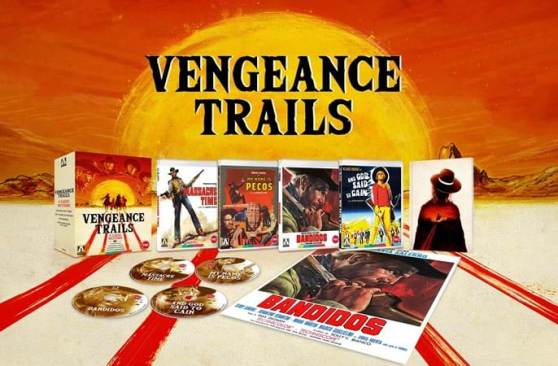
This four-disk limited edition set features 2K restorations of all four films from the original 35mm camera negatives, along with an illustrated collector’s booklet featuring new writing by author and critic Howard Hughes and double-sided poster featuring newly commissioned artwork by Gilles Vranckx. Each of the movies features the extras that you’ve come to demand from Arrow, such as commentary tracks, interviews with the cast and crew, trailers, alternate endings and dubbed and original cuts of each movie.

You can order Vengeance Trails from MVD. It has our highest recommendation whether you’re new to the Italian side of the western film or want to own better quality copies of movies you’ve loved multiple times.

All four movies are also available on the ARROW player. Head over to ARROW to start your 30 day free trial (subscriptions are available for $4.99 monthly or $49.99 yearly). ARROW is available in the US, Canada and the UK on the following Apps/devices: Roku (all Roku sticks, boxes, devices, etc), Apple TV & iOS devices, Android TV and mobile devices, Fire TV (all Amazon Fire TV Sticks, boxes, etc), and on all web browsers at https://www.arrow-player.com.
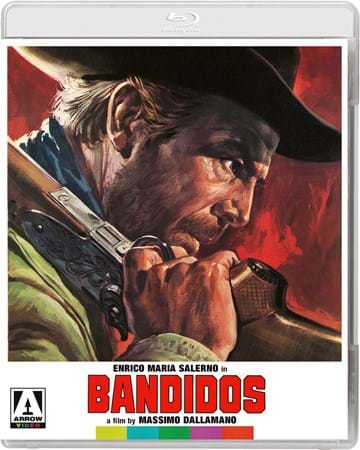
Vengeance Trails: Bandidos (1967)

Richard Martin (Enrico Maria Salerno, who is Jesus in Pasolini’s The Gospel According to St. Matthew and the inspector in The Bird with the Crystal Plumage, but perhaps just as importantly the Italian voice for Clint Eastwood in Leone’s movies) is a master of shooting guns whose hands are ruined when he ends up on a train that’s robbed by his former student Billy Kane (Venantino Venantini, City of the Living Dead).

Now, Martin is left to only be a drunken huckster, taking is traveling carnival to dusty small towns in the hopes of just surviving. He was once a sharpshooter but his mangled hands mean that he can only train others and now that his latest student has been killed, he doesn’t have much hope left. That’s when he meets Ricky Shot (Terry Jenkins, who was only in one other movie, the doomed western musical Paint Your Wagon), the man who was framed for the train robbery. Together, they both have plans for revenge.

Massimo Dallamano is a director that I love that doesn’t get the praise that other Italian genre directors receive. Starting as the cinematographer on Leone’s A Fistful of Dollars and For a Few Dollars More, his films are all standouts in their subgenres, like the giallo masterwork What Have You Done to Solange? and the cops vs. mad bombers poliziottesco craziness of Colt 38 Special Squad (recently released by Arrow in their Years of Lead box set). Sadly, Dallamano died in a car accident after that film, robbing the world of what might have been.

Arrow Video’s Vengeance Trails box set has 2K restorations of this movie, as well as Massacre TimeAnd God Said to Cain and My Name is Pecos, as well as a collector’s booklet featuring new writing by author and critic Howard Hughes plus a double-sided poster featuring newly commissioned artwork by Gilles Vranckx. Bandidos has new commentary by author and critic Kat Ellinger, as well as new interviews with assistant director Luigi Perelli, Gino Barbacane and Fabio Melelli, plus an alternate end title sequence. You can order this from MVD.

It’s also available on the ARROW player. Head over to ARROW to start your 30 day free trial (subscriptions are available for $4.99 monthly or $49.99 yearly). ARROW is available in the US, Canada and the UK on the following Apps/devices: Roku (all Roku sticks, boxes, devices, etc), Apple TV & iOS devices, Android TV and mobile devices , Fire TV (all Amazon Fire TV Sticks, boxes, etc), and on all web browsers at https://www.arrow-player.com.
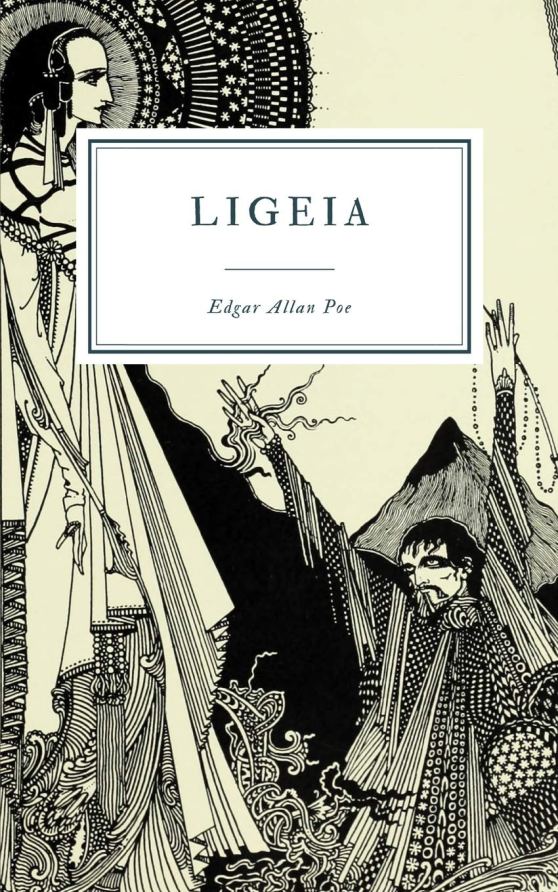
The Tomb of Ligeia (1964)

Based on Edgar Allan Poe’s “Ligeia” and adapted by Robert Towne, this is the last of the Roger Corman Poe films. Because Poe’s story was so short, Towne expanded on the themes of mesmerism and necrophilia. The result? “Literally being controlled by someone who was dead, which is gruesome notion but perfectly consistent with Poe.” said Towne to John Brady in The Craft of the Screenwriter.

In that same book, Towne confessed he thought that “…it would have been better if it had been with a man who didn’t look like a necrophiliac to begin with. I love Vincent. He’s very sweet. But, going in, you suspect that Vincent could bang cats, chickens, girls, dogs, everything. You just feel that necrophilia might be one of his Basic Things.”

Corman agreed, as he was thinking Richard Chamberlain would be perfect. Yet American-International Pictures wanted Price and Corman had to break the news to Towne.

The film starts with a casket on display with a young woman’s face visible through a window in the pine box. A black cat jumps on the coffin and takes her soul, which belonged to  Ligeia, the wife of Verden Fell (Vincent Price). He’s troubled by her death, as she refused to die and was blasphemous about God to the end of her life.

Despite his strange appearance — he must wear special glasses as he is allergic to sunlight* — he meets another woman at the grave, Rowena (Elizabeth Shepherd, The Kidnapping of the PresidentThe Omen II). They fall instantly in love and he moves her into his home which is haunted by the spirit of his wife in the form of that black cat. By the end of the film, we learn that he’s been mesmerized by his dead wife and can only love her, yet he battles the cat that has her soul until her tomb burns around them.

As for his new wife, well, she goes back to the man she left at the start of the movie and has a happy future, which is pretty sad for poor Vincent Price.

*Poe invented being goth.

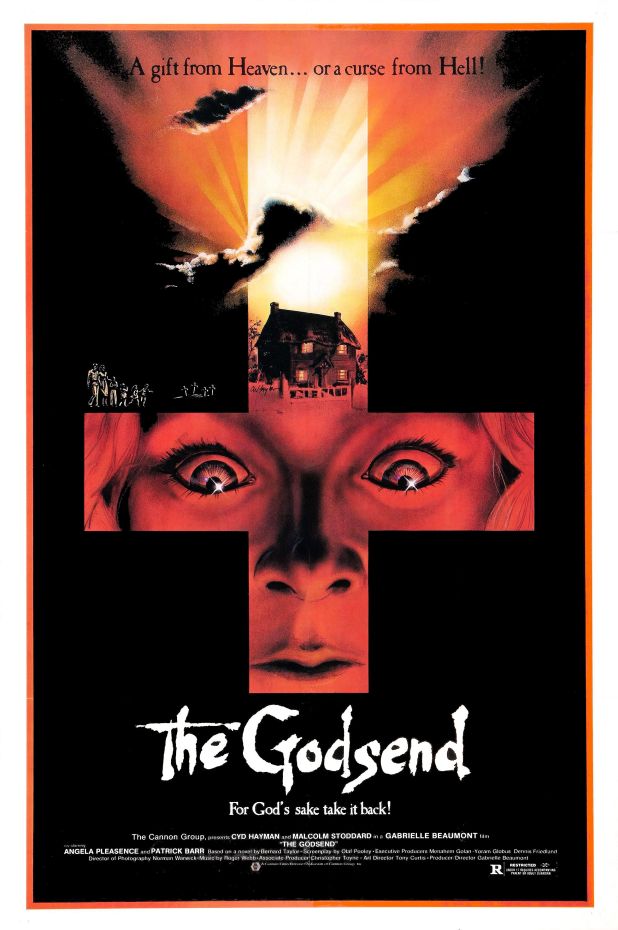
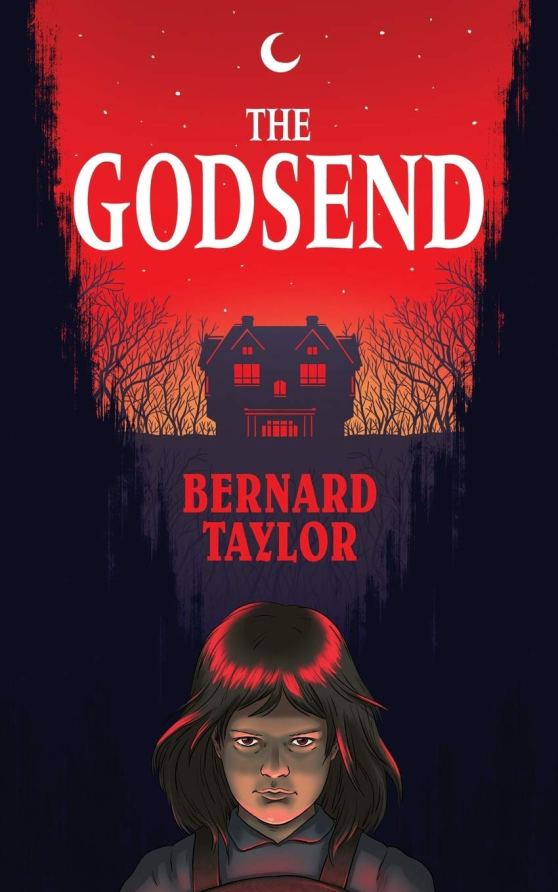
The Godsend (1980)

Based on the 1976 novel of the same name by Bernard Taylor, this film pulls no punches if you’re thinking that children are safe in a movie.

Alan and Kate Marlowe are walking with their four children — Davy, Lucy, Sam and Matthew — when a pregnant stranger (Angela Pleasence  — yes, Donald’s daughter) follows them home, staring oddly and doing strange things like cutting their telephone line before giving birth in their home. The next day she disappears — I guess hospitals weren;t around in 1980 England — and keep her child, who they name Bonnie. I also figure that the adoption system wasn’t a thing either.

Within days, Matthew is dead while lying in the same playpen as the mysterious baby. The Davy drowns in a creek, supposedly saving Bonnie’s life, which makes sense, until then Sam dies in a barn and Bonnie’s ribbon is nearby. Suddenly people are calling the Marlowes child killers. Then, Bonnie gets the mumps and kisses him, giving him the illness as well as a dream where he realizes she has killed all of his children other than Lucy.

By the end of the film, Bonnie has claimed the Marlowes’ unborn child when she trips Kate, broken up their marriage and used mind control — wow, where did that come from? — to make Lucy walk out a window. This ending is nothing like the book, so I’ve heard. I do like the close where Alan sees the woman in the park who started all this insanity, but nobody will listen to his prophecy of doom.

This was directed by Gabrielle Beaumont, working from a script by her husband Olaf Pooley. She was the first woman to direct an episode of Star Trek and also made Death of a CenterfoldHe’s My Girl and Beastmaster III: The Eye of Braxus.

Tales of Terror (1962)

The fourth of Roger Corman’s Poe films — which includes House of Usher, The Pit and the Pendulum, The Premature Burial, The RavenThe Haunted PalaceThe Masque of the Red Death and The Tomb of Ligeia — Tales of Terror was released on a double bill with Panic in the Year Zero!

Each of the three stories is narrated by Vincent Price, who also appears in all three parts of this anthology.

In “Morella,” Poe’s story forms the basics of the story but this take on the story is near-apocalyptic. Lenora Locke has come to visit her father (Price), who refuses her company as he believes that she killed her mother Morella in childbirth. That’s when the daughter discovers that her mother is rotten in her father’s ancient home, father learns that the daughter is dying and the mother comes back for everyone.

“The Black Cat” has Montresor Herringbone (Peter Lorre) discovering that his wife Annebelle is cuckolding him with the world’s foremost wine taster, Fortunato Luchresi (Vincent Price). So he does what any of us would: entomb them inside a wall along with his wife’s black cat. Obviously, this story also has elements of another Poe story, The Cask of Amontillado. If you enjoyed this story, it was also filmed by Lucio Fulci as The Black Cat and Dario Argento within the Poe double feature Two Evil Eyes.

In the last story, “The Facts in the Case of M. Valdemar,” finds hypnotist Mr. Carmichael (Basil Rathbone) helping to stop the suffering of the dying M. Valdemar (Vincent Price). However, Carmichael places him in a trance between life and death, taking control of his entire life and even trying to take his wife. This story features Price’s face literally melting away, which is really horrifying for a 1962 movie.

Roger Corman and Richard Matheson were really working together quite well here. I’m a sucker for a good anthology and these stories move quick and pack a punch.

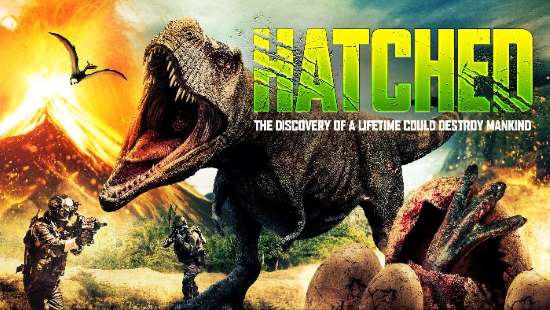
Hatched (2021)

You know, if you’re going to bring dinosaurs back to life, make sure they don’t eat you and your wife. That’s the lesson that I learned from Hatched, which begins with Simon David (Thomas Loone, Clownface) hatching some giant retro beasts just in time for them to turn him and his partner Christine (Amanda-Jade Tyler) into a quick snack.

However, before all that dino dining, Simon also learned how to bring his son back from the dead. Again, I think we all know by now just how bad of an idea playing God is.

Scott Jeffrey wrote The Candy Witch and also directed HellKatClownDollBad Nun: Deadly Vows and plenty more lower-budget horror films. He made this with Rebecca Matthews, who he also made Cam Girls and Cannibal Troll with; she directed The Candy WitchPet Graveyard and Witches of Amityville. Jeffrey also produced Dinosaur Hotel, another low budget dinosaur movie about an underground game show that has dinosaurs hunt people for the pleasure of the elite.

It takes a lot of guts to make a dinosaur movie with limited funds. Luckily, this movie has some exciting scenes and plenty of soldiers battling scaly beasts, which is really what I’m usually looking for.

Hatched is available on demand and on DVD from Uncork’d Entertainment.

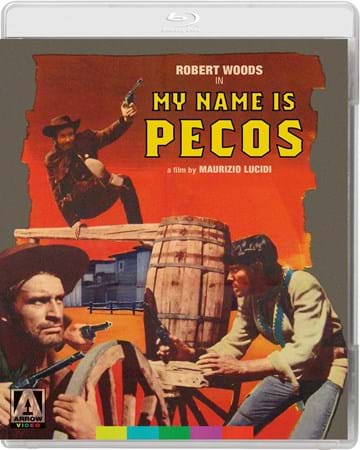
Vengeance Trails: My Name Is Pecos (1967)

Robert Woods may have started his career in Hollywood when he was selected by George Hamilton to be his stand-in for Where the Boys Are, but he made his name in Italy, where he appeared in a ton of westerns like Four Dollars for VengeanceSavage GunsThe Belle Starr Story (the only Italian western directed by a woman — Lina Wertmüller — and one of the few which stars a woman in the title role — Elsa Martinelli) and this film, which was followed by Pecos Cleans Up.

Pecos Hernandez (Woods) has returned to Houston, looking for Kline (Pier Paolo Capponi, The Cat o’ Nine Tails), the man who wiped out his family. Unlike most films of this genre, the hero is the Mexican and the Texans are the ones who did him wrong. This means that this movie had a huge impact in other countries where Peco was seen as a man fighting imperialism. It’s a good thing they changed the ending, as when the original version where Pecos was killed was shown, the audience pelted the srceen with chairs.

Umberto Raho (The Eerie Midnight Horror Show) plays an undertaker/priest who is anything but religious and one of the more fun characters you’ll find in an Italian western. This is also the first western that George Eastman made and quite possibly where he met Aristide Massaccesi, who was the cinematographer of this before we started to know him as Joe D’Amato amongst many names.

Director Maurizio Lucidi made movies in just about every genre, including giallo (The Designated Victim), peplum (Hercules the Avenger), crime (Stateline Motel, Street People) and comedy (Il marito in collegio). In the 90s and as late as 2003, he was splitting time between TV movies and making adult videos under the name Mark Lander. Writer Adriano Bolzoni’s scripts include The MercenaryThe Man With Icy EyesYour Vice Is a Locked Room and Only I Have the KeyThe Humanoid and many more.

Arrow Video’s Vengeance Trails box set has 2K restorations of this movie, as well as Massacre TimeAnd God Said to Cain and Bandidos, as well as a collector’s booklet featuring new writing by author and critic Howard Hughes plus a double-sided poster featuring newly commissioned artwork by Gilles Vranckx. My Name is Pecos has new commentary by actor Robert Woods and C. Courtney Joyner, new interviews with actor George Eastman and actress Lucia Modugno, a new documentary featuring a new interview with Fabio Melelli and an archival interview with cinematographer Franco Villa, and the Italian trailer. You can order this from MVD.

It’s also available on the ARROW player. Head over to ARROW to start your 30 day free trial (subscriptions are available for $4.99 monthly or $49.99 yearly). ARROW is available in the US, Canada and the UK on the following Apps/devices: Roku (all Roku sticks, boxes, devices, etc), Apple TV & iOS devices, Android TV and mobile devices , Fire TV (all Amazon Fire TV Sticks, boxes, etc), and on all web browsers at https://www.arrow-player.com.

Marathon (2021)

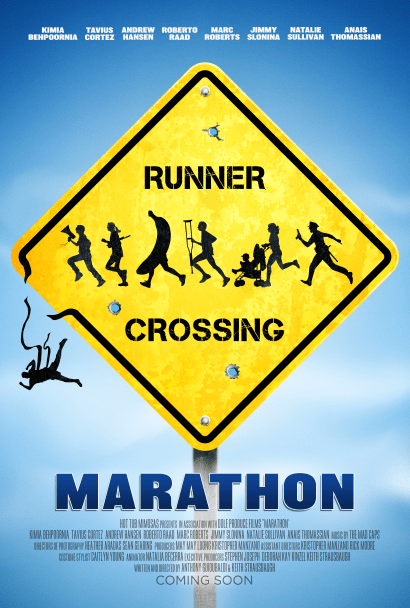
Marathon is the story of the Devil’s Canyon Marathon, an underfunded local race organized by shoe store owner Ed Clap.

Starting three months before the actual event, we meet the runners, see how they train and learn so much about their lives in mockumentary style. There’s Ryan O’Brien, who missed last year’s Boston Marathon by nine seconds. Jenna Kowalski, a woman who wants to set the world record for fastest marathon time dressed as a fruit. New mother Abby Dozier, bullied black man Shareef Washington and Emilou Paunch, whose life gets better when she quits thirty seconds into getting ready for a marathon.

Now, it’s time for everyone to get running. Except Emilou. She’s doing just great staying home.

Directors Anthony Guidubaldi and Keith Strausbaugh have a great crew of actors to tell their story, featuring Las Vegas-based comedians from shows at Cirque du Soleil, Absinthe, Second City and Blue Man Group and Los Angeles improv actors from Upright CItizen’s Brigade.

I do love films in this genre and this is a fine example. If you need a laugh, check it out. I mean, how many movies will you see with bananas running through the desert?

Marathon is available on demand July 6 from Gravitas Ventures.

Witchfinder General (1968)

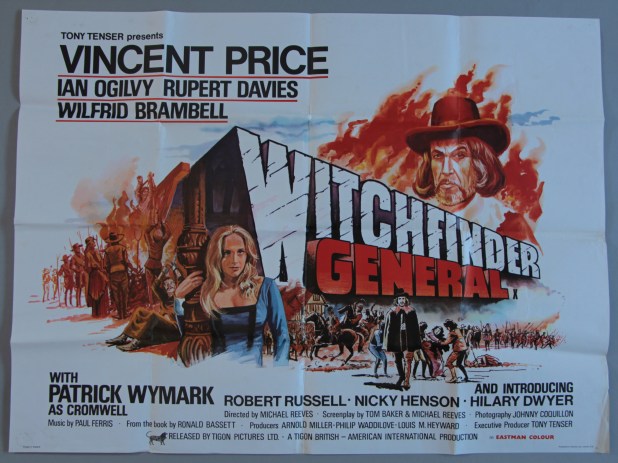
Based on Ronald Bassett’s — a man who was primarily known for his medical and pharmaceutical work — novel about Matthew Hopkins, a notorious 17th-century witch-hunter, this 1968 film was a co-production of Tigon British Film Productions and American-International Pictures (who retitled the film The Conqueror Worm to link it to their series of Edgar Allan Poe movies).

Movie posters used to be awesome.

Michael Reeves was 24 and only three films* into his career when he made this film, the tale of Hopkins (Price), a lawyer who has opportunistically become a witchhunter with no morality whatsoever, blackmailing and killing his way through the world. This film is pure nihilism and makes the statement that when the world goes to hell, there is no way to be an angel.

Reeves saw Donald Pleasence as Price, but AIP only saw Vincent Price as the lead. Reeves had refused the courtesy of meeting Price at Heathrow Airport which was a “deliberate snub calculated to offend both Price and AIP” according to Benjamin Halligan’s book Michael Reeves. When they met for the first time, Reeves said, “I didn’t want you, and I still don’t want you, but I’m stuck with you!”

According to Kim Newman in Nightmare Movies, Reeves and Price argued over the actor’s propensity to chew the scenery and Price supposedly said, “Young man, I have made eighty-four films. What have you done?”

Reeves replied, “I’ve made three good ones.”

And that’s how Reeves pushed Price into delivering the performance in this film. In the book Faster and Furiouser: The Revised and Fattened Fable of American International Pictures, Price said that he wrote the director a ten-page letter after he saw the film, praising the director’s work.

Reeves wrote back, “I knew you would think so.”

After Reeves’s death, Price would think back and say, “I realised what he wanted was a low-key, very laid-back, menacing performance. He did get it, but I was fighting him almost every step of the way. Had I known what he wanted, I would have cooperated.”

That said — Reeves was notoriously poor with actors, mainly concentrating on what the visual look of the film leaving the acting direction — outside of his playing with Price — to the actors.

The poster tagline — “Leave the realized at home…and if you are squeamish stay home with them!” — isn’t a lie. This is a film packed with some of the most intense torture and violence you’ll see. It was heavily censored in England** — yet still upset people — and played uncut in the U.S.

Hopkins is using the English Civil War and the destruction of social order to brutally abuse and torture those he deems witches throughout East Anglia. Then, he and his assistant John Stearne charge the local government for their work and move on.

Richard Marshall (Ian Ogilvy, who was in several of Reeves’ teenage short films and appeared in his movies The She Beast and The Sorcerers) is a young soldier returning home from the war, asking John Lowes (Rupert Davies) if he may marry his niece Sara (Hilary Dwyer, The Oblong Box, Scream of the Banshee). The old man confides that they are concerned for their safety and feel as if the village has turned on them as Marshall gives his word to protect them. As he leaves their town, he gives the witchfinder directions to get there.

Hopkins and Stearne enter town and instantly go to work taking out witches, including using rats and hot needles to find the Devil’s Mark inside Lowes. Sara offers sexual favors to protect her uncle and as soon as Hopkins leaves town, his partner assaults her.

When Marshall returns, he marries Sara in his own ceremony and vows to kill the two men, nearly beating Stearnes to death. Yet the tables are turned and the hero must watch as his love is tortured before him. That’s not the end, but I’d like you to see this for yourself.

AIP originally made this movie as a tax write-off, but was surprised by the quality of the film. Samuel Z. Arkoff said, “Michael Reeves brought out some elements in Vincent that hadn’t been seen in a long time. Vincent was more savage in the picture. Michael really brought out the balls in him. I was surprised how terrifying Vincent was in that. I hadn’t expected it.”

This film led to the second wave of AIP Poe films like The Oblong Box (originally scheduled to be directed by Reeves, but handed over to Hessler after Reeves fell ill during pre-production), Murders in the Rue Morgue and Cry of the Banshee, which reteamed Price and Dwyer.

It also inspired several inquisitonploitation*** films such as Mark of the Devil and The Bloody Judge, as well as leading the way for religious horror such as The Devils and the folk horror of The Blood on Satan’s Claw.

It also influenced metal, as the band Cathedral has a song “Hopkins (Witchfinder General)” and the band Witchfinder General outright took the name. Like all great NWOBHM bands, they have a self-titled song.

There was even a BBC4 radio play, Vincent Price and the Horror of the English Blood Beast, which tells the story of the relationship between Price and Reeves.

Sadly, a few months after this movie was released, director Reeves died in London at the age of 25 from an accidental alcohol and barbiturate overdose. What an incredible blow to the world of film, as obviously he was going to be a director whose work could only have gotten better.

*Castle of the Living DeadThe She Beast and The Sorcerers.

**Even the script provoked this reply from censors: “A study in sadism in which every detail of cruelty and suffering is lovingly dwelt on…a film which followed the script at all closely would run into endless censorship trouble.”

***Yes, an invented term.

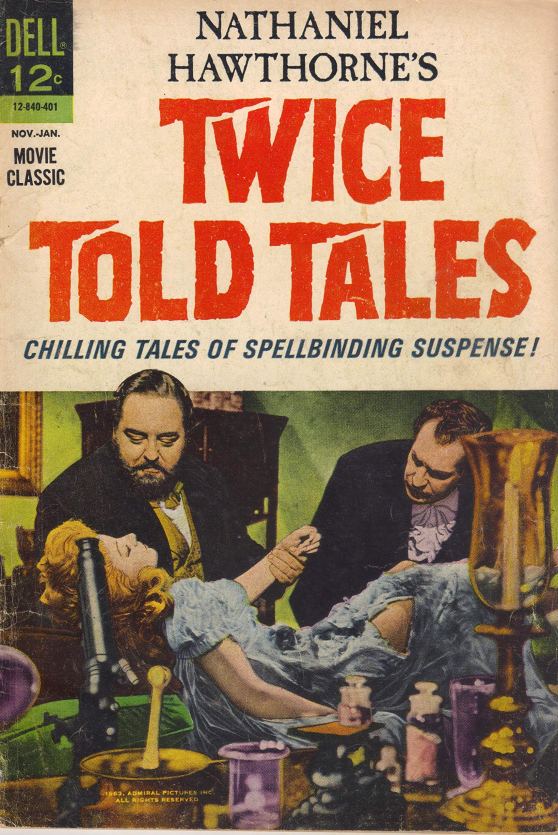
Twice-Told Tales (1963)

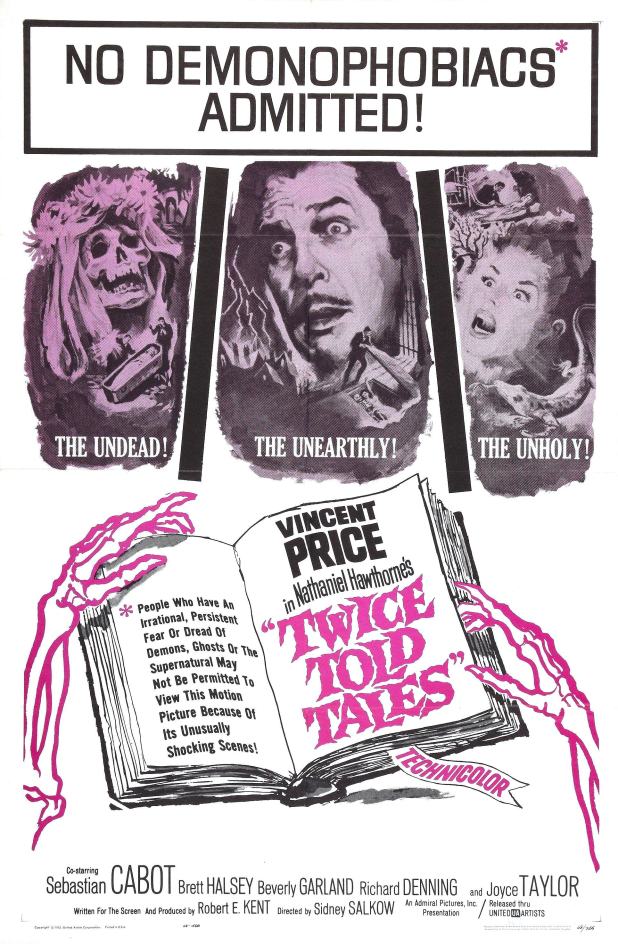
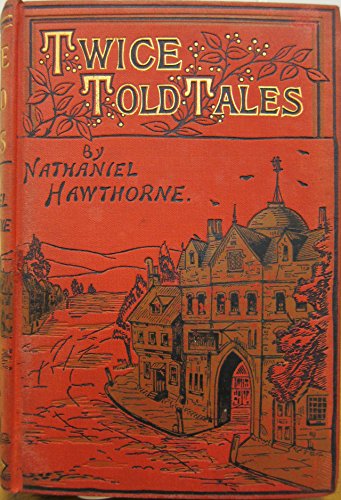
Of the three stories featured in Twice-Told Tales, only one of them — “Dr. Heidegger’s Experiment” — is actually from the Nathaniel Hawthorne book. The other two — “Rappaccini’s Daughter” and The House of the Seven Gables — come from another story and a book the author wrote.

Much like Tales of Terror, all three of these stories feature Vincent Price as narrator and star. It was written and produced by Robert E. Kent, the man who brought Roy Orbison to the screen in The Fastest Guitar Alive. This was directed by Sidney Salkow, who also worked with Price on The Last Man Alive.

In “Dr. Heidegger’s Experiment,” Carl Heidegger (Sebastian Cabot, The Time Machine) and Alex (Price) meet to celebrate Heidegger’s 79th birthday. As they look back on their lives, they learn that Carl has never gotten over the death of his fiancee Sylvia. In a drunken depression, he wanders down to her grave, only to find her perfectly preserved. As he drinks the water that rains down on her coffin, the old man — and then his friend — become young again.

Both of them decide to inject the dead woman with the water and she returns, only to inform Carl that Alex was her lover. The two men clash, only for Alex to die and Sylvia to wither to a skeleton. Alex wanders the crypt, unable to find any more of the water.

While dramatic, this story doesn’t match Hawthrone’s, during which four older people use water that they’ve found from the  legendary Fountain of Youth, near Lake Macaco in Florida. It doesn’t end on such a down note either.

“Rappaccini’s Daughter” is the story of a man (Price) who has kept his daughter like a plant in a garden, treating her with the extract of an exotic plant that makes her very touch deadly. Yet what happens when she falls in love with a young man (Brett Halsey!)?

This story inspired the DC Comics character Poison Ivy, while the story itself was based on Indian fairy tales of poisoned maidens. The pop culture life of this story also extends to the Fleetwood Mac song Running through the Garden.”

The last story is “House of the Seven Gables,” which finds a cursed family, reincarnation, an inheritance and skeletal hands emerging to attack Price. The same story had been previously filmed in 1940 and also featured Price (he plays Gerald Pyncheon here; he played Clifford in the original).

The Hawthorne novel was a major inspiration for H. P. Lovecraft, who claimed that it was “New England’s greatest contribution to weird literature.” You can detect the novel’s shadow cast over his stories “The Picture in the House”, “The Shunned House” and The Case of Charles Dexter Ward.

They even made this into a Dell comic book!

If you enjoy anthology horror and Vincent Price, this one’s for you. If you don’t, never speak to me again.