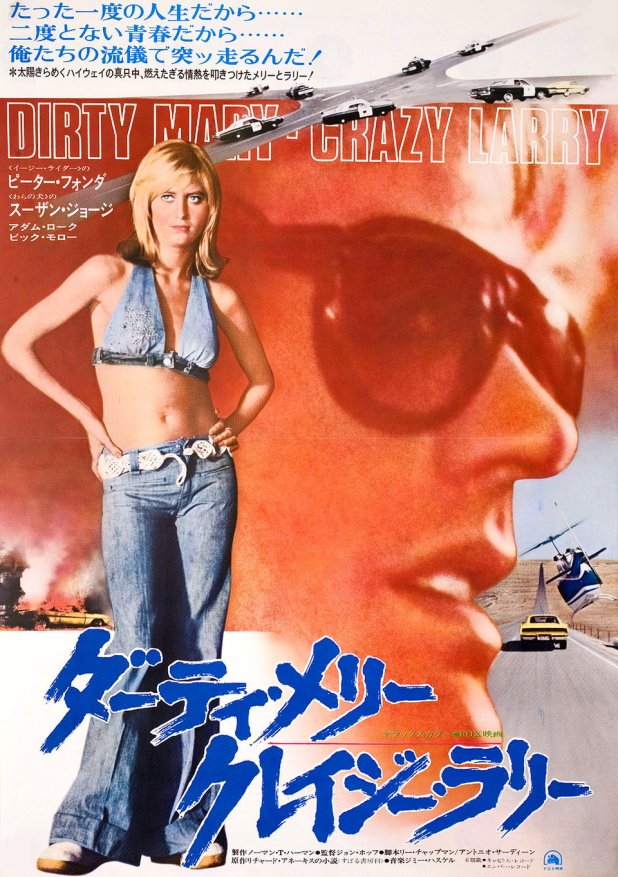
Man, this movie really has it all. You’ve got an angry Peter Fonda, a transfixing Susan George and a driven Vic Morrow, all racing across America. It’s really a great time, a tense chase film that never lets up and then crushes you at the end.
Fonda plays a NASCAR hopeful named Larry Rayder who grabs his mechanic Deke Sommers (Adam Roarke) and holds a supermarket manager’s wife* and kid hostage for $150,000, enough to get their own car on the track. To get away with it, they have the maps to a walnut grove that has air cover and no way for the police to block the road from the high speed of their 1966 Chevrolet Impala. But things get complicated when Deke’s one night stand Mary Coombs demands that she be let in on the escape plan, which puts them up against Capt. Everett Franklin (Morrow), who has no idea how to give up.
The script to this movie was started years before by Howard Hawks, who bought the rights to the book The Chase by Richard Unekis. After he had issues developing it, two English industrialists named Sir James Hanson and Sir Gordon White — who owned Eveready Batteries and Ball Park Franks — tried to make the script into a film with Vanishing Point director Michael Pearson. That said, nothing happened and the two were frustrated.
One night over dinner, Hanson related the story to Jimmy Boyd. Yes, the same guy who wrote “I Saw Mommy Kissing Santa Claus.” Boyd rewrote the script and raised $2 million on his own, planning on having David Soul and Sam Elliott as his leads.
Enter James Nicholson, the former head of American-International Pictures, who was leaving to form Academy Pictures in partnership with 20th Century Fox. It was a great deal: Fox would finance and distribute the movies while giving him complete control. One of the movies he wanted to make was Boyd’s script, which was now called Pursuit. Nicholson was the master of naming movies and gave it the much better title that made it a success.
Nicholson announced that Academy would make six films for Fox over two years and they wouldn’t necessarily be exploitation films. His widow Susan Hart claimed that five of them would be The Legend of Hell House, Blackfather, Street People, The “B” People and Dirty Mary Crazy Larry.
Sadly, Nicholson would only see the first film get made, as he would die of a malignant brain tumor within six months of the deal.
Hell House director John Hough also made this movie, sneaking in the dark ending, telling Film Talk: “…my messages to the audience were plain and simple: speed kills, and also, considering the nature of the film, crime doesn’t pay. That’s what Dirty Mary, Crazy Larry was really all about.”
To be honest, this movie is really dumb. Fun. But dumb, in a Lee Majors The Last Chase kinda-way (yep, we reviewed that ditty this week; search for it). Take one part Mad Rockatansky and one part Burt Reynolds. Strip away the story and characters — and just focus on the cars. Vroom-vroom: yer git yerselves a movie, Hoss.
So, “The Bandit,” aka Cliff Roberston (yep, Grand-pa Ben Parker from the Spider-Man franchise), is Judd Pierson, a down-and-out stock racer slummin’ on the carnival circuit-for-a-buck as a daredevil driver with his sidekick, The Snowman, aka Casey Lee (yep, ex-teen idol Leif Garrett of Thunder Alley, who’s actually very good here) at his side.
Then they meet their “Frog” in the form of Dr. Christine Ruben: she decides to double-cross the New Zealand government and smuggle a lethal bio-agent out of a military-backed research facility — and she needs The Bandit and The Snowman. And when you’re hard up for cash, and a hot doctor bats her eyelash-sob story, you take the hook. Sucker. Then nice, loooong car chases — and the ensuing crashes — takes us eastbound and down.
Unfortunately, there’s no freebie uploads on any streaming platforms. We found this extended sequence of the car crashes, as well as these extended 8:00 and 20:00-minute You Tube clips that break the film down into what we came for: the car chases. And since this was a New Zealand-shot film, that country’s NZ On Screen website offers up an 10:00 excerpt from the film. If you like what you see, you can stream over on Amazon Prime.
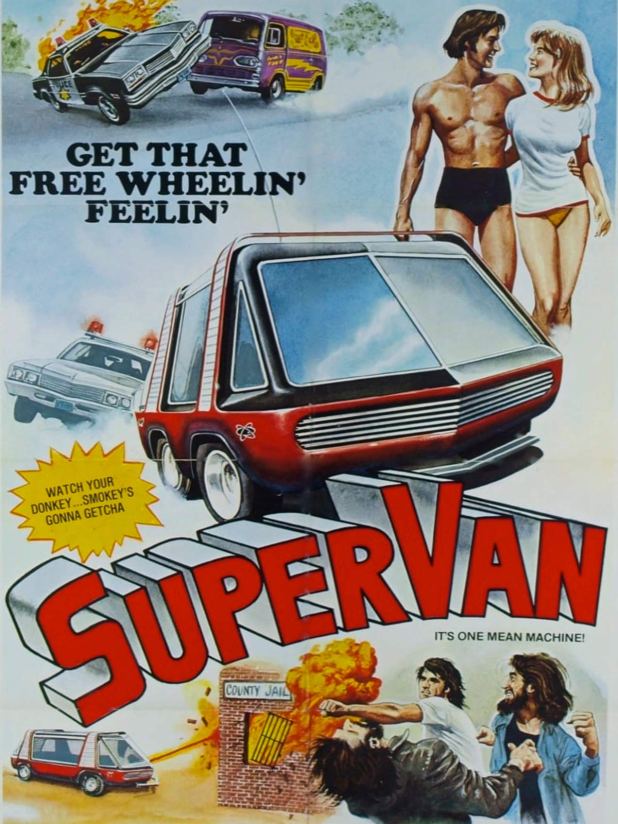
This is a vansploitation movie. Yes, that’s really a genre and there are several films in it, of which I can name Blue Summer, The Van (obviously), Best Friends, C.B. Hustlers (which has Uschi Digard in it), Mag Wheels, Van Nuys Blvd. and I guess you could almost count On the Air Live with Captain Midnight. There’s a great article on it by Jason Coffman that goes deep into the genre that I totally recommend.
The beauty of this movie is that it posits a world where solar energy is already happening, van culture is the driving force in society and there is no AIDS to worry about, so all of the vans are a rocking and absolutely no one is knocking. It is surely paradise, if paradise only gets 11 miles to the gallon, fuel crisis be damned.
Our hero Clint Morgan has traveled to The Invitational Freak-Out, a major event for custom van enthusiasts, which means that any time we’re near it, we get to see plenty of b-roll footage of painted vans and all of the accoutrements — this is not a word you want to use when selling Winnebagos — that they have inside.
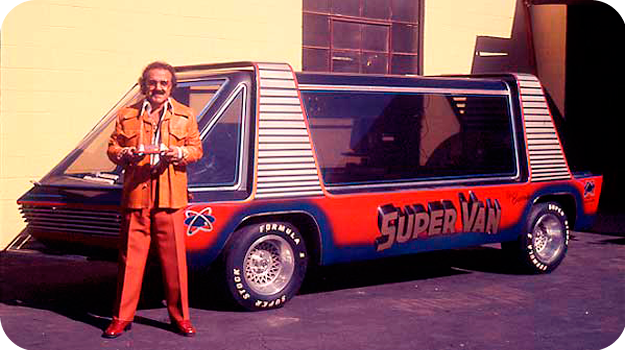
Clint saves Karen (Katie Saylor, Invasion of the Bee Girls) from some bikers from another exploitation genre and they destroy his van The Sea Witch. That’s when he goes to the super genius van designer Bosley and together, they all make Supervan, which uses solar power and lasers. It was really made by George Barris — who designed so many other Hollywood cars — and was based on a stock Dodge Sportsman van. This thing was so big that it had a phone intercom system inside it.
Oh yeah. It turns out that Karen’s dad owns a car company that is out to make a van that uses more gas than ever before — what does it get 3 miles to the gallon? — and they have to take Supervan to the show to prevent him from making it happen, but he puts the cops on their tail.
We’ve seen Clint before on our site, as Mark Schneider is also in the Crown International Pictures movie Burnout, which is one of the few dragsterpolitation movies I can think of, so perhaps he is the perfect star for all things vehicular in nature.
Director Lamar Card is also there, in the nooks and crannies of strange movies that I find myself obsessed with, like producing the scumtastic Nashville Girl and directing the only Fabian-starring, Casey Kasem-coke sniffing disco freakout Disco Fever.
Beyond the near gynecological explorations of all of these vans at the absolute expense of story, this movie has a cameo by Charles Bukowski — the firebrand of a man who wrote “what matters most is how well you walk through the fire” — judging a wet t-shirt contest. I am in no way making that up.
There’s never really been a movie like Supervan. To be fair, I don’t think the world could have handled two. To quote the love ballad from the film, when I think of Supervan, “I’ll always remember you as a milestone in my life.”
Henry Hathaway is usually known for directing westerns, but here he is making a film all about car racing in Europe, based on the book The Racer, which was the story of Rudolf Caracciola, who is called Gino Borgesa here and played by Kirk Douglas.
He meets his girl in the way so many have before, as her poodle runs on the track and nearly gets him killed. But hey, when a woman is Bella Darvi, well, you forgive these kinds of things. Darvi spent some of her teen years in a concentration camp before meeting Virginia and Darryl Zanuck, who invited her to move to Hollywood with them. Despite the fact that she slept in the same room as their daughter Susan, and getting a stage name that combined the two Zanuck’s names, she of course became his mistress. I have this theory that perhaps that the affair involved all three, particularly when after Mr. Zanuck left his wife for Darvi, but he would later leave the actresses when he found out that she was bisexual. After 1961, Darvi was mainly back in Monte Carlo, gambling around 30,000 pounds a night (which when we adjust for pounds to dollars and inflation is more than $250,000!) and continually overdosing on barbiturates, which never quite killed her, until she used gas to finally exit this world in 1971.
Anyways, back to the racing. Gino gets out of control after all his injuries get him on painkillers, even clouding him enough that he costs one of his mentors, Carlos Chavez (Ceasar Romero), his last race. He chases away his woman to a younger racer and pretty much ruins his life.
Dr. Jess Ting is part of the groundbreaking Mount Sinai Center for Transgender Medicine and Surgery in New York City. There, for the first time ever, all transgender and gender non-conforming people have access to high-quality transition-related health and surgical care and often, this work is covered for the very first time by insurance.
Tania Cypriano was given extraordinary access to make this feature-length documentary, which shows how Dr. Ting’s work impacts the lives of his patients as well as how his journey from renowned plastic surgeon to pioneering gender-affirming surgeon has led to his own life being transformed, as well as how his life turned from Julliard-trained musician to boundary-pushing surgeon.
Born to Be is the kind of movie that documentaries should be. It shows you a world that you may never see, going deep into the lives of people whose reasons for how they feel in their bodies may seem alien to you. I wish that people had an open enough mind to sit and watch this film and meet each of these people on an individual level to see who they truly are. They are not faceless people that upset conservatives because they want bathroom privileges at Target. They are people that just want to live the lives they feel that they would never get the chance to authentically live.
The gender-affirming surgeries of Dr. Ting’s patients are shown — not in graphic detail, but you definitely get to learn the near-magical ways that he is breaking barriers and transforming their bodies — as well as the emotional journeys that they must make and how even the strongest and most supported of them must deal with trauma and derision.
“We can’t repair the wounds to the mind and soul that have been borne over a lifetime of neglect and hate,” says Dr. Ting. And that’s the last part of this movie, the part that we must take into the world. The surgeons and counselors and makeup people and hair removal and clothing and all the artifice of these transformations can only do so much. I hope that we can finally remove so much of the prejudice in our souls. Perhaps seeing the one-on-one stories in this movie could go a long way toward making that happen.
Born to Be is currently playing on Kino Lorber’s KIno Marquee and Kino Digital. It will be released in January on DVD.
You can learn more on the official website and Facebook page. You can watch a discussion of the movie with director Tania Cypriano, Dr. Jess Ting and Mahogany and Jordan, two of the patients in the film, below on YouTube.
One of American-International Pictures first winners was this movie, released as a double feature with Rock All Night. It has Fay Spain in the title role, in a story that would pretty much be recycled as Motorcycle Gang along with cast members John Ashley (this was his first movie) and Steve Terrell.
Ashley had never acted before but went with his girlfriend on her audition. He got a contract with AIP and she didn’t. He’s a total winner in this, the perfect jerk who doesn’t care that his love for speed keeps getting people killed.
Meanwhile, Spain’s Louise Blake character must choose between the rich Ashley — who impresses mom — and the resourceful mechanic Terrell — who dad likes. It doesn’t help when a game of chicken — which I think only happened in movies until impressionable youth watched AIP films — leads to more death.
One of the reviewers of the day claimed that this movie was, “a depressing and irresponsible film… glorifying the defiance of law and order, lax morals and the discardance of civilised behaviour.” When I read things like that, it’s hard not to contain my glee.
This is one of the many filmes Edward L. Cahn did for AIP. There’s nothing flashy, but he’s dependable and unafraid to be sensationalistic. You can also check out It! The Terror from Beyond Space; Shake, Rattle and Rock and Runaway Daughters, which is one of the best titles of all time.
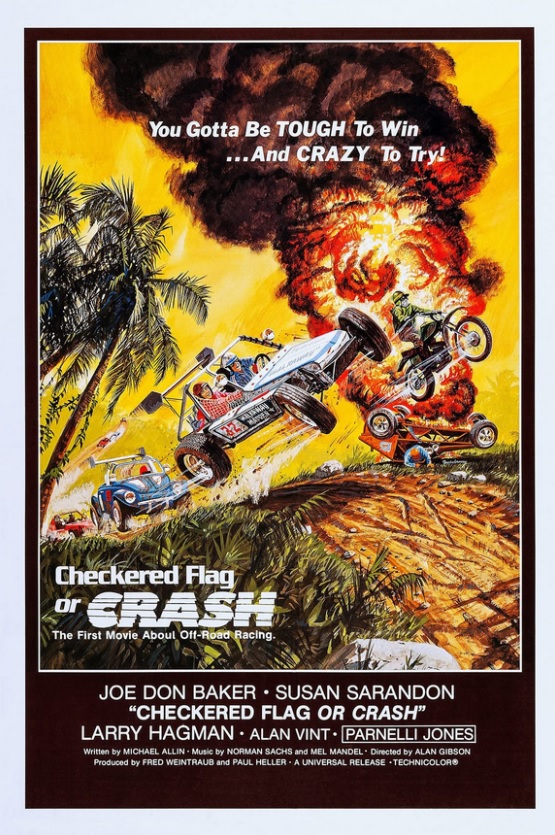
If it looks like a low-budget Drive-In potboiler and plays like a low-budget Drive-In potboiler . . .
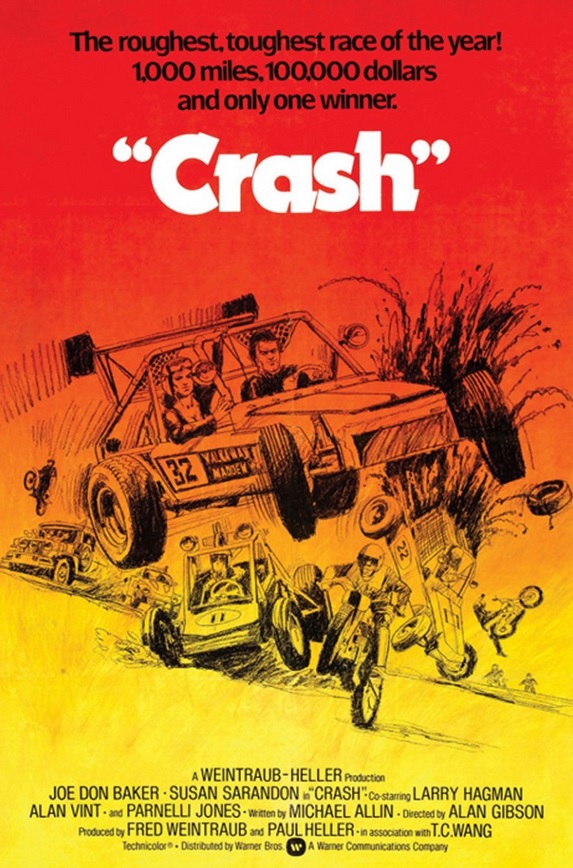
Hey, be nice! This isn’t a duck . . . this a Paul Heller and Fred Weintraub production backed by Universal Studios!
Come on, now, you VHS packrats. You know your Weintraub-Heller oeuvres by now. Fred and Paul brought us the martial arts classics that are Enter the Dragon (1973), Black Belt Jones and Golden Needles (1974). Then they went blaxploitation with Isaac Hayes in Truck Turner (1974), went apoc with The Ultimate Warrior (1975), and gave us Jim Kelly in Hot Potato (1976) and Peter Fonda in Outlaw Blues (1977). Behind the lens is Alan Gibson who gave us Goodbye Gemini(1970) . . . .then ended up doing things like Dracula A.D. 1972 (1972) and The Satanic Rites of Dracula (1973). Behind the Brother P111299 Valiant is Michael Allin, who not only brought us the aforementioned Enter the Dragon and Truck Turner, but also gave us a big-screen Telly Savalas in Border Cop (1980) and the beautiful, Star Wars* dropping-disaster that was Flash Gordon (1980).
And who’s up on the big screen thespin’ with burnin’ rubbers and oil?
Well, we’ve got Joe Don Baker (who, in the same year, also tore up the asphalt in Speed Trap; reviewed later this week . . . then he ended up in Joysticks), Susan Sarandon, Larry Hagman, and brother of Jesse, Alan Vint (Earthquake, Macon County Line, Unholy Rollers).
Now, with a pedigree like that, this duck is gonna fly . . .
Baker is washed up NASCAR driver “Walkaway” Madden, known for his hardcore “crash or win” attitude . . . and he always walks away from those crashes. Larry Hagman is Bo Cochran, the slippery Southern entrepreneur who convinces Walkaway to be part of “The Manilla 1000,” his big, 3-day off-road spectacle tearing through the Philippine jungles. And Bo tosses Susan Sarandon’s photojournalist C.C Wainwright in the cockpit to capture all the action.
And what “action” do we get?
Well, lots of grumpy-sexist Madden and bitchy Wainwright innuendo-cum-PG profanity bickering on their way to love . . . and lots . . . and lots of sand rails, retrofitted VW Bugs, and “motorcicles” (courtesy of Hagman’s good ‘ol boy drawl) racing around . . . and around . . . and around.
Hey, wait a minute! Back up the Bug, there Joe Don.
This sounds exactly like Harry “Tampa” Hurwitz’s Safari 3000 . . . only with Joe Don Baker and Susan Sarandon in the David Carradine and Stockard Channing roles . . . who were actually in the Burt Reynolds and Sally Field roles . . . hey, this is a Smokey and the Bandit** rip off!
And “quack” goes the duck. But if you’re a Joe Don Baker completist, then this soggy Mallard is for you.
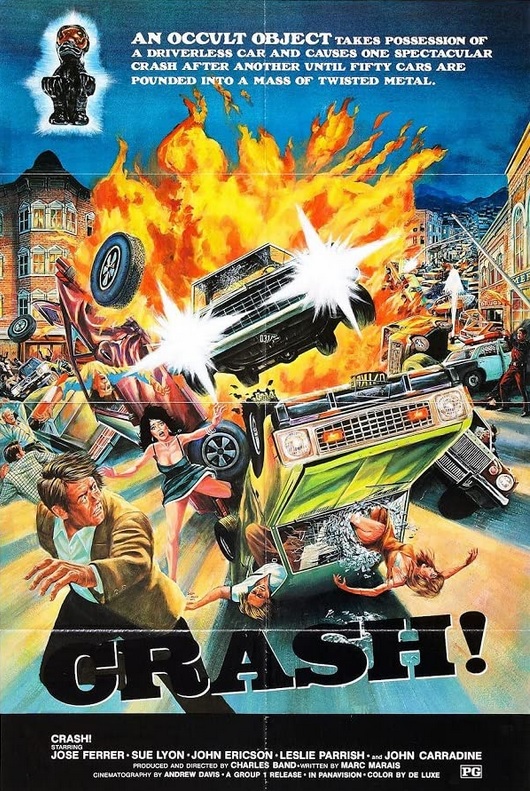
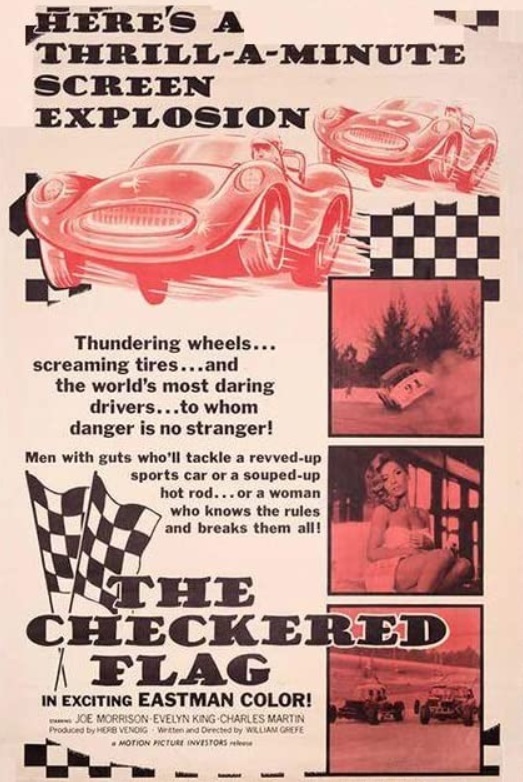
Oh, and emptor the caveats, kiddies . . . this Universal Studios epic is not to be confused with Charles Band’s 1976 occult-cum-car crashing epic Crash!starring Sue Lyon and John Carradine (and ripping off 1975’s Race with the Devil) or 1963’s The Checkered Flag, the directing and writing debut by William Grefe (Mako: Jaws of Death and Whiskey Mountain).
You can watch a free rip of Checkered Flag or Crash on You Tube.
* We reviewed a gaggle (I know that’s a geese reference, work with me, Cletus) of Star Wars droppings and ripoffs with our “Exploring: After Star Wars” featurette.
** Hey, Cletus! Did you know we also reviewed a tar barrel load of hicksploitation flicks? Be sure to check out our “Top 70 Good Ol’ Boys Film List” featurette. It’s a good ol’, down home load ‘o fun, son!
About the Author: You can read the music and film reviews of R.D Francis on Medium and learn more about his work on Facebook.
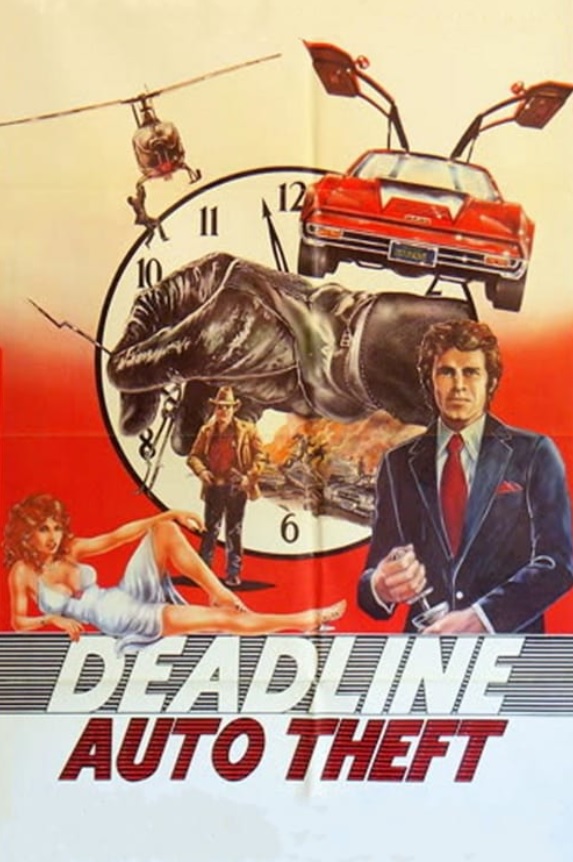
This second and final film in H. B. “Toby” Halicki’s Gone in 60 Secondstrilogy is a meta-fiction piecemeal effort that incorporates the opening chase scene from The Junkman(aka Gone in 60 Seconds II), which chronicled the making of a car chase picture; thus Deadline Auto Theft is the “movie” that was being made in The Junkman. Adding to the meta: since this film is the actual “sequel” to 1974’s Gone with 60 Seconds, this is also marketed in other quarters as Gone in 60 Seconds II. And if it all looks familiar that’s because this is a trimmed-alternate cut of 1974’s Gone in 60 Seconds with footage from The Junkman cut into it. And Hoyt Axton, for the sake of continuity, returns from The Junkman for new scenes.
“You got that, B&S reader?”
“I think so. Is there at least a plot or is this just a lot of racing around?”
After the theft of his whiny future son-in-law’s priceless Bricklin (Dan Grimaldi of Don’t Go in the House fame), LAPD Captain Gibbs (Hoyt Axton; who was an “actor” in The Junkman, but a real character here, based on his role in The Junkman, ugh.) declares an all-out war on master car thief Maindrian Pace (H. B. “Toby” Halicki); meanwhile, Pace avoids capture to fulfill a contract to steal 40 cars.
That’s basically it: a rewrite of all the chases by plane, by car, and by helicopter — and the ensuing crashes — that you know and love, shot and edited to the tune of $1 million. And it made bank via the drive-in circuit and VHS shelves. And it’s awesome.
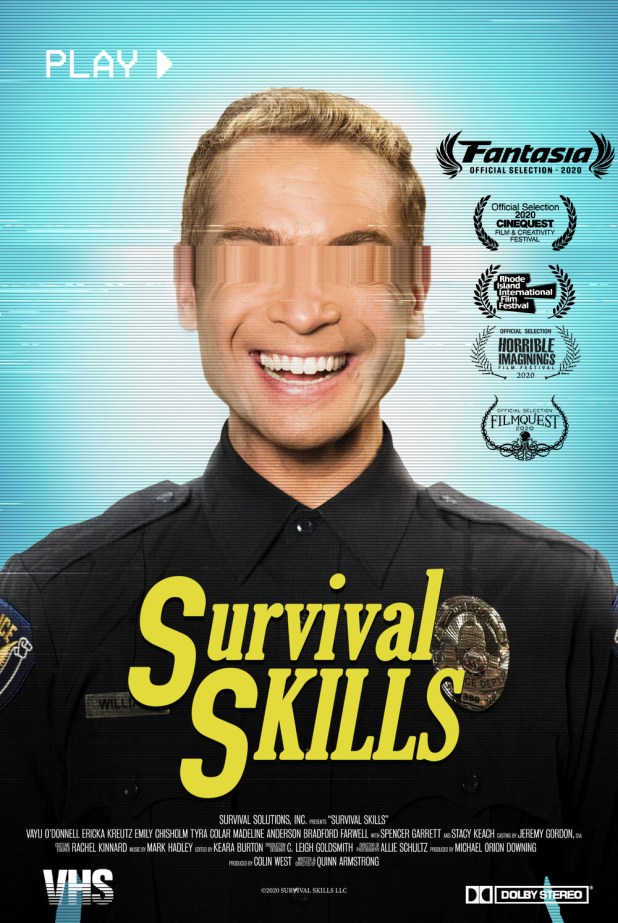
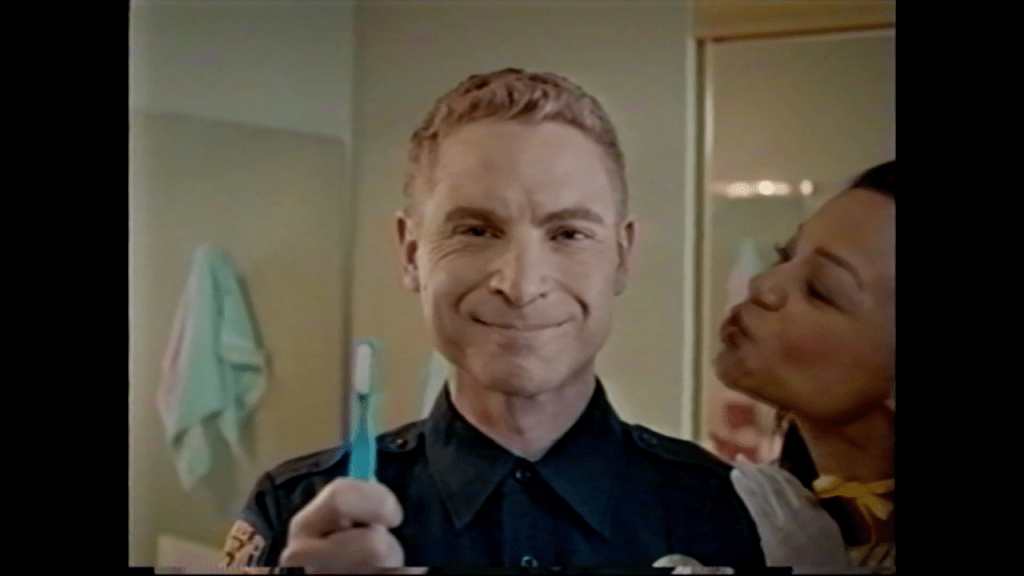
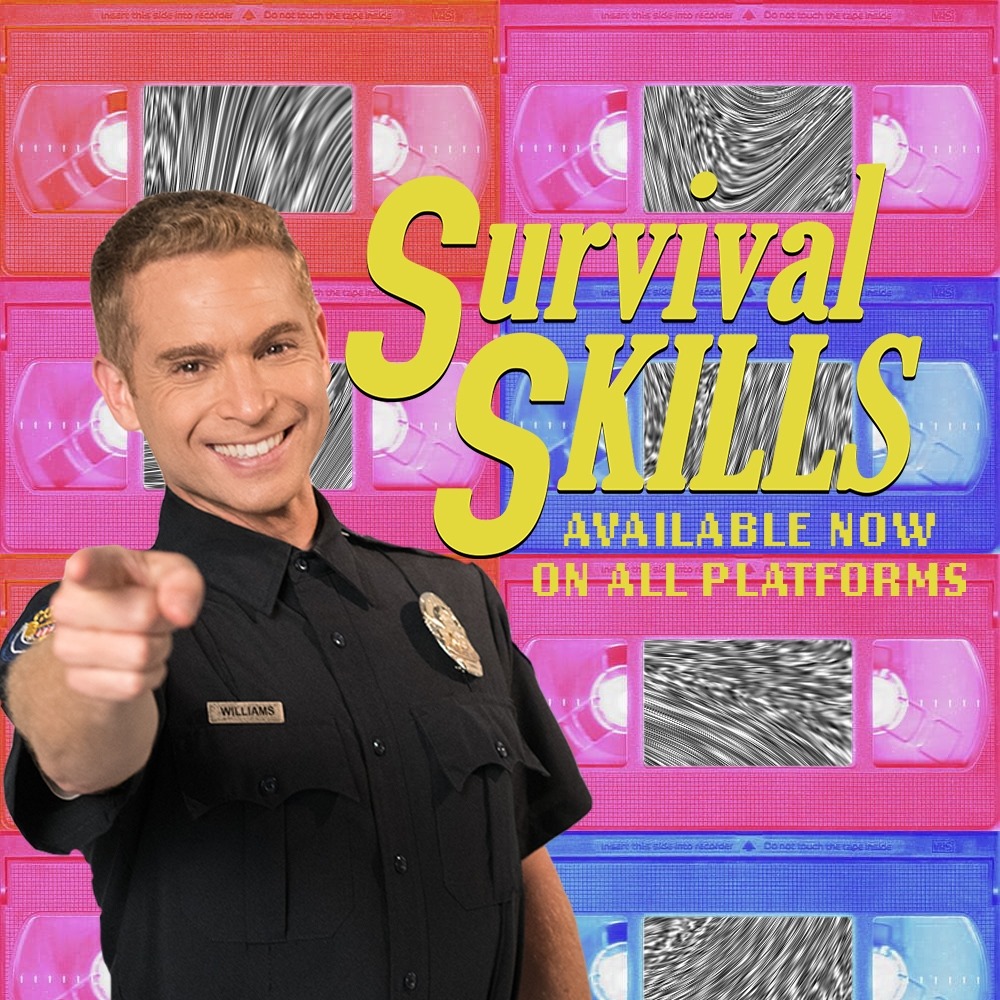
We raved about Survival Skillsa few weeks ago, a movie that combines a 1980’s VCR-era training guide with a dark ride into the soul of a police officer not properly armed when it comes to facing off with an uncaring society. Quinn Armstrong, the writer and director of the film was kind enough to sit down with us to discuss the inspiration behind the film, which includes the era of Satanic Panic, baffling training videos, how men can’t confront their emotions and some surprising comfort films.
B&S ABOUT MOVIES: First things first, this seems like a really complicated project to undertake. How long did it take?
QUINN ARMSTRONG: The actual production wasn’t that long. It was maybe a three or four-week thing. But the post process took forever, because we did the VHS thing, which took a solid year and a half. But I wrote the script all the way back in 2016, so it’s been a while.
B&S ABOUT MOVIES: And now you’re seeing the fruits of your labors…
QUINN ARMSTRONG: Yeah, it’s weird to be seeing other people see it, critics and people in general, and how they recontextualize it for you. Because you change over time. For example, a big thing for me is that I went on anti-depressants since I made this movie. And now, when I’m watching people watch this movie, I realize, “Oh, I’m really angry with this movie.” It’s a much more aggressive movie than I thought it was.
B&S ABOUT MOVIES: That’s funny to hear. Because watching it, I know that you made it before this last year and it could have had the potential to be even angrier with what’s been going on.
QUINN ARMSTRONG: It’s tricky. And I was really worried about that when Fantasia Fest got in touch and programmed us right after the murder of George Floyd. Because that’s not my lane. It’s not reasonable for me to come forward as a voice for people who have been brutalized by the police. I can talk about domestic violence because I have a long background in that world. However, in a way, I’m glad we made the movie before all this happened. Because I think, I don’t know if I would have felt compelled to address it.
B&S ABOUT MOVIES: It’s funny. If anything, the film really comes off as sympathetic to what a lot of officers have to deal with. Because a lot of times, especially when they come into domestic violence situations, their hands are tied. So I think that’s kind of he’s like at the end of the film, saying, “There’s nothing I can really do.”
QUINN ARMSTRONG: You know, there are very few people, I think, in this dialogue, who are general genuinely saying, “Every police officer is a bad person” I think those are sort of fringe voices. I think the more reasonable position a lot of people have taken is that because of the way the system is constructed, officers are called upon to do more than they are trained to do. So they end up in positions where they are making bad choices systemically. I think that saying that all police officers are bad is just kind of lazy thinking. I’m not saying that there aren’t problems, but to say it’s just because they are bad people just doesn’t make sense to me.
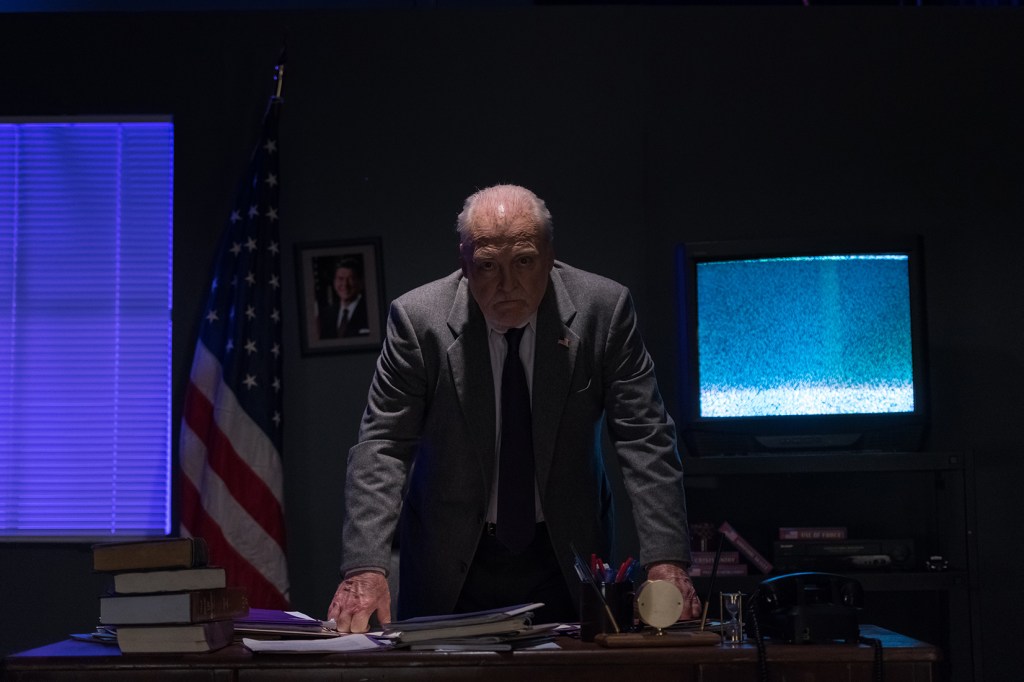
B&S ABOUT MOVIES: You could almost build a timeline of Jim, where it’s like, you can see the burnout of him and the other officers. And at the end, Stacy Keach pretty much says, “I’ve been through this and it’s going to destroy you.”
QUINN ARMSTRONG: Well, he’s the one who has the toy car at the end and it goes off the cliff.
B&S ABOUT MOVIES: What influences a movie like this? Did you seen a lot of training videos and thought, I wonder what these police training videos were like to make?
QUINN ARMSTRONG: The first thing that happened was I wrote a full-length version of this story as a straight drama.You know, cop gets involved in domestic violence and things go wrong. And it was very well researched. And it was very earnest. And it was very boring.
I put it aside and then a year or so later, a friend of mine sent me a link to Surviving Edged Weapons, which is the weirdest training video. It is so strange, it’s so much. You have no idea.
We were going to be very tame, but then I watched Surviving Edged Weapons. And as my brain is kind of wanting to do, I sort of went, “What’s the stupidest thing I could do in this situation?” And it turned out to be combining a light funny parody of police training videos and an earnest drama about domestic violence. Nobody stopped me. I kept waiting for people to stop me from doing what I was doing. But here we are. Like I said, nobody stopped me.
B&S ABOUT MOVIES: That’s what drew me to the movie. I’m obsessed with training tapes. Survival Skills has elements of that and then found footage as well…
QUINN ARMSTRONG: Found footage is so interesting to me because it has a much longer history than a lot of people think it does. For example, Dracula is an epistolary novel. It’s letters — we’re reading those letters and it’s kind of found art — and there are even bits in The Bible that are fictional narratives presented as people finding letters, scrolls and stuff. And it’s fascinating that the sheen of reality and found footage stretches that far back.
That’s why Surviving Edged Weapons is so fascinating. It’s like a police department gave some kid like fresh out of film school $30,000 and this kid was like, “I’m gonna make a masterpiece.” I swear to God, so it opens with two cavemen in an argument, and one of the cavemen takes a sharp rock and stabs the other and then the narrator comes in and says, “Since the dawn of time, men have been using edged weapons to kill each other”
It’s so weird. It’s so profoundly weird. I can’t get over it.
B&S ABOUT MOVIES: That reminds me of the “Killology” videos and how police departments are using that for training now.
QUINN ARMSTRONG: What I feel is significant about presenting Survival Skills the way we did, was that we could have gotten away with doing just a parody of police training videos from the 80s. And you know, it would have gone over pretty well, and people would have liked it. It would have been funny. Cool, you know?
But for me, pointing out the sort of racism and xenophobia and paranoia of the 80s…there’s something really disingenuous about pointing that out as though it’s a thing of the past. Because the Killology Institute, which is really just Dave Grossman, keeps running around and being creepy, that comes from exactly the same place. And in some ways, it’s worse. In some ways, it’s more sort of articulate. And he has all this pseudo-science behind it explaining why you should train policemen like soldiers. I think this guy is so successful training so many precincts and I think he’s trained at the FBI as well. And we’re seeing the results of that all over the country.
B&S ABOUT MOVIES: The movie also gets the Satanic Panic perfect. Because every police department had a Satanic expert. Who trained these experts in Satanism and in D&D?
QUINN ARMSTRONG: There’s another great training video where they have an expert who goes to a public park that has had known Satanic activity. And he’s pointing out all these things that are like Satanic symbols that they clearly just put there. One of my favorite moments in the whole thing is he walks up to a tree that has just a star spray-painted on it. And he looks at it, he goes right here, this is a pentagram, and you can tell that he expected it to be a pentagram, but whoever they sprayed it, they sprayed it right side up, so it’s a star. Oh, I love it.
B&S ABOUT MOVIES: Moving on to Jim, the main character, he kind of starts off as this impersonal NPC, as someone you can project your feelings on, then he becomes his own person. Yet by the end, he’s retreated back into that everyman NPC role to protect himself.
QUINN ARMSTRONG: One of my causes is looking at the concept of masculinity and the messages that we sent culturally to young men, particularly about what you’re supposed to be. And I know guys, like, Jim, guys who are only slightly less robotic, who have no actual principles of their own, and who are just sort of executing different versions of what they have been led to believe a man should be.
I think that that’s because men are encouraged not to be emotionally literate. That’s all they can do. They don’t have the vocabulary, they don’t have the support to actually wrestle with their emotions and come to an honest appreciation of themselves and an appreciation of their vulnerability and weaknesses. They just lock themselves up and say, “I’m going to be Captain America or I’m going to be, you know, Bruce Willis from Die Hard. Whatever the thing is, it sucks as a way to live a life.
B&S ABOUT MOVIES: It’s like people, police officers especially, who embrace The Punisher character. He’s not the hero. He’s a serial killer.
QUINN ARMSTRONG: Yeah, he’s very explicitly a psychopath. The thing is, it’s all about strength. As long as they’re strong, not like they can just kill people, but as long as they have sort of the appearance of moral strength and certainty…
Because reasonable people, we question ourselves, and we kind of go, “Oh, am I doing the right thing? Or, oh, I was wrong about that?” And I get the attraction of someone who is just like, “No, I’m right. All the time. I’m gonna shoot people. I’m gonna, like, throw my weight around. I’m gonna take whatever I want. Like the Punisher.”
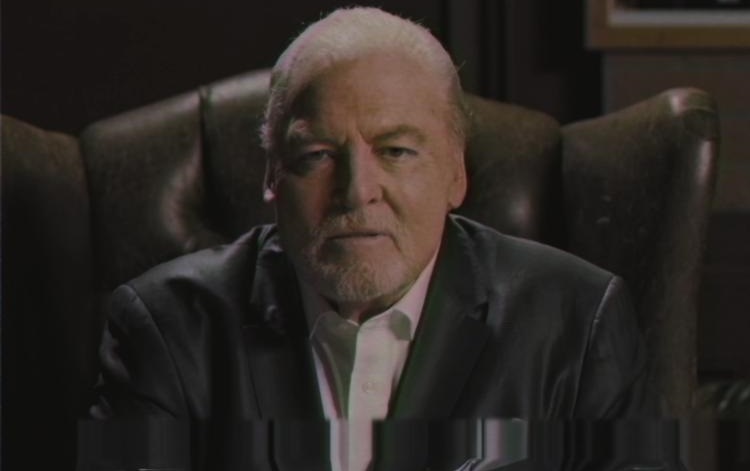
B&S ABOUT MOVIES: What was it like to work with Stacy Keach?
QUINN ARMSTRONG: Stacy Keach is exactly who you want him to be. He is simultaneously an absolute teddy bear and the sweetest guy in the world and a total professional, while also being the scariest man I’ve ever met. He’s not even trying to be scary or anything. He’s Stacy Keach and has that voice.
We blocked out two days for him to do his whole thing. And I did so much prep the night before. I made notes everywhere in my script. He walked in, sat down, nailed the first day, nailed the second take, nailed the third take. And by halfway through the day, I was like, “I have to start giving this guy notes.”
I mean, I’m just sitting here and he’s so good. So I just started doing like alternate versions. Because both of the days when Stacy was on set, we left three hours early.
I tend to work with theater actors, because my background is in theater. And so I like the ability to work with someone technically. Film actors are great. But oftentimes, you have to like, imagine you’re, under enemy fire and you have to do these scenarios, and all that sort of thing. Whereas with theater actors, you can say, “Just pace it up a little bit.”
There was a real range of experience on this on this set. And it was fast, because I’m really proud of the casting and I worked with some great actors. Vayu O’Donnell, who plays Jim, gave one of the best performances I’ve ever seen in a really difficult part. That’s a really tough role to play. And the funny thing with Stacey, it’s not a matter of bringing the thunder in the big emotional moments. It’s a matter of tiny little adjustments that he makes for the camera that makes everything so much smoother. And that’s just, you know, that’s just experience. Yeah, I can’t say enough good things about him.
B&S ABOUT MOVIES: I love the scene where he’s standing outside the car and keeps snapping his fingers to change the different stages of reality. It’s the most amazing thing in the movie.
QUINN ARMSTRONG: It wasn’t supposed to be like that. What happened was, we went through our main phase of production. And then we shot Stacy and ended up not having the budget to shoot a car chase scene where Jim chases down Mark and runs him off the road.
I actually like it much better this way. Because it’s now this funny thing where as we pull back more layers of reality, as we move away from the VHS, we move out of the 4:3 into the 16:9 aspect ratio and things become simultaneously more real and more theatrical. The finger snap is a very sort of theatrical gesture and something I like setting up. There’s something pleasantly sort of…there’s a pleasant energy to setting up things that are extremely real and extremely artificial side-by-side and letting them play with each other. But I really liked the way that actually ended up turning out here.
I’m a big believer in playing to your strengths. If we had $5 million, we could do a good car chase, but we didn’t have the money and all that scene would do is just try to satisfy the genre. And that’s not a good enough reason to do something.
The sort of meta-textual stuff is all about subversion. They only work if they’re tied to a grounded character arc. Otherwise, it’s just sort of smart and clever for the sake of being smart and clever. That’s really what I wanted to try to avoid. I wanted all of the deconstructed elements to be related to Jim’s emotional collapse. Otherwise, yeah, it gets too clever and becomes sort of dismissible.
B&S ABOUT MOVIES: What influences your directing wisely? Is it something or someone unexpected?
QUINN ARMSTRONG: The hardest thing about this movie is that we could never be elegant. We could never do things you usually do on set when you’re running behind, like combine shots and finish a scene to cut down on the coverage because we couldn’t do anything fancy. We were really stuck with the style of training videos. But there were a couple of influences.
Like any young white filmmaker, you know that I loved the Twin Peaks return. In the final episodes, there’s this really amazing road trip that that Cooper takes with Diane and it’s very silent the way the sound design drops out. That final drive with Jim and the narrator was influenced by that.
The person who’s always been always going to be influencing me on the set is Billy Wilder. You’re not going to see his influence directly, but when it comes to things like narrative economy, that’s when he comes in. Instead of me saying, “We’re going to have a car chase,” the Billy Wilder influence instead answers, “No. Stacy is just going to snap his fingers.”
There’s a great bit at the end of Some Like It Hot, where we have characters who are all split apart from each other, and we have like, two minutes of screen time left to reconcile them. Generally speaking in a romantic comedy, you would have to have several scenes with Tony Curtis and Marilyn Monroe where she slowly forgave him while he tearfully confessed and all that stuff. And Billy Wilder, all he does is he has Tony Curtis confess, Marilyn Monroe accepts it and then he says, “Why?” And she says, “I told you, I’m not that bright.” And that’s it. That’s the whole reconciliation. And it’s amazingly well crafted and tight.
In Survival Skills, there are narrative dead ends on purpose. You know, there are scenes that feel like filler. And they have dramatic importance. They’re there to give a chunky feel to the whole thing, which should not be a smooth ride.
I get asked this question and the answer is always different, but today, let’s go with Billy Wilder. It can change every day. And it’s funny, because as I was working on this movie, my absolute cinema comfort food was Magic Mike XL. I’ve never seen the first one, but the sequel is such a sweet film and I watched it throughout. And as I was screening it for my distributor, I stepped back and was like, “That shot. I stole it from Magic Mike XL.”
There are people who can prepare and show up on set and have it all figured out, savants like Kubrick and Fincher. But for me, you know, I like there being a subconscious element to it. I’m sort of a more emotional director…influenced by Billy Wilder and Magic Mike XL.
The job of the directors is essentially management. Coordinating departments so that everyone’s on the same page making the same thing. And it’s a lot more fun for everyone else. And especially for me, if rather than going up to the DP and being like, “Okay, let’s get on the 70 millimeter lens. I want you over here, I want to feel like here, I want to bounce here…” Instead I can tell them, this is what the characters are about to say and here’s how I want this to feel. Do your job now, but this is how the movie should be emotionally instead of just technically.
Allie Schultz, who was the cinematographer on the movie, she did such great work and got so many amazing shots and I just…I drowned them in VHS in post.
B&S ABOUT MOVIES: The thing that struck me is…we get so many movies to review a month. And so many are smaller budgets and they always have excuses, like…we only had so much money. Your film feels different in that there’s a point of view and art. Because a great camera angle or an actual idea in the script doesn’t cost anything.
QUINN ARMSTRONG: I consider myself incredibly lucky. Because temperamentally, I’m inclined towards high concept material in vaguely genre realms and that’s something that you can do real cheap and make your money back. And I know people who are temperamentally inclined towards like space operas. And, you know, I’m sure that you’ve seen a dozen people who watch Star Wars as a kid who wanted to make a Star Wars movie for, you know, 300 bucks in their backyard. Like, gotta, you got to scale it down and deal with the resources you have.
If you don’t have an original idea, then you have to compete on the basis of your presentation and your execution. And if you’re competing on that basis, you have to have a lot of money. Because you’re not going to beat Disney. You can’t outspend them, so you’ve got to do it on ideas.
B&S ABOUT MOVIES: But if you look at the shelves at Walmart, it’s all similar movies.
QUINN ARMSTRONG: With us talking to distributors and sales agents, I talked to a number of pretty big name companies who were like, “We love the movie, but we have no idea how to sell it.” It’s not for them to figure out how to sell Survival Skills, which would take a lot of time and effort because there’s no map. They don’t want to do that and I totally get it, you know, their businesses, it doesn’t make sense for them. They could knock off a slasher movie with a farmhouse, shoot it, cut it, send it out and it sells.
I bemoan the state of the industry often, but at the end of the day, it’s, it’s what people will buy and how people value their time. We just have to give them the option of something better.
B&S ABOUT MOVIES: Because people want safety and something they’ve seen before.
QUINN ARMSTONG: I get it. I’ve watched Bob’s Burgers eight or nine times the whole way through. Sometimes, I want to see something comfortable. I get it.
We want to thank Quinn for doing this interview and AJ Feuerman for setting it up. Also, we urge you to watch this movie, which is now available everywhere movies are streaming. You can learn more on the official Facebook and Instagram pages for Survival Skills.
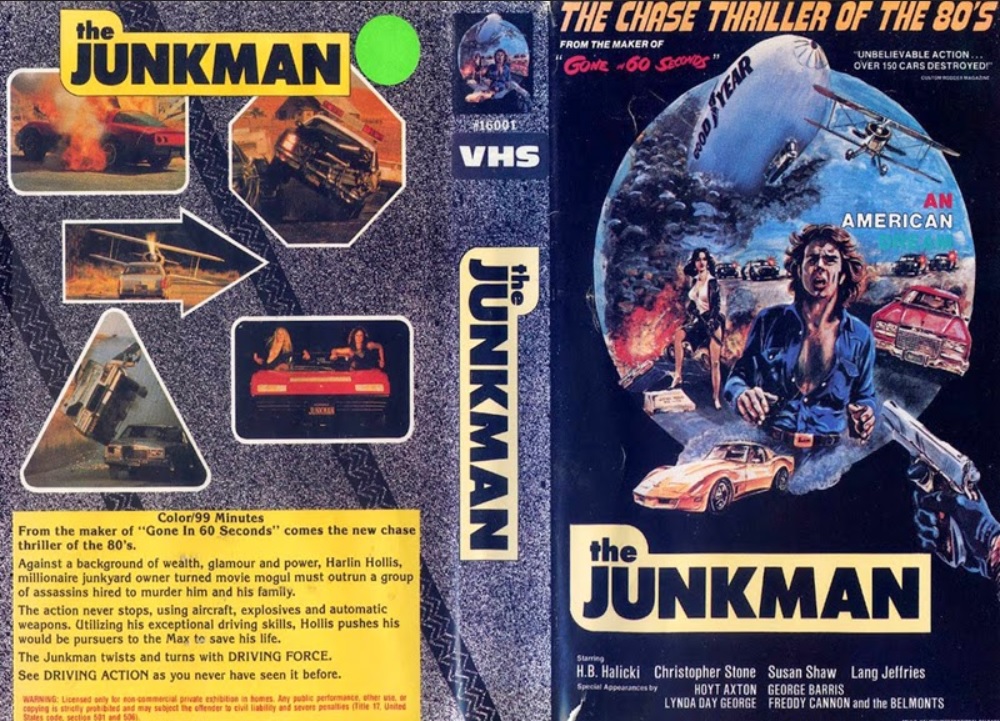
H.B. “Toby” Halicki, the director of 1974’s Gone in 60 Seconds fame, wrote, directed, produced, and stars in this second installment of his Gone in 60 Seconds trilogy — a meta-film that presents that 1974 drive-in blockbuster as a film-within-a-film alongside the filming of Halicki’s “new film,” which is Deadline Auto Theft. The Junkman and Deadline Theft Auto are both centered on the theft of a rare 1974 Bricklin SV-1.
When we meet junkman-turned-stuntman-cum-filmmaker Harlan B. Hollis, his movie Gone in 60 Seconds has taken Hollywood by storm and is set to premiere at L.A.’s famed Cinerama Dome. He’s also in production of his new movie, The Junkman, which stars Hoyt Axton as Captain Gibbs.
Does this have a plot? Or is it just a lot of car chases n’ crashes?
Well, a little of both.
Jealous of his brother-in-law’s success and angered by his sister’s crash in the new, red Mercedes that came as result of the film’s success, sociopath Michael Fox (Christopher Stone, wife of Dee Wallace; both starred in The Howling), who works as Hollis’s public relations manager, hires a team of assassins (two hitmen and one slinky-sexy hitwoman with a designer handgun) to kill him on the way to the yearly “James Dean Festival” in Cholame, California, to promote the film.
Of course, the bullets fly as the cars, the crop-dusting biplanes, and the helicopters crash in a flurry of non-stop action — or guffaws as result of all the improbably, over-the-top crashes. There’s even an epic scene with the Goodyear Blimp (!), which Harlan commandeers to save the Cinerama Dome from being blown up by the assassins under Fox’s employ. And if pinching John Frankenheimer’s 1977 epic Black Sunday wasn’t enough, Halicki and Christopher Stone sport tux and three-piece suits as they battle it out on the movie theater’s roof James Bond-style.
Seriously. For reals. This movie is sick . . . and a bag o’ chips.
So, yeah. If you want action and crashes, this is your film, but wow . . . since much of this was filmed on-the-fly without permits, it offers strained acting that leaves the proceedings look like a Larry Buchanan conspiracy fakeumentary — about H.B. “Toby” Halicki dealing with the price of fame — and not an actual H.B hackjob of his own film.
But, my god, do I love this friggin’ movie!
You can watch the movie on You Tube HERE and HERE — and based on the clean rips, they’re from the 2001 DVD officially reissued by H.B.’s wife Denice Shakarian Halicki. Remember: H.B. died in August 1989 completing a stunt for the “official” Gone in 60 Seconds2 sequel to the 1974 original.
The caveat of those DVDs: They’re void of the rock ‘n’ roll and country music soundtrack (four tunes written by Hoyt Axton, with two performed by Axton and two by Freddie Cannon and the Belmonts) from the original film and its initial VHS release — and replaced with a generic synthesizer music score. For example: The great, original theme song written for the film and sung by Axton, “James Dean and the Junkman” is excised for an awful Beverly Hills Cop synth-ripoff.
But alas, we found a fan-restore soundtrack version HERE. So if you want to own this — with the original soundtrack and uncut scenes — you’re better off finding the original VHS by Trans World Entertainment, which contains the original unedited/unaltered film.
About the Author: You can learn more about the writings of R.D Francis on Facebook. He also writes for B&S About Movies.






 B&S About Movies
You must be logged in to post a comment.