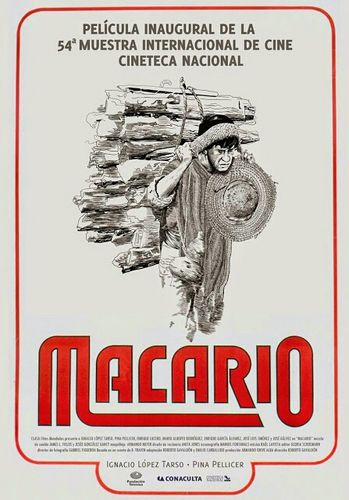
The first Mexican movie to be nominated for an Academy Award for Best Foreign Language Film, it was also entered into the 1960 Cannes Film Festival. It’s based on the B. Traven novel The Third Guest and is loosely based on an old border legend. It also bears similarities to the Grimm Fairy Tale Godfather Death or The Death’s Godson. It was directed by Roberto Gavaldon.
Poor, hungry peasant Macario longs for just one good meal on the Day of the Dead. In fact, he’s so hungry that after seeing a parade of turkeys, he says that he will no longer eat until his dream of eating an entire roast turkey. His wife steals him one as he goes off to work.
As Macario prepares to eat, three men appear to him. The first one is a fine gentleman who is the Devil and the second is an old man. Macario refuses to share with them, as he believes they are powerful enough to get the food themselves. But a third man, a peasant much like our hero, gets the turkey right away. And that man is Death.
Death is touched by this and becomes friends with Macario, but they never speak, merely stare at one another. He also gifts him with magical water, which can heal any injury. That gift will lead him through all manner of toil and trouble and one final meal with Death.
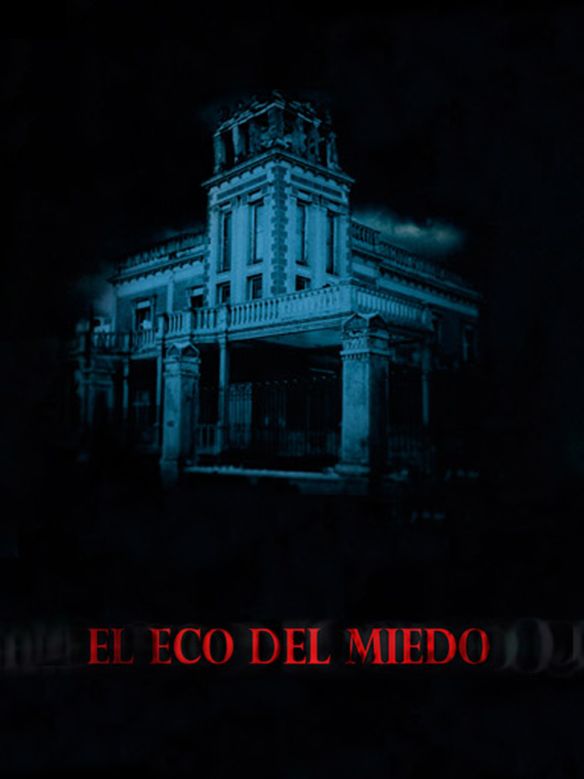
America does not have a copyright on haunted house stories, as this modern Mexican horror film reminds us.
A young woman is in dire need of cash. A child is in a new and unfamiliar place. And there’s a dog that links them both as they struggle to spend two nights in a house that really should be condemned.
Known here as Echoes In the Dark, this movie proves to me that no one does scary dolls quite like Mexican filmmakers. They still make me jump in their films while they come off boring up here in the U.S.
This was Sam Reyes first full-length film and while it’s not groundbreaking, it’s competent and delivers a few scares. You can check it out on Tubi.
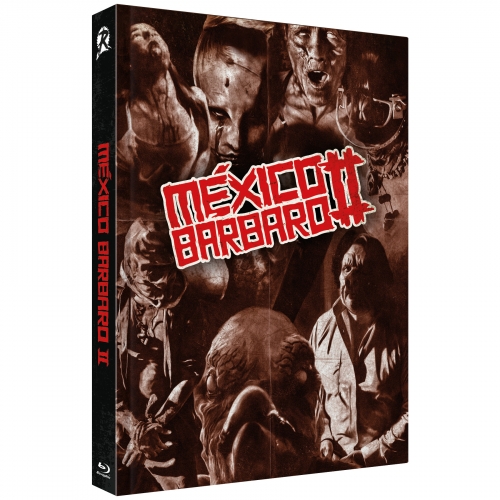
The sequel to 2014’s Mexican Barbaros brings together more south of the border filmmakers to create a portmanteau movie that only had one rule: each story had to be about something related to Mexican culture without repeating anything from the first movie.
Tijuana’s Abraham Sanchez starts the movie with Juan the Soldier, a story about a soldier who makes a deal with the devil to come back after his death. Sanchez’s first movie was a short called Antropofagus that cost $20, so he’s my kind of filmmaker.
Diego Cohen made Paidos Phobos, a tale of a mother who is behind a door, hiding, that the main character is afraid to see. Cohen also directed the films La Marca del Demonio and Perididos.
Potzonalli is a fourth-wall-breaking comedy by Fernando Urdapilleta, who also directed Estrellas Solitarias. It’s the story of a father getting his just reward for how he treats his family.
Christian Cueva and Ricardo Farias made Fireballs, the story of demons who transform amateur pornography into a murderous evening. This team is called Giant Stories and they’ve mostly worked on short films.
Michelle Garza’s Vitriol is the story that most point out in this collection. Like most of the directors in this movie, she’s mainly worked on shorts. I’d love to check out her movie La Rabia de Clara, which is about a woman quarantined with rabies yearning to become part of a pack of wild dogs.
Do Not Sleep is a story of old grandmother’s tales by Sergio Tello. It Is Time, by Carlos Melendez, is about bullying, something that the director has explored in other films like Hysteria. And Exodontia, by series boss Lex Ortega, is a frightening tale of the tooth fairy.
While there is no uniting story, the idea of seeing Mexican creatives handling uniquely Mexican themes is the whole reason to see this film. I enjoyed it as much as the original.
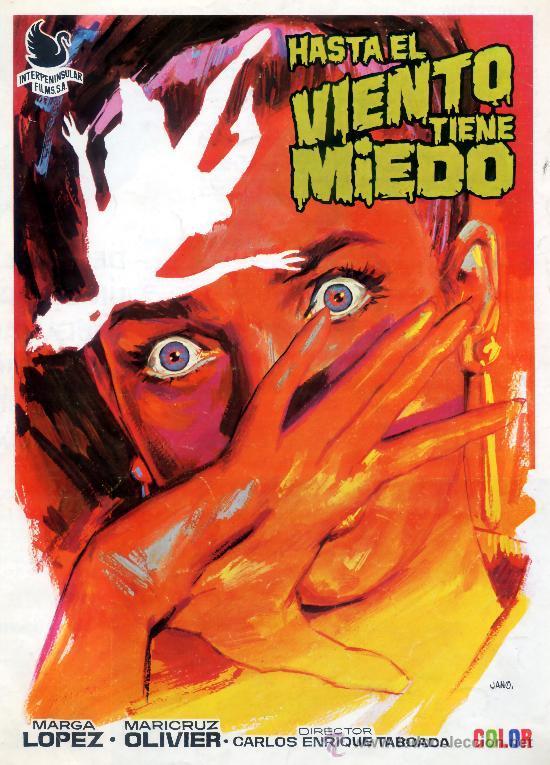
Translated as Even the Wind Is Afraid, this Carlos Enrique Taboada-directed horror film touches on the gothic and predates a very similar feeling film, Suspiria, by nearly a decade.
It’s all about Claudia, a student who investigates a tower that keeps showing up in her nightmares, where she sees the hung body of a student who killed herself years before and whose ghost has been haunting the teachers.
It turns out that the ghost is real and it is Andrea, a girl who had asked to leave the school to see her dying mother before it was too late. When Bernarda (the principal of the school) refused, Andrea hung herself inside the tower. Now, Andrea will not rest until everyone pays. And for some reason, she’s picked Claudia to help.
This movie was remade as The Wind of Fear in 2007, with Alicia Bonet (who played Claudia) playing her mother.
That said, I’d recommend you check out the original, which was incredibly entertaining. It really does have that feeling of isolation and worry that the teen years engender, with plenty of gothic mood as well. You can see its influence on del Toro’s The Devil’s Backbone, particularly in that movie’s setting.
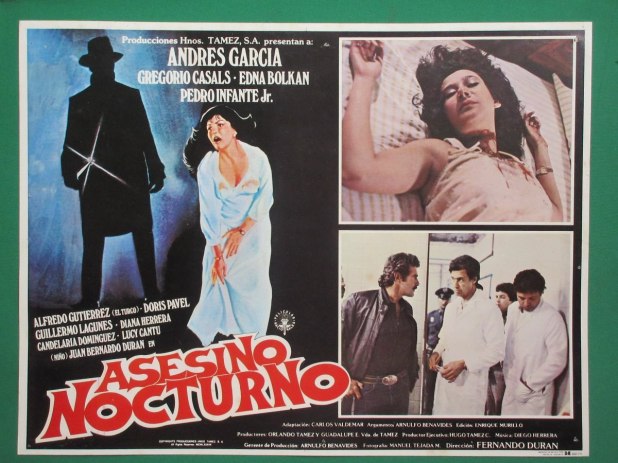
Sometimes, your quest for Mexican gold is fruitful. Other times, you discover movies like this, which translates as Night Killer. If you’re thinking — I bet this is a lot like a giallo, you’d be right. But it’s not all that great, I hate to report.
Actually, I take some of that back. Once you get past the cops — who are the most boring parts of any giallo, so director Fernado Duran Rojas gets that right. He also gets the blasting synth parts and lots of gruesome murders correct as well. Yes, that’s right. The same guy who made El Extrano Hijo del Sheriff, which is nuanced by comparison to this.
Edna Bolkan — who was Olivia, the heroine of Grave Robbers and also Don’t Panic right around the same time this was made — is the final girl. Actually, she played Olivia in Cemetery of Terror, too.
That said — if you’re getting into Mexican horror, I can think of a few better films. Same as if you’re looking for a giallo. Let me make the mistakes so you don’t have to.
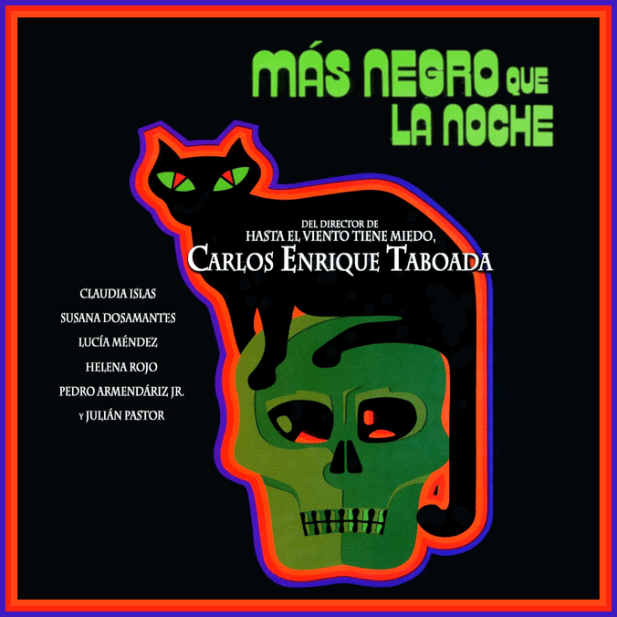
When it comes to 70’s Mexican horror, the name Carlos Enrique Taboada is one that you can depend on. This one is a modern gothic horror about four young women who get to move into a large mansion with one condition: the dead aunt’s black cat Beker.
Yet when the cat is found dead, so are two of the girls — Aurora (Susana Dosamantes, Brian Trenchard-Smith’s Day of the Assassin) and Pilar (Helena Rojo, Mary, Mary, Bloody Mary).
Ofelia (Claudia Islas, the “Mexican Brigitte Bardot”) and Marta (Lucia Mendez, who as Vanessa was one of the first starring telenovela characters to be killed off) must now try to survive, but seeing as how Marta had joined the other two girls in the killing of the cat, it’s only a matter of time before she joins them in the great beyond.
This is a classy horror film that I’d compare to Corman and Bava, except set in modern Mexico. In 2014, it was remade in America as Darker than Night by Henry Bedwell.
Arturo Ripstein, who also made The Castle of Purity, directed this film, which tells us of the black magic — or maybe not — within the titular aunt Alejandra (Isabela Corona, who started her career as a diva of the screen in the 30’s) causing chaos just by existing.
Alejandra arrives to stay in the house of Lucia, Rudolfo and their three children. A bitter older woman given to mood swings, the children eventually begin to torment her, by which point she reveals her witch nature (if you’ll pardon the pun).
She finds ways to get back at each of them, choking out her nephew through sorcery and setting the house ablaze when one of the children burns her face. This is a film that presents magic as a fact of life — and in some cultures it is — and those who believe that we have aged out of the occult in modern times must pay the price.
As the great conspiracy writer James Shelby Downard once said, “Never allow anyone the luxury of assuming that because the dead and deadening scenery of the American city-of-dreadful-night is so utterly devoid of mystery, so thoroughly flat-footed, sterile and infantile, so burdened with the illusory gloss of “baseball-hot dogs-apple-pie-and-Chevrolet” that it is somehow outside the psycho-sexual domain.”
The Cine de Terror Mexicano movement brings us eight different stories by eight unique Mexican voices spread out throughout the country. These stories bring to life the most brutally terrifying Mexican traditions and legends using modern film techniques.
All eight of the directors were given free rein to decide on the genre and style of film they’d want to make.
The first story, Tzompantli, is by Laurette Flores, a relative newcomer. It fits into the nota roja, or red note, story tradition of the horrifying practices of drug dealers and Satanists, as well as how they visit horror on normal people. This tale is about a gang of dealers who trace their traditions back to the Aztecs.
Jaral de Berrios by Edgar Nito, who recently made The Gasoline Thieves. His work also fits into the criminal side of horror, focusing on two thieves hiding in the ruins of Hacienda del Jaral de Berrios, which was once home to one of Mexico’s richest families before descending into dust.
Aaron Soto’s Drean (Drain) is a lesson as to why you should never smoke a joint that you find on a dead body. Trust me. It does not end well.
Isaac Ezban, who made The Similars, seems to be channeling the spirit of 1990’s VHS-era Mexico gore with his story La Cosa mas Preciada (That Precious Thing). A night of lovemaking in the woods turns incredibly disgusting, thanks to some local trolls. I would have loved to have seen this segment with a rowdy theater.
Lo Que Importa es lo de Adentro (What’s Important is Inside) is by Lex Ortega and concerns a special needs girl and the boogieman that she is sure is her building’s handyman.
Jorge Michel Grau is best known to American audiences for We Are What We Are. His story is Munecas (Dolls) and fits the slasher genre quite well, along with — of course — disturbing doll imagery. I’ve said it before and will say it many more times, but no one makes dolls more disturbing than Mexican filmmakers.
Ulises Guzman, who has worked as a stuntman, writer and even an editor, directed Siete Veces Siete (Seven Times Seven), which is about a ritual to bring back the guilty and make them pay after death.
Finally, Dia de los Muertos (Day of the Dead) is by GiGi Saul Guerrero, who has acted in several films, as well as creating and directing the horror web series La Quinceanera. It’s pretty much an excuse for strippers to dress as skeletal creatures and murder their clients. Please don’t take that as a criticism, as this scene was very well shot and was quite entertaining. This scene was originally a short film shot in 2013.
Much like all modern anthology films, this is a mixed bag. There’s no link between the stories, other than the talent is all from Mexico. Maybe it will introduce you to some new filmmakers. Or you’ll be bored by it. It’s certainly better than the majority of the tossed together streaming movies that come up north just about every day.
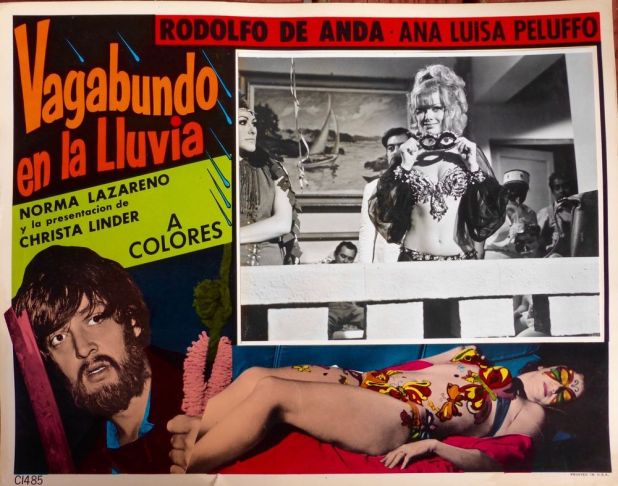
A night in the country for three women — and one man — from wildly different social spheres and levels of monetary respect turns dark and deadly in this 1968 film from Carlos Enrique Taboada, who wrote and directed so many of the greatest classics in Mexican horror. I’ll give you Poison for the Fairies, Even the Wind Is Afraid and Darker Than Night as examples.
Angela (Christa Linder, Night of 1000 Cats) is young, gorgeous, rich and happily married. As she speeds toward her opulent home, she doesn’t realize that Monica (Ana Luise Peluffo, Intrepidos Punks) is drunkenly passed out in the back seat. She’s well-off as well, but bitter and hurt by life. Then there’s the young girl from the wrong side of the tracks, Raquel (Norma Lazareno, Even the Wind Is Afraid, The Book of Stone).
This evening would be tense between these women if it wasn’t for another wrinkle: a homeless man (Rodolfo de Anda, who directed El Macho Bionico) who is ready to rail against humanity in the form of these three different women, as he is trapped outside as a very real storm begins to rage.
This is a movie unafraid to tick off the boxes of exploitation, starting with two partygoers who arrive in full Nazi regalia and including Peluffo getting nude, as she was one of the first Mexican actresses to do so in mainstream films.
I’d compare this film to the Umberto Lenzi-directed Carroll Baker films. It has that same slow burn that I love so much and the end of this movie feels like the end of the world — as the rest of the world moves on — for those who survive.


 B&S About Movies
You must be logged in to post a comment.