When you say, “Sam, would you like to watch a movie about 1970’s witchcraft from the director of I Am a Groupie, The Girl from Starship Venus and Blood Tracks?” the answer is always going to be yes.
This 47-minute movie is packed with narration from the women about to enter witchcraft and appearances by Alex Sanders, the English occultist responsible for founding the tradition of Alexandrian Wicca during the 1960s.
Sanders was known as the “King of the Witches,” with his skyclad female followers — naked to the unoccult leaning — getting plenty of attention in the era of this film.
Watch as Penny — the girl who thinks she might make a good witch — joins Sanders’ coven! Come now! Into my coven! To become Lucifer’s child! And you also get to see a Wiccan wedding, which is notable for the amount of full frontal male nudity that it has. Flaccid dong, will you take this magickal childe?
This movie is absolutely awesome. I mean, it’s no Witchcraft ’70 — and what is, really? — but it’s one of the more entertaining things I’ve watched as of late.
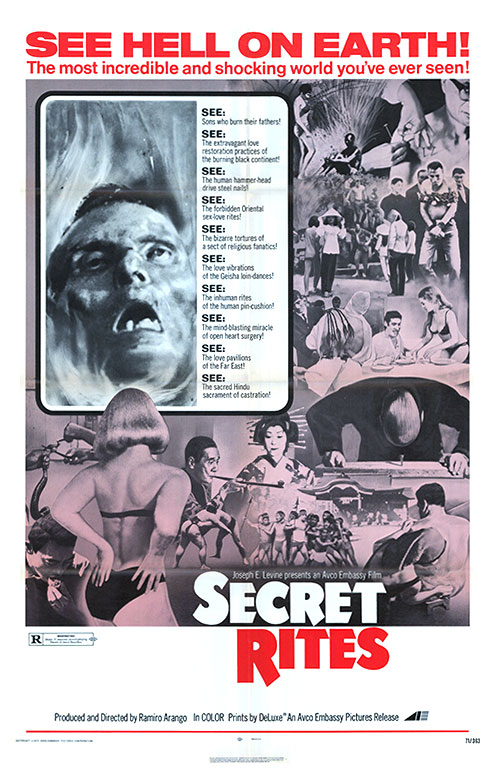
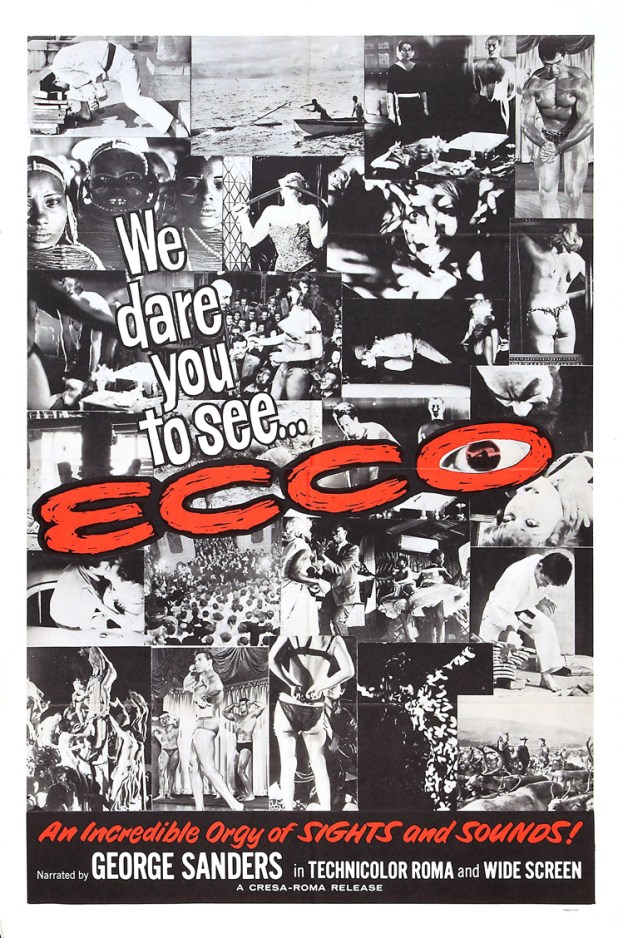
Offsetting the globetrotting shock of this film — watch a woman bite off a reindeer’s scrotum with her bare teeth! — is the voice of George Sanders, perhaps way too sophisticated a man for such an endeavor. That said, money is money, and it’s time for Gianni Proia to take us all around This Shocking World (the other title for this mondo).
Beyond the expected lesbians and strippers — show me a mondo that doesn’t have those and it’s amazing that I am seeing them as commonplace at this point — you also get a trip to the original Grand Guignol and get to watch a man repeatedly impale himself.
The US version — re-edited with a new commentary by absolute maniac Bob Cresse and with an Italian title that means “look here” — adds scenes from World by Night No. 2, another Proia mondo, with bodybuilding showgirls, Roller Derby and some vacation footage. Consider it like watching snaps from holiday, except the vacation goers have no compunction showing you absolute filth.
You can get this on a double blu ray — along with The Forbidden — from Severin.
Get ready for sixty-six minutes of pure scum from 1966, presented by Lee Frost (who wrote Race with the Devil and directed A Climax of Blue Power, along with The Thing With Two Heads) and Bob Cresse (whose Olympic International Films also brought The Scavengers and Love Camp 7 to the not so silver screen).
AGFA, who got the print of this out to the world all over again, says that it is “packed with staged scenes of Swiss lesbians, L.A. rapists, Parisian tarts and Nazi strippers.”
There’s also a sexy karate school commercial that for some reason has a girl taking a shower, murder and lots of strip club footage because it was 1966 and that’s the kind of thing that wasn’t widely available yet.
There’s also a great jazz/surf rock soundtrack under the hyperbolic narration. This had to blow minds fifty years ago. Today, it’s all pretty tame. But hey — somebody had to break ground, right?
You can get this on a double blu ray — along with Ecco — from Severin.
During World War II, Ray Kellogg was a US Navy Lieutenant as part of the O.S.S. Field Photographing Branch. That’s where he met John Ford and when Kellogg came back to the U.S., he headed off to 20th Century Fox, where he eventually became the head of the special effects division and helped invent CinemaScope.
He directed four films: The Giant Gila Monster;My Dog, Buddy; and The Green Berets, which he co-directed with John Wayne and Mervyn LeRoy.
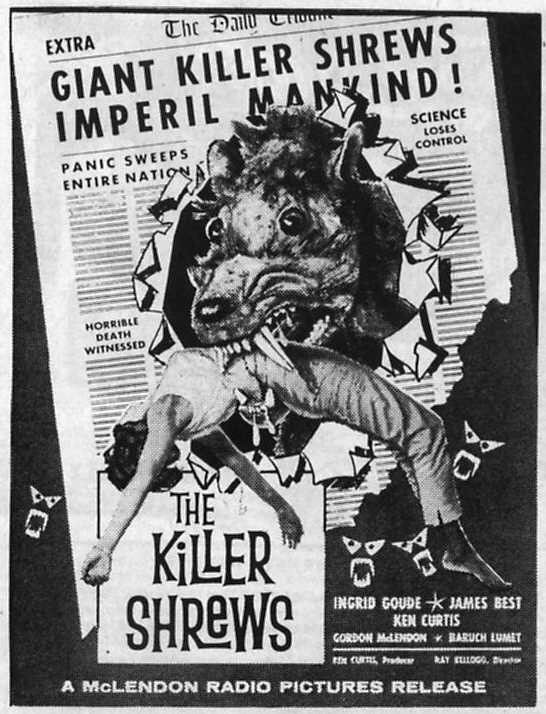
But today…today we’re here to discuss the fourth of his films: The Killer Shrews.
James Best has the lead in this movie as Captain Thorne Sherman. Best is probably best known for playing Sheriff Roscoe P. Coltrane on The Dukes of Hazzard, but he was a classically trained actor. So was Sorrell Brooke, who played his partner-in-crime Boss Hogg. The two often delighted in improvising most of their scenes together. And while they were working with younger and even untrained actors, by all reports they treated everyone incredibly well.
In addition to acting, Best was also a painter of some renown, a writer, a black belt and even ran an acting school, counting Burt Reynolds, Gary Busey, Clint Eastwood (who posted the insurance bond on Best so he could be on Dukes as the actor had a history of heart attacks), Roger Miller, Glen Campbell, Regis Philbin, Lindsay Wagner (who was his family babysitter before he encouraged her to act) and Quentin Tarantino as his students. Here’s some trivia: he was also a cousin of the Everly Brothers.
So why did he do this regional horror film? “I did the original The Killer Shrews as a favor. I made a movie with Sammy Ford, who was friends with a special effects man, Ray Kellogg, who wanted to direct his own picture. And we looked at the original’s script, and he didn’t have hardly any money whatsoever, but I did him a favor by acting in it. Ken Curtis, of course, was producing it from the start. I like Ken, and he wanted me to do it, so I went down there to Texas where we shot this thing. I didn’t realize it was so cheap. I mean, it was really cheap. For me it was a blast, but it was so bad! I think it was voted the worst picture of the year at the time. And then it caught on as a drive-in cult film, and believe it or not, after so many years I noticed that it was playing all over the place.”
Sherman and his crew are delivering supplies to a remote island that’s manned by a group of research scientists led by Marlowe Cragis (Baruch Lumet, who was a Yiddish theater actor), research assistant Radford Baines (Gordon McLendon, a former pirate radio operator who went on to create one of the first mobile news units in American radio, as well as the first traffic reports, jingles, all-news radio station and “easy-listening” programming; he also produced this film, The Great Gila Monster and Escape to Victory), Marlow’s daughter Ann (Ingrid Goude, the Swedish daughter of a steel factory manager that had been Miss Sweden for 1956; her Universal Pictures contract wasn’t successful, although she was in the TV show Love That Bob and the Rowan and Martin movie Once Upon a Horse…), her about to be cucked fiancee Jerry (Ken Curtis, who was the lead singer for the Sons of the Pioneers on their big hit “(Ghost) Riders in the Sky” before he was Festus on Gunsmoke) and the man who takes care of all of them, Mario.
They picked the wrong research lab to visit, because it turns out that the scientists have been experimenting on shrews to test a serum that will shrink humans to reduce world hunger. But the problem is that the drug makes shrews twice as big. You’d think they would have figured that out long before they started injecting shrews, but I’m no scientist.
Before long, the shrews show up — The Rats Are Coming! The Shrews Are Here! could be another title for this — and chew right through the walls of the lab, along with anyone that gets in their way. The humans confound these monsters by using oil drums as suits of armor and making it to the beach, just in time for Ann’s fiancee to get eaten alive when he stays behind. She and the manly hero celebrate with a kiss as they leave behind the island and the shrews to their fate.
The beauty — or horror — of this film is that the close-ups of the shrews are all hand puppets, while the long shots are coonhounds with giant rugs over them. This is the same effect technique that was used in the rat movie Deadly Eyes twenty-three years later.
A sequel, Return of the Killer Shrews, was produced in 2012, bringing back best after fifty-four years as Thorne while Bruce Davison (Willard himself!) taking over the role of Jerry. It also features Best’s Dukes co-stars John Schneider and Rick Hurst. There was also a parody remake in 2016.
You can watch this on Amazon Prime and Tubi. It’s also available in color on Amazon Prime or you may choose to hear riffing over the movie from Mystery Science Theater on Amazon Prime and Tubi.
This ambitious, affable children’s film from Denmark—which features 100 backgrounds and 30-plus characters drawn in Photoshop, with each cell painted-by-hand and each character layered 600-times to enable movement—imagines famed English mystery purveyor Agatha Christie as a young child—in this case through the imagination of a lonely ten-year-old Agatha-Christine. Through books—and adorned Christie’s famed “Miss Marple” outfit of a large Fedora and red blazer with skirt—“AC” imagines herself solving crimes in a black-and-white, film noir world.
Moving with her mother and two siblings (her teen-sister Sara and her into-everything baby brother Kevin) to a new apartment, the building’s basement—complete with a friendly, talking gecko as her new “sidekick”—proves to be the perfect space to start her own detective agency. When a local shop becomes the scene of a crime, young Agatha sets her sights on Vincent, a ten-year-old skateboard-loving next door neighbor as her main suspect. It’s that “weird feeling” she gets in her stomach every time she sees him—”something’s up” with that boy.
If your little ones enjoy the reruns/restreams of the early 2000’s American-imported BBC children’s animated series Charlie and Lola, then they’ll enjoy the adventures of Agatha and Vincent. The action here is easy to follow and low-key, which is great for the kids but not so much for the adults, so a parent has no worries allowing their kids to stream this without supervision on their smart devices. They’ll learn valuable lessons regarding faith and trust in others, how to deal with feeling like an “outsider,” and that you should always be yourself and believe in the best “you” you can be—a great message for children to learn.
TriCoast Entertainment imported Agatha Christine: Spy Next Door for the first time to the U.S. on various VOD and PPV digital platforms (Amazon, AT&T, Fandango, FlixFling, InDemand, iTunes, and Vudu) for release on June 16.
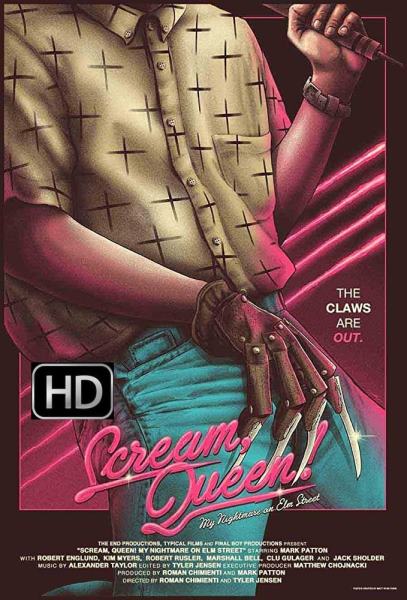
Back when we first discussed A Nightmare on Elm Street Part 2: Freddy’s Revenge,we touched on the story of Mark Patton, whose role as final boy Jesse was once said to be only subtext, but really is one of the first out gay characters in a mainstream American horror film. There’s no subtext at all as you watch this movie with eyes beyond its 1985 release.
Patton — the star of this film — has struggled with his anger over his horror role for years, as he felt betrayed as the filmmakers knew that he was in the closet. That, again, was the world of 1985.
Director Jack Sholder (Alone in the Dark, The Hidden) claims that at the time that he made that film that he didn’t have the self-awareness to think that the film had any gay subtext. Meanwhile, writer David Chaskin(I, Madman,The Curse) would state that Patton played the role in too gay of a way.
So what is the truth? And where do we go from here?
This film, directed by Roman Chimienti (who also worked on Wrinkles the Clown) and Tyler Jensen, this movie is at once a look back at 1980’s horror films, an examination of the reassessment of them decades later, fan culture and Patton’s story. Any one of these could have made for a great documentary, but I feel that the need to work them all into one story leads to somewhat of a lack of focus.
That said, the scenes of Patton finally confronting Chaskin are quite emotional and the examined thought that the star is finally getting the notoriety for the role that once ruined his life is pretty interesting.
I wanted to love this more than I did, but again, the lack of focus at times bothered me. Some may see Patton as someone who never got past his grudge against Hollywood, but I’m of the mind that we can’t judge someone’s life because we have not lived it. I may have grown up in the years of people being forced to stay in the closet and the aftermath of AIDS, but I never directly confronted either of these life events that obviously shaped who Patton is today. Of all things, he’s a survivor, which is the most life-affirming part of this interesting film.
You can learn more on this movie’s official website and Facebook page. It will be streaming on Shudder soon.
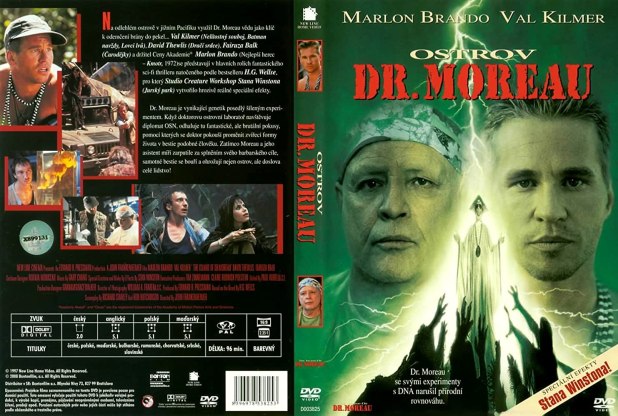
Bruce Willis was originally the lead, but allegedly dropped out in the aftermath of divorce procedures from his wife Demi Moore. He was replaced by Val Kilmer, who had limited availability and unlimited anger issues after he too got divorce papers. Then Rob Morrow quit because the script kept changing. Brando left after his daughter committed suicide and upon his return, he would refuse to learn his lines and only listen to an earpiece.
Oh yeah — Richard Stanley also had been fired days into production and replaced with John Frankeheimer, who saw this as anything but his dream project.
I mean, what could go wrong at this point?
After spending four years developing the films, Stanley had come to work with New Line, who responded by going behind his back to offer the film to Roman Polanski. Furious, Stanley got a meeting with Brando, who unexpectedly — or not, as Stanley had undergone a magick ritual to gain the actor’s trust — proved very sympathetic to Stanley’s vision. That said, Stanley was beyond familiar with the source work, as well as its connections with Joseph Conrad’s Heart of Darkness, which became Apocalypse Now, which still fascinated Brando. Even better, Stanley was directly related to African explorer Henry Morton Stanley, who had been the inspiration for Conrad’s lead character — and Brando’s role — Kurtz.
That said, days into filming, Stanley was having difficulty with New Line executives and Kilmer, who was a legend of ego on this film. At one point, the former Batman burned a crew member in the face with a cigarette.
Stanley was fired, but disappeared, finally showing up in dogman costume and acting in the very movie that he was to direct. Oh yeah — the full fury of nature would also destroy much of the set.
This movie is an example of actors off the literal rails, with Brando’s wearing an ice bucket on his head with the idea that he had mutated into a dolphin and the bucket was to cover up his blowhole. He also pushed for Nelson de la Rosa, the world’s smallest man, to be his mutated twin. Brando was obviously in a much better movie than the one that we’re watching.
Meanwhile, the actors playing Doctor Moreau’s children had a better time than anyone else, pretty much using the movie’s long periods of downtime getting up to alcohol and drug-addled craziness. Again, they were in a much better film than ended up getting unspooled on the screen.
Charitably, this movie is a mess. Would it have been better if Stanley stayed on board? Well, it certainly wouldn’t have been boring.
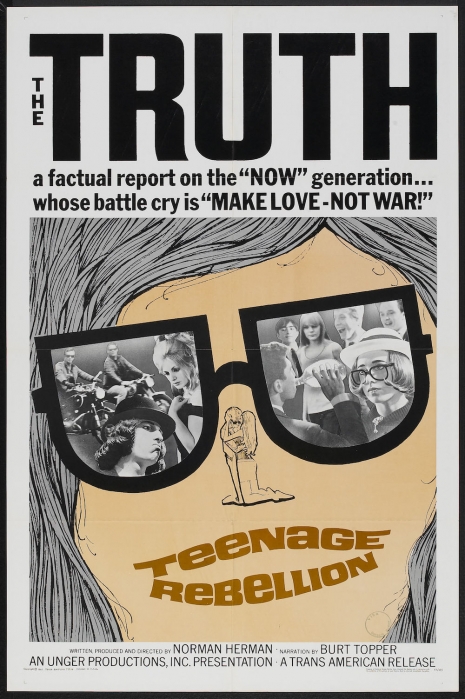
“Across the country, every Friday and Saturday night, they gather in the temples to perform ceremonial dances to a rhythm that seems to reach back in time. It’s called the beat.”
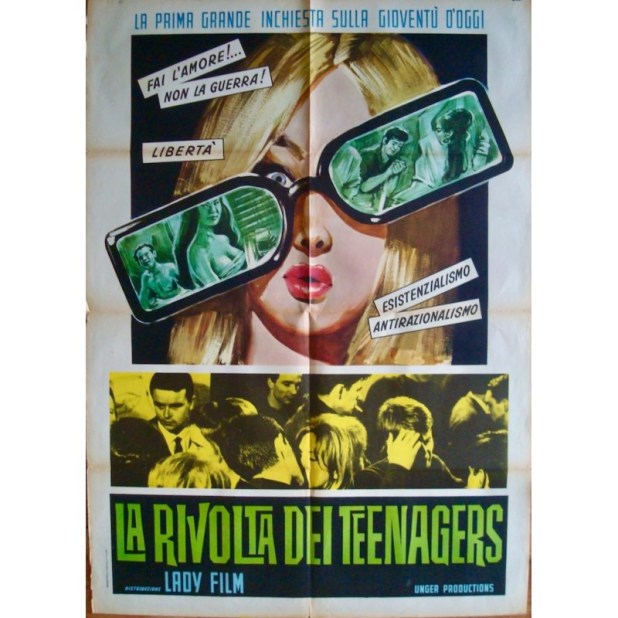
That’s how Mondo Teeno, also known as Teenage Rebellion, begins. Paired with Mondo Mod on drive-in screens across the country in 1967, it gave the non-big city kids the low down on what was going on on the Sunset Strip, in Paris and on Carnaby Street with the real British mods. Go-go dancing? Yep. Bikers? You bet. Surfing? Totally.
Burt Topper — yes, the director of The Strangler — has the voiceover here, reminding us just how strange it all is with these young folks protesting, selling their bodies, doing LSD and having wild beatnik shindigs. How shocking — gay people in Italy! Prostitutes in England! Yet today, this all seems positively quaint.
The music, however, is amazing. The soundtrack was produced by Mike Curb, who had a band called The Mike Curb Congregation, which had a song called “Burning Bridges” that was in the Clint Eastwood film Kelly’s Heroes. He also ran MGM Records, where he dropped 18 artists for their drug use, including The Velvet Underground and The Mothers of Invention, which is ironic as Frank Zappa often spoke out against drug use. The whole battle came to a head when his biggest artist, Eric Burdon, asked to be let go of his contract so he could keep doing drugs. He stayed.
Eventually, Ronald Reagan inspired Curb to serve the public. In 1979, he became the lieutenant governor of California for Jerry Brown’s second term before switching from Democrat to Republican, becoming the national co-chairman for Reagan’s 1980 campaign. Unlike many modern right wingers, Curb Curb has been a leading conservative supporter of gay rights and worked with Harvey Milk.
He also wrote an album with Hank Williams Jr., has a star on the Hollywood Walk of Fame, is in the Nashville Musicians Hall of Fame and has been added to the West Coast Stock Car Hall of Fame. Check out these wild tunes:
The British scenes were directed by an uncredited Richard Lester (Superman II and III, as well as The Knack… and How to Get It and Help!), but the main film came from Eriprando Visconti and Norman T. Herman, who only would direct one other movie, Tokyo After Dark. That said, he did produce Bloody Mama, Rolling Thunder, Blacula and Frogs.
How would a somewhat quiet and totally creative man work within the studio system? Not well, it turns out.
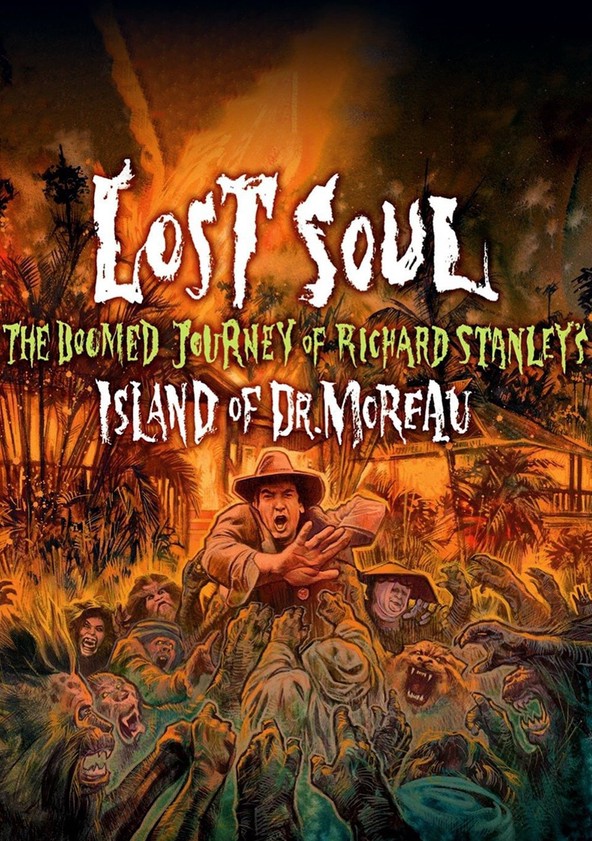
Between witchcraft, natural disasters, changing actors and the sheer gall of stars like Brando and Val Kilmer, Stanley would be replaced within days of shooting his first few cans of film. And yet he’d never go away, somehow hiding amongst the many animals within the film, living within the heart of darkness itself.
Packed with interviews with stars Fairuza Balk, Marco Hofschneider and Rob Morrow, studio executives, crew members and even Stanley himself, the movie that emerges here — directed by David Gregory (Blood & Flesh: The Reel Life & Ghastly Death of Al Adamson, Master of Dark Shadows) — is so much better than the actual film that it discusses.
For what it’s worth, Stanley claims that this film is only sixty percent accurate, with some of the darker events simply glossed over. He also said that he never had four lumps of sugar in his tea, which will make much more sense once you watch this.
I’m biased, as I find Stanley to be a true genius. For more on his life, I recommend the documentary The Otherworld, which is beyond belief.



 B&S About Movies
You must be logged in to post a comment.