Gualtiero Jacopetti and Franco Prosperi could have stopped with Mondo Cane, but no, they had more people to educate. And offend. Actually, mostly offend. This three-year in the making ode to the end of the colonial era in Africa is a barrage of brutality, set to the wondrous music of Riz Ortolani.
Some claimed that the scene that shows the execution of a Congolese Simba Rebel had been filmed expressly for the film, which led to Jacopetti’s arrest on charges of murder. The film was seized by police and editing for the movie had to stop. When Prosperi produced documents proving they had arrived at the scene just before the execution, he was freed.
The American version of the film — which is the one I saw — was edited and translated without Jacopetti, who claimed that this new version of his movie Africa Addio is a betrayal. That version is missing 45 minutes of political setup and exclusively features carnage and gore.
This film more than struck a nerve. While Prospero would say, “The public was not ready for this kind of truth,” and Jacopetti claimed that the movie “was not a justification of colonialism, but a condemnation for leaving the continent in a miserable condition,” the team’s follow-up Addio Zio Tom — while intended supposedly to be an answer to the charges of racism in this film — somehow is even more vile.
You can even see the entire film crew nearly killed while making this movie. They put their lives on the line to bring this to you. Whether you want it or are ready for it are decisions left up to you.
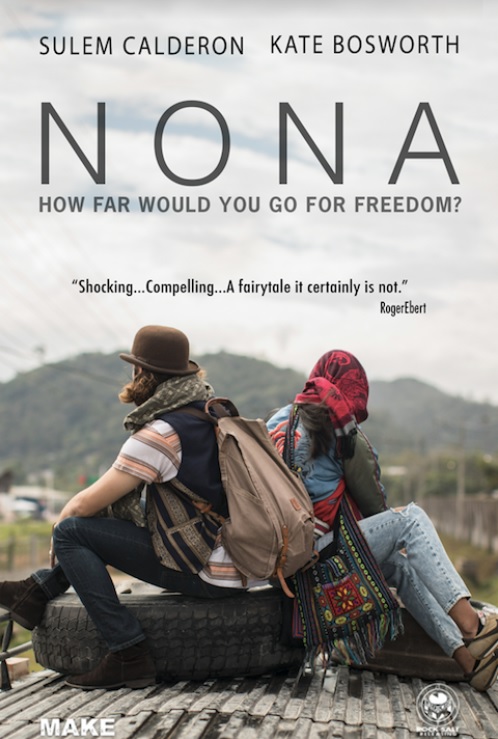
Michael Polish (of the Polish brothers twins), know for the critically acclaimed Twin Falls Idaho (1999), Jackpot (2001), Northfork (2003), and The Astronaut Farmer (2006) returns with his wife, Kate Bosworth (Lois Lane in Superman Returns), in this human trafficking drama.
Nona is a poor Honduran girl who, after losing her father in a shooting and her brother in a home invasion stabbing, makes the decision to head to America to find her only family: her mother who was too poor to pay for her daughter to accompany to the U.S. as she looked for work.
When Nona meets the Vespa-riding Hecho, himself on the way to America, he promises Nona a new life — and a free ride to America: then her world goes dark. When they reach the border, she learns Hecho works with a human smuggling ring. She’s blind-folded and passed off to a Coyote. And she’s led into a life of prostitution in the U.S.
As is the case with any film that carries the Polish seal of approval, Nona is expertly shot and captures the beauty of the wilds of Central America and Mexico. Polish also wisely chose to shoot the film in Spanish with English subtitles which, I realize, is off-putting to some (Kate as a detective who rescues Nona is the sole English speaker). But make no mistake: this tale is rough ride. It’s uber dark, but an eye-opening, recommended watch about a world we don’t want to admit exists but need to know it does.
On an international rollout since 2017, Nona is now available in the U.S. through TriCoast Worldwide and Rock Salt Releasing across all digital and On Demand platforms (Amazon Prime, Hulu, IMBb TV, SlingTV, Starz Online, and Vudu).
Michael Polish is currently in post-production on two films scheduled for release in 2020 and 2021: Forces of Nature (a heist-during-a-hurricane flick starring Mel Gibson) and Axis Sally (a WW II drama starring Al Pacino). His two films in the pre-production stages are The Last Girl in the World (a pandemic drama) and Helios (drama aboard the International Space Station). Each sounds exciting — especially Helios — and we look forward to watching them — as we do with all films from the Polish brothers.
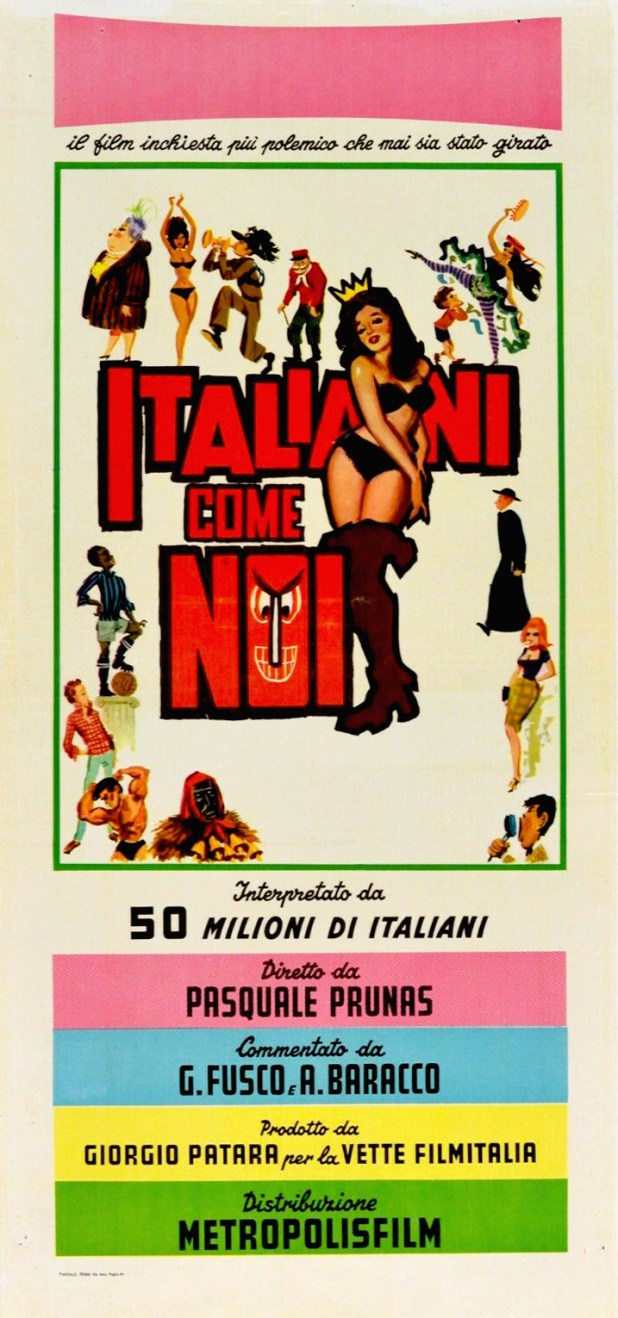
Pasquale Prunas has only one other IMDB entry for a documentary about Mussolini called Blood on the Balcony. However, the writer, Gian Carlo Fusco, would work on several mondos like Realities Around the World and Naked World.
This movie was part of American-International TV’s “Real Life Adventures” syndicated TV package that was offered in 1966. It’s a mondo, but much tamer than any you will encounter. The highlight — other than men toiling in the sulfur mines and the night clubs of the time — is probably a trip to the Venice Film Festival, which looks as if it were shot as a home movie.
Flo and Kay Lyman were not only bullied for being different, but nearly killed by their mother. Yet they are incredibly special. The only identical twin autistic savant sisters known to exist, Flo and Kay have memorized everything in the world, unable to forget dates, songs, the weather, what they ate or what others wore on that date.
They consider one man their personal savior: Dick Clark.
After his stroke, they get to meet with him and explain what he means to them. Soon, their lives would change forever as they would leave their family behind. This movie really hit me emotionally, as I felt so much for the girls.
I’m happy to report that while Dick Clark is no longer with us, the Lyman sisters are. You can keep up with them with this Facebook group. You can also watch the movie here:
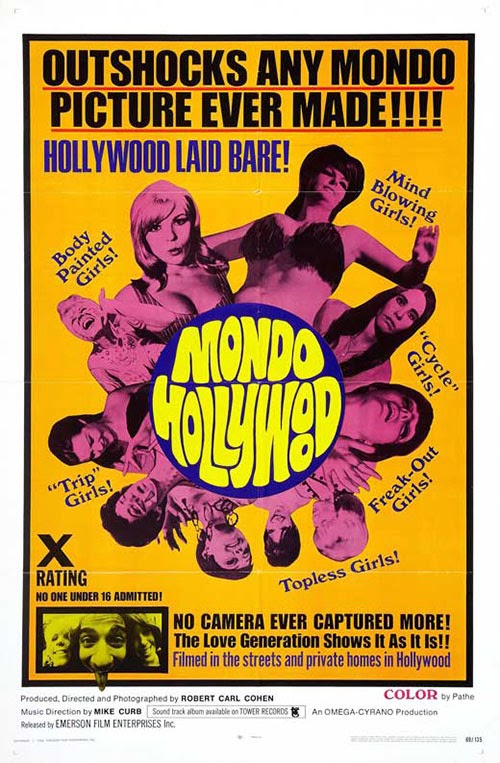
Robert Cohen also made Inside Red China, Inside East Germany, Committee on Un-American Activities and Inside Castro’s Cuba. This movie was sold as starring Jayne Mansfield, who had just died, even though she’s only in it for a moment. I love how each person narrates their own scenes in the film, setting up who they are as we explore Hollywood from 1965 to 1967.
We start with hippie vegan Gypsy Boots and stripper Jennie Lee doing a Watusi dance before meeting S&H Green Stamp — points for anyone that remembers those — Lewis Beach Marvin III, who lived in a $10 a month garage while owning a mountain retreat in Malibu.
We also get to meet doomed hairstylist Jay Sebring, Ram Dass, Bobby Jameson (whose protests and suicide attempts became more of his story than his music), surfers, fashion designers, actresses, transexuals, child fashion models, Bobby Beausoleil and more.
This doesn’t get as scumtastic as most mondo. Your mileage, therefore, may vary.
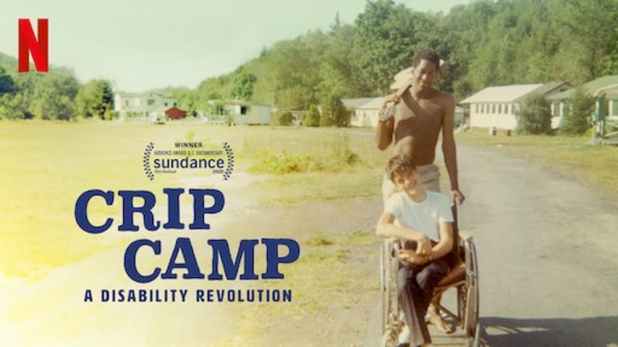
Executive produced by President Barack Obama and Michelle Obama, this documentary is all about Camp Jened, a camp for the handicapped in the Catskills that offered young kids the opportunity to move beyond their confined lives and feel as if they were like anyone else. The things they learned there would stay with them their entire lives.
Many of the campers would find themselves in Berkeley, California, where they learned that disruption and unity would change not only their lives, but the lives of disabled individuals throughout the nation.
I knew nothing of the battle that these brave people went through or how hard they worked and how well they came together to make changes. This one really got to me, hitting every emotion and causing big tears.
This is definitely recommended, as there are many lesson here for all of us to learn.
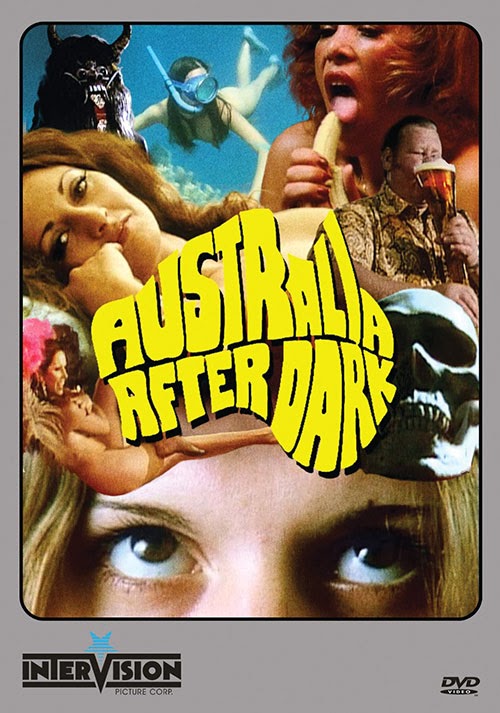
Burlesque, body-painting, snake-eating, mud-wrestling, alien landings, a gay wedding, and Satanism. Yep, director John D. Lamond (Felicity, Nightmares) pretty much watched Mondo Cane and said, “I borrowed a 16mm print of it and ran it on a closed circuit cinema thing and stopped and started the projector and looked at it. It ran on a sort of cycle – pathos, humour, oddity, nudity. I thought okay, what I need to do is shoot about fifty sequences, cut it into something coherent and pacey, and made it on the same sort of thing. I’d have something sexy, then something odd, then something really way-out, then something light hearted. And always do it tongue in cheek, and not have any sequence in the film run longer than about two minutes. And anything sexy, I’ll make it way-out or pretty.”
The British cut of this movie is twenty minutes less than the Australian one. That should tell you exactly how much content is in this for maniacs who need to watch Kiwi girls dance nude underwater or gratuitous milk baths.
Yes, body painting, alcoholism amongst the Aborigines, black masses and strip clubs are all side by side Down Under. I love that one of the people in this movie is named Count Copernicus. Ah, mondo!
An old man, fated to collect souls for eternity, seeks atonement after trading his daughter’s soul in this feature film debut by South African writer-director by Harold Hölscher.
The bankrupt William Zeil returns with his new wife, Sarah, and adopted daughter, Mary, to the family farm he inherited from his estranged father, with the hopes of starting a new life. Lazarus (the incredible Tshamano Sebe), the farmhand who took care of William’s father in his lonely, final hours, assists them in settling into their new, rural surroundings.
Despite Sarah’s misgivings, Young Mary and the elderly, but spry Lazarus quickly develop a bond as kindred spirits, and William finds a “connection” to his later father through the mysterious, but charming old man. But Lazarus carries a burdensome, dark secret with him, literally, everywhere he goes: a demon child with its insatiable appetite for human souls. And the family soon discovers they should have heeded the local’s weariness of Lazarus’s return from wandering afar.
This moody, supernatural exploration of South African folklore — originally known as 8 in its homeland — with a Blumhouse-level of production quality on par with the likes of Get Out and Ma— is rife with gialloesque insect metaphors regarding eternal life and man’s relationship to nature with it’s talk about moths and worms — and carries a J-Horror vibe of the tales of Toshio (Ju-On, aka The Grudge) and Sadako (Ringu, aka The Ring). The film comes with the occasional subtitles when the local, indigenous peoples speak their native tongue, which may turn off the few; but the production values, cinematography, and acting in this non-Hollywood jump-scares cookie cutter on a budget are expertly crafted and more than compensates for the subtitling.
The Soul Collector is via TriCoast Worldwide and Rock Salt Releasing is coming soon to select theaters, digital and On Demand platforms courtesy of Scream Factory. You can learn more about the film at 8themovie.com.
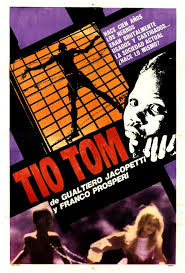
Five years after Africa Blood and Guts, Gualtiero Jacopetti and Franco Prosperi returned with this movie, which is pretty much one of the roughest films I’ve ever made it through.
This was shot primarily in Haiti, where the directors were the guests of Haitian dictator Papa Doc Duvalier, who gave them diplomatic cars, clearance to film anywhere on the island and as many extras as they required to be used as slaves being treated exactly as slaves were. They were also invited to a nightly dinner with Duvalier himself.
If your mind isn’t already blown, stick around.
Goodbye Uncle Tom is based on true events in which the filmmakers explore America in slavery times, using published documents and materials from the public record to make what they consider a documentary, even claiming to go back in time to achieve this level of realism.
This movie was made in opposition to the claims that Africa Blood and Guts was racist. It didn’t work, as Roger Ebert would say, “They have finally done it: Made the most disgusting, contemptuous insult to decency ever to masquerade as a documentary.” He also stated that “This movie itself humiliates its actors in the way the slaves were humiliated 200 years ago.”
The movie was originally released in Italy in a 119-minute version and was immediately withdrawn. I’ve read that the directors were sued for plagiarism by writer Joseph Chamberlain Furnas. It was then re-released with 17 more minutes of footage.
The directors’ cut shows a comparison between the horrors of slavery and the rise of the Black Power Movement, ending with an unidentified black man’s fantasy of living out William Styron’s The Confessions of Nat Turner. In that book, Turned is divinely inspired and given a mission from God to lead a slave uprising and destroy the white race.
This ending upset American distributors so much that they forced Jacopetti and Prosperi to cut more than thirteen minutes of racial politics that would upset their audiences. Pauline Kael still said that the movie was “the most specific and rabid incitement to race war,” a view shared with former Ku Klux Klan leader David Duke, who said that Goodbye Uncle Tom was a Jewish conspiracy to incite blacks on white violence.
This movie is not for everyone. But I feel that it needs to be seen. I rarely get political on this site, but in truth, I feel that we as a country have not done enough to understand the roots of the black experience. While an Italian exploitation film isn’t the best way to learn more, it’s a start.
It’s no accident that Cannibal Holocaustwould eventually use the music of Riz Ortolani to juxtapose the horrific images on screen with the beauty of his compositions. The composer had been working with the duo since Mondo Cane, where his song “More” nearly won an Oscar.
But make no mistake that this movie, while intending to be educational and anti-racist, still employs the tools of the mondo and exploitation. How else do you describe the conceit that these filmmakers have gone back in time, taking a helicopter with them that they use to fly away from the terrors of the plantation at the end?
In 2010, Dr. David Pilgrim, the curator of the Jim Crow Museum of Racist Memorabilia, said that when he showed this film to a class, it led to some major traumas. “On the day that we watched Goodbye Uncle Tom three students had unexcused absences, several cried while watching, one almost vomited; most sat, sad and disgusted. I taught for another fifteen years but I never showed that movie again.”
He went on to say that the film “is a more truthful portrayal of the brutality and obscenity of slave life than was Roots; however, I have some major problems with the film. I find it ironic that a movie that explored the exploitation and degradation of Black people was filmed in a way that exploited and degraded Black people. In some ways Goodbye Uncle Tom was just a XXX movie set against the backdrop of slavery; the “peculiar institution” served as an excuse to show sexual and violent gore. Jacopetti and Prosperi told a great many painful truths about slavery but they debased hundreds of Blacks to make the film.”
“I said all of that to say this: Jacopetti and Prosperi were not the messengers that I would have selected, and their implied assumptions about Blacks are troubling, but they made a movie that accurately portrayed the horrors of slavery. Of course, it is the case that a realistic depiction of the savagery of slavery would be difficult to watch no matter who made it. This is why when you finish watching Roots you may feel that a family has overcome great oppression and a nation has become more democratic; whereas when you finish watching Goodbye Uncle Tom you just feel sick to your stomach.”
That says a lot about this movie in a better way than I can, but I’m still going to try to sum it up: this is a well-made movie that may have been made with the best of intentions, but was made by two people who only had the experience to make exactly what they made. It is a movie made about slavery that used slave labor. It is a movie that offended both liberals and conservatives, those that believed in tolerance and those that were racist, those that were black and people who were white. This is a message movie that had its message taken away by American producers, leaving two hours of shock with none of the moral it so desperately needed.
If this movie upsets you, perhaps you needed to be upset. You should be less upset about a movie made nearly fifty years ago and more upset about our nation’s history of racism and intolerance. And you should definitely be upset about the lack of civil rights in our country today. I’m writing this after a day of nationwide protest, with police cars ablaze and crowds of protesters and the press teargassed.
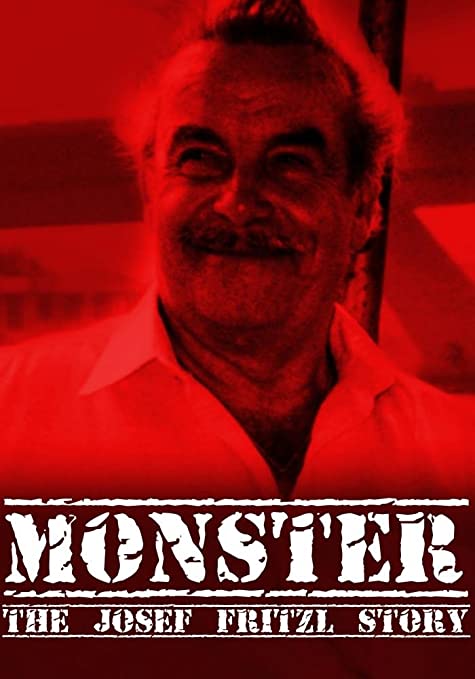
In this sickening story, Elisabeth Fritz tells the story of how her father Josef kept her locked in a cellar for 24 years, during which time she gave birth to seven incestuous children before she was eventually freed from a life of beatings, rape and torture,
This is not the strangest tale director David Notman-Watt has created. He also did a TV show with former Happy Mondays frontman, Shaun Ryder, who was abducted by aliens when he was 15 and traveled the world to meet others who had been taken by UFOs.
This is a rough tale, but if you enjoy true crime, you can watch it on YouTube.


 B&S About Movies
You must be logged in to post a comment.