The musician, both known or unknown, before they get into that studio: it begins at 3 AM at the kitchen table with a notepad and a guitar; it begins with that song written by a lone soul who, if they recorded their own music, they’d be bigger than Elvis or Steven Tyler of Aerosmith.
And this movie is about the unsung kitchen musicians who wrote the hits for those two artists—and so many, many more.
They’re the melodies we hum, the songs we sing in the shower and to our car radio by heart. They’re forever lodged in our psyches. They are the songs that make us laugh about a memory of good times. And make us cry as we remember the bad. Those days of love and of heartbreak live in the songs of others. And while we sing their songs, that songwriter who we associate with those moments of our lives, is unsung.
So, in this music document, the stars of pop, rock, and country take a backseat to give voice to the songwriter—the Nashville songwriter—a town that’s responsible for more hit songs than any other town in world.
You’ll be amazed at the hit after hit song rattled off in the trailer. And you’ll be amazed by this film directed by the Venezuelan born and raised, Chusy, an ex-advertising executive who successfully transitioned into the world of short film and feature documentaries. He expertly culled over 100 hours of interview with the Nashville-based songwriting-artists you know, including Garth Brooks, Luke Bryan, Kacey Musgraves, and Brad Paisley, and the songwriters you don’t know, including Jessi Alexander (“The Climb” by Miley Cyrus), Desmond Child (“Angel” by Aerosmith and “You Give Love a Bad Name” by Bon Jovi), Mac Davis (“A Little Less Conversation” and “In the Ghetto” by Elvis Presley), and Mikky Ekko and Claude Kelly (“Grenade” for Bruno Mars and “Circus” for Britney Spears).
It All Begins With a Song does for Nashville what Paul Justman’s Standing in the Shadow of Motown (2002) did for Detroit’s The Funk Brothers. It’s a film that needed to be done. It’s a film that’s a must watch for any musician or for any serious music lover who wants to know who’s responsible for half of those 3,000 songs in their iPod.
It All Begins With a Song made its streaming debut on March 3 courtesy of TriCoast Pictures on Amazon, Google Play, iTunes, Vimeo on Demand, Vudu, and You Tube Movies.
AUTHOR’S NOTE: This movie originally appeared on our site February 21, 2019. The new Arrow Video release of the film is the perfect time to bring it back up and get more people to watch it. It’s also streaming on Shudder.
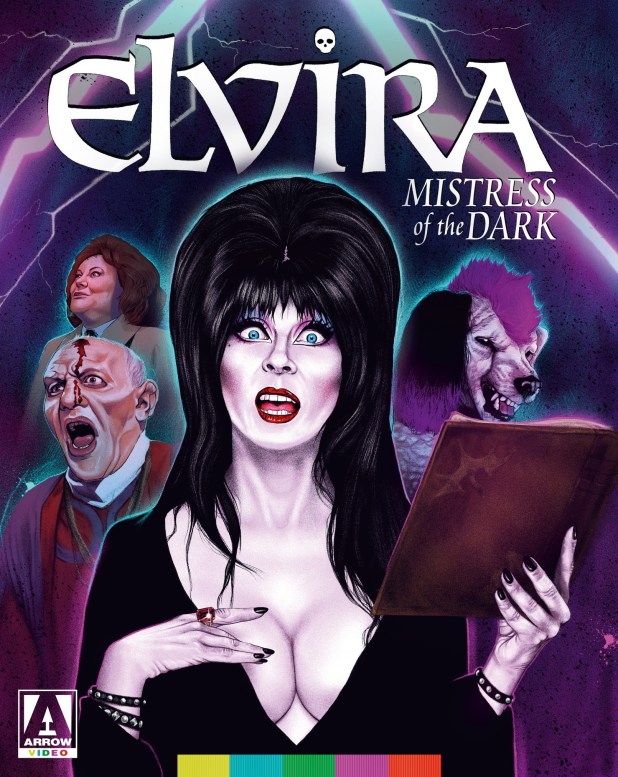
After Easy Money, Saturday Night Live veteran James Signorelli directed one more film. This one — starring Cassandra Peterson as her Elvira character.
In 1981, six years after Sinister Seymour, the producers of LA’s Fright Night decided to do another show and asked Vampira — Maila Nurmi — to help them with the project. There were creative differences — supposedly Nurmi wanted Lola Falana to play Vampira — and soon the station just did the show themselves (for her side of the story, please watch Vampira and Me).
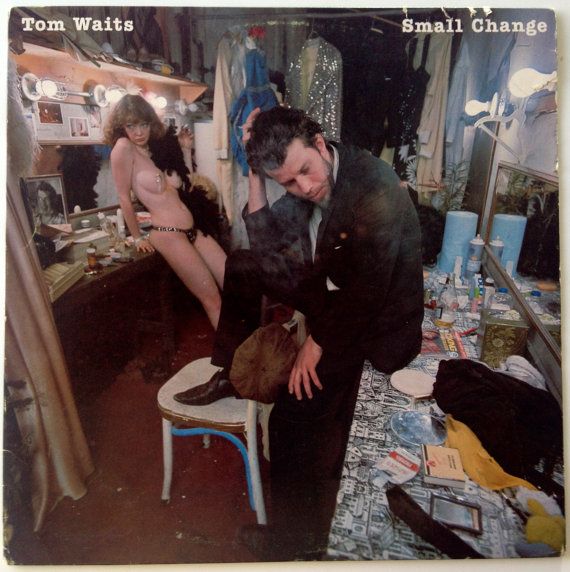
Peterson had already lived a crazy life before she auditioned and won the role of the new horror host. She was a Vegas showgirl at 17, briefly dated Elvis, played a showgirl in Diamonds Are Forever, posed for men’s magazines like High Society, tried out to be Ginger in a new Gilligan’s Island, was on the cover of Tom Waits’ album (she claims that she doesn’t remember but it totally could be her), played in rock bands in Italy, ended up in Fellini’s Roma, joined the improv group The Groundlings and then ended up as a DQ on KROQ.
Is this Elvira?
Anyways, back to Elvira. The station allowing her to create the image of her character. Originally, she wanted to look like Sharon Tate in The Fearless Vampire Killers, but ended up with the punky and busty look we’ve all come to know and love.
Before the first episode even aired, Normi sued, claiming that Elvira was too close to her character. I’ll leave it up to you, dear reader, but they are quite similar. However, her Valley Girl delivery and sarcastic tone was a real difference and Elvira went from local star to pop icon, which led to this, her first movie.
Elvira, Mistress of the Dark quits her job in LA after the station’s new owner has a #metoo moment with her. She wants to start an act in Vegas, but needs $50,000. Luckily, her great aunt Morgana has just died and she has to travel to Fallwell, Massachusetts to claim the inheritance.
So what does she get? A mansion, a recipe book and Morgana’s pet poodle, Algonquin. But once she’s in town, she learns that no one is allowed to have fun and she sets out to change everyone’s grey demeanor. Oh yeah — and her uncle Vincent just wants the cookbook — which is a book of spells — and he also wants to sacrifice her so that he can take over the world. Thus, magic battles ensue, Algonquin becomes a rat at one point and the town’s morality club gets hit with a sex spell that gets them all arrested for indecent exposure.
Fellow Groundling Edie McClurg shows up as one of the villains, as does former Grease and Taxi heartthrob Jeff Conaway. Other Groundlings in the film are Lynne Marie Stewart, Deryl Carroll, Joseph Arias, Tress MacNeille and John Paragon.
Scripted by Sam Egan and Paragon, who is better known as Jambi and Pterri from his Pee-Wee’s Playhouse days, along with Peterson, this movie’s entertainment level will depend on how much you love puns and Elvira.
The Arrow Video release of this film features a brand new restoration of the film from a 4K scan of original film elements. Plus, you get an introduction to the film by director James Signorelli and commentary by him.
There’s also commentary by Elvira’s webmaster Patterson Lundquist, Cassandra Peterson, Edie McClurg and writer John Paragon, as well as a newly-revised making of feature, Too Macabre – The Making of Elvira: Mistress of the Dark, and another on the making of the Pot Monster. You also get trailers, storyboards, image galleries, reversible art and a collector’s booklet featuring writing by Kat Ellinger and Patterson Lundquist.
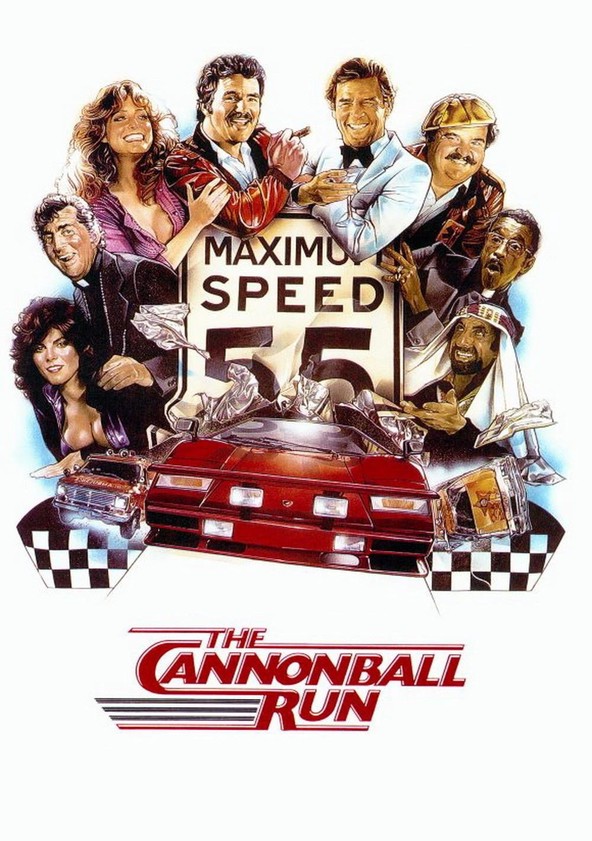
Directed by Hal Needham (Megaforce, Smokey and the Bandit), this movie was based on the 1979 running of an actual cross-country outlaw road race — the Cannonball Baker Sea-To-Shining-Sea Memorial Trophy Dash — which began in Connecticut and ended in California. Or, you know, Cannonball, the 1976 Roger Corman produced film that tells the exact same story. Or The Gumball Rally.
That said, screenwriter Brock Yates came up with the actual race while writing for Car and Driver. The race had only one rule: “All competitors will drive any vehicle of their choosing, over any route, at any speed they judge practical, between the starting point and destination. The competitor finishing with the lowest elapsed time is the winner.”
Yates’ team was the only participant in the original 1971 running, which was named after Ernest “Cannonball” Baker, who in 1927 drove across the country in just 60 hours.
This is pretty much my dream idea of what a movie should be.
A very simple premise: a cross-country race for lots of money.
Add in plenty of actors you love.
Let hijinks ensue.
The players:
The ambulance: JJ McClure (Burt Reynolds) and Victor Prinzi (Dom DeLuise) are driving a souped-up Dodge Tradesman ambulance, the very same vehicle Needham and Yates used in the 1979 race.
The Ferrari 308 GTS: Driven by drunken former race star Jamie Blake (Dean Martin) and his gambler Morris Fenderbaum (Sammy Davis Jr.), who are both dressed as Catholic priests.
The Lamborghini Countach: Driven by Jill Rivers (Tara Buckman) and Marcie Thatcher (Adrienne Barbeau), who are using their looks to get ahead. This is pretty much the horror genre car, as Buckman would go on to appear in Silent Night, Deadly Night, Xtro II: The Second Encounterand, of course, Night Killer. Barbeau would live on in our hearts thanks to appearances in Creepshow, The Fogand Escape from New York.
The Subaru GL 4WD: Producers Golden Harvest demanded some Asian stars in the film. They got Jackie Chan in his second American film — after The Big Brawl — and Michael Hui.
The Laguna/Monte Carlo: This Hawaiian Tropic NASCAR car somehow switches makes throughout the film. It keeps the same drivers: Terry Bradshaw and Mel Tillis.
The Aston Martin DB5: Driven by Roger Moore, who is really James Bond, who is really Seymour Goldfarb, Jr., the potentially crazy heir to the Goldfarb Girdles fortune.
The Rolls-Royce Silver Shadow: Driven by rich old sheik Jamie Farr.
There’s so much more — DeLuise is also a superhero named Captain Chaos, Farrah Fawcett hooks up with Burt, Dr. Van Helsing (Jack Elam) wants to inject everyone with his medicine, Bert Convy gets into a fistfight with bikers led by Peter Fonda, Valerie Perrine shows up as a state trooper, stuntman Robert Tessler (Chief Thor from Starcrash, Verdugo from The Sword and the Sorcerer) fights Jackie Chan, all of the Bond girls are dubbed just like the real films and all manner of car stunts take up much of the running time.
Burt Reynolds did this movie for $5 million, a percentage of the profits and a promise he’d only work 14 days. He later said, “I did that film for all the wrong reasons. I never liked it. I did it to help out a friend of mine, Hal Needham. And I also felt it was immoral to turn down that kind of money. I suppose I sold out so I couldn’t really object to what people wrote about me.”
This movie is also the reason why seatbelts are required on all stunts now.
24-year-old German American stuntwoman Heidi von Beltz, who was a former championship skier and aspiring actor, was critically injured driving the Aston Martin car during a stunt. She had no previous stunt driving experience and was behind the wheel of a car with defective steering, clutch, and speedometer. Even worse, it had bald tires.
Her vehicle collided head-on with a van and made her a quadriplegic. Her personal injury lawsuit exceeded all available primary insurance coverage, so the production’s excess insurer, Interstate Fire sued von Beltz and her employer, Stuntman Inc., claiming that the lawsuit was not covered under its policy.
After years of court cases, she was eventually awarded $7 million although the judge later reduced that amount to $3.2 million or just enough to pay her medical and legal bills. She died in 2015.
Here’s something good out of this movie: It inspired Jackie Chan to always include bloopers at the end of his films. Hopefully that makes up for the fact that Needham didn’t know the difference between Asian races and cast Chan as a Japanese racer.
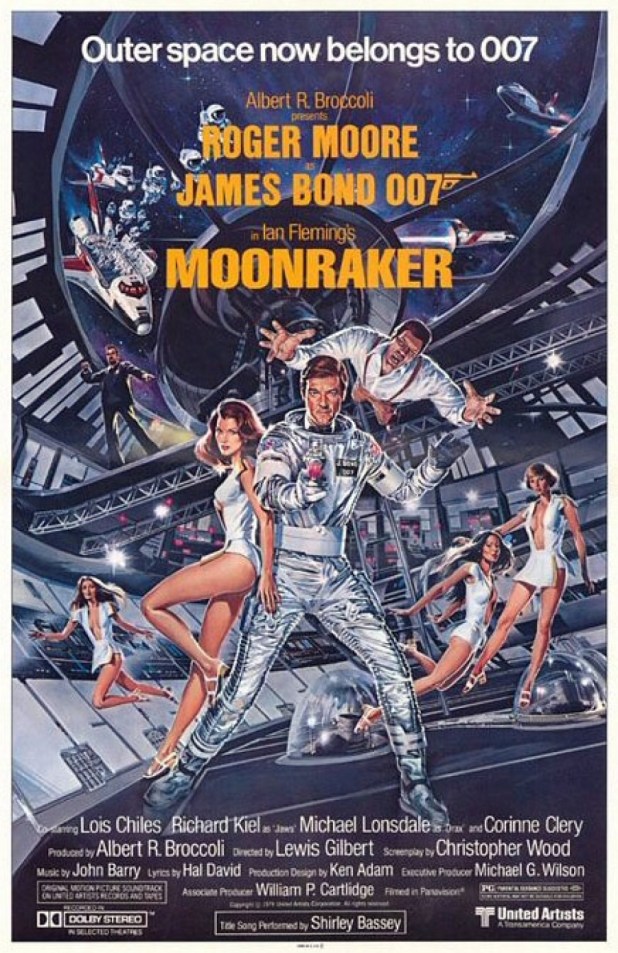
Could James Bond be relevant in a post-Star Wars world? If Moonraker had anything to say about it, yes. Up until GoldenEye, it was the highest-grossing of the series, making $230 million worldwide.
But wait — didn’t the end credits of the last film promise James Bond will return in For Your Eyes Only? Sure they did. However, the producers chose the novel Moonraker because of the aforementioned Jedi-starring George Lucas film.
One could also argue that Hugo Drax’s plan is exactly the same plan as Karl Stromberg’s in The Spy Who Loved Me: blow up the world and go away to build your own civilization. This time, it’s in space versus underwater.
Here’s the weird thing: for such an iconic British character, this movie’s shooting was moved from the tax heavy UK to France. This is also why Michael Lonsdale was cast as Drax instead of James Mason and Corinne Clery was Corinne Dufour. Ah, the 1965–79 film treaty in action. Well, I have no complaints about Clery, who is also in Yor Hunter from the Future and Fulci’s The Devil’s Honey.
Lois Chiles (Creepshow 2) had originally been offered the role of Anya Amasova in The Spy Who Loved Me, but was in temporary retirement. In actuality, bad reviews had sent her back to acting school and she ended up getting the role of Holly Goodhead when she was seated next to director Lewis Gilbert on a flight. Jaclyn Smith had almost signed for the part but had to turn it down due to scheduling conflicts with Charlie’s Angels.
This is perhaps the silliest of the Moore movies — well, there’s also him bedding Grace Jones in A View to a Kill — and it’s nearly overflowing with effects and gadgets. But hey — Jaws turns good, gets a girlfriend and opens a bottle of champagne by biting into it. So there’s that.
There remains an urban legend that Orson Welles was making his own version of this movie, as Fleming intended it to be filmed as early as 1955. The rumor is that 40 minutes of raw footage exists with Dirk Bogarde as Bond, Welles as Drax, and Peter Lorre as Drax’s henchman.
Woah — I’d never heard of this movie before Arrow Video sent it my way.
Darkly Noon (Brendan Fraser) is the sole survivor of a military-style attack on an isolated religious community — think Waco. As he wanders the forest in a daze, he is taken in by Callie (Ashley Judd). Darkly finds himself feeling strange new feelings that his religious upbringing has ill-prepared him for. Once Callie’s mute man Clay (Viggo Mortensen), he becomes more lost than ever before.
Director Philip Ridley has been all over the map artistically, acting as a storyteller in a variety of media. Here, he’s telling Darkly’s tale as he wanders through Appalachia, an orphan via government military attack, lost in his own dark night of the soul.
This film has never been released on blu ray before, which is pretty amazing in this day and age. It’s certainly unlike any other Brendan Fraser movie I’ve seen. And I’ve seen Monkeybone.
Let me sum up the strangeness of this film: it’s supposedly set in the American South and yet it was shot in the German woods. There’s also a scene with a gigantic glittery clown shoe that is on fire in the middle of a lake as a Viking burial for a dog, which causes Fraser’s character to cover himself with barbed wire and set a house ablaze at the behest of his zombified parents while throbbing beats blare on the soundtrack.
Seriously, nothing prepared me for this development.
Imagine Brendan Fraser in the role that Nick Cage never played, completely unready to play said role. A must-see? You know it.
The Arrow release of this movie features a new 2K restoration from the original camera negative, approved by Philip Ridley as well as new audio commentary. It also features interviews with the editor and composer, demos of the music score and an archive feature that has interviews with Ridley, composer Nick Bicat and Mortensen.
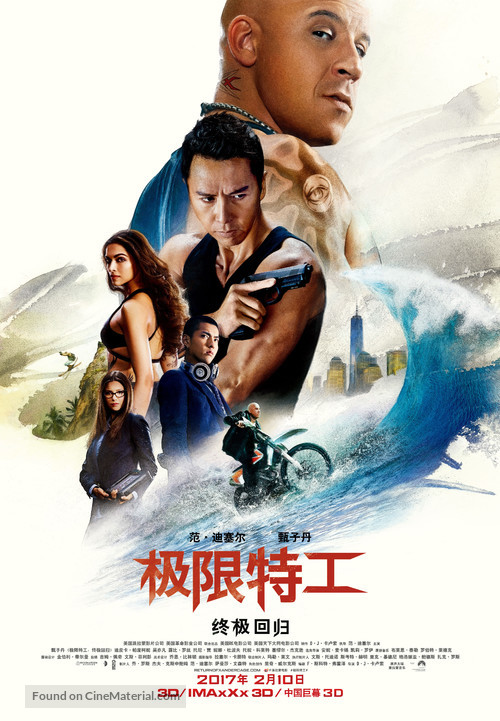
Despite 12 years between movies, Xander Cage being supposedly killed off and mixed reviews, this movie film grossed over $346 million worldwide on an $85 million budget, making it the highest-grossing film of the entire franchise.
One of the reasons why this movie did so well is because it has an international cast, like Donnie Yen (Ip-Man) as Xiang, a rival xXx agent; Indian actress Deepika Padukone; Kris Wu, who was in the Chinese/South Korean boy band EXO, Australian actress Ruby Rose; Tony Jaa (Ong Bak), Canadian actress Nina Dobrev; British actor Rory McCann; British actress Hermione Corfield; American football player Tony Gonzales and British MMA star Michael Bisping. Ice Cube also shows in at the end in a cameo as Darius Stone from the second film.
This one starts off with Augustus Gibbons (Samuel Jackson) and a Jason Bourne-like character being killed by a falling satellite and doesn’t ever let up, with such insanity as fighting a government base to give the people cable and racing motorcycles across giant waves. Yes, this is a movie that has absolutely no interest in reality and exists only to entertain you.
Jaa and Yen are two of the best martial arts-based actors in the world, so this movie features plenty of fights, as you’d hope. Sadly, Jet Li dropped out of the picture, but that may have been too much.
Of course they’re planning another xXx movie and I have no issue at all with this development.
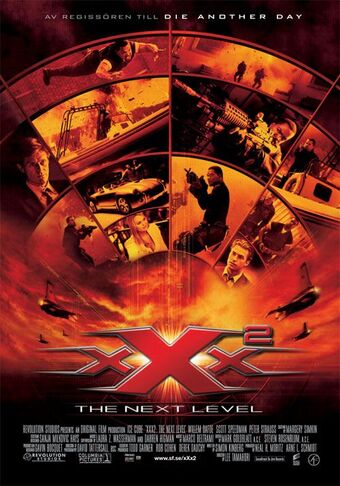
Vin Diesel and Rob Cohen had signed onto a sequel before the first xXx movie even came out, but both dropped out as Diesel disliked the script. Cohen made Stealth, which was probably not the right move. Ice Cube then came in to be the new xXx, which wasn’t a great move either. Diesel made A Man Apart, which was a minor success.
The producers brought in Lee Tamahori, who had just had a success with the Bond film Die Another Day.
The movie starts with blowing everything up from the first one. Agent Augustus Gibbons (Samuel Jackson) is nearly killed and Xander Cage is murdered in Bora Bora. This means that a new xXx must come on board: former Navy SEAL Lieutenant Darius Stone. There’s only one issue; he’s in the brig at Leavenworth for disobeying orders and attacking General George Deckert (Willem Dafoe), who is now the Secretary of Defense.
Scott Speedman shows up as a fellow agent, Xzibit is in this and Michael Roof comes back from the first movie. Sunny Mabrey from Snakes on a Plane and Species III plays one of the villains and Nona Gaye plays a love interest.
A scene was filmed showing Xander Cage being killed in an explosion off-screen, with his severed body parts flying in the air. The scene was deleted, just in case Vin Diesel ever decided to reprise his role. Of course he came back.
Good, bad, or indifferent, French filmmaker Jean Rouch, the father of cinèma vèritè (okay, one of) brought us here.
And American documentarian D.A Pennebaker applied that truthful eye to rock ‘n’ roll and gave us an inside look at the life of Bob Dylan in Don’t Look Back (1967). Then the Maysles Brothers upped the game with their chronicle of the Rolling Stones in Gimme Shelter (1970). And the format’s rock ‘n’ roll roots blossomed with Rob Reiner’s parody of the handheld-camera style and popularized the mockumentary format with This Is Spinal Tap (1984).
And, to the chagrin of his rattling bones, Jean Rouch’s style of surrealism became horror de rigueur courtesy of Daniel Myrick and Eduardo Sànchez’s $60,000 dupe—The Blair Witch Project—about the disappearance of three student filmmakers. And while Blumhouse-Paramount brought horror-inspired cinèma vèritè to the mainstream with Paranormal Activity (2007), James Cullen Bressack technologically reinvented the format with For Jennifer (2018)—the first commercially-released film shot entirely on an iPhone 5.
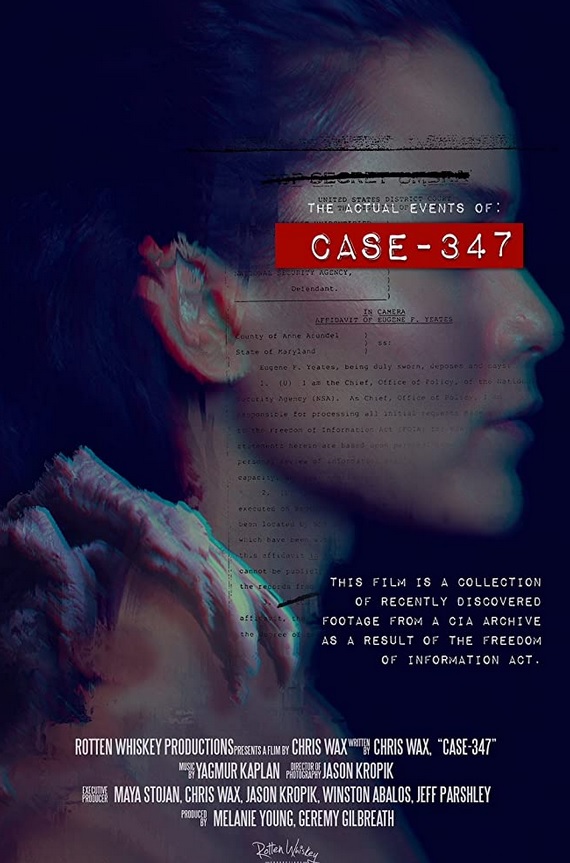
Unlike many of the eh-not-bad-but-not-so-good found footage improvs marketed as a documentary—only to reveal another long-in-the-tooth mockumentary (e.g., 2017’s critically derided Helltown that was picked up by Travel TV)—Case 347 floats above the fray courtesy of its ABC Television Network pedigrees: Director Chris Wax made a successful transition from award-winning short filmmaker to directing several episodes of the ABC medical drama Black Box; Maya Stojan starred on ABC’s Agents of S.H.I.E.L.D and Castle. In with the welcomed assist on the casting front is the excellent-in-everything-he-does Richard Gilliland—who’s been in television since forever: you’ve seen him on Antenna TV’s ‘70s reruns of McMillan & Wife and, most recently, on Bravo’s Imposters. And the unknown, self-assured support cast sells their roles as “crazy” documentary subjects: they are far from being classified as “amateur” actors.
While Wax’s Case 347 is no Blair Witch, and no found footage flick in that film’s wake ever will be, his take on the genre—with extraterrestrials stepping in for the usual supernatural shenanigans—is an engaging, fresh take on the genre nonetheless. In Wax’s bizzaro-X Files world: Dr. Mia Jensen (Maya Strojan), instead of proving aliens exist, is out to prove they don’t exist and the “existence” is a mass psychosis—and she uncovers a terrifying secret about her own family.
It all starts with that ubiquitous “warning” (that we just roll with) that the raw footage we’re about to watch has not been tampered with or manipulated. Then we meet Mia in her present-state: as a drugged-up mental patient.
In flashback (in a tradition that dates to the writings of Sir Arthur Conan Doyle), her case file, “347,” is opened: We learn Mia set out with a two-man film crew to “search” for her father—who died mysteriously—amid the hoarded files in the paranoia-filled bunker of his New Mexico home. As clues found in her father’s files lead them to White Sands, the slow-tension starts to burn—with mechanical-looking “smoke rings” appearing the skies, spindly desert shadows leave footprints to nowhere, along with red-herring Yūreis appearing on roadsides, and the foreboding revelations of her father’s oddball colleague (Richard Gilliland).
It’s Richard Gilliland’s utterly convincing portrayal of Dr. Gustav Berchum occurring at the film’s halfway point (evoking actor Donald Hotton’s paranormal authority of Dr. Samuel Dockstader from 1983’s One Dark Night) that keeps one watching so they don’t miss the third act’s alien siege—masterfully crafted by Chris Wax as blaring light, peripheral shadows, and croaking voices from the alien possessed—on a remote farmhouse, and leaves Mia as the lone survivor.
What’s that? You say you need more conspiracies of the third kind?
Well, do we have some under-the-White Sands-radar and off-the-Area 51-reservation oddities for you.
You need watch, what we like to call, a post-Star Wars dropping: Starship Invasions, a fictional tale cobbled together from “actual UFO accounts” that deals with warring alien races, kidnapped extraterrestrial experts, and intergalactic underwater pyramid space bases. The 1977 film wasn’t Canadian director Ed Hunt’s first time at White Sands rodeo: In 1976 he crafted Point of No Return, another fictional “based in fact” sci-fi thriller about an investigator looking into a series of violent deaths—via suicide and murder—that are “somehow” connected to UFOs and nuclear research (a repeated plot device in Starship Invasions). In 1979 Hunt wrote and directed a documentary proper: UFO’s Are Real, featuring reenactments and insights from respected “military and science professionals.”
Then there’s the ‘70s UFO visitation predictions and “interdimensional science of life” teachings of the Unarius Church chronicled in the documentaries In Advance of the Landing (1993) and Children of the Stars (2012).
And Sunn Classic Pictures, the ‘70s purveyors of “everything you are about to see is true” conspiracy reenactment-documentary tales, broke out the lie detectors, hypnosis, and the Patterson-Gimlin footage to convince us bigfoots were real in The Mysterious Monsters (1975). Then they tried to “Ed Hunt” us with their dramatization of the mysteries behind Hanger 18 (1980). Sunn was also responsible for a trilogy of early ‘70s Rod Sterling-narrated box office bonanzas: In Search of Ancient Astronauts, In Search of Ancient Mysteries, and The Outer Space Connection. The Utah-based studio’s biggest success was 1970’s Chariots of the Gods, which was the 9th highest grossing film of the year.
So, what’s real . . . and what’s cinéma vérité?
Case 347 made its streaming debut on March 3 courtesy of Dark Coast Pictures and TriCoast Pictures on Amazon, Google Play, iTunes, Vimeo on Demand, Vudu, and You Tube Movies. You can watch the trailer on You Tube.
The film’s fascinating ambient score was done by sound mixer and composer Yagmur Kaplan. While the music from Case 347 isn’t commercially available, you can listen to his music at his official website and learn more about his catalog on Instagram. The soundtrack also features two very cool, indie alt-rock tunes by Homesick for Space and The Lightjackets—and we never tire of being tuned onto new music, so much thanks to Yagmur and Chris Wax.
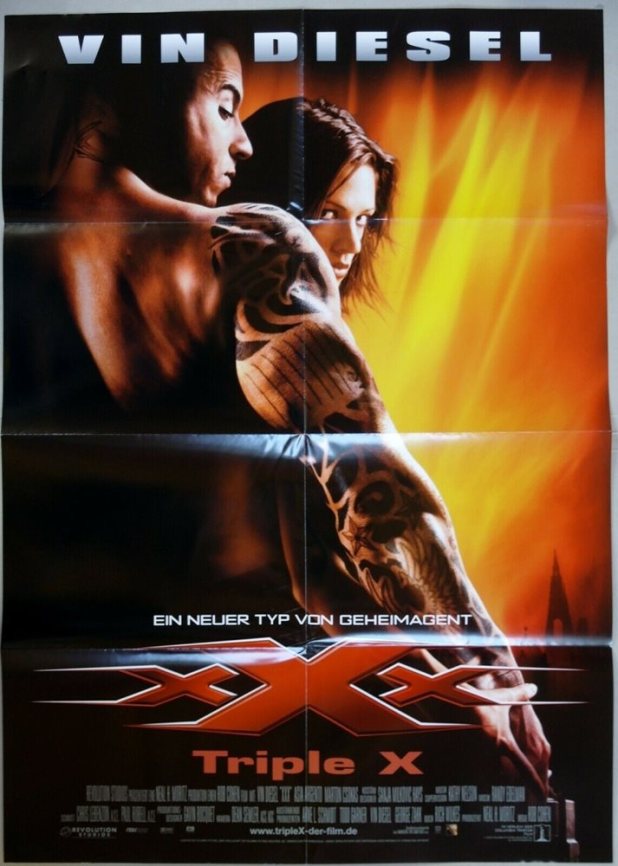
After The Fast and the Furious, Rob Cohen and Vin Diesel teamed up again to create this James Bond for the 2000’s. Xander Cage is a stuntman and X-Sports loving rebel who gets hired by the NSA to infiltrate a gang of Russian terrorists named Anarchy 99, who have acquired a biochemical weapon called Silent Night.
Seriously, this movie couldn’t be more 2000’s if it was filmed inside a Hot Topic while everyone was wearing JNCO jeans.
NSA Agent Augustus Gibbons (Samuel Jackson) offers Cage a deal. He’ll clean his criminal record if he joins up and stops the Russian group.
Seeing as how this is a 2000’s movie, of course Danny Trejo shows up as a criminal. Asia Argento shows up as Yelena, a Russian undercover agent who falls for Xander. There are also plenty of cameos, like Eve, Rammstein, Tony Hawk, Mike Vallely, Carey Hart, Matt Hoffman and Buckcherry singer Josh Todd. Seriously, this movie is so 2000’s that it tastes like Surge.
The film immediately sends up Bond by having a version of him — Agent Jim McGrath (played by Thomas Ian Griffith, who was Jan Valek in John Carpenter’s Vampires) — get killed off before the action begins.
As much fun as I’ve made of this movie for being dated — just check out Vin’s fur coat — the Bond movies probably feel the same way for some people. Oh well — any movie with Asia in it is worth watching, right?
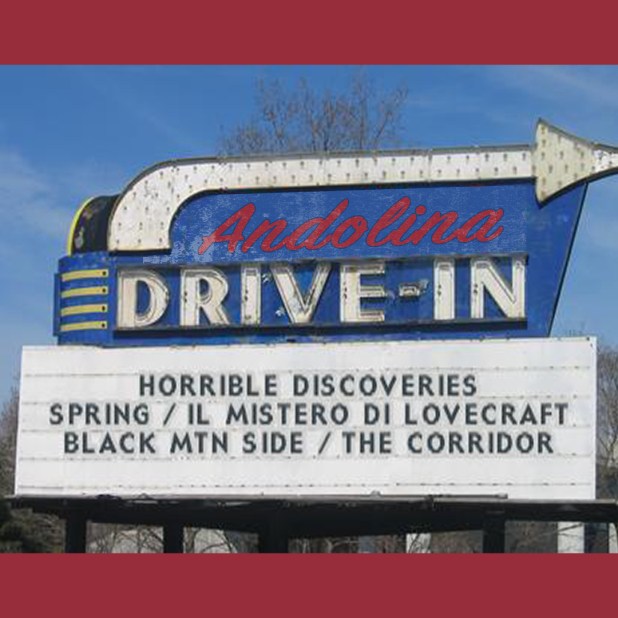
It’s late September, the air is starting to get a bit colder than usual, and the leaves will soon be dropping, you are headed to the drive-in at the old quarry with your sweetheart. You’ve heard that tonight will be an extra special night with four films back to back specifically chosen by a guest programmer. You will not know what they are until they begin to play, the only clue, they will all center around horrible discoveries, ones that mankind may not be ready to deal with.
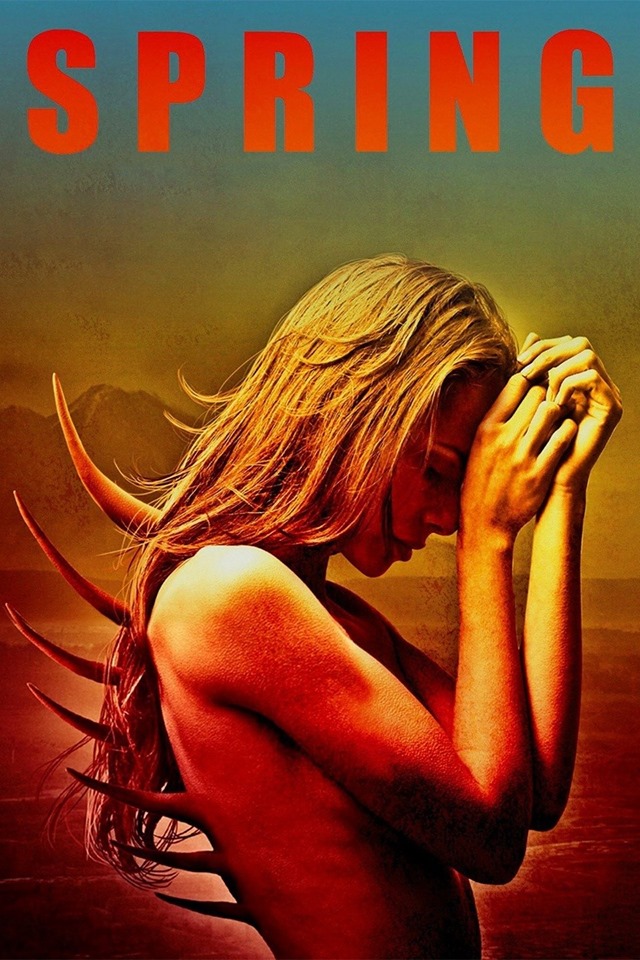
MOVIE 1: Spring (Justin Benson, Aaron Moorhead, 2014): A young grieving male, Evan, travels to Italy for a change of scenery and meets a mysterious and beautiful young woman, Louise. A seemingly innocent tryst turns into a horrifying discovery.
MOVIE 2: Il mistero di Lovecraft- Road to L (Federico Greco, 2005): Was Lovecraft inspired to write one of his stories by the folk tales of the Po Delta in Northern Italy? A group of filmmakers makes the trek to Italy to find out whether Lovecraft had ties to Italy but uncover a terrifying truth in a small town named Loreo.
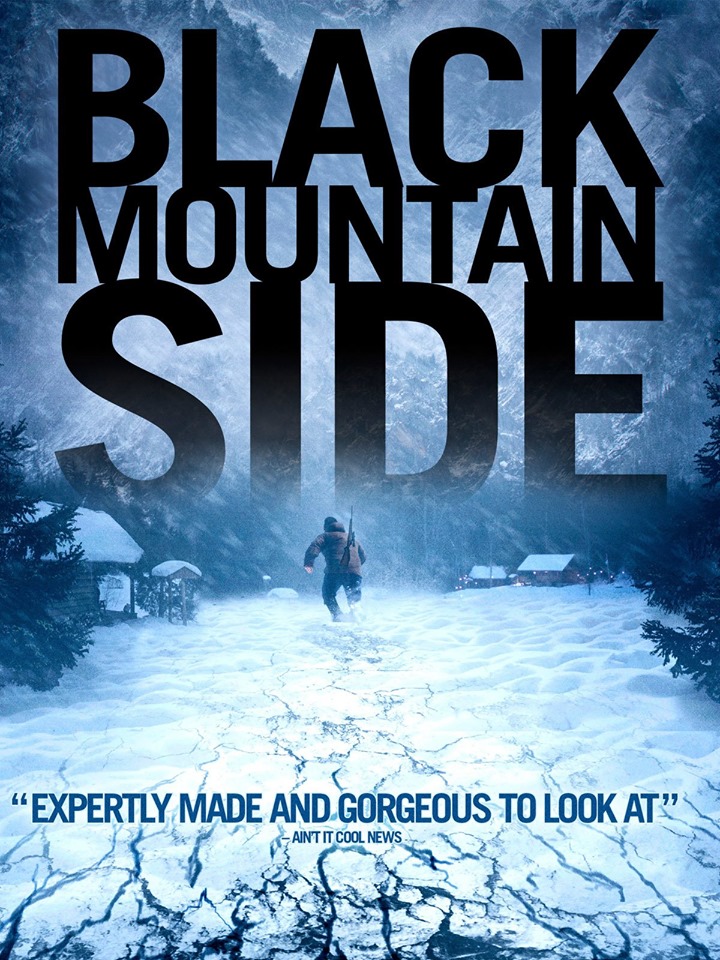
MOVIE 3: Black Mountain Side (Nick Szostakiwskyj, 2016): Archaeologists in the Canadian wilds discover a strange structure that seems to be having adverse effects on the crew, who are now being haunted by hallucination. Will they make it out of the wilderness to talk about what they have witnessed?
MOVIE 4: The Corridor (Evan Kelly, 2010): A group of friends having a reunion at a snowy cabin stumble upon a strange corridor in the wood. It begins to slowly drive them mad, leading to a weekend that they may never escape.


 B&S About Movies
You must be logged in to post a comment.