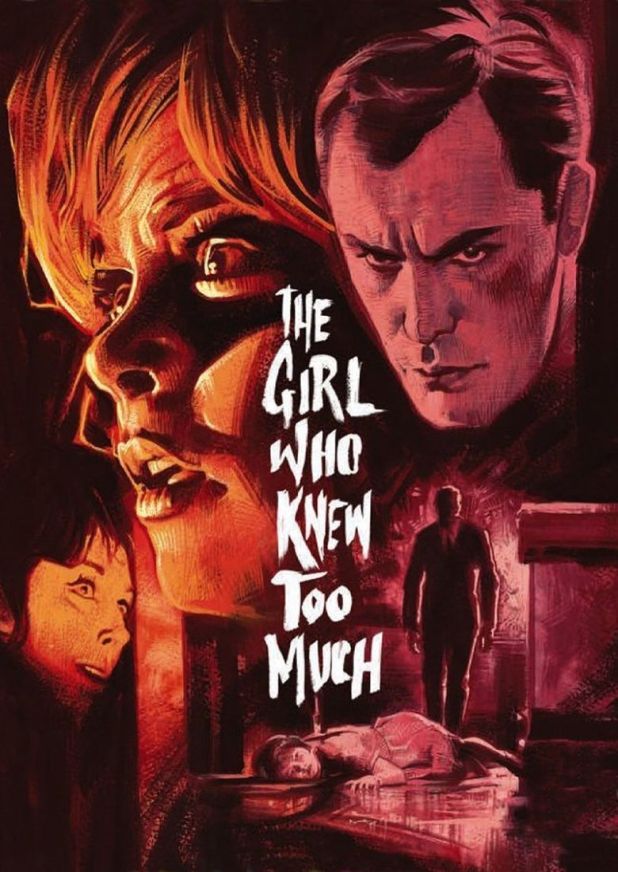
Mario Bava is a genius. This is the root of all giallo before The Bird with the Crystal Plumage and it stars John Saxon as Dr. Marcello Bassi and Leticia Roman as Nora Davis, a young girl who travels to Rome only to witness murder after murder. No one believes her because there’s no corpse. And it only gets worse for her.
Nora was in Rome to help her sickly aunt, who dies the first night that she’s in the city. After walking to a hospital to alert Bazzi, Nora is mugged. When she awakens, she watches a man pull a knife from a woman’s back. The police think she’s an alcoholic and send her to a sanitarium, where she’s rescued by Bazzi.
One of her aunt’s friends, Laura (Valentina Cortese), goes on vacation, allowing Laura to stay in her home. But our detective fiction obsessed heroine can’t resist snooping, finding a series of articles about a serial killer that the press are calling the Alphabet Killer, as he or she kills in alphabetic order. The last murdered person was Laura’s sister, but that was ten years ago. That’s when the phone rings and a voice tells her that “D is for death” and how she will be the next victim.
Nora begins to fall from the doctor and after they tour the city, she gets a phone call that leads them to an empty room with a recorded message telling her to leave the city if she wants to live.
The giallo conventions that we know and love originate here: a foreigner who can’t remember every detail of a murder, now in danger from the killer and unable to be helped by the police, causing them to turn to their own detective skills. Red herrings abound. And the killer seems to be one person, only for their identity to come out just before the end of the film. What is missing are the more psychosexual and high fashion parts of the genre, but don’t worry. They’ll soon show up in force.
The film was the least commercially successful picture of Bava’s career, as giallo films didn’t find favor until Argento’s 1970’s efforts. It was released in the United States by American International Pictures as Evil Eye, part of a double bill with Black Sabbath. This version features a different score and more of an emphasis on comedy.
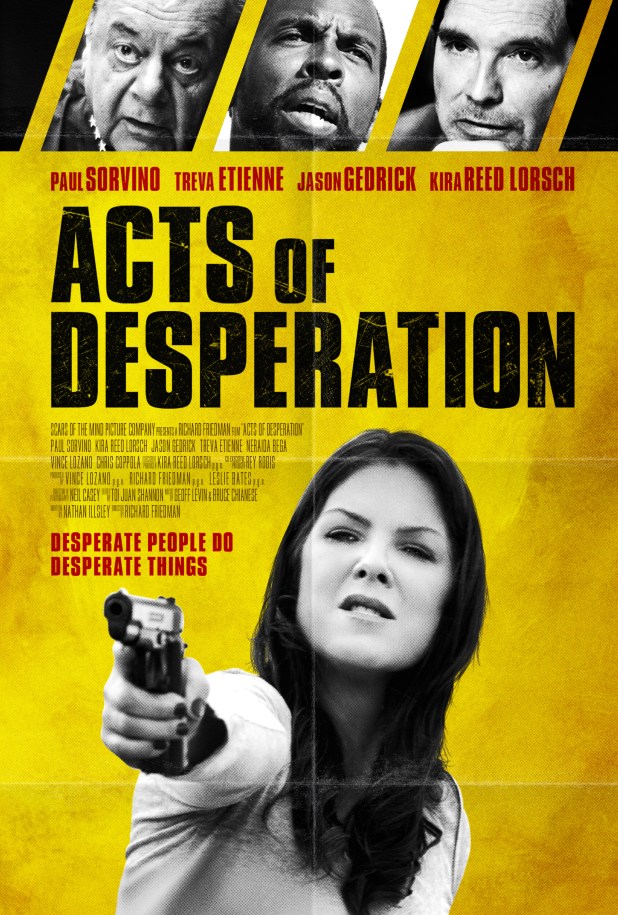
Alan Grilo is a police officer struggling to do his job because all he can think about is how his wife might be cheating on him. Then, there’s Glenn Kolasa, a bank thief who is dealing with Alan chasing him down as well as two blackmailers. Everyone gets pulled into a dangerous and violent cat and mouse game between these two men.
Director Richard Friedman may not be a household name, but around here, we celebrate him for Phantom of the Mall: Eric’s Revenge. He also directed several episodes of Friday the 13th: The Series and Tales from the Darkside, along with movies like Doom Asylum, Scared Stiff and Death Mask.
This movie has some unexpected star power, as Paul Sorvino is in it. Jason Gedrick is the lead as Grilo and you may remember him as the lead from Iron Eagle way back in 1986 and Backdraft.
I really liked the actor who played Glenn, Treva Etienne. He’s been in a variety of films like Bad Boys II, Pirates of the Caribbean: The Curse of the Black Pearl and Black Hawk Down in smaller roles, but as he finds a star role here, he really goes all out.
Character actor Vince Lozano also appears and produced. You may know him from roles in Pirates of the Caribbean: The Curse of the Black Pearl or TV’s The Last Ship and American Horror Story.
This movie has some really fun little touches, like the blackmailers’ handwritten letter and the different people that Grilo interviews about the bank robbery, like the lady obsessed with playing poker. And the blackmailers make the whole film.
This was way better than I thought it was going to be. I’d compare it to a low budget version of Crash.
Acts of Desperation is available on DVD and On Demand. For more information, visit the official Facebook page.
Disclaimer: The PR team for this film sent it to us, but this has no impact on our review.
Let me put it out there right now: This movie is completely insane.
Let me see if I can summarize it.
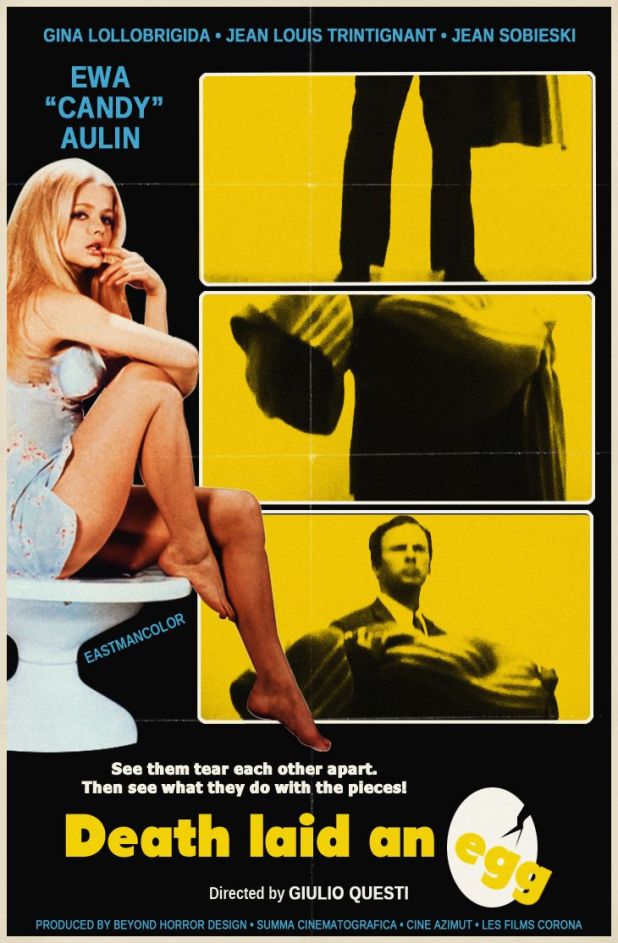
A high tech chicken farm is trying to create birds that have no heads or bones. A love triangle develops between the three people who run it: Anna (international sex symbol and the photojournalist who was one of the first to interview Fidel Castro, Gina Lollobrigida), her prostitute killing husband Marco and their secretary Gabriella (Ewa Aulin, the near goddess who appeared in films like Candy and Death Smiles on a Murderer).
Yes. Headless and boneless chickens, all inside a fashionable proto giallo filled with sex and murder. You better believe I’m all over this movie.
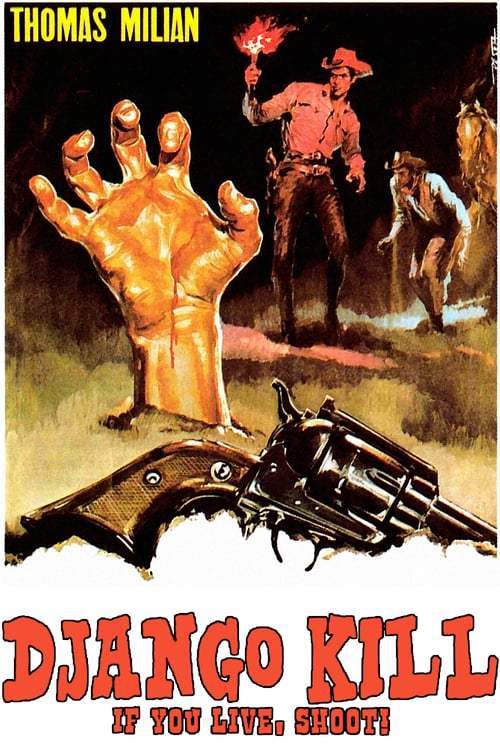
Director Giulio Questi was also behind Django Kill… If You Live, Shoot! and Arcana, two movies that I must investigate immediately if this movie is any indication. I’ve seen this movie explained as a “socio-politically sophisticated avant-garde giallo,” which is pretty much the best way I can think of telling you what it’s all about. It’s also around 40 years ahead of its time yet blissfully stuck in 1968.
Despite being Anna’s cousin, Gabri hooks up with her husband and they debate running away together. However, Gabri is already married to Mondaini and their plan is to kill Anna and frame Marco. There’s also the issue of Anna wanting to have something special and strange with Marco, which instead of being a child, ends up being these Eraserhead-ish chicken balls that scream and bleed worms when he kills them.
When Marco discovers his wife’s body in a hotel room, he cleans the scene up and brings her body to the farm to turn it into chicken feed. That’s when we learn his big secret: he doesn’t really kill prostitutes, but instead role plays the murder and sends them away with plenty of cash. But then, as he tries to feed his wife into the machine, he falls in just as the police arrive to catch him disposing of the body. Gabri and Mondaini are eventually caught as we watch the chickens chow down on human food. Nothing good is gonna come out of that. I mean, poultry that feeds on human flesh seems like way worse than any steroids or hormones.
I’ve never seen a movie that straddles being an art film, a drug film, a murder mystery story and science fiction examination of man trying to change nature along with psychedelic film techniques and non-linear editing techniques. It’s also a satire of the highest order. I have no idea why people aren’t constantly discussing this movie and I’m going to do my best to drive people nuts talking about it over and over again.
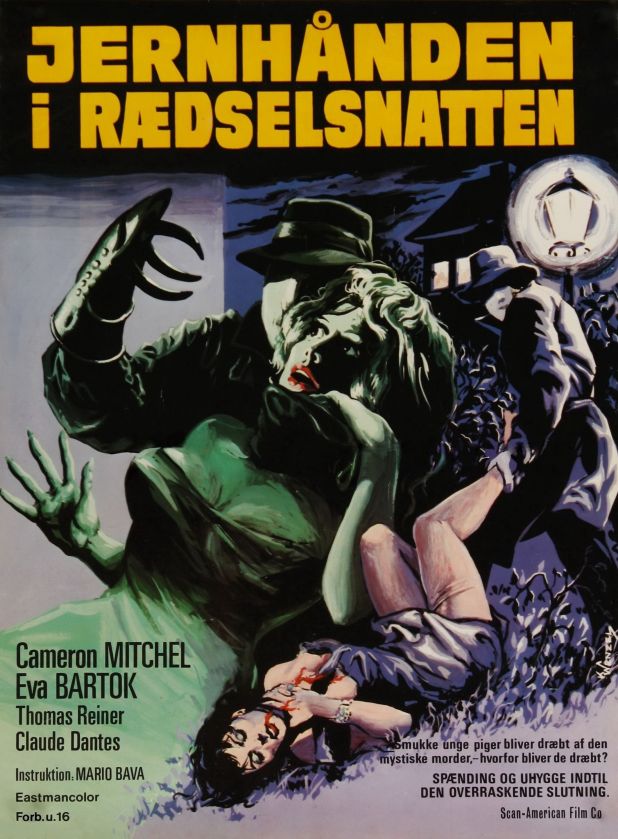
There’s no way to calculate the influence of Blood and Black Lace. It takes the giallo from where Bava started with The Girl Who Knew Too Much and adds what was missing: high fashion, shocking gore and plenty of sex. The results are dizzying; it’s as if Bava’s move from black and white to color has pushed his camera lens to the brink of insanity.
Isabella is an untouchably gorgeous model, pure perfection on human legs. But that doesn’t save her as she walks through the grounds of the fashion house and is brutally murdered by a killer in a white mask.
Police Inspector Sylvester takes the case and interviews Max Morlan (Cameron Mitchell!), who co-manages the salon with his recently widowed lover, the Countess Christina Como. Soon, our police hero discovers that the fashion house is a den of sin, what with all the corruption, sex, blackmail, drugs and abortions going on under its roof. Isabella was murdered because she had kept a diary of all the infractions against God that happened inside these four walls.
Nicole finds the diary and tells the police she will deliver it, but it’s stolen by Peggy. As she arrives at the antique store her boyfriend Frank owns, the killer appears and kills her with a spiked glove to the face. The killing is shocking. Brutal. And definitely the forerunner to the slasher genre.
Even after the cops arrest everyone in the fashion house, the murders keep on piling up. Peggy claims that she burned the diary, so the killer burns her face until she dies. Greta is smothered to death. And Tilde is killed in the bathtub, then her wrists are slit open, spraying red into the water and marking her as a suicide.
So who is it? Come on. You’re going to have to watch it for yourself.
The success of Black Sunday and Black Sabbath had given Bava the opportunity to do anything he wanted. His producers thought that this movie would be a krimi film along the lines of an Edgar Wallace adaption. Instead, Bava gave more importance to the killings than the detective work, emphasizing sex, violence and horror more than any film in this form had quite before.
Blood and Black Lace was a failure in Italy and only a minor success in West Germany, the home of Edgar Wallace. And in America, AIP passed on the film due to its combination of sex and brutality. Instead, it was released by the Woolner Brothers with a new animated opening.
Today, Blood and Black Lace is seen as a forerunner of body count murder movies and the excesses of later giallo films. To me, it’s a classic film, filled with Bava’s camera wizardry and love of color. It is everything perfect about movies.
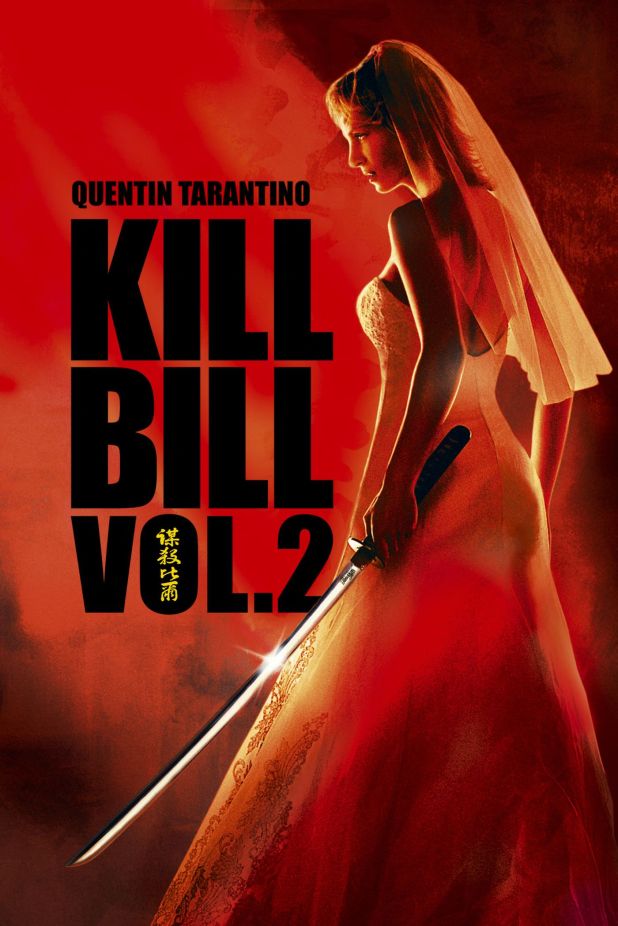
When we last saw the Bride, she’d crossed two names off of her kill list: O-Ren Ishii and Vernita Green. And oh yeah — we also learned that her daughter is still alive. Now, she’s finally going to do what she’s been promising. She’s going to kill Bill…right after she gets through Elle, Budd and everyone else.
The Bride sets off for the trailer of Sidewinder/Budd, who is also Bill’s brother. Speaking of Bill, he’s warned him that the Bride is on her way, so as she gets close, Budd blasts her with a shotgun packed with rock salt, then buries her alive. To top it all off, he calls in Elle Driver and offers to sell the Bride’s sword for a million dollars.
We go back in time to see Bill leaving the Bride behind at the temple of Pai Mei (Gordon Liu!), who in time will teach her his most deadly secret: the Five Point Palm Exploding Heart Technique. He’s never shown it to anyone before because it kills any opponent before they take five steps. The training is beyond horrible — if you’ve seen any Hong Kong martial arts film, you’ll understand — but the Bride emerges with Pai Mei’s respect. She uses his lessons to break her way free from the coffin.
Elle Drive kills Budd with an actual black mamba, the snake that the Bride took her codename from. She calls Bill to let him know that his brother has been killed by the Bride, but that she’s already killed her. As she does so, she reveals her enemy’s true name: Beatrix Kiddo. Both of these women were trained by Mei, so the battle is beyond destructive (we have an entire article about the references in this film right here that will explain so much more), ending with Elle revealing that she poisoned and killed Mei after he took her eye. The Bride tears out her other eye and leaves her in the abandoned trailer, along with the deadly snake.
The Bride goes to Mexico, where retired pimp Esteban Vihaio (Michael Parks!) helps her find Bill, who is in a hotel with their daughter B.B. After a family-friendly evening, Bill shoots the Bride with a dart filled with truth serum. He learns that she left the Vipers to give her daughter a better life, but Bill only found out that she was missing and assumed that the man she was to marry was B.B.’s father.
The Bride then hits the dreaded Five Point Palm Exploding Heart Technique. Bill makes peace with her, takes five steps and dies. Beatrix Kiddo and B.B. leave to start a new life.
There were plans to make numerous sequels to this film, including two anime films that would be the origin of Bill and the Bride. There was also talk of Kill Bill: Volumes 3 and 4, which would have two killers whose arms and eye were taken by the Bride and then a cycle of stories about daughters who avenge the death of their mothers. But these days, everyone is non-committal about a sequel.
I love the dichotomy between these two films. The first is pure spectacle and brawls with hundreds of people. Just like the tagline to Jaws: The Revenge, this time it’s personal.
I had a discussion this week about whether or not an excessive amount of tributes and homages within a film makes for a great movie or one worthy of derision. It all depends on how well remixed the source material is. When it comes to the two Kill Bill movies, the multiple references are so dense that there’s almost an art to how they come together. And the places they’re gathered from are so disparate and non-mainstream, the fact that they’ve coalesced into a Hollywood blockbuster is pretty amazing.
A woman in a wedding dress — who we come to know as the Bride and Black Mamba — lies wounded and possibly dying in a chapel in El Paso, Texas. She’s been attacked and left for dead by the Deadly Viper Assassination Squad. With what may be her final breath, she tells Bill, their leader, that she’s pregnant with his child. He responds by shooting her in the head.
The film jumps forward four years and the Bride (Uma Thurman, who helped conceive this movie with writer/director Quentin Tarantino) has hunted down one of the Vipers: Copperhead/Vernita Green (Vivica A. Fox), who has now become a homemaker. Our heroine tries to give her target a break and offers to meet her to battle somewhere that her family isn’t in the crossfire. She responds by trying to shoot and kill the Bride, who dispatches her easily with a knife to the heart.
We go back now those four long years to when the Bride was in a coma. California Mountain Snake/Elle Driver (Daryl Hannah, perfection in this movie) whistles her way through the hallways of a hospital, dressed as a nurse with a matching eyepatch, ready to kill the Bride with a lethal injection. However, Bill decides to cancel the kill order as he finds it dishonorable.
The Bride wakes up, realizes she’s no longer with child and begins her mission of revenge by killing the hospital worker who’s been raping her while she was in a coma. She takes his truck and begins the long journey toward learning how to walk and fight again.
The first Viper who is on her kill list is Cottonmouth/O-Ren Ishii (Lucy Liu) who has risen to become the leader of a huge clan of Tokyo Yakuza. As a child, O-Ren’s parents were murdered and she spent her early years getting her own revenge.
The Bride seeks to have a sword made by Hattori Hanzo (Sonny Chiba!), who has vowed to never forge a sword again. But after he learns that she wants revenge on his former student Bill, he makes one for her.
Tracking O-Ren to the House of Blue Leaves, the Bride — we don’t learn her name until the next movie, but you can see it on her plane ticket to Tokyo — wipes out O-Ren’s gang, the Crazy 88’s and her bodyguard, schoolgirl with a spiked yo-yo Gogo Yubari.
She then kills O-Ren and tortures her assistant Sofie Fatale to discover where Bill is. The film ends with Bill speaking to Sofie and asking if the Bride knows that their daughter is alive.
This film was Tarantino’s attempt to move from the talky fare he was known for and into the action cinema that he loves. The House of Blue Leaves battle took six weeks longer than expected, but that’s because it’s packed with traditional special effects and stuntwork instead of the CGI we’re now used to.
Obviously, Kill Bill is inspired by grindhouse cinema, drawing inspiration from the Shaw Brothers, Sergio Leone and Lucio Fulci amongst many others. We’ve gone in-depth to breakdown the actual films that it takes inspiration from in this article. Trust us — there are so many, sometimes multiple references within one shot!
According to Uma Thurman, Tarantino asked her to watch three movies to prepare: The Killer, Coffy and A Fistful of Dollars.
Originally intended as one movie, the four-hour runtime was considered too long for filmgoers, so this was split in two separate movies. It’s pretty astounding that after all the death and destruction in this film, The Bride only has one kill left in the sequel.
Kill Bill reminds me of the Beastie Boys’ Paul’s Botique. There are hundreds of samples all over that album, which make it a much richer experience if you know where they all come from. But if you don’t, you can still dance to it.
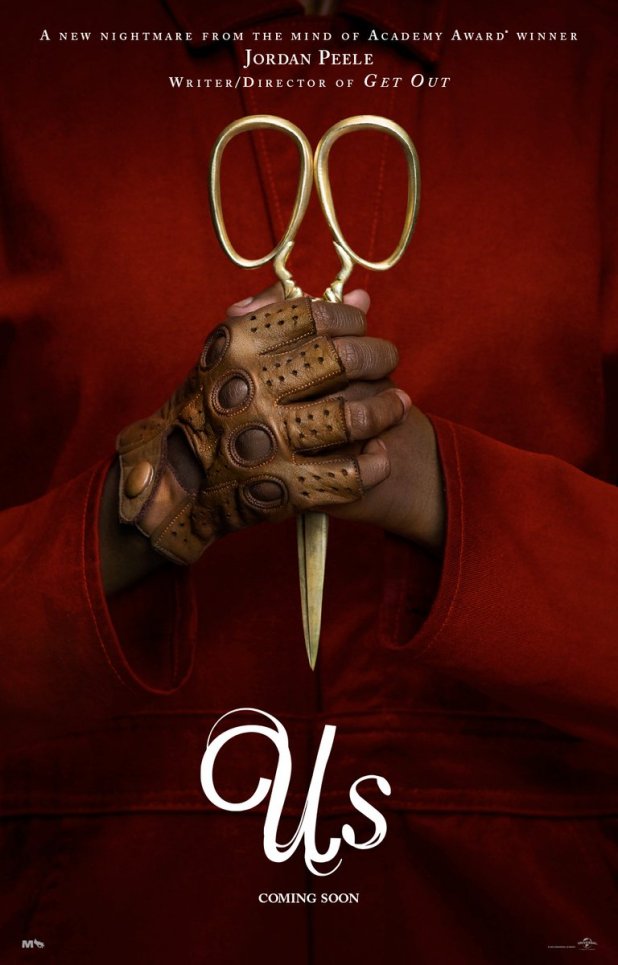
As anyone who reads this site on an ongoing basis knows, I watch a lot of movies. That’s an understatement. But rarely do I find myself unable to move at the end of a film. That’s how I found myself at the end of Us, sitting in my theater chair, staring at the credits, trying to assemble my final thoughts.
I was concerned that after Get Out that there would be no way that this movie could live up to that work of art, nor could it equal the hype. That’s been the problem with so many elevated horror films of the past few years, movies that were so hyped that they couldn’t help but be vaporware on celluloid, ciphers of films that barely hold interest much less devotion.
Writer/director/producer Jordan Peele has stated that he was dismayed by the genre confusion of Get Out, so he opted to make a full-on horror film as his follow-up. Unlike nearly every horror movie I’ve seen in a theater for the past two years, I’m happy to report he’s succeeded. The packed house we saw the film in was only too happy to scream out loud, yell things at the scream and react to every story beat as a horror movie audience should.
Unlike a movie like last year’s Halloween, Us is all about the terror of someone coming after you. There are numerous instances of stalking here that add up to true tension — as a horror movie should. It’s also a testament to Peele’s growing skills as a storyteller that there’s so much humanity under what’s also a pretty darn great popcorn movie.
The film starts with a TV showing us commercials for the beachfront at Santa Cruz and Hands Across America, the May 25, 1985 benefit and PR stunt where 6.5 million people held hands for fifteen minutes, creating a human chain across the United States. If you look closely, several VHS movies are on the shelf: The Right Stuff, The Man with Two Brains (a nod to Get Out), The Goonies (one of the evil twins yells, “It’s our time now!” a Corey Feldman quote from this film) and C.H.U.D.
Between the quote that opens the film about tunnels under America and this VHS box, what happens next shouldn’t be a total surprise. Those Cannibalistic Humanoid Underground Dwellers were all the rage in the mid-80’s, as that film and whether or not it could be true were hotly debated topics in my teen years. It’s also a movie directed by Douglas Cheek — the father of Peele’s first girlfriend.
We then discover the film’s heroine, Adelaide Thomas, on a beach vacation with her parents. The film even cleverly references another film that deals with the terrors of the boardwalk, The Lost Boys, by having Adelaide’s mother say, “You know, they’re shooting a movie over there by the carousel.”
Wandering off on her own, the young girl enters a hall of mirrors where she meets her doppelganger, a moment that we only see in small bursts until the end of the film. She becomes traumatized by the experience and it’s only through becoming a dancer that she is able to express her emotions and move on.
In the here and now, Adelaide (Lupita Nyong’o, Black Panther), her husband Gabe (Winston Duke, also of Black Panther and someone who feels like the voice of one of Peele’s comedy characters at numerous points in the film) and their children, Zora and Jason are on their way to that very same beach. Adelaide is content to stay in the beach house and never go to the boardwalk, but her husband begs them to go to the boardwalk to hang out with another family, the Tylers (which is made up of Mad Men‘s Elisabeth Moss as the mother, Tim Heidecker from Tim and Eric as the dad, and their twin daughters).
Adelaide has been on edge all day. The man she saw as a child carrying a Jeremiah 11:11 sign is now a dead body being loaded onto an ambulance. And that Bible passage – “Therefore thus saith the Lord, Behold, I will bring evil upon them, which they shall not be able to escape; and though they shall cry unto me, I will not hearken unto them.” — doesn’t seem like a portent of anything good happening. That quote — and the 11:11 duality — is also referenced in the digital clock shown before the power goes out later in the film. A trivia note here: the doppelganger that replaces the man with the sign even has 11:11 scratched into his forehead.
This is a film based on duality and the scene that follows repeats the same journey that Adelaide made as a child, now with her son Jason wandering off, as he finds a stranger dripping blood. She instantly freaks out and gives chase, finding him and forcing her family to leave the beach.
That night, she demands that the family cut their vacation short. But then, the power is cut and the movie does what horror does best: drop the bottom out. Reality is no longer what you expect and now, a family that looks exactly like the Wilsons are on the front doorstep of their home. The police are fourteen minutes away, but that may as well be a lifetime.
This cracked mirror version of our heroes goes after the family with a vengeance. Adelaide is handcuffed to the living room table by Red, the leader. Zora, who wanted to quit track, is now chased on foot by Umbrae (the name literally means inner darkness or an eclipse). Gabe is dragged across broken glass and taken outside by Abraham. And Jason is pulled into a closet by the burned and scarred Pluto (the smallest of the planets, but also the name for the god of the underworld).
Each member of the family must deal with their duplicates on their own. Gabe, who has been a comedy figure and obsessed with his barely operating boat, uses said nautical craft to effectively murder his twin. Jason is able to realize that he can use his duality with Pluto to trap him in the closet, which gives his family time to escape to the boat.
Here’s where this movie gets even better: when the family makes their way to the home of the Tylers, we soon realize that the shadow versions aren’t unique to our hero family. No, everyone has one of these twins and they’ve all started to rise from the underworld with murderous intentions. Now, the creatures known as the Tethered are killing their surface world sides and forming a human chain.
Umbrae attacks the family as they drive off, but Zora uses the car — and not her human running ability — to kill her. But as they get to the boardwalk, the road is blocked by Pluto who has set fire to numerous cars and traps the family. Jason realizes that he’s still tied to the boy, so he makes him walk into the flames before Red kidnaps him.
Adelaide follows her twin through the hall of mirrors and then deeper and deeper into the earth, passing the cages of rabbits which we saw in the title sequence. Now, we learn that the Tethered were a government creation, made to control people before being abandoned. Now, they are forced to remain in the shadows, stuck replicating the motions of their free twins above ground. Once Adelaide and Red met in 1986, their connection was a message from God that Red must lead the Tethered into the light.
Again, any other movie would stop here. The ideas are big enough. But like the best in horror, reality can be further destroyed by the real duality of the film: the heroine that we’ve been behind the entire film is actually the doppelganger. The real Adelaide is the one who has led the uprising, with the 1986 Hands Across America action as her childhood vision of what adults do to make a statement. Only Jason realizes this, as he slides his monster mask down on his face (I love how he constantly wears this, much like Frankie wearing the Dracula mask throughout The Lady in White).
The final thing we see is the family driving an ambulance into a burning city, surrounded by helicopters and the human chain of the Tethered stretching out into the horizon.
For all the talk of movies appearing to be John Carpenter influenced, this is the most Carpenter film I’ve seen that he didn’t direct. It has all the elements — a group under attack by forces they don’t understand, evil that wants to destroy you for no reason other than it wants you dead and an ending that appears as positive as it does negative. There’s an underlying menace in Us that Carpenter’s films have and few others can achieve.
Peele gave the cast ten horror films to watch so they would have a shared language when filming this movie: Dead Again, The Shining, The Babadook, It Follows, A Tale of Two Sisters, The Birds, Funny Games, Martyrs, Let the Right One In and The Sixth Sense. I believed this allowed them to easily create a language of their own. Peele has also called out a direct inspiration for this movie came from The Twilight Zone episode “Mirror Image,” in which a woman sees her twin at a train station and becomes obsessed with the fact that her evil side is trying to replace her.
Some may decry this movie for how it leaves so much unexplained: how could there be an entire world under ours, where people do the same actions as us, trapped to live in our shadow? Why do we need an explanation spelled out to us? Why can’t we accept this premise and enjoy where it takes us?
Me, I’m wondering what the symbolism of having two Black Flag shirts — the logo shirt and the My War shirt, an album that divided the band’s fanbase due to it being more Black Sabbath than fast punk rock — means. I was probably the only person in the theater concerned with such things. In fact, clothing is a big part of this movie, with the Michael Jackson Thriller shirt symbolizing the strange duality of the childlike Michael and his horrific red-clad zombie twin in the music video. In fact, Peele has referred to Jackson as “the patron saint of duality.” Hell, the Tethered wear the same red as Jackson and also have one glove on their hands.
My favorite part of this movie is that it explores the dark side of the neon hue of the 80’s. Even Hands Across America — an effort to bring people together and raise money for charity — always seemed creepy to me. I wasn’t alone. As Peele told the L.A. Times, “There was this kind of almost Stepford-creepy sense of American hope that we can do anything as long as we just hold our hands together.”
There’s also an incredibly deep duality to even the movie’s title. When they first see the family outside, Jason says, “It’s us.” But when asked who they are, Red says later that “We’re Americans.” You could see this film politically, all about the divide between the two sides of our country, with the red line of the Tethered hand in hand, splitting our nation in two.
Even the music is in here for a reason. The Luniz “I Got Five On It” is all about splitting a dime bag into two pieces. Even more intriguingly, when Adelaide tells Jason to snap his fingers to the beat of the song, she isn’t on beat. That’s because she is the side without a soul, a fact we don’t discover until the end of the movie. The Beach Boys are included as well, a band that can somehow encompass both happy go lucky odes to girls and fun, fun, fun while also containing the mental breakdown of Brian Wilson and flirtations with Charles Manson. Is it any wonder why nearly every song in this movie is from California bands, perhaps the most dualistic state in the union, a place of sun but also darkness?
Even the games in the closet have meaning in this film. Monster Trap andGuess Who?” In the latter game, you must literally find and bring together two identical faces that are hidden from one another.
And one final symbol: I wondered why the Tethered carry scissors and then it became obvious: to uncut themselves off from us, the people who they are tied to. Every decision they make, from holding hands to dressing like Michael Jackson to cutting themselves apart from us like paper dolls — are decisions made by Red, the leader who disappeared from our world when she was just a little girl and has a mindset stuck in 1986 and in childlike ways of dealing with problems. How strange is it that the Tethered’s murder weapons are so simple and lower class when the family uses objects of wealth — the geode art, a new car, a golf club, a boat, an iron from the fireplace — to dispatch their twins, until our heroine kills her shadow self with the chains that bind her?
Obviously, I’ve put plenty of thought into this film. What I’ve come out with is that Peele is no one trick pony. I’m pleased to report that Us only confirms what Get Out hinted at. I can’t wait to see what he does next.
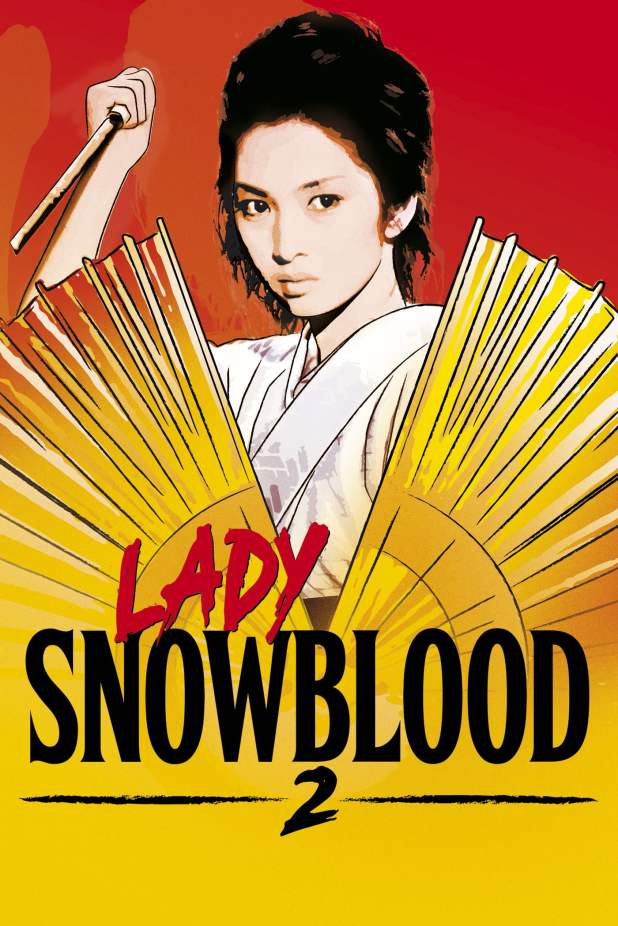
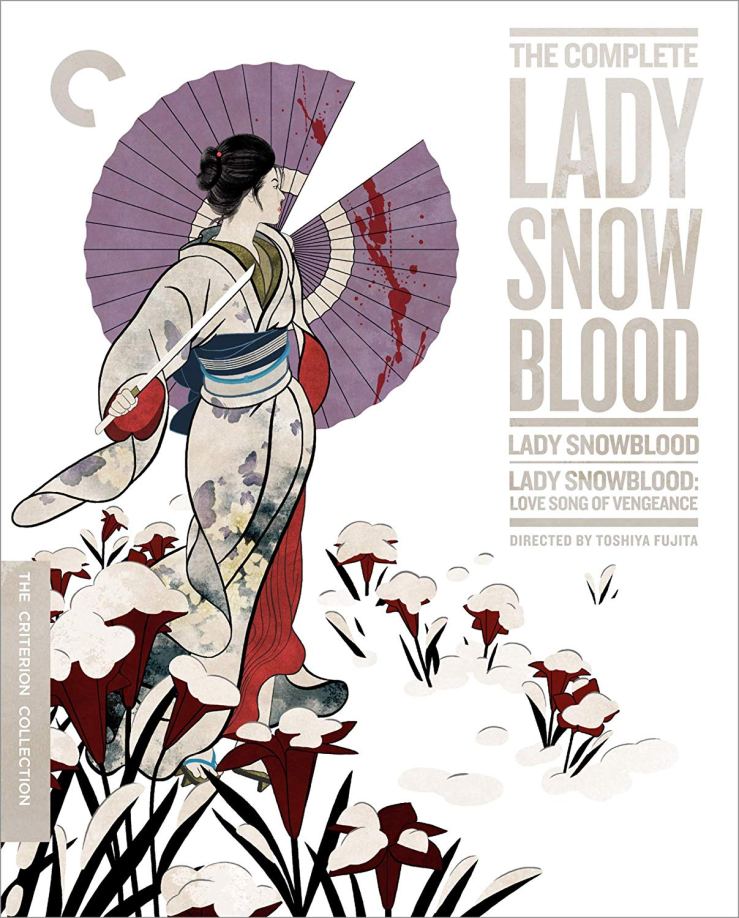
When we’d last seen Meiko Kaji’s Lady Snowblood, she was passed out face down in the snow at the end of a climactic battle. Any worries or reports of her demise have been greatly exaggerated, as this film starts off with her already in the midst of a battle, as she walks toward the camera cooly dispatching one enemy after another.
It turns out that she’s in a pitched battle with the police, who soon prove to be too much for her. She’s arrested, tried and sentenced to hang. However, she’s rescued by the head of the Secret Police, Seishiro Kikui (Shin Kishida, who is kind of like the Japanese Christopher Lee, as he appeared in the Hammer-inspired Chi o Suu vampire movies).
He wants her to spy on the anarchist Ransui Tokunaga, who owns a document. that is crucial to the government’s stability. If Lady Snowblood can deliver that document, she’ll be given full immunity and allowed to disappear.
Snowblood acts as a maid, infiltrating the home of Ransui and looking for that document. However, she begins to question why she’s there. It also turns out that her target knows who she is and still trusts her, asking if she will deliver that crucial document to his brother Shusuke (Yoshio Harada, Stray Cat Rock: Beat ’71).
Despite being shot numerous times by the police and falling off a bridge, Snowblood survives to bring that document — which details how the Secret Police and the government rose to power based on lies — to Shusuke.
Ransui is captured and tortured by the police as Snowblood heals from her wounds in the slums of Samegabashi, a lawless land where the police refuse to venture. She asks Shusuke why he doesn’t save her brother, just as his wife comes and begs for help. Yet he still refuses.
Even healing from her wounds, Snowblood remains deadly. With one throw of a knife, she chases off a spy that had been watching her every move. Meanwhile, Shusuke explains how he is different from his brother. While Ransui wanted to change the world with the document, he’ll only use it to gain wealth and power.
While the spy soon escapes, despite being tortured, Ransui isn’t so lucky. He barely makes it back to Samegabashi, more dead than alive. That’s because the Secret Police injected him with the plague, using him as a weapon against the slum and anyone in it. Shusuke nails his brother into a building to die, warning Snowblood to not try to save him.
The police and Ransui’s wife takes one of their eyes before being killed. Her body is set ablaze and sent out to see as we see the need for revenge growing within Snowblood all over again.
The Japanese dialogue refers to Lady Snowblood as an asura, a Buddhist demigod who becomes obsessed with its desires, whether that be for wealth, knowledge or — in the case of our heroine — bloody violence. Its thirst for whatever it craves can only be slaked by death. As Snowblood stands on the gallows earlier in this film, she’s already accepted death: after all, the only reason she was only born was to serve as the instrument that would finally gain her mother’s revenge.
Seeing as how the original film really was to end with her death, this second film feels superfluous. It’s less about the action and more about political intrigue, though there are some great battles at the start and end of the film. And I love the visual of the man Lady Snowblood kills at the beginning, as he falls into the water and stains it with his neon blood as she kneels and drinks.
Back to the plot — it’s revealed that Shusuke once dated Ransui’s wife and she was the only thing that kept him alive in the midst of war. When he made it home, his brother had married her, so he cut himself off.
Snowblood goes directly into the lair of the Secret Police and tries to make a deal, which they laugh at. However, she uses her only iron will and the threat of the plague to turn the tables. But they still intend to burn the slums to erase their enemies and the document.
The police make their move on Snowblood, who quickly rises back to her deadly promise, wiping them out one by one. She finds Shusuke, who tells her that everyone in the village has been burned to ashes.
The remaining Secret Police, mostly just Seishiro Kikui, are confronted by a half-dead Shusuke and Snowblood, who appears to rise like a vengeful demon behind him. She quickly slices the arm off the first person who attacks them and as the rest of the police battle up the steps, she descends, tearing them to pieces, just as she did the men at the start of the film.
The battle through the Shinto shrine is exactly what I wanted to see from the very start of this movie. Despite Kikui shooting them numerous times, he’s impaled and a bloody Snowblood soon slices him, sending arcing sprays of blood everywhere.
Somehow, she can shrug off being shot, but Shusuke isn’t as lucky. He begs for her to kill him, which she does with little show of emotion. Water flows from the cut of her sword as he dies. Snowblood is framed by the flags of Japan and the bodies of her enemies as the film closes.
While this isn’t anywhere near the delirious violence of the original, it’s not a bad film. It just will never compare, but that’s an impossible task.
You can get this movie on the Criterion set of both Lady Snowblood films from Diabolik DVD.
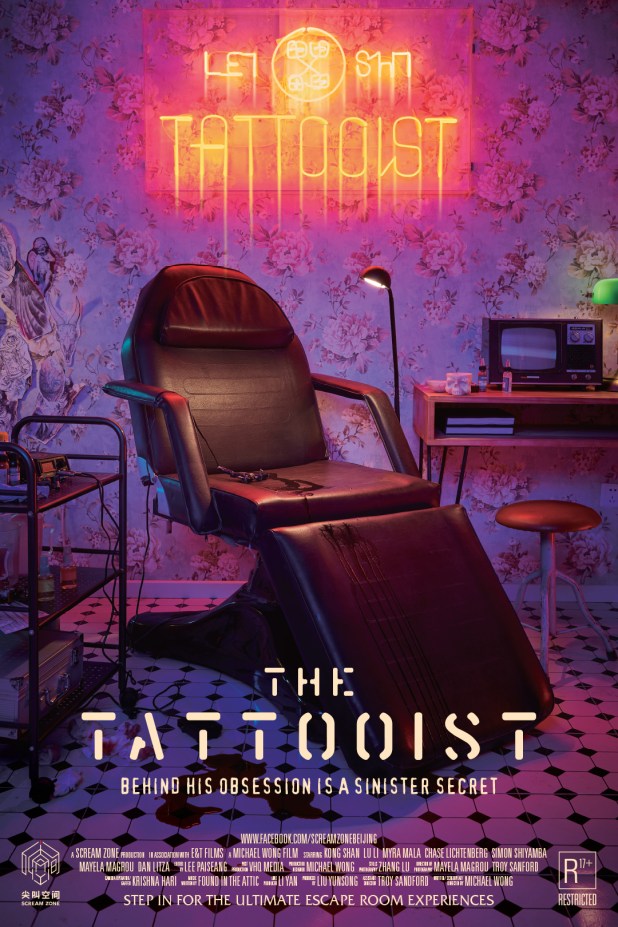
We first met Michael Wong when he sent us his film The Story of 90 Coins. Now, he returns with what he’s calling a micro short, which lasts a little over a minute and appears to be the trailer for what could be quite an interesting horror film.
Wong shot everything at the Scream Zone Escape Room in Beijing, using real tattooists and Troy’s Team Action, a professional stunt team who also supported behind the scenes as cinematographers as well as acting as the camera operator, gaffer and assistant director.
I’m interested in seeing more and I really love the shot of The Tattooist doing his weird dance at the end.
Check it out right here:
We’ve since heard from Micheal Wong with an update on the progress of The Tattooist. It was a winner at Canada’s Bloody Horror International Film Festival, the Horrorhaus Film Festival in LA, and Canada’s Terror in the Bay Film Festival, as well as multiple wins at the Diabolical Horror Film Festival, and a nominee at the Vancouver Badass Film Festival.
You can learn more about the film and Michael Wong’s career at the film’s official Facebook page. Michael is a filmmaker to watch for — and we look forward to his next offering. And when that film comes, you’ll hear about it, first, at B&S About Movies, your celluloid Pittsburgh to Beijing connection.
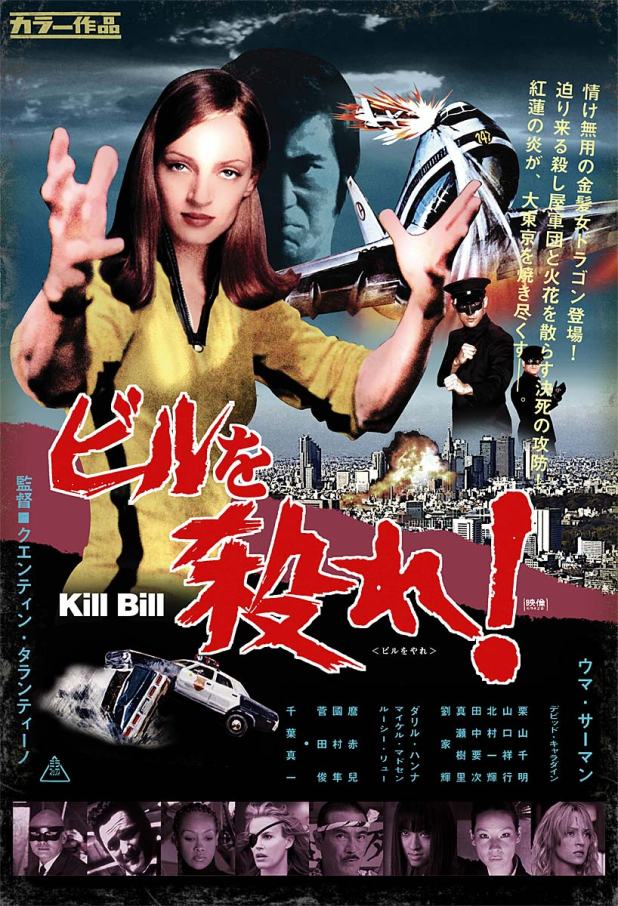
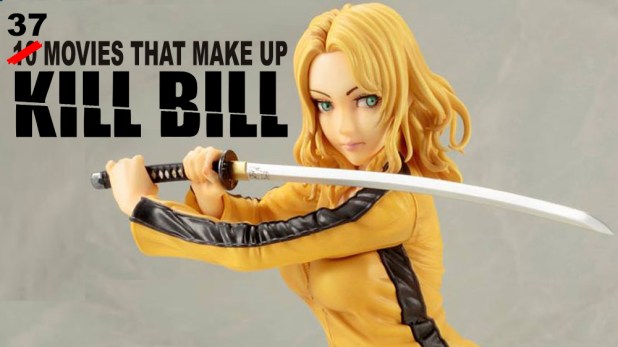
Is Quentin Tarantino’s Kill Bill an outright ripoff or a homage full of sampled scenes and ideas from the director’s favorite films all put together based around a story that unites them? No matter what side of the fence you stand on, we thought it’d be a good idea to list as many of the references as we could. Because we can. Because we did. So just read it, please.
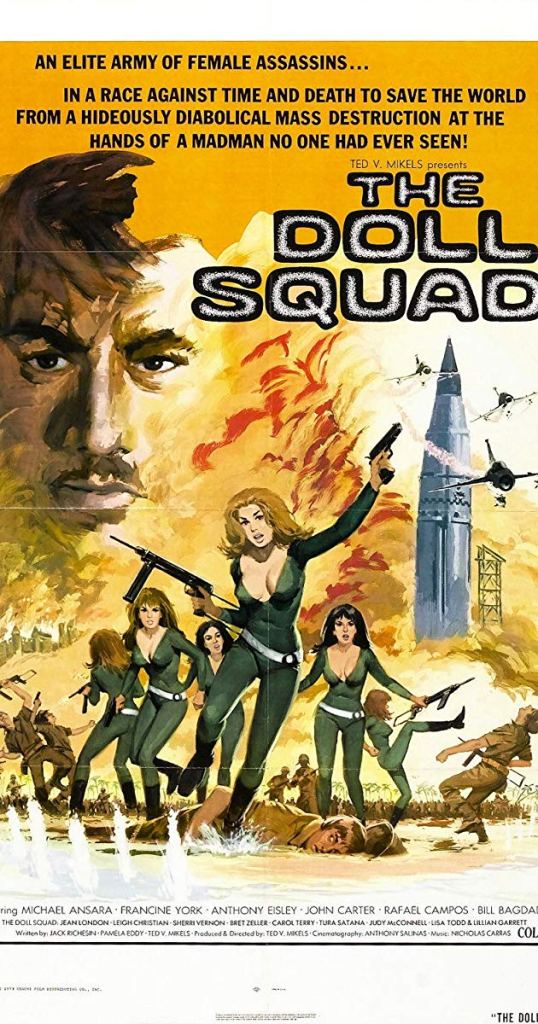
1. The Deadly Viper Assassination Squad is based on Ted V. Mikel’s The Doll Squad: In an interview, Tarantino outright stated “They definitely have that Doll Squad or Modesty Blaise look to them. Those girls just look cool in their turtle necks. Honey West was an American TV show, and that’s in there as well.” Keep in mind — the Deadly Vipers are not the same as the Fox Force Five that are brought up in Pulp Fiction. In that same interview, the director set the record straight: “Fox Force Five were crime fighters. They were secret agents. The Deadly Vipers are NOT secret agents! They are killers! But the idea is very, very similar. It’s like the flipside.”
2. The idea of the “wronged woman coming for revenge” comes directly from films like Lady Snowblood, They Call Her One Eye AKA Thriller: A Cruel Picture and Female Prisoner #701: Scorpion: All three of these movies revolve around a woman who rebels against her male tormentors and balances the scales. Lady Snowblood was born in jail to be an instrument of her mother’s vengeance. The entire end of Kill Bill Volume 1 has so many echoes of Lady Snowblood that it’s nearly a Xerox. Scorpion aims to kill the corrupt police, wardens and lovers who have mistreated her. And Frigga was an innocent girl who was turned into a one-eyed sex slave that mastered the violence she would need to kill everyone in her way. The final film so influences Kill Billthat Elle Driver’s eyepatch-centric fashions are a tribute to that Swedish exploitation classic (you can also see that she’s inspired by Patch from Switchblade Sisters, which was re-released by Tarantino’s Rolling Thunder Pictures).
Also, O-Ren Ishii’s look and attitude come directly from Lady Snowblood, as does the song “Flower of Carnage” that is in Kill Bill.
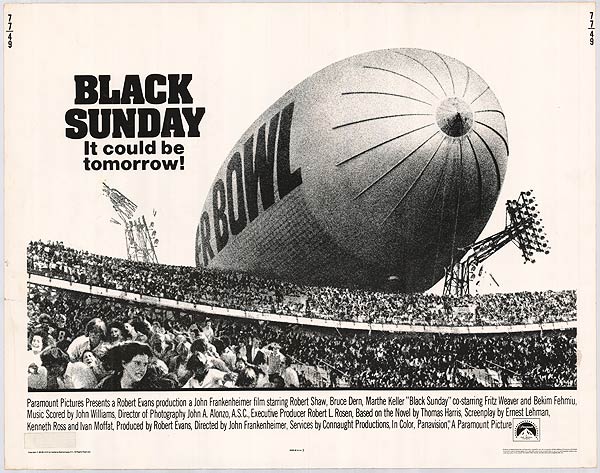
3. The scene where Elle Driver walks with a hypodermic needle is taken from the trailer for 1977’s Black Sunday. Yep. Literally shot for shot. Also, Elle is whistling like Martin from the movie Twisted Nerve.
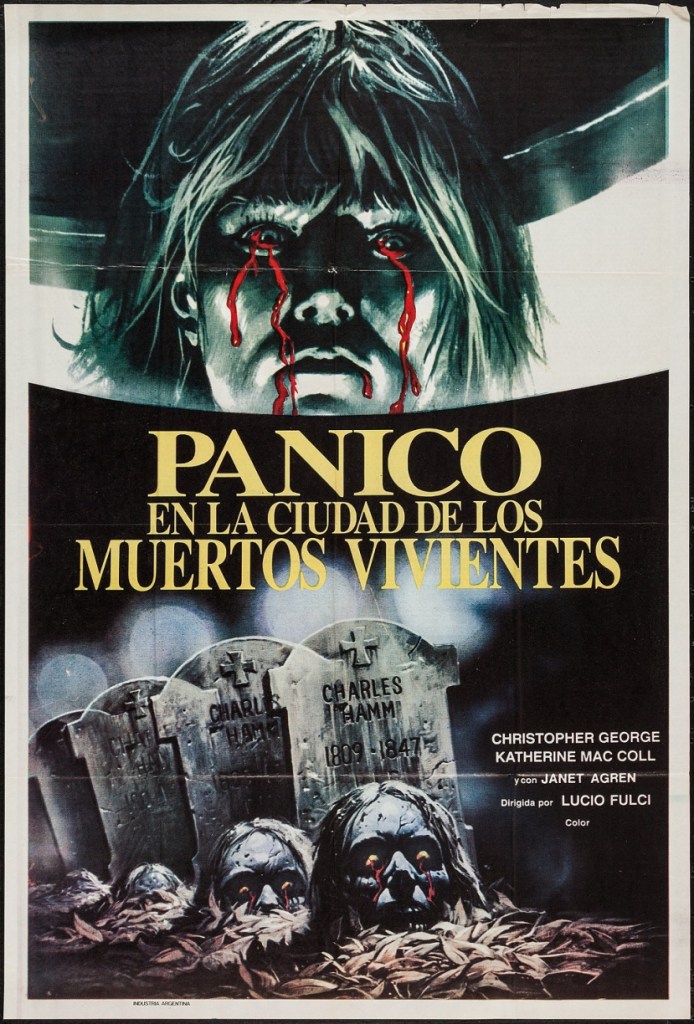
4. There are several instances of blood dripping from people’s eyes, which you can either attribute to Halloween 2or City of the Living Dead: Nobody hates eyes as much as Lucio Fulci. The end of the battle between the Bride and Gogo Yubari involves a board with nails through it that goes right into the brain of the Crazy 88’s member. The blood that pours from her eyes echoes both Michael Myers’ fate at the end of the original sequel and anyone that comes near the undead priest in Fulci’s flick. Tarantino also echoes the trapped in the coffin scene shots from Fulci’s zombie masterwork when the Bride is buried alive. Tarantino must really love Fulci — he helped re-release The Beyond and used the theme from his movie Seven Notes in Black (The Psychic) in Kill Bill.
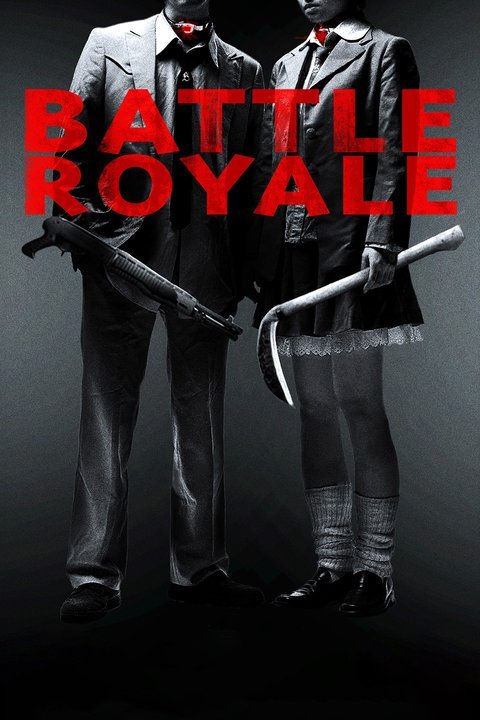
5. Gogo Yubari is pretty much Takako Chigusa from Battle Royale: This one is a no brainer, as they’re both played by the same actress, Chiaki Kuriyama, wearing the exact same clothes she wore in that movie. To add one more reference, there’s a visual callout to Deep Red in the big fight between her and the Bride.
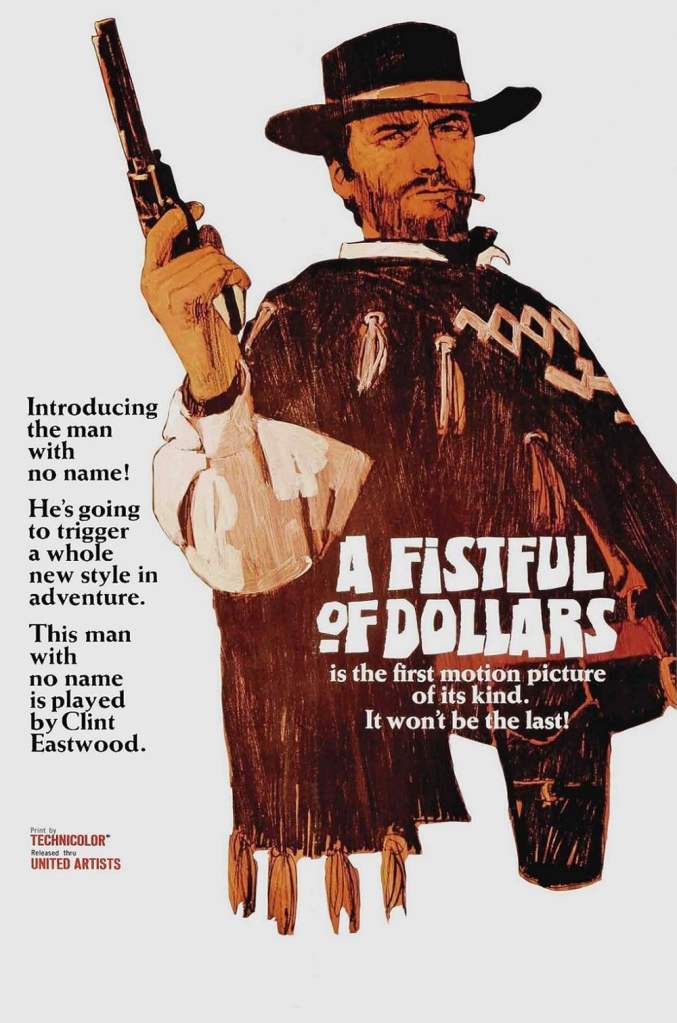
6. When Bill and the gang shoot the Bride, the score from A Fistful of Dollars is playing: Because really, Ennio Morricone’s score can make any movie better.
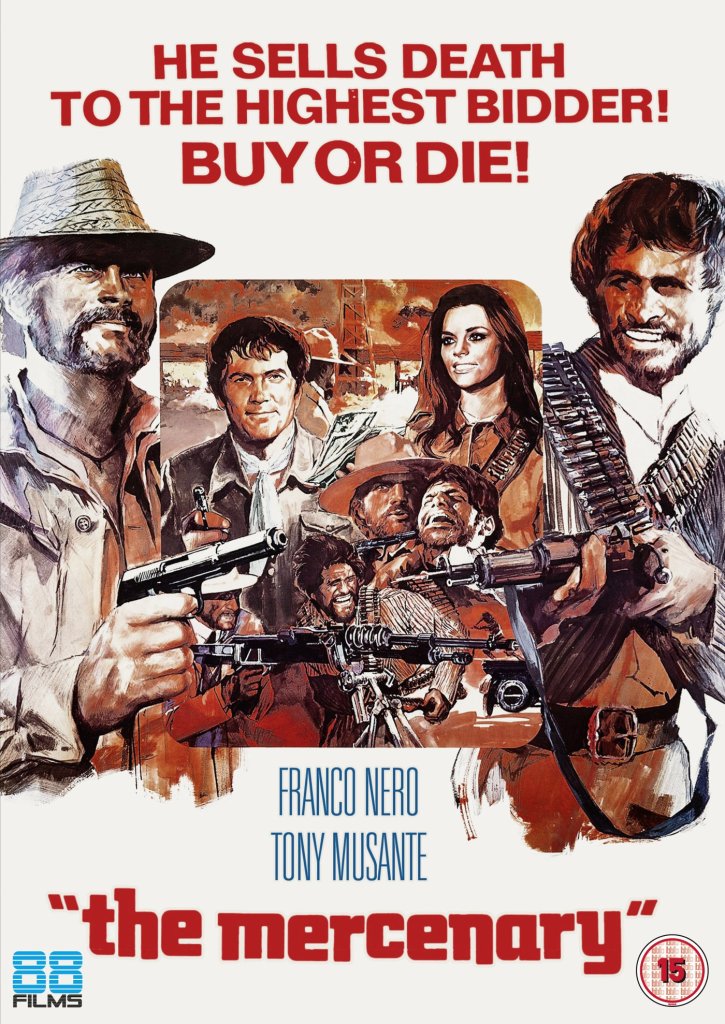
7. The Bride’s kill list comes from the movie The Mercenary: Even more Morricone music — and the kill list — comes from this 1968 Franco Nero-starring spaghetti western which is also known as A Professional Gun.
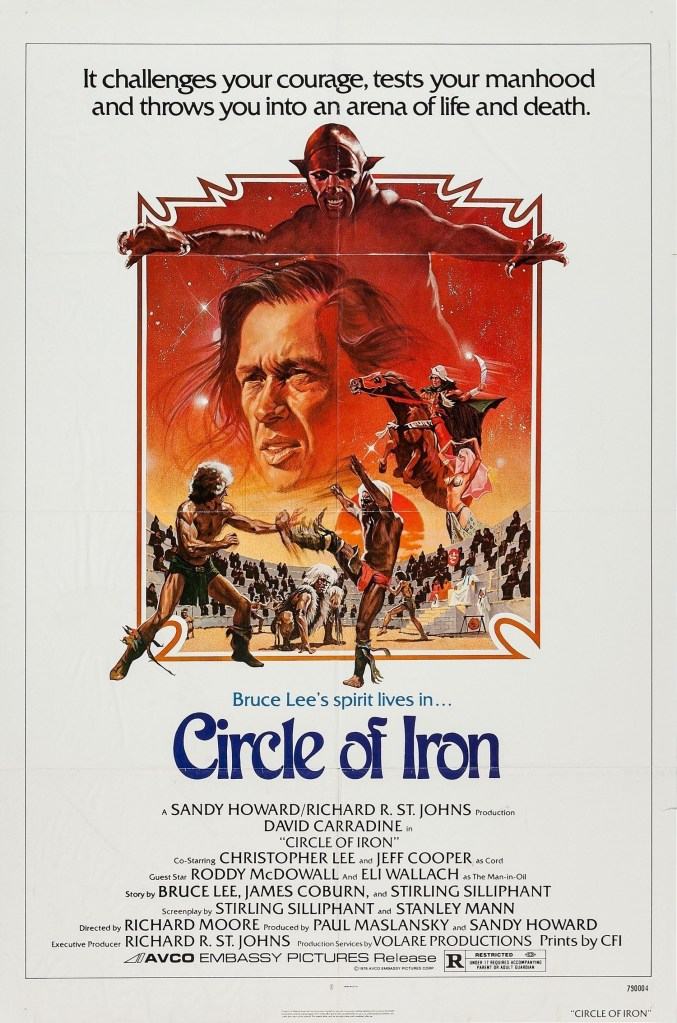
8. Bill playing his flute is from Circle of Iron: It helps that it’s David Carradine is playing both roles and the same flute.
9. The Bride’s yellow jumpsuit is from Game of Death: If you’re going to do martial arts, you’re going to have to shout out to Bruce Lee, who did it first and probably did it best. Bruce Lee is also echoed when the Crazy 88’s surround the Bride and a move of her wrist sends them all backward, just like in Lee’s Fists of Fury.
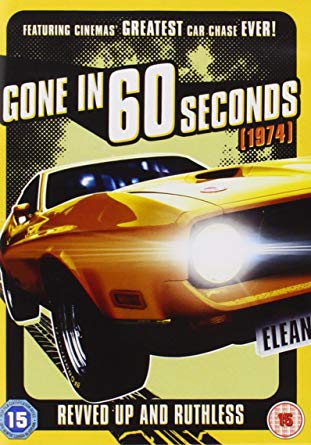
10. The sunglasses from the beginning of the original Gone in Sixty Seconds: This film’s hero, Maindrian Pace, has a dashboard lined with sunglasses, just like Texas Ranger Earl McGraw’s in Kill Bill.
11. When the Bride cuts off Sophie Fatale’s arm, it echoes all manner of Japanese samurai cinema. Or the massively gory death of Jane in Argento’s Tenebrae: It seems like when anyone gets killed in samurai movies, they spray blood like this. Come to think of it, it happens a lot in Argento’s films as well.
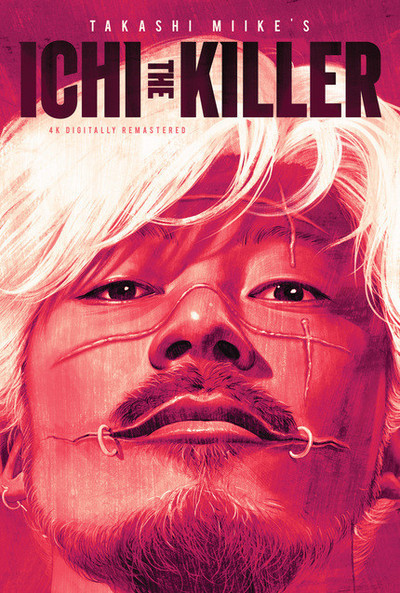
12. One of the Crazy 88’s gets his face split in half, just like a scene in Ichi the Killer: Takeshi Miike makes crazy movies. Movies so crazy that even contemporaries like Tarantino can’t help but reference them. You could also point out that this very same type of murder happens in 1980’s Shogun Assassin, the remix of two Lone Wolf and Cub films that the Bride watches with her daughter later in Volume 2. Also, the actor playing Boss Tanaka, Jun Kunimura, was picked because Tarantino liked how he screamed in Miike’s film.
13. The desert blur of the Bride is from Once Upon a Time in the West: Sure, almost everyone knows that. But did you know that Dario Argento helped write this Sergio Leone movie?
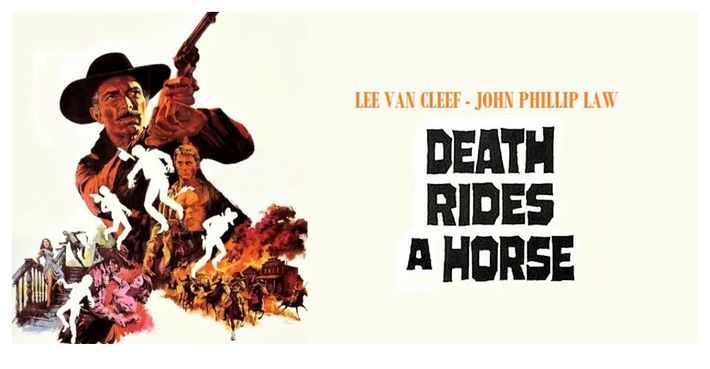
14. The tagline from Death Rides a Horse: The poster for this Lee Van Cleef spaghetti western says. “The bandits who killed five defenseless people made one big mistake. They should have killed six.” The Bride’s dialogue echoes this when she says, “The DiVAS thought they killed ten people that day. But they made a mistake. They only killed nine.” There’s also a visual reference to this film where the Bride has a flashback to the gang trying to murder her as the music cue from TV’s Ironsides plays.
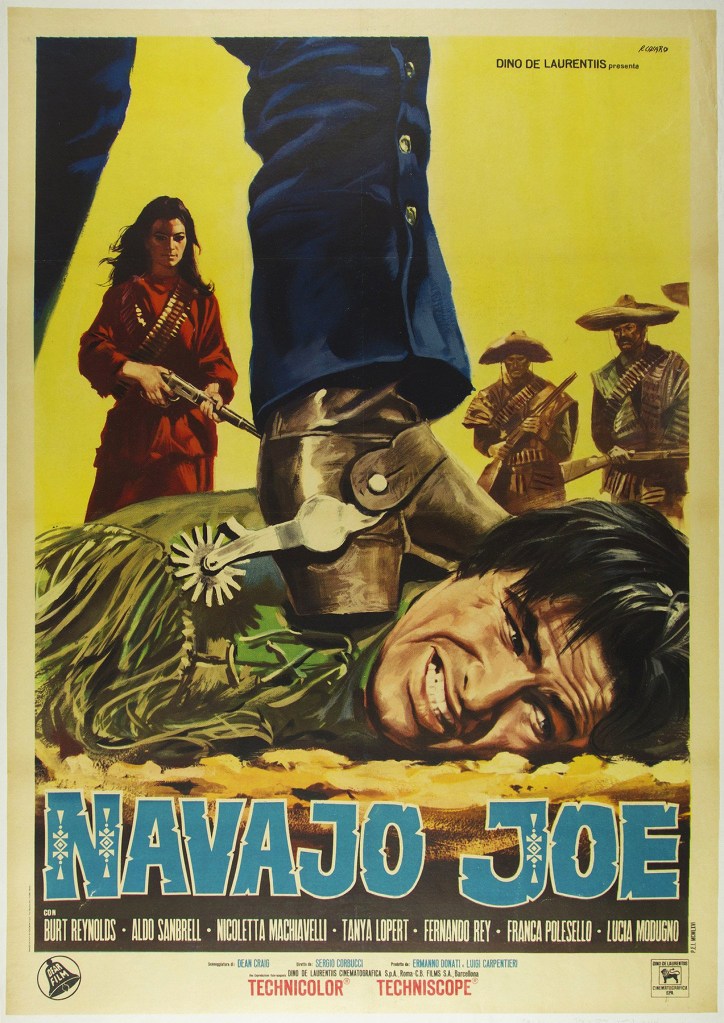
16. The axe throwing scene from Navajo Joe is redone in the Crazy 88 fight: This Burt Reynolds-starring film also lent two more Morricone songs to the Kill Bill movies: “A Silhouette Of Doom” and “The Demise Of Barbara, And The Return Of Joe.”
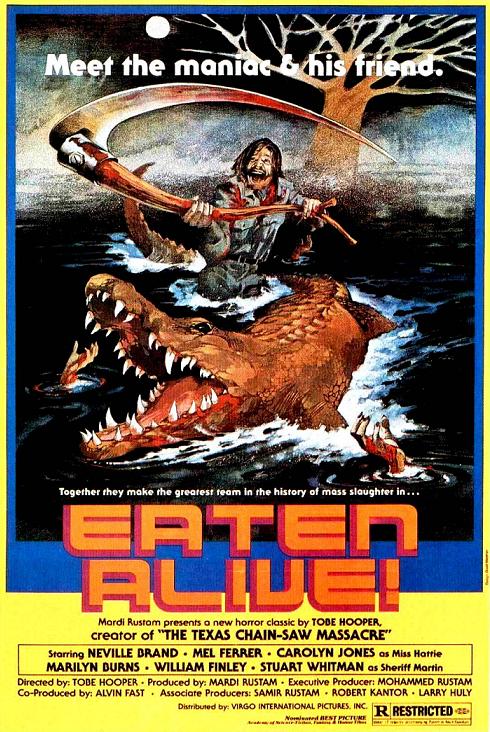
17. Buck’s line is from Eaten Alive: “My name is Buck and I’m here to fuck” was originally said by Robert Englund in this Tobe Hooper film.
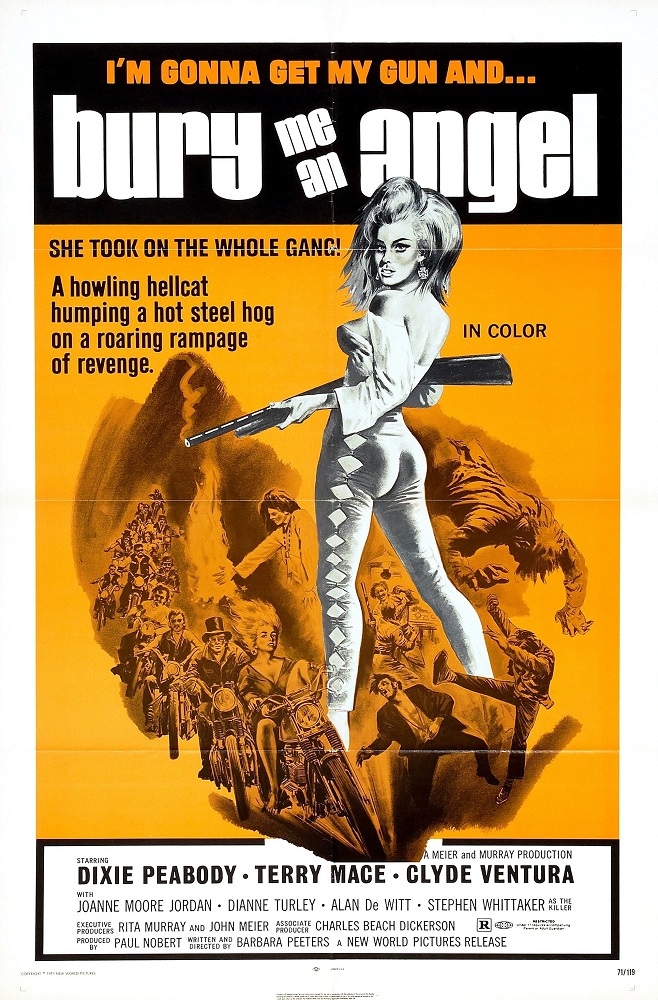
18. The Bride’s dialogue references Bury Me an Angel: When she says that she went on what the movie advertisements refer to as a roaring rampage of revenge, she’s referring to the tagline from this 1972 flick.
19. The Acuna Boys come from Rolling Thunder: Tarantino also took the name of his production company from this film.
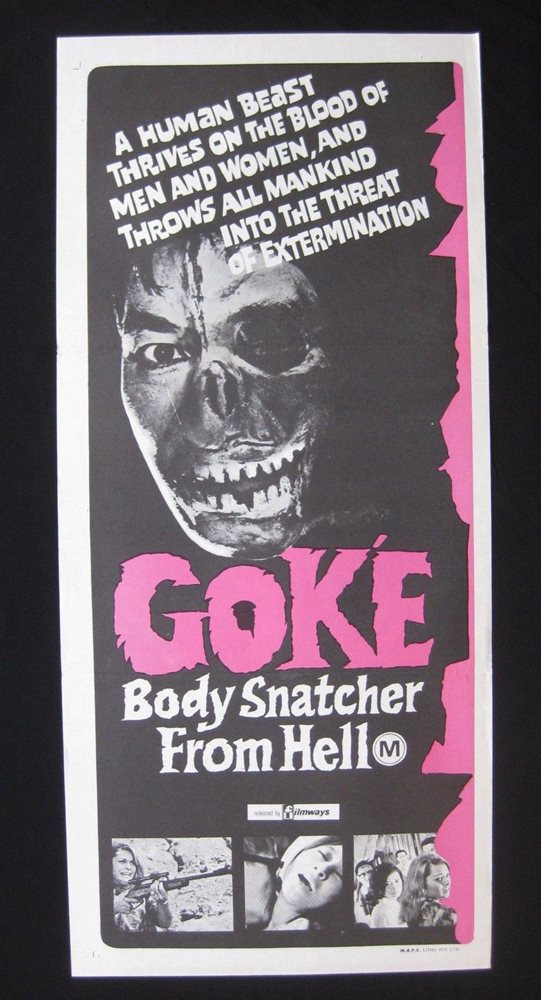
20. The orange sky when the Bride’s plane flies into Japan is from Goke Body Snatcher from Hell: Tarantino specifically wanted that color to echo one of his favorite movies.
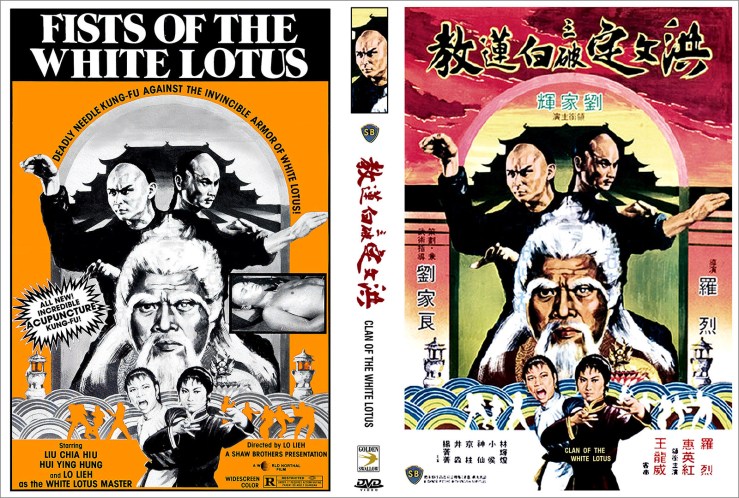
21. The Five Point Exploding Heart Technique comes from a bunch of movies starring Gordon Liu: This deadly strike, also known as Dim Mak, is used by Liu in the films Clan of the White Lotus and Executioners of Shaolin. As for Gordon Liu, he shows up as Johnny Mo, the leader of the Crazy 88’s in Volume 1 and as the Bride’s master Pai Mei in Volume 2.
22. The plot is a lot like The Bride Wore Black: A widowed woman hunting down the five men who killed her husband on her wedding day and then crosses their names off a list of them one-by-one? Yeah, that sounds a lot like Kill Bill. Tarantino claims he never saw this, but maybe he saw Jess Franco’s remake, She Killed in Ecstasy.
Ready? BONUS ROUND!
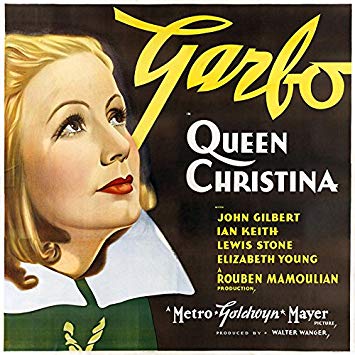
23. The final tracking shot of the Bride at the end of Volume 2 is taken shot for shot from the Greta Garbo movie Queen Christina.
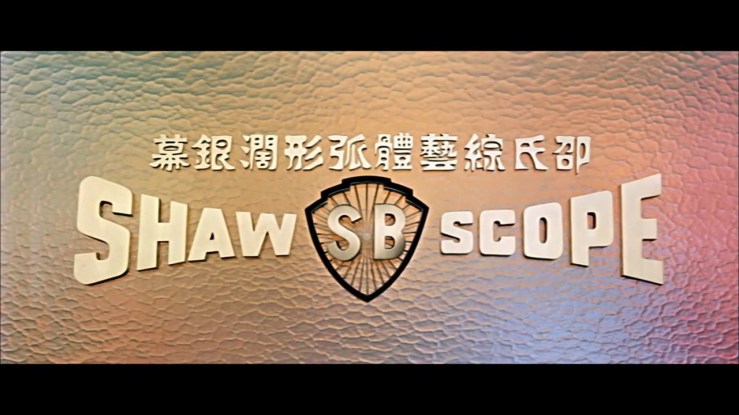
24. The Shaw Brothers logo opens the film, despite them having nothing to do with it.
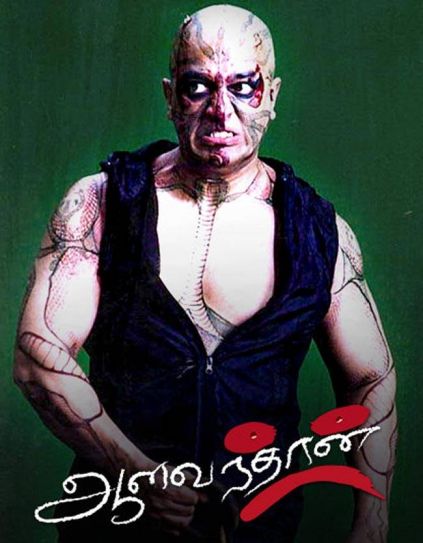
25. The animated sequences were inspired by the film Aalavandhan.
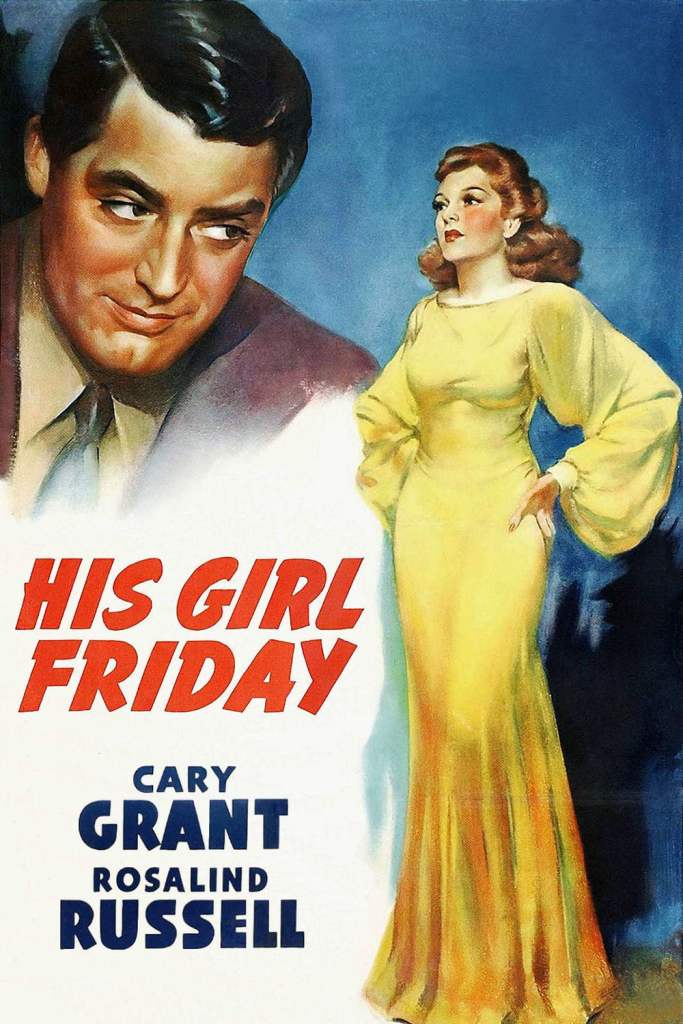
30. Bill’s line before the wedding, “Mind if I meet this guy, I’m a little particular about who my wife marries” is almost identical to a line in His Gal Friday.
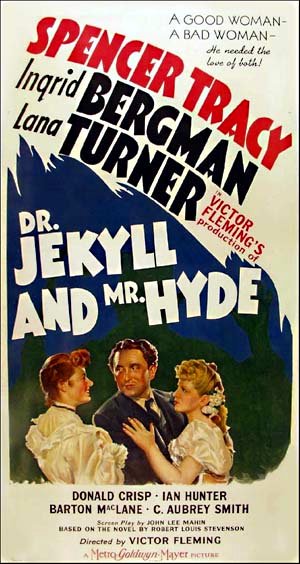
31. The Bride’s real name comes from Lana Turner’s character in Dr. Jekyll and Mr. Hyde.
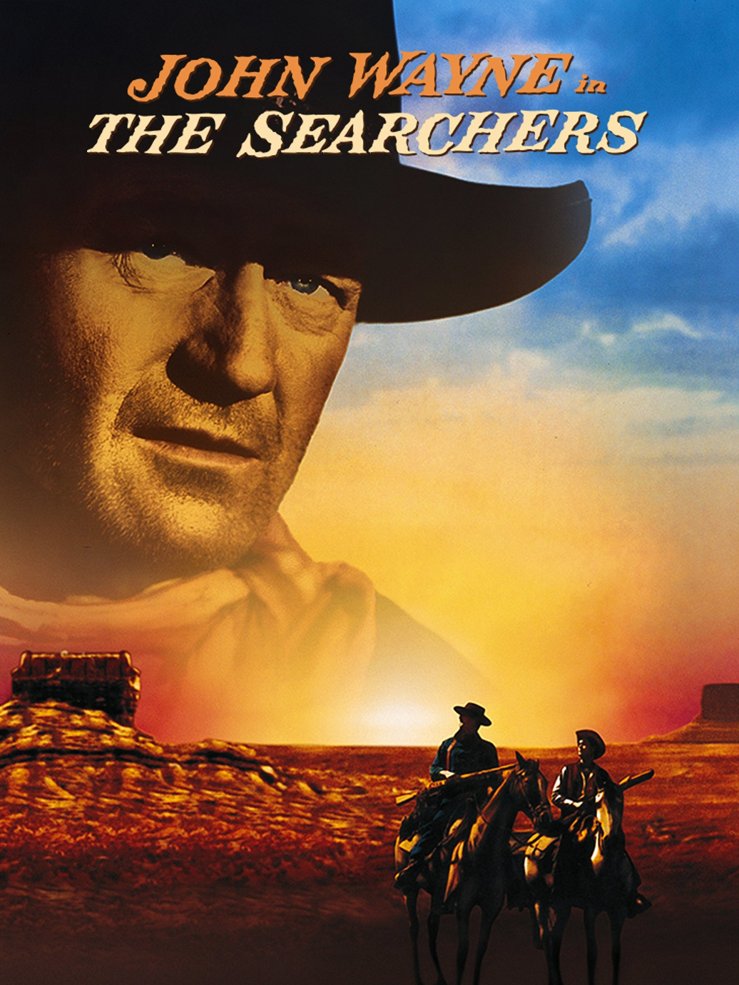
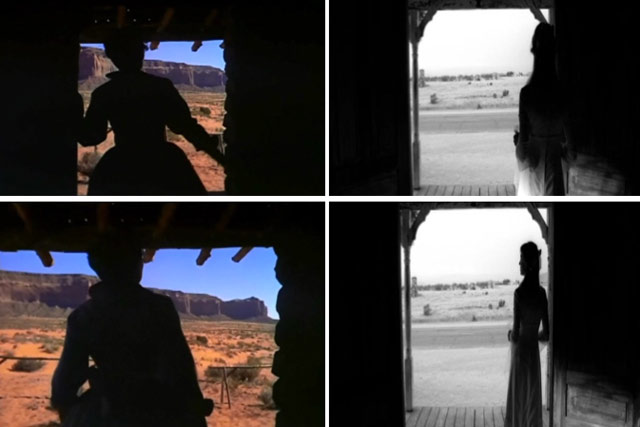
32. There’s a shot taken directly from The Searchers.
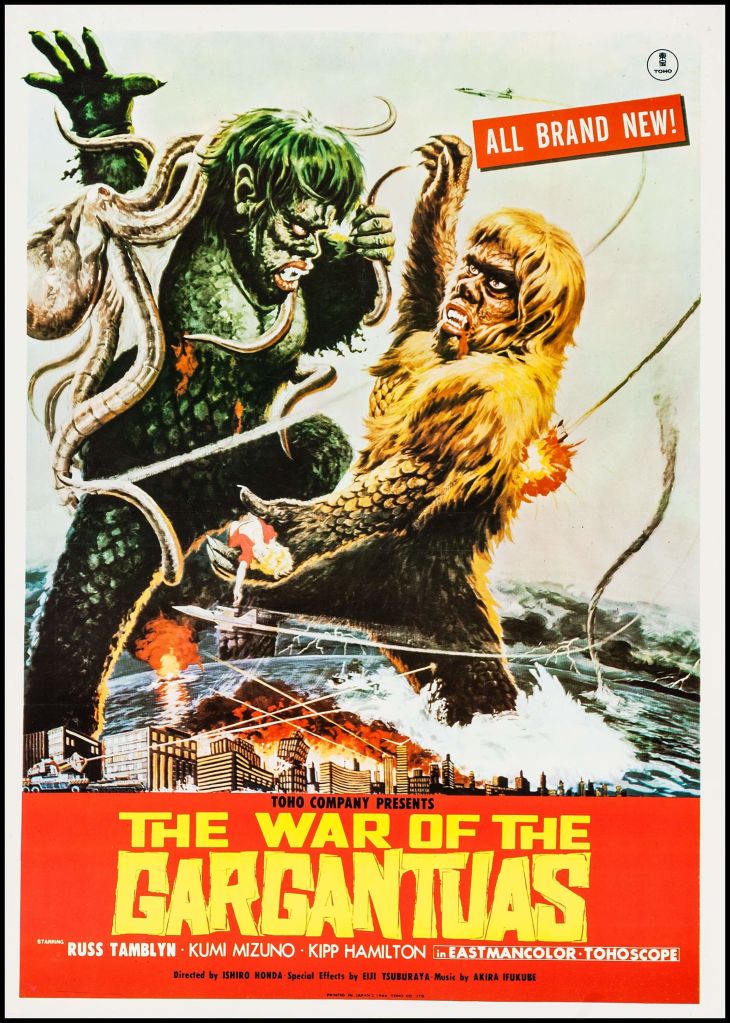
33. Tarantino wanted the fight between the Bride and Elle Driver to be like the Japanese monster movie The War of the Gargantuas.
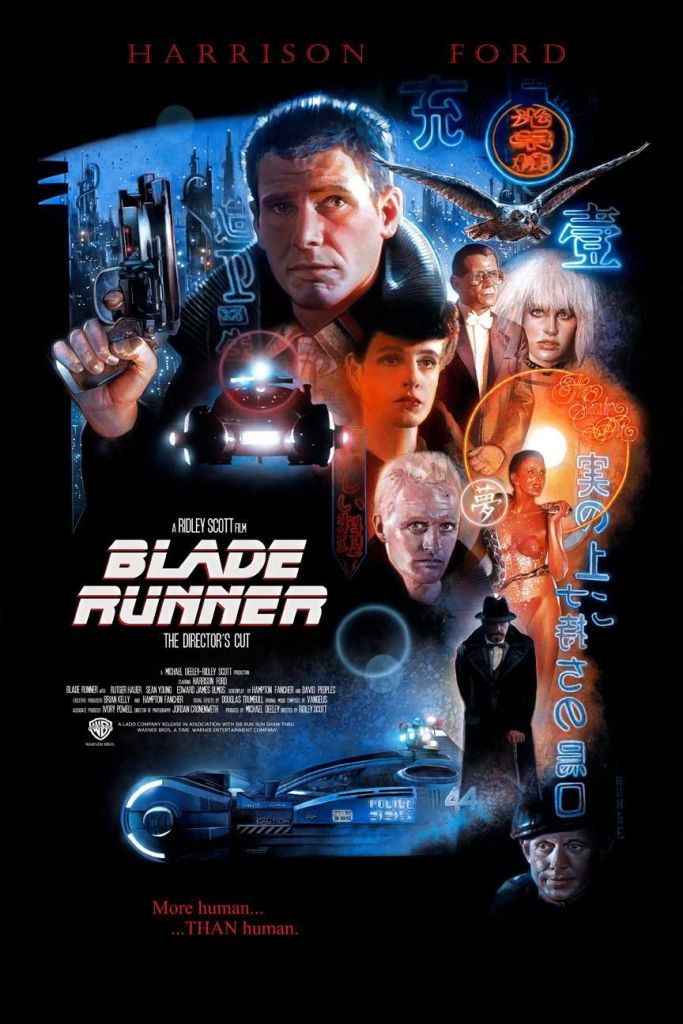
34. Elle Driver’s writhing pain after that fight echoes Daryl Hannah’s demise as Pris in Blade Runner.
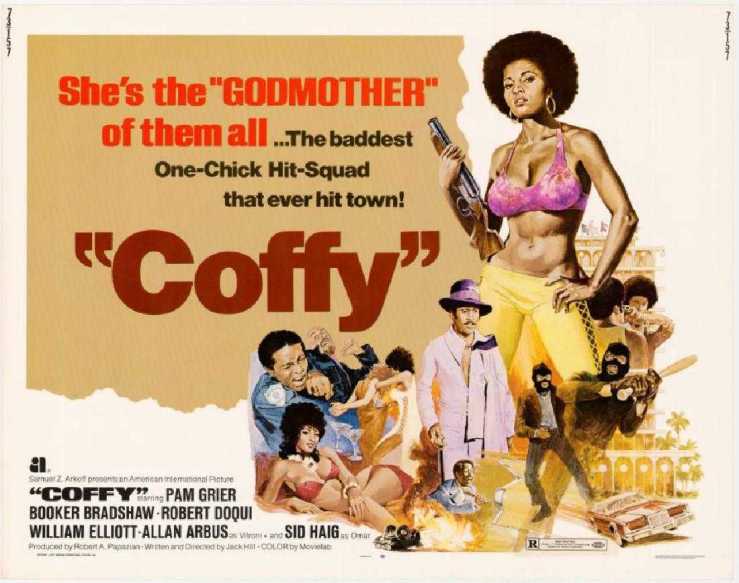
36. Several lines of dialogue from Coffy are used in the movie.
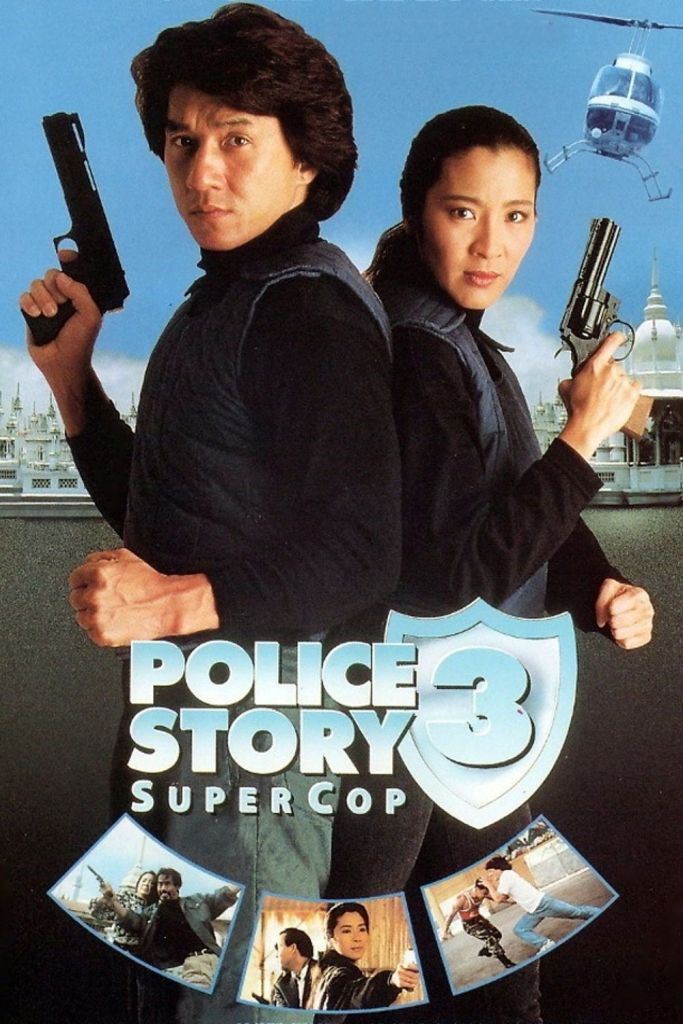
37. When the Bride says, “I would jump on a speeding train with a motorcycle for you,” that’s a clear reference to Michelle Yeoh in Police Story 3: Super Cop.
At the end of the movie, there are also RIP notices for Charles Bronson, Lucio Fulci, Sergio Leone, Shaw Brothers regulars Cheng Cheh and Lo Lieh, Django director Sergio Corbucci, Lee Van Cleef and William Witney, the Master of the World director that Tarantino has said is a lost master.
There’s nothing new under the sun. Don’t believe me? Watch the amazing video series Everything is a Remix, including the Kill Bill episode that inspired us to write all of these out!
Whew! That’s a lot about Kill Bill and I know I skipped some stuff, like Budd having a poster for Mr. Majestyk in his trailer and the references to Zabriskie Point. What else did I miss? Let me know!
UPDATE!
Diego Pippi from Facebook sent this comment: “i would like to add just some gossip. in the scene from dario argento “tenebre” the actress that get killed is the ex-wife of italian prime minister silvio berlusconi (at that time they weren’t married yet). in this movie she get killed in a very nastyway and for this reason that movie disappeared from the italian TV for many years (berlusconi was also the owner of 3 of the 7 main channel available in italy in the 80s and 90s). they got divorced few years ago after the bunga-bunga scandal that got a lot of press all over the wolrd. berlusconi was a sort of donald trump, a little bit more well mannered and less dangerous but just because italy is a lot less powerful than USA. by the way good article and sorry for all my mistake!!”
Don Conley said: “The arm getting sliced off was also featured in Andy Warhol’s Dracula (1973). Many of these references are cited by QT himself in the running commentary on the dvd – i.e. the orange sky from Goke…”
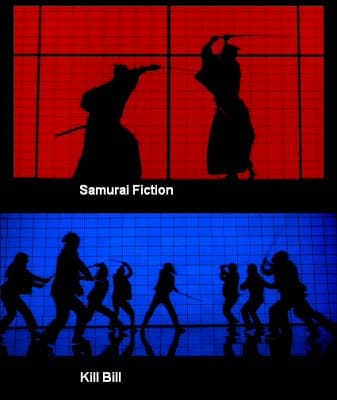
Sam Hain shared this image from Samurai Fiction.
Robin Bougie from the amazing Cinema Sewer even replied: “I was pretty sure the Hanzo reference came from QT’s love of the Hanzo The Razor movies, but I guess it’s true that Hattori Hanzo was a real dude that inspired those movies as well, and he could have just been referencing that. Someone should ask him.”
Andrew Leavold let me know this: “Ooh don’t forget the dialogue between Sonny Chiba and his son was taken directly from the two straggler samurais in Cirio Santiago’s Death Force (Cirio and one of the actors, Jo Mari Avellana, hung out with QT when he visited Manila in 2007).”
D’Arcy Rix-Hayes also told me: “Think you’re missing Avenging Eagle, great Kung Fu flick, for some of the Pai Mei stuff.”
Thanks everyone!
2024 update:
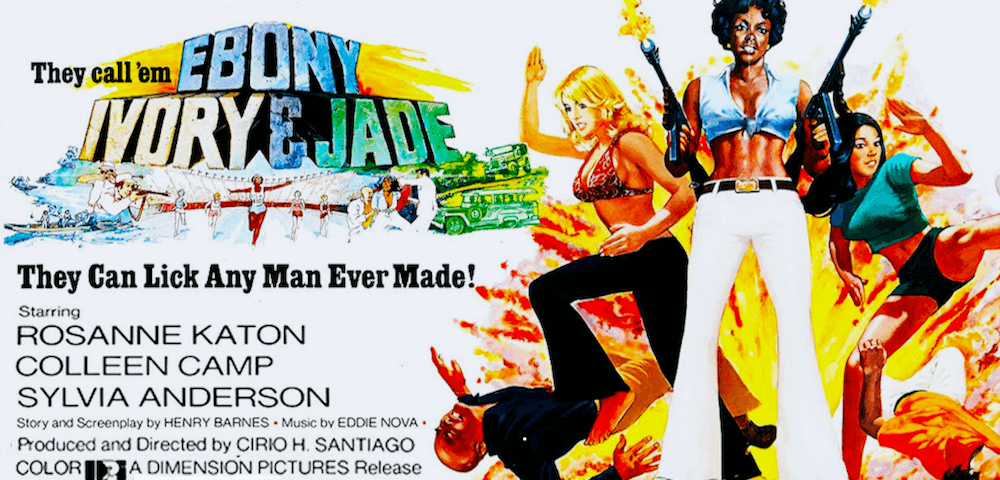
The back of the box Foxforce box for Ebony, Ivory and Jade — The Unknown Movies has the entire text and it’s so good — refers to that movie’s protagonists as “3 spittin’ kittens on a roaring rampage of revenge!” That’s the same phrase used to describe the bride’s vengeance, a “roaring rampage of revenge,” in Kill Bill.







 B&S About Movies
You must be logged in to post a comment.