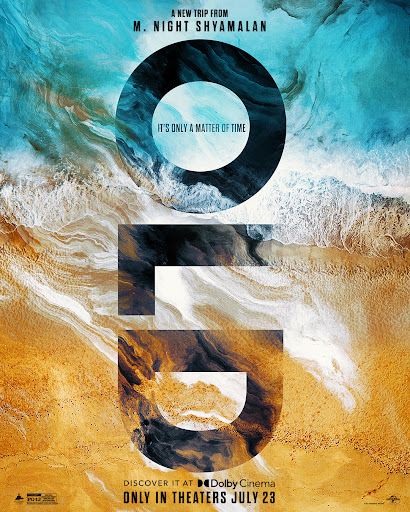
Old (2021)

There was a time that people wanted to give M. Night Shyamalan the title of our generation’s Rod Serling, but as time goes on, his films have gone from Twilight Zone to Outer Limits to Tales from the Darkside in quality and now, they hover somewhere around stories that even shows like Monsters would say, “Well, that seems pretty bad.” Actually, I really like Monsters and feel bad associating that show with Shyamalan’s output. Maybe a better example would be to imagine if Night Gallery was only the Jack Laird comedy bits and The Sixth Sense with none of Serling’s contributions.

To be even more honest, I feel bad dunking on Old and the works of Shyamalan, which get worse with each release and his hamfisted attempts at being a modern William Castle, like when he got SyFy to air a documentary that claimed that he died as a child and could therefore speak to the dead, suffer from a lack of aesthetics and none of the wonderful hullaballoo that Castle exhibited.

So yeah — Old is not good. What did you expect? Each of his films is the very definition of something I usually love, the hijinks ensue film. Get a great concept: an island makes people prematurely age and then…hijinks ensue. But the hijinks here are pretty predictable. And while the director said that he wanted to explore the way his father saw the world through his dementia — dude, I’m dealing with that in my family right now and I don’t really want to wade through it in my entertainment — I think this movie would be best experienced if you had no way of comprehending just as shallow and pointless it all is and just enjoyed the pretty pictures.

The most entertaining thing about this movie would be the director’s statement, which claims that this was influenced by Australian New Wave films like Walkabout and Picnic at Hanging Rock, along with The Exterminating Angel, which actually made me giggle and then get really mad. Also, throwing out Ran, Rashomon and other Japanese films is a desperate stab at “hey I’m an artist!” while saying you’re influenced by Twilight Zone and Jaws is like saying that you enjoy drinking fluids and eating food.

This story was based on the graphic novel Sandcastle which gives no answers as to why the island rapidly ages people. Of course, we needed the twist to explain it. You know, the real twist would be the director not having a twist in his next film and trying to push himself beyond the hackneyed. Here’s to hoping.
Candyman (2021)

Someone on my social feeds posted the other day that they still couldn’t get this movie out of their mind days after watching it and I wondered, “Where did they get the version of this film that I so desperately wanted to see?”

Because after what feels like years of delays, this film finally was released and I’m struggling, quite honestly, to remember much of it. And what I do recall isn’t that good. It felt unfocused at best, scattered and boring at worst.

Which is a shame, because Candyman is one of the most unexpected and near-perfect horror films I’ve ever seen, a movie that effortlessly combined menace, terror, social commentary and reflected the world outside, all things that this movie shoots for and watches the ball circle the rim without ever scoring.

But hey — what do I know? It made $68 million worldwide against a $25 million budget.

The story of the first film has become exactly what the Candyman promised it would be, as Helen Lyle is now a legend and the unrelenting blight of the Cabrini-Green housing project has been cleaned up and gentrified, which is mirrored by how Anthony McCoy takes the stories of where he grew up and sells them as art.

Yet the story of who Candyman is moves his origins to 1977 and a man accused of placing a razor blade in a child’s candy, which takes away from the power of the true origins of the character.  The Sherman Fields version of the character takes away from the story until we finally get back to the Daniel Robitaille character and then gets further diluted by the concept that there is a hive of Candyman which discovers a new host every few years.

A bee’s sting and the push of a man named Billy Burke push McCoy toward becoming the next version of the urban legend, even as the kills that surround his story seem pulled from the worst Platinum Dunes-style 90s and 00s remakes of past horror films, particularly a scene in a girl’s bathroom that seems tonally at odds with some of the wonderful moments of this film, like the animated origins that punctuate the narrative.

I like so much of what director and writer Nia DaCosta — along with producers and co-writers Win Rosenfeld and Jordan Peele — are trying here, but the exact moment that the movie seems to be ready to mean something — as McCoy’s girlfriend must bring the avenging power of the Candyman to bear against the uncaring might of a white police force is the end of the film and then seemingly gets to what we really want to see. But by then, it’s too late to do much.

The main problem, at the end, is that the original film remains vital decades after I first saw it. This lost its potency while I was watching it. And that doesn’t make me happy at all, because this was a movie that I was rooting and hoping for, as I feel that the character and mythos remain a vital canvas on which to paint deep lessons upon.

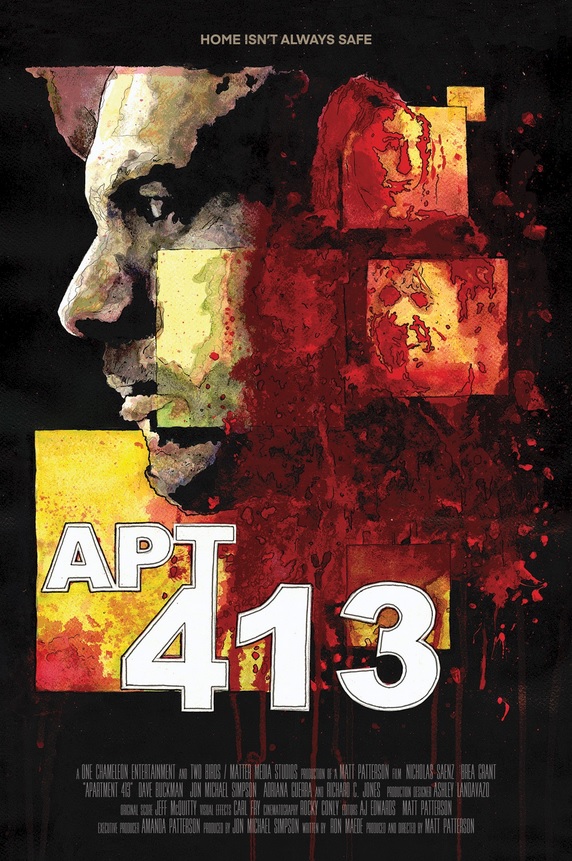
Apartment 413 (2021)

You know our jam at B&S About Movies: we love the drive-in and VHS flicks of yesteryear (give us a Mill Creek box set to unpack), but we also enjoy exposing our readers to the new, indie vanguard of streaming filmmakers in lieu of the A-List popcorn balls and tent poles coming out of Hollywood.

Is that because of our cinematic snobbery? Not at all.

We enjoy the big movies (we loved Solo: A Star Wars Story, Wonder Woman 1984 was meh, while Hitman’s Wife Bodyguard and Suicide Squad ’21 worked out okay) as much as the little ones. What really intrigues us at B&S About Movies aren’t those filmmakers with ten or one hundred million dollars in their pocket: it’s what the filmmakers with $10,000 or $100,000 in their pocket can do. (The production cost of one shot/scene in Martin Scorsese’s The Irishman could cover the entire production cost of an indie streamer.)

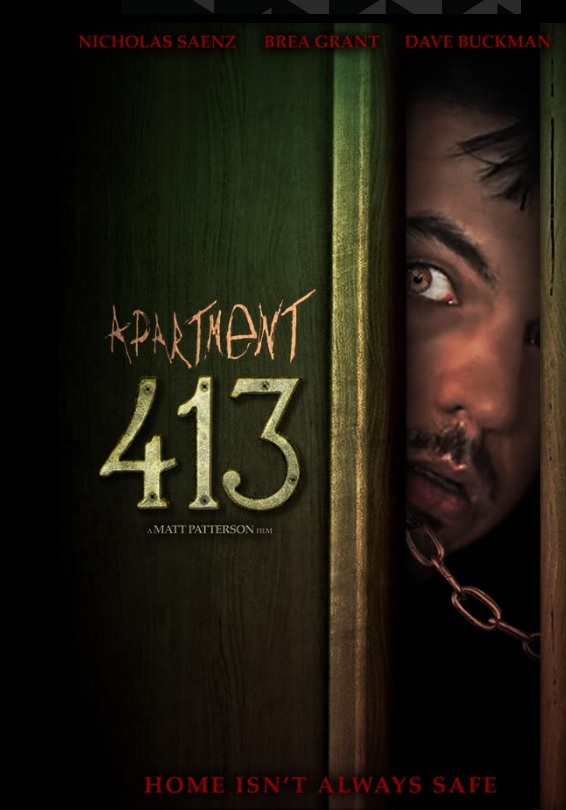
Such a film is Apartment 413, an intelligently written and directed, feature film debut by screenwriter Ron Meade and director Matt Patterson. As explained during a showing at the Austin Film Festival in 2019, the duo came together via Patterson discovering Meade’s single-location screenplay — originally known as The Church Bells All Were Broken — on the on InkTip.com screenplay hosting service.

The 2019 film festival one-sheet.

Neither, as is the case with most of the feature-length indies uploaded to the streaming-verse, are inexperienced first timers: Meade and Patterson both come with extensive careers working in various disciplines on streaming series, shorts and features. In fact, Ron Meade most recently worked on the post-production process of a pretty fine indie we recently reviewed, Gap Weekend (2021). Kevin Smith fans know Matt Paterson as result of selling his screenplay for Bindlestiffs (2012) to the View Askew-verse.

The most accomplished, recognizable member of the cast is Brea Grant; her 85-credits strong career dates to recurring and co-starring roles on Friday Night Lights (2008), Heroes (2009), and Dexter (2011), as well as guest starring roles on Anger Management, NCIS: Los Angeles and NCIS: New Orleans. On the big screen, you’ve seen Grant in Rob Zombie’s Halloween II (2009) and the indie-horror Beyond the Gates (2016). You’ve seen her fellow lead, Nicholas Saenz, on John Ridley’s short-lived series American Crime (2015), as well as NBC-TV’s failed apoc-drama, Revolution (2014).

The 2021 streaming one-sheet.

An unemployed Marco (Saenz) spends his days applying for jobs online and waiting for Dana (Grant), his employed, pregnant girlfriend to get home . . . if she is, in fact, even real. As his lonely, shut-in world begins to shrink, strange post-it notes mysteriously appear around the apartment with cryptic warnings, notes that may be from his own-self or reminders from Dana. Perhaps it’s that creepy car mechanic he sees in the complex parking lot through the apartment window who is texting and calling him from an old, non-functioning cell phone. Will anyone hear Marco’s cries . . . or will his paranoia, self-loathing and doubt destroy his world? Are his “church bells,” in fact, broken?

Courtesy of its skilled group of filmmakers behind and in front of the camera, the Hitchockian-styled Apartment 413 accomplishes much with its obviously tight budget and small cast. This is one of those indie-streamers worthy of dropping your coin in the digital nickelodeon. It’s also one of those films where you look forward to the next works of Ron Meade and Matt Patterson.

Apartment 413 becomes available for streaming from Terror Films on various platforms on September 17, 2021. You can learn more about the film’s production on its official Facebook page, as well as the previously noted Austin Film Festival and InkTip links.

Fans of Austin-produced indies may also want to check out the well-done-on-a-budget Why Haven’t They Fixed the Cameras Yet? (2020) and Nana’s Secret Recipe (2020). Both stream for free via the links in the reviews.

Disclaimer: We were provided a screener copy of this film from the production’s PR firm. That has no bearing on our review.

About the Author: You can learn more about the music journalism, fiction and screenwriting endeavors of R.D Francis on Facebook. He also writes for B&S About Movies.

The Misadventures of Mistress Maneater (2021)

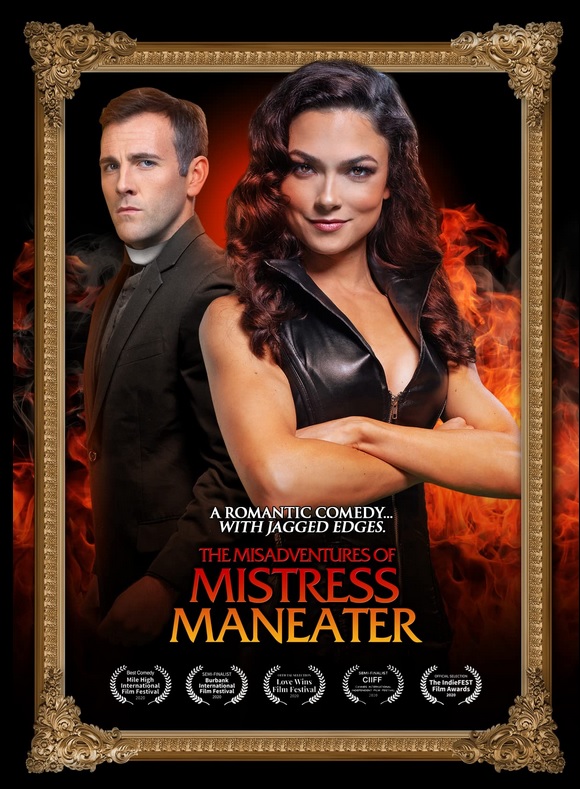
This “romantic comedy with jagged edges” is the feature film debut by the Chicago-based acting, writing and directing team of C.J. Julianus and his wife Lorrisa Julianus, under their Binary Star Pictures banner.

Filmed throughout the Chicago area, our maneating mistress Ava Moriatry (Lorrisa Julianus) is a disgraced Art History PhD with a unique sideline to put herself through school: she’s a highly-sought after dominatrix. As with most ne’er do wells: she wants out of the business, the adult entertainment business, that is. And her Russian mobster ex-boyfriend will let her out of the business, provided she pays off her $500,000 loan. (“That wasn’t our deal!” “The deal has changed.”) So she’s forced into one last job: seduce, then extort, Sebrian-Episcopalian priest Father Radovan (a fine Mickey O’Sullivan, aka Detective Tom Doyle, for you Chicago P.D. fans), who not only moonlights as an MMA fighter, but makes extra scratch by embezzling priceless art pieces. As she falls for the Father, what will Ava do: help him sell the artwork to save his parish or pay off her own debts?

In spite of its adult material concerning the noirish entanglements of a priest, a gangster and a dominatrix, the presentation is not religiously offensive or sexually graphic. The proceedings are softened by it’s-played-for-comedy scripting (by accomplished playwright Lorrisa Julianus) and the comedy works well against its unpredictable, twisty-noir vibes. The film, overall, at pokes fun at itself and has its campy moments, but team Julianus pull back the reins and never lets the camp go over the top to keep everything feature film, major studio classy on an indie budget.

Primarily a theater writer and director, C.J. Julianus certainly proves himself highly capable behind the lens as he extracts the very best from his unknown cast of Chicago theater thespians. The real star here, however, is producer John Wesley Norton doubling as the film’s cinematographer. Working against an obviously low budget, this debut by Binary Star Pictures looks way more expensive — major studio feature film expensive — than it is. A writer and director in his own right, and based on what I’ve seen in the frames, here, I am inclined to seek out his other works, of which Tubi streams two: the horror comedies Paranormal Calamity (2010) and Doctor Spine (2015). His 13-episode series, Dark Country (2018), streams on You Tube.

My only qualm with the film is that it runs a little long at an hour fifty minutes. That length is fine for streaming platforms, but stymies any cable television replays, which requires tighter, 80-minute films that program into two-hour blocks. While the production values and acting, here, are above the female-driven products of the Lifetime and Hallmark Channels, C.J. and Lorrisa Julianus are certainly on a bright road, as their Binary Star Pictures can certainly shine by providing a higher grade of romantic comedies or damsel thrillers for either channel.

This is a fine, debut indie-feature with class and style that exceeds any of the expected vanity trappings of similar, self-produced industry calling cards. I, for one, look forward to C.J. and Lorrisa’s next production. Keep your eyes open for that Binary Star Pictures banner, for that production will happen sooner, than later.

You can enjoy The Misadventures of Mistress Maneater as a with-ads stream on Tubi or as an ad-free experience on Amazon Prime via Indie Rights Movies. You can also learn more about the production on its official Facebook page.

Disclaimer: We were provided a screener copy of this film from the production’s PR firm. That has no bearing on our review.

About the Author: You can learn more about the music journalism, fiction and screenwriting endeavors of R.D Francis on Facebook. He also writes for B&S About Movies.

Royal Jelly (2021)

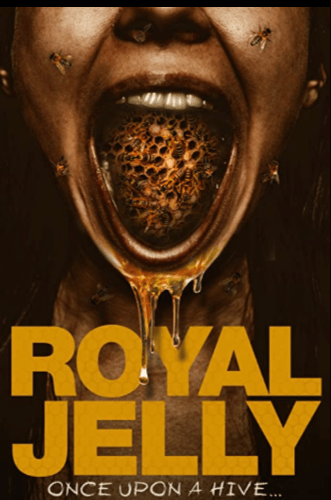
Sean Riley is the the principal of Benndale Elementary School in George County, Mississippi by day, but by night, he wrote and directed this movie all about a school outcast who becomes a human bee groomed to be the next queen of the hive. This is his second full-length movie after 2017’s Fighting Belle, in which a Southern belle left at the altar becomes a boxer.

This is a movie rich in bees and the honey they help produce, as nearly all the main character’s names are the names of wildflowers which bees pollinate and the term royal jelly refers to the secretion produced by glands of the hypopharynx in nurse honey bees. This is fed to all the lavrae as they grow, but mostly saved for the future queen bee as she rests in her cell within the hive.

The film’s heroine is Aster, who is that most rare of combinations — so rare I’ve never heard it it before — known as the goth beekeeper. That means that nobody likes her at school at all and she’s treated worse at home thanks to her new stepmother and stepsister, who have taken her father’s attention away from her.

Luckily — or perhaps not for the victims in this film — a new teacher comes to the school that loves bees just as much as her. And she takes in our protagonist after her stepsister and friends crush all of her hives.

This is a horror movie, so this isn’t about an older teacher grooming a sensitive young girl to the Sapphic delights of the world. That would be an Italian movie from 1978 or somesuch. This is a direct-to-streaming video in which someone grows fairy wings and fangs as they become a human bee and get their stinging revenge.

So yeah. It’s Carrie with bees and no revenge for the heroine. And it’s not the best bee movie even. That would maybe be Invasion of the Bee Girls. It’s also not anywhere as good as Phenomena, but very few movies are. There is a good idea here, but there’s not the budget or the follow-through to make it anything better than what it is. Some bees make delicious honey, others just sting you, but the pain eventualluy goes away.

Royal Jelly is available on demand from Uncork’d Entertainment. Visit the film’s official Facebook page to learn more.

What She Said (2021)

This is how you do a tagline: “Everybody has an opinion. Nobody has WiFi.”

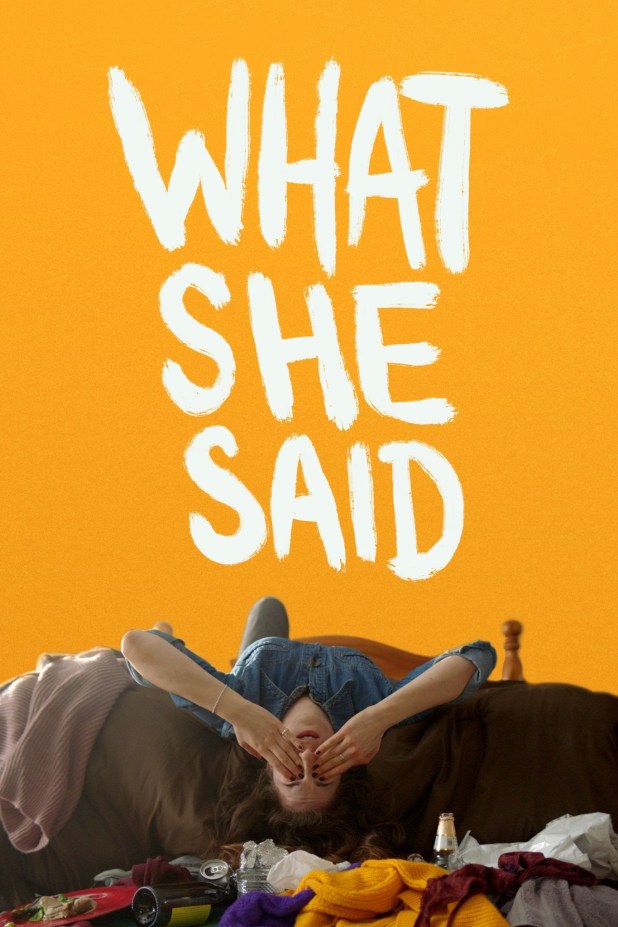
Sam (Jenny Lester, who wrote the script for this dark comedy) has decided to drop the charges against the man who assaulted her. Now, on Thanksgiving, perhaps one of the most stressful days of the year, her family and friends have joined together to stage an intervention.

Our protagonist, who has placed her life on hold for 18 months in and out of trials, wants to finish her dissertation. Yet when she receives news that the trial is postponed again, she hides out in her family’s remote cabin in the Virginia woods, ghosting everyone. But can the same people she wants to avoid convince her to come back to the city to complete the trial?

Lester explained her thought process behind the script — and the making of the film — by saying, “It is frustrating that in most portrayals of survivorship, we learn what someone has been through instead of who they are. As more and more women started sharing their stories (often anonymously) online over the past few years, the question that kept itching in my mind was, “Who was this woman before this event that is now synonymous with her identity? Who is she now as she picks herself back up and returns to her life?” As we approached our first feature, we knew we didn’t need to add another SVU version of survivorship to the zeitgeist, and instead wanted to focus on what is hopefully a very human story about a deeply nuanced and often flawed woman and her messy, misstepping, well-meaning chosen family that raillies around her. Putting together a predominantly female, enby, and queer crew and creative team to help tell it was absolutely paramount.”

Where most films that deal with this subject are either courtroom dramas or descend into revenge pictures. This shows the very human side of dealing with what comes after the attack, with Sam struggling to build new connections and continue the ones that she had before. Beyond the horrific emotions and pain that Sam has had to deal with over the last year and change, the fact that others want to tell her what to do may be just as damaging to her.

There are no easy answers, obviously, but this film raises plenty of questions to ponder over and consider. It’s not what I expected to watch for entertainment, yet it’s the kind of movie that will stick in my head and make me think back to it from time to time, which is one of the hallmarks of a film that just plain works.

Director Amy Northrup has an interesting resume, as she’s acted in several films and also works as an intimacy coordinator and facilitates classes on consent practices for filmmakers. This is her first full-length film. Of this effort, she said, “The ways we consume media affects how we see the world around us, and if the stories of sexual assault we see are homogenous, limited, and singular, it makes it infinitely hard to see the layers of impact, to believe the people in our actual lives who come forwared and say this happened to me. When all we see is perfect victimhood we turn around and demand it. This film, for us, was one version of a story that won’t meet that demand.”

You can learn more at the official website of this movie. It’s now available on VOD.

Malignant (2021)

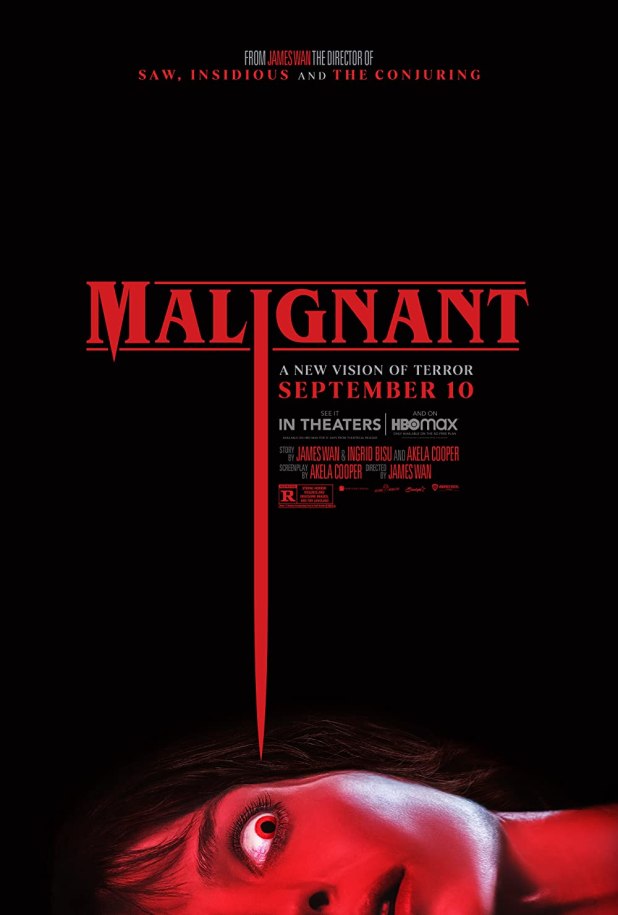
From the first time Malignant was announced, it was called James Wan’s giallo film.

A few thoughts on that.

It’s a giallo film as much as Suspiria is a giallo. That’s because most people think, “Italian horror with red and blue colors equals giallo,” which is much like someone thinking that all hip hop is rap or all metal has blast beats, maybe. It’s a generalization and you know, you have to be fine with it. In a world where reviewers from publications as big as Variety can’t understand that Halloween is not a rehash of Texas Chainsaw Massacre, you have to expect that some movies need a handle for people to better understand them.

To the rest of us, those that haunted the aisles of the video stores minutes before closing, that carried lists of films in our wallets, that went from small town to town trying to find that magical movie drug that our store had no more supply of, I can tell you, if this movie had a Filmirage logo before it, the dubbing was off and a CGI Donald Pleasence or Donald O’Brien showed up, I would not be more surprised.

This isn’t a giallo. Sure, there’s a giallo looking killer with a weapon somehow more ridiculous than the one in Too Beautiful to Die that has identity issues and a history of family madness much like Madhouse, but nope. This is the kind of movie that Screaming Mad George would have done the effects for, that would have had a trailer for Fatal Frames before it, that should have a piece of masking tape with green magic marker that says “MUST BE 18 TO RENT” emblazoned on it.

So for every review I see that says, “This has a bonkers third act!” or “It starts slow but hold on,” I wonder, have I done too many movie drugs? Have I inhaled too deeply on the fumes of not only the Argento, Fulci, Henenlotter and Raimi — hail to those mentioning Darkman — that keep getting called out in these reviews, but also Full Moon, D’Amato, Lenzi, Stuart Gordon and so many more? Hell yeah I have. And I have no regrets. Movies mean more to me than most people. They’ve treated me better than most people. And I get the feeling that this is the kind of movie for people like me.

Make no mistake — no movie has made me laugh out loud more this year than Malignant. And no movie made in 2021 will probably bring me so much joy because I kind of love that someone gave Wan $40 million to make a movie for people who say, why don’t they make stuff like George Eastman’s Metamorphosis or Tibor Takács’ I, Madman any more.

This is a movie that has a villain that feels like a character someone rolled up using the random character generator tables in an old school role playing game like Champions or Gamma World. “What’d you roll up,” we ask a young James Wan. “Well, he has a giant sword that he made out of a doctor’s award. And he can control lightning. And he dresses like he came right out of Strip Nude for Your Killer.”

“Cool.”

“I’m not done. He can also talk to people through radios.”

I mean, can you not see the lunatic zeal of that? And sure, the acting is so bad that you wonder that it just might be a directorial choice — and if so, I love it — but this is also the kind of movie where the fact that Seattle is built above another city gets called out and kind of forgotten — unless you consider that this movie was built on the ashes of stuff like GhosthouseCastle Freak and Basket Case — and there’s a moment where a character falls out of one part of the movie into another, effectively breaking the narrative just as surely as her body smashes through a house.

Is Malignant a transmission from an alternate universe where Wan never stopped making pure junk — and I say that with affection — like Dead SIlence*? Is it someone trying to not have to make Hollywood sequels and screaming for help? Who can say. It’s a mess, a glorious, ridiculous, unfocused mess packed with astounding levels of gore and several upbeat songs that don’t fit the film at all.

I’m shocked it didn’t have someone discussing who is more popular in Denver, Kim Basinger or Kelly LeBrock over a ham radio.

And in case it didn’t come through, I loved this giant steaming pile of movie junk food.

*I’ve done my best not to put any spoilers in here, but there’s a security footage moment in here that has puppet work as bonkers and gory as when the villain behind that aforementioned film turned a family patriarch into a human puppet.

Skinwalker: The Howl of the Rougarou (2021)

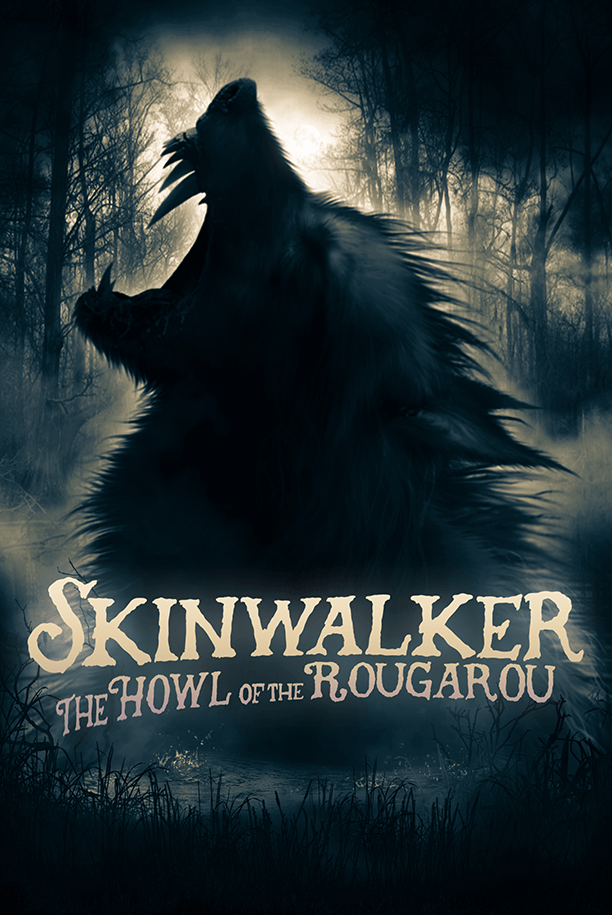
Small Town Monsters and director Seth Breedlove have made plenty of great films and series over the past few years — On the Trail of UFOs: Dark SkyOn the Trail of Bigfoot: The JourneyMOMO: The Missouri Monster, Terror in the Skies and On the Trail of Bigfoot — and now they’re giving us the first-ever look at what is often referred to as the Rougarou, which is a Cajun werewolf.

Literally any power you can imagine is given to this creature, which can do just about anything and be just about anyone. The mix of religion and the occult in the bayou really adds up to a potent blend of weirdness and I wouldn’t have it any other way.

Sure, this creature may be a story told to keep children out of the forests after dark, but many around southern Louisiana — several in this film! — have no issues saying that they’ve encountered an actual howling werewolf.

A cannibal tribe of shapeshifters who retreated deep into the forests where they slowly lost touch with their humanity? Man, I’m so down for everything in this.

Skinwalker: The Howl of the Rougarou is available to purchase or rent on a number of platforms from 1091 Pictures, including iTunes, Amazon Prime Video, Vudu and FandangoNOW. Small Town Monsters will also release a special edition Blu-ray ($18.99) and DVD ($14.99) from their official store.

Witches of Blackwood (2021)

Originally titled The UnlitWitches of Blackwood is all about a police officer named Cassie going back home to deal with the death of her father and being put on leave after witnessing the suicide of a young man. You know what I always tell horror movie protagonists: do not ever go back home to put the affairs of your family in order.

The town of Blackwood is now nearly empty save for the animal mutilations and feels haunted before the witches of the title make their presence known. Yes, this is folk horror, but Australian folk horror, so that’s a new one for me.

Directed by Kate Whitbread and written by Darren Markey, this is a journey into the past of not just the town, but Cassie’s entire family, illuminating the truths that she did not know about where her mother went, why she’s felt like she does not belong within our world and exactly why the man murdered himself in front of her.

You can learn more at the movie’s official website and Facebook page.

The Woman in the Window (2021)

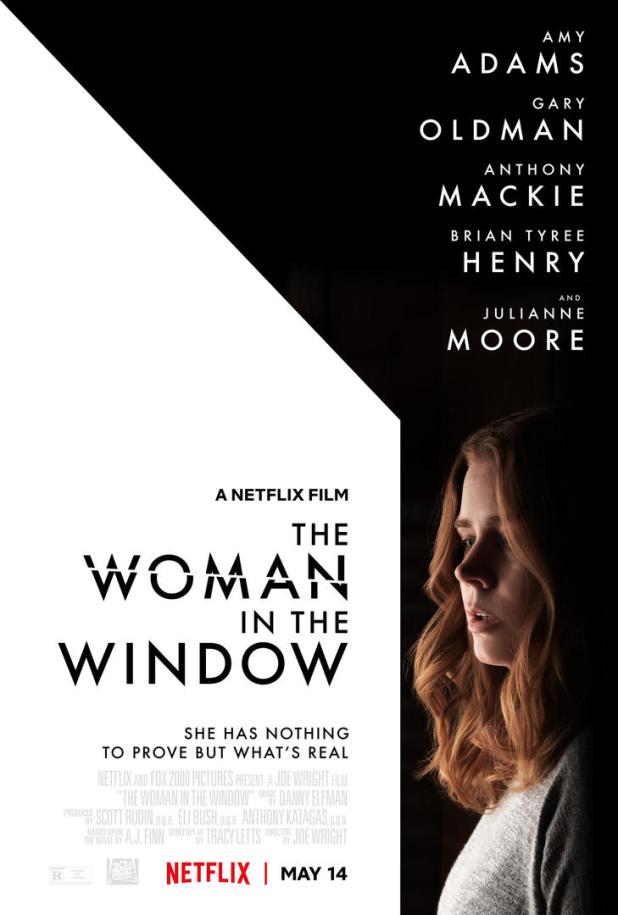
Between Nocturnal AnimalsSharp Objects and this, is Amy Adams kinda becoming a giallo queen? Or just a woman in danger of being killed and/or going insane? Umm, isn’t that a giallo queen?

You know what also seems like a mystery worth digging into? The writer of the book that this was based on, A.J. Finn, is really a book editor named Dan Mallory who may or may not have lied in regards to — according to this New Yorker article — having a doctorate from Oxford, multiple family and personal cancer battles and he death of his still-alive father, mother and brother. Plus, there are allegations that he took on the identity of his brother to send emails about a fake cancer condition — fake online identities are part of the story of The Woman in the Window — and that pretty much the entire story of The Woman in the Window didn’t come from his imagination.

The article then presents us with a summary of a story: “An American woman in mid-career, a psychologist with a Ph.D. and professional experience of psychopathy, is trapped in her large home by agoraphobia. She has been there for about a year, after a personal trauma. If she tries to go outside, the world spins. She drinks too much, and recklessly combines alcohol and anti-anxiety medication. Police officers distrust her judgment. Online, she plays chess and contributes to a forum for stress-sufferers, a place where danger lies.”

Yes, that could be this movie. But it’s also the 1995 Sigourney Weaver-starring film Copycat.

And it’s also very similar to Sarah A. Denzil’s Saving April, including an identical ending.

So yes, the world has many magical moments and I believe in the collective unconsciousness, but this is too much to bear.

Maybe we should just discuss the movie before I’m tempted to dish on my own experiences with people who continually reached out to me with personal narratives that were easily disproven.

Anna Fox lives alone in Manhattan after separating from her husband Edward who lives somewhere else with their daughter — can you guess this plot twist? — and her agoraphobia, prescriptions and alcohol abuse keep her inside the house. Yet one night, she meets her new next-door neighbor Jane Russell (Julianne Moore) and her son Ethan, who seems abused.

Then, like Rear Window, she watches Jane die at the hands of her husband Alastair (Gary Oldman). When she calls the cops, she meets Jane again, who is now Jennifer Jason Leigh and reality starts to be untrustworthy for our protagonist.

You know how in Scream they make fun of the cliches of slashers while still following them? Like somehow it’s just fine to make the same narrative choices as long as you reference them? That’s what Anna’s collection of Hitchcock films is all about. So if you show scenes from SpellboundDark Passage and Laura — as well as Rear Window — you can take as much as you want. Someone get Argento and DePalma on the phone and let them know that critics who took them to task just for referencing so much Hitchcock that if they had only had some clips and hammered home references, all would have been fine.

There’s also Anna’s slightly sleazy boarder David Winter (Wyatt Russell, somehow always a jerk in movies) and the police who are no help — hello, this is a giallo — with Detective Little (Brian Tyree Henry) only coming around to Anna’s truth by the end of the film.

You know, they should just make the life of Dan Mallory into a movie.

But then everyone would think it was ripped off from The Talented Mr. Ripley.