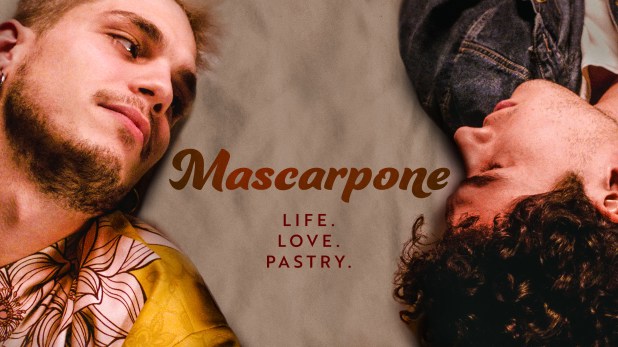
Antonio (Giancarlo Commare) thought he was going to be a family man for life, but then he’s dumped by his husband Lorenzo (Carlo Calderone ). Now he has no place to stay, no job and no purpose, but in the process of finding all of those things, he’ll discover what it means to be independent.
Directed by Matteo Pilati and Alessandro Guida, who wrote the script with Giuseppe Paternò Raddusa, who also is in the film, Mascarpone follows Antonio as he finds a roommate and friend in Denis (Eduardo Valdarnini) and a job in Luca’s (Gianmarco Saurino) bakery. He also discovers that the cooking that he did to feel love from his husband may mean even more. It could be his true calling in life, as long as he passes the rigors of pastry school (which is so much tougher than you’d think).
Re-entering the dating world after a lifetime away, finding your path and forging true relationships are universal themes that this movie explores. I enjoyed the time I spent with Antonio on his journey.
Mascarpone is availabel on VOD and DVD from Dark Star Pictures and Uncork’d Entertainment.
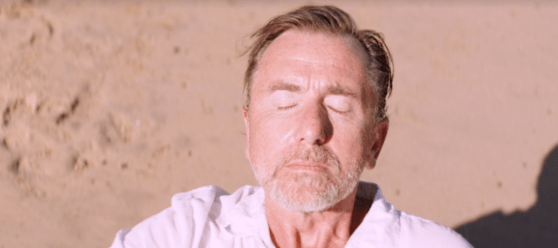
Some films are difficult to write spoiler-free reviews about, and then there is writer/director Michel Franco’s French/Mexican/Swedish coproduction Sundown, a genre-defying work that goes beyond being a textbook example of that and takes the concept to a whole ‘nother plane. If films that leave you with many questions to ponder long after the ending credits roll are your style — and they almost always are for yours truly — then Sundown is absolutely worth your time.
As the film opens, we meet the Bennetts: Neil (Tim Roth), Alice (Charlotte Gainsbourg), and older teens or young adults (their ages are never mentioned, one of the many puzzle pieces that Franco leaves for viewers to ponder) Colin (Samuel Bottomley) and Alexa (Albertine Kotting McMillan) as they lounge around poolside at a luxury resort in a beach locale disclosed later in the film. Alice falls apart emotionally when she receives a phone call that her mother has died, and as the four family members rush to the airport, Neil can’t find his passport, and the youngsters lead a distraught Alice to the plane as Neil promises to catch the next flight.
I’ll let you know that Neil doesn’t make good on his promise, and leave the plot description at that. Sundown is a slow burn, focused mainly on Neil and his behavior after he parts with the other family members. Although the premise might not sound exciting from my description, it works magnificently as Roth puts on an absolute acting clinic as a low-key man who is an utter mystery. Franco sprinkles bread crumbs here and there and then sends the proceedings in wholly unexpected directions. One of the first major reveals of the film happens in an understated “Did I hear that correctly?!?” manner, and from there, sudden shocking jolts and subtle divulgences occur, adding to the enigmatic ongoings as clarifications usually only lead to more mystifying situations.
Franco has constructed a remarkable head-scratcher that demands constant attention. He is aided by a splendid cast, which also includes Iazua Larios as local shopkeeper Berenice and Henry Goodman as family attorney Richard. Sundown also boasts gorgeous cinematography by Yves Cape that captures both the beauty and dark side of its setting (again, revealing it here would be a spoiler). Franco and his film ask a lot of its viewers, but if you give yourself over to its decidedly unhurried telling, you may find that it makes a case for being one of the year’s best cinematic offerings.
Sundown screens as part of the 19th Calgary Underground Film Festival, which takes place April 21–May 1, 2022 both at Calgary’s Globe Cinema and streaming on demand online. For more information, visit https://www.calgaryundergroundfilm.org/.
This was a movie that I wasn’t certain I was ready to watch.
I’ve been outspoken about my adoration for Mario Bava’s Danger: Diabolik and I knew there was no way that any movie could live up to the artistry of that film.
But what if a film did something so few comic book movies do? What if it actually stayed true to the source material?
The Manetti Bros. started their careers making music videos before directing Zora the Vampire, a movie that wasn’t a great experience for them or anyone that’s seen the film. They rebounded with a movie set on an elevator, Floor 17, and L’ispettore Coliandro, a TV series based on the stories by Carlo Lucarelli (Almost Blue) that references crime and action movies of the 70s and 80s. That show lasted seven seasons and led to further success such as The Arrival of Wang, Paura 3D, the poliziotteschi comedy tribute Song’e Napule, the musical comedy Ammore e malavita and now, Diabolik.
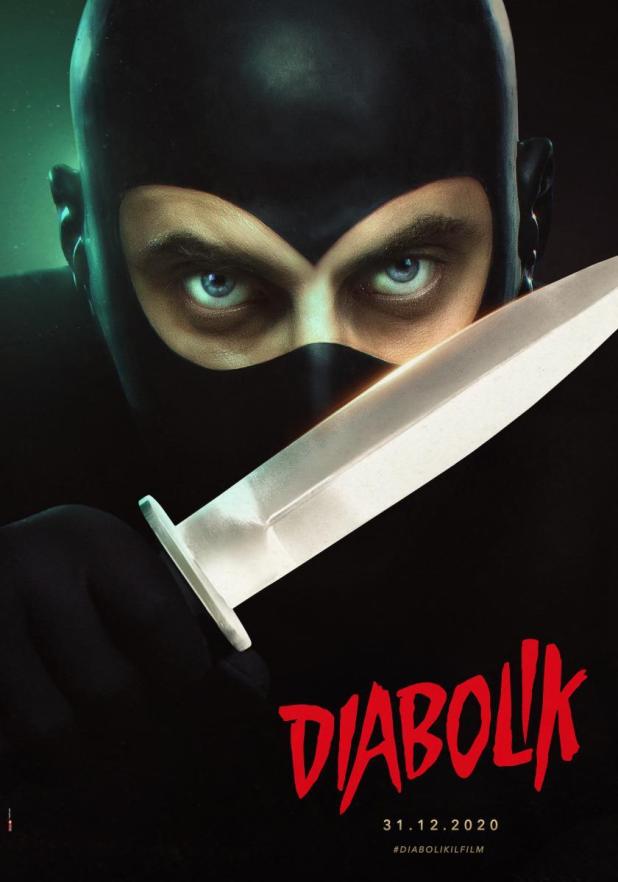
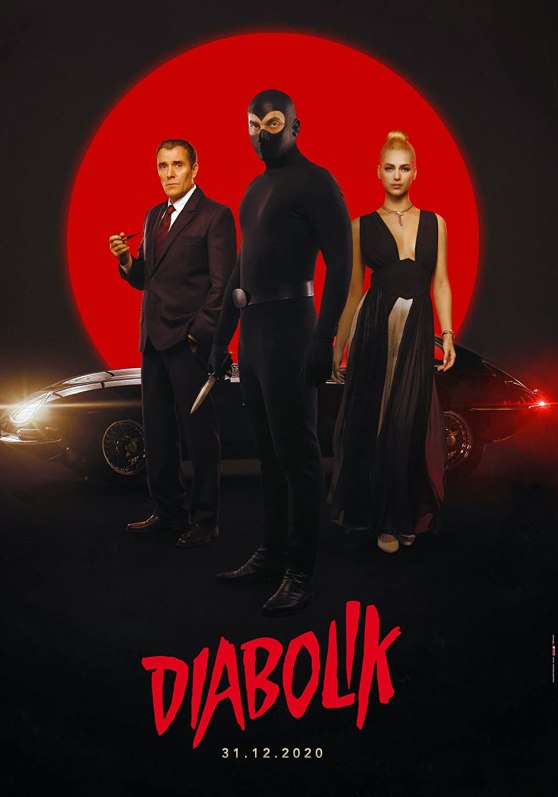
Diabolik was created in 1962 by sisters Angela and Luciana Giussani. Over 800 volumes, he and his partner Eva Kant have evolved from amoral supervillains out to swindle the town of Clerville to growing a code of honor and stealing from other criminals. He was raised on a secret island hideout of King, a crime boss, learning everything he needed to become the world’s greatest villain before killing his would-be father figure before he would be betrayed, taking his name from the black panther that that man had once killed. He doesn’t know his name or where he really comes from. He is only Diabolik. Only one man has a chance to stop him, the valiant, intelligent and incorruptible Inspector Ginko.
This film takes us back to a time when Diabolik (Luca Marinelli, They Call Me Jeeg) and Eva (Miss Italia 2008 Miriam Leone) knew each other, as he plans on stealing a ring from her, thinking she’s just another vapid heiress. After all, isn’t she dating deputy minister of justice Giorgio Caron (Alessandro Roja)? Using his ability to make life-like masks, Diabolik visits her hotel as his archenemy Ginko (Valerio Mastandrea). However, instead of taking from Eva, he becomes fascinated by her.
It turns out that Giorgio is an even worse criminal than Diabolik and he’s been blackmailing Eva, forcing her to date him. She soon falls for the master thief just as his girlfriend Elisabeth (Serena Rossi) discovers his secret hideout and sets him up for arrest by Ginko. A trial follows and Diabolik is sentenced to the guillotine (the judge is Mario Gomboli, author and chief editor of the Diabolik comic. He was one of the writers of the film, along with the Manettis and Michelangelo La Neve, who wrote the Dylan Dog comic, which Cemetery Man comes from).
That’s when Eva reveals that she’s just as resourceful as the black masked master criminal and the two put together a plan that takes out nearly all of their enemies while, at least, showing that even Diabolik has a code that he lives by.
Staying true to the third volume of the comic book, L’arresto di Diabolik (The Arrest of Diabolik), there’s a lot to like about this movie. The exterior scenes create a Clerville that is set in an unknown time, at once having modern technology and others showing a Eurospy sensibility with hidden rooms within brick walls and trees opening to create secret passages.
What doesn’t is the length of the film, taking over two hours to tell its story. Perhaps the explanations of the escapes could have been condensed or tweaked. There are times when you want this to become an action movie and it struggles in those moments.
That said, I came away liking the film, particularly Leone, who plays an Eva Kant who is just as capable as her lover. I do love the way the Manettis approached this film, however.
In an interview with Opentapes, Mario Gomboli said, “I understood that the Manettis could be the right choice when they told me: we don’t want to make a film about Diabolik, but the film about Diabolik. Diabolik is a character outside the box.” He also discussed how Eva had to be her own person, saying “I was inspired by the Giussani sisters: I dedicated all my work to them. They are the ones who created this woman who is a planet, she is not a satellite of a man, she is not at the service of any man.”
Supposedly there are two sequels already in post-production, so I’m excited to see what happens next. In fact, that was my exact thought as I watched this: I want to watch the same actors and creators make another one. That’s my scale for whether or not a movie works.
Hey — it was also nice to briefly see Demons actor Urbano Barberini in this! And I would have loved this even more if we’d had just a hint of “Deep Deep Down” play on the soundtrack.
One more piece of Diabolik trivia: Claudia Gerini, who plays Mrs. Morel in the film, has already appeared in the Diabolik universe. She was Eva Kant in the video for “Amore Impossibile” by Tiromancino, which was directed by Lamberto Bava. John Phillip Law in the video too!
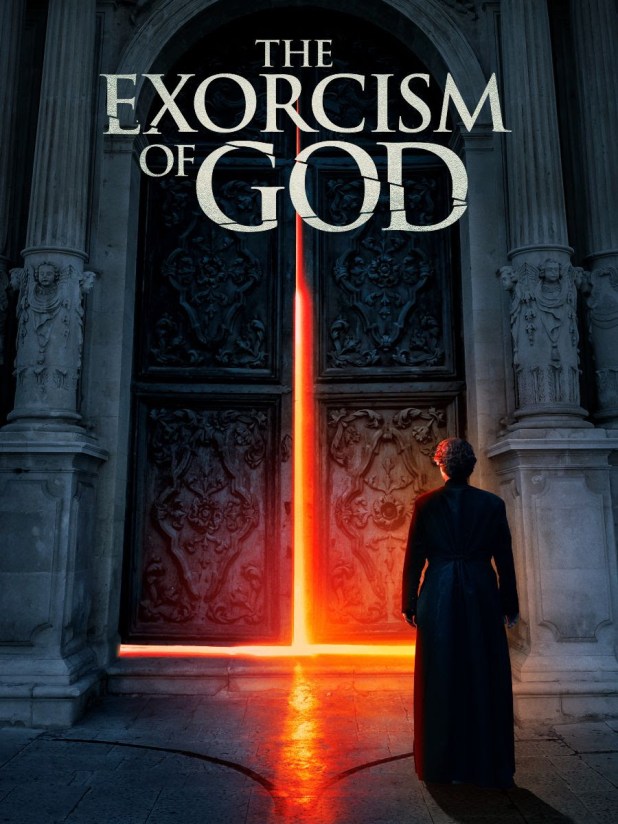
But I have never seen a movie where a demon tries to exorcise God from the soul of a priest, so well done The Exorcism of God and director/co-writer Alejandro Hidalgo (The House at the End of Time).
The open of this film is the end of an exorcism, with Father Peter Williams (Will Beinbrink), going against the church to exorcise a woman. The demon inside her seduces and possesses him, leading to him committing a major sin, a moment of sexual congress ends up having been not consensual, despite the whole possession, and then the priest hides it for two decades as the rest of his small town nearly makes him a saint.
So yeah — it’s kind of hard to see a man who would take advantage of a woman during an exorcism as the hero. That said, this film has some intense imagery, like a possessed Jesus, that will keep the more pious of us up late into the evening.
I’d have also liked this a bit more if it could decide what film it wanted to be: a satire against the hypocrisy of organized religion or an effects-heavy bring out the green vomit horror movie. And hey — a lot of that green goo gets al lover Joseph Marcell, Geoffrey from The Fresh Prince of Bel-Air, who is really good in the short time he appears.
Look, a possession movie is like a bowl of ramen. I’ve had high-end bowls with butter bombs and organic infusions, fish head ramen at 5 AM in a Tokyo standing shop and all manner of 3-minute bowls and they’re all good. It’s ramen. I love ramen. And that’s kind of how I feel about this movie. It’s not the best bowl of ramen I’ve ever had, but I really enjoyed some of the new flavor that I found when I dug to the bottom — yeah, that demon making a priest renounce God scene is pretty great — and wish that that spice went through the whole dish.
When Jean-Luc Godard’s Hail Mary came out in 1985, the Catholic Church was so upset they talked about it in my little church in Ellwood City and I’d never heard of Goddard before, so thanks for using indignation to make me discover art. In fact, I’d already been turning to the films rated “O” by the Pittsburgh Catholic as films to hunt down, like Dawn of the Dead, Carrie, Lemora: A Child’s Tale of the Supernaturaland many, many more.
What does is say when Benedetta is beamed directly into my living room and presents a take on religion that seems to claim that it can exist hand in hand with sexuality and not a single protest happens? I demand more shock and upsetness!
Well, The American TFP — as well as other Catholic groups — did protest and it was banned in Singapore, but in the 80s, they would have been crying at the altar over this.
Benedetta Carlini was born into a family that seemingly led her into the life of Catholic mysticism, living a childhood filled with devil dogs that attacked her and nightingales — the symbol of carnal pleasure — singing at her command. Her family may have been too poor to pay the dowry — yes, Brides of Christ were literally brides then — and she finally joined a smaller ascetic order of sisters, where a statue was said to have fallen on her as she prayed to it.
In 1614, Benedetta’s life changed as she began to see visions of Jesus, who would battle snakes, scorpions and boars to protect her. The priests believed that she was either mentally ill, being consumed by demons or meeting the Divine, but leading to the former, even when she grew sick for two years and then had the visions return in 1617.
Now, instead of Jesus, she was being attacked by a handsome young man who attacked her with chains and swords, demanding that she leave the monastic life. These visions told her that the Church could not save her soul. A year later, as there was a parade through town, she went into a trance where Mary gave her two angels to guard her and she could see Saint Dorothy. Three months later, she received the Stigmata and as a result, she was one of the few women — if any to be honest — able to give sermons within the Catholic Church.
On March 21, 1619, one of the lead priests summoned Benedetta and told her: “Today is the day of St. Benedict, your saint’s day, go in ecstasy at your pleasure, I give you permission.” The next vision she recieved would be Jesus taking her heart and returning with a new one in three days for her. Nuns who felt her heart said that they could not detect it within her body. To maintain her pureness, Jesus ordered her not to eat meat, eggs and milk products and not to drink anything but water. And maintain her spiritual purity, the Son of Man assigned her a guardian angel, Splenditello, to let her know when she was sinning.
On May 27, 1619 — a Feast of the Holy Trinity — Benedetta claimed that she was married to Jesus himself, as others heard her speak in a different voice. Now, here’s where things get interesting. As stated before, women were to be kept silent at this time and most of all, quiet within the Catholic Church. By having these visions, she was able to have power, agency and voice.
She was investigated by the church multiple times, supposedly died and was resurrected, then was accused of being possessed. Her parents were also said to be demonically taken at some point in their lives and it was also claimed that she was avoiding the diet Jesus had given her by eating salami and Cremonese-style mortadella. More damaging was the discovery that she was causing her own spiritual cuts and wounds, as well as sleeping with a fellow nun, Bartolomea, acts that her guardian angel would say were not a sin.
No one is sure how Benedetta was punished, but the town of Pescia revered her even as she was kept within the convent for the rest of her life.
Basing his movie on Immodest Acts: The Life of a Lesbian Nun in Renaissance Italy by Judith C. Brown, director Paul Verhoeven and co-writer David Birke offer no easy answers. We do see the striking visions of Jesus that Benedetta is given, but it’s left to interpretation if what she sees is the madness of the divine. Virginie Efira is quite striking in the way that she can appear at once in charge and yet be pulled and pushed by the whims of God and man.
The director would not make this movie with the writer who started the project, Gerard Soeteman. He was not involved in the rewrites and filming of the movie due to his growing dissatisfaction with the director’s emphasis on sexual content. Soeteman saw Benedetta as being concerned with a woman’s struggle for power in a male-dominated world, but was disappointed by how Verhoeven had instead concentrated on making a nunsploitation movie.
I was intrigued by the stories of the other women in this movie, as Sister Felicita (Charlotte Rampling) has been the leader of the order with power that exists only inside the walls of their home. Bartolomea (Daphné Patakia) has left an abusive family and sees in Bendetta a partner to change her life and feels left behind — and is permanently damaged as a result of their relationship — as her lover’s power changes her existence.
For a movie that has a budget of every nunspolitation movie ever made all added together, this stays somewhat classy — I say that in full knowledge that a statue of Mary is carved into a phallus — and presents a world where its heroine can achieve both spiritual and carnal ecstasy. This idea remains incendiary two millenia after the church began. It’s also a film that dares to have a violent and sexually inviting image of Jesus, attacking snakes and inviting the young nun to disrobe and embrace Him as he’s nailed to the tree.
“Cosmic Pharaoh” José Manuel is a member of the ufology association Ovni-Levante (UFO-Raise), which meets weekly to exchange information about the latest messages from the stars and abductions down here on Earth. When their leader dies unexpectedly, José becomes humanity’s only hope, the keeper of a cosmic secret. Even more mysteriously, that knowledge ties in to the disappearance of José’s niece Vanessa from the town of Elche.
This movie packs in every conspiracy theory you’ve ever heard — ancient aliens, organ harvesting, secret societies — and places them alongside the very human drama of growing up weird in a dysfunctional family in a small town in the middle of nowhere.
Director and writer Chema García Ibarra has put together something quite strange here and that last image of the Sphinx — inflating as it brings the goofiness, the strange and the everyday together much like the rest of this film — is one that will stick with me for some time.
And that first scene, where Vanessa’s twin sister Verónica gives her class a speech about what devil worshippers look for when they kidnap children? It perfectly sums up the rest of the film, a story about how believers search for meaning and yet often miss the darkness gathering around them if it doesn’t fit the mythology they’ve created for themselves.
You can watch this movie first on the ARROW PLAYER. Head over to ARROW to start your 30-day free trial. Subscriptions are available for $4.99 monthly or $49.99 yearly. ARROW is available in the US, Canada, the UK and Ireland on the following Apps/devices: Roku (all Roku sticks, boxes, devices, etc), Apple TV & iOS devices, Android TV and mobile devices, Fire TV (all Amazon Fire TV Sticks, boxes, etc), and on all web browsers at https://www.arrow-player.com.
When I wrote about CarousHELL, I said “Don’t expect a budget. Do expect women to have sex with unicorns. See? You can’t always get what you want, but when you try sometimes, you just may find a tusk in the meat locker.”
Well, the second movie blew my mind.
It’s like someone had fan fiction of the first movie and someone said, “Sure, here’s $1700.”
But seriously, writers Aleen Isley (who also plays Ilsa) and Steve Rudzinski (who directed both of these movies) have done the impossible and made a movie that blew what’s left of my mind, creating a story in which Duke the carousel unicorn seeks his purpose in life, learns that he’s a father and also discovers that his origins lie within the occult secrets of the Third Reich.
Also, he’s an unmoving carousel unicorn.
Steve Rimpici is back as Duke’s voice and Brittany Barnabei plays his son Robbie. The film actually has pathos and moments of sadness that make you feel something and yes, I was making myself realize that I was getting emotional about a wooden horse and a stuffed animal, but that really points to just how good this is.
Also, human heads blow up.
Look, I have no idea how this was so great. But I’m so happy that I found the magic inside this film.
You can watch this on Tubi or purchase it from the official Silver Spotlight site.
EDITOR’S NOTE: We originally covered this film as part of Fantastic Fest on September 27, 2021. Now you can watch it in select theaters and on demand from Dark Sky Films.
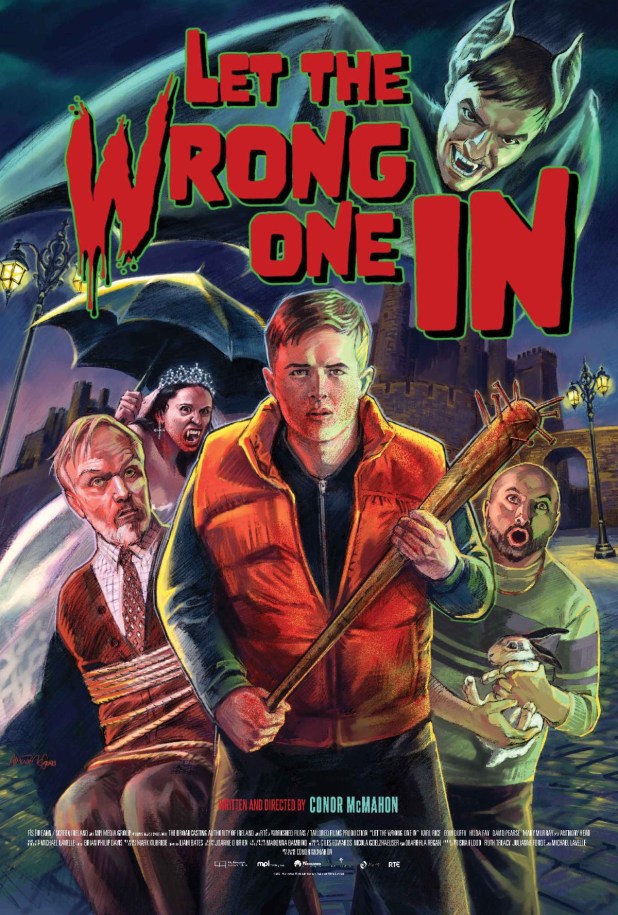
Matt’s older brother Deco turns up with a hangover one morning — like always — and when he’s let in, it turns out that he needs more than just some aspirin and sleep. His new fangs prove that he’s been attacked by the vampires that haunt Dublin, led by the ex-fiancee of Henry (Anthony Head, Giles of Buffy the Vampire Slayer), once just a trainspotting history lover, now a vampire killing cab driver.
Obviously taking its title from Let the Right One In, this is a comedy take on vampires filled with more gore than you’ll see in several undead movies.
Director Conor McMahon made Stitches a few years back. This is a big movie for the director and feels like exactly something Shudder would pick up, just like 2019’s Thirst. The film also boasts lush scenery — and some Dublin dives — including Ringsend, as well as the Bram Stoker Museum/Castle Dracula in Clontarf.
While it’s played for laughs here, the metaphor of drug addiction being like vampirism and you make the problem worse when you invite the person into your life — or the vampire inside your home — is a solid one. It may not contribute much new to vampiric lore — seeing Giles teach a young kid about sandlewood stakes is a nice touch — but it’s the kind of movie that is out to make you laugh, cheer and shout out loud.
EDITOR’S NOTE: We originally shared this movie on January 6, 2022. It’s currently playing exclusively on Shudder.
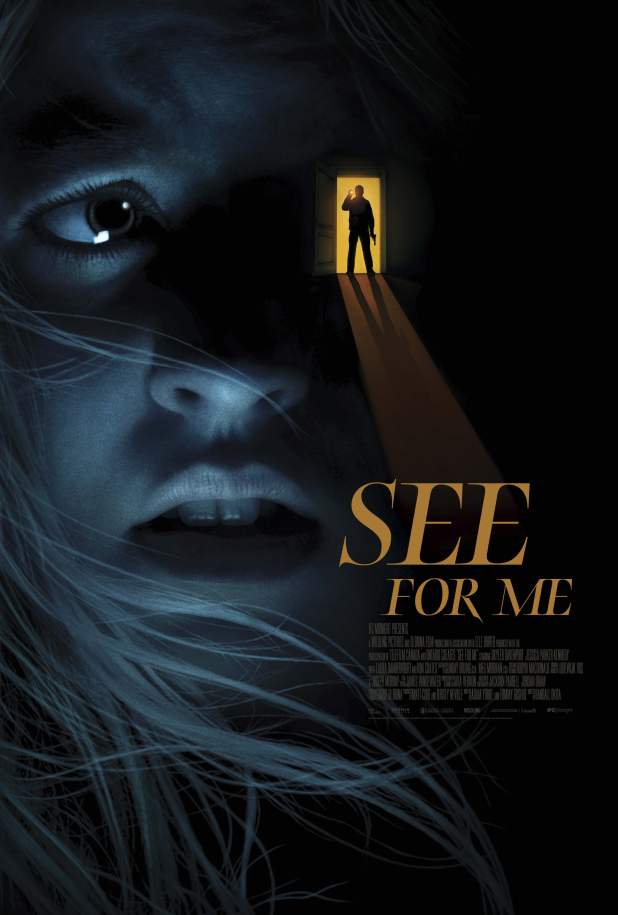
Sophie (Skylar Davenport, a visually impaired, non-binary actor who is legally blind due to a stroke and rare neurological condition; they are also known for voice work on the Final Fantasy video games) is a young blind woman house-sitting at a secluded mansion that is silently being burglarized by thieves seeking a hidden safe. Her only means of defense is a new app called See For Me that connects her to a countrywide volunteer ready to help her survive by seeing on her behalf like Kelly, an army vet who relives her past playing video games. Can a blind teenager survive against the odds?
There have been plenty of home invasion movies — I may have watched more than one just this week — but the direction by Randall Okita and the script by Adam Yorke and Tommy Gushue has some unique edges, like presenting Sophie as someone who steals small objects from the homes she watches and who rages against the world, a place that has cost her the ability to ski.
If you’re looking for something new to watch this weekend, See for Me just might be it.
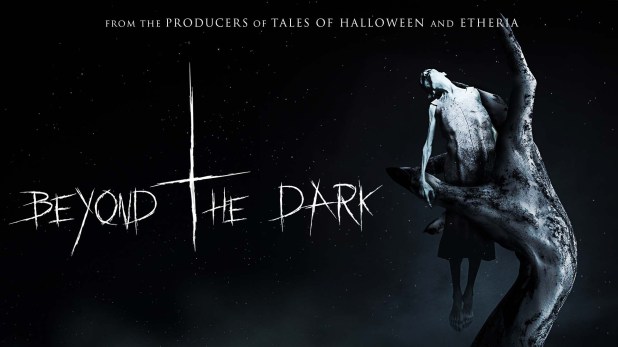
Entertainment Squad’s genre label, The Horror Collective has put together an anthology of shorts called Beyond the Dark and while usually a collection of previously released shorts can be a mixed bag, the movies within this series are all quite interesting, which is surprising and gives me hope for anthologies in the future.
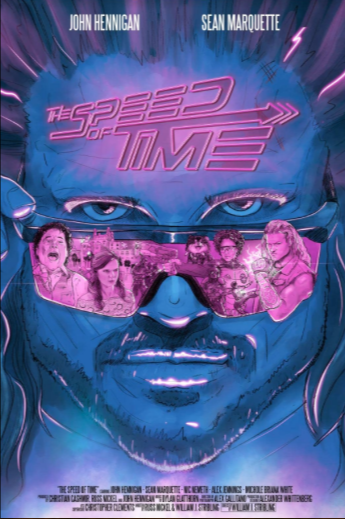
Episode 1: The Speed of Time (2020): Starring former WWE superstar John Hennigan (he of the many last names) as Johnny Killfire, a time traveling hero that must find his former self (Sean Marquette) and battle the TimeBorgs, who are trying to get an app that can help them destroy the space-time continuum.
In episodic fashion, director William J. Stribling, who wrote this episode with Russ Nickel, this moves at a faster than fast pace, packed with 80s action and no small amount of hilarity. Another wrestler, Nic Nemeth (formerly in the Spirit Squad and the brother of Dolph Ziggler) shows up and many pizzas are delivered into the past. This is so good that I’m kind of hoping that it becomes a full-length movie.
Episode 2: Midnight Clear (2017): Only seven minutes long, but Joe Russo’s short film is all about David (Kurt Kubicek, who is also in Russo’s full-length The Au Pair Nightmare), an abusive father, and the traumatic holiday he puts his wife (Jessica Morris) and children (Caige Coulter and Kue Lawrence, who was Jody DeFeo in The Amityville Murders) through.
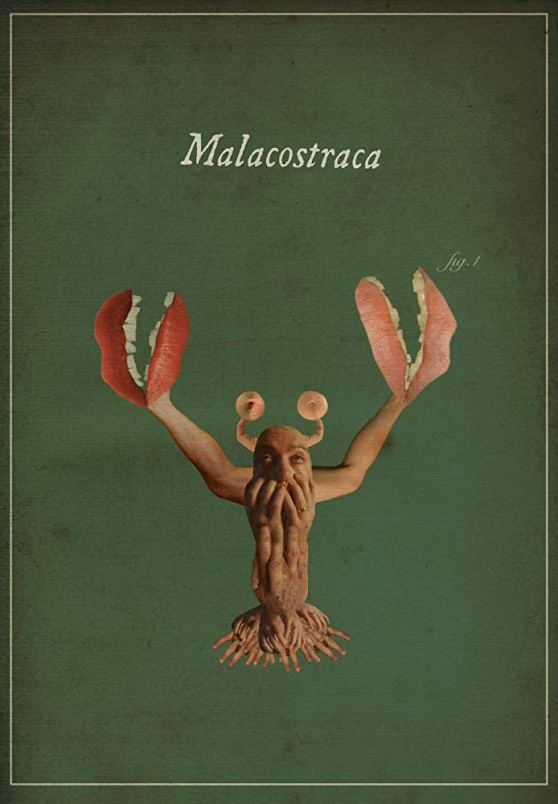
Episode 3: Malacostraca (2018): As his wife Sophie (Amber Marie Bollinger) deals with her pregnancy — which came from a crab-like creature maybe? — Chris (Charlie Pecoraro) wonders what it will be like to raise his crustacean offspring. Writer-director Charles Pieper must have understood the madness that writing, writer’s block and trying to share your life with others as a writer entails because this is pure and wonderful strangeness.
With effects by Gabe Bartalos, who directed the equally strange Saint Bernard and Skinned Deep) and the strange notion that a man can by cucked by the claws of a crab, I have no idea why more people haven’t lost their minds championing this blast of pure madness. The fact that Sophie seems to be completely lost in arousal in the POV soft shell sex scene just makes this even more delightfully off-kilter. Beyond recommended.
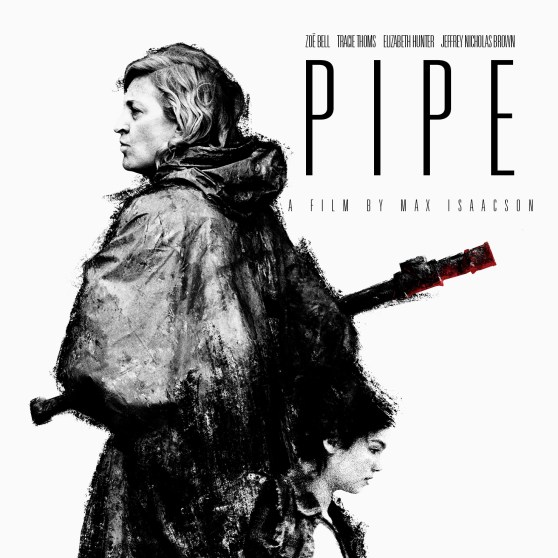
Episode 4: Pipe (2018): With characters named Sneer, Wheeze, Bliss, Gimp Hand and Face Tattoo, Pipe — named for a character played by Zoë Bell — this is the story of Pup (Elizabeth Hunter), a girl living in White Rock, a crumbling bombed out crater of a town. When a dead body washes up on shore, she refuses to give it up and undertakes a quest to properly bury the body.
Directed by Max Isaacson from a script by Collin Kelly and Jackson Lanzing, Pipe offers post-apocalyptic action under time and budget. Again, another episode that could very well be a regular movie.
Episode 5: The Wound (2019): Director and writer Chris Levitus has made a 9-minute short in which Otto (Kris Lemche, Ginger Snaps) wakes up with a gigantic hole in his chest. So what does Anna (Letticia Bissondut) have to do with it?
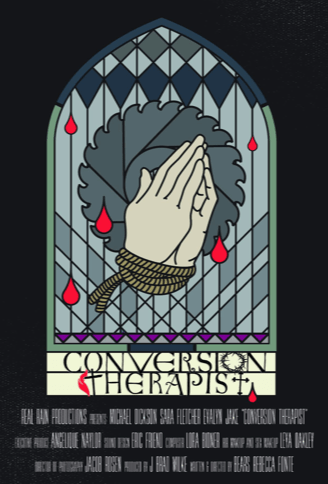
Episode 6: Conversion Therapist (2019): Wow — this episode, directed and written by Bears Rebecca Fonté, has something for everyone. It starts with a conversion therapist named Ira (Michael Dickson) sniffs the panties of Justine (Sara Fletcher), which have been coated with a substance that makes him pass out and awaken to the worst torture he can imagine. After making horrifying remarks about the Orlando Pulse shootings, Justine is going to make him orally pleasure Clay (Jordan Morgan) under the stress of torture or even death. And her partner Salina (Evelyn Jake) has even more reason to hurt Ira, as he abused her before she transitioned her identity.
I kind of enjoyed how this movie used exploitation and gore to push the envelope while taking pages from our headlines — perhaps more pages than we’d like to read — and not being afraid to go hard on gore and language, which definitely has the potential to offend people on either side of the issues that this film raises. The pace needs some help, the story could be together, but this episode takes chances.
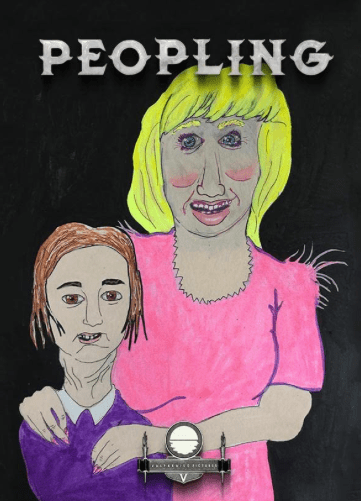
Episode 7: Peopling (2019): Speaking of chances, Peopling has a protagonist named George (Josh Fadem) whose masturbatory results end up turning into a clone of himself that his partner/mother/mother/who knows Joy (Kimmy Robertson) ends up loving more than him.
Lucas Amann directed and wrote this short and I don’t know if I want to shake his hand or if I’d be afraid of what fluids would be on his palm. Again, like the previous installment, this is either going to make you laugh, wretch or shut this off in anger. More creatives should be willing to take things this far.
Episode 8: The Final Girl Returns (2019): Alexandria Perez has created a short that really brings the slasher to life and expands on the idea of the Final Girl, as well as a hero called The Driver who is compelled to save them over and over without confronting the monsters in his life. With just 15 minutes of time, this is yet another episode that left me wanting more.
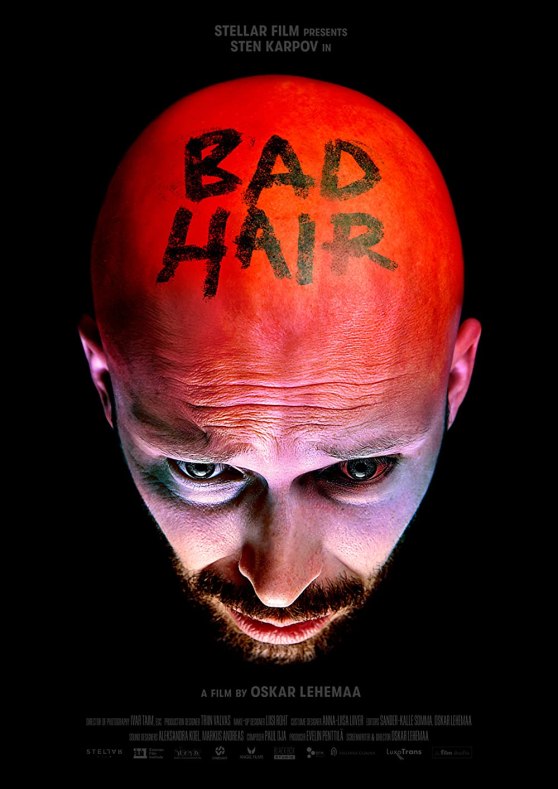
Episode 9: Bad Hair (2019): Made in Estonia, this is the story of Leo (Sten Karpov), a man who has decided that bald is no longer beautiful and if he must, he will cover his head in a strange gelatinous substance in the hopes of having long, flowing locks. Well, he gets what he wants. He gets too much of what he wants and over the 14 minutes of this short, an entire team of wig makers and special effects artists get to transform real life into a delirious cartoon directed by Oskar Lehemaa.
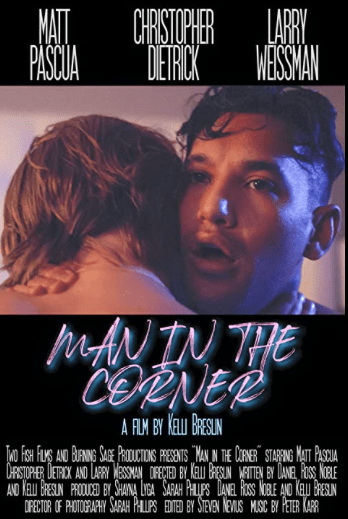
Episode 10: Man in the Corner (2019): Directed by Kelli Breslin, who co-wrote with Daniel Ross Noble, this episode is all about Michael (Christopher Dietrick) and Daniel (Matt Pascua), who are hooking up when Daniel learns that they’re not alone. In the corner, there’s a hidden man named Dave (Larry Weissman) who keeps emerging at the worst moments, reminding viewers that watching cucking videos may seem hot online, but supernatural cucking is as frightening as can be.
Episode 11: The Color of Your Lips (2018): Annick Blanc directed and wrote this short in which a diver (Alexis Lefebvre) and a woman (Katia Lévesque) are potentially two of the last people on Earth, a planet that has less air by the moment, leaving you wondering if they will breathe their last making love or war. It’d be frightening and sad if it wasn’t all so beautiful, but isn’t that life?
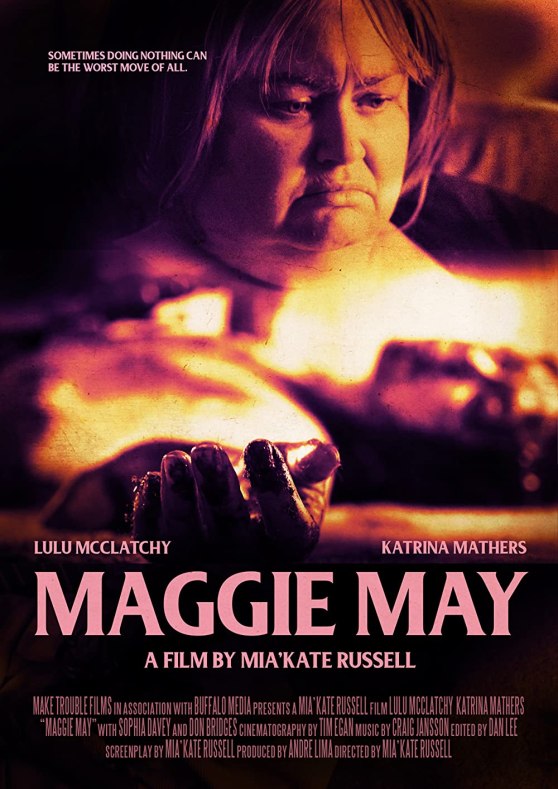
Episode 12: Maggie May (2018): Director and writer Mia Kate Russell created this installment about Sam (Katrina Mathers) and Maggie (Lulu McClatchy) who seem like they may come back together after the death of their mother, except that Maggie wants to do nothing. At all. The same thing she did — nothing — when her mother was dying right before her eyes. You can learn more on the official site and Facebook page for Maggie May.
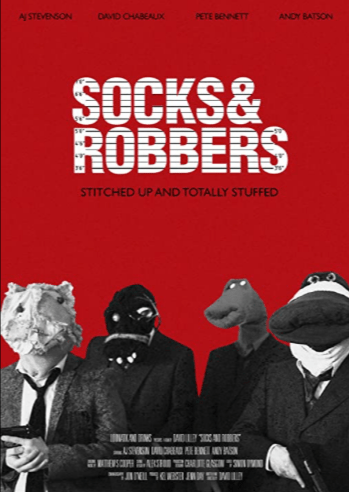
Episode 13: Socks and Robbers (2014): After some of the hard-hitting and thought-inducing films in this series, don’t you want to watch the story of Sniffer, Gout, Bunion and Hammer Toe, one of the deadliest gangs of bank robbers ever? Director and writer David Lilley has some style and wit, because who else would make a Guy Ritchie movie about sock-headed criminals? You can learn more at the official Facebook page.
Beyond The Dark is available on VOD and digital fromThe Horror Collective.







 B&S About Movies
You must be logged in to post a comment.