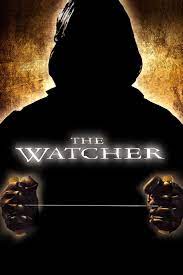
I’ve heard two stories of how Keanu Reeves ended up in this movie.
The first is that a friend forged his signature on the contract to be in this film and he did it rather than get involved in a lengthy legal battle.
The second is that Reeves was playing hockey with director Joe Charbanic and verbally agreed to play a small role in the film in order for Charbanic to get the movie funded. The problem was that his role ended up being one of the leads.
Regardless of the truth, Reeves was paid union scale for the movie while his co-stars like James Spader were paid at least a million.
The actor reached an agreement with Universal Pictures in which he would not disclose what had happened until a year after the film’s US release. In return, Universal agreed to downplay Reeves’s involvement in marketing (he did no press) and asked the film’s producers to give Reeves more profit participation. Since the movie was in first place for two weeks, he ended up making $2 million dollars.
A year later, he told the Calgary Sun “I never found the script interesting, but a friend of mine forged my signature on the agreement. I couldn’t prove he did and I didn’t want to get sued, so I had no other choice but to do the film.”
So when critics — like the aforementioned Guardian‘s Peter Bradshaw, who said, “Short of getting Angela Lansbury or Rodney Dangerfield or Lassie for the part, the miscasting could not be more complete. Keanu is profoundly wrong as a serial killer.” — hated this movie and Keanu was nominated at the Razzie awards for Worst Supporting Actor, he still honored the agreement.
FBI Special Agent Joel Campbell (Spader) was too late to save a woman from a serial killer, so he leaves for Chicago, where he deals with migraines and has just one friend, his therapist Dr. Polly Beilman (Marisa Tomei). But when a girl dies in his building and the photos get mailed to him, obviously the killer has followed him. Despite FBI Special Agent Mike Ibby (Ernie Hudson) and Detective Hollis Mackie (Chris Ellis) asking him to come back, he wants to avoid the case.
Then, David Allen Griffin (Reeves) sends him a photo of another girl and tells him that if he doesn’t save her in nine hours, she’ll die. He keeps repeating this game with the detective, telling him that he considers him a good friend. And when he takes Beilman, he really gets to Campbell.
At least it has “Roads” by Portishead on the soundtrack.
One of my favorite episodes of The Twilight Zone is “A Stop at Willoughby,” perhaps because it’s about advertising. Then again, it’s also about nostalgia and the pull of better times, which we all feel as we grow old.
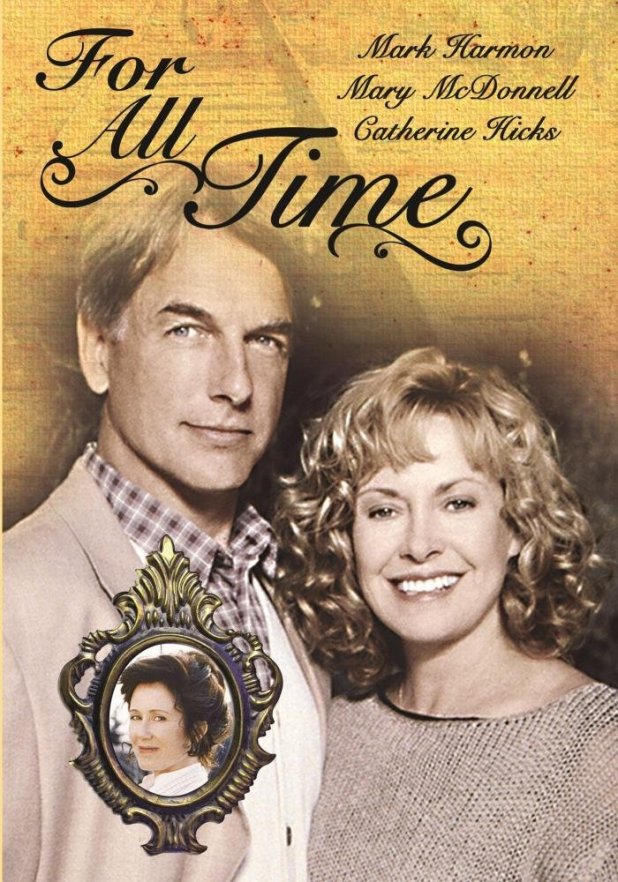
Charles Lattimer (Mark Harmon) is an ad guy facing the gears of the business wearing him down, all while his marriage to Kristen (Catherine Hicks) is nearing its end. Every day, he rides the train and when the conductor (Bill Cobbs) gives him a pocket watch, he’s able to go past the sprawl and into Willoughby in the 1890s. That’s where he finds purpose and discovers that the illustration that he’s based his new campaign around came from his own pen. And oh yes, there’s new love with Laura Brown (Mary McDonnell).
As always, I prefer the much tighter original, as this has too much fluff and too happy an ending. Director Steven Schachter and writer Vivienne Radkoff have mostly made TV movies, but they turn in a fine film here, even if it’s not really necessary.
The Skulls* (2000): Sure, it’s set in Yale, but that’s Toronto, but otherwise, this is about the Skulls and Bones Society but they’re called the Skulls. Far be it from me to say it’s disinformation, but writer John Pogue (U.S. Marshalls, Rollerball and the just finished under the radar reimagining of Eraser; he also made Quarantine 2: Terminal and Deep Blue Sea 3) went to Yale, so either he knows something or he just lucked into three movies out of this idea.
Lucas John “Luke” McNamara (Joshua Jackson) grew up an orphan on the wrong side of the tracks but he still made into Yale on a rowing scholarship which is totally a thing. His only friends are his girlfriend Chloe (Leslie Bibb) and his friend Will (Hill Harper), yet he’s still invited to join one of Yale’s secret societies, the titular Skulls, and made a soulmate with Caleb Mandrake (Paul Walker), a legacy whose father Judge Litten Mandrake (Craig T. Nelson) is still very involved in Skulls business, along with Senator Ames Levritt (William Petersen) and provost Martin Lombard (Christopher McDonald, who is, always, Shooter McGavin).
As you can imagine, the Skulls are so connected that they run the cops, the courts, the government, pretty much anywhere rich people are. They kill Will when he gets too close to exposing their secrets and is killed, which pits Skull brother against Skull brother, Skull father against Skull son and Skull boyfriend against non-Skull girlfriend.
Director Rob Cohen didn’t go to Yale, but he did go to Harvard and Amherst. He followed this movie up with The Fast and the Furious and XXX, so maybe he did have something to do with that whole secret society making its members wealthy thing. Then again, he followed those up with Stealth and The Mummy: Tomb of the Dragon Emperor, so maybe he wasn’t in all that tight.
Also, if you ever saw the 1970 TV movie The Brotherhood of the Bell, you may have already seen this movie.
*You can read our original review of this movie here.
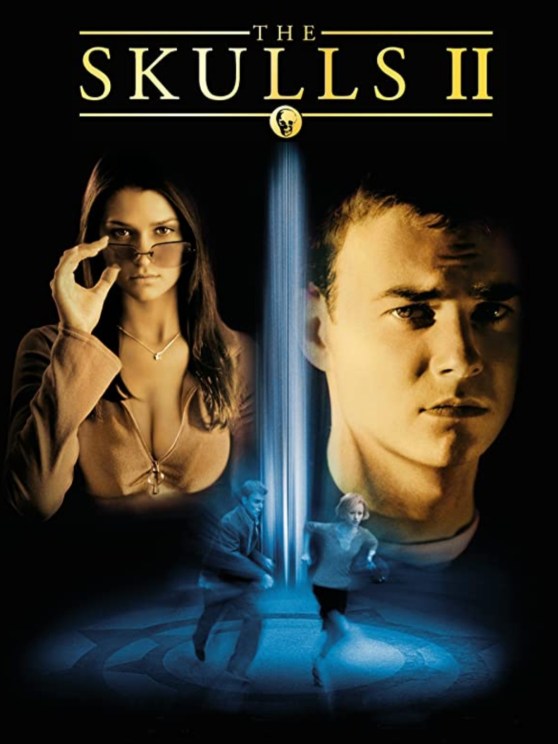
The Skulls II (2002): Joe Chappelle is well-regarded for episodes of CSI: NY, CSI: Miami and The Wire, but he made this back in 2002, a direct-to-video sequel to the original movie.
Star Robin Dunne, who plays Ryan Sommers, seems to take over for Joshua Jackson in direct-to-video sequels, what with him showing up in Cruel Intentions 2 (and yes, I own it; I am a self-professed sequel lover). He and his best friend Jeff (Christopher Ralph, who was in the Animorphs series) get picked for the Skulls; Jeff is super down, Ryan less so as his older brother Greg (James Gallanders) was a member and it’ll take time away from his demanding girlfriend Ali (Ashley Tesoro).
Ryan and Jeff are punished when a prank goes wrong and end up cleaning the attic of the Skulls’ headquarters, which gives them the perfect view to see senior Skull member Matt “Hutch” Hutchison (Aaron Ashmore) and field hockey team captain Diana Rollins (Margot Gagnon) partying on the roof and that party ends with her falling to her death. But is it real? Or just another part of the initiation?
Ryan’s research ends up taking him to the parents of Will Beckford from the first film who reveal how the Skulls killed their son. Then, his brother is fired from his lawyer job (do the Skulls own The Firm?) and Ali accuses him of assaulting her. Luckily, he can trust Kelly (Lindy Booth) and the two of them — along with Greg — work to undermine the secret society.
This movie may have been Michele Colucci-Zieger’s only writing credit, but her co-writer Hans Rodionoff wrote the two Lost Boys sequels (I have no idea how I haven’t gotten to those yet) and Deep Blue Sea 2.
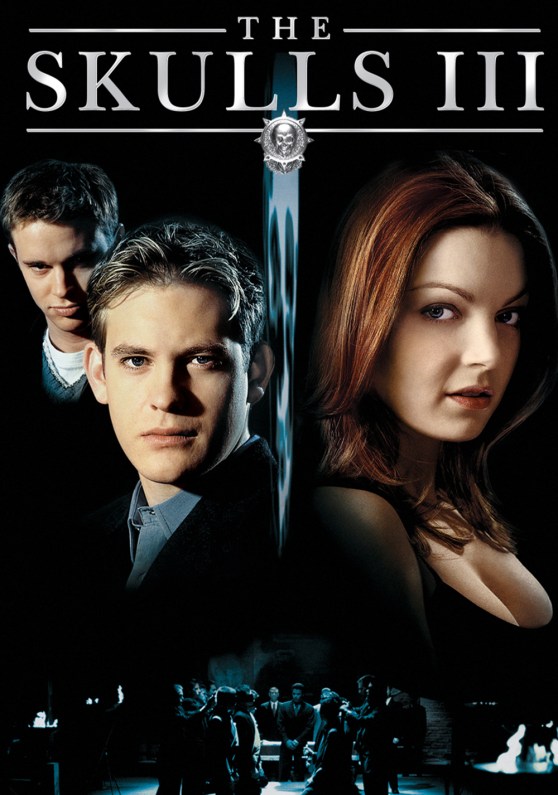
The Skulls 3 (2004): Taylor Brooks (Clare Kramer, Glory from Buffy the Vampire Slayer) is a legacy of the Skulls, as her father Martin (Karl Pruner) and dead brother were both members. Now, she wants to challenge the group and be the first female member, which is a great hook for the story as it’s literally an old boy’s club.
This whole thing has a kinda, sorta giallo structure in that we see the cops trying to solve the case as we arrive in the middle of the story and see flashbacks. Her boyfriend Ethan (Shaun Sipos) also tried to join and was just plain embarrassed that a woman would try to join, so she decides that she totally has to join and I’m all for it.
This is the only full length film that J. Miles Dale has directed, but he’s produced several of Guillermo del Toro’s projects. Written by Joe Johnson, who also scribed Don’t Hang Up, this has one major advantage and it’s Barry Bostwick as the evil elder Skull that puts the whole plot in motion just to advance the military-industrial complex, so they’ve moved on from killing JFK to intimidating high school girls and their absentee fathers.
That said, I liked this way more than I should have. But traditionally I am easy on later sequels of movies I didn’t like so much in the first place, kind of like the kid brothers of bullies that beat me up. We have something in common, as we’ve both had to deal with the older sibling in similar, if different ways, so there’s some kinship. Or when I should beat them up, I realize that the circle of violence — or dunking on bad movies — can stop with me and I can try to find something to like.
You can get all three of The Skulls movies on one blu ray from Mill Creek. While there aren’t any extras, you do get every movie for a low price and can have them in one set, saving you room on your overflowing shelves. Am I speaking to myself? Because trust me, I spent an hour or more today just trying to rearrange things. You can get this from Deep Discount.
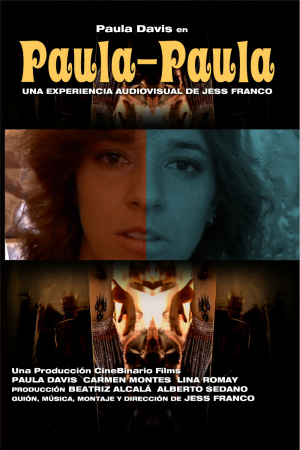
An exotic dancer named Paula (Paula Davis, Al Pereira vs. the Alligator Ladies) is dead and her lover Paula (Carmen Montes, Snakewoman) may be the killer. But who is good, who is evil, what is desire and what is pure madness?
This “audio-visual experience” is a Jess Franco movie through and through, yet it’s one with a score by Austrian pianist/composer Friedrich Gulda and plenty of video effects, as well as the strange knowledge that it’s based on Dr. Jekyll and Mr. Hyde.
Perhaps Paula has tried to kill Paula five times already. It’s something that her doctor (Lina Romay in her last movie) tries to get the answers about, except that you know, the story is the first five minutes and then fifty minutes of sapphic interludes with video effects.
George Lucas made three horrible prequels and endlessly fiddled with the movies that were successes until even his fanbase started to tire of his meddling before selling it all and then complaining about it. As for Franco, he kept making and remaking the same films until he was in a wheelchair and left to just make movies filled with nothingness and ennui within four walls and filled with smaller casts. Yet I’d be on the side of Franco being the bigger success — certainly not monetarily, oh no, there’s no way we can go to Target and get a Perverse Countess or Red Lips or Dr. Orloff action figure — artistically because he kept shooting for an unreachable ideal yet started from scratch every time instead of resigning his paintings. The similarity is that both of these directors really should have been kept away from wacky transitions and digital special effects.
Then again, no character in Star Wars ever is a memory-loss impaired woman who marries a prince and then kills him when she recognizes his palace belongs to the devil. Then again, Franco referred to this as one of the two or three weirdest movies he made, so you can just imagine what that means.
Helter Skelter Part One: Pleasure and Pain never had a sequel and we’re probably better off for that. This feels like you walked into a bar and saw Franco hunched over a bar stool while his lady love Lina Romay is whispering in his ear and he says to you, “Mi esposa y yo te vimos desde el otro lado del bar.”
One of Franco’s One Shot Productions — a name that makes more sense than it should — this is around an hour of so of images inspired by de Sade, but mainly Jess telling Lina what he wants to see while Casio music and video effects have their way with her. This makes me feel like someone discussing gonzo porn — how many ways can you describe the same acts over and over again?
Franco used the directing alias Clifford Brown Jr. and the David J. Khunne writing alias, but I’ll be pleasantly surprised if he does much of either in this other than de Sade writings being spoken over nude flesh and Alfonso Azpiri paintings.
As for the other actresses, Mavi Tienda was also in Franco’s Broken Dolls, which is probably where so much of this footage was taken from. Analía Ivars was in The Panther Squad, as well as Franco’s Lust for Frankenstein and Dr. Wong’s Virtual Hell. Rachel Sheppard was in the same Franco movies from this era, including Jess Franco’s Perversion and Jess Franco’s Passion. And actor Exequiel Cohen? He’s in ten or so Franco movies like Killer Barbys vs. Dracula, Snakewoman, Red SIlk and Blind Target.
I really wish this was more than a Franco home movie. But it is what it is.
Tough old cop Inspector Tobitaga (Yoshio Harada) and young Inspector Manabu (Yosuke Eguchi) are on the case of brutal murders that start with a missing brain being found boiling in a stew and everything just gets weirder from there, because the killer can change bodies, so he or she can be anyone.
It’s a great idea — see The Hidden and Fallen — and this would be a much better movie with some trimming. I mean, 130 minutes is a long time and I apologize for my attention span, but I wanted a little more.
That said, the call girl killer for the first half of the film is quite sinister, packing plenty of murderous intensity into her small size. Between this and Audition, I imagine that Western boys who are obsessed with Japanese girls will always have horrible death in the back of their heads.
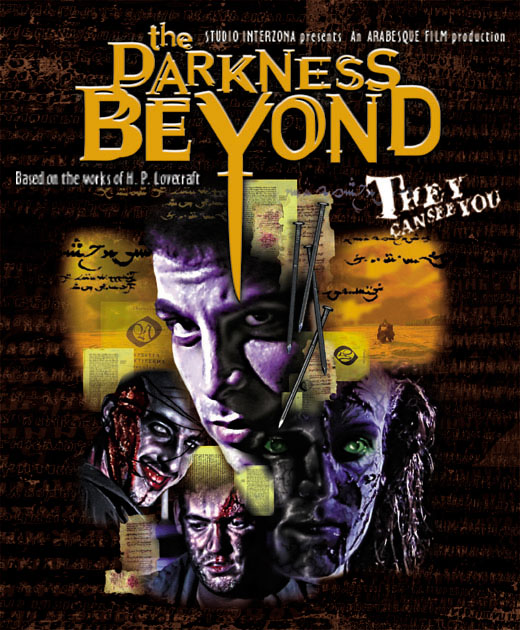
A copy of the Necronomicon — the fake book* that H.P. Lovecraft used for his book — has brought dark forces to our plane and allowed them to wage war against humanity within the bodies of their long-dead family and friends.
The Darkness Beyond — also known as L’altrove — was one I found on a list of Italian movies made after the days of Filmirage. Shot on digital video by director and writer Ivan Zuccon — who followed this with Unknown Beyond — this has a lot of style despite its budget and untrained cast. Zuccon has continuted making Lovecraft-themed movies like Colour from the Dark and Herbert West: Re-Animator.
Look — it’s not perfect. It’s not anywhere near the visions of Fulci or Bava, but I’m excited that Italian filmmakers — yeah, I realize that this is 22 years old, but Zuccon has a movie in production now — are still out there making movies.
*Two members of the Magickal Childe scene — a New York City book store that was the major focal point for American magic/magick from the 70’s until the 90’s — Khem Caigan (the Necronomicon‘s illustrator) and Alan Cabal claimed that the book is a known hoax. My theory has always been that Peter Levenda, an occult author who wrote the book Unholy Alliance, is Simon, as the copyright notice for this book is in his name.
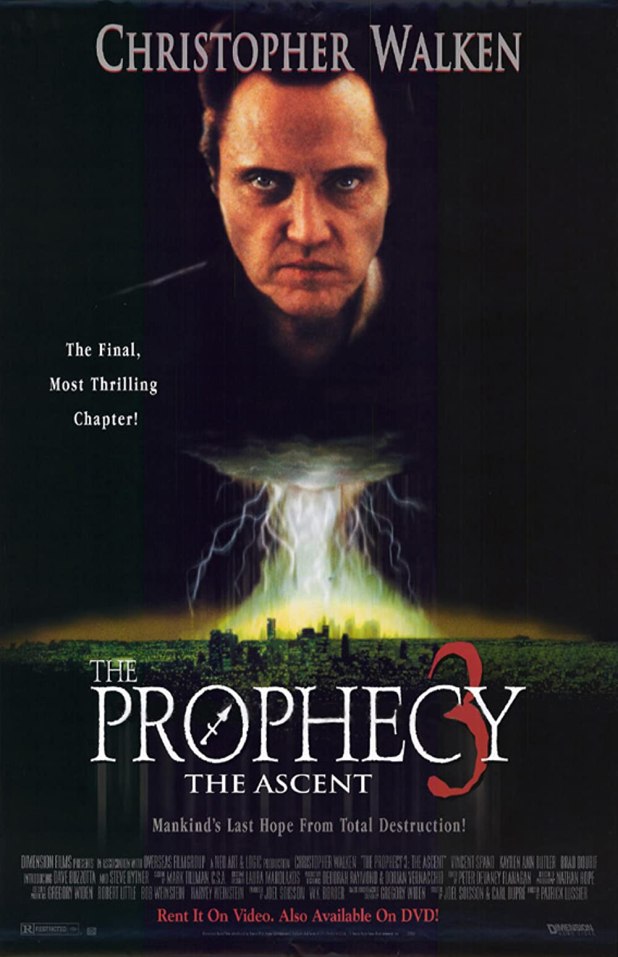
Joel Soisson didn’t just produce this one, he also wrote it, and worked with director Patrick Lussier (Dracula 2000, Drive Angry) to wrap up the trilogy of The Prophecy but yeah, there were two more movies to go.
That said, this does a fine job of changing things up, as now Gabriel (Christopher Walken) is protecting the half-human, half-angel Danyael Rosales — the child ready to be born in the last movie — from Pyriel the Angel of Genocide who wants to destroy every one of the human monkeys.
There’s Steve Hytner showing up again as the coroner, who unleashes this astounding display of scriptwriting: “Look. I’ve had four gutted hermaphrodites burn to black pitch right under my nose. I’ve had one cop, my best friend, driven insane by the angels shrieking in his head…before somehow spontaneously combusting in a madhouse he had mistaken for a monastery. A pretty young woman, now dead, knocked up by a stranger who left her three months pregnant in only 48 hours. And just yesterday, a young man, allegedly her son, shot up six ways to sundown, crawled out of a drawer and waltzed out like Lazarus. So yeah. I’m pretty much open to a buffet of possibilities.”
While I wish that the series ended here, I get that the 90s demanded an endless release schedule of direct to video horror. I know that the temptation to keep these series going was high, so if there were five Prophecy movies, I guess that’s how it had to be.
Scott Derrickson makes movies that are way better than you’d expect when you first hear about them. He wrote Urban Legends: Final Cut, which is way better than it should be. He’s made several occult-related films that I’ve enjoyed, like The Exorcism of Emily Rose and Deliver Us from Evil, as well as Sinister and Sinister 2, two of the better movies that came in the wake of the Conjuring movies. Since then, he helmed the big budget Dr. Strange and is about to release The Black Phone, which looks great.
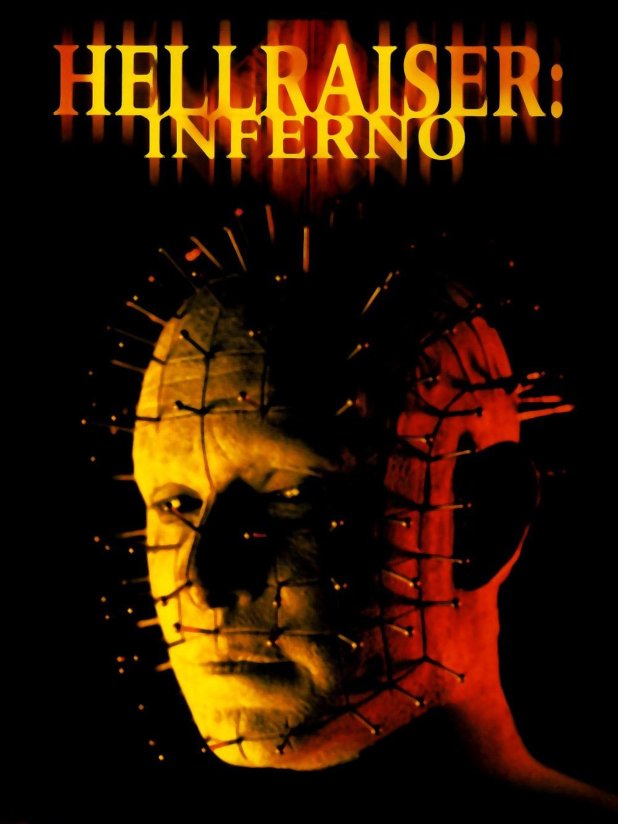
Hellraiser: Inferno was his first full-length movie as a director. He partnered with Paul Harris Boardman, who he has worked on several other films with, to write a script that Doug Bradley has said was not originally intended to be a Hellraiser film.
You know, by all rights I should hate this movie, but I loved it. It’s a neo noir within the universe of Hellraiser and that should be absolutely ridiculous — and it is at times — but it works. It’s like a direct-to-video Angel Heart with Pinhead as Lou Cypher and somehow, it just plain works.
Look, if you can’t get Clive Barker, just get Craig Sheffer from Nightbreed. I admire that logic. He plays a detective obsessed with rescuing a child yet he’s often at odds with the way that he handles cases, the strange visions in his head and the therapist he’s forced to visit.
This sequel is the find of this sequel week. Seriously, give it a chance. If it wasn’t the fifth Hellraiser and had more than $50,000 for special effects, lots more people would be discussing it.
Producer, writer and director Peter Filardi is a name you know by way of his writing and producing the critically-mixed but box-office successful horror, Flatliners (1990), and the better critically-received and even more box-office successful, The Craft (1996). So, after writing a film about the near-death experience and witchcraft-pursuing teenage girls, it made sense that Filardi, for his third feature film, would tap the myth and legend of drugs, satanism, and murder in the upper class town of Northport, Long Island, in 1984 perpetrated by Ricky Kasso. (In the film: we are in the upscale enclave of Harmony.)
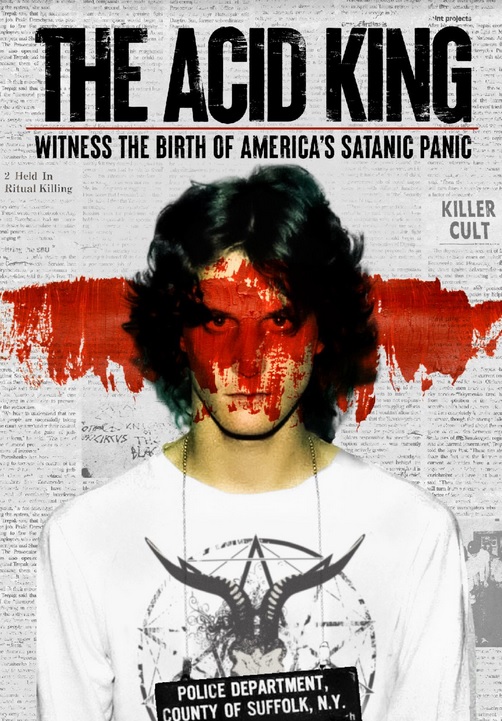
The life and ongoing influence of Ricky Kasso, an American teenager who murdered his friend, Gary Lauwers, along the windswept, Long Island Sound shores are examined at length in Jesse P. Pollack soon-to-be-released documentary The Acid King (2021). In the pages of B&S About Movies, we discussed Kasso’s exploits — and the dangers of the media-driven and religious-opportunistic “Satanic Panic” movement of the ’80s — with our review of River’s Edge (1986). Prior to Filardi’s nonfiction take on the material, Jim Van Bebber (Deadbeat at Dawn) released the short film, My Sweet Satan (1994). The first full-length feature film attempt at bringing Ricky Kasso’s exploits to the big screen was the more fictionalized, Black Circle Boys (1998).
Courtesy of the success of his first two productions, Orion Pictures (ironical releasing the 1978 juvenile delinquency classic, Over the Edge) gave Peter Filardi the opportunity to direct his first feature film: one that garnered two nominations for “Best International Film” at the 2000 Fantasia Film Festival and 2001 Fantasporto Festival — while winning the “Audience Prize” at the Fantasia Festival. It is also to be noted that the cinematographer, here, is three-time Academy Award-nominated Rodrigo Prieto, who received those nods for his work on Ang Lee’s Brokeback Mountain (2005) and Martin Scorsese’s Silence (2016) and The Irishman (2019). Prieto also lensed Eminem’s 8 Mile (2002) and Scorese’s The Wolf of Wall Street (2013) and is the winner of four Ariels (Mexico’s Oscars).
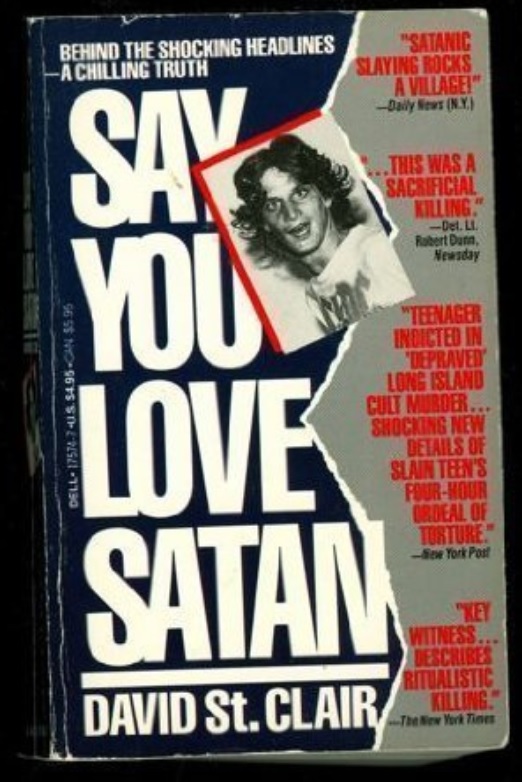
As with Black Circle Boys: David St. Clair’s since discredited, best-selling paperback, Say You Love Satan (1987), fueled Filardi’s more fact-based tale. Then, the film — appropriately filmed in the geographically-similar St. George, New Brunswick, Canada — vanished. Never commercially released by the studio, outside of a smattering of horror-centric film festival showings, the film went, appropriately enough, underground, and came to find a cult audience as a bootlegged VHS and DVD. (There are rumors that DVD copies (generic or “work print” DVD-r rips, or consumer-grade packaged DVDs?) were given to the cast and crew upon the film’s completion. As of 2017, the film began appearing online through fans’ video-sharing accounts and torrent sites.)
So what went wrong?
When are you dudes, finally, going to make a decent movie about me. . . and get the facts, straight?
Well, the film’s closing disclaimer telling us that “some parts of the film were fictionalized, with many names changed and some characters invented” is disconcerting, but what biographical film — regardless of studio or budget — hasn’t taken those narrative liberties?
One Letterboxd reviewer compares Ricky 6 as the WB’s Dawson’s Creek meets River’s Edge (comparisons to a Katie Holmes TV series isn’t a good sign). Another user compares it as Richard Linklater’s ’70s stoner-comedy classic Dazed and Confused meets Lords of Chaos (never a film so anticipated has so disappointed me).
So what do we have here: just another forgotten, ’90s teen-horror romp or a dark, true crime film? For this reviewer: the latter. If anything, the inferior — and more fictionalized Kasso account in Black Circle Boys — is the tenny-bopper misfire.
Peter Filardi has never publicly spoken about the troubles shrouding his lone directing effort (it is, however, horror message boards-rumored the primary copyright holder on the film currently serves time in a South American prison). Filardi has since backed the modernized remakes and sequels to his two previous films, Flatliners and The Craft, as well as adapting Stephen King’s Salem’s Lot as a 2004, two-part mini-series. At press time, there’s no (online) insights from Filardi himself or the mainstream horror press to discover as to what went wrong on the production. Usually, even when a film fails at finding a theatrical release, it finds itself dumped into paid-cable channel rotation (refer back to the aforementioned Over the Edge, which became an oft-run HBO cult favorite in the early ’80s).
In addition to Orion Pictures, KatzSmith Productions — a shingle that later found solo success with their reboot adaptation of Stephen King’s It (2017), as well as Child’s Play (2019) — along with British Columbia-based Bron Studios — which later found acclaim with the DC franchise entry Joker (2019), as well as the “woke”-rebooted Candyman (2021) — backed the film. Three production companies on one film spells trouble. Then there’s those opening credits of six producers. And that the film was an American-Mexican-Canadian film production (chiefly by Terry G. Jones, Juan-Carlos Zapata, and William Vince, respectively). So, with that many fingers in the creative pie, rest assure: we’re dealing with a legal morass that not even the dark prince himself can escape.
The book that started it all. . . and not as “truthful” as we believed.
Vincent Kartheiser (who came to star on the WB’s Angel from 2002 to 2004 and Mad Men from 2007 to 2015; he’s now on the channel’s DC entry, Titans) stars as Kasso, aka Ricky Cowen (“Coven”; cows are a “graven image”), our drug-dealing Satan worshiper. Patrick Renna, who the many know as Hamilton “Ham” Porter in The Sandlot, thespin-shines in a dark, mature role as one of Cowen’s co-conspirators (Ollie, aka the real life Albert Quinones who turned state’s witness) who murders Tweasel (a one-and-done Richard M. Stuart), our drug-stealing, ersatz Gary Lauwers. The always spot-on reliable Kevin Gage (all the way back to Dee Snider’s Strangeland; devastating in David DeFalco’s controversial Chaos) is perfect is his small role as Pat Pagan, aka “Pagan Pat” Toussaint, who took a fatherly interest in Ricky — and introduced him to Satanism. (When police began questioning him in the murder — of which he had no part — he committed suicide-by-train. Since the narrative is voice-over driven by the film’s faux-Jimmy Troiano, the narrative never transitions to Pat’s perspective; so we’re “told” of the suicide.)
While the film ignores some historical accuracy for the sake of narrative and takes low-budgetary stabs at depicting our malcontents’ drug trips and Ricky eventually meeting Satan himself (in a fire-stern swamp inside a hollow tree trunk; backed by Disembowelment’s “Your Prophetic Throne of Ivory”), as well as a murder-intent Jesus in a supermarket, Peter Filardi, while not the most visually stunning director, is a serviceable one, nevertheless (most likely discouraged by the film’s legal boondoggling to never direct, again). He captures — unlike the previous Black Circle Boys — Ricky Kasso’s (in hindsight) heartbreaking, downward spiral of parental mental abuses, drug addiction, homelessness, and discovering a misguided solace in the occult.
Unlike Black Circle Boys, and as with River’s Edge: Filardi did right in supporting the discontent by bankrolling an era-appropriate soundtrack featuring “The Number of the Beast” by Iron Maiden, “Screaming in the Night” by Krokus (who also appeared on Mad Foxes), “Rainbow in the Dark” by Dio, “Street of Dreams” by Rainbow, and “Love Will Tear Us Apart” by Joy Division. Contrary to fan-opinions: “And the Cradle Will Rock” by Van Halen does not appear in the film; that familiar “Eddie” guitar riff is an effective, ersatz copy by Abel Ferrara’s go-to composer Joe Delia (Ms. 45 and Driller Killer). (Too bad there’s no AC/DC, Ricky’s favorite band, and some Metallica and Slayer in the frames. Ah, those licensing rights: which is why our faux-Ricky doesn’t wear any concert shirts. In reality: Ricky Kasso lived in concert tees and jerseys.)
“So, come on! Jump in the fi-yah!”: We review those heavy metal horror flicks of VHS ’80s yore with our “No False Metal Movies” featurette.
The rest of the capable, strong cast features Sabine Singh: in her feature film debut, you’ve seen her work in the U.S. teen soaps Charmed and Dawson’s Creek. Emmanuelle Chriqui rose through the thespin-ranks to co-star alongside Adam Sandler in You Don’t Mess with Zohan, as well as currently starring as Lana Lang in TV’s Superman & Lois; you’ve also seen her as a cast regular on HBO’s Entourage and the modern horror classic, Wrong Turn (2003). Chad Christ (the tale comes from his POV, so he provides the we-can-do-without narrative voice-over as Tommy Portelance, aka the real life Jimmy Troiano, also arrested in the murder) has since left the business, but is best remembered in the late ’90s alt-rock comedy, Jawbreaker. (Chriqui, in a promotional interview for Wrong Turn, briefly spoke about working on Ricky 6 in an issue (possibly June 2003; #223) of Fangoria.)
I loved The Craft and enjoyed Peter Filardi’s take on Salem’s Lot; let’s face it: adapting-compressing Stephen King isn’t an easy task. So, to my critical end: I enjoyed Filardi’s honesty in not only chronicling Ricky Kasso’s exploits, but speculating as to what was going on inside Kasso’s mind: did he really think he finally met Satan in the flesh? So, yes: I wished it all would have worked out for Peter Filardi, as it surely hurt to have his labor of love — his directing debut, no less — cast into legal limbos for now, 21 years. (The only time any parts of the film were officially seen came result of segments of Ricky 6 recycled as “reenactment” padding in the hour-long, 2000 Australian television documentary, Satan in the Suburbs.)
Now, that’s not to say Ricky 6 is a great film: but it’s not an awful film, either. Again, it’s a film where I appreciate Filardi’s serious take on the material — and his ability to work against a slight budget — when compared against the inferior, more comical, over-the-top acted, first feature-length take on Ricky Kasso’s life with Black Circle Boys. Now, before you hate on me for not raving about the film: As we spoke about in our review of Black Circle Boys: The appreciation of a film — whether it is good or bad, well-made or poorly made — is based in the age of the viewer; for film appreciation is of a time and place. So, if you were in middle school or just starting high school at the time Ricky 6 was released — as I was when the juvenile delinquency drama Over the Edge was released in 1979 — rewatching this film will warm the cockles as your own person “classic” film.
The Omen and all of the Italian and Spanish “Satanic Panic” ripoffs.
While Ricky 6 does result in one to reflect back on those dramatic, teenage misanthropes from Over the Edge (1978) and River’s Edge (1984), and the comical, retro-’70s counterpart of Dazed and Confused (1993), Filardi’s lone directing effort is not to the standards set by those classics. We certainly don’t want the brutality of say, the aforementioned David DeFalco’s controversial Chaos (2005), but we do want Atom Egoyan’s beautifully acted and production solid (but wholly unnecessary, in light of Joe Berlinger’s acclaimed, three-part Paradise Lost franchise) Devil’s Knot (2013; based on Mara Leveritt’s Devil’s Knot: The True Story of the West Memphis Three). In fact, when considering Joe Berlinger — in what I thought was a fine, well-made, first fiction film for the documentarian — gave us the dramatic metafilm, Book of Shadows: Blair Witch 2 (2000), I believe he would bring us a definitive Ricky Kasso narrative film.
It’s also too bad that Joseph Gordon-Levitt has aged-out to play Ricky Kasso; if you’ve seen his work in the Metallica soundtrack-backed Hesher (2010), you know what I mean — but Joe would give us one hell of a Pagan Pat. Thinking about Over the Edge: Again, Vincent Kartheiser is mighty fine (maybe a little too soft, clean n’ cute as some have said), here: but can you see Matt Dillon as Ricky Kasso and Micheal Kramer as Jimmy Troiano, as they, instead of tossing him in the lake: kill the narc drug-dealing Tip? Yeah, Over the Edge with a “Satanic Panic” backstory: that’s the Ricky Kasso theater ticket, right there.
Courtesy of Hyaena Gallery; original news source of images, unknown.
In the end: Ozzy Osbourne didn’t “recruit” Ricky Kasso no more than Judas Priest convinced — via “subliminal messages” — James Vance and Raymond Belknap, nor did Ozzy “brainwash” John McCollum — to commit suicide. Nor did Ozzy’s “Bark at the Moon” brainwash James Jollimore to commit multiple murder.
Ricky Kasso was a powerless, verbally and physically (non-sexual) abused child also bullied in school who found solace in drugs at an early age as an escape. He was on the cosine of metal illness. His “model” parents kicked him out of the house to live as a vagabond in the woods, friend’s houses, garages, and harbored, Long Island boats. No one took responsibility for Ricky: not his parents, teachers, or doctors. They all failed him. Then they blamed “Satan” to cover up their mistakes. Now, that doesn’t justify what Ricky did (and let’s not turn him into a Masonesque-cum-Mafiso, anti-folk hero); however, as with Ronald DeFeo, Jr.’s multiple murder in suburban Amityville, Long Island, New York, in November 1974: DeFeo simply wanted to cover up his theft of a large sum of family money. Ricky was out for revenge on a drug theft. Both incidents — as with the victimization of Judas Priest and Ozzy Osbourne — were blown out of proportion in the pages of the since discredited books Say You Love Satan by David St. Clair and Jay Anson’s “true story,” The Amityville Horror.
Satan, indeed. Eh, Tipper Gore needed something to bide her time to keep her out of Al’s hair. Nancy Reagan had drugs: Tipper had Satan: “Just Say No!”. For kickstarting the “Satanic Panic” craze of the ’80s, Tipper, we thank you. . . .
Meanwhile, on the Pacific Northwest side of the country, existed Ricky Kasso’s doppelganger. The “Devil’s rock ‘n’ roll” also got hold of him: he picked up a guitar instead of knife. And for a brief time, Kurt Cobain, unlike Ricky Kasso, became infamous for his musical talents . . . but just as suddenly and shockingly, both burnt out in similar fashion. . . .
The critically-derided Australian TV documentaryfrom 2000.
Regardless of my brevity-lacking, critical sidebaring: Ricky 6 is worth your watch as you delve into the twisted mind of Ricky “The Acid King” Kasso — so as to complement your rental stream of the upcoming The Acid King. Hey, after that documentary’s debut, it just may inspire another film on the sad life of Richard Kasso. It’s “never say never” in Hollywood.
If Ricky 6 is your first exposure to Ricky Kasso’s infamy, you can cut through the books and the films with two, well-written, truncated-quick reads of the true events: Emily Thompson of the Morbidology podcast (August 2018) and Gina Dimuro of All That Is Interesting (October 2020). Another definitive read on the true events is Dave Breslin’s timely “Kids in the Dark” published by the Rolling Stone in November 1984. Again, we discuss Ricky Kasso — and the “Satanic Panic” craze of the ’80s — at B&S About Movies in our reviews of River’s Edge, Black Circle Boys, and Deadbeat at Dawn.
— You can watch rips of Ricky 6 on You Tube HERE and HERE and HERE. The caveat is that they’re all muddy rips from those bootlegged DVDs or probably downloaded from torrent sites. Pick which one works best for your viewing pleasure.
— You can also stream a six-part upload of Satan in the Suburbs on You Tube.
— In addition to supplementing your watch of Ricky 6 with The Acid King, you can also watch two direct-from-television-to-video releases from the “Christian Scare” industry of the ’80s we’ve reviewed: Heaven’s Gates and Hell’s Flames and Devil Worship: The Rise of Satanism.
— You can enjoy Peter Filardi’s newest horror streaming series, Chapelwaite — based on Stephen King’s short story, “Jerusalem’s Lot” — on EPIX. The 2021 Adrien Brody-starring series was co-created and written by Peter’s brother, screenwriter Jason Filardi (Steve Martin’s Bringing Down the House; the Zac Efron-starring 17 Again).
About the Author: You can learn more about the writings of R.D Francis on Facebook. He also writes for B&S About Movies and publishes musical journalism explorations and interviews, as well as horror short stories, on Medium.









 B&S About Movies
You must be logged in to post a comment.