Molly “Angel” Stewart is still a photographer, but now she does it for the police. And she’s portrayed by the fourth actress in as many movies to play her, Darlene Vogel.
One of her old street girlfriends is in town, touring with a band and of course, ends up dead before we’re all that long into this movie. After photographing the body — it’s her job — Molly goes back to being Angel and goes undercover as a groupie.
A sequel in name only, this was directed by Richard Schenkman. Strangely enough, the Miramax site lists George Axsmith as the director, another name* that Schenkman would use.
Stoney Jackson, who was Phones in Roller Boogie, is in this, as are Samantha Phillips (Phantasm II) and Roddy McDowall, who deserves so much better more than anyone has ever deserved so much better.
That said, this ends up being a movie about a troubled musician more than Angel, but such is life when you’re watching the fourth movie in a sequel series that is basically unconnected. Maybe a producer somewhere wants to know about my idea, Angel vs. Vice Academy.
*On his website, the director says, “For decades I said that The Pompatus of Love was my first movie, but close friends have long known that two years before Pompatus, I directed Angel IV: Undercover aka Assault with a Deadly Weapon. Why the obfuscation? Simply, I didn’t want my official “first film” to be a dreadful, low-budget B-movie I didn’t write, although I was very grateful for the chance to learn-by-doing and make my mistakes on a project less close to my heart. But in all fairness, even this was supposed to be a better movie – a “rock n’ roll murder mystery” – and it was, until the producer demanded that we shoot an “alternate version” of several scenes, enabling him to position the film as an Angel sequel in “a couple of Eastern European markets.” Naturally, only the Angel version ever saw the light of day. Still… I got to work with a good number of dear friends, plus the iconic Hollywood legend Roddy McDowall, as well as the brilliant, much-missed Kevin Gilbert, who did the songs and score.”
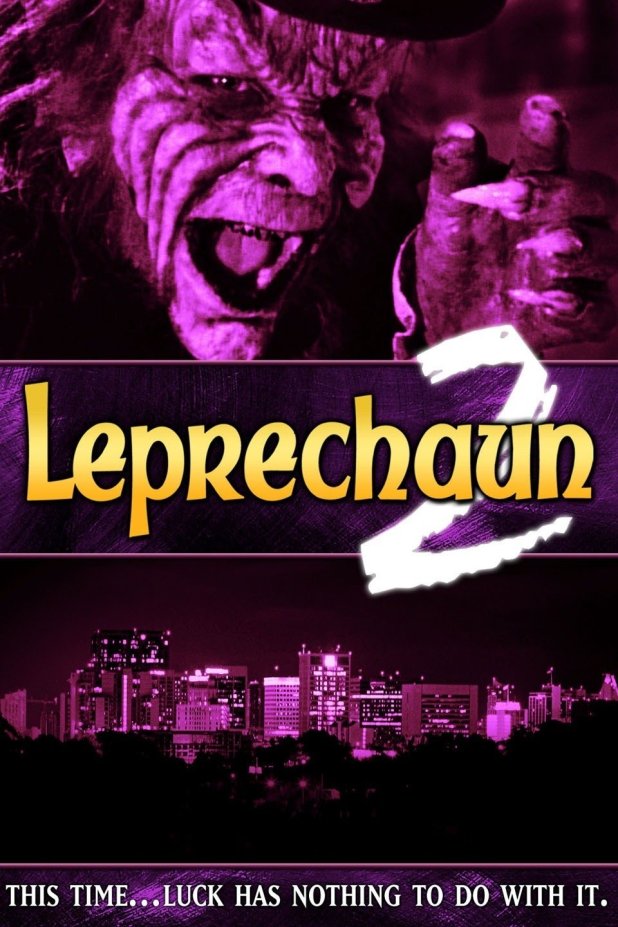
The subtitle of this movie, One Wedding and Lots of Funerals, is better than anything in it. That said, the Leprechaun movies are not known for being subtle. Or even cannon. I mean, they never even mention if this is the same little guy from the first one.
This time, the Leprechaun has made his journey to Los Angeles inside a magic tree that once belonged to Harry Houdini, which is pretty hilarious and starts getting any gold he can, starting with teeth.
The goal is for the antagonist to get married and coincidence and movie luck demands that the woman of his destiny just so happens to be the girlfriend of our hero. I thought that the dark tours in this were ripped off from Dearly Departed Tours, but it turns out that the reverse is true.
Clint Howard also elevates this for the brief time he’s in it. Look any movie where a man wishes for a pot of gold and it gets ripped out of his stomach, I’m probably going to enjoy on some level. I’m pretty easy.
There comes a time in the genre film fan’s life when you suddenly make a critical reappraisal of the films of Ed Wood. As for me, I came to his films from It Came From Hollywood and the Medved brothers’ books, where he was made fun of for being the worst filmmaker ever and Plan 9 From Outer Space was laughed at as the worst movie of all time.
Or maybe — just maybe — he was an auteur who never had the benefits most auteurs do, like budgets, decent acting, good sets and so much more.
Writer and director Ted Newsom — who made this and other documentaries like 100 Years of Horror — credited Lucille Ball, Sidney Salkow (director of Last Man on Earth) and Ben Brady (producer of The Outer Limits) as the people who he considered teachers. He moved from newspaper and magazine writing to books and screenplays with his partner John Brancato. In fact, working with Brancato, the team worked with Stan Lee to write early scripts for Sgt. Fury, Spider-Man and The Sub-Mariner films.
This Rhino Video* release breaks down why Wood was so essential and has interviews with Delores Fuller, Conrad Brooks and Kathy Wood, amongst others. It also has a lot of abandoned projects, like the pilot for a TV western and Fred Olen Ray’s Beach Blanket Bloodbath, a movie that a dissolute Wood was hired to write months before he died.
Jim Morton wrote in RE/Search: Incredibly Strange Films — which was the bible for my film mania at one point and started my question to learn more about so many filmmakers — “Eccentric and individualistic, Edward D. Wood Jr. was a man born to film. Lesser men, if forced to make movies under the conditions Wood faced, would have thrown up their hands in defeat.” That quote means more to me than a lot of this movie, whose Gary Owens-delivered patter seems to make light of the fact that Wood suffered failure after failure, finally kicked out of his home and dying alone, screaming for his wife to get him a drink.
Today, I see Ed Wood as a dreamer, a man who had visions in his head that he was unable to translate to the screen. That said, what he was able to get up there, we’re still talking about years after incredibly professional and well-made movies have been forgotten. And for that, he should be celebrated. After all, Glen or Glenda is a shocking film even today, a transgressive film even without knowing that Wood himself was obsessed with cross-dressing, finding comfort in the soft comfort of angora.
*Rhino was a big deal in my teen years, putting out the Dr. Demento records and early video releases like, well, this documentary. Richard Foos, one of their execs, left the label once Warner Media bought them and he was one of the people behind Shout! Factory, which pretty much does what Rhino once did so well.
After this movie, Crown International Pictures took nine years off. I will tell you that that is not because this is a good movie and they felt they’d done all they could do. Quite the opposite.
However, in my endless quest to watch every single film they ever released, as well as my slavish addiction to Mill Creek box sets, I find myself here, struggle watching this supposed satire on Hollywood.
This is all about a producer of exploitation and sex videos who uddenly is accused of killing one of his star’s boyfriends and his mistress. It’s a wacky sendup of what I can only assume it was like make movies in 1994.
I mean, this is a movie that pokes fun at the erotic thriller genre, with the character Abdu clearly an analogue of Ashok Amritraj, Menaham Golan and Yorum Globus and Greg Rhodes from Ghosthouse and Deadly Manoras the filmmaker who is pretty much making post-adult Gregory Dark movies, except this makes me wistful for Gregory Dark movies.
In a meta move, India Allen, who was Playboy Playmate of the Year in 1988, as well as in movies like Silk Degrees and Wild Cactus, plays herself.
Michael Weaver, who wrote and directed this, also shot Dark Eyes and The Sender as well as directing two segments in the movie Night Terror before heading off to do TV work, working as the DP on Pushing Daisies and directing episodes of Californication and Good Girls.
I’ll do anything for Crown International and Mill Creek, I guess. Even this.
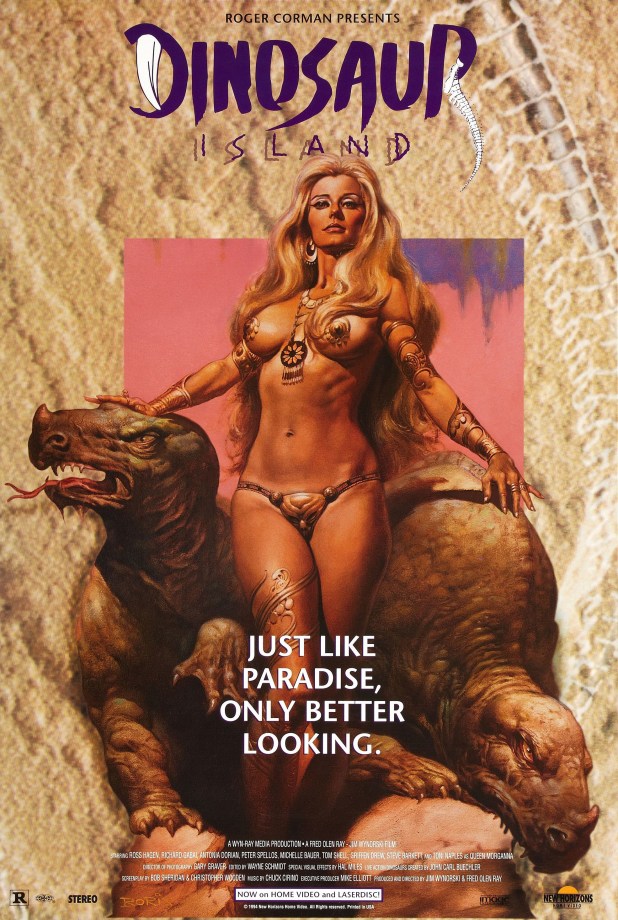
Dinosaur Island has a great poster and let’s leave it at that.
Actually, I’m not going to get away with that, so let’s talk about this movie.
It seems like I set out to do a week about societies where women rule and I end up watching Jim Wynorski movies. Well, at least he has Fred Olen Ray along for this one, all about five pilots crashing in the jungle and coming up against not only dinosaurs, but a tribe of Amazonian women who include Michelle Bauer (Sorority Babes in the Slimeball Bowl-O-Rama, Nightmare Sisters), Becky LeBeau (Joysticks), Deborah Dutch (Vice Academy 6) and Toni Naples (Deathstalker II).
Instead of the jungle, this tribe really is running part of David Carradine’s ranch and are battling footage taken from Carnosaur, here called the Great One.
Who can make sense of all of this? Captain Jason Briggs. And who is he? Russ Hagen from The Sidehackers. Oh shit, everyone is fucked.
Who can be blamed? Roger Corman, who wanted to cash in on Jurassic Park and hired Ray and Wynorski, who claimed in the book Crab Monsters, Teenage Cavemen and Candy Stripe Nurses – Roger Corman: King of the B Movie that this is more a cavegirl movie than a dinosaur flick.
I guess the nicest thing that I can say is that the soldiers seem to treat the women with respect, which they should, because they are the rules of Dinosaur Island, which is just down the beach from Dinosaur Valley.
I’ve watched many a bad movie for this site, but this has to be the new basement when it comes to films, a Shot On Video piece of flaccid garbage that wants so very badly to be pornography but stops short, providing all of the downsides of 1990’s VCA crap you had to rent from the back of the video store with none of the upside, like actual pornography or the lunacy of the Dark Brothers or Rinse Dream.
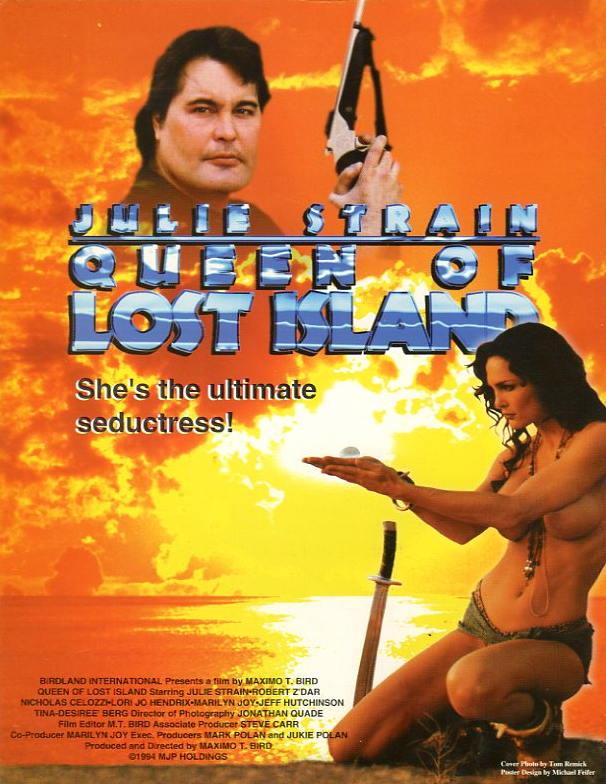
I really wanted it to fit into this week’s theme of matriarchal societies, as it seemed like from the description that Strain’s character was She. But no. No, not at all.
This all became more crustal clear when I saw who made it: Donald G. Jackson, the director of more than three Roller Blade themed movies who has one lone success, Hell Comes to Frogtown.
A whole bunch of women has been invited to an island that takes over their minds — or so they say — while Julie Strain waits for them, naked and swinging around a sword. Do you know how boring a movie has to be to not be good while featuring Julie Strain topless? This movie will give you the answer.
Literally, during this movie, I yelled out loud, “Robert Z’Dar, don’t you have something better to do?”
Also known as The Devil’s Pet and Elixir — the name it finally came out in 2004 on home video under — this movie also has Tina-Desiree Berg (Legend of the Roller Blade Seven), Lori Jo Hendrix (Bikini Summer) and Jeff Hutchinson (who shows up in many of Jackson’s films, like Lingerie Kickboxer and Roller Blade).
Fans of bad movies — this is quite literally as bad as it gets.
In 1998: It was the battle of the Earth-destroyed-by-asteroid epics Deep Impact vs. Armageddon.
In 2013: It was the battle of the terrorist-attack-on-the-White House epics Olympus Has Fallen vs. White House Down.
And back in the early ’90s: It was the battle of the Gunfight at the O.K Corral flicks that were 1993’s Tombstone and 1994’s Wyatt Earp.
Welcome to the O.K Octagon for the Wyatt Earp showdown that Kevin Costner built.
In “The Western Godfather,” an October 2006 article published in True West Magazine, it’s learned that Costner was originally involved in Hollywood/Buena Vista Pictures’ (part of Walt Disney Studios) production of Tombstone — starring as Wyatt Earp. As is the case with the clout of A-List stars, they’re given control over their scripts. Costner was, of course, unhappy with screenwriter Kevin Jarre’s (an expert history scribe courtesy of his 1989 Civil War epic, Glory — but you know Jarre’s work in Rambo: First Blood Part II) version that focused more on all of those involved in the epic Wild West gunfight, than Wyatt Earp.
So Costner turned in his spurs to Uncle Walt and signed on the dotted line with Bugs to make his own version Wyatt Earp’s tale for Warner Bros. with Lawrence Kasdan (of Star Wars* fame) who helmed Costner’s previous western, 1985’s Silverado. And Costner used his considerable clout to convince most of the major studios to refuse to distribute Tombstone.
So, what was the end result?
Tombstone — released first, in December 1993 — was a box office success, becoming the 16th high-grossing western released since 1979.
Wyatt Earp — released in June 1994 — was a critical and box office bomb.
So, how bad was it?
Wyatt Earp earned five Razzie nods for Worst Picture, Director, and Screen Couple (Earp and his three wives), while walking away with the awards for the Remake or Sequel and Actor categories. In addition, Costner’s version ended up on several major, national publications’ “Year End Worst Of” lists, including Rolling Stone, which ranked it the 2nd worse film of the year.
And good ‘ol Pops, a western freak who never appreciated my love for all things Spaghetti Western — or Klaus Kinski** — beyond Clint Eastwood’s forays, hated Wyatt Earp. But he loved Tombstone. So there you go. (And he, like I, loved Costner’s Waterworld and The Postman, and Costner’s early film Fandango is still one of my VHS-rental favorites.)
And why are we reviewing the Costner one and not the Kurt Russell and Val Kilmer-starring one? Have you not been paying attention at all this week, ye B&S About Movies reader?
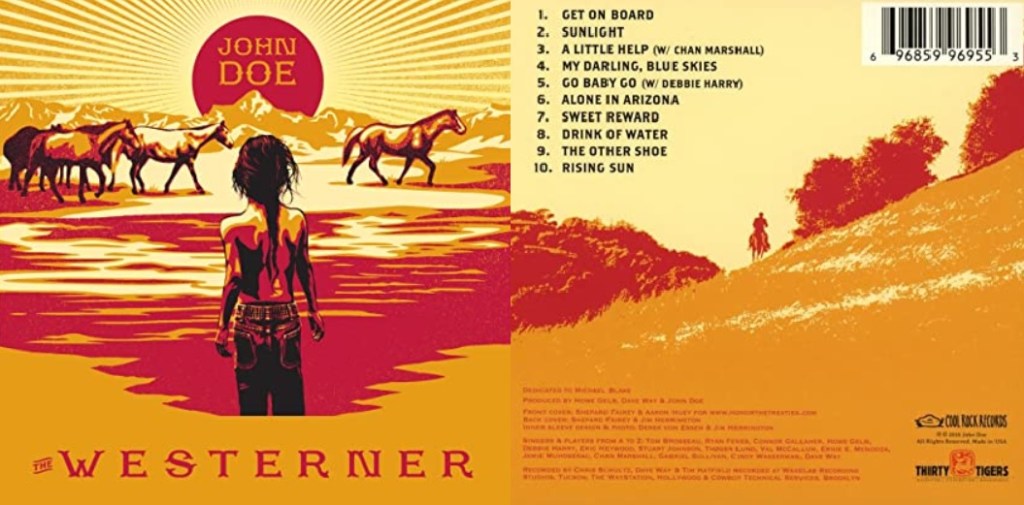
This one stars the perfect-for-the-western-genre-and-we-wished-he-did-more-of-them John Doe of X as Tommy “Behind-the-Deuce” O’ Rourke — a character based on the real life professional gambler and gunslinger Michael “Mike” O’Rourke, aka “Johnny O’Rourke,” aka “Johnny-Behind-the-Deuce.”
About the Author: You can learn more about the writings of R.D Francis on Facebook. He also writes for B&S About Movies and publish music reviews and short stories on Medium.
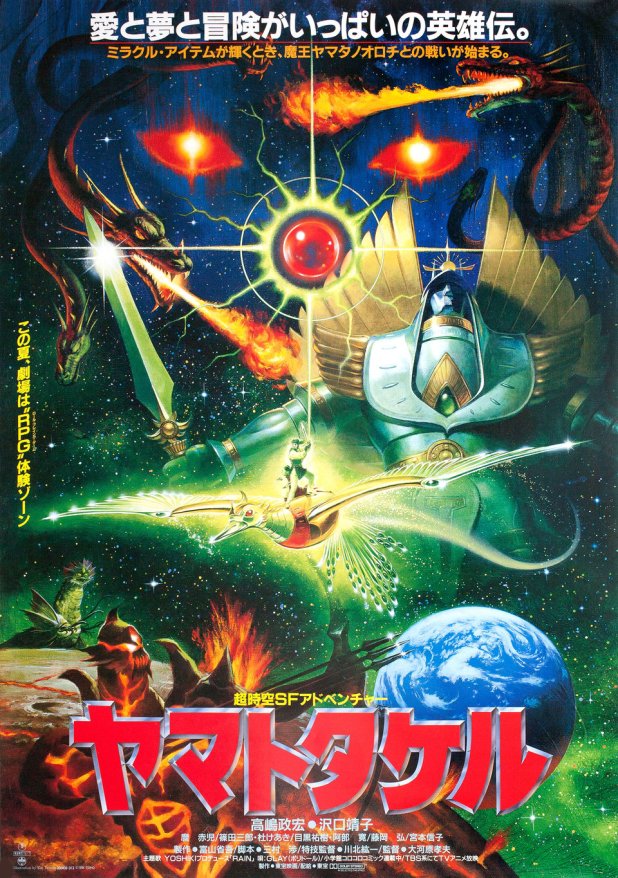
Toho knows about multiple headed dragons. But here, they are in service to a fairy tale film that deals with the birth of Shinto.
Honestly, this movie blew my mind and I’m not certain I’ll ever be able to get it fixed again.
After the birth of twin princes, the emperor feels hatred for one of them, Ousu. He orders a shaman to kill his son, but Amano Shiratori, the White Bird of the Heavens, appears and the shaman decides to raise him.
Yet when he finally grows up and his father pardons him, within days Ousu’s mother has died mysteriously and his brother attacks him, dying in the process. The emperor sends his son away again, into the Kumaso area to battle the barbarians that live there.
Along with a girl named Oto and his friends Genbu and Seriyu, the prince changes his name to Yamato Takeru and begins to complete a series of heroic feats. However, he must now find the Sword of Dark Clouds before the evil moon god Tsukuyomi who has somehow learned how to transform himself into the eight-headed dragon named Orochi. And oh yeah, Tsukinowa — the evil priest who caused all this — is the one who killed our hero’s mother and brother. And get this, Oto is really the sun goddess Amaterasu. And then a sword gets pulled from a stone. And…
Seriously, this movie is absolutely packed with astounding moment after astounding moment, like heroes dying and being reborn, Amano Shiratori becoming a mecha phoenix and the titular eight-headed dragon. You should pause and realize that this effect is a physical effect and not CGI. It’s one of the most incredible looking monsters that I’ve ever seen, blowing away nearly any kaiju movie.
A remake of 1959’s The Three Treasures, this was intended to be a trilogy, but didn’t do well in theaters. It did lead to a Yamato Takeru anime. It was directed by Takao Okawara, who also made Godzilla vs. Destoroyah and Godzilla 2000. He also was an assistant director on one of Toho’s weirdest movies, Nosutoradamusu no Daiyogen. Wataru Mimura, who wrote the script, also worked on several of Toho’s 2000’s kaiju movies.
This is the closest a movie has come to a Harryhausen effort in decades. I say that with the highest praise, as this is a visually stunning feast that kids of all ages will love.
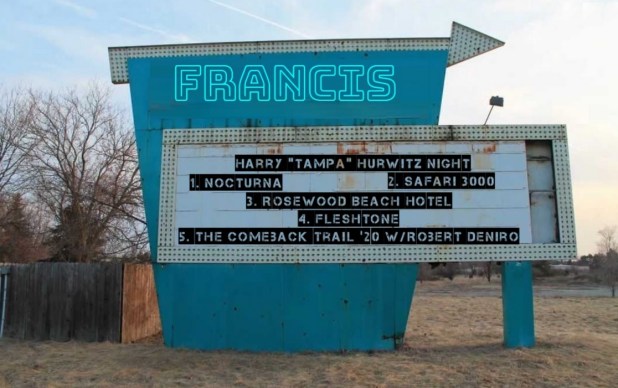
A toast! Let’s raise those waxed cups n’ strawed A&W Root Beers to Harry “Tampa” Hurwitz and his return to the big screen with Robert De Niro starring in the remake of Harry’s 1982 feature, The Comeback Trail.
Prior to his tenure as a screenwriter, director and producer, the New York born and raised Hurwitz worked as a professor of film and drawing at several New York institutions, including a prestigious tenure at New York University.
That’s what I get for hiring a high school kid to do the sign. Eh, you get what you $5.00-buck-an-hour pay for, right? Know your “rose” suffixes, kid.
He made his debut as a filmmaker with 1970’s critically-acclaimed The Projectionist — a film noted as the acting debut for a then unknown comedian named Rodney Dangerfield — in a tale about a lonely projectionist (Chuck McCann) who imagines himself in the films he shows. Hurwitz also translated his life-long love of Charlie Chaplin in the 1972 sophomore effort, The Eternal Tramp.
While his films would see distribution with major studios, such as MGM/United Artists (Safari 3000), and major-independents, such as Almi Pictures, a division of Carolco (The Rosebud Beach Hotel), and Compass International (Nocturna), Hurwitz produced and directed 12 pictures, 9 of which he wrote, independently.
His resume features two films produced with a pre-Empire Studios Charles Band: the late ’70s sexploitation pieces Fairy Tales and Auditions. Hurwitz also wrote and directed 1972’s Richard, a social parody on President Richard M. Nixon. He re-teamed with his lifelong friend Chuck McCann in 1982’s The Comeback Trail, a somewhat semi-autobiographical tale about two independent film executives against-the-odds in producing a western with a washed-up cowboy star.
“Rose” BLANK And the $50 response is . . . “Is a Rose” The$150 response is . . . “Wood” And the $500 response . . . “Bud”
What the hell? Napoleon Solo? Well, it was either Match Game . . . or do a film with Harry. Oh, shite . . . say it ain’t so, Solo! The “comeback trail” isn’t paved with Harry Hurwitz films, Mr. Vaughn. Just ask Christopher Lee. . . .
Repeating the semi-documentary cinéma vérité style of 1978’s Auditions, Hurwitz also concocted 1989’s That’s Adequate; a Spinal Tapish tale about a troubled film studio that features an eclectic cast of comedians with Sinbad, Richard Lewis, and Rick Overton alongside a starbound Bruce Willis, Maureen “Marsha Brady” McCormick as a Space Princess, Robert Vaughn as Adolf Hitler (which is “funny” to fringe movie fans, when we remember Vaughn starred in 1978’s The Lucifer Complex), Susan “Laurie Partridge” Dey as a Southern Belle, and Robert Downey, Jr. as Albert Einstein. (Seriously: the film is that crazy.)
Harry’s most significant screen credit was working as one of the five screenwriters on a tale about the 1939 production of The Wizard of Oz, the 1981 Chevy Chase-starring Under the Rainbow for Warner Bros.-Orion Pictures. And we can’t forget Harry dipping his toes in the Blaxploitation pool as a producer with 1983’s The Big Score starring Richard Roundtree and the late John Saxon*.
Harry “Tampa” Hurwitz passed away on September 21, 1995, at the young age of 57 from heart failure while awaiting a heart transplant at the U.C.L.A Medical Center. This Drive-In Friday is for you, Harry. May your films live on for a new generation of video fringe enthusiasts. And they do!
In the ultimate show of respect to Harry’s imagination, on November 13, 2020**, the remake of The Comeback Trail, starring the Oscar acting elite of Robert De Niro, Morgan Freeman, and Tommy Lee Jones, was realized by writer-director George Gallo of Bad Boys fame.
Way to go, Harry!
Now, Mr. Gallo . . . about that Safari 3000 remake. . . .
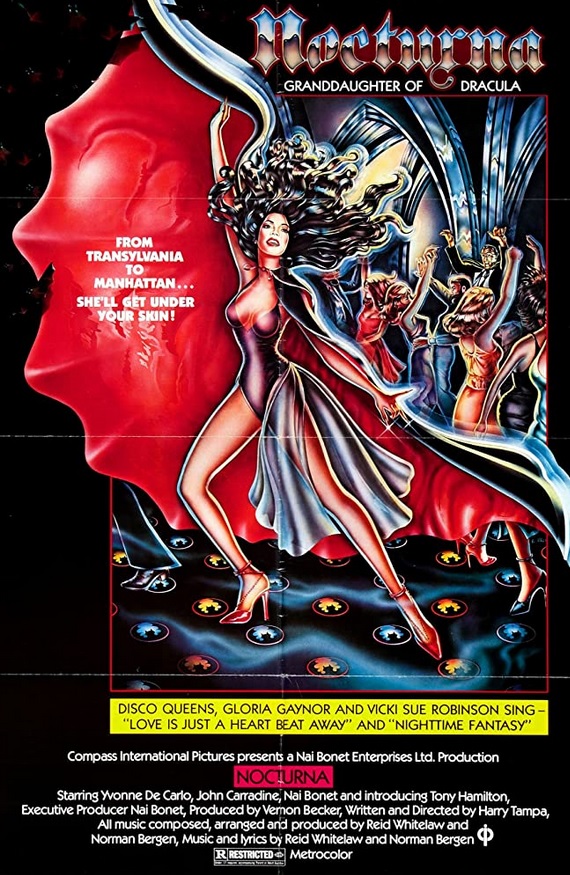
What do you get when you go into business with a noted Las Vegas belly dancer who appeared on TV’s The Beverly Hillbillies . . . then cast Lily Munster, a B-Movie Dracula, and a couple of on-their-way-down ’70s disco stars — and negotiate a deal with MCA Records to release a disco-flavored soundtrack double album to promote the movie?
You get a Harry Tampa box-office boondoggle with John Carradine making back dick jokes. Can Countess Dracula turn her gay singer crush, straight? Do we care?
And to think the Compass International — a studio that had a worldwide hit on their hands with their debut release, John Carpenter’s Halloween — backed this vampire hookers romp. But they also made Roller Boogie, Tourist Trap, Blood Beach, and Hell Night . . . so you know where this disco Dracula romp is heading. Flushing is required.
What do you get when you go into business with United Artists and convince them a Smokey and the Bandit ripoff set on the African tundra will work?
You get a Harry Tampa box-office boondoggle with Christopher Lee frolicking with baboons and the guy who voiced the CP3O knockoff in Luigi Cozzi’s Starcrash. Does the fact that David Carradine is behind the wheel giving us some serious Death Race 2000 and Cannonball vibes save this VHSflotsam? No. And we wished ol’ Dave got off a couple of his dad’s bad dick jokes from Nocturna to compensate for the fact that Stockard Channing’s comedic timing makes the monkeys look good.
Intermission! With the stars of our next feature on tonight’s program! Let the tight pants and smoke wash over you!
What do you get when you contractually flim-flam cinema’s requisite Count, an ex-Runaway, a B-Movie apoc anti-hero, a washed up Tom Hanks TV sidekick, and wardrobe left overs from Glen Larson’s crap-ass Buck Rogers remake for TV?
You get a Harry Tampa ripoff of Bob Clark’s Porky‘s set in a South Beach Miami hotel. Do the adult film actresses working as topless bell hops for Madam Bobbi Flekman from Spinal Tap’s management team seducing Paco Querak from Hands of Steel save it? Do the cut-rate AOR-synth soundtrack ditties from Cherie Currie save it? No. And we wished Christopher Lee stuck to his original plan of torching the joint for the insurance money.
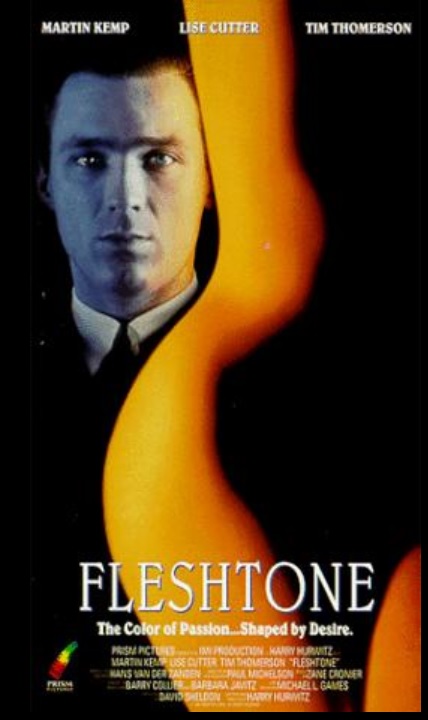
Movie 4: Fleshtone(1994)
What do you get when Harry Tampa answers paid cable’s call for “after hours” erotic thriller programming fodder for the wee-lads who can’t get dates on Saturday nights?
You get the bassist from the bane of our New Wave existence — Spandau Ballet — as a struggling painter twisting down a soft-core film noir spiral in this final, bitter sweet Harry “Tampa” Hurwitz’s effort completed a year before his death.
Truth be told, Martin Kemp, who been in the acting game in the U.K. since the ’70s before finding fame as a MTV favorite, is pretty decent here (he was in Sugar Town with John Doe and Michael Des Barres) as the noir schlub who can’t stay away from dangerous women who enjoy erotic sex games. And it’s nice to see Tim Thomerson (yep, the one and only Jack Deth from Trancers) on top of the marquee in this who-killed-her potboiler.
Do the adult film actresses that Harry likes to cast for that extra titillation-inspiration and lesbian sex scenes helping? Does the fact that the singularly-named Daniella also starred in Anal Maidens 3 and Assy 2 exciting you? How about those exotic Jo-Berg, South Africa locations?
Eh, a little . . . but in reality, this is probably the best of Harry’s films, courtesy of Kemp and Thomerson giving the material some class, and ’80s U.S. TV actress Lise Cutter isn’t so bad, but she’s not leaving the direct-to-video realms any time soon.
Yes! You Tube comes through in the clutch! You can enjoy Harry’s final film on You Tube. You can watch the other films on tonight’s program via the links in those reviews.
* We honored the career of the late John Saxon with our “Exploring: John Saxon” featurette.
**The Comeback Trail premiered at the 43rd Mill Valley Film Festival on October 12, 2020. It was initially scheduled to be theatrically released in the United States on November 13, 2020. However, due to the affects of COVID on theaters, Cloudburst Entertainment has pushed the release date to sometime in 2021.
About the Author: You can learn more about the writings of R.D Francis on Facebook.He also writes for B&S About Moviesand publishes on Medium.
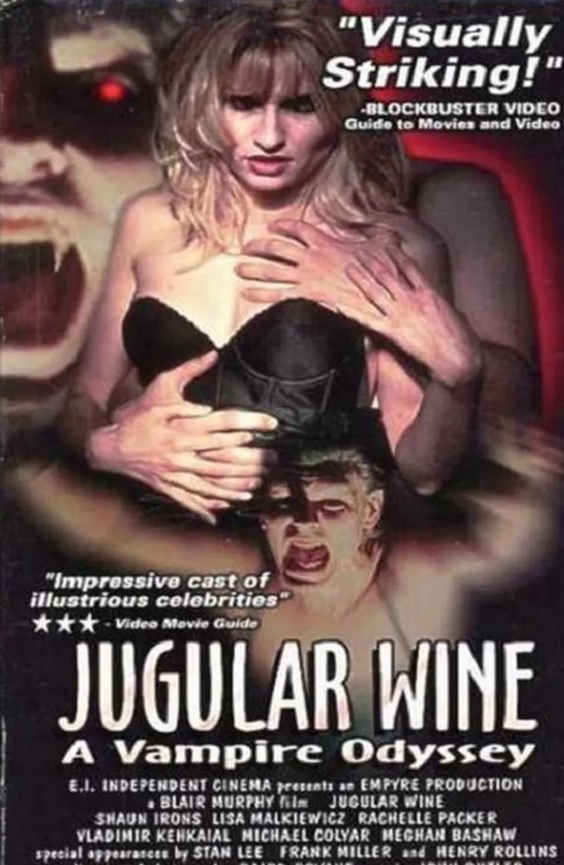
If you ever wanted to see a vampire flick that slaughters Black Flag’s Henry Rollins (playing himself; then at the top of his solo game with The End of Silence and Weight albums) and comic-book icons Stan Lee and Frank Miller (an anthropology professor and a fellow grad student, respectively)—as it quotes the poems of Walt Whitman (remember: the father of the modern vampire genre, Bram Stoker, was a Whitman admirer, and later, pen-pals with the poet)—then this idiosyncratic vampire romp is your goblet of blood.
After several centuries of undead romance, Ms. Dracula needs a new neck in her life, so she decides to fall in love with the food that comes in the form of James Grace, a Philadelphia thesis-working anthropologist in Alaska (he’s on a ship; thus the Whitman quote about “deep waters” and “seas of god”) who becomes the unwitting third side in a gothic love triangle. Why? Because mortal women aren’t exactly banging down the doors of anthropologists . . . so when a several-centuries-old hottie shows up and drops her parka naked-to-go, you don’t did-a-doddle with your rocks and dirt: you go for it. (I would. Undead me, baby.) Well, it’s not that cheesy: Alexandra the Vamp is actually on the run to Alaska, the last earthly sanctuary for vampires as the nights grow shorter—and she’s being hunted by her kind’s eldest, known as Legion.
When the half-vampirized Grace discovers Mr. Dracula, aka Legion, has murdered Alexandra, his new undead-life’s love—as result of her mortal infidelities—he embarks on an Easy Rider meets Phantasm II-inspired sunless odyssey; a hallucinatory roadtrip through America’s underground lands of the undead where he meets an array of fringe-society characters in Los Angeles, Utah, New Orleans, and Philadelphia in his quest for revenge. Then there’s the side plots with Nickadeamous (writer-director Blair Murphy) tracking down Grace—and Grace tracking down Dr. Donna Park, who has the secrets to the mythical Induit creatures that fuel the vampire myth. And that she’s not dead or missing—but a vampire herself, and Grace killed her back on the ship when Nickadeamous attacked him.
One of the most—if not the most—ambitious indie-art house vampire flicks you’ll ever see (if there is such a genre), this vamp’s cross-country ambitions hold up (somewhat) against its aspirations-over-budget, courtesy of its avoiding the graveyard brooding and strip club clichés of most modern vampire flicks, as the protagonist’s search takes him to unconventional, underground-kitschy coffee houses and maybe-a-little-bit-more-conventional goth night clubs (aka, the pretty-cool named Caligari’s Casket that spins F.W Murnau’s 1922 vamp-romp, Nosferatu for “atmosphere”; you know, the place where Henry Rollins hangs out to become fang-chum).
It’s all from the mind of indie writer-director Blair Murphy who self-financed the film through his family’s funeral home business. Is this a case of “. . . if Tommy Wiseau made a vampire flick?” Eh, well . . . while this was made in the early ’90s and shot-on-film, the proceedings look like an ’80s “Big Box” SOV romp, à la (the much better granddaddy of SOV) Blood Cult. (But Jugular Wine isn’t as bad as fellow SOV’ers Spine. Or Things.) And we’re not sure if that’s from cinematic ineptitude, purposeful SOV-homage, or the battered VHS is so washed-out that it looks like an ’80s SOV’er. And what’s the deal with the white grease paint vamps? Again, we’re not sure if that’s special-effect ineptitude (due to cash) or a homage to Herk Harvey 1962 classic-creeper, Carnival of Souls, which, in many ways, Jugular Wine resembles in its self-financed, one-off guerilla filmmaking style. But make no mistake: Carnival of Soul (which should be as revered as George Romeo’s Night of the Living Dead) is the far superior film. Far superior.
While Murphy certainly possessed the same generous self-financing verve as The Room’s auteur, Murphy has a more effective grasp of filmmaking. Sadly, in lieu of his musician and comic-book stunt castings, he should have dug up a few down-on-their-luck B or C-List actors (Eric Roberts was already down to direct-to-video potboilers like Power 98 by this point; he would have been a prefect class-up-this-joint casting) to carry his intelligent script—as the strained overacting, in conjunction with its way-too-long 98-minute running time, make this vamp romp a hard swallow (yuk, yuk, sorry) . . . for you, maybe. But I dig this way more that Tom Cruise’s mainstream fang sporting, so kudos, Mr. Murph!
There’s no PPV-VOD streams or freebie rips of the VHS. And that “Blockbuster” plug on the box art is totally bogus. Across three local Blockbusters, I never one saw a copy of Jugular Wine on their mainstream shelves: this was strictly a 10,001 Monster Video or mom-n-pop rent-n-carry. For you digital hounds: Yeah, there are DVDs in the marketplace, but caveat emptor: they look like grey market burns. (No, they are definitely grey market burns.) For those of you that have never seen Jugular Wine, the best we’ve got is this eight-years post documentary (on You Tube in six-parts) that Murphy strung together in 2002, which features scenes from the film. Apparently, the later-issued DVDs contain the documentary.
Guess what? We found a six-part upload of the “Making Of” featurette.
About the Author: You can learn more about the writings of R.D Francis on Facebook.He also writes forB&S About Movies.










 B&S About Movies
You must be logged in to post a comment.