Mill Creek Through the Decades: 1990s Collection: White Palace (1990)

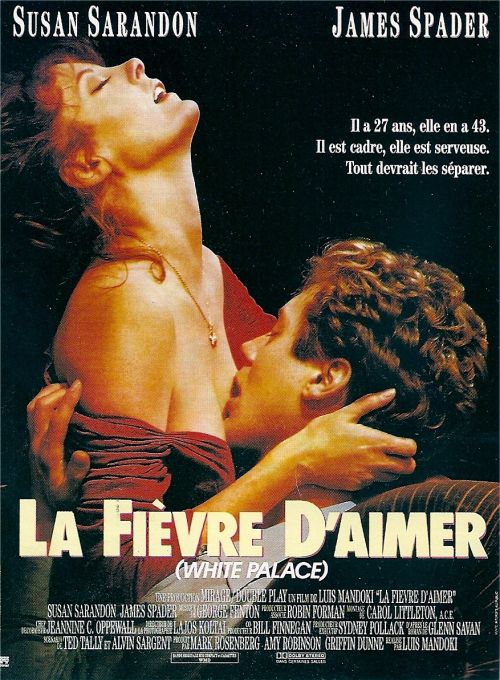
Directed by Luis Mandoki and written by Ted Tally and Alvin Sargent — and based on the book by Glenn Savan — White Palace does something extraordinary for an American movie. It presents an older women as a sexual being every bit the equal of her younger male lover.

Max Baron (James Spader) is a St. Louis advertising executive who has given up on life after the death of his wife. On the way to his friend Neil’s (Jason Alexander) bachelor party, he grabs a sack of burgers from White Castle* — err, White Palace — a burger diner. He learns that the order is six burgers short and leaves the party to argue with the waitress who rang him up, Donna (Susan Sarandon).

Later, they randomly meet in a bar and nearly argue until they mutually reveal why their lives are where they are: he’s lost his wife and she’s lost her son. And then improbably, they end up going home together. He wakes up to her going down on him, then they make love. It won’t be the last time. And unlike so many Hollywood films, he repays her kindness with his own favors.

There was even more of the ad agency in the film, including a problem client played by Gena Gershon. All of these scenes were cut, which also meant that most of Kathy Bates’ role was also left out of the movie.

There’s also a sex scene removed from the film and the first one in the movie was cut down so the movie didn’t get an NC-17 rating. Additionally, the original ending was the same as the book where Max proposes to Nora in a restaurant bathroom and the ending is inconclusive. That ending didn’t test well so a new one was shot. You can see the actor’s hairstyles change in the scene and that’s your signal for which footage is from the reshoot.

*The original title for the film was The White Castle, and the novel even makes reference to a specific White Castle at the intersection of S. Grand Blvd. and Gravois Ave. in south St. Louis. The restaurant chain refused permission to use its trademarked name in either the novel or the film. They also refused permission to allow any of its restaurants for filming locations. The diner used in the movie is now known as the White Knight; the filmmakers wouldn’t let them call it the White Palace after the movie, which is weird when they went through all those legal naming issues themselves.

Mill Creek’s Through the Decades: 1990s Collection has some great movies for a great price like HousesitterOne True ThingDonnie BrascoThe Devil’s OwnThe MatchmakerAnacondaI Know What You Did Last SummerThe Freshman and The Deep End of the Ocean. You can get it from Deep Discount.

Haunting Fear (1990)

ABOUT THE AUTHOR: Jennifer Upton is an American (non-werewolf) writer/editor in London. She currently works as a freelance ghostwriter of personal memoirs and writes for several blogs on topics as diverse as film history, punk rock, women’s issues, and international politics. For links to her work, please visit https://www.jennuptonwriter.com or send her a Tweet @Jennxldn

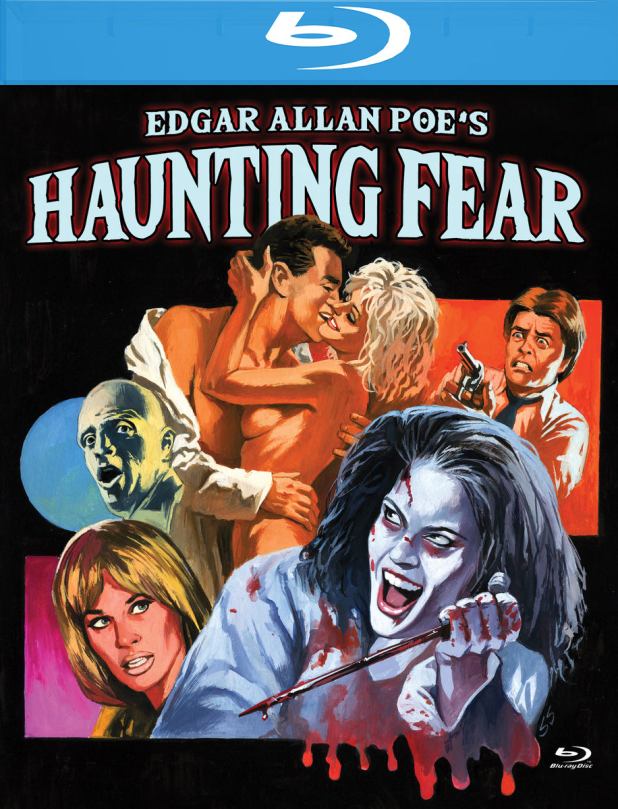
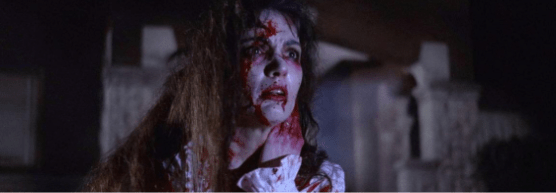
Based on Edgar Allan Poe’s short story The Premature Burial, Haunting Fear stars Brinke Stevens as Victoria, a wealthy woman haunted by recurring dreams of being buried alive following the death of her beloved father. Her slimy husband Terry, played by Ray regular John Henry (née) Jay Richardson, pretends to be supportive while banging his hot secretary Lisa (Delia Sheppard) behind Vicki’s back. It’s not the only secret he’s keeping. Terry owes mob boss Visconti (Robert Quarry) 80 large in gambling debt. Visconti sends bent Detective James Trent (Jan-Michael Vincent) to watch the couple’s house to make sure Terry doesn’t make a break for it. Sweet as she is, it isn’t long before Trent develops an affinity toward Victoria, while at the same time Terry and Lisa are cooking up a scheme to kill Vicki, re-mortgage the house and pay back Visconti before the deadline. 

Rounding out the cast is Robert Clarke as Vicki’s doctor, who may or may not have murdered her father for a slice of the inheritance, and Michael Berryman, who makes a single-scene appearance in a nightmare sequence set in a morgue. 

Shot in six days for $140,000 at an old mansion later used in Ray’s Mind Twister (1994) and Witch Academy (1995), Haunting Fear is part horror movie, part erotic, blurring the lines between Vicki’s nightmares and waking life effectively through the use of editing and noir lighting courtesy of DP Gary Graver. The soundtrack, devoid of an overabundance of ambient sound save for a subdued synth score, adds further to the film’s quiet but steady pace to the final act. 

 It’s here where the film finally dives fully into horror territory. Instead of dying, Victoria breaks free of the wooden box into which Terry and Lisa have sealed her, and goes full tilt crazy, stalking her tormenters with a knife in a giggling frenzy from the shadows. While the first half focuses more on the scheming of Lisa and Terry, the finale is Stevens’ show. Cited as her favorite performance from this golden era of “Scream Queens,” it is Brinke’s meatiest role to date, having been written for her while she and Ray were a couple. Even when she’s going berserk, there’s something in her coffee-colored eyes that elicits sympathy. 

A film buff himself from childhood, Ray’s script pays homage to several classics. The image of Stevens sitting on the floor of the corner of her kitchen, vacantly lost in her own insanity, tapping a large knife tip onto the tile floor is straight out of the Dan Curtis classic Trilogy of Terror (1975.) Further, the scene where Vicki is put under hypnosis and made to recall her past life traumas by Trilogy’s Karen Black is reminiscent of Corman’s lesser-seen The Undead (1957) wherein the protagonist travels back in time in her mind to recall her past lives. If Allison Hayes had survived past the age of 47, it’s a sure bet Ray would have hired her.

True to most of the director’s output from this period, there’s plenty of sex and nudity go around, although sadly, we never get to see Richardson bare all. Come on, Fred! How about a little something for the ladies? There’s even some Basic Instinct-style rough stuff (played for laughs), almost two years before that film hit the scene. Is Haunting Fear true to the source material? No. Then again, no Poe adaptation ever has been. Haunting Fear is therefore best viewed in the spirit with which it was made. A nice little thriller meant to satisfy the 1990s video market. 

Spirits (1990)

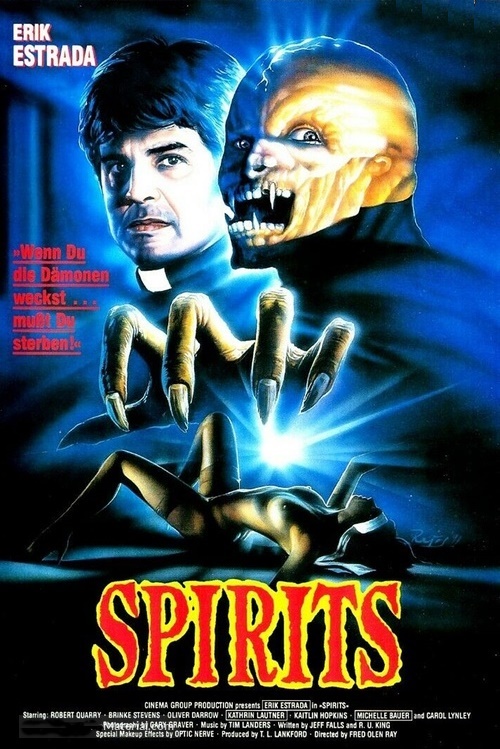
Dr. Richard Quicks (Robert Quarry) leads a group of researchers into a haunted house, like skeptic Beth (who was once a lesbian, which a Fred Olen Ray movie totally wouldn’t exploit), on the make Harry and psychic Amy (Brinke Stevens) who of course gets possessed by the house, at which point Father Anthony Vicci (Erik Estrada!) becomes the only person who can save them all — as long as he gets past the fact that he ignored his vow of chastity and slept with a woman. The shame…

Anyways, more exciting than Ponch playing a priest is Michele Bauer playing a nun who gets naked and denies the existence of God and says “You knew your way around a pussy pretty good for a priest.” as well as Tiffany Million — once a GLOW girl, later an adult video star — playing a demonic nun, which is better than just a nun.

Fred Olen Ray never made an Amityville sequel, but this is as close as he’s going to get, as well as making The Haunting, as this movie calls the mansion Heron — instead of Hill — House. This feels like an Italian movie without the excesses that an Italian film would add. No turtles are killed for real, no eyeballs get stabbed and no gigantic demon made from the dead bodies of murdered villages rises from the catacombs. But hey — Erik Estrada trying to resist a Michele Bauer half out of a nun’s habit. That’s worth something.

Mob Boss (1990)

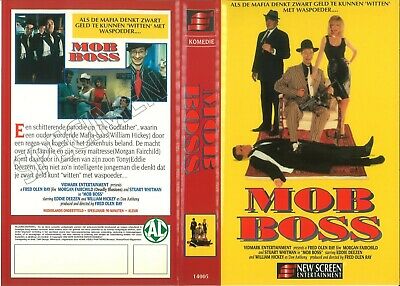
Don Anthony (William Hickey, Don Carrado Prizzi in Prizzi’s Honor and Uncle Lewis in National Lampoon’s Christmas Vacation) runs the biggest crime family in California. He’s rubbed out by a team of his archrival Don Francisco (Stuart Whitman) and his mistress Gina (Morgan Fairchild). As he lays dying, he tells Monk (Irwin Keyes) to find his son Tony — yes, Anthony Anthony — to keep the family alive.

It turns out that Tony is Eddie Deezen.

Now, the mob has sent Gina to seduce him, as well as Angelo and Sara (Jack O’Halloran and Brinke Stevens) to kill him. Can Monk and the rest of the family get Don Tony ready for the family business or will they all die trying?

This is the last film of “Iron” Mike Mazursky, plus it also has Don Stroud, Dick Miller, Robert Quarry — credited as his Dr. Phibes Rises Again character name Darrus Biederbeck –and Teagan Clive from Alienator in the cast, which is a Fred Olen Ray mark of quality.

Does Ray have a vision? He did cast Deezen as a lead in a movie. I think that says yes.

In my dreams, Ray made a sequel and shot for shot created the end of Goodfellas with the cocaine run with all of the same actors except Deezen takes over for Ray Liotta.

Bad Girls from Mars (1990)

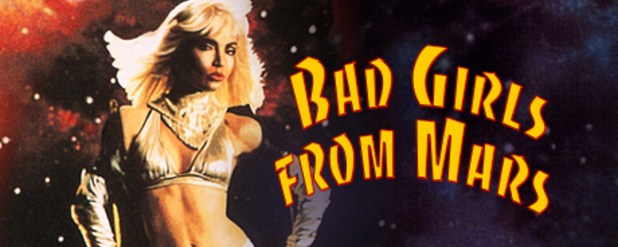
Welcome to the meta world of Fred Olen Ray, as Bad Girls from Mars is about a movie called Bad Girls from Mars and all of the many things that go wrong during filming, including actresses being killed off by a masked killer, which as always pleases the Italian side of my DNA.

Even though the producers are making a killing — wokka wokka — from insurance payoffs, they keep making the movie and bring in Emanuelle (Edy Williams, the one-time wife of Russ Meyer) from Europe to be the lead. She’s out of control the moment she lands in Los Angeles and the killings just keep on happening.

Ray used the sets left over from Roger Corman’s The Masque of the Red Death to make Wizards of the Demon Sword. Before the sets were taken down — a second time — he wrote (with Equinox screenwriter Mark Thomas McGee) and shot Bad Girls from Mars in the day and $19,000 that he had left.

Corman would have been double proud.

Inspired by Hollywood Boulevard, there are references to Batgirls from Mars and bat symbols throughout the film. That’s because Ray was going to hire Adam West and Burt Ward, but they were busy that day.

Literally, that day.

Anyways, it’s a movie where Edy Wiliams says, “The smell of garbage turns me into a wild woman!” and Brinke Stevens plays a woman who’ll do anything to be a star. I may be projecting a bit, but I always think of Brinke as being the sweetest person, even when she’s being the evilest villain in a film. Like I just want to play with her hair, ask how her day was and make sure she’s feeling alright. Let other men obsess over sleeping with scream queens. I just want to be supportive.

You know, Gary Graver worked with Orson Welles and Fred Olen Ray. The difference — among many — was that Welles worked for decades to complete a film and Ray would knock off a few a month. You determine your success by your own values.

This is also called Emmanuelle Goes to Hollywood because that title sells.

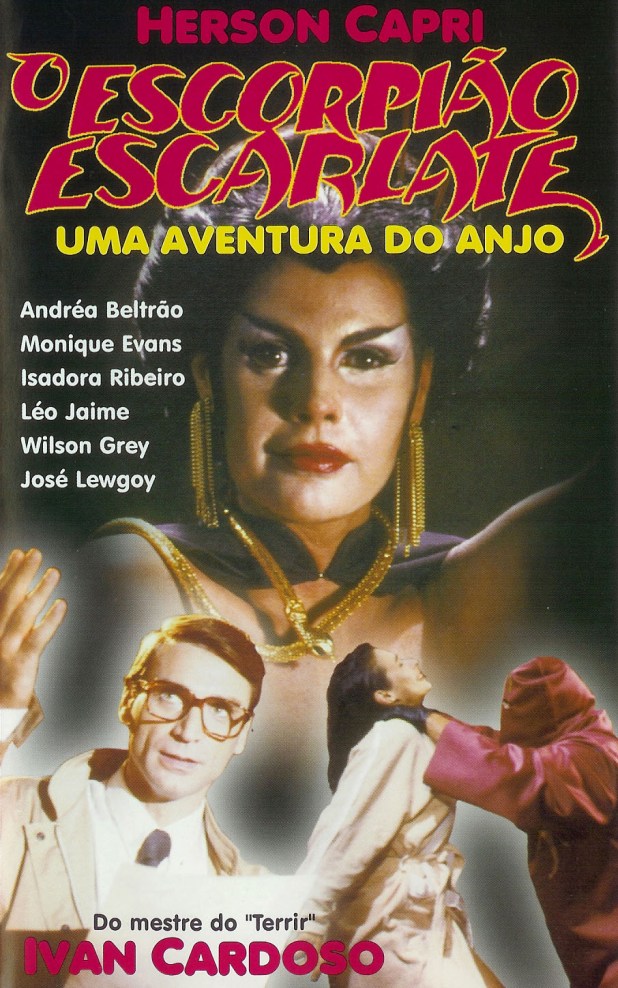
O Escorpian Escarlate (1990)

Rubens Francisco Lucchetti, who had once wrote for comics and pulp magazines, made this movie to honor Brazilian heroes like Morcego Nergo and O Sombra, with the name of the movie’s villain — The Scarlet Scorpion — taken from a radio series Lucchetti created that was based on Fu Manchu. There’s also Madame Ming, who is pretty much Madame Dragon from Terry and the Pirates mixed with Fu Manchu’s daughter Sumuru (who is also in the Jess Franco movies The Million Eyes of Sumuru and The Girl from Rio). The hero of this movie, Anjo, was a character created and played by radio actor Álvaro Aguiar for the radio series As Aventuras do Anjo, which was broadcast by Rádio Nacional from 1948 to 1965.

This movie is all about just how important radio was to Brazilians, as the public loves the show The Adventure of The Angel so much that its creator has become a millionaire and is about to make a movie about it. Fashion designer Gloria Campos dreams of meeting the announcer and creator of the show as she imagines the adventures come to life in her mind, yet the Scarlet Scorpion may be more real than anyone can imagine.

There’s also a striptease by Roberta Close, the first transgender model to pose for the Brazilian edition of Playboy. Shot a year after her gender confirmation surgery, Roberta fought the government for eight years to legally be female and has also walked the red carpet for Thierry Mugler, Guy Laroche and Jean Paul Gaultier.

Director Ivan Cardosa also made A Werewolf In the Amazon with Paul Naschy and the Coffin Joe documentary The Universe of Mojica Marins. He also made several of his own horror movies before this, such as The Secret of the Mummy and The Seven Vampires.

Even without knowing much about the history of Brazil’s superheroes and radio shows, this is a fun movie that mixes fantasy and reality for entertaining effect.

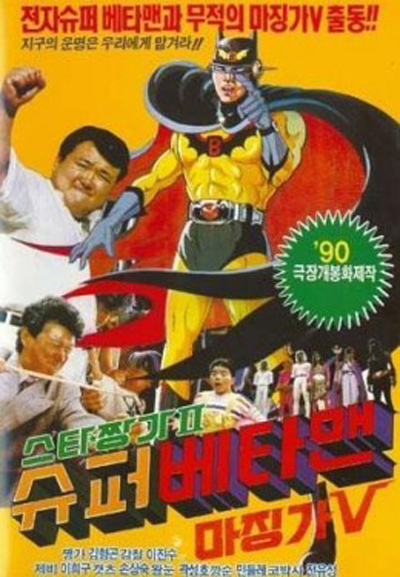
Star Jjangga II: Super Betaman, Majingga V (1990)

Super Batman & Mazinger V is a South Korean show seemingly daring the lawyers of major corporations in America and Japan to unleash their full retainers. Is the hero Batman? Is it Golden Bat? What does Castle Grayskull have to do with all of this? Why are some moments animated and others not? What did this have to do with Black Star and the Golden Bat? Why are the bad guys all neon werewolves? And how does Mazinger V exist in the same space and time as Batman? Is it Batman or Betaman?

So many questions. I have more, like why is there a large man dressed like a child carrying a giant robot toy? Did the animated evil queen come first or the live action one? Why does one of the kids have painted on freckles? And what about when Batman or Betaman jumps into a waterfall and literally becomes a cutout photo animation unlike every other moment on this show or movie or whatever it is?

I really don’t know why or how but I’m into whatever it is and want so much more.

You can watch this on YouTube.

Captain America (1990)

Written by Stephen Tolkin and directed by Albert Pyun — who interned on a Toshiro Mifune TV series under Akira Kurosawa’s Director of Photography before making movies like Cyborg, Alien from L.A.Radioactive DreamsThe Sword and the Sorcerer and so many more — this film started at Universal, who got the rights after the CBS TV movies.

The rights were then sold to The Cannon Group with the idea of Michael Winner directing a script by James Silke (Ninja 3: The Domination) and supposedly starring Michael Dudikoff as Cap and Steve James as the Falcon, the sheer idea of which makes my brain delirious. The Variety ad that announced this movie initiated Jack Kirby’s lawsuit against Marvel, as it claimed that Stan Lee created the character and not he and Joe Simon, who invented Cap all the way back in 1941 and Lee didn’t bring the character back until 1964.

After two years of development, Golan left Cannon in 1989 — stay tuned for August on this site for a sequel to Cannon Month — and as part of the settlement, he was given control of 21st Century Film Corporation and the film rights to Captain America.

Then, comic book fans waited. And waited.

It premiered in 1991 in the Phillipines as Bloodmatch as part of a double feature with Snoopy, featuring an ad that trumpeted Golan as the producer of Superman, which is not as true as saying he was the producer of a Superman, the best not mentioned Superman IV: The Quest for Peace. Also, Jean Claude Van Damme is not in this movie, no matter what that ad claims.

So that’s how we got a Captain America played by Matt Salinger, the son of the writer of The Catcher In the Rye, and fighting Scott Paulin as the Red Skull, who was a child prodigy that the Axis experimented on, sending Dr. Maria Vaselli (Carla Cassola, Demonia) to America where she creates the Super Soldier Syrum.

There’s some good casting here, and by that, I mean character actors that get me a -typing. those would be Ned Beatty, Darren McGavin (the younger version of his General Fleming character is played by Billy Mumy while his A Christmas Story wife Melinda Dillon is in the cast as Steve Roger’s mom ), Ronny Cox as the President and Michael Nouri.

The one thing I do like about this film is that in the years after World War II, the Skull has built a conspiracy crime family with his daughter Valentina De Santis (the character Sin in the comic books, she’s played by Valentina De Santis) that has assassinated everyone from the Kennedy and Dr. Martin Luther King to Elvis, which he claims was the one time they did the wrong thing. Now, they want to brainwash the President and Cap, along with Sharon Carter (Kim Gillingham, playing that role and Bernice, the 1940s girlfriend of our hero), must stop him.

So how weird is it that the son of J.D. Salinger, whose book was often in the hands of programmed assassins, is battle the man who programmed said assassins, at least in this movie?

Ronnie Cox once said that the script to this movie “remains to this day the finest script I have ever read… how those guys messed that film up, I will never know.” And Stan Lee, ever the PR man, said that the reason for the reshoots was because “Pyun did it so well and so excitingly that everyone in the audience [at the screening] kept clamoring for more.”

Sure, True Believer.

As for Jack Kirby, everything you know in comic book movies is the result of his creativity. Even after his death, his family has attempted to gain the money and recognition that that creation deserves. When most comics these days struggle to be released once a month, Kirby was at one point — according to Mark Evanier — drawing twenty pages of comics a week, up to five pages a day, which is about a full issue of a comic every week. All for no real ownership, no insurance and no promises. For just one month’s example, in November 1963, Kirby drew 139 pages of comics and seven covers. His Fourth World era contract was for 15 pages a week, so Kirby gave then twenty.

Think about that the next time you watch everyone make money from his work.

APRIL MOVIE THON DAY 28: Catchfire (1990)

This Alan Smithee-directed film really belongs to Dennis Hopper, who had a rough time for a variety of reasons. There were issues between Jodie Foster and Hopper from the first day of shooting, as Foster yelled “cut” which angered the directing side of Hopper.

She may have been upset by the shower scene, which is pretty gratuitous and she assumed would be edited. It isn’t. Neither is the long scene where she’s wearing lingerie that is more Frederick’s than Victoria’s.

A few years later, Foster generalized a bad experience she had on a movie by saying, “I worked with an actor-director who was a major pain. It was very difficult for me. Very difficult.”

This was that movie.

A crime thriller in which Foster plays an artist named Anne Benton who makes art signs — which were made for the movie by Jenny Holzer and say things like “Murder has its sexual side” — and falls asleep at the wheel and a hitman named Milo (Hopper) kidnaps her instead of killing her and she goes all Patty Hearst.

Was this movie made for me?

Well, it is a mess.

Vestron, who was makin actual movies in theaters before going out of business, took over the edit. And Hopper got angry: “They had taken an hour out of my movie, and they’d taken a half-hour of stuff I’d taken out of the movie and put it in. Then they took all my music out and threw it away. They put in great violin love themes beside Jodie and me — this is a hit man and an artist, and it’s certainly not a violin romance. This is not a film by Dennis Hopper. This is not directed by Dennis Hopper. This is directed by some idiots at Vestron.”

I mean, I love it. How can you not love a movie where Dennis Hopper and Jodie Foster make out on a bed of pink Hostess Sno Balls?

In the article “Abuse of Power,” writer Chris Randle spoke with this film’s original screenwriter, Ann Louise Bardach, who said, “He (Hopper) directed me to make a really tight, taut thriller and in the end what he shot was a…vaudevillian caper. Working with Dennis was completely insane.”

However, she did concede a point: “He had a beautiful eye. Dennis was not a narrative artist, he was a visual artist.”

So when a writer’s strike happenen, Alex Cox — yes, the man who made Repo Man — came on set to write when needed and play the ghost of D. H. Lawrence.

Did I mention this is a movie made for weird people like me?

Anyways…

Back to Anne happening to watch a mafia hit supervised by Leo Carelli (Joe Pesci, who asked for his name to be removed from this movie), who spots her. So even through our heroine gets to the police first, Greek (Tony Sirico) and Pinella (John Turturro) are able to track her down and kill her boyfriend (Charlie Sheen) just as he eats an entire frozen pizza directly out of the box.

FBI agent Pauling (Fred Ward) has been after these mobsters forever and wants to palce Anne in Witness Protection Program, but when she sees Carelli’s lawyer John Luponi (Dean Stockwell) at the police station, she goes on the run. To make sure she stays quiet, mob boss Lino Avoca (Vincent Price, who introduced Hopper to art when he was blackballed from Hollywood in the late 50s to eary 60s; this is one of his last roles) hires Milo to kill Anne.

All it takes are some dirty Polaroids of her — yes, that was Charlie Sheen — to have him fall in love.

Anne runs to Seattle and becomes a copywriter, which allows Milo to find her when a line from one of her art installations shows up in a lipstick ad: “Protect me…from what I want.” He tracks her down and promises to protect her if she does everything he asks. After all, by saving her, he’s doomed himself.

The cast of this is more than enough reason to watch. How about Dean Stockwell, Julie Adams (who was also in Hopper’s The Last Movie), Tony “Paulie Walnuts” Sirico, Helena Kallianiotes from Kansas City Bomber, Sy Richardson (who wrote Posse), Catherine Keener, Toni Basil and Bob Dylan wearing shin guards as he makes an art installation.

Hopper’s version is called Backtrack and has a longer ending but is in no way easier to understand.

This movie does, however, have a scene where Hopper plays saxophone and gets so upset that he repeatedly throws it at a plexiglass window and that’s what I want out movies. It also has Foster saving a lamb a year before she’d tell that story in a movie that she doesn’t want to forget about.

Hopper also brings a burrito to a gun fight.

Like I said, this movie is for me.

You can watch Hopper’s version on Tubi.

APRIL MOVIE THON DAY 17: Return to Green Acres (1990)

If you can get past Arnold the pig putting flowers on the grave of Doris Ziffel in the credits, well, Green Acres was back. For two hours or so.

After 25 years, Oliver and Lisa Douglas (Edward Albert and Eva Gabor) are finally sick of farm living and moves back to Park Avenue. With them gone, Mr. Haney (Pat Buttram) no longer has someone to match, well, wits with and goes full final boss and sells everyone’s homes to land developers who are planning on bulldozing all of Hooterville. So, as you can imagine, everyone goes from Green Acres to New York City to bring Oliver and his lawyer abilities back.

As the 25th anniversary of the show, this is a fine end to the story, as the Oliver and Lisa finally realize that Green Acres is where they want to stay. This was directed by William Asher, who directed plenty of beach movies like Muscle Beach PartyBeach Blanket BingoBikini Beach and How to Stuff a Wild Bikini. He also created The Patty Duke Show.  One of the writers of this TV movie, Guy Shulman, also wrote All Dogs Go to Heaven.

Nick at Nite helped so many shows like Green Acres find a new audience. I’ve watched it any time it aired in syndication, as it’s literally comfort food for my tense and nervous mind.

You can watch this on Tubi.