CANNON MONTH 2: Edgar Allan Poe’s Fall of the House of Usher (1989)

I’m really in love with what 21st Century did with their Poe movies, which was to barely skim the originals and then just do whatever they wanted, as long as they had some of the names and events inside. Just hire the right actors — Oliver Reed, Donald Pleasence — and let’s have some fun.

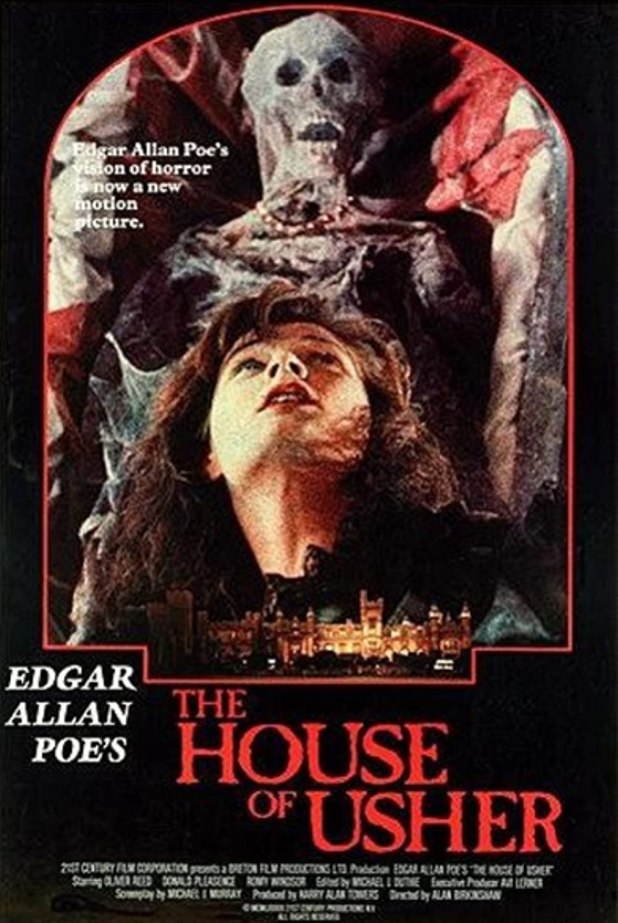
Molly McNulty (Romy Walthall, The Howling IV) and her fiancee Ryan Usher (Rufus Swart, Space Mutiny) are on the way to London to visit his uncle Roderick (Reed) when he swerves to miss two ghost-like children standing in the road (I really need to do a Letterboxd list of movies in which ghost children cause car crashes). Barely surviving, Molly makes it to Roderick’s mansion. When she awakens the next day, she’s told he’s receiving care, but the truth is that the old man wants her — and the way that she can help him escape the cursed incestual Usher bloodline — all for himself. Also: he’s imprisoned his brother Walter (Pleasence) in the upstairs of the house.

PS: Those kid ghosts never figure into anything else in this movie.

Shot in the same South African house that director Alan Birkinshaw and writer Michael J. Murray made The Masque of the Red Death in for 21st Century — are they starting to feel a little Empire or nascent Full Moon with all these castle epics? — this movie goes off the rails in the best of ways, featuring a scene where Roderick drugs McNulty and marries her himself, shoving a piece of cake in her mouth and eating it while still in her open mouth, topped by a later scene where she imagines that she’s making love to her fiancee in the shower — she thinks he’s dead — and wakes up to a nude Reed pounding it out. Also: for some reason Pleasence has a drill mounted on his hand. An oh, before I forget — and how could I — Roderick deals with a doctor who wants to have sex with his new bride by feeding the man’s cock to a rat that he has starved for this exact purpose. That’s planning.

There’s also an outright ripoff of the hands coming out of the wall from Day of the Dead and it nearly made me cheer and run around the room I got so excited.

There’s also a butler named Clive (Norman Coombes), his maid wife (Anne Stradi) and their daughter Gwen (Carole Farquhar) all living in the house or they were before Walter escapes and kills them before dancing a little jig. Then Roderick heaves him down the stairs, the house catches on fire and Molly decides to open a sarcophagus and finds her drugged fiancee, although I have no idea how they plan on getting married after all this.

And then it’s all a dream! We go right back to the beginning!

This movie looks so lavish and I just fell in love with every bit of its look. The interiors were shot in South Africa, while the outside of the Usher house is actually Blenheim Palace, which you may recognize from The Legend of Hell HouseBarry LyndonKing Ralph and so many more movies. I adore that this film is at once a gothic romantic horror and a direct-to-video mindwarp.

Of course this was produced by Harry Alan Towers. I mean, who else? This is literally everything I want in movies, the kind of junk that most people would laugh off and yet I find so much to gush over.

Oh! One last thing. This totally recycles Gary Chang’s score for 52 Pick-Up and some of the music from Ten Little Indians. I have no idea how Menahem Golan got those seeing as how he was no longer with Cannon.
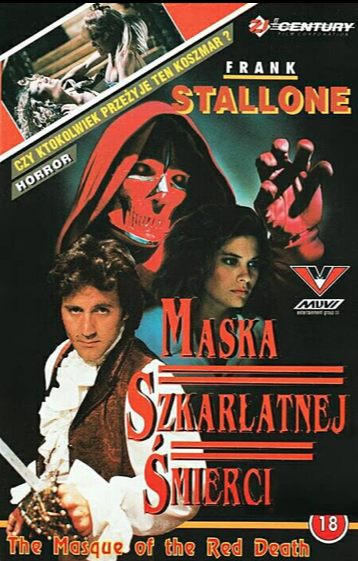
CANNON MONTH 2: Edgar Allan Poe’s The Masque of the Red Death (1989)

No, not the Roger Corman-produced and Larry Brand-directed The Masque of the Red Death, which also came out in 1989.

Much like Corman, Menahem Golan probably realized the public domain status of Poe’s works (well, Corman did that twice with the first being a classic, 1964’s The Masque of the Red Death). This was produced by Avi Lerner and Harry Alan Towers for Golan’s nascent 21st Century Film Corporation.

It’s directed by Alan Birkinshaw, who made Ten Little Indians and Ordeal by Innocence for Cannon, as well as Don’t Open ’Til Christmas and another Poe-inspired film that was released the same year, Edgar Allan Poe’s Fall of the House of Usher. The script came from Michael J. Murray, whose career went from making those two Poe movies that Birkinshaw directed — on the same sets in South Africa no less — to TV movies about Madonna and Michael Jordan to, as always with genre filmmakers, holiday movies.

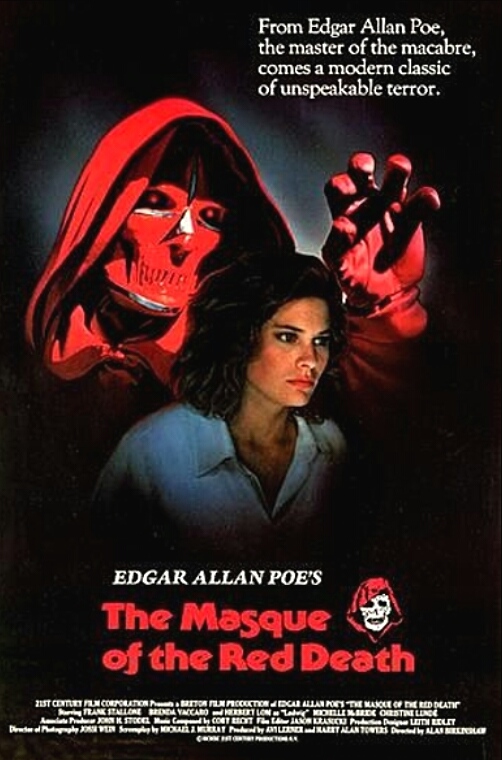
Rebecca (Michelle McBride, Subspecies) has snuck into a very exclusive costume party — dressed in a Cupid costume that sadly does her no favors nor does it look like Cuipid — being put on by Ludwig (Herbert Lom, in a role originally written for Jack Palance) that will celebrate Poe’s Masque of the Red Death with one goal: get an interview with soap opera star Elaina Hart (Brenda Vaccaro!?!). Meanwhile, as everyone engages in an Easter egg hunt — you know how much Poe’s horrific gothic fiction was based on Easter eggs right? — a red cloaked and masked figure starts slashing everyone into oblivion.

About fifteen minutes into this movie, Becca asked me how it was and I was just about to say dreadful but then — you guessed it — Frank Stallone showed up as a duke named Duke and a keyboard-driven rock band with a lead singer with star sunglasses takes the stage to play the schmaltziest of music and I said, “How the fuck have Vinegar Syndrome not released this?”

In fact, no one has. This hasn’t even come out on DVD yet.

Ludwig’s girlfriend Colette is played by Christine Lunde who was the girl in Heaven 17’s video for “Trouble,” plus she’s also in MankillersPatty Hearst and Young Rebels. Her accent is, at best, impenetrable and I love every single line she says in this, a mixture of babygirl cooing and an approximation of English that shortcircuited YouTube’s predictive closed captioning.

This movie is bafflingly wonderful as it can be both good and bad in equal measure. Sure, most normal people would hate it, but someone said to me the other night that they’re very impressed by my defense of movies that other people look down upon. This has a game of human chess, slashings inspired by Poe stories, Herbert Lom being Herbert Lom, the worst French accents ever, neo-punk dancers, choreographer Neil McKay and the Razzle Jazzle Dance Company (who also show up in Brutal Glory and Outlaw of Gor), Ludwig turning to a secret female doctor who injects him with age-defying medicine in a sub-plot that is forgotten, the songs “Twilight Zone,””I Can Rely On You,”, “Magical Mystery” and “Where Do We Go From Here,” a black cat that drops in out of nowhere just to give this a jump scare, a concluding catfight and a murder by loom.

“So much misery. So much madness,” says Ludwig at one point. Not for me. This is the kind of movie you’d rent in the early 90s or happen upon on cable in the middle of the night and then keep thinking of it for years.

I loved this movie. Loved. My devotion to movies like this is why I’ll never get to be an approved Rotten Tomatoes reviewer but man, screw that site and how its logo ruins DVD cover art.

CANNON MONTH 2: Phantom of the Opera (1989)

EDITOR’S NOTE: This 21st Century Film Corporation release was originally on the site on October 31, 2021.

Could have been a Cannon!

Yes, this slasher take on the Gaston Leroux classic was going to be directed by Twins of Evil director John Hough and man, what a movie that would have been. That version was set in 1881, but the new movie — which was transferred to the 21st Century Film Corporation, which let’s be honest was just Menahem Golan’s severance package — was moved to the present day and seen as an opportunity to have a slasher franchise with a follow-up already planned The Phantom of the Opera 2: Terror in Manhattan.

That never made sequel is why this movie has an opening and close in modern day New York City. Supposedly, most of the ideas of that sequel show up in Dance Macabre.

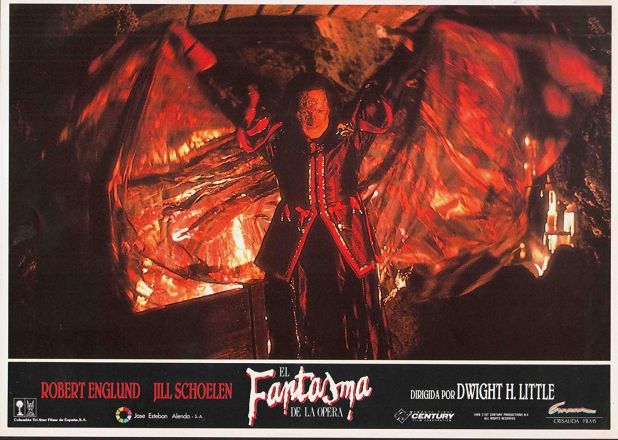
The smart part of this film — which ended up being directed by Halloween 4: The Return of Michael Myers maker Dwight H. Little — is casting Jill Schoelen as our heroine, Christine.

In the beginning, she’s an opera singer seeking a unique audition song and her agent (Molly Shannon!) introduces her to Erik Destler’s “Don Juan Triumphant.” Never mind that Destler was a killer who may have also been responsible for the disappearance of another young opera singer. When she does use the song, a sandbank knocks her out, shatters a mirror and sends her back to 1885 and into the world of Destler.

Making things even stranger is the knowledge that Destler sold his soul to the Devil in exchange for people losing his music. Of course, Satan gives him what he wants, but disfigures his face so that his music will be the only thing that people love him for; they will never see or hear him performing it.

Seeing as how this ended up in our slasher month, it earns its way there by having a Phantom that skins people alive and uses their skin to cover his own. He can also only be killed when his music is destroyed. And even when Christine comes back to our time, he will find a way to follow her.

I’ve always avoided this movie and after watching it, I can see the error of my ways. It’s not great — it’s a late 80s horror movie looking for a place to belong. But the makeup is great, Englund is having fun and Schoelen is always an engaging and perfect horror actress.

CANNON MONTH 2: Mack the Knife (1989)

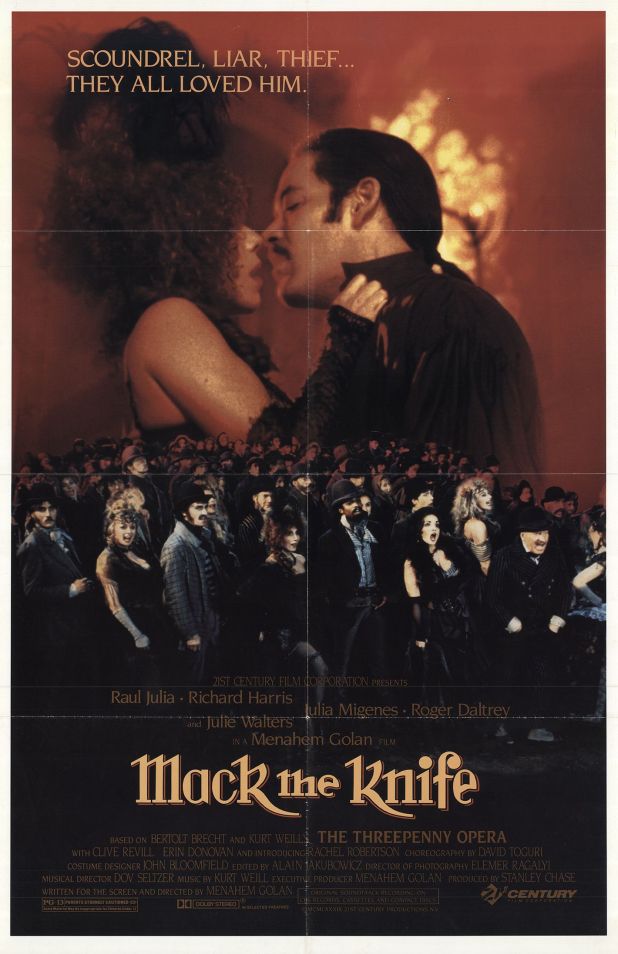
I was in the middle of watching Mack the Knife and wondered, “Why is this movie so absolutely deranged?” and then I realized, “Oh yeah, this is Menahem Golan directing and writing his own version of Bertolt Brecht and Kurt Weill’s The Threepenny Opera.”

I’m telling you all, if you loved The Apple, well, just imagine what Menahem could do with two hours, $9 million dollars and the talents of Raul Julia, Richard Harris, Julia Migenes, Roger Daltry, Julie Walters, Bill Nighy and Clive Revill.

Mr. Peachum (Harris) is the boss of the downtrodden, giving them the permits they need to beg on the rundown streets of London, while Macheath or Mack the Knife (Julia) is a killer constantly surrounded by willing women yet he only wants Peachum’s daughter Polly (Rachel Robertson), which starts a war on the cobblestone streets of London.

I was sitting here wondering, “Why is this not on DVD or blu ray?” And then I realized that I may be the only person in the world who wants to see more than one Menahem Golan musical film, much less one that he wrote all by himself and included a catfight between Robertson and Erin Donovan, playing Lucy Brown. Somehow, he got a lot of well-regarded stage actors and actresses to stare directly at the camera and play each part so broadly and loudly that they could be heard in the last row, which makes them emoting directly in our faces to be as bombastic as it gets.

Yes, Menahem Golan made a movie of a socialist critique of the capitalist world. That’s something right there, huh?

Raul Julia is really great in this, but the guy was also great in Street Fighter and he was dying from cancer at the same time, so he was some kind of superhero.

Movies like this are why I’ll never own a boutique blu ray label. I would completely put out a release of this with tons of bonus features and two people would buy it. One of them would be me.

Speaking of Mack the Knife, yes, it was a song.

“The Ballad of Mack the Knife” was a huge hit for Bobby Darrin. Dick Clark told him that a song from an opera wouldn’t be a hit. It was the second best-selling song of 1959. It had been previously recorded as an instrumental by Dick Hyman and sung in another release by Louie Armstrong.

McDonald’s used the song — and the image of Darrin — to create Mac Tonight in the 80s, the first mascot the restaurant had for adults. Created by ad agency Davis, Johnson, Mogul & Colombatto, it combined Darrin’s stage moves with a Max Headroom look and a moon atop the skinny body — that was Doug Jones! — to sell burgers to grown-ups. It worked! It worked so well that Darrin’s estate sued as the commercials infringed upon the singer’s trademark. They asked for the commercials to be removed from the airwaves and that was the end of Mac Tonight.

Sadly, Mac Tonight was turned into a racist meme called Moon Man and the character is now listed on the Anti-Defamation League’s database of hate symbols.

In case you wondered, here’s how his lyrics compare to “Mack the Knife”:

Original

“When you see a gentleman beeRound a lady bee buzzin’Just count to ten then count againThere’s sure to be an even dozen.
MultiplicationThat’s the name of the gameAnd each generationThey play the same.”

McDonald’s

“When the clock strikes
Half past 6, babe
Time to head for
Golden lights

It’s a good time
for that great taste
DINNER! At McDonald’s
It’s Mac Tonight!
Come on, make it Mac Tonight!”

Mac Tonight went nationwide in 1987 and was gone by 1989, the same year this movie came out.

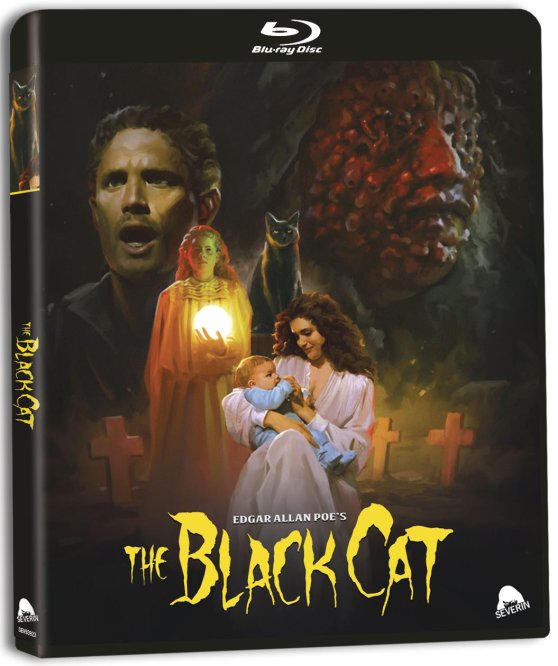
CANNON MONTH 2: Edgar Allan Poe’s The Black Cat (1989)

EDITOR’S NOTE: This 21st Century Film Corporation release was originally on the site on October 31, 2021.

Oh man, where do I even begin in trying to make sense of this movie?

It’s not a sequel to Demons, no matter what its alternate title Demons 6 De Profundis promises to you.

It was called Edgar Allan Poe’s The Black Cat in America, when it most assuredly has nothing to do with that film.

And somehow, it was nearly called De Profundis (From The Deep) and is also sometimes referred to as Demons 6: Armageddon, which makes sense because it’s filled with scenes of space and planets randomly throughout the movie.

It’s also — sit down for this one — an unofficial sequel to Suspiria and Inferno, made back when Argento hadn’t yet decided to close off that cycle of movies with Mother of Tears. Yes, the script to this movie was adapted from Daria Nicolodi’s (Argento’s ex-wife and creator of The Three Mothers trilogy) script for what was going to be an official Argento Three Mothers film that never saw the light of day. And who better than Luigi Cozzi — who in addition to making Starcrash and the Ferrigno Hercules films, runs Argento’s store Profondo Rosso store — to direct this?

Are you confused yet? I am and I haven’t even started watching the movie yet!

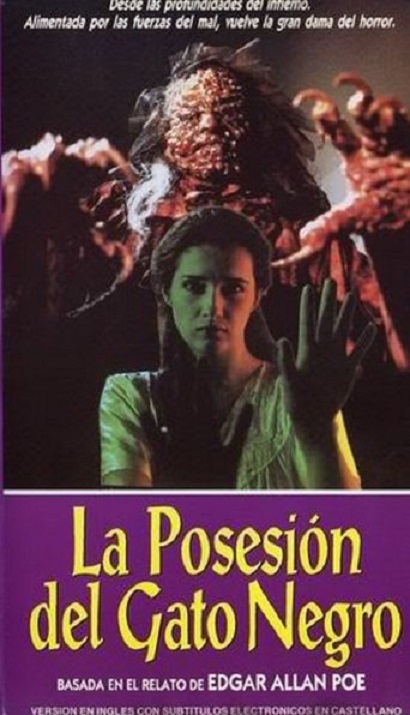
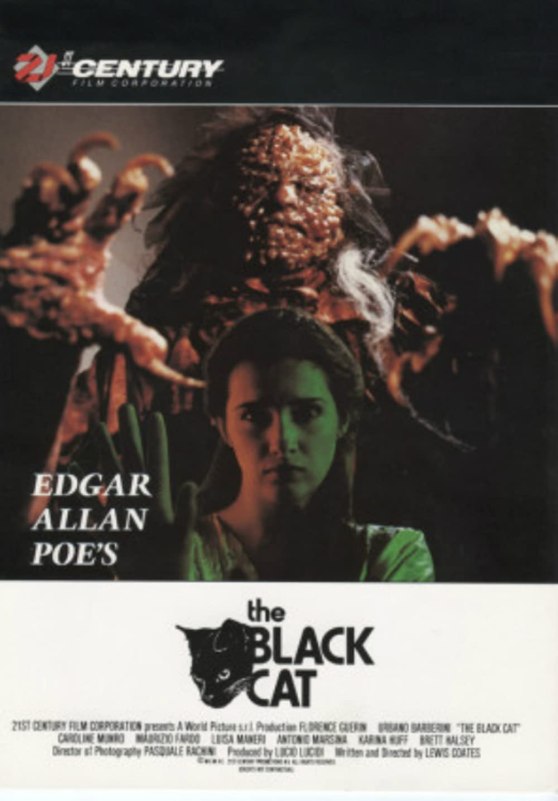
This one is all about Marc (Urbano Barberini, who was actually in Demons), a horror film director, is making a movie called Suspiria De Profundis that is a sequel to Suspiria and based on Thomas De Quincey’s story Levana and Our Ladies of Sorrow. There’s even a sequence where the characters discuss just how good of a director Argento is as they reveal what the Mother of Madness looks like, dripping with worms and gore.

Marc casts his actress wife, Anne (Florence Guerin, Too Beautiful to Die) in the lead, along with Nora (Caroline Munro, who I should not have to tell you anything about other than the fact that her being in this movie makes me overjoyed). Things seem to go pretty well for all involved until Levana, who it turns out is a real person, objects to how she’s portrayed in the movie and goes wild, blowing up food in refrigerators and people’s chests.

Levana — the Mother of Tears — may be the lead villain, but there’s also an evil film producer in a wheelchair named Leonard Levin (Brett Halsey, DemoniaThe Devil’s Honey) who hints at wanting to take Marc’s soul. And Nora has designs on Marc, so there’s that. Also — a refrigerator that sprays food everywhere and Michele Soavi in a cameo as a director.

This movie is also packed with mid-80s hair metal, featuring Bang Tango and White Lion all over the soundtrack.

Charitably, this movie is a mess, but I completely loved every single minute of it. There’s enough bile and blood and breasts and beasts to satisfy just about any horror movie lover. I’m in for Demons 7 if these guys want to make it.

If you want the details on all the different versions of Demons, we have you covered right here.

UPDATE: Get this from Severin.

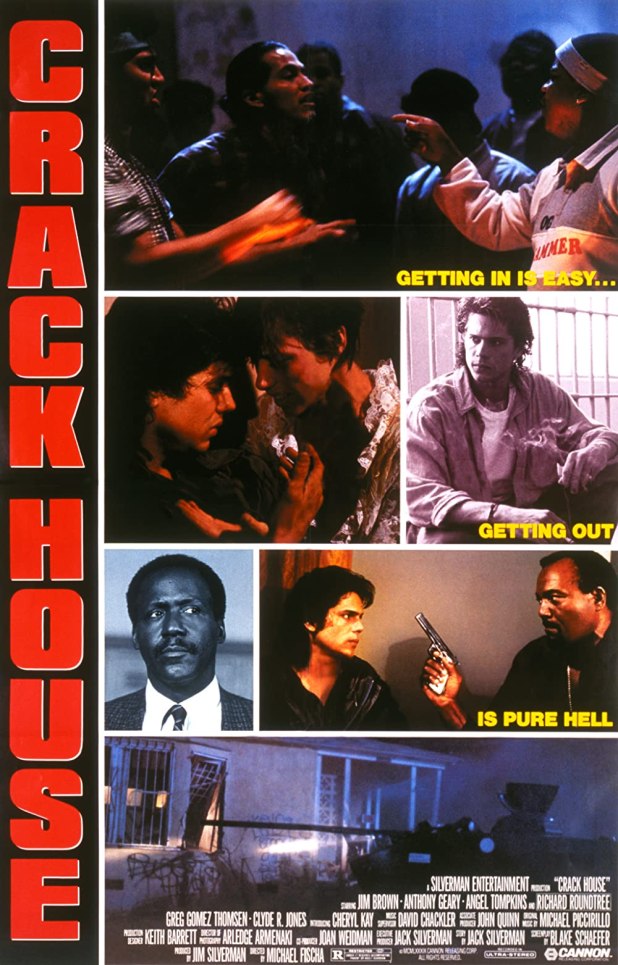
CANNON MONTH 2: Crackhouse (1989)

EDITOR’S NOTE: Crackhouse wasn’t produced by Cannon or its sister company Pathé but was theatrically distributed by them. For another take on this movie, click here.

There was a whole day of director Michael Fischa’s movies on the site a few years ago. He specializes in the kind of movies that video rental did best: quick, cheap and fun. Good examples of his kind of movies include Death Spa and My Mom’s a Werewolf.

The big names are Richard Roundtree, who plays Johnson, a gang task force police officer, and Jim Brown as a drug dealer named Steadman.  However, the real stars of the story are Rick (Greg Gomez Thomsen) and Melissa (Cheryl Kay).

Rick wants to leave Los Pochos and head off to the Air Force while Melissa has fashion design dreams. One night, Rick borrows his cousin Jesus’ Chevy Nova to take Melissa on a date, but as soon as he gets the keys, The Grays pull a drive-by. Rick forgets his future and heads off for revenge and ends up getting arrested.

Rick refuses to see her; he’s a criminal now and she needs a better life. She doesn’t find it with Big Time (Clyde Risley Jones), who may save her from an assault but has no problem using her to pay his debts with Steadman and turning her into a crack whore. So Rick gets a plan along with Johnson. He’ll infiltrate the gang, turn over the evidence and rescue his girl. And hey — as soon as I saw Anthony Geary playing a teacher, I knew from Penitentiary III that he had to be on the side of wrongdoers.

Seeing as how this brings back exploitation stars Roundtree and Brown, it should do the same for at least one female cast member, as Angel Tompkins from The Teacher and The Bees is in this. There’s also an appearance — her only acting role actually — by Playboy Playmate of the Month for August 1985 Cher Butler.

It’s got a great title — that’s part of the selling of this movie, you see a film called Crackhouse on the shelf and gotta see it — and the cops get a battering ram in the conclusion. That’s pretty much all we needed in 1989.

You can watch this on Tubi.

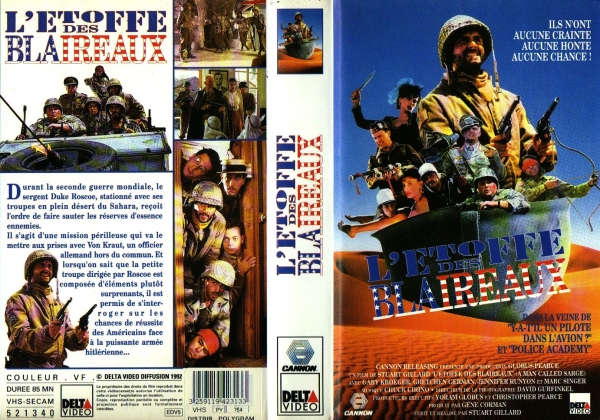
CANNON MONTH 2: A Man Called Sarge (1989)

During the World War II North African Western Desert Campaign, an army made up of French Foreign Legion deserters is led by the charismatic Sarge Duke Roscoe (Gary Kroeger) as they go into the Sahara desert to attempt to take back the city of Tobruk from Generalmajor Klaus Von Kraut (Marc Singer).

A Man Called Sarge was produced by Gene Corman, brother and production partner of Roger Corman, and also the producer of Tobruk, a dramatic version of the same story, with executive producers being Yoram Globus and Christopher Pearce, as Menahem Golan was gone.

Seeing as how this is a Cannon Israel-shot comedy, these two things occur: a music teacher gets involved and Yehuda Efroni is in the movie.

For years, this was hard to find, only airing on cable, but MGM finally made it available on DVD. It’s not great — hey you can find it on Tubi — but it’s kind of funny to see Singer play a bad guy and you can spot a very young Natasha Leone as a young girl who the Beastmaster punches right in the face.

You can watch this on Tubi.

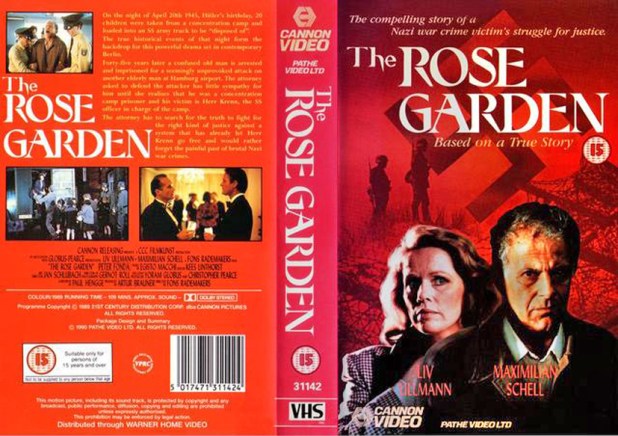
CANNON MONTH 2: The Rose Garden (1989)

Based on Günther Schwarberg’s Der SS-Arzt und die Kinder vom Bullenhuser Damm, this is the last film from director Fons Rademakers (The Assault, Because of the CatsLifespan) and tells the story of holocaust survivor Aaron Reichenbach (Maximilian Schell), who finally comes back to Germany and attacks an ex-Nazi officer Arnold Krenn (Kurt Hübner) in a Frankfurt airport.

His public defender Gabriele Schlüter-Freund (Liv Ullmann) soon learns that Aaron is but one of many Jewish men and women who were experimented on by Krenn. It turns out that he’s lost track of his family and this case will not only give him some closure, but also bring to light exactly what happened on the operating tables of the camps.

Written by Paul Hengge (Seven Blood-Stained Orchids) and Artur Brauner (Death Occurred Last NightThe Vengeance of Doctor Mabuse), this also has Peter Fonda showing up as Gabriele’s ex-husband. As this was late in the life of Cannon, it was produced by Brauner, who was a prominent member of the Jewish community of Berlin and a recipient of the Bundesverdienstkreuz, the Order of Merit of the Federal Republic of Germany.

You can watch this on Tubi.

CANNON MONTH 2: Ten Little Indians (1989)

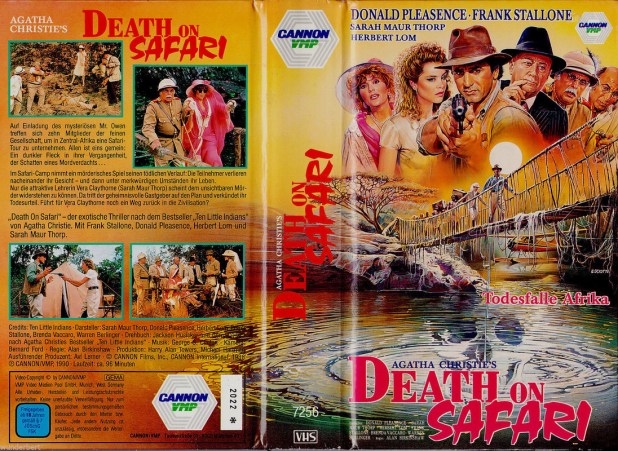
The fourth English-language screen adaptation of Agatha Christie’s 1939 novel And Then There Were None — it’s actually based directly on Christie’s 1943 stage adaptation and the ending is taking directly from the play — it was the third movie made from the book to be produced by Harry Alan Towers, following his 1965 and 1974 — which also has Herbert Lom in its cast — adaptations.

A group of ten strangers have been summoned by their mysterious host Mr. Owen to an African safari. They are:

Mr. Justice Lawrence Wargrave (Donald Pleasence), who has been accused of having sentenced an innocent man to the gallows.

Captain Philip Lombard (you guessed it, Frank Stallone), responsible for the deaths of 21 East Indian tribesmen.

Vera Claythorne (Sarah Maur Thorp) who has been accused of the drowing death of teh chld she has been watchng, Cyril Ogilvie Hamilton.

Marion Marshall (Brenda Vaccaro), the potential murderer of her lover, Miss Beatrice Taylor.

General Brancko Romensky (Herbert Lom), who sent his wife’s lover on a suicide mission furing the war.

William Henry Blore (Warren Berlinger), who let an innocent man go to prison.

Dr. Hans Joachim Werner (Yehuda Efroni), who operator on a woman while drunk, leading to her demise.

Elmo Rodger (Paul Smith) and Ethel Mae Rodgers (Moira Lister), who may have murdered his wealthy employer.

Anthony James Marston (Neil McCarthy) who ran over a couple while intoxicated.

As they arrive, their guides abandon them, isolate them, then a recording with a mechanical voice lists their crimes and passes judgement on all of them.

Their deaths follow the poem “Ten Little Indians:”

Ten little Injuns standin’ in a line,
One toddled home and then there were nine.

Nine little Injuns swingin’ on a gate,
One tumbled off and then there were eight.

Eight little Injuns gayest under heaven.
One went to sleep and then there were seven.

Seven little Injuns cuttin’ up their tricks,
One broke his neck and then there were six.

Six little Injuns all alive,
One kicked the bucket and then there were five.

Five little Injuns on a cellar door,
One tumbled in and then there were four.

Four little Injuns up on a spree,
One got fuddled and then there were three.

Three little Injuns out on a canoe,
One tumbled overboard and then there were two.

Two little Injuns foolin’ with a gun,
One shot the other and then there was one.

One little Injun livin’ all alone,
He got married and then there were none.

Directed by Alan Birkinshaw, who would use much of the same cast for a later post-Cannon effort, Masque of the Red Death — several cast members also are in Cannon’s River of Death — this has a script by Gerry O’Hara (who directed and wrote the Joan Collins movie The Bitch) and Jackson Hunsicker (who directed and wrote Cannon’s The Frog Prince).

CANNON MONTH 2: River of Death (1989)

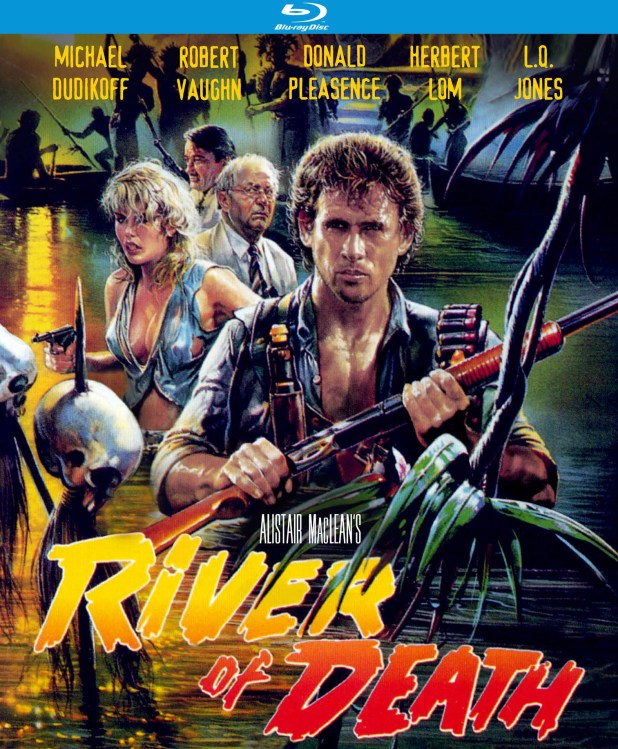
Based on the Alistair MacLean novel, this Cannon Film has a pretty great cast, including Herbert Lom, Robert Vaughn and Donald Pleasence. Director Steve Carver (The ArenaBig Bad MamaLone Wolf McQuade) said that “These guys were professionals. They would carry the equipment up the mountainside with the crew. Fantastic actors. You would tell them something, give them changes in dialogue and – boom! – they know it in seconds. You never have problems with these actors.”

Shot during apartheid in South Africa — like many Cannon projects of the time —  Carver would be fined by the Directors Guild of America yet remains unapologetic, teling Flashback Flles in 2020: “I had ignored the apartheid, because I am not political. I couldn’t give a damn about their apartheid at that time.”

Produced by Avi Lerner — whose Millennium Media feels cut from the cloth of Cannon — and Harry Alan Towers, this is the story of adventurer John Hamilton (Michael Dudikoff, taking over for either Christopher Walken or Michael Gintry, who were noth in the original ads), who has been hired to lead investigators on a search for the cause of a deadly plague. There’s also the matter of Heinrich Spaatz (Pleasence), a man who has vowed revenge on evil German doctor Wolfgang Manteuffel (Vaughn). Oh yeah — Wolfgang’s lab is filled with plenty of authentic Third Reich flags, which were borrowed from local groups, so you know — I guess apartheid really wasn’t political as Carver said in that quote.

There’s also a lost city and river pirates, L. Q. Jones shows up and there are even some Nazi hunters thrown in the mix. It’s Dudikoff playing Indiana Jones with an old school cast and while it never achieves greatness, it’s still got some fun setpieces.

You can watch this on Tubi.

You can listen to The Cannon Canon episode for River of Death here.