USA UP ALL NIGHT: Bad Dreams (1988)

EDITOR’S NOTE: Bad Dreams was on USA Up All Night on April 8, 1994; March 9, 1996; May 16 and August 16, 1997.

Everyone likes to proclaim that the world is so much worse today than it ever has been. If you feel that way and weren’t alive in the 1970s, allow me to dispel this notion. The “Me Decade” was full of random violence, the fuel crisis, Three Mile Island, Watergate, Son of Sam, the end of Manson, Zodiac and religious orders that some would proclaim as cults, from the Process Church and the Moonies to Jonestown. We don’t really have a modern analogue for these fringe groups that would spring up from time to time because it seems like the Hale-Bopp comet wiped the last of these off the planet.

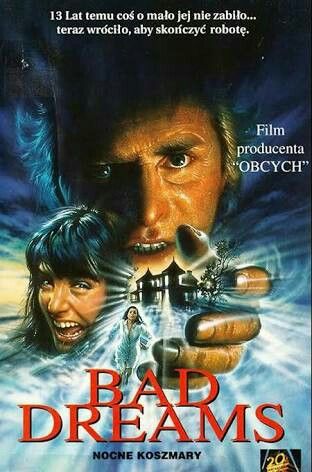
That’s the world in which Bad Dreams takes place. In 1975, the Unity Fields cult decides to commit mass suicide by setting themselves on fire under the command of their leader, Franklin Harris (Richard Lynch of Invasion U.S.A., The Sword and the Sorcerer, Rob Zombie’s Halloween and God Told Me To). Only one person survives, Cynthia (Jennifer Rubin, Nightmare on Elm Street 3: Dream Warriors), who was still a kid when Harris set everyone on fire. She’s been in a coma for over 13 years before she awakens to flashbacks of Harris being interviewed on a TV program. The final thing she sees is his face telling her that she belongs to him and he’d be coming back to take her life. This entire sequence is really well edited, showing how the cult’s teachings had been accepted by every member, intercut with Cynthia being wheeled through a hospital as doctors struggle to save her life, all to the ominous strains of The Electric Prunes’ “I Had Too Much to Dream Last Night.”

After awakening, Cynthia attends experimental group therapy sessions for borderline personality disorder, led by Dr. Alex Karmen (Bruce Abbott, the Re-Animator films). As she becomes more aware, she begins to remember more and more — including the thirty other people who died from dousing themselves in gasoline. Worse, she sees a burned and scarred Harris when she’s trapped in an elevator, who reminds her that she is his property.

What follows is an insane scene that shows the parallels between group therapy and cult behavior, as the discussion room becomes Unity Fields and Cynthia watches everyone ladle gasoline onto one another. Again, another hint is dropped that Cynthia is a “love child,” as her mother is also part of the cult. One by one, the members walk to the front of the room and are baptized with gasoline, before Harris takes handfuls of the fuel and coats himself before lighting the room on fire. What starts as a peaceful embrace of death quickly turns into horror, as entire families go up in a blaze of pain, flames, and screams. Finally, Harris reappears to tell Cynthia that she and she alone screwed up and that her entire family is waiting for her, as they cannot move on without her death.

Every waking moment is caught between reality and flashback, as even a simple shower brings back the violent baptism that got Cynthia into Unity Fields. Directly after, another patient, one who wanted to know more about Unity’s age, drowns herself in the pool. Another patient (the only one who has been nice to Cynthia) named Miriam attempts to escape the hospital. Helping her to an elevator, Cynthia waves goodbye, only to see Harris smiling and waving back. She gives chase, only to find Miriam’s purse left behind…as Miriam jumps from a window, sending blood and glass all over the pavement.

Harris has taken up residence at Cynthia’s bedside, berating her for staying alive when everyone else who followed him has given their lives to him. As soon as Cynthia’s doctor, Dr. Kamel, flips on the light, he disappears. While Kamel yells at her about her not taking the therapy seriously, she notices Connie and Ed, two other members of her discussion group, sneaking away to have sex, only to be followed by Harris. The lights go out in the whole hospital as patients wander the halls. Turns out that amorous couple got caught up in the blades of a giant industrial fan, as a hapless custodian discovers when blood — and a severed hand — pour down all over him. Harris then appears in the ceiling grate, telling Cynthia that Connie and Ed belong to him now. She screams at the ceiling as even more blood begins spraying out of the hospital’s sprinkler system. Yep — institutionalized folks are running up and down a dark hallway, covered in gore. It’s a shocking surprise and one that made this movie really stand out to me.

All of the other discussion group patients now believe that Harris is behind all of the suicides, even if the doctors refuse to listen. Ralph, a patient who has a crush on Cynthia, asks why they’re all still in the hospital and in this therapy if people keep dying. That’s a great point. I love it when movies take a plot hole and have someone call it out as if simply calling out bullshit makes the bullshit go away. No, instead, it just makes you focus on the plot hole as if you were continually pulling and yanking on it until the hole is now a gaping maw. It’s situations like this that make me hate modern horror movies, as they think that being self-referential excuses them from being poorly constructed films. Scream, I blame you.

After a junk food date, Ralph — a jokester, you see, because he has a rubber chicken on his wall — begins stabbing himself in the hand to the strains of Mamby Pamby & The Smooth Putters covering “My Way,” a la the Sex Pistols. Everyone is on suicide watch, so he knocks out the cop following him, takes Cynthia to the basement and stabs himself to death. What a first date!

Ralph is an example of a character who either works or doesn’t in a movie. The loveable prankster who hates authority, when played by Bill Murray in Ghostbusters, becomes someone you want to be, a joy-infused burst of anarchy in an otherwise mundane world. Or you get someone who saw Murray and wants to be like him, but comes across as insufferable and cloying. Ralph is that person, and I’d imagine most audiences will cheer his demise. Look — not every darling is worth saving.

Dr. Berrisford, Kamel’s boss, demands that Cynthiabes be placed under sedation and that Kamel has grown too close to her. As they argue in the hallway, Cynthia tells him goodbye, walking with two nurses down the hallway, which becomes Unity Fields. For a movie made before the CGI era, the transitions between reality and dreams are virtually seamless, giving this film an unworldly feel. It’s not an art film, mind you, it’s still very much an American studio release, yet it aspires to be more.

Kamel believes that the best treatment for Cynthia is human contact and that putting her directly into what amounts to a second coma will undo any of the progress that she has made. I’m not taking a side in what psychological school makes the most sense, but the inclusion that Unity Fields preached, the need to become a family that protects individuals from the world’s pain, is a key way that cults destroy minds and reap souls. By sublimating the individual and making the leader the sole person with a valid identity, the cult member feels a sense of belonging and is no longer concerned about making mistakes. Gradually, they don’t even care when their innate human rights are trampled, as it is for the good of the group. Interestingly, groups like the Process Church came directly from Scientology and many other groups are rooted in self-help or betterment programs. It was a slippery slope that took the People’s Temple from preaching racial understanding in Indianapolis to ingesting poison in Guyana, after all. Religion — just like psychology — often preys on those who cannot save themselves and need help. There’s no judgment here, as many people do need such assistance, and it’s not a black mark on them for asking and receiving it. It’s only when the guru or doctor becomes a Svengali and demands complete devotion and subservience that we enter into places like Unity Fields. It also calls to mind the battle between psychology and Scientology — two groups that want to heal the mind.

But I digress. The police believe that Cynthia is behind the murders of the patients — and perhaps everyone at Unity Fields. That’s why isolation seems to be the best choice. That said, she isn’t alone. Harris appears to tell her that she is his love child and demands that she commit suicide. That’s when Hattie visits her, informing Cynthia that she doesn’t plan on being alive for long, but that Cynthia can survive if she really wants to. This leads to Harris following Hattie, as he has with every other patient. “I knew you’d come, but you’re too late. I told her what she had to do. You won’t get to her. You won’t get to me,” she says as she drinks formaldehyde and dies. The bottle hits the floor and conveniently has smoke coming out of it, assuring us that yes, it is deadly.

The next scene feels disconnected at first. But upon review, it totally makes sense. Dr. Karmel is upset that he’s lost all of his patients and is walking out of the hospital, dejected. He tries one of their pills while having a breakdown. Getting in his car, he sees his boss, Berrisford, walking and on a whim, decides to hit him multiple times with his car. Sitting in the blood-strewn vehicle, he just stares into space as it explodes — except it was all a dream. So why is this scene so incongruous? It’s the director’s way of letting us know that Berrisford has decided to play with the therapy group, lacing their drugs with a hallucinogen so that they’d kill themselves and prove that his research is the one that’s actually true. Whew!

Tell that to Cynthia! She asks Harris why he keeps coming after her, why he doesn’t just kill her and confesses that she’s exhausted and ready to give up. He informs her that “She must do it herself” as he hands her a syringe. Karmel pulls an emergency alarm and busts into Cynthia’s room, but she won’t listen to him. She knows that Harris is coming for her, but the person she sees as Harris is really Berrisford. Or is it?

They go to the roof, where she’s urged to kill herself by leaping off the roof. As she does, she awakens back at Unity Fields, where Harris asks her to walk into his arms, telling her that she is his forever. She awakens to Karmel catching her and asking her to open her eyes and live. She keeps yelling that she has nothing left in the real world as Berrisford tells her that death is eternal bliss, that friends are waiting for her. She finally sees that it isn’t Harris at all and begins to climb up…only to have Berrisford push Karmel off too, stabbing him repeatedly in his hand. The cops and hospital security arrive only to have Berrisford drop a big load of BS, playing Karmel for the whole thing, even pulling a gun before Cynthia shoves him off the roof. One more jump shot, and here comes the credits, which feature Guns N’ Roses’ “Sweet Child O’ Mine.” There were even plans for a Bad Dreams clip video of the song.

The original ending has Berrisford simply killing himself, then Cynthia and Kamel going back to the house at Unity Fields. She has a vision of all the cult members as they welcome her back, but at the last moment, she stabs Harris with a dagger. They drive away from the house, but not before the “big Carrie scare” of a skeletal hand grabbing the dagger. This ending, however, more explicitly reveals that Cynthia is Harris’ daughter and has her stab, slash and kill every other cult member. It doesn’t seem as dramatic as it should, but the ending isn’t color corrected or scored, so that would have added more gravitas.

Bad Dreams is the directorial debut of Andrew Fleming, director of Nancy Drew, Dick and The Craft, perhaps his best-known film and was produced by Gale Ann Hurd (Terminator, Aliens, The Abyss). It owes an awful lot to the Nightmare on Elm Street films, obviously, and perhaps would have benefitted from a more downer ending — but that could be because I have been watching way too many 70s occult movies.

My armchair psychoanalysis of this film? It’s OK to fall in love with a hot cult survivor, as long as you don’t drug her and make her see visions because, in the movie world, no law protects the patient from amorous analysts. And you can just shove evil doctors to their doom and get away with it, as long as it seems like you have a good reason. Ah, movie world, where decisions are made so much simpler.

Is psychology worse or better than a cult? Is free will possible? Are drugs that shape moods just as harmful as people who tell us how to feel? None of these questions really gets raised here, but just imagine if they did! Maybe it’s time to bring Unity Fields back for the sequel nobody wants, cares about or needs!
USA UP ALL NIGHT: Cheerleader Camp (1988)

EDITOR’S NOTE: Cheerleader Camp was on USA Up All Night on February 28 and September 12, 1992; May 15, October 15, November 19 and December 10, 1993; May 7, December 9 and 30, 1994; January 4 and July 18, 1997.

You know, if I had my way, Betsy Russell would have been a much bigger star. I mean, she’s done well and is remembered — and got to be in the Saw movies and get a whole new audience — but she deserved better than a movie that forces us to watch Leif Garrett make sweet love to Playboy Playmate for April 1986 and adult star Teri Weigel. Nothing against Teri — she’s also in Predator 2Marked for DeathInnocent Blood and was the first Playboy girl to go into adult, which cost her a lot in her personal and professional life.

Making this movie work even harder for me? The appearance of Cannon Films star — I mean, she was in Breakin’, Breakin’ 2: Electric Boogaloo and Ninja 3: The Domination — Lucinda Dickey. Also — Taleena from the Gor movies — and June 1986 Playmate of the Month — Rebecca Ferratti, George “Buck” Flower and Tom Habeeb, who would one day host the show Cheaters.

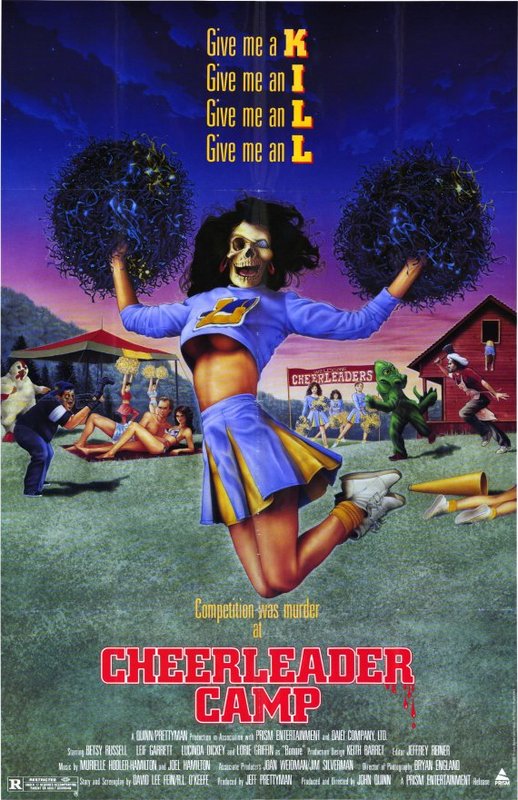
Based on the death of Kirsten Costas — just like the original Tori Spelling Lifetime movie Death of a Cheerleader — this movie is a paper-thin slasher that came in seven years after its expiration date and led to a sequel that’s not a sequel, the Russell feature — and yes, Buck Flower shows up again — Camp Fear.

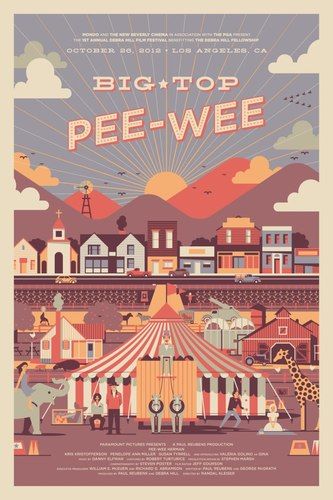
USA UP ALL NIGHT: Big Top Pee-Wee (1988)

EDITOR’S NOTE: Big Top Pee-Wee was on USA Up All Night on June 26, 1993; March 31, 1995, and February 10, 1996. 

Everyone talks about Pee-Wee’s Big Adventure, but nobody talks about this movie. I mean, it has Susan Tyrell — yes, from Butcher, Baker, Nightmare Maker and Forbidden Zone — as a miniature woman who is married to Kris Kristofferson. Why is nobody talking about this?

It’s also directed by Randal Kleiser (GreaseThe Blue Lagoon) and produced by Debra Hill, two people who I would also never think would have anything to do with a Pee Wee Herman movie. Sadly, this was the second and last of what could have been an entire series of these films.

It’s also the debut of Benicio Del Toro, so why should any of these people make sense?

The idea of the film was that Pee Wee had become famous, due to the James Brolin and Morgan Fairchild film made from his last movie, and now he is a Frank Sinatra-esque singer. Then, fame became a cruel beast, and Pee Wee went away to live as a farmer. This is never explained other than as an odd dream sequence, which is, I assume, all that remains.

Pee Wee and Vance the Pig (played by Wayne White, who helped with Pee-wee’s Playhouse and art directed the videos for Peter Gabriel’s “Sledgehammer” and the Smashing Pumpkins’ “Tonight, Tonight) were once content to make giant plants and romance a schoolteacher (Penelope Ann Miller) before the storm brings a carnival led by Mace Montana (Kristofferson).

Soon, our man — or boy — has fallen for Gina Piccolapupula (Valeria Golino), a trapeze artist who inspires him to pursue a career in the circus. When the town says no, Pee Wee uses a hot dog tree to turn them into children and…well, that’s the whole movie.

The montage when Pee Wee and Gina finally make love is something that still makes me laugh to this day. This is so much stranger than the first film, while seeming normal, yet it has less of the whimsy of Tim Burton, so that hurts it.

Lynne Marie Stewart — Ms. Yvonne! — is a bearded lady, the one-time Henry and Predator Kevin Peter Hall shows up as a tall man (what else could he be?), Matthias Hues is a lion tamer, former Bozo Vance Colvig is a clown (and he was also in Mortuary Academy), Terrence Mann (Ug from Critters) is another clown, Franco Columbu (Arnold’s best man when he married Maria Shriver) is a strongman, Michu Meszaros (Hans from Waxwork and the man who played ALF) is a small person, Jay Robinson (Dr. Shrinker!) plays Cook, Kenneth Tobey (who shows up in plenty of Joe Dante films) is the sheriff, Leo Gordon (the Evil One in Saturday the 14th Strikes Back) plays the blacksmith, Frances Bay (Happy Gilmore‘s grandmother, plus Aunt Barbara in Blue Velvet) is Mrs. Haynes and former movie and kid host Jack Murdock is Otis.

You have to love that Pee Wee followed up his most significant career success with a movie about the circus filled with character actors. Of course, this made nowhere near its budget, and that brings us back to today. No one ever talks about this movie. They should.

Sizzlin’ Summer of Side-Splitters 2025: Meet the Raisins! (1988)

Sept 15-21 Mockumentary Week: “Ladies and gentlemen, by way of introduction, this is a film about trickery – and fraud. About lies. Tell it by the fireside, in a marketplace, or in a movie. Almost any story is almost certainly some kind of lie. But not this time. No, this is a promise. During the next hour, everything you hear from us is really *true* and based on solid facts.”

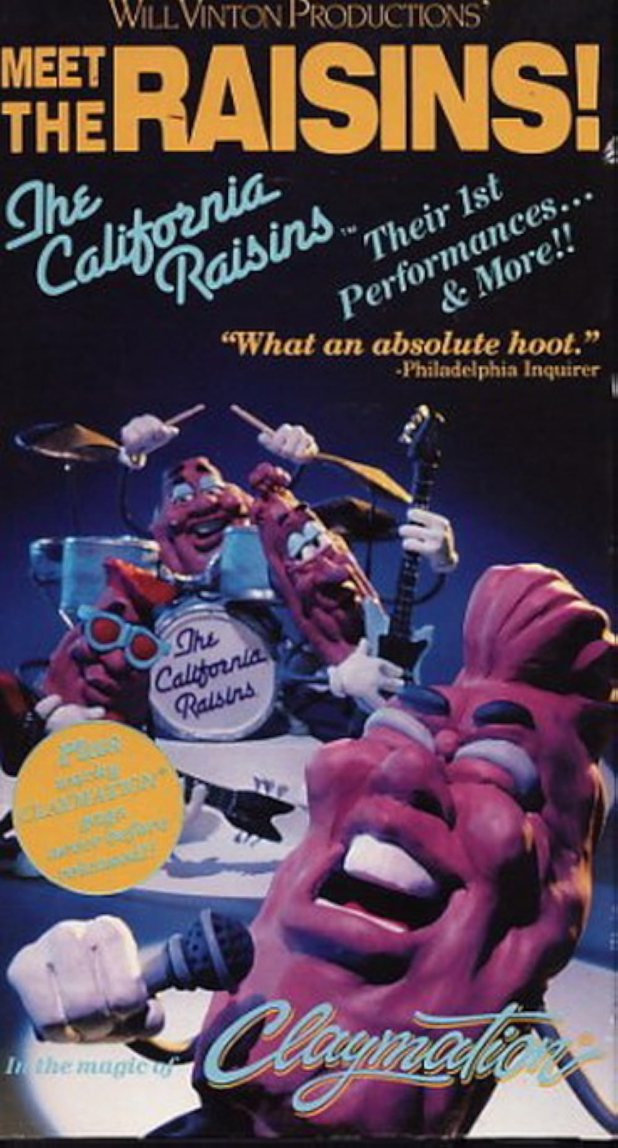
If you had asked me the names of the California Raisins before this, I couldn’t tell you. Now I know they are singer A.C. Arborman, drummer Beebop Arborman, guitarist and pianist Red Raisin and bassist Stamford “Stretch” Thompson. From their rise as the Vine-Yls to their fall and rise back, this will tell you their tale.

Did you know their version of “I Heard It Through the Grapevine” hit #84 on Billboard? Or that the album from this has them cover songs like “Green Onions” and “Tears On My Pillow?” Or that Will Vinton made the sequel, The California Raisins Sell Out, which has them trying other genres of music?

This is directed by Barry Bruce and features a writing crew that would go on to do much more afterward. Mark Gustafson would co-direct Guillermo del Toro’s Pinocchio, while Craig Bartlett would create Hey, Arnold!

Raisins weren’t doing well before this. This concept was created by advertising firm Foote, Cone & Belding for a 1986 Sun-Maid commercial on behalf of the California Raisin Advisory Board. Copywriter Seth Werner said, “We have tried everything but dancing raisins singing ‘I Heard It Through the Grapevine.'” It worked and surprised everyone.

The sad real story is that ad agencies are scummy. I know this. I once owned one. Herschell Gordon Lewis ran one.

The California Raisin Advisory Board ended when members of the grape farming industry learned that Foote, Cone & Belding was continually raising the price of producing these commercials, with all the profits going back to the agency as well. In fact, the ads cost double what the farmer made.

The Raisins trademarks and copyrights became the property of the state of California, and in somewhat of a happy ending, they were licensed to the new California Raisin Marketing Board. After mergers, Foote, Cone & Belding is now Draft FCB, one of the largest agencies worldwide.

You can watch this on YouTube.

Sizzlin’ Summer of Side-Splitters 2025: The Dirk Diggler Story (1988)

Sept 15-21 Mockumentary Week: “Ladies and gentlemen, by way of introduction, this is a film about trickery – and fraud. About lies. Tell it by the fireside, in a marketplace, or in a movie. Almost any story is almost certainly some kind of lie. But not this time. No, this is a promise. During the next hour, everything you hear from us is really *true* and based on solid facts.”

Nine years before Boogie Nights, Paul Thomas Anderson made this movie, which is not a drama but instead a documentary on the life of a dead porn star. This is all ragged charm without the crazy camera work, and yet it gets a lot of the same story beats, even if so much comes from the John Holmes documentary, Exhausted.

We learn the fact early: Dirk Diggler (Michael Stein) was born as Steven Samuel Adams on April 15, 1961, outside of Saint Paul, Minnesota. His father is a construction worker, and his mother is a boutique shop owner who attends church every Sunday.

Jack Horner (Robert Ridgely) discovers high school dropout Diggler at a falafel stand, and he soon meets his best friend, Reed Rothchild (Eddie Delcore), while working for the director. Then comes fame. Then comes drugs. Then comes the fall.

Anderson made this film when he was 17 years old and a senior at Montclair College Preparatory School. Anderson’s father, Ernie “Ghoulardi” Anderson, narrated the movie — he was the voice of ABC — and Robert Ridgely, a friend of his father, played Horner.

Shot on camcorder and edited with two VCRs, this is so close to Boogie Nights, even if in this, Dirk has a successful music career (and died after coming back to do gay porn, which is treated as the worst think ever, which is not PTA being homophobic; this feels like it was made by someone who was reading porn star interviews in Hustler regularly — ask me how I know that…)

You can watch this on YouTube.

USA UP ALL NIGHT: Hot Splash (1988)

EDITOR’S NOTE: Hot Splash was on USA Up All Night on September 28, 1991; February 14 and September 5, 1992; April 9, 1993.

Sometimes I think about the people who took things from me and how they sleep well at night, and here I am, writing about a teen sex comedy in the middle of the night, unable to visualize being able to rest because I have so many of these films to discuss. They can never take that from me. They don’t want to.

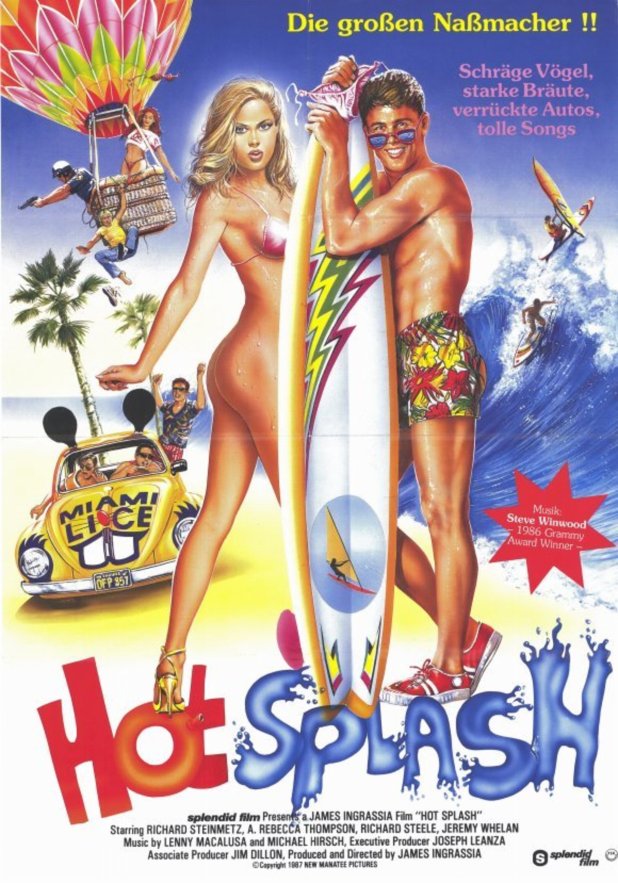
Directed by James Ingrassia, Hot Splash is shot in Florida and has Woody (Richard Steinmetz), Jennifer (Andrea Thompson, Detective Jill Kirkendall on NYPD Blue) and Jimbo (James Michael Hall) getting ready for a surfing contest, but then Jimbo angers gangster  T.J. Caruso (Jeremy Whelan). He gets kidnapped, and the surfing kids have to save him.

Then they surf, and you realize that the waves in Florida aren’t like the ones in the California beach movie. They’re pretty small. There are also two scenes at an Arby’s that go on so long that you start to understand that the filmmakers followed the ways of another man who made movies in Florida, Herschell Gordon Lewis, who got KFC to feed every film he made down there. So yeah. Arby’s. This movie will make you hungry for a French Dip and potato cakes.

You can watch this on YouTube.

USA UP ALL NIGHT: Beach Balls (1988)

EDITOR’S NOTE: Beach Balls was on USA Up All Night on August 30, 1991; February 22 and September 25, 1992; May 1 and July 2 and 24, 1993. 

Charlie Harrison (Phillip Paley, Cha-Ka from Land of the Lost) wants to be a rock star, so he puts his own concert together. He has Christian parents, a sidekick named Scully (Steven Tash and a girl he wants that’s out of his league, Wendy (the late Heidi Helmer). He’s also on probation for driving drunk, which was less of a big deal in 1988. Our hero introduces her to the lead singer of Severed Heads In A Bag, Keith (Douglas R. Star), which is not the way to get the girl. Maybe if he gets his own guitar, he can win her back.

Director Joe Ritter wrote The Toxic Avenger and is a Steadicam guy now. This is the only film David Rocklin wrote.

The band in this is the D.R. Starr Band, led by Douglas Randall Starr. Yes, the guy who plays Keith., They were known for jazz-infused rock and glam metal. If you went to Gazzarri’s on the Sunset Strip in the 1980s, you might have seen them. Apparently, Steve Vai contributed to some of the songs on this album.

One of the punks, Mollusk, is Gary Schneider, Bozo from The Toxic Avenger.

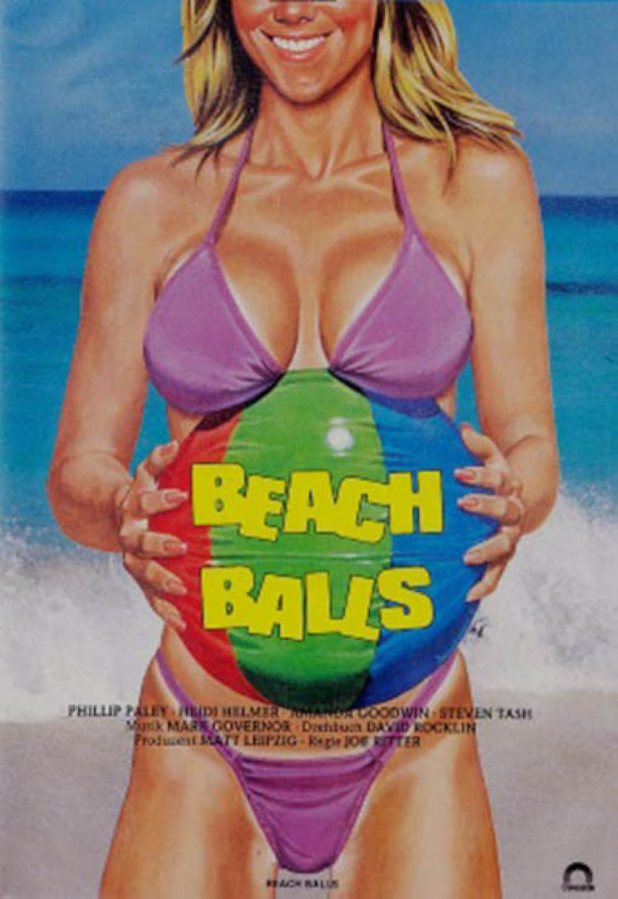
This is a more innocent teen comedy than most. The artwork for it promises, well, beach balls. You get none.

You can watch this on YouTube.

USA UP ALL NIGHT: Uninvited (1988)

EDITOR’S NOTE: Uninvited was on USA Up All Night, but I can’t find a date when it aired. Do you know?

I love George Kennedy and want to state for the record that he deserved way better than this film, which is a total piece of shit. That said, I’ve proved time and again that my favorite movies to watch are mostly made out of fecal matter, so let’s dish.

Genetic Laboratories has decided to create a poisonous mutant cat that lives inside the body of a cute house cat. Why would they do this? Who knows, but it’s a good thing they did, or we wouldn’t have a movie.

The cat ends up on the yacht of “Wall Street” Walter Graham (Alex Cord, Michael Coldsmith Briggs III of TV’s Airwolf), who is running away to the Cayman Islands to escape the SEC. Along the way, he’s brought his bodyguard (Kennedy) and a bunch of hot girls and their boyfriends. Holy shit, there’s Clu Gulager, Burt from Return of the Living Dead! There’s Austin Stoker (Assault on Precinct 13Horror HighBattle for the Planet of the Apes)! And Rob Estes from USA’s Silk Stalkings!

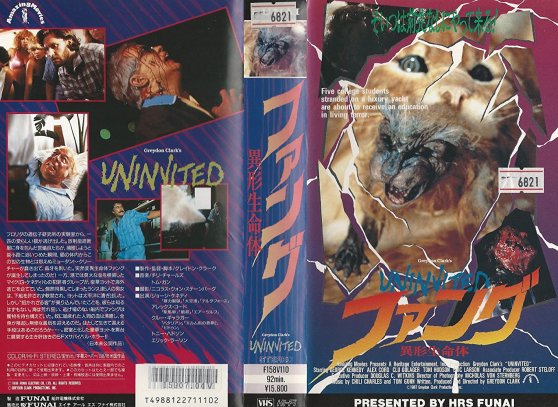
This Japanese box art should tell you all that you need to know:

Or perhaps you’d like to see the German artwork:

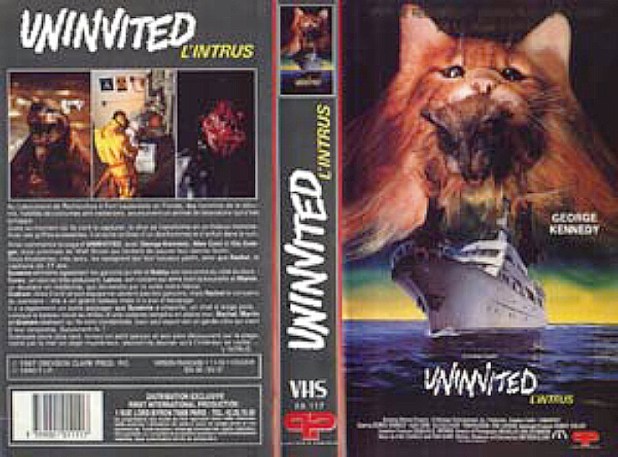
The Uninvited was written and directed by Greydon Clark, who also directed JoysticksWacko and Satan’s Cheerleaders. I would hope that any of those films is better than this. Becca looked at a photo from this movie and said, “Is that a stuffed animal?” Yes, it is. That’s the level of special effects you’ll see here.

There’s also George Kennedy getting bitten by a demonic cat. If that doesn’t make you want to watch this, I don’t know what will.

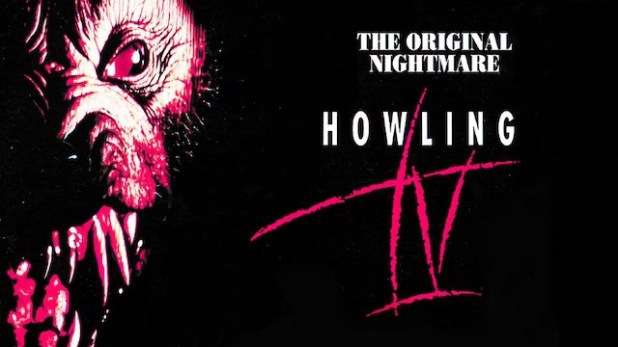
USA UP ALL NIGHT: Howling IV: The Original Nightmare (1988)

EDITOR’S NOTE: Howling IV was on USA Up All Night on July 3, 1992, April 23, 1994 and April 13, 1996.

John Hough has some great movies in his directorial history, including Twins of Evil, The Legend of Hell House, The Watcher in the Woods, The Incubus, American GothicEscape to Witch MountainReturn to Witch Mountain and Biggles. That’s a great run. He also made this movie, which attempts to revive The Howling series, bringing it closer to the original film.

Author Marie Adams keeps having visions of nuns and werewolves attacking her from a fire. It seems that the same imagination that helps her write is also driving her to madness. Her husband takes her moving all the way to madness, to Drago, where a small cottage will be the place that she plans on resting and relaxing away all the terror that she is going through. That would work if she didn’t keep hearing howling in the woods.

Much like the first film, her man can’t stay faithful. The small town is also rife with werewolves, ghosts and visions of the nun. The whole thing ends in a burning church, and yes, that same werewolf leaps through the flames.

Well, if anything, this is the only werewolf movie I’ve seen that has a theme song by the lead singer of the Moody Blues. So there’s that.

That said, this is a more faithful version of the book than The Howling. Yet it’s not as good a movie. Writer and co-producer of the film, Clive Turner, was originally going to direct, but when the financiers pulled out, he had to get Hough on board.

That’s one story. The other is the one that Hough told Fangoria. The script was written by someone named Freddie Rowe and he would also receive notes and messages from him, as well as additional pages of the script, while making the movie. However, when the director asked for Rowe’s contact information, he was never given it, leading him to suspect Rowe of actually being Clive Turner, who really wanted to be the director of the movie. Seeing as how Rowe only wrote one other movie — Howling V: The Rebirth, which Turner also wrote — that may or may not be true.

Making that story sound even more true is the fact that Turner recut and re-edited the film, adding scenes like the one where the evil werewolf queen Eleanor went bobbing for hot dogs with Marie’s husband.

You can watch this for yourself on Tubi and try and make better sense of it than I did.

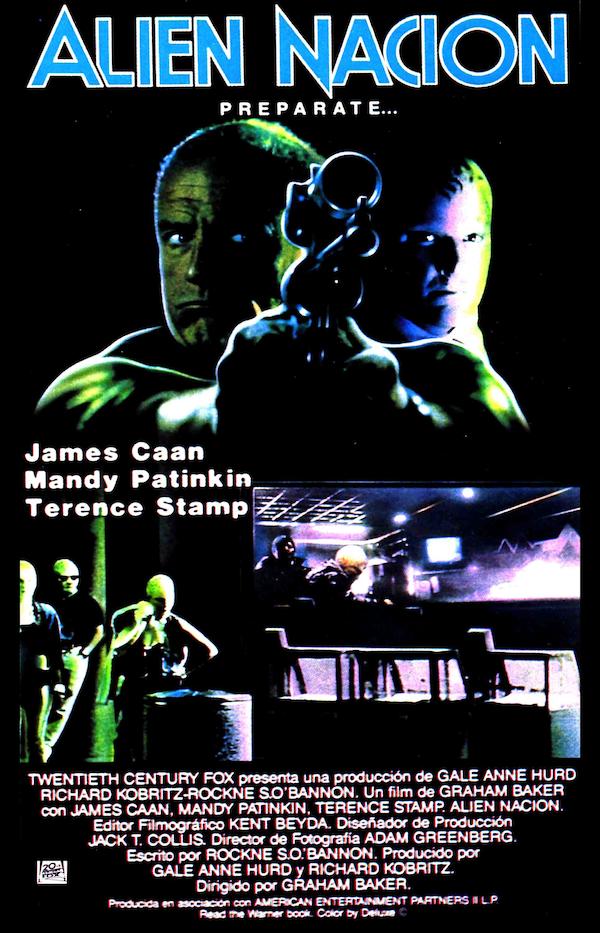
USA UP ALL NIGHT: Alien Nation (1988)

EDITOR’S NOTE: Alien Nation was on USA Up All Night on July 11, 1997.

Rockne O’Bannon created Farscape, seaQuest DSV, Defiance, Cult and the movie (and later TV series) Alien Nation. It was a spec script sent to Gale Anne Hurd, and she saw a lot of opportunity. What is the difference between other science fiction films? Herd explained, “We wanted the aliens to be more like a different ethnic race than like lizard people, … We didn’t want our audiences thinking, ‘Gee, look how different these aliens are.” Rather, after about five minutes, we wanted the audience to accept them as different from us, but not so different that no one would buy the storyline. We wanted the aliens to be characters–not creatures.”

In 1988, 300,000 enslaved aliens known as Newcomerslandedd in the Mojave Desert. Within three years, they’re settled in Los Angeles and some, like Sam Francisco (Mandy Patinkin), become cops. His partner, Detective Matthew Sykes (James Caan) wants nothing to do with him, as he doesn’t trust the aliens once his partner is shot and killed in a robbery by several of them.

A case involving the wealthy newcomer businessman William Harcourt (Terence Stamp) and his henchman, Rudyard Kipling (Kevyn Major Howard, brings them together. There’s also a drug called Jabroka that can transform Newcomers into an even more dangerous form, and keeping it off the streets could be the difference between the two races existing as one.

This led to a 22-episode TV show, five TV movies, comic books and novels, all of which advanced the story.

Director Graham Baker also directed the last Omen movie.

You know who didn’t like this movie?

James Caan.

He told the AV Club, when asked about this movie:

James Caan: Why the f****…Why would you bring up that?

Will Harris: Many people actually like the film. I do, for one.

Caan: Yeah, well, I don’t know. I don’t have too many…I mean, I loved Mandy Patinkin. Mandy was a riot. But…I don’t know. It was a lot of silly stuff, creatively. And we had this English director whom I wasn’t really that fond of. I mean, nice guy, but…it was just one of those things where, you know, you don’t quit, you get through it. It certainly wasn’t one of…I wouldn’t write it down as one of my favorite movies. But it was pretty popular.