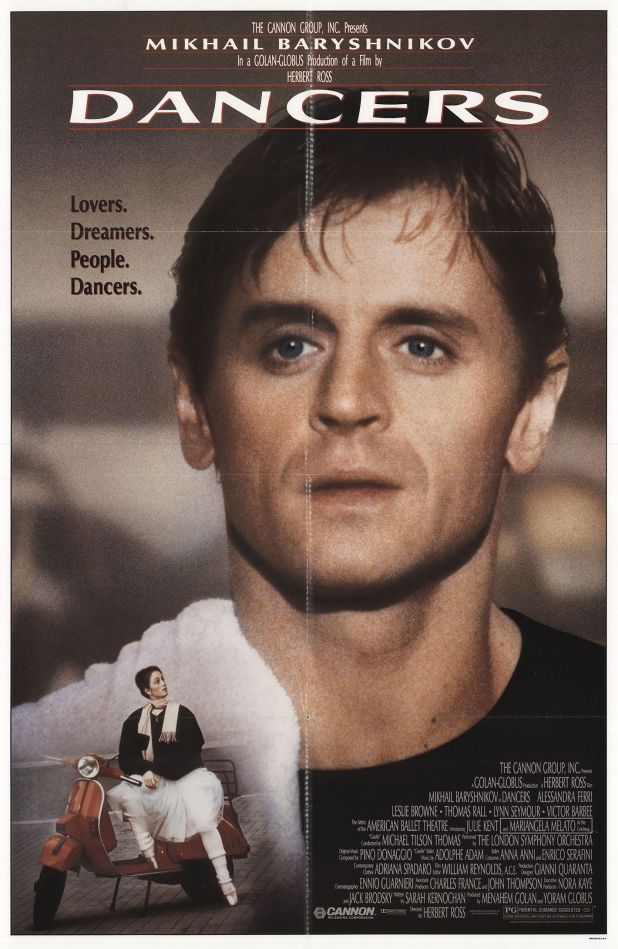
Based on Giselle by Adolphe Adam, Jean Coralli and Jules Perrot, Dancers tells the story of Tony (Mikhail Baryshnikov), who is trying to stage the final dance of Giselle in his career — much like Baryshnikov as this was to be a film record of his dancing in that play — just as he falls in love with Lisa (Julie Kent), but then she learns that he’s used the same romantic lines on every other lover he’s ever had.
Director Herbert Ross started as a dancer, became a choreographer and debuted as a director with the movie Goodbye, Mr. Chips. Some of his better regarded films are The Owl and the Pussycat, Play It Again Sam, Pennies From Heaven, Footloose, Steel Magnolias and Boys On the Side. His wife Nora Kaye was a ballerina and produced several of his movies, including The Turning Point, Nijinsky, Pennies From Heaven and The Secret of My Succe$s. She executive produced this movie, but ssadlydied before it was released.
I honestly have no idea how to classify this movie and you know what, let’s not put it in an easy bucket. Let’s just enjoy it for what it is.
Whatever it is.
Roger Ebert tried. He said that it had “an impressive content of sex and violence, but beneath that is a strange nostalgia that seems to have nothing to do with anything else. The nostalgia is for Provincetown, seen in a cold winter season with the weathered gray houses against a pink and purple sky, the gulls’ cries lonely in the twilight. This place is so deeply seen that the people in the movie sometimes seem like ghosts, occupying it for a time.”
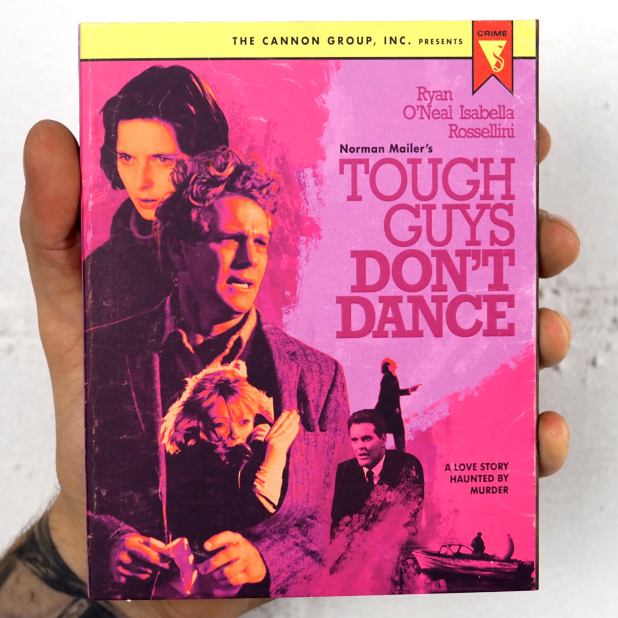
Written and directed by Norman Mailer based on his novel of the same name, this feels like a David Lynch movie made by people who would make fun of David Lynch if he drank in the same bar as them, the kind of, well, tough guys who only order whiskey and whatever local beer is on tap.
As for the title, it comes up early and out of the mouth of Dougy Madden, played by real life tough guy Lawrence Tierney. It’s something boxer Roger Donahue told the writer: Frank Costello, the Murder, Inc. boss and his girlfriend met three champion boxers in the Stork Club. Costello demands that each, in turn, dance with his woman, and each nervously complies. The last, Willie Pep, who had a 229–11–1 record with 65 knockouts, who was described as “trying to fight a grass fire,” simply replied, “Tough guys don’t dance.”
Determining the moral of that story is like trying to divine what this movie is all about.
On the surface, it’s a noir about Tim Madden (Ryan O’Neal), former bartender, current ex-con and struggling writer, whose wife Patty Lareine (Debra Sandlund) has left him, who wakes up to a new tattoo that says Madeline, blood all over his car, a severed head where he keeps his marijuana and the new Provincetown police chief Luther Regency (Wings Hauser) showing up living with his former girlfriend named, you may have guessed it, Madeleine (Isabella Rossellini).
How did he get here? How did he lose the love of his life? Why did he answer that ad in Screw and swing with Madeleine and preacher Big Stoop (Penn Jillette) and his wife, who eventually became his wife? Why did he do that to Madeleine? Why did their argument cause a crash that cost him the child that he and Madeleine wanted? And now why would life take the only person he can depend on, his father Dougy, the guy who may be disappointed in him but who always tells it straight?
Tim’s life is a mess. After Patty left Big Stoop, she married his prep school friend Wardley Meeks III (John Bedford Lloyd), then got rich off her next divorced before marrying Tim and then leaving him and then disappearing. So maybe Tim killed her. And why is Madeline writing him to let him know that Regency was having an affair with Patty? It’s like a soap opera we haven’t watched for decades but need to get caught up on, except with great actors who maybe aren’t great actors in this, except they totally are and every frame is perect imperfection.
And just what does porn star Jessica Pond and her cucked husband Lonnie Pangborn (R. Patrick Sullivan) have to do with all this? Why are there now two heads in the marijuana hiding place? Why does Tim say, “Oh man! Oh God, oh man! Oh God, oh man! Oh God, oh man! Oh God, oh man, oh God!” which is ony topped by “Your knife is in my dog.” for dramatic reading? And what are we to make of the tales of the fires on the shore of Provincetown, the blend of The Fog and Messiah of Evilthat is left as an aside in the film but definitely informs the storybook happy ending?
This is a movie about, by and for cocaine; a film in which the term imbroglio is said; where everyone is so sexed up that you can almost smell the Pine-sol scent of an adult book store’s neon flashing into the cold and foggy niht beckoning couples that are ready to decimate their lives for momentary and fleeting glimpses of the kind of orgasms they read about in letters to Penthouse; where women say things like, “Well, honey, I am a witch” and throw seance parties; and you wondder how can Tim ever settle down with Madeline with those bodies still floating out there and they’ve seen so much and done so much and the world is aways temptation because you can’t slow down and leave a pretty corpse after you’ve lived this kind of life; I came from this place, but my hometown is a small Western Pennsylvania town that has a brick building that is closed five nights a week but on Saturday and Sunday draws swingers from around the East Coast, a place where the English teacher who told me I’d never be a writer took a little blue pill and got in the hot tub and my grandmother heard on the scanner that he had one of those erections they warn you about in the commercials and they had to cut the blood to his member to stop the pain.
I mean, this is the movie where Wings Hauser and Isabella Rossellini have a shouting match made up of the following words:
“I made you come 16 times in a night.”
“Not one of them was good.”
“That’s because you’ve got no womb!”
You have to love Mailer, who made this his way, and then even read the negative commentary cards from a screening in the trailer.
I told you all this to tell you that if everything that Cannon did, if every line of coke and every wild story from Cannes and every failure was all so that this movie could be made, it was all so very much worth it.
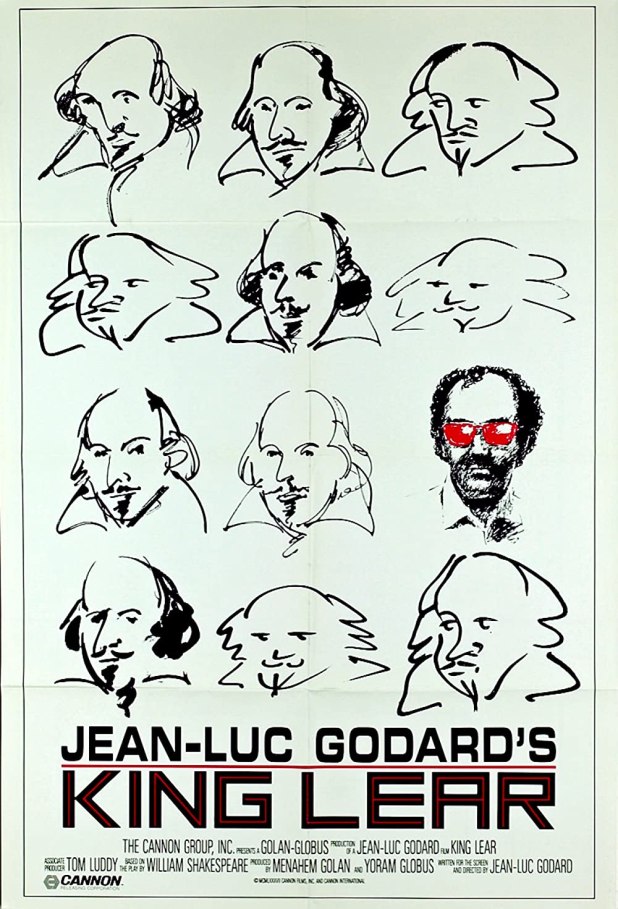
Yes, Cannon gave Jean-Luc Godard the money to make an experimental French New Wave Shakespeare adaptation written by Peter Sellars and Tom Luddy. It was originally to be written by Norman Mailer, who was also making Tough Guys Don’t Dance with Cannon and that’s a totally different story.
Famously, Golan and Globus signed the contract for this film with director Godard on a napkin at the Cannes Film Festival. Golan refused to sell the famous contract napkin for $10,000 when asked by the New York MoMA, which seems like a low figure.
Only three characters from the story — Lear (Mailer), Cordelia (Molly Ringwald) and Edgar (Leos Carax) — are in this. It’s set in and around Switzerland where William Shakespeare Junior the Fifth (Sellars) is trying to restore his ancestor’s plays in a world where civilization and culture has lost after Chernobyl.
Much of the dialogue isn’t spoken by the characters on-screen, but heard in voice-over or spoken, whispered or echoed by someone else off-screen. If that seems confusing, King Lear deliberately does not use conventional filmmaking techniques or even try to be watchable.
I definitely think that the beginning, where Menahem Golan complains about how long Godard is taking to make the film and demands its completion by the 1987 Cannes Film Festival is completely real.
King Lear did make its premiere at Cannes on May 17, 1987. It played U.S. theaters for two weeks and then disappeared for fifteen years. How many people actually saw it? Well, for years, Quentin Tarantino’s resume claimed that he had appeared in it, as he correctly figured that nobody would have seen it and known he was telling a lie.
You know who is in it? Burgess Meredith and Woody Allen.
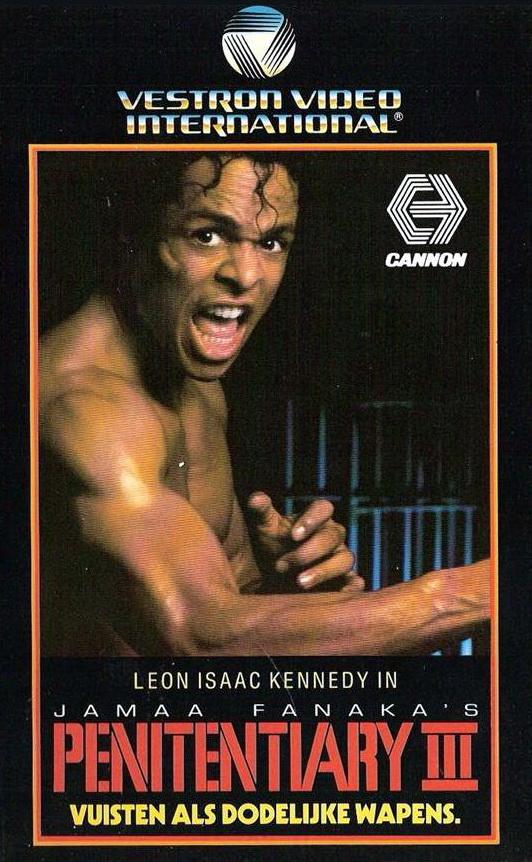
Five years after we last saw Martel “Too Sweet” Gordone (Leon Issac Kennedy), he’s back in jail after being framed for murder. And by set up, Too Sweet is given some PCP in his water bottle during a boxing match and he turns his opponent El Cid’s (Madison Campudoni) brains into so much jelly.
Who would set up our hero in such a way? Serenghetti (Anthony Geary, yes, Luke from General Hospital) who makes a team of fighters in the big house that once a year challenges the warden’s (Ric Mancini) team of fighters.
The last thing Too Sweet wants to do is ever box again with blood on his hands, so he sends The Midnight Thud to assault our hero and take his manhood. Fog surrounds the jail cell, we hear bestial growling and then realize that Thud is played by Raymond Kessler, who you may know better as small size wrestler The Haiti Kid. Yes, a small but feral beast is unleashed for eight minutes of battle and wow. Just wow.
By the end of the movie, the crack smoking Thud — he smokes so much that he kills the rats in his cell — trains Too Sweet through yoga as he goes for revenge, as his cellmate Roscoe (Steve Antin, Rick from The Last American Virgin and the brother of New York Doll Robin Antin) has been beaten unmericful by another PCP fighter See Veer (Danny Trejo).
This movie has it all and by all, I mean Rick Zumwalt (Bull Hurey in Over the Top) as a prison guard, Magic Schwarz (Stone Cold, Mad Dog Joe DeCurso in Grunt! The Wrestling Movie) as Hugo the final boss, Too Sweet in a leather codpiece/Bruce Lee outfit, Geary having a luxury cell with a French chef and a trans lover, Zap from American Gladiators, female boxers decided to stop fighting and instead start kissing and boxing matches that feel more like pro wrestling.
Jamaa Fanaka directed and wrote all three movies in this series as well as Welcome Home Brother Charles and Street Wars. Somehow, this series went for urgent melodrama to a Mr. T appearance to this and I’m there for all of it.
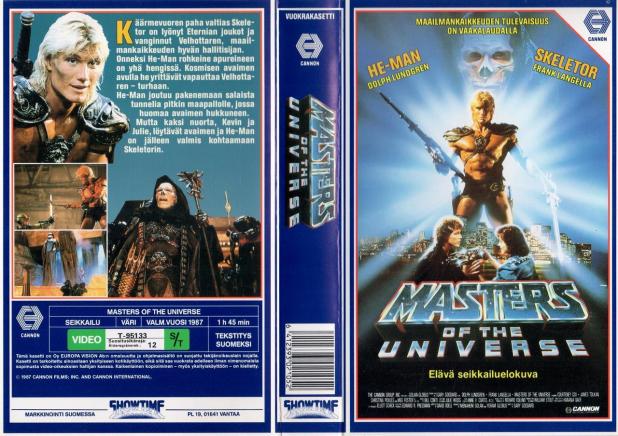
As a 15-year-old, I absolutely hated this movie. He-Man was a known property with a series that was on TV every day, one of the best-selling toys and just about everyone knew everything there was about the mythos of Eternia, but the movie only spends a few minutes in Eternia and has human characters in the place of ones you’d want to see like Stratos, Fisto and Zodac. Or Tri-Klops, Batros and Man-E-Faces. Or Mer-Man, Ram Man and Sorceress. If by now you don’t realize how deep my He-Man fandom goes, by the end of this you’ll realize just how little I ever believed that I’d date anyone.
If I’d just realized that it was a secret Jack Kirby movie, maybe I would have loved it.
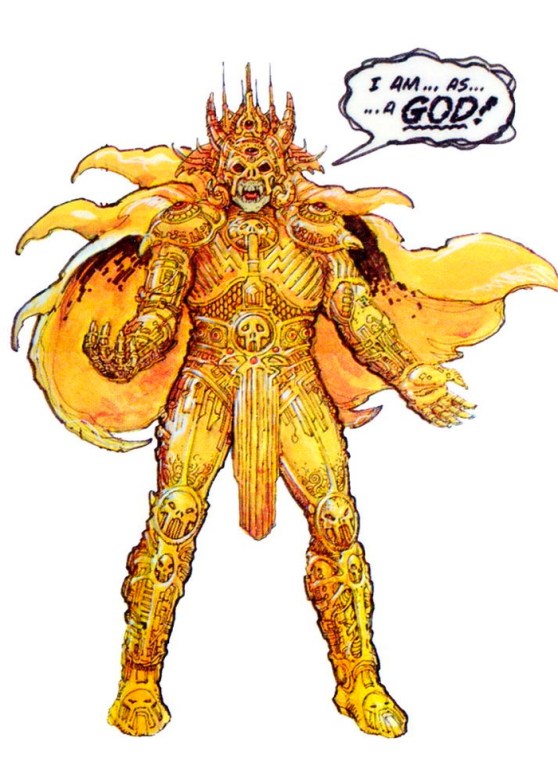
John Byrne, who is one of my biggest artistic influences — well, next to Kirby — called this out, saying, “The best New Gods movie, IMHO, is Masters of the Universe. I even corresponded with the director, who told me this was his intent, and that he had tried to get Kirby to do the production designs, but the studio nixed it. Check it out. It requires some bending and an occasional sex change (Metron becomes an ugly dwarf, The Highfather becomes the Sorceress), but it’s an amazingly close analog, otherwise. And Frank Langella’s Skeletor is a dandy Darkseid!”
To be fair, Star Wars is also a complete pastiche of the New Gods.
Director Gary Goddard responded in the letter page of Byrne’s comic book Next Men: “As the director of Masters of the Universe, it was a pleasure to see that someone got it. Your comparison of the film to Kirby’s New Gods was not far off. In fact, the storyline was greatly inspired by the classic Fantastic Four/Doctor Doom epics, The New Gods and a bit of Thor thrown in here and there. I intended the film to be a “motion picture comic book,” though it was a tough proposition to sell to the studio at the time. “Comics are just for kids,” they thought. They would not allow me to hire Jack Kirby who I desperately wanted to be the conceptual artist for the picture… I grew up with Kirby’s comics (I’ve still got all my Marvels from the first issue of Fantastic Four and Spider-Man through the time Kirby left) and I had great pleasure meeting him when he first moved to California. Since that time I enjoyed the friendship of Jack and Roz and was lucky enough to spend many hours with Jack, hearing how he created this character and that one, why a villain has to be even more powerful than a hero, and on and on. Jack was a great communicator, and listening to him was always an education. You might be interested to know that I tried to dedicate Masters of Universe to Jack Kirby in the closing credits, but the studio took the credit out.”
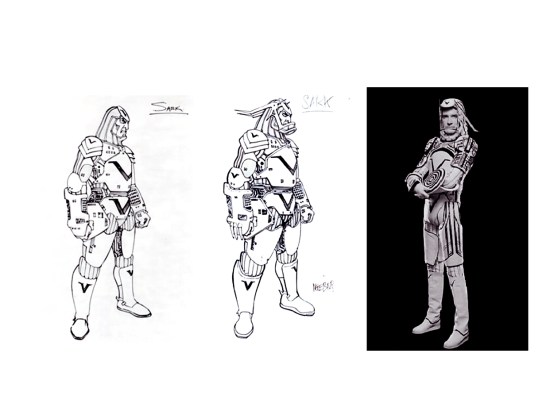
He was joined by Jean “Moebius” Giraud, an artist whose influence on movies can’t be measured, from working on Jodorowsky’s Dune to being in the art department for Alien, TRON, Willow, The Fifth Element and The Abyss. So much of Blade Runner and its visual style is deeply in debt to Moebius.
Cannon claimed that Masters of the Universe would be the Star Wars of the 1980s and if we go just on the look of the characters, they tried. The hard part is that the end result is very Cannon: a lack of budget, focus and understanding of what they had on their hands.
Screenwriter David Odell had worked on The Muppet Show and The Dark Crystal. His original take on the material was closer to the cartoon, with He-Man’s mother coming from Earth, more of Beast Man and more time on Eternia. There was a rewrite by Goddard and Stephen Tolkin, who also wrote Albert Pyun’s CaptainAmerica, which was produced by Menahem Golan as part of his 21st Century Film Corporation after Cannon broke apart.
Instead, the movie begins at an apocalyptic ending, with Skeletor’s (Frank Langella, one of the major bright spots of the film; he was incredibly excited to make the movie as He-Man was his son’s favorite cartoon) army finally taking Castle Grayskull and capturing the Sorceress (Christina Pickles).
There’s one chance to save the day and it involves He-Man (Dolph Lundgren), Man-At-Arms (Jon Cypher) and Teela (Chelsea Field) mounting a rescue mission to get Gwildor (Billy Barty) free and find his Cosmic Key, which has been stolen by Evil-Lyn (Meg Foster, forever staring directly into your soul). Their escape takes them to Earth and meeting up with orphaned schoolgirl Julie Winston (Courtney Cox), her boyfriend Kevin Corrigan (Robert Duncan McNeill) and Detective Hugh Lubic (James Tolkan, pretty much playing what you hire James Tolkan for, an incredibly angry authority figure like he was in Back to the Future).
Skeletor sends Saurod (Pons Maar, who was the body model for The Noid), Beast Man (Tony Carroll), Karg (Robert Towers, who was Snoopy’s voice in You’re a Good Man, Charlie Brown) and Blade (Anthony de Longis, The Warrior and the Sorceress, The Sword and the Sorcerer, Dangerously Close and the voice of Lord Zygon in Starchaser: The Legend of Orin; he’s also one of my favorite people in this film and trained Lundgren in sword fighting) to battle the heroes.
The battle eventually does take them back to Eternia, but I can tell you, when I first saw this movie, I never wanted to see any action on our boring planet. But as I’ve watched this numerous times, I’ve come to really enjoy the look and feel of what Goddard was able to capture with the budget that he had.
Goddard has claimed that Cannon forced the movie to be mostly on Earth to keep the budget down. He did ask for more money so he could at least start and end the film on Eternia. However, Cannon’s financial woes — there was so little money that Goddard did every pickup and second unit shot — saw them shut down filming three days early and the final battle between He-Man and Skeletor was unfilmed. Luckily, Goddard was able to get a day to shoot the end, but as sets were being torn down throughout and the need to get it done quickly, that’s why the final battle has no background in it.
A supposed sequel was written and would have been directed by Albert Pyun and star surfer Laird Hamilton. In it, Skeletor would return to Earth and destroy it, making this a post-apocalyptic movie. After Masters of the Universe wasn’t the Star Wars of the 1980s, Pyun rewrote the script and made Cyborg.
As for Goddard, he had quite an interesting career after He-Man. Producer Edward R. Pressman (who executive produced this movie) hired him to create, write and direct a Universal Studios show, The Adventures of Conan: A Sword and Sorcery Spectacular.
Goddard also wrote Tarzan the Ape Man for the Dereks, as well as developing the Captain Power and Skeleton Warriors shows and toy lines. He also helped develop Spider-Man, Terminator and Jurassic Park rides for Universal Studios.
There have been numerous attempts to make a new Masters of the Universe movie. The bar, obviously, is not very high, but perhaps my love of the past and Cannon makes me look at this film — not the first movie for the property, as He-Man and She-Ra: The Secret of the Sword came out in 1985 — in a much kinder light.
As you can see, I’m very influenced by the look of this film. If you’d like to see more of my art, I post a new Masters of the Universe painting every week on Instagram.
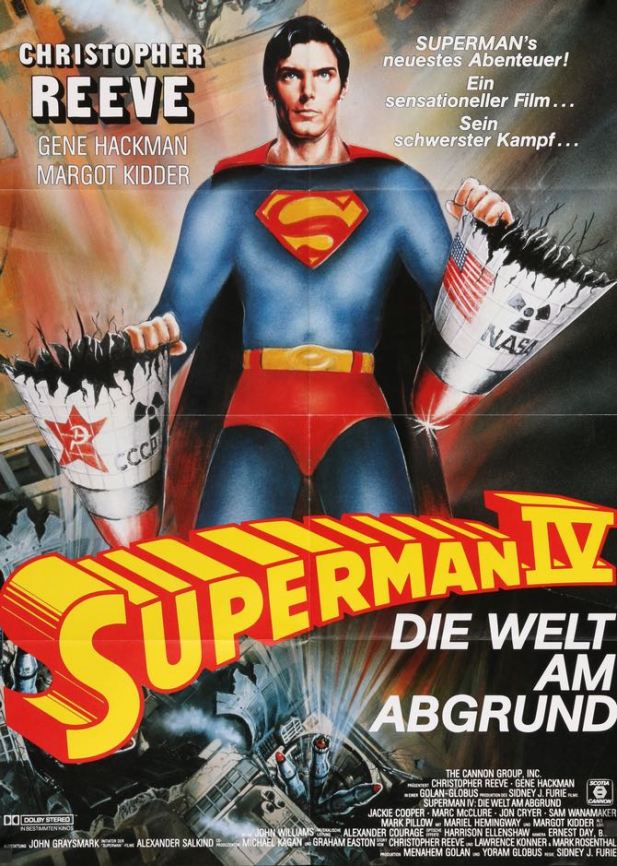
The Salkinds had made three Superman movies and planned a fourth if Superman III made at least $40 million. It made $80 million even if people absolutely hated it. As for star Christopher Reeve, he was pretty unenthused about coming back to the role one more time and skipped being in Supergirl, which bombed, as did the Salkind’s Santa Claus: The Movie.
You know how much Golan and Globus loved Cannes, right?
Well, that’s where they made a deal with the Salkinds to buy the rights to Superman movies for $5 million.
They then got Reeve for $6 million, approval over story and director, a focus on ending nuclear weapons and financing his movie Street Smart.
Cannon was already $11 million down and the movie hadn’t even started filming.
Reeve wanted to direct, but other than some second unit, he wasn’t ready for a full film. Wes Craven was supposed to be the director, but he and Reeve didn’t work well together. Reeve asked for Ron Howard and got Sydney J. Furie, the maker of The Entity, Iron Eagle,The Taking of Beverly Hills and two Rodney Dangerfield movies, Ladybugs and My 5 Wives.
Consider that at one point, Cannon was almost the studio that made a Superman and a Spider-Man movie at the same time.
In his book Still Me, Reeve noted that Cannon was cutting budget anywhere they could, even shooting scenes set on 42nd Street in England. He said, “We were also hampered by budget constraints and cutbacks in all departments. Cannon Films had nearly thirty projects in the works at the time, and Superman IV received no special consideration.”
In fact, Cannon reduced the budget from $36 million to $17 million, but would still lose money, as their strategy of selling TV and video rights before the movie was made worked with smaller movies, but not with this budget, even as cut down as it was, even with the crew replaced by cheaper crews, even with shooting Smallville in England.
There was also a really bad test screening that caused 45 minutes of the film was cut, including another nuclear man that Superman destroys. Also by cutting the movie from two hours to ninety minutes, theater owners could get two more showing a day and make more money.
That said, while the movie made $36.7 million worldwide — and still made money on its cut budget — people hated it. It was the last Superman movie for 19 years and Reeves said, “Superman IV was a catastrophe from start to finish.”
At one point, the more monstrous Nuclear Man footage was considered for use as a sequel in which Superman would die at the hands of that creature and would be resurrected in the bottled city Kandor. This was years before the death of Superman story and somewhat close to what happened in the comics.
Anyways…
Somehow, Cannon was able to get Reeve (Superman/Clark Kent), Margot Kidder (Lois Lane), Jackie Cooper (Perry White) and Marc McClure (Jimmy Olsen) to return. It starts with a big downer, as both of Superman’s Earth parents are now dead and there’s no way Marlon Brando is going to be in this movie.
Meanwhile, the Daily Planet has been taken over by David Warfield, a tabloid tycoon who fires Perry White and replaces him with his daughter Lacy (Mariel Hemingway). Also, the world is on the brink of nuclear war — which seemed quaint for a few years right? — and Superman grabs all the nukes, puts them in a giant net and throws it into the sun, which seems kind of dangerous.
Lenny Luthor (Jon Cryer) breaks his uncle out of jail and they meet with the military industrial complex who wants to kill Superman like they did Kennedy, so they all make a Nuclear Man (Mark Pillow) who can infect the Man of Steel with radiation and kill him. Also, there was a reason why Superman looked at that Kryptonian energy module in the beginning because it heals him.
What follows is the best kind of dumb: Superman pushes the moon and causes an eclipse, which shuts off Nuclear Man but does not cause giant waves that destroy Earth. Lacy is left in space, floating around with no oxygen but she’s fine while Superman activates a nuclear power plant by dropping Nuclear Man into it and powering the entire world and that should be no danger either, before bringing Lacy back and saving the Daily Planet.
Comic book movies wouldn’t recover until Tim Burton’s Batman.
Cannon wouldn’t live much longer.
Reeve would be paralyzed eight years later.
Superman IV was finally redeemed by just how bad Batman and Robin was.
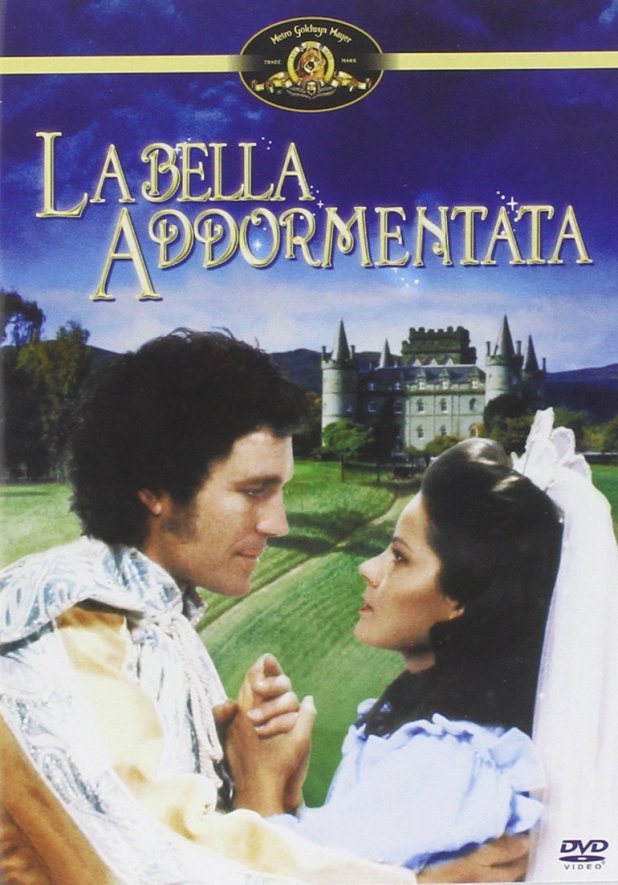
Those Cannon Movie Tales keep coming and this time, Menahem and Yoram were able to lure David Irving back for one more chance to direct, as well as a cast that includes Morgan Fairchild as the queen, David Holliday (the voice of Virgil Tracy on Thunderbirds) as her king and Tahnee Welch as their daughter, Princess Rosebud, who is born through the aid of Kenny Baker, the man who played R2D2, before she’s cursed by a Red Fairy played by Sylvia Miles from Midnight Cowboy to remind you this is a Cannon Movie. Yes, because she wasn’t invited to the party, she’s destined to die from a finger prick while sewing, so the king gets rid of all sewing machines and the people of his kingdom suffer the curse of bad fashion. Perhaps the White Fairy, played by Go-Go Jane Wiedlin, can save them all.
Man, Jane Wiedlin! She’s also in Clue as the singing telegram girl, a communications officer in Star Trek IV: The Voyage Home, Joan of Arc in the first Bill & Ted movie, alongside Mike Patton and Karen Black in Firecracker and as the voice of returning Scooby-Doo character and Hex Girls drummer Dusk in several cartoons. She also directed her own film, The Pyrex Glitch.
Anyways, the White Fairy figures out how to transmute the curse of death into a centuries long sleep for the entire kingdom, which seems like putting the needs of the few or the one ahead of the many in a reverse Spock theorem but there you go. Of course a prince (Nicholas Clay, Lancelot from Excalibur and Oliver from Lady Chatterley’s Lover) comes and saves everyone with a kiss.
Oh yeah — the master elf is played by Shaike Ophir, who was Kassam in King Solomon’s Mines, Father Nicholas in The Delta Force and Lelz in America 3000. This was his last role and he was the first mime ever in Israel.
Want some more facts? This was written by Michael Berz, who played Kenny in Cannon’s Hot Resort. He also was behind the Cannon Snow White. To save money — Cannon style — this was shot simultaneously with Hansel and Gretel, which sounds like a good idea, but both crews were fighting over the equipment, costumes and sets throughout.
Meanwhile, Daryl Hannah’s sister Page — she’s one of the girls killed by The Raft in Creepshow 2 — was fired after a week of shooting and replaced by Welch. Then all of the fairy costumes got stolen. And then David Irving had just a week to prep for this movie after filming went long on another Cannon Movie Tale, Rumpelstiltskin. That may be why he referred to this film as a nightmare.
Of all the Cannon Movie Tales, this might be my favorite. Admittedly, the bar is not high.
Leslie Stevens created The Outer Limits, directed Esperanto language Incubus and wrote est: The Steersman Handbook, a book of New Age philosophy. He also said, “There is nothing wrong with being a hack writer. I would point with pride to the inspired hacking of Shakespeare, Michelangelo—you can go through a big list.”
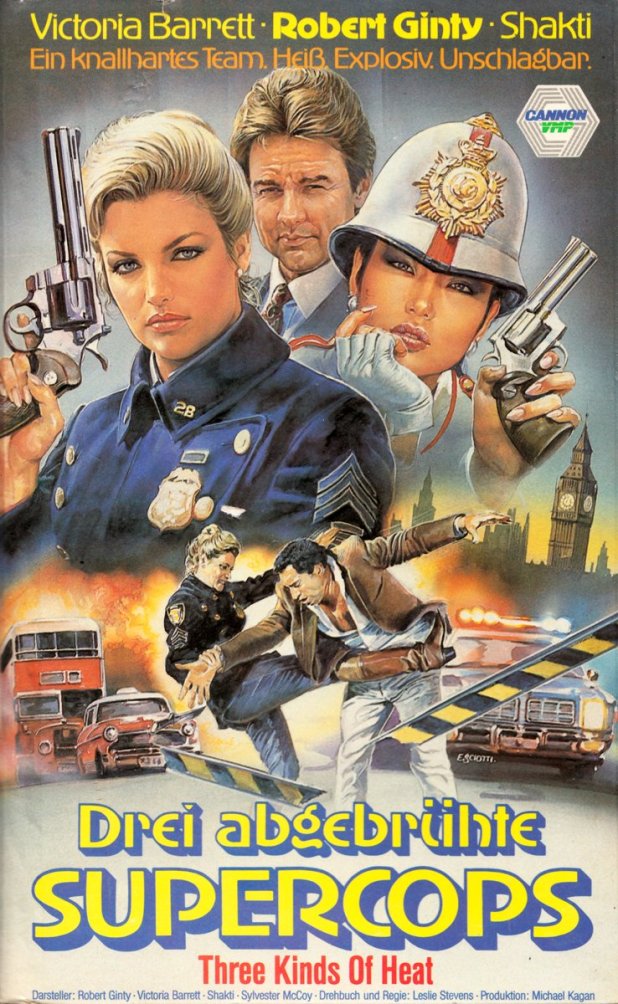
This one stars Robert Ginty as U.S. Secret Agent Elliott Cromwell, who has been tasked with finding the mysterious terrorist known as Founder. He’s joined by NYC airport cop Terry O’Shea (Victoria Barrett, who is in Cannon’s Hot Resort, Hot Chiliand America 3000) and Hong Kong cop Major Chan (Shakti, who married Stevens the year after this was made).
You also get a cast with Sylvester McCoy, the seventh Dr. Who, as well as Mary Tamm (who was Romana, a companion to the Tom Baker Dr. Who), Trevor Martin (who played Dr. Who on stage and man, this whole thing is seeming like a movie made inside the Tardis), Barry Foster (Hitchcock’s Frenzy), Edwin Craig (who says “What’s with that stupid grin?” before the Jack Nicholson Joker kills him in Tim Burton’s Batman) and probably the best reason to watch this movie, Samantha Fox, who if you were a teenager alive in 1987 you completely knew. Perhaps onanismically, which is not a word.
This movie is violently not good, despite hopes that Ginty would bring it upward in quality. Instead, you have three different uniformed cops running about and a movie that just crawls to its conclusion, which at least has some stuff blow up real good.
How did Cannon decide to take on so many movies? And which ones? Because Too Much came out in 1987, a year during which I estimate they released thirty-three movies. Can you imagine a studio releasing a new movie almost every week?
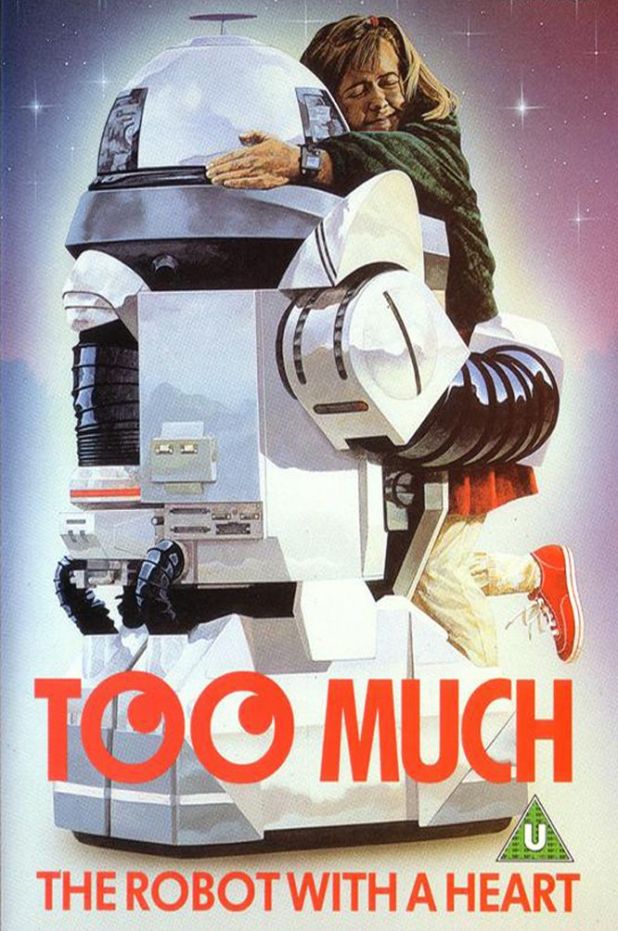
Susie (Bridgette Anderson, who was Savannah in Savannah Smiles and was also in the 1983 version of Nightmares and played young Mae West in the TV movie of her life; sadly, she died at the age of 21 from mixing alcohol and heroin, way to bring this article down early, huh?) and her parents are in Japan to visit her father’s business partner Tetsuro (Akio Ishimuro from Ultraman Gaia).
Tetsuro creates a robot friend for her that she names Too Much because, well, he’s Too Much. You remember Max Steel’s Robo Force? Those big suction cup robots that came out right before Transformers and looked hopelessly antiquated as they warmed the pegs? Well, Too Much makes them look like sleek Hajime Sorayama illustrations by comparison.
Yet for some reason. Dr. Finkel wants the robot. Obviously, there have to be better ones, like Johnny 5. But no, that won’t do. So when Susie runs away with TM and a Japanese kid named Mata, he hunts for her. And man, Japanese cops are wild, because they open fire on the robot at one point, even surrounded by gas pumps.
Cannon being Cannon, this was directed by Eric Rochat, who is probably best known for making multiple adaptions of The Story of O. Yes, they put this man in charge of a kid movie. A kid movie that by all accounts never played in the U.S. and had a very limited VHS release.
So that means I can totally spoil this movie: Susie, Mata and TM end up hiding in a department store that just so happens to have a robot fair. Everything turns into a robot uprising where cute remote control toys battle the police, which I am all for, and the cops use cattle prods to kill the cute toys until a couple of hundred kids in shirts that say “I love TM” — how did they have time to get these clothes made so quickly — and swarm the assembled mad scientist henchmen and the police, raising a flag over the store and the evil doctor ends up electrocuting himself as our female protagonist just walks away, smiling and loving white privilege.
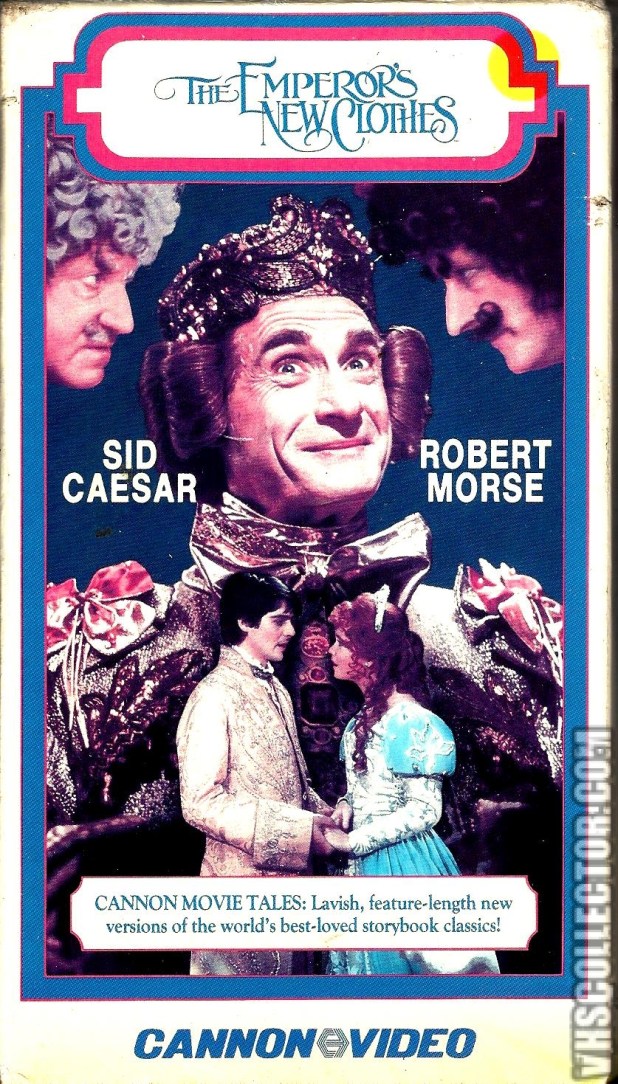
Directed and written by David Irving, this is the third Cannon Movie Tale I’ve seen with Clive Revill in it. It also has Sid Caesar as the Emperor, Robert Morse as the tailor who attempts to make his clothes and Lysette Anthony (Lyssa from Krull) as Princess Gilda.
With these Cannon takes on fairy tales, you get long takes on what should be five minutes before bed tales, but hey, the costumes look great and there’s always lots of singing. They’re meant for young viewers, but so was Shelley Duvall’s Faerie Tale Theatre and that appealed to young and old alike. Then again, the reason for this series seems to be bringing work to Israel.
Obviously, everyone knows this story, but there’s an additional romance between Gilda and the tailor’s son (Jason Carter). You should also keep an eye out for Cannon’s reliable supporting actor Yehuda Efroni, who started working with Golan and Globus all the way back when he was in Operation Thunderbolt and The Uranium Conspiracy. No matter where in the world a Cannon movie was made, Yehuda showed up.



 B&S About Movies
You must be logged in to post a comment.