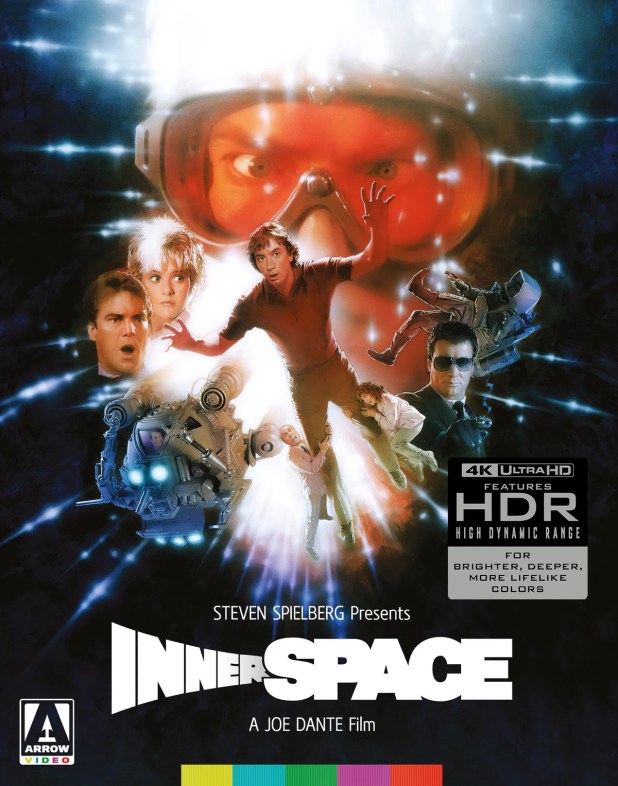
ARROW 4K UHD AND BLU-RAY RELEASE: Innerspace (1987)

I worship at the altar of Joe Dante. Who else could work for Spielberg and deliver Looney Tunes logic, EC Comics gore and more character actor cameos than a Hollywood funeral? Innerspace is Dante working at the peak of his studio powers, taking the high-concept DNA of Fantastic Voyage and mutating it into a manic, sweaty, screwball buddy comedy.

Speaking of that Raquel Welch shrinkage movie, the lab’s instrumentation shows a screen reading of six interlinked hexagons. This is the symbol that the Combined Miniature Deterrent Forces used in that film.

Tuck Pendleton (Dennis Quaid) is a hard-drinking, hot-shot pilot who’s volunteered for a miniaturization experiment. The plan? Shrink him and his high-tech sub, then inject him into a rabbit. But because this is a Joe Dante film, things go wrong immediately. High-tech industrial spies, led by the deliciously icy Margaret Canker (Fiona Lewis) and the scenery-chewing Mr. Igoe (Vernon Wells), storm the lab.

In the chaos, Tuck ends up injected into the ass of Jack Putter (Martin Short), a neurotic, hypochondriac grocery clerk who is having the worst day of his life. Now, Tuck has to navigate Jack’s nervous system while Jack has to find his courage (and Tuck’s estranged girlfriend, Lydia, played by Meg Ryan) to get the miniaturization chips back before Tuck runs out of oxygen or the villains extract him with a vacuum.

This begins as a sci-fi thriller, turns into a body-horror comedy and ends as a full-blown caper. Martin Short delivers one of the decade’s greatest physical comedy performances. I mean, his possession dance to Sam Cooke’sTwistin’ the Night Awayis worth the price of admission alone. Quaid plays the ultimate charming jerk in a cockpit and the chemistry between the duo is electric.

The real stars are the practical effects. Dennis Muren and the crew at ILM won an Oscar for this, and I agree that they deserved it. When Tuck is floating through the bloodstream or dodging stomach acid, it feels real. It’s a love letter to theImpossible Voyagegenre, dressed up in a Hawaiian shirt and holding a beer.

Because it’s Dante, keep your eyes peeled for Dick Miller (as a cab driver), John Hora, William Schallert, Henry Gibson, Robert Picardo (as The Cowboy), Kevin McCarthy, Kathleen Freeman and Wendy Schaal. There are also appearances by animator Chuck Jones, New York Doll ArthurKillerKane, and rock-and-roll legend Jerry Lee Lewis. And hey, there’s Andrea Martin and Joe Flaherty in the waiting room scene! Plus, if you love movies shot at the Sherman Oaks Galleria (Chopping MallPhantom of the Mall), this was made there and at Northridge Mall (The Karate KidSuperbad, Terminator 2Mausoleum).

The Arrow Video release of Innerspace features a brand-new restoration from the original 35mm negative, approved by director Joe Dante. Extras include a new audio commentary by film critic Drew McWeeny; an archive audio commentary with director Joe Dante, producer Michael Finnell, visual effects supervisor Dennis Muren and actors Kevin McCarthy and Robert Picardo; a brand new hour-long documentary featuring newly filmed interviews with director Joe Dante, producer Michael Finnell, visual effects supervisor Dennis Muren, visual effects artists Harley Jessup and Bill George; behind the scenes features; storyboards; continuity polaroids; a production stills gallery; posters and promo stills gallery and a theatrical trailer. It all comes inside a reversible sleeve featuring original and newly commissioned artwork by Doug John Miller. It includes a double-sided fold-out poster featuring two original artwork options, a collector’s perfect-bound booklet featuring new writing by film critics Charlie Brigden, Michael Doyle, Josh Nelson, Jessica Scott and Andrea Subissati, plus a short guide to Joe Dante’s stock company by Scott Saslow and the original exhibitors’ pamphlet. You can get this on 4K UHD or Blu-ray from MVD.

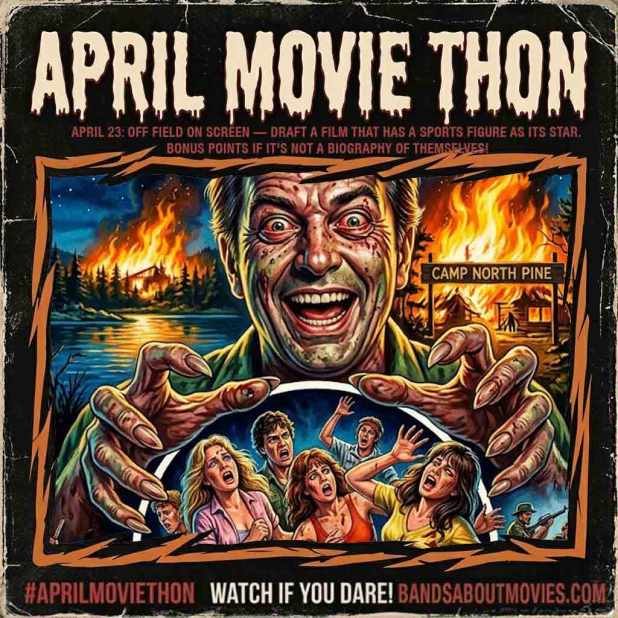
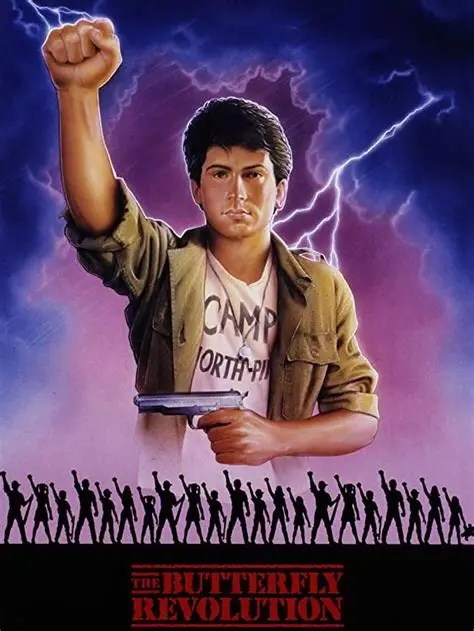
APRIL MOVIE THON DAY 23: Summer Camp Nightmare (1987)

ABOUT THE AUTHOR: Adam Hursey is a pharmacist specializing in health informatics by day, but his true passion is cinema. His current favorite films are Back to the Future, Stop Making Sense, and In the Mood for Love. He has written articles for Film East and The Physical Media Advocate, primarily examining older films through the lens of contemporary perspectives. He is usually found on Letterboxd, where he mainly writes about horror and exploitation films. You can follow him on Letterboxd or Instagram at ashursey. His April Movie Thon list is here.

April 23: Off Field On Screen — Draft a film that has a sports figure as its star. Bonus points if it’s not a biography of themselves!

Before grabbing a gun and taking on his iconic role in The Rifleman, Chuck Conners had already led a varied, interesting life. Like most men of his generation, he served in the military, putting any aspirations he had on hold while serving his country during World War II. Upon discharge, he went back to his first love–sports. And not just one. Well before athletes such as Bo Jackson and Deion Sanders (and, less successfully, Michael Jordan) attempted to excel at multiple professional levels, Conners played in both the NBA (for the Boston Celtics) and MLB (for the Brooklyn Dodgers and Chicago Cubs). Fun fact from Wikipedia: Conners was the first player in the NBA to break a backboard, which broke due to taking a shot, not a slam dunk. I would love to see how this happened! What material did they use to make backboards back then? Was it wood? Was it termite infested? Inquiring minds want to know.

Conners soon realized that he was not going to make a career out of either sport, so he did what many former athletes do when pivoting to a new occupation–try acting. After minor roles in various film and television series, Conners landed the role that would change his life–Burn Sanderson in Walt Disney’s Old Yeller. Sanderson shows up to the Coates’ ranch looking to reclaim his egg-sucking yellow dog. What could have been a villainous sort of role quickly turns wholesome as Sanderson sees the need for Old Yeller to stay with Travis, giving tips about marking hogs and even warning him about “hydrophobie” in the area (AKA Chekov’s Rabies).

As luck would have it, the producers looking to cast the lead in The Rifleman took their children to see Old Yeller and were struck by the fatherly screen presence of Conners, increasing their offer and giving him the role that would, for better or worse, define him for most of his career. 

After The Rifleman, Conners was typecast in similar roles, unable to break away from the clean cut image of Lucas McCain. But thanks to films in the 1970s such as The Mad Bomber, Tourist Trap, and the miniseries Roots, Conners was able to showcase his talent extended beyond playing Mr. Nice Guy. In fact, similar to Andy Griffith, he might have excelled even more under sinister roles.

In 1987, Conners took on the role of Mr. Warren, the religious, uptight new director of Camp North Pines in Summer Camp Nightmare. While the film’s title suggests that it is attempting to capitalize on the summer camp based slasher films that were popular earlier in the decade, Summer Camp Nightmare is less about the horrors of a killer and more about the horrors of unchecked humanity. Based on a 1961 book entitled The Butterfly Revolution, the campers in this film find themselves elevating counselor Franklin to what initially feels like a harmless rebellion against Conners Mr. Warren, but quickly devolves into a full out dictatorship where anyone who goes against Franklin’s policies are eliminated.

The film starts out as a fun time. It is rare to find horror films set in a camp to actually have campers. All of the characters are likable here–the sort of camp I always wish I had been able to attend, but never did out of fear of being bullied (hey, it was the 80’s. Bullying kids with glasses was very en vogue).  Mr. Warren is an easy person for the youth to rebel against. He only allows religious programming on the television in the common area. He begrudgingly allows the boy’s and girl’s camps to intermingle, but quickly forbids it at the first appearance of tom foolery. And Franklin appears to be innocent enough, a quiet counselor who jumps into the water to save our narrator Donald. But his rise to power at the camp ends up being a metaphor for the dangers of Communism (the original novel was written at the beginning of the Cold War, which was wrapping up by 1987). 

Conners is not given much to do here. The role is pretty one note. But I do love seeing him in these twisted sort of roles. Nothing tops Tourist Trap, but it does not have to. Summer Camp Nightmare might be light on horror, but I still found it to be interesting enough to recommend. It is a film that definitely should be rescued from VHS, having never even received a DVD release. I would buy it. If nothing else, just for the performance of a song where two guys sing the song by Fear entitled Beef Bologna, much to the chagrin of Chuck Conners.

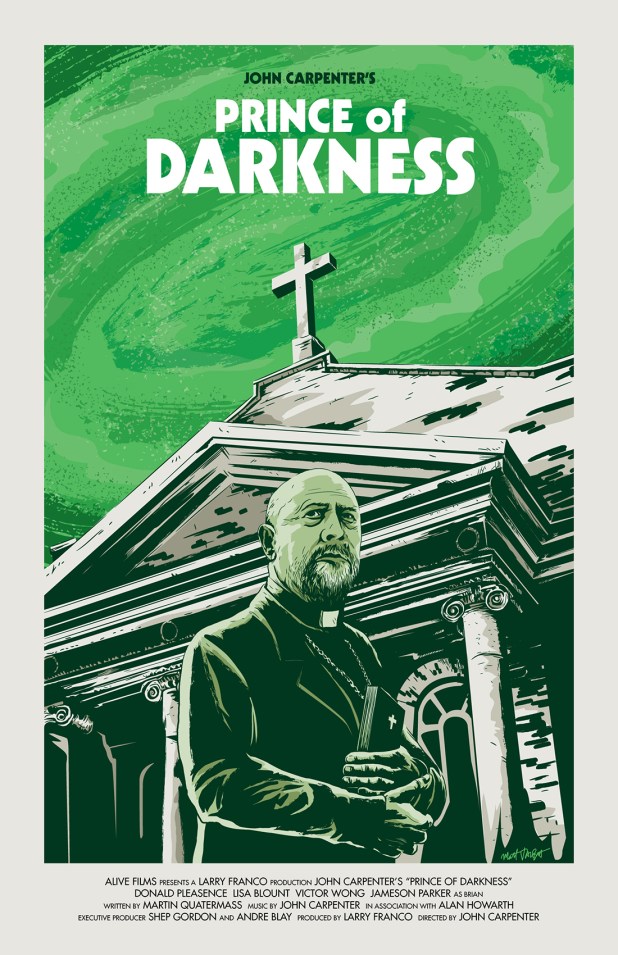
April Ghouls Drive-In Monster-Rama 2026 Primer: Prince of Darkness (1987)

April Ghouls Drive-In Monster-Rama is back at The Riverside Drive-In Theatre in Vandergrift, PA on April 24 and 25, 2026. Admission is still only $15 per person each night (children 12 and under free with adult) and overnight camping is available (breakfast included). You can buy tickets at the show, but get there early and learn more here.

The features for Friday, April 24 are Prince of DarknessPopcornFade to Black and Evilspeak.

Saturday, April 25 has Halloween 4Halloween 5A Bay of Blood and Funeral Home.

The second film in John Carpenter’sApocalypse Trilogy(preceded by The Thing and followed by In the Mouth of Madness), Prince of Darkness was the first fruit of Carpenter’s deal with Alive Pictures. The pact was a filmmaker’s dream: complete creative control provided he kept the budget under a lean $3 million.

This is likely the only horror flick you’ll ever encounter that masterfully blends theoretical physics and atomic theory with ancient religious orders and the Antichrist. The DNA of Nigel Kneale (creator of Quatermass and the Pit) is all over this script; Carpenter even paid homage by using the pseudonymMartin Quatermassfor the screenplay. From transmissions from the future to ancient malevolence being uncorked in the modern age, it feels like a lost Kneale script. Ironically, the British writer was famously grumpy about the association, having previously clashed with Carpenter on the gore-filled Halloween III: Season of the Witch.

Donald Pleasence, Carpenter’s go-to for gravitas, plays a character simply namedPriest(though fans often call him Father Loomis). He discovers a deceased member of the Brotherhood of Sleep just as a secret is about to leak. It turns out a dilapidated Los Angeles church is hiding a canister of swirling green liquid that represents the Anti-God. This sentient sludge begins transmitting data that requires the brains of Professor Howard Birack (Victor Wong) and his team of students to decipher.

One by one, those students are taken over by the Anti-God or killed by the homeless people and insects that surround the building, led by Alice Cooper.  Also, every single person who hasn’t been killed or taken over starts to have the same dream, one where a shadowy figure emerges from the church. Each time they have this dream, a warning sent from the year one-nine-nine-nine, they see more detail. This part of the film, shot on video, played on a television and then reshot with Carpenter’s voice intoning the warning message, is one of the strangest and most surreal sequences ever included in a mainstream film.

I can’t say enough about how much I love this movie. It has great little character bits, moments of true horror and even some great compressed storytelling. I love that, instead of a long explanation of how a physics professor and a Catholic priest could be close friends, one student just offhandedly mentions that they were both part of a BBC exploration of God’s existence. That’s all we really need to know and it lets us answer that and move on to more important matters.

Hw can you not love a film that theorizes that Jesus was an alien and the Catholic Church has known that all along and kept the secret that another alien, an evil one, was on its way…or has a scene where someone just keeps typingI live!over and over again, then this message: You will not be saved by the holy ghost. You will not be saved by the god Plutonium. In fact, YOU WILL NOT BE SAVED.”

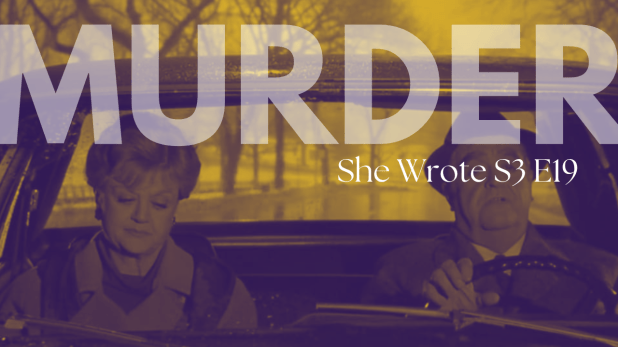
Murder, She Wrote S3 E19: No Accounting for Murder (1987)

Grady Fletcher is in big trouble again when his boss is found dead and he is the main suspect.

Season 3, Episode 19: No Accounting for Murder (March 22, 1987)

Jessica investigates when her nephew, a junior executive for a large accounting firm, is charged with tax fraud and the murder of his boss.

Who’s in it, outside of Angela Lansbury?

Michael Horton is back as Grady. Every time he shows up, I hope this is the episode in which he dies. 

Dorothy Lamour, who was in the Hope/Crosby road movies as well as Creepshow 2, is Sophie Ellis.

Geoffrey Lewis, star of many westerns and father of Juliette, is I.R.S. Agent Lester Grimshaw.

Barney Martin, Morty Seinfeld, is Lieutenant Timothy Hanratty.

Ron Masak, the sheriff in Laserblast, is Marty Giles.

Patty McCormack is Lana Whitman. Yes, Rhoda, The Bad Seed!

In smaller roles, Thom McFadden is Harry Cauldwell, James Noble is Paul Carlisle, Michael Tolan plays Ralph Whitman, Kate Vernon is Connie Norton, Paul Comi is The Phantom, Peggy Doyle is Edna Weems, Charles Walker is a sergeant, Michael J. London is a seller and Lemuel Perry is a waiter.

What happens?

If there is one thing you can count on in this world, it’s that Grady Fletcher is going to find a body, look guilty as hell and then stand there vibrating with anxiety until his Aunt Jessica saves his hide. This time, our least favorite disaster-prone nephew is working a New York accountancy gig for a guy named Ralph Whitman. Jessica drops by for a visit, they go to dinner and they come back to find Whitman dead at his desk with a cryptic message scrawled on the wall in red.

Oh yeah — the office is also haunted by The Phantom.

What an office it is. You’ve got the sexy secretary, Connie, played with maximum eyeliner and a blouse holding on for dear life; a jerk named Carlisle who pretends to love Jessica’s stories and a cop so Irish he basically breathes shamrocks and corned beef. Even better, he and JB share some genuine moments over their shared widowhood.

But the real MVP is that aforementioned Phantom, who is really a homeless man living in the walls to survive the NYC winter.

Unlike so many episodes, Jessica finds herself in actual, physical danger. Usually, she delivers her summation with the police hidden behind a curtain like a high-stakes game of Scooby-Doo. Here? She’s alone with a killer who realizes she’s onto him. Watching JB drop her usualI’m just a mystery writermask to show genuine, wide-eyed alarm is a reminder that Angela Lansbury could out-act anyone on the payroll.

The victim? Ralph Whitman is muscling in on the wrong blackmail scheme.

Who did it?

Carlisle. But of course.

Who made it?

This was directed by Peter Crane and Gerald K. Siegel, both of whom worked on 9 episodes of the show.

Does Jessica dress up and act stupid? Does she get some?

No! What is happening? That said, Jessica does go get some corned beef with cop, so maybe he made her kiss his Blarney Stone.

Was it any good?

I hate Grady.

Any trivia?

Ron Masak would go on to play Cabot Cove Sheriff Mort Meztger from season 5 on.

The closing credits originally contained a tribute to Richard Levinson, co-creator of the series, who had died of a heart attack a few days before the episode aired. This tribute was removed for rebroadcasts.

Give me a reasonable quote:

NYPD Lt. Timothy Hanratty: Now, now, there’s no such thing as ghosts. Banshees maybe, and of course there’s the little people, but no ghosts.

What’s next?

The reform mayor dies in a so-called accident, and the mayor’s father is murdered after he demands an investigation into it.

APRIL MOVIE THON DAY 14: Oltretomba (Beyond) (1987)

April 14: Viva Italian Horror — Pick an Italian horror movie and get gross.

The restoration and release of Fabio Salerno’s work by Blazing Skull—specifically within the collection The Other Dimension and the Films of Fabio Salerno—has finally shone a light on a corner of Italian underground cinema that was nearly lost to time. Blazing Skull’s assessment of Salerno is bold but fitting: they position him as the “missing link between Dario Argento and George & Mike Kuchar.”

In just over 15 minutes, Salerno’s short The Other Dimension (1987) explores the hubris of a man obsessed with the afterlife. Like a no-budget version of Flatliners, the protagonist seeks to pierce the veil by undergoing a temporary, controlled death. Obsessed with seeing the other side, he wants to link his mind with a dying man and follow him into the dimension of the dead. To achieve this, he identifies a target, a wicked man who is a thief or a drug user, believing this will lead him to the most interesting parts of Hell.

He finds the unconscious individual in a derelict building and uses a syringe to inject himself with a substance meant to induce a death-like trance. As the drug takes effect, he attempts to focus his mind on the dying stranger to bridge the gap between life and the beyond. He describes falling into a trance but finds that nothing served and realizes too late that the dose he took was bad stuff. There’s also a sink filled with worms that he eats out of, because of course he should.

Sadly, Saserno would die just six years after making this. He also made The Harpies, another movie even more indebted to Argento’s movies.

You can watch this on YouTube.

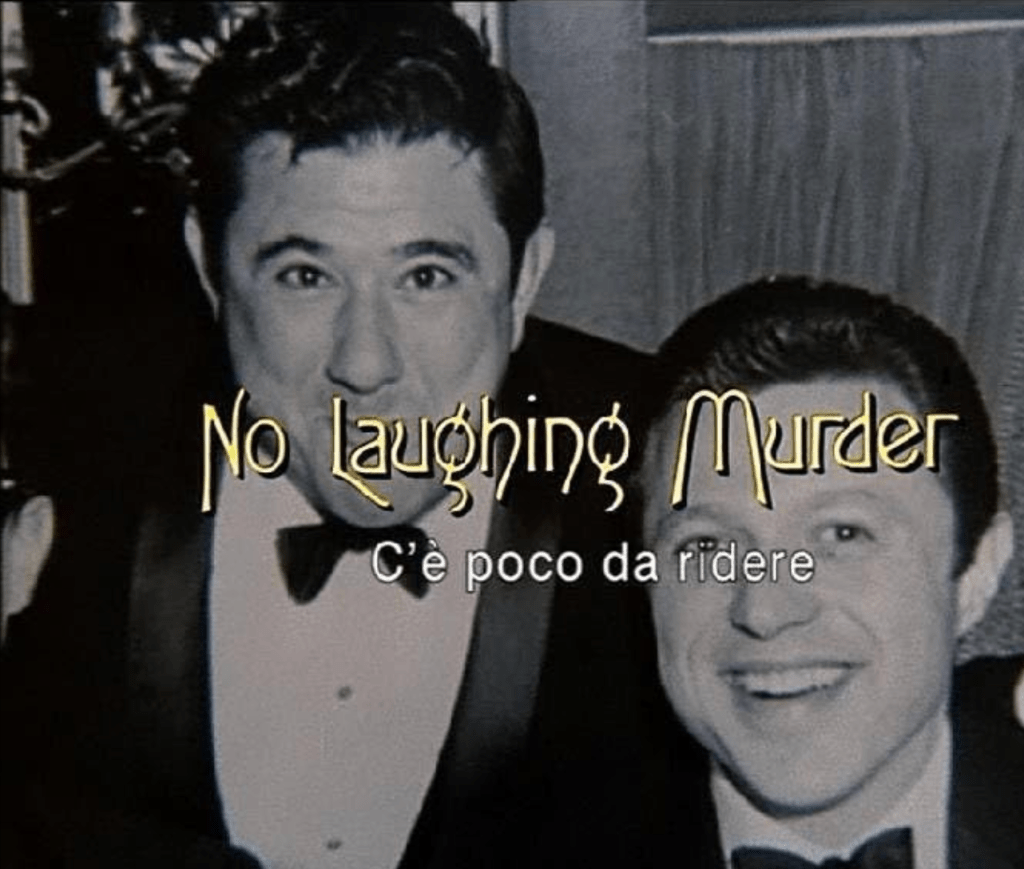
Murder, She Wrote S3 E18: No Laughing Murder (1987)

Someone is found dead after the engagement party for the offspring of two estranged comics.

Season 3, Episode 18: No Laughing Murder (March 15, 1987)

Welcome to Cooperville, New York. Jessica is in town to visit the Hiawatha Lodge, which is owned by the widower of Jessica’s dear, departed college pal. He’s a retired stand-up comic, and his daughter is set to walk down the aisle with the son of his former comedy partner, who’s now a bitter arch-nemesis.

Who’s in it, outside of Angela Lansbury?

Murray and Mack, the former comedy duo in this, are Buddy Hackett as Murray Gruen and Steve Lawrence as Mack Howard. 

Corrie Gruen, Murray’s daughter, is played by Beth Windsor, while her fiancé, Kip Howard, is played by George Clooney.

George Furth is played by Farley Pressman in one of his three roles on the show.

David Knell plays Police Chief Wylie B. Ledbetter.

Sheree North plays Norma Lewis. You might know her as Kramer’s mother.

Arte Johnson from Laugh-In is Phil Rinker.

Pat Crowley plays Trudy Howard.

In smaller roles, Pat Delany is Ms. Kline, Alice Nunn (Large Marge!) is Henrietta, Richardson Morse is Dr. Worth, Daniel Chodos is Al, Paul Ganus is a P.A., Ron Cey is a musician, 

What happens?

At a wedding bash that feels more like a wake, Mac (half of the comedy duo Murray and Mack) gets a knife in the back. He pulls through because you can’t kill a comic that easily. He’s probably died on stage a thousand times. The real tragedy? Phil, their agent, is found swinging from a rope in the storeroom.

The local law is represented by Wiley, a rookie cop who looks like he’s still waiting for his first shave. He knows he’s outclassed, so he leans on Jessica like a crutch. Our girl J.B. takes one look at the scene and realizes this wasn’t a suicide. It was a cold-blooded hit.

Phil had found the discrepancies in the books, so he had to be killed.

Who did it?

The investment advisor. It’s always the guy with the ledger. He was skimming the duo’s accounts to fund a lifestyle their jokes couldn’t actually afford.

Who made it?

This was directed by Walter Grauman and written by Tom Sawyer, one of the 20+ episodes he wrote. 

Does Jessica dress up and act stupid? Does she get some?

No, and I am beyond enraged.

Was it any good?

It’s decent, even if it feels like every detective show has a comedy partner murder.

Any trivia?

Mack and Murray do an Abbott and Costello routine from Rio Rita.

While we’re discussing fighting comedic teams, Buddy Hackett played Bud Abbott in Bud and Lou

Give me a reasonable quote:

Murray Gruen: Well, actually, I am here. And, Mack, I gotta be here in this town. You see, I met this… I met this broad here in the town, and… Sh-She kinda expects me… to take her on a honeymoon.

Norma Lewis: Honeymoon? Honeymoon?

Trudy Howard: Oh! That’s great!

Norma Lewis: A honeymoon!

What’s next?

Grady Fletcher is in big trouble again when his boss is found dead and he is the main suspect.

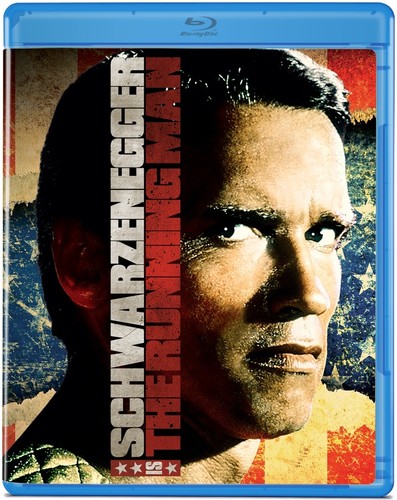
PARAMOUNT BLU-RAY RELEASE: The Running Man (1987)

The Running Man was a troubled production, with original director Andrew Davis (Under SiegeThe Fugitive) being replaced a week into filming by former Starsky and Hutch actor Paul Michael Glaser (he’s gone back to acting, but not before giving us the magic that is Kazaam).

In his book, Total Recall, Arnold wrote that this was a horrible decision, as the director “shot the movie like it was a television show, losing all the deeper themes. In fairness, Glaser just didn’t have time to research or think through what the movie had to say about where entertainment and government were heading and what it meant to get to the point where we actually kill people on screen. In TV, they hire you and the next week you shoot, and that’s all they were able to do.”

Written by Steven E. de Souza (who had a hell of a run, writing Commando, 48 Hrs. and the first two Die Hard films, while also adapting Mark Schultz’s Xenozoic Tales for TV as Cadillacs and Dinosaurs) from the Richard Bachman book (Bachman was and is, of course, Stephen King, who was using a pseudonym to see if his success was due to talent or luck. A Washington, D.C. book clerk named Steve Brown discovered the truth before an answer could be found. In fact, Bachman’s next book was to be Misery, which became a King novel. The Dark Half, which became a George Romero movie, is based on this experience. In the original book, hero Ben Richards is nothing like the physical description of Arnold, who is near-superheroic.

The film starts with the premise that in 2017 — a time we’re all sadly too familiar with — the U.S. has become a police state after a worldwide economic collapse — perhaps not as close to home, but uncomfortably nearby. Actually, it’s way too fucking close to reality, as the opening text tells us that the “great freedoms of the United States are no longer, as the once great nation has sealed off its borders and become a militarized police state, censoring all film, art, literature, and communications.”

Within two years, the only thing that keeps the populace under control is The Running Man, a game show where convicted felons battle for their lives against the Stalkers, who are presented as pro wrestling/American Gladiators-style stars. Damon Killian (Richard Dawson of TV’s Family Feud and Hogan’s Heroes, as well as one of the first people in the U.S. to own a VCR) hosts the proceedings and remains one of the enduring reasons to enjoy this film. One gets the idea that Dawson was keen to parody his years of hosting game shows, and he cuts through this film, making his role so much better than it deserves to be, whether it’s his ads for Cadre Cola or the way he shits on everyone in his path, even lowly custodians. IMDB states that plenty of folks who worked with Dawson on Family Feud claim he was exactly like this character, but that seems like sour grapes in the form of hearsay. Anyways, worried that ratings may slip, Killian pushes for Ben Richards, the “Butcher of Bakersfield,” (actually, it was all a setup and he was wrongly convicted of killing citizens during a food riot) to be the next runner.

Ben gets caught because instead of staying at a resistance camp — post-prison break, where people’s heads get blown up real good — with fellow escapees Weiss (Yaphet Kotto from Alien and Live and Let Die) and Laughlin, he decides to find his brother. Instead, his brother has been taken in for re-education. In his place is Amber Mendez (Maria Conchita Alonzo, Predator 2The Lords of Salem), the composer of the music for The Running Man.

Richards takes Amber hostage, but she knees him in the little Arnold, and he’s caught with a big net. Oh yeah — we also meet Mick Fleetwood as a resistance leader here. Remember how I said he played himself? Here’s my evidence. He states that the government has “burned my music,” and his second-in-command is named Stevie, after Fleetwood Mac band member and former flame Stevie Nicks (but is played by Dweezil Zappa, who is also in Pretty in Pink and Jack Frost). In exchange for Killian not putting his friends into the game, Richards enters the contest, only to learn that it’s all a lie and they’ll all be part of The Running Man.

The game begins and immediately, Richards does something that’s never been done. No Runner has ever killed a Stalker, but he bests and kills Subzero (former pro wrestler Professor Toru Tanaka, who played just about every Asian henchman ever. He’s the butler in Pee Wee’s Big Adventure, he’s one of the heavies in The Last Action Hero, he’s Rushmore in 3 Ninjas and his IMDb filmography has many roles that simply list him as “sumo wrestler” or “bodyguard.”).

Meanwhile, Amber learns from the news that the media’s presented truth does not line up with her memories — Richards is accused of killing numerous people whom she did not see him murder. Her detective work gets her caught and now, she’s on the show.

Buzzsaw (Gus Rethwisch, Arnold the Barbarian from House 2) kills Laughlin before Richards dispatches him. Dynamo (played by Erland van Lidth, a classically trained baritone opera singer, who is actually singing the aria that introduces himself), another Stalker, kills Weiss before Richards flips his buggy, trapping him. However, Richards refuses to kill him, which increases his popularity. As the downtrodden people of the U.S. regularly bet on the game, they suddenly stop betting on the Stalkers and bet on a Runner for the first time — to the anger of Killian.

Killian offers Richards a Stalker role, but Richards turns it down. In retaliation, he sends Fireball, one of the most famous Stalkers, after Ben and Amber. He’s played by Jim Brown, who knows about the world of blood and circuses, seeing as how he is a former NFL football star. Plus. he was also in The Dirty Dozen and Mars Attacks! Fireball’s pursuit takes them into an abandoned factory where they find the charred remains of past winners — all lies, as they were really killed by Fireball, who is killed by his own weapon.

Totally losing his mind, Killian wants to send the game’s biggest star, Captain Freedom (Jesse “The Body” Ventura from Predator), to take on Richards. Freedom refuses, so the show creates a CGI version of reality in which Captain Freedom wins by killing Richards and Amber.

Meanwhile, Mick Fleetwood finds our stars and helps them get into the control room, where Amber kills Dynamo and Richards reveals the truth. Killian begs for his life, as all he was doing was giving the people what they wanted — death and chaos. Ben refuses, sending Killian into the game zone, where his rocket sled hits a Cadre Cola billboard and explodes.  Boom — a happy ending, as Ben and Amber romantically walk into the sunset, until you realize that their victory has changed absolutely nothing and society will just keep on being the same exact way.

Remember when I said this movie hasn’t aged well? I’d argue that it looks worse than the much smaller-budgeted Warriors of the Year 2072. The costumes look cheap, the video screens look sadly composited, and everything feels woefully low-budget for a film that cost $27 million dollars to make.

And what of the claim that this film’s post-apocalyptic future is better than our own? One only has to watch the scene where Richards is caught at the airport. Today’s post 9/11 security checkpoints are way worse than anything the hero of this film encounters — he’s never frisked and the tourists freely walk onto the tarmac of the airport, just like folks once could.

Honestly, director Glaser was in well over his head. If a director like Paul Verhoeven was at the helm — like Arnold’s Total Recall — the sheer ridiculous nature of a game show controlling the world could have really been a winner. As it stands here, this is a fun film that makes you wish that it could be so much more — kind of like eating Buffalo wing flavored chips and wishing that they were really Buffalo wings.

In truth, life imitated art in this film, as it inspired the aforementioned American Gladiators and the dance routines were choreographed by future reality game show hostess Paula Abdul.  And the Adidas-sponsored costumes of the Runners hint at the days when everything would have a branded logo.

You can get The Running Man from Deep Discount.
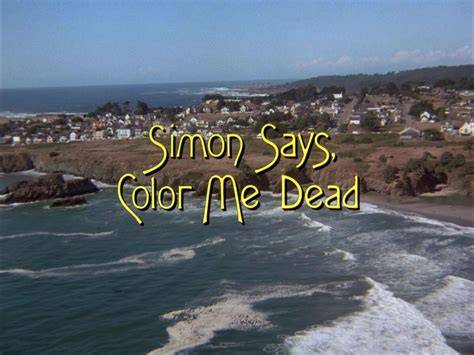
Murder, She Wrote S3 E17: Simon Says, Color Me Dead (1987)

Jessica investigates when an artist is murdered and his prized painting is missing.

Season 3, Episode 17: Simon Says, Color Me Dead (March 1, 1987)

Simon Thane is a celebrated artist living in Cabot Cove. For the last several years, Thane has jealously guarded his favorite painting, which he has never allowed to be seen publicly. Jessica becomes involved in the story when Thane is murdered and his prized painting stolen, leading our heroine to conclude that the mysterious work of art may contain a clue as to the killer’s identity.

Who’s in it, outside of Angela Lansbury?

As always, Tom Bosley as Sheriff Amos Tupper and William Windom as Dr. Seth Hazlitt are here.

Diane Baker (The HauntedThe Old Man Who Cried Wolf) is Eleanor Thane.

Comedian Foster Brooks plays Simon Thane.

Ann Dusenberry, Tina from Jaws 2, is Carol Selby.

Leonard Frey is Felix Casslaw.

Tess Harper (Tender Mercies) is Irene Rutledge.

Steve Inwood (Cruising) is Cash Logan.

Dick Sargent (Bewitched) is George Selby.

Chris Hebert (Invaders from Mars) is Tommy Rutledge.

In smaller roles, Phillip Clark is Deputy Collins and Daryl Lynn Wood is Martha Sommers.

What happens?

Simon and Eleanor Thane have been staying in Cabot Cove, but haven’t even tried to spend time with J.B. She’s busy being, well, Jessica. Ever the mediator, she steps in when Martha Sommers accuses young Tommy Rutledge of bike theft. Jessica’s solution is to gift Tommy a bike once owned by her late husband, Frank. This highlights her maternal warmth, contrasting sharply with the cold, pretentious salon hosted by the Thanes later that evening, which they at least remember to invite her to.

Yes, Simon Thane isn’t just a celebrated artist. He’s a man who thrives on being the smartest and most elusive person in the room. Living in Cabot Cove for the quiet atmosphere, he has spent his final years obsessively guarding a secret masterpiece.

Man, the guest list is a powder keg. Felix Casslaw is a gallery owner smelling a massive payday; Carol and George Selby seem to have a deep, albeit strained connection to Simon and Eleanor, Simon’s wife, who has spent years in the shadow of his genius and his moods.

Hours after everyone leaves, young Tommy wakes up to a bloody Irene who tells him to go back to bed. Everyone else wakes up to a dead Simon and a missing painting. Irene swears she didn’t kill him, but Amos is convinced that it’s a crime of passion, remarking that “Just because there’s snow on the roof doesn’t mean there’s not fire in the hearth.”

Is he projecting his cop boner onto his favorite mystery writer?

Now, Carol believes that Cabot Cove should have a Simon Thane exhibition and it seems like everyone wants to get richer off his death. Irene claims that before Eleanor went to bed, she went to see Simon to get the money he owed her, but he was already dead. Somehow, in the middle of all of this, we learn that Irene isn’t Tommy’s real mom. An awful lot happens in Cabot Cove.

Anyway, we got a dead artist, and this is why Simon and Eleanor were not talking to J.N. Simon had to die to learn that lesson.

Who did it?

Jessica realizes that the painting wasn’t stolen just for its monetary value. It was stolen because it was a confession in oil. The painting revealed Simon’s true obsession with Carol Selby, but it also captured a truth about their relationship that Carol couldn’t allow to become public. Simon was in love with her; she just would cock tease him by letting him paint her, but the truth is that she never loved him.

Who made it?

Kevin G. Cremin, who was an assistant director on several other episodes, directed. It was written Robert E. Swanson, one of 87 episodes he told the story of.

Does Jessica dress up and act stupid? Does she get some?

No. I say it’s high time we get that.

Was it any good?

Haven’t we already had another artist die on this show? Yes. Many more will die before we’re done.

Any trivia?

Diane Baker and Steve Inwood would be in three more episodes as different characters.

Give me a reasonable quote:

Jessica Fletcher: I wouldn’t be a bit surprised if they started seeing quite a lot of each other. How about some more coffee, Amos? And I will tell you something else to put into your amnesia file.

What’s next?

Jessica investigates when an artist is murdered, and his prized painting is missing.

Murder, She Wrote S3 E16: Death Takes a Dive (1987)

Jessica visits her old friend, private investigator Harry McGraw (Jerry Orbach), in Boston, who has become entangled in the high-stakes world of boxing.

Season 3, Episode 16: Death Takes a Dive (February 22, 1987)

Thanks to her latest run-in with Harry McGraw, Jessica discovers that she is now the manager of a down-on-his-luck prizefighter who is looking to retire following his next fight. And while getting a crash course on her new endeavor, she has her hands full trying to clear Harry in the murder of a shady fight promoter.

Who’s in it, outside of Angela Lansbury and Jerry Orbach?

Doc Penrose? That’s John Amos from Good Times.

Ernest Borgnine plays Cosmo Ponzini. You may know him from From Here to Eternity. I know him from Super Fuzz.

LeVar Burton plays a newsman named Dave Robinson. You may not recognize him without his  Star Trek: The Next Generation goggles.

Bradford Dillman is Dennis McConnell. Wow — that dude battled eco-horror in the 70s like no one else.

The law in this is Lt. Casey, played by Ray Girardin.

Holy Adam West, Batman! Adam West is in this as Wade Talmadge.

Caren Kaye is playing Lois Ames, Michael McGrady plays Sean Shaleen, Lynn Moody is Pam Collins, Harold Sylvester is Blaster Boyle, Bill Capizzi is a doorman, Richard Balin is a commentator, Marcia Moran is a waitress, Richard Bravo is Sanchez, and Jeff Langton is a boxer.

What happens?

Jessica Fletcher heads to the mean streets of Boston to visit her favorite sentient trench coat, private investigator Harry McGraw. Naturally, Harry is chin-deep in gambling debts and managed to get himself wrangled into the high-stakes, low-morals world of professional boxing. He’s got a sure thing in a heavyweight named Blaster Boyle, but he needs J.B. to bankroll the training. Jessica, ever the softie for a rogue with a Brooklyn accent, cuts the check only to find herself acting as the official manager when Harry gets framed for the murder of Wade Talmage, a fight promoter who was about 10% human and 90% slime.

The suspect pool is deeper than a spit bucket. You’ve got a sportswriter out for vengeance because Talmage ruined his father, a fighter named Sean Shaleen, who doesn’t realize he’s being played and a mistress done wrong.

Oh yeah. The sure thing heavyweight, Blaster Boyle, isn’t just a fighter; he’s a gentle giant with a glass jaw and a heart of gold, making the stakes feel personal. Jessica isn’t just protecting Harry’s freedom; she’s protecting Blaster from being sold out by the vultures circling the ring.

Who did it?

Boxer Sean Shaleen. He was tired of being a pawn in Talmage’s games and decided a shotgun blast was better than taking a dive.

Who made it?

It was directed by Seymour Robbie and written by series creator Peter S. Fischer.

Does Jessica dress up and act stupid? Does she get some?

She does do a training montage. Also, I fully believe that Harry McGraw has gotten up in her guts and had more than a few bowls of Cabot Cove Clam Chowder, if you know what I’m saying, and I know you do.

Was it any good?

It was pretty good!

Any trivia?

This extended episode served as a backdoor pilot for Harry McGraw’s own short-lived spin-off series, The Law & Harry McGraw.

John Amos and LeVar Burton both played Kunta Kinte in Roots.

Harry McGraw is supposed to be 47. Now I feel old.

Give me a reasonable quote:

Harry McGraw: I know. But I sold them something even better. The inside story of a tough, resourceful private eye who single-handedly broke open one of the largest murder cases of the decade.

Jessica Fletcher: Single-handedly?

Harry McGraw: So I exaggerated a little. What’s a little white lie between friends?

What’s next?

Jessica investigates when an artist is murdered, and his prized painting is missing.

88 FILMS BLU RAY RELEASE: Picture of a Nymph (1987)

In the landscape of 1980s Hong Kong Ghost-Fu movies, Wu Ma’s Picture of a Nymph stands as a beautifully rendered companion piece to the genre’s heavyweights. The story kicks off when Shih Erh (the acrobatic powerhouse Yuen Biao), a dedicated Taoist disciple, takes a hapless scholar, Tsui Hung-Chuen (Lawrence Ng), under his wing. The catalyst? A demon battle gone wrong that leaves the scholar’s house in literal ashes.

While Shih Erh and his master, Wu Men-Chu (played by director Wu Ma), attempt to shield the scholar from the literal legions of hell, the plot thickens with a classic supernatural romance. Tsui falls for Mo Chiu (the ethereal Joey Wang), a ghost enslaved by the terrifying King Ghost (Elizabeth Lee).

Picture of a Nymph features Sammo Hung’s Stuntmen Team, which means it has more action than any demon movie America will ever make. Because Joey Wang famously portrayed the lead in A Chinese Ghost Story, critics often dismiss this as a quick cash-in. However, Picture of a Nymph feels more like a spiritual sequel or a remix of the same melancholic themes.

I love the idea that Mo Chiu’s spirit hides in a painting that Tsui makes of her. I’m also a sucker for the doomed romance between those who have died and those who are still alive. 

Extras on the 88 Films release of this movie include two commentaries, one by Frank Djeng and another by David West. It comes in a breathtaking rigid slipcase with art by Sean Longmore, and includes a 40-page book and a collectible postcard. You can get it from MVD.