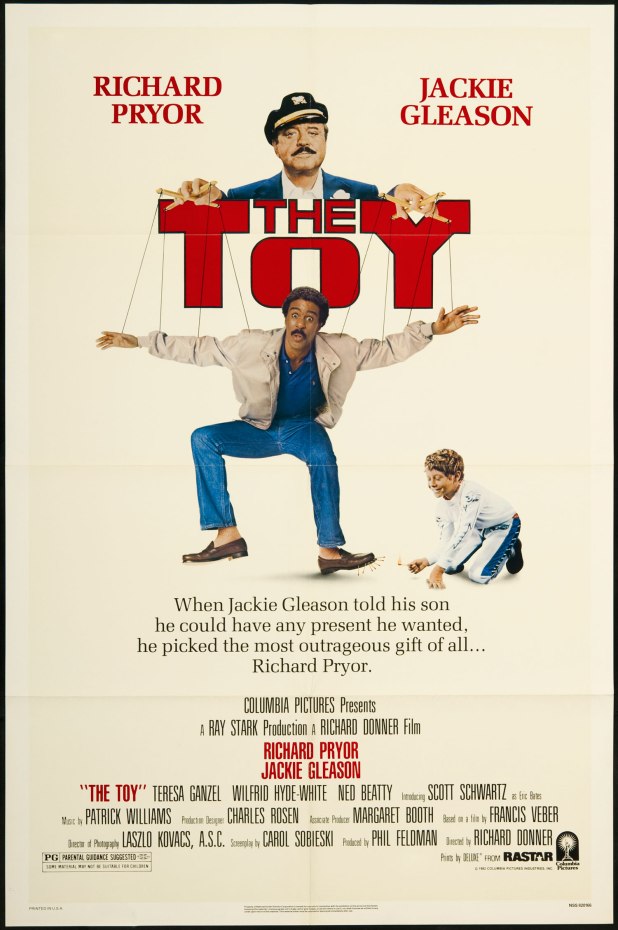
The Westgate Cinema in New Castle, PA wasn’t a fancy or clean theater. Yet for most of my childhood, that’s where we saw films for $1 before 5 PM, with my family often sneaking into multiple showings or even more than one film a day. The Toy was one of those films, a movie lost in the miasma of the years between ten and twelve, mixed in with other moves like The Incredible Shrinking Woman, the Jerry Lewis vehicle Hardly Working and The Cannonball Run.
Jack Brown (Richard Pryor) is in danger of losing everything — his marriage and his home — and becomes so desperate for a job that he dresses up like a traditional Southern maid to serve lunch to businessman U.S. Bates (Jackie Gleason).
He’s quickly fired, but Bates’ spoiled son Eric (Scott Schwartz, who yes, went on to appear in A Christmas Story and perhaps more infamously adult films like Scotty’s X-Rated Adventure) — upon being told he can have anything in the store — asks for Jack. Yes, he wants to own a black man as his toy, a fact that powers the whole film.
Bates’ henchman Sydney Morehouse (Ned Beatty) sets up a deal where Jack will be Eric’s live-in friend in exchange for enough money to save his house. The trouble is that the humiliation isn’t worth any money. Yet this is an 80’s movie, so of course, the kid’s rough edges get smoothed out and the two come an understanding, eventually working together to expose the father’s brutal personal and business demons.
This was the movie that Richard Donner followed his work on Superman with. Gleason is, as always, a delight. He was supposedly rough on Schwartz during filming, as the comedian loved to ad lib and it threw the young actor off.
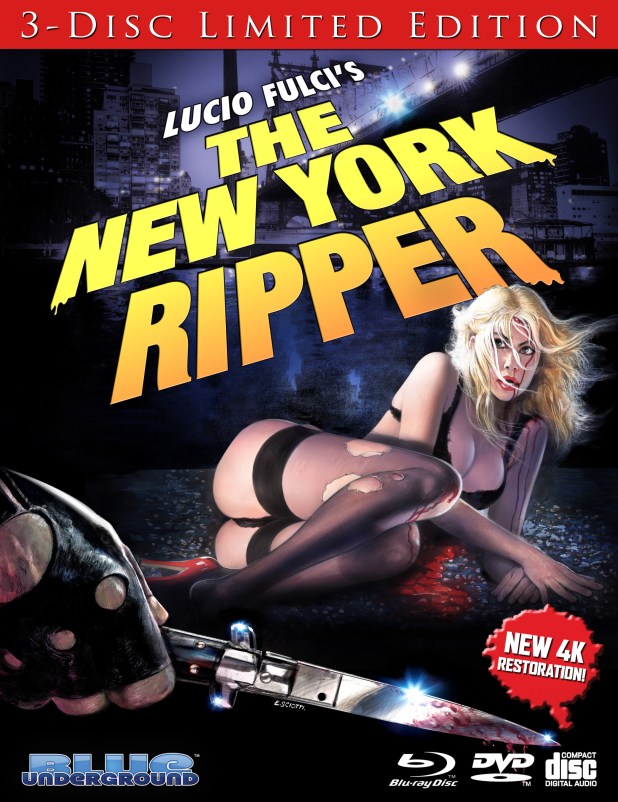
Gorgeous is not a word one would associate with a film as brutal and infamous as The New York Ripper, but here we are. For all the squalor, vice and viscera that the movie displays, somehow the new Blue Underground 4K reissue of the film is also awash in deeper colors, sharper resolution and more clarity. I wondered, “How can a low budget Italian grindhouse movie from 1982 be improved any further than the last release of this film?” Turns out I was wrong. This is a whole new look for the film.
Not bad for a film that its writer, Dardano Sacchetti, said came from a director who “nurtures a profound sadism towards women.” The New York Ripperisn’t an easy watch. In fact, a UK censor claimed was “simply the most damaging film I have ever seen in my whole life.” For all the times I wonder why some reviewers feel the need to list the trigger warnings in a film, I can admit that the entirety of this movie is basically one big trigger.
It’s also a movie that came out at the end of the slasher fad in the U.S., at a time when mainstream critics were finally confronting films that had been playing grindhouses and drive-ins for years. It barely played the U.S. in 1984 before being released in censored form on VHS in 1987. It still hasn’t been released uncut in England.
I have a slightly different view of the film than most. In a world where people obsessively watch Law and Order at all hours of the day and night, The New York Ripperoffers a very similar story with one glaring difference: there is no center of morality. There’s not a single redeeming character, save perhaps Fay Majors and Susy Bunch. There isn’t a sympathetic killer nor a beaten down cop with a hidden heart of gold. This is New York City standing on the brink of Armageddon at the end of the 20th century. There isn’t room for goodness, just a struggle to survive.
Beyond Fulci unleashing every evil impulse he has when it comes to gore and destroying human bodies, the real part of this film that makes it so hard to swallow is the overwhelming feeling of misery that imbues every frame. No one is getting out alive or unscathed. Cops choose their own careers over the prostitutes that they may or may not be able to admit that they love. The very same cop, whose morality is very much in question, rails against the open marriage that is the closest thing to romantic love in the film. And the movie ends with a dying child in a hospital bed repeatedly calling out to a father who now cannot answer her. There’s grim and then there’s this film.
So why am I so excited to have this new 3-disc limited edition in my collection? Because I feel that it’s an important part of Lucio Fulci’s career. It’s nearly a bookend with another of his giallo works, Don’t Torture a Duckling. Unlike his giallo contemporaries like Argento and Martino, Fulci has no concern with fashion or hyper colors. Instead, he uses the framework of the genre — hidden killers, red herrings, psychosexual motive — to rail against the inhumanity of morality and religion, while at the same time fascinatingly being as immoral as it gets.
After this film, Fulci would create Conquest, a baffling fog-entrenched take on the sword and sorcery film that I absolutely adore, and Warriors of the Year 2072, which is the final film he’d work with Sacchetti on. It’s the beginning of a downward slide in quality and health for the Godfather of Gore, although I like some of his later period films more than others, such as Murder Rock, Aenigma and The Devil’s Honey.
This Blue Underground release is packed with extras, including audio commentary from Troy Howarth (author of Splintered Visions: Lucio Fulci and His Films), interviews with Sacchetti (who pulls no punches, discussing just how little he cares for original writers Gianfranco Clerici and Vincenzo Mannino); actors Howard Ross, Cinzia de Ponti and Zora Kerova; a discussion of the film with Stephen Thrower (author of Beyond Terror: The Films of Lucio Fulci); a breakdown of the film’s locations in 1981 and 2019; and an incredible feature with poster artist Enzo Sciotti, who shows how he creates his iconic posters. That interview is more than worth the price of this set alone! Plus, there’s a soundtrack of the film’s music and a booklet with an essay by Travis Crawford. I really have no idea how anyone can top the care, quality and love that Blue Underground bestowed on this release.
This isn’t a movie for everyone. It’s maximum Fulci without the benefit of the supernatural to dull the edges of the sadism on display. Yet it’s a well-made film that keeps you guessing and takes you on a near mondo tour through the uncertain haze of the death throes of New York City before Times Square was reinvented as a tourist-friendly paradise. For lovers of extreme cinema and Italian exploitation, there’s plenty to quack about here.
DISCLAIMER: I was sent this movie for review by Blue Underground, but I would have bought it regardless.
I pity the kids who didn’t grow up watching Night Flight. While the rest of the teenage world was out getting drunk and laid from 1981 to 1988 (although syndicated repeats would last until 1996), I was parked in front of the TV, soaking up the knowledge that would lead to lifelong obsessions in music and media.
Night Flight also curated movies that otherwise would never find an audience or ones that had simply disappeared. From the two Andy Warhol horror films to The Brain, Daughters of Darkness and Pink Flamingoes to Fantastic Planet, The Kentucky Fried Movie and Liquid Sky, the show brought incredibly strange films that even the largest video stores might not carry directly into my home. For a kid trapped in a cultural desert an hour from Pittsburgh — hardly a media force save for being the center of zombie movies — Night Flight kept me going.
Set in the fictional town of Charlestown, Pennsylvania (the same place that writer Nancy Dowd also covered in her film Slap Shot), Ladies and Gentlemen, The Fabulous Stains feels like my hometown. It’s the kind of movie that demands to be seen, one that should have never been derailed by a disastrous screening in Colorado.
Corinne Burns (an incendiary Diane Lane, who is also perfect in Streets of Fire) is already a star as the movie begins. She struggles to support herself and her sister and when she’s interviewed by a local TV station, she lashes out and gets fired by her boss. Teenage viewers fall in love with her and in a follow-up interview, she’s even more belligerent and sarcastic.
Corinne attends a Metal Corpses concert put on by small-time promoter Lawnboy where she’s amazed by a punk band called the Looters. The two bands could not be more different and they’re at constant war, so Lawnboy brings The Stains — Corinne’s band with her sister and cousin — on tour to act as a buffer.
The first show goes horribly. The girls can barely play and Corinne yells at the audience in a near-monotone voice before flipping out on them. Then, the Corpses bassist OD’s in the women’s bathroom. Corinne takes advantage of the media, claiming that he died of a broken heart, knowing that he could never have her. She claims that she never puts out and debuts a new look — streaked hair, pink war paint and see-through clothing — that is soon imitated by female fans.
The media falls in love with her, with men hammering her antisocial attitude and lack of talent while women see them as female empowerment. Girls start running away from home to follow the band. Meanwhile, the Looters frontman Billy shares his illiteracy and feelings behind his song “Join the Professionals” as an attempt to seduce Corinne. They make out in a hotel room shower, but does our heroine really put out? Does she simply fall in love and run away with the rock star?
Their romance soon falls apart when an agent reveals that Billy wanted The Stains replaced on the tour. Corinne goes from blood when she steals the very song Billy confided in her about and makes it her first single. Things happen fast — maybe too fast, one of the few bad things I have to say about this movie — and the girl become the headliners and cut out Lawnboy.
At the Stains’ first show as the new lead band, Billy incites a riot by convincing the band’s followers that The Stains have become corporate sell-outs. The agent cancels their contract after the concert falls apart, but Corinne gets paid by threatening the man with a can opener, a movie she learned from Billy.
After one last TV appearance, where a male journalist laughs at her, Billy apologizes and asks for her to come back. She refuses, wandering the streets until she finds a group of girls with guitars, all listening to her sing on the radio.
That’s where this movie should end.
Dowd was unsatisfied with the editing and final cut of the film, which led to her changing her name on the final credits. She was also groped by a camera operator on set, which only added to her dissatisfaction with this movie. The tacked on ending — where The Stains have become an MTV success on Lawnboy’s new record label — seems glittery and polished and at odds with every moment of the film’s grit.
The music is great, though. That’s because other than The Stains (Lane, Laura Dern and Marin Kanter), they’re all real bands. The Looters have actor Ray Winstone as Billy, but otherwise are an all-star punk lineup with Pail Simonon from The Clash on bass and Sex Pistols Steve Jones and Paul Cook on guitar and drums. The Metal Corpses have Fee Waybill and Vince Welnick from The Tubes as members. And Black Randy and The Metrosquad also show up.
This movie was directed by Lou Adler, who is also a Grammy Award-winning record producer, music executive, talent manager, songwriter, film producer, and co-owner of the famous Roxy Theatre. He produced and developed Jan & Dean, The Mamas & The Papas and Carole King, including producing her record Tapestry, which is considered one of the all-time greatest albums of all time.
Adler also guided the careers of Cheech and Chong, working on their albums and then producing and directing Up In Smoke. He also produced The Rocky Horror Picture Show and its sequel, Shock Treatment, before this film.
My favorite scene in the film is when Christine Lahti, playing Jessica’s mom, is asked about her daughter and nieces on TV. Instead of piling scorn on top of the girls, she instead relates how much she misses her sister and how proud she is of her daughter for rising out of the cycle of abuse where every woman in their family has been told that they’re nothing.
The only other issue I have with this film is that the camera seems to linger with the male gaze on the young bodies of Lane and her fans. It seems to want to titilate and provide female empowerment at the very same time. That said — it’s hard to watch a movie made in 1982 and force it to conform to the morals we’ve learned nearly three decades later.
We featured Ladies and Gentleman, the Fabulous Stains — with a second look — as part of our weekly “Drive-In Friday” featurettes with a tribute to the old USA Network’s “Night Flight” programming block from the ’80s.
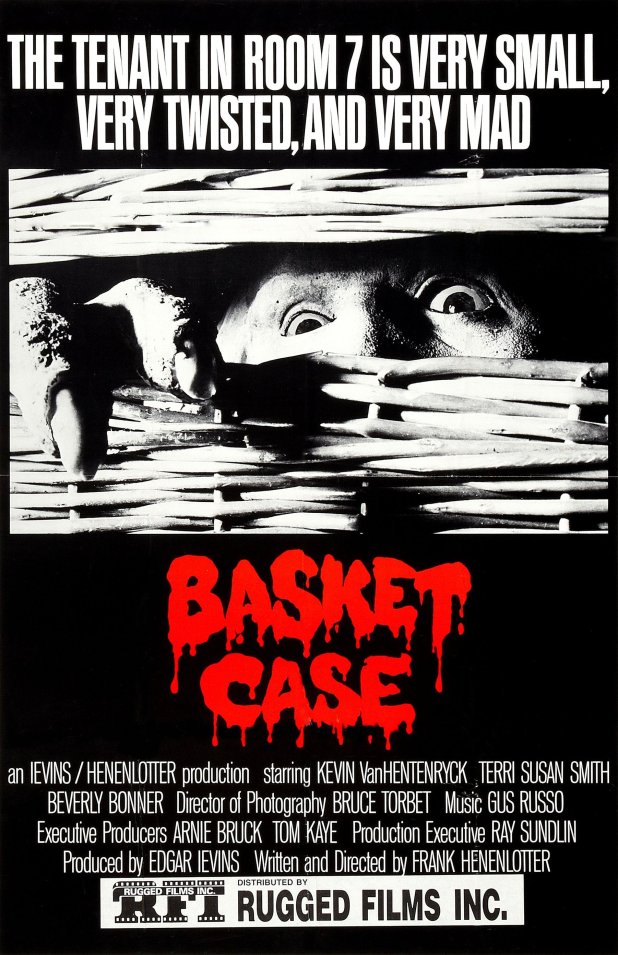
Frank Henenlotter is an instrumental figure in grindhouse and exploitation film lore. In addition to rescuing many low-budget sexploitation and exploitation films from being destroyed, he made three Basket Case movies, Brain Damage and Basket Case. This is one of the few movies that upsets Becca so much that she refuses to watch it.
Duane Bradley arrives in the grimiest and scummiest New York City with a locked wire basket that contains his formerly conjoined twin, Belial. They were separated against their will and Belial has always resented it, pushing his brother to get revenge on the doctor who cut them apart.
Our hero — well, such as it is — falls in love with a nurse named Sharon, but Belial tries to rape her, can’t perform and kills her instead. Is it any more frightening if I tell you that Belial is basically a rubber glove on Henelotter’s hand? Duane attacks his brother and they fall out of the apartment to their death.
Don’t worry — the brothers survived to make it to the sequel, as well as another film after that where Belial got a powered exo-skeleton. The brothers also show up in the subway in Henenlotter’s Brain Damage.
Critic Rex Reed’s was quoted on the poster for this movie, saying “This is the sickest movie ever made!” He had heard how gross the film was and sought it out. As he left the theater, someone asked him what he thought. He didn’t realize that that person was Henenlotter and as a result, he was furious that he was being used to promote this movie.
The bar scenes were shot in The Hellfire Club, an S&M bar in Manhattan. The crew had to hide all the sex toys and swing, but left behind the buzz saw that killed the boys’ father as a gift. That very same crew was so offended by Sharon’s death scene that they all walked out rather than continue filming it.
You can watch this on Shudder with and without commentary by Joe Bob Briggs.
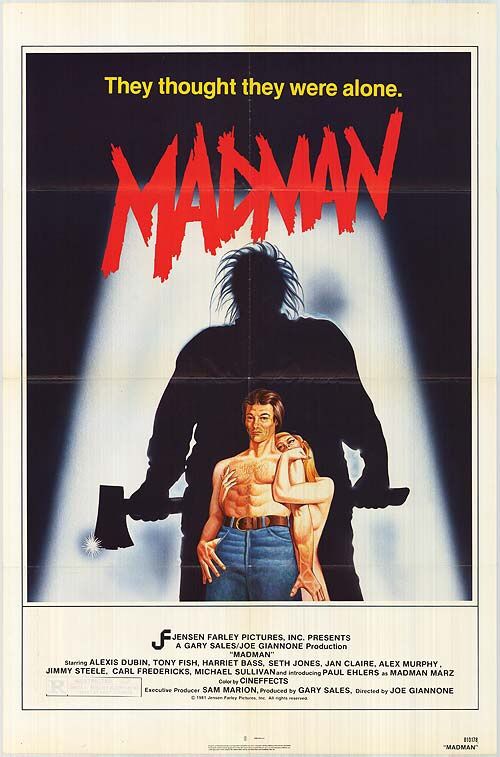
Madman Marz isn’t Freddy or Jason or Michael Meyers or even Leatherface or maybe even Chucky, but dammit he exists. He exists!
Originally based on the upstate New York urban legend of Cropsey, the film’s premise and slasher were both changed at the last minute once the production team discovered that The Burning was filming at the very same.
It took eight months and hundreds of attempts to get an investor — plus a last-minute rewrite to make the movie more unique — but this non-union effort finally made it to the screen.
A group of senior counselors and campers — Gaylen Ross is the only one most people know, as she was in Dawn of the Dead, and plays Betsy under the stage name of Alexis Dubin — gather around a campfire to hear the head counselor Max — who the filmmakers wanted to cast as Vincent Price, which would have been bonkers — regale them with the tale of Madman Marz. He killed his family with an axe and then survived a lynching attempt before disappearing into these very woods.
Richie, one of the kids, throws a rock into Marz’s home and shouts his name, learning no lessons at all from this urban legend. Richie soon sees Marz in the trees — ironically, the cast would see a mysterious person in the woods while they filmed this movie — and before you can say Pamela Vorhees, they’re all getting killed one by one.
T.P. is set up to be the hero here or he at least gets to have hot tub spinning something with Betsy. Seriously, this whole scene is lunacy, as they roll around and have what seems to be the unsexiest sex I’ve ever seen. Betsy then becomes the heroine, but she ends up blasting one of the other counselor’s brains out with a double-barrelled shotgun and narrowly helping the kids escape on a school bus before getting hung up on a hook and setting Marz’s house on fire.
So yeah. The killer survives, the kids are traumatized and there’s an awesome theme song, sung by Tony Fish, the same guy who plays T.P. There’s also a scene where Max lectures about the right way to play the game of axe in the stump, which is kind of like the sword in the stone: “Losing, winning – what’s the difference? Play the game with a fair heart, and you’ll always be able to look yourself in the mirror. Play too hard to win, and you might not like what you become.”
This movie is packed with parts that will make you scream in terror, laugh in utter glee and sing along like some demented maniac. In short, it’s everything a slasher should be. It’s also a reminder that even a non-legendary slasher is still a better movie in 2019 than the finest studio releases.
This is a movie made for 2 AM at the drive-in, bombed out of your mind. You can watch it with and without commentary from Joe Bob Briggs on Shudder. Or you can go all in on the amazing Vinegar Syndrome re-release.
You can watch Joshua Zeman and Barbara Brancaccio’s Cropsey, their 2009 documentary about the New York City urban legend, as a free-stream courtesy of Gravitas Ventures You Tube and Tubi Tv.
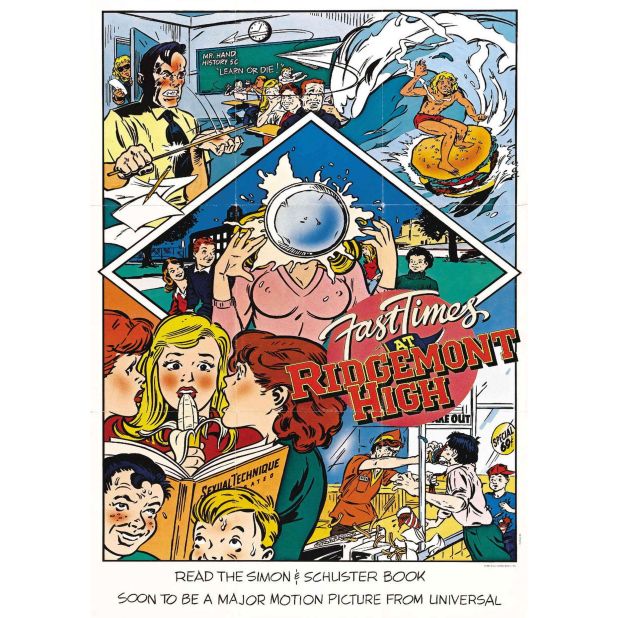
In the interview he did with us this week, Teen Movie Hell author Mike “McBeardo” McPadden said that “All previous teen comedies lead to Fast Times at Ridgemont High, and all subsequent teen comedies have proceeded forth from it.”
In his 1981 book, future director Cameron Crowe went undercover at Clairemont High School in San Diego and wrote about his real-life experiences. Directed by Amy Heckerling (Clueless, the Look Who’s Talking series, Johnny Dangerously and National Lampoon’s European Vacation), this movie follows the book and expands on it.
Interestingly enough, Mark Ratner in this film was modeled on a kid named Andy Rathbone, who claims that he actually did a lot of the Spicoli cool things too. He had become friends with Cameron and didn’t realize he was being lied to and ended up pretty hurt by the experience. But don’t feel too bad for him. He went on to write the For Dummies books, so he ended up doing pretty well for himself.
This is a film made up of characters and the way they intersect from the end of summer, the high school year and into the next summer. That’s really the story arch of the film, which allows the characters to breathe and come into their own.
Brad Hamilton (Judge Reinhold) starts the year as one of the most popular seniors at Ridgemont High School. Next year seems set: he’s a multiple time employee of the month at All-American Burger, he’s breaking up with his girlfriend Lisa (Amanda Wyss) so that he can be eligible all year long and his car is nearly paid off. It all falls apart: he gets fired for yelling at an abusive customer, Lisa breaks up with him before he can, he gets a job at Captain Hook Fish & Chips where he’s forced to wear a humiliating outfit and worst of all, he’s caught masturbating by his sister’s best friend Linda (the bewitching Phoebe Cates).
His sister Stacy (Jennifer Jason Leigh) may have an even rougher year: other than her job at the Perry’s Pizza (Leigh actually did work at a Perry’s Pizza for a month before filming began) at the mall, her biggest job seems to be losing her virginity, which she finally does with stereo salesman Ron Johnson, who she tells that she’s 19 (she’s 15 and he’s 26). Their baseball dugout sex is boring and she tries to find love afterward with Mark Ratner, who works at the movie theater at the mall. However, his best friend Damone the ticket scalper ends up trying to steal her away, getting her pregnant, which nice guy Mark ends up helping her take care of. Damone is a total scumbag, but it’s interesting to me that Cameron put the words of his friend Glen Frey into his mouth when he discusses Stacy not seeing anything in Mark: “If this girl can’t smell your qualifications, then who needs her?”
Jeff Spicoli (Sean Penn) is a surfer who is bold enough to order a pizza to his history class, a fact that does little to endear him to Mr. Hand (Ray Walston). He also ends up wrecking star football player Charles Jefferson’s (Forest Whitaker) Camaro, but his writing racial slurs all over it and blaming the school’s rival Lincoln High ends up leading Jefferson to his best game ever. On the night of prom, Mr. Hand keeps Spicoli in his room, forcing him to pay back the eight hours of class time that he wasted with a one-on-one lesson.
There are tons of little cameos as we amble to the conclusion. This is one of Nicholas Cage’s first films, as he’s one of Spicoli’s stoner buds, as are Eric Stoltz and Anthony Edwards. Pamela Springsteen — Angela Baker herself — shows up, as does Kelli Maroney (Chopping Mall, Night of the Comet), Vincent Schiavelli as teacher Mr. Vargas and Lana Clarkson (Barbarian Queen and future Phil Spector victim) as his beyond hot wife.
Everything ends up pretty good for all concerned: Mark and Stacy are having a passionate love affair (but haven’t gone all the way yet) while he makes up with Damone, who gets arrested for scalping. Brad gets a job at a convenience store and is promoted to manager after he and Spicoli foil a robbery. Speaking of that iconic character, he saves Brooke Shields from drowning and spends the reward getting Van Halen to play his birthday party. Linda moves in with her Abnormal Psychology professor at UC Riverside. And Mr. Hand still thinks everyone is on dope.
If you were 12 in 1984, like I was, the scene where Phoebe Cates appears rising from the pool changed your life. It’s the kind of cultural connection that kids today will never have. Judge Reinhold brought a large dildo to play with for this scene, which Cates didn’t know about until she saw it. That’s why her look of horror is so honest.
The other star of this film is the Sherman Oaks Galleria, the mall that contains much of the action. This is the mall where Moon Unit Zappa would invent the term valley girl for her song with her father, which led to the movie Valley Girl, which was also filmed in this mall. Other movies that use this location include the aforementioned Chopping Mall and Night of the Comet (which means that Kelli Maroney spent plenty of time at the Galleria), as well as Commando, Back to the Future Part II, Terminator 2: Judgment Day, Phantom of the Mall: Eric’s Revengeand Innerspace.
If you haven’t seen this movie, you really need to get off the internet and fix that. It really holds up and also rewards multiple viewings.
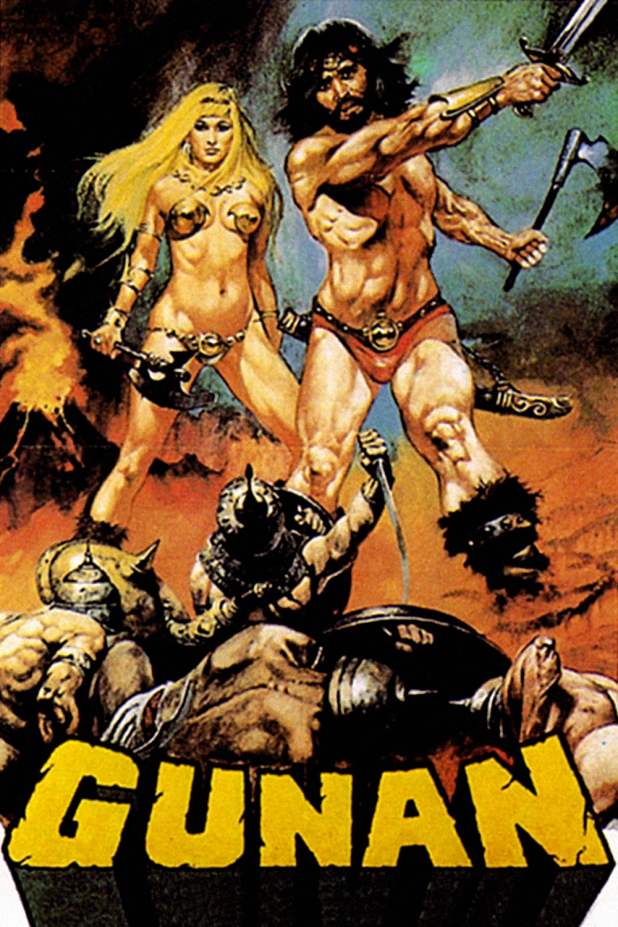
Franco Prosperi made his name directing Italian crime action films, but he also found his way into working in other genres, like 1978’s The Last House on the Left clone The Last House on the Beach, 1973’s parody The Funny Face of the Godfather and two Conan ripoffs, 1983’s Throne of Fire and this obscure piece of weirdness, which is only available as a poor transfer of a VHS tape.
Let me see if I can put this together for you: The peaceful village of Solmen is destroyed by Magen and his Ungats, but two children are saved by the Kuniats, a tribe of Amazon warriors. One of the brothers tries to be a hero and gets beheaded for his efforts, but the other, Gunan The Invincible, lives up to his name and kills everyone in his path.
This movie is borderline mental: one of the death traps involves Gunan’s woman being tied above him while spikes slowly kill her. Luckily, they escape and he kills everyone he gets near. It also rips off a dinosaur battle from One Million Years B.C. and I mean that literally — they take the footage and use it.
Also — every woman is nude for pretty much this entire movie, including Sabrina Siani as the main love of Gunan. She also shows up in Aenigma, 2020 Texas Gladiators, The Throne of Fire and the Mark Gregory starring Tan Zan The Ultimate Mission. But for all her roles, I’ll always remember her as the always masked and rarely closed Oncron from Fulci’s insane barbarian film, Conquest.
Oh yeah — one day, Gunan’s sword will become Excalibur. So there’s that. It’s tacked on and only mentioned in the end of the film’s narration, but that really seems like it should be a much bigger deal.
If you had HBO (Hey, Beastmaster’s On) or TBS (The Beastmaster Station) in the 1990’s, then you’re probably excited to read this. The Beastmaster series of three films ran pretty much non-stop on those channels, even if the first movie wasn’t a success.
Just like Phantasm, Beastmaster came from the mind of Don Coscarelli. While he was only involved with the first movie, he set up the character of Dar (Marc Singer). Well, when I say came from the mind, Coscarelli loosely based his original story off of the novel The Beast Master by Andre Norton. In her book, the hero is a Navajo named Hosteen Storm and the story takes place in the future. Unhappy with the changes from page to screen, Norton asked for her name to be removed from the film’s credits.
The Beastmaster (1982)
Welcome to Aruk, where the prophecy of a witch reveals that the evil priest Maax (Rip Torn!) reveals that the son of King Zed (Rod Loomis, who was Freud in Bill and Ted’s Excellent Adventure) will eventually kill him. Although Zed exiles the villain, one of Maax’s witches transfers the baby who will become Dar the Beastmaster from his mother’s womb into a cow’s. Yes, I just wrote that. I’m still amazed that this happens.
Dar is rescued by a villager who raises him as her own son inthe village of Emur. This being a sword and sorcery movie, that whole town is destroyed by the Juns, barbarians under Maax’s command. Of course, Dar has been taught since childhood to fight and telepathically communicate with animals. As you do, you know?
Dar eventually puts together his animal familiar army of Sharak the eagle, Kodo and Podo the ferrets and a black tiger named Ruh. He also teams up with Kiri (Tanya Roberts), a slave girl, and even spends time wander amongst a half-bird, half-human race who let him go when they realize that he can speak to an eagle.
What follows are battles with Maax, an appearance by Good Times star John Amos, ferrets bravely sacrificing themselves, baby ferrets being born, Dar learning of his royal blood and birdmen battling barbarians.
Coscarelli didn’t have a good time making this, as he fought with the producers over editing and casting, such as his choice of Demi Moore over Tanya Roberts. Even sadder, Klaus Kinski was the original choice to play Maax!
Beastmaster 2: Through the Portal of Time (1991)
Sylvio Tabet produced the original Beastmaster film, as well as Evilspeakand Fade to Black. This is the one and only film that he ever directed.
This time around, Dar learns that he has a half-brother named Arkon (the amazing Wings Hauser) who is working alongside Lyranna (Sarah Douglas, who was Queen Taramis in Conan the Destroyer and Ursa in the Superman movies) to take over, well, everything. They are almost captured by our hero until they create a portal that brings them to modern day Los Angeles.
Dar, Ruh, Kodo and Sharak follow and battle them over a neutron bomb. Obviouslt, Arklon has seen Ator 2: The Blade Master. Luckily, our hero gets to work alongside rich girl Jackie Trent (Kari Wuhrer) and Lieutenant Coberly (James Avery from The Fresh Prince of Bel-Air, continuing the lineage of black friends of the Beastmaster coming from sitcoms). Robert Z’Dar also shows up, which is always nice.
Jim Wynorski (Sorceress, Chopping Mall) was originally going to direct and wrote a screenplay before Tabet decided to direct. Luckily for Wynorski, he lawyered up and got to keep his name on the movie and make some money.
This movie completely ignores that Kodo died. And Dar’s mark of the beast switches hands from the last movie. Basically, if you’re into continuity, perhaps the Beastmaster movies aren’t for you.
Beastmaster III: The Eye of Braxus (1996)
Dar is back one more time, this time trying to rescue his brother, King Tal (finally grown up but now played by Casper Van Dien from Starship Troopers). He’s joined by Tal’s bodyguard Seth (no longer John Amos, but now Tony Todd, which make me audibly shout at 3 AM and wake up my entire house), a warrior woman named Shada (Sandra Hess, Mortal Kombat Annihilation), an acrobat named Bey and Seth’s ex-girlfriend, a sorceress named Morgana (Lesley Anne-Down of all people!).
They’re battling the slumming David Warner as Lord Agon, who has been sacrificing youngsters to shave years off his life. You know, the older I get, the more this seems like a great idea, because most kids I meet today are clueless. He’s also trying to release the dark god Braxus, who looks like a human dinosaur.
This one’s directed by Gabrielle Beaumont, whose was also behind the movie The Godsend and the Jamie Lee Curtis-starring TV movie about Dorothy Stratten, Death of a Centerfold. It was written David Wise, who was one of the main writers on the Teenage Mutant Ninja Turtles cartoon, so that may account for this one being the most family-friendly of the three films.
Three years after this movie, a syndicated series called Beastmaster lasted for three seasons and 66 episodes. It changes Dar’s story a bit and features Daniel Goddard instead of Marc Singer.
Amazingly, none of the Beastmaster films are available on blu ray in the U.S., although the Australian based Umbrella did release the first film in June of 2018. The disk claims it’s region B, but I’ve heard that it works on American blu ray players.
If you’re looking for allthreefilms, VHSPS has them available on their site, transferred directly from video store copies.
BONUS: Listen to Becca and I discuss the second Beastmaster movie, one of her favorites ever, on our podcast:
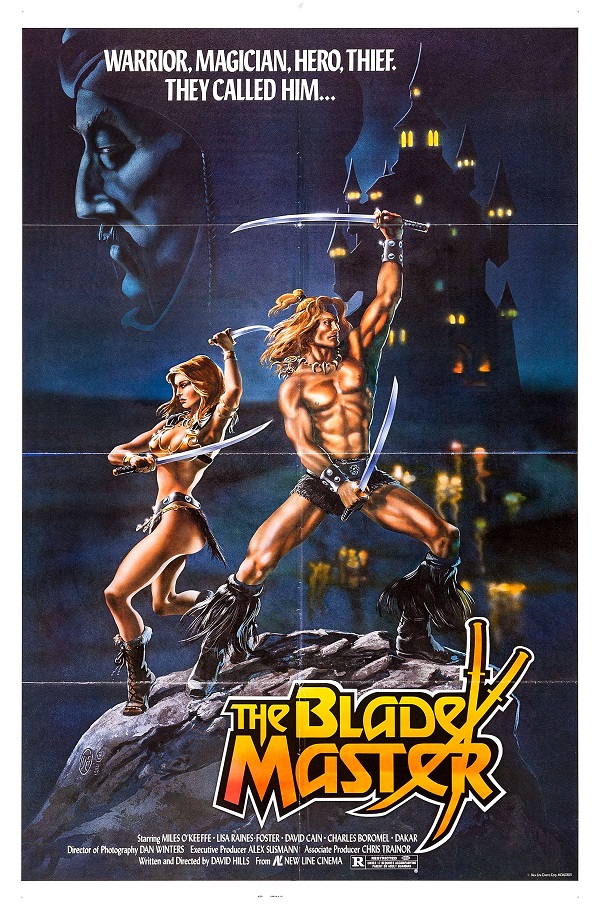
Joe D’Amato wanted to make a prehistoric movie like Quest for Fire called Adamo ed Eva that read a lot like 1983’s Adam and Eve vs. The Cannibals. However, once he called in Miles O’Keefe to be in the movie, the actor said that he couldn’t be in the film due to moral and religious reasons. One wonders why he was able to work with Joe D’Amato, a guy who made some of the scummiest films around.
Born Aristide Massaccesi, this man of many names had his paws in everything from being a camera operator on Bava’s Hercules in the Haunted World to cinematography on What Have You Done to Solange?before directing his own films like Death Smiles on a Murderer, Beyond the Darkness, Antropophagus, 2020 Texas Gladiators,Endgame and so many more. He also worked with porn stars like Rocco Siffredi on Tarzan X – Shame of Jane before being an early innovator of porn-based parodies/cover versions of other works of art, such as Shakespeare porn (Othello 2000), mythology (Hercules – A Sex Adventure), famous icons (Scarface, Amadeus Mozart) and, of course, plenty of looks into the deviance of the Roman empire.
This time around, Aristide Massaccesi is known as David Hills, for those keeping score.
Akronos has found the Geometric Nucleus and is keeping its secret safe when Zor (Ariel from Jubilee) and his men attack the castle. The old king begs his daughter Mila (Lisa Foster, who starred in the Cinemax classic Fanny Hill and later became a special effects artist and video game developer) to find his student Ator (O’Keefe).
Mila gets shot with an arrow pretty much right away, but Ator knows how to use palm leaves and dry ice to heal any wound, a scene which nearly made me fall of my couch in fits of giggles. Soon, she joins Ator and Thong as they battle their way back to the castle, dealing with cannibals and snake gods.
Somehow, Ator also knows how to make a modern hang glider and bombs, which he uses to destroy Zor’s army. After they battle, Ator even wants Zor to live, because he’s a progressive barbarian hero, but the bad guy tries to kill him. Luckily, Thong takes him out.
After all that, Akronos gives the Geometric Nucleus to Ator, who also pulls that old chestnut out that his life is too dangerous to share with her. He takes the Nucleus to a distant land and sets off a nuke.
Yes, I just wrote that. Because I just watched that.
If you want to see this with riffing, it’s called The Cave Dwellers in its Mystery Science Theater 3000 form. But man, a movie like this doesn’t really even need people talking over it. It was shot with no script in order to compete with Conan the Destroyer. How awesome is that?
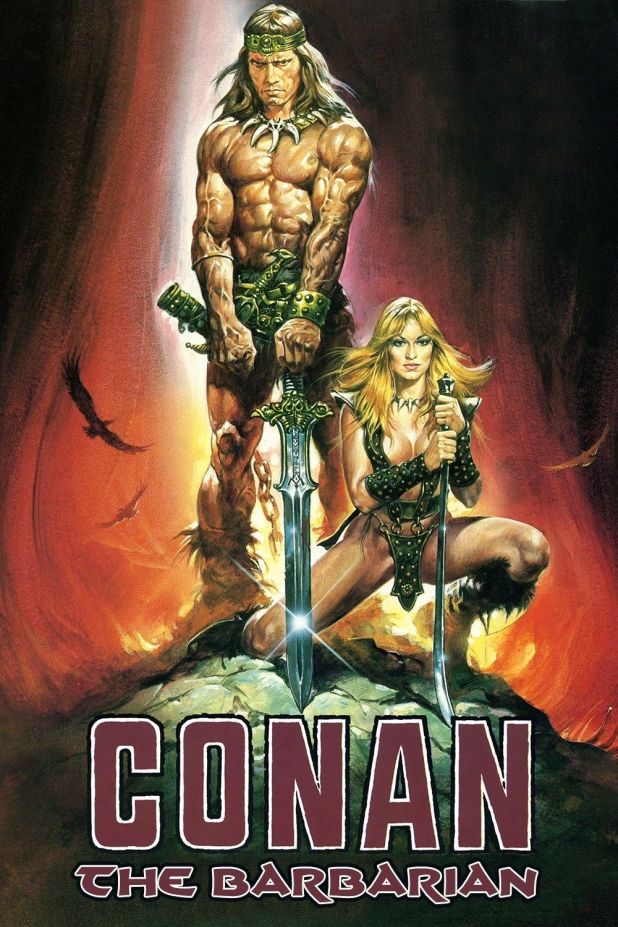
When Robert E. Howard created Conan, it was popular for its time as a pulp character. By the time of his creator’s suicide in 1936, Conan had appeared in 21 complete stories, 17 of which had been published, as well as a number of unfinished tales. After years of the copyright to the character passing around, Lancer released a series of paperbacks with dynamic Frank Frazetta covers that introduced the Cimmerian barbarian to an entirely new audience.
In 1970, Marvel Comics began adapting the Howard tales, arguably increasing the reach of the character even further than the original books. Then, in 1975, Edward R. Pressman (who also produced Christmas Evil) and Edward Summer started working on getting the books onto the silver screen. They had Oliver Stone writing it and Arnold Schwarzenegger for the lead, but couldn’t get major studios interested.
However, in 1979, they sold the project to Dino De Laurentiis and John Milius picked as the director. Combining several Howard stories, the filming took place in Spain and the entire film was based on Frazetta’s artwork. After a year of editing — and plenty of gore being cut out — the film was released to $100 million dollars of box office, which increased thanks to home video and cable. Some don’t consider it a blockbuster, but how else would there so many ripoffs released in its wake?
The film begins with a sword being forged by a blacksmith who shows it to his son, the young Conan, and tells him the Riddle of Steel. To sum it up, “Flesh grows weak. Steel becomes brittle. But the will is indomitable”. He tells his son that everyone will fail him, but he can always count on steel.
The Cimmerians are soon murdered by a band of warriors led by Thulsa Doom (James Earl Jones). This villain is a combination of several Howard characters. While his name comes from one of Kull of Atlantis’ villains, he is similar to Thoth-Amon, leading an army of suicidal warriors devoted to their king.
Conan’s father is killed by dogs and his sword is given to Doom, who hypnotizes and then beheads Conan’s mom (Nadiuska, who was also in Guyana: Cult of the Damned) in front of him. Our hero is then sold into slavery, chained to a mill stone known as the Wheel of Pain. While other children die, Conan lives to become a monster of a man, consigned to the gladiator pits and used as a stud to create more soldiers. Yet Conan becomes a favorite of the men he has been sold to and is educated in the East before being freed.
Conan wanders the world as a free man, finding an ancient sword and meeting a witch who gives him a prophecy of his future. This scene kinda blows my mind, because Conan is so good at having sex that he turns the witch into a demon and then throws her into the fire. That’s how good Conan is in the sack.
Conan befriends Subotai (surfing legend Gerry Lopez), a Hyrkanian thief, and Valeria, a female mercenary. Her name comes from Conan’s companion in the story “Red Nails”, while her personality and fate are based on Bêlit, the pirate queen of “Queen of the Black Coast.” She’s played by Sandahl Bergman, who is also in She, a totally ridiculous movie that I want more people to love as much as me.
In the city of Zamora, the trio steal from the Tower of Serpents and Valeria and Conan seal their union by making love. Soon, they’re captured by the soldiers of King Osrić (Max von Sydow), who only ask that three bring back his daughter. Subotai and Valeria refuse, but Conan’s hatred of Doom sends him to the Temple of Set.
There, he’s captured and tortured, as Doom insults his family and crucifies him on the Tree of Woe. Before our hero dies, Subotai rescues him and brings him to Akiro, the Wizard of the Mounds. He’s played by Mako, who was also the voice of Master Splinter in 2007’s Teenage Mutant Ninja Turtles. The wizard summons demons that heal our hero but extract a heavy toll that Valeria agrees to pay.
Finally, our heroes go back to Doom’s temple and unleash their full vengeance. However, Doom himself becomes a giant snake and slithers away, because this movie is both insane and awesome. As the trio rides away, Doom shoots Valeria with a snake arrow and she dies in Conan’s arms, paying the toll that the wizard warned her about.
She is burned at the Mounds. As Conan stares at the fire, having lost the love of his life, Subotai cries for his friend, explaining that “a Cimmerian won’t cry, so I cry for him.” How is a film sotestosteronee and gore filled so poetic at times?
Our hero lays waste to Doom’s troops and when Rexor (former Oakland Raider Ben Davidson, who also played the bouncer in Behind the Green Door), one of the largest of them, almost kills him Valeria reappears as a valkyrie to save him for the briefest of seconds. Subotai saves the princess and Conan finds his father’s sword and breaks it in combat. Look for Sven Ole Thorsen in this too as Thorgrim. Sven has dated Grace Jones since 1990, but has been in an open relationship with her since 2007. He’s also in Conan the Destroyer and The Running Man.
That night, Conan comes back to the Temple and is greeted with open arms by Doom, who tries to mentally stop him. Conan resists and beheads his enemy with his father’s broken sword. He has solved the Riddle of Steel: you must become the steel and only rely upon yourself.
Conan burns down the Temple of Set and returns the princess to her father. The movie then shows us Conan on the throne of an empire, letting us know that one day he will rule the entire land.
No one could play Conan but Arnold, who started growing his hair in 1979 for this part. He trained for this movie like he did for his bodybuilding competitions: weapons training, martial arts training, horse riding lessons, even sword fighting with an 11-pound broadsword two hours a day for three months, as well as how to fall and roll from 15-foot drops. He also got 5% of the movie’s profits, a pretty hefty sum.
I love this movie. I adore the fact that Conan doesn’t speak until 20 minutes into the film and doesn’t speak for the last 20 minutes either. It’s awesome that Valeria is just as strong of a fighter — and maybe even stronger in spirit — as Conan. Every 80’s sword and sorcery movie is in debt to this, as much as Arnold claims that his performance is owed to peblum star Steve Reeves.



 B&S About Movies
You must be logged in to post a comment.