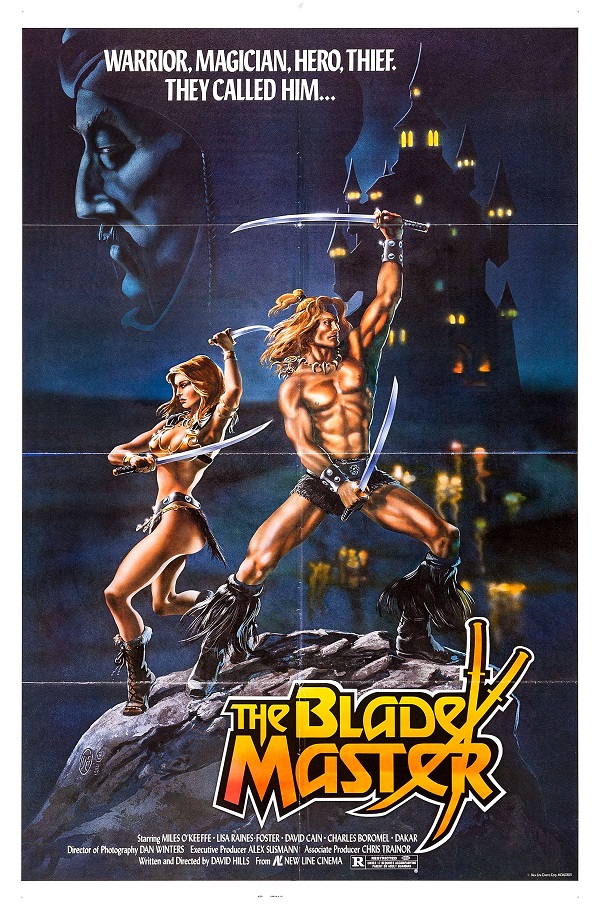
Ator 2: The Blade Master (1982)

Joe D’Amato wanted to make a prehistoric movie like Quest for Fire called Adamo ed Eva that read a lot like 1983’s Adam and Eve vs. The Cannibals. However, once he called in Miles O’Keefe to be in the movie, the actor said that he couldn’t be in the film due to moral and religious reasons. One wonders why he was able to work with Joe D’Amato, a guy who made some of the scummiest films around.

Born Aristide Massaccesi, this man of many names had his paws in everything from being a camera operator on Bava’s Hercules in the Haunted World to cinematography on What Have You Done to Solange? before directing his own films like Death Smiles on a Murderer, Beyond the DarknessAntropophagus2020 Texas Gladiators, Endgame and so many more. He also worked with porn stars like Rocco Siffredi on Tarzan X – Shame of Jane before being an early innovator of porn-based parodies/cover versions of other works of art, such as Shakespeare porn (Othello 2000), mythology (Hercules – A Sex Adventure), famous icons (ScarfaceAmadeus Mozart) and, of course, plenty of looks into the deviance of the Roman empire.

This time around, Aristide Massaccesi is known as David Hills, for those keeping score.

Akronos has found the Geometric Nucleus and is keeping its secret safe when Zor (Ariel from Jubilee) and his men attack the castle. The old king begs his daughter Mila (Lisa Foster, who starred in the Cinemax classic Fanny Hill and later became a special effects artist and video game developer) to find his student Ator (O’Keefe).

Mila gets shot with an arrow pretty much right away, but Ator knows how to use palm leaves and dry ice to heal any wound, a scene which nearly made me fall of my couch in fits of giggles. Soon, she joins Ator and Thong as they battle their way back to the castle, dealing with cannibals and snake gods.

Somehow, Ator also knows how to make a modern hang glider and bombs, which he uses to destroy Zor’s army. After they battle, Ator even wants Zor to live, because he’s a progressive barbarian hero, but the bad guy tries to kill him. Luckily, Thong takes him out.

After all that, Akronos gives the Geometric Nucleus to Ator, who also pulls that old chestnut out that his life is too dangerous to share with her. He takes the Nucleus to a distant land and sets off a nuke.

Yes, I just wrote that. Because I just watched that.

If you want to see this with riffing, it’s called The Cave Dwellers in its Mystery Science Theater 3000 form. But man, a movie like this doesn’t really even need people talking over it. It was shot with no script in order to compete with Conan the Destroyer. How awesome is that?

You can get this from Revok.

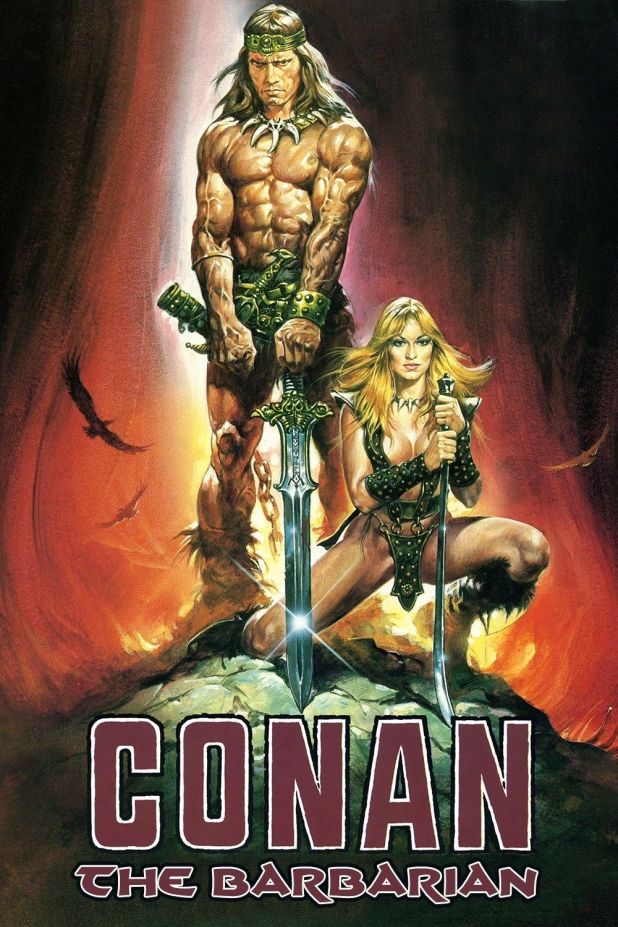
Conan the Barbarian (1982)

When Robert E. Howard created Conan, it was popular for its time as a pulp character. By the time of his creator’s suicide in 1936, Conan had appeared in 21 complete stories, 17 of which had been published, as well as a number of unfinished tales. After years of the copyright to the character passing around, Lancer released a series of paperbacks with dynamic Frank Frazetta covers that introduced the Cimmerian barbarian to an entirely new audience.

In 1970, Marvel Comics began adapting the Howard tales, arguably increasing the reach of the character even further than the original books. Then, in 1975, Edward R. Pressman (who also produced Christmas Evil) and Edward Summer started working on getting the books onto the silver screen. They had Oliver Stone writing it and Arnold Schwarzenegger for the lead, but couldn’t get major studios interested.

However, in 1979, they sold the project to Dino De Laurentiis and John Milius picked as the director. Combining several Howard stories, the filming took place in Spain and the entire film was based on Frazetta’s artwork. After a year of editing — and plenty of gore being cut out — the film was released to $100 million dollars of box office, which increased thanks to home video and cable. Some don’t consider it a blockbuster, but how else would there so many ripoffs released in its wake?

The film begins with a sword being forged by a blacksmith who shows it to his son, the young Conan, and tells him the Riddle of Steel. To sum it up, “Flesh grows weak. Steel becomes brittle. But the will is indomitable”. He tells his son that everyone will fail him, but he can always count on steel.

The Cimmerians are soon murdered by a band of warriors led by Thulsa Doom (James Earl Jones). This villain is a combination of several Howard characters. While his name comes from one of Kull of Atlantis’ villains, he is similar to Thoth-Amon, leading an army of suicidal warriors devoted to their king.

Conan’s father is killed by dogs and his sword is given to Doom, who hypnotizes and then beheads Conan’s mom (Nadiuska, who was also in Guyana: Cult of the Damned) in front of him. Our hero is then sold into slavery, chained to a mill stone known as the Wheel of Pain. While other children die, Conan lives to become a monster of a man, consigned to the gladiator pits and used as a stud to create more soldiers. Yet Conan becomes a favorite of the men he has been sold to and is educated in the East before being freed.

Conan wanders the world as a free man, finding an ancient sword and meeting a witch who gives him a prophecy of his future. This scene kinda blows my mind, because Conan is so good at having sex that he turns the witch into a demon and then throws her into the fire. That’s how good Conan is in the sack.

Conan befriends Subotai (surfing legend Gerry Lopez), a Hyrkanian thief, and Valeria, a female mercenary. Her name comes from Conan’s companion in the story “Red Nails”, while her personality and fate are based on Bêlit, the pirate queen of “Queen of the Black Coast.” She’s played by Sandahl Bergman, who is also in She, a totally ridiculous movie that I want more people to love as much as me.

In the city of Zamora, the trio steal from the Tower of Serpents and Valeria and Conan seal their union by making love. Soon, they’re captured by the soldiers of King Osrić (Max von Sydow), who only ask that three bring back his daughter. Subotai and Valeria refuse, but Conan’s hatred of Doom sends him to the Temple of Set.

There, he’s captured and tortured, as Doom insults his family and crucifies him on the Tree of Woe. Before our hero dies, Subotai rescues him and brings him to Akiro, the Wizard of the Mounds. He’s played by Mako, who was also the voice of Master Splinter in 2007’s Teenage Mutant Ninja Turtles. The wizard summons demons that heal our hero but extract a heavy toll that Valeria agrees to pay.

Finally, our heroes go back to Doom’s temple and unleash their full vengeance. However, Doom himself becomes a giant snake and slithers away, because this movie is both insane and awesome. As the trio rides away, Doom shoots Valeria with a snake arrow and she dies in Conan’s arms, paying the toll that the wizard warned her about.

She is burned at the Mounds. As Conan stares at the fire, having lost the love of his life, Subotai cries for his friend, explaining that “a Cimmerian won’t cry, so I cry for him.” How is a film sotestosteronee and gore filled so poetic at times?

Our hero lays waste to Doom’s troops and when Rexor (former Oakland Raider Ben Davidson, who also played the bouncer in Behind the Green Door), one of the largest of them, almost kills him Valeria reappears as a valkyrie to save him for the briefest of seconds. Subotai saves the princess and Conan finds his father’s sword and breaks it in combat. Look for Sven Ole Thorsen in this too as Thorgrim. Sven has dated Grace Jones since 1990, but has been in an open relationship with her since 2007. He’s also in Conan the Destroyer and The Running Man.

That night, Conan comes back to the Temple and is greeted with open arms by Doom, who tries to mentally stop him. Conan resists and beheads his enemy with his father’s broken sword. He has solved the Riddle of Steel: you must become the steel and only rely upon yourself.

Conan burns down the Temple of Set and returns the princess to her father. The movie then shows us Conan on the throne of an empire, letting us know that one day he will rule the entire land.

No one could play Conan but Arnold, who started growing his hair in 1979 for this part. He trained for this movie like he did for his bodybuilding competitions: weapons training, martial arts training, horse riding lessons, even sword fighting with an 11-pound broadsword two hours a day for three months, as well as how to fall and roll from 15-foot drops. He also got 5% of the movie’s profits, a pretty hefty sum.

I love this movie. I adore the fact that Conan doesn’t speak until 20 minutes into the film and doesn’t speak for the last 20 minutes either. It’s awesome that Valeria is just as strong of a fighter — and maybe even stronger in spirit — as Conan. Every 80’s sword and sorcery movie is in debt to this, as much as Arnold claims that his performance is owed to peblum star Steve Reeves.

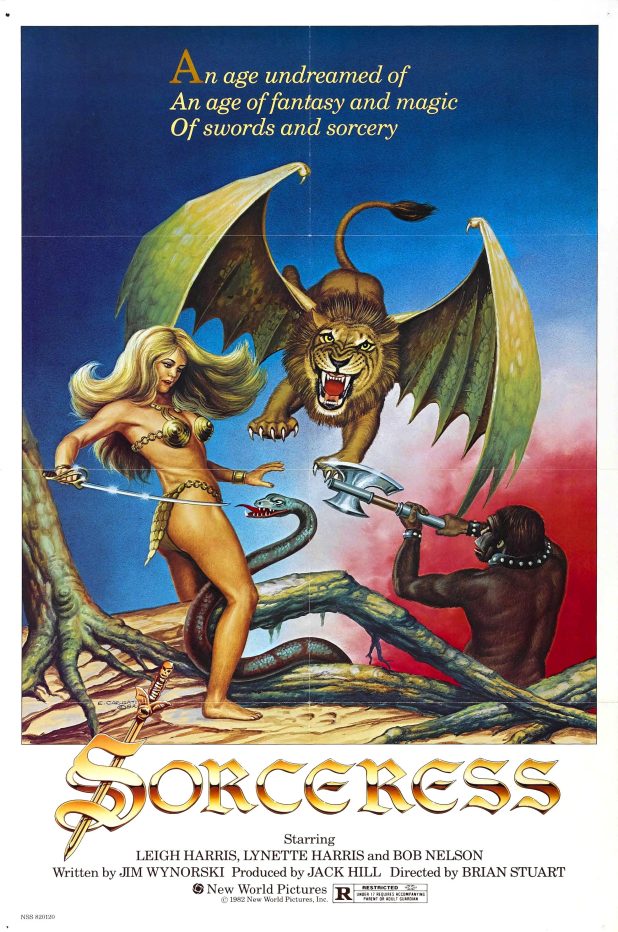
Sorceress (1982)

I’ve been wanting to watch this movie for years. It has the most perfect of trailers, one that shows off its triumphant score, battles and ridiculous special effects, along with the twin sisters who will rise up to battle an evil wizard. Seriously, if you watch this trailer and don’t want to watch this movie, I really have no idea why you’re on our site.

How does an evil wizard get awesome powers? Well, if you’re Traigon, you’re going to have to sacrifice your firstborn child to the god Caligara. However, his wife surprises him by having twins and not revealing which one came first, so he has his men stick a giant claw into her nether regions, making you instantly realize that Jim Wynorski wrote this movie.

Before she passes away, she gives the babies to Krona, a warrior who promises to raise these “girl children” to be warriors — the two who are one — who will get revenge for their mother.

Twenty years later, after losing the first of his three lives to Krona, Traigon comes back to hunt down his daughters, who are now joined by Erlik the barbarian and Baldar the Viking.

Mira and Mara are played by Leigh and Lynette Harris, twin sisters who appeared together in the April 1978 issue of Playboy. They’re also in I, the Jury, the film that Larry Cohen quit to make Q the Winged Serpent.

This is a Roger Corman on the cheap production, one that steals the score from Battle Beyond the Stars. In typical Corman fashion, he also shortchanged director Jack Hill, who asked for his name to be removed because the special effects were shortchanged and also because he had written a role for his friend Sid Haig, who Corman refused to hire at the last minute. Instead, he’s credited as Brian Stuart, the first names of Corman’s sons. Hill also claims that Dino De Laurentiis stole his film’s lighting equipment to film Dune.

Becca would like you to know that the only reason they made this movie is just to show boobs. She’s never lived in a world without the internet, so perhaps she doesn’t understand. Me, I wanted to see the giant flying lion at the end, because I’m a grown-up adult.

There’s also a monkey man in this movie, a development that makes as much sense — and has me as excited — as when the werewolf dude shows up in Turkey Shoot. There’s also a satyr that helps our heroes who really creeped Becca out as he mostly screams like a goat.

Also: the twins are like the Corsican Brothers, so of course there is a scene where one has sex and the other lies there and orgasms while the goatman watches. Because man, what a missed opportunity if that hadn’t happened.

The end of this film, where the monkey man turns good and a giant woman’s head in the sky battles a flying lion while a virgin sacrifice happens? It’s everything I wanted this movie to be. It’s why you should be watching this.

Want to see more of Jack Hill’s films? I definitely recommend Spider Baby, which is as strange of a movie as you can find. There’s also Switchblade SistersCoffyFoxy BrownThe Big Doll HouseThe Big Bird Cage and many more. They’re worth discovering.

You can watch Sorceress for free with an Amazon Prime membership.

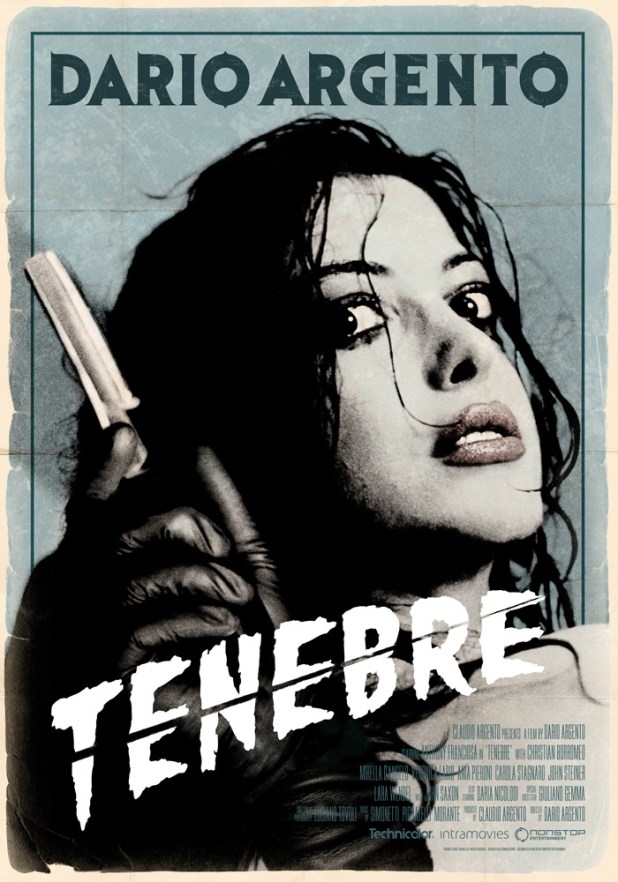
Tenebre (1982)

By 1982, Dario Argento had moved beyond the constraints of the giallo genre he had helped popularize and started to explore the supernatural with Suspiria and Inferno. According to the documentary Yellow Fever: The Rise and Fall of the Giallo (which is on the Synapse blu ray of this film), the failure of Inferno led to Argento being kindly asked — or demanded — by his producer to return to the giallo with his next film.

Tenebre is the result and while on the surface it appears to be a return to form, the truth is that it’s perhaps one of the most multilayered and complicated films I’ve ever seen. And while I’ve always believed that Phenomena is Argento’s strangest film — a girl who can talk to bugs befriends a monkey to battle a cannibal child in a foreign country — I have learned that Tenebre just might be even stranger.

To start, Argento intended for the film to be almost science fiction, taking place five years after a cataclysmic event, in a world where there are less fewer people and as a result, cities are less crowded and the survivors are richer. Argento claims that if you watch Tenebre with this in mind, it’s very apparent. While he only hinted that the survivors wanted to forget some mystery event, in later interviews he claims that it takes place in an imaginary city where the people left behind try to forget a nuclear war.

In truth, this could be an attempt to explain why Argento decided to show an Italy that he never had in his films before. Whereas in the past he spent so much time showing the landmarks and crowded streets that make up The Eternal City, he would now move into a sleek futuristic look, a Rome that exists but that films had never shown its viewers before. This pushes this film away from past Argento giallo such as his animal trilogy and Deep Red, as well as the waves of imitators that he felt undermined and cheapened his work. There is no travelogue b-roll time wasters in this movie — the actual setting is there for a reason; stark, cold and alienating.

Argento had started that he “dreamed an imaginary city in which the most amazing things happen,” so he turned to the EUR district of Rome, which was created for the 1942 World’s Fair, and intended by  Mussolini to celebrate two decades of fascism. Therefore, more than showing a Rome that most filmgoers have never seen, he is showing us a Rome that never was or will be; a world where so many have died, yet fascism never succumbed.

Instead of the neon color palette that he’s established in Suspiria or the Bava-influenced blues and reds that lesser lights would use in their giallo, production designer Giuseppe Bassan and Argento invented a clean, cool look; the houses and apartments look sparse and bleached out. When the blood begins to flow — and it does, perhaps more than in any film he’d create before or since — the crimson makes that endless whiteness look even bleaker.

Tenebre may mean darkness or shadows in Latin, but Argento pushed for the film to be as bright as possible, without the shadowplay that made up much of his past work. In fact, unlike other giallo, much of the plot takes place in the daytime and one murder even takes place in broad daylight.

Again, I feel that this movie is one made of frustration. As Argento tried to escape the giallo box that he himself had made, he found himself pulled back into it in an attempt to have a success at the box office. In this, he finds himself split in two, the division between art and commerce.

As a result, the film is packed with duality. There are two killers: one who we know everything about and is initially heroic; another who we learn almost nothing about other than they are an evil killer. Plus, nearly everyone in this film has a mirror character and soon even everyday objects like phone booths and incidents like car crashes begin happening in pairs.

Peter Neal (Anthony Franciosa, Julie Darling) is set up from the beginning of the film as the traditional giallo hero: he is in a foreign place, deaths are happening all around him and he may be the inspiration or reason why they’re happening. He has more than one double in this film, but for most of it, his doppelganger is Detective Giermani. The policeman is a writer himself and a fan of Neal’s work, claiming that he can never figure out who the killer is in his books. Their cat and mouse game seems to set up a final battle; that finale is quick and brutal.

This conversation between the two men sums up the linguistic battle they engage in throughout the film:

Peter Neal: I’ve been charged, I’ve tried building a plot the same way you have. I’ve tried to figure it out; but, I just have this hunch that something is missing, a tiny piece of the jigsaw. Somebody who should be dead is alive, or somebody who should be alive is already dead.

Detective Germani: Explain that.

Peter Neal: You know, there’s a sentence in a Conan Doyle book, “When you have eliminated the impossible, whatever remains, however improbable, must be the truth.”

This last sentence is of great interest to me when it comes to giallo. Normally, these films are not based upon Sir Arthur Conan Doyle, but instead, use Edgar Wallace as a touchpoint. They are also filled with red herrings and nonsensical endings where the impossible and improbable often becomes the final answer to the mystery.

Even the movie’s plot is split in half and mirrors itself. This next sentence gives away the narrative conceit of the film: the murders are solved in the first half, belonging to Christiano Berti (John Steiner, Shock), a TV critic who interviews Neal. The second murders are all Neal’s, who uses an axe instead of a straight razor, and his crimes are personal crimes of passion that aren’t filled with the sexual aggression of Berti’s; they are quick and to the point. Much of giallo is about long, complicated and ornate murder, as well as trying to identify the killer. As the film goes on, with the main killer revealed and the murders becoming less flashy, it’s as if Argento is commenting on the increasing brutality of the genre he helped midwife.

The movie itself starts with the book Tenebre being burnt in a fireplace with this voiceover: “The impulse had become irresistible. There was only one answer to the fury that tortured him. And so he committed his first act of murder. He had broken the most deep-rooted taboo and found not guilt, not anxiety or fear, but freedom. Any humiliation which stood in his way could be swept aside by the simple act of annihilation: Murder.”

That’s when we meet Neal, an American in Rome, here to promote his latest work of violent horror, Tenebre. This bit of metafiction is but the first bit of a film that fuses the real and fictional worlds. Joined by Anne (Fulci’s wife Daria Nicolodi) and agent Buller (John Saxon!), Neal begins his press tour.

Before he left, Neal’s fiancée Jane vandalized his suitcase. And moments prior to him landing in Rome, a shoplifter (Ania Pieroni, the babysitter from The House by the Cemetery) who stole his book has been murdered by a straight razor, with pages from said book — again, Tenebre — stuffed into her mouth. Neal has received an anonymous letter proclaiming that he did the murder to cleanse the world of perversion.

Throughout the film, we see flashbacks of a man being tormented, such as a woman chasing down a young man and forcing him to fellate her high heel while other men hold him down. Later, we see the stereotypical giallo black gloved POV sequence of her being stabbed to death.

Next, one of Neal’s friends, Tilde and her lover Marion are stalked and killed. This sequence nearly breaks the film because nothing can truly see to follow it. In fact, the distributor begged Argento to cut the shot down because it was meaningless, but the director demanded that it remain. Using a Louma crane, the camera darts over and above the couple’s home in a several-minutes-long tracking shot. Any other director would film these murders with quick cuts between the victim and listener in the other room or perhaps employ a split-screen. Not Argento, who continually sends his camera spiraling into the night sky, high above Rome, across a maze of scaffolding; a shot that took three days to capture and lasts but two and a half minutes. In one endless take, the camera goes from rooftop to window, making a fortress of a home seem simple to break into; it’s as if Argento wanted to push the Steadicam open of Halloween to the most ridiculous of directorial masturbation. It’s quite simply breathtaking.

Maria, the daughter of Neal’s landlord, who is presented to us as a pure woman (much of giallo, to use Argento’s own words in Yellow Fever: The Rise and Fall of the Giallo, is split between the good girl and the bad woman), is killed when she discovers the killer’s lair. Neal mentions that Berti, the TV personality, seemed obsessed with him and his words echoed the letters from the killer. As Neal has now become the giallo hero, he must do his own investigation, taking his assistant Gianni (Christian Borromeo, Murder Rock) to spy on the man. They discover him burning photos that prove he is the killer.

As Gianni watches, Berti says, “I killed them all!” before an axe crashes into his skull. Whomever the second murderer is, the young man can’t recall. He finds his boss, Neal, knocked out on the front yard and they escape.

That night, Neal and Anne make love, the first time this has ever happened between the two. And the next morning, Neal leaves his agent’s office and discovers his fiancée Jane is secretly sleeping with someone he once considered his best friend.

Giermani asks Neal to visit Berti’s apartment, where they find that the dead man was obsessed with the writer, but don’t discover any of the burnt evidence. The idea that someone could become so obsessed with your work that they’d kill comes directly from Argento’s life. In Los Angeles in the wake of Suspiria‘s surprising international success, an obsessed fan called Argento’s room again and again. While those calls started off nicely enough, by the end, the fan began explaining how he wanted “to harm Argento in a way that reflected how much the director’s work had affected him” and that in the same way that the director had ruined his life, he wanted to ruin his. Argento hid out in Santa Monica, but the caller found him, so he finally went back to Italy. He claimed that the incident was “symptomatic of that city of broken dreams.”

Back to the real story — or the movie story — at hand: Neal decides to leave Rome. Jane receives a pair of red shoes, like the ones we’ve seen in the flashbacks. Bullmer is waiting for Jane in public before he is murdered in broad daylight. And then Neal’s plane leaves for Paris.

Gianni, however, is haunted by the fact that he can’t remember the crime. He returns to Berti’s apartment and it all comes flooding back to him. This moment of visual blindness — and eventually recovery — suggests that Gianni will be pivotal in the resolution of the film and become a hero; ala Sam in The Bird with the Crystal Plumage or Marcus in Deep Red. Not so in the world of Tenebre, as he’s killed within moments.

Argento’s callbacks to his past films are not complete — Jane enters her apartment and walks past a sculpture, again directly and visually recalling The Bird with the Crystal Plumage. She’s called Anne and has a gun, so one assumes that she now knows that she’s not the only unfaithful one in her relationship. An axe shatters the scene and the window as Jane’s arm sprays blood everywhere, almost like some demented surrealist painting. This scene was the cause of numerous cuts with Italian censors and the uncut version still packs plenty of punch.

A quick note — for a movie where Argento was supposedly answering his critics that his work had become too violent and anti-female — the fact that he answers them with an inversion of even more gore and dead women is either the most metacomment of all time or he truly does not give a fuck.

Inspector Altieri enters and is also killed, revealing Neal as the murderer. Anne and Giermani arrive, just in time for Neal to testify to killing Berti and everyone afterward before he slits his own throat.

The flashbacks return and we realize they were Neal’s. While Argento never outright shows it in the film, the girl in the flashbacks was played by transgender actress Eva Robin’s (who got her name from Eva Kant from Danger: Diabolik and the author Harold Robbins), so this further adds to the mirrored theme, as one of Neal’s foremost sexual experiences was not just one of humiliation, but of sublimation and even the greatest heterosexual male fear, penetration. That repressed memory of his childhood sexual trauma and revenge, for some reason unlocked, restoked the bloodlust that he had kept in check for years.

As the detective returns inside, we’re gifted with one of Argento’s most arresting pieces of imagery: as Giermani studies the murder scene, his body contains the shape of Neal, who had faked his death. As he looks down and moves out of frame, the killer is revealed. In essence, the inverse doppelganger is revealed. Brian DePalma, a director who trods the same psychosexual violent domain as Argento, used –stole? — a similar shot in his 1992 film, Raising Cain.

Neal waits for Anne to return. When she opens the door, she knocks over the metal sculpture that referenced Argento’s past work and the sculpture impales the killer. This sequence was copied nearly shot for shot in Kenneth Branagh’s Dead Again, a movie just as influenced by Argento’s work, but also one that would receive much more critical praise.

Surrounded by unending horror, Anne simply screams into the rain, unable to stop. This is another meta moment that we can view on multiple levels:

A. Her character is reacting to the hopelessness of the film’s climax in the only way she has left.

B. Nicolodi, like the other Italians in the film, had little to no character to work with. Frustrated, she bonded with lead actor Franciosa over Tennessee Williams plays, leading to her husband Argento growing increasingly jealous as filming progressed (the couple would split three years later). Therefore, her screams are a genuine reaction to the hopelessness she was feeling for real and took the entire crew by surprise.

C. Asia Argento, the daughter of Dario and Nicolodi, has stated that this scene and her mother’s commitment to it, would prove to her that she should be an actress. As she matures in age, it’s notable that Argento’s films make a shift toward female protagonists (and even Asia in that lead role in his movies TraumaThe Stendhal SyndromeThe Phantom of the Opera and the final film in the Suspiria Three Mother’s cycle, The Mother of Tears).

I’ve written nearly three thousand words on this film and feel like I could type so many more. It strikes me on so many levels. According to the audio commentary on the Tenebre blu ray by Kim Newman and Alan Jones, one of Argento’s reoccurring theme is that art can kill. You can take this literally — certainly the sculpture at the end ends Neal’s life — or you can see how the darker art gets, the more it impacts the life of its creator (see Fulci’s Cat in the Brain and Craven’s New Nightmare for variations and mediations on this same theme).

Here, the critic Berti’s obsession with the creator Neal’s work compels him to kill in homage to the writer. Is this Argento’s metacommentary that critics — who have never been kind to his work — can only aspire to slavish devotion to his themes and no new creation of their own? That said, the artist isn’t presented as much worthier of a person. He believes that his violent acts of fiction and violent acts of reality are one and the same, all part of the same tapestry of unreality. When he’s finally confronted by what he’s done, all he can do is yell, “It was like a book … a book!”

The second event in Argento’s real life that informs this film comes from a Japanese tourist being shot dead in the lobby of the Beverly Hilton while the director stayed there. Combined with a drive-by shooting that he saw outside a local cinema — which has to feel like a killing outside of a church to a devotee like Argento — the sheer senselessness of murder in America was another reason that Dario left the country.

He would later remark, “To kill for nothing, that is the true horror of today … when that gesture has no meaning whatsoever it’s completely repugnant, and that’s the sort of atmosphere I wanted to put across in Tenebre.”

I can see some of that, but for someone who has presented murder as works of art — perfect preplanned symphonies of mayhem — the stunning realization that real life death is ugly and imperfect must have punched Argento right in the metaphorical face.

You can watch Tenebre on Shudder or order the Synapse blu ray, which is packed with features, including the American Unsane cut, the Yellow Fever: The Rise and Fall of the Giallo documentary and more.
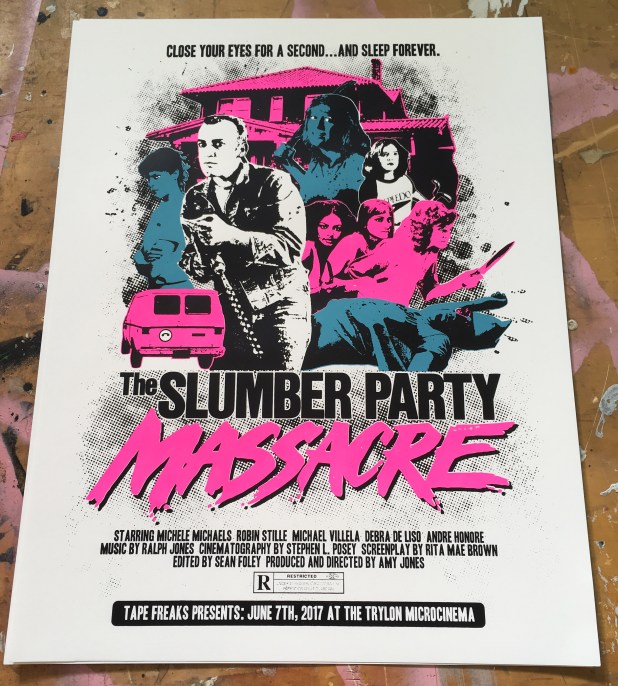
Slumber Party Massacre (1982)

I watched Slumber Party Massacre 2 before I saw the first one. I really don’t think this interfered with my enjoyment of either of the films as they have only the smallest bits of connectivity. They share drills, murder, mayhem and a character or two. I’m willing to bet I’ll feel the same way about the third film and where it fits in.

Directed by Amy Holden Jones (who wrote Mystic Pizza, Beethoven and Indecent Proposal, in addition to directing Corvette Summer) and written by Rita Marie Brown as a parody of the slasher genre, this film is but the first of three female directed drill killer starring slasher send-ups.

Originally known as Don’t Open the Door (the Italian title for The Texas Chainsaw Massacre), this movie is all about Trish Devereaux-Craven (Michelle Michaels, who shows up in Death Wish 4 and New Year’s Evil) throwing a slumber party while her parents are out of town. That event takes place just as Russ Thorn, an escaped mass murderer, is out looking for blood and targets for his power drill.

Russ kills Linda (Brinke Stevens, thanks for your service) in the shower before the party even begins. Then he comes after the basketball playing party girls — Kim, Jackie and Diane — as well as new girl in school Valerie (Robin Rochelle, Sorority Babes in the Slimeball Bowl-O-Rama) and her little sister Courtney.

There are some boys, some mischief and plenty of drilling mayhem, as well as a pizza guy who sacrifices himself and his eyes (alert Fulci!) so that the girls can get their grub on. Russ survives all manner of mayhem and deals it out in kind before succumbing to being beat with a fireplace poker, losing his drill bit and left hand, then falling into a swimming pool and stabbed with his own machete.

While originally written from a more feminist and satirical perspective, this was shot as a straight film. It doesn’t approach the dizzying lunacy of the sequel, but it’s an enjoyable enough waste of your time.

Want to see it for yourself? You can order it from Shout! Factory or stream it for free on Amazon Prime.

The artwork for this article comes from Tim Monster, whose site features amazing screen prints and posters. Order a bunch now!

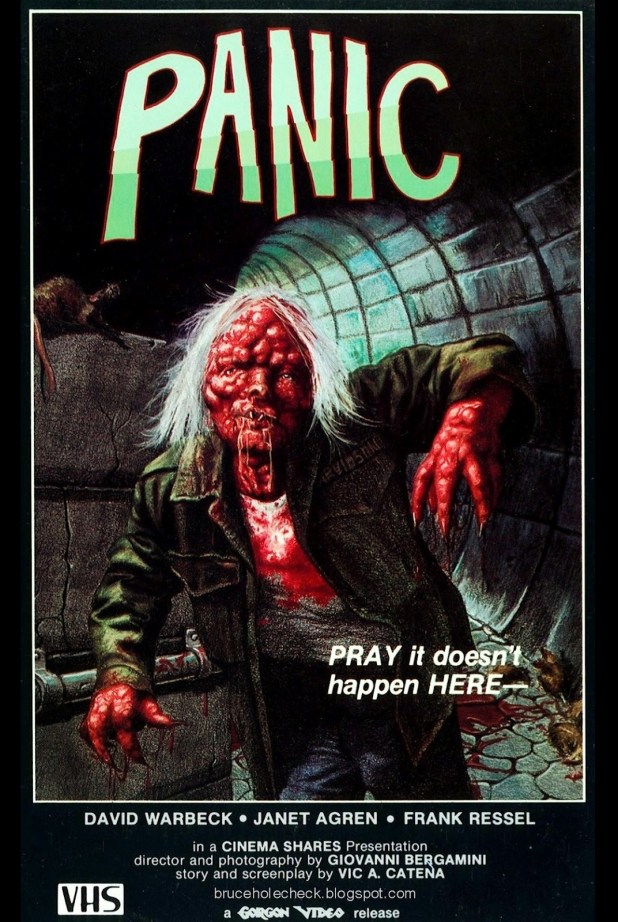
CHILLING CLASSICS MONTH: Panic (1982)

Also known as Bakterion, Nightmare Killing and even Zombie 4 in Greece, this film was directed by Tonino Ricci, Fulci’s assistant director on White Fang and Challenge to White Fang.

It all starts with lab rats going nuts and killing one another, which was not what I was planning on watching while I ate my breakfast while watching this. What was I thinking?

Professor Adams has gone missing — maybe it was a fishing trip — but we all know that he’s behind all of the random killings. The government literally sends Captain Kirk (David Warbeck from The Beyond) to figure out what’s going on. He starts working with Jane (Janet Agren, Eaten Alive!Hands of Steel) to figure out how to stop the infection and save not just the town, but soon the entire world. Yep, there’s plenty of talk about how this mutant virus could end life as we know it, yet all we see is one rotting meatloaf looking doctor.

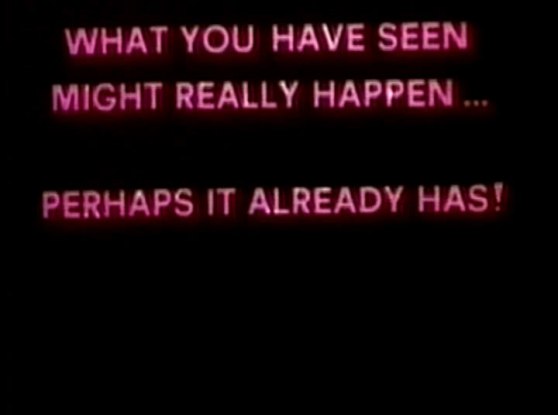
Will the military nuke the town? Can Captain Kirk stop the worst special effect you’ve ever seen this side of Curse of Bigfoot? Will Jane feel bad for the professor, whose face looks like the inside of a stuffed pepper? Did I laugh out loud at this end credit copy?

Ugh, this movie. It’s pretty painful. That said, you can get an uncut version on Cult Action, watch it on Amazon Prime or just grab the Chilling Classics box set.

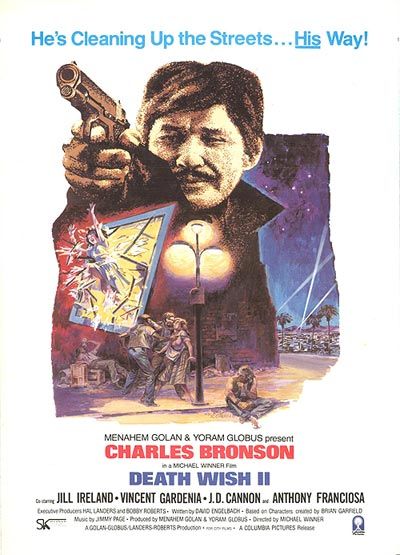
DEATH WISH WEEK: Death Wish 2 (1982)

Paul Kersey can’t catch a break. Seriously, in this sequel, he goes through the Trials of Job all over again. You think he went through some bad stuff in the first movie? Michael Winner is just getting started putting our vigilante hero through hell on earth.

Paul has taken his daughter Jordan and moved to Los Angeles, where he’s found love again with radio reporter Geri Nichols (Bronson’s wife, Jill Ireland). However, horror and pain is never far from Kersey, so one day at a fair, some punks steal his wallet. He chases one of them down named Jiver down and teaches him a lesson. The gang — Nirvana, Punkcut, Stomper and Cutter (Laurence Fishburne) — find his address in his wallet and pay a visit to his house. They rape his housekeeper Rosario, beat Paul into la la land and steal his daughter (this time played by Robin Sherwood from Tourist Trap). After raping her, she goes even deeper into her depression and jumps out a window, falling to her death and getting impaled like she’s Nikos Karamanlis or Niko Tanopoulos.

Of course, Paul doesn’t need help from the cops. He only needs one thing: to give in to the rage within, to become the vigilante once more. Det. Frank Ochoa is back to chase him one more time, as he’s the only one who can track him.

Soon, Paul is wiping out the gang one by one, his own personal safety and relationship with Geri be damned. This is the first time we discover that Kersey is able to do magical things like make fake IDs with just a Xerox machine and talk his way into anywhere and out of anything. By the end of this film, he’s gone from a man whose life has been destroyed to a walking angel of death willing to do whatever it takes to kill everyone that’s crossed him.

To be as authentic as possible, this movie was shot in the sleaziest parts of Los Angeles, such as the abandoned and crumbling Hollywood Hotel location. Many of the film’s extras were local color who were either hired to play a bit part or just walked over to the set, such as drug addicts, drag queens, Hare Krishnas and bikers. Even crazier, Bronson’s alcoholic brother was a frequent set visitor, constantly asking for money. Bronson wanted to be careful not to give him too much cash so that he wouldn’t be mugged, but that brother was soon found dead, stabbed in the ass.

My favorite part of this was the score, composed by Jimmy Page in his first post-Led Zeppelin musical appearance here by creating the film’s soundtrack. It’s almost surreal to hear his signature guitar tone over Bronson killing rapists.

You can watch this for free on Amazon Prime or order the blu ray from Shout! Factory.

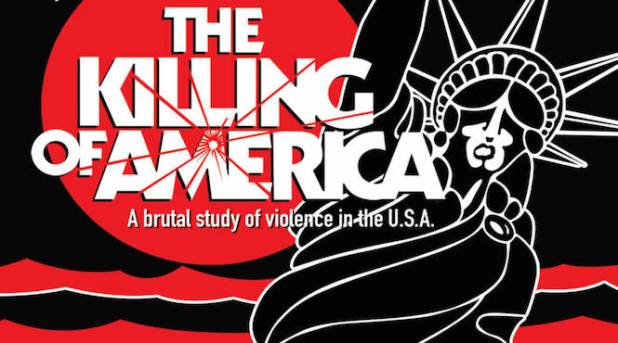
DOCUMENTARY WEEK: The Killing of America (1982)

If you think the United States is in bad shape today, perhaps you should check out this film, made well beyond the news bubble and the 24/7 headline cycle. The 1970’s were fucking bleak.

If you thought mass shooters were because of video games or that we just suddenly became a more violent society, sit through this movie. It’s brutal. It will assault you. It will take your name. It will own you.

Director Sheldon Renan suffered from depression for a year after he finished this film, as was editor Lee Percy. Even the John Lennon vigil at the end, added at the request of Japanese producers to help the movie end on a positive note, had people shoot at one another. That ending is somehow even more downbeat than anything else, after a movie where Sirhan Sirhan cries about killing RFK and you see more of the Zapruder film than you knew existed.

How destroyed was Renan? He went on to write the screenplay for 1990’s Lambada. What the actual fuck.

The voice of this film is incredible and it comes from Chuck Riley, who did the voiceovers for these trailers: The GodfatherChild’s Play 2Die Hard and many more.

The writing comes from Leonard Schrader, brother of Taxi Driver writer Paul, who was inspired to do this movie after writing a film called Hollow Point for Roger Corman. As he researched that movie, he met so many hitmen and spent so much time with them, he learned exactly how killers planned and executed hits.

There’s even a one-on-one interview with the Edmund Kemper, where he calmly discusses killing his mother and young women. That said — the goal of this film isn’t Mondo Cane exploitation.

According to a New Republic article, it wanted to erase the line between killers and the audience. Renan said Schrader “wanted to turn the audience into murderers. He wanted [viewers] to recognize that in themselves, ostensibly so that they would do something about it.”

As they worked on the film, Reagan and Lennon were both shot. Things did not get better. Things are bad now. So often I use film to hide from reality, but this movie makes you face it.

There is a lot here I never knew about, like Tony Kiritsis, an Indiana man who held a mortgage broker hostage while hosting a press conference in the most polite manner possible. Of course, he also had a shotgun wired to the man’s head that was ready to go off if he was shot by the police.

Some feel that this movie glamorizes the killers. I would refute that and say that it makes you see the senselessness of their action. As the former president of a Zen meditation center, Renan gave them a forum because he believed that “you just have to feel compassion for everybody — you just do. I do, anyway. For me, it was a journey into the depths to try to get some understanding.”

This is a movie that I think everyone should watch. It’s sobering. It’s maddening. And it approaches art.

This film was never released, distributed, televised, or made available for sale in the USA until it finally received an official release from Severin Films. You can also watch it on Amazon Prime

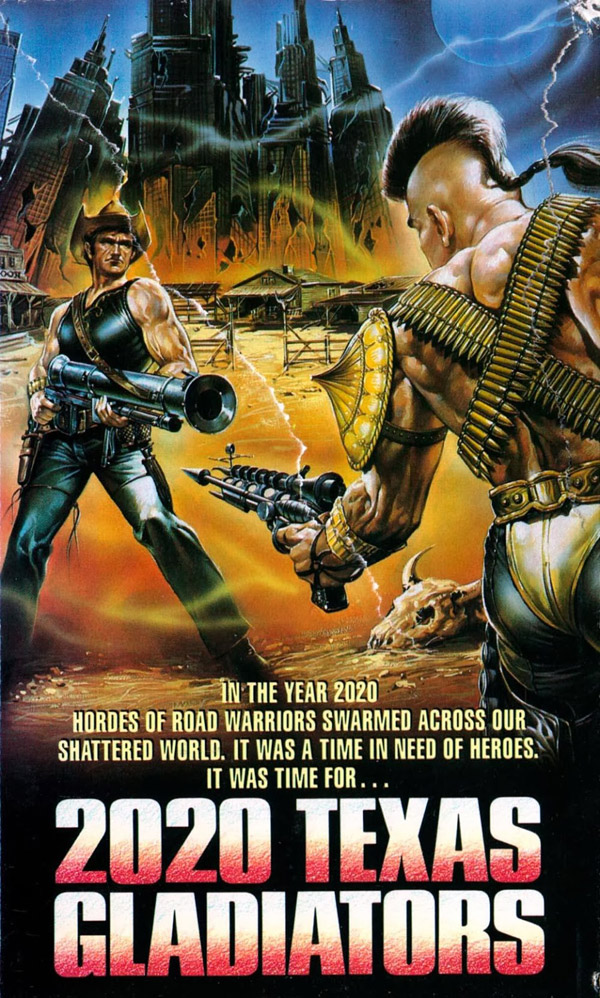
EVEN MORE FUCKED UP FUTURES: 2020 Texas Gladiators (1982)

This movie starts with a long battle after the end of the world, bringing you in before there’s even any story. Who even cares if there’s a story? People are getting killed left and right!

We have 5 heroes here — who would assume are the Texas Gladiators. They are Nisus (Al Cliver, EndgameWarriors of the Year 2072), Catch Dog (Daniel Stephen, War Bus which is a totally different movie than War Bus Commando), Jab (Harrison Mueller, She), Red Wolfe (Hal Yamanouchi, Rat Eater King from 2019: After the Fall of New York) and Halakron (Peter Hooten, the original Dr. Strange!).

They have to save this monastery, but they just sit and watch as more people get attacked and a priest even gets crucified. What are they waiting for? And then Catch Dog tries to rape one of the survivors! You guys are the heroes? Well, at least they kick him out after that.

That girl ends up being Maida (Sabrina Siani, Oncron from Conquest!), who hooks up with Nisus. Years later, they’re all settled down, the rest of the guys have gone their own way and Catch Dog has started an evil gang. Just like your friends from college.

Of course, Catch Dog’s gang attacks the town where Nisus lives with his family. Surprisingly, they fight back the invaders, but then a vaguely Nazi army attacks and defeats our hero, shooting him across the forehead. Then the army kills and rapes everyone and everything, taking the town apart.

The leader of this army, Black One (Donald O’Brien, Dr. Butcher M.D. himself!) tells everyone that he’s in charge. They then take Nisus and force him to watch his wife get raped. This movie has more violent sex than — oh, Joe D’Amato and George Eastman directed it? Yeah. It figures.

So what happens with our hero? He attacks one of the guys and gets shot a hundred times and dies. Is that the end of the movie? Nope.

Our old friends Halakron and Jab find Maida, who has been sold to a gambler, and Halakron wins her in a game of Russian Roulette. They all get busted for a bar fight, where they get tortured in salt mines. Luckily, Red Wolfe comes to save them.

Catch Dog’s gang attacks, but our heroes fake their deaths. They also meet up with a gang of Native Americans. Jab has to defeat one of them in battle to get them to join with our heroes. Of course, he wins. He’s Jab, bro.

Maida gets to kill Catch Dog, but Jab doesn’t make it. He dies in his friend’s arms because this is an Italian movie and even the heroes can die. Luckily, Halakron gets to kill Black One with a hatchet. So there’s that.

Halkron, Red Wolfe and the Native Americans win the day, save everyone and then ride off into the sunset, because post-apocalyptic Italian movies are just spaghetti westerns with shoulder pads.

There are better post-apocalyptic films than this. But there are worse ones, too. It’s a hard one to get, but luckily Cult Action can help you.

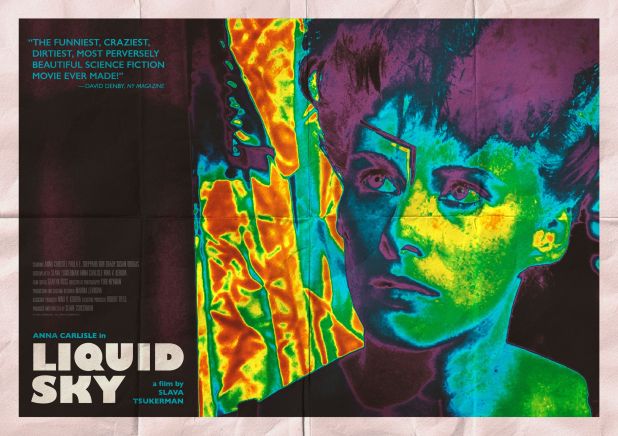
Liquid Sky (1982)

An alien is hovering in the sky above New York City, extracting the endorphins produced by the brain when an orgasm occurs. With each happy ending, someone is murdered, all so the alien can use that energy for…well, I’m not really sure. There’s also plenty of drugs, punk rock, synthesizers, fashion shows and face paint. It’s pretty much perfect.

It all starts at a fashion show in a nightclub where we meet two models, Margaret and Jimmy, who are both bisexual and addicted to fame and cocaine. They’re both played by Anne Carlisle, who was also Victoria in Desperately Seeking Susan. Neither of them has any money to pay for those drugs and they’re constantly at one another’s throats.

Jimmy’s mother, Sylvia, is a TV producer who somehow comes into the orbit of German scientist Johann Hoffman, who is the only person on Earth who understands how the aliens work. And how they work is by killing each person who has had an orgasm with Margaret and making a crystal come out of their heads. Where once she doesn’t believe that these deaths are her fault, by the end, she’s yelling things like “I kill with my cunt!” and taking out men who have wronged her.

Shot in the U.S. by a small Russian production team, Liquid Sky may as well have been beamed down from space. It feels like it came out of the New York club scene with places like Danceteria and groups like Michael Alig’s clubkids. Even its title is slang for heroin.

You can take this as a memento of New York in the 80’s or a science fiction infused comedy. Or both.

Vinegar Syndrome has recently re-released this film along with a 50-minute documentary about the film. You can also watch it on Amazon Prime and Shudder. We featured Liquid Sky — with a second look — as part of our weekly “Drive-In Friday” featurettes with a tribute to the old USA Network’s “Night Flight” programming block from the ’80s.