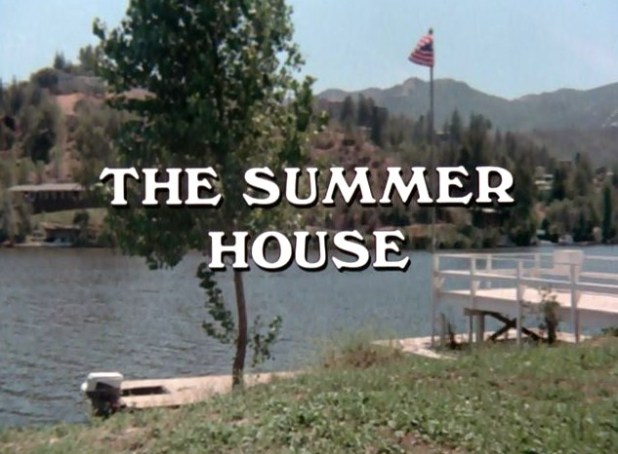
Ghost Story: Episode 5 “The Summer House”

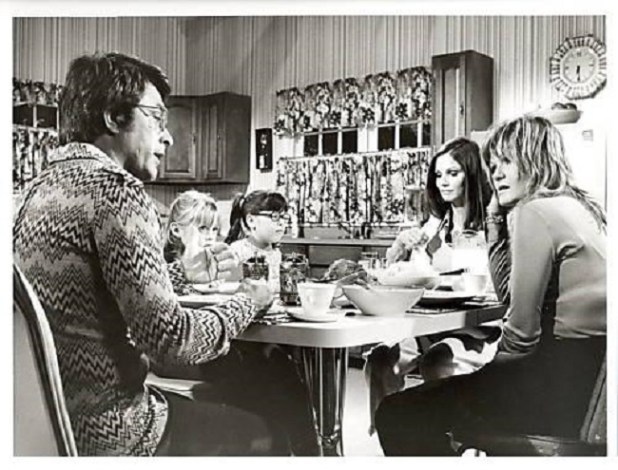
Martha and Andrew Alcott (Carolyn Jones, forever Morticia Adams, and Steve Forrest, Greg from Mommie Dearest) spend their summer in a vacation home that Martha hates, but there are plenty of reasons for that, mostly that there’s an evil force in the basement that wants to destroy them.

This episode of Circle of Fear/Ghost Story was directed by Leo Penn, whose acting and directing career started in 1945 and continued all the way to 1995. Despite him making 27 episodes of Matlock, 6 Hart to Hart shows and The Dark Secret of Harvest Home, he’s probably better known for being the father of Chris, Michael and Sean Penn.

This episode comes from a story by British writer A. M. Burrage and was adapted by Seeleg Lester (a story consultant on The Outer Limits and the writer of the episode “The Inheritors”) and Richard Matheson.

Over and over, Martha has a dream where she finds out that her husband is cheating, so she pushes him down a well, only to wake up and nothing has happened. Again, again and again. Is this a memory, a premonition or just a dream?

Sadly, this is one of the episodes of the show that just kind of drags. But don’t give up, because there are some decent ones coming soon.

However, it looks gorgeous, and that’s probably because Bill Butler was the director of photography. Perhaps you’ve seen his work in JawsDamien: Omen II and Demon Seed.

You can watch this on YouTube.
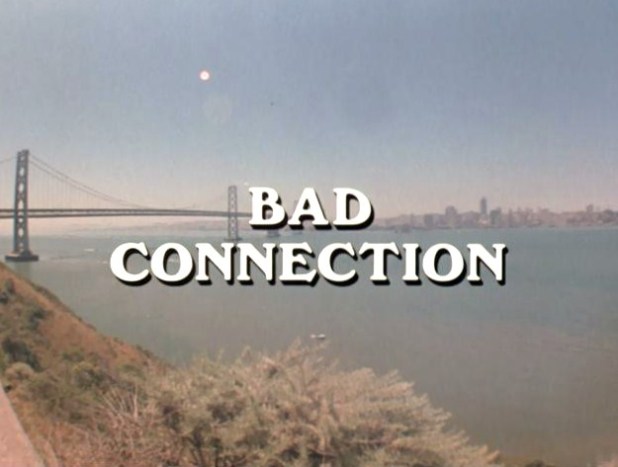
Ghost Story: Episode 4 “Bad Connection”

If you’ve watched enough made-for-TV horror, you may have asked, “How long will it be until Karen Black shows up as part of Ghost Story?” Good news. She’s here.

In this episode — written by John McGreevey (The Death of Richie) and horror master Richard Matheson and directed by Walter Doniger, who made a lot of TV but I’m going to celebrate him for writing the Brian Bosworth vehicle Stone Cold — she plays Barbara Sanders, a widow who is just getting used to the idea that her husband died in Vietnam, which is a tremendously edgy thing for a network TV horror anthology to tackle back in 1972.

As she plans to remarry, the phone starts to ring, with her dead husband’s voice on the other side, asking her to remember her promise and telling her that she’ll soon die. Throw in the sound of army boots haunting her at night and you get what you want Karen Black to do: open up those gigantic eyes and just start screaming.

Anyone else would scream loudly and act slightly afraid.

When you hire Karen Black, you get full-on mania, the kind you’re worried will stay with her long after the acting is done.

You can watch this on YouTube.
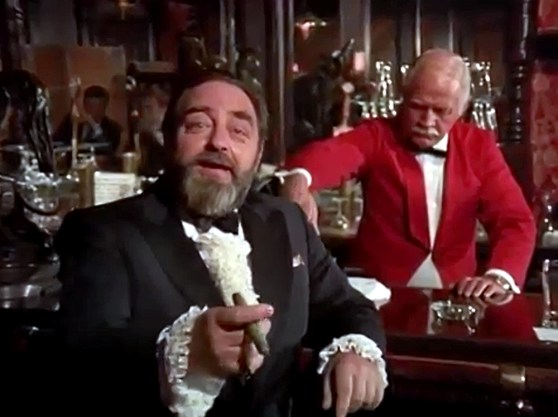
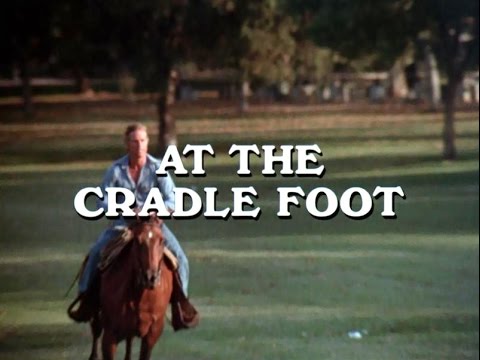
Ghost Story: Episode 3 “At the Cradle Foot”

Don McDougall started his directing career in 1951 and worked on everything there was to make on TV. Cowboys shows like Cowboy G-Men, Rawhide, BonanzaBuffalo Bill Jr. and The Roy Rogers Show. Adventure like Jungle Jim and Mod Squad. Pop culture milestones like the Planet of the ApesSpider-ManKolchak and Star Trek. Even The Dukes of Hazzard and The Fall Guy.

For this episode of the stories of Winston Essex, he’s directing from a script by The Phoenix creator Anthony Lawrence and master of horror Richard Matheson.

Paul Dover (James Franciscus) has the worst dreams. The worst is the one where his daughter Emily gets murdered when she grows up. So he follows the clues of his dream and ends up in the city where he believes she’ll die. His mission takes a backseat to the love he finds with Julie (Meg Foster!), who runs the boardinghouse he’s living in and is engaged to the man who murders Emily in Paul’s nightmares.

These dreams have already cost Paul his marriage to Karen (Elizabeth Ashley, Windows) and left him with darkness hanging over him after he doesn’t follow those psychic warnings when he believed his father’s life was in danger. So when he sees a vision of Emily getting shot on a carousel by a man not yet born, then you understand why he wants to break up Julie and Ed, who will one day give birth to that killer.

This is one of the better episodes of this show and, as always, Sebastian Cabot is perfect as the storyteller.

You can watch this on YouTube.
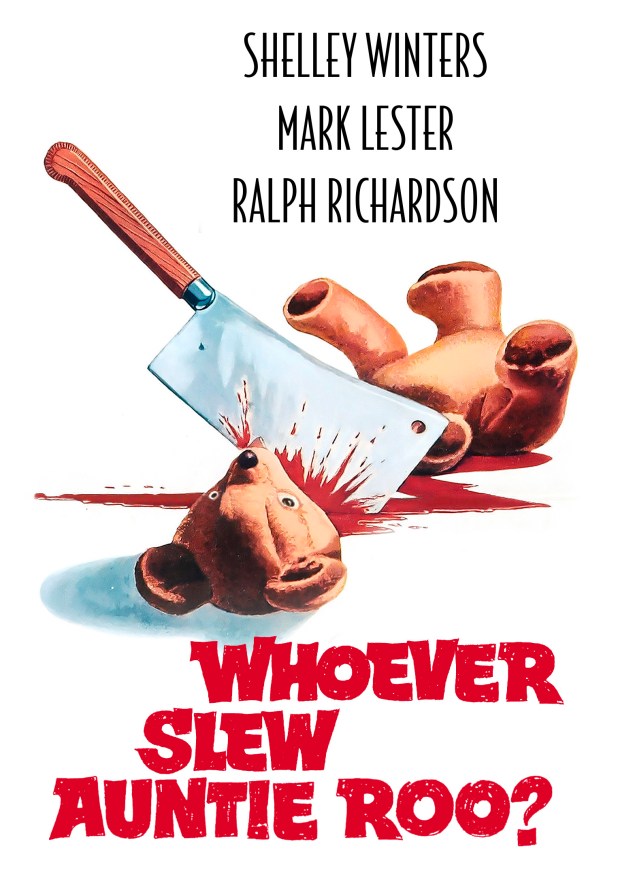
CURTIS HARRINGTON WEEK: Whoever Slew Auntie Roo? (1972)

EDITOR’S NOTE: I love movies that pose a question in the title. We tried to answer why this movie is so good on May 2, 2020 and have brought it back for this week of Harrington films.

Following the success of What’s the Matter with Helen?, Curtis Harrington directed this intriguing psycho-biddy film. In it, Mrs. Rosie Forrest (Shelley Winters), the Aunty Roo of the title, is known by the children of a local orphanage as a kindly old lady who throws a huge Christmas party every single year for them. However, the truth is far more sinister. She’s obsessed with her dead daughter Katharine, whose mummified body lies in state in her attic so Aunty Roo can sing lullabies to her every night.


Mark Lester and Chloe Franks from The House That Dripped Blood play Christopher and Katy Coombs, two orphans who find themselves in Roo’s clutches. She believes that Katy might be her daughter, and the story takes a turn that’s reminiscent of the classic Hansel and Gretel tale, adding an intriguing layer to the narrative.

Ralph Richardson plays Mr. Benton, a fake psychic who tries to help Aunty Roo connect to the spirit of her long-departed daughter.

The early 70s are filled with what I call enjoyable junk. This would be one of those films with Winters practically devouring the scenery. It makes an outstanding double bill with the aforementioned What’s the Matter with Helen?, which is the superior of the two films. While Whoever Slew Auntie Roo? shares some thematic and stylistic similarities, it stands out for its more compelling narrative and character development.

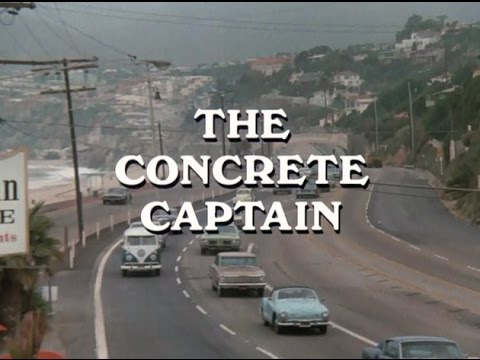
Ghost Story: Episode 2 “The Concrete Captain”

Ed Lucas (Stuart Whitman) has found his wife Kate (Gena Rowlands) the perfect souvenir. The Concrete Captain is a small chunk of concrete with a miniature harpoon in it. Lucky for him — and maybe not so good, really, when you see how it all happens — she loves it.

She’s actually obsessed with it.

The Concrete Captain ends up being real and his ghost thinks that Kate is his long-lost love Katharine. And he’s coming back for her.

This episode of Ghost Story was based on a short story by Elizabeth Walter, whose story “The Spider” was an episode of Night Gallery, “Fear of Spiders.” Three more of her stories would end up in this series: “The New House,” “Pendergast” (which was called “Elegy for a Vampire”) and “Travelling Companion” (which was called “Time of Terror). The story was adapted by JImmy Sangster and Richard Matheson, which if you think about it, is pretty much as good as it gets.

This was made four years — and plenty of TV work — before Richard Donner would make The Omen and show the world just how good he was. Anyone who watched this episode would already know that, as this gothic ghost story wanders the silent and gray shores of a coastal town that’s been shut down.

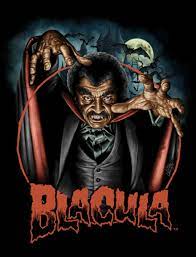
Blacula (1972)

William Crane mostly worked in TV, but we always will have him to thank for directing the first African-American vampire movie (and the first Jekyll and Hyde movie for a black audience, Dr. Black and Mr. Hyde).

Prince Mamuwalde (William Marshall) represents the Nigerian Ibani African nation as they ask Count Dracula (Charles Macaulay) to help stop slavery. Instead, Dracula laughs in his face and tells him he’s going to enslave the proud black man’s wife Luva (Vonetta McGee, The Great Silence). Mamuwalde is bitten, turned into a vampire, cursed with the name Blacula and imprisoned in a coffin as his wife dies beside him.

Two centuries or so in the future, interior decorators Bobby McCoy (Ted Harris) and Billy Schaffer (Rick Metzler) buy Blacula’s coffin at an auction, opening it and unleashing his thirst on the world.

At Bobby’s funeral, Blacula finds Tina Williams (McGee), who looks exactly like his dead wife. As the vampire kills and turns people, he also begins to convince his wife’s reincarnation that they must spend the rest of eternity together. Blacula is a romantic and that — along with his dignity — makes him a vampire who stands the test of time.

Crane worked hard to keep the movie as authentic to the black experience as possible, changing Blacula’s name from Andrew Brown to Mamuwalde and the unique concept of him being an African prince before he got his fangs.

I’m all for this movie. They should have made ten sequels.

Ghost Story: Episode 1 “The Dead We Leave Behind”

Originally airing on September 15, 1972, the first episode of Ghost Story has Winston Essex telling us the story of ranger Elliott Brent (Jason Robards).

His wife Joanna (Stelle Stevens) is bored, so he buys her a TV set. But now, all she does is watch her stories and neglects their home. As they argue, Elliot accidentally kills her and buries her behind their cabin. But now, when he turns on that TV, all he sees is her and sees episodes of shows in which she’s been unfaithful to him.

And when the man who she’s been cheating — in video form from beyond the grave — shows up, well, Elliot has to kill him too, right? But after that, when he starts seeing bodies rising from the grave on the screen, things don’t look good at all.

Director Paul Stanley’s career was mainly in television other than the 1959 film Cry Tough, which starred a young John Saxon. This episode came from a story by Robert Sprecht, who created the show The Immortal, and was developed for the TV format by Richard Matheson.

John Kenneth Muir’s Reflections on Cult Movies and Classic TV has a great theory on this episode and how it influenced numerous Stephen King stories from Pet Sematary and The Shining to the “Something to Tide You Over” segment in Creepshow.

Robards — as always — brings up the level of anything he’s in. And Stella Stevens is great in this too. I kind of love how it starts in the middle of their story, which already seems to be spiraling into darkness.

Ghost Story: Pilot Episode “The New House”

Becca and I got obsessed with this show, which lasted for just one season before it was canceled due to low rating. That’s a shame as this show feels like NIght Gallery if it remained all serious and didn’t have the abysmal comedy bits.

Even better, each episode looks like a movie, thanks to the producing skills of William Castle, and feels like one with Hammer scribe Jimmy Sangster overseeing the stories. It’s hosted by Family Affair star Sebastian Cabot as Winston Essex, who works in the elegant Mansfield House hotel, which is truly the Hotel del Coronado, the same place that Wicked Wicked was shot.

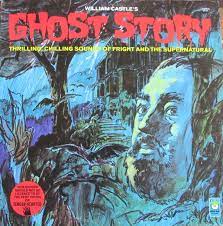
There was even a Peter Pan Records album of the show, which sadly only lasted 22 episodes, which includes a mid-season overhaul of the show’s format. We’ll get to that in a few months, but we thought it’d be fun to post each episode weekly and share it with you.

Originally airing on March 17, 1972, “The New House” has a killer TV movie pedigree, as it was directed by John Llewellyn Moxey and written by Richard Matheson. I mean, this is the team that brought us The Night Stalker.

Barbara Perkins (Betty Anderson from Valley of the Dolls and the maid of honor for the wedding of Sharon Tate and Roman Polanski) and David Birney are a couple that’s just bought a new home. As they wait for their child to be born, they learn that their home was once the site of a lynching and a hanged woman named Thomasina Barros is still there, at least in spirit, seeking new life that will allow it to enter our world. New life like, well, the baby that’s due any day now.

The format of this show is great, as the stories are given a full hour — forty-plus minutes with commercials — and the casts are always stellar, the stories frequently frightening and the sets all share a similar backlot feel. There’s also an orange cat in several episodes, which seems like a theme.

You can check out this episode on YouTube:

The Couple Takes a Wife (1972)

Jeff and Barbara Hamilton (Bill Bixby and Paula Prentiss) lose their maid and decide that if they’re both so busy, they should just get another wife because it’s 1972. And yet in the midst of porno chic, their new wife Susan Silver (Valerie Perrine) is only shown to be fleetingly romantic with Jeff and not interested at all in the benefits of a true triad relationship. But hey — it was on TV in 1972, so why am I wondering these things? Too many Joe D’Amato movies, that’s why.

Throw in appearances by Myrna Loy, Robert Goulet, Nanette Fabray, Larry Storch and Penny Marshall and yes, you have a TV movie.

Somehow, this is my second Jerry Paris-directed movie in two days, so that means I’ll have to seek out his movies What’s a Nice Girl Like You…?Evil Roy Slade and How Sweet It Is!, which somehow has both Terry-Thomas and Paul Lynde in the same movie.

Seriously, why didn’t Barbara and Susan just run off and leave Jeff — who is a real cad for the entire movie — all on his own?

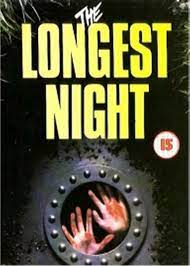
The Longest Night (1972)

Based on the 1968 Barbara Mackle kidnapping by Gary Steven Krist, this was the ABC Movie of the Week, airing on September 12, 1972.

Karen Chambers has been kidnapped and placed in an underground coffin with an air supply and water while the criminals try and get the money. Karen is played by Sallie Shockley, which is kind of interesting because The Candy Snatchers is pretty much the same movie — well, this is made for TV and doesn’t get quite so rough — and the female protagonist of that movie was played by another alliteratively named actress, Susan Sennett.

This was directed by Jack Smight, whose resume includes The Illustrated ManDamnation AlleyThe Traveling ExecutionerNo Way to Treat a Lady and Airport 1975, which is the very definition of an eclectic resume. He’s working from a script by Merwin Gerard, whose TV movie credits are The Screaming WomanThe VictimShe Cried Murder and The Invasion of Carol Enders. He also created the series One Step Beyond.

The cast is great. There’s David Janssen as the father, Phyllis Thaxter (Ma Kent from the Superman movies) as the mother, James Farentino as the lead kidnapper, Skye Aubrey as his partner and Mike Farrell as an FBI agent.

Beyond being referenced in the aforementioned The Candy Snatchers, this was also filmed in 1990 as 83 Hours ‘Til Dawn. There’s also an episode of Quincy M.E., “Tissue of Truth,” that is ripped from these headlines. This movie only aired once, as there were issues with who owned the rights to the story.