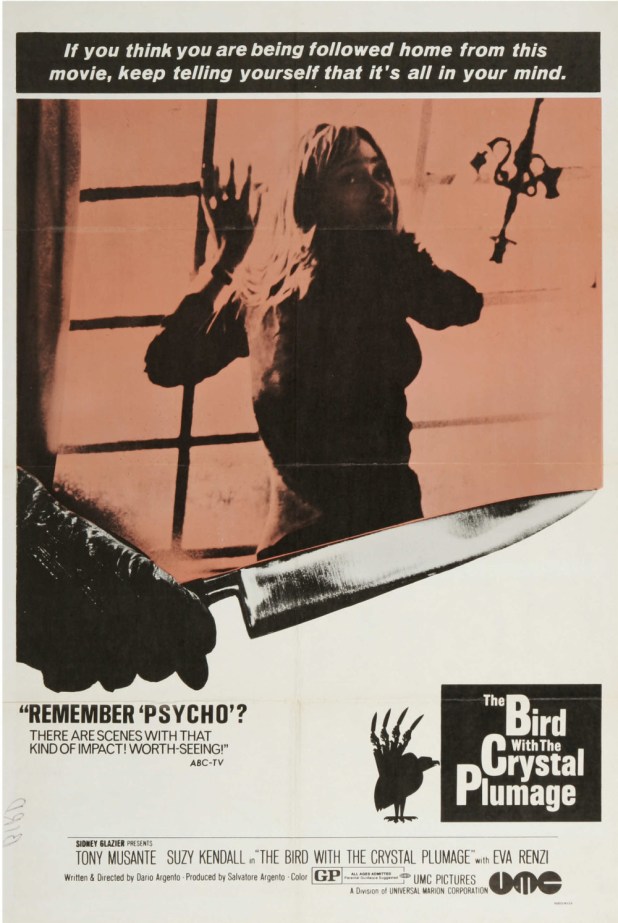
The Bird with the Crystal Plumage (1970)

Other than the films of Mario Bava (Blood and Black LaceThe Girl Who Knew Too Much), there’s no other film that has no influenced the giallo. In fact, the most well-known version of the form starts right here with Dario Argento’s 1970 directorial debut. Until this movie, he’d been a journalist and had helped write Leone’s Once Upon a Time in the West.

Sam Dalmas (Tony Musante) is an American writer suffering from an inability to write. He’s gone to Rome to recover, along with his British model girlfriend (yes, everyone in giallo can score a gorgeous girl like Suzy Kendall). Just as he decides to return home, he witnesses a black-gloved man attacking a girl inside an art gallery. Desperate to save her, he can only watch, helpless and trapped between two mechanical doors as she wordlessly begs for help.

The woman is Monica Ranier and she’s gallery owner’s wife. She survives the attack, but the police think Sam may have had something to do with the crime, so they keep his passport so he can’t leave the country. What they’re not letting on is that a serial killer has been wiping out young women for weeks and that Sam is the only witness. That said — he’s haunted by what he’s survived and his memory isn’t working well, meaning that he’s missing a vital clue that could solve the crime.

As you can see, the foreign stranger who must become a detective, the missing pieces of memory, the black-clad killer — it’s everything that every post-1970 giallo would pay tribute to (perhaps rip off is the better term).

Another Argento trope shows up here for the first time. It’s the idea that art itself can cause violence. In this film, it’s a painting that shows a raincoat-clad man murdering a woman.

Soon, Sam is getting menacing calls from the killer and Julia is attacked by the black-clad maniac. The police isolate a sound in the background of the killer’s conversations, the call of a rare Siberian “bird with the crystal plumage.” There’s only one in Rome, which gets the police closer to the identity of who is wearing those black gloves (in truth, it’s Argento’s hands). It’s worth noting that the species of bird the film refers to as “Hornitus Nevalis” doesn’t really exist. The bird in the film is actually a Grey Crowned Crane.

Alberto, Monica’s art gallery husband, tries to kill her, finally revealing that he has been behind the attacks. Ah — but this is a giallo. Mistaken identity is the main trick of its trade. And even though this film was made nearly fifty years ago, I’d rather you get the opportunity to learn for yourself who the killer really is.

I may have mentioned before that my parents saw this movie before I was born and hated it to a degree that any time a movie didn’t make any sense, they would always bring up “that weird movie with the bird that makes the noises.” Who knew I would grow up to love Argento so much? It’s one of those cruel ironies that would show up in his movies.

An uncredited adaptation of Fredric Brown’s novel The Screaming Mimi, this film was thought of as career suicide by actress Eva Renzi. And the producer of the film wanted to remove Argento as the director. However, when Argento’s father Salvatore Argento went to speak to the man, he noticed that the executive’s secretary was all shaken up. He asked her what was wrong and she mentioned that she was still terrified from watching the film. Salvatore asked her to tell her boss why she was so upset and that’s what convinced the man to keep Dario on board.

The results of all this toil and worry? A movie that played for three and a half years in one Milan theater and led to copycats (and lizards and spiders and flies and ducklings and butterflies and so on) for decades. Argento would go on to film the rest of his so-called Animal Trilogy with The Cat O’Nine Tails and Four Flies on Grey Velvet, then Deep Red before moving into more supernatural films like Suspiria and Inferno.

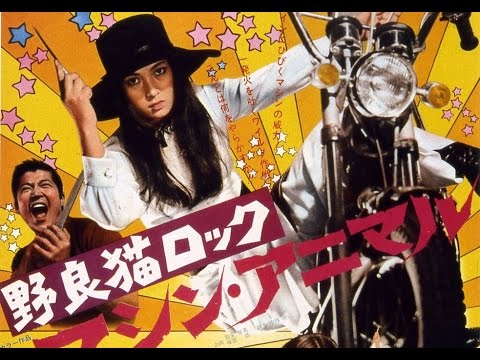
Stray Cat Rock: Machine Animal (1970)

In the fourth of five Stray Cat Rock (or Alleycat Rock) films, two Japanese men help a deserter from the Vietnam War escape to Sweden and fund their plan by selling LSD. But soon, rival gangs find out about the drug deal and want a piece of the action for themselves.

Meiko Kaji returns again, as does the jazzy rock and roll and elements of style established by the first four films in the series. Director Yasuharu Hasebe returns as well, filming this installment in just two weeks. It was released two months after the last one, so either they were rushing to get these out before the trend died or the Japanese public was demanding more and more girl gang group movies.

This one is a lot like the first two, other than the acid taking sequence, which has our heroes Maya and Nobu refusing to partake. Drugs were really becoming part of Japan’s culture here, but take it from someone that’s been there a few times. Thanks to incredibly strict prison sentences for even first offenders, any taking of them is kept incredibly secretive. That said — if you want to see a movie where Del Monte canned tomatoes turn into blood…

There’s also a lot of bowling in between all the motorcycle chases and go-go dancing. It just kind of makes sense, I guess.

You can watch this on Amazon Prime or get the Arrow Video box set.

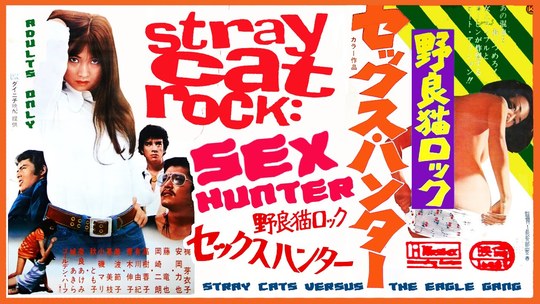
Stray Cat Rock: Sex Hunter (1970)

Shot at the same time as the second film in the Stray Cat Rock series, Wild Jumbo, this third film has the return of director Yasuharu Hasebe. This time around, the Alleycats — led by Mako, played by series star Meiko Kaji — battle the male gang the Eagles. Look — any movie that starts with a girl versus girl knife and flashlight fight and a girl gang robbing a salaryman is worth watching.

When one of the Alleycats named Mari turns down the advances of the Eagle’s member Susumu and hooks up with a mixed-race guy named Ichiro, the gang’s leader Baron goes crazy. Turns out his sister was attacked by several mixed-race men, so he decides to take out anyone that isn’t purely Japanese. It also doesn’t help that Mako falls for another mixed race stranger.

Race relations were a big deal at the time in Japan, as many Japanese/American babies were being conceived. The film was shot near the U.S. Naval base in Yokosuka and features the girl group Golden Half, whose five members all had Japanese mothers and gaijin fathers, which was their selling point.

From the first frame, I was happy to have Hasebe as the director. This is a cool, calculated film filled with violence and themes of male impotence and the actual melting pot of races producing a better future. Like all the Stray Cat films, the women are the strong ones, with men fighting to own and control them. But they just can’t — there’s no way they can tame them.

One question I have: were Jeeps really that big of a deal in 1970 Japan? These movies have more of them driving all over the place than any I’ve seen!

You can watch this on Amazon Prime or get the Arrow Video box set.

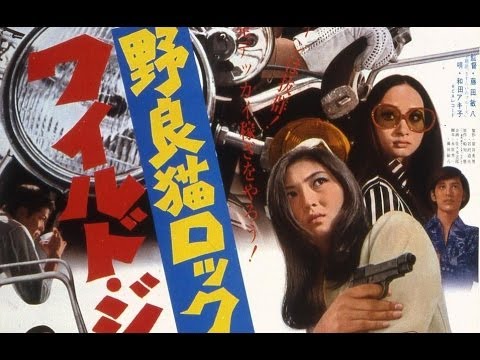
Stray Cat Rock: Wild Jumbo (1970)

Released only three months after the first film in the series, Toshiya Fujita’s replaces Yasuharu Hasebe for the second of five Stray Cat Rock films. No worries — they’ll split directing duties for the rest of these films. This one is concerned with five friends who come up with a plan to rob 30 million yen (about $270,000 in today’s exchange). Meiko Kaji returns from the first film, now the star and no longer the sidekick, although her character has no relation to the first film.

A group of wild young people called the Penguin Club (or Pelicans, I’ve seen it written that way in articles too) who love to play around in their Jeep shoot out the tires of a car driven by a wealthy woman named Asako. They soon set her free, but she’s already fallen for Taki, a member of the gang. She soon tells him that she’s part of a religious group called Shinkyo Gakkai and they could help her be part of a heist to make some real money.

The third entry in the series, Sex Hunter, was filmed at the same time, with Meiko Lee and the Alleycats running back and forth between the sets. That’s pretty crazy.

The Penguin Club goes from rebelling against nothing and doing stupid things like stealing dump trucks to something really foolish: digging up a stash of weapons from the end of the war and fighting the cops. The tone dramatically shifts by the end of the film. I didn’t enjoy this one as much as the first film in the series, but there’s still plenty of good parts.

You can watch this on Amazon Prime or get the Arrow Video box set.

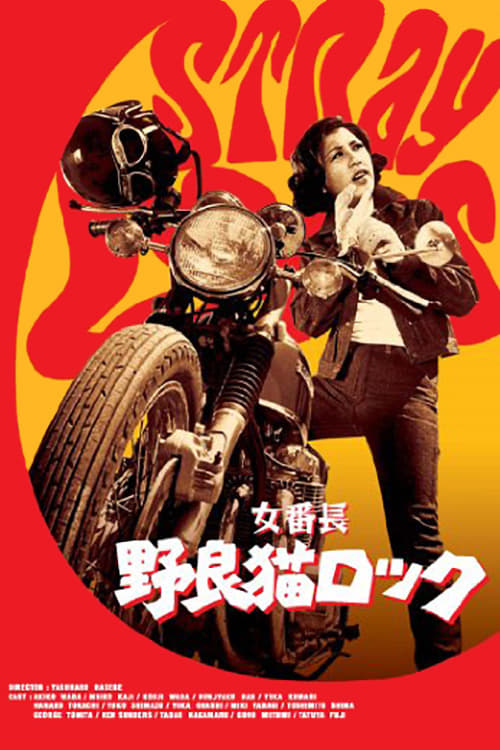
Stray Cat Rock: Delinquent Girl Boss (1970)

Also known as Alleycat Rock: Female BossFemale Juvenile Delinquent Leader: Alleycat Rock and Wildcat Rock, Yasuharu Hasebe directed this “violent pink” film, which is stylish yet grim, presenting a Japan that’s been through hell and refuses to look back. Everyone dresses well. Everyone is ready to fight. Everyone is prepared to die.

Roger Corman’s 1966 outlaw biker film The Wild Angels was a surprise hit in Japan. Toei cashed in with their film Delinquent Boss and the Nikkatsu studio went one further with this film, even aping the title of Toei’s film. Despite starting as a ripoff, the Delinquent Girl Boss series lasted for two years and give films which are fondly remembered.

Tough girl biker Ako (pop singer Akiko Wada, who was also the Japanese voice of Marge Simpson) meets Mei (Meiko Kaji!) and the Alleycats as they’re about to have a knife fight in Shinjuku with another gang of girls. Those girls have no honor and call in their men for help, but Ako helps the Alleycats to survive and becomes their leader.

Then, Mei’s boyfriend wants to join the Seiyu Group, a gang of right-wing Yakuza nationalists. To prove he belongs, he must convince his friend Kelly to throw a boxing match. However, the girls change his mind and he wins the fight. That leads to the main conflict of this movie, where the girls are on the run from this powerful gang.

Mei was just a supporting character here, but in the subsequent movies, she became the cool lead that she was meant to be. This movie is all about violence with style, as well as a girl gang that saves men instead of being saved by them. Everything is loud rock and roll, but it doesn’t feel like anyone is going to live forever.

Hasebe wanted to infuse his film with the culture of the time. He attended rock clubs and went to protests. The result was that Nikkatsu saw this movie as the new direction for their studio and moved toward more youth-oriented action films, including the sequel, Stray Cat Rock: Wild Jumbo, which was released only three months later.

The Alleycat Rock series came to an end when Meiko Kaji left the Nikkatsu studio to join Toei and become the star in the Female Prisoner: Scorpion series and Lady Snowblood. Hasebe made his mark, such as it is, on Japanese cinema with his series of even more depraved violent pink films, such as Assault! Jack the Ripper.

You can grab the Arrow box set of the entire series or watch this on Amazon Prime.

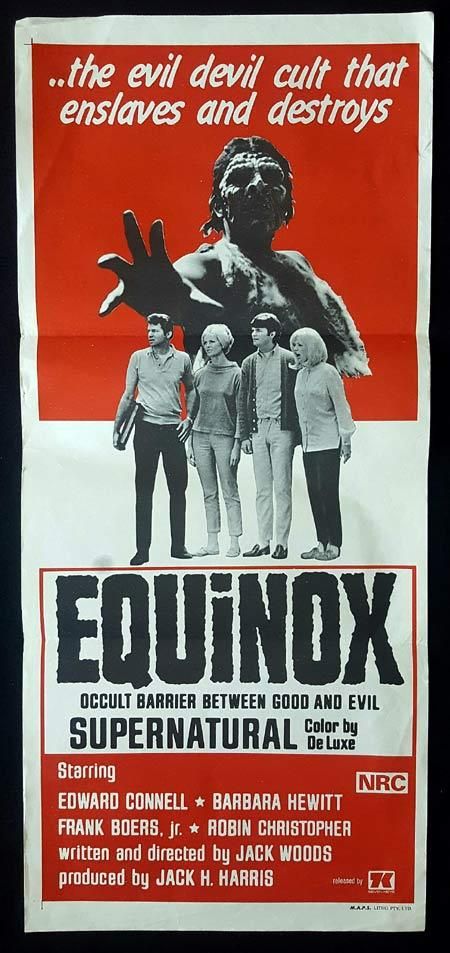
Equinox (1970)

Also known as The Equinox … A Journey into the Supernatural and The Beast, this movie was directed by Jack Woods and Dennis Muren. It started as a $6500 film that Muren made with his friends Dave Allen, Jim Danforth and Mark McGee while he was in business classes at Pasadena City College. Strangely enough, Ed Bagley Jr. was one of the cameramen!

Producer Jack H. Harris hired Woods, an editor, to add enough footage to make this a full length film. When the final movie was released, Muren was listed as the associate producer, even though he directed the entire movie and created much of the effects.

Four teenagers — David Fielding, Susan Turner, Jim Hudson (Frank Bonner, who would go on to be Herb Tarlek on WKRP in Cincinnati) and Jim’s girlfriend, Vicki — have gone looking for a lost scientist named Dr. Arthur Waterman, who is played by Fritz Leiber. Leiber isn’t just any actor. Nope, he’s one of the foremost fantasy authors of all time and the person who actually came up with the term sword and sorcery. He was brought into this project by Famous Monsters of Filmland editor Forrest J. Ackerman.

They have a picnic — as you do when you’re in the foreboding woods — then make their way to a mysterious castle. They also learn that Dr. Waterman’s cabin has been destroyed and even worse, the demon Asmodeus (played by Jack Woods, the new director, when he’s a park ranger at least) is hunting them with his army of monsters. He really goes after them once they get a book of spells from an old man inside a cave. Those monsters — a giant ape and a green-furred giant — are marvels of stop-motion. Our heroes barely escape as the ape kills the old man.

It turns out that the book belonged to Dr. Waterman, who used it to conjure up demons of his own, but lost control of a tentacled beast which destroyed is home. After Asmodeus kills Jim, he reveals his true form of a winged demon. Dave and Susan are killed before our remaining teens, Dave and Susan, make their way to a cemetery.

After a battle with Asmodeus, they destroy the demon with a giant cross, which causes the cemetery to explode, killing Susan. Another giant monster appears and tells Dave that he will die in one year and a day, which drives him insane. The movie quickly moves to that time, where we see Susan — now looking totally evil — showing up at his insane asylum.

The entire crew that made this movie did so much more afterward. Muren would go on to become a nine-time Oscar-winning visual-effects artist for his work on Star Wars and Jurassic Park. Danforth would create matte work and stop motion work for The Thing, Creepshow, Clash of the Titans and Prince of Darkness amongst others. Mark McGee, who was in high school when he worked on this film and already writing for Famous Monsters (he’s the one who got the connected with Leiber and brought Forry along to be a doctor’s voice) wrote the scripts for Sorority House Massacre II and Sorceress, both movies directed by Jim Wynorski. Finally, David Allen would go on to work on everything from Flesh Gordon, Laserblast and The Howling to Full Moon efforts like the Puppet Master series and The Dungeonmaster.

You can see the influence of Equinox on movies like Evil Dead and Phantasm. It’s the bridge between the Ray Harryhausen stop motion movies they loved and the occult-tinged efforts that would make up 1970’s genre films. This is a movie packed with ideas and talent.

You can watch Equinox as part of the Criterion Collection.

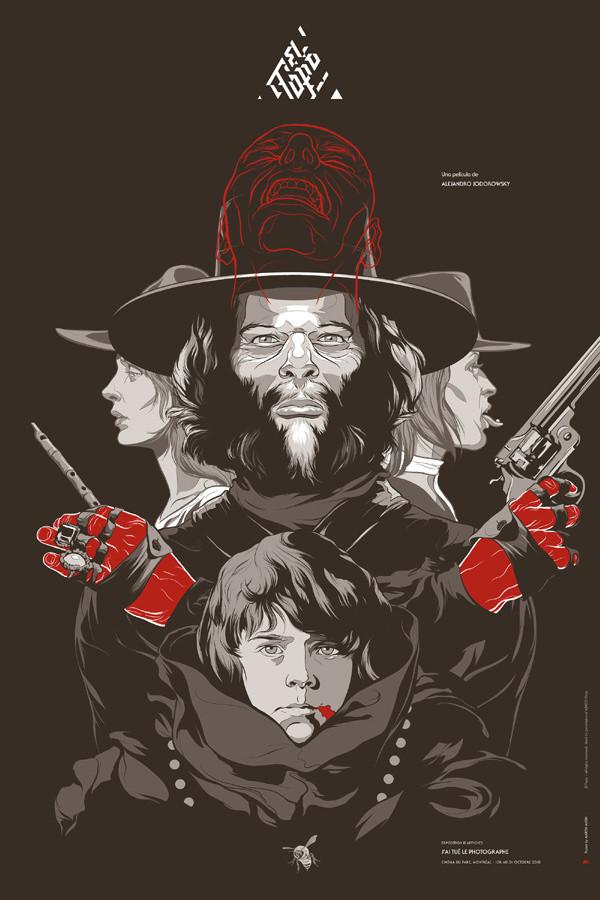
El Topo (1970)

A combination of exploitation film, spaghetti (well, maybe chili con carne given its origins), art film and quest for enlightenment, El Topo is either the greatest movie you’ve ever seen (me) or complete bullshit that seems to go on forever and ever (Becca).

El Topo and his son are traveling the desert when he instructs his son that he is now a man and must bury his first toy and a photo of his mother. The naked child — either symbolizing purity or just a lack of wardrobe budget — rides with our protagonist as he walks through a town that has been decimated.

The black-clad gunfighter finds those responsible and destroys them, including castrating their leader, the Colonel. Rescuing that man’s woman, who he calls Mara, El Topo learns of four gunfighters that cannot be defeated. He abandons his son and goes with her on a quest.

From here on out, it’s a mix of religious and sexual interplay as well as gunfights that grow more and more mystical. There’s also a no legged man riding a no arms having man, a master who can catch bullets in a butterfly net, a dude who can stop bullets with his body, a woman who sounds like birds when she screams, hundreds of dead rabbits, people spontaneously going up in flames and their graves secreting honey and bees, and so much more. Throughout each gun battle, El Topo grows weaker as he must rely on trickery instead of skill. Each win feels more like a loss, particularly as Mara becomes more demanding and grows fonder of the unnamed woman with the voice of a man who has been riding with them.

El Topo visits the sites of each of his four battles and is shot numerous times by the woman as he crosses a bridge. His body is taken by dwarves and mutants as the first part of the film ends. Becca was sure this was the end of the movie and I didn’t have the heart to tell her that there was much, much, much more to come.

Our protagonist has been born again as a Christ-like figure who has meditated for at least 20 years in the caves of an inbred group of mutants. He is now cleaned and shaved as he promises to return them to the light (the mole, who El Topo is named for, constantly claws its way to the sun, but is then blinded). To get there, he and his new bride, a dwarf woman, must beg and be part of a series of skits that take advantage of them, climaxing with them being forced to make love in a room full of the town’s men.

And this town — it’s covered with Illuminati imagery, worships guns, takes slaves and destroys them to the cheers of an adoring crowd. It also feels a lot like America.

Of course, El Topo’s son is now a monk in this town and when he and his bride attempt to marry, he tries to kill his father for leaving him behind. He agrees to spare the old man’s life until he frees his people.

Finally free, the mutated cavepeople run to the town, thinking it is their salvation. Instead, they are massacred and El Topo is shot numerous times. Remembering what he learned from the gun battles, he rises and kills every single one of them. Then, he sets himself on fire (“I kind of figured this would happen sooner or later,” said Becca) as his child is born. His grave also releases honey and bees as his sons and wife ride on into the distance (there was once hope of a Sons of El Topo movie with Marilyn Manson as the star, but it has not happened. There was, however, a comic book, which will be released in the US in December of 2018).

El Topo has inspired legions of fans, from John Lennon (who championed the film and had Allen Klein, manager of The Beatles, buy it and show it nationwide at midnight screenings, then produced the follow-up The Holy Mountain) to David Lynch, Dennis Hopper, Gore Verbinski (citing that debt in his animated film Ringo), Nicolas Winding Refn and Suda 51, whose video game No More Heroes has a similar plot about finding and destroying the best assassins in the world.

A midnight movie staple for years, El Topo disappeared in the 1980’s and 90’s, as Allen Klein would not give up his rights to the film. I searched for years, as Heads Together (a long lost and lamented rental store in Pittsburgh) had the only copy in town, one that was constantly checked out. This was 1994 — nearly pre-internet and not the time when you could easily stream or order and film. It wasn’t until another sadly lost shop, Incredibly Strange, opened in Dormont that I was able to get a copy of the Japanese laser disk release. Since then, I’ve acquired the blu ray of the film, which makes it totally convenient to view at any time.

You can imagine my excitement when the movie was playing a midnight show at Row House, a theater in Pittsburgh’s Lawrenceville neighborhood. Before the film, the owners and programmers of the theater sat on stage and apologized for showing it, as they had just learned of the rape scene in the film and that Jodorowsky had claimed in past interviews that it was real (to be fair, he’s also said that it was consensual and that he penetrated her). This scene lasts around 30 seconds or less of screen time and shows no actual sex. I’ve read tons of books on the film and watched it so many times over the years and never really dealt with this controversy myself.

They said that they debated not showing the film — keep in mind before this talk, they did a trivia contest to give away tickets, which is kind of darkly humorous that they would put something that was quite literally trivial before such a big discussion and announcement — then said that they decided to show the film and donate its proceeds to a charity that they literally could not remember the name of. Then, they talked about future movies coming to the theater and couldn’t remember much of next month’s schedules other than Tokyo Tribes, which was described with the world rap more than five times.

At the risk of sounding like an asshole, this whole affair came off as handwringing and hand washing at the same time. If the theater had an issue with this, they should have not shown the film. Upon further research, no one is sure whether or not this scene is an actual rape. In interviews, Jodorowsky has been given to mania, saying things that any normal person would think is insane, such as using his proposed Dune to create a prophet and actual drugs on celluloid. I’m not giving the man a pass in the interest of hero worship (full disclosure, I am a fan of several of his movies), but the actress that played Mara (Mara Lorenzio) supposedly couldn’t be found to be paid and was on LSD for most of the production (this doesn’t suggest consent, just setting up that the film was shot during very different times). She did, however, make an appearance in the documentary Midnight Movies: From the Margin to the Mainstream where this was not discussed.

I will share that years after making the movie, Jodorowsky felt that he stole of some son’s childhood by making him take part in such a violent film. He flipped the opening of the film and had him dig up the teddy bear and a photo of his mother and told him, “Now you are 8 years old, and you have the right to be a kid”.

I don’t think this absolves him of whatever happened in this film. But the whole incident with the theater has left a bad taste in my mouth. I feel like they should have offered refunds (I wouldn’t take one), but instead by giving proceeds to charity, they took that choice away. They still advertised the movie up until hours before it went on with no mention of this controversy. And I overheard one of the people on stage mention that he’d never seen the film, only having seen The Holy Mountain and was interested to see what it was all about.

Again — I’d have more respect for them if they took an actual stand and didn’t show the film. It just felt like they were absolving themselves of it and almost challenging the audience to witness an actual rape if we wanted to stay and watch it. I realize that we’re evolving and changing as a society and I feel that it’s a great thing. And I can’t really collect my thoughts and properly express them here — I’ve tried — but it just all felt messy. And I guess that’s how these things are. The whole way that the affair was conducted didn’t give me any faith or trust in Row House as a theater, to be perfectly honest.

Sorry for the soapbox, but I had a lot to get off my chest. So what can we learn from this film? Well, “too much perfection is a mistake,” is a good start. I also learned “moderation in everything, even in moderation” from a fortune cookie last week. So there’s that.

I’ve also learned that the more I try and go out and experience film with others, I’m reminded that thanks to blu ray and my high def TV, I often feel a lot better just watching them at home. That’s what dooms most second run and boutique theaters, the apathy, along with the fact that I can spend money on a blu that’s equal to my ticket and get a better experience at home. Theaters should be selling that something extra and giving you more — again, a soapbox and I want to see these places succeed.

PS – The group they claim to have donated to was PAAR, Pennsylvania Action Against Rape. It’s one of the oldest rape crisis centers in the country and a totally worthwhile charity. It’d have felt a lot more genuine and honest if they could have remembered their name and told us something about them then stumbled through a speech that certainly needed nuance and actual notes.

I also understand that men have traditionally been horrible to women and this behavior could certainly have happened. The truth isn’t completely sure here and it’s a very difficult issue to maneuver. I just wanted to call out that I felt it was handled in a ham-fisted way and that there are better ways to handle such topics. I’m not justifying the actions of the filmmaker or the words he’s said (or changed over the years).

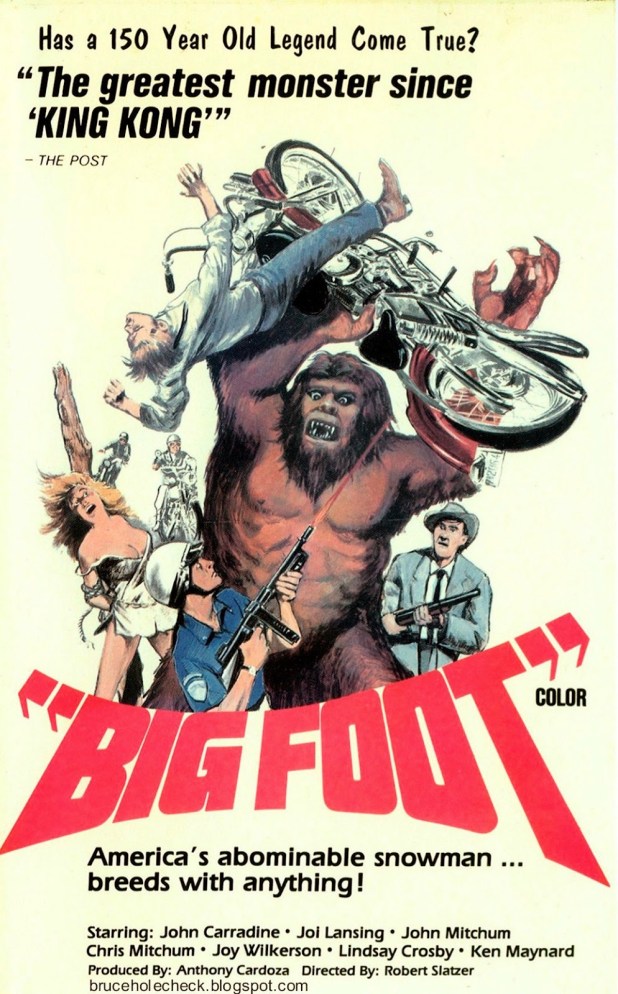
Bigfoot (1970)

Anthony Cardoza produced some really interesting films. You may call them turkeys. You may also call them…well, you wouldn’t call them works of art. But hey, his movies live on, like The Beast of Yucca FlatsThe Hellcats and today’s film, Bigfoot.

Jasper B. Hawks (John Carradine!) and Elmer Briggs (John Mitchum, brother of Robert and the writer of the John Wayne voiced “America, Why I Love Her” that TV stations used to sign off when TV stations still existed and actually signed off) are driving around the forest. And Joi Landis (Joi Lansing, a former MGM contract girl who shows up in the long tracking shot that begins Touch of Evil, in her final role) is a pilot whose plane breaks down. She parachutes into the woods and encounters Bigfoot.

Then there’s Rick (Chris Mitchum, son of Robert and also an actor in films like Jodorowsky’s Tusk and Faceless) and his girlfriend Chris who find a Bigfoot cemetery and get attacked, too.

Of course, the authorities are of no help. Only Jasper will help Rick and that’s because he wants a Bigfoot for his freak show.

Peggy gets kidnapped by Bigfoot and we discover that Joi has been taken, too. Upon reaching the lair of the Bigfoots (Bigfeet?), we discover that the creatures we’ve seen are his wives and the real creature is 200 feet tall. Yes. You just read that right. And he’s about to fight a bear that’s just as huge.

A gang of bikers gas Bigfoot but he escapes the freakshow, goes nuts in town and then gets blown up by bikers. John Carradine quotes from King Kong (he does throughout the film) and the movie ends.

Along the way, we find Doodles Weaver, whose scene in the completely bonkers The Zodiac Killer may be the most ridiculous scene in what is quite honestly one of the strangest films I’ve ever seen.

And hey, is that Bing Crosby’s son Lindsey? Yes, it is! And the first singing cowboy, Ken Maynard! This movie is packed with actors who have much more interesting stories than the film they’re stuck in.

But you know what is interesting? The strange doom funk that plays every time the bikers show up. And keep your eyes open for a quick appearance by Haji, who famously appeared in Russ Meyer’s Faster, Pussycat! Kill! Kill! 

Director Robert F. Slatzer only did two other movies, but one of them was The Hellcats, where Russ Hagen battles a female gang. Leather on the outside…all woman on the inside!

But hey — Bigfoot. Come for the bikers. Stay for the bigfoots. Enjoy the bikinis. But dig this crazy sound, man!

You can get this from Cheezy Flicks for a really great price.


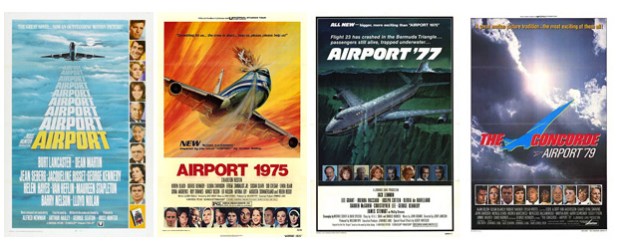
WATCH THE SERIES: Airport

Based on the novel Airport by Arthur Hailey (whose novel Flight into Danger was adapted into Zero Hour! (as well as a later TV movie using the original title) which was later remade as Airplane!, which is also a parody of these films, but more about that later), these four films go from class to cash-in. And the worse they get, the more I love them.

The only constant throughout the series is Joseph Patroni, played by George Kennedy. His career improbably goes from a chief mechanic with a license to taxi planes to vice president of operations to consultant to pilot, surely a lateral and perhaps even regressive career path.

Despite having a big budget and high pedigree cast, Burt Lancaster, who starred in the original, claimed that the film was “the biggest piece of junk ever made.” He should have waited a few movies in to say that!
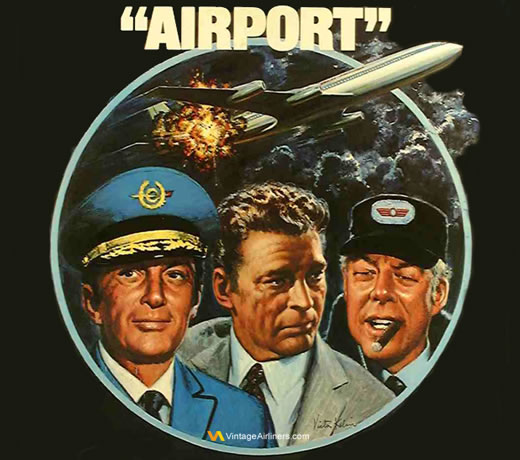
Airport (1970)

George Seaton (Miracle on 34th Street) directed the initial installment, which originated the entire big budget disaster genre that ruled the 1970’s. The actual story is simple — there’s a big snowstorm in Chicago and a flight to Rome is in danger, thanks to a down on his luck demolition expert (Van Heflin in his last role) looking to blow up the plane so that his wife (Maureen Stapleton, who won a Golden Globe for her work) can cash in. Along the way, we meet airport manager Mel Bakersfield (Burt Lancaster), whose is married to the airport over his wife (Dana Wynter from Invasion of the Body Snatchers) while a co-worker (Jean Seberg, the gorgeous star of the original Breathless whose support of the Black Panthers led to the FBI COINTELPRO hounding her for the rest of her short life) pines for him. Then there’s Vernon Demerest (Dean Martin), who is married to Bakersfield’s sister (Barbara Hale, mother of William Katt) but is having an affair with a stewardess (Jacqueline Bisset, The Mephisto Waltz). Then there’s Mrs. Quonsett (Helen Hayes, who won an Oscar for the role), an elderly woman who sneaks her way onto planes.

This big cast all interplays with one another, ending up on the seemingly doomed flight or aiding in its rescue. Will love win out? Will anyone who works in the airline industry get along with their spouses? Can Patroni shovel out a plane in time after being called in while he’s trying to enjoy a night of passion with his wife? Sure. Yes. Of course.

To get big stars like Burt Lancaster and Dean Martin, the producers gave that 10% of the profits after the film reached $50 million. With a US gross of over $100 million, the stars did more than fine making this one.
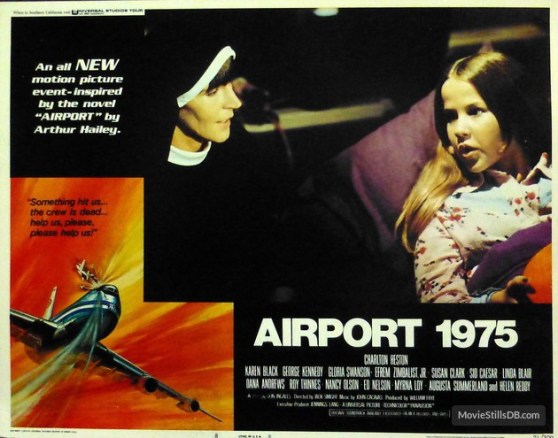
Airport 1975 (1974)

A small airplane crashes into a 747, taking out nearly the entire crew of flight 409, and only the stewardess can land the plane! Such is the plot of Airplane 1975, but that thin story doesn’t matter. You’re coming here for starpower and you’re gonna get it, baby!

Charlton Heston (the undisputed 1960’s and 1970’s king of the post-apocalyptic film, between Planet of the ApesSoylent Green and The Omega Man) is Captain Alan Murdock and he’s the only person who can save the day, with heroics that include being dropped into a plane that’s actually in flight! Karen Black (Trilogy of Terror, Burnt Offerings) is his girlfriend and the air hostess charged with keeping the plane aloft.

The doomed flight crew is played by Efram Zimbalist, Jr., Roy Thinnes from TV’s The Invaders and Erik Estrada. It’s shocking just how sexist they are with the rest of the in-flight crew and even more shocking just how much the ladies like it. The 1970’s were a doomed time when women just had to take the sexual harassment and like it, or return it back in kind.

Then there’s Gloria Swanson playing herself (Greta Garbo was the original plan) with Linda Harrison from Planet of the Apes as her assistant. Strangely, Harrison renamed herself Augusta Summerland for this movie.

And then there’s Myrna Loy as an alcoholic actress in the role originally meant for Joan Crawford! Three drunk guys (Jerry Stiller, Norman Fell and Conrad Janis) who would go on to be dads in sitcoms! Sid Caesar as a guy who can’t keep his fucking mouth shut! Linda Blair as a sick girl who just wants to listen to Helen Reddy perform as a singing nun! And Patroni’s wife (Susan Clark from TV’s Webster, who was spotted by the eagle eyed Becca) and son are on the flight, too!

Airport 1975 is big, bombastic and stupid. And it’s also awesome. It’s pure escapism and is devoted to entertaining you. It’s also a film packed with men patronizing women, calling them honey and yelling at them when they can’t get their shit together.
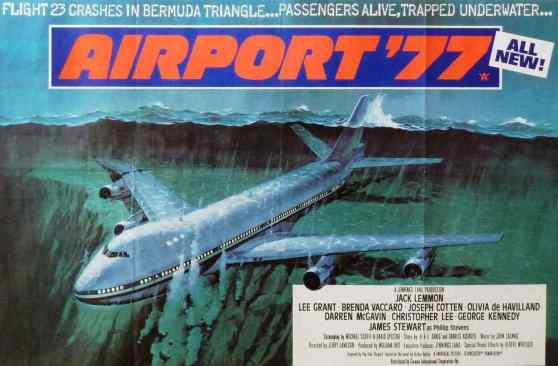
Airport ’77 (1977)

Jerry Jameson, the director of The Bat People, is in the director’s chair for the third installment of the franchise, which takes a turn into the fantastic. A private 747, filled with the rich and powerful, is hijacked and crashes into the Bermuda Triangle where it slowly fills with water.

This one boasts Jack Lemmon in the lead as Captain Don Gallagher and he pals around with Darren McGavin as they work to save everyone. Lee Grant and Christopher Lee (!) play a bickering married couple. Joseph Cotten appears, leading me to wonder when Dr. Phibes will strike. TV’s Buck Rogers, Gil Gerard, shows up. And hey look, there are Jimmy Stweart and Olivia de Havilland (replacing Joan Crawford yet again, just as she did in Hush…Hush, Sweet Charlotte and Lady in a Cage). And I bet Bill from Groovy Doom would never forgive me if I didn’t mention that Michael Pataki appears, too.

This one is…well, it’s certainly a lot more ridiculous than the previous entries. And if you think the next one is going to be better, have I got some news for you!
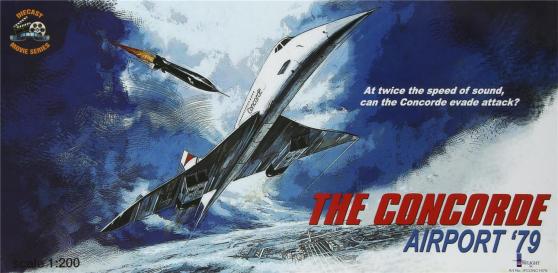
The Concorde … Airport ’79 (1979)

A few minutes into this movie, Becca turned to me and said, “There isn’t anyone good in this one like the others.” I disagreed. This film is filled with some of my favorite people and while it’s the worst film in the series, it’s also my favorite. If they ever make a blu ray of it, I demand to do a commentary track for it!

Directed by David Lowell Rich (Satan’s School for GirlsEye of the Cat), this film is quite relevant today, as it’s rife with corrupt corporations, drone planes and media scandals. You’ve got Robert Wagner playing a corrupt arms dealer who is in love with Susan Blakely, yet he keeps trying to kill her.

For the ladies, there’s Alain Delon as the dashing captain. And for the men, there’s Sylvia Kristel as the gorgeous airline hostess. And for the fans of The Omen, there’s David Warner as a henpecked flight officer.

There may never be a movie as sexist as this one. Just look at the way the character of Patroni has changed. He’s no longer a ground crew guy who will kick a pilot out of his own plane. Now, he’s flying the plane while making sexist jokes at every opportunity To wit:

Isabelle: You pilots are such… men.

Capt. Joe Patroni: They don’t call it the cockpit for nothing, honey.

Or when he asks Delon’s character about Vietnam:

Capt. Joe Patroni: Gee, I remember this Eurasian gal. She had these great big blue eyes. They called her the tarantula. You ever run into her?

Capt. Paul Metrand: No, I don’t think so.

Capt. Joe Patroni: You’d remember if you did. She was a real ball breaker!

That makes me wonder — how was Patroni in Vietnam? Wasn’t he already working in the Chicago airport back in the original? Well, now his wife is dead, his son is in college and he’s ready to party. In fact, when they get to Paris, he gets set up with a prostitute and has the night of his life. Is he mad when the ruse is revealed? Hell no! It makes him overjoyed as he slaps his pal’s back!

Then there’s Eddie Albert as a rich businessman and Sybil Danning as his wife, to which Patroni comments “She’s his fourth wife. He always was a horny bastard. There’s this story that back in the 20’s when he was barnstorming he made a bet that he could put it to this good lookin’ wing walker. He boffed her right out on the wing a thousand miles above El Paso. His ass got so sunburned he couldn’t sit down a week!”

What is happening with this film? I literally yelled at loud several times during it, shocked at how raw it seems in the world of political correctness. But this isn’t Blazing Saddles, a film that uses non-PC language for comic effect. This is a scummy cash-in, the final film of a once high prestige franchise. And I loved every minute of this strange bird!

Martha Raye gets locked in a bathroom as a plane faces turbulence! Jimmie “Dynomite” Walker smokes up and carries his saxophone everywhere! Cicely Tyson just wants to get her son a new heart! John Davidson performs his own marriage ceremony to a Russian gymnast! Mercedes McCambridge, the voice of Pazuzu, is in this! And oh shit, Charo is in the credits and has around thirty seconds of screen time, thirty seconds which had me screaming in pure joy!

Have you realized yet how much I adore this movie? How can you not love a film where a heat sinking missile is defeated by rolling down the window of a supersonic airplane and shooting a flare gun out the window? And after the plane went through such chaos between New York and Paris, why would anyone allow it to fly again the next day? Why wouldn’t security be increased? And why not crash land the Concorde in the alps? Why would they even get on the plane in the first place?

Even better, there’s a news report earlier in the film that sounds like it came straight out of The Simpsons, a strange piece of comedy in a film that has been serious so far. That’s because that voice belongs to Harry Shearer!

Obviously, we wouldn’t have Airplane! without these films. But after watching the last two films, it’s pretty hard to parody what has become a parody.

I lucked into finding the Airport Terminal Pack, a collection of all four films, for just $6. It’s literally the best purchase I’ve ever made in my life. If anyone reading this ever wants to come over and have me scream and yell through any of these films — please pick the last one — consider this a standing offer!
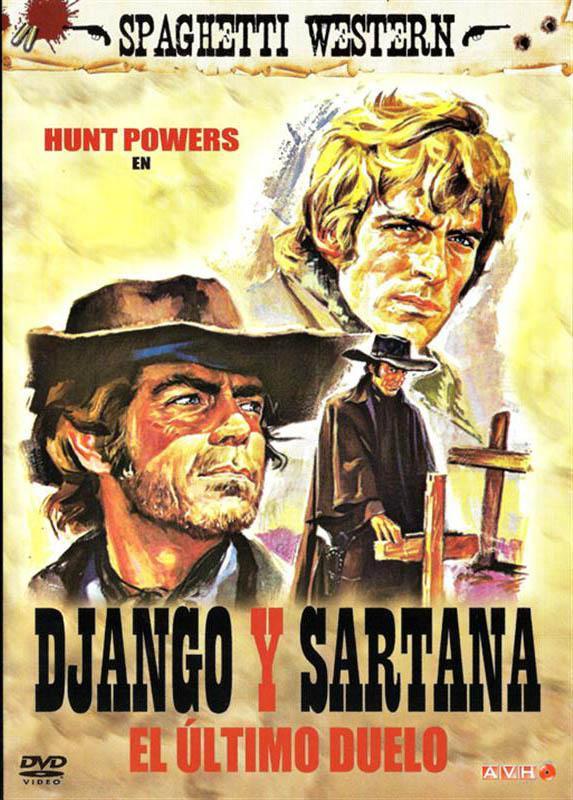
SARTANA WEEK: One Damned Day at Dawn… Django Meets Sartana! (1970)

The spaghetti western heroes Django, Trinity, Sabata, Ringo and Sartana all fell victim to the strange copyright laws of Italy, where sequels to films just happen (such as how Bruno Mattei’s Cruel Jaws was also shown as Jaws 5: Cruel Jaws). There are several non-cannon Sartana films, including Sartana Does Not ForgiveShadow of Sartana… Shadow of your Death, Sartana in the Valley of DeathTrinity and Sartana… Those Dirty S.O.B.s and Alleluja & Sartana Are Sons… Sons of God. But today, we’re here to discuss the fake Sartana crossing over with the fake Django. Confused yet?

Sheriff Ronson (Fabio Testi, who lived with Ursula Andress and had a son with Edwige Fenech, so I regard him with some measure of respect and jealousy) is a newcomer to Black City. He learns that Willer, Sanchez and their men are the law in town. But now Django (Hunt Powers, who is now known as Jack Betts,. He started his career in spaghetti westerns before becoming an American character actor) is here, ready to settle an old score with the bad guys.

So where’s Sartana? Well, at the end of the movie, the Ronson tells Django that around some parts, that’s what they call him. No, no they don’t. I know Sartana, sir. I have watched his movies. And you are no Sartana.

This film is directed by Demofilo Fidani, who some call the “Ed Wood of spaghetti westerns” as he often used more well-known character names in his films and has absolutely no regard for continuity. He directed mostly westerns, although he did create a giallo in 1972, A.A.A. Masseuse, Good-Looking, Offers Her Services.

There’s one good gunfight and not much else happens, to be honest. If you’re watching this and are excited to see inventive weapons and a weird sense of humor — like the other Sartana films — you are bound to find this entry lacking.

There are two other crossover films, Django and Sartana Are Coming… It’s the End with Hunt Powers as Sartana and Django Defies Sartana, where George Ardisson (Agent 3S3!) plays the role. In his later years, he became well known as a spirit medium!

Wild East released this as a double disk with Dead Men Don’t Make Shadows, but it is out of print. You can also watch this on Amazon Prime.

Don’t forget! Arrow Video is putting out an entire boxed set of Sartana soon and it’s limited to 2500 copies! You can get yours at Diabolik DVD.