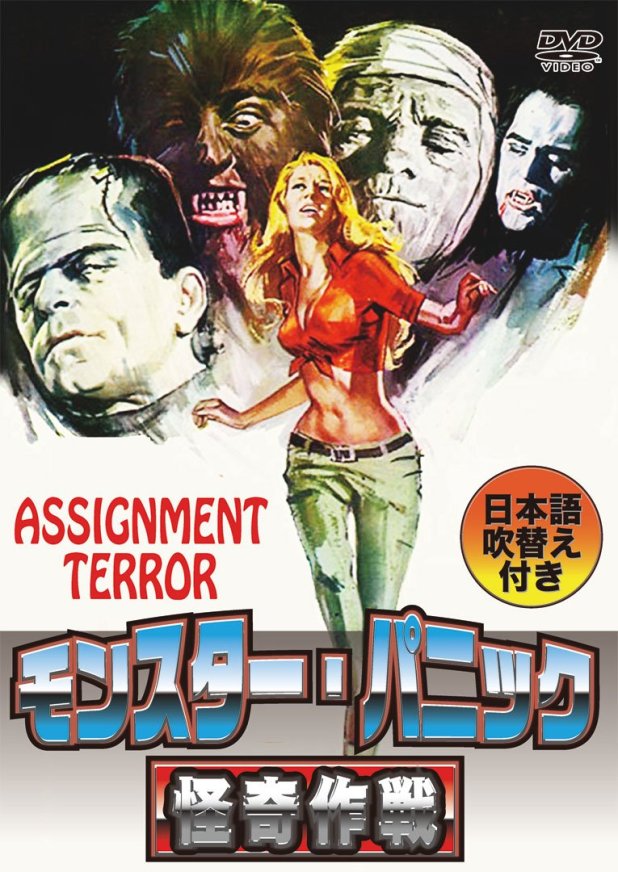
This movie goes by many names. Beyond the translation of the title we used — The Monsters of Terror, it is known as Dracula vs. Frankenstein in the UK, Reincarnator in France, Assignment Terror in the U.S. and was almost titled El Hombre que Vino de Ummo (The Man Who Came From Ummo), in reference to Michael Rennie’s alien character.
Count Waldemar Daninsky (Paul Naschy forever!) has been revived from his death at the end of The Mark of the Wolfman as aliens remove the silver bullets from his body — yes, really! — as part of their plan to use a carnival as the cover to control Tao-Tet the mummy, Frankenstein’s — err, I mean Farancksalan’s — monster and a vampire named Count De Meirhoff. Their plan is to learn why humans fear these monsters and use them to attack humans. I mean, I guess that’s a good plan. They have plenty of technology and it really feels like the kind of scam that an 80’s TV cartoon villain would come up with. But hey — that’s the plan they have and they’re going with it. If you had access to the book Anthology of the Monsters by Professor Ulrich von Farancksalan, you might do the very same thing.
In a bit of irony, these evil aliens are led by Dr. Odo Warnoff. I say that because Michael Rennie also played Klaatu, the good alien that came to warn us all in The Day The Earth Stood Still. He’s helped by Maleva Kerstein, another dead scientist (Karin Dor, who was Helga Brandt from You Only Live Twice) ready to destroy the world.
Can our werewolf hero save humanity from aliens and their monsters through hand-to-claw combat? Will Inspector Tobermann (Craig Hill, The Blood Stained Shadow) be an effective policeman? Will our Daninsky need to be shot by the woman who loves him, Ilsa (Patty Shephard, who would go on to be Countess Wandesa Dárvula de Nadasdy in The Werewolf Versus the Vampire Womanand also show up in Edge of the Axe)?
I’ve seen plenty of reviews make fun of this movie. Look, life kind of is horrible. You’d do well to watch this and shut off your brain and experience the wonder of a movie that pits a furry Spanish lothario against every Universal monster minus the budget. Live a little. Remember what fun is like.
You can watch this on YouTube. Or grab the RoninFlix blu ray and do yourself a wonderful kindness.
ABOUT THE AUTHOR: Phil Bailey is a long time photographer and film writer, who doesn’t actually hate everything, but has no fear of being a contrarian. Follow at Twitter at @stroke_midnight or on Facebook at https://www.facebook.com/philbaileyphoto
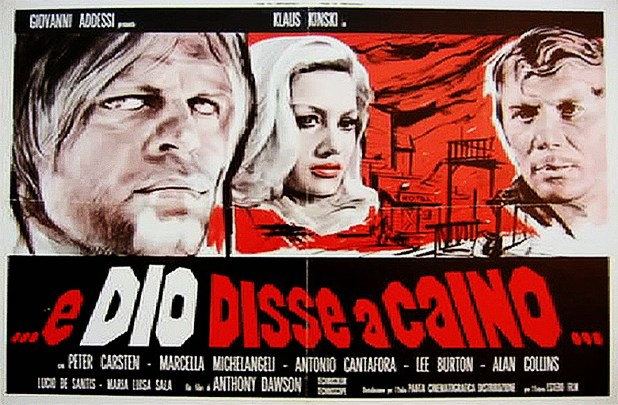
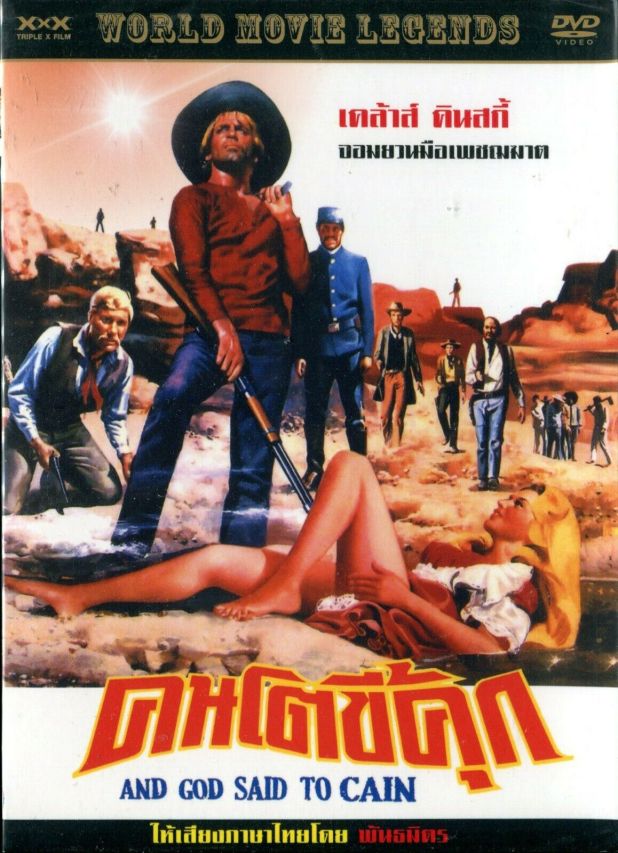
Like so many of his contemporaries in Italian cinema, Antonio Margheriti worked in numerous film genres including science fiction, peplum, and spy adventures, but he is mostly fondly remembered as one of the greats of creating atmospheric gothic horror movies. Castle of Blood, The Long Hair of Death and The Virgin of Nuremberg are some of the horrors directed by Margheriti who was frequently Americanized as Anthony Dawson. And God Said to Cain was not the director’s only Euro-Western but it is his best-known thanks in no small part to its star Klaus Kinski and the unusual gothic atmosphere Margheriti surrounds his simple tale of revenge.
The film opens in a rock quarry where a number of prisoners swelter in the blazing sun turning large rocks into small ones One of the prisoners, Gary Hamilton has just been granted clemency and wastes no time in returning home with a new rifle and a thirst for revenge against the men who framed him and stole his house, gold, and even his wife. After a few brief expository scenes, the film gets down to business. Hamilton sends word to Acombar (Peter Carsten) that he is coming for him. To complicate matters Acombar’s son has just arrived home and a storm is moving in. During this storm, Hamilton moves through the town taking out Acombar’s men. The sandstorm, howling winds, and constant clang of the church bell creates a huge amount of tension in Acombar and his men, as well as members of the audience.
The film is obviously made on a minuscule budget with Margheriti using the storm set-piece as an excuse to hide all the townspeople not vital to the plot. Margheriti knows what he has to work with and uses it to full advantage. It doesn’t hurt to have Klaus Kinski’s chiseled features and deep blue eyes who was most likely part of the package to secure financing and distribution as “Italian” movies were rarely solely funded with just Italian Lira and several countries would pool resources to make these films which is why you have a German star, making an Italian western, in Spain. Margheriti leans heavily on his horror director’s bag of tricks to keep a plot of one-man murder spree going without side plots, characterization, or much in the way of dialogue. As the film unfolds Kinski becomes increasingly spectral, utilizing his surroundings including the aforementioned church bell as a weapon in the film’s most memorable scene. Margheriti’s taste for the gothic also shines in numerous touches that would be right at home in any of Margheriti’s standard gothic horrors, most notably the gorgeous mirrored parlor set complete with candelabra adorned grand piano. Any cult film fan knows where the final showdown is going to take place once they see all those mirrors. The often spectral figure of Klaus Kinski weaving effortlessly through light and shadow, including through catacomb-like tunnels beneath the town. In these tunnels, Kinski and Margheriti evoke the spirit of Lon Chaney’s Phantom of the Opera more than a standard cowboy hero/anti-hero as he dispatches all who stand in his way of a showdown with the man who wronged him.
The mix of horror and western in And God Said to Cain is not going to be to everyone’s taste as neither genre is fully satisfied, but in a sea of forgettable copycat Euro-Westerns, and hell this one is nothing original in the plot and is essentially a remake of Salvatore Rosso’s A Stranger in Paso Bravo, but Margheriti brings his own weirdness to the film giving it lift over the endless disposable films being cranked out of the Italian studios before they abandoned the old west and went all-in on gialli in the wake of Dario Argento’s The Bird with the Crystal Plumage.
Gary Hamilton (Klaus Kinski!) is released from ten years of hard labor with a pardon for a crime he didn’t commit, so he does what any insane character played by Kinski would do. He sets out to kill everyone who ever did him wrong.
Kinski wants Acombar, his former friend who set him up, dead. He has to go through the man’s son (Antonio Cantafora, Baron Blood) to do it, as well as the Acombar’s wife Maria, who was once his lover. He’s helped by the people of the town who hate his enemy, as well as his knowledge of the Native American burial grounds.
This is less Western than horror film, with Kinski’s character nearly a ghost, continually followed by gusts of winds and tolling bells as he returns to get his bloody vengeance.
While there are similarities to another Margheriti film Vengeance, this is very nearly a remake of Salvatore Rosso’s A Stranger in Paso Bravo, which was made just a year before. This one, however, is unafraid to let the gruesome side of violence be seen.
The original story for both was written by Eduardo Manzanos Brochero, but the screenwriter for this was Giovanni Addessi, who also produced the movie.
You can watch this on Tubi, but I’d like to warn you that the quality of the print is pretty bad.
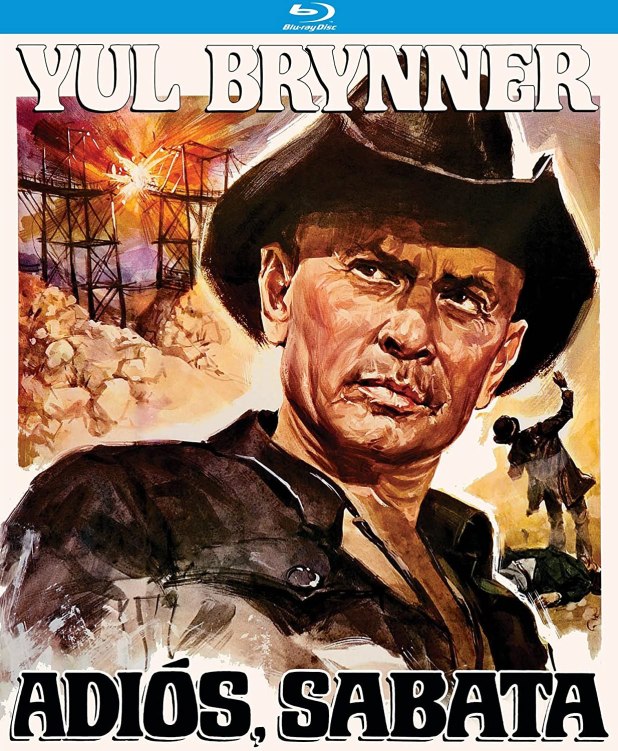
Known in Italy as Indio Black, sai che ti dico: Sei un gran figlio di (Indio Black, you know what I’m going to tell you… You’re a big son of a…), this is the second Sabata entry for director Gianfranco Parolini but switches out the lead role of Sabata.
This time, Yul Brynner is the man in black, taking over for Lee Van Cleef.
Set in Mexico under the rule of Emperor Maximilian I, Sabata/Indio Black is hired by the Señor Ocaño (Franco Fantasia, Zombi) to steal some gold, but our hero and his partners Escudo (Ignazio Spalla, who is in every Sabata movie) and Ballantine (Dean “Red Elvis” Reed, who defected to East Germanty a few years after this movie and continued his singing and acting career) soon learn that they’ve only got sand. Colonel Skimmel has the gold and their money, so they set out for revenge.
It’s not bad, but nowhere near as good as the original. That said, it wasn’t intended to be a sequel, but the name change was because Sabata did so well in the U.S.
After volunteering for the Canadian Royal Air Force before America entered World War II, then getting shot down, imprisoned and escaping Stalag Luft III before getting captured again, then being saved by Patton’s 3rd Army and then becoming Errol Flynn’s personal pilot and manager, Mahon’s life was already crazy. Then he started making movies like Rocket Attack U.S.A., Cuban Rebel Girls and Fanny Hill Meets Dr. Erotico.
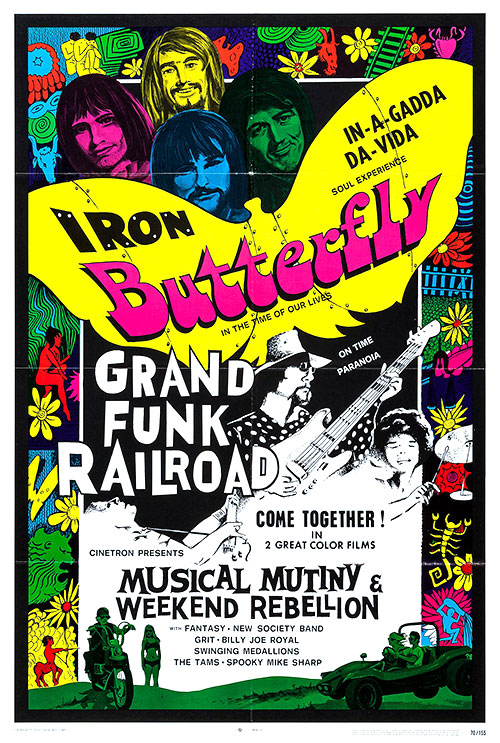
That’s all before Barry set up shop at Dania, Florida’s Pirates World theme park and started throwing concerts when he wasn’t making some of the most ludicrous movies — and I mean that as a compliment — ever made, like The Wonderful Land of Oz and perhaps his finest world, Santa and the Ice Cream Bunny.
I’ve been hunting for this movie, where a pirate’s ghost convinces the staff of the park to put on a free concert, for literally years and years. I found it. And it pleases me to no end. In fact, it is my happening and it freaks me out.
Local bands Grit, New Society and the Fantasy are happy to play for free, but Iron Butterfly is mad that this is a free show and because they aren’t getting paid, they storm off. Luckily, a rich hippy pays them to play “In-a-Gadda-Da-Vida.” I have no idea what we’re supposed to learn from this.
Facts: There are more dune buggies in this than a Filipino post-apocalyptic film. There’s a garbage truck that says, “You are what you eat.” “In-A-Gadda-Da-Vida” is sixteen minutes long and was probably better with a fistful of narcotics. The pirate also disappears when this show is over.
I have no idea why this was made or who it was made for. I can only dream that I could have gone to Pirates World because everyone — Bowie, Sabbath, Alice Cooper, The Doors, Led Zep and Frank Zappa to name a few — played there. I hate theme parks but I love this place. Other than dying at Action Park in a blaze of blood, guts and thunder, it’s the only place of its ilk that I will ever be able to stomach.
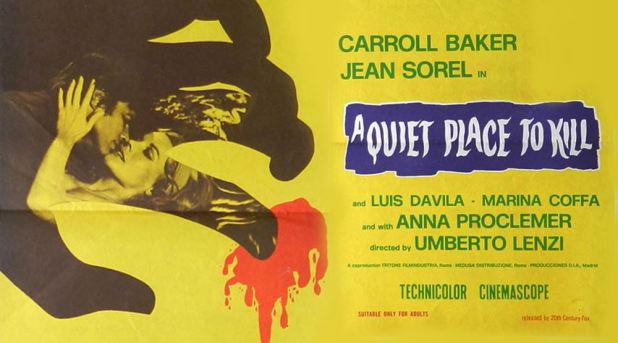
Umberto Lenzi and Carroll Baker made quite the giallo duo. Their 1969 pairing Orgasmohad been released internationally as Paranoia and this film, known as Paranoia in Italy, was retitled A Quiet Place to Kill. That’s not the end of the confusion, as this year Severin will release this on their Lenzi/Baker box set and Mondo Macabro also released An Ideal Place to Kill, another Lenzi film that you may also know as Oasis of Fear.
Would it simplify things if we used this movie’s Spanish title Una Droga Llamada Helen (A Drug Named Helen)?
Baker plays race car driving Helen, whose life is beyond a mess. How else can you explain why she’d accept an invitation from her ex-husband’s new wife Constance Sauvage to stay at their palatial home? And what if Helen and Constance soon bond over the fact that they hate Maurice (Jean Sorel, The Sweet Body of Deborah) and murder him on a sailing trip?
Of course, this being a giallo, things don’t work out that well and Constance ends up dying at sea. Her daughter shows up and that’s when things get worse for all involved. This is a classy giallo, filled with lush camerawork and a solid script from Marcello Coscia (The Living Dead at Manchester Morgue), Bruno Di Geronimo (What Have You Done to Solange?), Rafael Romero Marchent (the director of Santo vs. Dr. Death) and Marie Claire Solleville (Orgasmo).
Helping out on this film’s cinematography? None other than Aristide Massaccesi himself, the man of many names who most know as Joe D’Amato.
You can get this as part of Severin’sThe Complete Lenzi/Baker Giallo Collection. Baker and Lenzi made four movies together, but I really wish they had made many more.
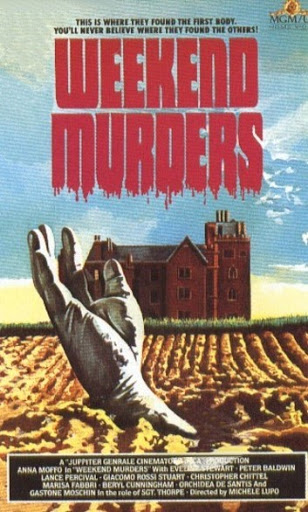
Known in Italy as Concerto per Pistola Solista (Concert for Solo Gun), this Michele Lupo (Arizona Colt) film takes place in England instead of the Italy we’ve come to depend on for our giallo adventures.
As a family comes to an estate for the reading of the will of Henry Carter, Second Earl of Vale, and get murdered one after the other. Is it because his niece Barbara got all of his money? Was the sniper who killed the butler trying to shoot her all along? Did the makers of Knives Out watch this and figure that everyone would think they were making an Agatha Christie film and not aping a giallo?
Inspector Grey, who takes the case, is played by Lance Percival, who was the voice of Paul and Ringo in Yellow Submarine. Beryl Cunningham (So Sweet, So Dead) and Marisa Fabbri (Rabid Dogs) also appear.
Chris Chittell plays George, who is pretty much the villain of this movie. You may remember him from The Wild Geese and They Call Him Cemetery. There’s a scene where he decides to sexually assault one of the maid, who tells him he could have just asked and she would have given in. They end up making love, but visions of his overbearing mother lead to more bloodshed. Ah 1970! What a time you were for things no one would try in a movie today.
This might not be my favorite giallo of all time, but it’s fine for what it is. It’s closer to a detective tale with some trapping of pre-Argento and much Christie influence. It’s not bad, but I just demand more weirdness from my murder movies.
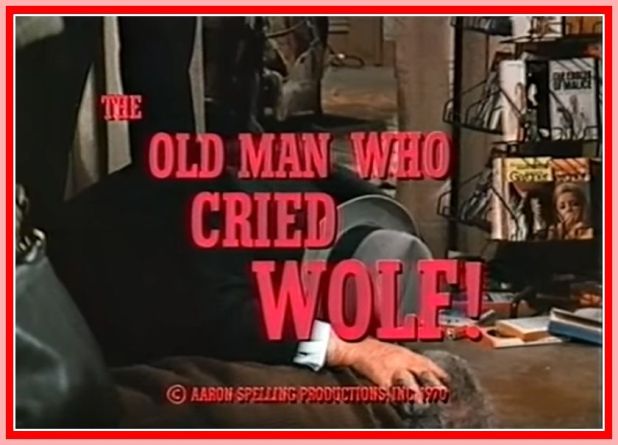
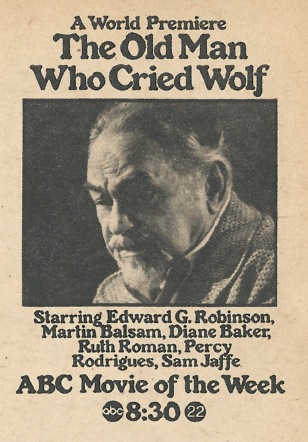
Luther Davis wrote Across 110th Street and this nihilistic TV movie, originally airing October 13, 1970. It’s directed by Walter Grauman, who was behind more than fifty episodes of Murder, She Wrote.
What a cast — from Jay C. Flippen (a former blackface vaudevillian known as “The Ham What Am”), Martin E. Brooks (Dr. Rudy Welles from The Six Million Dollar Man, the role originated by Martin Balsam, who is also in this), Ed Asner and Sam Jaffe to Percy Rodriguez (Genesis II, as well as the voiceover artist on the trailers for The Exorcist, Chopping Mall, House, The Great Outdoors and many more), Ruth Roman (The Baby), Diane Baker (Lorraine Warren in The Haunted), Balsam and Edward G. Robinson.
Robinson is an old man who watches his friend die and no one believes him. When he keeps telling anyone who will listen that they were attacked, his relatives try to get him psychiatric help. He decides to try to find the killers himself, but someone is watching his every step and the story grows darker and darker.
If you want to watch a real downer, the kind of rough ending that only the 1970’s can give you, this movie is on YouTube:
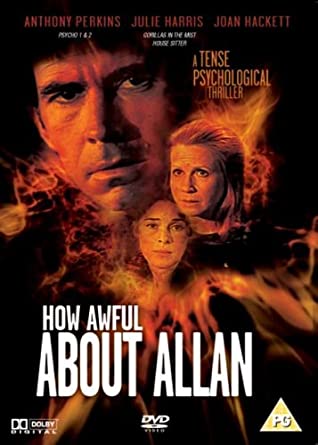
Along with What’s the Matter With Helen?, this movie is one of the two collaborations between writer Henry Farrell and director Curtis Harrington. It was the ABC Movie of the Week on September 22, 1970 and has stood the test of time as one of the better TV movies. And there’s some stiff competition for that.
Shot in just 12 days, it stars Anthony Perkins as Allan Colleigh, who has psychosomatic blindness after an accident — he left paint cans too close to a fire — that killed his abusive father and scarred his sister Katharine (Julie Harris from the 1963 version of The Haunting).
After Allan returns to their home after time in a mental hospital, he’s convinced that everyone is out to get him, including a new boarder with speaks in a hoarse whisper and one of his sister’s ex-boyfriends on the phone.
Joan Hackett — who was in two great TV movies, Dead of Night and The Possessed— appears as Allan’s former girlfriend. She gets caught up in his mania as rooms of the house explode into flames and he’s kidnapped by that mysterious ex.
How Awful About Allan has plenty of actors as comfortable on the stage as they were on the big or small screen. Perkins agreed to wear special contacts that completely made him blind so that his performance would be more realistic.
This didn’t get great reviews when it came out, but do the movie we love ever do?
Lucha libre is to American pro wrestling as a movie like Alucarda is to an American possession film. Sure, they’re in the same category, but they’ve gone off into their own strange world where reality — the things we know and see and believe every single day — no longer exists.
Lucha takes the Catholic morality of Mexico to the extreme, with los technicos (the good guys) battling valiantly against los rudos (the bad guys) in matches that are often about technical skill versus brute force. There’s also the idea of putting your manhood on the line, as often there are chop and strike battles to prove who is more macho. And then there are the outfits and masks and characters, with each person exemplifying a different heroic or villainous ideal. When a feud reaches its conclusion, it often costs a combattant their mask — honestly, their face — or their hair.
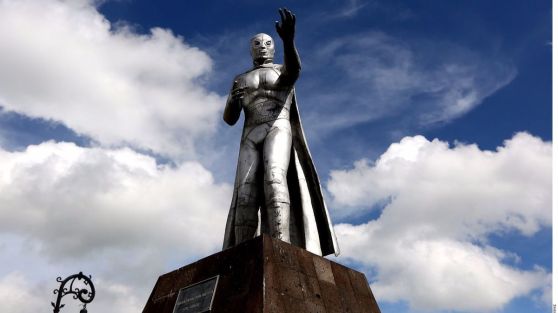
There has never been a luchador like El Santo. While he began as a rudo, once he achieved his fame, he became the kind of celebrity that Hulk Hogan could only dream of. Santo isn’t a big time pro wrestler; he’s a cultural icon on the level of someone like Elvis Presley. He starred in fifty-two movies between 1958 and 1982, along with winning thirty-eight matches where he put his famous silver mask up against the hair and masks of opponents like Perro Aguayo, Espanto I and II, Black Shadow, Bobby Bonales, La Momia and so many more.
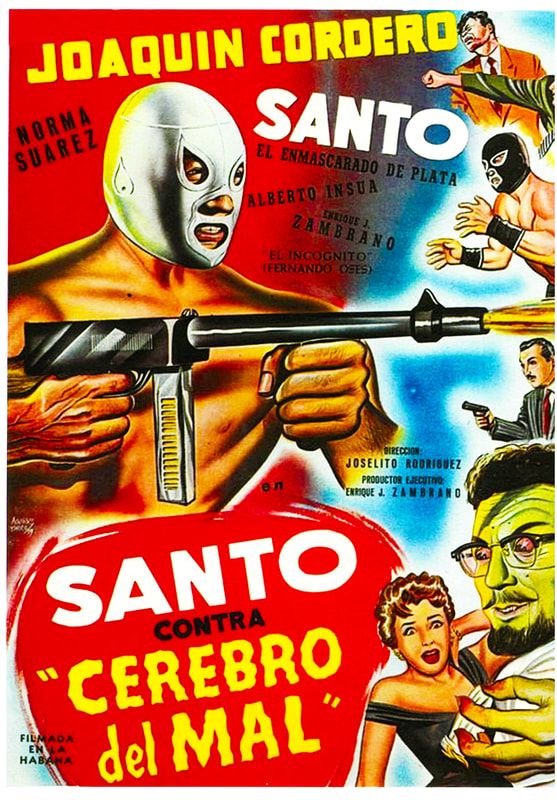
The first Santo comic was released in 1952 and after years of resisting appearing in the movies — the ring was his first love — Santo made his first two films, el Cerebro del Mal (The Evil Brain) and Hombres Infernales (The Infernal Men), in 1958. By 1961, Santo was just as big of a movie star as a wrestler.
El Santo was known to never remove his mask, even in private. When traveling, he made sure to take a different flight from film crews so they would never see his face as he went through customs. The only time Santo removed his hood in public was a week before he died from a heart attack, an action thought to be him realizing the death was near and he wanted to say goodbye.
Lucha libre owns a place in my heart that pro wrestling never will. It means so much more; it’s a passion play in the midst of the squared circle that still draws a huge crowd every Friday night in Arena Mexico.
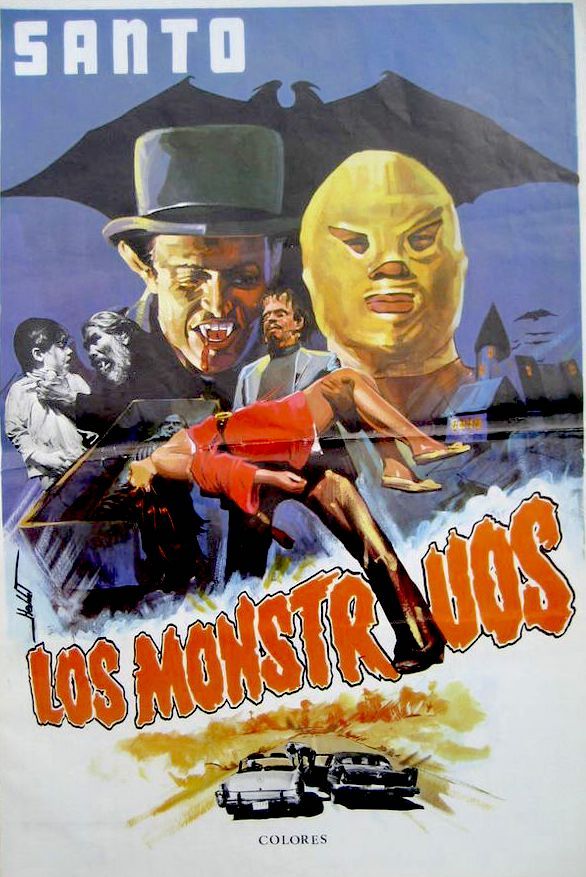
Santo and Blue Demon Against the Monsters is a piece of magic. Here, our silver masked hero and his sidekick Blue Demon don’t just battle one monster. They battle every single one of them, one after the other, for nearly ninety mind-destroying minutes.
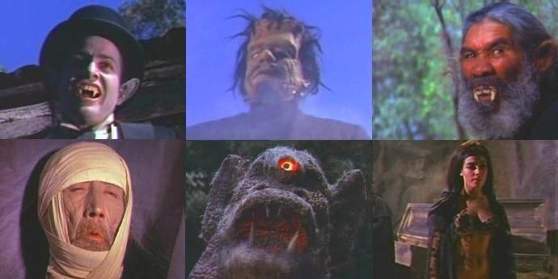
Leading the mob is El Vampiro, a vampire with the temerity to challenge Santo to a mask versus mask match in the middle of the holiest of all holy places, Arena Mexico, and the rudo nature to allow his army of monsters to invade before he loses
There’s also El Hombre Lobo, a werewolf that basically is just a hairy dude with fangs. La Momia, a skinny old man who looks like he could fold with one chop from Santo. Franquestain, who we can only assume is Frankenstein’s Monster with a van dyke! La Mujer Vampiro, who proves that ladies can be just as deadly as their male monster counterparts! El Ciclope, who takes over for the Creature from the Black Lagoon and looks like a beast straight out of Plaza Sésamo! Santo literally beats this dude with an ugly stick for twenty or more unanswered shots in a row while I yelled with madness and glee! There’s also a mad scientist named Bruno Halde and his dwarf sidekick Waldo, who struggle to keep these monsters in one piece. Oh man – I also forgot that there’s an evil clone of Blue Demon to deal with too!
This is the kind of movie that’s perfect for kids — think 60’s Batman mixed with some James Bond — except that there’s also a scene where a wolfman rips apart a kid’s parents in front of him, then does the same to the kid! In Mexican lucha films, rules don’t exist and life is cheap! And I haven’t even got to the scene where Franquestain stomps out a kid’s head. American History X has nothing on lucha monsters!
The end of this movie has Santo and Blue Demon — armed with torches and their pare fists, while wearing tight turtlenecks — murder nearly every monster thanks to the power of the cross and good old fashioned smashing everything. They also don’t even need hammers to stake vampires — our heroes do it with their bare hands.
As our heroes leave the vampires’ castle — leaving it ablaze after the staked vamps fade into nothing — the credits roll. In our overly CGI digital universe, a movie like this is a cool drink of aqua de fresa for what ails you. The best part is that this is just one of the many times Santo would go to war with the forces of evil. You can also watch him battle zombies, the king of crime, Satanic power, Martians, mafia killers, the Bermuda Triangle, karate experts and more.
Viva los luchadores! Viva la lucha! And most importantly, viva El Santo!
This article originally ran in Drive-In Asylum issue #18, which you can get right here.

 B&S About Movies
You must be logged in to post a comment.