The Early 70’s Horror Trailer (1999)

I want to meet Damon Packard, but I’d also be a little freaked out about it. The Early ‘70s Horror Trailer is so inside my brain and filled with the imagery I love most about, well, early 70s horror, without anything like a plot to get in the way.

Why is everyone running? Why is there so much blood? Who drowned that girl? Make your own movie inside your head with this, as these are, but moments in a reality we will never experience except in these split seconds. The layered, distorted audio that sounds like a cassette tape melting in a hot car, something else we may never hear again. Packard doesn’t make a movie influenced by the past here. Instead, he captures the way we remember old movies in a fragmented, terrifying and disconnected-from-reality manner.

I hope no one ever remakes Let’s Scare Jessica to Death, but if someone does, let’s kill them and have Packard be the director instead.

You can watch this on YouTube.

A Nightmare On Drug Street (1989)


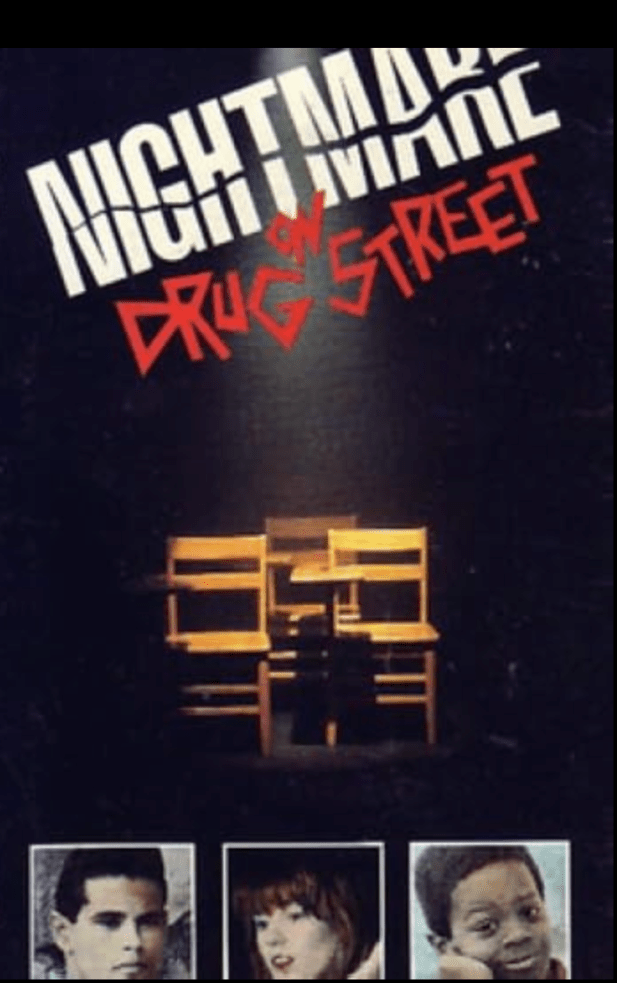
“Hi! I’m dead! Well, actually, my name is Jill, well, it is, or it was or whatever! Anyway, I’m dead but you know what I mean! I’m Jill!” 

When a movie starts like that, I’ll watch the whole thing.

Felipe is introduced as a high school hero whose team just won a big game. Seeking to look cool and prepare for the college life he imagines, he smokes marijuana and drinks beer, noting that his old man does the same. His story ends abruptly when he gets behind the wheel of a convertible, drives recklessly and crashes, killing himself and his friend. 

Jill’s story begins at a house party where she meets a boy named Craig (who wears way too much cologne). He introduces her to cocaine, claiming it makes everything easy. Her addiction spirals quickly; she ends up trading her most prized possession, a necklace given to her by her grandmother, to a dealer for an eight-ball, then overdoses alone in her room.

Eddie is a bright, science-loving kid who gets pressured by an older friend to try crack cocaine, being told it turns the inside of your head into a video game. After just a few uses, Eddie collapses. The narrator reveals that Eddie had an undiagnosed congenital heart defect, and the crack cured it in the most macabre sense possible.

Directed by Traci Wald Donat, the daughter of Helen Reddy, and written by Robert Bucci and George Larrimore, this is a remnant of the just say no era, a war on drugs that kept people in prison for decades for marijuana possession, but also allowed the CIA to put crack into black neighborhoods. 

Speaking of drugs, Raymond Cruz, who played Felipe, would go on to be Tuco Salamanca on Breaking Bad.

Did I do drugs during my review? Of course I did. I’m Sam. Anyways, I’m dead, but I’m Sam!

You can watch this on YouTube.

KO-FI SUPPORTER: Telephone (1986)

EDITOR’S NOTE: Today’s movie is brought to you by Eddie R., who subscribed at the Big B&S’er tier.

Would you like me to write about the movies of your choice? It’s simple!

  1. Visit Ko-Fi.
  2. Join as a monthly member for just $1. That makes you a Little B&S’er.
  3. As a Medium B&S’er at just $3 a month, if you pick a movie or a director, I’ll write about them for you. In fact, I’ll do one for each month you subscribe and even dedicate the post to you.
  4. For $5 a month, you basically get some major power. As a Big B&S’er, I’ll write an entire week on any subject you’d like. Every month, if you’d like.

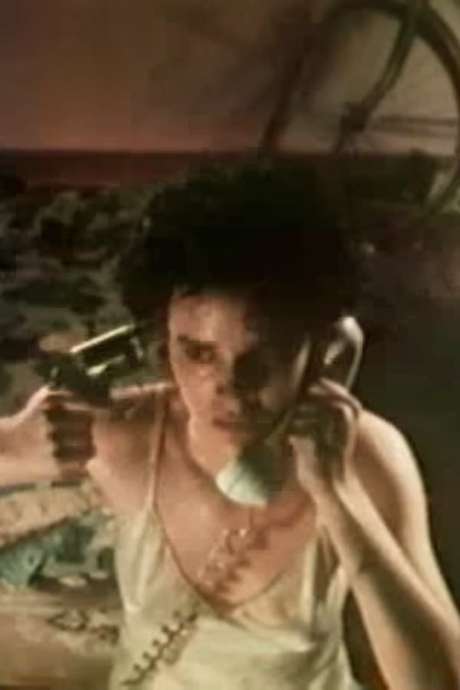
Telephone is a 27‑minute short film written, directed, and produced by Eric Red in 1986, in which an emotionally distraught and suicidal woman (Laurie Latham, whose voice is in Reservoir Dogs) dials random numbers, hoping to connect with someone. She ends up reaching a man (Bud Cort, RIP, star of Harold and Maude), telling him that she plans to kill herself in a minute unless he can talk her out of it.

He doesn’t know her. He’s never met her. But suddenly, he has sixty seconds to save a life. The film captures a grueling, intimate power dynamic: while he hangs upside down in inversion boots trying to relax, he is forced into a psychological chess match where the stakes are literal life and death.

Eric Red, a Pittsburgh native, used this short as a calling card for his visceral, high-concept style. You can see the seeds of his later work here—the same DNA that made The Hitcher and Near Dark cult classics. Red has a gift for taking a simple, claustrophobic premise and ratcheting up the tension until it’s unbearable. He would go on to direct Cohen and TateBody Parts and Bad Moon, as well as write one of my favorite American giallo films — and one of the first DVDs I ever got — Blue Steel.

Filmed on location in Hollywood in 16 mm, the short is visually striking. The images of the woman’s apartment bathed in neon, and the hazy skyline behind her, are gorgeous. They evoke a mood similar to the famous scenes in Tokyo Decadence, which is impressive considering Telephone predates it by nearly a decade.

For younger viewers, Telephone serves as a time capsule. This was an era before caller ID or “star 69.” When the phone rang, you had no idea who was on the other end. It could be a friend, a telemarketer or—as in this film—a total stranger inviting you into their darkest moment. Red captures the terrifying intimacy of the old rotary phone system. As Latham’s character notes, the connection they share in that half-hour is “more intimate than if we’d fucked.”

The film deals with suicide in a way that feels raw and unpolished. In the mid-80s, these conversations happened in the shadows, and Red brings that isolation to the forefront. Despite the setup, the film’s closing remains a genuine surprise. While some critics argue it could be tighter, the deliberate tempo allows the audience to feel the same exhaustion and emotional depletion as the characters. You really start to feel for Cort’s character. Maybe it’s because as film nerds, we inherently love Cort and want him to succeed.

You can watch this on the director’s YouTube page.

20 Minutes to Go (1990)

Aurora Productions, which made this, is really The Family International, an American new religious movement founded in 1968 by David Brandt Berg. They also went under the names The Children of God, Teens for Christ, The Family of Love and The Family. It’s the cult that Rose McGowan, River, and Joaquin Phoenix were born into. Berg mainly communicated by letter until he died in 1984. That’s when his wife, Karen Zerby, became the Queen and Prophetess.

According to Wikipedia, she “… married Steve Kelly (also known as Peter Amsterdam), an assistant of Berg’s whom Berg had handpicked as her “consort”. Kelly took the title of “King Peter” and became the face of TFI, speaking in public more often than either Berg or Zerby. There have been multiple allegations of child sexual abuse made by past members, including against Zerby.”

The music, however…

Take it from the copy on the box: “A startling new music video! It will send you racing one footstep ahead of danger and death! One heartbeat away from your wildest dream of love! A music video that will take your imagination by storm! It will plunge you into the dwelling place of the damned, then thrust you into a dimension beautiful beyond description!”

There’s a song about a green door in this that goes from fun to fear so quickly, as well as “Watch Out for 666.” This is the kind of insanity that the Catholic Church could never provide me as a child, and if they did make stuff like this, I would have never lapsed. a

You can download this from the Internet Archive.

The Job (2025)

Todd (LeJohn, President Skullgore on NPRmageddon) has a job interview that starts with a handwritten sign that says, “Take a seat, we’ll be right back,” and continues with an AI, Athena 2.0 (Dawna Lee Heising), conducting the interview. She’s a human resources interface designed to make him more comfortable and to maximize his interview experience. 

That means a series of tarot cards that help her to evaluate his mental fitness for employment. We don’t even know what the job is, while Athena 42.0 knows so much about Todd.

Directed by Craig Railsback, who co-wrote it with Dr. Heather Joseph-Witham, this is about how the work for Todd will help him find purpose. He yells back that he’s not an algorithm that needs to be optimized. His answer? Pick three cards.

Instead of learning about the job, Todd is confronted by the pain of his life, the things that he’s lived through, flashbacks that are so intense that they bring him to tears. “The tower burns because its foundation is false,” states the AI.

“The cards are not answers. They are mirrors,” she says, before asking for another card to be revealed. He must learn if he can be redeemed, as long as he dares to reach it. At the end, Todd says, “I know what I want now,” before unplugging the room. 

The Job has great lighting that really makes such a small space work for this quick film. The original score and AI special effects are composed by Dr. Renah Wolzinger, and they both contribute to the story, making this a swift and efficient short that both looks and feels good. Even the credits are unique in this, I love how they were animated!

ATTACK OF THE KAIJU DAY: Monster Planet of Godzilla (1994)


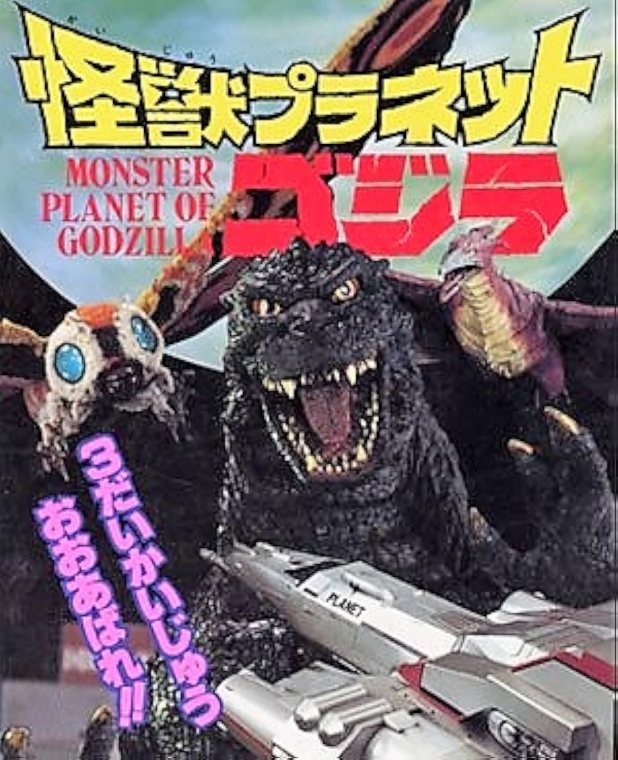
At one time, in the Tokyo theme park Sanrio Puroland, this Godzilla movie appeared as part of a ride. It was made with costumes and props from the Heisei Godzilla movies (WikiZilla says they’re the “RadoGoji Godzilla suit and Rodan puppet from Godzilla vs. Mechagodzilla II, and the Mothra imago puppet from Godzilla vs. Mothra” and the launching area for the space ship comes from Bye-Bye Jupiter), with Megumi Odaka (Princess from the Moon, Miki in Godzilla vs. Biolante) appearing in the beginning as Miki, Koichi Kawakita doing the special effects and Akira Ifukube music.

This footage comes from the Japan-only Godzilla Final Box release. During the original ride, as Godzilla battles Rodan and Mothra, General Hello Kitty saves the day. For copyright reasons, this was edited out.

But what riders got was a 4D 70mm face-to-face showdown with Godzilla. And you could even smell the kaiju. What was their scent? I wonder. According to this article, the team that made it initially made Godzilla smell like alligators. 

This site explains it all: “You can enter a Virtual Reality world with Godzilla, at the amusement park Sanrio Puroland in Tokyo. Battle with Godzilla, Rodan and Mothra as you try to help defend Japan.

Your adventure begins in the prep room, where you wait while the group ahead of you enjoys the film. In the prep room, several video monitors display a lengthy Godzilla trivia quiz. Then your hostess, played by Megumi Odaka, and her sidekick friend, Hello Kitty, explain your mission. Your UNGCC fighter craft is demonstrated by your pilot. With your 3D glasses in your hand, you are asked to enter the theater. Once safe and secure in your seats, the show begins.”

Directed by Kôichi Kawakita and written by Marie Terunuma, this is a rare modern Godzilla film featuring all the classic monsters. A spaceship called Earth has been sent to a monster planet where all the kaiju now live. It spots the other ship, Planet, and saves it by shooting at Godzilla. However, a dimensional portal opens, sending everyone to Japan, where the kaiju rampage through the streets (even destroying Tokyo Station, where Sanrio’s competition has their offices) before being sent back home in bubbles. 

Those kaiju and their bubbles. Gets them every single time.

You can watch this on YouTube (and fast-forward to 10:30 for the Godzilla live action).

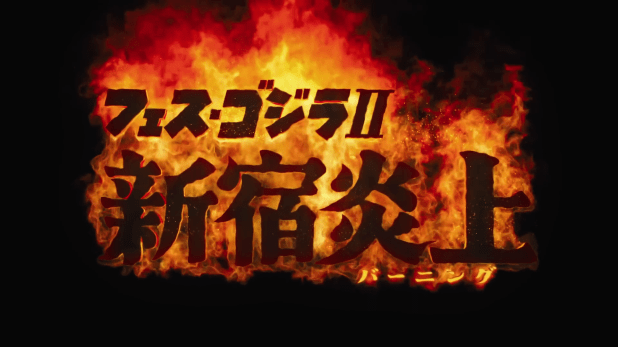
ATTACK OF THE KAIJU DAY: Fest Godzilla II: Shinjuku in Flames (2025)

First shown at Godzilla Fest 2025 on November 3, 2025, Fest Godzilla II: Shinjuku Burning is a short directed and written by Kazuhiro Nakagawa, funded by Toho and produced by Episcope. It’s a reboot of the annual Fest Godzilla series and the sixth entry overall. Unlike those movies, which use the FinalGoji design, this uses the MireGoji design for Godzilla (according to WikiZilla, it’s a “2015 promotional suit based on the Godzilla from Godzilla 2000: Millennium“).

It starts with two JSDF soldiers in a Tokyo subway talking about how Godzilla’s temperature is rising, but soon the foot of the kaiju crashes down as the kaiju battles defense forces with its atomic breath. As he destroys helicopters, his skin begins to turn orange, a sign of Burning Godzilla. A soldier stares at him just as another monster appears.

Made in a single continuous shot, it’s exciting to see a new Godzilla, even if this is short.

You can watch this on YouTube.

THE IMPORTANT CINEMA CLUB’S SUPER SCARY MOVIE CHALLENGE DAY 23: Grim (1985)

23. An Experimental Horror Film That’s Not In English

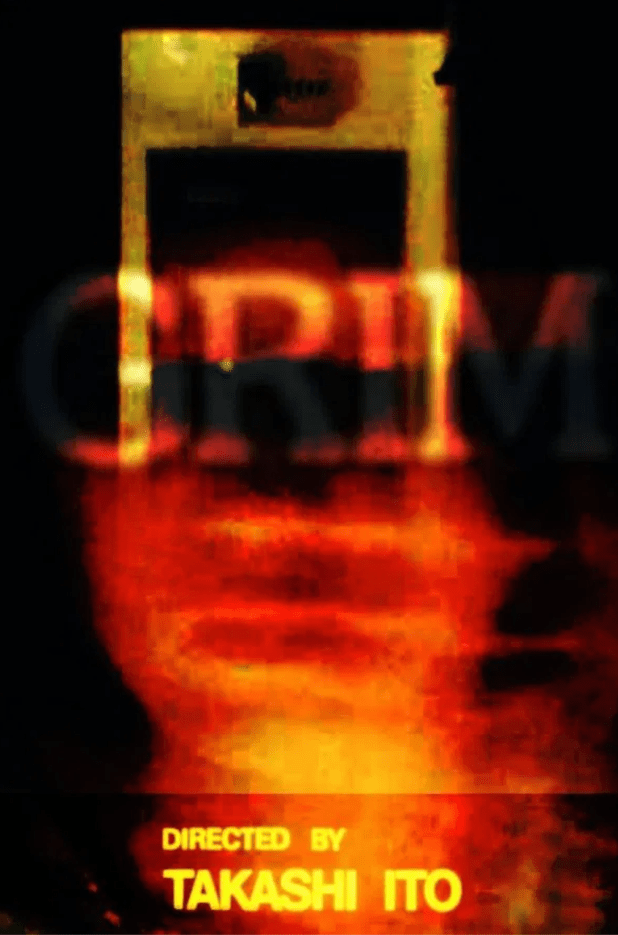
Takashi Ito’s father wouldn’t allow him to seer kaiju films like all his friends. But he finally allowed him to see Daimajin and Gamera vs. Barugon; his elation “worried his parents.” He began to draw manga and went on to Kyushu Institute of Design; he almost quit before experimental filmmaker Toshio Matsumoto came to the school.

Grim was made after he graduated and uses long exposure photography and empty spaces to create a sense of fear. Ito said, “With this work, I developed/fleshed out the idea I had when making Ghost of peeling only the skin from various objects in the room, floating the skins in midair and then sticking them on different objects. This film was also shot entirely frame-by-frame with long-exposures. Along with Grim, its meaning is “as if to do forever.””

How frightening is just a hand? How scary is a change in music or color? Ito takes the most basic moments and gets the most horrifying energy from them, making you nearly afraid to watch.

You can watch this on YouTube.

THE IMPORTANT CINEMA CLUB’S SUPER SCARY MOVIE CHALLENGE DAY 6: Joe Meredith

October 6. A Horror Film Directed by Joe Meredith (Not for the Faint of Heart)

Across several films, director Joe Meredith has documented the alien virus Havoc, which has been experimented on by EonCorp, and the consequences for those who have been mutated by it.

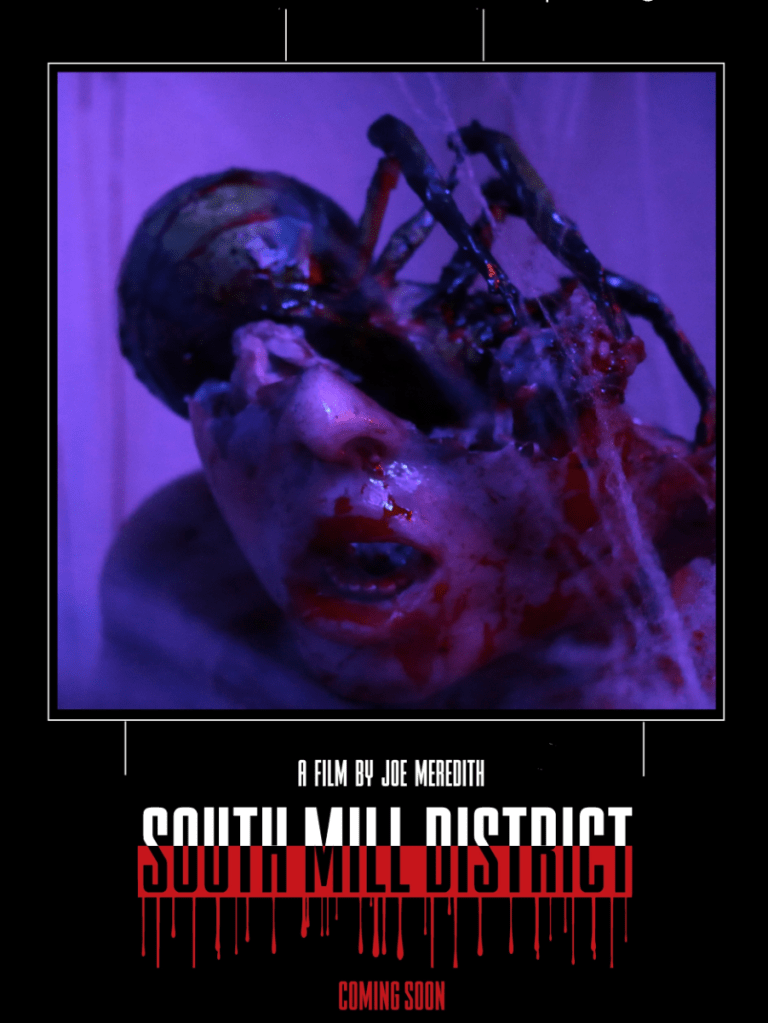
South Mill District (2018): Ten years have passed since the alien war and what was once human or alien is closer than before. Two vagrants are followed, as they are part of an experiment involving the assimilation of alien and human DNA.

As Meredith himself wrote, “Their bodies were hollowed out by oversized spiders, bio-engineered by EonCorp, a corporation with evil intentions. The spiders used their bodies as dwelling places until the assimilation process was complete, and their bodies regenerated. Now they wander around the South Mill District, waiting for the spider’s mutagenic virus to do what it was meant to do.”

Stop-motion monsters, brain spiders, so much vomit…it’s like a drone SOV beamed from the past to now, an ambient drone that lulls you into not being ready for the next disgusting moment that is about to burn into your soul. Meredith did about everything in this movie, along with his wife Cidney and Toby Johansen.

Imagine if a smoked up stoner in the Satanic Panic made a low-fi version of District 9 but was more concerned with watching things rot than the politics of it all.

You can watch this on YouTube.

Atraxia (2025): The world is a video game and also the sketchbook of that kid in the back of your science class that barely pays attention but knows every answer. Maybe knows more than the teacher. And when you sneak a look inside his drawings, they look like someone’s been watching Cannibal Holocaust every day when they get back from school, all to analyze and memorize the crucified people.

Joe Meredith is making his own Monster Manual through these movies, as this is footage of creatures that have emerged after a major storm. I don’t even know or care what genre this is, but probably the people who came up with elevated horror as a name have an erection wondering what to call Meredith’s work. Religious video game drone horror? That’s not anywhere near succinct enough.

This goes beyond splatter, so maybe the folks that come up with those titles won’t be watching this wandering through nature and finding gory vistas just displayed in front of you, while keeping the aesthetics of a first person shooter.

You can watch this on YouTube.

You can also find Meredith’s films on the Internet Archive.

GENREBLAST FILM FESTIVAL: SHORTS BLAST #6 // THE GB ALL-STAR GAME – 2025 EDITION

A killer assortment of short films created by returning filmmakers.
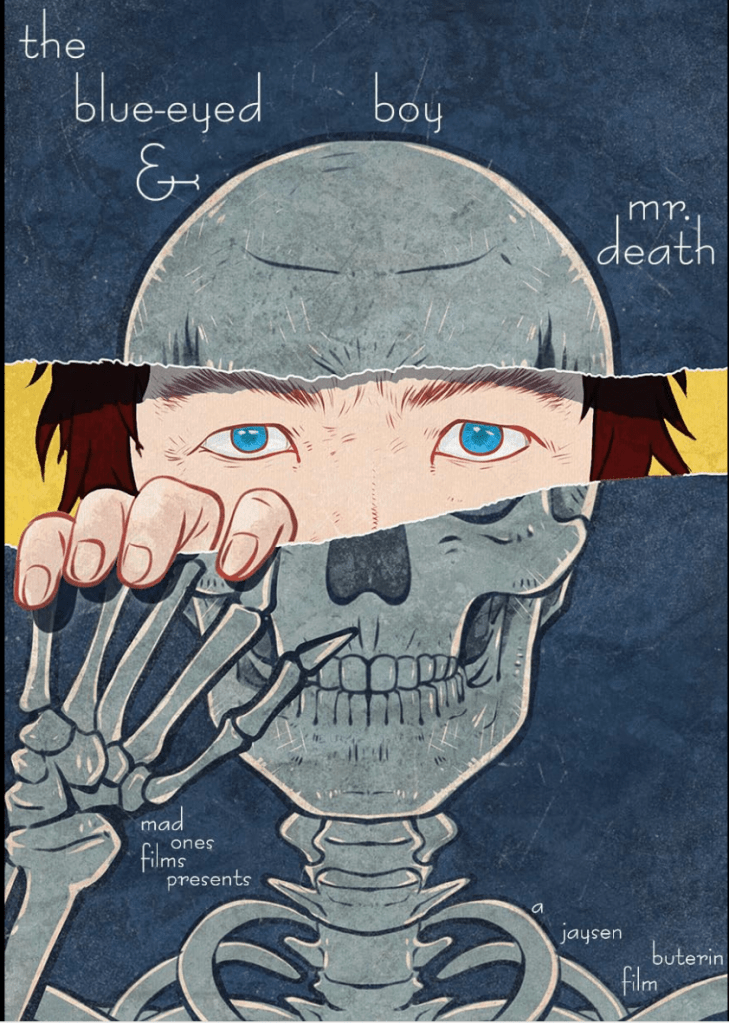
The Blue-Eyed Boy & Mister Death (2024): The description for this says, “Losing a loved one is never easy. Losing a parent can be even harder. Will Cummings had a hole in his heart shaped like his Dad that he tried to fill after the Cancer took him, yet nothing seemed to work. But what if every great once in a cosmic while, on the rarest of occasions, Death felt bad for being a jerk, and gave you one last chance to say those words that you thought no one would ever get to hear? What if you could hear that familiar voice just one more time? What would you say?” A thought-provoking subject, and hey! Vernon Wells is in it!

Wow. This is one emotional movie. It made me tear up a few times as I saw so much of my own life in it. Adam Hampton, the lead, does a really great job emotionally in this, and what could have been a very one-note film has so many levels to it. Well done!
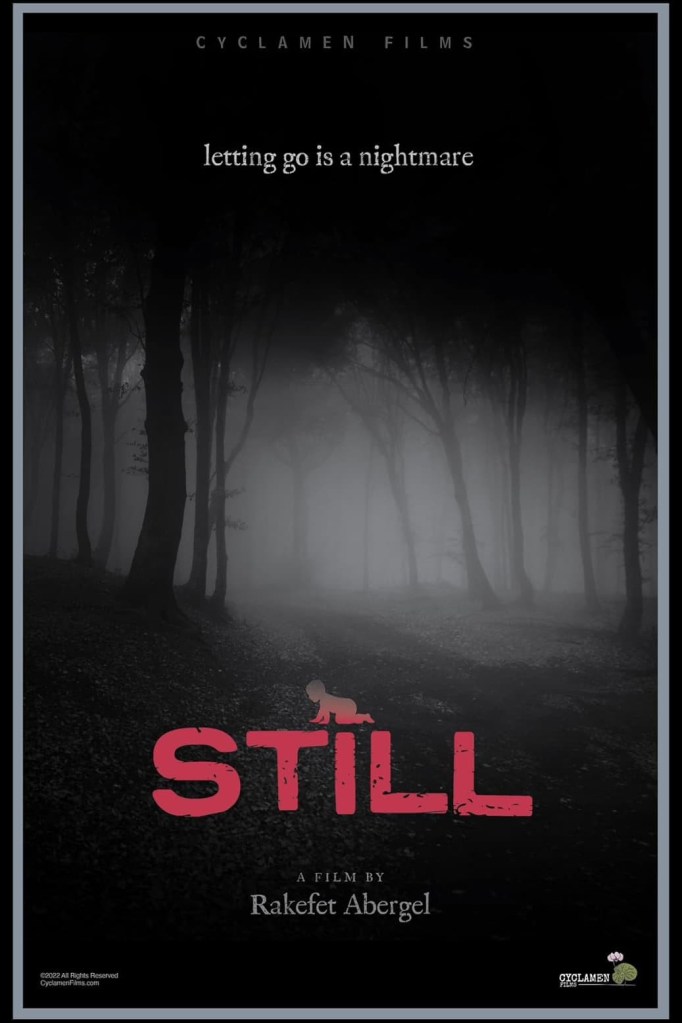
Still (2024): A miraculous discovery in the woods fulfills a despondent woman’s deepest desire, but triggers a nightmarish new reality in Rakefet Abergel’s film Still. Obviously, this comes from a very personal place of losing a child, and this does more to show me what that feels like than several large-scale, big-budget films. Just a raw and unyielding look at how it feels to have a future torn away from you. Great acting, outstanding production values and in no way does this feel preachy. It feels real.
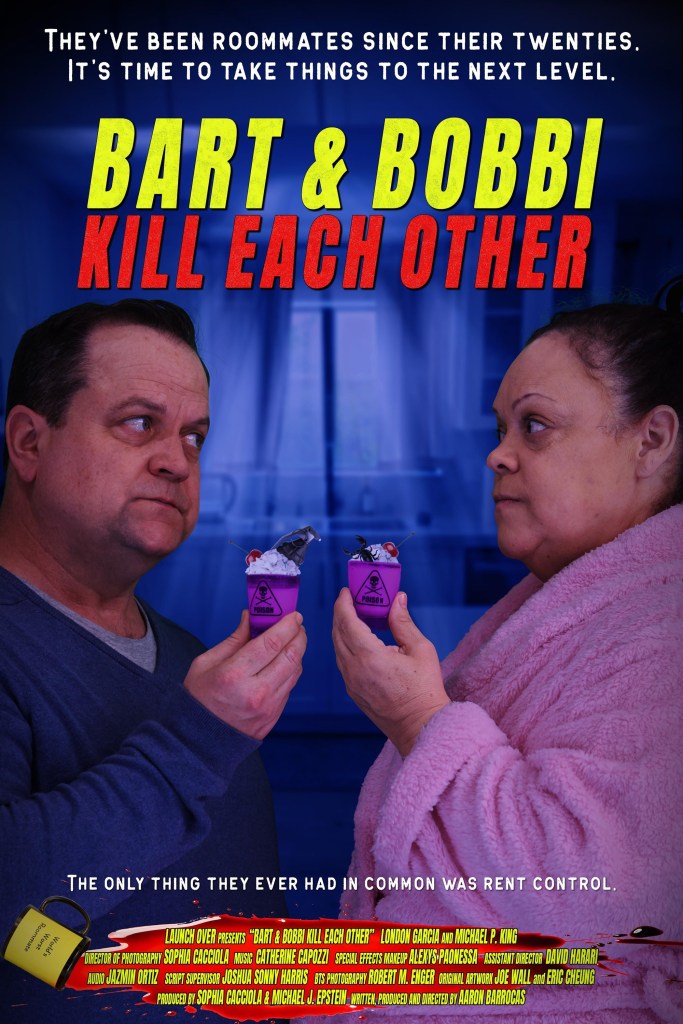
Bart & Bobbi Kill Each Other (2025): Bart (Michael P. King) and Bobbi (London Garcia) have lived together for about thirty years. Now, they have had enough. One of them must leave. Or maybe die. Maybe both of them, if we go by the name of this short, are going to die. Regardless, director, writer and producer Aaron Barrocas has done an incredible job with this short, one that combines sharp dialogue with fun effects and plenty of inventive ways to keep things moving.
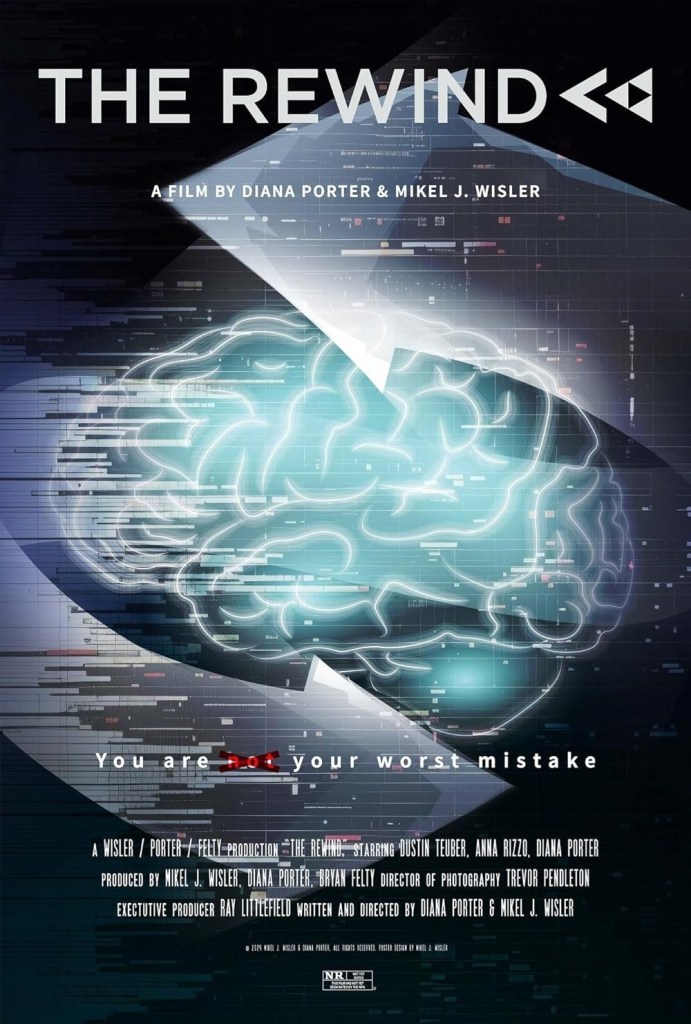
The Rewind (2025): Josh is desperate to get back his wife, Nina. He turns to a new technology that allows users to re-live a difficult moment in the hope of learning important lessons. Impatient for results, he soon discovers that Rewind therapy is not the magic fix he hoped for, and some would put this tech to a more sinister use.” That’s the hype copy for this, but wow, what it ends up being is so dark, and the ending is so brutal that I couldn’t believe it. Such a well-made short that feels like it could easily become a full-length film!
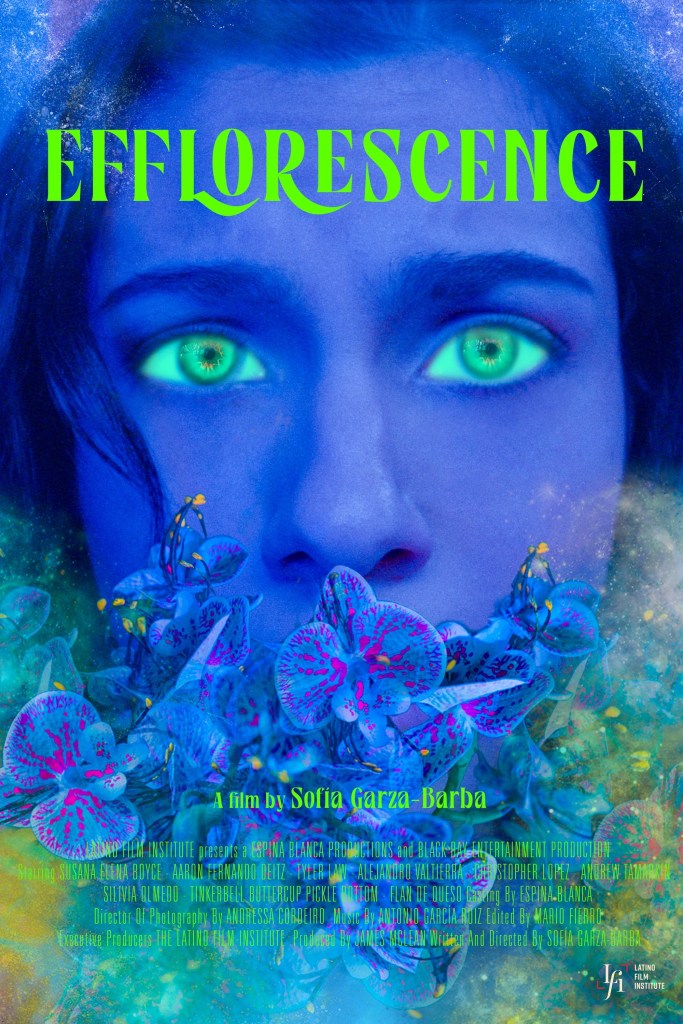
Efflorescence (2025): In this film by Sofia Gaza-Barba, LaLa (Susana Elena Boyce) has turned vegan as an act of love to Johnny (Aaron Fernando Deitz), the latest love of her life. But after binging rare greenery at a flower shop to stop her everlasting hunger, she finds herself turning into a flesh-eating human plant, the exact same night she’s expected to meet her lover’s vegan friends. As her mother reminds her, she’s Mexican and eats meat. She’s changed for all of her boyfriends — including a gamer, as her mama reminds her — and now, she’s turned her back on everything, not eating carne asada. Well, not for long. A lot of fun!
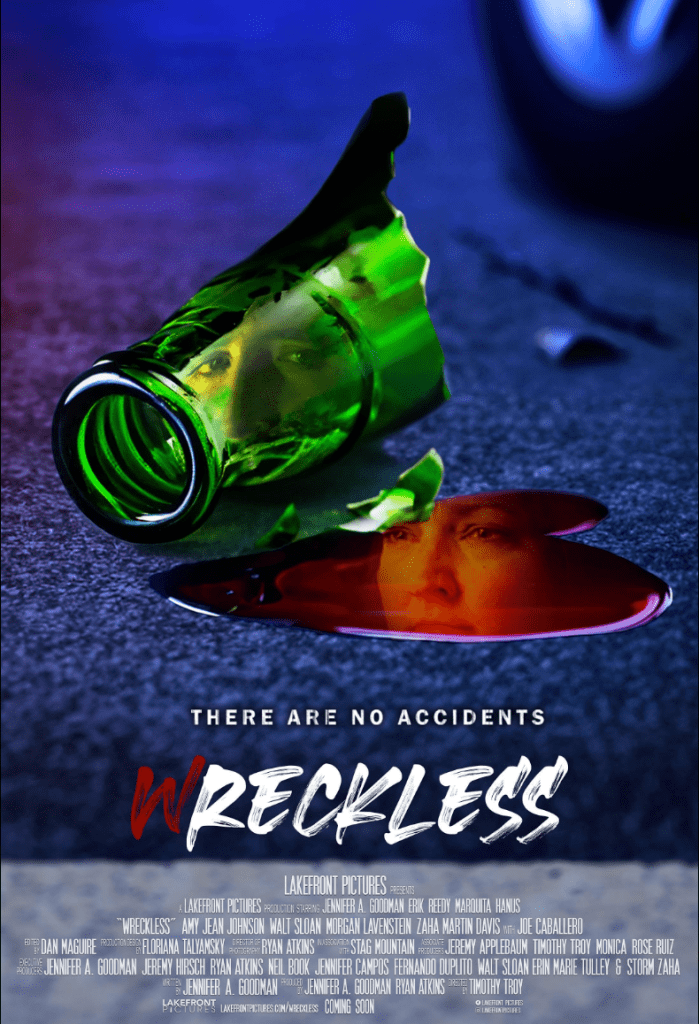
Wreckless (2024): At her first Alcoholics Anonymous meeting, Lucy (Jennifer A. Goodman) begins to freak out. Filled with worry, she starts to drift and even loses control of her reality. Directed by Timothy Troy and written by Goodman, this doesn’t make Lucy the hero or keep her from blame. It also doesn’t condemn her. It’s a very even-handed depiction of what people going through addiction must go through.
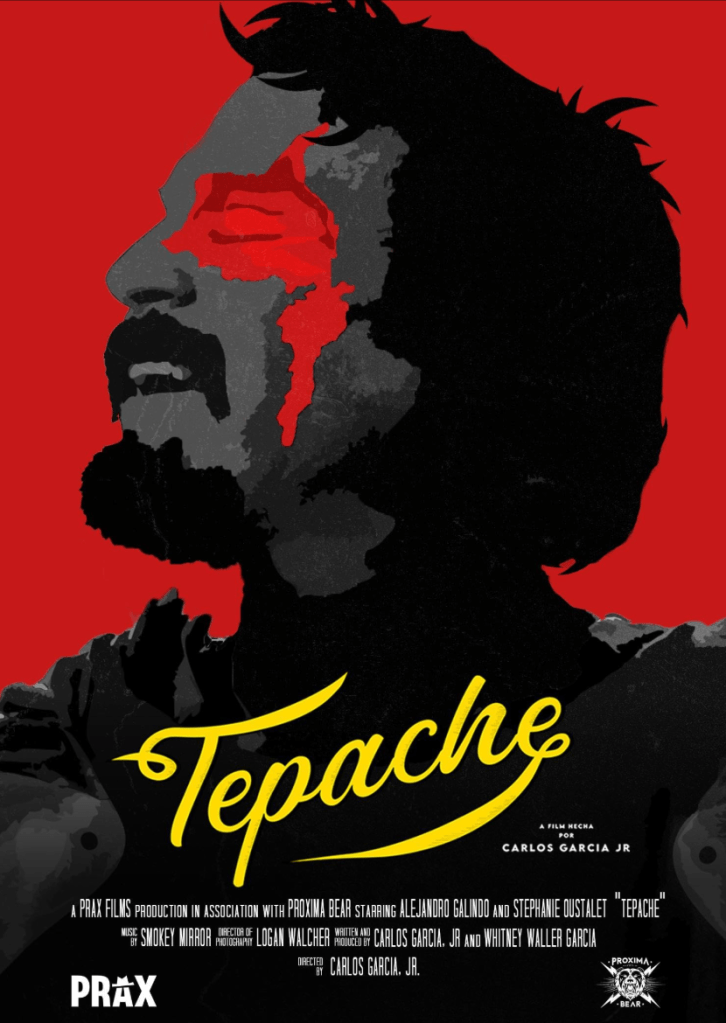
Tepache (2025): Directed and written by Carlos Garcia Jr., this is the saga of Gael (Alejandro Galindo), a legendary medieval dinner theater knight who decides that tonight is the night to win back his true love, the exotic dancer Noel (Stephanie Oustalet). This movie was terrific, not allowing its hero to get away with his stupidity while making what could have been a one-note character, Noel, work so well.