UNSUNG HORRORS HORROR GIVES BACK 2025: Lady Beware (1987)

Each October, the Unsung Horrors podcast does a month of themed movies. This year, they will once again be setting up a fundraiser to benefit Best Friends, which works to save the lives of cats and dogs across America, giving pets second chances and providing them with happy homes.

Today’s theme: Unsung Horrors Rule (under 1000 logged views on Letterboxd)

ABOUT THE AUTHOR: Adam Hursey is a pharmacist specializing in health informatics by day, but his true passion is cinema. His current favorite films are Back to the FutureStop Making Sense, and In the Mood for Love. He has written articles for Film East and The Physical Media Advocate, primarily examining older films through the lens of contemporary perspectives. He is usually found on Letterboxd, where he mainly writes about horror and exploitation films. You can follow him on Letterboxd or Instagram at ashursey.

After watching this film, I feel like I need to take a bath in Diane Lane’s open-air bathtub, but for much different reasons than her stalker did.

The year 2025 will go down for many things, some good, some bad, but as far as my Letterboxd stats go, it will be the year I discovered Karen Arthur.

The Mafu Cage, a twisted tale of two sisters starring Lee Grant and Carol Kane, completely blew my mind. Director Karen Arthur really knows how to ratchet up the claustrophobia, leading to some anxiety-inducing scenes. She also knows how to make the small feel big. The Mafu Cage was adapted from a stage play, but Arthur is able to downplay any restrictions found in a play. After watching The Mafu Cage, I had to seek out her debut film, Legacy, an adaptation of a one-woman show depicting a woman’s descent into madness. Talk about unsung, it only has 45 logged views on Letterboxd. 

After these first two films, Arthur became primarily a television director, which had a stigma about it in the 1970s and 80s. If you couldn’t cut it as a film film director, you were shuffled over to television, the perceived inferior media. If television was seen as less than, it surely did not stop her from producing the highest of quality. The Rape of Richard Beck turns the tables on the traditional rape-revenge film, with Richard Crenna earning an Emmy award along the way for his portrayal of a cop who does not play by the rules (or, actually, literally plays by his own set of rules), but finds himself in the wrong place at the wrong time. Speaking of the Emmys, Arthur became the first female to win a Best Director award for an episode of Cagney and Lacey. While television work fills most of her resume, Arthur did have one other feature film in her, the erotic thriller Lady Beware.

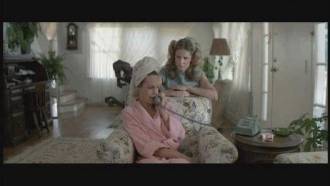
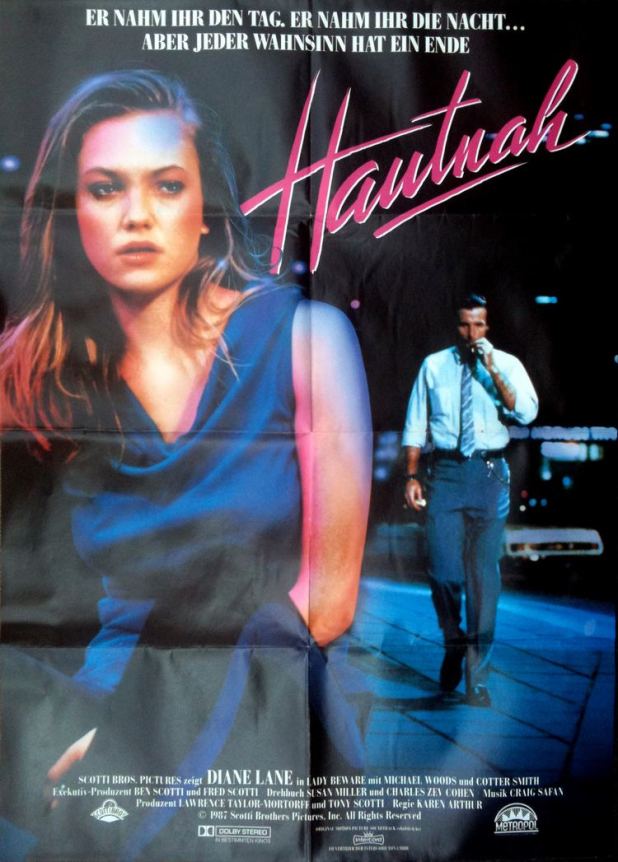
Released about a month before the mother of all erotic thrillers, Fatal Attraction, Lady Beware tells the story of Katya (Lane), an ambitious young woman who does not take no for an answer, nearly demanding a place as the window dresser for a Pittsburgh department store. Katya’s displays prove to be controversial and provocative, but one person whose attention she receives is Jack, a married X-ray technician who begins an unhealthy obsession with Katya, quickly escalating from obscene phone calls to breaking and entering.

Unfortunately, the finished project did not get the approval of Arthur herself. The producers attempted to amp up the exploitative side of the film, including nude scenes of Lane that Arthur says she would not have included. She stated that she considered removing her name from the film (would that have made it a film by Alice Smithee?), but would not because the actors cannot remove their names.

Still, despite being a bit of a mess (side characters are introduced, only to be abandoned, no doubt most of their performance ending up on the cutting room floor), Lady Beware is a very interesting watch. It could have been the performance that elevated Lane from child star to adult actress. She would have to wait almost 15 years for Unfaithful to bring her the attention she deserved all along. 

Lady Beware is currently stuck on VHS, desperately needing restoration from one of these boutique physical media labels. Paging Cinematographe! I think this film would fit perfectly in that collection.

THE IMPORTANT CINEMA CLUB’S SUPER SCARY MOVIE CHALLENGE DAY 15: Pontypool (2008)

15. A Horror Film in Which Language is the Weapon

Why did it take so long for me to watch this? A zombie — kinda — movie set inside one room, radio talk show host Grant Mazzy’s (Stephen McHattie) studio — Pontypool is filled with imagination and utter strangeness, as a virus uses language against people and can only be defeated by wordplay.

I love the interplay between Grant and Laurel-Ann (Georgina Reilly), his producer, as well as the oddness of Dr. Mendez (Hrant Alianak), the expert who is trying to discover why people are suddenly losing their minds and how words can transmit the virus.

Bruce McDonald (Kids In the Hall), who directed this, explains the disease like this: “There are three stages to this virus. The first stage is when you might begin to repeat a word. Something gets stuck. And usually it’s words that are terms of endearment, like sweetheart or honey. The second stage is when your language becomes scrambled, and you can’t express yourself properly. The third stage, you become so distraught at your condition that the only way out of the situation you feel, as an infected person, is to try and chew your way through the mouth of another person.”

This uses its budget effectively, often relying more on sound than visuals to tell the story. And I love the ending, which pushes this universe into surrealism, as Grant and Lisa take on the identities of Johnny Deadeyes and Lisa the Killer, a concept eventually followed up in the movie Dreamland.

This is the kind of film that gets in my head and frightens me long after, because it feels just strange enough that it could happen.

2025 Scarecrow Psychotronic Challenge Day 15: The Cabinet of Dr. Caligari (1920)

15. GOES WITHOUT SAYING: Feast your eyes on something with little to no dialogue at all.

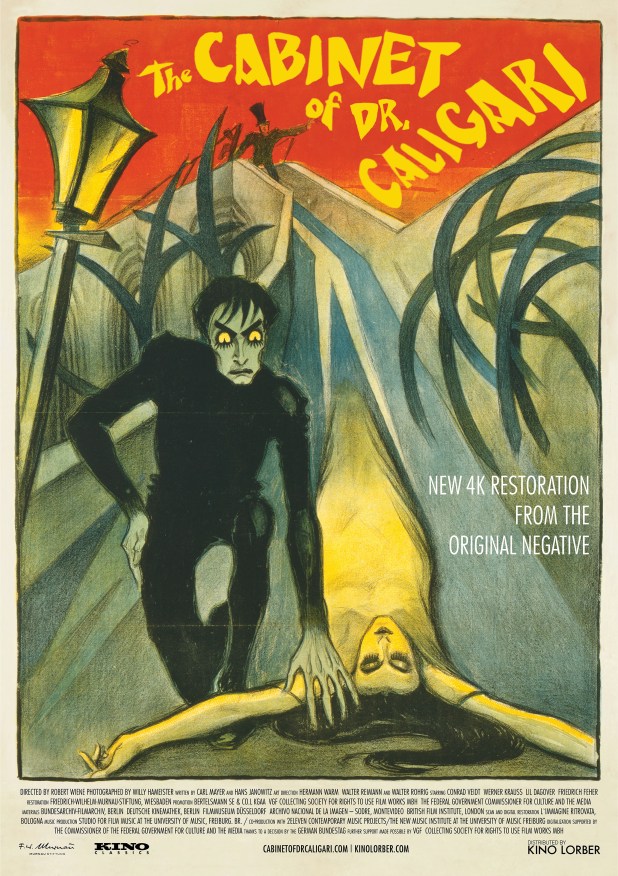
Directed by Robert Wiene and written by Hans Janowitz and Carl Mayer, this is the perfect expression of German Expressionism. Janowitz and Mayer, both pacifists who despised authority after their military experiences during World War I, created something amazing here, which Wiene realized.

Roger Ebert called it arguably “the first true horror film,” and it’s still unsettling to watch today.

Dr. Caligari (Werner Krauss) is a hypnotist who has his own sleeping man, Cesare (Conrad Veidt), whom he uses to entertain — and murder — people. Caligari prophesies that  Franzis’ (Friedrich Feher) best friend Alan (Hans Heinrich von Twardowski) will die by morning. When it happens, Franzis and his girlfriend Jane (Lil Dagover) investigate, which leads to a plot where Caligari may or may not be the head doctor of an asylum.

But ah, the ending! The beginning seems so simple, with Franzis telling his story. Finding out that he’s an unreliable narrator makes this entire movie one to watch again.

Is this a fairy tale? Is it one man trying to make sense of things? Is it Janowitz working out witnessing a murder behind the Holstenwall, which gives the setting its name?

While this is considered a cult movie, it was released as a typical film. But when we see it today, a hundred years later, we think that it had to have been an art film.

UNSUNG HORRORS HORROR GIVES BACK 2025: Crimson, the Color of Blood (1973)

Each October, the Unsung Horrors podcast does a month of themed movies. This year, they will once again be setting up a fundraiser to benefit Best Friends, which works to save the lives of cats and dogs across America, giving pets second chances and providing them with happy homes.

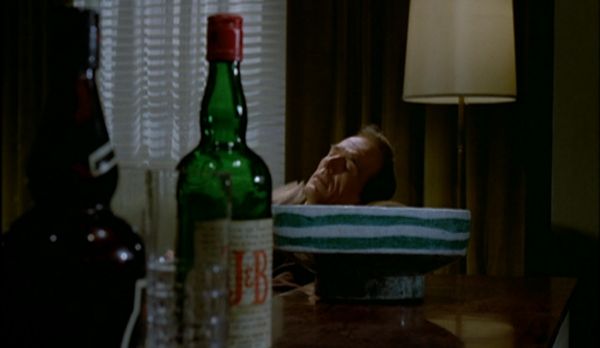
Today’s theme: J &B 

From J&B In the Movies

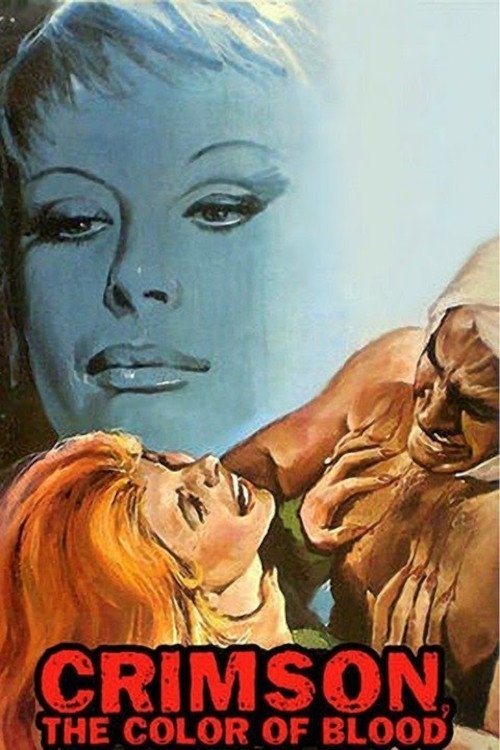
Las ratas no duermen de noche (Rats Don’t Sleep at Night) was released in the U.S. as Crimson, the Color of Blood and The Man With the Severed Head.

After a jewel heist, Jack Surnett (Paul Naschy) is shot in the head. His gang is smart enough to know that there’s a scientist named Professor Teets (Ricardo Palmerola) who can do some pretty wild surgeries, like a brain transplant. However, they use the brain of a serial killer named The Sadist (Roberto Mauri), going out in the middle of the evening to just chop off his head. And by this amazing procedure, Jack becomes even more violent than he was before.

Directed by Juan Fortuny, who co-wrote the script with Marius Lesoeur and H.L. Rostaine, this film features Naschy in what must have been a dream role, as every time he sees a woman, he has to make love to her. Well, not love. Violent killing maniac love. This has plenty of Eurocult goddesses in it, like Evelyne Scott (AKA Evelyne Deher, she’s also in Shining Sex), Silvia Solar (Devil’s Kiss) and Gilda Arancio (Kiss Me Killer).

More of a crime movie than a horror film, this doesn’t have much Nashy, but it does feature random dance scenes, and when he finally does show up, he’s all wrapped up. But I kind of like that it’s a gangster movie. Head transplants were a big thing in 70s!

You can watch this on Tubi.

CHILLER THEATER MONTH: Web of the Spider (1971)

EDITOR’S NOTE: Web of the Spider was on Chiller Theater on Saturday. October 18, 1980 at 1:00 a.m. and Saturday. November 27, 1982 at 1:00 a.m.

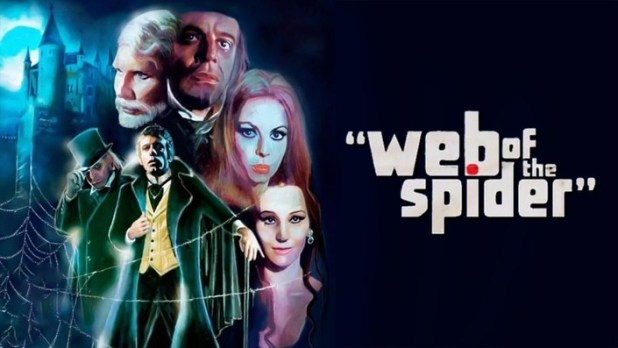
After Castle of Blood‘s disappointing box office, Antonio Margheriti felt he could remake the film in color and have it be more successful.

Edgar Allan Poe (Klaus Kinski) is our narrator and Kinski shows up for the beginning and the ending of the movie. He’s interviewed by Alan Foster (Anthony Franciosa), who challenges him as to the truth of his stories. This leads to a bed with Lord Blackwood (Enrico Osterman) about spending a night in his castle, a place where he soon meets Elisabeth (Michèle Mercier, Black Sabbath) and quickly falls into love — and bed — with her before she announces that she’s no longer alive.

There’s also Julia (Karin Field), William Perkins (Silvano Tranquilli) and Elisabeth’s husband,Dr. Carmus (Peter Carsten). The ghosts need his blood to come back to life, but Elisabeth helps him to escape, only for him to impale himself on the gate, dying just as Poe gets there.

I adore that the tagline of this is “Based on Edgar Allan Poe’s Night of the Living Dead.” He did write a poem “Spirits of the Dead” and the 1932 movie The Living Dead was based on Poe’s “The Black Cat” and “The System of Doctor Tarr and Professor Fether” as well as Robert Louis Stevenson’s The Suicide Club. But no, he has nothing to do with Romero’s movie.

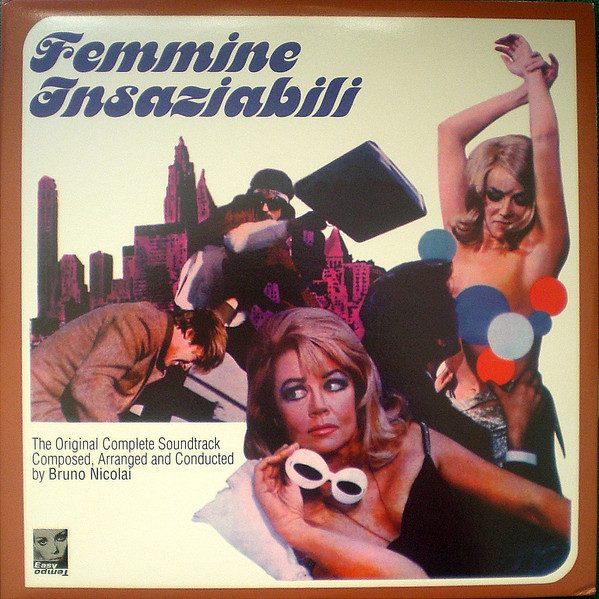
I really like the soundtrack by Riz Ortolani but this can’t compare to the black and white — and yes, Barbara Steele appearance — in the original. That said, Kinski is awesome in every second he’s on screen, looking like a complete madman.

UNSUNG HORRORS HORROR GIVES BACK 2025: Carnal Circuit (1969)

Each October, the Unsung Horrors podcast does a month of themed movies. This year, they will once again be setting up a fundraiser to benefit Best Friends, which works to save the lives of cats and dogs across America, giving pets second chances and providing them with happy homes.

Today’s theme: J&B

ABOUT THE AUTHOR: Adam Hursey is a pharmacist specializing in health informatics by day, but his true passion is cinema. His current favorite films are Back to the FutureStop Making Sense, and In the Mood for Love. He has written articles for Film East and The Physical Media Advocate, primarily examining older films through the lens of contemporary perspectives. He is usually found on Letterboxd, where he mainly writes about horror and exploitation films. You can follow him on Letterboxd or Instagram at ashursey.

Stop the press!

I originally had a different film in this slot—Night Angel, which I ended up moving to a different category. The J&B element was not very strong in Night Angel. Just a scene where you can see a bottle on a shelf behind a bar. I realized that, somehow, I did not have a single Italian film on my list this year. When I reviewed a Letterboxd list that so kindly compiled films that feature the iconic Scotch whiskey, I discovered a film I somehow missed when I dove into Alberto De Martino’s filmography last year. Carnal Circuit, a film most definitely worthy of inclusion in any forgotten giallo set.

Alberto De Martino is probably my favorite Italian director not named Fulci. It is a hill I’m willing to die upon. He is probably best known for rip-offs of more successful films. The Antichrist is a rip-off of The Exorcist. Holocaust 2000 is a rip-off of The Omen. I guess you could say Pumaman is a Superman rip-off. Maybe his reputation for knock-offs lessens his cache among cinephiles. If so, it’s their loss. If they take it, toss it, and leave it, as Sir Mix-a-Lot so wisely said, I’ll pull up quick to retrieve it.

Carnal Circuit is an early example of the giallo. No black glove clad killer to be found here. But we do get the trope of a “common” man (not affiliated with the police) entering his sleuthing era, trying to get to the bottom of a murder mystery. In this film, Paolo (Robert Hoffman) is a newspaper reporter who gets caught up in the mystery thanks to a friend from his past, Giulio (Roger Fritz). Thugs are out for Giulio, the current face of an advertising campaign for the International Chemical corporation. But why would anyone want to rough up such a beautiful mug? Turns out that Giulio has made some enemies on his way to the top, as one does. But now Giulio has turned up dead, killed in a vehicle accident. Or was it an accident? Seems as if everyone on the International Chemical board had a reason for revenge against Giulio. But enough to kill? Perhaps his diaries give an answer, and it is up to Paolo to find them on his quest for the truth.

I do have a soft spot in my heart for these giallo films that were made before Dario Argento put his stamp on the subgenre, forever changing the way they are perceived. Carnal Circuit is similar to Fulci’s Perversion Story (or One on Top of the Other). Both films bring their story to California, although Fulci is more interested in framing his tale through the lens of Vertigo. De Martino’s film spends a good deal of its running time slowly revealing the change in Giulio (and seeing how much female flesh he can expose along the way—really putting the carnal in Carnal Circuit).

Unfortunately, the J&B component in this film was no different from Night Angel. Simply a scene where the former spokesperson for International Chemical makes a drunken display at a company party. He stands in front of a bottle of J&B before plummeting to his death out of a window (a missed opportunity for a dummy drop). 

At any rate, this film has been one of my favorite watches of the month, and another piece of ammunition in my battle to champion Alberto De Martino.

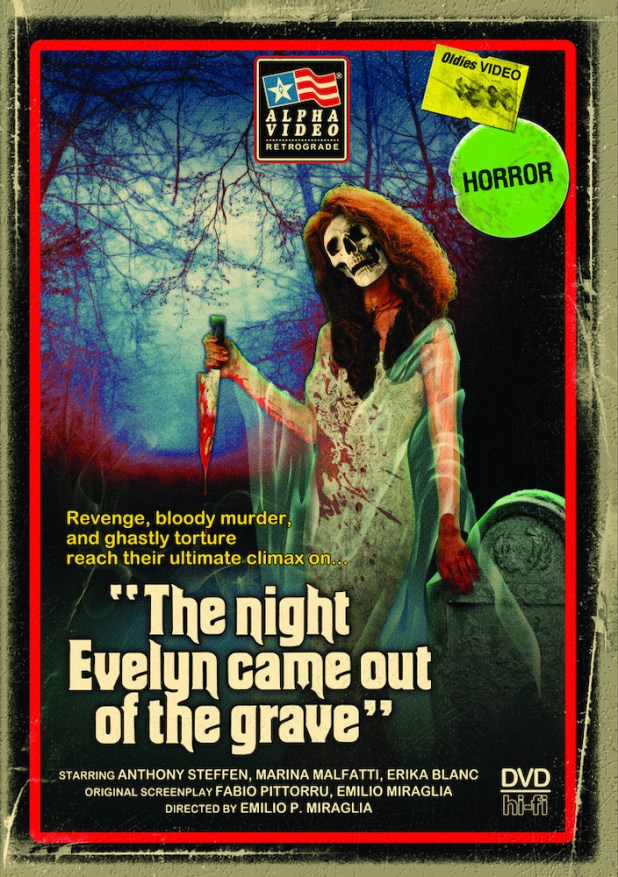
CHILLER THEATER MONTH: The Night Evelyn Came Out of Her Grave (1971)

EDITOR’S NOTE: The Night Evelyn Came Out of Her Grave was on Chiller Theater on Saturday. November 1, 1980 at 1:00 a.m.

Emilio Paolo Miraglia created two giallo — this film and The Red Queen Kills Seven Times. This one goes more into the horror realm than the typical themes of the genre.

Lord Alan Cunningham starts this movie off by running away from an insane asylum, a place he’s been since the death of his redheaded wife, Evelyn, whom he caught having sex with another man. To deal with his grief, Alan does what any of us would do — pick up redhead prostitutes and strippers, tie them up, then kill them.

A seance freaks Alan out so badly he passes out, so his cousin — and only living heir — Farley moves in to take care of him, which basically means going to strip clubs and playing with foxes. Alan nearly kills another stripper before Farley gives him some advice — to get over Evelyn, he should marry someone who looks just like her. Alan selects Gladys (Marina Malfatti, All the Colors of the Dark) as his new wife and comes back home.

Sure, you meet someone one night and marry them the next. But nothing could compare to the weirdness of living in an ancient mansion with a staff of identical waitresses, Evelyn’s brother, and Alan’s wheelchair-bound aunt. Our heroine is convinced that Evelyn is not dead. And the other family members get killed off — Albert with a snake, and Agatha is eaten by foxes!

Gladys even looks at the body in the tomb before Alan catches her and slaps the shit out of her, as he is going crazier and crazier. Finally, Evelyn rises from her grave, which sends him back to a mental institution.

The big reveal? Gladys and Farley were in on it all along. But wait, there’s more! Susan, the stripper who survived Alan’s attack, was the one who was really Evely, and Gladyshads had been poisoned! Before she dies, the lady who we thought was our heroine wipes out the stripper, and Farley gets away with the perfect crime.

But wait! There’s more! Alan had faked his breakdown and did it all so that he could learn that it was Farley who was making love to his wife and killed her when she refused to run away with him. A fight breaks out, and Farley gets burned by acid. He’s arrested, and Alan — who up until now was pretty much the villain of this movie — gets away with all of his crimes!

This is a decent thriller, but it really feels padded in parts and tends to crawl. That said, it has some great music, incredibly decorated sets and some twists. Not my favorite giallo, but well worth a Saturday afternoon watch. There are some moments of sheer beauty here, such as the rainstorm where Alan sees Evelyn’s ghost rise.

WEIRD WEDNESDAY: Dixie Dynamite (1976)

Directed by Lee Frost, who wrote the script with Wed Bishop, this starts with Tom Eldridge (Mark Miller) running into trouble with the law, thanks to running moonshine. The law being Sheriff Marsh (Christopher George!) and Deputy Frank (Bishop), who screws up and shoots the man and as a result, his daughters Dixie (Jane Anne Johnstone) and Patsy (Kathy McHaley) lose the farm to banker Charlie White (R.G. Armstrong). And there’s also crime boss Dade McCrutchen (Stanley Adams) to deal with. Luckily, they know Mack (Warren Oates), a racer who can help them get the revenge they need.

Somehow, Jane Anne Johnstone and Kathy McHaley were never in a film before or after this, which surprises me. They’re pretty good in it and actually own most of the film, as Oates is in it for like ten minutes. And if you’re looking for that secret Steve McQueen cameo, good luck. He has a motorcycle helmet on. Supposedly, he hadn’t been in a movie for some time, was bored and showed up to be in the dirt bike racing scene.

The soundtrack — Duane Eddy played on it — and the stunts are the reason to watch this one. It’s very proto-Dukes of Hazzard as the girls play Robin Hood, stealing from the crooks to give to the poor. There’s also a crook getting blown up real good while on the toilet, which is something I’d like to see more of.

Frost also made The Thing With Two Heads, Witchcraft ’70 (U.S. version), The Black GestapoLove Camp 7Hot Spur and so many more wonderful films. He also wrote Race with the Devil.

You can watch this on Tubi.

THE IMPORTANT CINEMA CLUB’S SUPER SCARY MOVIE CHALLENGE DAY 14: Visitors from the Arkana Galaxy (1981)

14. A Croatian Horror Film

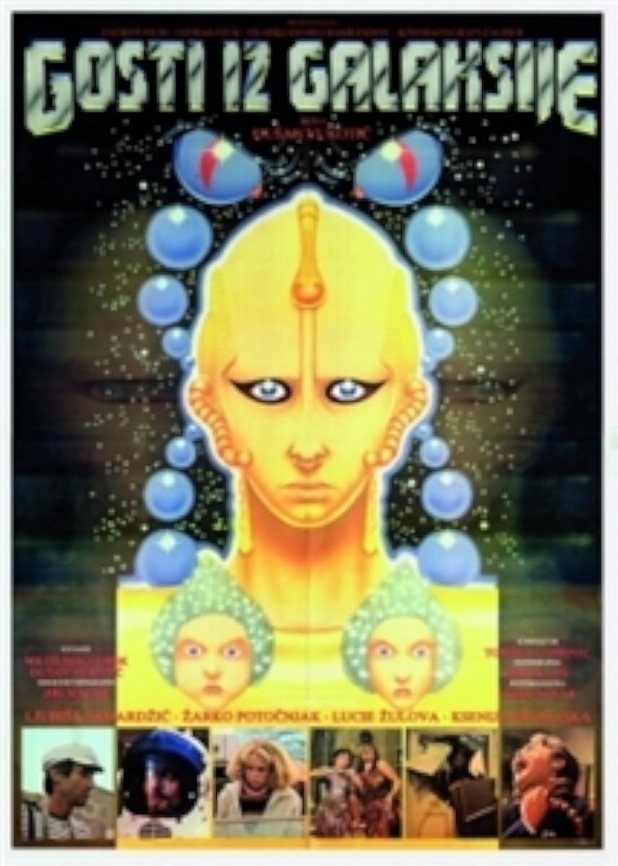
Here’s how Deaf Crocodile sold this: “Imagine if Troma Films had been hired to make a Sid & Marty Krofft Saturday morning kids’ show, and if you have some idea of the unspeakable strangeness of Visitors from the Arcana Galaxy, a truly gonzo Croatian sci-fi/fantasy about a struggling writer, Robert (Zarko Potocnjak), who dreams up a story of gold-skinned alien androids named Andra, Targo and Ulu from a distant planet.”

But is it a horror movie? Let’s allow Deaf Crocodile again to describe the Mumu Monster, which was created for the film by legendary Czech animator Jan Svankmajer: “A rubber-suited, multi-tentacled creation that destroys a wedding party, ripping off heads and spouting plumes of toxic green smoke while a blind accordion player blithely plays his squeezebox.”

Director Dusan Vukotic, while born in Yugoslavia, was one of the founding members of Zagreb Film, a Croatian film studio that often worked in animation. What emerges here is pure fantastic filmmaking — a movie where Robert has his head in the clouds, dreaming of being a science fiction writer. This is a goal that his girlfriend Biba (Lucié Žulova) and friend Tino (Ljubiša Samardžić) think is silly.

Somehow, that same imagination is able to bring robotic Andra (Ksenija Prohaska) and space children Targo (Rene Bitorajac) and Ulu (Jasminka Alic) to Earth. That’s because Robert has tellurgia, which allows him to think of things long enough for them to become real. For example, when he was hungry as a child, his father grew breasts to feed him.

A series of wild adventures emerges, including Robert falling in love with Andra, Andra leaving a Mumu monster in her purse that sprays her roommates with its deadly blood, and time travel that solves almost any mistake.

As Yugoslavia and Czechoslovakia no longer exist, I guess this is a Croatian film. Whatever it is, it’s terrific —sheer lunacy caught on film —a movie that shows how a foreign culture would create a space adventure that has nothing to match what we expect.

You can watch this on Tubi or buy it from Deaf Crocodile or MVD. Extras on the physical release include a new scan with restoration by Craig Rogers for Deaf Crocodile, a new commentary track by film historian Samm Deighan, a new essay by film historian and professor Jennifer Lynde Barker and five rare short films by director Dusan Vukotic.

2025 Scarecrow Psychotronic Challenge Day 14: Halloween TV version (1981)

14. “SHUT THE FACE UP”: Watch a TV edit of an R-rated movie, you fairy godmother.

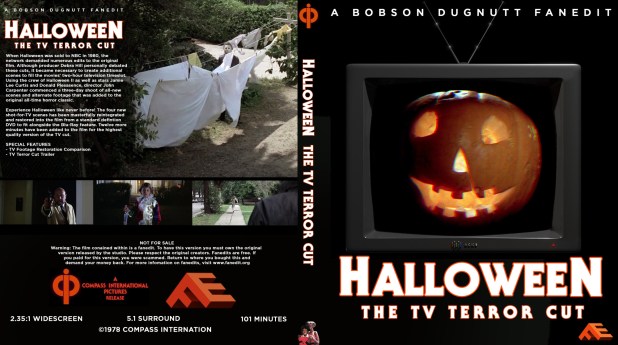
While the Halloween TV cut is an edited version of the 1978 movie with limited gore, not that Halloween had much, and re-dubbed swear words. That left around 12 minutes to extend the film, and luckily, John Carpenter was on the set of Halloween II.

The new moments hint at the revelation of the second movie, as we see that Michael has written “sister” on a door, there are moments in the high school, Dr. Loomis discusses young Michael’s dangerous nature at Smith’s Grove, Loomis talking to young Michael about fooling the doctors but not him as they move him to minimum security, and a moment where “Lynda visits Laurie Strodes at home and borrows a blouse just as Annie calls trying to borrow the same blouse.” Also, the final confrontation with Michael was retooled so you can only hear the gunshots and not see the shooting.

All of this footage was re-worked into an extended edition for home video.

There was once a TV edit of Halloween II that had tons of differences, too. There’s a messy cut of Mrs. Elrod’s death, as, instead of seeing the blood on her hands, the camera cuts to Michael’s face. This moment was taken from Michael killing Karen at the hospital, so he looks as if he’s in green lighting, unlike the rest of this scene.

According to 45 Lampkin Lane, there’s also:

  • A deleted scene of Janet and Jimmy talking to one another in the hallways. Janet informs Jimmy that Laurie cracked a bone and that she’s going to have a scar on her shoulder. Jimmy asks if she’s still awake, to which Janet replies that Dr. Mixter gave her a double dose. “If she can keep her eyes open, she’s made out of steel.”
  • Bud’s filthy version of “Amazing Grace” is changed to “Amazing grace, come show me your face. Don’t make me cry, I tell no lie.”
  • An added scene where Jimmy tells Karen that he’s going to see the Ben Tramer car crash.
  • The hammer killing Mr. Garrett is removed.
  • A less gross take of the autopsy of Ben Tramer.
  • A dream sequence where Laurie, as her younger self, meets Michael at the sanitarium.
  • Karen’s death is less intense.
  • The theatrical cut ends after Laurie gets into the ambulance. On TV, a white sheet rises inside the ambulance, but it’s Jimmy. They smile at one another as the ambulance drives away.

Here’s the original 1981 airing with commercials!