WEIRD WEDNESDAY: The Hills Have Eyes (1977)

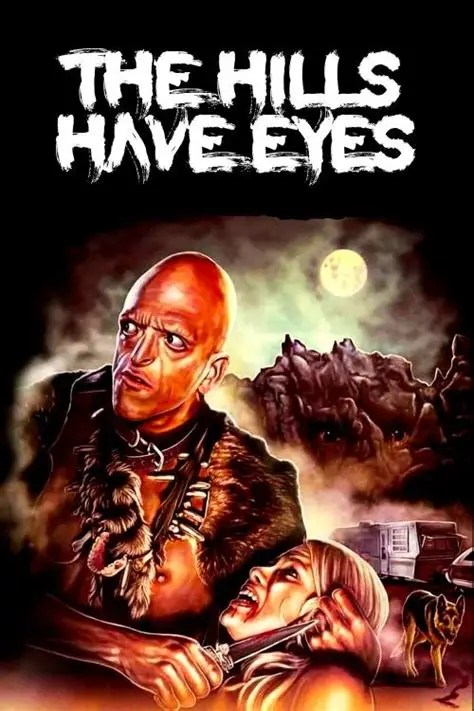
Wes Craven’s second full-length film — if we don’t include the porn film The Fireworks Woman that he directed as Abe Snake — is a trip through the Nevada desert that he wrote, produced and directed. You can see it as straight-forward narrative or you can choose to see it as a parable on how man will always be inhuman to other men.

The Carter family really gets it in this one. After being targeted by a family of cannibal savages in the Nevada desert, the family’s leader Big Bob is crucified to a tree, the daughter Brenda is raped, numerous members are shot and stabbed and also killed, one of the family dogs is killed and even the baby is threatened with being a meal.

But they retaliate with just as much inhumanity as they battle back against the desert clan of Papa Jupiter, Pluto (Michael Berryman!) and Jupiter. Even the second family dog joins in and takes out his rage on the mutant clan.

The idea of an irradiated gang in the desert is intriguing and was inspired by the Sawney Bean clan in 1600’s Scotland, which claimed the lives of nearly 1,000 people.

Additionally, Craven was inspired by The Texas Chainsaw Massacre and ended up making a film that — in my opinion — lives in its shadow. Interestingly enough, the films share product design from Robert Burns, as well as some of the exact same animal parts that decorate the homes of each film’s cannibal lairs.

There’s a sequel, a remake and a sequel to that as well. In the late 1980’s, Craven even debated a third movie that was to be set in space, while his 1995 film produced for HBO, Mind Ripper, was originally intended as the third film in the series.

WEIRD WEDNESDAY: High School Girl (1974)

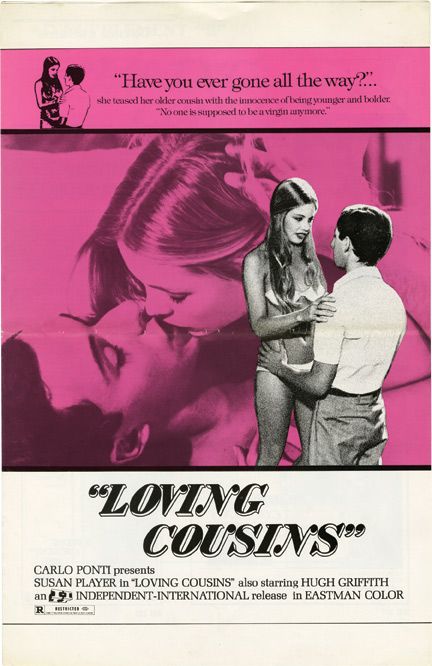
Cugini Carnali translates as First Cousins, but this movie was also titled The VisitorHot and Bothered, La PrimaLoving Cousins, and High School Girl.

This is the story of Nico d’Altamura (Alredo Pea, who was also in two other commedia sexy all’italiana, the Dagmar Lassander-starring Classe Mista and the Edwige Fenech movie The School Teacher), who is a shy sixteen-year-old who falls in love with his city-born cousin Sonia (Susan Player, Invasion of the Bee GirlsMalibu Beach).

This comes from director Sergio Martino, who you may know better from his early 70s master class on making giallo — Your Vice Is a Locked Room, and Only I Have the KeyAll the Colors of the DarkTorsoThe Strange Vice of Mrs. WardhThe Case of the Scorpion’s Tail — or his sexy bedroom movies with Edwige Fenech.

Nico comes from a more provincial family than Sonia, and while his parents are strict, they have their secrets. His father is sleeping with the family maid (Rosalba Neri, Lady Frankenstein) and also waiting for their uncle to die, but he keeps alive either out of spite or to keep sleeping with prostitutes. When Sonia comes to town, she causes a scandal by wearing miniskirts to church and sunbathing nude, but let’s face it, Nico has no idea what he’s in for.

Martino was a genre hopper. The year after this movie, he made two poliziotteschi (Gambling City and Silent Action), a giallo (The Suspicious Death of a Minor), and Sex With a Smile, which features Barbara Bouchet, Fenech, and Marty Feldman. This may not be his best movie, but it’s not his worst.

WEIRD WEDNESDAY: High Rolling (1977)

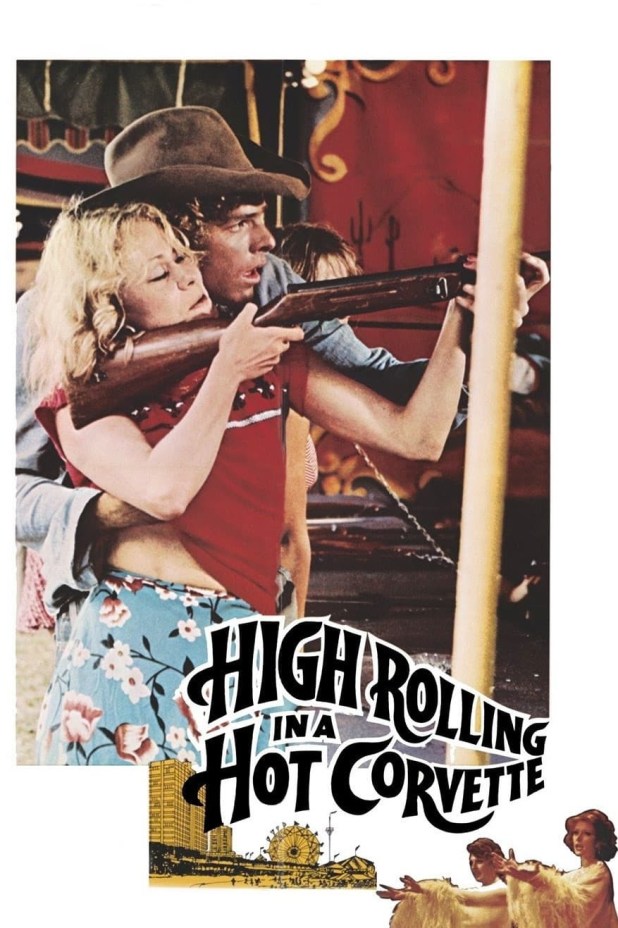
Directed by Igor Auzins and written by Forrest Redlich, who created the Australian soap opera E StreetHigh Rolling has Tex (Joseph Bottoms) and Alby (Grigor Taylor) leaving behind their carnival jobs to head to the Gold Coast. They soon meet a hitchhiker named  Lynn (Judy Davis) and, along with two dancers, Barbie (Wendy Hughes) and Susie (Sandy McGregor), hijack a bus.

Tex is the impulsive American dreamer, while Alby provides the grounded, albeit reluctant, Australian counterpart. Their chemistry is the engine of the film, fueled by a 1970s obsession with the open road as a symbol of ultimate freedom.

What I didn’t like is that they get the Corvette they drive in by knocking out a gay man, Arnold (John Clayton) and then stealing the sports car. This scene is a jarring reminder of the year this came out. Using a marginalized character, even if they are the drug-dealing bad guy, as a punching bag to facilitate the protagonists’ journey complicates the likable rogue personas the movie tries to build for Tex and Alby.

At least the girls get to do their version of Donna Summer’sLove to Love You Baby.And you get to see Chantal Contouri from The Day After Halloween and Thirst on the bus.

Also: Before she became an international multi-award-winning actress, Judy Davis made her film debut in this movie as Lynn.

WEIRD WEDNESDAY: High Crime (1973)

I have to speak with pride for my Italian filmmaking countrymen: they do not give a fuck.

Any other movie these days that would put a child in danger would not do what director Enzo G. Castellari and writers Tito Carpi, Gianfranco Clerici, Vincenzo Mannino and Leonardo Martín do in this movie.

When the question is asked, “Does this go too far?” I assume Castellari laughed and drank another shot of J&B, delirious in the director’s chair.

Castellari claims he saw Bullitt and wanted to make this, but he probably was thinking of The French Connection. I mean, Fernando Rey is in it, just to assure us that, yes, this Italian movie will be stealing a lot from that movie.

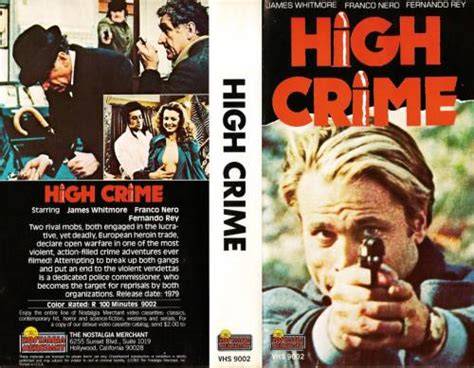
But who cares? This is the story of a tough cop, Vice-Commissioner Belli (Franco Nero), battling perhaps even tougher bad guys, the kinds of drug dealers that’ll blow up their own men just to take out a few lawmen. These new criminals are so disgusting that even the the old-school organized crime bosses like Cafiero (Fernando Rey) try to take them out, only to learn that some of their most loyal men have decided to work for the other side.

Even after all the work it takes to convince Commissioner Aldo Scavino (James Whitmore) that he has a case, Belli must watch as the old man is killed. Soon, the new mob beats his lover Mirella (Delia Boccardo) into submission and then well…runs his daughter over with a car.

Any other movie would hold back from this and do it off-screen.

Welcome to Italy.

In Erica Schultz’s The Sweetest Taboo: An Unapologetic Guide to Child Kills In Film, she refers to this scene as one of the best ever made: “…High Crime’s car death is definitely top tier.” It’s shocking, so wild that I had to rewind it to ensure I had just seen what I thought I had. So when Belli goes wild, killing off everyone in his path — and looking suave doing it, I’m secure enough in my manhood to say Franco Nero is smoldering — we understand. I mean, we just watched his kid fly over the roof of a car and get run over.

When I was researching this movie, I saw that someone on Letterboxd referred to its soundtrack as dull and plodding. I want to go total Inspector Belli on that person, throwing the kind of slaps that an Italian action hero is known for. I was humming along the entire film and it’s been trapped in my head ever since. I don’t know how anyone could watch this and not fall in love with this movie.

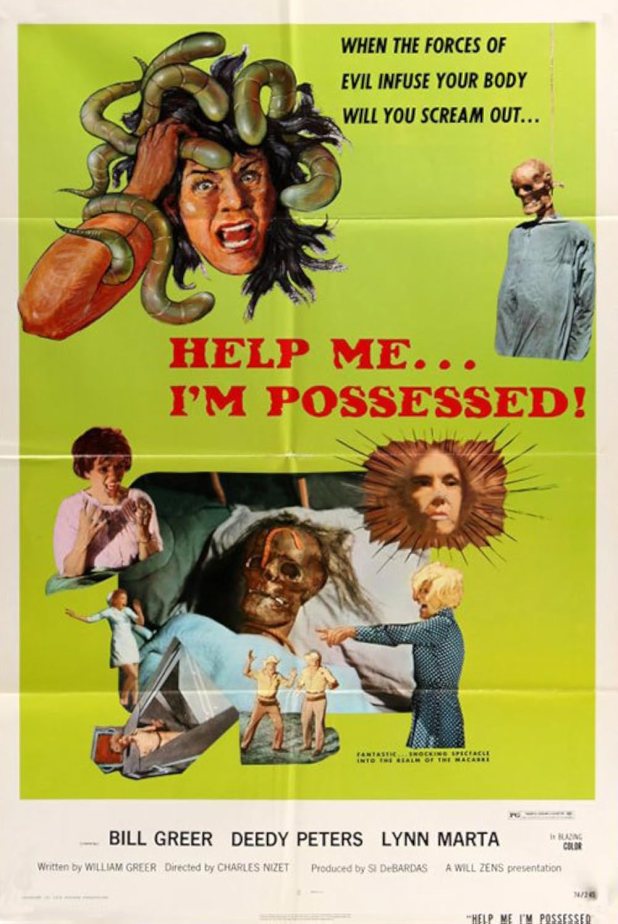
WEIRD WEDNESDAY: Help Me… I’m Possessed (1974)

I’m still trying to figure this out.

Made as Nightmare at Blood Castle, this is about Dr. Arthur Blackwood (Bill Greer, who co-wrote the script with Deedy Peters, who were a comedy team; he would go on to write and produce House CallsGoodnight Beantown and Charles In Charge; she would be in 17 episodes of House Calls), who runs his own sanitarium and is doing experiments on the forces of evil. Deedy also plays his wife in this, who is working with the sheriff (Jim Dean) to figure out why some teens have been killed. She should be looking inside her own house, as her husband has a hunchback (Pierre Agostino) and they’re whipping girls and locking people up in cages.

This is the kind of movie that has a wig budget, a spaghetti monster, guillotine suicide and dialogue with lines such as “When I saw Mr. Zolak’s head severed from his body, I felt a definite sexual thrill. I must be very careful.” Also snakes.

Somehow, this is PG. 1970s PG. You know what that means.

Director Charles Nizet also made The RavagerVoodoo Heartbeat and Rescue Force. There’s nothing like this, a regional movie in the desert that has women put in coffins with poisonous snakes and it feels perverted but it’s not as dirty as it feels, which means that it’s really deranged.

A cave blows up at the end. I still, as I said, have no idea why.

You can watch this on YouTube.

Here’s a drink.

Spaghetti Monster (based on the drink from Strawbs Bar in Leeds, England)

  • 1 oz. vodka
  • 1 oz. gin
  • 1 oz. rum
  • 1 oz. tequila
  • 4 oz. orange juice
  • .5 oz. grenadine
  1. Shake up everything with ice in a cocktail shaker other than the grenadine.
  2. Pour in a glass and top with grenadine.

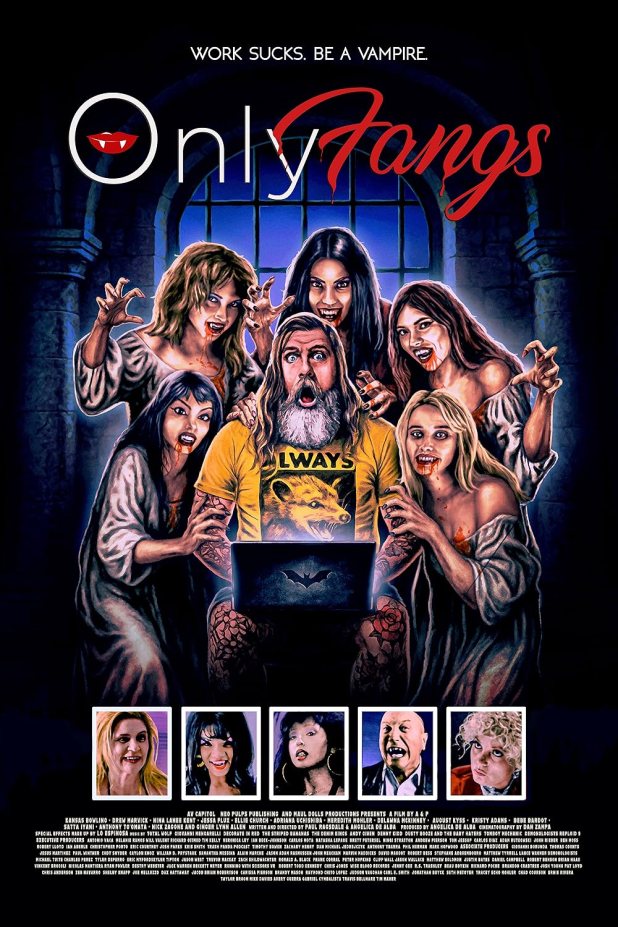
OnlyFangs (2025)

Wes (Drew Marvick) wants to be a monster hunter, even if he isn’t very good at it. Yet when he meets a coven of vampiric ladies — Scarlett (Nina Lanee Kent, Murdercise, which was also made by co-directors Angelica De Alba and Paul Ragsdale), Selena (Adriana Uchishiba), Zooey (Meredith Mohler) and Reese (Kansas Bowling) — Wes pitches the idea of a subscription app where users pay for encounters that stop just short of death. This creates a bizarre symbiotic relationship: the vampires get a steady, safe food supply and Wes gets the fame and money he failed to find as a monster hunter.

Great title. Decent poster. And this is shot well, too. Perhaps it doesn’t need to be two hours in length, but it remains fun throughout, even if the motivations of the vampires go from bad to good a few too many times. As the vamps add more women to their blood cult, including Wes’ mother Mimi (Ginger Lynn!), the power all goes to some of their heads.

This also has Jessa Jupiter Flux as Gwen, Wes’ camerawoman sister, and their assistant — and total geek — Quentin (Shane Meyers). So much of the movie is told in montage, but you also get to see plenty of gorgeous vampiric vixens, including Regina (adult star Little Puck), Penelope (Ellie Church), Eva (Bebe Bardot), Neve (Delawna McKinney), Siren (August Kyss), Ronnie (Satta Murray) and Zara (Lo Espinosa). One of them even remarks that she’s excited to be like one of the girls in The Vampire Lovers!

The girls also have to stay ahead of their former master, Harvey (Nick Zagone), conspiracy-obsessed incels and true love. I really loved that Scarlett is so pro-women-in-charge, anti-capitalist, and all about turning other women on to give them a taste of what power is like. 

The film employs a rich palette of pinks, purples, and blues, which masks its indie budget and gives it a dreamlike, music-video quality during its many montages. This improves on the day-for-night flashback at the beginning, and the film looks uniformly good from that point on. The montages drag a bit and some of the elements are confusing, like is Scarlett good or evil and what’s this about a vampire war that gets forgotten just after it’s brought up. But for an indie feature, it’s way more visually interesting than most stuff out there and has its heart in the right and most fun place.

You can watch this on Bloodstream.

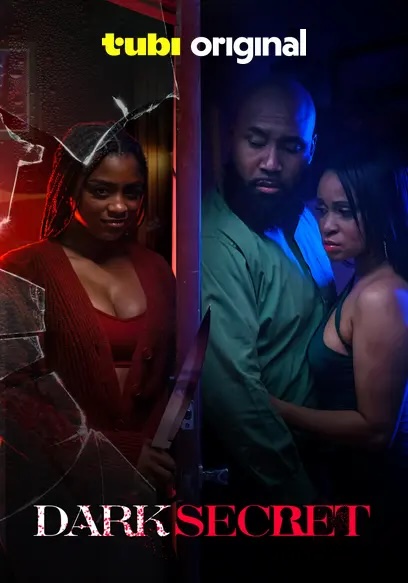
TUBI ORIGINAL: Dark Secret (2025)

Director and co-writer Johnnard Harper has made more than twenty movies in a short time. Working with writer Anthony Leone, he’s made a perfect Tubi Original: cheap, outrageous and quick. 

We meet April (Kennedy Williams) and Derek (Joseph Mason), a couple deep in the struggle. They’re trying to make it, but the rent is due, and the bank account is screaming. Their solution? Get a roommate.

What follows is a parade of human wreckage that feels like a fever dream. Every interviewee is either legally insane, looking for a three-way, or both. It’s a montage of desperation that captures the true horror of the modern gig economy. There’s one moment when they meet a potential roommate, Jason, who is a stripper and an OnlyFans creator named Donald Trunk. This scene is incredible because it’s a one-take wonder, as at least two of the actors are visible breaking throughout. No notes.

Eventually, they settle on Megan (Mikiya Scottia). She’s polite, she’s clean, she’s perfect. Of course, because we’ve seen the first five minutes of the movie, we know Megan has already stacked a few bodies. We’re in on the joke; the roommates are the punchline.

This being a Tubi Original, there’s a late-in-the-film twist you’d never see coming, and because I said that, you can see it coming. But you still won’t see it coming. I apologize if this makes no sense, unless you are a watcher of numerous Tubi Originals and then, well, you get it.

You can watch this on Tubi.

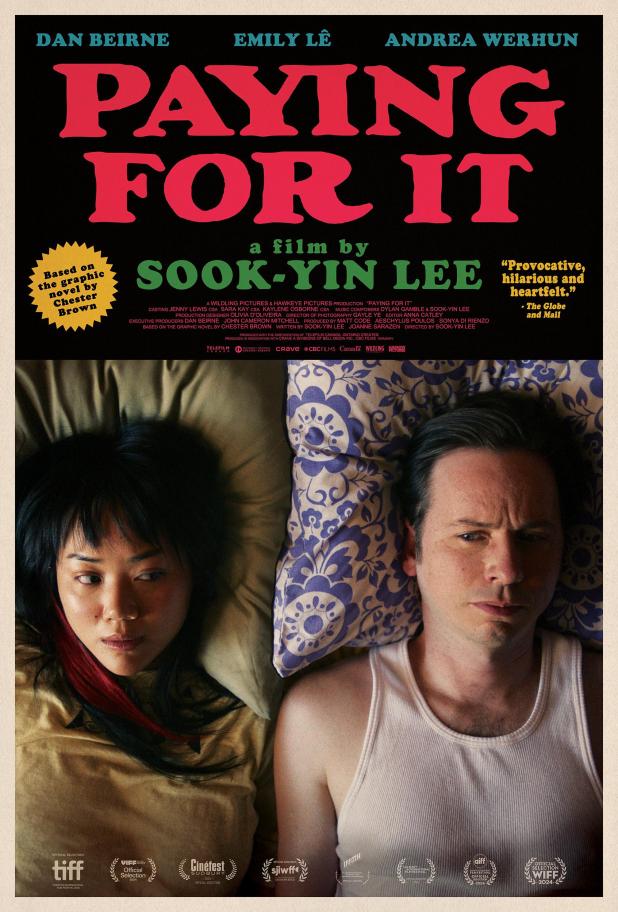
Paying for It (2024)

ABOUT THE AUTHOR: Joseph Perry writes for the film websites Gruesome Magazine, The Scariest Things, Horror FuelThe Good, the Bad and the Verdict and Diabolique Magazine; for the film magazines Phantom of the Movies’ VideoScope and Drive-In Asylum; and for the pop culture websites When It Was Cool and Uphill Both Ways. He is also one of the hosts of When It Was Cool’s exclusive Uphill Both Ways podcast and can occasionally be heard as a cohost on Gruesome Magazine’s Decades of Horror: The Classic Era podcast.

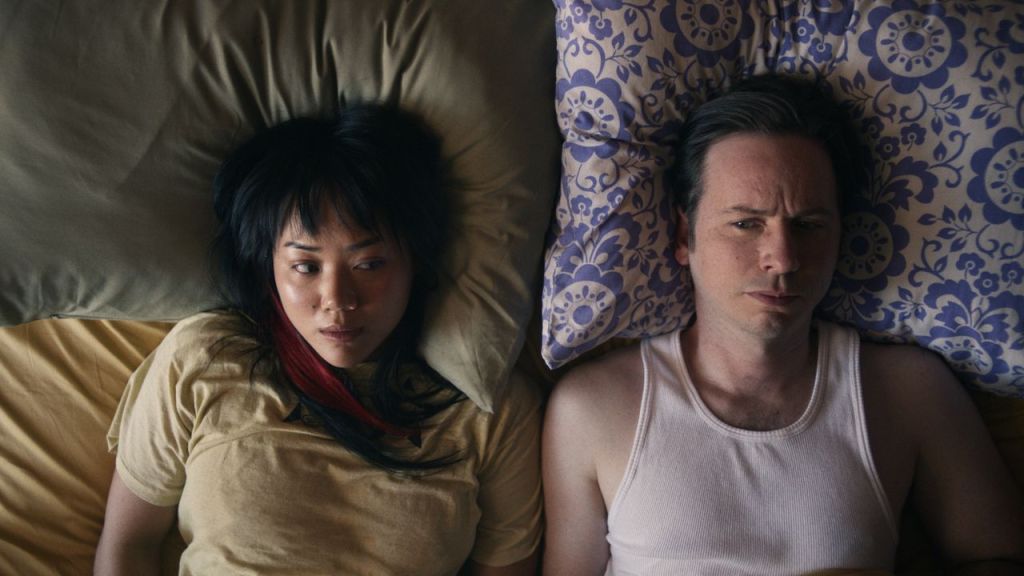
Official synopsis: Set in the late 90’s, Paying for It follows the trials and travails of Chester (Dan Beirne), a cartoonist and Sonny (Emily Lê), a TV host, who are in a long-term, committed, romantic relationship. When Sonny introduces the idea of opening up their relationship, Chester begins sleeping with sex workers, forcing him to face his issues with intimacy and romance in the process. Based on the best-selling graphic novel by acclaimed alternative-cartoonist Chester Brown.

Celebrating the vibrant underground comic and zine era through the experiences of cartoonist Brown, Paying for It connects the past with the present by bringing together emerging comic actors, performance artists, authors, activists, and multimedia creators in front of and behind the camera, and it has resonated for festival audiences and critics alike.

Canadian dramedy Paying for It may be one of the most honest narrative films released this year. Director Sook-Yin Lee brings to the screen a semiautobiographical account of her longtime relationship with alt-cartoonist Chester Brown, first as a couple and then as friends. The pair is portrayed here by Emily Lê as Lee’s cinematic counterpart Sonny and Dan Beirne as Brown.

Lee, who cowrote the screenplay with Brown and Joanne Sarazen, balances the characters wonderfully, making neither one more “right or wrong” than the other, and portraying them as real people making unusual decisions in their lives. Beirne and Lê are both fantastic in their roles, and they lead a sizable supporting cast that includes a wonderful performance by Andrea Werhun as Yulissa, who together with Brown strikes up a highly intriguing intimate relationship.

The tone of the film never falls into straight comedy, with the humor being more of the smile-inducing type rather than going for belly laughs. Nor does the drama become too heavy or didactic. Paying for It simply offers up two people’s unique views on nontraditional relationships and the ways that their behavior affects those around them, giving viewers plenty to chew on long after watching. 

Paying for It opens in theaters on January 30, 2026. 

Poolboy: Drowning Out the Fury (2011)

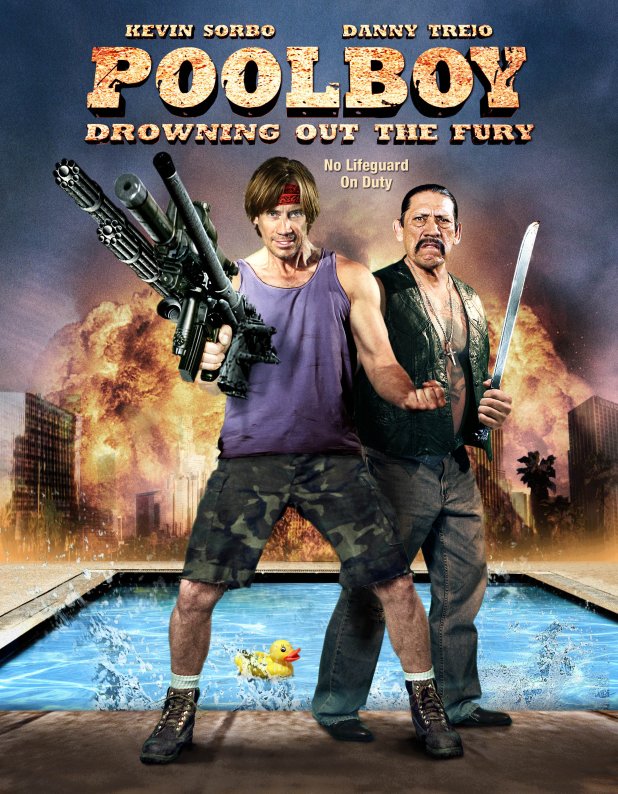
I don’t know how director Garrett Brawith (who also made FDR: American Badass!) and writer Ross Patterson (Helen Keller vs. Nightwolves) got Kevin Sorbo to say some of the dialogue in this, but this movie is less a film than an exercise in saying really off-color things and then claiming that it’s a joke.

Poolboy is supposedly — in the world of the film — the vanity project of Saint James St. James, who made this when he was ten. Well, this is the sequel. The first one was so racist that no one is allowed to see it.

Sorbo is Jan Van Hammer, who plays Sal Brando, the poolboy of the title. He was hoping to come home from Vietnam to start a pool cleaning business with Fontaine (Deon Richmond), but all he has left is that man’s arm. And he gets back to his house just in time to catch his wife in bed with Eduardo (Bryan Callen). He steals the man’s van and pool businesses, which gets his wife and kid killed by Caesar (Danny Trejo), who is part of a huge national Mexico vs. America conspiracy.

At some point, when Jan Van Hammer is nearly killed, his role is taken over by Jason Mewes.

This is a confusing film. It’s going to offend everyone because of what it says, and yet it wants you to love it by saying, “I’m just kidding!” As always, there’s the danger of laughing at rather than with the film’s themes. But it’s still kind of fascinating, even if it’s way too long and runs out of steam after thirty minutes, as it’s a sketch stretched thin.

You can watch this on Fawesome.

The Booth at the End (2010-2012)

ABOUT THE AUTHOR: Exploitation-film historian A.C. Nicholas, who has a sketchy background and hails from parts unknown in Western Pennsylvania, was once a drive-in theater projectionist and disk jockey. In addition to being a writer, editor, podcaster, voice-over artist, and sometime actor and stand-up comedian, he’s a regular guest co-host on the streaming Drive-In Asylum Double Feature and panelist on the Deep Images podcast and has made multiple appearances on Making Tarantino: The Podcast. He also contributes to the Drive-In Asylum fanzine, the B & S About Movies Podcast, and the Horror and Sons website. He currently programs a monthly film series, A.C. Nicholas’s Hidden Gems, at The Babylon Kino in Columbia, South Carolina.

“Show. Don’t tell.” This adage is as old as film itself. Looking at the first quarter of the twenty-first century, perhaps screenwriters have taken that statement too much to heart. Apart from the few films written by folks who can write memorable dialogue, like Quentin Tarantino and David Mamet, the typical film or TV show today is an empty spectacle, or as my father used to say, “parada,” Polish for “show” or “exhibition.” Fathers of my generation would tell kids, “You’d better stop your crying, or I’ll knock you into next Wednesday,” but my dad always used parada when sternly presaging an ass-whipping: “Don’t make a big parada out of it.” And that describes your typical $200 million Hollywood blockbuster—empty, soulless, and cynical, just a series of huge action set pieces strung together by the most perfunctory narrative, a big parada. (Quick, how many films in the past 25 years deal with a fight over “magic junk” or advanced technology, something that if it falls into the hands of the wrong people will cause mass destruction? There’s a Letterboxd list for you, Sam.) Let’s just say the era of dialogue-driven films–“all tell, no show”–such as My Dinner with Andre, Swimming to Cambodia, and Before Sunrise, is but a distant memory 

Which brings us to a weird little item called The Room at the End, which had its genesis as a web series of 62 two-minute episodes. They were later strung together and shown on Canadian and British television before floating around streaming services in this country. How I discovered it years ago, I cannot remember. But it’s something I’ll never forget. It’s one of the best things I’ve ever seen, from anywhere, from any era, in any medium. And, apart from a handful of reviews and posts online, it remains largely unknown. But not for long, I hope.

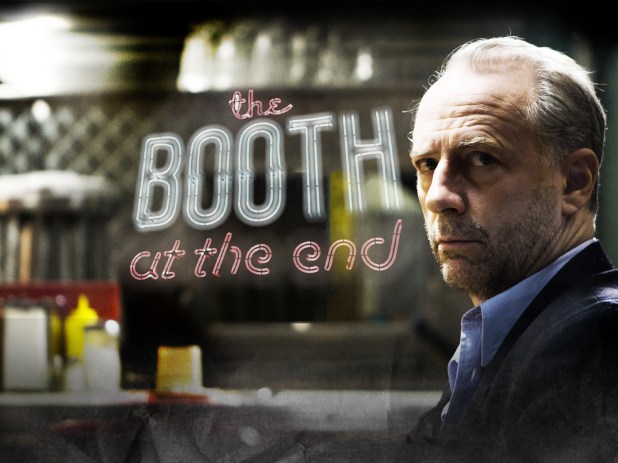
In the end booth of an old-school diner, sits a rumpled guy with a pen and a book. He’s never referred to by name. He’s just “The Man,” and he’s played by long-time character actor Xander Berkeley. As each vignette begins, he’s sitting there, perhaps reading the newspaper or having coffee, when he’s approached by someone who has heard that he can help them with a problem. A man has a terminally ill child. A young woman wants to be prettier. A nun has lost her faith. Each of them tells their story to The Man, who says that what they want can happen, but first, they must complete a task and return to report the details of carrying out that task. He then opens his book, jots a note or two, and tells them what they must do to receive their desire. For the man, his kid will get better if… he kills someone else’s child. For the young woman, she’ll be prettier if… she steals $101,043 from some banks. (The randomness of that number is like the randomness of the universe.) And the nun will hear God again if… she gets pregnant. The Man also tells each of them that they can walk away from his offer. In follow-up vignettes, we hear the decision each made and what happened.

The compiled vignettes form two seasons with a total of 10 approximately 23-minute episodes. (You can, as I did, binge the entire series in an afternoon. And once you get started, I’m betting you will.) Each episode follows the same format: Here is the diner, here is The Man in the booth at the end, and here are the clients entering one after another to either make a deal or give The Man updates. The only other character is a waitress named Doris, who takes on a greater significance in the second season when The Man sets up shop in the booth at the end of a different diner.

Who is The Man? Does he have supernatural powers? What is the significance of the book? How will the clients respond to their assigned tasks? Some of those tasks even intertwine. For example, the guy who must kill a child is unknowingly pitted against a guy whose task is to protect a child. In the end, how do these stories resolve? I think the true nature of the show is subtly found in its title: The Booth at the End. Yes, it’s the “end” booth in the diner, but “end” could also refer to the existential end of a person’s hope.

This is all the brainchild of writer/creator Christopher Kubasik, who got his start working on video games and writing tie-in novels. It’s easy to see that, in writing cut scenes for video games, he had the perfect training to write short-form internet content. Based on The Booth at the End, I wish he’d do more stuff. I was surprised to discover that there was a 2017 Italian movie adaptation of the show called The Place, which was nominated for a whole bunch of Donatello awards, the Italian Oscars. I must seek it out. 

Now before you cry “rip-off of Needful Things by Steve King from the University of Maine,” let me remind you that this plot about getting what you wished for–and then regretting it–has been around for ages and not just in the various adaptions of the short story The Monkey’s Paw. Folklore about wish fulfilment and its consequences goes back to the tales of the Arabian Nights. The Booth at the End is built upon a sturdy and reliable trope. And what makes it so special is how it subverts our expectations of that “genie and three wishes” plot. It does so entirely with dialogue. That’s right. Nothing is shown. Everything is discussed. In each vignette, a client sits in that booth and has a conversation with The Man. And these conversations are riveting, philosophical, and often horrifying. For, you see, life is like that, and Kubasik has stripped everything away, the action, the violence, the special effects, “the showing,” if you will, to concentrate on the thoughtful “telling”–and not a big parada.

On paper, this minimalistic approach would appear either boring or, at best, “twee,” as a cinephile friend likes to say. But watch a two-minute chunk, and you’ll see that it’s breathtakingly brilliant. The stories grab your attention with their complex dilemmas. Forgive me for using that overworked expression that you could do a semester college class in philosophy–or screenwriting–about the show, but it’s spot-on here. (The movie Groundhog Day similarly fits the description.) You, as the viewer, are drawn into this small, bell-jar universe of right and wrong, morality and immorality, and good and evil. It’s impossible not to ponder how you would react if faced with the same decisions The Man’s clients must make. The stories are like modern parables. 

And Kubasik tells these stories like the caveman who told his friends around the campfire how Ook fell into the pile of mammoth dung on their hunting trip, unadorned with CGI or VFX. It’s the oldest, yet most powerful, narrative device: simple storytelling. Too many filmmakers today forget the power of the spoken word. 

But an equally important reason this show succeeds, in addition to the weighty ideas and impressive writing, is the brilliant central performance by Xander Bekeley as The Man. All the actors here are good to great, but this is Berkeley’s day in the sun. While you might not recall his name, you’ll recognize him as a character actor who’s been kicking around for decades, quietly doing solid work in TV shows such as 24, Nikita, and The Walking Dead and the movies Candyman, Air Force One, and Heat, among many others. Lucy Mangan of The Guardian said Berkeley’s performance should be “used as an acting masterclass.” That’s 100% accurate. When the nun, played by Berkeley’s real-life wife, Sarah Clarke, asks him how she can be sure he’s not the devil, Berkeley’s delivery of “you can’t” is chilling. He’s so compelling that he could read a diner menu and be mesmerizing. But he’s equally compelling in his reactions to the details that his clients give him. He may be in a minimalistic show, but his acting is anything but minimal. He’s fantastic, demonstrating that sometimes the greatest acting is not always done by the big star in the big parada.

Over the years, I’ve recommended The Booth at the End to friends with discerning taste—this is not something you recommend to someone like that person who many years ago posted on a CompuServe board I moderated that Grease was the greatest movie ever made–yet no one has ever listened to me and watched it. I guess that description of “all tell, no show” was a buzzkill. Anyway, you’re an exceptional discerning person: Go watch The Booth at the End, which is streaming on Tubi. And then give me the details. I’ll be waiting for you at the booth at the end… of the drive-in snack bar.