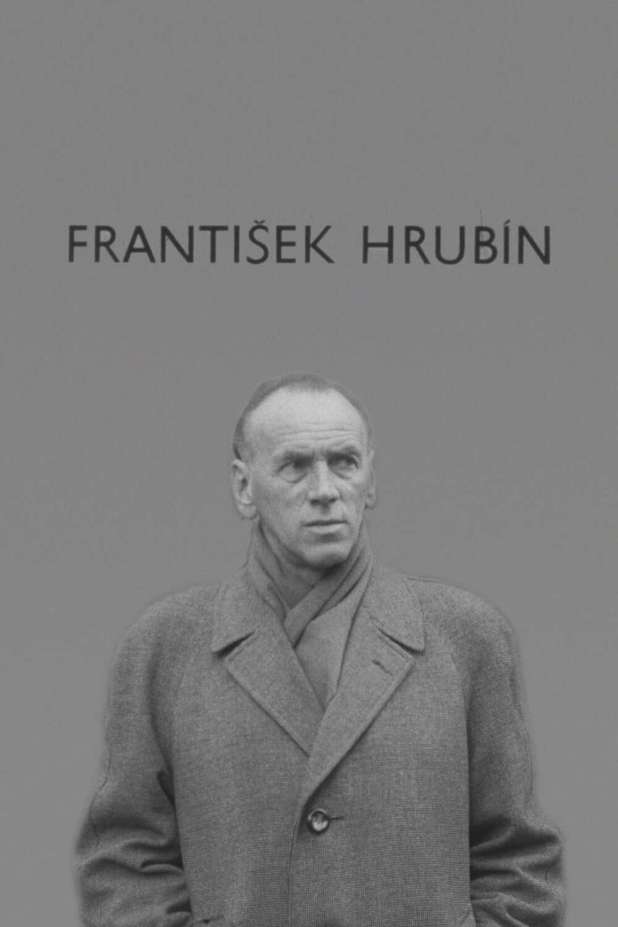
Directed by Tomás Skrdlant and written by its subject, Frantisek Hrubín, this is a remembrance of childhood from Hrubín, who started the Czech children’s magazine, Mateřídouška (The Thyme) and would go on to write 18 movies, including one of the films that this is in the same box set with, the 1978 Juraj Herz directed Beauty and the Beast.
I found it interesting that in the far off away from the world place that the writer grew up, he’d only seen a photo of a poodle in a book and it may as well have been a mythological creature unless he’d seen that evidence. It’s also interesting to watch a man who writes for children look back on the memories of his early years and think through all the places he has come through to end up where he is today.
Frantisek Hrubín is part of the new Severin box set, All the Haunts Be Ours Volume 2.
Directed and written by Katrina Irawati Graham, this uses the ghost known as the Kuntil Anak to tell the story of an artist named Raesita. This supernatural entity is often a pregnant long-haired woman dressed in white that gets her revenge from men by drinking their blood and eating their organs. You can tell that one is close when you hear a baby cry and smell either a corpse or a plumeria flower. She is the ghost of women who have died in childbirth.
After the death of her husband, Raesita meets and makes love to the Kuntil Anak, who wants to take her away from the pain of life. This is what Raesita wants as well, as her grief has become too much for her. However, her unborn baby wants to live and that’s something neither human woman or vampire-like creature dreamt of.
How often does one get to have a sapphic interlude with a demonic force, after all?
Man-Eater Mountain is part of the new Severin box set, All the Haunts Be Ours Volume 2.
These two short films appear with Edge of the Knife on Severin’s All the Haunts Be Ours Vol. 2 set.
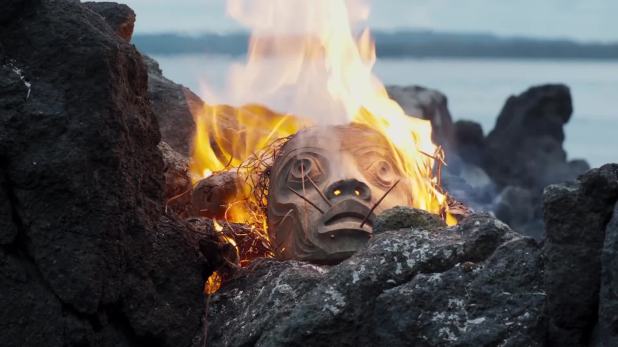
Haida Carver (1964): On Canada’s Pacific coast, director Richard Gilbert shot this short film about young Haida artist, Robert Davidson, and shows how he shapes miniature totems from argillite, a jet-like stone.
While many of the Haida people his age have given up carving for fishing, which isn’t as time consuming and pays better, very few artists were left when this was made. We get to see how Robert finds stones and how he learned from his grandfather how to do this traditional art.
Davidson’s Haida name is G̲uud San Glans, which means “Eagle of the Dawn,” and he remains a leading figure in the renaissance of Haida art and culture. He said, “If we look at the world in the form of a circle, let us look at what is on the inside of the circle as experience, culture and knowledge: Let us look at this as the past. What is outside of the circle is yet to be experienced. But in order to expand the circle we must know what is inside the circle.”
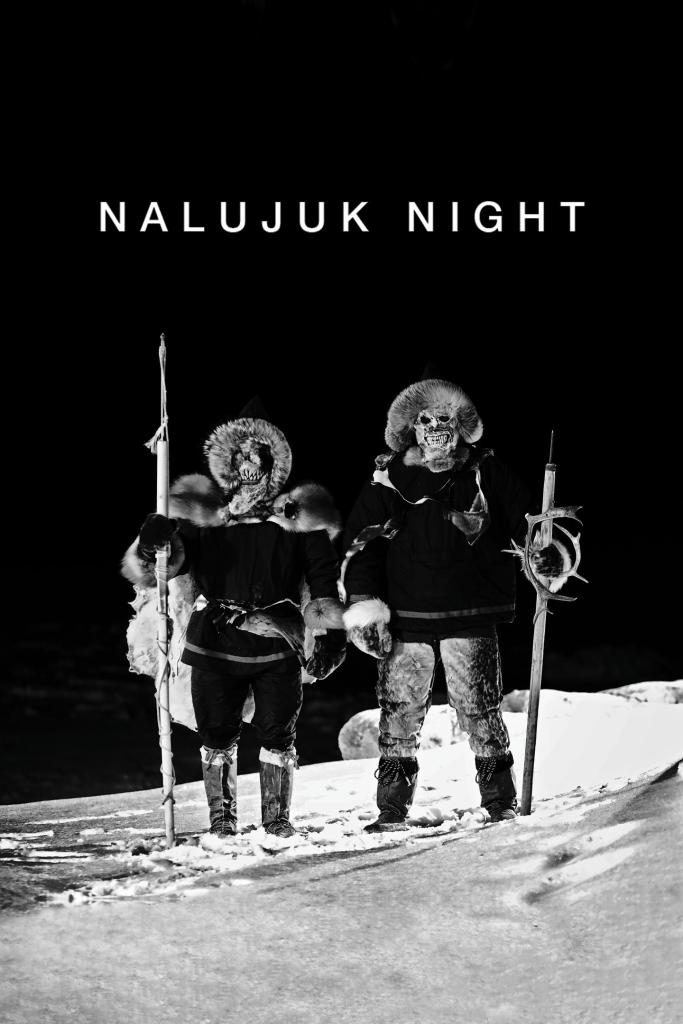
Nalujuk Night (2021): Nalujuk Night is a tradition among the Inuit of Nunatsiavut, an annual event in which “startling figures that come from the Eastern sea ice, dressed in torn and tattered clothing, animal skins and furs” walk through the town, where they reward good children and chase the bad.
Directed by Jennie Williams, this was part of the National Film Board of Canada’s Labrador Documentary Project, which seeks to foster the creation of documentary films about Inuit culture from an Inuit perspective.
Set on January 6, this holiday is celebrated by the young and old alike. In a university paper, Jannelle Barbour wrote: “Nalujuks are not real. They are like the boogey-men of other cultures. But, where this event takes place every year, everyone takes the Nalujuks to be a real thing. Most children and some adults are deathly afraid of them.”
She goes on to say, “Nalujuk’s night is truly a very exciting and scary time for all youth. The night starts off down to the community hall, where there are four or five people dressed as Nalujuks. These Nalujuks aren’t the ones that actually chase the children around town, trying to hit them. These Nalujuks are just there to show the younger children…what a Nalujuk is. After everyone leaves the hall, the real fun and games begin. Usually there are a lot of Nalajuks out running around, and there is always this one big and scary one, this one usually has the biggest weapon. It is really scary to get caught by this one. In Nain, there is always one spot where all the kids gather to stay safe. It’s usually on the steps of a person’s house. No one seems to mind though, seeing that this only happens once a year.”
I would never know of this event without Severin’s box set.
These short films are part of the new Severin box set, All the Haunts Be Ours Volume 2.
These three short films appear with The White Reindeer on Severin’s All the Haunts Be Ours Vol. 2 set.
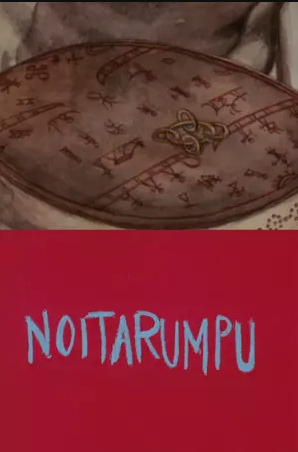
A Witch’s Drum (1982): In this animated film by Kari Kekkonen and writers Outi Nyytäjä and Samuli Paulaharju, a man in a reindeer sled is taking the corpse of a shaman to where it will be barried. This takes him through a barren, snowy world illuminated only by the moon.
Narrated by Matti Ruohola, we soon discover that something has woken the shaman, who is in the same sled as the man, all alone, terrified as he had just watched the man die that evening.
Noitarumpu is a simple yet scary movie, mainly colored pencil art and the steady beat of that drum, ever playing as it takes its listener across that ice adn snow filled tundra to an uncertain fate.
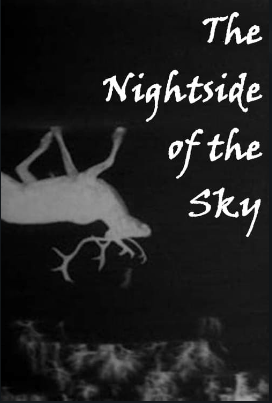
The Nightside of the Sky (2024): This experimental short film reanimates The White Reindeer through contact and optical printing. It was specially commissioned from celebrated Métis filmmaker Rhayne Vernette for Severin. As ominous music plays in the background, these grainy images are recontextualized in the film, creating what seems to be nearly fine art within a set that is meant to show different notions of folk horror.
If you’re creating your own film festival with this set, this would be the perfect movie to put on before it stars, as it will get you in the mood for what you are about to see in Erik Blomberg’s movie. I found it sparse yet dreamingly gorgeous.
With the Reindeer (1947): The first movie by director Erik Blomberg, working with Eino Mäkinen, this shows what reindeer herding was like in the mid 1940s in Lapland. Called Porojen parissa, filming these scenes had to give its creator some context into what the reindeer herders and their families endured before he made his landmark movie.
What a feast to have this as part of the set. I realize that it also appeared on the Eureka release, but it’s still a great part of the overall package. Even in his first work, Blomberg was able to capture some incredible visuals and give you the chill of being in those snowy fields through the lense of his camera.
Our Selves Unknown is part of the new Severin box set, All the Haunts Be Ours Volume 2.
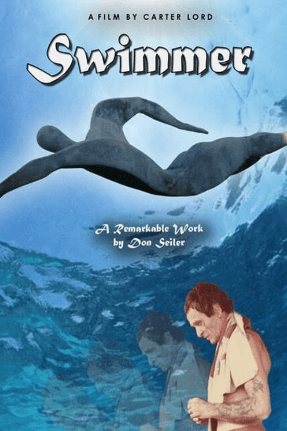
In this short, director Carter Lord sets his camera on artist Don Seiler, as he creates a 10-ton concrete sculptural commission in honor of Olympic swimmer Mark Spitz that would be placed outside the International Swimming Hall of Fame in Ft. Lauderdale, Florida. Lord would go on to direct The Enchanted, while Seiler would paint the animals that appear on the walls throughout that movie.
What’s incredible is that for all his work and the size of this sculpture, Seiler was only being paid $3,000. The most his art had sold for was $6,000 and he had given that away.
Some may find this somewhat slow, just watching a man sculpt, but to me, seeing this part of the creation process is amazing. Lord only made one other movie, other than this and The Enchanted, Lithium Springs.
You can learn more about Seiler’s life on his official web site, which even goes into the dates in which he was married, including one marriage to the heir of Molson beer.
The Swimmer is part of the new Severin box set, All the Haunts Be Ours Volume 2.
This three-minute, wordless black and white short by Edwin Rostron appears in the All the Haunts Be Ours Vol. 2 set from Severin. You can also watch it on Vimeo.
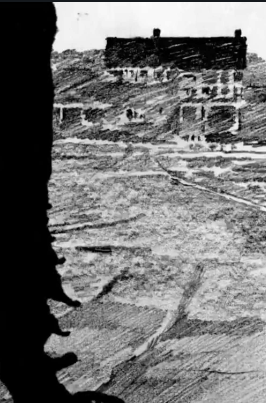
The director says of this, “Our Selves Unknown takes the book Landscape in Distress as its raw material, reconfiguring its photographic illustrations, text and cover design into pencil and ink drawings, using a working process of self-enforced rules and restrictions, obstacles and chance.
Published by the Architectural Press in 1965, Landscape in Distress was written by Lionel Brett, a British peer, architect and town-planner. The book examined 250 square miles of Oxfordshire, recording “in intimate detail the post-war changes and present state of the landscape of a typical section of…Britain.” It described the damage that had been done to the area and tried to alert the reader to “the inevitable damage that lies ahead”, drawing specific attention to the increasing homogenisation of areas on the edges of cities.”
I loved the look of this. Graphite drawings that are intersected with black splotches as bites of words from the story quickly appear. It seems as if the intrusions of man on nature are being called out, as the ruin of man rebuilding after the war leads to something even worse: the same, all over the same, the ancient and unique and mysterious now the expected.
Our Selves Unknown is part of the new Severin box set, All the Haunts Be Ours Volume 2.
Directed and written by Sean Hogan, this was made to accompany the book Yuletide Terror: Christmas Horror on Film and Television, which was edited by Kier-La Janisse.
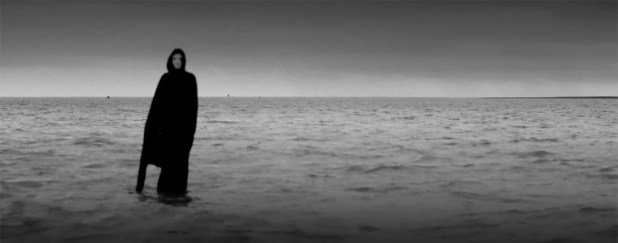
Patrick (Billy Clarke) is an older man lives in a seaside British town, a place that only sees life when the tourists are the in summer. Now it’s the bitterly cold holidays and it seems as if things will remain dreary until his long lost daughter Nina (Jamie Birkett) shows up. That seems to be better than the voices that Patrick hears from the sea (Belinda Kordic) until we start to realize that while he’s the protagonist of this story, Patrick may not be the hero.
Horror for the holidays was once a strictly British phenomena, but now that the world has become smaller through the web, we can all celebrate these dark films. Perhaps in the darkness that we find within them, we may avoid the mistakes of their characters.
We Always Find Ourselves In the Sea is part of the new Severin box set, All the Haunts Be Ours Volume 2. It has extras including commentary by director Sean Hogan and co-producers Paul Goodwin And Nicholas Harwood and a press kit.
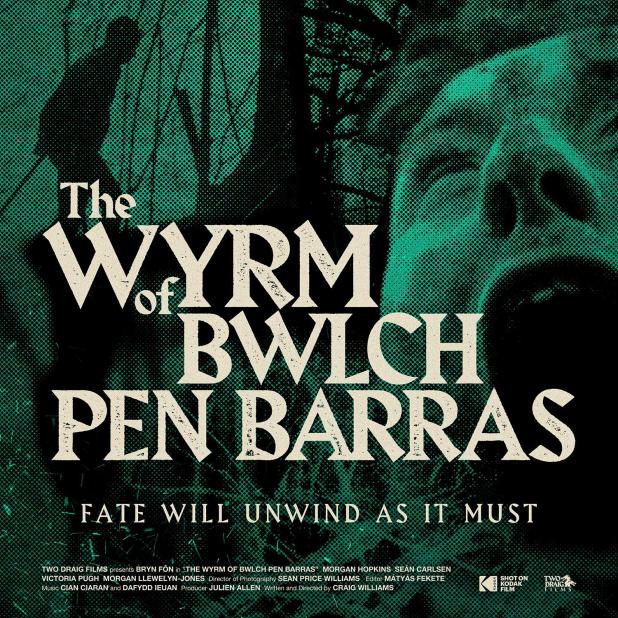
In this folk horror film shot in Rhuthun by debut director, writer and Rhuthun native Craig Williams, three men are called upon once again to carry out a terrible assignment in the quiet town of Rhuthun, North Wales.
Gwyn (Bryn Fôn), Emlyn (Morgan Hopkins) and Dai (Sean Carlsen) meet up and drive to the farm of Dafydd (Morgan Llewelyn-Jones), who they abduct against his will and throw in the trunk for the drive and hike up the hills of Bwlch Pen Barras. This has the feel of 70s British horror and while short, it delivers plenty of promise for what Williams and his crew, which includes cinematographer Sean Price Williams, have to offer in the future. There are some small moments in this that make it so deep and rich. And I loved the title card at the end, which places this even more in the look and feel of another decade.
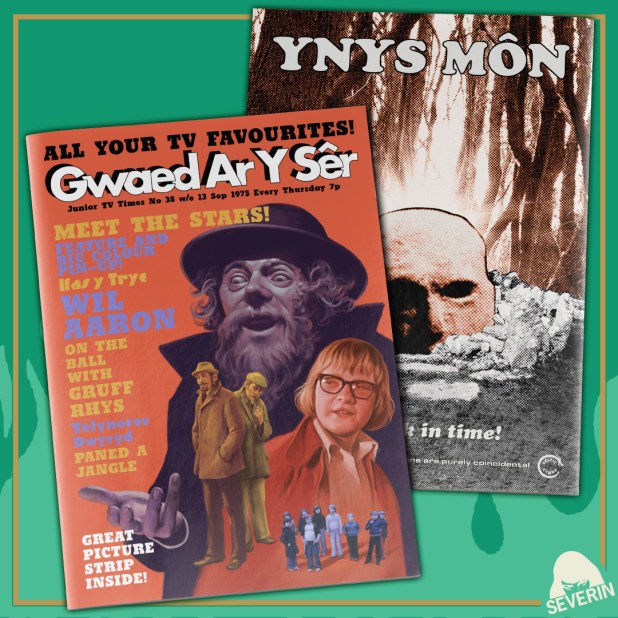
Much like From the Old Earth, which is also on the All the Haunts Be Ours Volume 2 box set from Severin, Gwaed Ar Y Sêr (Blood on the Stars) was produced by Bwrdd Ffilmiau Cymraeg, the Welsh Film Board. One of the first horror films in Welsh, this was another movie that was presented to children under ten years old in grade school.
Director Wil Aaron said of this effort, “The problem with Welsh films at that time was that everyone assumed they were the kind of thing that was shown in Sunday School. Did anyone consider that there might not be a little bit of sex and a little bit of fear in them?”
In a small village of Gruglon, there’s an annual concert that is always the talk of the town. This year, its been decided that celebrities like folk singer Dafydd Iwan, radio DJ Hywel Gwynfryn and rugby kicker Barry John are all set to appear. Or, well, they were until choirmaster Shadrach (Grey Evans) and his small child choir start to kill them all, one by one, their names crossed off a handwritten poster as each dies.
These kids just want to sing their holiday songs that they’ve worked on for so long and if they have to mine a football field and blow someone up real good, they’re going to do it. Look at these little angels! Listen to how they play and sing!
Without this set, I have no idea how I would have seen this. Also there’s one scene where someone is frying sausage and I am beyond hungry now.
Blood On the Stars is part of the new Severin box set, All the Haunts Be Ours Volume 2. It has extras including an introduction by musician Gruff Rhys and a cast reunion.
Known in its native Philippines as Itim (Black), The Rites of May is the first movie by director Mike de Leon. It begins during a seance, as the medium tells Teresa (Charo Santos) that her sister Rosa (Susan Valdez), a Catholic nun, is dead. Teresa asks if she may speak to the dead, but the medium says that she must wait until Good Friday.
Meanwhile, Jun (Tommy Abuel) has come back home to visit his infirm and mute father Dr. Torres (Mario Montenegro). While there, he is doing photography work for a magazine, shooting the celebrations of Lent in Manila, an extremely religious city. As he takes photos, he meets Teresa, which is supernaturally predestined to happen. She keeps going in and out of fugue states. As Jun takes photos of her, he will see her sister Rosa as well as her connection to his father.
The director told the Cannes Film Festival, “I got interested in doing a film that used a camera to tell a story with one character, no dialogue and just sound effects. One thing I liked about Blow-up was the idea of existential alienation. Monologo was a ghost story. The character takes photos and he does not realize that he has photographed a ghost or a presence in his own house. I mean, his camera saw it but he did not. That kinda blew my mind.”
Despite failing in cinemas, this movie won Best Picture, and Charo Santos was recognized as Best Actress, at the 1978 Asian Film Festival. Since then, it’s been recognized as a classic. It’s heart in the unknown feels authentic, as spiritist Becky Gutierrez wrote the seance scenes, which she based on actual ritual. It also uses the ghost in its story to symbolize the past of the Philippines, a country that seems as if it can move past a history filled with violence yet will forever remain haunted by it. de Leon started this as a simple ghost story but it grew into this epic with deep themes.
This was shot in shot in de Leon’s grandparents’ house in San Vicente, San Miguel, Bulacan. I have an affinity for films that get into the supernatural and the religious filmed in family homes, like Martin. Can you think of any others?
The Rites of May is part of the new Severin box set, All the Haunts Be Ours Volume 2. It has extras including audio commentary by Filipino film historian Andrew Leavold, the documentary Itim: An Exploration In Cinema and Filipino film scholar Anne Frances N. Sangil discussing this film.




 B&S About Movies
You must be logged in to post a comment.