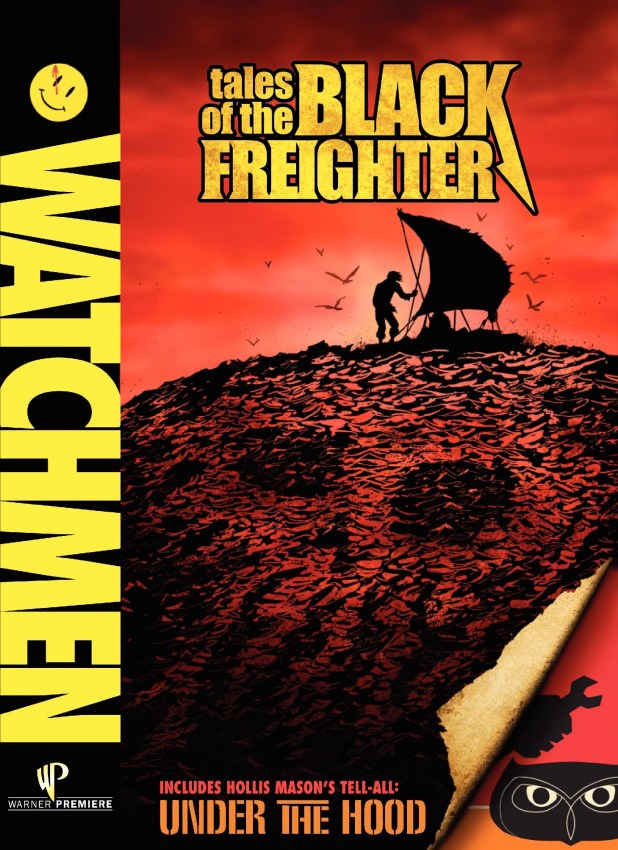
Tales of the Black Freighter (2009)

One of my favorite things about Watchmen is that in the universe of that story, superheroes are real, so comic books never needed to write about them. Instead, pirate comics became the best sellers. Published by National Comics (the original name for DC Comics in our universe) and written by Max Shea and artists Joe Orlando and Walt Feinberg (Alan Moore and Dave Gibbons in our world), Tales of the Black Freighter tells the stories of sailors who are damned by their encounters with the phantom pirate ship.

Named from a lyric from the song “Pirate Jenny” in The Threepenny Opera, the Black Freighter collects souls of men who become the crew of its blood stained decks, call at the command of a mysterious and demonic captain. At the time of its publishing in this universe, it was never seen as commercially successful as the EC Comics Piracy and Buccaneers, but as Shea developed in his writing style, his stories soon became dark and moralistic.

This cartoon adapts the story “Marooned,” in which a castaway’s increasingly desperate attempts to return home in time to warn them of the Black Freighter only lead to him being taken by it. As he rides a raft made of his dead crewmates, he fights sharks and kills numerous people, only to realize that he has murdered the very people he wanted to save.

Gerald Butler, the star of Snyder’s 300, is the voice of the man in this. Directed by Daniel DelPurgatorio and Mike Smith and written by Alex Tse and Snyder, it was intended to be part of the Watchmen movie. It’s added in the longer cuts.

Why is this story so important? Because it’s the real story of Adrian Veidt, the villain behind everything. He is using the bodies of his former associates to get closer to the end of his world and fix things, even if he must go insane and compromise his morals.

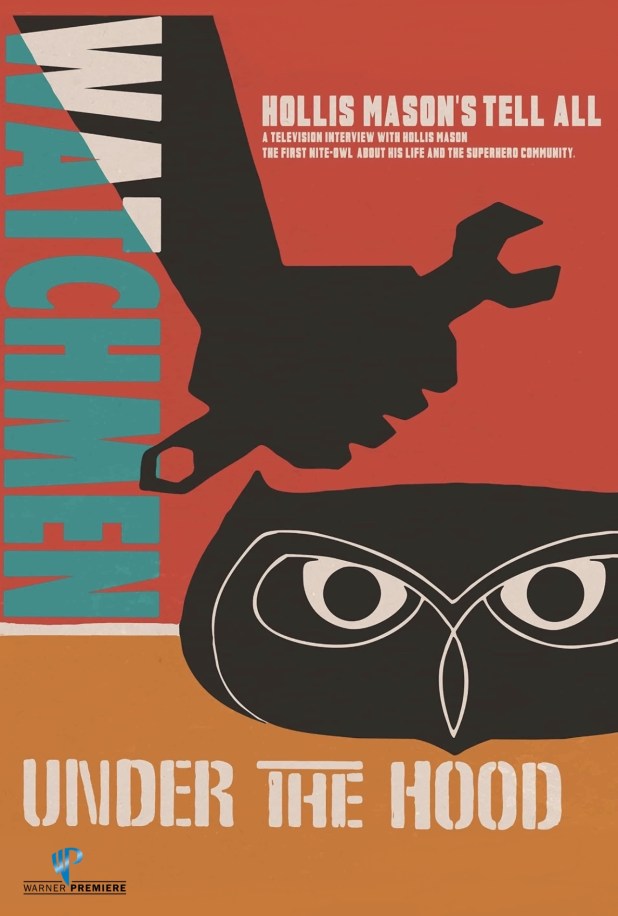
Under the Hood (2009)

Directed by Eric Matthies and written by Hans Rodionoff, who was also the writer of the two Lost Boys sequels, this was included on the Tales of the Black Freighter DVD. It’s an in-universe documentary featuring a television interview with Hollis Mason (Stephen McHattie, The People Next Door) the first Nite Owl, about his life.

Despite Ted Friend overacting as Larry Culpepper, this does an amazing job of bring an 80s TV show — complete with commercials — and telling more of the universe of Watchmen. Sure, I still have issues with the casting of the movie — Carla Gugino is way too young for Sally Jupiter — but McHattie is incredible and I enjoyed how William Long (William S. Taylor), the soon-to-be therapist for Rorschach, gets to share his thoughts on superheroes.

I wish that there was a Watchmen supplemental DVD that had more than this and the pirate comics, that gave even more background into the world of the story. But when you look at this part, it seems pretty worthwhile.

You can watch this on YouTube.

Watchmen Chapter One (2024)

Directed by Brandon Vietti and written by J. Michael Straczynski, the Watchmen animated movie gets a longer running time than the 2009 movie, which is the first good thing about it. Artist Dave Gibbons served as a consulting producer on the film, while Alan Moore, the writer, goes uncredited due to his displeasure with anyone adapting his work.

Following the script of the comic closely — almost word for word in some moments and as I’ve read the graphic novel so many times, I was definitely saying the lines as the characters did — this has Matthew Rhys as Nite Owl II, Katee Sackhoff as the second Silk Spectre (Adrienne Barbeau is her mother!), Titus Welliver as Rorschach, Troy Baker as Ozymandias, Rick D. Wasserman as The Comedian, Michael Cerveris as Dr. Manhattan and Geoff Pierson as the first Nite Owl.

The first chapter extends the entire way from the murder of The Comedian to Rorschach bring caught by the police inside Jacobi’s (Jeffrey Combs) apartment. It really feels like the original artwork coming to life, even more than the digital comic that was released in 2008. And it doesn’t shy away from the violence or anatomy of the comic; in fact it goes further, as the scene where Dr. Manhattan fights organized crime isn’t just a still image of him exploding a man’s head. We see it vividly explode and people scream when confronted by him.

This does a really great job of conveying the multiple timelines that Dr. Manhattan can see all at once, which would be hard to do in a motion picture, as it would feel as if it would grind the narrative to a halt. Instead here, I feel as if it works just as well as it did the original comic book.

Watchmen is a near-unadaptable story, although there have been three attempts now. This feels the closest, even if it’s basically like having someone read it to you. I’m looking forward to watching the second part to see how they wrap things up.

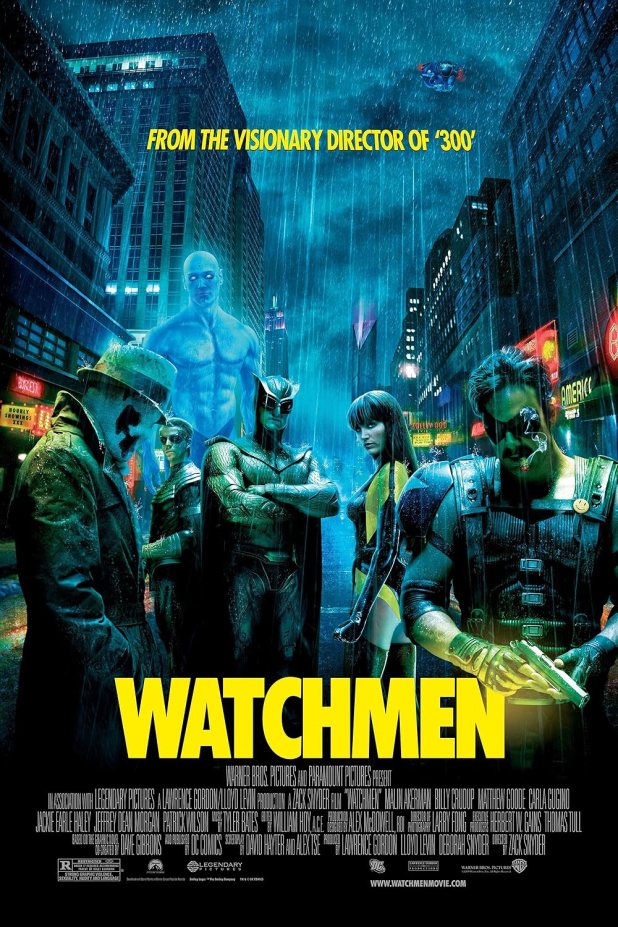
Watchmen (2009)

I saw Watchmen in the first row of a packed theater, my face feeling like it was shoved against the screen, as the sound was so loud that it felt like it had crawled inside my brain and was screaming inside my skull.

Watchmen probably should have never been made. The graphic novel by writer Alan Moore and artist Dave Gibbons is so far-reaching, filled with so many nuances and a necessary understanding of the history of American comic books that at times, it can feel obtuse. How do you make it into a two-hour blockbuster? Directors Terry Gilliam, David Hayter, Darren Aronofsky and Paul Greengrass all were going to make the movie but no one could agree on a budget.

Enter Zack Snyder, who had made another comic book movie, 300, and was able to get this made. Yet even when you watch the ultimate cut, which adds the Tales of the Black Freighter into the narrative as it was in the original graphic novel, making this 3 hours and 35 minutes long, it still feels like it’s missing something. That it’s all rather loud sound and fury and you wonder not “Who watches the Watchmen?” but “Why am I watching the Watchmen?”

Snyder misses a lot of the small moments of the comic. One of them is a drunken Comedian telling members of President for Life Richard Nixon’s staff that he had killed Bob Woodward and Carl Bernstein before they could write about Watergate and been the gunman who committed the assassination of John F. Kennedy on Nixon’s orders. That said, in that scene, it’s left up to the reader to determine if the Comedian is either wasted, literally being a comedian and telling a dark joke that only he finds humorous or trying to look like he means something when confronted by the god that is Dr. Manhattan and his possible daughter, Silk Spectre II. In Snyder’s film, during the credits, we see the Comedian (Jeffrey Dean Morgan) with a smoking gun standing on the grassy knoll as Dylan’s “The Time’s They Are A-Changin'” blares on the soundtrack, less needledrop than sledgehammer.

The film starts, like the comic, with the Comedian being attacked in his apartment and thrown to the street below. Again, as in the inspiration, the hero Rorschach (Jackie Earle Haley, one of the bright spots in this movie) begins to investigate the murder, which leads him to other heroes, such as the omnipotent Dr. Manhattan (Billy Crudup), Silk Spectre II (Malin Åkerman), Ozymandias (Matthew Goode) and Nit  Owl II (Patrick Wilson). Seeing as how this was 12 issues of a graphic novel as well as back-up features that expanded the universe — and revealed key secrets when explored — those are enough characters to get into without also going into the past, The Minutemen, who are Silk Spectre (Carla Gugino), the aforementioned Comedian, Nite Owl (Stephen McHattie), Dollar Bill (Dan Payne), Mothman (Niall Matter), The Silhouette (Apollonia Vanova), Hooded Justice (Glenn Ennis) and Captain Metropolis (Darryl Scheelar).

Meanwhile, at the funeral for the Comedian, Edgar Jacobi (Matt Frewer, also great) is there. A former villain, he’s interrogated by Rorschach and reveals that The Comedian came to him one night, obsessed with an island he’d found and a list of people connected to Dr. Manhattan with Jacobi’s name on it. At the same time, that list is revealed on a talk show with the god that is Dr. Manhattan, who escapes Earth and reflects on his origin on Mars.

This allows Silk Spectre II — aka Laurie Jupiter — and Nite Owl II — Daniel Dreiberg — to connect. Laurie has been the government-kept lover of Manhattan but now with him gone, she’s expendable. They start to wear their masks again, ending up as lovers and breaking Nite Owl II’s former partner Rorschach from prison with a mission: to investigate Ozymandias. At the same time, Manhattan teleports Laurie to Mars, where she argues for mankind being worth saving. He’s swayed when he learns that the Comedian is her father, despite the fact that he sexually assaulted her mother, the original Silk Spectre, who remains in love with him all these years later.

When they confront the former superhero turned CEO Adrian Veidt, he reveals his plan: to stop war by making Dr. Manhattan the enemy of humanity, killing 15 million people by setting off the nuclear reactors that he and Manhattan have built together. This ruse will stop nuclear war, so everyone agrees, other than Rorschach, who says “Never compromise. Not even in the face of Armageddon.” He’s blasted to atoms by Dr. Manhattan, who leaves for another galaxy, the heroes all complicit in a lie that will do more to save the world than wearing a mask and punching a bad guy.

Dave Gibbons became an adviser but cranky Alan Moore has refused to have his name attached to any film adaptations of his work, saying “There are things that we did with Watchmen that could only work in a comic, and were indeed designed to show off things that other media can’t.”

I’ll say something nice for this movie. Writer David Hayter came up with a cleaner ending that doesn’t rip off “The Architects of Fear” from The Outer Limits. That said, there’s no reason now for the Black Freighter or the pirate comics to be important, or the island, as everyone sent there was creating the squid monster that Veidt teleported to New York City in the comic and…see, this is too big to fit into a movie. The fact that Moore took this ending caused editor Len Wein to quit the comic, saying “I kept telling him, “Be more original, Alan, you’ve got the capability, do something different, not something that’s already been done!” And he didn’t seem to care enough to do that.”

So is the fact that this is commenting on the changes within the American comic book industry. DC had purchased the 1960s Charlton Comics characters. At the same time, Moore wanted to reimagine another older comic, as he had done with Miracleman. MLJ Comics’ — the publisher of ArchieMighty Crusaders seemed like a good fit, so he wrote a murder mystery that started with the dead body of The Shield. He wanted to play with the concept of four color heroes, so it would have the shock and surprise value when you saw what the reality of these characters was.”

Moore learned of the Charlton purchase and sent a pitch, Who Killed the Peacemaker? to DC managing editor Dick Giordano. After the acquisition of Charlton’s Action Hero line, DC intended to use their upcoming Crisis on Infinite Earths series to introduce the Charlton heroes to their mainline universe. As Moore would say, “DC realized their expensive characters would end up either dead or dysfunctional.”

Giordano convinced him to make his own versions, so Nightshade became Silk Spectre, The Question would be Rorschach, Peacemaker now The Comedian, Blue Beetle became Nite Owl, Captain Atom transformed into Dr. Manhattan and Peter Cannon Thunderbolt was now Ozymandias. They have gone from the happy adventuring days of comics to the grim and gritty graphic novels and been changed by the experience, something that never comes through in Snyder’s film. Sure, it look cool, but a lot of it is slow motion masturbatory super hero music video, exactly the opposite of the work that it is based on.
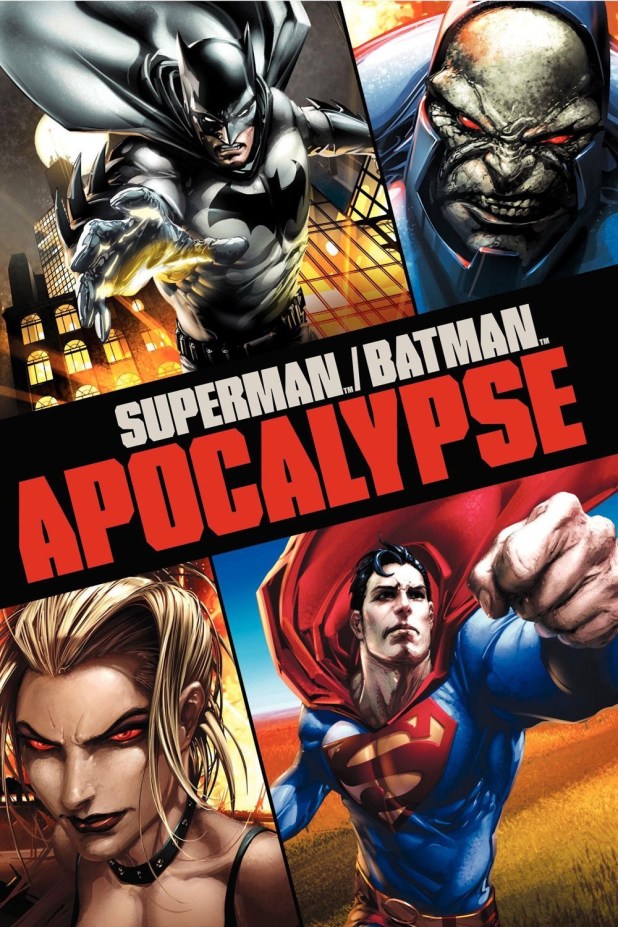
Superman/Batman: Apocalypse (2010)

Based on the “The Supergirl from Krypton” issues of Superman/Batman, this is the sequel to Superman/Batman: Public Enemies and has an art style based on the late Michael Turner. Directed by Lauren Montgomery and written by Tab Murphy, this is the story of Kara Zoe-El (Summer Glau), the heroine who will become Supergirl and how Superman (Tim Daly), Batman (Kevin Conroy), Wonder Woman (Susan Eisenberg) and other heroes like Habringer (Rachel Quaintance) and Artemis (also Rachel Quaintance) help to train her.

Soon, she’s attacked by Granny Goodness’ (Ed Asner) Female Furies — Gilotina (Salli Saffioti), Mad Harriet (also Salli Saffioti), Stompa (Andrea Romano) and Lashina (Tara Strong) — who Darkseid (Andre Braugher) wants to lead them. Superman and Batman turn to the last person who had this title, Big Barda (Julianne Grossman), to go to Apokolips and save the Kryptonian youngster.

This is a fast moving film unafraid to have death and violence in it, so if you have a child who loves superheroes, you should watch it with them and discuss it afterward. It’s very close to the comic, where writer Jeph Loeb has no issues killing off characters, which always surprises me, like Lyla, who was the Harbinger of original Crisis On Infinite Earths.

You can watch this on Tubi.

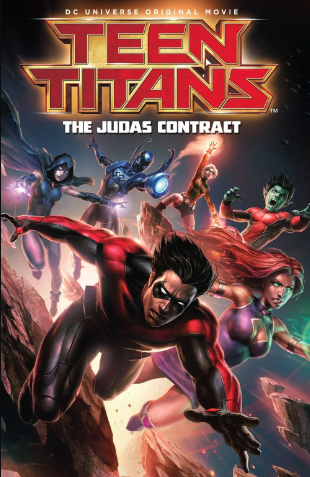
Teen Titans: The Judas Contract (2017)

Directed by Sam Liu and written by Ernie Altbacker, this is based on The Judas Contract, a long-running storyline — Tales of the Teen Titans #42-44, and Teen Titans Annual #3  — by writer Marv Wolfman and artist George Pérez. It somehow tries to combine Young Justice with Teen Titans and hopefully the original comics as well.

Robin (Sean Maher), Speedy (Crispin Freeman), Kid Flash (Jason Spisak), Beast Boy (Brandon Soo Hoo) and Bumblebee (Masasa Moyo) were once youngsters, saving Starfire (Kari Wahlgren) from Tamaran soldiers as she escaped to Earth. This is the opening from Teen Titans #1 and soon, we move into the story of Brother Blood (Gregg Henry) and Mother Mayhem (Meg Foster), who have started a cult that takes the powers of heroes, using Deathstroke (Miguel Ferrer) to fight the Titans, who has a double agent named Terra (Christina Ricci) who becomes a member of the team and Beast Boy’s girlfriend, only to betray them.

This also has the newest Blue Beetle (Jake T. Austin), Raven (Taissa Farmiga) and the new Robin, Damian Wayne (Stuart Allea), as well as Kevin Smith showing up to interview Beast Boy. It’s one of the darkest stories of the Titans, one with love and loss, but it seems strange to get through it so quickly, as this story felt like years of my life in my teens.

You can watch this on Tubi.

The Wizard of Space and Time (1979, 1987)

Mike Jittlov was a math major at UCLA, but taking an animation course to satisfy his art requirement led to two movies, The Leap and Good Grief, which made it into the professional finals for Academy Award nomination.  With a 16mm camera and a multiplane animation system he built for $200, he became an animator.

By 1978, Jittlov was part of Disney’s Mickey’s 50, with his short film Mouse Mania. It was the first stop-motion Mickey Mouse cartoon, as Jittlov created more than a thousand Disney toys marching around a psychiatrist’s office. His short The Wizard of Speed and Time was shown on another Disney special, Major Effects.

When I was a kid in the early 80s, Jittlov’s ads in Starlog for The Wizard of Speed and Time were in every issue. This was before the internet, in a time and place where I wouldn’t be able to see them. Today, years later, I’m old and I can see them at any time.

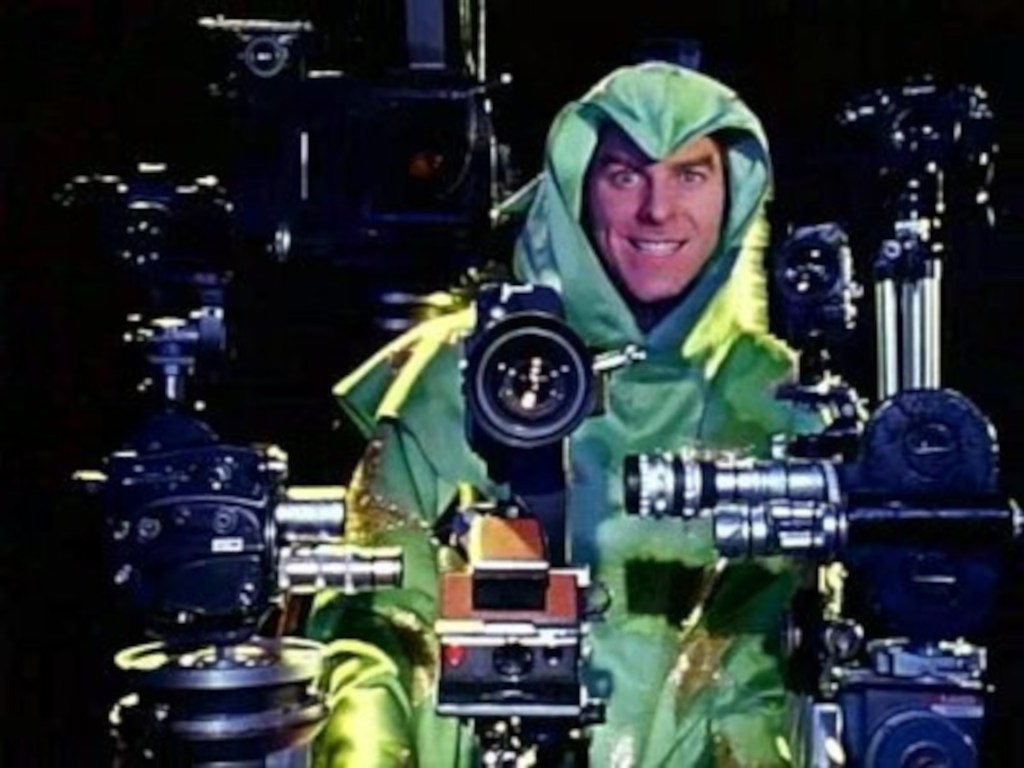
The Wizard of Speed and Time (1979): In just over two minutes, The Wizard of Speed and Time (Mike Jittlov) runs through Hollywood — running at high speed, The Wizard gives a hitchhiking woman (Toni Handcock) a ride, then gives golden stars to others — before crash landing into a studio that comes to life with walking cameras and dancing clapboards. This is pretty amazing because so much of it is stop motion and other sections use zooms and simple camera tricks to give the illusion of movement. Even though this is a short, just watching this you can tell that it took forever to make. This is pre-CGI, all magic and something that I have waited to see for decades.

This was $110 when I was a kid if I wanted to buy it. I kept trying to save up and never made it. Now I wish that I had.

The Wizard of Speed and Time (1988): Combining the original short, along with Time Tripper and Animato, two other early movies he made, Mike Jittlov took the story of The Wizard to new heights with this, a movie he spent fourteen years trying to make and three years filming.

Director Lucky Straeker (Steve Brodie) and  producer Harvey Bookman (Richard Kaye) make a bet if special effects artist Jittlov can actually complete his first effects assignment. Bookman does everything in his power to thwart Jittlov, even firing his friends. The script by Jittlov, Kaye and Deven Chierighino is filled with so many jokes, even including thousands of subliminal messages in the effects and poster.

It’s also overstuffed with cameos from Forrest J. Ackerman, Angelique Pettyjohn, Ward Kimball and Will Ryan, plus cops named Mickey (Philip Michael Thomas) and Minnie (Lynda Aldon), as well as their dog Pluto, who in some shops is just Jittlov covered by a brown jacket and using puppeting himself.

Why doesn’t Jittlov shake hands? He’s telepathic.

I waited too long to see this. Don’t make the same mistake that I did.

You can watch this on YouTube.

ARROW VIDEO 4K UHD AND BLU RAY RELEASE: Incubus (1966)

Created by ophthalmologist L. L. Zamenhof in 1887, Esperanto is supposed to be a universal second language for international communication. In English, the name means one who hopes and it’s the largest constructed international auxiliary language with a few thousand speakers.

Zamenhof had some big dreams that go past making an easy and flexible language. He thought that this new way of speaking would lead to world peace.

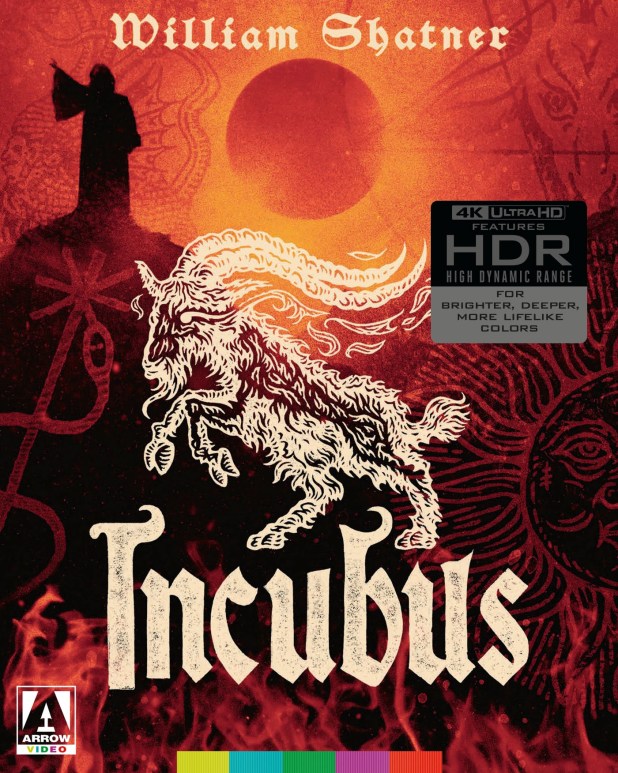
Incubus is the second film to be made in the language, following Angoroj. This was directed and written by The Outer Limits creator Leslie Stevens, who used the cancellation of that show to make an art house movie with that show’s cinematographer Conrad L. Hall and composer Dominic Frontiere.

This is the story of a spring in Nomen Tuum that heals the sick and makes ugly people ravishing and oh yes, there are many succubus and incubus there to lure humans to Hell.

Kia (Allyson Ames) wants a pure man to be her perfect target, but her sister Amael (Eloise Hardt) tries to tell her that if she falls in love, she will lose so much. Then she goes after Marc (Shatner), a soldier here to heal his wounds of battle. He’s with his sister Arndis (Ann Atmar) who is so dumb that she loses her sight by staring at the sun.

This gets wild, as Marc’s purity defiles the demons, who call upon an incubus (Milos Milos, whose life is insane; he was the bodyguard for Alain Delon and a friend of Stevan Marković, who died owning sexually explicit photos of Claude Pompidou, wife of French President Georges Pompidou, causing a big scandal and an unsolved crime; Milos went to America where he married Cynthia Bouron, who had a paternity case against Cary Grant, and was beaten to death and found in the trunk of her car outside a grocery store. As for Milos Milos, he was dating Barbara Ann Thomason, the wife of Mickey Rooney, at the same time he was married to Cynthia Bouron, and they died in a murder suicide that many believed that Rooney engineered) to kill Marc and defile and murder his sister.

This was thought to be a lost film, shown only at the San Francisco Film Festival — where Esperanto speakers laughed at how bad the actors spoke — and in France. Between the language and the scandal over Milo killing his girlfriend and himself, the movie was kind of dead. It was found in 2001 when it was reassembled from existing materials.

The Arrow Video release of this movie has it restored in 4K from the last known surviving 35mm print. Extras include commentary by writer and genre historian David J. Schow, author of The Outer Limits: The Official Companion, a second commentary by William Shatner and a third by producer Anthony Taylor, cinematographer Conrad L. Hall and camera operator William Fraker; an alternate 1.37:1 presentation of the film; Words and Worlds: Incubus and Esperanto in Cinema, a newly filmed interview with genre historian Stephen Bissette; Internacia Lingvo: A History of Esperanto, a newly filmed interview with Esther Schor, author of Bridge of Words: Esperanto and the Dream of a Universal Language; An Interview with the Makers of Incubus, an archive interview by Schow with Taylor, Hall and Fraker; a trailer; a reversible sleeve featuring newly commissioned artwork by Richard Wells and an illustrated collector’s booklet featuring new writing on the film by Frank Collins and Jason Kruppa.

You can get the 4K UHD and blu ray from MVD.

Deathstroke: Knights & Dragons (2020)

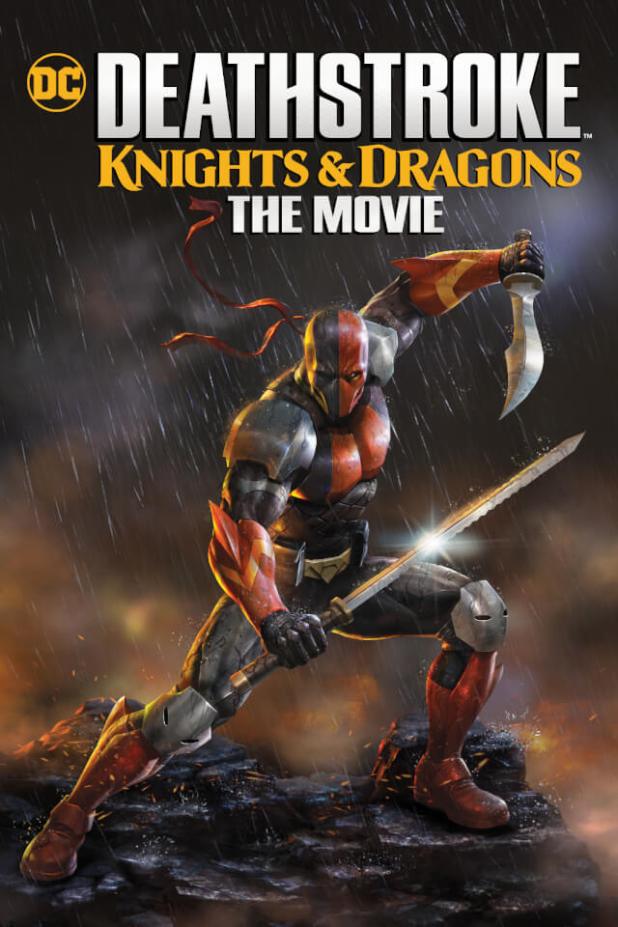
Deathstroke: Knights & Dragons started as an animated web series on CW Seed. Once the first episode aired, the series was repurposed into a direct-to-video animated film. Written by J.M. DeMatteis and directed by Sung Jin Ahn, it attempts to make a hero out of Slade Wilson, the villain known as Deathstroke.

Michael Chiklis is the voice of Wilson, a soldier who volunteers for an experimental drug that gives him super strength, enhanced agility and regeneration. He doesn’t tell his lover Adeline “Addie” Kane (Sasha Alexander) that he has become a costumed killer with the help of William Wintergreen (Colin Salmon). When one of his missions takes him to Cambodia, he falls in love with a woman named Lilith who has his child, Rose (Faye Mata) after he leaves. She soon dies in a hit and run accident and he never knows that he has a daughter, as he comes home to marry Addie and they have a son, Joe (Griffin Puatu).

However, in revenge for destroying most of H.I.V.E. (Hierarchy of International Vengeance and Extermination), their leader Jackal (Chris Jai Alex) kidnaps his son. Fighting through his troops, he takes the arm of Bronze Tiger (Delbert Hunt) — this is obviously tied into the New 52 version of these characters, who were friends that served in the Dead Bastards mercenary group together and Deathstroke having to save Bronze Tiger from Slade’s father Odysseus; Lady Shiva (Panta Mosleh), who is also in this story, is another character in this New 52 version of the characters — and saves Joe, but not without his son’s throat being cut, costing him his voice.

Now, ten years after losing his wife and son, Deathstroke must learn about his family and work with Addie to save them. Despite being shot numerous times and even blown to pieces, he keeps surviving. This is an R-rated cartoon, so know that before the kids watch, but they may find it strange that Wilson is treated as a good guy after all he’s done to the Teen Titans.

You can watch this on Tubi.

Spy Shadow (1967-1968)

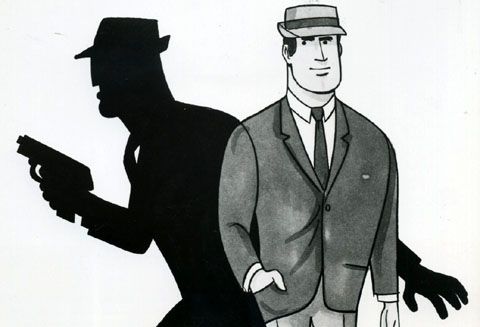
As part of the show Super President, which had two adventures per episode, one part of the show was where we learned of Spy Shadow, an agent of Interspy named Richard Vance (Ted Cassidy) who learned — somewhere in the mysterious Far East, just like Lamont Cranston, here said to be in Tibet with mystics who taught him the power of concentration — how to command his shadow to become another person. He’d need that power as he fought S.P.I.D.E.R. (Society for Plunder, International Disorder, Espionage and Racketeering) in Eurospy-style adventures.

Created by DePatie-Freleng Enterprises, formed by David H. DePatie and Friz Freleng, this is a footnote in TV superheroics, but may have been a bigger character had it not been placed with Super President, a show that people still seem to hate sixty years after it first aired.

I wonder if the makers of this show had been reading Doom Patrol, as Spy Shadow’s powers are a lot like Negative Man from that team. At least Spy Shadow doesn’t have to be wrapped up in bandages like Larry Trainor.

You can watch all of the episodes of this show on YouTube.