MILL CREEK THE SWINGIN’ SEVENTIES: Hustling (1975)

ABOUT THE AUTHOR: Jennifer Upton is an American (non-werewolf) writer/editor in London. She currently works as a freelance ghostwriter of personal memoirs and writes for several blogs on topics as diverse as film history, punk rock, women’s issues, and international politics. For links to her work, please visit https://www.jennuptonwriter.com or send her a Tweet @Jennxldn
Chances are if a ‘70s movie was shot in any of The Boroughs of New York City during the 1970s, it will remain relevant and engaging today, if only because it represents a time in the city’s history when the grit, grime, spit and piss on the pavement was matched only by the interesting people standing on it in porn theater doorways and alleys leading to Heaven and Hell . 

Hustling (1975) has more going for it than that, but it also contains a few baffling moments. Especially viewing it for the first time in 2023, when there are entire YouTube channels showcasing candid interviews with actual sex workers and pimps. 

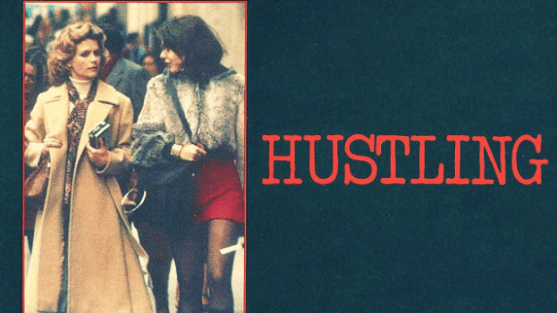
The made-for-TV movie, based on the book by Gail Sheehy, for whom Lee Remick’s character Fran Morrison acts as the author’s avatar, tells the story of a journalist covering the story of several sex workers in midtown Manhattan. In real life, Sheehy wrote the piece for The New Yorker. Here, it’s called New York Magazine. That piece was expanded into book form and the book was adapted for television. 

Jill Clayburgh, in her breakout role, plays Wanda, a sex worker with a Brooklyn accent despite having grown up in Cleveland, Ohio. We follow her and her friend Dee Dee (Melanie Mayron) in their day-to-day existence, earning large amounts of cash they willingly hand over to their pimps lest they suffer the physical consequences. The women spend a lot of time in and out of jail. That’s where Fran meets Wanda, who at first refuses to speak with her on the record, and later changes her mind for $50 per hour. A tidy sum even today.

As Fran grows more attached to her subjects, she begins to feel pangs of guilt for exploiting them for content, but she never crosses the line into developing a full-blown savior complex. A refreshingly honest portrayal of parasitic journalists like Gail Sheehy, who earned a ton of money and won awards for the project while the subjects’ lives remained unchanged. Misery porn has always sold well with the bourgeoisie and sadly, continues to do so today. 

Hustling portrays Sheehy as a typical example of a writer, who, regardless of their sex, lived such a privileged life that she misses the desperation that drove these women to sex work in the first place. Then, in turn, the two female screenwriters created street characters that are well-fed, free of drug and alcohol addictions and “bravely” living the lives that bored suburban stay-at-home parent of the day fantasized about. 

It’s a good script overall, but some of the dialogue was way off base for the female experience, even in ’75 when the script was still so new it still smelled of typewriter ink. Take, for example, Fran’s bold statement, “There isn’t a woman alive who hasn’t had the fantasy of going into a room with a stranger and selling herself for money…or the nightmare.” Holy shit. 

Because it’s a TV movie, it only shows a small portion of the spit, piss and grit of ‘70s. I’d love to see a harder-hitting theatrical adaptation of this book. One that allows audiences to smell the scenes as well as feel them. A movie that shows Dee Dee pissing in alleyways with her baby screaming in hunger in its stroller next to her. One that shows and the track marks on Wanda’s arms and that doesn’t wimp out on showing her getting beaten up by her pimp. One where the characters discuss their genital herpes and follows one of the main characters to a trick an hour after an abortion high on Ketamine. 

Instead, we get a romanticized scene where Morrison looks on in amazement as Wanda berates the younger Dee Dee after social services take Dee Dee’s baby away and then pivots to cheering her up by making her dance to a song on the jukebox. Remick plays the scene well with eyes full of wonder, but I wonder…did Sheehy really need to get close to real life sex workers to fully grasp their humanity? Did she think they were animals before? 

The success of this movie lies in the performances. Remick and Clayburgh excel. They filled the supporting cast with recognizable working actors from the day including Alex Rocco (The Godfather) and Jeffrey Kramer (Jaws, Halloween II) playing jaded cops and a pre-Rocky Burt Young as a sleazebag hotel proprietor who steals a stolen ring from Dee Dee. 

The scenes at the police station are among the grittiest and best in the film, with the hopelessness of cleaning up the city’s corruption on full display. Of course there are untouchable politicians and businessmen bankrolling the sex trade and it’s the women made to suffer! Another big shock for Fran that further explores her naivety. 
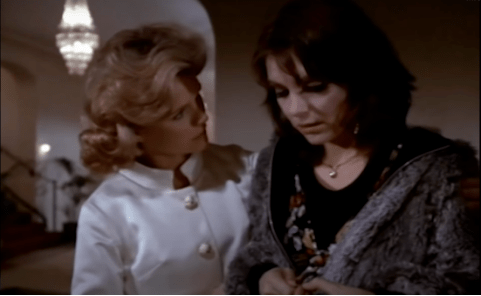
In the end, none of the powerful guys are held accountable, of course. Wanda goes back to her hometown to live with her brother but it’s not clear at all that she will succeed. For ‘70s New York City, nothing changes and the world rolls on. 

Overall, it’s a good movie, but it’s also infuriating. It’s a view of street life as interpreted through the eyes of a journalist with a kink for what she thinks is a “brave” lifestyle but has no fucking clue the level of desperation required to enter the sex trade and the ferociousness required to survive it. 

The film is available from Mill Creek or on YouTube here: 

MILL CREEK THE SWINGIN’ SEVENTIES: How Awful About Allan (1970)

Along with What’s the Matter With Helen?, this movie is one of the two collaborations between writer Henry Farrell and director Curtis Harrington.  It was the ABC Movie of the Week on September 22, 1970 and has stood the test of time as one of the better TV movies. And there’s some stiff competition for that.

Shot in just 12 days, it stars Anthony Perkins as Allan Colleigh, who has psychosomatic blindness after an accident — he left paint cans too close to a fire — that killed his abusive father and scarred his sister Katharine (Julie Harris from the 1963 version of The Haunting).

After Allan returns to their home after time in a mental hospital, he’s convinced that everyone is out to get him, including a new boarder with speaks in a hoarse whisper and one of his sister’s ex-boyfriends on the phone.

Joan Hackett — who was in two great TV movies, Dead of Night and The Possessed — appears as Allan’s former girlfriend. She gets caught up in his mania as rooms of the house explode into flames and he’s kidnapped by that mysterious ex.

How Awful About Allan has plenty of actors as comfortable on the stage as they were on the big or small screen. Perkins agreed to wear special contacts that completely made him blind so that his performance would be more realistic.

This didn’t get great reviews when it came out, but do the movie we love ever do?

Don’t have the box set? You can download this on the Internet Archive.

MILL CREEK THE SWINGIN’ SEVENTIES: The Hanged Man (1974)

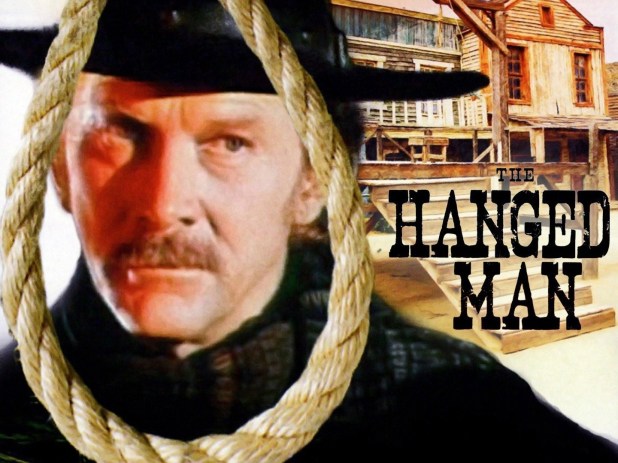
James Devlin (Steve Forrest, Mommie Dearest) survives his own hanging and decides to become a hero, defending Carrie Gault (Sharon Acker) from Lew Halleck (Cameron Mitchell). There are some fun supernatural elements in this, as this is nearly the TV version of High Plains Drifter and was intended to be a series that would follow Devlin across the West as he tried to make up for his past sins.

Director Michael Caffey had a long career directing TV and even did an episode of The Adventures of Brisco County, Jr. Writer Andrew J. Fenady wrote Black NoonTerror In the Wax Museum and Yes, Virginia, There Is a Santa Claus, which has Charles Bronson play Francis Church, the publisher who wrote to a young girl named Virginia to explain Santa Claus. He also developed the TV shows Hondo and The Rebel.

You can watch this on Tubi.

MILL CREEK THE SWINGIN’ SEVENTIES: The Gun and the Pulpit (1974)

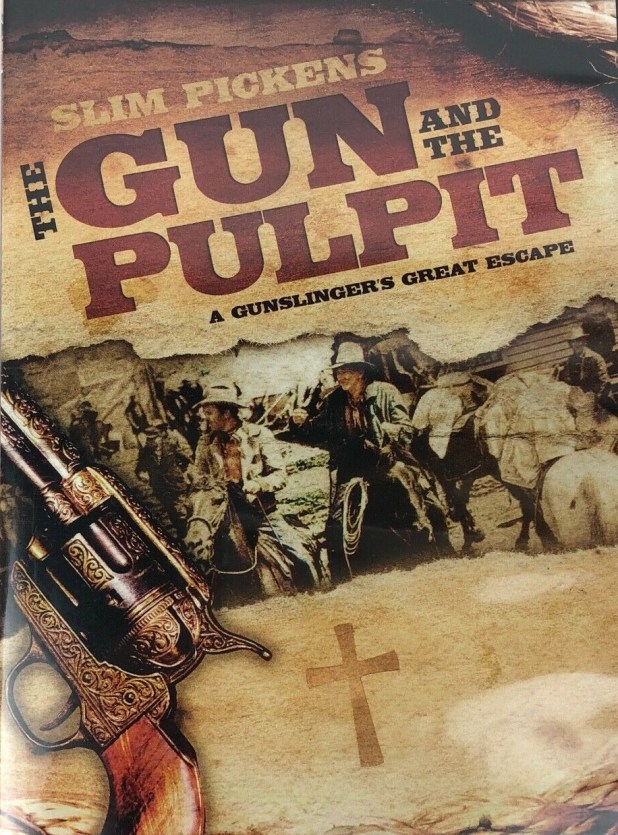
Based on the book The Fastest Gun in the Pulpit by Jack Ehrlich, this ABC TV movie has Ernie Parsons (Marjoe Gortner) escaping the noose and taking the identity of a murderer holy man. He heads off to take over that man’s church, a job he really knows nothing about, but it’ll keep him alive hiding out for a while.

While there, he finds himself standing up to the man who has taken over the town, Mr. Ross (David Huddleston). It’s not totally noble, as he falls for the daughter of a man Ross has murdered, Sally Underwood (Pamela Sue Martin).

Jeff Corey is in the lynch mob at the beginning and Slim Pickens plays Billy One-Eye, who helps Ernie. Plus, Geoffrey Lewis is a hired killer named Jason McCoy who comes in to take out Ernie and they end up missing each other at close range and then decide to just go their own way.

Directed by Daniel Petrie (Moon of the WolfA Howling In the Woods) and written by William Bowers (Support Your Local Sheriff!), this isn’t the finest ride into the West you’ve seen, but it’s pleasant and I always love Gortner.

You can watch this on Tubi.

MILL CREEK THE SWINGIN’ SEVENTIES: Good Against Evil (1977)

Originally airing on May 22, 1977, this attempt at a weekly series comes from director Paul Wendkos (The Mephisto WaltzSecretsHaunts of the Very Rich) and Hammer veteran Jimmy Sangster (The LegacyScream, Pretty PeggyHorror of DraculaThe Revenge of Frankenstein).

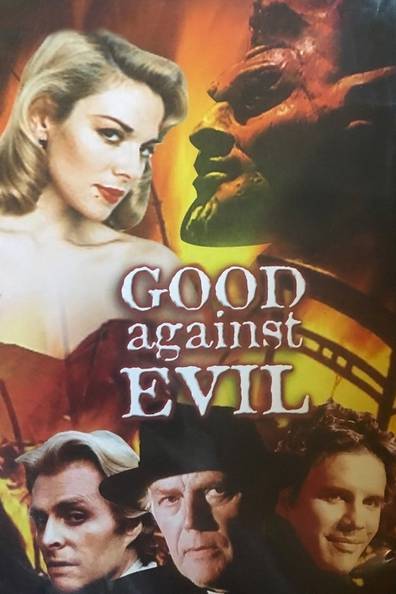
I was really excited about the potential of this one, which promises from its Amazon listing that writer Andy Stuart (Dack Rambo) teams up with an exorcist named Father Kemschler (Dan O’Herlihy!) to battle Satan and a group of devil worshipers led by Mr. Rimmin (Richard Lynch!).

Seems like Rimmin has been after a girl named Jessica from the moment she was born, as her mother was drugged and attended to by nuns who took her baby away the moment it was born. Her mom was then killed by a black cat and Jessica is raised by his people, with her origins kept a secret.

When Andy and Jessica hook up and decide to get married, she’s unable to even get near the altar. That’s because she’s been promised to the demon Astaroth and must be kept a virgin until the beast comes back and puts a devil baby in her womb. Now, the cult that has been behind every moment of her life must keep her a virgin by cockblocking Andy at every turn.

I was totally prepared for pure 1970’s Satanic bliss, only to find myself in the midst of a relationship drama for much of the films first half. Sure, there was a flashback where a woman imagined a nearly nude and totally burned up Lynch — he came by those scars the hard way — attacking her. I was thinking — is this the TV movie version of Enter the Devil — only for cruel reality to make me learn differently.

That said, there are some good moments here, like a woman being killed by her own housecats under Rimmin’s command. And Elyssa Davalos as Jessica has plenty of great qualities that make her a wonderful horror heroine in distress. And while she’s top billed when you look this film up, Kim Cattrall makes a short appearance.

I wanted to love this. It has all the elements that you would think would lead to magic. Yet it can’t put them all together. Sometimes when you deal with the devil, you don’t get what you wanted.

MILL CREEK THE SWINGIN’ SEVENTIES: Get Christie Love! (1974)

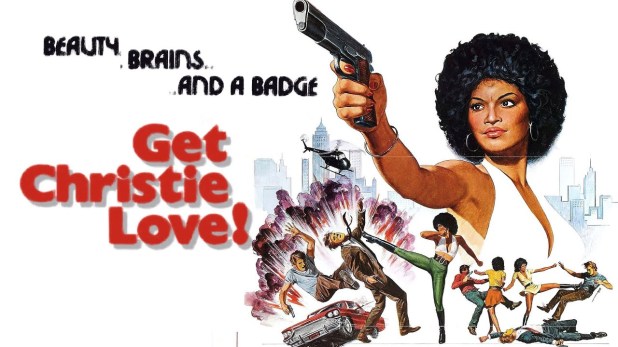
Directed by William Graham (Return to the Blue Lagoon) and written by George Kirgo, this is the pilot movie for the eventual series that starred Teresa Graves as Christie Love. Graves was the second African-American woman to star in her own television series after Diahann Carroll in Julia.

Based on the novel The Ledger by Dorothy Uhnak, this movie has the book’s lead Christie Opara — a white NYPD detective — become black detective Christie Love. Obviously finding some inspiration from CoffyFoxy Brown and Cleopatra Jones, Love even had her own catchphrase: “You’re under arrest, sugah!”

Between the pilot and series, Graves became a Jehovah’s Witness and demanded that the show not be as sexual as the movie, which had Christie having an affair with her captain. She’s on the case of an informant, Helena Varga (Louise Sorel), who is about to testify against her boyfriend. There’s also a serial killer that Christie goes undercover to catch.

It’s nowhere near as exciting as the movies it wants to be. Graves is pretty good, however. The series lasted 22 episodes, which was a full first season. She would retire from acting and become really involved in her religion. Sadly, she died in 2002 after an accident in her apartment with a space heater.

The same year this was made, Graves also played Countess Vampira in Old Dracula.

You can watch this on YouTube.

MILL CREEK THE SWINGIN’ SEVENTIES: The Four Deuces (1975)

Vic Morano (Jack Palance) owns the speakeasy nightclub The Four Deuces while also being in the middle of a war with rival businessman Chico Hamilton (Warren Berlinger). The Four Deuces are his soldiers Chip Morono (Giani Russo), Mickey Navarro (Hard Boiled Haggerty) Ben Arlen (Johnny Hamer) and Smokey Ross (Martin Kove).

This has a lot of comic book in it, from the look of the opening introductions to Vic reading a Batman comic book years before Palance would play Carl Grissom.

This was produced by Menahem Golan and Yoram Globus after they made Lepke. Sam Firstenberg was a set decorator. Nick Dimitri, Gianni Russo, Vincent Di Paolo, Lany Gustavson and Warren Berlinger were part of both movies and this was a production of both Cannon Pictures and Golan-Globus Productions.

Director William H. Bushnell also made Prisoners and writer Don Martin had been writing since 1947’s Lighthouse. C. Lester Franklin, the other writer, only worked on this movie.

Carol Lynley is Vic’s lover Wendy Rittenhouse and Adam Rourke is reporter Russ Timmons, who becomes part of Vic’s gang and also Wendy’s lover. It’s strange movie because it feels like a comic strip in look only, as the story itself doesn’t feel like it matches the visual of the movie.

It also tries to be a comedy with sped-up slapstick scenes that also don’t feel like they should be in the same movie. But it is one of Carl Weathers’ first movies and the only theatrical movie that Palance appeared in with his daughter Brooke.

You can watch this on YouTube.

MILL CREEK THE SWINGIN’ SEVENTIES: Firehouse (1971)

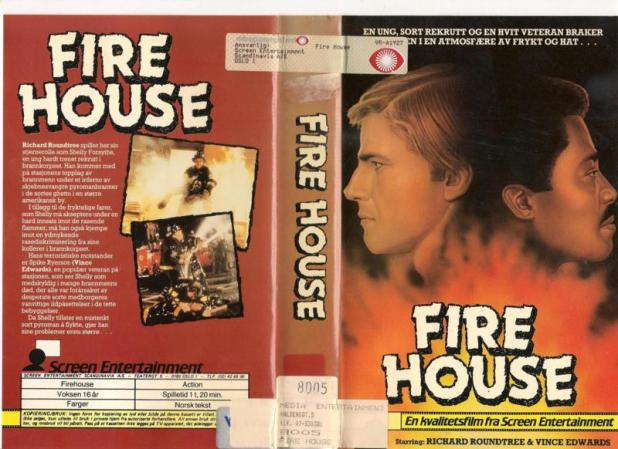
Richard Roundtree — a star from Shaft making a TV movie a year later, was that a step back? — is Shelly Forsythe, a black firefighter bringing racial tensions to a firehouse. This is even worse when Spike Ryerson (Vince Edwards), the oldest firefighter, claims that an arsonist has to be black. The men include Val Avery as cook Sonny Caputo, Richard Jaeckel as Hank Myers, Michael Lerner as Ernie Bush and Andrew Duggan as Captain Jim Barr.

This was based on Report From Engine Company 82 by retired FDNYC firefighter Dennis Smith. Another thing you may catch — the firehouse for this movie would one day be the Ghostbusters’ building.

What’s strange is that this became a TV series with Richard Jaeckel the only cast member to appear in both the TV movie and the series. They dropped the black firefighter angle for the show when that’s the main reason we’re watching this.

To save money, most of the firefighting is newsreel footage. That said, the idea that Shelly has to fit in with racist co-workers, have the black community not think he’s an Uncle Tom and still not die in a fire are all great plot elements.

Firehouse was directed by Alex March (Serpico, Shane and Paper Moon — the TV shows) and written by Frank Cucci (The Andros Targets)

You can watch this on Tubi.

MILL CREEK THE SWINGIN’ SEVENTIES: Fair Play (1972)

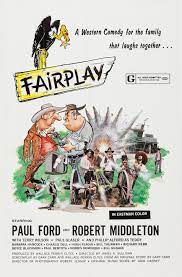
Teddy (Phillip Alford) is in Fairplay looking for his uncle F.O. McGill (Paul Ford) who told him he owned a spa. He really owns a saloon and is in the middle of a battle to keep it.

Directed by James A. Sullivan, who edited Manos: The Hands of Fate and directed Night Fright, and written by Garry Carr and Wallace Clyce, who also wrote another young guy in over his head movie, this time with gangsters, called The Pickle Goes In the Middle, this movie is a comedy in the West that takes place in one room and doesn’t have one laugh. It’s painful but we must watch movies that we don’t like to understand the films that we love. There are no peaks without valleys, no joy without pain.

Barbara Hancock, who plays Pearlie Purvis, is in The Night God Screamed and went into craft service after this movie. Richard Webb, who is the preacher, was once Captain Midnight. And Bill McGhee, who plays Jefferson Washington, was Sam in Don’t Look In the Basement. I feel badly for every single one of them for being in this movie. I will not remember you for this. I will remember you for the other movies you were in.

You can watch this on YouTube.

https://www.youtube.com/watch?v=oO-qgTwJst8

MILL CREEK THE SWINGIN’ SEVENTIES: Evel Knievel (1971)

Robert Craig Knievel was the hero of my childhood. After all, who else was brave, insane or dumb enough to attempt more than 75 ramp-to-ramp motorcycle jumps in his life, a life that should have ended way shorter than the 69 hellacious years that he lived on this planet with?

How does one become a daredevil? For Evel — who was given that name by a jail guard — it all started with rodeos, ski jumping and pole vaulting. Upon returning from the army, he started a semi-pro hockey team, the Butte Bombers. In one of their games, where they played against the Czechoslovakian Olympic ice hockey team, Evel was ejected from the game minutes into the third period and left the stadium. When the Czechoslovakian officials went to collect the money for playing, they learned that it had been stolen.

After the birth of his son, Evel started the Sur-Kill Guide Service, which was really just a front for poaching in Yellowstone National Park. He was arrested for this and then hitchhiked with a 54-inch rack of antlers the whole way to Washington to plead his case.

It was around this time that Evel decided to stop committing crimes — don’t worry, he kept up with them — and get into motorcycle riding. A broken collarbone and reading Success Through a Positive Mental Attitude led to Evel working for the Combined Insurance Company of America, a job he held for a few months until they wouldn’t promote him to vice president after a few months. Whew Evel! And then a failed Honda dealership led him to work for Don Pomeroy at his motorcycle shop, where the owner’s son Jim taught him how to do a wheelie.

This led Evel to do his first stunt show that he promoted entirely on his own, even serving as his own MC. He did a few wheelies and then jumped a box filled with rattlesnakes and mountain lions. This is where you either say, “This is stupid” or become fascinated. Me? How awesome is it to have a box filled with dangerous wildlife and decide to jump a motorcycle over it? Yep, this is why I was obsessed with Evel as a child.

This led to an obsession with jumping more things — like cars — and the unfortunate side effect of getting hurt nearly every time. He crashed around twenty times — huge, incredibly violent crashes — and his Guinness Book of World Records entry states he suffered 433 bone fractures by the end of 1975.

In Evel’s 1999 autobiography, he published this photo, which showed his many, many broken bones and injuries. You can learn more at http://www.stevemandich.com/evelincarnate/knievelinjuries.htm

Evel crashed at Caesar’s Palace. He crashed jumping Pepsi trucks. He crashed outside the Cow Palace. And then he started dreaming big — he wanted to jump teh Grand Canyon. Why? Take it from the man himself: “I don’t care if they say, “Look, kid, you’re going to drive that thing off the edge of the Canyon and die,” I’m going to do it. I want to be the first. If they’d let me go to the moon, I’d crawl all the way to Cape Kennedy just to do it. I’d like to go to the moon, but I don’t want to be the second man to go there.”

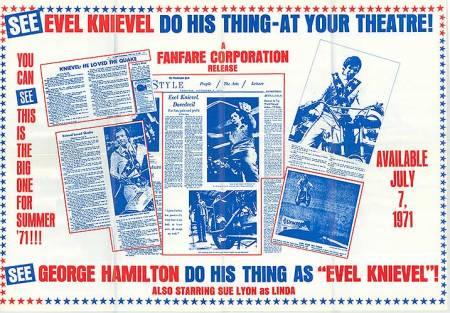
The government would never allow Evel to do this. It’s even a big part of this movie — just look at the posters. Finally, he’d jump Snake River Canyon, an event whose close circuit telecast bombed, almost bankrupting a young Vince McMahon Jr. before he even bought his father’s WWF. He used the Skycycle and nearly drowned when again he failed to make the jump.

A year later, Evel would crash again jumping thirteen buses in front of Wembley Stadium. After the crash, despite breaking his pelvis, Knievel made it to his feet and talked to the crowd, announcing his retirement: “Ladies and gentlemen of this wonderful country, I’ve got to tell you that you are the last people in the world who will ever see me jump. Because I will never, ever, ever jump again. I’m through.” Frank Gifford begged him to go out on a stretcher, but Evel said “I came in walking, I went out walking!”

Of course, Evel was a carnie and kept on pulling off stunts until 1977, when a Jaws-inspired leap broke both his arms and nearly blinded a cameraman.

The life of Evel is a complicated story to tell. On one hand, he was an entertainer, out there in a jumpsuit covered with stars and a cape. On the other, he was a man who believed in keeping his word and battling the evils of drugs (a Hell’s Angel threw a tire iron on stage during one of his jumps as he had often battled against the group for being drug dealers and he ended up putting three of them in the hospital). And on another hand, he lost his Ideal Toy and Harley Davidson endorsements when he went wild on Shelly Saltsman, a sports promoter, Hollywood producer and author of the book Evel Knievel on Tour, which alleged that Evel used drugs and abused his family. To get back at him, despite having two broken arms, Evel cornered him on the 20th Century Fox backlot and beat him unmerciful with a baseball bat.

When the news of Knievel’s attack came up on the news, Saltman’s elderly mother had a heart attack and died three months later. Evel got a six month work furlough and was ordered to pay $12.75 million in damages, money he never paid. After the stunt icon’s 2007 death, Saltman decided to sue his estate for $100 million US dollars with interest, but he never got a dime before he died in 2019.

As for Evel, even his death was an event. His packed funeral was presided over by Pastor Dr. Robert H. Schuller — who baptized Evel in 2007 at his Crystal Cathedral, which led to an influx of new parishioners — with Matthew McConaughey giving the eulogy. But first — there were fireworks. Before he died, Evel said that he “beat the hell out of death.”

I told you all that to tell you about this movie.

The film begins with Evel — played by George Hamilton — giving a speech directly to us, the viewer: “Ladies and gentlemen, you have no idea how good it makes me feel to be here today. It is truly an honor to risk my life for you. An honor. Before I jump this motorcycle over these 19 cars — and I want you to know there’s not a Volkswagen or a Datsun in the row — before I sail cleanly over that last truck, I want to tell you that last night a kid came up to me and he said, “Mr Knievel, are you crazy? That jump you’re going to make is impossible, but I already have my tickets because I want to see you splatter.” That’s right, that’s what he said. And I told that boy last night that nothing is impossible. Now they told Columbus to sail across the ocean was impossible. They told the settlers to live in a wild land was impossible. They told the Wright Brothers to fly was impossible. And they probably told Neil Armstrong a walk on the moon was impossible. They tell Evel Knievel to jump a motorcycle across the Grand Canyon is impossible, and they say that every day. A Roman General in the time of Caesar had the motto: “If it is possible, it is done. If it is impossible, it will be done.” And that, ladies and gentlemen, is what I live by.”

Then we get a movie version of Evel’s life. It was originally written by Alan Caillou, who played King Sancho in The Sword and the Sorcerer. Hamilton wanted John Milius to rewrite it. Upon reading the original script, he launched it into Hamilton’s pool and beat it with an oar. That meant that he was the new writer.

Milius would go on to say that he preferred the final product to many of the other films shot from his scripts. “They didn’t restrain it or tone it down, they shot the script. The guy is just as obnoxious and full of hot air as he was in the script. Just as full of life and vitality too. He’s Evel Knievel! He wouldn’t take a dime off of anybody.”

Hamilton would later tell Pop Entertainment, when asked about the film, “The thing about it is at that time Evel was not famous. When we made that movie he took a jump over the fountains and splattered. He had not become a Mattel toy at that time. I put a writer on it named John Milius – who [later] wrote Apocalypse Now. He was the best of the writers of that era. I got him to write the script for me. Then Milius made me read the script to Evel. I realized he was kind of a sociopath and was totally messed. Then all of sudden Evel started to adopt lines out of the movie for himself. So his persona in the movie became more of his persona in real life. He would have been every kid’s hero on one hand, but then he went and took that baseball bat and broke that guy’s legs and that finished his career in the toy business. Evel was very, very difficult and he was jealous of anybody that was gonna play him. He wanted to portray himself and he did go and make his own movie later on. He had a great perception of this warrior that he thought he was and that was good. Then he had this other side of himself where he’d turn on you in a minute. Success is something that you have earn. You have to have a humility for it, because it can leave you in a second. It may remember you but it can sure leave you. I think if you don’t get that and you don’t have gratitude for what you are and where you are it doesn’t come back and it goes away forever.”

Evel Knievel ends with our hero successfully making a jump at the Ontario Motor Speedway and driving to a dirt road that leads to the Grand Canyon — which is about 456 miles if you take I-40. Again, he looks right at the camera and says, “Important people in this country, celebrities like myself — Elvis, Frank Sinatra, John Wayne — we have a responsibility. There are millions of people that look at our lives and it gives theirs some meaning. People come out from their jobs, most of which are meaningless to them, and they watch me jump 20 cars, maybe get splattered. It means something to them. They jump right alongside of me — they take the bars in their hands, and for one split second, they’re all daredevils. I am the last gladiator in the new Rome. I go into the arena and I compete against destruction and I win. And next week, I go out there and I do it again. And this time — civilization being what it is and all — we have very little choice about our life. The only thing really left to us is a choice about our death. And mine will be — glorious.”

Sue Lyon, who debuted as Lolita in the film of the same name, plays Evel’s woman. She’d go on to be in all manner of movies that I could go on for hours about like End of the World and Alligator.

George Hamilton seems as far from the real Evel as you can get. But he was a carnie too, as Milius related that Hamilton was “A great con-man, that’s what he really is. He always said, “I’ll be remembered as a third-rate actor when in fact, I’m a first-rate con man.””

Evel made one more movie. You should watch it: Viva Knievel!

Don’t have the box set? You can watch this on Tubi. or download it on the Internet Archive.