APRIL MOVIE THON DAY 12: Heartstopper (1989)

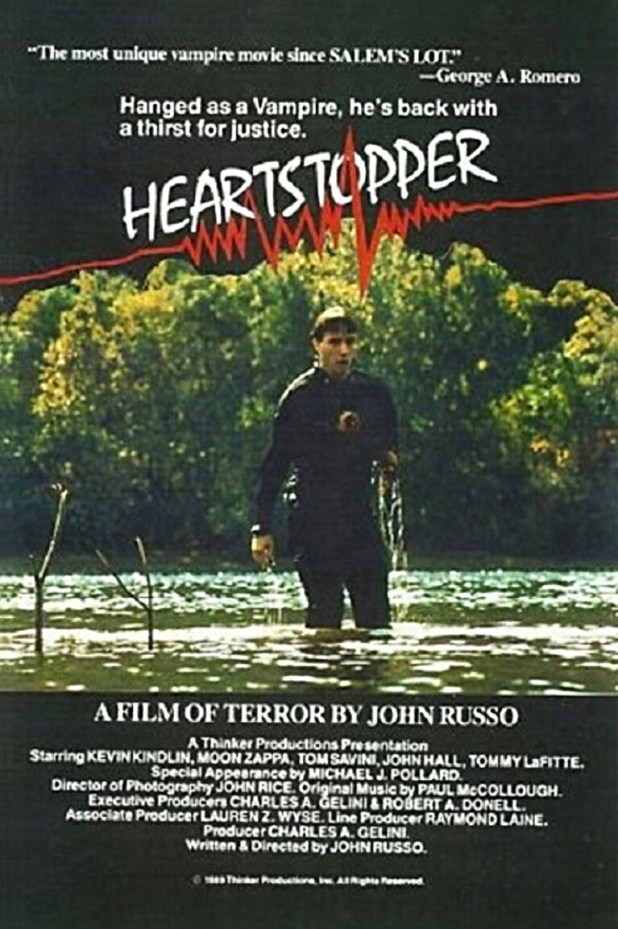
Back in my Fangoria fanboy mania, I kept seeing the Pittsburgh-made Heartstopper get listed and it supposedly had tons of Savini gore, as well as a role for him as a police detective. Every con Savini was at, I asked, “Is Heartstopper coming out yet?” And he’d laugh and say, “I hope so.”

It took me 33 years to see it.

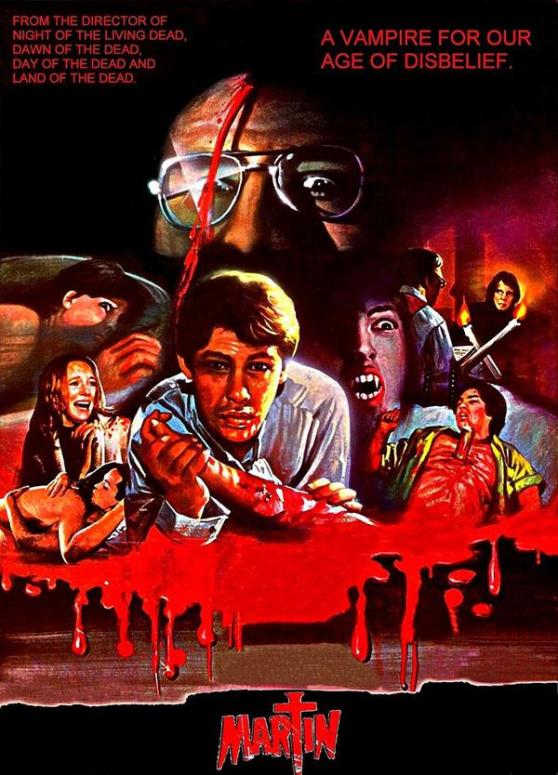
Pittsburgh has seen more than one vampire movie get made here, from the lo-fi Fist of the Vampire to the big budget Innocent Blood and perhaps one of the best vampire movies ever made, Martin.

And oh yeah, Heartstopper.

Benjamin Latham (Kevin Kindlin, The Majorettes) was a doctor back around the Revolutionary War who was experimenting with blood when his sister-in-law and brother proclaim him a vampire. He’s hung and not just lynched, but held down by her, his heart has a stake put through it and he’s covered with garlic. And two hundred years later, he rises in Pittsburgh’s Point State Park. Unlike your run of the mill vampire, he lives by day and has poisonous saliva that either kills or brings people to his side, such as his lover Lenora Clayton (Moon Unit Zappa!?!), who introduces him to our modern world while having a tie to the past, as she’s a museum curator.

Meanwhile, one of Benjamin’s descendants has become a serial killer himself and he’s conflicted over saving him or destroying him. There’s also the matter of Lt. Ron Vargo (Savini), whose daughter was killed by someone who had a very vampiric MO, so all he does is talk about it and refuses knocking up his wife again because he’d rather work out down in the basement, so if you want to watch Savini grunt it out and do sets, trust me, this is your movie.

It also has a tremendous metal soundtrack and by that, the kind that will earworm you. The band N.M.E. (metal is not always clever) is a power/thrash band from the City of Bridges made up of David Paul Snyder on drums, C.E. Robinson on bass, Brian Keruskin and Michael Weldon on guitars and Jirus on vocals. They had two songs in the movie, “The  Gates of Hell” (“Walk On”) and “Heartstopper” (“Eat Me Alive”) and they’re pretty decent, along with a solo Jirus song called “Killer In the Park” and two songs by The Sound Castle, “What Kind of Love Is This?” and “In Principio,” which sound like progressive metal by way of Meat Loaf and I’m all for that, too.

“Heartstopper” (“Eat Me Alive”) was released on the VHS Horror Rock, which also has Hurricane’s “Over the Edge,” Wrath’s “Children of the Wicked,” The Pandoras’ “Run Down Love Battery,” The Dickies’ ” Booby Trap,” Elvis Hitler’s “Hot Rod to Hell” and The Del-Lords’ “Judas Kiss” all playing over clips of Night of the Living DeadThe MajorettesMidnight and Heartstopper, which as you may have put together are all movies owned by this film’s writer and director John Russo  (or public domain, as is the case with Night).

Heartstopper is an interesting film at the level of The Majorettes in quality. It tries to be a different take on the vampire story and for that, it succeeds, while also being a great time capsule of 1989 downtown Pittsburgh. And of Tom Savini’s workout. Seriously, the dude made gains while making this.
APRIL MOVIE THON DAY 12: Midnight 2: Sex, Death and Videotape (1993)

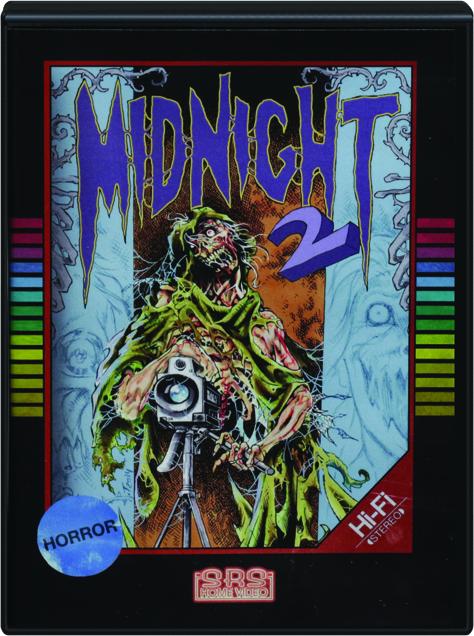
I’m so on record for my love of John Russo’s Midnight that my words appear on the back cover of Severin’s new blu ray release of the film. So imagine my surprise that there’s a sequel to it and even better, it’s a lo-fi video exploration of the only survivor of the cult from the first film, Abraham Barnes (not John Amplas, but instead Matthew Jason Walsh, who has gone on to write 45 of his own movies at the time of this review).

The SRS DVD of this film (available on their site) has two versions, the released version and the unrated “first cut” of the film, and they complement each other well.

Taking place ten years after the events of the first film — don’t worry, a good portion of the running time of this film has clips of that movie, which juxtaposes the film and video media, which is strange but for some reason, I was totally fine with. I think if these movies were made anywhere other than Pittsburgh — and Akron, but we’ll get to that in a minute — I wouldn’t treat them with the love that I do.

What works for me is that Abraham stalks his prey in places I’ve been, mainly Point State Park (did he cross paths with Santa Claws in Market Square?) and PPG Plaza. He wanders the city with his video camera — at a time when such a thing was a huge burden and not the cinema-ready iPhone you carry now — and interviews subjects, looking for both victims and a mate so he can settle down and stop killing.

The first of those victims — in the released cut — is Jane (Lori Scarlett, a Cleveland-born actress who was Jane in Killer Nerd and Return of the Killer Nerd). She has the kind of haircut that bedeviled me in 1993, that asymmetrical blonde wave with shaved sides, which is what passes for punk rock in the Three Rivers (and Burning River, too). Abraham mentions that he can feel it deep inside his, well, member if a woman is true or not. She isn’t, she’s choked into oblivion and he moves on to stalking her roommate Rebecca (Jo Norcia, Zombie Cop).

Rebecca is caught between two men — or at least the movie asks us to believe this — Abraham and L.T. David Morgan (Chuck Pierce Jr., who is, you guessed it, the son of Charles B. Pierce), the cop who is trying to solve the disappearance of Jane.

This is one talky movie, but I kind of liked that about it. It realizes that it’s a low, low, low budget remake of an already low budget movie and therefore leans into it. Everyone was beyond excited in town when Silence of the Lambs was made here, so I don’t even mind that it’s referenced as the end all, be all of serial killer cinema. The only real issue I have is that the action moves from dahntahn to Akron without informing the viewer, but just about everyone who wants to see this lives in the area, so they’re going to cry foul. Then again, it originally came out from J.R. Bookwalter’s Tempe Video and that’s where the Ohio comes in.

The chair from the original comes back. This is more than just ninety minutes of trash, it’s ninety minutes of good trash because it’s nihilistic and mean spirited and has a scene where the female lead gets a biggie soft drink from Wendy’s, which I assume came from the one down on Liberty and she walked herself to get it and I’m a fan of slasher/giallo movies with Wendy’s food in them, which is all of this movie and Nothing Underneath, a movie in which Donald Pleasence takes full advantage of Dave Thomas’ salad bar offerings.

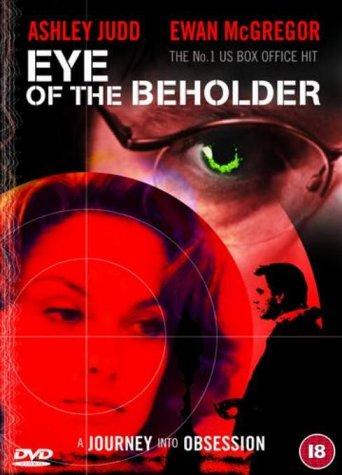
APRIL MOVIE THON DAY 12: Eye of the Beholder (1999)

Based on Marc Behm’s novel and a remake of Claude Miller’s 1983 French thriller Deadly Circuit, this Stephan Elliot-directed (The Adventures of Priscilla, Queen of the Desert) was originally optioned by producer Philip Yordan (yes, I can get a Night Train to Terror mention in for every movie) for Charlton Heston, but it took decades to be made in America.

Stephen Wilson (Ewan McGregor) is known as The Eye, a surveillance expert called in to track down the son of his wealthy boss. However, that man is killed by serial killer Joanna Eris (Ashley Judd) as Stephen watches. Years ago, his daughter disappeared and he sees her as the grown version of her, so he keeps trying to rescue her.

Going rogue, Stephen keeps following Eris, even after she is due to be married to a rich blind man named Alexander Leonard (Patrick Bergin) and gives up killing men. So why does he shoot her tires out and cause his death? Why does he save her from Gary (Jason Priestley), who has beaten Eris into oblivion and is preparing to assault her? Why does he follow her all over the country?

How muchy of what Stephen sees is even real? Does Hildary (k.d. lang) even exist? Is this a cyberpunk movie (yes, it has dystopian tech, British accents and a rock star in it)? And how about the scenes shot in Pittsburgh?

What a mess. I kind of want to watch it a third time to see if I can make any more sense of it.

You can watch this on Tubi.


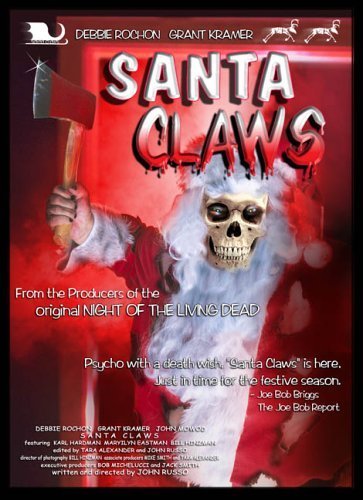
APRIL MOVIE THON DAY 12: Santa Claws (1996)

John Russo lives in Glassport, which I can see from my house, and he wrote the idea that became Night of the Living Dead, which would probably be enough, but he also helped make Return of the Living Dead happen. And he also made Midnight and The Majorettes, two movies that fall into that strange genre that can only come from Pittsburgh, the yinzer giallo. He also was the publisher and managing editor of Scream Queens Illustrated, which figures into this movie.

Raven Quinn (Debbie Rochon) used to be a scream queen but ever since she had two children with a scream queen magazine publisher who would rather take nude photos of models than work on his marriage. Luckily, she has Wayne (Grant Cramer), a neighbor who once watched his mommy do more than kiss Santa Claus, lost his mind and killed them both. So perhaps she is not quite so fortunate.

Beyond getting to see Night stars like Marilyn Eastman, who played Helen Cooper, Karl Hardman, who played her husband Harry, and first zombie — and the director of The Majorettes and FleshEater — S. William Hinzman, you can pretty much see this as an American Night Killer. They’re both set at Christmas, they both deal with broken marriages and they’re both absolutely berserk movies seemingly made by maniacs.

Waste not, want not, as Russo edited this into Scream Queens Naked Christmas.

Yinzer bonus: Numerous scenes of characters wandering Market Square before anyone went there, back when George Aiken was still making the best-fried chicken ever, when National Record Mart still had that huge store and G.W. Murphy’s was still open. I mean, the killer runs into the Oyster House for a second and I was awash with 90s dahntahn memories, like Honus Wagner, the smell of Hare Krishna’s t-shirts, Candyrama and so much more.

In short, a killer that uses a garden cultivator as a weapon, like a total South Hills Blood and Black Lace, all with softcore dancing that makes me wistful for dollar pizza at Anthony’s and the old sign that was painted on the wall at the Cricket and hey, John Russo wrote two songs for this, “Christmas by Myself” and “Brand New Christmas.”

If you remember that old store Novelties in Market Square that never seemed to sell anything and was put out of business for a Dunkin’ Donuts, well, I want you to know that this movie has the killer buy his Santa Claus suit in that very store.

Welcome to the yinzer giallo list, Santa Claws. Meet us under the Kaufmann’s clock for your framed certificate.

APRIL MOVIE THON DAY 12

Day twelve of the B&S About Movies April Movie Thon is about 4-1-2. Pittsburgh-made movies!

April 12: 412 Day — A movie about Pittsburgh (if you’re not from here that’s our area code). Or maybe one made here. Heck, just write about Striking Distance if you want.

All April long, we’ll have thirty themes as writing prompts. If you’d like to be part of it, you can just send us an article for that day to bandsaboutmovies@gmail.com or post it on your site and share it out with the hashtag #BSAprilMovieThon.

Here are some films that we can recommend to watch today:

Martin (1978): This movie is the best version of Pittsburgh, the truest, that has even been filmed. It’s also George Romero’s best movie.

Effects (1981): While not seen much when it was released, this is one of the most imaginative horror movies ever, not just one of the best movies made in Pittsburgh.

Sudden Death (1995): JCVD fought our hockey mascot, Iceberg. That’s all you need to know about this movie.

What are you watching?


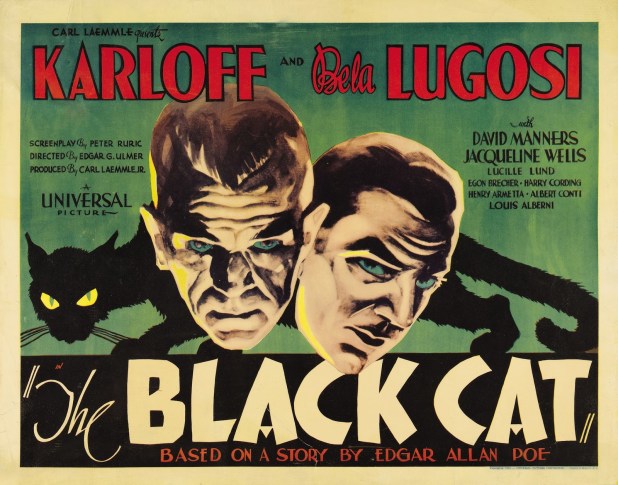
APRIL MOVIE THON DAY 11: The Black Cat (1934)

The first of eight films to pair Bela Lugosi and Boris Karloff, this has so much less to do with the Edgar Allan Poe story and so much more to do with Aleister Crowley, in particular a series of rituals and did with Betty May Loveday.

Loveday was a model, a dancer, an artist and the lover of White Panther, a member of L’Apache Gang, and a fight over him led to her nickname: The Tiger Woman. She once said, “I have not cared what the world thought of me and as a result what it thought has often not been very kind. I have often lived only for pleasure and excitement.”

After marrying Miles Linzee Atkinson — who had access to cocaine as he was a doctor — they both became addicts, a habit she kept into her second marriage.

In 1922, her third husband Frederick Charles Loveday became an acolyte of Aleister Crowley, who considered Loveday his magical heir but condemned his marriage. In her book Tiger Woman, Loveday claimed she found a chest containing men’s ties which were covered with dried blood. Crowley told her they belonged to Jack the Ripper, who he knew, who was still alive and who had been a surgeon and magician who taught him how to become invisible.

Frederick — who also used the name Raoul — was never a healthy person. In her book, Betty May said that Crowley recommended that he drink a cat’s blood. Regardless of the truth of that story, he did drink water from a stream that Crowley had warned him about and he died in 1923.

The entire time May was in Italy with her husband and Crowley, she had been May had been sending reports to the Sunday Express informing the public of what Crowley was up to. Those rituals that she describes appear in The Black Cat. When she returned to England, she sold the rest of her story to the Sunday Express and John Bull, which is where Crowley’s title The Wickedest Man in the World” comes from.

She also mentions that after the death of her husband, she tried to kill Crowley by firing a gun directly at Crowley’s head at point-blank range and missing. He laughed and she shot again. The gun jammed.

Betty May was the principal witness in the suit brought by Aleister Crowley against Nina Hamnett for libel in her book Laughing Torso which led to someone stealing her letters of proof, more libel suits and Crowley being “bound” by the court for two years.

Anyhow…

Peter (David Manners) and Joan Alison (Julie Bishop) are on a train en route to on their honeymoon in Hungary, during which they share a car with psychiatrist Dr. Vitus Werdegast (Lugosi), a Hungarian psychiatrist who spent the last 15 years as a prisoner a Siberian prison camp. Now, he is traveling to visit Hjalmar Poelzig (Karloff), an Austrian architect.

Somehow, all three end up on a bus which crashes near Poelzig’s home. The foreboding estate sits upon the ruins of Fort Marmorus, which Poelzig commanded during the war. It also turns out that the doctor and architect are not great friends, as Werdegast accuses Poelzig of betraying their side to the Russians, leading to thousands of deaths, as well as stealing his wife Karen and killing his black cat. He might be correct, as Werdegast literally has a collection of dead women on display and Karen is one of them.

Poelzig is quite literally the devil on earth, as he has taken Werdegast’s daughter as his new wife and planning on killing Peter and sacrificing June. Seriously, I don’t want to give away the end of this movie away and I’m amazed that pre-code horror is so grisly and outright filled with darkness. This wasn’t a small independent movie. This was Universal’s biggest movie of 1934.

Poelzig’s chant doesn’t coming from Crowley and is invented Latin nonsense. Thanks to IMDB trivia, it translates as “With a grain of salt. A brave man may fall, but he cannot yield. To err is human. The wolf may change his skin, but not his nature. Truth is mighty, and will prevail. External actions show internal secrets. Remember when life’s path is steep to keep your mind even. The loss that is not known is no loss at all. Heavy thunder. With a grain of salt. A brave man may fall, but he cannot yield. By fruit, not by leaves, judge a tree. Every madman thinks everybody mad. Who repents from sinning is almost innocent.”

Despite this being such a big movie, Edgar G. Ulmer’s career didn’t take off. That’s because he began an affair with Shirley Castle, who would eventually become his wife. At the time, she was married to Max Alexander, a producer at Universal Pictures and nephew of Universal chief Carl Laemmle, who did not look kindly on “outsiders” upsetting his family. The scandal resulted in Ulmer being blackballed from all of the major Hollywood studios for the rest of his career, so he worked on smaller movies about which Peter Bogdonavich wrote “the astonishing thing is that so many of Ulmer’s movies have a clearly identifiable signature despite being accomplished with so little encouragement and so few means.”

He found a home at PRC, the lowest of the low that was Hollywood’s “Poverty Row” studios, but Shirley stayed by his side, acting as the script supervisor on nearly all of his films as well as writing several of the screenplays. Their daughter Arianne appeared as an extra in his movies. If you’d like to check them out, some of his post-Black Cat films include The Amazing Transparent ManStrange Illusion and The Man from Planet X.

APRIL MOVIE THON DAY 11: Chemical Wedding (2008)

Simon Calow (Four Weddings and a Funeral) is Professor Oliver Haddo, a Cambridge scholar who is reprogrammed by a virtual reality machine into becoming the avatar for the spirit of Aleister Crowley. Now, more than fifty years after his death, Crowley begins his search for a scarlet woman to be part of his next working.

It was directed by Julian Doyle, who edited BrazilLife of BrianThe Meaning of Life and Time Bandits. He’s also directed music videos for Kate Bush and made Iron Maiden’s “Can I Play With Madness?” video. Speaking of Maiden, he co-wrote this with their lead singer, Bruce Dickinson, and two of his songs (“Chemical Wedding” and “Book of Sorrows”) and two Maiden songs (the aforementioned “Madness” and “The Wicker Man”) are on the soundtrack.

I learned from this movie that we live in the world where Satan is in charge, that you can fax sperm and that even a movie with this much nudity and depravity can be slightly lame. I wanted to love this and it got close, so close, but it’s charitably a complete mess.

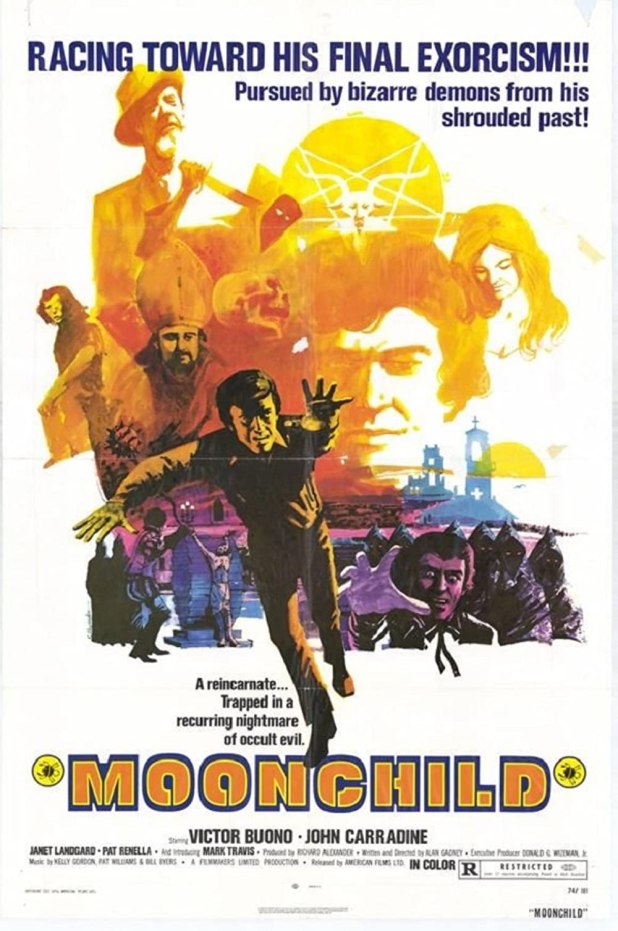
APRIL MOVIE THON DAY 11: Moonchild (1974)

Moonchild was an Aleister Crowley book about white magicians, led by Simon Iff, and a group of black magicians fighting over an unborn child. That book also contained a series of magic rituals that would incarnate an archetypal divine feminine named Babalon. If that sounds familiar to the more occult-minded out there, it led to the Babalon Working, a series of rituals by scientist and occultist Jack Parsons and Scientology founder L. Ron Hubbard that may have led to Babalon appearing in the form of Marjorie Cameron and the next stage of the working, which was an attempt to conceive a moonchild through sex magic.

Crowley replied to this by saying, “Apparently Parsons or Hubbard or somebody is trying to produce a Moonchild. I get fairly frantic when I contemplate the idiocy of these goats.”

I wonder if he would have enjoyed this movie, in which the student (Mark Travis) seeks to perfect his artistic ability. This brings him to a hotel where Mr. Walker (John Carradine) introduces him to a series of men and women who will battle for his soul, including the holy man known as Maitre D’ (Victor Buono), the manager (Pat Renella), an alchemist (William Challee, Zachariah) and the temptations of that man’s daughter (Janet Landgard, The Swimmer).

This started as a film school project, yet somehow director and writer Alan Gadney got the location and talent to make a near-professional film. For a first project, it was quite the endeavor and the idea of trying to answer the big questions of existence within a movie can be a herculean journey for even the most experienced creator. For a first timer?

Somehow, this art film was sold as horror — having Carradine will do that — and I’m certain that audiences were baffled.

It also starts with an Edgar Cayce quote, so it’s very early 70s dawn of new age. Aww.

You can watch this on Tubi.

APRIL MOVIE THON DAY 11: Lucifer Rising (1972, 1980)

Kenneth Anger’s Lucifer Rising is as much a ritual as it is a document of the counterculture of the mid 60s in California. He was influenced by — as always — Aleister Crowley and his poem “Hymn to Lucifer.”

Ware,
nor of good nor ill, what aim hath act?
Without its climax, death, what
savour hath
Life?
an impeccable
machine, exact
He
paces an inane and pointless path
To glut brute appetites, his sole
content
How tedious were he fit to comprehend
Himself! More, this
our noble element
Of fire in nature, love in spirit, unkenned
Life hath no
spring, no axle, and no end.

His body a bloody-ruby radiant
With noble
passion, sun-souled
Lucifer
Swept through the dawn colossal, swift aslant
On Eden’s imbecile
perimeter.
He blessed nonentity with every curse
And spiced with
sorrow the dull soul of sense,
Breathed life into the sterile universe,

With Love and Knowledge drove out innocence
The Key of Joy is disobedience.

Crowley referred to life as a near-boring machine that must be enlivened by the Lucifer the lightbringer, not a devil, but a near-mythic hero that represents the spirit of art and inspiration.

Anger began to search for a young man who could personify Lucifer for his planned film and seemed to find him in 1966 in the form of a musician named Bobby Beausoleil, who has said: “Before we really got into a discussion of what Lucifer Rising was to be about Kenneth showed me his films. I had heard of Scorpio Rising, but I hadn’t seen any of his films. The idea for Lucifer was to be the antithesis of Scorpio, which was kind of a death-image type of thing. The concept was that I would be representing the coming of the new age. In a mythological sense, we have come through matriarchy, we have come through the mother goddess. We have come to patriarchy where the goddess is male. And the Aquarian Age is supposed to represent the age of the child. This was the character I was supposed to play.”

Beausoleil served as Anger’s chauffeur but as Beausoleil was strictly heterosexual — opposite of Anger — there would be growing resentment and bad blood, as instead of a personal relationship their friendship was more business. For starring in the film and be allowed to score the movie with his band Magick Powerhouse of Oz, Beausoleil would not be paid but could live in Anger’s home for free.

Anger talked about the film more than he made it, according to the actor, but he was also making private films for collectors and also Invocation of My Demon Brother, which also features Beausoleil. After a September 1967 Equinox of the Gods didn’t go to plan, Beausoleil left Anger’s home. Anger then placed an ad in the Village Voice in which he declared his own death — IN MEMORIAM. KENNETH ANGER. FILMMAKER 1947–1967 — before burning several of his films.

Leaving for London in 1968, Anger came into the orbit of John Paul Getty Jr. — who would be a key patron of his art — and the Rolling Stones, whose Mick Jagger would score Invocation of My Demon Brother. After an attempt to make. Crowley biopic, he came back to Lucifer Rising and cast Chris Jagger as Lucifer, Performance director Donald Cammell as Osiris, Marianne Faithfull as Lilith and her brother Chris and the Rolling Stones’ personal photographer Michael Cooper signed on to help, with fashion designer Laura Jameson designing the costumes.

Eight minutes were filmed in Anger’s apartment with directors Cammell Dennis Hopper and Alejandro Jodorowsky in attendance before scenes were lensed in Germany and Egypt, then firing Chris Jagger.

Then the film stalled again.

Jimmy Page and Crowley became friends briefly and he nearly scored the film before Anger got into an argument with Page’s wife Charlotte, who threw him out of their London home.

Meanwhile…

Bobby Beausoleil had joined a whole different group, the family of Charles Manson. After kidnapping Gary Hinman and cutting off his ear before eventually murdering him set up to look like black revolutionaries did it. In 1970, a Superior Court jury in Los Angeles found the 22-year-old Beausoleil guilty of first-degree murder and sentenced him to death, mostly due to the testimony of his pregnant girlfriend Kathryn “Kitty” Lutesinger.

By 1979, he wrote Anger from prison and all was forgiven. With help from a prison teacher, Beausoleil received musical instruments and recording equipment, formed the Freedom Orchestra and recorded a 44-minute soundtrack. As for the Page soundtrack, it was released in 2012 as Lucifer Rising and Other Sound Tracks and is also on the Sound Tracks box set.

This is Anger’s last work and the purest surrealism that I feel he’d create. Sure, the origins are rough, it took a long time to make and it caused no small manner of mental anguish — Faithful taking tons of drugs with her to Egypt nearly got everyone jailed — but the results are true art. And that UFO? A real one buzzed the crew and no one could film it in time and it needed to be recreated.

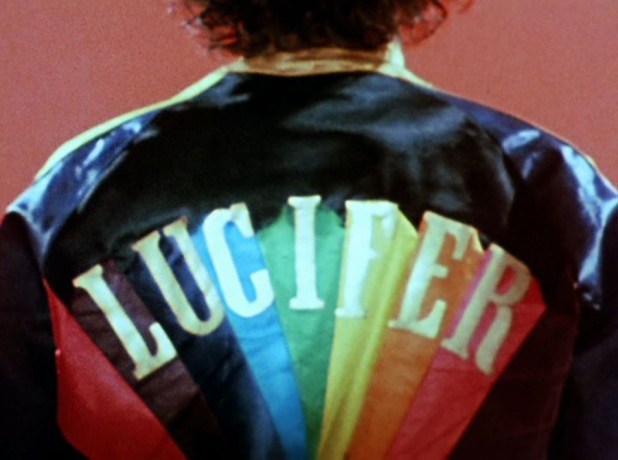
Also: the best satin jacket ever made.

APRIL MOVIE THON DAY 11: Invocation of My Demon Brother (1969)

While you can say that this is but an 11-minute movie, this Kenneth Anger directed, edited and photographed work of art — complete with Moog soundtrack by Mick Jagger — is one of the films that started midnight movies.

Assembled from what remains of the first version of Lucifer Rising, this movie strobes your mind with an assemblage of Anton LaVey presiding over a public funeral for a cat, the cast smoking out of a human skull, Anger on stage leading a ritual, nude men, Vietnam footage, the Stones playing their ill-fated Altamount show and is itself a ritual that follows Crowley’s Holy Law of Thelema in that one must master this universe before achieving the mindset needed to become your own god.

You could also say that it’s a lot of noise over a collage of imagery. Or perhaps Anger’s theory of film as magickal weapon is true. If you follow the logic that this isn’t for everyone, then you believe in Crowley’s thought process and how he claimed the esoteric would become “that which is understood by the people I wish to instruct.”

Evolution will only come by shocking our senses and overloading them with tones, with colors, with images.

Obviously, Bobby Beausoleil is Lucifer and the connections between the occult and the loathsome Manson Family will always be cited.