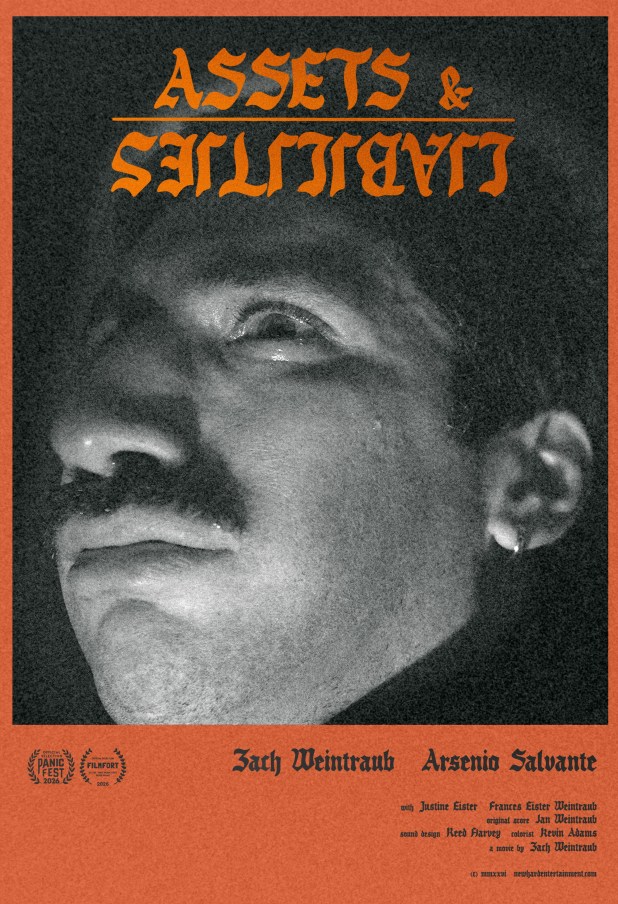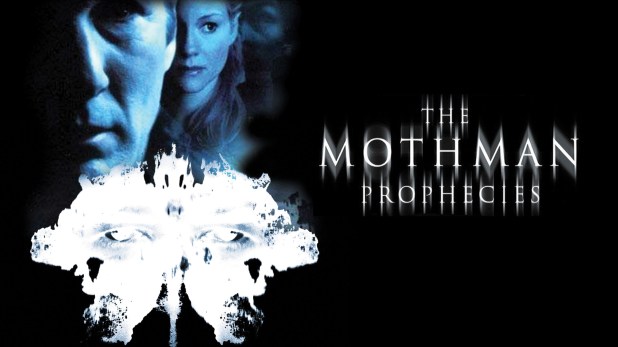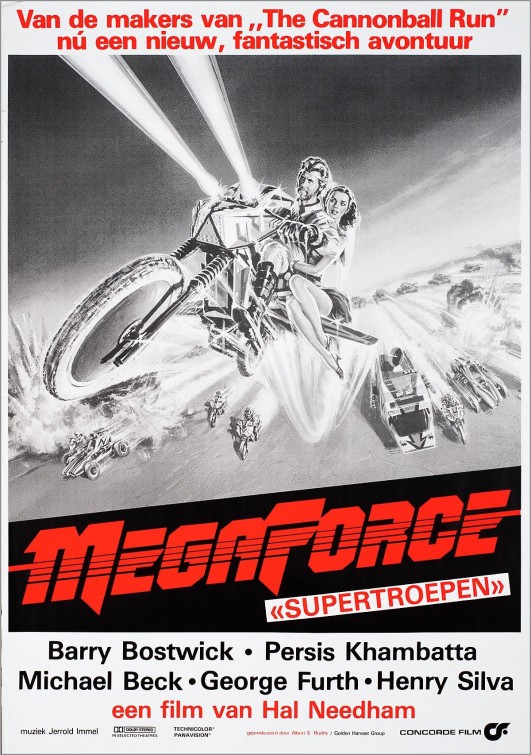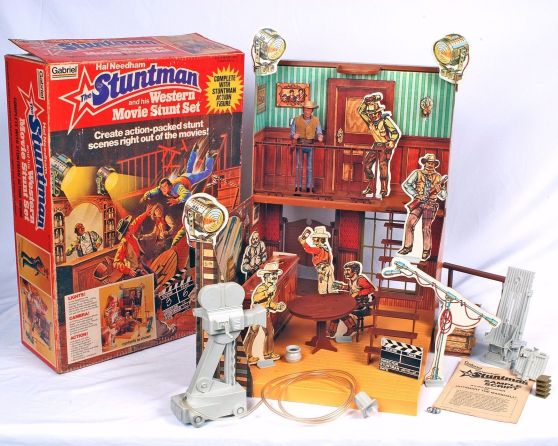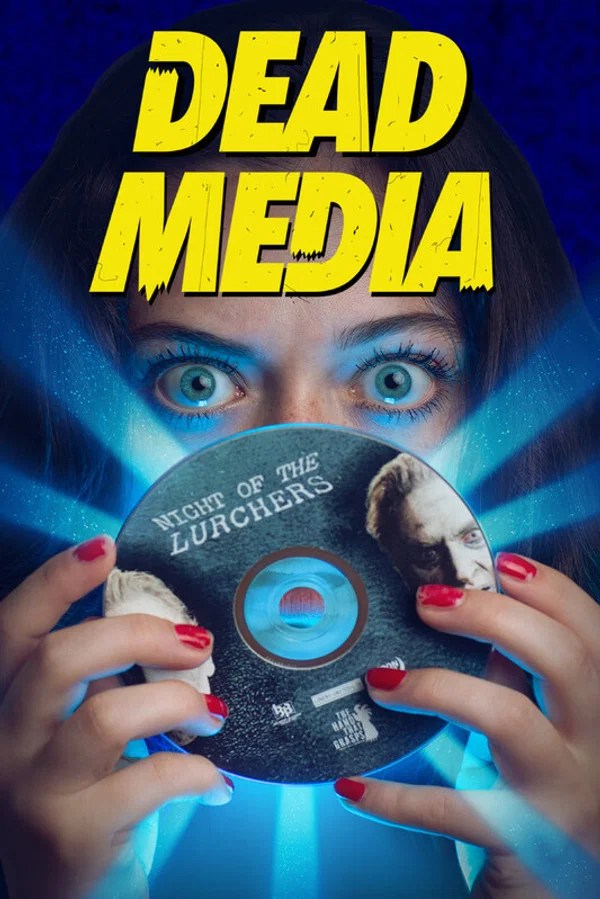
You have to admire the balls of the makers of this movie. Actually, you can probably see them from space. They bought footage of Sir Christopher Lee from another movie and used it as the beginning and end of this movie, then said the film stars the venerable thespian. Learning that a lawsuit would be long and expensive, he just had to fume. I wonder if he was as angry as when he walked out of A Bay of Blood?
Lee’s speech has nothing at all to do with the rest of the movie. Let’s all admire his plaid slacks, however.
Anyway, the real meat of the movie involves the death of a dog named Poopers, four college students killing one of their professors and lots and lots of paintings, then Morak, an evil force, comes out of the possibly dead professor.
You’ll be forgiven if this movie seems like it makes no sense because it doesn’t. And that’s probably why I liked it: I watched it five drinks into a bender, and it was perfect for that moment when alcohol goes from tasting wonderful to tasting like way too much.
This was probably made in 1975, but who cares? How many movies do you know where dead teachers command cacti from beyond the grave to kill their students? I can think of one, and I’m writing about it right now.
Seriously, Christopher Lee spent as much time looking at contracts as all my favorite horror stars. Work is work, but I have no idea how he thought reading a script about a shaman convention inside a wood-paneled room was going to work out all that well.
Evan Lee made one movie. This was it. If he made any more, the world would have exploded.
In case you need to know just how odd and weird and whatever other descriptors you need for it, Ed Wood himself shows up in a cameo. Now that’s a guy who knew how to throw a non-sequitur speech directly into a movie. Pull the string!
April 29: Europsy — Watch a Xerox of Bond, James Bond.
In the 1960s, Mario Bava gave us the candy-colored, pop-art explosion that was Danger: Diabolik. Now, in the 2020s, the Manetti Bros. (Antonio and Marco) have made three movies about the King of Terror that have him more like the comic book version — cold and calculating. After 2021’s Diabolik and 2022’s Diabolik: Ginko Attacks!, we’ve reached the final chapter of their trilogy: Diabolik: Chi Sei? (Diabolik: Who Are You?).
Our story kicks off with Diabolik (Giacomo Gianniotti) and his lover, Eva Kant (Miriam Leone, born to wear a high bun and a catsuit), planning to lift some ancient coins from Countess Wiendemar (Barbara Bouchet!). Eva goes deep undercover at the Central Bank, but things go sideways when a gang of actual, low-rent thugs, led by the respectable lawyer Diego Manden, bursts in. They don’t just rob the bank. They kill the Countess and ruin Diabolik’s perfect plan.
Inspector Ginkgo (Valerio Mastandrea, looking perpetually like he needs a nap and a cigarette) is on the case, but his obsession leads him right into a trap. He infiltrates Manden’s villa alone and gets bagged. Diabolik, also hunting the gang to reclaim his loot, blunders into the same trap. For the first time in sixty years of comic history, the ultimate competitors are chained together in a basement, facing certain death. With the clock ticking, Ginko asks the question we’ve all wanted to know: “Diabolik, who are you?”
The film shifts gears into a gorgeous, high-contrast black-and-white flashback. We see a baby saved from a shipwreck and raised on a hidden island of super-criminals ruled by King (Paolo Calabresi). Diabolik grows up nameless, learning chemistry and the art of the mask. When King tries to double-cross him, our protagonist goes full nature vs. nurture, kills his mentor, steals his fortune and adopts King’s stuffed black panther’s name.
While the boys are bonding over trauma in the cellar, the real powerhouses take over. Altea (Monica Bellucci!), worried about her secret lover Ginko, teams up with Eva Kant. It is the crossover event of the century: the Duchess and the Thief, working together to storm the villa and take down Manden’s gang.
The Manetti Bros. aren’t trying to out-Bava Bava. This is a love letter to the original Sisters Giussani comics. It’s slow-burning, it’s stylish, and it treats its source material with the reverence of a holy relic. By the end, Ginko finally stops hiding his love for Altea and Diabolik and Eva go right back to what they do best: stealing shiny things and looking better than everyone else while doing it.
You can get this — and the other two films in a box set — from Kino Lorber.
If The Harder They Come is Jamaica’sScarface, then Rockers is its Ocean’s Eleven, if the heist involved a bunch of legendary musicians stealing back their dignity (and a motorbike) from the upper class.
Originally intended to be a documentary, director Ted Bafaloukos realized that the reality of the Kingston reggae scene was already more cinematic than anything he could script. He cast the genre’s actual giants, playing versions of themselves, and let the cameras roll in the streets, the shanties, and the recording studios.
Leroy “Horsemouth” Wallace is a drummer living on the edge of poverty, trying to make an honest living by selling records. He buys a shiny red motorbike to get his distribution business off the ground, but it isn’t long before thugs steal it.
By the way, Monica Madgie Craig, who plays his wife here, is his real-life spouse, and those are their children in the movie.
When the police prove to be useless, Horsemouth doesn’t just mope. He rounds up a literal Hall of Fame of reggae icons, including Dirty Harry, Burning Spear and Big Youth, to launch a Robin Hood-style counter-offensive. They aren’t just looking for a bike; they’re looking to redistribute the wealth.
This isn’t a Hollywood sanitized version of Jamaica. It’s raw, it’s loud, and the Patois is so thick and glorious that original US screenings required subtitles. Rockers is a vibrant, sun-soaked middle finger to the establishment. It’s a film where the actors are actually the soul of a nation, and the stakes feel massive because the struggle for the little guy is universal. Whether you’re here for the sociology or just to see Gregory Isaacs look cool in a suit, you can’t lose.
Here’s a wild fact: Ashley Higher Harris is a healer in real life, as well as playing one in Rockers. During production, his herbs healed one of the sound guys from a severe skin allergy.
The MVD release of this film has a 2025 4K restoration from the original 35mm camera negative; select scene commentaries; “Jah No Dead: The Making of Rockers,” a feature length documentary about the making of the film featuring interviews with Eugenie Bafaloukos, Todd Kasow, Kiddus I, Eddie Marritz and many more; archival interviews with director/writer Ted Bafaloukos and producer Patrick Hulsey; music videos; a poster gallery; a trailer; radio ads; a collectible 4K LaserVision mini-poster; reversible cover art and a limited edition 4K LaserVision slipcover. You can order it from MVD.
I guess after fifty years of independent filmmaking, Lloyd Kaufman has earned the right to do whatever the hell he wants, even if I never end up liking most of it. In this movie, what he wants is to take a giant dump on the Bard of Avon.
If you thought Tromeo and Juliet was the final word on Troma’s relationship with William Shakespeare, you clearly haven’t been paying attention to the last two decades of Tromaville history. While most directors mature or elevate their style, Lloyd is still down in the sewer. Literally. A lot of time spent in a toilet.
The setup is classic The Tempest, if Shakespeare had been addicted to social media and Big Pharma kickbacks. Lloyd stars in a dual role as Prospero Duke, a disgraced scientist, and his villainous sister Antoinette.
Prospero was once a big deal in the pharmaceutical world until he was betrayed by Antoinette and the corporate titan Big Al (Abraham Sparrow). Now, he lives in a derelict crack house in the ruins of New Jersey with his daughter Miranda (Kate McGarrigle). When Big Al and his entourage of social justice warriors, corrupt politicians and corporate sycophants take a cruise ship past his hideout, Prospero uses a massive quantity of Whale Laxative to create a literal shitstorm of biblical proportions.
Beneath the layer of filth — and it is a thick layer — Kaufman is actually saying something. He’s taking aim at the opioid crisis, the performative nature of social media activism and the way corporate entities weaponize wokeness for profit. Does he do it subtly? No, he does it with a sledgehammer made of rubber vomit.
#ShakespearesShitstorm is the culmination of everything Lloyd has been preaching since the days of The Toxic Avenger. It’s DIY, fiercely independent and refuses to apologize for existing.
Debbie Rochon is in it. That’s good enough for me.
This includes an introduction by Lloyd Kaufman, producer and cast commentaries, trailers, behind-the-scenes features, and original songs from the movie. You can get it from MVD.
Directed by Stefan Ruzowitzky, this movie is all about honor among thieves within a jagged, frozen landscape. We’re in the middle of a brutal winter where an indigenous game warden, Harlan (Joel Kinnaman), and a poacher he’s just busted, Ani (Cara Jade Myers), find themselves in a precarious alliance when they discover a plane carrying millions has gone down in a lake that’s more ice than water.
As you can imagine, they aren’t the only ones looking for the payday.
This isn’t just a race against the clock; it’s a race against hypothermia. The film leans heavily into the atmosphere of the high-altitude wilderness. You can almost feel the frostbite creeping in through the screen.
Kinnaman plays it stoically, carrying that weary, “I’ve seen too many winters” energy. While Myers, who was in Killers of the Flower Moon, is the standout here, providing the spark of unpredictability that keeps the dynamic from feeling like a standard buddy-cop retread.
Icefall succeeds because it understands that the environment is a more effective villain than any guy with a gun. The sound design is punctuated by the terrifying crack of thinning ice, a sound familiar to anyone who grew up watching 70s disaster cinema.
It’s a lean, mean, and cold-blooded thriller that doesn’t waste time on flowery dialogue when a flare gun or a survival knife can do the talking.
Most people know Ray McKinnon as the tortured preacher from Deadwood or the guy who createdRectify. Most people know Walton Goggins as one of the most electric character actors of his generation. But before they were icons of the new Prestige TV era, they were two guys from the South making some of the weirdest, most soulful, and downright funniest indie cinema of the early 2000s under their Ginny Mule Pictures banner.
Randy Pearson (Ray McKinnon) is a good ol’ boy who is perpetually one bad decision away from total disaster. This time, he’s stepped into it deep by borrowing money from the Mob. When the bill comes due, and the Italians come knocking in rural Georgia, Randy has to turn to the only people left who haven’t completely written him off.
This leads to McKinnon pulling double duty, playing both the hapless Randy and his estranged, gay twin brother, Cecil. It’s a performance that could have devolved into a cheap caricature in lesser hands, but McKinnon gives it a surprising amount of heart.
But let’s be real: the movie belongs to Walton Goggins as Tino Armani. Imagine a modern-day prophet who obsesses over high fashion, cooks high-end Italian meals in the middle of the woods and has a supernatural knack for making money appear and disappear. Goggins plays Tino with a flamboyant, mysterious energy that feels like he stepped out of a Fellini film and got lost in a Cracker Barrel. Throw in the late, great Lisa Blount (Prince of Darkness) as Randy’s long-suffering wife, and you’ve got a mafia comedy that is way more interested in character quirks than hits and heists.
There’s even an uncredited Burt Reynolds in this.
This special edition release also includes the Academy Award-winning The Accountant and a making-of feature. You can order this from MVD.
With the bank closing in and a flask of whiskey usually within arm’s reach, Tommy O’Dell (Walton Goggins) and his brother David (Eddie King) find a savior in the most unlikely form: a mysterious, nameless, beer-chugging Accountant (Ray McKinnon) who arrives like a Southern Gothic ghost in a beat-up car.
If you only know Walton Goggins and Ray McKinnon from their recent turns in Fallout or Deadwood, you need to take a trip back to 2001. This isn’t just a short film; it’s a 40-minute masterclass in Southern Noir and a blueprint for the brilliance this duo would later bring to the screen together.
Produced by Goggins and written/directed by McKinnon, The Accountant feels like a lost Flannery O’Connor story that stumbled into a pack of Camels and a case of PBR. McKinnon plays the titular figure with a frantic, twitchy genius. He doesn’t just crunch numbers; he treats the tax code like a weapon of war, downing beers with a speed that would make a frat boy weep while explaining how the syndicate, a web of corporate conspiracies, is out to kill the American farmer.
As he works to save the O’Dell farm from foreclosure, he takes the brothers on a booze-fueled crusade, preaching his gospel on the decline of the family farm and his personal quest to preserve the dying embers of Southern culture through some truly unconventional (and legally dubious) methods.
McKinnon and Goggins have a shorthand that feels lived-in. Goggins plays the desperation of a man losing his legacy with a raw energy that perfectly anchors McKinnon’s high-wire, philosophical act. It’s darkly hilarious right up until the moment it breaks your heart. One minute you’re laughing at the sheer volume of beer being consumed, and the next, you’re staring at the crushing reality of generational poverty and the big machine grinding the little guy down.
The Accountant won the Oscar for Best Live Action Short and it’s easy to see why. It’s a dense, literary piece of filmmaking that manages to be wildly entertaining without ever feeling like a lecture. This movie also went on to celebrate a Dirve-By Truckers’ song, “Sink Hole:
“I’ve always been a religious man
But I met the banker and it felt like sin
He turned my bailout downThe banker man lit into me
And spread my name around
He thinks I ain’t got a lick of sense
‘Cause I talk slow and my money’s spent
I ain’t the type to hold it against
But he better stay off my farm
‘Cause it was my daddy’s and his daddy’s before
And his daddy’s before and his daddy’s before
And a loaded burglar alarm
Lots of pictures of my purdy family
In the house where we was born
House has stood through five tornadoes
Droughts and floods and five tornadoes
I’d rather wrastle an alligator
Than to face the banker’s scorn
Cause he won’t even look me in the eye
He just takes my land and apologize
With pen, paper and a friendly smile
He says the deed is doneThe sound you hear is my daddy spinning
Over what the banker done
Like to invite him for some pot roast beef
And mashed potatoes and sweet tea
Follow it up with some ‘nana pudding
And a walk around the farm
Show him the view from McGee Town Hill
Let him stand in my place and see how it feels
To lose the last thing on earth that’s real
I’d rather lose my legs and arms
Bury his body in the old sink hole
Under cold November skies
Then damned if I wouldn’t go to church on Sunday
Look the preacher in the eye”
Australia knows the apocalypse. Here’s another entry in their oeuvre of end of the world madness, one that feels like a collision between a Romero social commentary and a Nicholas Sparks novel that took a very wrong turn into a bio-weapon testing site.
An experimental weapon test off the coast of Tasmania goes south (literally), wiping out Hobart and turning the surviving population into The Empty. They aren’t quite zombies. They’re brain-dead husks until their motor functions kick back in and they start wandering around with a sudden case of the munchies.
Ava Newman (Daisy Ridley) is an American physiotherapist who joins the cleanup crew with a side quest of finding her missing husband, Mitch (Matt Whelan). She teams up with Clay (Brenton Thwaites), a volunteer who looks like he’s got more baggage than a Qantas flight, and they go AWOL on a motorcycle to trek across the Tasmanian wilderness. They soon meet Riley (Mark Coles Smith), a lone soldier who locks Ava in a bathroom, makes her wear his dead wife’s clothes and insists on a slow dance.
As if that’s not weird all on its own, he’s also preserving his pregnant, undead wife in a shrine, and he’s already felt the baby kick. That’s when everyone learns that the dead — like a father digging a grave for his family — are just finishing out their earthly missions.
Ava finally finds Mitc — SPOILERS –, and we learn their marriage was a wreck of infertility and infidelity. Even worse? Mitch spent his final hours cheating on her. And then Riley’s undead wife — SPOILERS 2: THIS TIME IT’S PERSONAL — miraculously and biologically impossible gives n birth to a healthy baby.
This is as much a grief meditation as it is a horror movie. Director and writer Zak Hilditch said that it “…started as an exploration of grief, following the death of my mother, dealing with the trauma of that and finding a way to move through it. I never in a million years thought that, by the end of writing the screenplay, I would have infused it with zombies. But this notion of unfinished business wouldn’t leave me alone.“
We Bury the Dead has some good new ideas amongst the expected zombie moments, even if they’re not zombies. They’re not, totally, right?
April 28: Nightmare USA — Celebrate Stephen Thrower’s book by picking a movie from it. Here’s all of them in a list.
The Nail Gun Massacre had three things going for it that allowed it to secure distribution back in the ‘80s.
A great title.
It’s a slasher – those were just a wee bit popular in 1982.
Video stores needed horror stock.
Had it not met all three criteria, this regional horror movie made in Texas for 50 grand would likely be forgotten. Aside from the decent special effects, there’s nothing memorable about it. To quote another famous southerner – Mr. Leghorn – the plot of this film is “…smaller than the little end of nothin’ sharpened.”
There are no character introductions. The movie just jumps right in at frame one to a woman being gang-raped by a bunch of rednecks. Then, a diminutive person in a motorcycle helmet and army fatigues hunts down all the perps and takes them all out with a cool-looking nail gun. In the end, it’s revealed that it’s not the victim doing all the killing, as we’re led to believe. Surprise, surprise! It’s the victim’s brother, Bubba! Reason 3,741 to never visit Texas.
Rewatching this for the first time in many years, I was struck with the same question I was when I first watched it on VHS in the ‘80s. “How many nails would a killer go through to take out one person?” It’s not an effective distance weapon. A nail to the shoulder is hardly fatal. Hell, even several to the face might not kill a person unless it’s square into the temple. A rapey chubby guy with extra padding? You’d have to press right against the jugular. Even then, his protective flesh scarf could skew the entry, potentially postponing his well-deserved death for days or weeks. I mean, a guy got nailed to a chair through his scrotum in The Serpent and the Rainbow and basically walked away.
Perhaps I was spoiled having seen Serpent first, and The Toolbox Murders before this movie. I had seen Dawnof the Dead’s screwdriver zombie kill probably a dozen times by the time Nail Gun Massacre threaded up into my trusty GE VCR. So, this movie never had a chance to win me over.
I felt then, as I do now, that although the masked killer’s weapon of choice looks great, it’s not really all that efficient at killing sexual predators. It’s more suitable for long torture sessions.
But this movie does have a lot going for it. A nail right in the dick? Yeah, this movie’s got that. Which is nice. It also has lots of dark humor. After every murder, the killer rattles off a funny Bond-esque one-liner in a Darth Vader voice. It also has the grossest dinner scene ever. Spaghetti-O’s, collard greens and cream corn. You can smell the combination of odors through the screen.
I’d classify this movie as a Texas giallo. It’s worth watching to see what was possible in the 1980s with such a small budget.
Remember this review the next time you’re out shopping. Whether you’re in your local Home Depot tool aisle or the canned food aisle at Costco….choose wisely. Personally, I’d go for the chainsaw and Beefaroni combo.
April 28: Nightmare USA — Celebrate Stephen Thrower’s book by picking a movie from it. Here’s all of them in a list.
I’ve been super into John Hayes’ films lately. Jailbait Babysitter, The Hang-Up, Rue McClanahan’s debut film Hollywood After Dark, End of the World, Garden of the Dead, Grave of the Vampire, the Tales from the Dark Side episode “The Madness Room,” Dream No Evil…speaking of that last film, in which a woman grows up in an orphanage dreaming of the day her father will return, forever living outside the other children around her, only leaving to be a faith healer in a circus…well, it’s incredible. Sure, there’s no budget, but it has such a strange vision, powered by Hayes’ issues with his own childhood.
Six years later, he made this movie, one of the few times — if only — that the same director made an R-rated film and then remade it as an adult movie, using the name Howard Perkins.
Rosemary (Sharon Thrope, Sodom and Gomorrah: The Last Seven Days) is a teacher trapped in a cycle of sexual repression and father-fixation that would make Freud scribble notebooks full of findings. She never knew her father, grew up in an orphanage and barely cares about her boyfriend John (John Leslie, born in East Liverpool, Ohio and one of the Golden Age of porn’s most recognizable stars). They emerge from a theater showing Let’s Do It Again and One Flew Over the Cuckoo’s Nest, and while he has sex on his mind, as all men do, she couldn’t care less.
She’s leaving for three years to be a teacher and tells him blandly, “I’ve got to say goodbye to my father tonight.” Their lovemaking is barely that. It’s perfunctory. He soon departs and turns to a sex worker named Unis (Leslie Bovee) to fulfill his needs. This must be a regular thing, because he’s given her many of Rosemary’s outfits so that he can do what he really wants to do to his virginal girlfriend and can’t bring himself to unleash. He worships her from behind while calling Rosemary’s name. Once he finishes, he throws his money at her, leaving her unfulfilled and complaining about her back.
She tries to find her father in the flophouse where he lives. Instead, she runs into Mick (Ken Scudder, Thundercrack!) and Kate (Monique Cardin), who assault her at knifepoint. She runs away, only to return three years later, as her father has died and she wants to reconnect with Mick.
Rosemary goes to the funeral home along with John, who is now a police officer, to identify the body, bringing along her students Tracy (Candida Royalle, who pretty much created feminist adult) and Marsh (Melba Bruce, Alex de Renzy’s Femmes de Sade).
She muses, “It was such a nightmare to be a child. Now I’m the adult. Sex is always so degrading, so unclean. I’ll teach my girls all the good things. To be pure in mind and body.”
These girls are part of a cult that worships sex and soon end up making it with the funeral director (John Seeman), who has a small apartment filled with horror movie posters (Dracula, Frankenstein, King Kong, The Black Cat). As Rosemary and John watch — and they chant about eternal wombs — she finally finds an erotic stirring, and she allows him to dry hump her before going back to Mick, whose rough ways finally get her off. He gets a job, stops drinking and treats her right. Guess what? She hates it. He responds by nearly strangling her to death before John tries to save her life. He gets knocked out, and Mick leaves, promising that the next time he sees her, he’s going to kill her. No wonder she takes sapphic solace in the dual arms of her students.
Rosemary stares at herself for long stretches in the mirror and hears the voice of her father, begging her to not bury him because he’s still alive. During the funeral, fog appears everywhere, a demon emerges, the music gets discordant, and everyone in her life — John is now in a relationship with the woman who sexually replaced her, Unis — makes love to her as Rosemary screams, “Daddy! Take me away from this place!” The end is just pure sadness, as she’ll never escape, as the smoke and strange voices engulf her utterly.
This is not an adult Rosemary’s Baby, despite the title and horrible poster. It’s even weirder and better than that. In Nightmare U.S.A., Stephen Thrower wrote that this is “…a brutal sex drama that stands as one of his (Hayes) most disturbing films, with strong echoes of the family trauma theme that incessantly colored his career.” A lot of that is because Hayes was raised by an alcoholic uncle and an ancient grandmother, while his sister Dolores was sent to a convent, emerging only to have multiple children and descend into fanatic religious behavior.
If Dream No Evil was a melancholic, circus-tent meditation on a missing father, then this film is the pitch-black, grimy realization that some things are better left buried.
You must be logged in to post a comment.