2023 Calgary Underground Film Festival: Black Barbie: A Documentary (2023)

Director and writer Lagueria Davis has created an amazing movie that asks so many questions about Barbie and what she means to the world of race. Yes, there were once no black Barbies, then there was only Julia, Barbie’s black friend who had no African-American features, just the same doll with black skin. And today, we have come pretty far, but still not far enough, as this movie shows.

Davis’ aunt Beulah Mae Mitchell worked at Mattel for 45 years and was only the second black person to work at their headquarters. She became friends with the woman who created Barbie, Ruth Handler, as well as Kitty Black Perkins, who made the first black-featured Barbie.

At one point, girls had to ask, “Why not make a Barbie that looks like me?” I was thinking about this today at a toy show, as when I was a kid, the only choices black kids had when buying Star Wars toys were Lando and one of his Bespin guards. That’s it. Two black dolls and hundreds of other aliens and all white people.

I liked how this film showed how people interacted with the doll as kids, what it means to them today and how the brand still needs to do better. That said, the fact that representation has increased does mean something. As a purchaser of boy toys growing up, G.I. Joe always had a diverse team of ethnicities and outlooks, even having multiple African-Americans: Roadblock, the heavy machine gun soldier who joined the army to learn how to be a chef; Doc, a military chaplain and medic who despite being on an anti-terrorism task force is a pacifist; Stalker, who escaped the ghettos of Detroit to be a leader and Alpine, who was an accountant and a mountaineer. On the cartoons, the Cobras even had black characters, such as Cobra officer Lieutenant Clay Moore and Raven, a Strato-Viper pilot. As for He-Man, an all-white line, they have added the Sun Man characters to their characters, providing some much-needed addition of other races.

The “Barbie and Nikki Discuss Racism” moment in this in pretty weird, though. I think it’s important to speak on these issues, but even G.I. Joe mainly handled problems like downed power lines. It’s a big topic for kids to get into and are Barbie and Nikki the right people to be discussing these heavy issues?

Black Barbie raises thoughts and questions I didn’t think of and for that, I found it an interesting film. I’d liked if it was a little shorter, but it’s not my movie or story to tell.

This movie is part of the Calgary Underground Film Festival, which for twenty years has been dedicated to elevating Calgary’s cultural landscape with the best in international independent cinema. Recently, CUFF was named one of the Best Horror Festivals in the World, 2022 by Dread Central, and one of the World’s 50 Best Genre Festivals and one of 50 Film Festivals Worth the Entry Fee in 2021 by MovieMaker Magazine. CUFF continues to attract audiences with its programming of films that engage audiences and defy convention.

It’s running from now until April 30 and you can see the entire schedule here.
2023 Calgary Underground Film Festival: Squaring the Circle (The Story of Hipgnosis) (2022)

Pink Floyd, Def Leppard, T. Rex, Black Sabbath, Led Zeppelin, AC/DC, Scorpions, Paul McCartney & Wings, the Alan Parsons Project, Genesis, Peter Gabriel, Electric Light Orchestra, Rainbow, Styx and more. All of these artists used Hipgnosis, the English design group made up of Storm Thorgerson, Aubrey Powell, and Peter Christopherson. They became nearly as big of rock stars as the bands they did art for.

Directed by Anton Corbijn (whose work in music videos has similarities in becoming a rock star to rock stars just like Hipgnosis) and written by Trish D Chetty, Squaring the Circle gets into the artists’ best-known work, such as Led Zeppelin’s Houses of the Holy and Pink Floyd’s Dark Side of the Moon while hearing about the influence — and what it was like to be part of that art — thanks to interviews with McCartney, Pink Floyd’s Roger Waters, David Gilmour and Nick Mason. Zeppelin’s Robert Plant and Jimmy Page and Peter Gabriel.

Corbijin told The Hollywood Reporter, ““At 17, I started taking photos of musicians who created the soundtrack of my youth, first for magazines and later for record covers, and then trying out moving images as a director for music videos from the early ’80s onwards. It was a long road, but I eventually made feature films: my first one, Control, dealt with music I loved, and now my first documentary deals with record covers and their beauty and power, and the craziness to get there. It has been an honour to tell Hipgnosis’, Storm’s, and Po’s, story in Squaring the Circle, which, thanks to the great team at Utopia, will be a cinema release in the first half of 2023.”

This is a gorgeous film that tells me so much of what I want to know about a time and place that I want to know more about. As such, it’s nearly perfect, getting across the emotions and real people behind the art that has been made nearly mythical today.

This movie is part of the Calgary Underground Film Festival, which for twenty years has been dedicated to elevating Calgary’s cultural landscape with the best in international independent cinema. Recently, CUFF was named one of the Best Horror Festivals in the World, 2022 by Dread Central, and one of the World’s 50 Best Genre Festivals and one of 50 Film Festivals Worth the Entry Fee in 2021 by MovieMaker Magazine. CUFF continues to attract audiences with its programming of films that engage audiences and defy convention.

It’s running from now until April 30 and you can see the entire schedule here.
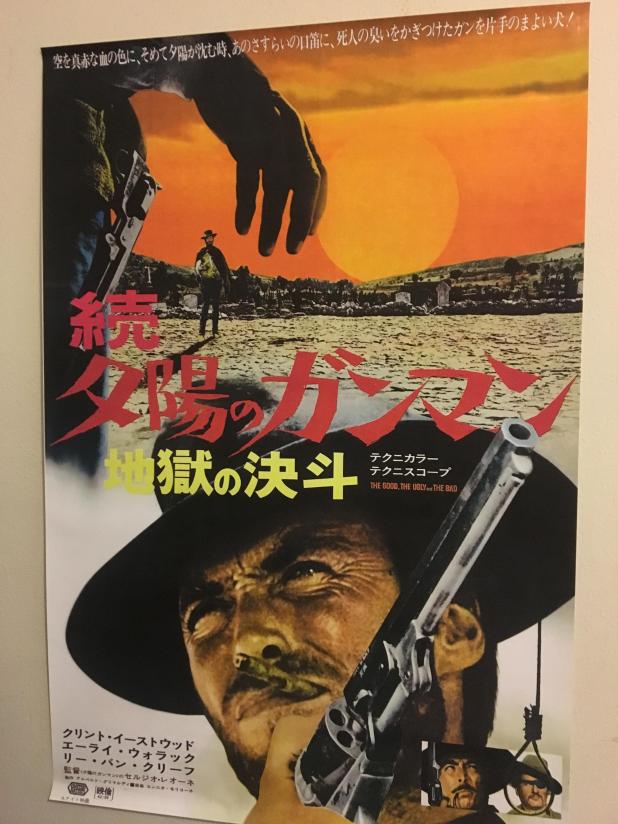
APRIL MOVIE THON 2: The Good, The Bad and The Ugly (1966)

April 30: How the (Not) West Was Won — A Western not made in America.

My Uncle Bill’s name was Frank, not Bill, but at some time in his teenage years he decided that he wanted to be Bill, after Buffalo Bill, and everyone allowed him to be. So even into his senior years, no one knew his real name. I tell you this to establish his cowboy movie bonafides. He and my father would often quiz each other into the night around a campfire about famous stars and they seemed to agree that Lash LaRue was the best, but then again, Lee Van Cleef was the best bad guy.

We Italians know something of Westerns.

After the success of For a Few Dollars More, United Artists approached the film’s screenwriter, Luciano Vincenzoni, to sign a contract for the rights to this film and the next one. Producer Alberto Grimaldi, director Sergio Leone and he had no plans, but with their blessing, Vincenzoni came up with the idea of three rogues — the Man With No Name (Clint Eastwood), Tuco Benedicto Pacífico Juan María Ramírez (Eli Wallach) and Angel Eyes (Lee Van Cleef) — seeking hidden gold sometime after the Civil War. They got a bigger budget, Eastwood got $250,000, a Ferrari and a percentage, then the camera rolled.

This would be the last role that Eastwood would do for Leone, who he saw as too much of a perfectionist. Harmonica in Once Upon a Time In the West would go to the man who was originally going to play Angel Eyes, Charles Bronson.

The film begins with Angel Eyes killing men on his way to finding Confederate gold while The Man With No Name and Tuco keep pulling a scam where The Man collects the bounty on Tuco’s head, saves him and then they do it again in a different town. After dealing with Tuco’s constant complaining, he finally strands him in the desert and the “Rat,” as Eastwood’s character describes him, gets his revenge by marching him across the same hot and desolate no man’s land.

The twists and turns of this movie find a man named Bill Carson (Antonio Casale)  burying gold in one grave in a cemetery. Tuco knows the name of the burial ground while The Man knows the grave. $200,000 worth of gold is hidden away, which is a lot of money even today, so you can imagine why everyone is willing to do anything for it.

American audiences were tired of Italian cowboys by this point and who can say why they were so dumb? Roger Ebert realized this and said that he “described a four-star movie, but only gave it three stars, perhaps because it was a Spaghetti Western and so could not be art.”

As bad as Van Cleef seems on screen, he did have some rules about being a good person in his real life. He was supposed to slap around Maria (Rada Rassimov) in one scene and said, “I can’t hit a woman.” Rassimov told him, “Don’t worry. I’m an actress. Even if you slap me for real, it’s no problem”, but that’s a double slapping her. Van Cleef said, “There are very few principles I have in life. One of them is I don’t kick dogs, and the other one is I don’t slap women in movies.”

Even the name of this movie is ironic, used past film and having a meaning in actual life. The Mexican standoff found its way into many movies, particularly the work of Quentin Tarantino, who said that the final scene is his favorite of all time: “During the three-way bullring showdown at the end, the music builds to the giant orchestra crescendo, and when it gets to the first big explosion of the theme there’s a wide shot of the bullring. After you’ve seen all the little shots of the guys getting into position, you suddenly see the whole wideness of the bullring and all the graves around them. It’s my favorite shot in the movie, but I’ll even say it’s my favorite cut in the history of movies.”

APRIL MOVIE THON 2: Requiem for a Gringo (1968)

April 30: How the (Not) West Was Won — A Western not made in America.

In the United Nations that is exploitation cinema, I love the connections that are built. It may seem unexpected, but the line between Japanese samurai cinema and the Italian Western are incredibly direct. Yojimbo is A Fistful of DollarsRequiem for a Gringo has elements of Harakiri.

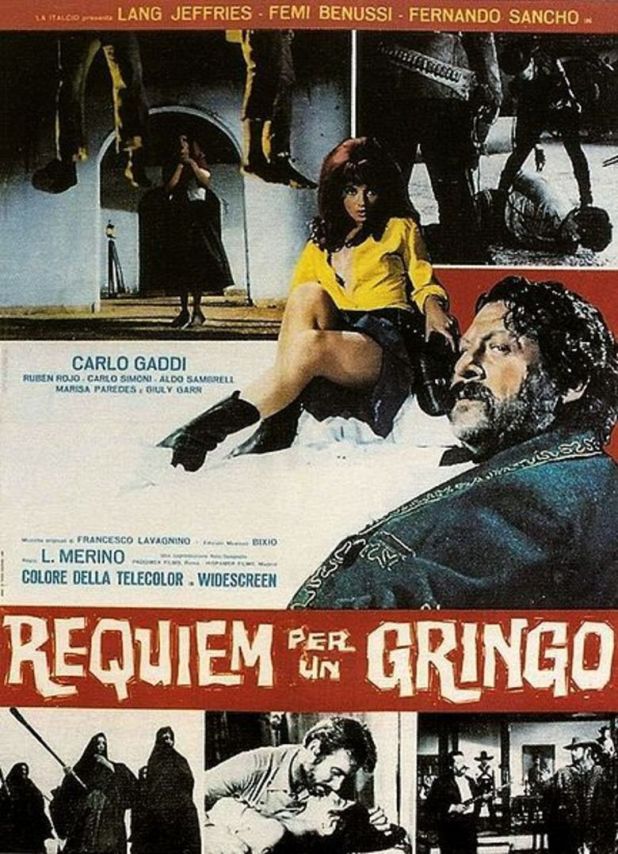
Directed by Eugenio Martin (Horror Express) and José Luis Merino, this film is also known as Requiem for Django because, well, in 1968 every movie it seemed was about Django. The Django in this film is also known as Ross Logan and he’s hunting down a gang — while dressed in a leopard skin! — using astronomy to plan his attack during an eclipse. He also knows how to play the gang’s personalities and desires against one another, which is a step beyond the traditional Italian Western hero who may go in guns blazing.

He can also precict storms, which is a strong skill to have in the West.

He puts Porfirio Carranza (Fernando Sancho) and his men — Tom Leader (Rubén Rojo), Ted Corby (Carlo Gaddi) and Charley Fair (Aldo Sambrell) — at odds with one another. Meanwhile, the stories of two women — Alma (Femi Benussi, So Sweet, So Dead), who is supposedly the property of Carranza but is already sleeping with Leader but she knows she’s trapped in a gang of maniacs, and Nina (Marisa Paredes), a young woman constantly pursued by Corby and trying to stay pure for just one more day — take more of a center stage than in other Eurowesterns.

I love how this genre bends and flexs to accept new ideas, even if we live within the constant Western cycles of murder and revenge.

APRIL MOVIE THON 2: Matalo! (1970)

April 30: How the (Not) West Was Won — A Western not made in America.

It would take other film industries decades to equal the sheer volume that the Italian exploitation machine could accomplish. In the four years since Django and five since A Fistful of Dollars and West and Soda, a traditionally animated movie whos escreation predates Leone’s film, hundreds of cowboys thundered out of the European West and several genres emerged, from comedies and zapata westerns to films centered on the tragic hero, horror westerns and this film, which is uncatagorizable but could maybe be an acid horror art deconstruction.

Cesare Canevari only directed nine movies, but wow if he didn’t hit nearly every genre: an early Western (Per un dollaro a Tucson si muore), giallo (A Hyena In the Safe), an early Italian Emmanuelle (A Man for Emmanuelle), Eurospy (Un tango dalla Russia), Ajita Wilson’s first movie (The Nude Princess), late era giallo with plenty of sleaze (Killing of the Flesh) and Naziploitation (the go all the way madness that is  The Gestapo’s Last Orgy).

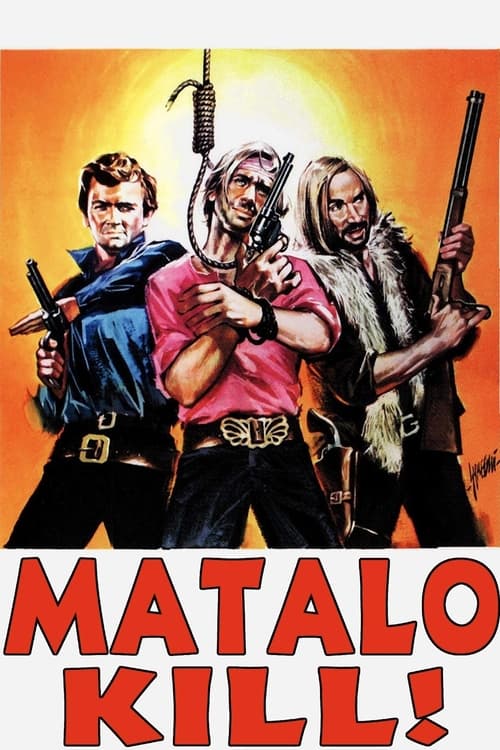
It starts with a desperado named Bart (Corrado Pani) walking through the town as cocky as possible, despite the fact that he’s headed to the gallows. He even puts his own neck in the noose, knowing that some Mexican bandits are about to save his neck. His walk back out of town is even more audacious, as he’s just stood on the precipice of death and watched the chaos that he has ordered come true. He somehow tops that by killing off the men who saved him before meeting up with his friends Ted (Antonio Salines) and Phil (Luis Dávila) in a ghost town where the movie decides to slow down as they explore an abandoned hotel as electric guitars scream and wind blows through every frame of this film.

They’re joined by Mary (Claudia Gravy, Yellow Hair and the Fortress of Gold, Tuareg: The Desert Warrior), a snarling force of female nature that finds herself strong enough to be on the side of stagecoach robbing evil. That robbery seems to cost Bart his life and the film switches gears as the gang hides out in the ghost town, abusing an old woman until Ray (Lou Castel) and a younger widow (Mirella Pamphili) arrive and they too are abused by the gang. Luckily, Ray has a horse who seems smarter than him and he’s quite good with a boomerang, which this movie uses for wild POV shots as he whips them at the gunmen.

What’s wild is that a year earlier, Dio non paga il sabato (Kill the Wickeds) was directed by Tanio Boccia and it’s nearly the same movie but shot as if it were a normal film, not the sometimes wandering, other times hyperfocused Matalo!

APRIL MOVIE THON 2: The Great Silence (1968)

April 30: How the (Not) West Was Won — A Western not made in America.

When you’re looking for a happy movie to start the day with, let me not recommend The Great Silence, a film that Sergio Corbucci created after the deaths of Che Guevara and Malcolm X.

But let me definitely recommend it any other time.

Between Minnesota ClayDjangoThe Mercenary and Navajo Joe, Corbucci contributed more to Italian Westerns than nearly anyone short of Leone. But he was getting tired.

Corbucci said, “Every time I make a Western, I say “This is the last”. I get tired and nervous; I hate the horses and the desert. I go back to town wanting to make a film about a man who drives a car, uses a phone and watches TV. But once I’m there, I start thinking how nothing is finer in the cinema than a horseman, with the setting sun and a red sky. That makes me want to carry on. And I think up another Western with my actors. ”

So one more cowboy movie. But this time, in the snow.

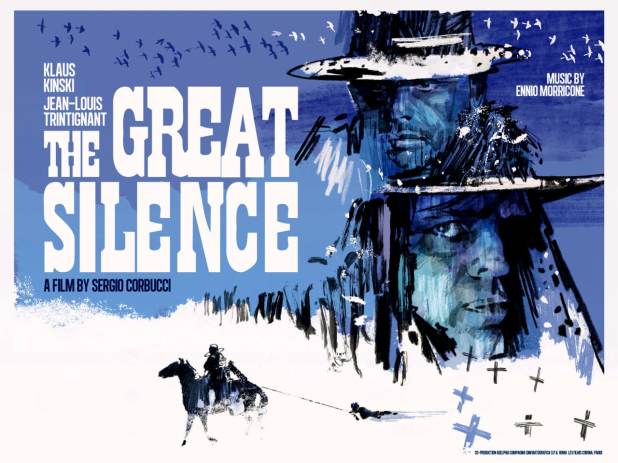
Italiam Westerns had made their way, well, west thanks to casting American actors, which worked thanks to dubbing. Marcello Mastroianni had the idea of playing a mute gunfighter and told Corbucci that he had always wanted to appear in a Western. Just the fact that he didn’t know English may have held him back. So when Corbucci first met Jean-Louis Trintignant — Franco Nero turnd it down to be in Django — he discovered he didn’t speak English. So instead of dubbing, he could play the hero in this movie, Silence.

For the villain, who is a worse human being than Klaus Kinski? Corbucci took this further by asking him to base his role on Gorca, the vampire played by Boris Karloff in Mario Bava’s Black Sabbath. Bava’s movie would influence this film in many ways. Kinski was Kinski on set, having an affair while his wife and child were there; also he told Frank Wolff — who played Sheriff Gideon Burnett — “I don’t want to work with a filthy Jew like you; I’m German and hate Jews.”  Wolff responded by strangling Kinski.

The Great Silence also has a cast of noted Italian actors, including Luigi Pistilli (Your Vice Is a Locked Room and Only I Have the Key), Bruno Corazzari (Live Like a Cop, Die Like a Man), Raf Baldassarre (the tour guide in Eyeball) and Mario Brega (a butcher who went into acting; he’s Corporal Wallace in The Good, the Bad and the Ugly). They’re joined by Vonetta McGee, who dropped out of pre-law at San Francisco State College and moved to Rome. This was her first movie and she was invited back to America by Sidney Poitier, where she became a blaxploitation star. She’s also in Repo Man, probably because not only is she a great actress, but because Alex Cox is a big Italian western fan.

The movie that emerged is set up like a traditional Western — Loco (Kinski) and his men are bounty hunters who have hunted a group of people unfairly condemned as criminals; they use the law of the bounty to cover the fact that as capitalists they love money and as maniacs they love to kill. Silence should be the strong and silent man who rides into town, cleans things up and rides back out. But he’s different because he uses a gun — a Mauser C96 semi-automatic pistol — that gives him an unfair advantage over his enemies, men who he stops by shooting off their thumbs, keeping them from doing any more violence.

Yet even his heroism, even his love for a good woman — Pauline (McGee) — can’t save him. But in 1968, just the fact that a white man and a black woman had a love scene was subversive (as subversive as the hero being ultimately ineffectual). Corbucci said, “People don’t go to the cinema to see love scenes. Buñuel was right when he said the most embarrassing thing, for a filmmaker, is to point a camera at a couple kissing. Nothing is more banal than a kiss. Generally you can’t have love scenes in stories which are action-based – though in The Great Silence I shot quite a beautiful love scene between a black woman and a mute. There was something very beautiful and very morbid about it. This was the only love scene I ever included in a film of this genre…”

Yet Alex Cox said that the real moral of this movie is that “sometimes, even though you know you’ll fail, you still do the right thing,” which might make Silence, even though he fails, the most noble of all Italian Western heroes.

That said, Corbucci also delivered two other endings:

In one, Silence is shot by Loco’s henchman in both of his hands before he can draw his gun. Instead of killing his enemy, Loco tells his men to leave. The fate of everyone is left up in the air.

Yet there’s also a happy ending. Seeing as how this would be released over the holidays, Corbucci had a different ending where Loco draws before Silence initiates their duel. Yet the sheriff has survived, helping Silence to kill the other bounty hunters, showing that he has created a metal sleeve to protect his hand, just like Clint Eastwood did in A Fistful of Dollars. Silence agrees to be a deputy and everyone leaves happy.

But that doesn’t work, does it?

The Grand Silence didn’t play the UK until 1990 and the U.S. until 2001. When it was screened for 20th Century Fox boss Darryl F. Zanuck, he was so offended by the ending that he nearly swallowed his cigar and refused to release it in the U.S. In Italy, a viewer was so upset by the closing that he shot the screen with a gun.

So maybe wait to watch this until later in the day and not immediately upon waking up like I did.

SALEM HORROR FEST: Fright Night 2 (1988)

EDITOR’S NOTE: This movie was watched as part of Salem Horror Fest. You can still get a weekend pass for weekend two. Single tickets are also available. Here’s the program of what’s playing.

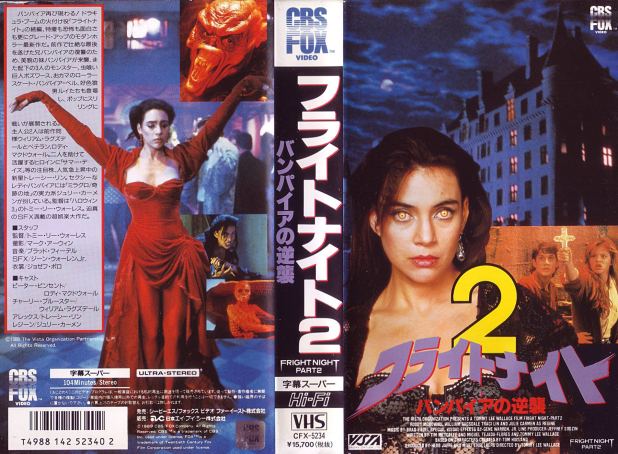
Three years and plenty of therapy later, Charley Brewster now believes that Jerry Dandrige was a serial killer and that vampires don’t exist. Now a college student with a new girlfriend, Alex Young (Traci Lind, who dated Dodi Fayed before Princess Diana), Charley sadly discovers that Peter Vincent is back to hosting Fright Night. As they leave Peter’s apartment, a new nemesis, Regine steals Charley’s attention. There’s even a new version of Evil Ed, a vampire named Louie (Jon Gries, who is great in everything he’s done from Joysticks and Real Genius to The Monster Squad and TerrorVision) who is making Charley and Alex’s lives hell.

It turns out that she’s Jerry Dandrige’s brother and here for revenge. Now, the tables are turned and Peter Vincent is the one who has to convince Charley that vampires are real. Even worse, she’s turning Charley into a vampire and has stolen the Fright Night hosting job away from Peter! There’s also a transgender rollerskating vampire, putting this movie years ahead of others in presenting LGBT roles (even if Belle is evil).

One small trivia note: the vampire form that Regine transforms into at the end was modeled after 45 Grave lead singer Dinah Cancer. If you don’t know her band, they sang the song “Partytime” from Return of the Living Dead.

There’s no way that this movie could live up to the original, but it tries. It hasn’t really been seen much, as LIVE Entertainment barely released it on home video. Artisan Entertainment released it on DVD in 2003, but it’s been out of print for a long time and commands big bucks. You can often find a bootleg of the high definition TV edition of the film at conventions (that’s where we got it!).

Written by Holland and directed by Tommy Lee Wallace (Halloween III: Season of the Witch and the original It, as well as the writer of Amityville II: The Possession, a movie I never cease trying to get people to watch), this movie suffered at the hands of a very real tragedy.

McDowall loved playing Peter Vincent and was eager to bring Holland back to make a third film, so he set up a meeting with the two of them and Carolco Pictures chairman Jose Menendez. Legend has it that the meeting did not go well. Later that night, Menendez and his wife were infamously murdered by their sons, Lyle and Erik. When McDowall learned of the news, he called Wallace and said “Well, I didn’t do it. Did you?”

As a result of the murders, Fright Night Part 2 lost its nationwide release schedule and only played in two theaters before being released directly to video. All of the planned advertising and public relations were canceled as well, which meant that most folks didn’t even know it was released until it showed up on video!

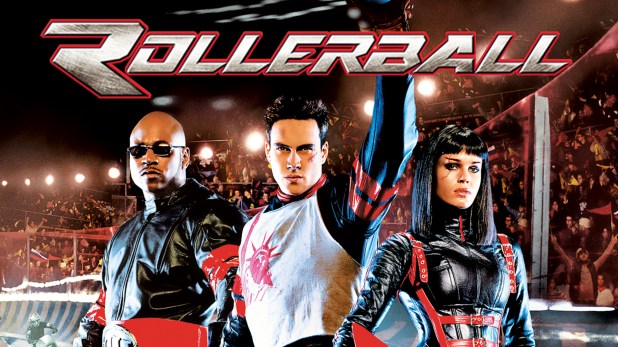
APRIL MOVIE THON 2: Rollerball (2002)

April 29: Drop A Bomb — Please share your favorite critical and financial flop with us!

I’m usually nice about movies, even when they fail on every level, but why the fuck does this movie exist and who is it for?

I should just stop this article after that sentence.

Somehow, John McTiernan is the same person who made Die Hard and Predator. How did we get here?

Like the 1975 movie, it’s based on William Harrison’s short story “Roller Ball Murder,” but unlike that movie, it’s set in the present, avoids a lot of the political issues of the world and oh yeah — when the James Caan-starring original movie was made, people knew and understood a different roller derby, placing it into the same strange world as pro wrestling and not how we see it today, which is a female-centric sport that has no predetermined elements.

Jonathan Cross (Chris Klein, maybe a step down from Caan, end of tweet) and Marcus Ridley (LL Cool J) are the only good players on Kazakhstan’s Zhambel Horsemen. Sure, everyone gets destroyed but them, but team owner Alexi Petrovich (Jean Reno; if I wrote he deserves better, I would have to say it for everyone in this movie, so just add “he or she deserves better” every time you read most of the names in this) keeps them supplied with money, booze, cars and women like their teammate Aurora (Rebecca Romijn in a black wig; you’d be amazed with black bangs can do to a heart rate). The secret is that Alexi and his henchman Sanjay (Naveen Andrews) have been making the game more dangerous to make it more popular.

You know who knows about worked or semi-worked sports churning up and spitting out bodies? Former ECW mastermind Paul Herman and MMA fighter Oleg Taktarov who show up in this. So does Shane McMahon, which meant this show was promoted all over WWE TV.

How did we get here? The first draft of the script was considered by many to be superior to the original film, yet McTiernan didn’t like it because it focused too much on social commentary. He wanted action and action he created, even if initial test screeners showed the movie to be confusing and even restrained when it should be going for it with a hard R if there was no story.

Thirty minutes were cut out of the first cut, the entire ending was re-shot and changed, massive reshoots and re-edits happened and some of the cuts were made because MGM said the movie was “too Asian,” which for many reasons — mostly all the movie in the Chinese movie market — would never happen today. Oh yeah — the score by Brian Transeau was “too Arabic” and was replaced with a new score by Éric Serra. And then an entire sequence looked too dark, so they reshot it, then made it look like it was all green night vision and you still couldn’t see it.

It made $25.9 million on a budget of $70 million but hey — Slipknot is in it!

APRIL MOVIE THON 2: Green Lantern (2011)

April 29: Drop A Bomb — Please share your favorite critical and financial flop with us!

Martin Campbell made two Zorro and two James Bond movies, but that in no way seemed to prepare him for this DC Universe film. It took a long time to get this far, as Warner Brothers had spent nearly 15 years working on ideas, starting with Kevin Smith and Quentin Tarantino turning down the film. Robert Smigel wrote a treatment with Jack Black in the lead, but comic book fans hated that.

Ryan Reynolds, who played Green Lantern Hal Jodan, said “You really need a visionary behind a movie like that, but it was the classic studio story: “We have a poster, but we don’t have a script or know what we want; let’s start shooting!”

It was also one of those movies that needed to be a big hit to even break even. In fact, to make money, it needed to bring in $500 million.

Roger Ebert probably summed it up best: “It intends to be a sound-and-light show, assaulting the audience with sensational special effects. If that’s what you want, that’s what you get.”

The Green Lantern Corps — which are a lot like the science fiction series Lensmen — has protected the galaxy for billions of years. Our sector of the galaxy — 2814 — has been protected by Abin Sur (Temuera Morrison) until the alien demon Parallax (Clancy Brown) escapes and mortally wounds him; he passes on his ring, power battery and oath to cocky pilot Hal Jordan (Reynolds). He works for Ferris Aircraft, operated by his former girlfriend Carrol Ferris (Blake Lively; probably the only positive of this movie is that this is where she and Reynold met; they later married in a plantation, which is still kind of weird to me). He soon goes to the home of the Green Lanterns, Oa, where he is trained by Tomar-Re (the voice of Geoffrey Rush), Kilowog (Michael Clarke Duncan) and Corps leader Sinestro (Mark Strong), who doubts Jordan to the point that he goes back to Earth.

Meanwhile, Senator Robert Hammond (Tim Robbins) has gotten the body of Abin Sur to his strange son Hector (Peter Sarsgaard) and as he’s exposed to Parallax’s energy, his head starts to grow and his evil side comes out. In the comics, Parallax caused Hal Jordan to turn evil. Here, it’s just a CGI monster to throw into the sun.

Reynolds hated the movie and working with Campbell, who wanted Bradley Cooper and felt stuck with the actor, who was happy when it combed. How happy? In Deadpool 2, he goes back in time and stops himself from taking the role.

Other than Amanda Waller (Angela Bassett, who joined the cast nine days before shooting), other DC characters include Green Lanterns Hannu, Apros, NautKeLoi, Norchavius, Voz, Larvox, Morro, MedPhyll, R’amry Holl, Rot Lop Fan. Boddikka, Galius Zed, Amanita, Penelops, Stel, Green Man, M’Dahna, Isamot Kol, Bzza, Lin Canar, Salakk and Chaselon. What, no Ch’P, Katma Tui or Arisia?

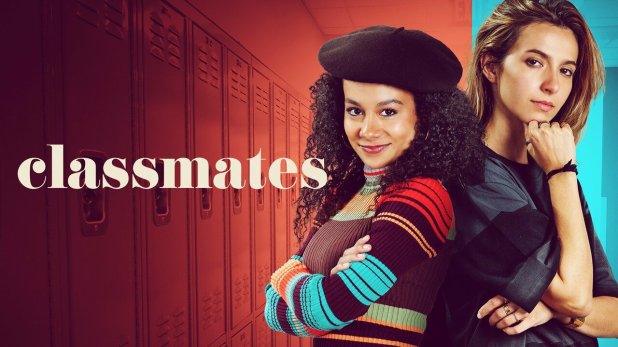
TUBI ORIGINAL: Classmates (2023)

You probably know Danielle Fishel as Topanga from Boy Meets World. She’s married to Jensen Karp, a former white rapper who wrote the book Kanye West Owes Me $300 (and other true stories from a white rapper who ALMOST made it big), owns Gallery 1988 and started this whole weird Twitter urban legend that Cinnamon Toast Crunch had shrimp tails in it.

Anyhow, she directed this Tubi original and he wrote it.

Anabella (Anjelica Bette Fellini) and Raury (Kayden Muller-Janssen) may have gone to the same high school, but they never spoke. Why would they? Anabella is the heir to the Meat Sleeves empire and has gone to college to basically do nothing and learn how to get ready to eventually take over her father’s company. Raury has worked multiple jobs to get to the same school, applying herself and winning the scholarships, loans and grants she needs to be the first person in her family to ever go to college.

Due to a computer hack, Anabella and Raury’s identities are switched, despite them coming from different worlds and even different races. But in the time they have to explore their new selves — unburdened from their past and expectations thanks to the double fresh start that college and this identity hack has provided — to explore who they really want to be.

This movie really struck me with how funny it was and how creative. It’s above the standard Tubi original and has a lot of cute little moments that make you enjoy both characters and root for them. Fellini and Muller-Janssen are great in their roles and really play off each other well.

You can watch this on Tubi.