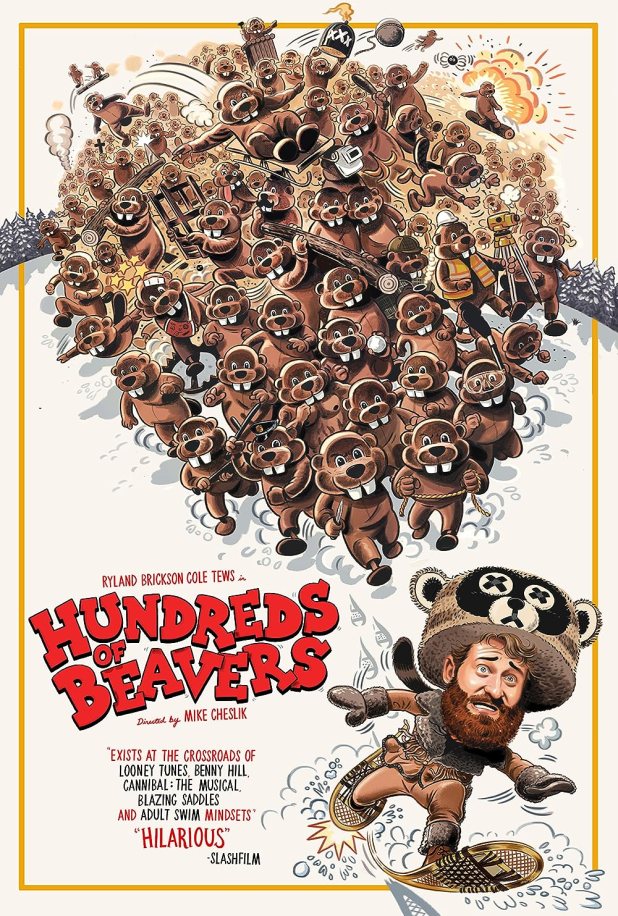
The same people who made this made the equally wild Lake Michigan Monster. Let me sell you on this: it’s a Merrie Melodies-influenced black and white no dialogue movie about an applejack maker whose life is ruined by beavers, so he fights back against them as a trapped and finds himself up against, well, hundreds of them.
Jean Kayak (Ryland Brickson Cole Tews, who co-wrote this with director Mike Cheslik) must survive a brutal winter, then learn how to trap fur, selling the dead beavers to The Merchant (Doug Mancheski) while making eyes at his daughter The Furrier (Olivia Graves).
All the while, the beavers are planning to destroy mankind.
This movie is an absolute joy, a quick moving living and breathing cartoon in which one man challenges the odds and the beavers and the snow and the sharp objects and oh man, this was great.
Hundreds of Beavers is part of the Popcorn Frights Film Festival. You can get a virtual pass to watch the festival from August 10 to 20. To learn more, visit the official site. To keep track of what movies I’ve watched from this Popcorn Frights, check out this Letterboxd list.
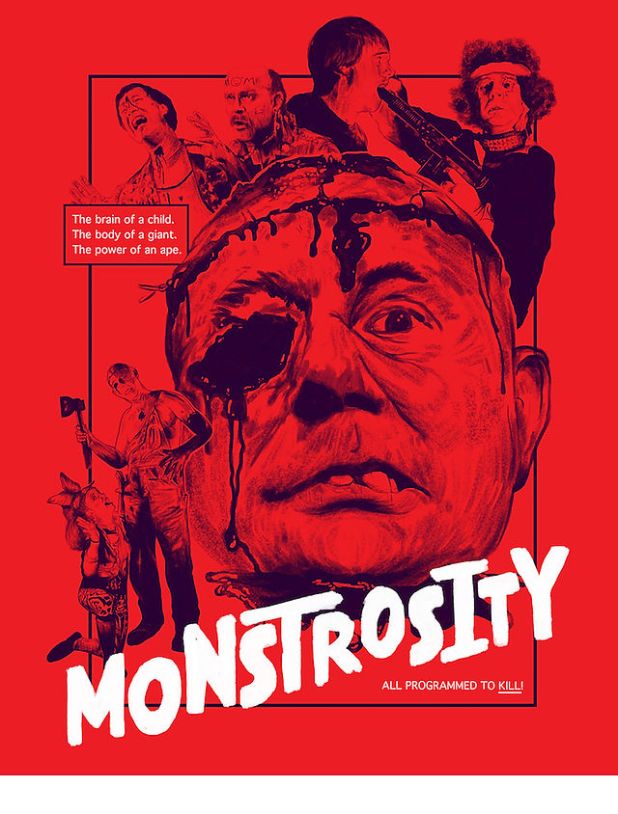
Three maniacs — Clay (Tommy Voager), Kyle (Joe Darrel) and Savage (Charles Prior) — have assaulted Ronnie (Audra Marie Ribeiro) and then Clay goes even further, dressing as an orderly and killing her as she heals in a hospital bed, then even going further to tear the pages out of the police mugshot book that has their photos.
Her boyfriend Mark (David Homb) is, as you can imagine, destroyed. He tells his friends Scott (Michael Lunsford and Carlos (Joe Balogh) that he wants revenge, but then they bring him down to Earth. He could go to jail. Worse, he could be killed. But, Carlos wonders, what if they made a golem?
It’s at this point that you realize that this movie is not a normal movie and instead you are in the world of Andy Milligan. Carlos studied religion in college and man, if I knew they taught you how to make golem, well, I wouldn’t have gone to art school. Scott goes to med school and has some dead bodies. I have no idea where they got the gorilla parts, to be honest. And soon, Frankie (Haal Borske) is ready to hunt down those three people who ruined Mark’s life.
That’s when Milligan decides that maybe instead of this being a revenge-o-matic, it should be a comedy about Frankenstein trying to fit in and his love story with a girl named Jamie Lee Curtis Wackowski (Carrie Anita), who helpfully explains that her mother is obsessed with horror movies. Seeing as how this movie was made nine years after Halloween…
This movie has the wildest punks — these ones blow away the TV ones on Quincy — and for some reason, Frankie kills the gang leader first. Who knows why, yet again. Mark and Scott are also using Frankie to kill every criminal in the city and there’s also a guardian angel (Joel Weiss) who tells Frankie and Jamie Lee that God wants them together.
This movie is pretty much as weird as you can get and who knew that it would come at the end of a lifetime of odd movies, an almost hopeful monster movie made far from Staten Island.
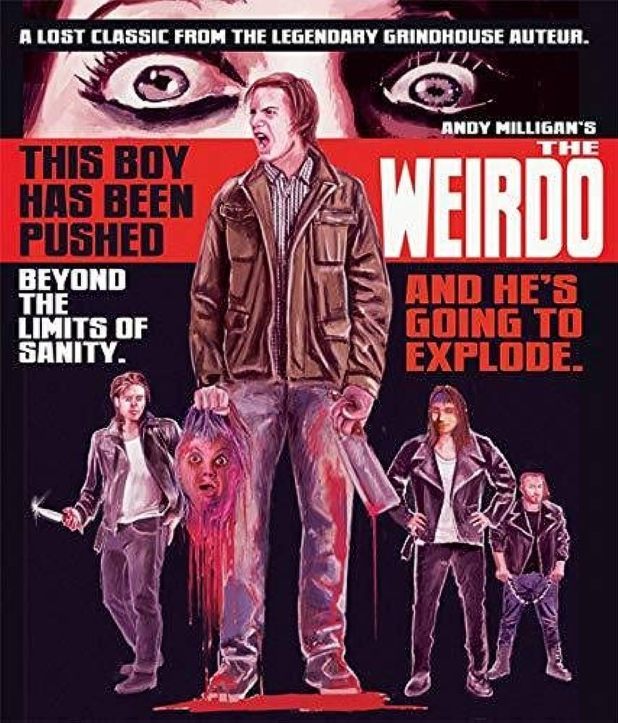
Garagehouse did everyone a favor when they re-released The Weirdo on blu ray.
One of the last movies Andy Milligan made, it’s a film about teenage innocence being destroyed directed by someone who seemingly has no innocence left. Donnie (Steve Burington) just wants to stay in his secret hiding space looking for garbage, but continually he’s set upon by larger and larger packs of bullies. The only kindness he finds in this world is in the disabled Jenny (Jessica Straus).
Jenny has one of those rambling Milligan speeches that ends with a truly haunting few sentences: “When I woke up my dress was all torn and I was bloody…all over here. When I finally got home my mother and sister beat on me. They blamed me for everything that happened. Bobby didn’t call me names after that but he would whisper to the other boys and they would giggle at me in the halls. I never went back to school again after that. I don’t need school. I don’t need anything.”
Donnie finally explodes and destroys everyone that ever hurt him, even decapitating his horrific mother. Heads getting cut off is something that happens regularly in Milligan movies. And seeing as how Andy hated his mother, this time the act takes on more meaning.
Yes, someone is also killed with a pitchfork.
Donnie and Jenny have a love that must battle three thugs — Nails (Shawn Player), Dean (Patrick Thomas) and Vic (Dennis Robbins) — as well as a horrible religious figure named Reverend Cummings (John Miranda), Donnie’s drunken mother wanting to sell him into slavery and the fact that they are in an Andy Milligan movie, which means that these things never seem to end well.
Supposedly, there was going to be a sequel with Donnie has an unkillable monster being controlled by Jenny and coming back for even more revenge. I despise the idea of AI-based cinema, but if there’s any movie I’d want to see made that is impossible to make today, this may be it.
Andy Milligan was a maniac who made movies filled with maniacs. By all reports, he was in the same constant bad mood as nearly every one of his characters, just as willing as them to start screaming no matter what, no matter when. This may have been because he inherited the same bipolar disorder or schizophrenia that his mother had. Forget the words of Stephen King, who said that Andy’s films were made by “morons with movie cameras” and instead, just imagine the chaos of each film’s shoestring budget set with a fastidious Andy melting down and then savor the results.
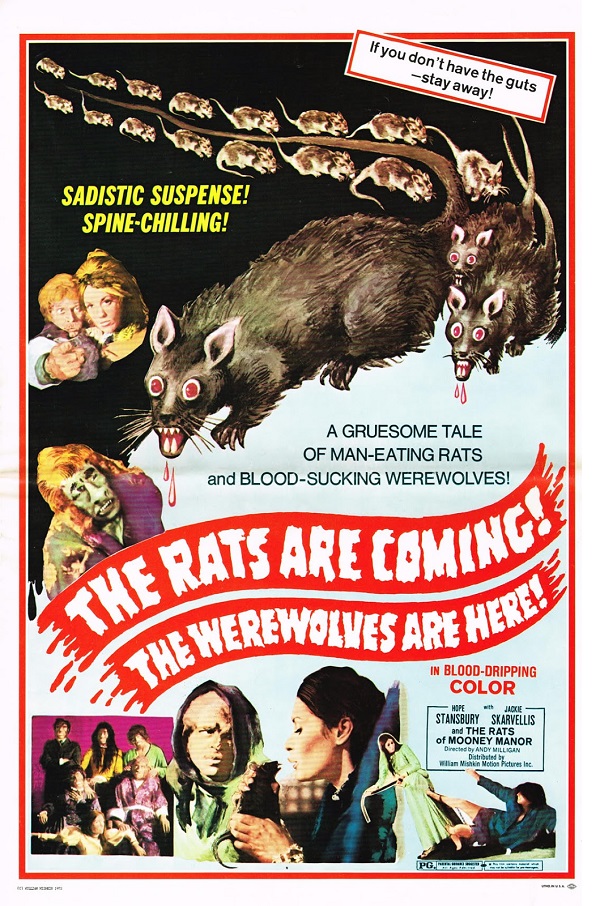
The other thing about the Milligan Cinematic Universe is that often there will be supernatural beings. The Mooneys in this movie are all werewolves who transform once a month on the night of the full moon. Pa (Douglas Phair) has spent nearly all of his near-two hundred years of life trying to cure his family, which includes his caretaker Phoebe (Joan Ogden), the sadistic Monica (Hope Stansbury) who mutilates vermin and Malcolm (Berwick Kaler), who is so far gone that he’s kept locked up.
There’s also Diana (Jackie Skarvellis), who has come back home from medical school along with a new husband named Gerald (Ian Innes). She’s the last hope for the Mooneys, as she is the only one who doesn’t gain fur once a month.
Shot in London — along with The Body Beneath, Bloodthirsty Butchers and The Man with Two Heads — new scenes were added when producer William Mishkin wanted to cash in on the success of Willard. Those scenes — one has Andy in it — were shot in his Staten Island home. Milligan had a hard time getting rid of the rats, even when he tried to give them away to the audience that would come to see this film. He also plays the gunsmith who creates silver bullets and Mr. Micawber, a man who sells flesh-eating rats that have already bitten off one of his arms and a lot of his face.
Despite being set a century before, we can see and hear cars, as well as see electrical outlets, but man, Andy made all the costumes himself by hand and I can just imagine him getting out the patterns and swearing the whole time, shouting about thimbles.
The greatest thing about this movie is the title, which had to lure people in because it’s so good and then people would be confronted by a toxic family just shouting and snipping and screaming and that’s the real movie, not the furry masks or flesh-consuming vermin. That’s what I’m here for.
Here’s a drink recipe to get you through the film.
Red Eyed Black Rat
1/3 cup orange juice
3 oz. dark rum
2 oz. cola
2 maraschino cherries
This one is pretty simple. Pour the juice, rum, then cola over ice and enjoy. For extra fun, drop in the cherries and pretend they’re rat eyes staring at you in the dark of the wasteland.
Directed by Sam Curtain, who co-wrote this with Benjamin Jung-Clarke, Beaten to Death starts with Jack (Thomas Roach) being brutalized by Ricky (Justan Wagner) as the body of his wife Rachel (Nicole Tudor) lies dead next to them. Barely alive, Jack stabs the man in the throat and stumbles out of the room. He runs into his neighbor Ned (David Tracy),, but that’s just the start of his torture.
That title should tell you everything, because Jack gets destroyed in this movie, which moves across multiple timelines and spends much of its time showing a blinded Jack wandering the Australian outback screaming, covered in blood and dirt and near death.
There are long moments of a man in absolute pain just yelling alternating with moments of extreme violence and an ocular assault that awakened the dead body of Fulci who was probably either smiling or annoyed to be awoken from his slumber. You’re either going to love how audacious this is or hate that there’s this much endless gore. But hey — the cinematography is gorgeous and in no way does this movie do anything less than go hard and then somehow find a way to go even harder.
Beaten to Death is part of the Popcorn Frights Film Festival. You can get a virtual pass to watch the festival from August 10 to 20. To learn more, visit the official site. To keep track of what movies I’ve watched from this Popcorn Frights, check out this Letterboxd list.
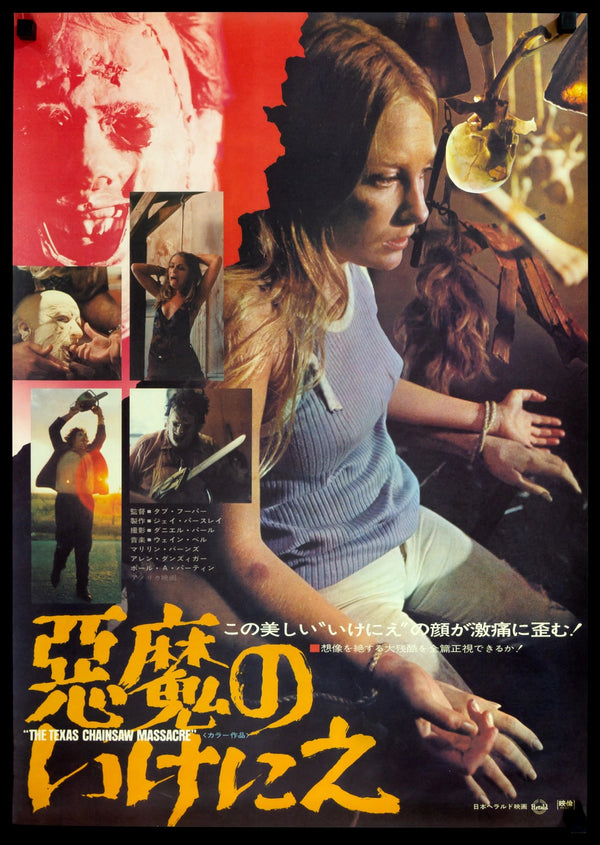
The Texas Chainsaw Massacre is not a movie. It is a force of nature. Where Night of the Living Dead took 1960s horror past giant monsters and gothic monsters into modern concerns within the conceit of zombies. This film doesn’t need to exist within the supernatural. In fact, it’s so outside the realm of the unreal that so many people think it’s based on a real story. Or even is a real film, years before movies like The Blair Witch Project tried to pull stunts like that.
The real stunt of this movie is that it was made in the first place. Filmed in an early 1900s farmhouse in Round Rock, Texas on a small budget, the crew shot the film seven days a week, 16 hours a day, with temperatures that reached 110° F. Gunnar Hansen, who played Leatherface, was really a poet. A poet wearing a dead skin mask for 16 hours a day for over twenty-five days straight.
The house was filled with real animal remains, animal blood from a local slaughterhouse and furniture made from animal bones. As you can imagine, keeping all these dead things trapped within a poorly ventilated house led to conditions which were anything but fair to the actors.
Director Tobe Hooper envisioned this film as a PG-rated film, so he made each cut work so that you never see any of the actual carnage. But it backfired — as a result, the film’s entire feel is one of brutality. It’s actually hard to watch unless you properly prepare yourself for it.
“The film which you are about to see is an account of the tragedy which befell a group of five youths, in particular, Sally Hardesty and her invalid brother, Franklin.” That opening dialogue, by future sitcom actor John Larroquette for the price of a joint, suggests that the film you are about to watch is true. While it has some basis in the stories of Ed Gein and Elmer Wayne Henley, there never really was a Texas Chainsaw Massacre. It was invented by Hooper and writer Kim Henkel. Yet there’s always someone willing to convince you that there was.
It’s actually a pretty simple film. A vanful of hippies comes face to face with a cannibal clan who are being forced out of their way of life by industrialized improvements to the meat processing industry. Despite their astrology, peace and love, they are utterly annihilated and even the strongest of them is driven insane by the end.
The Texas Chainsaw Massacre is a film that ignores the rules of the hero’s journey and characters needing to undergo some personal growth. Everyone is lucky if they survive and even the villains and heroes that do won’t make it for long. Modern highways will push their way into the backwoods. Police procedures will improve. And the only work this clan will have is just trying to keep their way of life alive.
You can see the bloody influence of this film on nearly every horror film that came in its wake. Hell, Rob Zombie has made an entire career out of trying to remake something a tenth this good. This is a film that oozes malevolence and ill will from the very moment it begins to play.
I’m always struck by the fact that hardly anyone involved ever made their money back. The film’s original distributor was Bryanston Distribution Company, which turned out to be a Mafia front operated by Louis “Butchie” Peraino, who used Chainsaw to launder money that he had made from Deep Throat. The investors did make their money back, but the crew only made $405 each, scant pay for the hell on Earth they went through (Edwin Neal, the Hitchhiker, claimed that this film was more miserable than being in Vietnam and he’d wanted to kill Hooper for some time). After an arrest for obscenity, the cast and crew filed suit against Peraino and were awarded $25,000 each, which came from new owners New Line Cinema.
There’s a sequel to this film which exists in its own universe. I love that it’s everything that this movie isn’t. It’s a middle finger to expectations and ends with a final shot that is at least the equal of this film.
The Texas Chainsaw Massacre is part of the Popcorn Frights Film Festival. You can get a virtual pass to watch the festival from August 10 to 20. To learn more, visit the official site. To keep track of what movies I’ve watched from this Popcorn Frights, check out this Letterboxd list.
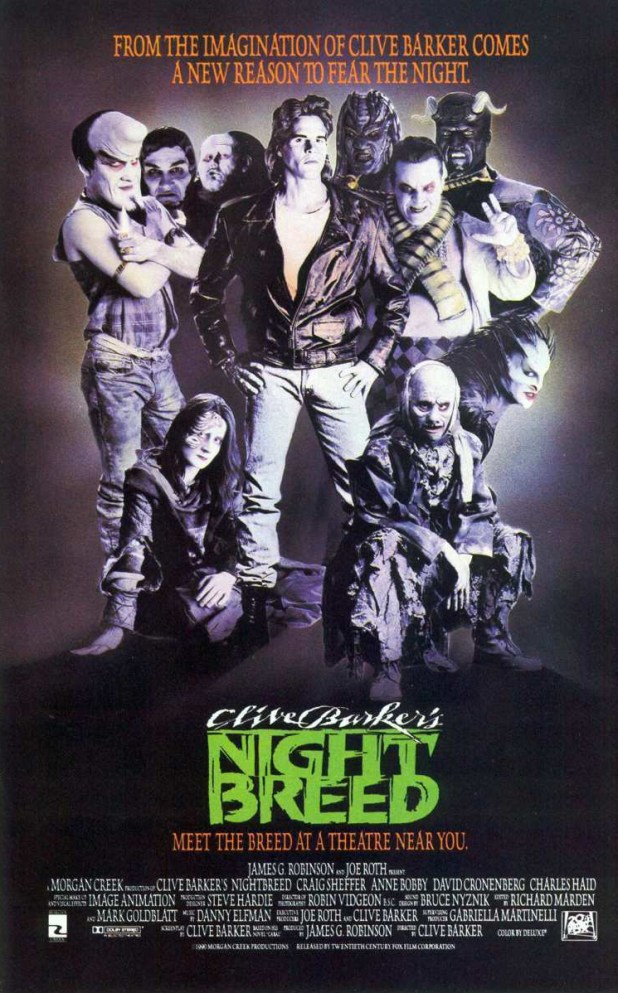
I decided to go with the unfairly maligned Nightbreed, a movie that I haven’t seen since it played in theaters in 1990. Directed by Clive Barker and based on his 1988 novella Cabal, this movie was a commercial and critical failure. Barker has always claimed that the producers tried to sell the film as a run of the mill slasher, when it is anything but. In 2014, he finally was able to release a director’s cut that fixed many of his issues.
Aaron Boone (Craig Sheffer, Fire in the Sky) dreams of a place called Midian where monsters are accepted. His girlfriend Lori has convinced him to start seeing a psychotherapist named Dr. Phillip Decker, who is ably played by David Cronenberg of all people. All along, Decker has been setting Boone up for the murders that he’s been committing, giving his LSD instead of lithium and filling his head with details of the murders.
Decker urges Boone to turn himself in, but he’s hit by a truck and sent to the hospital where he meets Narcisse, another man who knows about Midian. He explains to Boone how to get to the hidden story while he cuts off his own face.
Boone makes his way to Midian, where he meets the creatures who make it their home like Kinski (Nicholas Vince, the Chattering Cenobite from Hellraiser) and Peloquin, a demonic creature who smells Boone’s innocence, letting him know that there’s no way that the murders could have been his doing. He bites Boone, who runs into a police trap led by Decker and is shot and killed.
He’d be dead if it wasn’t for Peloquin’s bite. Soon, he returns to life in the morgue while his girlfriend decides to come looking for Midian herself. Boone becomes part of the Nightbreed thanks to their leader Dirk Lylesburg (Doug Bradley, Pinhead himself) and from the touch of their god, Baphomet.
What follows is a battle between the police and clergy versus the Nightbreed, ending with Boone rallying the supernatural creatures and destroying their home to stop the attacks. Decker is stopped, Baphomet discusses that this was all part of the prophecy and he renames Boone Cabal.
There are two different endings of the film, depending on the original and director’s cut that change the story significantly. One raises Decker from the dead while another places Lori into the Nightbreed. Both set the stage for further adventures that never happened, sadly.
Barker wanted this to be the Star Wars of horror films and envisioned a trilogy of stories. But the film wasn’t marketed well and never made back its budget. Barker said that the producers expressed a concern that “the monsters are the good guys,” to which he replied, “That’s the point.”
Marvel’s Epic imprint put out several comic books and there were several video games, but soon the film slid away into obscurity, Luckily, with the excitement around the director’s and Cabal cuts of the film being released, SyFy, Morgan Creek and Barker have announced an entirely new series based on the movie.
Interestingly enough, filmmaker Alejandro Jodorowsky spoke well of Nightbreed, calling it “the first truly gay horror fantasy epic”, as he saw the movie being all about the “unconsummated relationship between doctor and patient.”
There are plenty of music ties in this film, as the role of Ohnaka was first intended for singer Marc Almond and Suzi Quatro was in the film, but her scenes were cut. It’s also one of the first films that Danny Elfman scored after Batman. Barker stated that “The most uncompromised portion of that entire movie is the score.”
Nightbreed has more than held up, reminding me of the convention season of 1990 when you could see buttons and shirts of this movie everywhere. My excitement was at a fever pitch and I thought, “This is going to be huge.” Shows how smart I was.
Nightbreed is part of the Popcorn Frights Film Festival. You can get a virtual pass to watch the festival from August 10 to 20. To learn more, visit the official site. To keep track of what movies I’ve watched from this Popcorn Frights, check out this Letterboxd list.
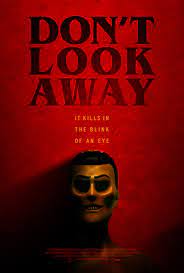
A gang of criminals unintentionally unleashes a supernatural force — a killer mannequin! — and a young woman named Frankie (Kelly Bastard) knows that it’s coming for her. In fact, the first time she sees it, she accidentally kills a trucker. And once you see the mannequin, it only stops stalking you when you’re dead.
The scariest part of the male mannequin killer is that we never see it move or kill. We only see its handiwork, as it only attacks when no one is looking. Directed by Micheal Bafaro, who also wrote the script with Michael Mitton, who also plays Jonah, the man who tries to help Frankie and earns the anger of her boyfriend Steve (Colm Hill).
There are some frightening moments, even some kills at a nightclub near the dancefloor, and the idea of the unstoppable creature following our heroine echoes It Follows, but this is very much its own film. Frankie has almost no luck, as the mannequin keeps showing up everywhere she goes, killing people and making it look like all of these crimes have one thing in common: her.
If you get freaked out by mannequins, by all means, this is going to make you ruin your pants.
I watched Don’t Look Away at the Popcorn Frights Film Festival. You can get a virtual pass to watch the festival from August 10 to 20. To learn more, visit the official site. To keep track of what movies I’ve watched from this Popcorn Frights, check out this Letterboxd list.
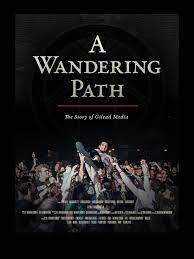
Featuring interviews with the members of Thou, Neurosis, Enslaved, Panopticon, Emma Ruth Rundle, Yellow Eyes, Couch Slut, Blood Incantation, Krallice, Mizmor, Weigedood, Hell, Leech, Mania, Inter Arma and many more, as well as performances by several of those artists, A Wandering Path is really the story of Adam Bartlett, who started the Gilead Media record label in 2005.
His label may have started small, but is now a well-known source of the best noise rock, doom and black metal artists in the world. He also works with Dave Adelson from the record label 20 Buck Spin to celebrate Migration Fest every two years, with the 2018 version being right here in Pittsburgh, PA.
Michael Dimmitt has directed a movie that pays as much attention to the reasons for the music as the music itself. You’ll discover how several of these artists have used the power of this dark form of music to get past the pain in their lives. I was most impressed by Austin Lunn of Panopticon. His band’s music combines black metal with bluegrass and folk with Appalachian instruments such as banjo, fiddle, bells and acoustic guitar breaking up the expected distortion and thundering drums. In the same way that Norweigan black metal bands drew upon the past of their country for inspiration, his work draws upon issues and themes unique to his Kentucky home.
This is a difficult subject to make a movie about as just getting into who the label is, what Migration Fest is and each of these bands, not to mention the genres that all appear, could all be their own films. Dimmitt has played in bands like Disassociate, Mutilation Rites and Overdose as well as working as an editor, including on a film that tried to explain black metal, Until the Light Takes Us.
The main issue is that this is such a niche subject — it’s similar to making a documentary on a deep cut exploitation director like Franco or Rollin — that it may not be able to make much sense for newcomers. And for those who are already well-versed in this music, it may seem like it’s glossing over its subject. There’s also a fair amount of “we’re all a family” scenesterism, but that happens any time you get metal folks together. It’s genuine, even if from the outside it may not feel like that.
Is this movie successful? It caused me to look up several of these bands and listen to their work. I think that’s a very clear case of it working quite well.
I watched A Wandering Path at the Popcorn Frights Film Festival. You can get a virtual pass to watch the festival from August 10 to 20. To learn more, visit the official site. To keep track of what movies I’ve watched from this Popcorn Frights, check out this Letterboxd list.
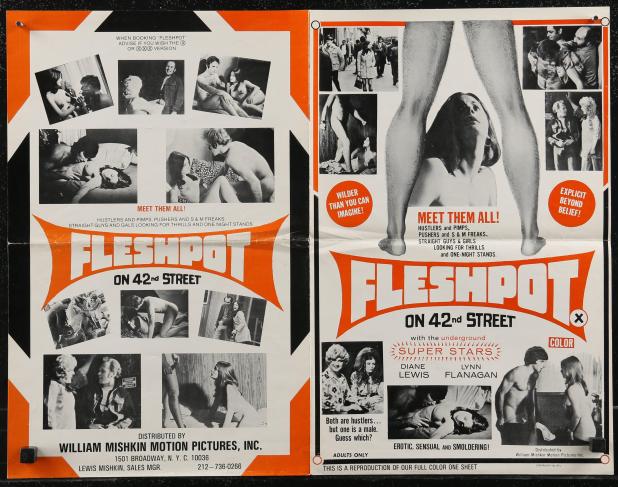
Shot with new permits or budget on the very real streets of New York City, Fleshpot on 42nd Street starts with two sex workers, Dusty Cole (Laura Cannon) and Cherry Lane (Neil Flanagan in drag), trying to make it in the world. But it all gets to be too much for Dusty, who quits the nightlife and tries to move on to the straight life with Bob (Harry Reems!). But as you know — or you should — this is an Andy Milligan movie. Things have a way of not working out.
Once Dusty and Bob hook up, this movie moves from a realistic world where two sex workers rob everyone they can to stay alive while being truly honest with one another about it to another where a man comes in and seemingly saves the day but not caring about his lover’s past.
Maybe that brief respite from a tough world of fighting to stay alive every day is echoed by how Milligan felt, back from London and still making movies for nothing that hardly anyone would see on the rough streets of NYC. But even 42nd Street was about to change, going from simply dangerous in places to absolutely harrowing in the wake of crack by the end of the decade. And even in 1972, the movies playing there went from just plain old exploitation to full penetration.
If you hear some people discuss the films of Milligan, they’re either dismissive or outright mean. I don’t know what they’re looking for, but unlike his horror work, this feels authentic and true. It’s got a downer ending that 1972 Hollywood would have embraced, even if there’s no way they ever could have.


 B&S About Movies
You must be logged in to post a comment.