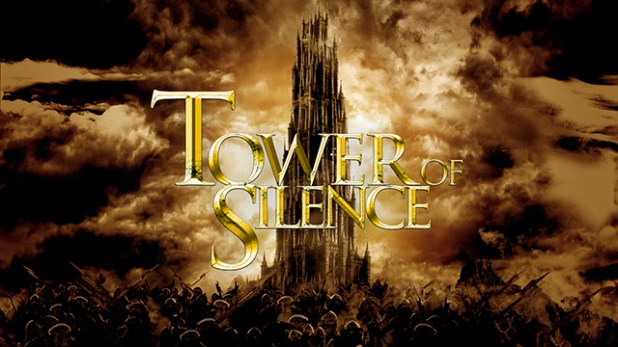
Tower of Silence (2019)

From the studio that brought you The Jurassic Games, here comes Tower of Silence, which has been described (by its PR department) as “a fantastical, dazzling love letter to The Princess Bride and Stephen King’s The Dark Tower.”

When the great sorceress Kaeis captured by a mysterious enemy, her young followers devise a plan to rescue her. So you know, if you enjoy fantasy films about quests and whatnot, this is probably way more for you than me. I mean, it has necromancers and an undead army in it.

This is director Erik Flynn Patton’s first film and he’s in his early twenties, so let’s hope he can deliver on the promise that he shows in this. It’s not a bad first effort and if you enjoy magical mythologies and whatnot, it’s probably more for you than me.

Tower of Silence is available on demand and on DVD from High Octane Pictures. You can also watch it on Tubi.

DISCLAIMER: This movie was sent to us by its PR company.

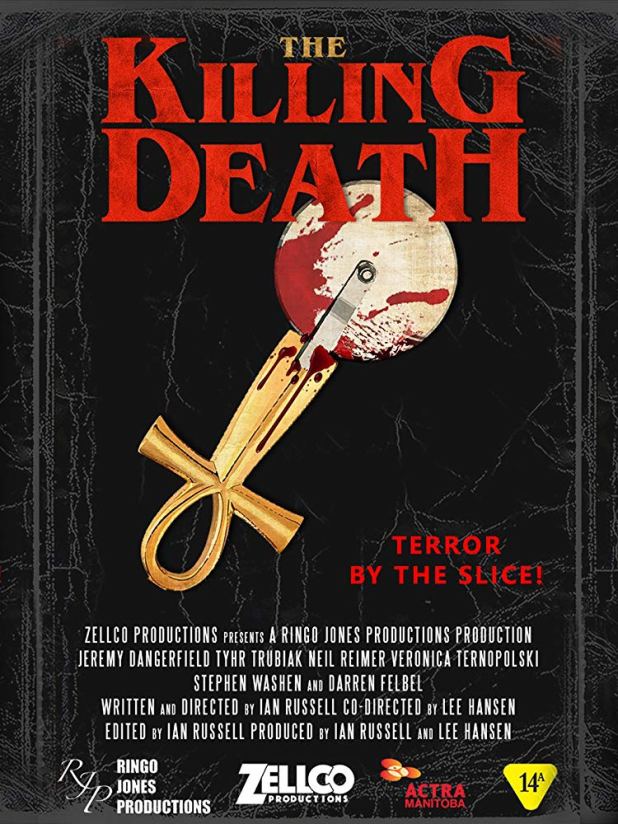
The Killing Death (2008)

So let’s say Blood Feast was about making the perfect pizza instead of an Egyptian feast. Sure, let’s go with that. Otherwise I won’t have much to hang this review of The Killing Death on, a movie that came out in 2008 but I got an email asking me to review as it’s now on Amazon Prime.

Here’s the story: Chicago Phil travels through his past relations butchering them in horrific ways. Frank, a veteran cop leads Jimmy through his first case trying to piece together the seemingly unrelated crimes. The two paths converge in hilarious fashion through inept bungling on both sides.

I can only assume that Chicago Phil isn’t making a Detroit deep dish pizza. But who can really say?

Director and writer Ian Russell has also created the movie Cybernetic Showdown, which is also on Amazon Prime.

But we’re talking about the killer pizza movie, which you can watch on Amazon Prime. It’s low budget, but hey — sometimes a cheap frozen grocery store pizza is what you’re looking for.

DISCLAIMER: We were sent this movie by its PR team. That has no bearing on our review.

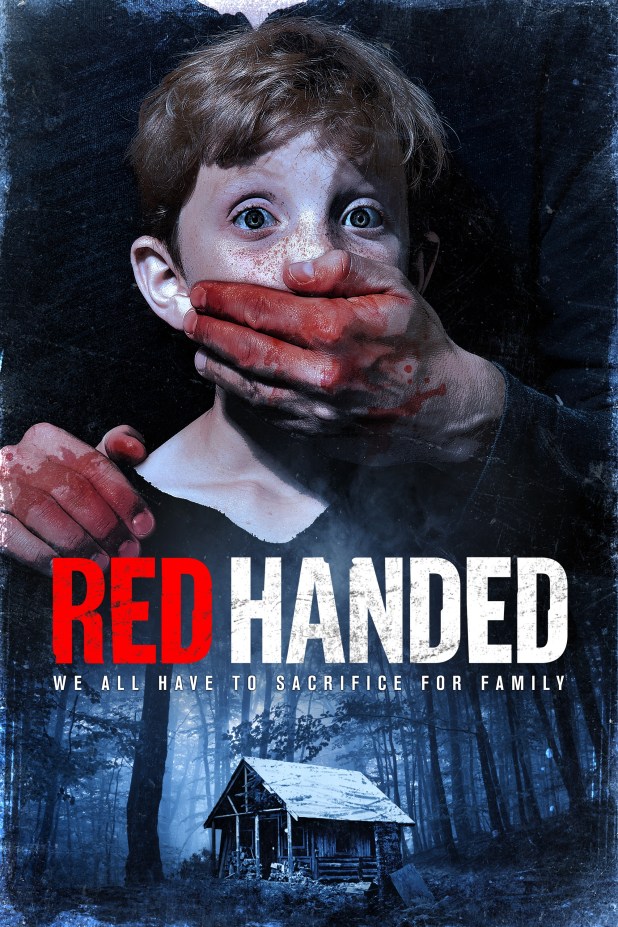
Red Handed (2019)

When their father (Michael Madsen!) is murdered, three brothers head to an Oregon mountain river to spread his ashes. After they arrive, one of their children goes missing. What makes things worse is that one of the brothers was abducted thirty years ago on the very same river, but he has blocked the incident out of his mind. Only by unlocking the mysteries inside his subconscious can they find the missing child.

Originally known as Children of Moloch, this movie is packed with backwoods menace. It also has Rick Salomon in it. This is the same guy who was in the Paris Hilton leaked adult footage, plus he was married to Shannen Doherty, Pamela Anderson and Elizabeth E.G. Daily. Yes, he sure has lived. His daughter Hunter Daily (yes, E.G.’s daughter) is also in this. Christian Madsen, Michael’s son, shows up too. And look out for Michael Biehn!

While IMDB lists the director as Frank Peluso, all of the marketing material for the film lists Nick Cassavetes as the director. You may know him from films like The Notebook and Alpha Dog, but this is B&S About Movies. We know him as Packard Walsh from The Wraith.

This is written pretty well and feels like Midsommar mixed with a backwoods people messing up normal folks picture. I really liked the occult story about adding an egg to cake mix, even if it’s not really true. The dialogue is really good, though and the movie does a great job of keeping up the tension.

Red Handed is now available on demand and on DVD from High Octane Pictures.

DISCLAIMER: This movie was sent to us by its PR team. That has no bearing on our review.

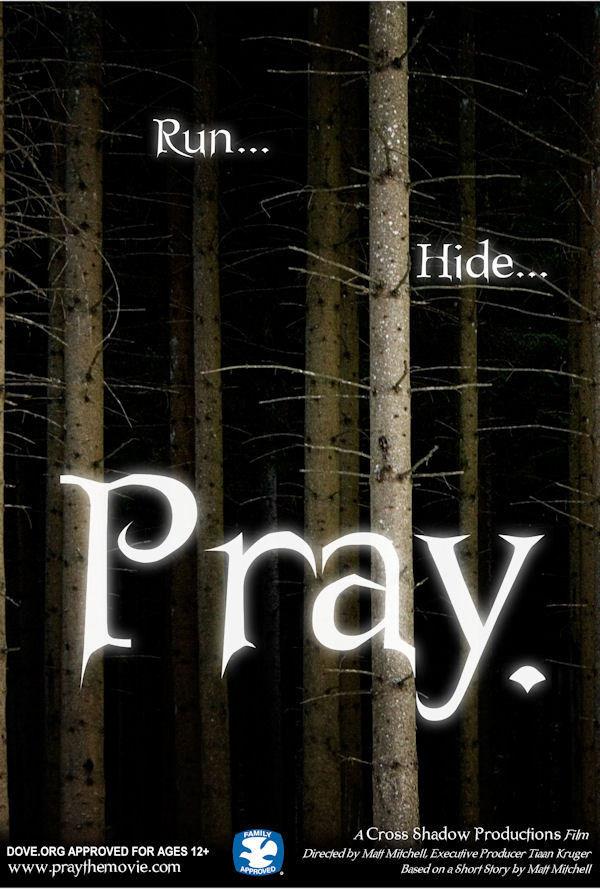
Pray (2007)

About the Author: Paul Andolina is one of my favorite people to talk movies with. If you like his stuff, check out his sites Wrestling with Film and Is the Dad Alive?

I recently finished reading a book called Celluloid Sermons: The Emergence of the Christian Film Industry, 1930-1986. Christian films have been a staple in my life since a very young age but I had no clue how it even started. I would have never guessed it started in 1927 and how it went from being distributed church to church on 16mm to big screens and DTV titles. Ever since starting the book I had been on the hunt for interesting and odd Christian films and that is how I stumbled upon Pray. I would like to preface that I’m coming at this film a little bit different than most of my reviews as I’m looking at not only the entertainment value of the film but also what the film is saying theologically. I was a religion major in college and still do read quite a bit about theology, I’m a Lutheran so many of my comments will be coming from that doctrinal standard.about as theologically sound as the film, which is not very good.


Pray is a 2007 Christian thriller supposedly based on a true story that involves a young lady being stalked by an unknown suspect in a mall after closing time. A lot of the stuff I had read about the film talked about it being a Halloween rip-off but apart from a few references to the film, like the woman who goes missing being named Laurie Curtis a portmanteau of the protagonist’s name from Halloween and the name of the actress who portrays her, and the antagonist being credited as the shape in the credits, it’s a different animal than Halloween.

The movie is about miracles and how God uses harrowing situations to call folks to him. This is a prevalent belief in popular Christianity, that God uses situations to get people’s attention instead of Holy Scripture being sufficient to turn men’s hearts to Christ. It’s all about the experience, you know? How boring would it be if someone’s testimony was simply I went to church and heard the sermon with the Word properly preached and I started to see my sin and longed for the sweetness of the Gospel: you gotta have scary killers stalking people and miracles to move folks into conversion ya dig, but I digress apart from some pretty crappy theology, I guess the point of the movie is to entertain you.

It is a mildly entertaining film but I certainly wouldn’t be showing it to people who are not Christians in an attempt to “save” them as they’re more than likely going to laugh in your face after you show them this. The big twist of the film is that there is no way this young lady should have survived and it was an actual miracle that protected her from the killer. I’m not one of those folks who believes miracles are impossible but I think they are far and few between since Scripture is revelatory and sufficient for the conversion of mankind.

The acting is a bit amateur but not once during the movie did I feel the characters were acting odd, most of the cast is teenagers, and they act about how I expect kids of their ilk would. This movie isn’t going to win any awards for being a great horror flick but it’s a nice little thriller that does not feature nudity, crassness, or much violence which may be what someone who buys this film is looking for. Most other viewers, especially horror fans will find little in the way of this being worth their time.

If you are a sucker for low budget films this one may be up your alley, it went on to not only spawn two sequels but a Pray 2.5 as well that combines this film and the 2nd with some added material. I didn’t manage to pick up a copy of it 2.5 but I do have both Pray 2: The Woods and Pray 3D: The Storm that I will cover as well. The DVDs also include Bible Studies on the discs themselves but they’re probably about as theologically sound as the film, which is not very good.

Let There Be Light (2017)

Kevin Sorbo played Hercules on TV and in the movies, he’s been Kull and the star of  a series of Walking Tall movies. He’s also a nondenominational Christian who believes that his religious views have hurt his career.

“There’s a negativity towards Christians in Hollywood, and a negativity towards people who believe in God,” said Sorbo. He also considers himself politically independent, saying that he voted for Ronald Reagan and Bill Clinton. He also endorsed Donald Trump for President, claiming that “Jesus would have voted for Trump.”

So anyways. He made this movie.

Atheist Dr. Sol Harkens (Sorbo, who directed this film) debates a Christian leader, but more like destroys him on stage. Then he heads off to a party where he slams booze and strikes out with his own Russian model girlfriend before driving into a wall on the way home.

That’s when he finds himself in Heaven, where he meets his dead son David. He’s dead for about four minutes, which is an eternity in the afterlife or just enough time for David to tell him, “Let there be light.” This is a moment in our house like the secret word on Pee-Wee’s Playhouse. I stand up, scream and throw things any time that someone says the name of the movie within a movie. For Let There Be Light, I exhausted myself. The title is repeated so many times, you’ll start angrily shouting it back at the characters.

That’s when the doctor discovers that he can’t be an atheist any longer. His Christian ex-wife Katy (Sam Sorbo, who co-wrote and co-produced this movie. In addition to playing Serena on Hercules: The Legendary Journeys, she was also in Ed and His Dead Mother and is a Pittsburgh native) slowly starts to accept him, even if his kids are divided. Actually, I say that and this movie has no dramatic tension. They pretty much easily take him back.

The moment Dr. Sol proposes to Katy — literally as she’s telling the kids and asking them if it’s OK — she has a seizure because she has a rare form of brain cancer and is about to die.

Dr. Sol reacts to this news with the knowledge that it’s God’s plan. Yes, the man who railed against people when his son died is now cool that his wife is past the point of treatment. God works in mysterious ways.

Fox News’ Sean Hannity shows up and it’s treated as if he’s a bigger deal than Oprah. If I told you that he was an executive producer on this film, that may explain both points of the sentence above.

That’s when our hero has a masterstroke: he wants everyone in the world to shine their lights to the sky at night at the same time so that God can see us. Yes, even the horrible folks in Isis, who this movie takes multiple opportunities to attack.

The night of the Let There Be Light event, the Harkens sing Christmas carols and Dr. Sol’s wife dies in front of everyone. The end.

I wish that you guys could have heard this movie explained to me by my mother-in-law. I really do love the family I married into, but man, they really love films like this. I was in tears the entire time because I kept saying what the next plot twist was as she told me and I was correct every time. Of course the wife dies!

Sorbo brought along Daniel Roebuck (The FugitiveU.S. Marshalls), character actor Gary Grubbs, Travis Tritt, Dionne Warwick and one-time mobster and now motivational speaker Michael Franzese as Father Vinnie, who is now a made man in the eyes of the Lord. I yelled every one of his lines back to him in Andrew “Dice” Clay’s voice. Ohh!

This was a Sorbo family affair, with even their two kids, Braeden and Shane, playing the kids of the Harkins, Gus and Conner. It’s a natural follow-up to Sorbo’s work in God’s Not Dead.

Much like Kirk Cameron’s Saving Christmas, making fun of this movie makes me feel like I’m making fun of kids who were only allowed to watch The Waltons and Little House on the Prarie. So, you know, acting like I do pretty much all of the time. The one moment that I enjoyed here was a poster of one of Dr. Harkins’ books, that said that Hercules was more real than Jesus. Cute one, Sorbo family.

Watch this on Amazon Prime.

You can learn more about this movie at its official site.

Star Wars Droppings: The Ice Pirates (1984)

If you go into this expecting campy, on-camera mugging by everyone involved—including familiar TV actors Robert Urich (as the Han Solo-cum-Errol Flynn swashbuckler), Mary Crosby (as the obligatory, bitchy princess), along with John Carradine (!), Angelica Houston (?!), ex-NFL star John Matuzak, and Ron Perlman (Hellboy)—you’ll have fun with this Star Wars rip. Unfortunately, it’s not campy enough—like Mel Brooke’s (later) Spaceballs (1987) campy—and it becomes forgettable after one viewing.

And just what is Robert Urich from TV’s Vegas (also of Alan Rudolph’s 1982 UFO conspiracy romp, Endangered Species), doing here?  Well, MGM—yes, the studio that bankrolled the sci-fi game changer, 2001: A Space Odyssey—had Urich under a television contract and, as the rumors go, the studio insisted he be cast in the film.

The Ice Pirates began as The Water Planet, MGM Studios’ serious, $20 million-budgeted entry in the Kessel Run—based on a script by director Stuart Raffill. Then, when MGM found itself immersed in financial troubles, the budget was slashed to $8 million—and Raffill was told “to make it work.” In order to make it work: he decided—with the studio’s blessing—to revamp the script into a comedy. Ugh.

So, instead of “Han Solo” securing clean water for the galaxy, we ended up with TV’s Robert Urich leading a band of 1930’s styled, intergalactic swashbucklers (Ron Perlman, John Matuzak) after the galaxy’s most valued commodity—water—and help Crosby’s bitchy “Princess Leia” along the way.

Occasionally funny—but mostly lost somewhere between the silly and the stupid—with special effects not as a bad as Luigi Cozzi’s Starcrash—but lost somewhere in a galaxy far, far away between Roger Corman’s Battle Beyond the Stars and Battlestar Galactica—this needed Farrah Fawcett giggling around in her transparent Saturn 3 garb, along with a touch of Dorothy Stratten’s Galaxina space-softcore to make it all work.

Needless to say, the hyperdrive failed on this Kessel Run.

Raffill didn’t fare much better with his next foray into the sci-fi realm. This time, instead of ripping Star Wars, it was E.T. How bad was it? Ronald McDonald shows up, because, well, there were Happy Meals to sell to the kids. In the end: Mac and Me earned Raffill a Golden Raspberry for Worst Director. His next film, Mannequin 2: On the Move (1991), is considered as one of the worst sequels of all time.

However, Stewart directed two of my personal, youthful favorites: 1978’s The Sea Gypsies and the James Brolin-fronted action-comedy, 1981’s High Risk—so Stu is always the tops in my book. You can learn more about Stuart Raffill in the pages of Master of the Shoot ’em Ups. You can read his chapter (pages 36-43) for free on Google Books.

***

Star Wars: Episode IX – The Rise of Skywalker was released theatrically on December 20 in the United States.

About the Author: You can read the music and film reviews of R.D Francis on Medium and learn more about his work on Facebook. He also writes for B&S Movies.

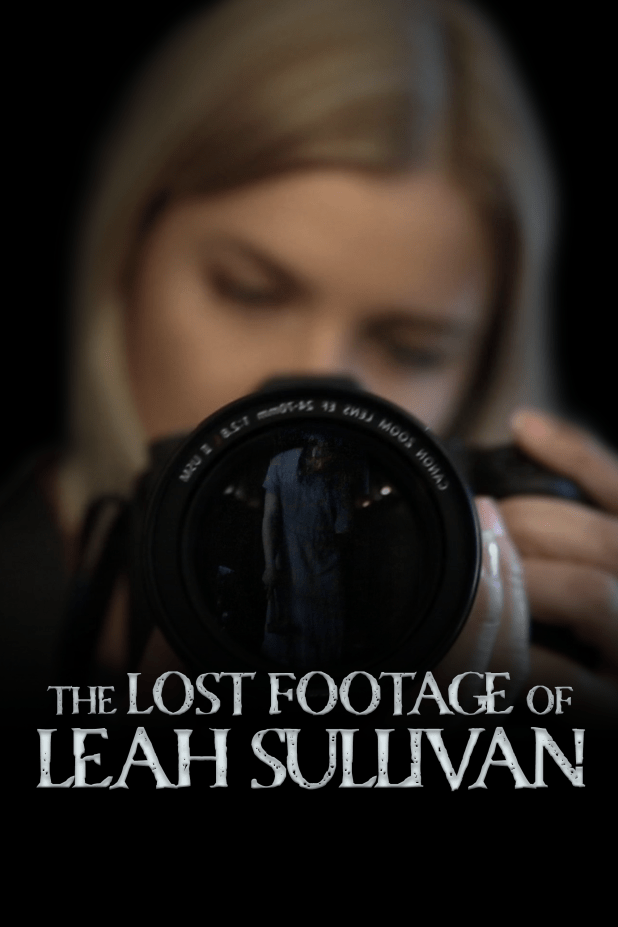
The Lost Footage of Leah Sullivan (2018)

Starring Anna Stromberg and directed by Burt Grinstead (who was in The Car: Road to Revenge, this found footage film concerns the contents of a memory card that belonged to a journalism student named Leah Sullivan who has gone back to her hometown to investigate the thirty-year-old Mulcahy Murders.

As the facts unravel, she begins to realize that this cold case murder may not be all that cold. And she’s also falling for a police officer from town, Patrick Rooke. However, as she gets closer to the truth, she gets closer to her potential death. Can she escape or will curiousity and her ambition be the end of her?

If you like found footage films or are interested in cold case style crimes, this could be the movie for you. It just had its theatrical premiere on December 11. so look for it to be released soon.

DISCLAIMER: This movie was sent to us by October Coast PR. That has no bearing on our review.

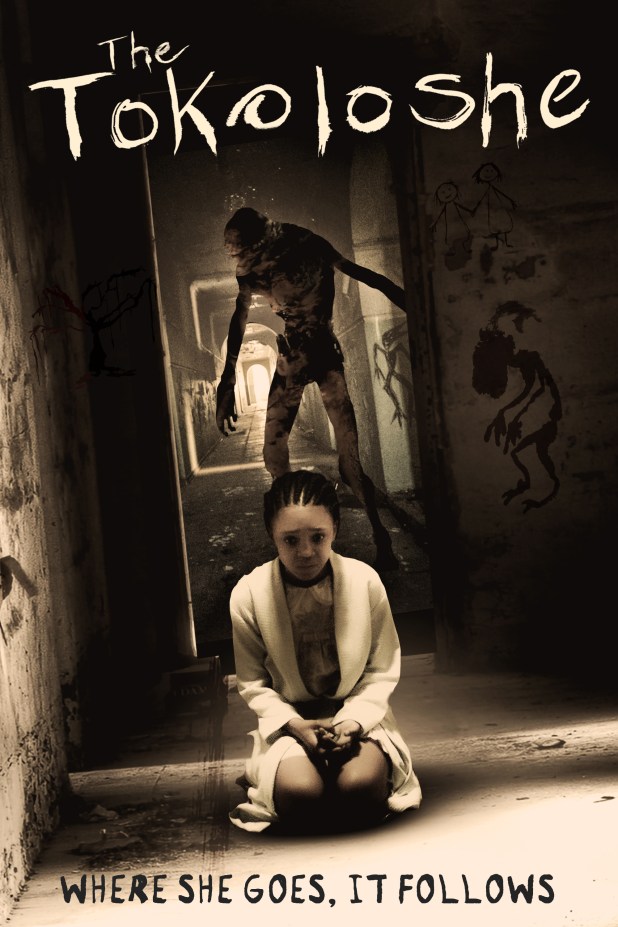
The Tokoloshe (2018)

Busi is young destitute woman with dangerously repressed emotions that has just started a cleaning job at a rundown hospital in the heart of Johannesburg. In need of cash so she can bring her younger sister to the city, she must cope despite the predatory and corrupt hospital manager. When Busi discovers an abandoned young girl in the hospital that is being tormented by a supernatural force, she must face her own demons from the past in order to save them both.

A South African movie filmed in English and Zulu, this is the first full film from director Jerome Pikwane.

It looks gorgeous, as Busi’s past and present are both shown to be filled with dangers, despite feeling like two different worlds. South Africa has some of the worst violence against women in the world, crimes that critically go unreported, so hopefully this film can raise some attention.

The Tokoloshe is available on demand and on DVD from Uncork’d Entertainment.

DISCLAIMER: This movie was sent to us by its PR department. That has no impact on our review.

Exploring: Drama at the Drive-In

ABOUT THE AUTHOR: Bill Frugge has been a lifelong fan of the drive-in. He always remembers to return his speaker to the holder before he drives away.

Throughout the ’70s there existed a type of film that defied simple classification. They weren’t exactly sex romps or comedies, but they could be sexy and funny. They weren’t really thrillers, but they could generate a good deal of suspense. They weren’t outright horror films, but they could be shocking and scary. They were never full-fledged action pictures, but they could deliver quite an adrenaline rush. They were made predominately for an audience looking to be titillated by bare skin and cheap thrills.

For benefit of some sort of identifier, I’ve always referred to these wacky, go-for-broke pictures as “Drive-in Dramas.” They were always dramatic in tone, punctuated with sex, drugs, action, laughs and usually startling, out-of-left-field violence. (Later, when these films had a second life on video cassette, it was anyone’s guess where you would find them in a video rental shop. They were always scattered among the different categories, placed wherever based solely on their box cover artwork.)

A loosening of restraints on film content afforded by the then newly established MPAA rating system allowed filmmakers to push the boundaries of what was once considered acceptable on screen. Many times it was obvious that distributors had no idea how to market these films, as the ad campaign may have played up the fact there were four sexy young career women spending the summer together in a beach house, but totally neglect the subplot about the psychotic killer who stalks them throughout the film until finally attacking them in the final reel.

It was Roger Corman, with his New World Pictures, that discovered a successful blueprint for these films, and he returned to that structure time and time again.

Stephanie Rothman’s The Student Nurses (1970) introduced a quartet of lovely, young, independent women who have recently finished nursing school. Each has their own story, experiencing personal growth and drama while enjoying love with various lovers. Their adventures intertwined and resolutions to all the conflicting storylines were tied up in a tidy eighty-nine minutes.

The film was a huge success and spawned a whole series of interchangeable young nurses experiencing interchangeable adventures. Titles include Private Duty Nurses (1971), Night Call Nurses (1971), The Young Nurses (1973) and Candy Stripe Nurses (1973).

To spice the old formula up a bit, Corman mixed his nurses with the old exploitative women-in-prison flicks for Joe Viola’s The Hot Box (1971), in which our young nurses are abducted and transformed into freedom fighters. Hot, sweaty Filipino locales help provide further “exotic” flavor to the proceedings.

The Stewardesses 3-D (1969) pretty much delivered on its promise of scantily clad sky hostesses having sexy adventures. Vignettes featuring fun-loving stewardesses over a weekend stop-over make up the action, but I’m willing to bet the storyline involving a masochistic misogynist subjecting his lover to brutality and ending in murder, caught more than one audience member off guard. It evidently didn’t disturb anyone too badly; as the picture went on to make millions.

Independent-International Pictures jumped on the stewardess bandwagon with Al Adamson’s Naughty Stewardesses (1974). Connie Hoffman and Marilyn Joi headline as the type of young stewardesses who bed down old crusty lizards like Bob Livingston. The plot gets twisted pretty quickly into a life or death kidnapping situation that doesn’t end so happily for everyone involved. It’s quite a tonal shift from a movie that promises only “pretty, young girls.”

Blazing Stewardesses (1975) followed, offering more screwball-type comedy antics and less exposed flesh with some hijackers thrown in. It was followed by Bedroom Stewardesses (1976), which was a reworking of an earlier German crime drama Der Arzt Von St. Pauli (1968), which I-IP released prior in another reworked version as Females for Hire and possibly Sidewalk Doctor and The Doctor of St. Pauli. Under the Bedroom Stewardesses title it included some stewardess inserts (directed by Al Adamson) and eventually played on I-IP’s successful “3 TIMES AS SEXY” stewardess show with their previous two pictures.

Corman got into the stewardess game with Cirio Santiago’s drama-action hodgepodge Fly Me (1973). The various storylines play out as our gals hop in and out of bed with various suitors until a kidnapping, assault and human and drug trafficking subplot gives way to a full-blown Kung Fu climax!

The poster for The Swinging Cheerleaders (1974) suggests a fun sex romp but this being a Jack Hill picture it has more on its mind than mere titillation. A young college news sleuth infiltrates the rah-rah squad and blows the doors wide open on the demeaning world of the pep squad girls, as well as exposing rampant cheating and illegal gambling.

Just the title Cheerleaders Wild Weekend (1979) conjures scenes of mindless fun and frolic. It’s understandable, then, if this tale of abduction and assault catches you off guard and grinds those thoughts of cheap thrills to dust.

The tagline “Million Dollar Fold-Outs Who Never Hold Out!” for Cover Girl Models (1975) promises frolicking, salacious kicks. The Curio Santiago flick actually concerns American models in the Philippines mixing with spies in a plot filled with copious conspiracies and international espionage.

Following the success of her husband’s Nurse series, Julie Corman produced The Student Teachers (1973), which introduces a quartet of young teaching assistants and stirs into the plot one clown masked lunatic rapist, and Summer School Teachers (1974), which balances between stark dramatics (Dick Miller as a lecherous creep) and some honestly funny bits thanks to the always wonderful Candice Rialson.

The poster for Trip with the Teacher (1975) asks, “How far should a teacher go to protect her students?” When their bus breaks down in the desert, a fun field trip turns foul when two crazed bikers make the scene. Brutality ensues.

Angel Tompkins stars as The Teacher (1974), a story about a 28-year-old teacher and her affair with a neighbor boy. It seems like nothing but laughs and smiles until a psychotic creeper derails the tone of the picture.

I admit, nothing about an exploitative title like Kidnapped Coed (1976) sounds “fun,” but some viewers may have be put off some when they realized they were watching a tale of love! It also played under the more appropriate and more disturbing title Date with a Kidnapper.

In Cindy & Donna (1970), teen half-sisters Cindy, 15, and Donna, 17, share the same mom and experience their sexual awakenings in slightly disturbing fashion, culminating in an ending that hits you like an icy cold slap across the face.

Hitchhiking seems like a premise for fun-loving adventures, unless you’re a character in either Pick-up (1975) or Hitch Hike to Hell (1977). In the case of either, you’ll be trading in your smiles and laughter for torture, screams and hell on earth.

Best Friends (1975) starts off with friends taking a cross-country trek in a motor-home, only for tragedy to eventually catch up with these young lovers of fun. The cast includes Richard Hatch.

Blue Money (1972) concerns a married couple whose seemingly perfect relationship crumbles under the pressures of husband Jim’s job as a director of pornography. Persistent vice officers help Jim realize that loads of anything-goes sex and mountainous piles of money are poor substitutes for real happiness.

Crown International delivered plenty of family drama with naughty, title/poster-suggest-all pictures like The Stepmother (1972- with Claudia Jennings) and The Sister-in-Law (1974). As if the titles didn’t suggest enough taboo smashing entertainment, these films go dark fast and some characters end up on cold slab down at the Drive-in City Morgue.

Harry Novak and Box Office International Pictures knew their audience but on occasion, too much plot crept into their soft-core offerings. When this happened, magic was made. Case in point is the totally wacko Teenage Bride (1975). A young brother starts an affair with his older brother’s lonely wife. Insanity ensues. Not as grim as it could have been but trust me, there are plenty of hysterics and dramatics, in all their sweaty, hairy, pimply ’70’s grandeur.

Keenan Wynn’s hot, new, young trophy wife causes hell for his adult children that turns quickly to deceit and murder in the ridiculously entertaining A Woman for All Men (1975). Director Arthur Marks proves again he is a reliable exploitation scenarist in the same league as Jack Hill.

Gameshow Models (1976) seems like it should be a non-stop sexcapade, and this I-IP doctored version of the art film The Seventh Dwarf (1975) comes close, but it’s still about a hippie’s journey into the world of big business who becomes self-aware after losing it all. Dick Miller and Cheryl “Rainbeaux” Smith are featured in some of the new footage.

When the ’70s ended, this type of “drive-in drama” flick more or less mutated into teen sex comedies, late night cable soft-core or straight-up slasher movies. The stories were reshaped with some of the more outrageous story aspects now directed more toward cheap, gross-out laughs, mindless titillation and gory shocks.

One film, however, did manage to revive the spirit of these crazy flicks from the ’70s, with all the sleazy charm of a kidnapped student nurse abducted by an insane rodeo clown.

In 1987, writer-director-producer-star-editor-casting director and composer Richard Horian delivered the absolutely amazing Student Confidential. In the film Horian is a former business tycoon millionaire who now volunteers his time as an occasionally suicidal guidance counselor for troubled high school students. He weirdly pops into the lives of his young charges and “fixes” them, regardless of their personal tragedies. (“You say you have an ugly scar on your face and nobody likes you? Let’s get your hair done and completely cover your face so you can be confident and pretty again!”)

This film is so odd and strange and wonderfully wild that even Troma didn’t know how to best market it. During its initial theatrical release, Student Confidential received a half-hearted Class of 1984 style ad campaign, which really falls short in capturing the film’s true essence. (You wonder what audiences thought of it who bought a ticket based on that poster art.) The artwork for the DVD tease is a wonky National Enquirer-esque cover playing up some of the film’s virtues. Honestly, neither piece of art comes close to capturing the absolute gonzo delights this crazy “drive-in drama” offers.
Before Star Wars: Destination Moonbase Alpha (1973) (1978)

Alternately known as Saturn 1999, Space 2100, Space: 1999 Moonbase Alpha, and Space 1999: 1 in various overseas markets for its TV syndication and foreign theatrical distribution, Destination Moonbase Alpha is the Star Wars-inspired feature-film created from the 1976-1977 second season, two-part story arc of Space: 1999: “The Bringers of Wonder” (Ep. 18 and 19, but Ep. 42 and 43 overall).

Space: 1999, of course, was the last in a long line of science-fiction series produced by Gerry and Sylvia Anderson, beginning in the early ‘60s with their marionette-led children’s programs, most notably, Thunderbirds, as well as their first live-action series, UFO—itself turned into a theatrical film: Invasion: UFO.

The production design and plotting of Space: 1999 owes it debt to UFO, as the tale of the Moon being blast out-of-orbit was originally planned for the second season of UFO, which was to be known as UFO: 1999. The improved look of Space: 1999 over UFO came courtesy of the program’s special effects supervisor, Brian Johnson, who worked on Stanley Kubrick’s 2001: A Space Odyssey and, eventually, Star Wars.

As with the positive, post-Star Wars overseas theatrical reception to The Starlost and Invasion: UFO, the 1978 theatrical version of Space: 1999 was a rousing success. Encouraged, three more movies were created out of the two seasons’ 48 episodes, which aired from April 1973 to February 1975, then January 1976 to December 1976.

The second sequel, Alien Attack—also known as Space: 1999 Alien Attack, and Space: 1999 II—consisted of the first season’s episodes Ep. 1: “Breakaway” and Ep. 4: “War Games.” The next film, Journey through the Black Sun—alternately known as Black Sun: The Death Planet Intervenes and Space 1999 III, was cut from Ep.3: “Collision Course” and Ep. 10: “Black Sun.” The fourth and final film, Cosmic Princess, which concentrated on the second season’s introduction of its Mr. Spock-inspired character, the metamorph Maya (Catherine Schell), and the James T. Kirk-like Tony Verdeschi (Tony Anholt), was cut from “The Metamorph” (Ep. 1/25 overall) and “Space Warp” (Ep. 14/38 overall).

In 2012, the American arm of the British production company ITV announced a reboot of the series to be called Space: 2099. In August of last year, Brian Johnson announced the reboot was still on track.

For those of you who can’t wait for the reboot, you can watch an incredible, China-produced variation of the themes introduced in Space: 1999, with China’s third highest-grossing film of all time, the year’s eighth highest-grossing film worldwide, and the second highest-grossing non-English film to date: 2018’s The Wandering Earth.

As result of another one of our “Space Weeks” (March 2021), Sam the Bossman takes a deeper look at Cosmic Princess.

Star Wars: Episode IX – The Rise of Skywalker is currently in theatres and was released theatrically on December 20 in the United States.

About the Author: You can read the music and film criticisms of R.D Francis on Medium and learn more about his work on Facebook. He also writes for B&S Movies.