Justice League: Crisis on Infinite Earths Part II (2024)

In the latest Crisis movie, we learn that the Monitor’s assistant, Harbinger (voiced by Meg Donnelly), is Kara Zor-El, the last survivor of Krypton, also known as Supergirl. This twist combines several Marv Wolfman and George Perez concepts into one narrative, marking a significant change as the story transitions from a comic book to the conclusion of the DC Animated Universe.

The film also introduces Psycho Pirate (voiced by Geoffrey Arend), a minor villain who takes on a significant role in the Crisis. One of the highlights for me in this segment was witnessing a Batman family composed of heroes from different Earths as they all work together to save Earth-2 and Wonder Woman on Earth-43, a world where Amazons are the dominant race.

The true villain, the Anti-Monitor, is revealed at the end. The character is often seen as a homeless man; Pariah turns out not to be the scientist who discovered the Anti-Monitor; instead, he is revealed to be a cursed John Constantine (played by Matt Ryan).

Along with a glimpse of Batman Beyond, this episode also introduces Kamandi (voiced by Will Friedle), Dr. Fate (voiced by Keith Ferguson), the Joker (voiced by Troy Baker), and Solovar (voiced by Darin De Paul). One of my favorite moments from the comics was the friendship between the intelligent ape Solovar and Kamandi, and I’m pleased to see it portrayed in the movie as well.

The Crisis event always makes me nostalgic. I miss the old DC, its quirky world of the ’50s and the concept of multiple Earths. This series intended to simplify things for new readers, but it became even more complicated within a few years. At least the movies have only twenty-five parts, making it a bit more manageable!

Justice League: Crisis On Infinite Earths Part I (2024)

Director Jeff Wamester and writer Jim Krieg have done an impressive job with the three-part series, “Justice League: Crisis on Infinite Earths,” which encompasses the twenty-third through twenty-fifth — and final — stories in the DC Animated Movie Universe. As James Gunn prepares to take over DC movies, this series provides a spectacular conclusion.

The hero known as the Flash, voiced by Matt Bomer, takes center stage throughout much of the first part of the series. We learn about his origins, how he first met his wife, Iris (Ashleigh Lathrop), and how the Justice League — featuring Superman (Darren Criss), Batman (Jensen Ackles), Green Arrow (Jimmi Simpson), Vixen (Keesha Sharp), and Martian Manhunter (Ike Amadi) — comes together in response to the threat posed by Professor Ivo (Ike Amadi) and his android, Amazo (Nolan North). The twist is that Lex Luthor (Zachary Quinto) is responsible for giving Ivo a disease, leading to Amazo being unleashed.

After their initial mission, a man named Pariah (Nolan North) sends Flash to Earth-3, which is also featured in the Justice League: Crisis On Two Earths movie. However, instead of the Crime Syndicate moving to another world, an antimatter wave erases their reality, and the Flash’s counterpart, Johnny Quick, assists him in returning to his world.

The Flash faces another crisis on the day of his wedding when Harbinger brings him, Green Arrow, Vixen, and Green Lantern John Stewart (Aldis Hodge) to the Monitor’s satellite. The Monitor claims he can prevent the impending death that approaches.

The heroes gather on the satellite, including Earth-2’s Wonder Woman (Stana Katic), her aged husband Superman (Darren Criss), Hawkman (Geoffrey Arend), Robin (Zach Callison), Batman’s daughter Huntress (Erika Ishii), Dawnstar (Cynthia Hamidi) from the 30th century, Doctor Light (Erika Ishii), Mister Terrific (Ato Essandoh), and Aquaman (Liam McIntyre) from Earth-146. In the original DC Comics, this was a world where Superman existed thousands of years earlier than on Earth-1. This world resembles “Waterworld” and substitutes for Lady Quark of Earth-6.

My favorite heroes from Earth-4, the Charlton Universe, also appear. The Blue Beetle, Ted Kord (Matt Lanter), and The Question (David Kaye) are particularly well depicted.

The heroes are tasked with building towers to halt the dimensional wave threatening their world. Barry uses this opportunity to slow down time, allowing him to spend more time with Iris than usual and bond with Amazo. As Amazo passes away, the Spectre (Lou Diamond Phillips) appears to Barry, informing him that he must repay the time and warn the heroes that the Crisis has not yet ended. Before dying, the Flash appears to Batman when he is trapped on Warworld — which appeared in another DCU movie, Justice League: Warworld.

The wave of destruction continues, becoming evident as different realities fade away. This marks the end of the first part!

The joy of the original Crisis lay in the artwork and spotting many beloved heroes. In this installment, fans can identify characters such as Earth-1’s Atom, Atomic Knight, Batwing, Black Lightning, Blackhawk, Blue Devil, the Challengers of the Unknown, Creeper, Elongated Man, Firestorm, Guy Gardner, Hawk and Dove, Katana, Mento, the Metal Men, Metamorpho, Negative Woman, Nighthawk, Red Star, Red Tornado, Speedy, Star Sapphire, Swamp Thing, Tempest, Tomahawk, and Zatanna; Earth-2’s Doctor Mid-Nite, Hourman, Jade, Obsidian, Starman, and Wildcat; Earth-4’s Peacemaker; Earth-S’s Marvel Family; Earth-7’s Thunderer; the Freedom Fighters of Earth-X — a reality where the Nazis triumphed, including Uncle Sam, Doll Man, Ray and Black Condor — and many more.

The DC Universe owes a great deal to Marv Wolfman and George Pérez, whose “Teen Titans” and “Crisis” stories have influenced nearly every medium in which DC tells its tales. This project brought me back to 1985, when I was waiting for each new issue while feeling a bittersweet sadness, knowing that many of my favorite heroes would die and that the multiverse would cease to exist. Well, I was mistaken about that last part.

Watchmen Chapter II (2024)

Directed by Vinton Heuck and Brandon Vietti and written by the renowned comic book writer J. Michael Straczynski, Watchmen Chapter II picks up decisively where Watchmen Chapter I left off, advancing the story with intensity and purpose.

After Nite Owl II (Matthew Rhys) and Silk Spectre II (Katee Sackhoff) rescue residents from a burning apartment building, Nite Owl II finds the vitality and desire he believed he had lost. He tells Silk Spectre II that they will break Rorschach (Titus Welliver) out of prison, where the masked vigilante is currently using a prison riot to take out criminals one by one.

Nite Owl II realizes that, despite the chaos in the world, Rorschach—much like The Comedian— is the only person who can understand the reality of their situation. Sometimes, amidst all the conspiracy theories, one turns out to be true. As the world edges closer to nuclear war, all signs point to one individual: Ozymandias (Troy Baker), the best of them all.

When they confront Ozymandias, he easily defeats them using the only language superheroes know—physical combat—while quoting a speech that Kennedy never had the chance to deliver. He reveals that since 1966, he has known that nuclear war is inevitable, thanks to The Comedian. He must take decisive actions to change the course of history, much like Alexander cutting the Gordian Knot.

Using the language of comic book — and James Bond — villains, Ozymandias connects the dots of his plan. When Nite Owl II asserts they will stop him, Ozymandias replies, “Dan, I’m not a Republic serial villain. Do you seriously think I’d explain my masterstroke if there remained the slightest chance of you affecting its outcome? I did it thirty-five minutes ago.”

This adaptation concludes similarly to the original comic book rather than the film’s ending, which is one of the few points I agree with regarding the movie.

We didn’t need Doomsday Clock, the comic sequel that merged Alan Moore’s universe with the DC Universe. Seven years after the destruction of New York City, Rorschach’s journal has been published in the *New Frontiersmen*, exposing Ozymandias as a supervillain. He is now trying to track down Dr. Manhattan, who is coming to our world to seek Lex Luthor’s help. Additionally, a new Rorschach—the therapist’s son from the first story—wants Batman’s assistance, and somehow, The Comedian is still alive. Meanwhile, Dr. Manhattan has altered the post-Flashpoint universe, making it darker. I attempted to read it, but it was so convoluted. However, some enjoyed it; it felt like another DC attempt to provoke Alan Moore, following the prequels that added little to the story except for the work of Darwyn Cooke. Moore called it shameless, while Gibbons gave his usual endorsement.

As narrative fiction—especially superhero fiction—evolves, I appreciate stories that have a clear beginning and end rather than an endless pursuit of new highs and plotlines. While some stories can go on indefinitely, *Watchmen* feels perfect—a story with a definite conclusion. The characters may continue their journeys, but I do not need to know whether they find happiness or sadness.

Then again, as Dr. Manhattan says, “Nothing ever ends.”

When the original comic book was released, there was debate about whether Rorschach was teleported away or died. In this adaptation, he dies. However, it is intriguing to see the resolution and the human moments, particularly how the Silk Spectres realize that life takes you to unexpected places and understanding is essential.

This adaptation achieved its primary goal: it inspired me to revisit the original graphic novel and reread it. But speaking of ending, this is the last DC Original Animated Movie. I’m sure there will be other things to watch — like Creature Commandos  — but I’ll miss these films.

Watchmen Chapter One (2024)

Directed by Brandon Vietti and written by J. Michael Straczynski, the Watchmen animated movie gets a longer running time than the 2009 movie, which is the first good thing about it. Artist Dave Gibbons served as a consulting producer on the film, while Alan Moore, the writer, goes uncredited due to his displeasure with anyone adapting his work.

Following the script of the comic closely — almost word for word in some moments and as I’ve read the graphic novel so many times, I was definitely saying the lines as the characters did — this has Matthew Rhys as Nite Owl II, Katee Sackhoff as the second Silk Spectre (Adrienne Barbeau is her mother!), Titus Welliver as Rorschach, Troy Baker as Ozymandias, Rick D. Wasserman as The Comedian, Michael Cerveris as Dr. Manhattan and Geoff Pierson as the first Nite Owl.

The first chapter extends the entire way from the murder of The Comedian to Rorschach bring caught by the police inside Jacobi’s (Jeffrey Combs) apartment. It really feels like the original artwork coming to life, even more than the digital comic that was released in 2008. And it doesn’t shy away from the violence or anatomy of the comic; in fact it goes further, as the scene where Dr. Manhattan fights organized crime isn’t just a still image of him exploding a man’s head. We see it vividly explode and people scream when confronted by him.

This does a really great job of conveying the multiple timelines that Dr. Manhattan can see all at once, which would be hard to do in a motion picture, as it would feel as if it would grind the narrative to a halt. Instead here, I feel as if it works just as well as it did the original comic book.

Watchmen is a near-unadaptable story, although there have been three attempts now. This feels the closest, even if it’s basically like having someone read it to you. I’m looking forward to watching the second part to see how they wrap things up.

SEVERIN BLU RAY RELEASE: Scala!!! shorts disc two (1982, 1986, 1988, 1989, 1990, 2024)

The third disc of Severin’s new Scala!!! Or, the Incredibly Strange Rise and Fall of the World’s Wildest Cinema and How It Influenced a Mixed-up Generation of Weirdos and Misfits blu ray set has several documentaries and some shorts that are worth the entire price of this release. You can buy it from Severin.

The Art of the Calendar (2024): Kier-La Janisse has created this look at the art of film programming and marketing. Starting with the first repertory cinema calendars in California and Chicago in the late 70s and early 80s, this expands to interview several film programmers, including Mike Thomas (founder of Strand Releasing), Kim Jorgensen (founder of Landmark Cinemas), Craig Baldwin, Chicago film historian Adam Carston and Mark Valen (programmer for the Scala).

Thanks to this age of physical media and streaming that we live in, small theaters like the ones featured in this film, are always in danger of going away. More than just a “things were better back then” view, The Art of the Calendar presents a strong reason for you to support the movie houses around you, particularly the non-corporate ones that need you in their audience.

Also: If you love graphic design and the art of selling movies, this is an essential watch.
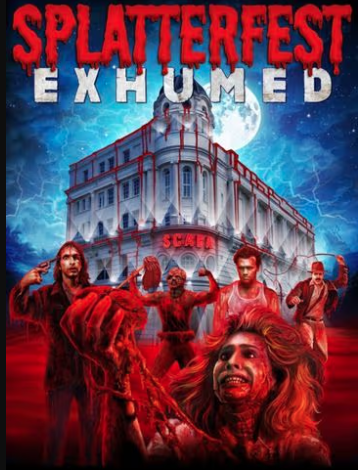
Splatterfest Exhumed (2024): This documentary covers Splatterfest ’90, the notorious all-night horror festival held at London’s legendary Scala Cinema. Directed by Jasper Sharp with David Gregory as supervising producer, this gets into how this well-remembered weekend was put together by a teenaged Justin Stanley and how it was amazing that it even happened at all.

Splatterfest ’90 was the UK premiere of several movies and the showing of several favorites, including Combat Shock, Evil Dead II, Brain Dead, Rabid Grannies, Within the Woods, Henry: Portrait of a Serial KillerDocument of the DeadThe Laughing Dead, The Toxic Avenger 2 and Bride of Re-animator; promo reels for Maniac 2, Horrorshow and Hardware; as well as the opportunity to meet horror icons like John McNaughton, Greg Nicotero, Brian Yuzna, Buddy Giovinazzo, Roy Frumkes and Scott Spiegel.

What emerges is a combination of people extolling the virtues of just how this event brought so many together with the challenges of running just such a massive undertaking. You also get to hear from those who were in the audience, such as Graham Humphries, Sean Hogan and Severin founder David Gregory.

My favorite parts in this concern how in the middle of the night, bootleggers suddenly arrived to sell tapes of banned video nasties and how The Comic was presented as the first film from a “new Hammer,” which stopped when the audience nearly rioted during the movie. It was so bad that the organizers didn’t show Cold Light of Day, another film by director Richard Driscoll.

This is perfect for lovers of horror, as well as movie history. I had a blast with it and am sad that I couldn’t have been in the audience.

Maniac 2: Mr. Robbie (1986): A proof of concept for a sequel to Maniac that never happened, this was directed by Buddy Giovinazzo (Combat Shock) and written by Joe Cirillo and its star Joe Spinell.

Shot in a bar that Spinell frequented and filled with his friends, this was a concept featuring Spinell as Mr. Robbie, a drunken kid show host who is dealing with letter after letter from abused children. The only way that he knows to deal with them is murder. What’s strange is that this is the same plot — and nearly the same name for its protagonist — as An Eye for an Eye/The Psychopath, a movie that finds Mr. Rabbey attacking parents who beat their children.

You only get a few minutes of what may have been, but when I see the craggy face of Joe Spinell, I feel like life could be OK. In some other world, I’ve bought this several times and just got the UHD release of it, having to explain to my wife why I keep buying the same film so many times.

I adore that Giovinazzo did a commentary for this, explaining how it happened and some of the sleazier things that he learned about the cast and where this was filmed.

Horrorshow (1990): Director and writer Paul Hart-Wilden wrote the script for the little-seen — and great — movie Skinner. He also wrote Living Doll, but Dick Randall gave it to George Dugdale and Peter Mackenzie Litten to direct.

It’s got a simple story — a man tries to stay in a room only to learn that it’s still possessed by a demon that has already killed one person — but it has plenty of gore to make it stand out. Its creator is obviously a big horror fan and his commentary on working on this is quite interesting. Hart-Wilden is still working, directing the TV series 31 Days of Halloween.

Cleveland Smith: Bounty Hunter (1982): Directed by Josh Becker, who wrote it with Scott Spiegel, this is a little-watched short that has many of the players of the Evil Dead series, including Bruce Campbell as the hero, Sam Raimi as a Nazi and Robert Tapert as a native.

As you can tell, Cleveland Smith is pretty much Indiana Jones, down to being chased by a bolder, but he also gets caught in quicksand and is nearly killed by a dinosaur. He has a whip, just like Dr. Jones, but he also has a ventriloquist dummy and a special pair of pants known as the Waders of the Lost Park.

This is totally politically incorrect and as dumb as it gets. I mean that in the best of ways.
Mongolitos (1988): Director Stéphane Ambiel made this short that the Scala ad copy claimed “Taking ten minutes to do what John Waters achieved in ten years.” This is great for selling the movie, but it’s nowhere in Waters league. That said, it has something to offend everyone, including shooting up with toilet water, puking up a turd, pushing a transgender woman’s head into the bowl while taking her from behind while a nun teams up on her and then everyone eating feces with crackers. I can only imagine that some people will be horribly upset by this, but it’s made so goofily that you can’t help but laugh at it. Somewhere, staunchly British people are also upset that the French are doing a Monty Python sketch with poo eating.
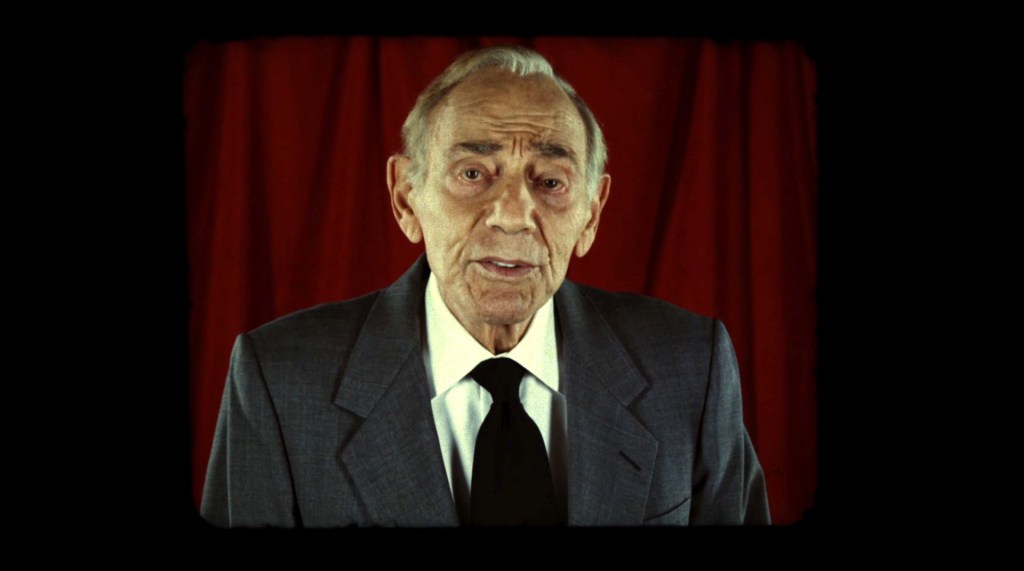
The Legendary H.G. Lewis Speaks! (1989): Herschell Gordon Lewis is at the center of the Venn diagram of my life, someone who was a leader in my two obsessions: movies and marketing. Just hearing his voice makes me feel good about things, like everything is going to work out alright. When you see his older face and his wry smile, you may almost forget that he once used animal guts dumped in Lysol over and over again in the Florida heat to upset almost everyone before anyone even considered what a gore movie was.

This was filmed on October 4, 1989, when Lewis spoke at the Scala before Gruesome Twosome and Something Weird. Before he went on stage, he asked to be paid in cash. At once a gentleman in a suit and a carny lunatic, at the dual poles of juxtaposition, only he could wax so enthusiastically about fried chicken and trying to figure out how to get Colonel Sanders into one of his movies.

25 DAYS OF CHRISTMAS CHALLENGE: Hot Frosty (2024)

Director Jerry Ciccoritti started his career with Psycho Girls and Graveyard Shift AKA Central Park Drifter, so how wild is it that he just made this viral movie? Written by Russell Hainline, this has Kathy Barrett (Lacey Chabert) runs a diner in Hope Springs, New York, but everything is falling apart after the death of her husband. To cheer her up, her friends  Theo (Dan Lett) and Mel (Sherry Miller) buy her a red scarf. Later, she takes that scarf and puts it on a muscular ice sculpture and, well, have you seen or heard Frosty the Snowman?

Jack Snowman (Dustin Milligan) comes into her life and ends up enchanting everyone in town except for conspiracy obsessed Sheriff Nathaniel Hunter (Craig Robinson). This succeeds through its casting, as it also has Lauren Holly, Katy Mixon Greer from Eastbound & Down and Joe Lo Truglio from The State, all talents that elevate anything that they appear in.

I love this term: “born sexy yesterday” which comes from Pop Culture Detective. How can Kathy find anything sexually interesting in a baby in human form, even if he has nice abs? Is he a project, a blank slate, like a snowman, that one can project their dreams on as easily as insert a carrot for a nose?

Why am I thinking so hard about this movie?

That said, Hainline is on Letterboxd and seems to have a sense of humor, saying “in 2021, I started pitching to my friends, in my best Norm Macdonald-esque delivery, “what if, when Frosty the Snowman came to life… he was a super-hot dude?” then I’d hit them with “it’s called HOT FROSTY.” and it always got a laugh… but over time, it also burrowed under my skin. for whatever reason, I couldn’t let this idea go. I had to write this movie.”

Look, someone has to fuck that snowman. It may as well be one of the Mean Girls. At least this has some fun callbacks to other Netflix holiday movies and her past acting roles. If it was a female snow woman, however, I feel like people would get angry.

SEVERIN BLU RAY RELEASE: Scala!!! Or, the Incredibly Strange Rise and Fall of the World’s Wildest Cinema and How It Influenced a Mixed-up Generation of Weirdos and Misfits (2024)

Between 1978-1993, more than a million people attended movies at the Scala Cinema in London, whether they were coming to see arthouse or grindhouse, kung fu or groundbreaking LGBTQ+ films. Out of that era, many members of those audiences became today’s filmmakers, musicians, writers, actors, activists and artists.

This documentary, directed and written by Ali Catterall and Jane Giles, this features John Waters, Mary Harron, Graham Humphreys, Alan Jones, Kim Newman Ben Wheatley, Ralph Brown, Beeban Kidron and so many more, all united in their memories of the theater and the life-changing films and moments they enjoyed there.

Whether people came to see movies like Thundercrack or Eraserhead, the movies of Russ Meyer or John Waters, Laurel and Hardy or Sam Raimi, they knew that the Scala was where they would get to have their minds blown.

Based on Giles’ 2018 book Scala Cinema 1978-1993, this is a movie for movie lovers, plain and simple. The Scala got around so many issues because it was a members only club — the Severin set comes with a membership card of your own, as well as a poster — yet despite all of the drug use in the theaters, at least two reported deaths and showing tons of movies that couldn’t have been shown in England, Scala was closed because they showed A Clockwork Orange and Stanley Kubrick had ordered the film to not be shown in the UK. This led to a lawsuit by Warner Brothers and the theater ended.

The memories, however, could not go away. I’ve never had the opportunity to have a theater like the Scala but I wish that I had. I can live through this. This is a documentary and a set for those that live through movies, that dream of them, that want them to mean as much to others as they do to us.

All this week, we’ll go through the many extras that are in the Severin set as well as several of the movies that screened at Scala, which you can find on this Letterboxd list.

Here’s a list of the extras you get with this release: audio commentary with Jane Giles And Ali Catterall; an introduction from the UK premiere; the documentary Scala by Michael Clifford with commentary, a short Scala Cinema; featurettes on the theater and programs; Davey Jones’ cartoons; outtakes of the interviews and a trailer.

The second disc has several shorts that played at Scala, such as Divide and Rule — Never!Dead CatThe Mark of LilithRelaxBoobs A LotKama Sutra Rides AgainCoping With Cupid and On Guard.

The third disc has the Kier-La Janisse documentary The Art of the CalendarSplatterfest Exhumed, which is all about the seminal horror festival at Scala; Maniac 2: Mr. Robbie, the Buddy Giovinazzo-directed proof of concept for the sequel that never happened, as well as commentary by Giovinazzo; Horrorshow with commentary by director Paul Hart-Wilden; Josh Becker’s Cleveland Smith: Bounty Hunter, which stars Bruce Campbell and Sam Raimi, as well as a commentary by Scott Spiegel; Mongolitos with commentary by director Stéphane Ambiel and a featurette on H.G. Lewis coming to Scala in 1989.

You can buy this from Severin.

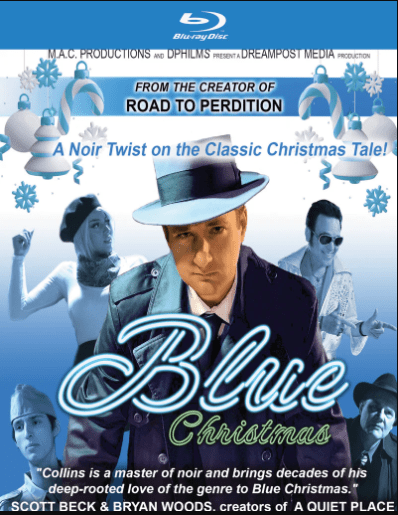
25 DAYS OF CHRISTMAS CHALLENGE and VCI PICTURES BLU RAY RELEASE: Blue Christmas (2024)

Max Allan Collins took over Dick Tracy for Chester Gould in 1977 and stayed on it for 15 years while also writing the Nathan Heller books — he won the Best Novel Shamus award for Stolen Away — as well as the graphic novel Road to Perdition (which became a movie), the comic books Ms. Tree and Wild Dog, and has directed four movies: MommyMommy 2: Mommy’s DayReal Time: Siege at Lucas Street Market and Eliot Ness: An Untouchable Life. If that isn’t enough, he’s a two-time member of the Iowa Rock ‘n’ Roll Hall of Fame and has written several movie novelizations, including the last two G.I. Joe movies and books based on CSICriminal Minds and Bones.

This story came along at a bad time for its creator. “The day before Thanksgiving 1992, I was notified by mail in a letter from a particularly odious editor at Tribune Media Services that my services as writer of the Dick Tracy strip were no longer required. I had done the writing of the strip, taking over for creator Chester Gould, since late 1977 – a fifteen-year run plus a few months.”

The same day, he lost his contract with Bantam books.

It was this story that broke his writer’s block after all that happened.

On Christmas Eve 1942, private eye Richard Stone (Rob Merritt) is celebrating. He’s gotten out of the draft with a bribe, which may cost him his secretary and girl Katie Crockett, whose brother is oversees fighting the war. His employee Joey (Tommy Ratkiewicz-Stierwalt) is getting sick of spying on cheating husbands and wives. And then there’s his partner Marley (Chris Causey), who was killed a year ago, a crime that he didn’t even try to solve.

That night, Stone is visited by Jake Marley, on leave from Purgatory so that he can convince Stone to solve his death. He brings three ghosts with him: the Ghosts of Christmas Past (Bonnie Parker, played by Alisabeth Von Presley), Present (a recently killed soldier, Hank Ross, played by Keith Porter) and Future (The King, who isn’t even old enough to be Elvis Presley yet, but ghosts don’t conform to the space time continuum; he’s played by Scot Gehret).

Sure, you know the story A Christmas Carol, but you’ve never seen it as a film noir. This is a really interesting movie and it’s awesome to see it come to life, knowing that Collins has been wanting to get back to making movies for several years. Go in knowing it had a small budget, but be wowed because it has big ideas at its heart. I’m definitely adding this to my annual holiday film rotation.

This VCI Pictures blu ray has extras including commentary by Collins and Producer/Editor Chad T. Bishop, Q & A highlights from advanced theatrical screenings and a documentary featuring Collins. You can get it from MVD.

25 DAYS OF CHRISTMAS CHALLENGE: Saint Nick (2024)

Directed by Justin Knodel, who wrote it with Chris Levine (who stars as Nick) and Christopher McGahan, Saint Nick is about Diane (Rachel Alig), who has a business trip over the holidays. Her son Trevor’s (Alex Lizzul) father can’t pick him up, so she’s forced to ask her brother Nick to watch him.

Nick spends all of his time in a bar and is the last person you’d want to watch your kid. But as you’ll learn, spending a week together over the holidays is probably the best thing that could happen to the two of these characters.

Everyone goes above and beyond in this indie comedy to make it way better than you’d expect. It makes fun of the schmaltz of Hallmark holiday movies without falling into the same problems. I had fun with it and if you’re looking something new over the holidays, this might be it.

You can learn more at the official site.

You can watch it on Amazon.

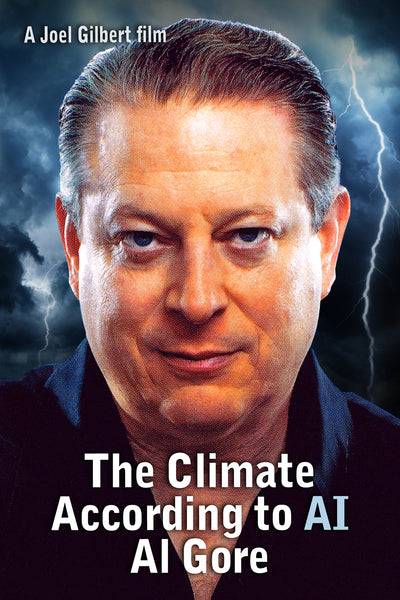
HIGHWAY 61 ENTERTAINMENT DVD RELEASE: The Climate According to AI Al Gore (2024)

This film promises “An AI generated “Al Gore” exposes the climate scare as a political tool to undermine capitalism and impose big government socialist ideals upon voters.”

Except that the AI for it is from Eleven Labs, the same site I use to create voiceovers for my podcast. It’s AI as much as it’s a program that does voices but it isn’t a program that can take on the mind of another human being and answer questions as them.

Director Joel Gilbert, who worked for Gore when he was a Senator, has learned that Harvard professor Roger Revelle was the source of Gore’s climate alarmism, in spite of Revelle supposedly rejecting those theories.

You may watch this and start to believe that, but there’s also the 2014 movie Merchants of Doubt, in which its explained that alate in his life, Revelle agreed to coauthor a paper with Austrian-born American physicist and emeritus professor of environmental science at the University of Virginia Fred Singer.

Soon after he agreed to write it, Revelle had a near-fatal heart attack. Singer then wrote most of the paper, including several sections arguing that climate change wasn’t the threat everyone says that it is nor is it understood enough for the government to be involved.

After Revelle’s death, Singer began telling people that Revelle shared his views on climate change. Revelle’s family and graduate student Justin Lancaster claim that Revelle regretted working with Singer and saw global warming as a serious issue up until his death.

Singer sued Lancaster over his claims, but some believe that these lawsuits were to undermine scientific evidence and prevent the public from distinguishing between legitimate and sham research.

Alright, two claims down.

But anyways…

Let me give Joel Gilbert a break and keep on explaining this movie.

Gilbert learned that the real origin of Al Gore’s climate apocalypse came from his time at Vanderbilt Divinity School and also explains how Gore plagiarized a radical environmental book from the 1940s to produce his 1992 manifesto, Earth in the Balance.

Most of this movie is Gilbert confronting what they refer to a an AI generated ‘Al Gore about his entire life story, such as his struggle to fulfill the political ambitions laid out for him by his parents.

Again, if you look at the credits, the AI is used to simulate the voice of Gore. Perhaps it was used to write some of the script, but almost every word feels inserted into the former Vice President’s mouth. There’s also a credit for the lip animation, which is why the “AI” Al Gore looks like he’s saying the words.

By the end of this movie, Gilbert believes that he has exposed “the climate scare as nothing more than a political tool used by groups who wish to undermine free-market capitalism and impose big government socialist ideals upon unsuspecting voters.”

Gilbert is also from Pittsburgh, just like me, so we need to get a beer and talk about the movies he’s made that I’m more interested in, like Paul McCartney Really Is Dead: The Last Testament of George Harrison and Elvis Found Alive. In no way to I want to talk about The Trayvon Hoax: Unmasking the Witness Fraud that Divided America or Atomic Jihad: Ahmadinejad’s Coming War For Islamic Revival And Obama’s Politics of Defeat. He’s also made several — many, many — Bob Dylan movies.

I mean, maybe I don’t want that beer. Look at this, from Wikipedia: “In 2019, George Zimmerman, represented by Larry Klayman, filed an unsuccessful lawsuit against Trayvon Martin’s parents (Sybrina Fulton and Tracy Martin) as well as Attorney Ben Crump, who had represented the family. Zimmerman’s lawsuit was based on the allegations made in Gilbert’s book.” He also made Dreams from My Real Father, in which he claimed that President Obama’s “real father was Frank Marshall Davis, a communist from Chicago, and that Obama’s mother posed for nude photography.”

He’s also classified his Paul and Elvis movies as mockumentaries before going into political films.

Are we now in a world where we can interview people we always wanted to even if they don’t want to be interviewed, all so they can say exactly what we want them to say?

Seems like it. Ugh.

You can get this from MVD.