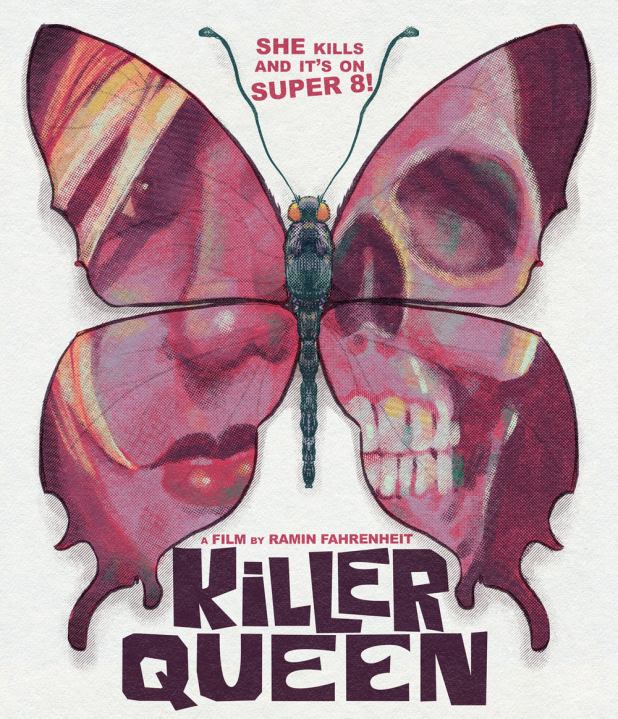
First off, rush out and buy this from Gold Ninja or watch it on Tubi. This movie feels like it emerged from another time and place and everyone who claims to be making movies that feel like they came from the past are liars because this movie gets every moment right while also staring into the future like it’s a blinding sun.
Shot on 8mm and looking like a grainy blast from out of nowhere, Ramin Fahrenheit wrote, directed and stars in this movie. She’s a young woman just out of the mental ward who goes from simple robbery to murder in the same way that I would try to decide what I want for dinner. She’s driven to kill by something that she can’t control, keeping herself hidden but always finding herself in the glaring spotlight and unleashing her vengeance.
Lo-fi as fuck in the best of ways, pushed forward by a score by Norman Orenstein, this honestly amazes me that it came from years and not decades or realities away, a movie that feels like Jess Franco coming through the fabric of time and space to become Canadian and devastate your senses all over again, yet with a more feminine understanding of just how cruel the world is but never forgetting to have scummy gore and a screwy narrative like Driller Killer without the New York art scene.
Every grindhouse inspired movie goes for broke with wacky action, goofy trailers and throwing some video effects to make it all look like it’s on dirty film. This is on dirty film with the beauty that can only come when audio and picture are made in two worlds, lending this a disjointed quality that activates the movie drug endorphins in my fragile mind, bringing me into that most magical planes of mental existence, that place where movies are perfect for their imperfection.
EDITOR’S NOTE: This was first on the site on August 4, 2019.
This is the first Child’s Play movie made without the involvement of creator Don Mancini and actor Brad Dourif. Instead, Lars Klevberg (whose film Polaroid has been lost in the legislative downfall of the Weinsteins) directed from a script by Tyler Burton Smith (who wrote the video games Sleeping Dogs and Quantum Break).
Mancini has criticized the remake while understanding that rights holder Metro-Goldwyn-Mayer can do anything they want. When asked if he and fellow producer David Kirschner would be involved, he said, “We said no thank you, because we have our ongoing thriving business with Chucky. Obviously my feelings were hurt… And I did create the character and nurture the franchise for three decades. So when someone says, “Oh yeah, we would love to have your name on the film,” it was hard not to feel like I was being patronized. They just wanted our approval. Which I strenuously denied them.”
Instead of the supernatural origins of the past, this Chucky is a Buddi doll created by the Kaslan Corporation. This kind of tears out the most frightening part of the Chucky concept — a doll that somehow comes to life yet is consumed by pure evil.
The real problem starts in a foreign Buddi assembly factory, where an employee takes out all of the safety protocols before killing himself. That doll eventually makes its way to the home of Karen Barclay (Aubrey Plaza) and her hearing-impaired son Andy (Gabriel Bateman, who was also in Annabelle and Lights Out).
While Andy eventually gains real human friends, Chucky places his friend’s happiness above all common sense and restraint. Unlike the past, where Chucky is motivated only by his own concerns, here you can see how his lack of human understanding leads to all of the murder and mayhem. He doesn’t realize how a movie that the kids watch, like Texas Chainsaw Massacre 2, can provide laughter and pleasure while real death leads to life-changing results.
This Chucky also has the ability to command phones, household objects, drones and cars, as well as command an army of the next line of Buddi dolls on the night they are introduced, which includes a positively harrowing bear version.
I was totally prepared to absolutely despise this film until I saw it in a new light. I wondered, what if Claudio Fragrasso somehow got his hands on the chance to make Child’s Play? The results wouldn’t be all that great, but they’d sure be fun. That’s what this movie aspires to. It’s certainly entertaining — any movie where the adulterous villain is scalped by a tiller in a watermelon patch while taking down Christmas lights and his face is skinned off and passed around as a gift or a child is sprayed right in the face by a store manager’s blood is going to be a winner in my book. But it could have been a totally different film with a totally different title and lead character without changing the story all that much.
But hey — Mark Hamill is awesome as the voice of Chucky and Tim Matheson shows up as Henry Kaslan, the head of Kaslan Industries. I laughed out loud a few times. And I’m not as married to Chucky as a slasher hero as I am to Michael Myers, Jason, Freddy, Leatherface or anyone else. And let’s face — all of those characters have had some pretty bad movies in their history, too. This one isn’t as bad as any of those. Sure, Chucky looks like unfinished CGI, but you can’t have everything.
There’s also another Chucky movie coming out this year called Charles and Mancini has a TV series in development. Want to learn some more about killer dolls? Check out this list of ten evil dolls that we posted a few weeks ago.
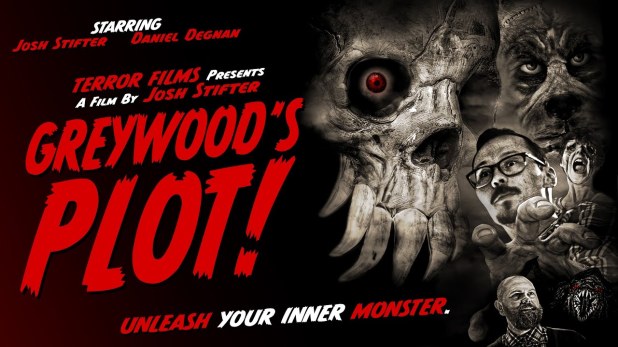
Dom (director and co-writer Josh Stifter) is about to give up on his chase to find cryptozoological phenomena and maybe move out of his mom’s basement, but when he gets a video that shows a real chupacabra, he gets Miles (Keith Radichel) and they head out in the woods to have strange dreams and find whatever that skeleton they trip over out there in the darkness on the land that belongs to Doug Greywood (co-writer Daniel Degnan).
When this movie ramps up — and it does — it gets dark and gory while remembering that it’s also a combination black and white creature feature and a buddy comedy about two friends trying to fix their ruined relationship while finding a living and breathing actual goat sucker.
There’s not much else out there like this movies, shot on the smallest of budgets yet having the biggest of hearts. It’s absolute fun and you should do whatever you can to check it out.
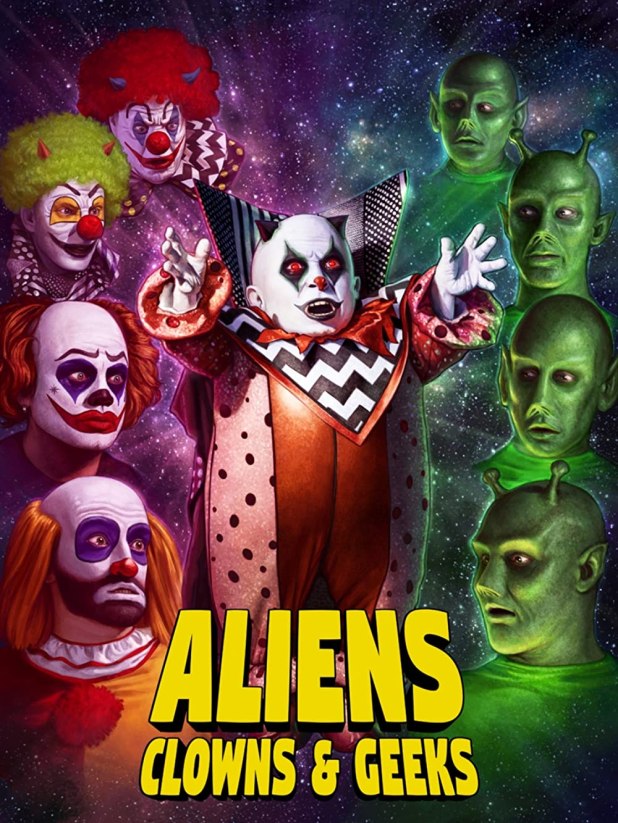
A day before his new television show Cry Me Dry goes on the air, it gets canceled and nothing actor Eddy Pine (Bodhi Elfman) says or does can get it back. His Hollywood career over before it’s begun, Eddy drinks himself into oblivion while dealing with a clown who shoves a mind-controlling obelisk up his ass which he gives birth to the next morning.
If this sounds like a movie you’d be into from that first paragraph, let me ice the cake: this was directed and written by Richard Elfman (Forbidden Zone)!
Eddy must protect his life — and the universe — as the obelisk is at the center of an interstellar war between clowns and aliens. Now, Earth — and Eddy’s ass — have become the battlefield.
As Eddy would soon say, “My mother’s a junkie wh***. My father’s an alien from outer space. Killer clowns are out to get me. My a**hole’s the portal to the Sixth Dimension and they canceled my f***ing series! Do you really think everything’s going to be ok?”
To battle Clown Emperor Beezel-Chugg (Verne Troyer) and a mind-controlled human clown (Nik Novicki) and his oversized chicken-suited partner Lenny (Steve Agee) as well as stay ahead of the Men in Black and masturbating green aliens, Eddy must join forces with his female-identifying trans brother Jumbo (Steve Agee), an expert on the unknown named Professor von Scheisenberg (French Stewart) and the professor’s gorgeous Swedish assistants Helga Svenson (Rebecca Forsythe) and Inga Svenson (Angeline-Rose Troy), who both fall for our hero.
Somehow, this also has George Wendt as a priest.
This is a movie filled with bathroom humor, puke, political incorrectness and, yes, aliens and clowns. If you want to see a movie that is silly for the sake of being silly without worrying what anyone cares about it, choose this one.
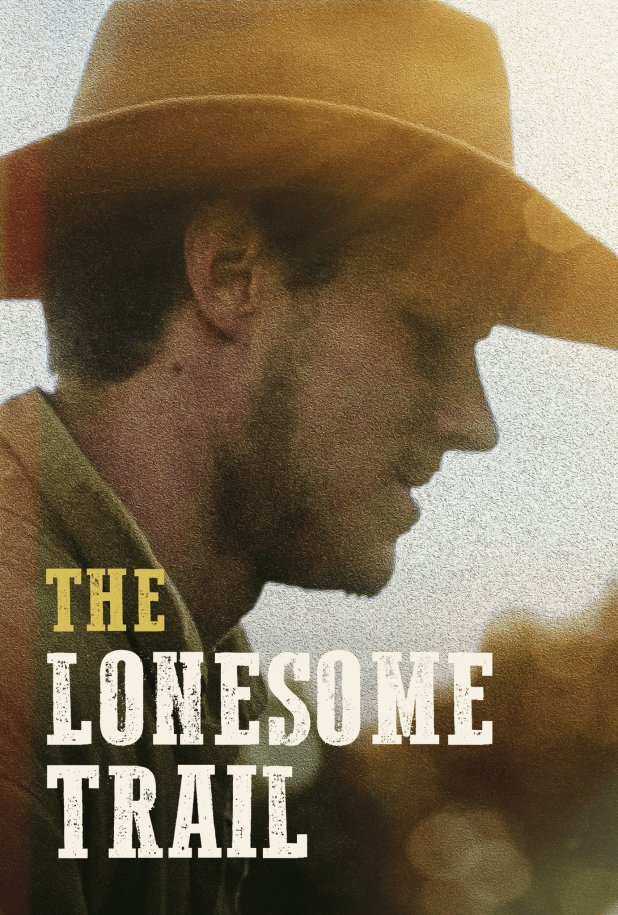
Based on the book by Arlette Thomas-Fletcher, who also directed the movie, The Lonesome Trail is all about Mike McCray, a cattle baron trying to keep new homesteaders out of his mining town and Carlson, the preacher who rescues them with his Bible instead of a gun. But when the ruthless McCray attacks again, even Carlson’s family members may not stay on his side.
If you’re in the mood for a faith-based western — instead of the lawless Italian ones that are often on this site — The Lonesome Trail is for you.
Thomas-Fletcher is the first African American, woman to write, produce, direct and executive produce a western movie. She fell in love with horses and westerns when she grew up around farming, horses and watching western movies and television shows with her father.
You can get The Lonesome Trail on digital from Gravitas Ventures. You can learn more on the official site.
When Indigo (Maye Harris), a sheltered teenager with congenital heart disease, meets and befriends Sarah (Ellie Adrean), a more rebellious teen about getting a heart transplant, she decides to break free of her New Age parents’ strict worry and start living as an actual teenager.
Director and co-writer (with Max Kaplow) Alessandra Lichtenfeld has put together a cute glimpse into teenage life while being smart enough to reference The Parent Trap. There’s plenty of emotion in the short run time of this film.
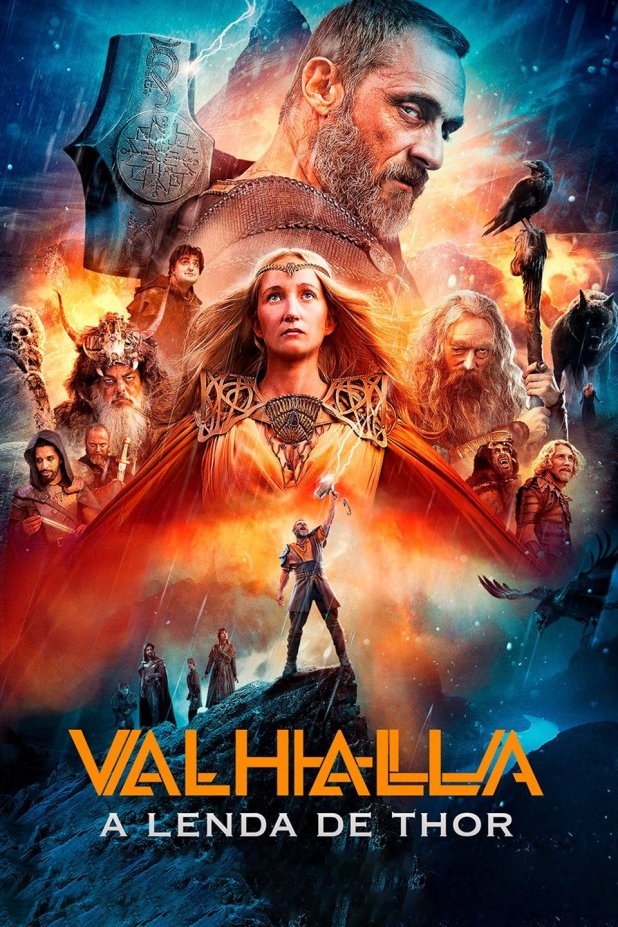
A remake of the 1986 animated film Valhalla, this film takes advantage of Thor’s popularity to tell the story of Røskva and Tjalfe, two Viking children who travel from Midgard to Valhalla with the gods Thor and Loki to face the Jotnar, the Fenrir wolf and Ragnarok.
Shot on location in Denmark, Iceland, Norway and Sweden, this has characters that look nothing like the Marvel films. That’s great because this movie demands to stand on its own two feet.
Røskva and Tjalfe become the servants of the gods yet learn that the ones that they worship are just as human and filled with issues as all of us. Yet can they help those very same flawed gods when the end of all there is looms large?
I thought this was going to be one of those WalMart sneaky films where people buy it because they think it’s the real Thor, but this feels closer to the mythological Thor than the more popular Marvel movies. It’s definitely worth a watch.
Amy Chen (Amy Chang) is a food critic haunted by a past breakup that has led to her developing an eating disorder as her co-worker Peter (Jae Shin) attempts to heal her stomach and get her to fall for him, which may happen when they have to act together in an ad for a pho restaurant.
Angel Li (Yi Liu) is in a loveless marriage with an American businessman named Howard (Erik Lochtefeld). She’s just scored the role of a lifetime, playing a spurned woman who jumps off a bridge, all while she falls for a writer named David (Ludi Lin).
Nina Wong (Celia Au) came to America thanks to her family paying a high cost which she must pay by selling her body as an escort. But can her relationship Ian (Roger Yeh) help her escape the constant toll of selling herself?
Based on a Chinese short story, In A New York Minute is an Asian and Asian American-led film that explores love in three different stories.
First-time writer/director Ximan Li — who co-wrote the script with Yilei Zhou — has created a great interconnected film that comes together quite well. It doesn’t get overly dramatic and allows you a window into lives and experiences that you wouldn’t get to have otherwise. Isn’t that what all great movies should do for their viewers?
In A New York Minute is available on digital from Gravitas Ventures.
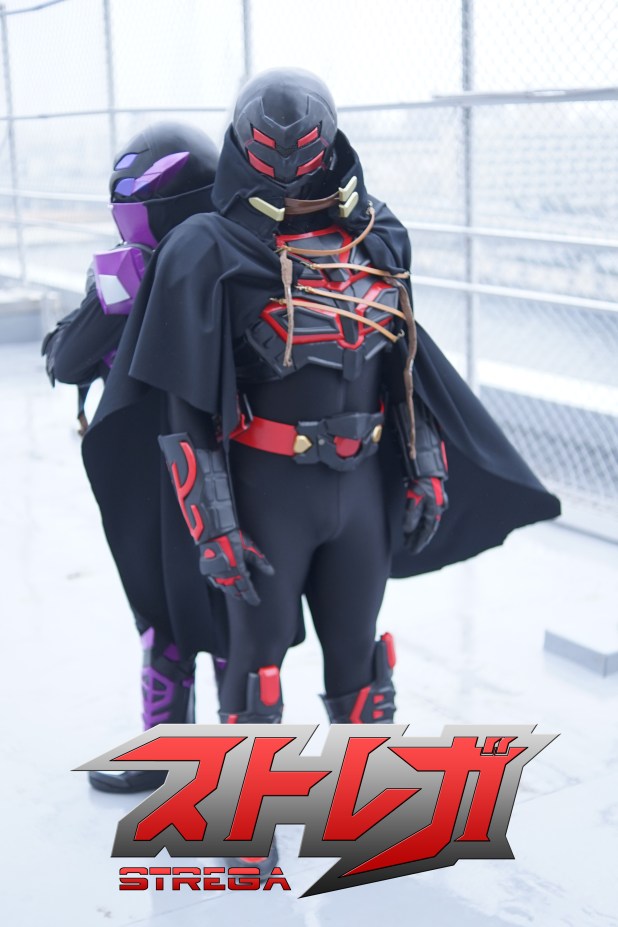
20XX: The leaders of Japan have regulated superheroes using a system called the Vector Card, giving a villain the chance to take over. But he didn’t count on working class hero Strega (also known as Gun Caliber) to figure out to hack the cards and save Japan.
That said, the man who is under the mask, Soma Kusanagi, has to get drunk and figure out his love life first.
Bueno, who directed this, as well as stars as Soma, Bueno, studied for years under Seiji Takaiwa — Kamen Rider! — to be a tokusatsu hero, even if the film is quite funny.
Where most heroes — like sentai rangers and Kamen Rider — are virtuous, even when the city is being turned into monsters, Soma is still looking to score. It’s wild because this looks like the real thing and is played like it, so I felt the laughs were earned.
I also really liked how trading cards activated the various weapons that Strega uses. I only have one bit of advice. If you have kids who love shows like this, maybe make sure they don’t get the chance to see this until they’re older because they could be fooled into thinking this is a real show until, you know, the multiple sex scenes.
The credit is due to VFX director Kiyoshi Hayashi and Singapore artist Gideon J Goh, who designed the costumes. This looks cool as it gets and with each movie, Bueno and Garage Hero seem to be getting better.
ABOUT THE AUTHOR: Herbert P. Caine is the pseudonym of a frustrated academic and genre movie fan in Pennsylvania. You can read his blog at https://imaginaryuniverseshpc.blogspot.com.
When people think of religious scare films, they generally think of Christian productions such as Blood Freak, The Burning Hellor Unplanned. Those with more international tastes may remember Muslim works such as the anti-Salman Rushdie epic International Guerrillas, which ends with Rushdie being incinerated by lightning bolts from a flying Qur’an. However, thanks to a recent review in Shock Cinema magazine, I found a rare Buddhist entry in the genre. The Precious Jade Calendar is a Chinese-language animated TV series that offers viewers a lengthy tour of Buddhist hell. Even though the show appears to be intended for children, reportedly having run in a Saturday afternoon timeslot, it is as bloody as any adult-oriented anime.
This animated series is based off a Chinese text purportedly given to a monk by the rulers of hell in the eleventh century, although as Reed College Professor Ken Brashier notes, there are no known copies of it from prior to the nineteenth century. The Precious Jade Calendar, also known as the Jade Records and the Jade Guidebook, is essentially a tourist guide to hell. It describes the various subsections of hell – called small hells – and the sins that are punished in each one.
The series opens with two young boys at a Buddhist monastery talking. One feels guilty about having accidentally killed young birds in a bird’s nest he knocked down, so they go speak to the head of the monastery, who proceeds to describe hell in all its glory to them. From then on, each episode discusses a specific palace of hell where sinners from a particular category are judged and punished. Every so often, the children ask such cheerful questions as why do so many of the small hells feature tortures that involve tearing out someone’s guts.
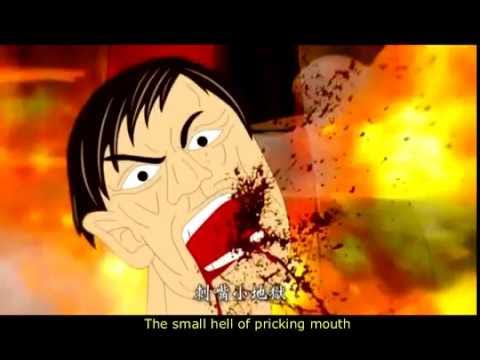
The various small hells display an infernal division of labor that would make Dante seem creatively bankrupt. Among the hells the series warns of are “The Small Hell of Blood and Pus,” “The Small Hell Where Brain Is Taken Out to Feed Hedgehogs,” “The Small Hell Where People Are Eaten by Ants,” and “The Small Hell Where People Are Drilled by Purple Red Viper.” Although the series’ animation is limited, with figures remaining largely static other than moving their arms and blinking their eyes, the bloodshed is still quite graphic. Lots of blood splatters across the screen, and hearts and other organs are vividly torn from bodies.
Although Westerners often regard Buddhism as a more tolerant religion than many Judeo-Christian traditions, the variant on display here is as harsh and fear-based as anything preached by Jerry Falwell or Estus Pirkle. In one episode, making or distributing pornography is put on the same level as committing murder or raping teenagers. More troubling is the show’s assertion that disabilities or diseases are the outgrowths of wrongdoing in either this life or a previous life. At one point, the show asserts that infants born with missing limbs or other deformities were cannibals in a previous life. Similarly, one vignette depicts three siblings who mistreat their parents. One ends up getting struck by lightning, another dies of AIDS, and a third contracts cancer. This type of victim-blaming can result in the same type of ostracism that many people infected with HIV faced in the early years of the AIDS epidemic. Obviously, not all Buddhists would endorse this dark vision, but this series should serve as a footnote to Western stereotypes of Buddhism as necessarily a more forgiving religion.
The Precious Jade Calendar is available on YouTube broken up into parts on this channel.



 B&S About Movies