VISUAL VENGEANCE BLU RAY RELEASE: Heartland of Darkness (1992) and exclusive interview with director Eric Swelstad

In the small town of Copperton, Ohio, Paul Henson (Dino Tripodis), a former big-city journalist, buys a small local newspaper. He quickly falls into a wide-reaching conspiracy of ritualistic199 murder and cult mind control when he discovers that the entire town may be under the spell of Reverend Donovan (Nick Baldasare, Beyond Dream’s Door), Reverend Kane (John Dunleavy) and their flock. As the clues and corpses pile up, Henson and his family are thrust into a life-or-death struggle to expose the truth and stop the demonic cabal’s reign of evil.

Shot in 1989 by director Eric Swelstad on 16mm film and lost in obscurity and distribution false starts for over 30 years, Heartland of Darkness finally arrives on home video for the very first time and is packed with bonus features that spotlight the original creators and document the film’s long history and final completion.

Filmed as Fallen Angels, which was changed to Blood Church and then Heartland of Darkness, Swelstad abandoned the project before finding a distributor. Over the years various producers including Jim Wynorski, Rob Spera and Jody Savin wanted to release the film, but nothing happened. It almost came out from Media Blasters in 2004 before Visual Vengeance became the company to finish it and get it out into the world.

If that doesn’t sell you, Linnea Quigley plays an evil teacher.

I have no idea why this ever got lost. It’s a perfect early 90s direct to video horror film, but perhaps even better than the other movies you would have found on the shelf. Swlstad has a great eye for filmmaking and puts story over simple gore.
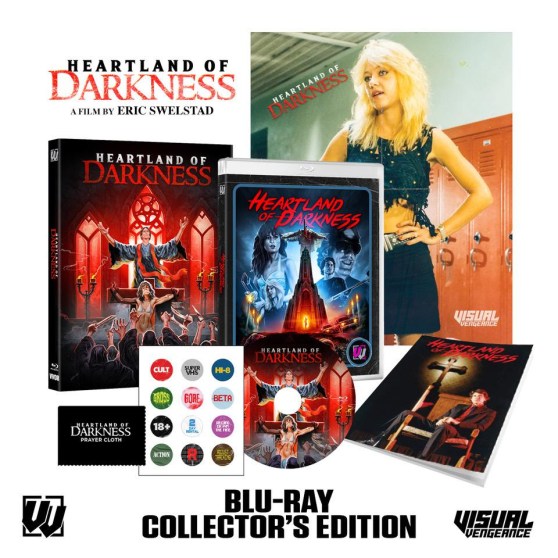
The Visual Vengeance blu ray of Heartland of Darkness is available from MVD and has these features:

  • First time available in any format
  • New director-supervised SD master from original tape and film elements
  • Deeper Into the Darkness: New 40-minute behind the scenes documentary
  • Three commentary tracks
  • Linnea Quigley Remembers, a new interview
  • Archival TV interviews, TV spots, behind the scenes footage and trailers
  • Complete original “Fallen Angels” 1990 workprint
  • Blood Church – rare distributor promotional video
  • Six-page liner notes by Tony Strauss of Weng’s Chop Magazine
  • Limited Edition Heartland of Darkness “Prayer Cloth”
  • Limited Edition slipcase – FIRST PRESSING ONLY
  • Collectible Linnea Quigley folded mini-poster
  • “Stick your own” VHS sticker set
  • And much more!

For more details on the label and updates on new releases – as well as news on upcoming releases – follow Visual Vengeance on social media:

TWITTER @VisualVenVideo

INSTAGRAM: Visualvenvideo

FACEBOOK: https://www.facebook.com/visualvenvideo

BONUS: I had the chance to speak with director Eric Swelstad about this film and his career.

B&S About Movies: This movie has been gestating for decades, right?

Eric Swelstad: It sure has. The original film was shot as Fallen Angels back in 1989, we ran out of money to finish it. At the time, the distributor in Florida named it Blood Church. And for a long time it had that name, but they also didn’t have the money to finish it. So for a long time, it sat on a literal shelf, waiting to be finished. And then finally, after the last couple of years, we want to get the money together to finish it and we were happy that Visual Vengeance made an offer to release it.

B&S: What do you think of what they did with your movie?

Eric: I think it’s terrific. I was telling Rob that I think his line is like the Criterion of, of, you know, genre releases. It’s really great. The packaging is terrific. The special features are great. There are three commentary track and a behind the scenes documentary that we made, as well as a bunch of other goodies that people can get.

B&S: You’re from Ohio, correct?

Eric: I grew up in both Indiana and Ohio. I went to college at Ohio State University where this was actually a master’s thesis for myself and my cinematographer. So great memories and great times at Ohio State.

B&S: You’re also part of another OSU student film, Beyond Dream’s Door, right?

Eric: Exactly. I was one of the ADs on that film. It was a great experience. So that was how I learned about making a feature at the university and I was like, “Oh, this is great. I’m going to try to do this as well for my Master’s.” And we were able to pull it off.

B&S: I love that both of those movies came out of OSU. They don’t feel like anything else on the shelves at the time.

Eric: Exactly. Yeah, they’re a little bit unique. And of course, some of the same actors like Nick Baldasare and John Dunleavy are in both films. And, of course, our movie was made at the height of the Satanic Panic in the late 80s. So we were capitalizing on what was going on in the country at the time. And it was on the news all the time. We capitalized on that. I came up with the idea for the script. And I said, “Man, this would be a great topic to deal with. made it an action film.”

You know, it’s like a horror action film.

B&S: Were you a horror fan before you made this?

Eric: I was a horror fan. I was more into like movies like Halloween and The Exorcist. You know, I was bmore into those films than I was into stuff like Italian giallo cinema. But I certainly was more into the occult. The Omen was a big influence. Films like that where you’re kind of like thinking, okay, these are ordinary people, but this crazy scary stuff is happening to them. That was what was interesting to me. And then, of course, I love action films. So I incorporated that into the action aspect of this to make it what I call an action horror film.

B&S: What were your influences on this?

Eric: I was heavily influenced by the usual suspects. George Lucas, Steven Spielberg, William Friedkin. Coppola, of course, was a huge influence. You know, there were just so many. John Carpenter. I just looked I finally got to meet him a few years ago and I told him just how important Halloween and Escape from New York were to me. I mean, all those great, great films, and I know he’s heard it a hundred times before, but he was so nice. I also recently met Walter Hill. One of my favorites. Yeah, my favorite directors from the 70s and 80s. And I told him, I teach a class about theology in film and we screened The Warriors as an example of Greek mythology and he was tickled by that.

B&S: What do you do today?

Eric: I’m the head of the film department at Valley College in Los Angeles in the San Fernando Valley and love it. I’ve been doing it for about 20 years now. And it’s been great. In fact, I hired some of my students to do some work on this film on Heartland of Darkness. They helped sound with the mix and one of my top students, she produced the documentary Deeper Into the Darkness, which is the behind the scenes movie. It was great having my students work on the main show.

B&S: What’s it like seeing young students being at where you were when you made this movie?

Eric: It’s so inspiring because I give them all these warnings about what not to do, because I went through it and the biggest one I tell them is don’t make a feature film if you can’t finish it. Don’t run out of money like we did. The things that we messed up on this movie are great lessons for today. I mean, things ranging from direction to editing, a whole bunch of stuff. So I think if anything, I just enjoy sharing experiences with the students to let them know what worked for us and what didn’t work for us.

B&S: I love the films that Visual Vengeance is putting out because they’re all so original. And even though the technology to make movies is more available and it should be so much more democratic to shoot a movie today, you don’t see the same drive.

Eric: The tools to make low budget films are there and it’s great. And you know, you could literally could go out and make your own feature film on your cell phone, which is wonderful. But you’ve got to have a story. You’ve got to have something to say. There are so many films that never see the light of day because they’re not that good. And there’s a reason for that. If you’re going to pour your heart and soul into something, you want it to be really good. You don’t want to be like something they would find any every other day. And it just you know, I teach screenwriting, so I talk about, it’s all about the story. It’s all about the script. You’ve got to have a really interesting story to begin and a lot of horror films today. I’m not really into because so many movies today are built around the jumpscare. How many jumpscare should we have in this film? Where the jumpscare is going to be? And that’s just a cliche. Anybody can do a jumpscare! You can put a sheet over your head and jump out at somebody and that’s a jumpscare. But it needs a story. It needs characters that we care about and follow.

B&S: I hate when people say, “Well, Val Lewton’s movies had jumpscares.” Well, they also had stories.

Eric: The great directors that we think of, you know, they didn’t just jump stuff out. They actually had stories. One of my mentors was the late great Robert Wise. He directed a lot of great movies, one of my favorite horror films he did was called The Haunting. That movie is so scary because of sound. It’s what you don’t see that is scary. And the sound is so good in that film and other films like that too. We can all learn from those master filmmakers about how to do horror films.

You’ve got to have a great script. I mean, that was a great script. The remakes that have come out have suffered because they were all about the technical stuff, the jumpscares and they really weren’t about the story. So if you spend time on the story, you’re gonna nail it. You’re gonna get a really cool film, but it’s all about the story. You’ve got to go back and think about character, plot development, character arc. The third act is critical. So all those things may add up to a really good movie.

B&S: I keep getting fooled by the A24-style horror movies that have a great trailer and a not-so-great final film.

Eric: They run out of steam. They delivered it on the first and second act, but by the ending, they’re like, “Oh, we already showed all that stuff. Let’s just wrap it up.”

Look at something like John Carpenter’s Halloween. To really know how to just do a great payoff, he had such a great ending and great characters. Now that’s a good example of how to end a movie. The Exorcist is like that as well. You’ve got the stick the landing.

Imagine if The Omen petered out before the ending.

B&S: Do you advise to start with that ending?

Eric: If you start backward, you know, you can come up with a really good ending and you work backward. That can sometimes work but you got to have a really, really good ending that we don’t see coming. I tell my students, “Twist endings are great. You’ve got to build to them. You got to have a great delivery, but you got to have stuff before that.”

You can do a good twist today. All movies need to have a twist. You’ve got to have something we don’t see coming. Otherwise, no one’s gonna make it.

B&S: What has worked for you lately?

Eric: I really liked It Follows. A lot of it is shot like Halloween, with the stuff shot during daylight and I love that they did really creepy things shot during broad daylight.

2022 Scarecrow Psychotronic Challenge Day 25: Single White Female (1992)

EDITOR’S NOTE: I like to do a new movie I’ve never written about for every Scarecrow Challenge, but I wanted to share this film — today’s challenge is CRAIG’S TWIST: When that iffy roommate situation goes sour in a dangerous way. — because my friend Em Fear is presenting a musical version of Single White Female on November 10 at 8 PM at Bottle Rocket Social Hall in Pittsburgh. 

I saw this movie on a teenage date, in a theater filled with other young people and I remember that when the scene came up when Allison (Bridget Fonda) accidentally watched Hedra (Jennifer Jason Leigh) masturbating on her bed, everyone was laughing at the awkward nature of this scene. But I think about this moment a lot. And not for prurient reasons. It’s because Allison is discovering not only that the person who has taken over life is taking over even her own bed, it’s that Hedra is more secure in her own sexuality and womanhood when she takes over Allison’s persona than Allison herself is.

Director Barbet Schroeder worked in the thriller genre quite often, which is the western way of saying that he made gialli that didn’t have as much sex or style. Single White Female is the exception.

Allison has just left her philandering boyfriend and is looking for a roommate when Hedra arrives. She lost her twin in the womb and as such, she’s been seeking her twin ever since. Allison seems to be that person until her lover comes back, which leads to Hedy acting out by launching a dog to its doom (which nearly makes this a slasher; why do slasher killers always take out innocent dogs? Talk about cheap heat…).

There’s an astounding moment in this film when after Hedy gets a makeover to look exactly like Allison, she tricks her way into going down on Allison’s boyfriend. He tries to stop her when he realizes that she isn’t who she thought she was, but then she does what very few female villains do: she assaults him, robbing him of his agency and when he complains, she penetrates his eye and brain with her stiletto heel. Somewhere, Fulci is clapping like a wildman.

I always thought that it was strange that to show how off-kilter Hedy is, they show her dancing at The Vault and participating in BDSM. Oh, she must be insane if she likes pleasure!

Other than that, this movie moves toward an interesting conclusion with a tacked-on square up reel that test audiences demanded. Ah well.

2022 Scarecrow Psychotronic Challenge Day 18: Hard Boiled (1992)

18. SO MUCH DEATH: The R.I.P. section has been very active this year so today watch a movie with a high body count.

307 people get killed in this movie.

It’s like John Woo looked at the most violent gun culture movies of the U.S. and was like, I can do this so much better.

After getting criticized for making films that glamorized gangsters, Woo wanted to make a Dirty Harry style film to make the police look heroic. He was on his way out of Hong Kong to Hollywood, so this was his final statement on Hong Kong action.

And oh man, this movie never fails to delight.

Inspector “Tequila” Yuen (Chow Yun-Fat) loses his partner and decides to play judge, jury and executioner, forgetting due process and blowing the murderer away. He gets kicked off the force.

Killing machine Alan (Tony Leung) is wiping out all of the gangs in the city and nearly shoots Tequila, saving his life because, well, Alan is also a cop.

Johnny Wong (Alan Wong) is the gangster boss running guns out of a hospital.

Really, you just put all of these characters against one another, throw in a few thousand bullets and sit back and enjoy what comes next.

This is a movie that has Chow Yun-Fat catch on fire and a baby pisses it out. The first time I saw it, I couldn’t believe what I was seeing and kept rewinding it. And it gets so audacious by the end, as shopping carts filled with guns are used to decimate bad guys and Western attention spans.

Critics loved The Killer in the U.S. more, but this is a movie made to watch with other people, all shouting and screaming as the action just keeps getting more intense. In fact, I’d say this is my favorite action movie of all time, one that sets a bar that has never been matched since.

I love this so much I accidentally reviewed it twice.

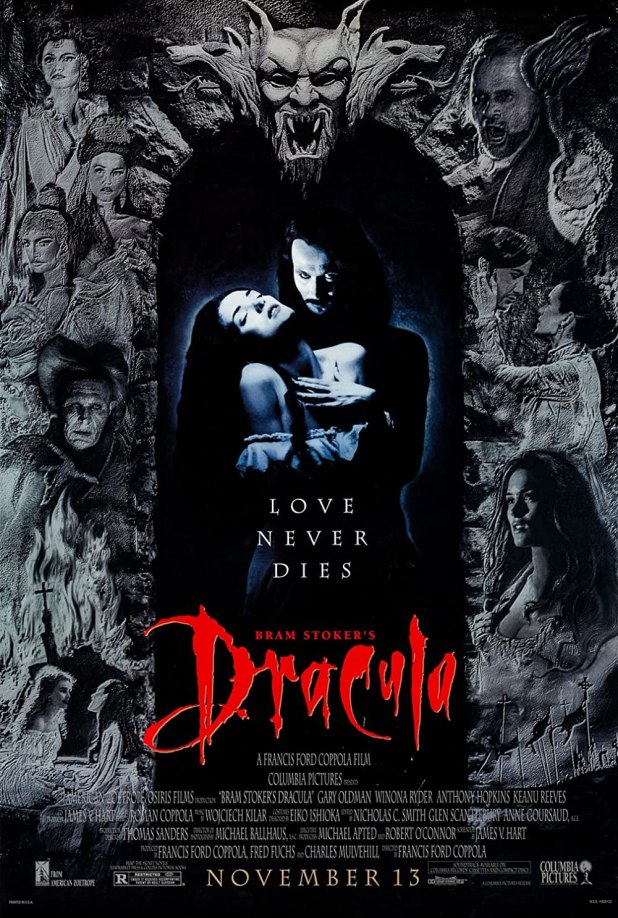
Bram Stoker’s Dracula (1992) 30th Anniversary 4k scan

ABOUT THE AUTHOR: Jennifer Upton is an American (non-werewolf) writer/editor in London. She currently works as a freelance ghostwriter of personal memoirs and writes for several blogs on topics as diverse as film history, punk rock, women’s issues, and international politics. For links to her work, please visit https://www.jennuptonwriter.com or send her a Tweet @Jennxldn

November 13, 2022 marks the 30th anniversary of Francis Ford Coppola’s Bram Stoker’s Dracula. In honor of the occasion, Park Circus has re-released the film into theatres in a 4k scan from the camera negative. Watching it after being a fan for so many years, brought me back to the night I first saw it. 

On Friday November 13, 1992, following a disastrous game of pool with a friend, I departed The Ferris Wheel pub on Market Street in the small town of Oswego, NY and headed to the local movie theatre alone to catch the late showing of the latest adaptation of Bram Stoker’s Dracula. 

Back then, I was a 20-year-old student working my way through a TV/Film and Radio program. Being a fan of horror films and vampires in particular, I had seen just about every version of the novel ever made. Most recently, in my “Intro to Cinema” class, I had studied the German expressionist film Nosferatu (1922) along with other historically important genre titles such as The Cabinet of Dr. Caligari (1920) and Un Chien Andalou (1929.) When I entered the lobby on that atypically warm autumn night, I carried an attitude of skepticism. How fresh could a new version of Dracula possibly be? A little over two hours later, I exited with mind blown. Not only had screenwriter James V. Hart and director Francis Ford Coppola managed to capture the most faithful version of the novel I’d ever seen, they had also incorporated the true history of the “real” Count, Vlad “The Impaler” Tepes and his struggle against invading Turks in the 1400s. Most impressively, Coppola had composed a visual love letter to the history of cinema, simultaneously incorporating actual clips of the earliest silent short reels and utilizing, almost exclusively, in-camera effects as the earliest masters did. It was and remains a film for film lovers and filmmakers, warts and all. 

Let’s discuss the wart right away and move on. Yes, Keanu Reeves’ attempt at a British accent is terrible. But, the rest of the film is so damn great, that it didn’t matter in ‘92 and it doesn’t now. In fact, I’d wager that if Johnny Depp had played Jonathan Harker, in line with the studio’s desires, the love story between Prince Vlad and Mina wouldn’t have worked as well as it does. It is precisely Harker’s wooden demeanor that makes it possible for audiences to understand Mina’s attraction to the far more emotionally expressive lovelorn Dracula. With Depp in the role, Harker would have no doubt been more likeable, reframing the Prince as a lesser competitor. With an unlikeable Harker, we fully get why Mina strays from her fiancé. At the same time, we want to see Dracula find love again. He lost the one thing that mattered most to him in service to his god and feels betrayed. He’s sympathetic. A key component to any classic monster with staying power. Oldman is, as always, resplendent. Further contrasting with past adaptations, neither Harker nor the charismatic Van Helsing are the heroes in this film. It’s Mina’s show. Not only does this acknowledge and continue the rich history of strong female protagonists in the horror and sci-fi genres, but it makes for the most powerful ending of any Dracula film ever made. Mina will love her Prince forever but the means by which she delivers both Vlad and herself to spiritual salvation is brutal. Her one single act with the sword at the film’s conclusion blows the feeble attempts of Harker, Holmwood, Quincy and Dr. Seward out of the water in comparison. 

Watching it again in the warm autumn of 2022 in a cinema in London, I relished in both its quiet modernity, and its embrace of old-school technology. I delighted in ever iris wipe and match dissolve all over again. The 4k negative scan is beautiful, bringing to light details in the costumes and sets I never noticed before. Every frame is gorgeous. If the 30th anniversary edition is playing anywhere near you, leave the bar early and see it. See the amazing cinematograph display its images in its most recent digital incarnation. Let it carry you back through a cinematic timeline not only to 1992, but to 1897. Movies like this one never die.  


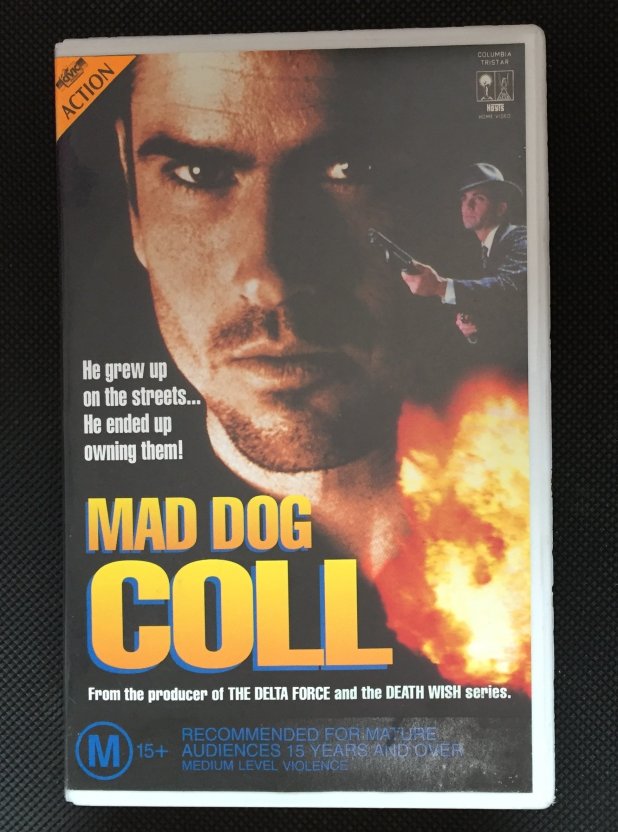
CANNON MONTH 2: Mad Dog Coll (1992)

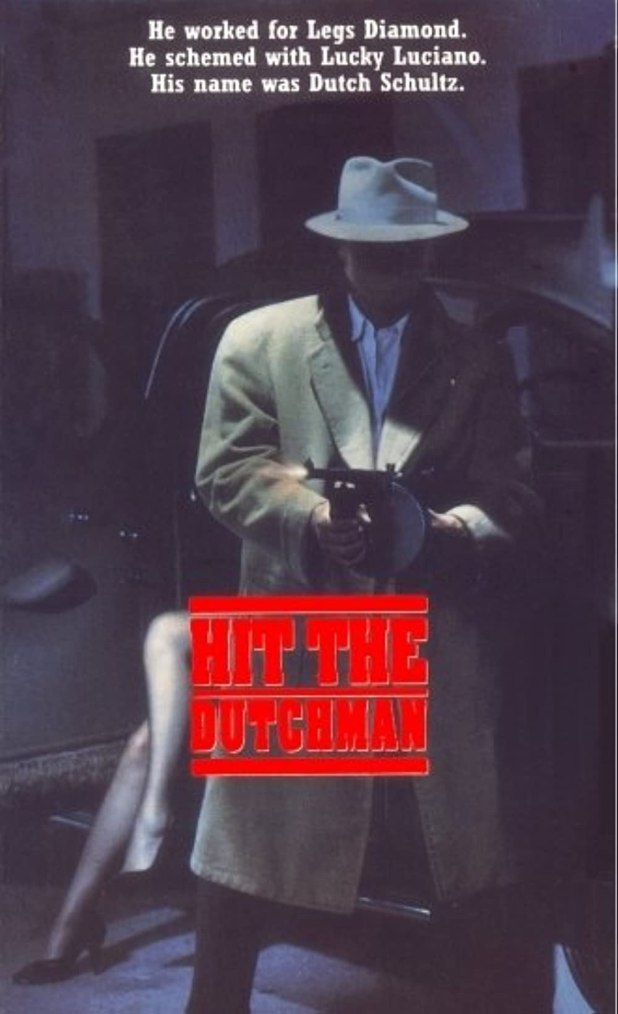
21st Century released Hit the Dutchman the same year as this movie, which concentrated on Dutch Schultz. This Greydon Clark and Ken Stein-directed film is about his nemesis, Vincent Coll, who started off as a street fighter and works his way up to becoming a crime boss.

Coll was called Mad Dog by the press after a five-year-old was caught in the crossfire in a gun battle. This movie claims that he was innocent of that and it was someone else who did the crime. It also presents Vincent (Christopher Bradley) and Peter (Jeff Griggs) as being sick of the low wages they received from Schultz (Bruce Nozick) and striking out on their own, which starts off the gang war.

Both this film and Hit the Dutchman were made by 21st Century in Russia, so the entire film has a very soundstage feel that also feels very Cannon, so you know that I loved it. It looks way better than it should, thanks to Janusz Kaminski, whose career would go way upward after working in the world of low budget films.

Released in the U.S. as Killer Instinct — to cash in on Basic Instinct but having nothing to do with that movie, God bless Menahem — this was intended to be part of a trilogy that only got two parts. Regardless, I love that Golan saw that more gangster movies were getting made, so he went to Russia to show America in the 1920s.

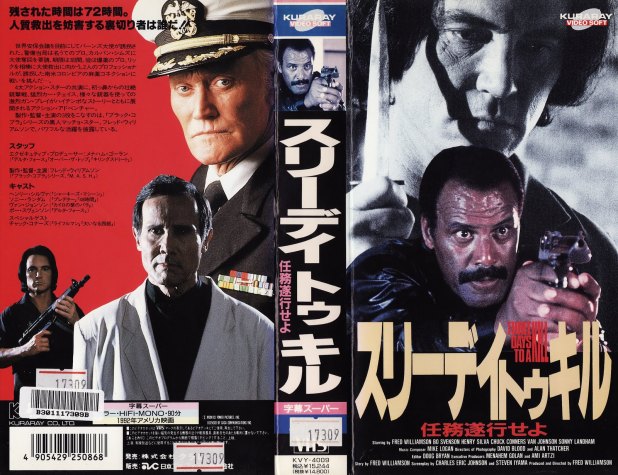
CANNON MONTH 2: Three Days To A Kill (1992)

This movie stars so many people that I love no matter what they do.

When Ambassador Barnes (Karol Brown, whose only other acting role was as a pregnant woman in Killer Sex Queens from Cyberspace, which is an adult film and has Jerry Springer and Larry Flynt in it) is taken by Columbia crime lord Perez (Henry Silva!) and his henchman Pepe (Sonny Landham, who started his career in adult), the top brass in the form of Captain Wright (Chuck Connors!) calls in the best: Calvin Sims (Fred Williamson!) and his explosives expert buddy Rick Masters (Bo Svenson!). First, Cal has to get Rick out of jail. Then, they’re joined by an undercover soldier pretending to be a dancer named Yolanda (Kim Dakour), then they get started getting some payback.

Made for HBO by Williamson, but this wasn’t the only film he directed. His first was all the way back in 1975 and Mean Johnny Barrows and some standout entries include Vegas VampiresMr. Mean and Original Gangstas, which found Williamson helping out Larry Cohen. If you love 70s black action movies, that’s one you definitely need to seek out because it stars Williamson, Jim Brown, Pam Grier, Paul Winfield, Richard Roundtree, Ron O’Neal, Robert Forster, Charles Napier and Wings Hauser.

This was written by Charles Johnson, who also wrote HammerMean MotherBeyond Atlantis and Slaughter’s Big Rip-Off, and Steven Iyama, who wrote Last Call and Deadly Past.

This movie has a great tagline: “He’s dangerous, he’s destructive and he’s dead serious.” It was also the final film for both Connors and Van Johnson.

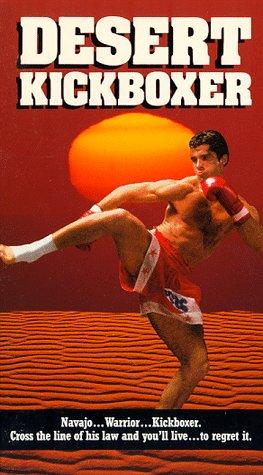
CANNON MONTH 2: Desert Kickboxer (1992)

Joe Highhawk has the most 1992 name ever as well as the most direct to video career path: he’s a cop who is also a kickboxer. He’s played by John Newton, who was Superboy on the syndicated series. But then his rage takes things past the limit and he kills a man in the ring. He quits his big city job, he leaves behind kicking people to death and heads out into the desert of his youth, where he lives in his grandfather’s trailer on a reservation and serves as a deputy to Sheriff Larry (Biff Manard).

Meanwhile, an accountant named Claudia Valenti (Judie Aronson, American Ninja) notices that the books of her horse breeder client Carl Schultz (Paul Smith!) are off. One of the trainers helps her and her little brother Anthony (Sam DeFrancisco) get away. Also, she now has $20 million into a secret account, which enrages her boss, who is really a drug dealer named Santos.

Of course Joe helps them. Of course they hook up. Of course Santos and his men break that up, take Claudia and leave Joe for dead. But then we get what makes this movie so unique, as not only do Santos and his gang kill the little brother, but Joe has a phoenix — or hawk? — rise from near-death set to a montage as shirtless Joe comes back alive in the desert. Joe returns to decimate henchman Bruno (Michael M. Foley) and Santos pays. And by pays, I mean he gets kicked directly in the dick.

Director and writer Isaac Florentine would go on to make Undisputed 2Ninja and work on the WMAC Masters show, just like nearly everyone that was involved in 90s non-Asian martial arts direct to video movies.

The tagline is “Navajo… Warrior… Kickboxer. Cross the line of his law and you’ll live… to regret it.” It’s also a movie where a white guy plays a Native American and the Navajo are said to do the Ghost Dance and yet they never did it.

CANNON MONTH 2: Hit the Dutchman (1992)

Amazingly, this movie is not a drug reference, but instead is all about Arthur Flegenheimer (Bruce Nozick) who is recruited by “Legs” Diamond (Will Kempe) and becomes his right hand man under the name Dutch Schultz.

We’ve seen it before, but have we seen it from Menahem Golan in the director’s seat and have we seen it shot in Russia instead of New York City?

No, we have not.

Golan instead this as a trilogy covering the most important gangsters of the era and only one other movie was made, 1993’s Killer Instincts AKA Mad Dog Coll.

Menahem also steps in front of the camera to play a role named Hymie Weinstock. Other than Sally Kellerman, he may be the most recognizable person in this. I really wanted to love it, but it’s pretty unfocused and even though the fight between Thomas Dooley and Schultz is covered, this doesn’t get as intense as the other gangster movies of the early 90s that it was certainly cashing in on like Goodfellas and Bugsy.

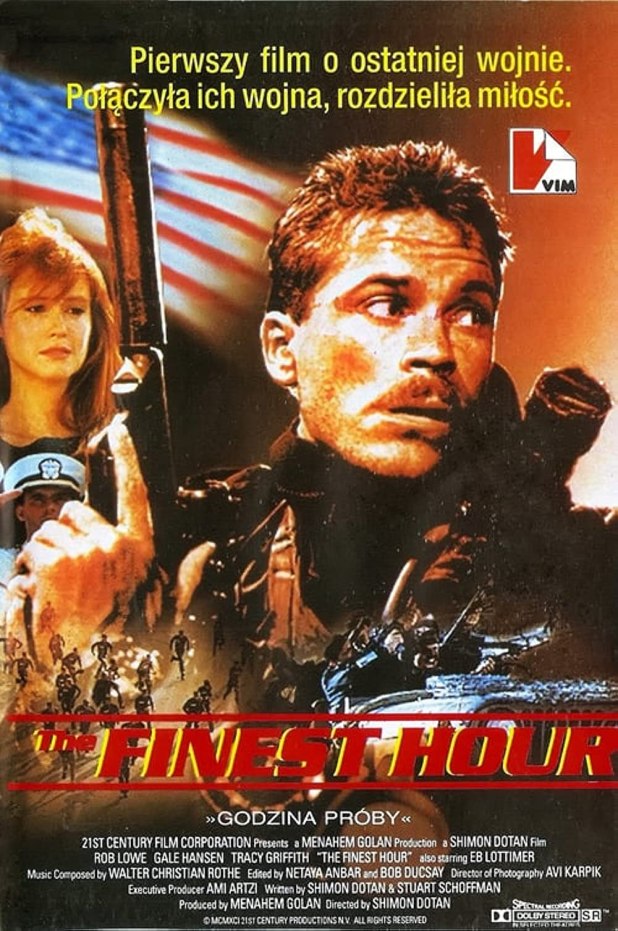
CANNON MONTH 2: Finest Hour (1992)

Directed by Shimon Dotan and written by Stuart Schoffman, Finest Hour may seem to you to be an awful lot like Top Gun in parts because, well, it kind of is. Except that it’s about Navy SEALs and then love comes between two leads and it takes a war to bring them back together.

Lawrence Hammer (Rob Lowe) and Dean Mazzoli (Gale Hansen) are two Navy officers working to become SEALs. Hammer has a bad attitude and isn’t a team player while Mazzoli is respected by everyone. They end up becoming friends except that they both love Barbara (Tracy Griffith). Well, despite nearly making out with Mazzoli one night, she still runs away with Hammer — that very same night — and gets married.

The two nearly fight when it turns out that Hammer and Barbara are moving away, but the upcoming war in the Persian Gulf rears its ugly head and when their instructor Bosco is taken, the two work together to rescue him. Hammer ends up in the hospital and Mazzoi ends up taking care of his wife during that time. She confesses that Hammer slept with her best friend and she’s planning on leaving him.

A new mission comes up and Hammer — still injured — compromises everyone by falsifying his medical records and getting on the mission. He dies and when he does, so does anything between Mazzoli and his wife. I guess the whole forbidden fruit cucking thing was what kept them together.

Speaking of tragedy, Lowe almost died when he was dragged by a cord behind a speeding boat and couldn’t get free. One of the Navy SEALs on the crew dived in and rescued him.

The U.S. may have only seen this movie on video, but it played theaters in the Phillippines as Desert Storm: The Final Battle.

You can watch this on Tubi.

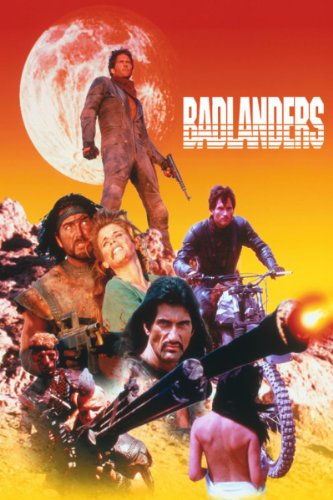
CANNON MONTH 2: Prison Planet (1992)

Mad Max meets American Gladiators in the ultimate road war!”

Wow, that tagline promises so much.

Also called Badlanders, this movie moves us to the year 2200. Earth’s ruler is threatened by his brother  Himshaw (Jack Wilcox). The rebel leader who is soon sent to Annakin, the prison planet that gives this movie a name, so two of his commandos named Blaine (James Phillips) and Shiba (Kim Kopf) get caught on purpose so that they can rescue him.

Michael M. Foley, who played the big bad guy Broxton, went on to play Tracey “Tracer” Swedom on WMAC Masters, a kung fu fighting show that tried to air around pro wrestling in the mid 90s. It didn’t last all that long. Hosted by Shannon Lee, the daughter of martial artist Bruce Lee and sister of Brandon, it had Ho-Sung Pak (who was Shang Tsung and Liu Kang in the first two Mortal Kombat games), Chris Casamassa (Scorpion from the Mortal Kombat movie) and Michael Bernardo (Nick from the two Shootfighter films). It was created by Chairman/CEO of 4Kids Entertainment Alfred Kahn and their President Norman J. Grossfeld along with Kathy Borland, who in addition to writing the initial episode also was the costumer for Two Evil EyesMonkey Shines and Day of the Dead.

Director Armand Gazarian also made Games of SurvivalDouble CrossStreets of War and The Searcher. He wrote the script too, which was based on a story by James I. Nicholson, who directed Dark Harvest.

This was followed by two sequels, Prison Planet 2: The Armageddon and Prison Planet III: The Revenge. Neither of those movies share any of the same filmmakers as this movie, nor any of the actors. In fact, they are comedies about two men who steal a king’s pizza and get banished to a prison planet.

For another take on this movie, click here.

You can watch this on Tubi.