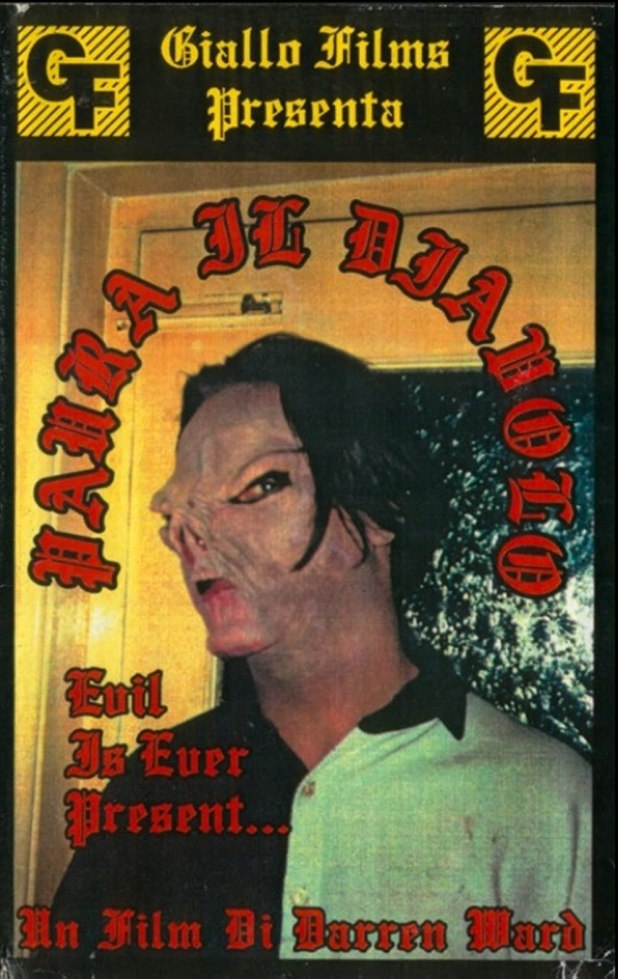
Darren Ward, who directed and wrote this SOV horror film, called his studio — well, as much a studio as SOV gets — Giallo Films. He went on from this to make the movie Sudden Fury (the last movie of David Warbeck), Three Tickets to Hell, Nightmares, A Day of Violence (which has Italian star Giovanni Lombardo Radice in the cast) and Beyond Fury (which also stars Radice).
Consider this a British SOV Evil Dead, as the lead opens a bag he finds buried in his backyard and unleashes puppet demons that kill the entire teenage cast. There’s also a wacky alien pig mask that transforms that dude into a demon.
Unlike so many gather your buddy SOV films, Paura il diavolo is smart enough to be 41 minutes long and not wear out its welcome. It also brings with it plenty of gore, which is really the reason to be watching this. I have to revise that whole Venn diagram of SOV to also include Sam Raimi fans, gorehounds, metalheads and people whose parents owned a videocamera.
You have to love a teenage British horror fan who says “presenta” in the poster for his movie and tries to make an Argento by way of no budget video Deadite ridiculousness.
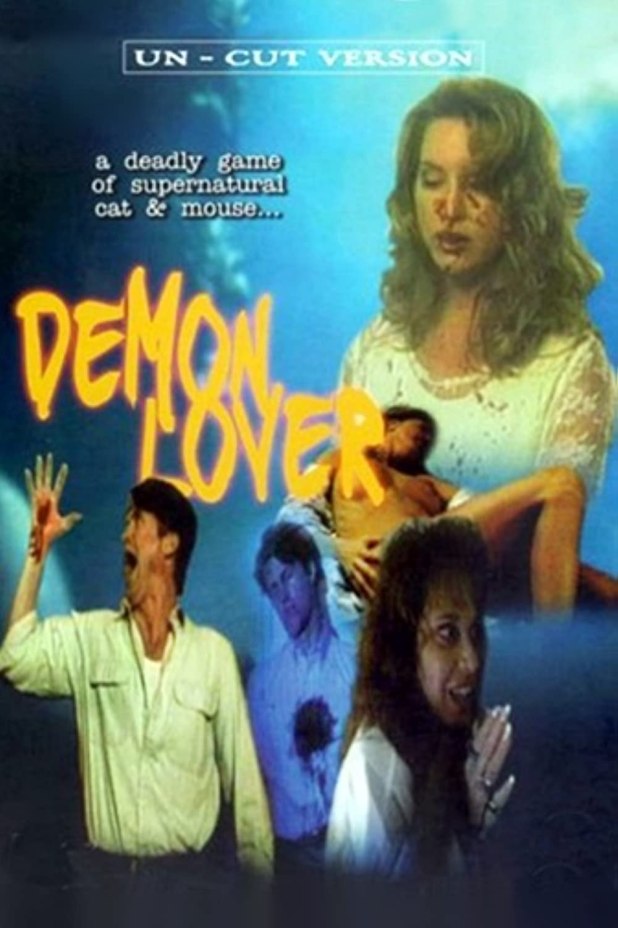
This is not the 1976 Donald Jackson film The Demon Lover nor is it the Scott Valentine-starring My Demon Lover. Instead, this is the story of Jenny Harris (Ashlie Rhey, Body of Influence, Bikini Drive-In) and the horrible men in her life: the husband who cheats on her, the boss (Joe Estevez) who talks down to her and the incubus she conjures that kills people.
Maybe I only know that the succubus who appear in movies — Erika Blanc in The Devil’s Nightmare, Megan Fox in Jennifer’s Body, Karen Black in Trilogy of Terror — are uniformly gorgeous. The incubus in this — pardon me while I burst — is a balding, pot-bellied man who isn’t strictly a sexual dynamo but magic being what magic is, Jenny falls madly into his arms and onto his loins.
Reasons to watch: Abundant nudity; Michelle Bauer getting her heart ripped clean out; Robert Z’Dar seeing if a mustache works for him as a cop; Lauren Hayes, who eventually played Cara Loft in the softcore Womb Raider; Gwen Summer, who like direct to video pretty girls was also on Renegade, so Lorenzo Lamas always had a bevy of beauties around him; a fake Necronomicon; the shrill noise that will make your dog lose his mind every time the incubus shows up and, as in nearly every late 80s movie, fog machine overuse.
Director Mike Tristano also directed The Flesh Merchant, Cyber Seeker, Dark Nova, Savage Season and several more films, but today is probably better known for his work as a weapons provider and master armorer. Writer T. Martin Smith also worked with him on the movies Cyber Seeker and Body Count.
Ah 1992. May your movies forever be filled with lengthy foggy lensed love scenes, neon hues, Robert Z’Dar and so, so, so much fog.
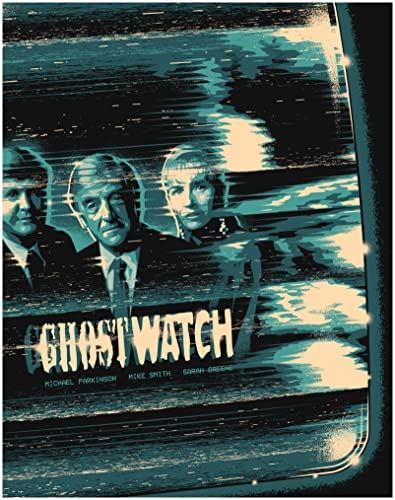
Thirty years ago, the BBC seemed to be doing another one of their “Watch” shows, as four presenters — Michael Parkinson (host of the talk show Parkinson for twenty five years), presenter Sarah Greene (who had worked on several of the “Watch” shows like Airportwatch), her real-life husband Mike Smith (a co-host of the BBC’s Breakfast Time and was a presenter on Top of the Pops) and Craig Charles (who worked as a presenter before playing Dave Lister on Red Dwarf, hosting Robot Wars and narrating Takeshi’s Castle) — and a camera crew descended on the most haunted house in Britain on Halloween night.
Pamela Early (Brid Brennan) and her daughters Suzanne (Michelle Wesson) and Kim (Cherise Wesson) have been dealing with Mr. Pipes, a poltergeist who possesses and harms Suzanne and lives in the basement of their home. Dr. Lin Pascoe (Gillian Bevan), a psychologist studying the phenomena, supports Pamela and the children as Sarah reports from inside the home with her husband Mike interviews the man on the street and Craig makes with the jokes.
As the program (programme!) unravels, it turns out that maybe this isn’t all a hoax. Several calls from listeners help construct the true story, as the story of the murderous Mother Seddons is retold, as is the case of Raymond Tunstall, who hung himself in the basement of the Early home and was eaten by cats. By the end, the beast known as Mr. Pipes has transformed the live broadcast into a seance circle and attempts to use the show to possess all of England.
For American viewers, it’s all rather well made but one wonders how people could have been so upset by this show. Well, for those in Britain, this movie seemed like anything but.
The crew making it took great pains to make it seem real, even if it was part of the BBC anthology series Screen One. It was shot in Studio D of BBC Elstree Studios, a place where many news shows had been aired from. The 081 811 8181 is an actual BBC call-in number, adding to the realism. In fact, the show was nearly canceled because the network didn’t want a War of the Worlds panic to happen. They demanded opening credits be added including the writer’s name, in addition to a Screen One title sequence.
No one noticed that.
The documentary style of Ghostwatch led to 30,000 phone calls from frightened viewers, including Parkinson’s elderly mother! In the days to follow, tabloids went to town criticizing the BBC — who never reaired Ghostwatch — which only increased when eighteen-year-old factory worker Martin Denham became obsessed by the show and upon hearing noises in his parent’s home much like the show would take his own life. The Broadcast Standards Commission rebuked the BBC, saying “The BBC had a duty to do more than simply hint at the deception it was practicing on the audience. In Ghostwatch there was a deliberate attempt to cultivate a sense of menace. The presence in the program of presenters familiar from children’s programs took some parents off-guard in deciding whether their children could continue to view.”
Considering that children and elderly people reported PTSD after watching this, you can see why Greene appeared on the following Monday’s Children’s BBC to reassure younger viewers that the show was not real.
Except that it kind of is.
The story is based on the Enfield poltergeist, a story that had been debated in the tabloids as well, which adds even more of a layer of truth to this story. Peggy Hodgson reported poltergeist activities in her home and voices that would emerge from her daughter Janet. The BBC had reported several times on this story, so Ghostwatch probably felt like a Halloween ratings sweeps stunt.
Writer Stephen Volk (Gothic, The Guardian) had seen this as a mini-series but producers thought that the final live segment, inspired by Nigel Keale’s The Stone Tape, would have more impact.
While this show destroyed minds and reaped souls in England, over here it’s been an influence on so many found footage films like Host and The Blair Witch Project, as well as the near-perfect UHF TV era U.S. remix WNUF Halloween Special.
I love that this is shot on video, not for the need to save money, but for the need to appear real. SOV continues to be a format that offers so many hallways to explore.
Volk wrote a sequel in the short story 31/10, in which he vists the sealed-off BBC studio space where the original show was made along with a group of people whose lives were somehow impacted by Ghostwatch. You can read it here.
In Britain, there are national seances every year to watch this and even a great website called Behind the Curtains that tells so many of the stories of this movie.
If you want to see it for yourself, the 101 Films blu ray release of Ghostwatch is perfect. In addition to the movie, you also get a 30th anniversary feature-length documentary, two sets of commentary — one with film historians Dr. Shellie McMurdo and Dr. Stella Gaynor and the other with Volk, producer Ruth Baumgarten and director Lesley Manning — as well as a Shooting Reality feature with Manning, a 32-page book and a first edition slipcase. You can get it from MVD.
N.G. Mount also directed Ogroff and Dinosaur from the Deepand he’s back here to tell the story of a super soldier that should be able to help their side win the war, but then you discover that he was built by Major Taylor who is really Jean Rollin and man, if you get a robot brain from the man known for fog, castles and haunted women heading for doom, chances are all you’re going to care about is catching some of those women. He’s the alien in the title. There is no platoon of aliens. There aren’t any aliens at all.
There are a lot of reviews that ask, “Why is Jean Rollin in this?”
This isn’t the only SOV video he was in directed by Mount. He’s also in Dinosaur from the Deep and the Reanimator remake remix rip-off Trepanator.
If you’re up for a movie that outcheaps Robowar, good news. This is it as the world’s greatest soldiers go into the German jungle to destroy the former criminal — the Fast Food Killer — turned cyborg called alien.
Twenty years after Violent Shit, Karl Berger Jr. (director and writer Andreas Schnass) continues the killing that began with his father. He was raised by a woman (Anke Prothmann) who gives him a machete fo his birthday. Years ago, she buried his father and raised him to avenge that man’s death and, well, indiscriminately kill people for her pleasure. She even drinks their blood and occasionally allows her adoptive son to pleasure her because hey, it may be low budget shot on video but it’s still Italian exploitation.
Violent Shit II dispenses with any of seriousness and just delves into goofy humor mixed with gore and, as always, genital destruction. There’s also a near-Taxi Driver shootout in a porn theater and an ending that sets up that Karl Sr. has returned.
That said, this movie has some of the funnier credits I’ve seen in an SOV movie, as they’re rainbow colored and bouncing and seem to come from a totally different film than what we’ve just watched. Actually, if you can make it through this without flinching, I think you can make it through anything.
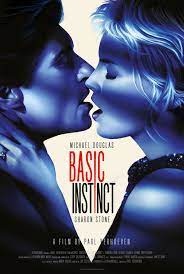
You can call Basic Instinct a neo-noir or erotic thriller, the name that every film after it would use, including some by Italian masters.
But it’s a giallo.
Written by 13 days by Joe Esterhaus — who made $3 million from it before leaving the film because he thought the lesbian sex scene was exploitative — and starring a then-unknown Sharon Stone and a frightened Michael Douglas who wanted an A-List star up there to share the screen and blame, it was a huge success and had reviewers comparing it to Hitchcock.
Or, you know, giallo.
San Francisco homicide detective Nick Curran (Douglas, notching another film in his rule of king of the 90s scumbag heroes) is investigating the murder of rock star Johnny Noz, stabbed to death with an ice pick by a blonde he was in mid-horizontal dance with. That blonde seems to be his current love interest, crime novelist Catherine Tramell (Stone), who just so happens to have written a book with that very same crime. She does the cardinal sin of being rude to a room of male cops who interrogate her, even uncrossing her legs and revealing her sex to them. Stone would claim for years she was tricked into this by director Paul Verhoeven, even slapping him in the face at a test screening, while he says that she knew what was happening all along. She passes a lie detector test and goes free, but there’s that pesky matter of her being around so many murders, like her family annihilator friend Hazel Dopkins (Dorothy Malone, who was in the giallo Carnal Circuit) and girlfriend Roxy (Leilani Sarelle, Neon Maniacs), who killed both of her brothers in her teens.
Nick isn’t a hero himself, what with having shot two tourists while high on cocaine during an undercover assignment and oh yeah, his wife killed herself. He’s sleeping with the person who is supposed to be counseling him, police psychologist Dr. Beth Garner (Jeanne Tripplehorn) and literally punishing her with brutal lovemaking. He also learns that Catherine’s next book is about him and she has his file, which she got from internal affairs officer Lieutenant Marty Nielsen (Daniel von Bargen), who is murdered soon after getting in a fracas with Nick. He thinks she’s the killer and gets put on leave as he’s obsessed with her case.
Of course, Nick and Catherine have to make violent love and of course Roxy tries to kill him and dies in the attempt. Where does this become a giallo? Well, when the plot twists get so twisted that it turns out that Catherine and Beth dated in college, one of their killed another professor just like the recent ice pick killing of Johnny Noz and both claim the other was obsessed. It also has an ending that at once ties it all up and leaves things open ended.
It’s missing the stranger in a strange land trying to solve a crime, the music and the fashion, but otherwise, the giallo has become the erotic thriller.
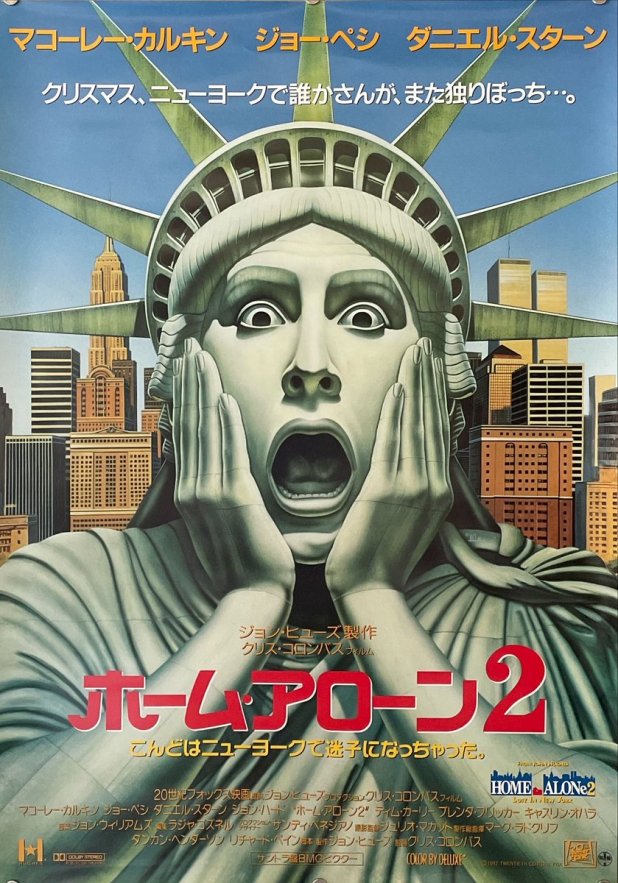
It’s been a year since Kevin McCallister (Macaulay Culkin) was left home alone. A year since Harry Lime (Joe Pesci, Casino) and Marv Merchants (Daniel Stern, the voice of Kevin from The Wonder Years) tried to rob his home and they went to jail. And a year since Kevin’s parents, Kate (Catherine O’Hara, Best in Show) and Peter (John Heard, Cat People, The Seventh Sign) forgot that most basic of parenting skills: keeping track of your kids.
No one has learned anything.
The film was written by John Hughes (pretty much the majority of 80’s movies were, as well) and directed by Gremlins scribe Christopher Columbus. It was 1992’s biggest film, earning $359 million worldwide on a $20 million budget. $20 million? Where did all that money go? For all the pizza? Actually, Culkin got $4.5 million for this!
A funny note: During the filming, Culkin asked Joe Pesci why he never smiled. Pesci told him to shut up and said, “He’s pampered a lot by a lot of people, but not me, and I think he likes that.”
We start in Chicago the McCallister family is preparing for another big Christmas vacation. Kevin has no interest in going to Florida, as he feels like it has nothing to do with the holiday. And an incident at a school pageant leads to him going to the third floor of the house. So you know exactly what’s going to happen: everyone runs late, Kevin gets left behind and he ends up going to New York City all by himself.
Once Kevin gets there, he uses his cunning to trick the Plaza Hotel staff into getting his own room. I’d say Tim Curry (The Rocky Horror Picture Show, The Shadow, Congo) deserves better than this, but his IMDB pages is replete with total pieces of shit. Throw in Dana Ivey (The Addams Family) and Rob Schneider (Deuce Bigalow: Male Gigolo and who the hell spent so much time to make such a well-written Wiki page for him?) and Kevin gets pretty much everything he dreamed of. A giant room and bed all to himself, a limo ride and the chance to watch a movie he’d not be allowed to watch, the sequel to Home Alone’s film within a film, Angels with Filthier Faces. In fact, now you can have the experience for yourself at the actual Plaza Hotel.
Personally, I can’t watch Kevin without comparing him to Henry Evans, Culkin’s character in The Good Son. He cons and swindles everyone in his path while having saccharine sweet moments with a homeless woman who has pigeons and Mr. Duncan, the owner of one of those toy stores that you just know are going to be boring, packed with old-timey wooden toys and educational games. Fuck that. Bring us the G.I. Joe’s forthwith, Mr. Duncan!
Of course, Harry and Marv have escaped from prison and instantly run into Kevin, as if synchronicity has constantly kept them interconnected. And Curry’s character takes a near-pathological glee in kicking a young child out into the cold streets of the city (but not before Kevin scares the entire staff with the iconic “Merry Christmas, you filthy animal!’ scene from his TV).
Certainly, it all works out. Kevin foils the gang’s robbery of the toy store. He gets reunited with his family. He establishes a lasting bond with the homeless woman. And everyone gets plenty of toys (and Kevin gets $967 worth of room service, which buys you two chocolate cakes, six chocolate mousses with chocolate, vanilla, and strawberry ice cream topped with M&Ms, chocolate sprinkles, cherries, nuts, marshmallows, caramel syrup, chocolate syrup, strawberry syrup, whipped cream, and bananas, six custard flans, a pastry cart, eight strawberry tarts, and thirty-six chocolate-covered strawberries).
Watching this movie 25 years after its release, one sees crass consumerism everywhere. Coke products are in nearly every scene (taking the place of Pepsi in the original), the Talkboy was created by Tiger Electronics just for the movie and American Airlines was a sponsor of the film.
In a post 9/11 world, it’s amazing to see people just walk up to the gate and Kevin being able to board planes at will with no real ID or boarding pass. And I haven’t gotten to the Donald Trump cameo! I’ll end up doing a week of movies our former President has been in, including Ghosts Can’t Do It, Two Weeks Notice, 54 and The Little Rascals.
At the time this was made, in the places where it was made, I haunted Market Square in between my classes in art school. This movie makes me wistful because so much of the downtown Pittsburgh that I loved — and is long gone — was there, like National Record Mart, The Oyster House, Candy Rama, George Aiken, GW Murphy’s — and the film drives up Liberty Avenue to where Chez Kimberly once was, yet the movie makes what was once Pittsburgh’s most sinful street even most lust-filled. It also hits Shadyside and Bloomfield, which makes sense, because Tom Savini had to just walk a few blocks to the effects and perform his cameo as a photographer.
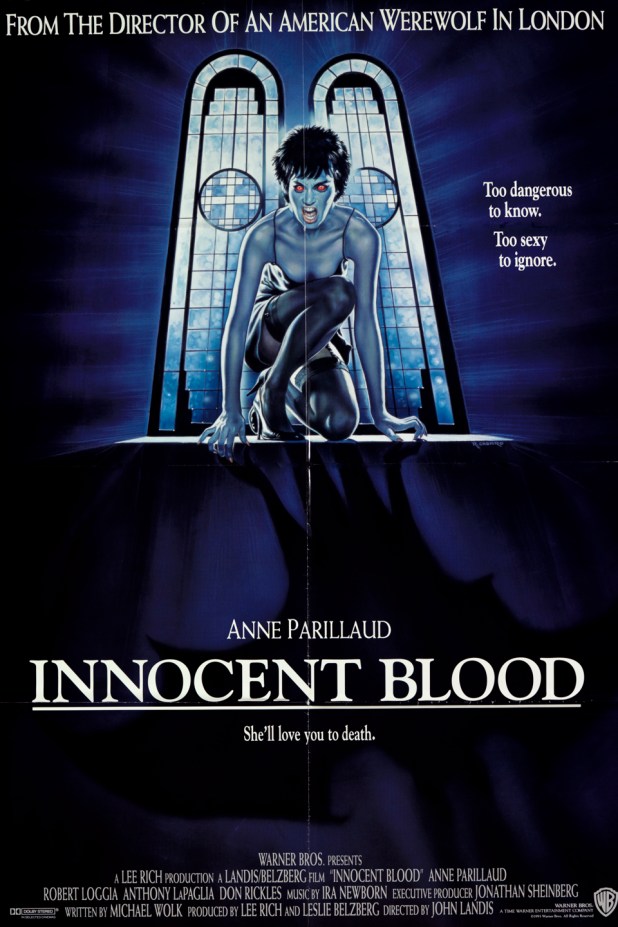
Pittsburgh wasn’t the original setting for this movie. Writers Mick and Richard Christian Matheson first wrote a story called Red Sleep that director John Landis rewrote with Harry Shearer. In that tale, Las Vegas was run by vampires, but the studio hated it. Landis found another story, Innocent Blood by Michael Wolk, and had enough freedom to do anything he wanted. He was going to make it in Philadelphia and set it in New York City, but Pittsburgh worked better for him. Another story that gets told is that Innocent Blood was going to be made by Jack Sholder with Lara Flynn Boyle and Dennis Hopper in the lead roles.
Anne Parillaud had just finished making La Femme Nikita and was a great choice for this movie, even if her accent made her difficult to understand. She said of the movie, “I fell in love with Marie in Innocent Blood because she wasn’t born a vampire; she never decided she wanted to be. For me, it was a parable to talk about how you deal with this problem, which is when you are different. You think or you live or you want something different from everyone else. People don’t follow you, because it’s scary. You are quite alone in your choices.”
Marie is living in the City of Bridges and making moral choices about whose blood she drinks, making sure to shotgun blast each victim so it looks like a crime and not her living off their fluids. Yet when she gets caught in the war between Salvatore “Sal the Shark” Macelli (Robert Loggia) and Detective Joseph Gennaro (Anthony LaPaglia). One night, when she tries to use Sal for his blood, a meal with garlic weakens her. He assaults her, she recovers by biting him but must run before she can turn him. This allows him to become a vampiric mob boss, which is a great idea, even if this film seems a bit small in how it realizes it.
That said, the cast is great. There are pre-Sopranos roles for David Proval, Tony Lip and Tony Sirico, Don Rickles as their consigliere who lives near the gift wrap house in Shadyside, Chazz Palminteri as a gangster, Luis Guzmán and Angela Bassett as a cop and an attorney and cameos from Linnea Quigley, Forest Ackerman, Frank Oz, Sam Raimi and Dario Argento as a paramedic!
Twenty minutes had to be cut the first time the MPAA saw this, then two more minutes to get an R. I wish there as an uncut version because I’d like to see if it plays better.
Landis was unhappy that this played in other countries as A French Vampire in America which is a great play on his more famous werewolf movie and a much better title than this got.
I don’t know if I can explain the seismic shift in my film consciousness before and after Reservoir Dogs. Sure, I’d been obsessed by the grimy crime movies of America and the kinetic gunplay of movies in Hong Kong, but I had yet to delve into the worlds of poliziotteschi. I did not know how important the Shaw Brothers were. I knew the films of regional and direct to video filmmakers mattered to me, yet I was certain they were worthless to nearly everyone else. The films of video store educated Quentin Tarantino changed all that.
Today’s viewers have grown to live in a world where Tarantino is available for acerbic interview, to weigh in on what movies matter and to create controversial films yet ones that endure. Yet in 1992, this did not exist. He existed, but he was a different Tarantino. He was about to go from someone working to being a filmmaker to someone the world would pay attention to.
Tarantino was working at Manhattan Beach, California video store Video Archives, a video staffed by film experts like Tarantino, Roger Avary and Daniel Snyder, all of whom would make movies someday. When the store closed four years after this movie came out, Tarantino had grown so powerful that he could buy its inventory and remake it inside his house.
The original plan was to make this movie with friends for $30,000 in black and white 16mm. Producer Lawrence Bender was to play a cop chasing one of the gang’s members, Mr. Pink, but when he gave the script to his acting teacher, that teacher’s wife gave it to Harvey Keitel who became a producer, raising $1.5 million in funds and casting the movie in New York City, where they found a different cast than they’d have in Hollywood. Director Monte Hellman (Two-Lane Blacktop, Silent Night, Deadly Night 3: Better Watch Out!) also helped by cleaning up the screenplay and securing from Live Entertainment (which is now Lionsgate, who released this 4K UHD). He was originally picked to direct but Tarantino lobbied hard to make this. As a result, Hellman was the executive producer.
Even in his first major film, Tarantino was smart enough to not make a traditional story. We never see the actual robbery, only the aftermath. Some of that decision is budgetary. Yet it works, as the story is less about what has happened instead of what happens.
He was also smart about who he cast as his characters. Each is named for a color — taken from The Taking of Pelham One, Two, Three but then again, the entire story could be said to be stolen from Ringo Lam’s City On Fire — with Keitel’s Mr. White as the main character, if there can be one, the one that we’re supposed to identify with. Tim Roth is Mr. Orange, a man with a secret. Michael Madsen is the sociopathic Mr. Blonde (also Vic Vega, the brother of Pulp Fiction‘s Vincent Vega, as well an inside joke as Madsen is the real-life cousin of musicians Tim and Suzanne Vega). Mr. Pink is Steve Buscemi, while Tarantino himself appears briefly as Mr. Brown and Edward Bunker is Mr. Blue. While both are killed in the heist, Bunker informed so much of this film, as he was a real-life convict turned writer and actor, appearing in movies he wrote like Straight Time, Runaway Train and Animal Factory. Beyond the gang, other actors include Chris Penn as Nice Guy Eddie, Randy Brooks as Holdaway, Kirk Baltz as police officer Marvin Nash and in real life maniac Lawrence Tierney as the boss who gets the gang together — and memorably names them — Joe Cabot. Steven Wright, who never physically appears, is a character himself as the DJ whose voice moves the tale forward.
After a diner scene that sets up each character — but mainly allows Tarantino the opportunity to unleash his pop culture heavy dialogue, mostly about Madonna — we catch up on a heist goen wrong. Orange has been shot and White is trying to save him. They meet Pink in one of Joe’s warehouses and everyone is sure the job was a set-up before Blonde went nuts and just started killing people. An argument over running with the diamonds or helping Orange ends with guns drawn. Then Blonde arrives with Marvin Nash, a cop that they all take turns beating.
Blonde waits until the others leave before the infamous “Stuck In the Middle With You” scene in which he attacks the man with a razor and slices his ear off. When this played Sitges Film Festival, Rick Baker and Wes Craven — of all people — walked out during this scene. Tarantino would say, at the time, “It happens at every single screening. For some people the violence, or the rudeness of the language, is a mountain they can’t climb. That’s OK. It’s not their cup of tea. But I am affecting them. I wanted that scene to be disturbing.”
Tarantino also said, “I can’t believe the guy who directed Last House on The Left walked out of Reservoir Dogs“. Craven replied, “Last House was about the evils and horrors of violence, it did not mean to glorify it. This movie glorifies it.” Yet another in my large list of reasons why I think Wes Craven is overrated.
But I digress.
What follows is death, more death, betrayal, Mexican standoffs and an ending that cements that this filmmaker may not be a force yet, but he was only getting started.
For what it’s worth, Bunker told Empire magazine that this was all pretty unrealistic. He would never pull a job with five people he didn’t know. He also said that they’d never dress up and eat a meal together before a crime, giving people something to remember when they heard about their crime. He had also met Tierney before before, as they had a fistfight in a parking lot in the 50s. Tierney didn’t remember that, but if he remembered every fistfight he was ever in, he’d be overwhelmed.
My favorite thing is that Tierney was literally Mr. Blonde for the cast. Everyone had a difficult time with him because he was easily distracted and kept forgetting his lines. On the second day, he’d arrived directly from a bail hearing as he’d threatened to kill his nephew. Finally, Quentin fired him on the third day of filming. The line where White asks Pink, “I need you cool. Are you cool?” is a real line Tarantino said to Tierney after he got in a fight with Madsen and was holding up shooting. Tarantino rehired the actor, who went drinking afterward and ended up firing a gun into the walls of his Hollywood apartment later that night. He spent the weekend in jail only to be bailed out by his agent so that he could finish the film. These may all be carny BS stories, but when you lived the life that Tierney did, these stories end up getting told.
This is the kind of movie that I find myself watching every few years to remind myself just how good it is. The most amazing thing is that Tarantino’s films would get so much better.
Lionsgate 4K UHD release of Reservoir Dogs has the same extras that were on the blu ray release, such as thirteen minutes of deleted scenes; Playing It Fast and Loose, a historical feature on the movie and intros to the main characters. The main reason to buy this is the near-perfect video and audio of a classic film.
In the small town of Copperton, Ohio, Paul Henson (Dino Tripodis), a former big-city journalist, buys a small local newspaper. He quickly falls into a wide-reaching conspiracy of ritualistic199 murder and cult mind control when he discovers that the entire town may be under the spell of Reverend Donovan (Nick Baldasare, Beyond Dream’s Door), Reverend Kane (John Dunleavy) and their flock. As the clues and corpses pile up, Henson and his family are thrust into a life-or-death struggle to expose the truth and stop the demonic cabal’s reign of evil.
Shot in 1989 by director Eric Swelstad on 16mm film and lost in obscurity and distribution false starts for over 30 years, Heartland of Darkness finally arrives on home video for the very first time and is packed with bonus features that spotlight the original creators and document the film’s long history and final completion.
Filmed as Fallen Angels, which was changed to Blood Church and then Heartland of Darkness, Swelstad abandoned the project before finding a distributor. Over the years various producers including Jim Wynorski, Rob Spera and Jody Savin wanted to release the film, but nothing happened. It almost came out from Media Blasters in 2004 before Visual Vengeance became the company to finish it and get it out into the world.
If that doesn’t sell you, Linnea Quigley plays an evil teacher.
I have no idea why this ever got lost. It’s a perfect early 90s direct to video horror film, but perhaps even better than the other movies you would have found on the shelf. Swlstad has a great eye for filmmaking and puts story over simple gore.
The Visual Vengeance blu ray of Heartland of Darkness is available from MVD and has these features:
First time available in any format
New director-supervised SD master from original tape and film elements
Deeper Into the Darkness: New 40-minute behind the scenes documentary
Three commentary tracks
Linnea Quigley Remembers, a new interview
Archival TV interviews, TV spots, behind the scenes footage and trailers
Complete original “Fallen Angels” 1990 workprint
Blood Church – rare distributor promotional video
Six-page liner notes by Tony Strauss of Weng’s Chop Magazine
Limited Edition Heartland of Darkness “Prayer Cloth”
Limited Edition slipcase – FIRST PRESSING ONLY
Collectible Linnea Quigley folded mini-poster
“Stick your own” VHS sticker set
And much more!
For more details on the label and updates on new releases – as well as news on upcoming releases – follow Visual Vengeance on social media:
BONUS: I had the chance to speak with director Eric Swelstad about this film and his career.
B&S About Movies: This movie has been gestating for decades, right?
Eric Swelstad: It sure has. The original film was shot as Fallen Angels back in 1989, we ran out of money to finish it. At the time, the distributor in Florida named it Blood Church. And for a long time it had that name, but they also didn’t have the money to finish it. So for a long time, it sat on a literal shelf, waiting to be finished. And then finally, after the last couple of years, we want to get the money together to finish it and we were happy that Visual Vengeance made an offer to release it.
B&S: What do you think of what they did with your movie?
Eric: I think it’s terrific. I was telling Rob that I think his line is like the Criterion of, of, you know, genre releases. It’s really great. The packaging is terrific. The special features are great. There are three commentary track and a behind the scenes documentary that we made, as well as a bunch of other goodies that people can get.
B&S: You’re from Ohio, correct?
Eric: I grew up in both Indiana and Ohio. I went to college at Ohio State University where this was actually a master’s thesis for myself and my cinematographer. So great memories and great times at Ohio State.
B&S: You’re also part of another OSU student film, Beyond Dream’s Door, right?
Eric: Exactly. I was one of the ADs on that film. It was a great experience. So that was how I learned about making a feature at the university and I was like, “Oh, this is great. I’m going to try to do this as well for my Master’s.” And we were able to pull it off.
B&S: I love that both of those movies came out of OSU. They don’t feel like anything else on the shelves at the time.
Eric: Exactly. Yeah, they’re a little bit unique. And of course, some of the same actors like Nick Baldasare and John Dunleavy are in both films. And, of course, our movie was made at the height of the Satanic Panic in the late 80s. So we were capitalizing on what was going on in the country at the time. And it was on the news all the time. We capitalized on that. I came up with the idea for the script. And I said, “Man, this would be a great topic to deal with. made it an action film.”
You know, it’s like a horror action film.
B&S: Were you a horror fan before you made this?
Eric: I was a horror fan. I was more into like movies like Halloween and The Exorcist. You know, I was bmore into those films than I was into stuff like Italian giallo cinema. But I certainly was more into the occult. The Omen was a big influence. Films like that where you’re kind of like thinking, okay, these are ordinary people, but this crazy scary stuff is happening to them. That was what was interesting to me. And then, of course, I love action films. So I incorporated that into the action aspect of this to make it what I call an action horror film.
B&S: What were your influences on this?
Eric: I was heavily influenced by the usual suspects. George Lucas, Steven Spielberg, William Friedkin. Coppola, of course, was a huge influence. You know, there were just so many. John Carpenter. I just looked I finally got to meet him a few years ago and I told him just how important Halloween and Escape from New York were to me. I mean, all those great, great films, and I know he’s heard it a hundred times before, but he was so nice. I also recently met Walter Hill. One of my favorites. Yeah, my favorite directors from the 70s and 80s. And I told him, I teach a class about theology in film and we screened The Warriors as an example of Greek mythology and he was tickled by that.
B&S: What do you do today?
Eric: I’m the head of the film department at Valley College in Los Angeles in the San Fernando Valley and love it. I’ve been doing it for about 20 years now. And it’s been great. In fact, I hired some of my students to do some work on this film on Heartland of Darkness. They helped sound with the mix and one of my top students, she produced the documentary Deeper Into the Darkness, which is the behind the scenes movie. It was great having my students work on the main show.
B&S: What’s it like seeing young students being at where you were when you made this movie?
Eric: It’s so inspiring because I give them all these warnings about what not to do, because I went through it and the biggest one I tell them is don’t make a feature film if you can’t finish it. Don’t run out of money like we did. The things that we messed up on this movie are great lessons for today. I mean, things ranging from direction to editing, a whole bunch of stuff. So I think if anything, I just enjoy sharing experiences with the students to let them know what worked for us and what didn’t work for us.
B&S: I love the films that Visual Vengeance is putting out because they’re all so original. And even though the technology to make movies is more available and it should be so much more democratic to shoot a movie today, you don’t see the same drive.
Eric: The tools to make low budget films are there and it’s great. And you know, you could literally could go out and make your own feature film on your cell phone, which is wonderful. But you’ve got to have a story. You’ve got to have something to say. There are so many films that never see the light of day because they’re not that good. And there’s a reason for that. If you’re going to pour your heart and soul into something, you want it to be really good. You don’t want to be like something they would find any every other day. And it just you know, I teach screenwriting, so I talk about, it’s all about the story. It’s all about the script. You’ve got to have a really interesting story to begin and a lot of horror films today. I’m not really into because so many movies today are built around the jumpscare. How many jumpscare should we have in this film? Where the jumpscare is going to be? And that’s just a cliche. Anybody can do a jumpscare! You can put a sheet over your head and jump out at somebody and that’s a jumpscare. But it needs a story. It needs characters that we care about and follow.
B&S: I hate when people say, “Well, Val Lewton’s movies had jumpscares.” Well, they also had stories.
Eric: The great directors that we think of, you know, they didn’t just jump stuff out. They actually had stories. One of my mentors was the late great Robert Wise. He directed a lot of great movies, one of my favorite horror films he did was called The Haunting. That movie is so scary because of sound. It’s what you don’t see that is scary. And the sound is so good in that film and other films like that too. We can all learn from those master filmmakers about how to do horror films.
You’ve got to have a great script. I mean, that was a great script. The remakes that have come out have suffered because they were all about the technical stuff, the jumpscares and they really weren’t about the story. So if you spend time on the story, you’re gonna nail it. You’re gonna get a really cool film, but it’s all about the story. You’ve got to go back and think about character, plot development, character arc. The third act is critical. So all those things may add up to a really good movie.
B&S: I keep getting fooled by the A24-style horror movies that have a great trailer and a not-so-great final film.
Eric: They run out of steam. They delivered it on the first and second act, but by the ending, they’re like, “Oh, we already showed all that stuff. Let’s just wrap it up.”
Look at something like John Carpenter’s Halloween. To really know how to just do a great payoff, he had such a great ending and great characters. Now that’s a good example of how to end a movie. The Exorcist is like that as well. You’ve got the stick the landing.
Imagine if The Omen petered out before the ending.
B&S: Do you advise to start with that ending?
Eric: If you start backward, you know, you can come up with a really good ending and you work backward. That can sometimes work but you got to have a really, really good ending that we don’t see coming. I tell my students, “Twist endings are great. You’ve got to build to them. You got to have a great delivery, but you got to have stuff before that.”
You can do a good twist today. All movies need to have a twist. You’ve got to have something we don’t see coming. Otherwise, no one’s gonna make it.
B&S: What has worked for you lately?
Eric: I really liked It Follows. A lot of it is shot like Halloween, with the stuff shot during daylight and I love that they did really creepy things shot during broad daylight.



 B&S About Movies
You must be logged in to post a comment.