Dead Again (1991)

I wear yellow glasses, and when I have them on, terms like adult thriller and neo-noir appear as they should: giallo.

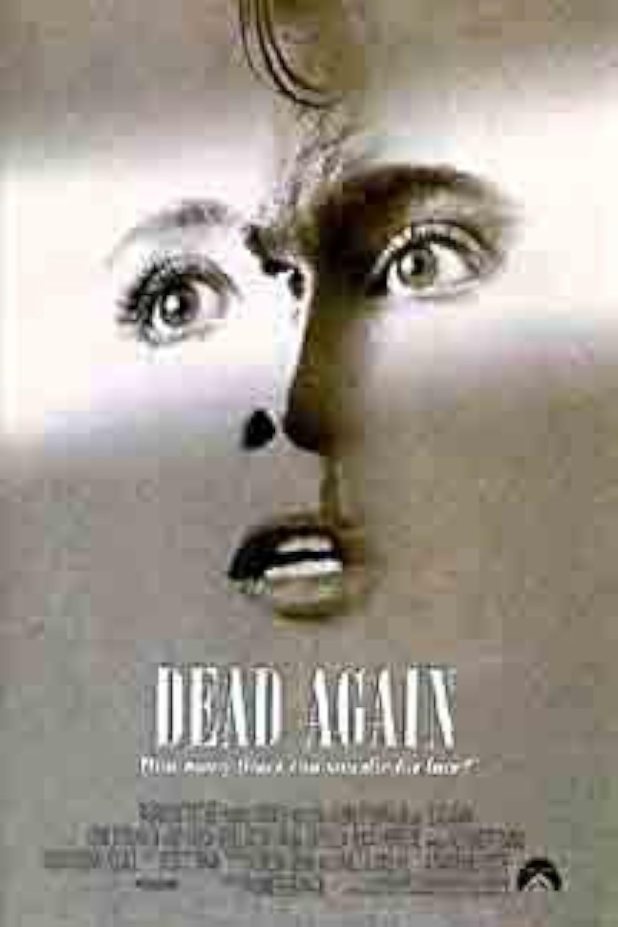
Back in 1948, Margaret Strauss (Emma Thompson) is killed during a robbery, and her husband, Roman (Kenneth Branagh, who also directed this movie), is executed for the crime, but not before he whispers something to Gray Baker (Andy Garcia), a reporter.

In 1991, private detective Mike Church (Branagh) is looking into the identity of a woman whom he names Grace (also Thompson), who has appeared– mute, amnesiac and with nightmares — at the orphanage that raised him. Mike asks his friend Pete Dugan (Wayne Knight) to publish her info in the paper, while hypnotist Franklyn Madson (Derek Jacobi) tries to use his skills to bring her mind back. She doesn’t, but does remember a lot about the lives of Margaret and Roman. And oh yeah — Franklyn is really Frankie, the son of Margaret and Roman’s housekeeper Inga (Hanna Schygulla), Grace is artist Amanda Sharp who paints scissor-themed photos and — man, is this an exposition dump? — Frankie killed Margaret with scissors when Roman rebuffed his mother’s love. The scissors were put in Roman’s hand, and that brings us to now, as Franklyn tries the same thing on Mike and Amanda.

Roger Ebert said that this was similar to the works of Orson Welles and Alfred Hitchcock, saying, “Dead Again is Kenneth Branagh once again demonstrating that he has a natural flair for bold theatrical gesture. If Henry V, the first film he directed and starred in, caused people to compare him to Olivier, Dead Again will inspire comparisons to Welles and Hitchcock — and the Olivier of Hitchcock’s Rebecca. I do not suggest Branagh is already as great a director as Welles and Hitchcock, although he has a good start in that direction. What I mean is that his spirit, his daring, is in the same league. He is not interested in making timid movies.”

But hey, that ending, where — spoilers — a scissor sculpture kills the killer? Ever seen Tenebre? That said, I do like the twist that Mike was actually Margaret and Grace was Roman.

88 FILMS BLU-RAY RELEASE: The Cat (1991)

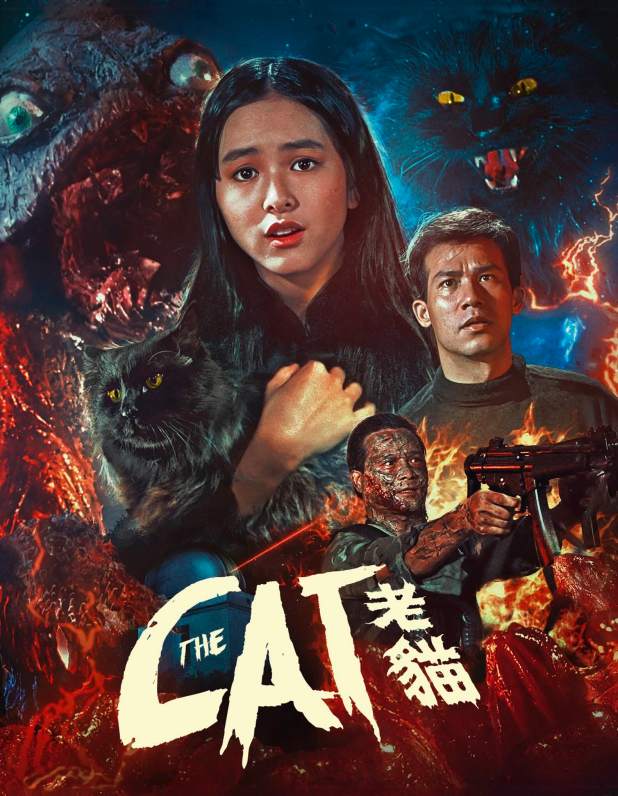
A cat from outer space teams up with a young alien girl and her knight, along with a novelist named Wisely, to fight an alien that possesses people.

Sounds pretty simple, but from that description, you have no idea just how strange things can get. Based on Old Cat by Ni Kuang, this is like The Hidden with a cat. 

Wisely (Waise Lee) is a writer who comes into contact with a girl named Princess (Gloria Yip) and her cat, General (is this a Cat’s Eye reference?) and a knight named Errol (Lau Siu-ming). They’ve robbed an archaeological find called the Octagon, hoping to use it in their quest. As it is, Wisely is writing their story, even if he only knows them from afar. That soon changes as Wisley and his friend Li Tung (Lawrence Lau) help them battle the shape-shifting and possessing Star Killer.

This is berserk, filled with neon colors, goopy monsters, eyeball destruction, glittery cats, people set on fire and everything else you want from Hong Kong cinema. The scene where the cat battles a dog in a junkyard took six months to create. It’s just a few moments on screen.

If you like this Wisely story, check out The Seventh Curse, a perhaps even more deranged film. It shares the same director as this movie, Lam Ngai Kai. He also made The Ghost SnatchersErotic Ghost Story, and another of the oddest films ever made, Riki-Oh: The Story of Ricky.

The limited edition 88 Films Blu-ray features a rigid slipcase with new art by Sean Longmore, a 40-page book, a premium art card, audio commentary by Frank Djeng, an interview with Gordon Chan, and an image gallery. You can get it from MVD.

88 FILMS BLU RAY RELEASE: Eleven Days Eleven Nights 2 (1991)

Joe D’Amato and Rosella Drudi reteamed for this sequel in name only to Eleven Days Eleven Nights, even though the character of Sarah comes back. Now she’s played by Kristine Rose and has been married and separated and given the new job of the executor of the estate of Lionel Durrington (James Jackson), one of her past lovers and the richest man in Louisiana.

Guess what? This is actually the third film in the series because Sarah was the lead character in Top Model, which is also listed in plenty of places as Eleven Days, Eleven Nights 2. Look — it wouldn’t be Italian movies if it weren’t confusing.

There are four heirs and one after another, they all get with our heroine, who will determine which one is worthy of the money based on how good they are in bed, one supposes. Sonny is the only one with no interest in Sarah, even when she danced for him at a strip club, but that’s because his last girlfriend was abused in front of him by friend of the family Alfred, who is also trying to get the money.

Because Italian films really don’t care about how insane or twisted — actually, this is what they run toward, not from — things get, Sarah disguises herself as Sonny’s old lover and goes to the impotence institute and gets a rise out of him.

By the end, she realizes that no one deserves the money, so she comes up with a plan. She’ll write a book about the family and its secrets while they split the $500 million with a mystery person. They quickly sign and yeah, the mystery guy is the man who was supposed to be dead and we have a happy ending. We also have Laura Gemser in the blink and you’ll miss it role of Sarah’s jogging publisher and Ruth Collins from Lurkers, Doom Asylum and Prime Evil show up.

For a movie about people getting naked, D’Amato has plenty of women in sweaters show up. I’m all for this.

Also: This has also been listed as The Web of Desire and Eleven Days, Eleven Nights Part 4 because Italian movies are wonderful and confusing.

88 Films has released this in an incredible slipcase with art by Sean Longmore. It also has a booklet with notes by Calum Waddel and Rachael Nisbet. Inside, you’ll find a new 4K remaster from the original negatives, audio commentary by Eugenio Ercolani and Nanni Cobretti, interviews with Mark Thompson Ashworth, Piero Montanari and  Pierpaolo De Sanctis, and Italian opening and closing titles. You can get this on 4K UHD or Blu-ray from MVD.

UNSUNG HORRORS HORROR GIVES BACK 2025: The Great Satan at Large (1991)

Each October, the Unsung Horrors podcast does a month of themed movies. This year, they will once again be setting up a fundraiser to benefit Best Friends, which works to save the lives of cats and dogs across America, giving pets second chances and providing them with happy homes.

Today’s theme: Hail Satan!

ABOUT THE AUTHOR: Adam Hursey is a pharmacist specializing in health informatics by day, but his true passion is cinema. His current favorite films are Back to the FutureStop Making Sense, and In the Mood for Love. He has written articles for Film East and The Physical Media Advocate, primarily examining older films through the lens of contemporary perspectives. He is usually found on Letterboxd, where he mainly writes about horror and exploitation films. You can follow him on Letterboxd or Instagram at ashursey.

Before the internet, if you wanted your opinion on a matter to be known, you had limited options. You could write a letter to the editor of your local newspaper or periodical. You could go down to the town square, stand on a soap box, and annoy any and all passers by with your rant regarding the topic about which you were most passionate. Or you could book time on your local public access television station, free from the limitations and regulations of the Federal Communications Commission.

Probably my own previous experience with public television was the Wayne’s World sketch on Saturday Night Live. If my hometown had a public access station, I never knew about it when I was a kid. Eventually, I did discover one public access station in my hometown in Louisiana once I moved back from college. Every Friday night, this station would broadcast an auction of the most ridiculous items. Forget going out to the club or bar or whatever third space was around in the late 1990s. This show truly was must see TV. 

Apparently larger markets had stations devoted to public access. Thanks to AGFA, I recently discovered the show Decoupage!, a Los Angeles based program featuring the performance artist Craig Roose and his alter ego character Summer Caprice. A drag character, Summer Caprice would host a talk show where people as diverse as Susan Tyrell and Fred Willard would come through for unhinged interviews. And where else might you find Karen Black singing a cover of Nancy Sinatra’s Bang Bang with the band L7? Nowhere but public access television.

A more pertinent recent discovery is The Great Satan at Large, a program that aired a single time in Tucson, Arizona in 1991. In retrospect, perhaps the station airing it at 6 PM was not the best idea. Wanting to provide an alternative to the televangelism he saw on a lot of local stations, Lou Perfidio created a talk show where he portrayed Satan, complete with red suit, pitchfork, and devil horns, spewing the most profane statements imaginable while images of Hitler and swastikas were projected on a screen behind him. Like most talk shows, Satan had a panel of guests. God was there. And a perpetually masturbating court jester. There are special guests—a sadomasochistic couple who show up to perform some simulated sex acts. And here is where Perfidio landed in legal trouble with an obscenity charge as the female in the couple was only 17 years old (he later pled guilty to the delinquency of a minor). Meanwhile, it is also a call in show, and incels across Tucson dialed in, asking Satan to push the boundaries further and further.

The show is indeed pretty hellacious, and perhaps a better glimpse into Hell than even Ron Ormond and Estus W. Pirkle provided in their series of Christian exploitation films aimed at scaring viewers into accepting Jesus Christ as their Lord and Savior. After 45 minutes of The Great Satan at Large, I was on my knees asking for forgiveness. I kind of want to watch it again right now though. But that’s just the way sin is I guess.

Perfidio did appear on another program on the Access Tucson network entitled 666Israel, where a televangelist character and Satan have a…well…I’m not sure how to describe their interaction honestly. You just have to see it to believe it. And thanks to the wonders of the internet, you can. It’s right there at your fingertips, along with every other perversion you can imagine. Hail Satan indeed.
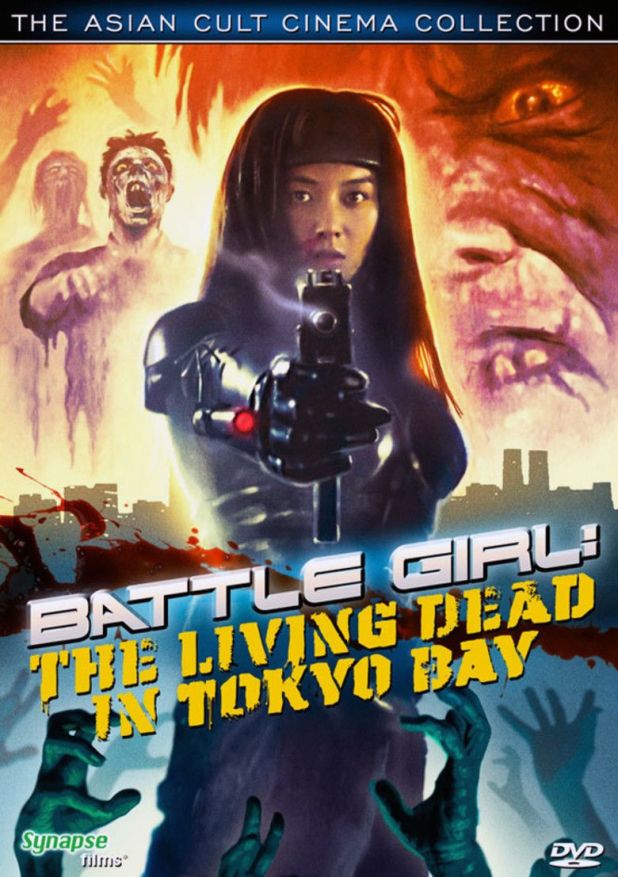
UNSUNG HORRORS HORROR GIVES BACK 2025: Battle Girl: The Living Dead in Tokyo Bay (1991)

Each October, the Unsung Horrors podcast does a month of themed movies. This year, they will once again be setting up a fundraiser to benefit Best Friends, which works to save the lives of cats and dogs across America, giving pets second chances and happy homes.

Today’s theme: 1990s

After a meteor crashes into Japan, unleashing a drug called cosmo-amphetamine on the country, which means that most of Tokyo goes all Romero and starts eating human flesh. Only Keiko (Cutey Suzuki) can save those who are left from the punk gangs and Captain Fujioka, who is using this accident to create his own zombie army.

It’s Batoru Garu: Tokyo Crisis Wars!

Directed by Kazuo Komizu (Guzoo: The Thing Forsaken by God: Part I) and written by Daisuke Serizawa, this has a pro wrestling star in the lead. Suzuki was so popular that she had her own video game, Cutie Suzuki no Ringside Angel, and appears in this film and the Go Nagai movie The Ninja Dragon. She was also a gravure model. This refers to how  Japanese magazines used to have a front page known as the gravure page on the inside front cover. This page often featured gorgeous women in seductive poses. According to Gravure Kid, “While gravure and gravure idols specifically have found their origin in Japan, the overall concept can be likened to pin-up models or bikini idols overseas. Unlike mainstream pop idols, gravure idols are known for their more innocent and sensual image that emphasizes glamor, beauty, and sensuality without explicit nudity or sexual acts.”

In addition to Suzuki, her enemies Devil Masami, Shinobu Kandori and Eagle Sawai all appear as the human hunters, tracking down survivors for the army. This allows for fight scenes between women who were used to battling each other.

Is it great? Nope. Does it have attractive Japanese warrior women dressed post-apocalyptically and beating one another up? Yes. Therefore, it is better than great.

You can watch this on YouTube.

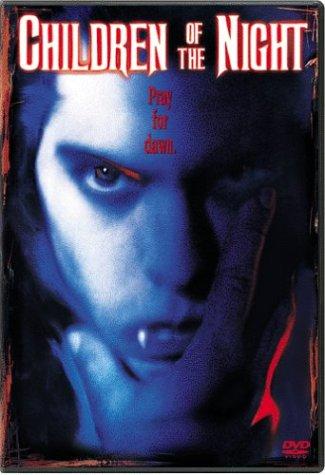
UNSUNG HORRORS HORROR GIVES BACK 2025: Children of the Night (1991)

Each October, the Unsung Horrors podcast does a month of themed movies. This year, they will once again be setting up a fundraiser to benefit Best Friends, which works to save the lives of cats and dogs across America, giving pets second chances and providing them with happy homes.

Today’s theme: 1990s

ABOUT THE AUTHOR: John Connelly is a lifelong genre film fan living in New Jersey. His Letterboxd profile is https://letterboxd.com/johnconn/

In 1990, Fangoria Entertainment launched Fangoria Films, a short-lived production company. Founded in 1979 as a spinoff of science fiction film magazine Starlog, Fangoria is a brand deeply associated with a certain kind of Gen-X horror fandom. What Famous Monsters of Filmland was a generation earlier, Fangoria became for a generation raised on slasher films and Tom Savini effects.

Fangoria Films would produce three features between 1990 and 1992. The first of these efforts, Mindwarp, is a post-apocalyptic mutant thriller starring genre heavyweights Bruce Campbell and Angus Scrimm. The third would be Severed Ties, a creature feature starring a later-career Oliver Reed. The second is the focus of this piece, 1991’s Children of Night.

Children of the Night feels in certain ways like an adaptation of Stephen King’s Salem’s Lot. Or, perhaps, of John Farris or Charles L Grant, the kind of writers you might find in Paperbacks from Hell. The story begins with two teenage girls, eager to escape their small town. Together, they engage in a local tradition: symbolically washing the “dirt of this town” off of them by swimming together in a flooded church crypt. When one of the girls, Lucy, drops her crucifix, the pair accidentally awaken Czakyr, an ancient vampire with a penchant for virgin blood. Teacher Mark Gardner (played by Stargate SG-1’s Peter Deluise) and his friend, the local priest, must lead an effort to save the town from being overrun by the restless dead.

Children of the Night is directed by Tony Randel. Randel’s other credits include the only good Hellraiser sequel, Hellraiser 2 and Amityville: It’s About Time, the second-best Amityville sequel. The cast includes Karen Black — star of such horror classics as Burnt Offerings and Tobe Hooper’s remake of Invaders from Mars, but perhaps best known to this readership for Trilogy of Terror. The film also features a memorable turn by Juilliard-educated SNL alumnus Garrett Morris. Industry legends KNB Effects provided makeup effects for the movie’s bloodsuckers. There are many reasons why it is surprising this film is not a cult classic. If it were more widely available, I believe it would be. The first time I saw this film was on a bad VHS rip with Russian subtitles. The second time was on Tubi, where it is not currently available.

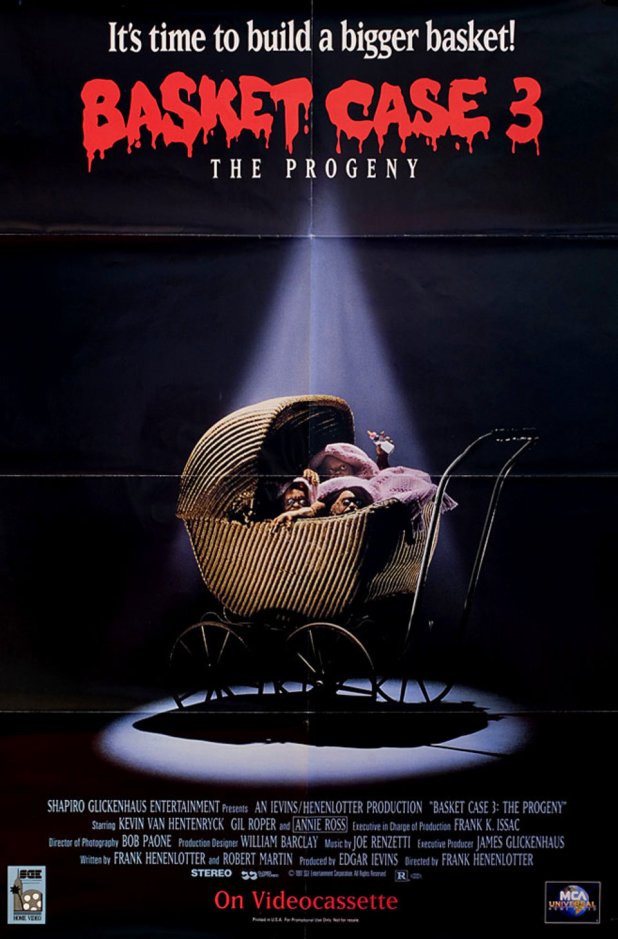
UNSUNG HORRORS HORROR GIVES BACK 2025: Basket Case 3: The Progeny (1991)

Each October, the Unsung Horrors podcast does a month of themed movies. This year, they will once again be setting up a fundraiser to benefit Best Friends, which works to save the lives of cats and dogs across America, giving pets second chances and providing them with happy homes.

Today’s theme: The Sweetest Taboo!

“…Belial suffers through his brother’s neurosis, his girlfriend’s death, and the death of one of his children when the sheriff’s daughter drops it.”

Poor Belial. Three movies in, and he’s still trying to adequately express his emotions.

Last time, his brother Duane (Kevin Van Hentenryck) was trying to sew him back on. Now, Duane’s being held by Granny Ruth (Annie Ross), but allowed to go on the bus trip to see his ex, Doctor Hal Rockwell (Dan Biggers), so that Belial’s children with his girlfriend, Eve, can be born. They’ll also see her son, Little Hal (Jim O’Doherty), a multi-armed blob who can also practice health care.

There’s also a bigoted sheriff (Gil Roper) and his bad girl daughter, Opal (Tina Louise Hilbert), to deal with; the cops bust in at one point, guns blazing — realistic — and murder Eve. Then, they take Belial’s children as if they’re a practice run for late-child-stealing government operations. To fight back, Belial has an exoskeleton built that allows him to kill even more people and cause the sheriff to kill his own daughter. Then, they arrived at Renaldo, where they killed the host, and Granny says that freaks will no longer hide in the shadows.

This is a Frank Henenlotter film, and if you know what that means, you’re either going to love or hate this. I loved it, perhaps even more than the last one, because it just gives in and lets go.

As for the song “Personality”, being in this, “the owner reportedly gave them the rights for a dollar after he found out that Annie Ross would be singing it.” I want IMDbs to be true.

USA UP ALL NIGHT: Puppet Master III: Toulon’s Revenge (1991)

EDITOR’S NOTE: Puppet Master III was on USA Up All Night on May 24, 1996.

Directed by David DeCoteau and written by Charles Band, C. Courtney Joyner and David Schmoeller, Puppet Master III is not a sequel but instead a prequel, starring Guy Rolfe as the creator of the many puppets that we’ve come to know, love and maybe be afraid of, the legendary Andre Toulon.

When the story begins, Toulon and his wife, Elsa (Sarah Douglas), are performing puppet shows for children, incorporating anti-Third Reich messaging, such as when Six-Shooter attacks a Führer puppet. A German scientist named Dr. Hess (David Abercrombie) wants to create a formula for living puppets, while Major Kraus (Richard Lynch) wants to arrest him for treason. To prevent this, he takes him and his puppets, Tunneler and Pinhead. He also kills Elsa right after Toulon gives her a puppet with her likeness. That puppet becomes the Leech Woman, and we also get to see another creation named the Jester.

Hess isn’t horrible. He bonds with Toulon, who explains that each puppet was someone he knew and loved. Their strong will to live after death kept them residing within each of their creations. This is also the origin of Blade, who may be the most popular of the puppets.

I hate that the new movies make the puppets become Nazis instead of killing them. Let’s get back to the idea of this movie because it works so much better.

USA UP ALL NIGHT: Child’s Play 3 (1991)

EDITOR’S NOTE: Child’s Play 3 was on USA Up All Night on October 31, 1997.

Written by the returning Don Mancini and directed by Jack Bender, whose career has primarily been on TV, but he also directed The Midnight Hour, so he brings a horror perspective. Child’s Play 3 would be the last Chucky movie Mancini would be involved in until Bride of Chucky.

Eight years after the events of the last movie, the Good Guys factory is reopened, and it’s reopened near-immediately — why do they keep opening this place? — the blood of Chucky gets on a new doll, the CEO gets killed and Andy (now played by Justin Whalen) is tracked down at Kent Military School, as he has had so many foster families ruined by his PTSD from Chucky that he has to be drafted into this place. By the end, Chucky turns the place into a real warzone, trying to possess a young kid named Tyler (Jeremy Sylvers), slicing throats and throwing grenades.

This movie was made under pressure, as it was greenlit before Child’s Play 2 was even released and was in theaters nine months after that film. It also only made $20.5 million on a $13 million budget, ending the franchise for seven years.

In a replay of the video nasties era, Child’s Play 3 was part of a tabloid panic in Great Britain, where journalists claimed the film had influenced two 10-year-old boys in their murder of two-year-old James Bulger. It was later determined that neither had actually seen this movie. Additionally, sixteen-year-old Suzanne Capper of Manchester was kidnapped and tortured by former friends for several days, then set on fire and left to die. She was forced to listen to the song “Hi, I’m Chucky (Wanna Play?)” by 150 Volts while being abused, and one of her abusers, Bernadette McNeilly, started each torture session with the phrase “Chucky’s coming to play.” As you can imagine, tabloids also had a field day with this story, blaming it on the movies when that song was in heavy rotation at the time. Child’s Play 3 was the movie they claimed was responsible for all of this.

USA UP ALL NIGHT: Bikini Summer (1991)

EDITOR’S NOTE: Bikini Summer was on USA Up All Night on September 26, 1992; March 19 and August 7, 1993; May 20 and June 3, 1994. 

Chester Marley (David Millbern) is supposed to paint the beach house of Mr. and Mrs. Patterson (W. Dean Grey and Katherine Victor, who played Batwoman in The Wild World of Batwoman, Car-Driver Spider Woman in Mesa of Lost Women, and Sheila Frankenstein von Helsing in Frankenstein Island (before working in animation), while they’re on vacation. Instead, he and his friends Richard (Alex Smith), Jazz (Shelley Michelle, Julia Roberts’ body double in Pretty Woman), Mad Dog (Kent Lipham) and Cheryl (Melinda Armstrong) transform it into a party house.

Director Robert Veze came from porn, and it shows. This does not shy away from breasts unless you watched it on USA Up All Night. He wrote it with Nick Stone, who also wrote Sunset Strip. Strange enough, this has a lot of environmental concerns in it, as well as wanting to save a beach, but mostly, you know, tits.

There are three of these films. You can download them from the Internet Archive.