DISMEMBERCEMBER: Scrooged (1988)

Man, did Richard Donner have a great directing career or what? The OmenSuperman, the Lethal Weapon movies, The GooniesLadyhawke…man, I’m a big fan. He brings a lot to Scrooged, which has a great script by Mitch Glazer, who wrote the book for The Blues Brothers as Miami Mitch, as well as Mr. Mike’s Mondo Video, which he co-wrote with the other screenwriter for this movie — and one of my personal heroes — Michael O’Donoghue. Beyond being the first person to say, “Live from New York, it’s Saturday Night!” O’Donoghue was a major force at the National Lampoon and a cantankerous venom-spewing force of nature

O’Donoghue refused to write for Jim Henson’s Muppets on SNL, saying “I won’t write for felt,” eventually left the show and came back for the Dick Ebersol season, spray painting DANGER! on the walls, frightening everyone except for Eddie Murphy — Catherine O’Hara left and went back to SCTV — and wrote the never-aired “The Last Days in Silverman’s Bunker,” a sketch that would last twenty minutes, feature John Belushi as NBC President Silverman and have an NBC Nazi logo. He was fired, then rehired when Lorne Michaels came back and wrote a monologue for Chevy Chase that started with “Right after I stopped doing cocaine, I turned into a giant garden slug, and, for the life of me, I don’t know why.” He then told the New York Times that the show was “an embarrassment. It’s like watching old men die” and got fired yet again.

He hated this movie.

He claimed that he wrote a better one.

It’s still a pretty good movie.

Michael O’Donoghue remains an inspiration because nothing was ever good enough and everyone was worthy of his anger.

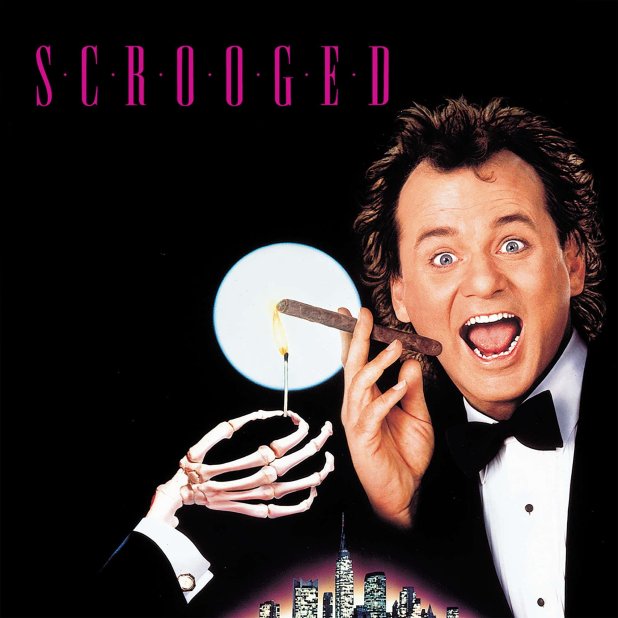
Bill Murray is Frank Cross, the first role he took since taking four years off after Ghostbusters. Murray and Donner had different visions, so Murray saw this movie as sheer misery. He’s an IBC television executive who has learned everything from his bosses Preston Rhinelander (Robert Mitchum) and the late Lew Hayward (John Forsythe) and as such, he’s created a new version of A Christmas Carol that has a commercial hyping it so upsetting that a woman dies from a heart attack. But hey — Buddy Hackett as Scrooge!

This is a movie that recreates that very same story but somehow does it with some of my favorite personalities, like David Johansen as the cab-driving Ghost of Christmas Past, Carol Kane as the brutal Ghost of Christmas Present and a horrifying Ghost of Christmas Future made up of a Grim Reaper containing TV screens.

Plus Karen Allen, Michael J. Pollard, John Glover (one of my favorites in everything he’s acted in), Murray boys Brian, John and Joel, John Houseman, Bobcat Goldthwait, Mary Lou Retton, Pat McCormick, Paul Schaffer, David Sanborn, Jamie Farr, the Solid Gold Dancers, Lee Majors (The Night the Reindeer Died is amazing and he’s carrying the actual gun from Predator), Robert Goulet, Miles Davis and Larry Carlton.

The end of the film, where Frank has his moment of clarity, was hard for Murray to figure out, so he ad-libbed all of it. Glazer and O’Donoghue thought he was having a nervous breakdown and as the crew cheered the end of the scene, O’Donoghue said, “What was that? The Jim Jones hour?” Donner punched him in the arm so hard he was bruised for a week.

O’Donoghue later said that Donner did not understand comedy and just wanted things bigger. He claims only 40% of what he wanted is in the movie. Murray would later tell Roger Ebert “That could have been a really, really great movie. The script was so good. He kept telling me to do things louder, louder, louder. I think he was deaf.”

You know who didn’t like this movie? David Johansen’s New York Dolls bandmate Arthur “Killer” Kane. According to Rolling Stone, “Around 20 years ago original New York dolls bassist Arthur “Killer” Kane was watching TV when the 1988 Bill Murray Christmas movie Scrooged came on. The sight of Dolls frontman David Johansen in a prominent role sent Kane into such a jealous rage that he beat his wife with cat furniture and then jumped out of a third-story window, attempting to kill himself. Luckily, he landed on an awning and survived with minor injuries. While recuperating in the hospital he saw an ad for a free copy of the Book of Mormon. When a couple of beautiful young women personally brought it over, he was ready to convert. Within a few years the Mormon Church had completely transformed his life — he even worked at the church’s Family History Library Center in Los Angeles. In 2004 his dream of a New York Dolls reunion finally came true, but just three weeks after their comeback show he died of leukemia.”

The real Scrooges were Paramount Pictures executives who demanded that this movie shoot over Christmas. Donner beat them by firing the entire cast and crew at the end of the day on Christmas Eve and rehiring them on the day after the holiday.

I miss the anarchic spirit of Murray and O’Donoghue on Saturday Night Live. Somehow, I’d never seen this until this year and it made me miss the show I used to love.

A CHRISTMAS STORY: Ollie Hopnoodle’s Haven of Bliss (1988)

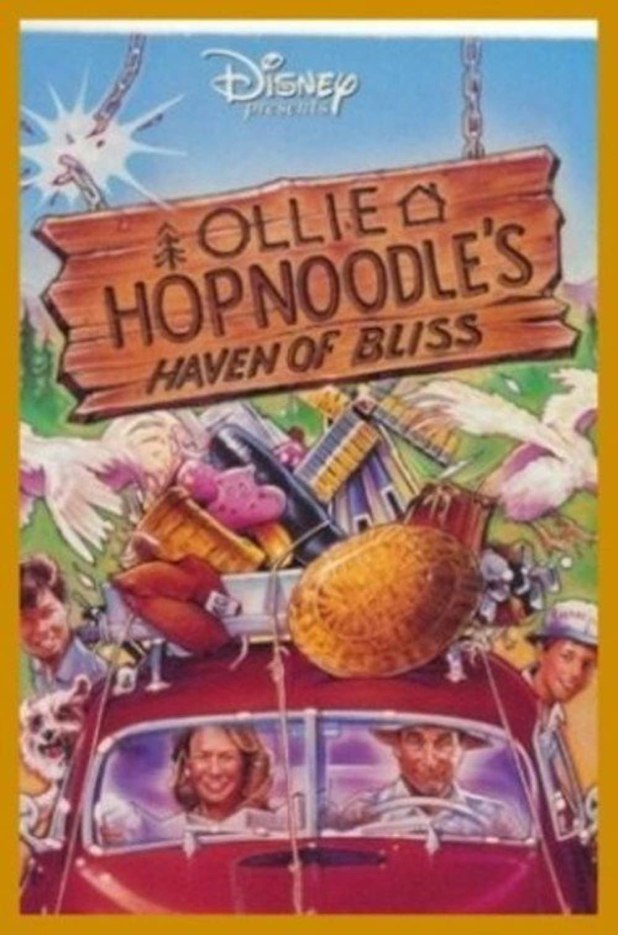
This Jean Shepherd story isn’t about a holiday but is about summer vacations. But first, work. Ralphie (Jerry O’Connell), Flick (Cameron Johann) and Schwartz (Ross Eldridge) are working a horrific first career at Scott’s Used Furniture Palace — run by a character played by Shepherd — while dreaming of having a few days off. Before that, the family dog Fuzzhead (Shepherd’s real life dog Daphne) goes missing and ends up living in a mansion.

The trip to get to the trailer park of the title is described in the words of Shepherd as a journey “beset on all sides by strange creatures, the lost mariner searches and searches, in the Sargasso sea of life.”

James Sikking, who plays The Old Man, is also in The Night God Screamed, which is pretty awesome casting. Mom is played by Dorothy Lyman, who depending on when you watched TV was a pretty big deal. For those who watched soaps in the afternoon, she was on a ton of soap operas, including A World ApartThe Edge of Night, as Gwen Parrish Frame on Another World, Rebecca Whitmore on Generations, Bonnie Roberts on The Bold and the Beautiful and most importantly, she was Opal Sue Gardner on All My Children. If you watched TV at night, you knew her as Naomi, the daughter-in-law on Mama’s Family.

Ollie Hopnoodle’s Haven of Bliss was co-producted by Disney, public TV’s American Playhouse and Boston public TV station WGBH. While funded by Disney, they had nothing to do with production. After airing on their channel, it moved to public television.

This was the last film Shepherd made for television. He wanted to turn his stories into a series, but by 1988, he was making from the reruns and home video sales from A Christmas Story and decided to make another movie. That would be 1994’s It Runs in the Family: My Summer Story or as it is better remembered today, A Summer Story.

You can watch this on YouTube.

PITTSBURGH MADE: Flesheater (1988)

Pittsburgh — well, Coraopolis — born Bill Hinzman is probably most famous for being the first zombie that shows up to attack Johnny and Barbara in Night of the Living Dead. His film career has him show up in some other Romero films — he’s a drunk in There’s Always Vanilla, the burglar in Season of the Witch, a crazie in The Crazies, an archer in Knightriders — as well as the zombie movie Legion of the Night, John Russo’s Santa Claws and appearing in and directing the Russo-written The Majorettes.

He also worked behind the camera, serving as the director of photography for The Crazies and cinematographer for The Amusement ParkDrive-In Madness!, Santa Claws and working on the cash-in Night of the Living Dead: 30th Anniversary Edition.

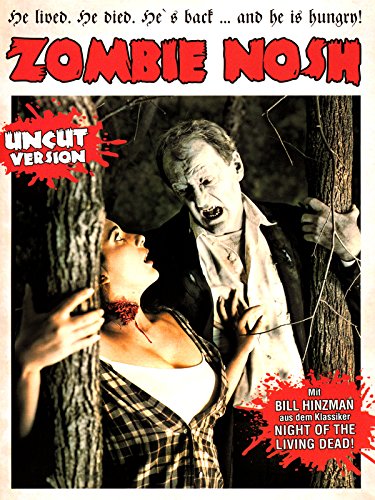
Yet he’d always be that zombie, even showing up in a TV commercial for Goodfellows Brick Oven Pizza as that character. So twenty years after the first time he crawled out of a grave, Hinzman directed, wrote, produced and edited this film which as goes by the names Zombie Nosh and Revenge of the Living Zombies.

I always got the feeling that Hinzman and Russo made these movies to get out of the house, maybe make a little bit of money and maybe either see naked young women or get to bite them as a zombie, in Hinzman’s case.

Actually, what’s funny is that Bill’s wife Bonnie and his daughter Heidi didn’t just let him out of the house, they were involved in the film, appear in it and it’s still filled with this much sleaze! I mean, he even bites his own daughter and she turns into a zombie wearing an angel costume.

This is seriously even more Western Pennsylvania feeling than Romero’s films, a movie that has so much flannel, a hayride at the center of the storyline, people gathering at farms, furtive sex in the woods, big hair and bare breasts at the same time, a cast of twentysomething teenage characters who are all petty lame and die just as fast as you want them to and a farm that has a grave with a sign that literally says don’t break the seal and dumb kids drunk enough to do it and see what happens because nothing ever happens here anyway.

If you’re the kind of person that knows that the title of this comes from the original name for the 1968 classic — Night of the Flesheaters — or if you’re from Western Pennsylvania or even better, you’re excited that Vincent D. Survinski plays the same role he did in Night, this movie is for you. It’s beyond low budget, with real animal guts — Hinzman bit into a pig heart thinking it was a prop — and actual real human heart. The first time I saw it, I thought it was the dumbest movie I’d ever seen and while I probably wasn’t wrong, I have a place in my own heart for it.

You can get it from Vinegar Syndrome or watch it on Tubi.

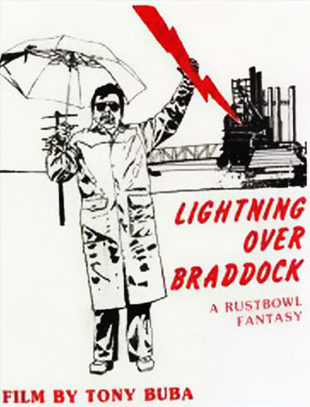
PITTSBURGH MADE: Lightning Over Braddock: A Rustbowl Fantasy (1988)

Braddock has been in the news a lot lately, being the adopted home of John Fetterman. Yet for years, Tony Buba has been there, making documentaries about the former steeltown where he was born and continued to live, all while working in movies, doing sound for George Romero films and showing up with his brother Pasquale as drug dealers in Martin and bikers in Dawn of the Dead.

Lightning Over Braddock: A Rustbowl Fantasy takes place at the end of the eighties, a time when so much of America gave up on Pittsburgh and its surrounding mill towns. Where once Braddock was Pittsburgh’s shopping center with seven movie theaters, by the time of this movie it was falling to pieces — it would get worse — as the mills in Homestead were being closed by U.S. Steel, who said they were in the business of making money, not steel.

I grew up directly between Pittsburgh and Youngstown with a grandfather who spent his whole life in the blast furnace after liberating concentration camps. He used to tell me about getting frostbite on one side of his body and a suntan on the other as he worked at J&L in Aliquippa and would come home covered in dirt and grime in the small hours of the day, sleeping when everyone else was awake and then going back the very next day and doing it all over again.

Buba plays himself, trying to make a movie with Sal Caru, a local character who was also in one of his shorts Sweet Sal. Except that Sal thinks that just because Werner Herzog liked the movie, Tony is going to leave Braddock behind, just like the steelworkers did when they started making money. He’s ready to battle everyone in his way, leaving rambling explentative-filled answering machine messages demanding an audience.

There’s a moment before his confession that Tony looks at an animated card of Jesus and times when he thinks about how expensive Hollywood things are, how the rich men running the mills spend as much in a day as people in Braddock make in a year and how he can’t waste anything. He feels guilty about things like wanting to leave his hometown behind for Hollywood before realizing this is where he belongs.

While I’m a transplant to the greater Pittsburgh area, living in Mount Oliver, Edgewood, Allentown, Homestead, Dravosburg, West Mifflin, McKeesport and now Monongahela in my life, I feel such an emotional tug to this place. You can look at the Waterfront shopping area built on the top of the dead Carrie 6 furnace and see that even though this town is now about tech, we haven’t forgotten the past. I still miss Alexander Graham Bell’s bar on 8th, a place in Homestead where every table had a telephone and you could call table to table. I’ve hunted down where the old drive-ins were, the defunct movie theaters, the places that Pittsburgh used to be.

The struggles within this film of the steelworkers are long gone. So many of us have forgotten them, so many are gone now to be honest. My grandfather has been dead twenty years by now and I miss him and those stories every day. But Pittsburgh trudges on, even as one of the few mills still open is right down the street from my house now, the Clairton works, making the air itself the worst in the state. It smells like eggs on a foggy day, but once you couldn’t wash your clothes outside if you lived above the mills and Homestead ceremony is filled with the bodies of union men and the Pinkertons who got off boats to try and break their line, one of the largest instances of armed warfare inside our country.

I came away from this knowing why Tony Buba loves Pittsburgh because I think sure, we might complain about it, we might wish it were different, but we love everything about this town. We’re lifers. I couldn’t imagine caring about anywhere else.

You can buy this from Kino Lorber.

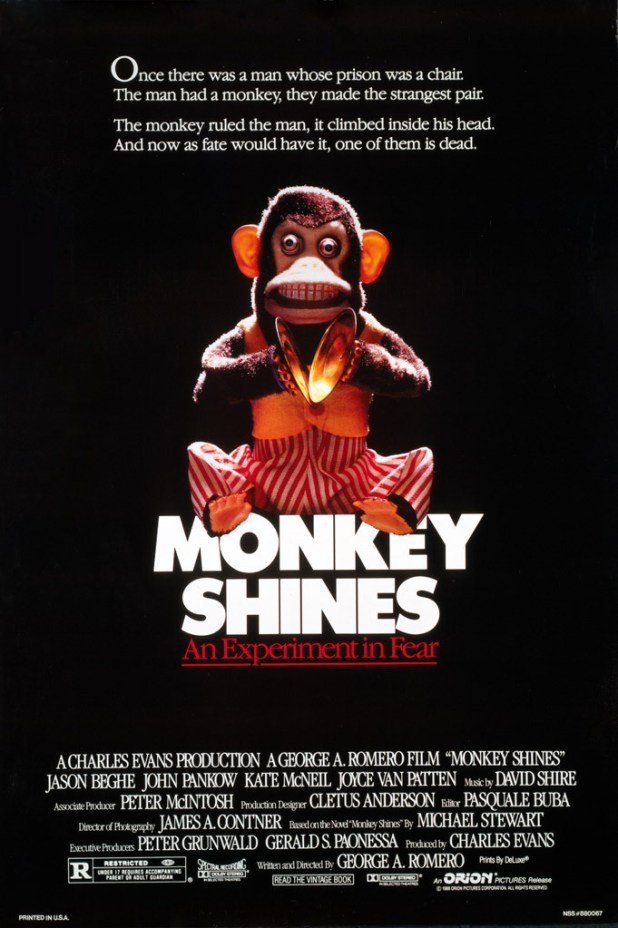
PITTSBURGH MADE: Monkey Shines (1988)

When Monkey Shines came out on video, I was probably 16 and had watched Dawn of the Dead hundreds of times. I was also an edgelord kid who hated everything and didn’t like this at all. I didn’t understand that directors can change and grow. I just wanted more gore.

Based on the book by Michael Stewart, this was director and writer George Romero’s first major studio feature and had — for him — a big budget of $7 million. Shooting in Pittsburgh — Carnegie Mellon and Murrysville are two of the locations — in the late summer and early fall of 1987, this had a long post-production and editing process as Romero shot more film than he ever had before, plus had to learn to work with live monkeys.

That said, there are also four Tom Savini-designed puppets. If you guessed that Frank Welker does her voice, you are correct.

After athletic law student Allan Mann (Jason Beghe) is hit by a truck, he loses control of his arms and legs and must learn to live in a wheelchair controlled by sips and puffs, which is nearly all he can do. His friend Geoffrey (John Pankow) suggests that he get a helper monkey and specialist Melanie Parker (Kate McNeil) helps him by getting Ella trained in working with him. It lifts his spirits and he finds himself growing close to Melanie.

The secret is that Geoffrey has been experimenting on these monkeys and is close to losing funding if he doesn’t get results. He has injected Ella with a special drug that boosts her intelligence. What he doesn’t know is that it causes her to share emotions with Allan, first him feeling her ability to run through the grass in his dreams, then killing a bird that drives him crazy and even setting the home of the surgeon who may have screwed up his operation — and now lives with his ex-girlfriend — on fire and killing the man and his lost lover.

Now the rage that goes through both of them begins to feed on itself and everyone in their way pays, even if Allan doesn’t want it to happen. While this has a studio-demanded happy ending — spoiler warning, he crushes the monkey with his wheelchair which doesn’t seem all that happy — Romero filmed a different way to close this, as Geoffrey’s boss Dean Harold Burbage (Stephen Root) steals the remaining drugs and injects them into all of the test monkeys. After Allan regains his ability, Burbage is assaulted by animal rights protesters who had earlier attacked Geoffrey for experimenting on monkeys. When he returns to his lab, we learn that the monkeys have completely taken him over.

Romero said of the ending, “I thought my ending played well, but I’d admit that the testing results were overwhelmingly in favor of the current version. To Orion’s credit, they said —  it’s up to you, we’ll release it either way. So I decided to go along and not fight it. But I’ll always miss it.”

I may like this more than I did when I first saw it, but it remains the first film where I noticed that I wouldn’t necessarily love every movie by every director, even George Romero. Supposedly, he had to cut half of what he shot to hit the right length of the film, but even still, it feels like there is both too much going on and too little of a story at the same time, which I realize is a juxtaposition.

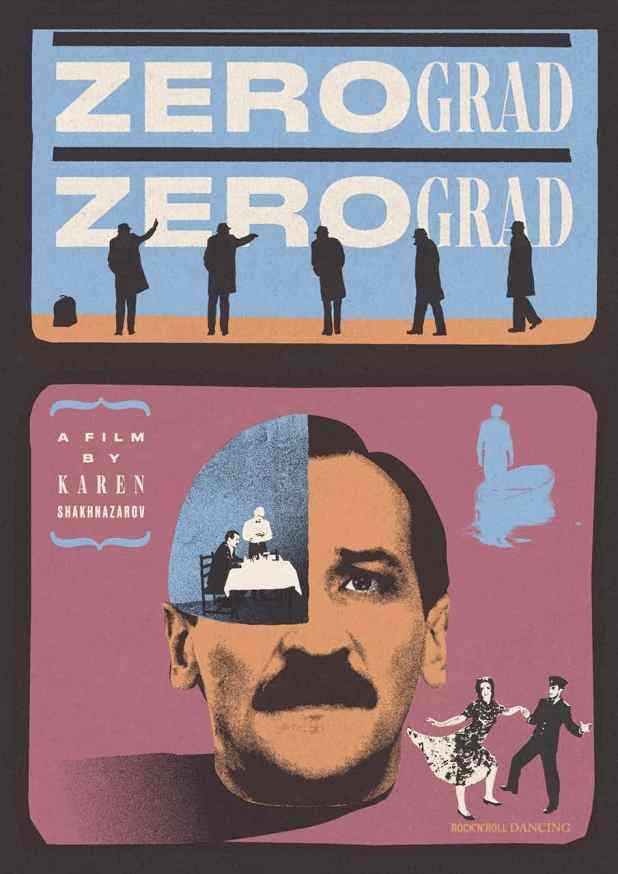
DEAF CROCODILE FILMS RELEASE: ZEROGRAD (ZERO CITY) (1988)

Director Karen Shakhnazarov said, “In my opinion, the essence of the film Zero City is that a person mythologizes history, distorts it. And, constantly distorting history, he distorts his own life. In essence, we do not know history — it is, in principle, unknowable for us. We constantly use the past to achieve some goals in our modern life. But in this way, by distorting our past, we also distort our present. This concerns not only the USSR and not only Russia. This also applies to the United States, and France, and China, and Brazil, and in general everyone. This is common. For me, this topic is related to the very existence of man. This is the main theme of Zero City for me.”

Deaf Crocodile Films Co-Founder and Head of Distribution Dennis Bartok summed up this film so well when he called it “…a fascinating mix of genres: part mystery, part science fiction, part political satire, part surreal comedy. When the film was released in 1988, the Soviet Union was only three years away from breaking up — and it’s impossible not to look at Zerograd as a metaphor for the U.S.S.R. in its last stages, with Leonid Filatov’s brilliant, baleful performance as the Everyman engineer who gets caught in the Moebius strip of Zero City, unable to go backwards to Moscow and unable to go forwards. Just like the Soviet Union itself at that point in history.”

Craig Rogers, Deaf Crocodile Co-Founder and Head of Post-Production and Restoration, added “Zerograd comes from the same D.N.A. as Terry Gilliam’s Brazil. Surreal, wild fun. I’m so glad this film will finally be seen by a North American audience!”

An engineer named Varakin (Leonid Filatov) has come to a remote city where nothing makes sense, even if everyone acts like it does. He takes part in the investigation of the murder — or suicide — of a chef named Nikolaev, who may be his father and who shot himself after Varakin refused to eat a cake modeled after his own face.

Varalkin is soon trapped in a place where the real and unreal exist in the same plane of reality, where a receptionist does her job in the nude, prosecutors seek to commit crimes of their own and strange museums fail to tell you what is true and what is an illusion.

I’m so excited that this movie is now available in America, because it’s really something, a mix of strange bureaucracy, rock ‘n roll making its way to Russian and just plain weirdness.

Zero City is now available on blu ray. It has a new 2K restoration from the original 35mm picture and sound elements by Mosfilm, a video interview with director/co-writer Karen Shakhnazarov, moderated by Dennis Bartok of Deaf Crocodile Films, a new commentary track by film journalist Samm Deighan (Diabolique magazine, Daughters of Darkness podcast) and a new booklet essay by filmmaker, writer, punk musician and genre expert Chris D. (The Flesh Eaters; author of Outlaw Masters of Japanese Film). You can order it from Deaf Crocodile.

THE IMPORTANT CINEMA CLUB’S SUPER SCARY MOVIE CHALLENGE 14: The Nest (1988)

14. A Horror Film About Insects (No Bigger Than Humans)

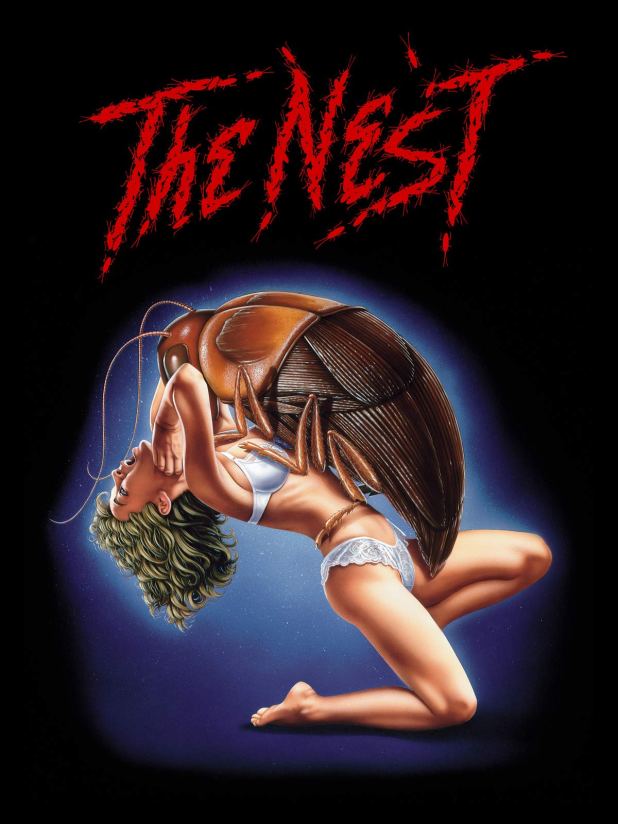
Directed by Terence H. Winkless and written by Robert King — and based on the novel by Eli Cantor — The Nest has a great poster going for it. I stared at it in the video store for the longest time and now, decades later, I’ve finally watched it.

Sheriff Frank Luz (Richard Tarbell) has a lot to deal with. Dead dogs are showing up all over town. Books are falling to pieces. And his ex-girlfriend Elizabeth Johnson (Lisa Langlois, Happy Birthday to MeDeadly Eyes) is back.

I dated a bug scientist — an entomologist — for a few months and I always told her that her experiments would lead to situations like this. She thought I was stupid and she was right, but I know that Dr. Morgan Hubbard (Terri Treas) is behind all of this, experimenting on cockroaches until they get cat sized and who needs that? How was that supposed to help?

This movie has human cockroaches and a cat cockroach, because it wants to make you puke. I mean, well done, you know?

Also: the studio this was made in dealt with cockroach infestations for years.

Also also: All of the explosions came from Humanoids from the Deep.

SLASHER MONTH: Child’s Play (1988)

Don Mancini took his trouble relationship with his dad, his experiences of being alienated as a gay man and his worries about the impact of 80s sell sell sell on children and turned it into a series of films that still exist to this day. It’s a cauldron brimming with influences, from Trilogy of Terrror‘s evil doll — literally the POV shots in this come from that seminal made for TV movies –to the Twilight Zone episode “Living Doll” and no small bit of cultural appropriation from the Cabbage Patch Kids to make Chucky into a horror icon.

The best part of this movie is that it knows to hold back from revealing Chucky. Tom Holland is a great director and he made the most of this film, which starts with Detective Mike Norris (Chris Sarandon) finally bringing Charles Lee Ray (Brad Dourif) to justice. After being shot, Ray remembers the voodoo imparted to him by John “Dr. Death” Bishop (Raymond Oliver) and his soul transfers to a Good Guys doll.

Karen Barclay (Catherine Hicks) is trying to raise her son Andy (Alex Vincent) all alone. She wants to get him a Good Guy doll, but they’re as expensive as they are hard to find. Yet when she gets one from a homeless man, things seem too good to be true. Well, they are, because the film continues tease the existence of Charles Lee Ray inside Chucky, but when Karen tries to burn the doll, it unleashes a torrent of expletives and begins chasing her through the apartment.

As part of the voodoo, Ray can only leave the doll to take over one body, the first person he revealed himself to. If Andy is to survive, his mother and Detective Norris must stop Chucky by taking out his heart.

For as iconic as Dourif’s voice is, he wasn’t the first choice. John Lithgow was going to play the role, but Holland had worked with Dourif on the movie Fatal Beauty. Then, they wanted Chucky to sound like an electronic toy before deciding on Jessica Walter as the voice. I mean, it worked for Pazuzu having a powerful female actress voicing those lines. Luckily, when Dourif got his schedule free, he made Chucky’s voice the one we know, love and maybe even are afraid of.


Tao da liang da xian shen wei (1988)

Magic of Spell is the sequel to Child of Peach and, if anything, it might be even weirder than that movie and that makes me happier than I can even explain to you.

Momotaro the Peach Boy is back and played by a woman named Lam Siu-Lau. Tiny Dog, Tiny Monkey and Tiny Cock are back too and their goal is to rescue the Ginseng King — a living ginseng plant — from a demon wizard who wants to use the plant person to become regain his lost vitality and youth. How would he do that? By bathing in the blood of thousands of dead boys in a hot tub as well as the pulped flesh of the ginseng royalty as well as perhaps Peach Boy’s skin. He also kills Peach Boy’s mother just so this can be even more frightening for kids and yes, this is a children’s movie.

This demon has quite the gang on his side. There’s a transgender ghost with the most perfect hair. Samurai ghosts. Evil puppet skeletons. Buddha statues with laser beams. A strong man who can become a rock lord. And oh yeah, a green fish man who shoots a bazooka.

That said, Tiny Cock can transform her body into a pecking rooster head that can peck out eyeballs.

If you’ve read this far and are wondering, “How can this be?” It can. This movie kept blowing my mind and it made me wish every movie was sped up and had wirework. Your ears will also be delighted, as this movie steals at will from the soundtracks of The Shining and Phantasm.

This movie starts with Peach Boy flying faster than an arrow to rescue a rabbit.

All movies should aspire to be this unconcerned with being strange. Watching movies like Magic of Spell will reaffirm your faith that humans have some business being on this planet.

You can watch this on YouTube.

Vampire Raiders Ninja Queen (1988)

This is the actual sales pitch for this movie: “The fate of the entire hotel industry is at stake. A group of evil black ninjas has threatened to insinuate themselves into the industry, take over, and transform the operation into something unspeakable.”

One part of this movie is 1984’s Mixed Up, which was directed by Chow Chun-Gaai, and is about three hotel switchboard operators saving the life of their rich boss. The rest is purple ninjas, hopping vampires and whatever other footage Godfrey had lying around that day.

I would say that watching this movie is like someone switching channels during a commercial and you end up missing a bunch of the movie you really wanted to watch, but that would make you think that this movie has some semblance of coherent storytelling.

This is the kind of movie where a giant pig is launched off the roof of a hotel and lands on an old man and his wife, killing them both. Then a vampire emerges from the dead hog. If you can get with that, you can get with this movie that never even tries to make sense.

Can virgin piss kill a vampire? Why do the zombies have rubbery arms? Are you ready for music cues from Mad MaxThe Road WarriorThe Addams Family and Phantasm? Do you want to watch a vampire get way too fresh with a lady ninja in a bikini?

The answers are maybe, I don’t know, totally and yes.

You can watch this on YouTube.