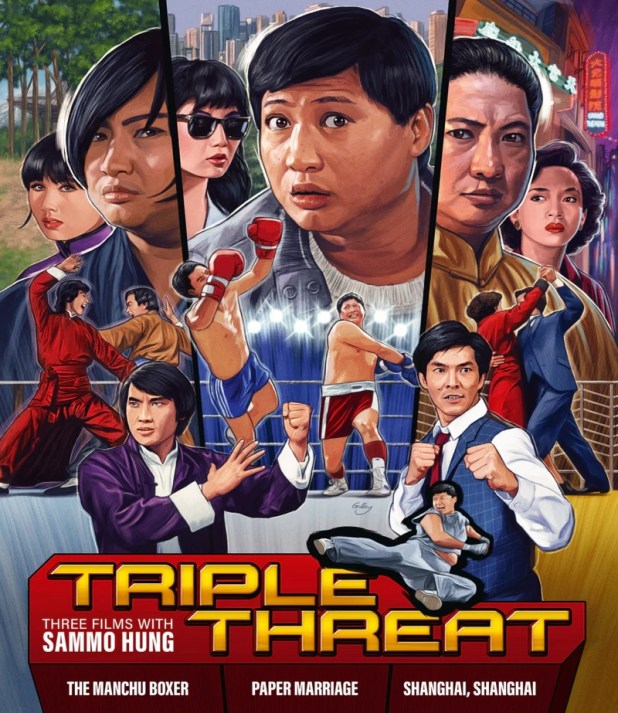
EUREKA BOX SET RELEASE: Triple Threat: Three Films with Sammo Hung (1974, 1988, 1990)

At the end of the 1970s, a new generation of martial arts stars — three adopted brothers — rose to the top of Hong Kong cinema: Yuen Biao, Jackie Chan and Sammo Hung, who found fame as the director and star of The Iron Fisted Monk, The Magnificent Butcher and Encounter of the Spooky Kind.

Eureak’s latest set has three films spanning Hung’s career, from a supporting role in The Manchu Boxer to stardom in Paper Marriage and Shanghai, Shanghai.

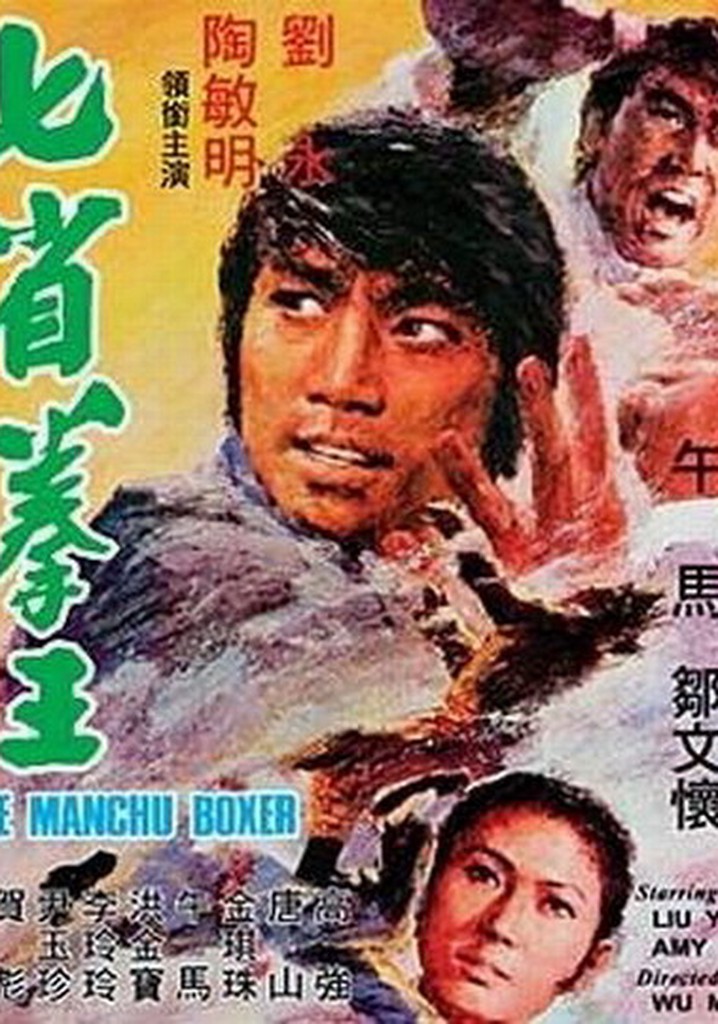
The Manchu Boxer (1974): Ku Ru-Zhang (Tony Liu) has left his hometown in shame. He’s killing a rich man’s son (director Wu Ma) in self-defense, and even his father wants him gone. He promises never to fight again and quickly becomes a husband and father to a widower and his child. But then, when a martial arts master (Kim Ki-Joo) and his two henchmen (Sammo Hung, who was also the fight coordinator and Wilson Tong) decide to win a tournament at any cost, our hero must enter and fight again.

Ku Ru-Zhang is a good enough fighter that he can win a battle against multiple fighters without taking his hands out of his pockets, like some kind of martial world Orange Cassidy. Ah, but how will he fare against a femme fatale who can throw knives?

This Golden Harvest film came to the U.S. thanks to Independent-International Pictures as Masters of Martial Arts.

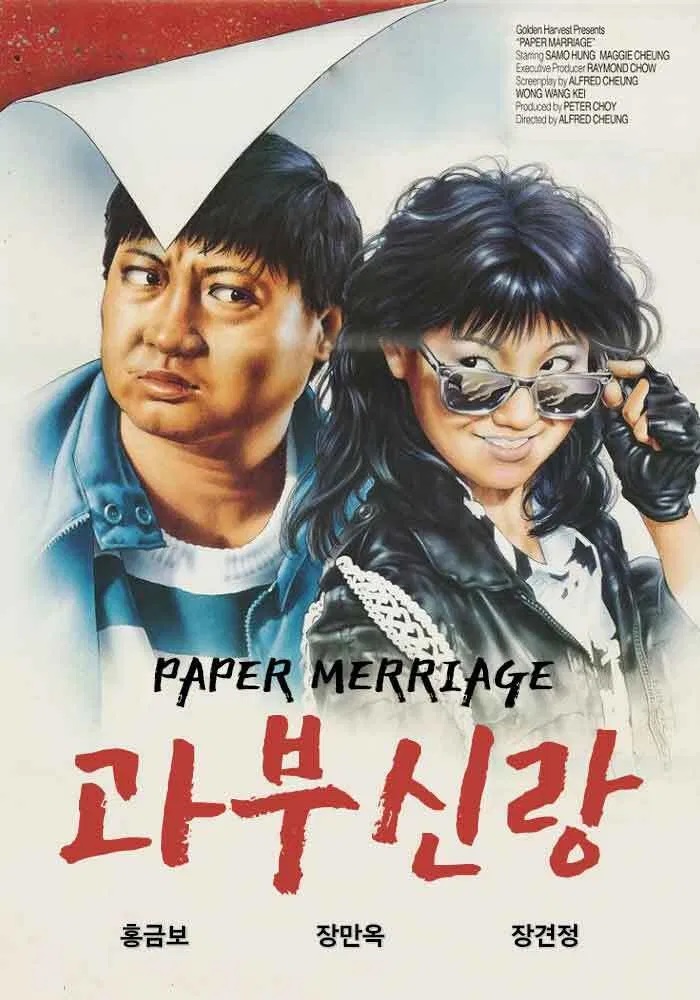
Paper Marriage (1988): Directed and co-written by Alfred Cheung, this finds boxer Bo Chin (Sammo Hung) in America. He agrees to marry Jade Lee (Maggie Cheung) so that he can stay in the country. After he goes the distance in a kickboxing fight, criminals steal his money. Man, Bo was poor to start with, thanks to his ex-wife (Joyce Godenzi, Sammo’s real partner)!

Also: That isn’t Los Angeles in this movie. It’s Edmonton, Alberta.

If you ever wondered where Shinya Hashimoto got his look from (or maybe Sammo is taking after him) or want to see Maggie Cheung mud wrestle, this is the movie for you! It’s a cute film and one that takes full advantage of its stars.

Shanghai, Shanghai (1990): This time around, Sammo Hung is the villain, Chin Hung-yun, facing off with Yuen Biao as Little Tiger and George Lam as police officer Big Tiger. Well, at first, Little Tiger is friends with Chin Hung-yun, but he must quickly choose between family and friendship.

This has a unique 1930s Singapore setting and Anita Mui as the love interest, but the whole reason to stick around is the movie’s ending battle between Sammo and Yuen Biao. You know how great it is when brothers fight, right?

I kind of love Hong Kong period films set at the start of the last century. This looks great, and while it takes a bit to get going, it all ends well enough.

This set has 1080p HD presentations from brand new 2K restorations of the original Hong Kong theatrical cuts of all three films; new audio commentary on The Manchu Boxer with East Asian cinema expert Frank Djeng (NY Asian Film Festival) and martial artist and filmmaker Michael Worth; new audio commentary on Paper Marriage with genre cinema experts Stefan Hammond and Arne Venema; new audio commentary on Shanghai, Shanghai with Frank Djeng and producer/writer F.J. DeSanto; a new interview with Paper Marriage director Alfred Cheung; trailers; a limited edition exclusive bonus disc; a limited edition O-card slipcase featuring new artwork by Sam Gilbey and a limited edition collector’s booklet featuring new writing on Sammo Hung. You can get this from MVD.

UNSUNG HORRORS HORROR GIVES BACK 2025: The Seventh Sign (1988)

Each October, the Unsung Horrors podcast does a month of themed movies. This year, they will once again be setting up a fundraiser to benefit Best Friends, which works to save the lives of cats and dogs across America, giving pets second chances and providing them with happy homes.

Today’s theme: 1980s

ABOUT THE AUTHOR: Adam Hursey is a pharmacist specializing in health informatics by day, but his true passion is cinema. His current favorite films are Back to the Future, Stop Making Sense, and In the Mood for Love. He has written articles for Film East and The Physical Media Advocate, primarily examining older films through the lens of contemporary perspectives. He is usually found on Letterboxd, where he mainly writes about horror and exploitation films. You can follow him on Letterboxd or Instagram at ashursey.

The characters of The Bible have been a fount of inspiration for horror movies since the days of silent film. Many of these films focus on the exploits of demons and the Devil, supernatural beings out to possess, corrupt, and destroy. The Seventh Sign takes a different approach, turning to the back of the Book to see how God’s judgment might be poured out onto the Earth.

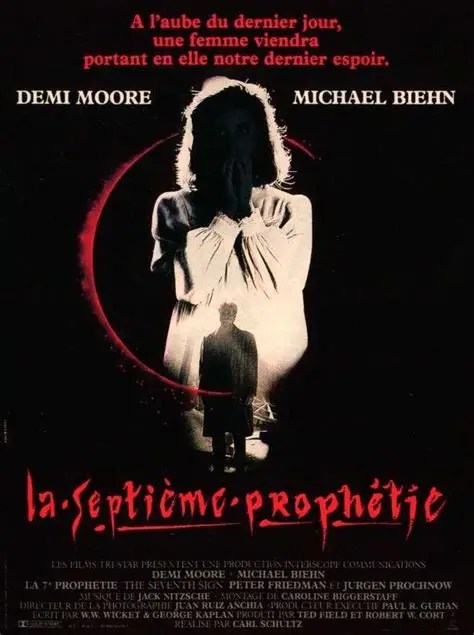
If the title had not already been taken by Ingmar Bergman, perhaps The Seventh Seal might have been a more appropriate title. A mysterious man named David (Jurgen Prochnow) is globetrotting, breaking the seal on various parchments. With each break, another disaster occurs, from the fish in the ocean in Haiti dying to the discovery of a frozen desert in the Middle East. Eventually, David finds his way to Abby (Demi Moore), a pregnant woman who is due to give birth on Leap Day. Abby’s lawyer husband Russell (Michael Biehn) is busy trying to get a young man with Down’s Syndrome clemency from the gas chamber for killing his parents (who were also brother and sister), a strange B story that eventually does become more important in the final act.

David rents a room above the garage and tells the couple a story over dinner involving sparrows and their song. According to David, all souls are stored in a place called the Guf. As a soul comes to inhabit the body of a newborn baby, the sparrow sings its song. While the story sounds charming on the surface, Abby soon finds herself face-to-face with the realization that David is actually the second coming of Jesus Christ. And the Guf is all out of souls, starting with her baby. God is ready to judge the world, and only Abby can stop it.

The Seventh Sign takes an interesting approach to its storytelling by melding Jewish folklore with the New Testament. The Guf is not mentioned in the Bible, but it is mentioned in the Jewish text, the Talmud, which is sort of an interpretation by rabbis of the Torah, the oral history of the Jewish people that also incorporates the first five books of the Bible (confused yet?). If nothing else, it was a bold move by the makers of The Seventh Sign to take Jewish folklore and apply it to the apocalypse. In comparison to horror films that tap into Christianity for inspiration, there have not been too many films inspired by Jewish folklore.

Perhaps the most famous being from Jewish folklore featured in films is the Golem, a protector made from clay who comes to life to save and serve the Jewish people. Another figure in Jewish folklore is the dybbuk, a spirit who clings to its host, possessing that person, causing mental anguish. One recent film that explores a dybbuk is Demon (2015), a Polish film featured in the All the Haunts Be Ours: Volume 2 set from Severin Films. Also featuring a dybbuk was The Unborn, a film from 2009 starring Gary Oldman as a rabbi who is consulted to get rid of the spirit. Oh how I love all of the different forms of folk horror! I learn so much about different cultures from these stories, even if I do not care for the film itself sometimes.

But fortunately, I really enjoyed The Seventh Sign, more than others it seems (currently only a 2.7 star rating on Letterboxd). It is a film that I never got around to watching for whatever reason (perhaps due to the lack of champions for the film). But I found it to be very thought-provoking. Demi Moore in the lead role helps for sure. And although the film seems too scared to go for an unhinged ending it could have, there is some comfort in thinking that the prayers and actions of one woman could change God’s mind, a consistent thread throughout the Bible.

I watched this one as God intended—on a VHS cassette tape I bought from Goodwill years ago but before now never cracked the seal so to speak.

UNSUNG HORRORS HORROR GIVES BACK 2025: Dracula’s Widow (1988)

Each October, the Unsung Horrors podcast does a month of themed movies. This year, they will once again be setting up a fundraiser to benefit Best Friends, which works to save the lives of cats and dogs across America, giving pets second chances and providing them with happy homes.

Today’s theme: Unsung Horrors Rule (under 1,000 views on Letterboxd)

ABOUT THE AUTHOR: John Connelly is a lifelong genre film fan living in New Jersey. His Letterboxd profile is https://letterboxd.com/johnconn/

Count Dracula has an extensive cinematic family. There are the many illegitimate kin: the Orloks, the Yorbas, Bela Lugosi as both Count Mora and Count Tesla. Five years following the debut of Browning’s adaptation of the Count’s tale, Universal introduced audiences to Dracula’s Daughter, in which Gloria Holden plays a queer-coded offspring. In 1943, Lon Chaney Jr. would play Alucard, the not-so-cleverly-disguised titular scion in Son of Dracula. Even the family dog got his due in ZoltanHound of Dracula. Dracula’s bride(s) show up in many retellings of the story of bad ol’ Vlad, of course. Few stories bother asking what happens to his widows once the ashes have cooled. 

One of the few films to try is Dracula’s Widow (1988). Directed by Christopher Coppola, who was at the time 25 years old and a recent art school graduate. Coppola is, of course, from a family that is very acquainted with both filmmaking and with stories about Dracula. His uncle Francis Ford Coppola would, a few years later, give the screen a lavish interpretation of the Count’s tale. The same year Christopher made Dracula’s Widow, his brother starred in the much more meme-able Vampire’s Kiss. In the time since, Nicholas Cage has produced Shadow of the Vampire, a quite good horror comedy about the making of Nosferatu and starred as the Count in Renfield, a movie that fails as both horror film and comedy but does benefit from his presence.  

Coppola made this film for Dino de Laurentiis, an Italian producer with a colorful history and a career in genre filmmaking spanning decades. According to a social media post by the director, Luarentiis’ main concerns for the film were less than artistic. “(Dino) really wanted as many “Watermelons” (big Russ Meyer-esque breasts) as I could give him.” 

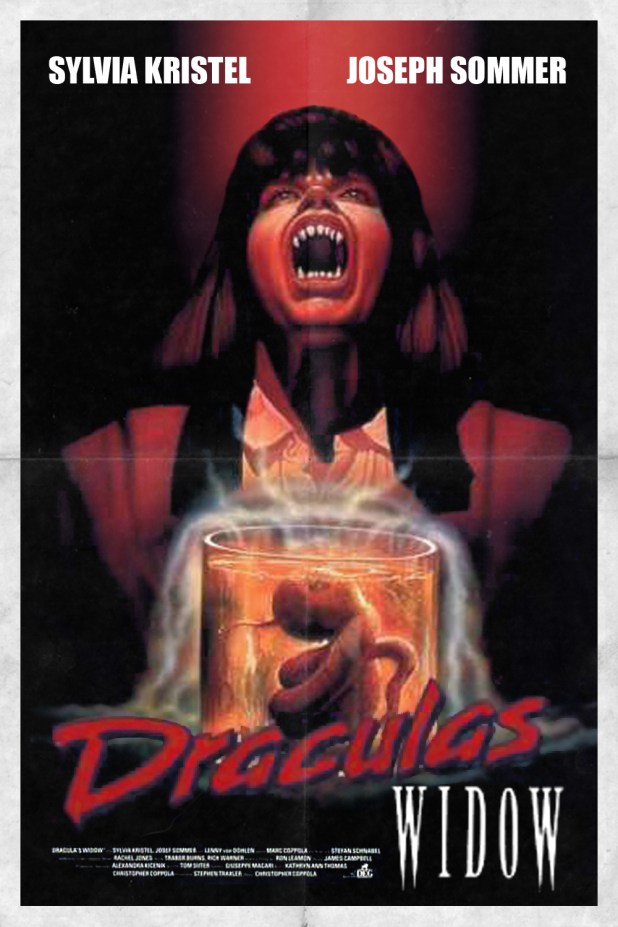
The movie is fairly short on nudity, given that directive. What Coppola gave audiences instead was a strange ode to both classic gothic cinema and film noir featuring plentiful amounts of camp and gore to keep ‘80s horror fans satiated. Dracula’s Widow begins with narration by hard-boiled police Lieutenant Lannon, played by character actor Josef Sommer. Sommer had, a few years earlier, narrated a slightly more critically well-regarded film, Sophie’s Choice. The genre shifts from noir to horror when we are introduced to Raymond Everett, the proprietor of a wax museum. Wax museums as a setting for horror films has a rich history, but to underscore Everett’s devotion to the genre, we see him watching classic silent fright films on a projector after hours. Everett has just imported material for one of his displays from Transylvania. Unbeknownst to him –and, I assume, to Customs—among those items are the remains of the widow Dracula. Those remains do not remain remains long. 

The reanimated Widow, who we learn is named Vanessa, is played by Emmanuelle herself, Sylvia Kristel. And what does Vanessa do when she’s new in town? Why, of course, she goes to a bar where she picks up and devours a generic ‘80s creep (played by yet another Coppola, Marc). Then she returns to the wax museum where she encounters a pair of Wet Bandits-esque burglars, dispatching one. The plot continues to evolve from there, including an ‘80s Satanic cult, the heir to Van Helsing, and a love triangle between vampiric Vanessa, Raymond, and Raymond’s girlfriend Jenny Harker. All of the talent on screen are game, giving at times over the top but never boring performances. The gore effects are provided by Todd Masters. Masters is still working today, having worked recently on Final Destinations: Bloodlines and the less interesting to this readership, Gabby’s Dollhouse: The Movie. His other genre credits include zombie comedy Fido, Tales from the Crypt: Demon Knight, and the original film version of Buffy the Vampire Slayer. 

I first encountered Dracula’s Widow on cable in the late ‘Oughts, and was happy to find it on Tubi recently. As of this writing,  it has 821 logs on Letterboxd. The good news is that I encountered the social media post I quoted above while searching to see if a physical release existed. Apparently, a Blu-ray is in the works.

UNSUNG HORRORS HORROR GIVES BACK 2025: Blood Orgy of the Leather Girls (1988)

Each October, the Unsung Horrors podcast does a month of themed movies. This year, they will once again be setting up a fundraiser to benefit Best Friends, which works to save the lives of cats and dogs across America, giving pets second chances and providing them with happy homes.

Today’s theme: Slasher!

Supposedly, director Meredith Lucas was unable to find distribution for this movie and unable to pay back her debts, killed herself. Her brother, Michael A. Lucas, eventually was able to distribute the film in 1988. But she never existed. She’s just Michael A. Lucas.

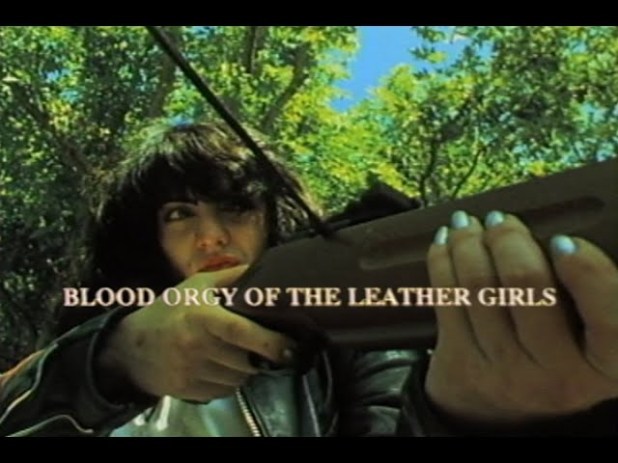
Joe Morton has been on the beat for three decades but he’s never seen anything like these girls. Sarah (Robin Gingold) is a Jewish girl who loves Hitler. Rawhide (Melissa Lawrence) wants to be John Wayne. Fleabrain (Jo Anne Wyman) is, well, a fleabrain. And the religious Dorothea (Simone Margolis) rounds out the crew. They cut classes at St. Jerome’s School for Girls, they drink, they abuse men. And when someone kills Dorothea, they get revenge.

It’s also got a black velvet Charles Bronson.

Sarah gets it, other than the obsession with the Third Reich. At one point, she says, “I hate life. I hate school. I hate my parents. Most of all, I hate every day that passes.” I get it. I feel that way at 53.

Also, there are ninjas.

“When the material and creative forces of women become corrupted by the brutality of the everyday world, a force of incredible violence is unleashed, its bloodlust insatiable. In this modern, enlightened, yet terrible age, even religion seems powerless against the wrath of the female who is, it has been maintained, the deadlier of the species.”

I get why Lucas wanted to have a female name direct this, as it would take away the exploitation of the male gaze. But Ed Wood and Russ Meyer also made movies like this and weren’t afraid to put their name up front. The girls in this would probably abuse him just like every man in this.

Someone gets sodomized with a drill, so there’s that.

You can download this from the Internet Archive.

USA UP ALL NIGHT: The Unnameable (1988)

EDITOR’S NOTE: The Unnameable was on USA Up All Night on October 7, 1989.

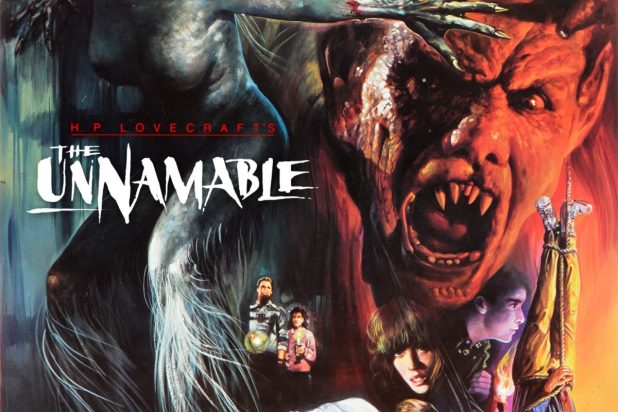
Based on “The Unnamable” by H.P. Lovecraft, this movie was directed and written by Jean-Paul Ouellette. It begins in the Winthrop house, a place where a female demon is hiding, having already killed the owner.

Randolph Carter (Mark Kinsey Stephenson) is a Lovecraft character who shows up or is mentioned in seven of his stories: “The Statement of Randolph Carter,” “The Unnameable,” The Dream-Quest of Unknown Kadath, “The Silver Key,” The Case of Charles Dexter Ward, “Through the Gates of the Silver Key” and “Out of the Aeons.” He’s joined by his friends, Howard Damon (Charles King ) and Joel Manton (Mark Parra). They decide to stay all night in the Winthrop house themselves, hoping they won’t meet his evil daughter, Alyda (Katrin Alexandre). As for Howard, he just wants to know Tanya Heller (Alexandra Durrell) better, a student who comes along to see what this house is all about.

The Necronomicon, living trees, Miskatonic University, a bloody decapitation, some quick nudity from Laura Albert…what else do you want from this movie? It looks great and has a nice mood to it. I’m all for Lovecraft movies being made on the cheap; it’s a genre in and of itself.

You can watch this on Tubi.

USA UP ALL NIGHT: Mirror of Death (1988)

EDITOR’S NOTE: Mirror of Death was on USA Up All Night on August 3, 1991 as Dead of Night

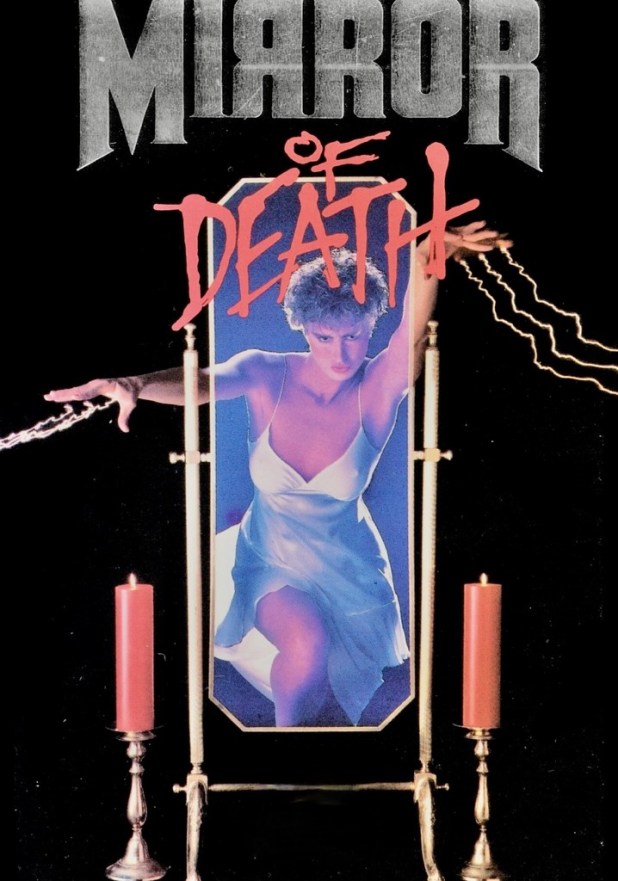
Sara (Julie Merrill) escapes her abusive partner, Bobby (John Reno), and winds up at the home of her actress sister, April (Janet Graham, the wife of TV movie director William, who made Get Christie Love! and Return to the Blue Lagoon), who is leaving town and lets her stay. Bobby breaks into the house, slaps her around, tries to rape her and then gets stopped by April’s boyfriend Richard (Richard Fast).

Sara takes a bath, reads a book of magic and ends up doing a ritual. This creates a mirror version of herself — yes, this is a spooky mirror movie — that walks into her, heals all her wounds, and resolves her problems. Tell me why demonic possession is an issue again?

That said, the mirror does tell her,  “Goodbye, Sara. I’ll give you back this body if it’s not to my liking…” when she goes to work. She then starts picking up bartenders with strange dances, tells people she’s the goddess of love and beauty, and also picks up salsa dancers, just to remind you this was made in 1988.

Sara hooks up with the bartender, who writes on her possessed mirror, causing her to kill him, which feels logical. Bobby then breaks in and gets killed, too. So many men get killed that at one point, three of them fall out of a closet, and Sara is shocked. She can’t even remember murdering them.

How do you solve a possessed mirror? John Smith (Bob Kipp), who rides a bicycle through Los Angeles and seems pretty good-natured for a possession remover. Sara responds by zapping out his eyes, just as her sister is possessed to kill her boyfrien,d and Sara even kills a few cops to make this even crazier. April shoots Sa,ra and get this, the surviving cops shoot the mirror demon until it dies. How is that a thing? And why would John Smith have blanks that April could use? Was she faking? Man, so many things are left up to us, the audience, right?

In another movie made the same year by the same director, Deryn Warren’s The Boy from Hell, characters watch this film on TV. He also made the Apolonia-starring Black Magic Woman, working with the same writer, Jerry Daly.

You can watch this on Tubi.

USA UP ALL NIGHT: You Can’t Hurry Love (1988)

EDITOR’S NOTE: You Can’t Hurry Love was on USA Up All Night on June 28, 1991.

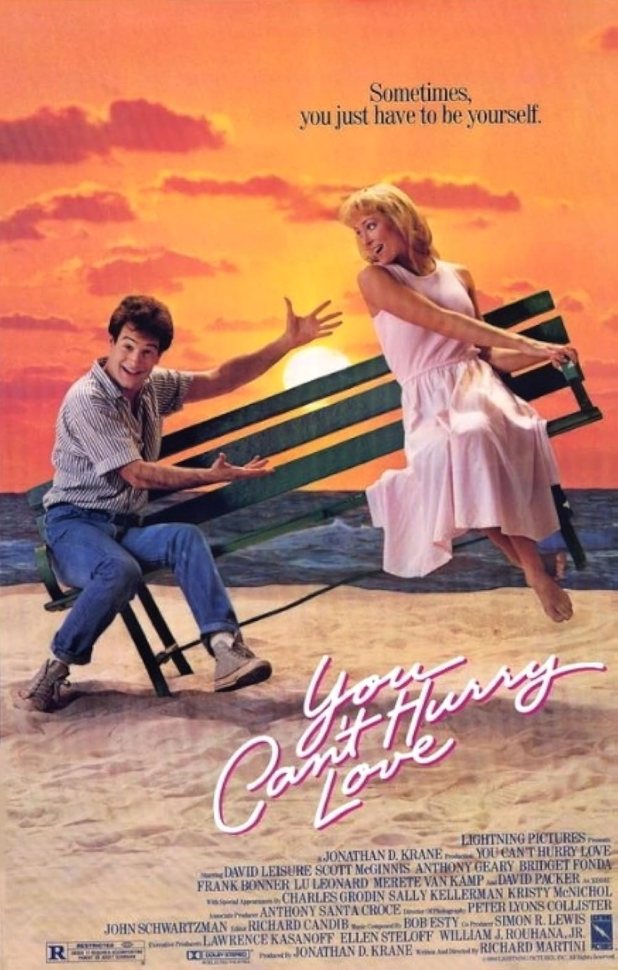
Video dating is a way of learning a lot about yourself, if we follow this film. Eddie (David Packer) got left at the altar and moved to LA. His cousin Skip (Scott McGinnis) gives him a car, a place to live and a job with Peter Newcomb (David Leisure), who sends him to work for his combat shock-addled brother Tony (Anthony Geary). As he hands out ads on the beach, Eddie decides to try video dating, which is run by Peggy (Bridget Fonda).

He claims to be a director, so his first date is with an actress who wants to be Madonna. Her father (Charles Grodin) tells him to make sure and wear a condom. As you can imagine, things don’t go well. Neither does trying to date rock girls, like Rhonda (Kristy McNichol), who nearly shoots him with a crossbow. And Monique (Merete Van Kamp) wants to have sex in public with him while his parents are at dinner.

As you can imagine, Eddie realizes that love isn’t found in this way and asks Peggy out.

Six years before this was made, Packer was a witness to the murder of Dominique Dunne, who was strangled to death by her ex-boyfriend, John Sweeney, while Packer was at her home for a rehearsal. He called the police and later found Sweeney kneeling over Dunne’s unconscious body. Dunne died from her injuries days later, and while Sweeney was convicted of voluntary manslaughter, the judge and others felt the crime was murder.

Cinematographer John Schwartzman also shot “Video Valentino,” the short film on which this movie is based, for director Richard Martini. Martini promised Schwartzman that if the short ever became a movie, he would hire him to shoot it. He lived up to the claim, but the completion bond company wouldn’t approve both a first-time director and a first-time cinematographer. Schwartzman asked Peter Lyons Collister, who had prior feature experience, to co-shoot the movie with him.

You can watch this on Tubi.

USA UP ALL NIGHT: Bad Dreams (1988)

EDITOR’S NOTE: Bad Dreams was on USA Up All Night on April 8, 1994; March 9, 1996; May 16 and August 16, 1997.

Everyone likes to proclaim that the world is so much worse today than it ever has been. If you feel that way and weren’t alive in the 1970s, allow me to dispel this notion. The “Me Decade” was full of random violence, the fuel crisis, Three Mile Island, Watergate, Son of Sam, the end of Manson, Zodiac and religious orders that some would proclaim as cults, from the Process Church and the Moonies to Jonestown. We don’t really have a modern analogue for these fringe groups that would spring up from time to time because it seems like the Hale-Bopp comet wiped the last of these off the planet.

That’s the world in which Bad Dreams takes place. In 1975, the Unity Fields cult decides to commit mass suicide by setting themselves on fire under the command of their leader, Franklin Harris (Richard Lynch of Invasion U.S.A., The Sword and the Sorcerer, Rob Zombie’s Halloween and God Told Me To). Only one person survives, Cynthia (Jennifer Rubin, Nightmare on Elm Street 3: Dream Warriors), who was still a kid when Harris set everyone on fire. She’s been in a coma for over 13 years before she awakens to flashbacks of Harris being interviewed on a TV program. The final thing she sees is his face telling her that she belongs to him and he’d be coming back to take her life. This entire sequence is really well edited, showing how the cult’s teachings had been accepted by every member, intercut with Cynthia being wheeled through a hospital as doctors struggle to save her life, all to the ominous strains of The Electric Prunes’ “I Had Too Much to Dream Last Night.”

After awakening, Cynthia attends experimental group therapy sessions for borderline personality disorder, led by Dr. Alex Karmen (Bruce Abbott, the Re-Animator films). As she becomes more aware, she begins to remember more and more — including the thirty other people who died from dousing themselves in gasoline. Worse, she sees a burned and scarred Harris when she’s trapped in an elevator, who reminds her that she is his property.

What follows is an insane scene that shows the parallels between group therapy and cult behavior, as the discussion room becomes Unity Fields and Cynthia watches everyone ladle gasoline onto one another. Again, another hint is dropped that Cynthia is a “love child,” as her mother is also part of the cult. One by one, the members walk to the front of the room and are baptized with gasoline, before Harris takes handfuls of the fuel and coats himself before lighting the room on fire. What starts as a peaceful embrace of death quickly turns into horror, as entire families go up in a blaze of pain, flames, and screams. Finally, Harris reappears to tell Cynthia that she and she alone screwed up and that her entire family is waiting for her, as they cannot move on without her death.

Every waking moment is caught between reality and flashback, as even a simple shower brings back the violent baptism that got Cynthia into Unity Fields. Directly after, another patient, one who wanted to know more about Unity’s age, drowns herself in the pool. Another patient (the only one who has been nice to Cynthia) named Miriam attempts to escape the hospital. Helping her to an elevator, Cynthia waves goodbye, only to see Harris smiling and waving back. She gives chase, only to find Miriam’s purse left behind…as Miriam jumps from a window, sending blood and glass all over the pavement.

Harris has taken up residence at Cynthia’s bedside, berating her for staying alive when everyone else who followed him has given their lives to him. As soon as Cynthia’s doctor, Dr. Kamel, flips on the light, he disappears. While Kamel yells at her about her not taking the therapy seriously, she notices Connie and Ed, two other members of her discussion group, sneaking away to have sex, only to be followed by Harris. The lights go out in the whole hospital as patients wander the halls. Turns out that amorous couple got caught up in the blades of a giant industrial fan, as a hapless custodian discovers when blood — and a severed hand — pour down all over him. Harris then appears in the ceiling grate, telling Cynthia that Connie and Ed belong to him now. She screams at the ceiling as even more blood begins spraying out of the hospital’s sprinkler system. Yep — institutionalized folks are running up and down a dark hallway, covered in gore. It’s a shocking surprise and one that made this movie really stand out to me.

All of the other discussion group patients now believe that Harris is behind all of the suicides, even if the doctors refuse to listen. Ralph, a patient who has a crush on Cynthia, asks why they’re all still in the hospital and in this therapy if people keep dying. That’s a great point. I love it when movies take a plot hole and have someone call it out as if simply calling out bullshit makes the bullshit go away. No, instead, it just makes you focus on the plot hole as if you were continually pulling and yanking on it until the hole is now a gaping maw. It’s situations like this that make me hate modern horror movies, as they think that being self-referential excuses them from being poorly constructed films. Scream, I blame you.

After a junk food date, Ralph — a jokester, you see, because he has a rubber chicken on his wall — begins stabbing himself in the hand to the strains of Mamby Pamby & The Smooth Putters covering “My Way,” a la the Sex Pistols. Everyone is on suicide watch, so he knocks out the cop following him, takes Cynthia to the basement and stabs himself to death. What a first date!

Ralph is an example of a character who either works or doesn’t in a movie. The loveable prankster who hates authority, when played by Bill Murray in Ghostbusters, becomes someone you want to be, a joy-infused burst of anarchy in an otherwise mundane world. Or you get someone who saw Murray and wants to be like him, but comes across as insufferable and cloying. Ralph is that person, and I’d imagine most audiences will cheer his demise. Look — not every darling is worth saving.

Dr. Berrisford, Kamel’s boss, demands that Cynthiabes be placed under sedation and that Kamel has grown too close to her. As they argue in the hallway, Cynthia tells him goodbye, walking with two nurses down the hallway, which becomes Unity Fields. For a movie made before the CGI era, the transitions between reality and dreams are virtually seamless, giving this film an unworldly feel. It’s not an art film, mind you, it’s still very much an American studio release, yet it aspires to be more.

Kamel believes that the best treatment for Cynthia is human contact and that putting her directly into what amounts to a second coma will undo any of the progress that she has made. I’m not taking a side in what psychological school makes the most sense, but the inclusion that Unity Fields preached, the need to become a family that protects individuals from the world’s pain, is a key way that cults destroy minds and reap souls. By sublimating the individual and making the leader the sole person with a valid identity, the cult member feels a sense of belonging and is no longer concerned about making mistakes. Gradually, they don’t even care when their innate human rights are trampled, as it is for the good of the group. Interestingly, groups like the Process Church came directly from Scientology and many other groups are rooted in self-help or betterment programs. It was a slippery slope that took the People’s Temple from preaching racial understanding in Indianapolis to ingesting poison in Guyana, after all. Religion — just like psychology — often preys on those who cannot save themselves and need help. There’s no judgment here, as many people do need such assistance, and it’s not a black mark on them for asking and receiving it. It’s only when the guru or doctor becomes a Svengali and demands complete devotion and subservience that we enter into places like Unity Fields. It also calls to mind the battle between psychology and Scientology — two groups that want to heal the mind.

But I digress. The police believe that Cynthia is behind the murders of the patients — and perhaps everyone at Unity Fields. That’s why isolation seems to be the best choice. That said, she isn’t alone. Harris appears to tell her that she is his love child and demands that she commit suicide. That’s when Hattie visits her, informing Cynthia that she doesn’t plan on being alive for long, but that Cynthia can survive if she really wants to. This leads to Harris following Hattie, as he has with every other patient. “I knew you’d come, but you’re too late. I told her what she had to do. You won’t get to her. You won’t get to me,” she says as she drinks formaldehyde and dies. The bottle hits the floor and conveniently has smoke coming out of it, assuring us that yes, it is deadly.

The next scene feels disconnected at first. But upon review, it totally makes sense. Dr. Karmel is upset that he’s lost all of his patients and is walking out of the hospital, dejected. He tries one of their pills while having a breakdown. Getting in his car, he sees his boss, Berrisford, walking and on a whim, decides to hit him multiple times with his car. Sitting in the blood-strewn vehicle, he just stares into space as it explodes — except it was all a dream. So why is this scene so incongruous? It’s the director’s way of letting us know that Berrisford has decided to play with the therapy group, lacing their drugs with a hallucinogen so that they’d kill themselves and prove that his research is the one that’s actually true. Whew!

Tell that to Cynthia! She asks Harris why he keeps coming after her, why he doesn’t just kill her and confesses that she’s exhausted and ready to give up. He informs her that “She must do it herself” as he hands her a syringe. Karmel pulls an emergency alarm and busts into Cynthia’s room, but she won’t listen to him. She knows that Harris is coming for her, but the person she sees as Harris is really Berrisford. Or is it?

They go to the roof, where she’s urged to kill herself by leaping off the roof. As she does, she awakens back at Unity Fields, where Harris asks her to walk into his arms, telling her that she is his forever. She awakens to Karmel catching her and asking her to open her eyes and live. She keeps yelling that she has nothing left in the real world as Berrisford tells her that death is eternal bliss, that friends are waiting for her. She finally sees that it isn’t Harris at all and begins to climb up…only to have Berrisford push Karmel off too, stabbing him repeatedly in his hand. The cops and hospital security arrive only to have Berrisford drop a big load of BS, playing Karmel for the whole thing, even pulling a gun before Cynthia shoves him off the roof. One more jump shot, and here comes the credits, which feature Guns N’ Roses’ “Sweet Child O’ Mine.” There were even plans for a Bad Dreams clip video of the song.

The original ending has Berrisford simply killing himself, then Cynthia and Kamel going back to the house at Unity Fields. She has a vision of all the cult members as they welcome her back, but at the last moment, she stabs Harris with a dagger. They drive away from the house, but not before the “big Carrie scare” of a skeletal hand grabbing the dagger. This ending, however, more explicitly reveals that Cynthia is Harris’ daughter and has her stab, slash and kill every other cult member. It doesn’t seem as dramatic as it should, but the ending isn’t color corrected or scored, so that would have added more gravitas.

Bad Dreams is the directorial debut of Andrew Fleming, director of Nancy Drew, Dick and The Craft, perhaps his best-known film and was produced by Gale Ann Hurd (Terminator, Aliens, The Abyss). It owes an awful lot to the Nightmare on Elm Street films, obviously, and perhaps would have benefitted from a more downer ending — but that could be because I have been watching way too many 70s occult movies.

My armchair psychoanalysis of this film? It’s OK to fall in love with a hot cult survivor, as long as you don’t drug her and make her see visions because, in the movie world, no law protects the patient from amorous analysts. And you can just shove evil doctors to their doom and get away with it, as long as it seems like you have a good reason. Ah, movie world, where decisions are made so much simpler.

Is psychology worse or better than a cult? Is free will possible? Are drugs that shape moods just as harmful as people who tell us how to feel? None of these questions really gets raised here, but just imagine if they did! Maybe it’s time to bring Unity Fields back for the sequel nobody wants, cares about or needs!

USA UP ALL NIGHT: Cheerleader Camp (1988)

EDITOR’S NOTE: Cheerleader Camp was on USA Up All Night on February 28 and September 12, 1992; May 15, October 15, November 19 and December 10, 1993; May 7, December 9 and 30, 1994; January 4 and July 18, 1997.

You know, if I had my way, Betsy Russell would have been a much bigger star. I mean, she’s done well and is remembered — and got to be in the Saw movies and get a whole new audience — but she deserved better than a movie that forces us to watch Leif Garrett make sweet love to Playboy Playmate for April 1986 and adult star Teri Weigel. Nothing against Teri — she’s also in Predator 2Marked for DeathInnocent Blood and was the first Playboy girl to go into adult, which cost her a lot in her personal and professional life.

Making this movie work even harder for me? The appearance of Cannon Films star — I mean, she was in Breakin’, Breakin’ 2: Electric Boogaloo and Ninja 3: The Domination — Lucinda Dickey. Also — Taleena from the Gor movies — and June 1986 Playmate of the Month — Rebecca Ferratti, George “Buck” Flower and Tom Habeeb, who would one day host the show Cheaters.

Based on the death of Kirsten Costas — just like the original Tori Spelling Lifetime movie Death of a Cheerleader — this movie is a paper-thin slasher that came in seven years after its expiration date and led to a sequel that’s not a sequel, the Russell feature — and yes, Buck Flower shows up again — Camp Fear.

USA UP ALL NIGHT: Big Top Pee-Wee (1988)

EDITOR’S NOTE: Big Top Pee-Wee was on USA Up All Night on June 26, 1993; March 31, 1995, and February 10, 1996. 

Everyone talks about Pee-Wee’s Big Adventure, but nobody talks about this movie. I mean, it has Susan Tyrell — yes, from Butcher, Baker, Nightmare Maker and Forbidden Zone — as a miniature woman who is married to Kris Kristofferson. Why is nobody talking about this?

It’s also directed by Randal Kleiser (GreaseThe Blue Lagoon) and produced by Debra Hill, two people who I would also never think would have anything to do with a Pee Wee Herman movie. Sadly, this was the second and last of what could have been an entire series of these films.

It’s also the debut of Benicio Del Toro, so why should any of these people make sense?

The idea of the film was that Pee Wee had become famous, due to the James Brolin and Morgan Fairchild film made from his last movie, and now he is a Frank Sinatra-esque singer. Then, fame became a cruel beast, and Pee Wee went away to live as a farmer. This is never explained other than as an odd dream sequence, which is, I assume, all that remains.

Pee Wee and Vance the Pig (played by Wayne White, who helped with Pee-wee’s Playhouse and art directed the videos for Peter Gabriel’s “Sledgehammer” and the Smashing Pumpkins’ “Tonight, Tonight) were once content to make giant plants and romance a schoolteacher (Penelope Ann Miller) before the storm brings a carnival led by Mace Montana (Kristofferson).

Soon, our man — or boy — has fallen for Gina Piccolapupula (Valeria Golino), a trapeze artist who inspires him to pursue a career in the circus. When the town says no, Pee Wee uses a hot dog tree to turn them into children and…well, that’s the whole movie.

The montage when Pee Wee and Gina finally make love is something that still makes me laugh to this day. This is so much stranger than the first film, while seeming normal, yet it has less of the whimsy of Tim Burton, so that hurts it.

Lynne Marie Stewart — Ms. Yvonne! — is a bearded lady, the one-time Henry and Predator Kevin Peter Hall shows up as a tall man (what else could he be?), Matthias Hues is a lion tamer, former Bozo Vance Colvig is a clown (and he was also in Mortuary Academy), Terrence Mann (Ug from Critters) is another clown, Franco Columbu (Arnold’s best man when he married Maria Shriver) is a strongman, Michu Meszaros (Hans from Waxwork and the man who played ALF) is a small person, Jay Robinson (Dr. Shrinker!) plays Cook, Kenneth Tobey (who shows up in plenty of Joe Dante films) is the sheriff, Leo Gordon (the Evil One in Saturday the 14th Strikes Back) plays the blacksmith, Frances Bay (Happy Gilmore‘s grandmother, plus Aunt Barbara in Blue Velvet) is Mrs. Haynes and former movie and kid host Jack Murdock is Otis.

You have to love that Pee Wee followed up his most significant career success with a movie about the circus filled with character actors. Of course, this made nowhere near its budget, and that brings us back to today. No one ever talks about this movie. They should.