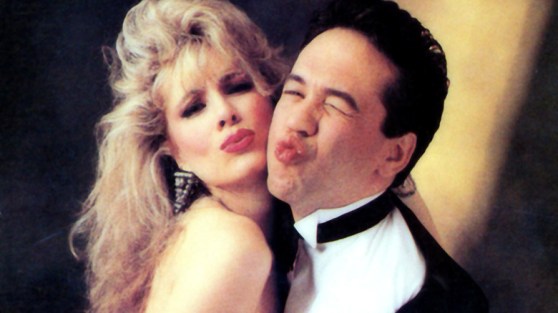
USA UP ALL NIGHT MONTH: Stuck On You! (1982)

EDITOR’S NOTE: Stuck On You! aired on USA Up All Night on January 7, 1989 as the second movie ever shown on the late night movie show. It also played on June 6 and October 29 of that year, as well as March 10, 1990.

Stuck On You! was supposedly based on the writings of writings of Tom Lehrer and Stan Freberg, but it was really from a huge team of writers, including Jeffrey Delman, Tony Gittleson,  Darren Kloomok, Warren Leight, Duffy Caesar, Magesis Melanie Mintz, Don Perman, Stuart Strutin and the two men credited with directing this movie, Michael Herz and Lloyd Kaufman.

Along with Squeeze Play!, Waitress! and The First Turn-On!, these sex comedies established Troma. All I have to say is, “Ugh.”

Bill and Carol are in the middle of a palimony suit against one another presided over by Judge Gabriel (Professor Irwin Corey, who had a crazy childhood where he was raised with five siblings in the Hebrew Orphan Asylum of New York before leaving in his teens to ride the rails and enroll himself into a Los Angeles high school before working for the Civilian Conservation Corps during the Great Depression and then becoming a Golden Gloves champ. Known as the World’s Greatest Authority, he was a stand-up comedian and staunch Communist who dealt with being blacklisted for most of his career. He also accepted National Book Award Fiction Citation when publicity-shy Thomas Pynchon won it for Gravity’s Rainbow, panhandle for charity into his 90s and lived to be 104. He’s also in Chatterbox.)

As Bill and Carol share their issues with the court, the judge — who is, of course, the angel Gabriel — shows how lovers from the beginning of time, like Adam and Eve, Queen Isabella and Christopher Columbus,  King Arthur and Lady Guinevere and even cavemen have all fought.

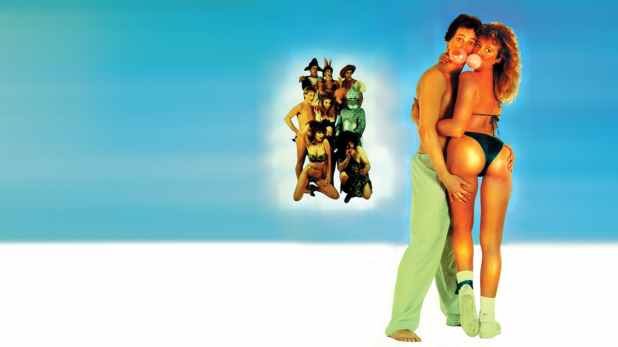
Keep an eye out for Patricia Tallman, who would go on to play Barbara in the remake of Night of the Living Dead, as well as stand-up Eddie Brill. Otherwise, well, this is Troma trying to make a Zucker Brothers movie without any of the skill or talent. But let me tell you, as a pre-teen standing there in a mom and pop video store and not understanding the power of the posterior, I stared at this VHS box for what probably added up to be several months. I still never rented it.

You can watch this on Tubi.

DRIVE-IN MOVIE CLASSICS MONTH: Unsane (1982)

EDITOR’S NOTE: Thanks to Matthew Hale on Letterboxd, I’ve learned that there are alternate versions of this Mill Creek box set. For the sake of completeness and my obsessive compulsive disorder, here’s this missing movie.

The site just covered Tenebrae but this is the American version which appears on some copies of the Mill Creek Drive-In Movie Classics DVD box set.

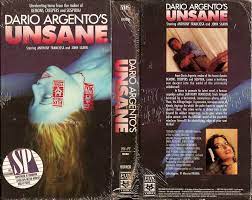
Unsane is the American title, which was thought to make more sense — and maybe be easier to pronounce, anyway — than Tenebrae.

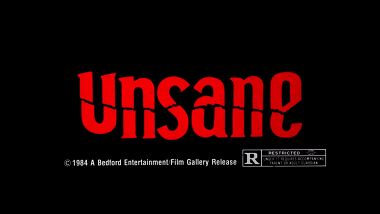
Obviously, there’s a new title card that appears right when the book goes into the fire.

The pages from that book are also now in English, which looks to be filmed for this release.

Throughout, some shots are slightly longer, like when Elsa is shoplifting. However, the tracking shots in the American version as the camera goes over the house in that incredible scene are cut down. That’s just one of the many things that angered Argento.

Much of the gore is removed, such as the beach girl being knifed more than once and Jane’s death, which is really trimmed.

Another change that disturbed the director was the inclusion of “Take Me Tonight” by Kim Wilde over the closing credits.

Overall, the film has less dialogue and cleaner kills. You can find it on the Arrow and Synapse releases. It’s hard for us today to think that a celebrated director like Argento would have his film treated like this, but in 1982, the world was much different.

Sources

1. Movie Censorship: Tenebrae

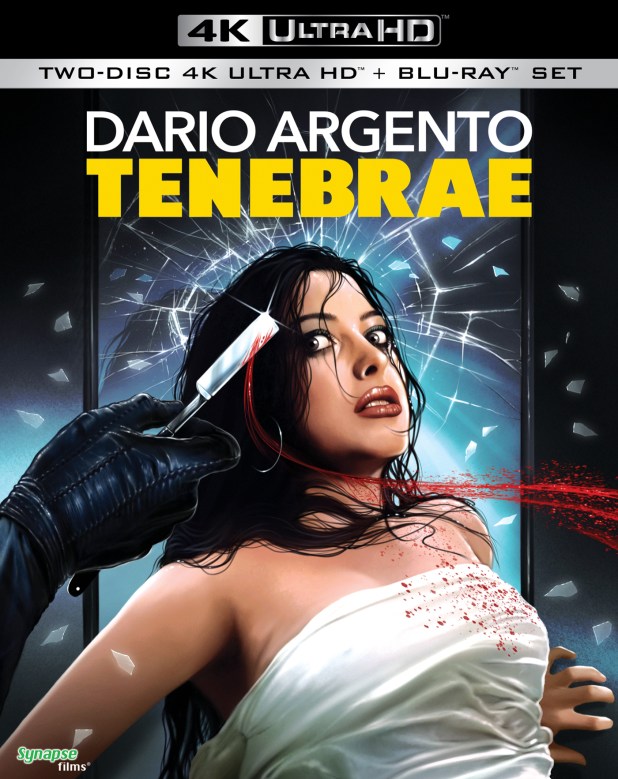
SYNAPSE 4K UHD RELEASE: Tenebrae (1982)

By 1982, Dario Argento had moved beyond the constraints of the giallo genre he had helped popularize and started to explore the supernatural with Suspiria and Inferno. According to the documentary Yellow Fever: The Rise and Fall of the Giallo — which is on the Synapse 4K — the failure of Inferno led to Argento being kindly asked — or demanded — by his producer to return to the giallo with his next film.

Tenebrae is the result and while on the surface it appears to be a return to form, the truth is that it’s perhaps one of the most multilayered and complicated films I’ve ever seen. And while I’ve always believed that Phenomena is Argento’s strangest film — a girl who can talk to bugs befriends a monkey to battle a cannibal child in a foreign country — I have learned that Tenebrae just might be even stranger.

To start, Argento intended for the film to be almost science fiction, taking place five years after a cataclysmic event, in a world where there are less fewer people and as a result, cities are less crowded and the survivors are richer. Argento claims that if you watch Tenebrae with this in mind, it’s very apparent. While he only hinted that the survivors wanted to forget some mystery event, in later interviews he claims that it takes place in an imaginary city where the people left behind try to forget a nuclear war.

In truth, this could be an attempt to explain why Argento decided to show an Italy that he never had in his films before. Whereas in the past he spent so much time showing the landmarks and crowded streets that make up The Eternal City, he would now move into a sleek futuristic look, a Rome that exists but that films had never shown its viewers before. This pushes this film away from past Argento giallo such as his animal trilogy and Deep Red, as well as the waves of imitators that he felt undermined and cheapened his work. There is no travelogue b-roll time wasters in this movie — the actual setting is there for a reason; stark, cold and alienating.

Argento had stated that he “dreamed an imaginary city in which the most amazing things happen,” so he turned to the EUR district of Rome, which was created for the 1942 World’s Fair, and intended by  Mussolini to celebrate two decades of fascism. Therefore, more than showing a Rome that most filmgoers have never seen, he is showing us a Rome that never was or will be; a world where so many have died, yet fascism never succumbed.

Instead of the neon color palette that he’s established in Suspiria or the Bava-influenced blues and reds that lesser lights would use in their giallo, production designer Giuseppe Bassan and Argento invented a clean, cool look; the houses and apartments look sparse and bleached out. When the blood begins to flow — and it does, perhaps more than in any film he’d create before or since — the crimson makes that endless whiteness look even bleaker.

Tenebrae may mean darkness or shadows in Latin, but Argento pushed for the film to be as bright as possible, without the shadowplay that made up much of his past work. In fact, unlike other giallo, much of the plot takes place in the daytime and one murder even takes place in broad daylight.

Again, I feel that this movie is one made of frustration. As Argento tried to escape the giallo box that he himself had made, he found himself pulled back into it in an attempt to have a success at the box office. In this, he finds himself split in two, the division between art and commerce.

As a result, the film is packed with duality. There are two killers: one who we know everything about and is initially heroic; another who we learn almost nothing about other than they are an evil killer. Plus, nearly everyone in this film has a mirror character and soon even everyday objects like phone booths and incidents like car crashes begin happening in pairs.

Peter Neal (Anthony Franciosa, Julie Darling) is set up from the beginning of the film as the traditional giallo hero: he is in a foreign place, deaths are happening all around him and he may be the inspiration or reason why they’re happening. He has more than one double in this film, but for most of it, his doppelganger is Detective Germani. The policeman is a writer himself and a fan of Neal’s work, claiming that he can never figure out who the killer is in his books. Their cat and mouse game seems to set up a final battle; that finale is quick and brutal.

This conversation between the two men sums up the linguistic battle they engage in throughout the film:

Peter Neal: I’ve been charged, I’ve tried building a plot the same way you have. I’ve tried to figure it out; but, I just have this hunch that something is missing, a tiny piece of the jigsaw. Somebody who should be dead is alive, or somebody who should be alive is already dead.

Detective Germani: Explain that.

Peter Neal: You know, there’s a sentence in a Conan Doyle book, “When you have eliminated the impossible, whatever remains, however improbable, must be the truth.”

This last sentence is of great interest to me when it comes to giallo. Normally, these films are not based upon Sir Arthur Conan Doyle, but instead, use Edgar Wallace as a touchpoint. They are also filled with red herrings and nonsensical endings where the impossible and improbable often becomes the final answer to the mystery.

Even the movie’s plot is split in half and mirrors itself. This next sentence gives away the narrative conceit of the film: the murders are solved in the first half, belonging to Christiano Berti (John Steiner, Shock), a TV critic who interviews Neal. The second murders are all Neal’s, who uses an axe instead of a straight razor, and his crimes are personal crimes of passion that aren’t filled with the sexual aggression of Berti’s; they are quick and to the point. Much of giallo is about long, complicated and ornate murder, as well as trying to identify the killer. As the film goes on, with the main killer revealed and the murders becoming less flashy, it’s as if Argento is commenting on the increasing brutality of the genre he helped midwife.

The movie itself starts with the book Tenebrae being burnt in a fireplace with this voiceover: “The impulse had become irresistible. There was only one answer to the fury that tortured him. And so he committed his first act of murder. He had broken the most deep-rooted taboo and found not guilt, not anxiety or fear, but freedom. Any humiliation which stood in his way could be swept aside by the simple act of annihilation: Murder.”

That’s when we meet Neal, an American in Rome, here to promote his latest work of violent horror, Tenebrae. This bit of metafiction is but the first bit of a film that fuses the real and fictional worlds. Joined by Anne (Fulci’s wife Daria Nicolodi) and agent Buller (John Saxon!), Neal begins his press tour.

Before he left, Neal’s fiancée Jane vandalized his suitcase. And moments prior to him landing in Rome, a shoplifter (Ania Pieroni, the babysitter from The House by the Cemetery) who stole his book has been murdered by a straight razor, with pages from said book — again, Tenebrae — stuffed into her mouth. Neal has received an anonymous letter proclaiming that he did the murder to cleanse the world of perversion.

Throughout the film, we see flashbacks of a man being tormented, such as a woman chasing down a young man and forcing him to fellate her high heel while other men hold him down. Later, we see the stereotypical giallo black gloved POV sequence of her being stabbed to death.

Next, one of Neal’s friends, Tilde and her lover Marion are stalked and killed. This sequence nearly breaks the film because nothing can truly see to follow it. In fact, the distributor begged Argento to cut the shot down because it was meaningless, but the director demanded that it remain. Using a Louma crane, the camera darts over and above the couple’s home in a several-minutes-long tracking shot. Any other director would film these murders with quick cuts between the victim and listener in the other room or perhaps employ a split-screen. Not Argento, who continually sends his camera spiraling into the night sky, high above Rome, across a maze of scaffolding; a shot that took three days to capture and lasts but two and a half minutes. In one endless take, the camera goes from rooftop to window, making a fortress of a home seem simple to break into; it’s as if Argento wanted to push the Steadicam open of Halloween to the most ridiculous of directorial masturbation. It’s quite simply breathtaking.

Maria, the daughter of Neal’s landlord, who is presented to us as a pure woman (much of giallo, to use Argento’s own words in Yellow Fever: The Rise and Fall of the Giallo, is split between the good girl and the bad woman), is killed when she discovers the killer’s lair. Neal mentions that Berti, the TV personality, seemed obsessed with him and his words echoed the letters from the killer. As Neal has now become the giallo hero, he must do his own investigation, taking his assistant Gianni (Christian Borromeo, Murder Rock) to spy on the man. They discover him burning photos that prove he is the killer.

As Gianni watches, Berti says, “I killed them all!” before an axe crashes into his skull. Whomever the second murderer is, the young man can’t recall. He finds his boss, Neal, knocked out on the front yard and they escape.

That night, Neal and Anne make love, the first time this has ever happened between the two. And the next morning, Neal leaves his agent’s office and discovers his fiancée Jane is secretly sleeping with someone he once considered his best friend.

Giermani asks Neal to visit Berti’s apartment, where they find that the dead man was obsessed with the writer, but don’t discover any of the burnt evidence. The idea that someone could become so obsessed with your work that they’d kill comes directly from Argento’s life. In Los Angeles in the wake of Suspiria‘s surprising international success, an obsessed fan called Argento’s room again and again. While those calls started off nicely enough, by the end, the fan began explaining how he wanted “to harm Argento in a way that reflected how much the director’s work had affected him” and that in the same way that the director had ruined his life, he wanted to ruin his. Argento hid out in Santa Monica, but the caller found him, so he finally went back to Italy. He claimed that the incident was “symptomatic of that city of broken dreams.”

Back to the real story — or the movie story — at hand: Neal decides to leave Rome. Jane receives a pair of red shoes, like the ones we’ve seen in the flashbacks. Bullmer is waiting for Jane in public before he is murdered in broad daylight. And then Neal’s plane leaves for Paris.

Gianni, however, is haunted by the fact that he can’t remember the crime. He returns to Berti’s apartment and it all comes flooding back to him. This moment of visual blindness — and eventually recovery — suggests that Gianni will be pivotal in the resolution of the film and become a hero; ala Sam in The Bird with the Crystal Plumage or Marcus in Deep Red. Not so in the world of Tenebrae, as he’s killed within moments.

Argento’s callbacks to his past films are not complete — Jane enters her apartment and walks past a sculpture, again directly and visually recalling The Bird with the Crystal Plumage. She’s called Anne and has a gun, so one assumes that she now knows that she’s not the only unfaithful one in her relationship. An axe shatters the scene and the window as Jane’s arm sprays blood everywhere, almost like some demented surrealist painting. This scene was the cause of numerous cuts with Italian censors and the uncut version still packs plenty of punch.

A quick note — for a movie where Argento was supposedly answering his critics that his work had become too violent and anti-female — the fact that he answers them with an inversion of even more gore and dead women is either the most metacomment of all time or he truly does not give a fuck.

Inspector Altieri enters and is also killed, revealing Neal as the murderer. Anne and Giermani arrive, just in time for Neal to testify to killing Berti and everyone afterward before he slits his own throat.

The flashbacks return and we realize they were Neal’s. While Argento never outright shows it in the film, the girl in the flashbacks was played by transgender actress Eva Robin’s (who got her name from Eva Kant from Danger: Diabolik and the author Harold Robbins), so this further adds to the mirrored theme, as one of Neal’s foremost sexual experiences was not just one of humiliation, but of sublimation and even the greatest heterosexual male fear, penetration. That repressed memory of his childhood sexual trauma and revenge, for some reason unlocked, restoked the bloodlust that he had kept in check for years.

As the detective returns inside, we’re gifted with one of Argento’s most arresting pieces of imagery: as Giermani studies the murder scene, his body contains the shape of Neal, who had faked his death. As he looks down and moves out of frame, the killer is revealed. In essence, the inverse doppelganger is revealed. Brian DePalma, a director who trods the same psychosexual violent domain as Argento, used –stole? — a similar shot in his 1992 film, Raising Cain.

Neal waits for Anne to return. When she opens the door, she knocks over the metal sculpture that referenced Argento’s past work and the sculpture impales the killer. This sequence was copied nearly shot for shot in Kenneth Branagh’s Dead Again, a movie just as influenced by Argento’s work, but also one that would receive much more critical praise.

Surrounded by unending horror, Anne simply screams into the rain, unable to stop. This is another meta moment that we can view on multiple levels:

A. Her character is reacting to the hopelessness of the film’s climax in the only way she has left.

B. Nicolodi, like the other Italians in the film, had little to no character to work with. Frustrated, she bonded with lead actor Franciosa over Tennessee Williams plays, leading to her husband Argento growing increasingly jealous as filming progressed (the couple would split three years later). Therefore, her screams are a genuine reaction to the hopelessness she was feeling for real and took the entire crew by surprise.

C. Asia Argento, the daughter of Dario and Nicolodi, has stated that this scene and her mother’s commitment to it, would prove to her that she should be an actress. As she matures in age, it’s notable that Argento’s films make a shift toward female protagonists (and even Asia in that lead role in his movies TraumaThe Stendhal SyndromeThe Phantom of the Opera and the final film in the Suspiria Three Mother’s cycle, The Mother of Tears).

I’ve written nearly three thousand words on this film and feel like I could type so many more. It strikes me on so many levels. According to the audio commentary on the Tenebrae 4K by Kim Newman and Alan Jones, one of Argento’s reoccurring theme is that art can kill. You can take this literally — certainly the sculpture at the end ends Neal’s life — or you can see how the darker art gets, the more it impacts the life of its creator (see Fulci’s Cat in the Brain and Craven’s New Nightmare for variations and mediations on this same theme).

Here, the critic Berti’s obsession with the creator Neal’s work compels him to kill in homage to the writer. Is this Argento’s metacommentary that critics — who have never been kind to his work — can only aspire to slavish devotion to his themes and no new creation of their own? That said, the artist isn’t presented as much worthier of a person. He believes that his violent acts of fiction and violent acts of reality are one and the same, all part of the same tapestry of unreality. When he’s finally confronted by what he’s done, all he can do is yell, “It was like a book … a book!”

The second event in Argento’s real life that informs this film comes from a Japanese tourist being shot dead in the lobby of the Beverly Hilton while the director stayed there. Combined with a drive-by shooting that he saw outside a local cinema — which has to feel like a killing outside of a church to a devotee like Argento — the sheer senselessness of murder in America was another reason that Dario left the country.

He would later remark, “To kill for nothing, that is the true horror of today … when that gesture has no meaning whatsoever it’s completely repugnant, and that’s the sort of atmosphere I wanted to put across in Tenebrae.”

I can see some of that, but for someone who has presented murder as works of art — perfect preplanned symphonies of mayhem — the stunning realization that real life death is ugly and imperfect must have punched Argento right in the metaphorical face.

The Synapse 4K UHD release of Tenebrae has so much to share with you. I’m reviewing the 4K UHD and blu ray combo pack. It has three different audio commentaries: Alan Jones and Kim Newman, Argento expert Thomas Rostock and Maitland McDonagh, author of Broken Mirrors/Broken Minds: The Dark Dreams of Dario Argento. It also has a feature-length documentary, Yellow Fever: The Rise and Fall of the Giallo, which I quoted from throughout this article.

It also has interviews — sometimes multiple ones for each participant — from John Steiner, Maitland McDonagh, Argento, Daria Nicolodim Eva Robins, cinematographer Luciano Tovoli, composer Claudio Simonetti and assistant director Lamberto Bava

Even more? There’s an archival introduction by Nicolodi, an international theatrical trailer, the Japanese Shadow trailer, the alternate opening credits, the Unsane end credits with Kim Wilde’s song “Take Me Tonight” and image galleries.

You can get Tenebrae from MVD. It has my highest recommendation.
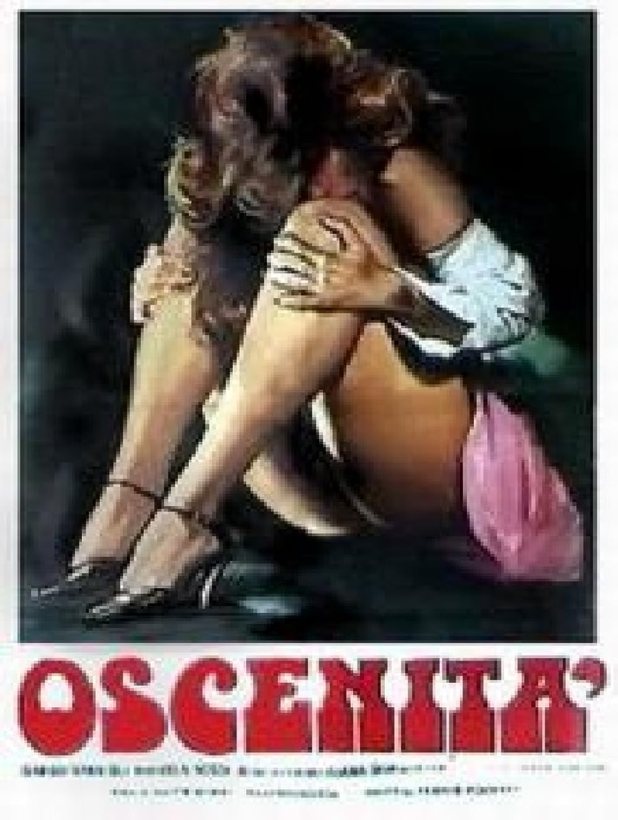
THE FILMS OF RENATO POLSELLI: Oscenità (1982)

What does it take to get your film outright banned from Italy?

This is the film that shows you.

This movie was supposed to be released in 1973, but the production company went bankrupt. Then, in 1975, it was banned by the Italian board of film review. Finally, in 1979, director and writer Renato Polselli re-cut and re-dubbed the movie to transform it into an allegory of female oppression and it was approved.

Then he decided to go for it and made an extended version with hardcore inserts that was released in adult movie theaters. That version was seized by the authorities for a few months.

A group of sinners has destroyed Mirielle (Mirella Rossi) and made her hate her body. Now, one by one, a lawyer calls them out and makes them confess their sins. I mean, yes, technically, that’s what they say this movie is about, but somehow it also has the Garden of Eden. Satanic rituals — more than one! — and just about every single form of perversion that has ever been imagined from bestiality with a donkey to nature-based masturbation with a corncob and a tree branch, as well as a candle being used, orgies, toes being inserted, whipping and just about anything else you can pull out of the filthy mind of Renato Polselli, who seems to

Obviously not available in a great quality — I can’t even imagine who would put out this movie — and it concerns the idea that in the Garden of Eden, men and women were equal but after the apple got eaten, well, men had to become masters and women the slaves and no one has been happy about it. Men treat women horribly, mothers in turn treat their sons even worse and sex — which should be a holy act — has turned into perversion.

Cue the Black Mass.

I’m obsessed with Polselli. Was he a learned man who was interested in pushing these ideas? Or was he like Joe D’Amato, someone who used sex to make money? He’s long gone — he died in 2006 — and the only interview with him I could find was on an old forum and posted by Jay Slater. It was written in 1997, nine years before he died, and in it, I learned that Polselli had a degree in philosophy and doesn’t think much of Dario Argento, saying “Argento doesn’t make real giallos. He takes five or six horrific elements and sticks them together with a very thin plot.”

This part of the interview speaks directly to this film:

“The director intended the film to be about obscenity and how it has asserted itself in the world, and through religious circles. He submitted the movie as Quando l’amore e’ oscenita’ (When Love is Obscenity) in 1973, but the Italian censors had finally had enough with the director’s films – the president of film classification remarked: “You have made a film way too tough.”

“Another way of interpreting the film is how it fights against the Italian system, and how obscenity was dealt with throughout history. I was very much against the contemporary ideas of Italian thinking, and how politicians were blinded by the church and its religious thinkers. The censors were shocked by my film, not because of its graphic imagery, but due to its political nature. Because of this, I had to re-edit and re-dub the entire film, and turned it into a feminist picture,” Polselli sighs. Six years later, he re-submitted Oscenita’ as a giallo, another illustration of ultra sexual violence against women. A three-minute presentation trailer can be found circulating between collectors of the genre, and Polselli hopes to release the original cut of Oscenita’ on video and DVD in the near future.”

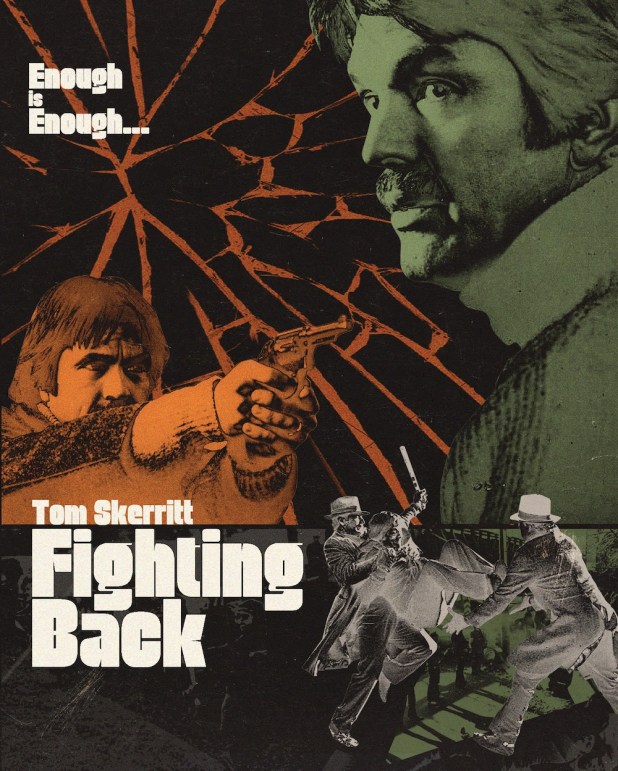
ARROW VIDEO BLU RAY RELEASE: Fighting Back (1982)

Known as Death Vengeance in the UK, this Philadelphia-set crime thriller starts with a news story about the increase in violence since JFK’s assassination in 1963. With the increase in crime, Philadelphia is becoming unsafe. Proud Italian-American John D’Angelo (Tom Skeritt) runs a deli with his wife Lisa (Patti LuPone). One night, they see a pimp named Eldorado (Pete Richardson ) beating one of his girls. She yells at him to stop and he chases their car, ramming it, and causes the death of their unborn child. Not long after, John’s mother Vera (Gina DeAngelis) is attacked and the crooks take her wedding ring.

Enough is enough.


John and his best friend Vince Morelli (Michael Sarrazin) start The People’s Neighborhood Patrol (PNP), with their own uniforms of blue hats and vests that have a PNP logo on them, headquarters to take phone calls and even vehicles. With Vince’s help, the police allow the PNP to patrol the neighborhood. The problem is the PNP does whatever it wants, like going into a nuisance bar and attacking everyone in it.

John does what he wants even as his acts are seen as racial discrimination by a small portion of the African-American community like Ivanhoe Washington (Yaphet Kotto), the leader of a black vigilante group. He actually finds the two men who stole the wedding ring from John’s mother and gives them over to him. John only attacks the black one, which proves the point.

John runs for councilman in the upcoming election but Vince is killed by Eldorado. To get back at him, he organizes a full-scale attack on crime in a local park that even gets the cops involved. Eldorado gets away and John is arrested, but told where his enemy lives. The cops say they are “too busy” and ask him to take care of it; a favor will be asked for later. John has effectively sold out, but it feels good dropping a grenade on the pimp and getting rid of him forever.

John wins the election and celebrates inside his deli. The neighborhood is all cleaned up and kids are playing in the park. Is this a happy ending?

It’s based on Anthony Imperiale, who advocated armed white self-defense. During the 1967 Newark riots, he formed the North Ward First Aid Squad to escort Italian-Americans through racially troubled neighborhoods. When he was accused of being a vigilante, he said, “When the Black Panther comes, the white hunter will be waiting.” He had a long career in politics, then founded a volunteer ambulance company in Newark. He was praised by his former political rivals for his generosity, sense of humor and commitment to equal treatment. Of course, both his kids went to jail for shooting people after arguments, but there you go.

Fighting Back is a weird movie in that it feels like it’s so right wing yet I wonder if all the newsreel footage and in your face moments are supposed to swing you the other direction. Maybe it’s just an exploitation movie.

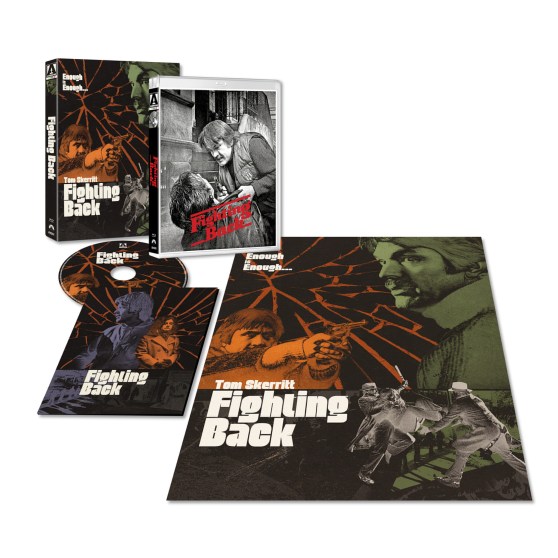
The Arrow Video blu ray of Fighting Back has a High Definition blu ray presentation, as well as interviews with director Lewis Teague and camera operator Daniele Nannuzzi, a trailer, a TV commercial, an image gallery, a double-sided fold-out poster and reversible sleeve featuring original and newly commissioned artwork by Luke Insect and an illustrated collector’s booklet featuring new writing on the film by critics Rob Skvarla and Walter Chaw, and a career-spanning interview with director Lewis Teague. You can get Fighting Back from MVD.

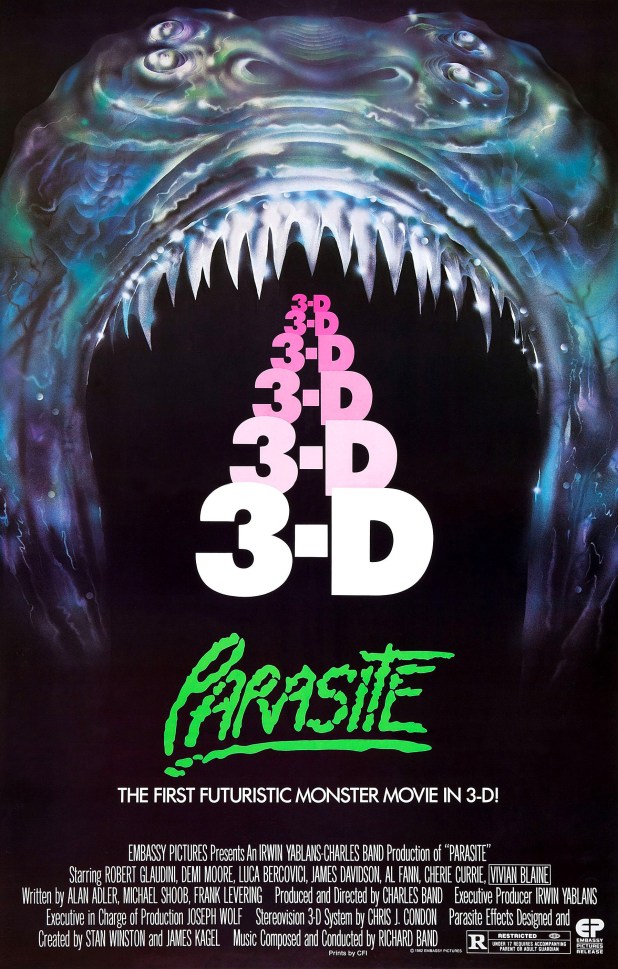
POPCORN FRIGHTS 2023: Parasite 3D (1982)

You know, I kind of like something in this movie. Like, I know it’s really bad but there’s something in it — and not just a young Demi Moore — that made me enjoy it. I have no idea what that was, but sometimes a movie just makes you feel like you’re taking a relaxing swim.

Sometime after the bombs got dropped, America is run by a criminal organization called the Merchants. To better control the population — and no, I have no idea how this plan is supposed to work — they get Dr. Paul Dean (Robert Glaudini, whose roles in movies like this and Cutting Class led him to somehow write the play Jack Goes Boating, which became a movie directed by Philip Seymour Hoffman) to create a parasite. Also, because this movie has no plan for what is about to happen, he infects himself to study the parasite, yet is upset when it infects the gang in the small town he finds himself trapped in.

And Demi plays the young lemon grower who helps him.

Actually, I’ve totally figured out why I like this movie. That’s because it cast Cherie Currie (the ex-Runaway who was on a run of scream queen roles between this, The Alchemist and The Twilight Zone: The Movie) as a post-apocalyptic gang member and Cheryl Rainbeaux Smith as a slave girl. And it was made by Charles Band between Crash! and Metalstorm: The Destruction of Jared-Syn in a time when he wasn’t yet making puppet movies.

A section 3 video nasty, this was in 3D in its original theatrical run. It owes just as big a debt to Alien as it does to Mad Max.

Parasite 3D played in 3D at the Popcorn Frights Film Festival. You can get a virtual pass to watch the festival from August 10 to 20. To learn more, visit the official site. To keep track of what movies I’ve watched from this Popcorn Frights, check out this Letterboxd list.

POPCORN FRIGHTS 2023: Friday the 13th Part III 3D (1982)

With Amy Steel uninterested in returning to the series, the filmmakers had to reboot and figure out what made Jason tick. And that ticking was a hockey mask — three movies into the series. The original plan was that Ginny would be confined to a psychiatric hospital and he would track her down, then murder the staff and other patients at the hospital. If this sounds kind of like Halloween 2 to you, well surprise. This is not a movie series known for its originality.

He starts the film by killing a store owner and his wife just for clothes. Then, he goes after the friends of Chris Higgins: Debbie (Tracie Savage, who played the younger Lizzie in the awesome made-for-TV movie The Legend of Lizzie Borden), Andy, Shelley, Vera (Catherine Parks, Weekend at Bernie’s), Rick, Chuck and Chili. They run afoul of bikers Ali, Fox and Loco, who follow them back to their vacation home.

Jason starts killing quick, but he’s already mentally scarred Chris, as she survived an attack from him two years ago. This has left her with serious trauma and an inability to enjoy intimacy (which, come to think of it, comes in handy in these movies).

Jason takes the mask from the dead body of prankster Shelley and it’s on, with speargun bolts to the eye, heads chopped in half with machetes, knives through chests, electrocutions, hot pokers impaling stoners and even someone’s skull getting crushed by Jason’s supernaturally powerful hands.

Of course, it ends up with Final Girl Chris against Jason, who she kills by hitting him in the head with an ax before falling asleep on a canoe and having a nightmare of Jason killing her. It’s OK. Don’t worry. We see that all is right in the world and the killer’s body is at the bottom of the lake.

Here’s some trivia: To prevent the film’s plot being leaked (I could tell you the plot in less than a sentence, so this seems like bullshit), the production used the David Bowie song “Crystal Japan” as the title of the movie. They’d use Bowie songs as working titles during several of the other films.

Friday the 13th Part III 3D played in 3D at the Popcorn Frights Film Festival. You can get a virtual pass to watch the festival from August 10 to 20. To learn more, visit the official site. To keep track of what movies I’ve watched from this Popcorn Frights, check out this Letterboxd list.

Blue Island (1982)

After The Blue Lagoon came out in 1980, the idea of cashing in had to appeal to exploitation filmmakers all over the world. After all, all you needed was a young guy and girl willing to get naked and do some love scenes on an island paradise. In Canada, Stuart Gillard — the man who would one day direct Teenage Mutant Ninja Turtles III — made Paradise with Phoebe Cates and Willie Aames. In Italy, directors Enzo Doria and Luigi Russo — who would go on to produce the similar yet Biblical Adam and Eve vs. the Cannibals a year later with Mark Gregory and Andrea Goldman — worked with writer Dardano Sacchetti (what movies didn’t he write in the 80s in Italy?) to bring their own version of La Laguna Blu to Italian screens with Fabio Meyer as Billy and Sabrina Siani as Bonnie.

As always, Siani is probably the best reason to watch this. She seems supernatural, like some kind of goddess carved from clay on Themyscira. She does the same in so many of the movies that she appears in, like Conquest, The Throne of Fire, 2020 Texas Gladiators and Ator the Fighting Eagle.

They land on a deserted island after a plane crash and think they’re all alone, but nope. There’s someone else on the island — Shanghai (Mario Pedone) — who at times seems like an enemy and other times a friend but then becomes an enemy again and then he saves them from a poisonous mollusk. Ah, confusion in an Italian movie, I love it so very much.

This was called Due gocce d’acqua salata in Italy, which means Two Drops of Salt WaterBlue Island is a much better name for this movie.

That said, for all the attention that Brooke Shields got for her beauty, I’d definitely say that she’s in Siani’s shadow.

Hunters of the Golden Cobra (1982)

The joy of Antonio Margheriti’s Raiders of the Lost Ark remixes — you can add The Ark of the Sun God and Jungle Raiders to this film — is that you get sequels without waiting for Indiana Jones and the Temple of Doom.

Starring David Warbeck as Bob Jackson, an American soldier who is hired by British Captain David Franks (John Steiner) to make another try at finding the Golden Cobra, an artifact he almost got a year ago. Jackson has been thinking about another mission since then, as well as the gorgeous non-native woman who somehow was living amongst the tribe of Awoks. No, not Ewoks. Awoks. She saved his life as she was able to command the cannibal tribe, who follow her like a goddess.

But then he meets her twin sister (they’re both played by Almanta Suska from The New York Ripper). She and her uncle Greenwalter (Luciano Pigozzi, as always showing up in a Margheriti movie) have been trying to find her for years and Jackson seems like the best bet.

You know, I’m all for the Philippine jungle being used to great effect in Italian movies, as well as Margheriti’s great use of budget, miniatures and effects. There’s an entire room of cobras and a dummy drop to end the film!

Writers Gianfranco Couyoumdjian (The Last HunterThe Last BloodCode Name: Wild Geese) and Tito Carpi (Alien from the DeepAtlantis InterceptorsMarta) have the Italian movie magic language to make this movie sing. As far as I’m concerned, this crew could have made twenty of these movie serial style movies, particularly when they include scenes where a crazed cult leader interrupts a slide show presentation. Also: Warbeck and Steiner are a fabulous adventure team and their dialogue is sparkling.

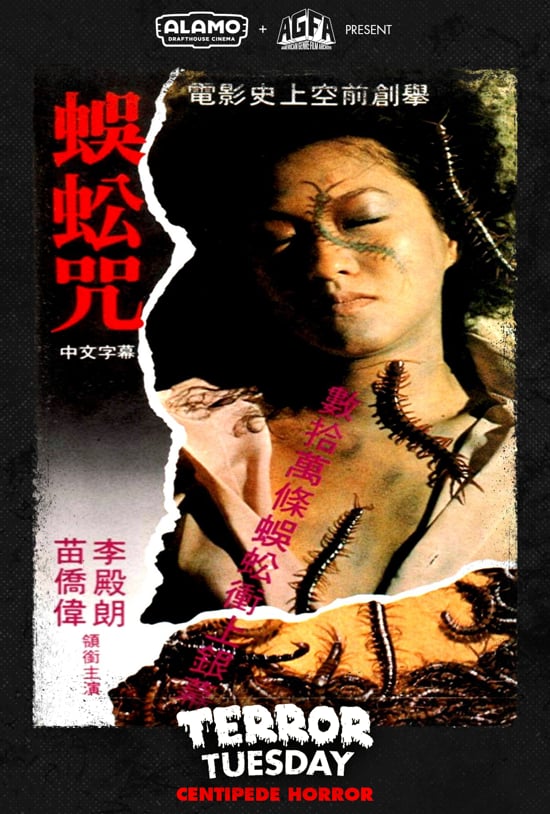
Centipede Horror (1982)

Thank you Keith Li for reminding me that I still can get physically sick while watching a movie. I thought that I had become numb to such a thing and then i watched your 1982 blast of insanity, Centipede Horror.

Centipedes may not get much love — well, they did get a video game back in 1980 — but they’re pretty horrifying. All centipedes are venomous, most are carnivorous and they can inflict painful bites that inject poison through their pincers. And they don’t just have a hundred legs. Nope, they can have anywhere from 30 to 382 legs.

A rich young woman named Kay goes to Thailand, despite her grandfather warning her to never visit there. Of course, as you can guess from the title of this movie, she’s assaulted by hundreds of centipedes, which causes her wounds to fester and bubble as only a category III would can become. She dies, which brings her brother Wai Lun to Thailand to watch her die and then get on the case of who did this to her.

If only she had worn the ugly necklace that was to protect her from centipedes! Yet as we all know, fashion can be dangerous.

Wai Lun brings his friend Yeuk-Chee along to figure out how they can make up for the crimes of his grandfather and stop a wizard’s curse. A wizard who curses and uses ghost children in his nefarious plans! This movie has it all and by all, I mean thousands of centipedes, including Margaret Li — who plays Yeuk-Chee — being an absolute trooper by sitting there with a mouthful of live centipedes crawling around her mouth waiting for Keith Li to say action so she can throw them up all over the place.

So yes, the pace is slow, it even drags until we get to the sorcerer battle at the end. But a reanimated chicken skeleton shows up and, yes, we have the heroine blowing centipede chunks and how can you ask the filmmakers to give us more than that?