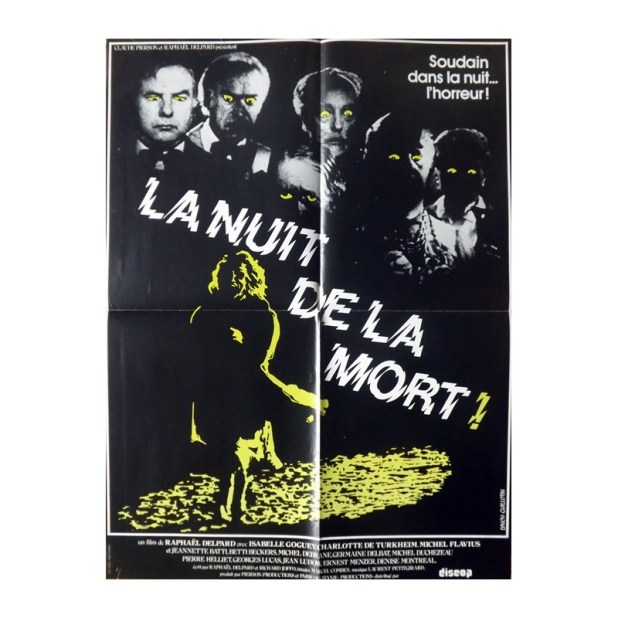
CHILLER THEATER MONTH: Friday the 13th (1980)

EDITOR’S NOTE: Friday the 13th was on Chiller Theater on Saturday, November 6, 1982 at 1:00 a.m.

After the success of John Carpenter’s Halloween, every studio wanted a piece of the horror pie, which to this point had been exploitation fodder. Paramount Pictures was first. Sure, critics salvaged the film, but after $40 million in profit, no one really cared.

Produced and directed by Sean S. Cunningham (Last House on the Left), this movie was envisioned as a roller coaster ride. The script came from Victor Miller, a soap opera scribe. And spoilers — but this movie doesn’t even really have Jason in it!

The movie starts in the summer of 1958 at Camp Crystal Lake, where two counselors sneak off and have sex before being killed. This sets up one of the many rules of slasher films: never fuck in the woods.

The camp closes for 21 years, but on Friday, June 13, 1979, that’s all about to change. That said, no one in the town wants it to happen. When Annie Phillips arrives in town, everyone treats her strangely or acts like Crazy Ralph (Walt Gorney, who shows up in the next film and was the narrator for Friday the 13th Part VII: The New Blood). She lasts for about five minutes, as she gets killed after her third hitchhike of the day. I’d say this is more of a warning against hitching in the late 1970s than I would serial killers in the woods.

The other counselors — Jack (Kevin Bacon!), Ned, Bill (Harry Crosby III, son of Bing), Marcie, Alice and Brenda (Laurie Bartram, The House of Seven Corpses) — and owner Steve Christy all show up to get the camp ready. This is where you’ll notice just how different fashion is. Becca and I have seen this live several times in a theater now and everyone laughs as soon as Steve shows up in his short shorts and bandana.

Ned is killed pretty quickly, then Jack is killed with an arrow and Marcie takes an axe to the face. Brenda is murdered as she responds to the voice of a child. Steve gets killed on the way to camp. Before you know it, Alice and Bill are the only ones left, but Bill lasts pretty much seconds. Then we have another future slasher trope: every body is discovered, hung like trophies.

Now, we have our Final Girl: Alice, who ends up meeting Mrs. Vorhees, who tells the tale of how her son Jason drowned and the horrible counselors who allowed it to happen. Much like the giallo/pre-slasher film Torso, the movie now focuses on the battle between Alice and the real killer. Alice ends up beheading her and sleeping in a canoe. As the police arrive, she has a dream that Jason rises from the water to kill her. This scene wasn’t in the script, but special effects king Tom Savini thought a Carrie-like ending would be more powerful.

Another way that the film pays sort of homage to Italian filmmaking is in the snake scene. It was another Savini idea after an experience he had in his own cabin during filming. The snake in the scene? Totally real, including its on-screen death — someone alert Bruno Mattei!

Some trivia: the film was shot just outside Lou Reed’s farm. The rock star performed for the cast and even hung out with them! Sweet Jason?

To me, the film works because of how great Betsy Palmer is as Jason’s mom. It’s a fine film, but nowhere near the excesses that the series would grow into. This was also the start of critics really hating on slasher films. Gene Siskel was so upset about Betsy Palmer being in the film that he published her address in his column and encouraged people to write her and protest. Of course, he published the wrong address.

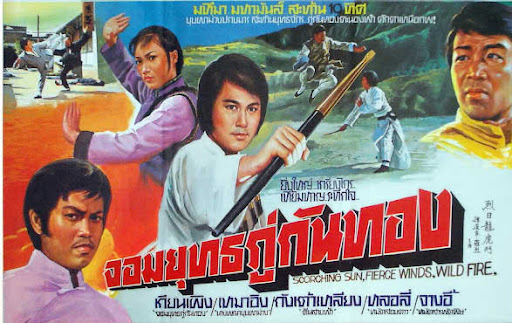
CANNON MONTH 3: Scorching Sun, Fierce Winds, Wild Fire (1980)

EDITOR’S NOTE: As the journey through Cannon continues, this week we’re exploring the films of 21st Century Film Corporation, which would be the company that Menahem Golan would take over after Cannon. Formed by Tom Ward and Art Schweitzer in 1971 (or 1976, there are some disputed expert opinions), 21st Century had a great logo and released some wild stuff.

Also known as Any Which Way You Punch, Duel Under the Burning Sun and Dragon Connection, this stars Angela Ma as a kind of Zorro character, as she’s the daughter of a Warlord Tung and also the masked vigilante Violet. And like so many Hong Kong movies imported to America, this liberally steals the score of Star Wars.

This is set in the 1920s, as warlords like Ma’s father are trying to take their own pieces of the country and gain power. She keeps taking the firing pins from all of his weapons while he has no idea that his daughter is his enemy.

She soon joins with the mysterious Pai Tien Hsing (Peng Tien) as one of her father’s men (Yi Chang) is trying to go into business for himself. He has some poison knives that really create some disgusting kills.

You also get Lo Lieh and Tan Tao-liang as two escaped criminals who work alongside our heroes, even getting caught inside a room that has moving spikes at one point.

In Germany, this was released as Der Gorilla mit der Stählernen Klaue (The Gorilla With the Steel Claw). This does not happen in the movie I watched but I wish that it had.

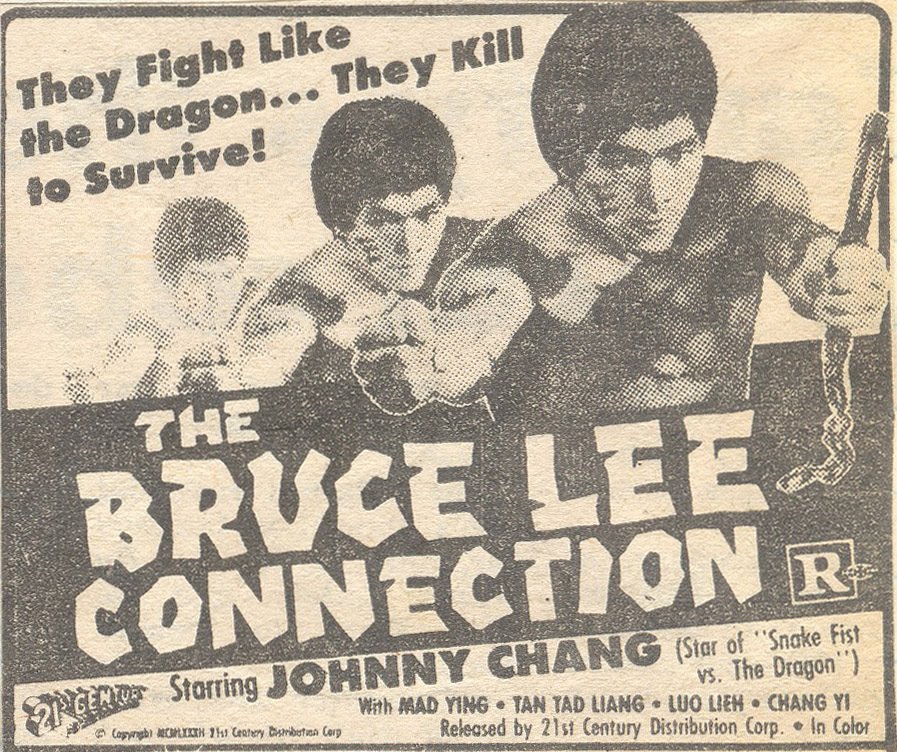
When 21st Century released it, they called it The Bruce Lee Connection. They also licensed it to Continental Video as Dragon Lady Ninja.

You can watch this on Tubi.

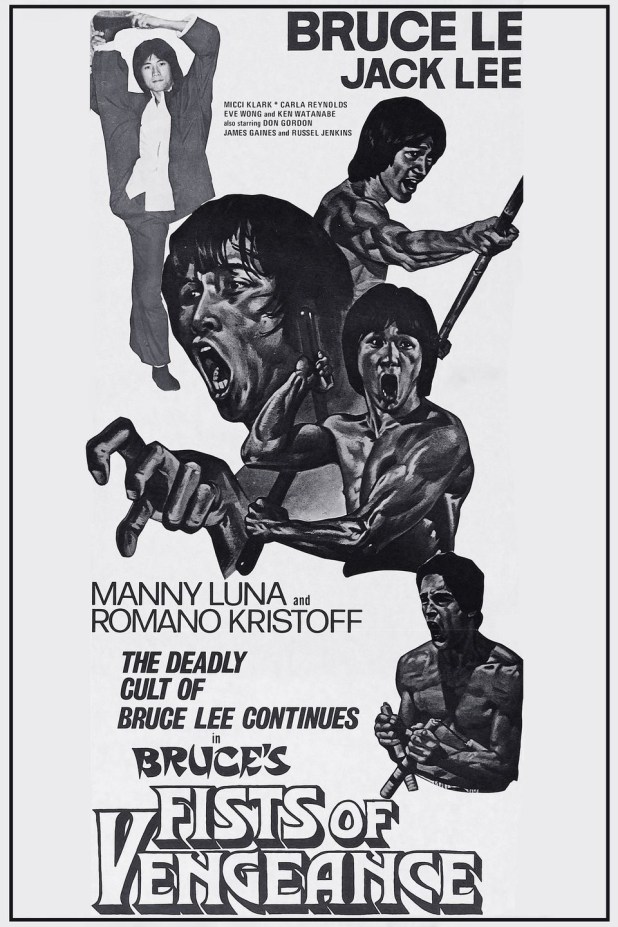
CANNON MONTH 3: Bruce’s Fists of Vengeance (1980)

EDITOR’S NOTE: As the journey through Cannon continues, this week we’re exploring the films of 21st Century Film Corporation, which would be the company that Menahem Golan would take over after Cannon. Formed by Tom Ward and Art Schweitzer in 1971 (or 1976, there are some disputed expert opinions), 21st Century had a great logo and released some wild stuff.

Jack (Jack Lee) has come to fight in a martial arts tournament run by his friend Peter (Bruce Le). He’s brought a book of JKD secrets that was written by and given to him by Bruce Lee himself. After a rival fighter, Miguel (Romano Kristoff) defeats Peter, Jack gives him the book to learn from. However, Miguel kidnaps Peter’s girl Miriam (Carla Reynolds) and demands the book.

The best thing I can say about this movie is that it has the song “Shanti Dance” by Droids in it. A band that was the invention of Fabrice Cuitad, they had one album, Star Peace and a single, “(Do You Have) The Force.” Cuitad was a label manager at Barclay and founded the label Egg. Musicians Yves Hayat, Richard Lornac and Jean-Paul Batailley play on the album and in most live appearances, Hayat and Lornac performed.

Director and writer Bill James mainly worked as an actor. This also has Bruce Le take a girl on a date to a cock fight, which in no way feels like romance. And if I get confused by this, it’s also because it’s almost the same movie as They Call Him Bruce Lee.

How many books did Bruce leave to people after he died, anyway?

I’ve seen this listed as a 21st Century release but can’t find any proof. Anyone know if they had it at some time?

You can watch this on Tubi.

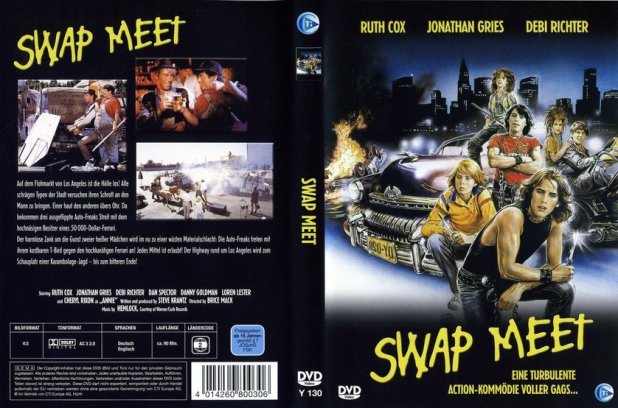
CANNON MONTH 3: Swap Meet (1979)

EDITOR’S NOTE: As the journey through Cannon continues, this week we’re exploring the films of 21st Century Film Corporation, which would be the company that Menahem Golan would take over after Cannon. Formed by Tom Ward and Art Schweitzer in 1971 (or 1976, there are some disputed expert opinions), 21st Century had a great logo and released some wild stuff.

Brice Mack was a background artist at Disney before becoming a director, working on Rooster: Spurs of DeathJenniferHalf a House and producing Ruby and Mara of the Wilderness. This movie, written by Steve Krantz (Jennifer, Ruby) feels like the perfect idea for a sitcom: a drive-in and flea market populated by wacky characters. You can just imagine the guest stars that show up to sell things or buy from the regular characters.

Also: The Farmer cinematographer Irv Goodnoff was the original choice to direct.

Ziggy (Danny Goldman, the voice of Brainy Smurf) wants to make this the best swap meet in the world, but he also wants to find love. He’s one of the many stories in this episodic movie, along with Doug (Jon Gries, who is amazing in everything he’s in, even this not all that worthy movie; beyond Napoleon Dynamite, he was also in Joysticks, Real GeniusFright Night 2, The Monster Squad and TerrorVision), who wants to impress the ladies in car races, and his friends Buddha (Loren Lester) and Billy (Dan Spector, the voice of Robin on Batman: The Animated Series), who just want to pick up the ladies. Two of the girls include regular sellers Nancy (Ruth Cox, Jennifer) and Susan (Deborah Richter, Cyborg). When they’re not trying to get people to buy turtles, they’re at war with the obnoxious children that won’t leave their table.

Rich kid Roy (Jed Cooper) also is in love with these girls and to get rid of Doug and his gang, they destroy their T-Bird — Doug’s dad’s car — so that they can’t race against his Ferrari. They turn to Max (Danny DeVito, yes, really) to fix their wrecked car. And if you don’t believe DeVito is in this, so is Rhea Perlman as one of the mothers of the horrible kids that won’t leave our hippie girls be.

How did DeVito get in this? Well, he did it as a favor for original director Goodnoff, who he met on the movie The Van. According to the September 19, 1979 issue of Variety, DeVito “requested no more than feature billing” as Taxi was just starting when this was released. When Dimension Pictures placed newspaper ads, they put his name above the title as Danny “Taxi” DeVito, which caused him to send a cease and desist. There were no hard feelings between Goodnoff and DeVito, as the actor hired him to shoot his directorial debut, the TV movie The Selling of Vince D’Angelo.

Filmed at the Roadium Swap Meet in Torrance, CA, which is still open, this will make you miss drive-ins if all the ones in your area are gone. This played double features with H.O.T.S. and yet its VHS box said, “Starts Where H.O.T.S. Finished!” Don’t be rude, Swap Meet.

Anyways, George Memmoli from Phantom of the Paradise and The Farmer shows up, as does Beatrice Manley (The Baby), Eric Greene (Loki from Space Academy), Pigs director Marc Lawrence as drive-in owner Mr. Booth and Cheryl Rixon as Annie, the homeless sex worker who lives at the swap meet and turns tricks at night with the help of the other teenagers, which seems bleak. Rixon was the December 1977 Penthouse Pet of the Month and 1979 Pet of the Year, so she adds the sex appeal that this movie is otherwise missing. She’s also in Used Cars.

There’s also a disco theme song, “Swap Meet,” which is played in the beginning and when most of the cast goes to The Great Gatsby Discotheque Part II.

After 21st Century bought all of Dimension’s films, they re-released this.

It’s not a great movie, but if you love spotting cast members from other movies, are a Marc Lawrence or Jon Gries fan, or just have to watch every 70s and 80s sex comedy, then you’re going to like Swap Meet a lot more than every other reviewer online, who seemingly had their pets abused by this movie.

You can watch this on YouTube.

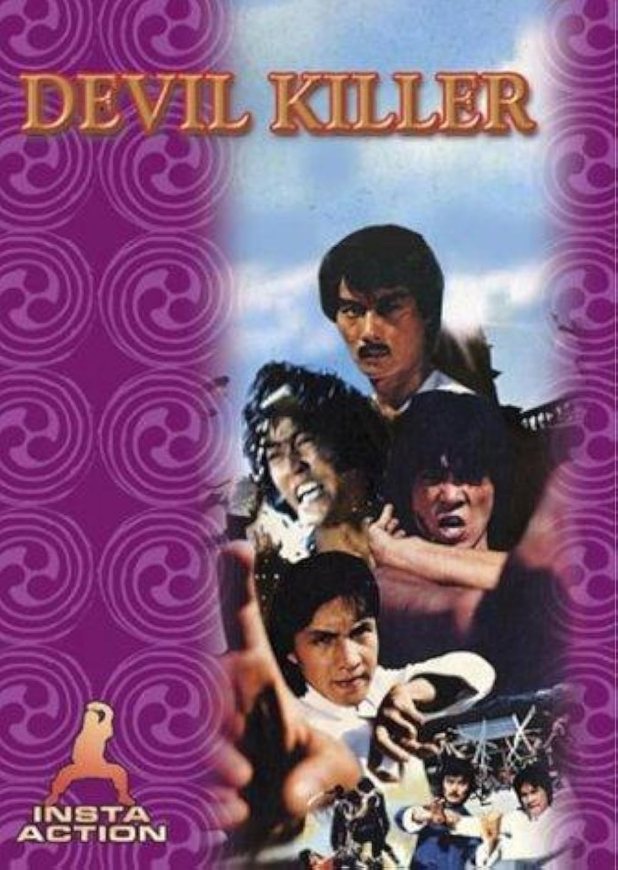
CANNON MONTH 3: Devil Killer (1980)

EDITOR’S NOTE: As the journey through Cannon continues, this week we’re exploring the films of 21st Century Film Corporation, which would be the company that Menahem Golan would take over after Cannon. Formed by Tom Ward and Art Schweitzer in 1971 (or 1976, there are some disputed expert opinions), 21st Century had a great logo and released some wild stuff.

There is another Asian Devil Killer movie from 1981. This isn’t that.

This was called Ninja Exterminators on VHS. There are no ninjas in it.

Let’s start over again.

In this Robert Tai-directed film, a young boy named Darky watches the town leader’s son assault a woman but is blamed for the crime himself. He barely escapes when he’s caught by Inspector Fong Sen, who soon learns that the boy’s confession was beaten out of him. Arresting the real rapist, he and the boy are killed by the man that Fong was hunting in the first place, Liu Ta Leung. Yes, part way through the movie, most of the cast — the two heroes! — get killed.

Roll the credits? No. Now, Fong’s brother and another inspector come to town looking to solve the crime. What a strange way to put a movie together and if Richard Harrison showed up talking on a Garfield phone, I would not be surprised. Also: the foley department got no budget as they have some of the most limited punch and kick sound effects that you’ve ever heard.

You hear the name Devil Killer and think, “This is going to be awesome.” And then you get…whatever this was.

You can watch this on YouTube.

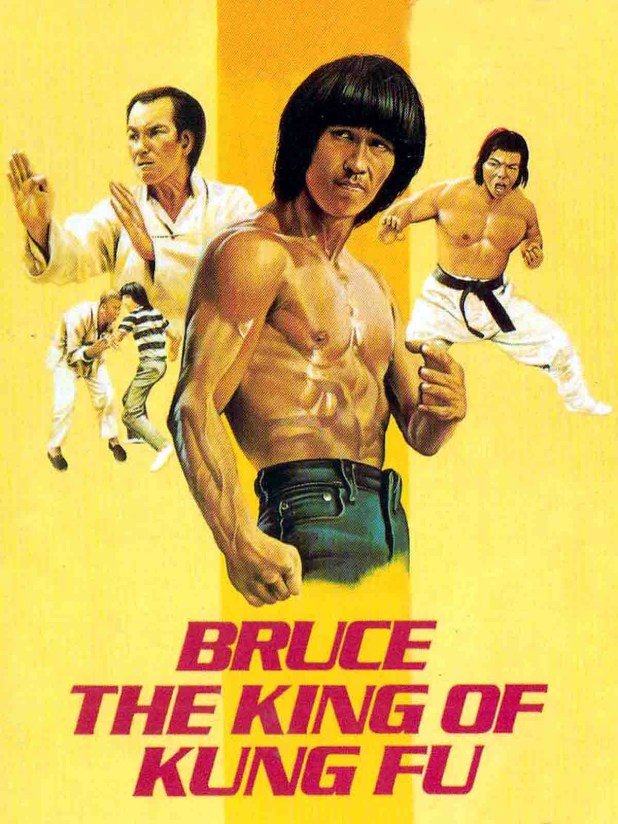
CANNON MONTH 3: Bruce King of Kung Fu (1980)

EDITOR’S NOTE: As the journey through Cannon continues, this week we’re exploring the films of 21st Century Film Corporation, which would be the company that Menahem Golan would take over after Cannon. Formed by Tom Ward and Art Schweitzer in 1971 (or 1976, there are some disputed expert opinions), 21st Century had a great logo and released some wild stuff.

Directed by Darve Lau and star Bruce Le, this true story — you know how much I love those — was made seven years after the death of its inspiration. We learn that an astronomer saw a meteor and told Bruce’s parents that their son would be an incredible person who would do extraordinary things.

For his younger years, the prophecy foretells that those amazing acts are mostly fist fights, staring at sex workers who flash him through the windows of their brothel and helping voyeurs watch people make love. He upsets someone so much that they hang him outside his apartment and that failure makes him settle down and become the fighting force that we all know, but first, he has to get some snakes drunk and fight them.

This also gets meta. as two of the actors who played Bruce Lee’s movie villains, Kien Shih (Master Han!) and Bolo Yeung, show up as fictional bad guys who have issues with the movie Bruce. Master Kim, as the main villain is known, keeps bringing in people to fight Bruce, who mostly does snake fist style instead of JKD.

This movie also wants to be a silly post-Drunken Master film and even one of the fights that costs Bruce’s friend his life is wacky until, well, his friend gets erased. It feels a little bit all over the place, but I’m here for jumping kicks and not an actual story. That means that this delivers.

You can watch this on YouTube.

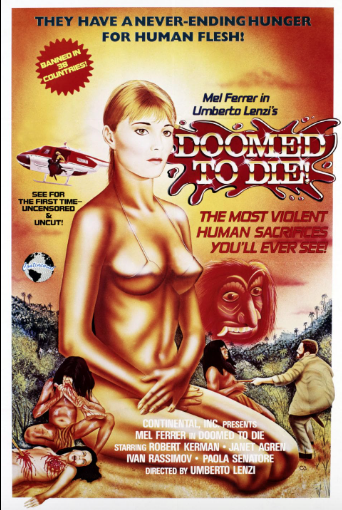
CANNON MONTH 3: Doomed to Die (1980)

EDITOR’S NOTE: As the journey through Cannon continues, this week we’re exploring the films of 21st Century Film Corporation, which would be the company that Menahem Golan would take over after Cannon. Formed by Tom Ward and Art Schweitzer in 1971 (or 1976, there are some disputed expert opinions), 21st Century had a great logo and released some wild stuff.

What happens when you throw assassins in New York City, cannibals in the jungle and a Jim Jones-like cult leader into a big pot and set it to boil? You get Eaten Alive!

Sheila (Janet Agren, City of the Living Dead, Hands of Steel) is searching for her sister, Diana (Paola Senatore, Emanuelle in America)who has disappeared in the jungle. She hires Mark (Robert Kerman, Cannibal Holocaust) to help her find her way through the jungle. Oh yeah — and there are killers in the city using blowdarts. That doesn’t matter so much once we’re in the jungle.

When they find Diana — after being chased by cannibals — they learn that she has joined the cult of Jonas (Ivan Rassimov, everyone cheer when he shows up to make this movie awesome), who abuses, murders, manipulates and mindfucks everyone and anyone he gets close to. Seriously, the minute Jonas shows up, this film goes off the rails. First, he burns a man on a funeral pyre and then orders his wife Mowara (Me Me Lai, who thanks to appearances in this film, Last Cannibal World and Man from Deep River is pretty much to this genre as Edwige Fenech, Barbara Bouchet or Nieves Navaro are to giallo)to be ritually raped. Then, he hypnotizes Sheila and takes her on an altar using a snake phallus covered in venom and blood (yep, really).

Jonas preaches the Book of Isiah and pretty much owns everyone he can get his hands on, but Mowara, Sheila, Mark and Diana all attempt to escape. Diana and Mowara are overtaken by cannibals, with Diana graphically devoured while her sister and Mark watch helplessly. A helicopter arrives at the last minute to save them while the film goes into full exploitation mode, with the cult killing themselves ala Jonestown, leaving only one female survivor.

Oh man, I forgot! Mel Ferrer (The Visitor, Nightmare City) shows up as a professor!

Director Umberto Lenzi knows how to make a down and dirty film. He also knows how to keep it entertaining. Just witness other films he’s done like Ghosthouse! Plus, he’s the master of recycling, as this film re-uses the crocodile death and a woman being eaten from his 1972 film Sacrifice! (also starring Rassimov and Me Me Lai), Me Me Lai’s death from Ruggero Deodato’s Jungle Holocaust and a castration, a monkey being devoured and a man being eaten by a crocodile from Sergio Martino’s Slave of the Cannibal God. You could say he…cannibalized those movies! Sorry.

Again, keep in mind that these are rough films. They’re nearly indefensible, to be honest. I kind of wish the story of Jonas and his cult was more of the movie, with less of the cannibals. But you know, I can’t send notes back to Lenzi with a time machine or anything!

PS – Amazingly, it wasn’t until I read this review that I learned that Eaten Alive was three different movies — Jungle Holocaust, The Man from Deep River and Mountain of the Cannibal God (look for that in a few days!)  — along with some Jim Jones thrown in.

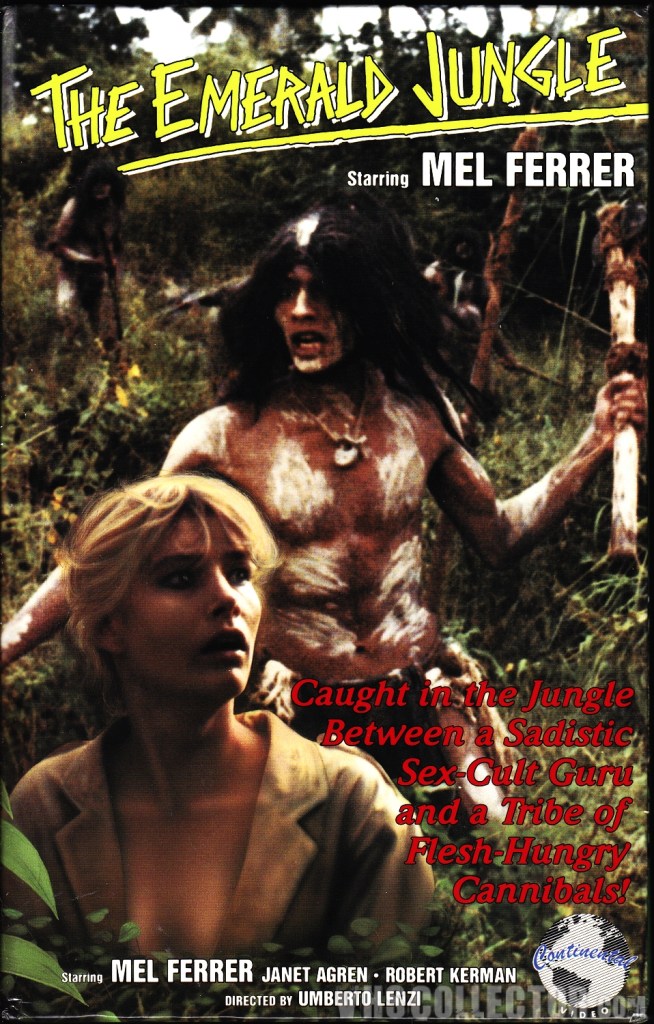
Yes, this is Eaten Alive! but it was rereleased as Doomed to Die by 21st Century. It was also licensed to Continental Video as The Emerald Jungle.

You can watch this on Tubi.

CANNON MONTH 3: Nightmare City (1980)

EDITOR’S NOTE: As the journey through Cannon continues, this week we’re exploring the films of 21st Century Film Corporation, which would be the company that Menahem Golan would take over after Cannon. Formed by Tom Ward and Art Schweitzer in 1971 (or 1976, there are some disputed expert opinions), 21st Century had a great logo and released some wild stuff.

Have you ever paused a movie and yelled aloud, “I LOVE THIS MOVIE!” and you’re all alone in the room? If you’ve answered in the affirmative, you understand the pure joy that I felt while watching this movie.

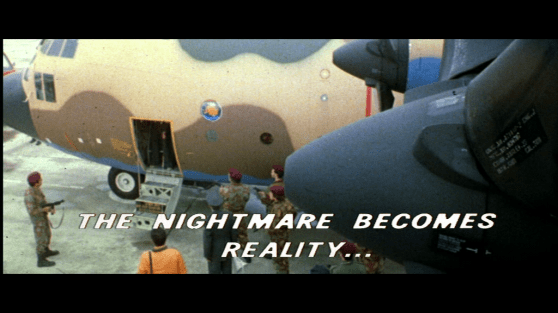
Dean Miller, an American reporter, is waiting to interview a nuclear scientist when a military plane lands and mutated men emerge, killing everyone in their path. Even the worst wounds only slow them down as they hack their way through their victims, pausing to drink the blood of those they kill.

General Murchison (Mel Ferrer, The Visitor) shuts down any news stories about the attack. Meanwhile, the city is overrun with the killers and their victims, who soon join their ranks. Miller saves his wife at the hospital where she works as the city’s power is shut down.

It turns out that they’re fighting humans who have been contaminated by a leak in the nuclear power plant (that’s why the scientist was meeting with Miller in the beginning) and now they have strength, speed and reflexes beyond the range of normal humans. However, because they can’t regenerate red blood cells, they must consume blood. There’s only one way to kill them, which will be familiar to zombie movie fans: shoot them in the head.

No one is safe — the general is looking for his daughter and her husband, but by the time they are discovered, they are infected and must be killed. And Major Holmes warns his artist wife to stay in the house when two infected men break in and kill her friend and almost murder her. By the time he gets to the house to save her she’s been infected and he must kill his wife.

That’s the theme of this movie — everyone gets turned into something horrible, even a priest at the church where Miller and Anna try to hide. Finally, they make a last stand in an amusement park, using submachine guns and grenades to keep the attacking horde at bay. Major Holmes tries to save them, but Anna can’t hold the rope and falls to her death. This being an Italian movie, we see every moment of her demise.

Miller then wakes up. It was all a dream, except he goes back to the airport and the movie starts all over again!

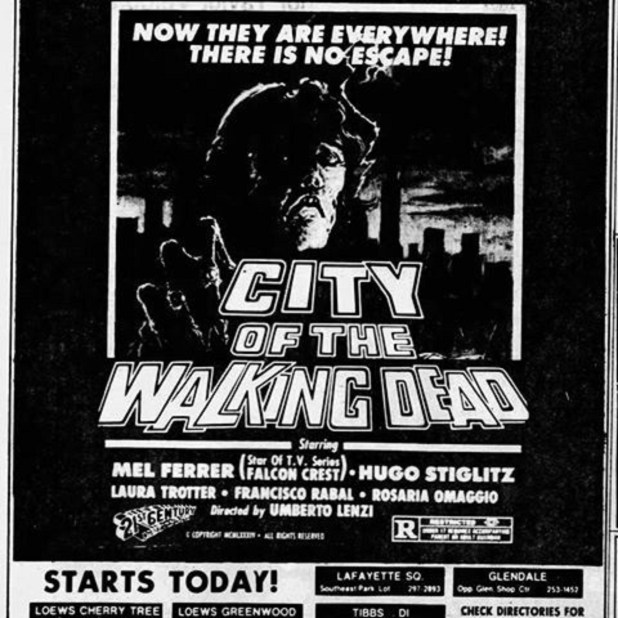
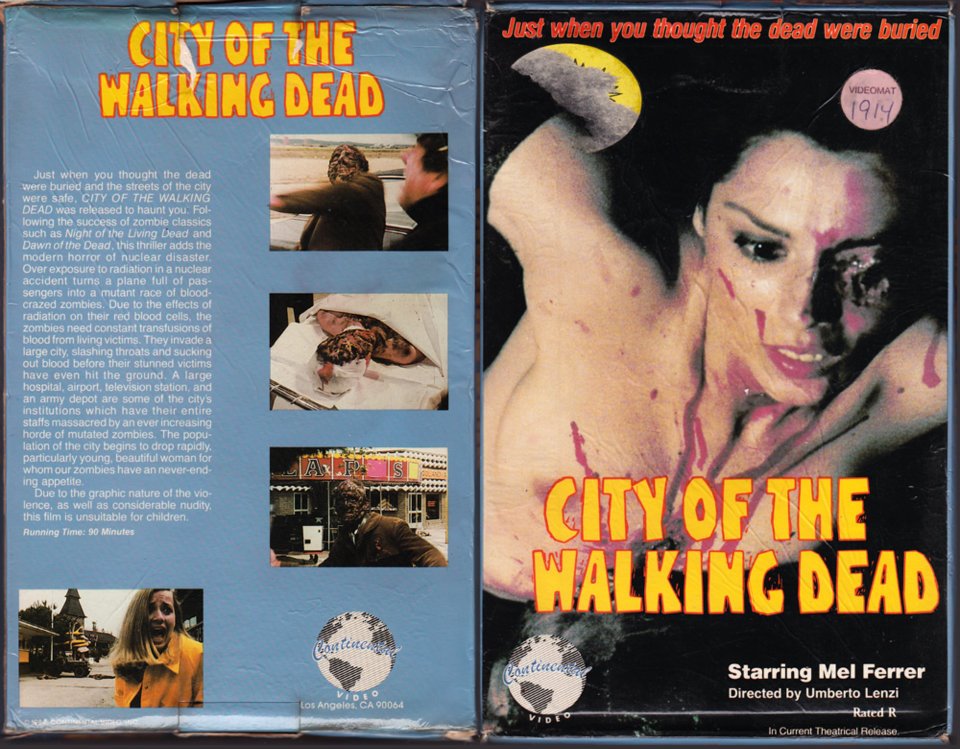
Known as City of the Walking Dead in the U.S., this is a fast-moving, down and dirty gore packed film. Directed by Umberto Lenzi (Eaten Alive!Cannibal Ferox), this film feels like it’s out of control from the first scene. Once that plane opens and the mutated fiends emerge, it’s an orgy of heads being opened up, breasts being eaten, gunshots galore and eyes being ripped from their sockets. In short, this is. a true crowd pleaser. How can you not love a movie where a studio full of disco dancers are mauled and murdered by an army of mutated killers?

This was released by 21st Century as City of the Walking Dead.

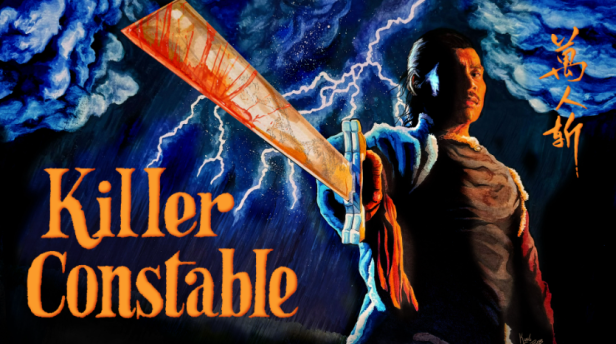
SHAWGUST: Killer Constable (1980)

In this movie, director Chih-Hung Kwei is remaking his frequent collaborator Chang Cheh’s The Invincible Fist and telling the tale of “Killer Constable” Leng Tian-Yin (Chen Kuan-tai). He’s been ordered by security chief of the Forbidden City Liu Jing Tian (Cho Tat-wah) — who has been commanded by Manchurian Empress Dowager Cixi — to bring back the five thieves that stole 2 million taels from the Royal Treasury dead or alive. When you’re called the Killer Constable, you never bring them back alive.

Trying to assemble his five best men, Leng learns that not even his brother, Cun Yi (Gam Sai-Yuk) wants to join him. He is tired of the brutal justice that his brother delivers. We witness this as Leng follows the thieves to a watermill and tortures one of them in front of his family. Yet you’re left to wonder if his rough style is warranted when one of his men, Peng Lai (Ai Fei), is rewarded for feeding the starving villagers by being staked and must be killed by Leng to ease his suffering. The thieves also hire Fan Jin-Peng (Jason Pai Piao), a killing master who murders elder constable Ma Zhong (Gam Biu) and injures Leng before being defeated.

Finally, after a battle with the leader of these thieves, Fang Feng-Jia (Ku Feng), and are helped by the intervention of Cun Yu. Leng is almost killed but is nursed back to health by Fang’s blind daughter Xiao Lan (Yau Chui-Ling). When Fang enters his home, instead of fighting, the Constable and he pretend to be friends in front of his daughter. In truth, it was Liu Jing Tian who stole the gold and sent Leng after him, as he knew that no one would survive. Another group of killers attack and Fang sacrifices himself to allow Leng to live, making him promise to care for his daughter. However, the Constable is driven with rage after his brother is killed, so he attacks Liu Jing Tian, killing many of his guards before wiping out the corrupt man. However, a trap also kills Leng, leaving Xiao Lan waiting for a father and protector who never arrives.

Kuei said that, “I simply wanted to depict how insignificant commoners are and how, under totalitarian rule, they turn out to be the victims.” While showing off the violence and combat that one expects from a Shaw Brothers movie, this also goes beyond to show the very real suffering that comes from that same brutality. As the only good person in the film is a blind woman — a scene repeated in The Killer as Ah Jong and Li Ying pretend to be old buddies for the benefit of the sightless Jennie — the moral is simple. The only pureness in this bloody universe can’t witness it.

Kuei was also inspired by another classic film: “I love Dr. Zhivago. In Killer Constable, I want to create a character like Zhivago. Despite his position in the high court, the protagonist is a righteous man. Yet in the corruption and poverty-stricken era at the end of the Qing dynasty, there is not much good he can do on his own. Hence he is deluded by society and lives his life foolishly.”

And yet in America, the most violent country in the world, all of this complexity struggles to be understood, as this played under the exploitation title Karate Exterminators.

Killer Constable was Chih-Hung Kwei’s only period wuxia film. He’d make his mark on many other genres, including women-in-prison (The Bamboo Dolls), modern crime (The Teahouse and its sequel Big Brother Cheng), women in trouble (The Bod Squad), comedy (Rat Catcher) and of course, his many horror films such as The Killer SnakesHex and Corpse Mania. In the 1990s, he moved to the United States where he opened a pizza shop. Yes, at one point in our reality, you could order a pizza made by the visionary director of The Boxer’s Omen.

His son, Ming Beaver Kwei, a producer of movies like My Lucky Star and The Meg, said of his father: “He’d bitch about his work every day, never quite satisfied how his work had turned out, or how it was being distributed. He was only ever happy when he knew for a day that a film had worked at the box office, then he’d start worrying again. He’d be so happy to know that his films were getting a second look today.”
SHAWGUST: Return to the 36th Chamber (1980)

Shimmy shimmy ya, indeed. If there’s one thing Hong Kong movies have in store, it’s always plenty of sequels. And yet, we welcome those here with open arms.

Directed by Lau Kar-leung, this is the spiritual second film in a trilogy. Unlike the first and last movie in said triad, Gordon Liu does not play San Te, but instead an imposter monk Chu Jen-chieh, who just so happens to look like the master of the 36th chamber.

After using his likeness to the famed warrior to help his friends — a scheme that doesn’t last all that long — Jen-chieh runs to the temple, where he’s soon kicked out. Only when he meets San Te is he given the opportunity to build scaffolds all around the temple and renovate the entire complex.

From high above the school, Jen-Chieh is able to watch all of the forms of the monks. Finally, when asked to dismantle his work, he rebels and runs through the chambers with ease. That’s because he changed his work to practice each of the forms, which was exactly the plan of the smiling San Te.

In spite of himself, our hero has become an expert at kung fu. Another lesson from San Te. Jen-Chieh saves his village and continues his training.