Cannibalism. Incest. Pedophilia. Yes, folks, Don’t Go Near the Park has it all. That’s why it made it to the category 2 video nasty list, a feat for a director who was just 19.
I also have no idea what Aldo Ray’s deal is in this movie. As Taft, he’s an older man who just so happens to make friends with the young Nick and takes him, Bondi and Cowboy home to live with him — and sleep half-naked while he smiles on — as special friends.
That’s the good guy! What is this movie!?!
Let’s see if we can make sense of it.
Thousands of years ago, Petranella cursed her children Tra and Gar (Barbara Bain played both female roles here under the fake name Barbara Monker while the male is Robert Gribbin under the nom de plume Crackers Phinn) to live for 12,000 years eating the flesh of humans. If one of them has a baby after that long stretch, they can live forever.
Fast forward to 1965 and the siblings are killing kids in California. Gar decides to work on the babymaking, reinventing himself as the human Mark and knocks up Linnea Quigley and has a kid named Bondi, who he cares about way more than his marriage. We see years pass in the span of minutes, which is how I’d think immortals perceive time and also really shoddy filmmaking all at the same time.
On Bondi’s sixteenth birthday, Mark gives her an ancient amulet, which finally causes his wife to leave him. Bondi runs away and is nearly raped in a van before she calls on her father to kill them with that amulet.
Bondi wanders into an abandoned house near the park, where her aunt Tra, who now goes by the name Patty, is starting to die. That’s when she makes friends with Nick and Cowboy, who sell flowers in the street and make friends — like I said before — with Aldo Ray.
There’s a whole lot of weirdness that happens — swallowed amulets, corpses rising from the dead to kill out former cave people and a twist ending that throws everything else in the trash. Little Nick is played by Meeno Paluce, who was all over the 80’s with stuff like Voyagers and appearing in the original The Amityville Horror.
I have a soft spot for this film. It’s not perfect, but I want to hug it and protect it from the mean reviewers who say things like it makes no sense and it has shoddy camerawork. What do you want? A classic every time?
Editor’s Note: Once hard to find, Ravagers is now out of the vaults and airing on various Smart TV platforms.
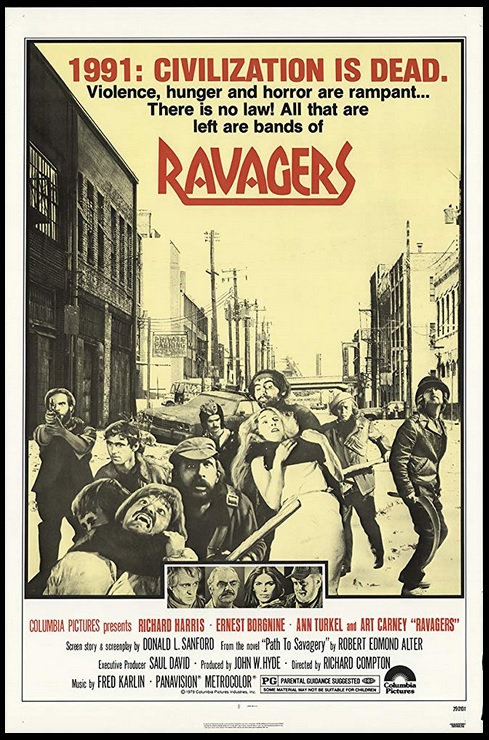
Ravagers is the final film of the 2nd wave of post-apocalyptic films from the 1970’s (the first wave encompassed films from the ‘50s and ‘60s that began with the likes of 1955’s Day the World Ended and 1963’s The Last Man on Earth and ended with 1968’s Planet of the Apes) that began with Charlton Heston’s The Omega Man in 1971 and solidified with Heston’s next film, 1973’s Soylent Green. (The third wave of post-apoc films began with 1979’s Mad Max, then solidified with 1981’s Escape from New York; which begat the knock offs from Italy and the Philippines.)
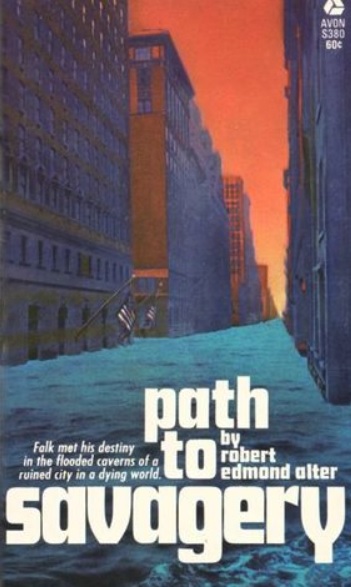
As with Planet of the Apes (based on Pierre Boulle’s 1964 Monkey Planet), The Omega Man (Richard Matheson’s 1954 I Am Legend), Soylent Green (Harry Harrison’s 1966 Make Room! Make Room!), and Damnation Alley (Roger Zelazny’s 1969 novel), Ravagers was a long-in-development film based on another best-selling, ‘60s science fiction novel: 1966’s Path to Savagery by Robert Edmond Alter.
And as with those book-to-screen adaptations — especially in the case of Damnation Alley — the final celluloid product barely resembled its popular, best-selling source material. And as with Oliver Reed’s Z.P.G, Yul Brenner’s The Ultimate Warrior, Sean Connery’s Zardoz, Jackie Cooper’s Chosen Survivors, Paul Newman’s Quintet, and George Peppard’s Damnation Alley, Ravagers was also buried by its distributor (in this case, Columbia Pictures) after its less than stellar critical and box office performance: it was hoped each film would match the success of Heston’s films. (Yep, you guess it: Ravagers was in desperate need of dump truck-bulldozer hybrids scooping up humans and Anthony Zerbe thespin’ with sclera-lenses from under a monk’s habit.)
In addition, these failed, ‘70s A-List apoc-films rarely — if at all — were redistributed as 2nd feature-undercards on the Drive-In after their initial run, and each were a rare find on television. Even during the early ‘80s cable television boom, with the “Superstations” of TBS-Atlanta, WGN-Chicago, WOR-New York, and the USA Network, and the burgeoning VHS home video market — both formats hungry for product to fill their airtime and store shelves — the films were wholly absent from the marketplace. Ravagers did see a release on Betamax and VHS in the mid- ‘80s (now highly coveted by VHS collectors; it doesn’t appear as an entry in any U.S-published VHS guides), but in the U.K and Europe only. For whatever creative or legal reasons, it seems Columbia didn’t want — or couldn’t allow — the film to be viewed by U.S audiences.
Now, with the explosion of the present day online/digital “television” platforms, Ravagers is commercially available worldwide for the first time in forty years. While there’s no free copy offered in the extensive library at TubiTV, the film is available for a nominal fee on You Tube and Vudu — with retro-prices that harkens the VHS rental fees of the ‘80s. It’s also available for rent on cable television system VOD platforms for about the same price.
Excelling at writing war-projects, screenwriter Donald Sanford made his theatrical debut, after a long career in U.S television, with Submarine X-1 (1968), and received praises for his work on Midway (1976; directed by Damnation Alley’s Jack Smight). While it’s unknown why Sanford retired from the industry—perhaps as result of its critical and box office failure — Ravagers was his final film; he transitioned to a career as an executive in the mining industry. Ravagers also became the final theatrical directing job for Richard Compton, who had box office success with the biker flick Angels Die Hard (1970) and Macon County Line (1974). He “retired” into a prolific television directing career.
Nothing like have a dog bark at your movie to induce you to retire (more on that, later).
As is the case with most apocalyptic films (unlike Blade Runner, which built its “world” from scratch), Ravagers, shot for the then major studio “low budget” price of $4 million, made use of preexisting structures (as did 1972’s Conquest of the Planet of the Apes, which also took place in “1991” via 20th Century Fox’s “Century City” complex) to create its “future.” So, again . . . we’re in another future world . . . that looks pretty much like our present day. And speaking of Planet of the Apes, and the art of economic “repurposing” in film: Astute science fiction fans will notice the matte painting that the opening titles are show over in the beginning of the film is the same matte painting seen by the ape army in Beneath the Planet of the Apes (1970).
It’s that repurposing — and perhaps Sanford’s interest and connection to the mining industry — that led to the film’s stellar production values. The film is rife with majestic, rusted processing facilities, while other scenes were shot at the infamous “Three Caves Quarry,” which is noted as one of Alabama’s first limestone quarries that, during the Cuban Missile Crisis of 1962, was slated to be used as a fallout shelter. Alabama’s Space and Rocket Center — again, repurposing preexisting architectural structures to save money — also served as a backdrop.
As with most post-apoc adventures, Ravagers is a futuristic-western featuring a peaceful protagonist out for revenge against those who upended his life: in this case, the rape and murder of Falk’s wife Miriam (Alana Hamilton, the wife of George Hamilton and, later, musician Rod Stewart; she made her debut in Evil Knievel and appeared in Roger Corman’s Night Call Nurses). Taking place in 1991 in the aftermath of a nuclear holocaust, the fallout mutated most of the world’s population into cannibalistic creatures known as “The Ravagers” (actually just homeless-looking humans with a nasty disposition) that hunt the unaffected survivors, known as “The Flockers.” (The Ravagers are led by prolific character actor Anthony James, who made a niche-career playing slimy-greasy characters in the films High Plains Drifter (1973), Burnt Offerings (1976), and Blue Thunder (1983), as well as countless U.S TV series.)
Richard Harris (A Man Called Horse, Juggernaut) is Falk; he ventures into the wastelands to dispense vigilante justice (just like in a Clint Eastwood western, such as Unforgiven (1983) — which stars Anthony James in his final film). Along the way, Falk befriends a crackpot army sergeant (Art Carney; Roadie, Harry and Tonto) and a strong and sassy scavenger (as all apoc-females are), Faina (played by Harris’s real-life wife, Ann Turkel). Together they find sanctuary in a peaceful community led by Rann (Ernest Borgnine, Escape from New York; while top-billed, he’s in the film less than 10 minutes) living on a rusted-out ship anchored off shore — that is subsequently destroyed by the Ravagers. Falk reluctantly becomes the survivors’ new leader as they embark on a quest to find a mythical safe haven: the Land of Genesis.
While visually stunning — and Anthony James, as usual, delivers the goods — the pompous judgment-diction of a woefully miscast Richard Harris makes you wonder when he’s going to pick up a skull and start evoking Shakespeare and pine for Esmeralda. And in the grand tradition of apoc-romps such as Def-Con 4 and Damnation Alley substituting action for talky-philosophical babbling of the “why we’re here and what are we gonna do now” variety, Ravagers moves like a gimp turtle being beaten by a snail.
Like with the earlier apoc-romps The Ultimate Warrior and Damnation Alley, Ravagers isn’t a total waste of time . . . it’s just that it could be so much better. Regardless of its shortcomings, I hold the film in high regard due to the memories of my late father taking me to see it at the local Drive-In (it didn’t play in theatres; and it was gone by next the weekend). My dad hated Ravagers; then again, he hated Soylent Green, Rollerball, and Damnation Alley for having “too much talking and not enough action” and, in a way, pops was right. There was a lot of yakity-yak in those films.
But my dad didn’t hate it as much as Gene Siskel of PBS-TV’s Sneak Previews. Roger Ebert’s svelte sidekick chose Ravagers as his “Dog of the Week” (well, actually Spot the Wonder Dog picked it; you can forward to 2:29 for the “ravaging” review). And Siskel’s review killed the film: For when a canine barks at your $4 million dollar gorilla, telling you it’s a “dog” . . . you quickly pull the big ape from release, cancel the rollout to additional U.S screens, cancel your overseas theatrical schedule, and quietly release the beast years after the fact to video in Europe. Why release it on U.S video, only to have reviewers dredge up Spot the Wonder Dog in reviews all over again? Nuked by a dog: now that’s an apocalypse!
. . . And that’s, my apoc-rats, is the story of Ravagers.
Oh, and if you absolutely must have more Ann Turkel (yes, please!) working alongside her then-husband Richard Harris, you can check out their first three movies together: 99 and 44/100% Dead! (1974), The Cassandra Crossing (1976), and Golden Rendezvous (itself a long-in-development novel-to-screen project optioned in 1962 and not made until 1977). But here, at B&S Movies, we love Ann for Roger Corman’s amphibian-monster Alien rip-off, Humanoids from the Deep.
Sorry, Ms. Turkel. We know you probably want to forget that one. Along with Ravagers.
About the Author: You can read the music and film reviews of R.D Francis on Medium and learn more about his work on Facebook.
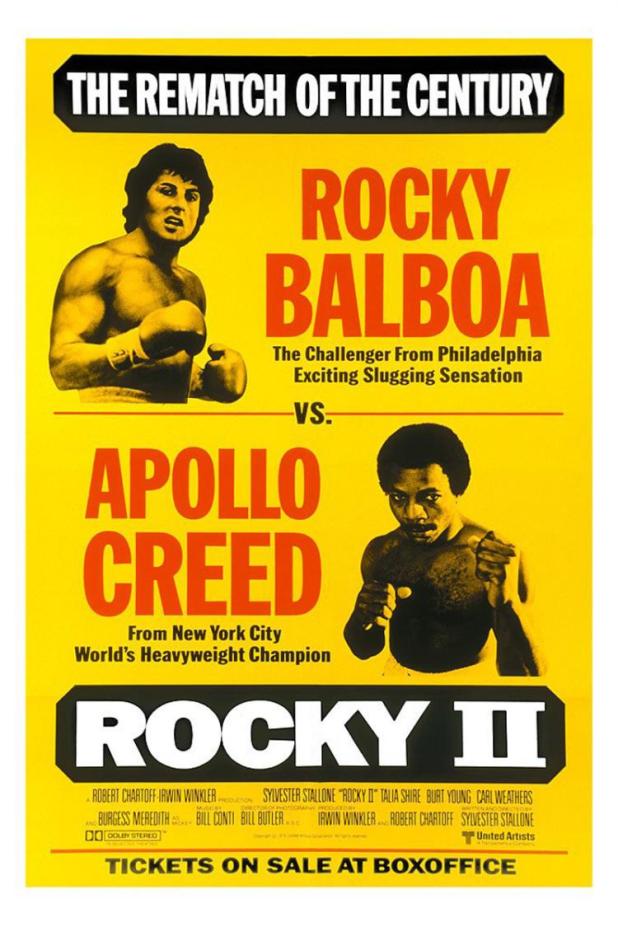
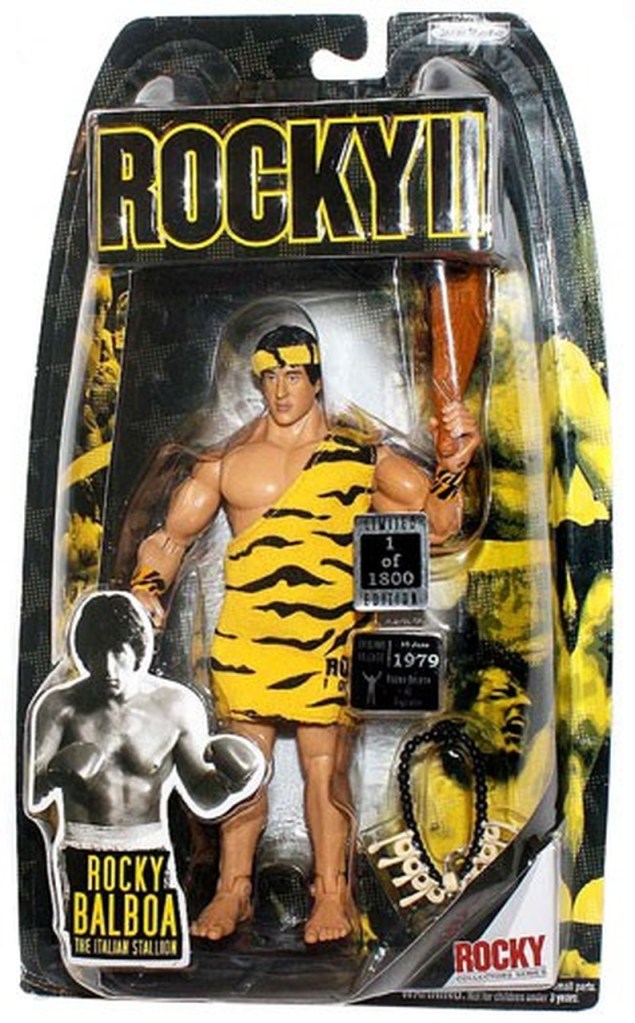
After the success of Rocky, the producers were eager to make a sequel. While Sylvester Stallone would write the script and star again, John G. Avildsen was tied to Saturday Night Fever (a script disagreement led to him being removed from the film three weeks before shooting started; he was replaced by John Badham). Stallone went all out to get the job, just like he did to get the starring role in the original film. Producers Irwin Winkler and Robert Chartoff understood how much of the success of the first film came from Stallone and helped him get the job.
The film begins immediately at the close of the last movie: world heavyweight boxing champion Apollo Creed (Carl Weathers) has defended his title against Rocky Balboa (Stallone), yet his promise of no rematch is rescinded the moment reporters surround the two men. Their private moments are much different then public; when Rocky goes to Apollo’s hospital room, he asks if he gave his all. The champion agrees that he did.
Rocky decides to retire after learning that he has a detached retina and that one punch could blind him. He has a new life now, one of endorsements and agents, but also one of true love as he marries Adrian and they expect a child.
Apollo is on a different path, as he’s now obsessed with a rematch. Rocky is the only mark on his perfect career. Despite everyone close to him telling him to drop it, he demands a rematch, smearing the good name of Rocky even in retirement.
Rocky’s inexperience with money and inability to read basically reduces his life to pure pain. Even a job at a slaughterhouse doesn’t last as the film compounds the boxer’s tragedy, moment by moment. Rocky begs Mickey to take him back and train him, but the older boxer refuses until he sees the way Apollo is taunting him.
Adrian has gone back to working at the pet store and refuses to support Rocky’s need to fight one more time. She goes in labor early and while their child is healthy, she remains in a coma. Rocky blames himself and stops training, but days before the fight, she awakens and tells him to win.
Apollo boasts that he will beat Rocky in no more than two rounds to prove the first match was a joke. Yet Rocky fights right handed instead of left, taking an even more brutal encounter into the fifteenth round, yet Apollo is way ahead on points. Rocky switches back to southpaw — leaving his bad eye open to damage — and takes out the champ with a massive punch that takes both to the canvas. Luckily, he rises in victory.
According to John G. Avildsen, another reason he didn’t do this film was because he didn’t like the story. He was, however, excited to do the third movie, where Rocky would have been elected mayor, only to be caught in a scandal when Paulie stole from the treasury. Rocky would take the blame and end up back in his old neighborhood. Notably, a similar plot occurs — spoiler warning — in the movie Stallone and Avildsen did collaborate on, Rocky V.
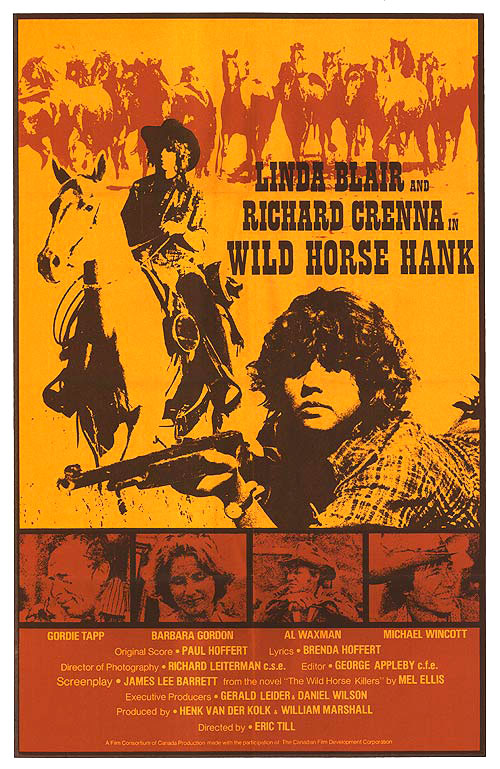
Based on the Mel Ellis’ 1978 teen novel The Wild Horse Killers, this Canadian adventure allows Linda Blair to show off her skills with horses throughout.
Here, Linda plays Hank, a cowgirl who has been raised to independent by her father, Pace (Richard Crenna, who will forever be Colonel Trautman). When her prized stallion gets away from her, she finds some horse hunters herding mustangs to turn into pet food. She takes on the mission of rescuing these animals and getting them to the Rantan Game Preserve where they’ll be safe.
That journey — across 150 miles of desert, river, mountains and angry poachers — takes up the majority of the film, which finds Hank’s story winning over the locals and truckers who ride the roads like the cowboys of the past.
Being that this is a Canadian film, it has to star some Canadians. Michael Wincott fits the bill, which is a pun, as he’s probably best known as Top Dollar in The Crow. Honestly, he’s beyond incredible in that film.
This is perhaps the most normal film of Linda Blair week. In fact, your kids could watch it. It’s way ahead of it’s time by having a strong female hero who doesn’t need the man to save her and who wins by sheer force of her personality and unwillingness to back down.
I’m here to tell you that in my small hometown that the Ellport Roller Rink was the biggest deal when I was seven years old in 1979.
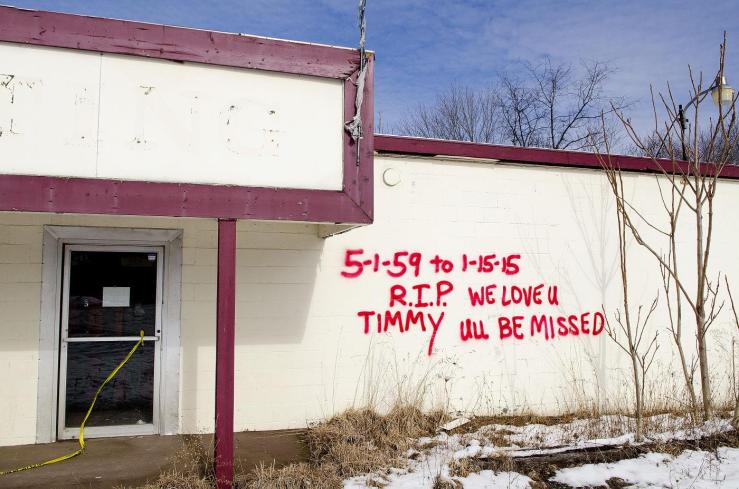
While dead today, this was the front of the Ellport Roller Rink.
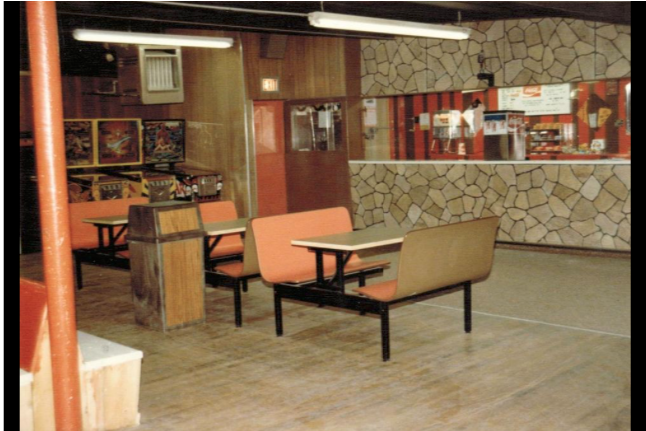
I bet you can guess that your author spent more time playing that Gorgar machine than skating.
Most Friday nights and plenty of birthday parties were spent there, rolling around the track that seemed huge as a child but was probably impossibly small were I to see it today. That’s why if someone watches 1979’s Roller Boogie they probably will laugh at its charming anachronisms and wonder if this could have ever been the real world. It was. I am here to tell you, on some small level, when I was a chubby seven-year-old, my birthday party was my parent’s approximation of this film. Also: I got a Rodan doll, so I’ll say that that was my best birthday ever.
Roller Boogie concerns Terry Barkley, rich girl classical flutist (this makes the third movie in a row I’ve watched where Linda Blair’s family just ignores her) and Bobby James (real-life roller skating champion Jim Bray), the man who she hires to train her to be a skater. Also, Terry drives perhaps the greatest car I’ve seen in a film, an Excalibur Phaeton. Luckily, IMDB informed me that it’s actually an Excalibur SSK, which ended up being an overpriced, hard to drive kit car cover version of a Mercedes SSK that cost way more than it should have.
They’re from different sides of the track, the rollerskating track that is. Both of their respective sets of friends and family make fun of them for falling in love as they’re obviously not made for one another.
Sadly, Jammers, the club where everyone skates, is about to be sold to the mafia to pay off a debt. This means that a fancy party gets ruined and a bunch of rollerskaters have a massive chase sequence. Then there’s a Boogie Contest before Terry goes to New York to be the queen of the flute and Bobby goes to the Roller Skate Olympics.
This is the kind of movie where a DJ leans into a mic and says, “It’s time to play you some of that new sound.” Where people lift on Venice Beach. Where more time is given to people leaping on their skates over barrels than character development. Where Linda Blair wears skimpy outfits and bikinis in the film that’s amazingly her last studio film, yet she continues to act today. Impossibly, it looks gorgeous, which I contribute to the talent of Dean Cundy, the director of photography whose magic helped make Halloween stand out so much.
Roller Boogie was written by Barry Schneider, who also wrote two movies based on hit songs, Harper Valley P.T.A. and Take This Job and Shove It, as well as Ruby, Deadly Force and Class of 1984. Irwin Yablans, who produced Halloween and Tourist Trap, helped create the story and also produced. And director Mark Lester would go on to helm Class of 1984, Class of 1999, Commando and Firestarter.
This movie was a success at the box office and a sequel — Acapulco Roller Boogie — was proposed before disco died. If you’re still in the mood for roller skating movies, however, I can also recommend Skatetown, U.S.A., which features Scott Baio and Patrick Swayze on wheels with Flip Wilson, Maureen McCormick, Ron Palillo and Ruth Buzzi providing the laughs and the love.
This movie came at a crossroads in Blair’s life. She had to fly to Florida right after filming ending to face cocaine possession charges and thought that this film would remove her from being typecast for intense horror fare. However, the very next year, she’d star in Hell Night.
PS: Becca has an eagle eye for movie locations. Terry’s house was also used in the music video for The Cars’ “Magic” and the movie Blind Date.
We tend to celebrate ripoffs here a lot and use that word as a loving tribute to filmmakers who make their own versions of stories that are perhaps a bit better known. One of the most famous ripoffs of all time is F. W. Murnau’s Nosferatu, which changed minor parts and character names of Dracula to avoid the copyrights owned by Bram Stoker’s estate. However, a lawsuit shut the movie down and all prints of the film were to be destroyed. Luckily, several prints were destroyed and restored after the copyright expired.
By 1979, the original silent film was seen as a classic in its own right. Indeed, director Werner Herzog considered it to be the greatest movie to ever come out of Germany. As the story of Dracula was now in the public domain, he decided to remake the film with the names of Stoker’s original story intact.
The primary reason to watch this film is, of course, Klaus Kinski as the vampire. Made up as a virtual imitation of original actor Max Schreck by Japanese artist Reiko Kruk — sessions that took four hours, which amazes me that Kinski didn’t kill everyone around him — he’s a wonder here, owning every single frame he can grab, hold and steal. His version of Dracula isn’t the romantic lover that so many other films present. He’s tragic, unloveable and doomed to live forever.
Isabelle Adjani — whose role in Possession proves that she’s certainly equal to Kinski in the “how far can you take it” theory of acting — also shines as Mina Harker, here shown to be more than the better half of Jonathan. It’s her whiles and brains that doom the vampire more than any machination of the men in this film, even if it takes a supreme sacrifice to end the reign of the count.
Much like how the original Universal films had separate English and Spanish versions shot at different times, Herzog made an English and German version of the film. While that’s to be commended, I’m not a fan of some of the things that happened during the making of this movie.
The opening sequence was filmed by at the Mummies of Guanajuato museum in Mexico. Here, naturally mummified bodies of the victims of a cholera epidemic are on public display. The director shot this footage himself, taking the corpses out of the glass cases in which they are normally stored and placing them against a wall in order of ages from childhood to old age. It seems in poor taste — at best — to use these real human beings for a throwaway scene.
Herzog also erred in his treatment of animals while shooting this film. He hired Maarten ‘t Hart for his expertise in dealing with rats, but the Dutch behavioral biologist quit the film in disgust after seeing how badly the animals were treated. They were imported from Hungary in such bad conditions that many of them began to feed on one another by the time they arrived at the set. To make things even rougher, Herzog demanded that the white rats be died gray in boiling hot water, leading to half of their population dying. The ones that survived stayed white, as they licked the new color off.
Still, Herzog has stated that the rats behaved better than Kinski. He wanted a more restrained performance than Kinski was intent on delivering, so he had to wind the actor up and have him flip out before major scenes. That way, he’d be too exhausted to play the role any other way.
You can watch this for free on Tubi or check it out on Shudder. And be sure to check out our second take on the film, HERE. It’s also featured as part of our Klaus Kinski-Werner Herzog “Drive-In Friday” tribute night.
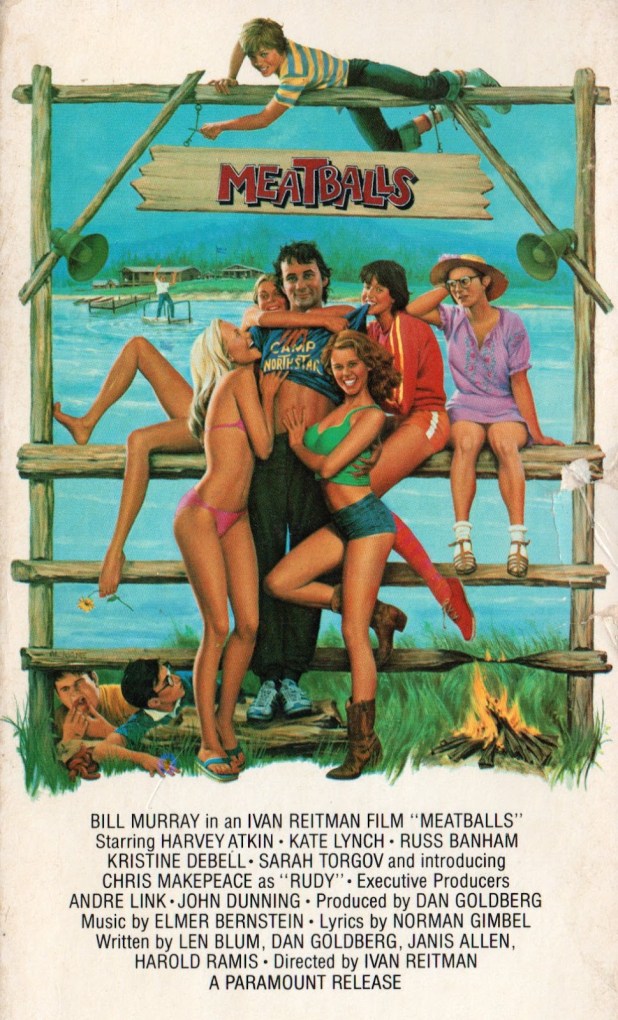
After appearing on The National Lampoon Radio Hour and several seasons of Saturday Night Live, Bill Murray was poised for stardom. This is but the first of the many starring roles he’d gift us with over the years. His role as camp counselor Tripper Harrison is basically him playing the role of Bill Murray, an exaggerated version of himself, that he’d been doing on SNL for some time.
The first of four films that Murray would make with director Ivan Reitman, this is pretty much one of the ultimate hijinks ensue films. That’s my theory of what makes an imminently watchable film: start with a simple concept, create some great characters, place them into some funny situations and let the hijinks ensue.
This is also the first of six collaborations between Murray and writer Harold Ramis. Incredibly, Ramis claimed in interviews that he and Reitman had no idea if Murray was going to be in Meatballs until he showed up for the first day of shooting.
This was also the first movie that Ramis wrote after Animal House. Originally, Reitman was going to produce and that film’s director, John Landis, was also going to work on Meatballs. He decided to do The Blues Brothers, so Reitman decided to direct.
Harrison (Murray) is in charge of the counselors and kids of the cheapskate Camp North Star, which has never defeated the rich Mowhawk in twelve years of Summer Camp Olympiad competition. There’s young love, pranks and Murray’s continual camp announcements, so many of which were part of my childhood and teen years as our local radio station WDVE played them for years.
The film’s best segment is Harrison rallying the troops to win the big game with a speech that seems to go nowhere. “And even if we win, if we win, HAH! Even if we win! Even if we play so far above our heads that our noses bleed for a week to ten days; even if God in Heaven above comes down and points his hand at our side of the field; even if every man woman and child held hands together and prayed for us to win, it just wouldn’t matter because all the really good looking girls would still go out with the guys from Mohawk because they’ve got all the money! It just doesn’t matter if we win or we lose. IT JUST DOESN’T MATTER!”
Five years later, Meatballs Part II would be released, which has no connection to this film but does have an alien named Meathead. Meatballs III: Summer Job catches up with Rudy, played here by Patrick Dempsey instead of Chris Makepeace. This time out, he’s haunted by the ghost of Roxy Doujor (Sally Kellerman), an adult film star who can’t get into Heaven until she helps Rudy lose his virginity. Finally, the movie Happy Campers became Meatballs 4, bringing together Corey Feldman, Sarah Douglas (Ursa in the Superman movies) and Eraserhead star Jack Nance.
Finally, some interesting Reitman and Murray trivia. In the early 1980’s, Tom Mankiewicz (the writer of Live and Let Die, The Man with the Golden Gun, Supermanand Ladyhawke, as well as the director of Dragnet and the creative consultant for TV’s Hart to Hart) wrote a script called The Batman. Reitman would have directed, with Murray has Batman, David Niven as Alfred Pennyworth, William Holden as Commissioner James Gordon, and singer David Bowie as The Joker. After Reitman left the project, Joe Dante took over but nothing ever happened. Most interestingly, this movie would have been based on the Steve Englehart/Marshall Rogers/Terry Austin run of the comic.
You can legally watch Meatballs for free on YouTube.
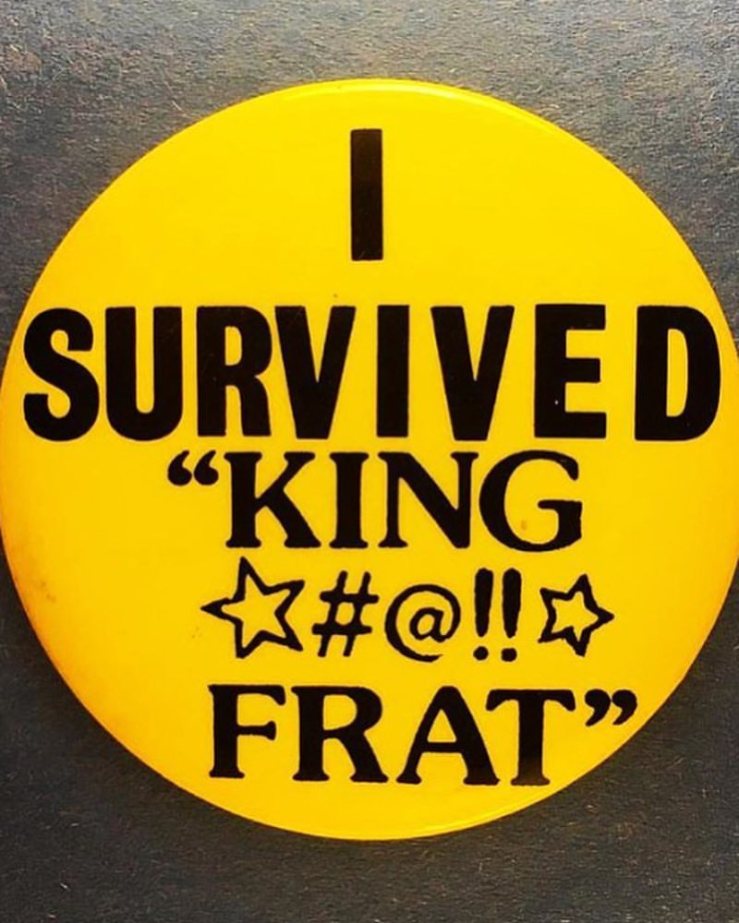
For years I read about King Frat in Cinema Sewer and always debated if I could handle it. And then I came across its entry in Teen Movie Helland realized that as I was planning a week of teen movies to go along with it, that I’d have to battle my way through it. I’m happy to say that I’ve made it. And really, it’s something else.
Before he became the founding editor of The Huffington Post, Roy Sekoff starred in this movie, which was filmed in Miami and Coral Gables as a takeoff of Animal House. The Bluto Blutarsky of this film is J.J. “Gross-Out” Gumbroski, played by John DiSanti, who believe it or not would go on to be in other movies (*batteries not included is one of them).
Set at Yellowstream University, this movie follows the Pi Kappa Delta fraternity, who are only concerned with drinking. A good chunk of the film involves them mooning people, which leads to the death of the dean of the school. Then, a farting contest is announced and everyone battles to have the best farts in a scene that goes on longer than you’d expect, then goes about another seven minutes past that.
I mean, just watch the first ten minutes of this movie, knowing that this same song plays for the entire movie.
King Frat is literally the bottom of the absolute barrel of filmmaking and I love it. If Animal House was too classy for you, if you wondered if they could make a movie where a frat could murder a dean by farting in his face and stealing the body and then have a scene where numerous men and women fart and nearly shit themselves, good news. This is the movie for you.
Guillermo del Toro often refers to Lucio Fulci as a director who “gets high on his own supply.” Me? I’d love to know whatever Sergio Martino started mainlining around 1979.
Sergio then started jumping genres, making movies for whatever trend was hot. Sex comedies? Try Sex with a Smile with Fenech, Barbara Bouchet and Marty Feldman. Cannibal films? Sergio made The Mountain of the Cannibal God. Nature on the loose, kinda like Jaws? Here’s The Great Alligator. Post-apocalyptic film? 2019: After the Fall of New York does that.
But then, Sergio starts getting nuttier. His movies start to combine genres into things you had no idea you wanted to see. Comedy movies with tons of cameos from soccer players like L’allenatore Nel Pallone. Hands of Steel, which combines The Terminator, The Road Warrior and arm wrestling ala Over the Top into a truly baffling cocktail. Then there’s American Tiger, a movie where a gymnast battles the forces of televangelist/warthog Donald Pleasance when he’s not pulling a rickshaw or having sex in the shower with his jeans still on.
Whatever supply Sergio started getting high on around 1978 or so, I want some of it. And I want it now. Because he takes that same lunatic zeal into this movie, which combines movies about amphibians, Atlantis and cannibals into one confusing yet arresting mess. How did you do it, Sergio?
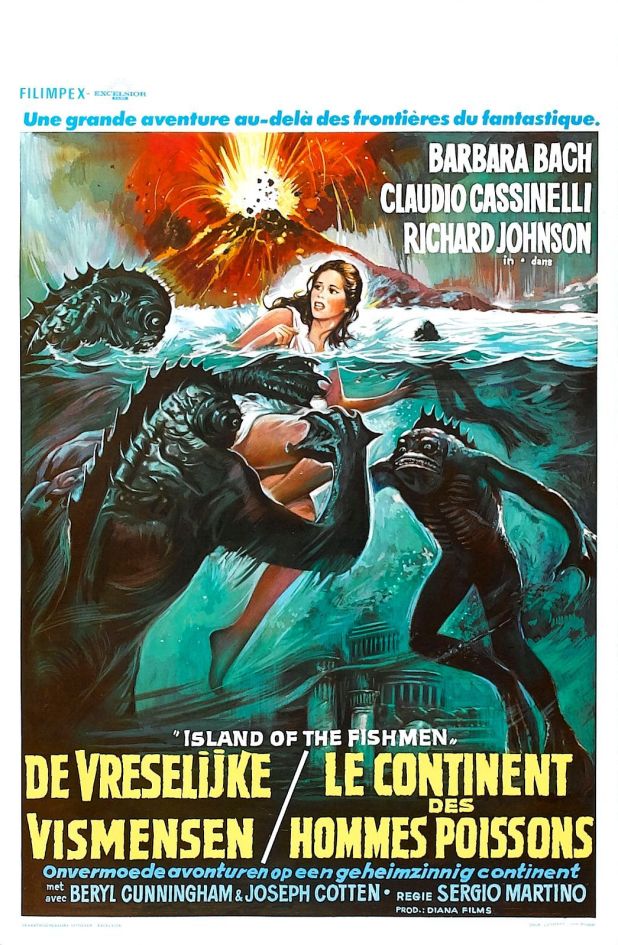
Originally released as Isle of the Fishmen in his native Italy, this movie was acquired in the U.S. by New World Pictures. Miller Drake was hired to create a new opening for the film, which features Cameron Mitchell and Mel Ferrer looking for Atlantean treasure on an island before getting messily killed by fishmen. Retitled Something Waits in the Dark, the movie didn’t do well.
Then, Jim Wynorski (Chopping Mall, Sorceress) recut and reedited the movie as Screamers, including a new scene where a man is turned inside out. Nearly half an hour of the Italian version of the film was chopped out to make room for the American footage in both movies.
Let’s get into it: In the year 1891, Lieutenant Claude de Ross (Claudio Cassinelli, Zeus from Hercules, Murder Rock) survives two shipwrecks in a row to wash up on an uncharted island in the Caribbean. Soon, we meet the fishmen who start killing off anyone who comes near them, like the convicts Claude survived with. They run into the jungle, only to meet our villain, Edmond Rackham (Richard Johnson, Dr. Menard from Zombi).
Rackham also has Professor Ernest Marvin (Joseph Cotten!) and his daughter Amanda (Barbara Bach, future wife of Ringo Starr) captive, using the Professor’s scientific abilities to create more amphibious monsters that he can control. Turns out he’s told the Professor that these transformed humans can help save the world by creating people who can live off the ocean’s resources. Sure. Whatever.
The truth? They’ve found Atlantis and these creatures are being used to steal the treasures of that sunken continent. Also: Rackham has another army, all voodoo warriors and a priestess named Shakira who keeps reading from her prophecy of the island’s destruction.
Of course all hell is about to break loose. How couldn’t it? There are so many ingredients in this stew, it just had to boil over at some point.
This movie is completely ridiculous, which is shorthand for me saying that I loved it. It makes absolutely no sense whatsoever, which is exactly what I was hoping for. I came to this wanting to see underwater creatures kill people and I got that, plus voodoo, Atlantis and Barbara Bach. Thanks Sergio!
Sergio Martino would come back to this story sixteen years later, making a sequel called The Fishmen and Their Queen.
My buddy Destro on Twitter suggested this movie to me after the first week of Horror Comedy movies. I hope he digs that this got picked.
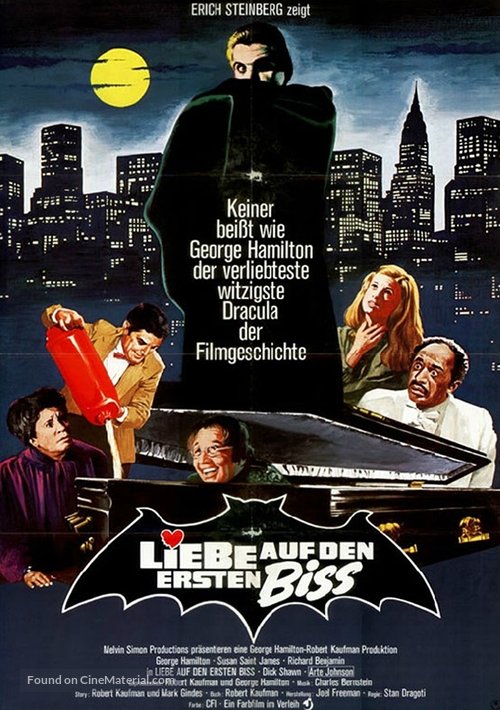
George Hamilton has a way better tan than any Dracula ever, but that doesn’t mean the people of Transylvania love him. They kick him out of his castle to turn it into an Olympic training gym, so he moves to New York City hoping to find his reincarnated lover.
Just a warning before you watch this. It’s as 1970’s as it gets, which means that no one was woke to the fact that racist jokes aren’t funny. Or maybe they were back then and no one knew any better. Who can say?
Dracula and Renfield (Arte Johnson) end up in a hotel after their coffin gets sent to a Harlem church presided over by Reverend Mike (Sherman Hemsley). While the 1970’s have blood banks, free sex and disco, our vampire hero is about to give up when he discovers Cindy Sondheim (Susan St. James), a fashion model who he believes is his reincarnated eternal love Mina Harker. He battles Van Helsing’s descendant Jeffrey Rosenberg (Richard Benjamin) who teams with a New York cop played by Dick Shawn.
Isabel Sanford also shows up as a judge, as does Michael Pataki, which always makes me happy.
Here’s some interesting trivia: this movie featured the same makeup artist as the original Dracula, William Tuttle. That makes sense, as does Arte Johnson basing his acting on Dwight Frye in the original film.
George Hamilton bought the rights to this film and has been trying to get a sequel made that combines Twilight with Dracula and involves the son of the legendary vampire marrying the daughter of a televangelist.
Director Stan Dragoti was busted for cocaine possession on the way to promote this movie at Cannes. Don’t worry — he recovered well, making the movies Mr. Mom, The Man with One RedShoe, She’s Out of Control and Necessary Roughness before his death in 2018. He was also married to Cheryl Tiegs throughout the 70’s.
You can get this on a double blu ray with Once Bitten from Shout! Factory. Hey — we watched that movie too!
PS: For those that care about this sort of thing — like me — Michael Pataki shows up here as a mobster. Update your Letterboxd list accordingly.





 B&S About Movies
You must be logged in to post a comment.