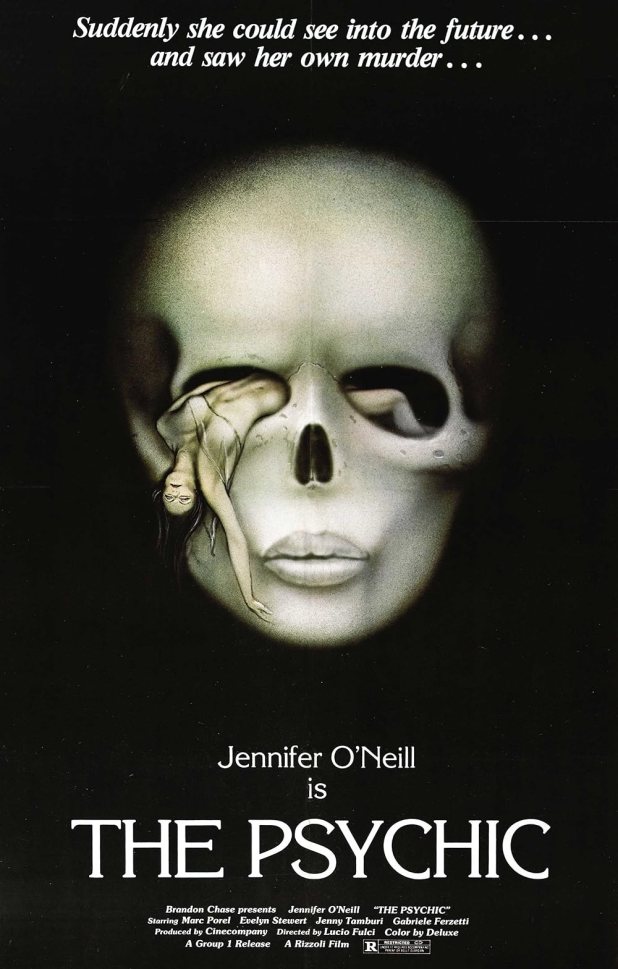
CBS LATE MOVIE MONTH: The Psychic (1977)

EDITOR’S NOTE: The Psychic was on the CBS Late Movie on May 27, 1981 and June 25, 1982.

Before Fulci became known as the godfather of gore, he made movies in nearly every genre. This is the next to last film he’d make — Silver Saddle follows it in 1978 — before 1979’s Zombie announced to the world that he was here to tear eyeballs, unleash bats and provide dazzling if incomprehensible odes to mayhem.

Fulci is no stranger to the Giallo, with some of his most important films being A Lizard in a Woman’s Skin and Don’t Torture a Duckling and the unappreciated Perversion Story. The title refers to the film’s exploration of the duality of human nature, a theme that Fulci often revisits in his work. Here, he’d team up again with writer Roberto Gianviti and begin his long partnership with writer Dardano Sacchetti, who sought to lend a touch of Argento to the original script’s traditional mystery.

What emerged was a film shrouded in mystery and darkness—a rumination where death is inescapable and always close, a world where doom hangs over every moment, captivating the audience with its enigmatic atmosphere.

The film is set in Dover, England, in 1959, a time of social change and upheaval. A woman commits suicide by literally diving from the Cliffs of Dover. Forgive the harmful effects — Fulci tends to use wooden bodies in his films for some reason, much like the end of Duckling. The main point is that her daughter Virginia may be living in Italy, but she can clearly see her mother’s day.

Today, Virginia (Jennifer O’Neill, Scanners) lives in Rome and is married to a wealthy businessman named Francesco (Gianni Garko, Sartana himself!). As she drives him to the airport for his next business trip, she begins to see visions. An older woman is being killed. A wall is torn down. And a letter is under a statue. How strange is it that the house she is beginning to renovate looks precisely like the one in her visions?

When she tears down the wall that looks like the one in her dreams, she finds the skeleton of her husband’s ex-lover and the police want to charge him with the murder. Virginia becomes the detective of the story, obsessed with saving her husband with the help of psychic researcher Luca Fattori. Soon, they believe that the real killer is Emilio Rospini (Gabriele Ferzetti, On Her Majesty’s Secret Service).

So who is the woman? Why was her body in that room, which was once her husband’s bedroom? Why is the woman’s face on the cover of the magazine that Virginia buys? That’s because Virginia’s visions aren’t the past but premonitions of the future.

Meanwhile, she’s given a wristwatch that plays a haunting theme every hour in the house. This eerie soundtrack, composed by Fabio Frizzi, adds a layer of suspense and tension to the film and was reused to incredible effect in Kill Bill. The growing knowledge that the victim isn’t dead yet—and that Virginia may be that victim—darkens every frame of Fulci’s epic.

Quentin Tarantino was so in love with this film that he intended to remake it with Bridget Fonda sometime in the 2000s, but this never happened.

Perhaps just as interesting as the film is the life of its star, Jennifer O’Neill. Possibly best known for her long career as a Cover Girl model, she has been married nine times to eight husbands (she married, divorced, and remarried her sixth husband, Richard Alan Brown). By the age of 17, she’d already attempted suicide so as not to be separated from her dog, had a horse break her neck in three places and married her first husband. She’s also had a horrible history with guns, having accidentally shot herself in 1982 and being on the set of the TV show Cover Up in 1984 when co-star Jon-Erik Hexum accidentally killed himself. While waiting for a delay, he had been playing Russian roulette with a prop gun and was unaware that the discharge could still cause damage. Placing the gun to his temple, he fired and caused so much damage to his brain that he died six days later.

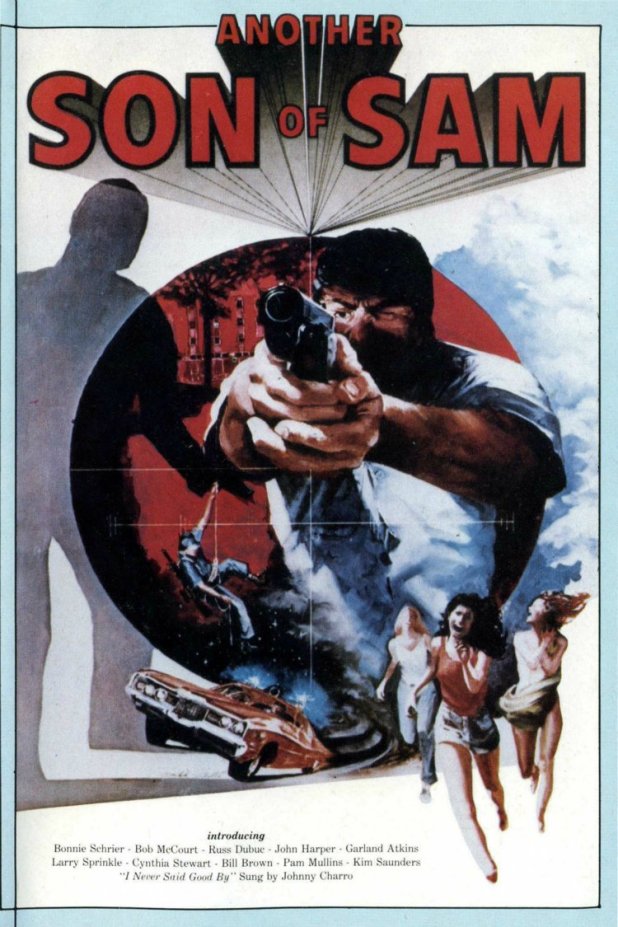
The Sizzlin’ Something Weird Summer Challenge 2024: Another Son of Sam (1977)

Bleeding Skull’s Top 50 (July 7 – 13) The middle-brow champions of low-brow horror, Bleeding Skull has picked out some of their favorites from the SWV catalog. They neglected to put I Drink Your Blood or EEGAH! on the list, but I think I can forgive them since they included Ship of Monsters

Made in Charlotte, North Carolina by one and done director/writer/producer/editor/stunt coordinator/casting director Dave A. Adams, this movie isn’t even about David Berkowitz — or whoever was really the Son of Sam — much less a new version of this occult killer. No, instead, it’s about Harvey.

Who is Harvey, you may ask. Well, he’s a killer escaped from a mental hospital in a movie that has moments that seem to be Halloween a year before that even hit theaters. Don’t think that this has any Carpenter directorial highlights or moments of Dean Cundy-esque camera brilliance. The movie tends to pause for several seconds while dialogue just keeps running and the camera seems to be a window into the mind of someone tripping balls while the coolest synths ever play.

Speaking of music, the real star of this show is a lounge singer named Johnny Charro who still plays shows to this day. Oh yeah, there’s also SWAT officers in action, a stuffed dog who seemingly wants to take a shower with his owner and an abortion, because, well, I honestly have no idea why.

Harvey has been killing people because his mom assaulted him as a child. Why did the cops bring her out to try and talk him out of a hostage situation? Seriously, that’s some giallo-level police buffoonery.

You can get this movie on the AGFA blu ray for The Zodiac Killer or watch it on Tubi.

The Sizzlin’ Something Weird Summer Challenge 2024: The Child (1977)

We first encountered The Child at a Halloween party thrown at the palatial Mexican War Streets home of Mr. Groovy Doom himself, Bill Van Ryn. While some folks drank in the kitchen or enjoyed the mix of Goblin and My Life With the Thrill Kill Kult blasting in the sitting room, I was entranced by a film that was playing on the TV. The sound wasn’t turned up, the images all felt like transmissions from beyond and nothing really added up in the movie. “What the hell is this,” I asked. “Oh, The Child!” exclaimed Bill, hurriedly running in to try and explain why he was growing more and more obsessed with multiple rewatches of the film.

Sometime in the 1930’s — which you’d only know from the old cars, as this film feels like an anachronism lost in no particular time — Alicianne has been hired to be the caretaker for Rosalie Nordon, the titular child, who has just lost her mother. Along with her father and brother Len, she lives in a house on the edge of the woods.

Even the trip to the house is strange, with Alicianne’s car breaking down after she drives it into a ditch. A journey through the woods brings her to Mrs. Whitfield, who warns her about the Nordon family. She probably should have listened, as everyone in this family — hell, everyone in this movie — is touched, as they say.

When Alicianne first meets Rosalie, he jack in the box suddenly moves by itself. It’s a very subtle scene that hints that things might not be right here. After all, people have seen Rosalie wandering the cemetery late at night, a place where she brings kittens so that her friends there will do anything she asks. And even dinner is strange, as her father relates a story of Boy Scouts eating a soup stirred with oleander that caused them all to die. Father and daughter have a good laugh at that while Len just seems embarrassed by his family.

Then there are the drawings — Rosalie has been sketching everyone who was at her mother’s funeral, marking them for death. And if she does have psychic abilities, is she using them to reanimate the dead or control them? Or do they just do whatever she wants? The Child wasn’t made to give you those answers. It just screams in your face and demands that you keep watching despite your ever-growing confusion.

Mrs. Whitfield’s dog is taken first, then that old busy body pays the price, with her face getting ripped off as the zombies mutilate her. That gardener has some of mommy’s jewelry, so he has to pay, too. And Alicianne, who was supposedly here just for Rosalie, has started to spend too much time with Len. She’s next on the list.

There are some really haunting scenes as we get closer to Halloween, like a scarecrow come to life and a jack-o-lantern that keeps relighting itself and following our heroine around the room.

Finally, Mr. Nordon starts to discipline his daughter, which leads to Rosalie unleashing all of her powers. She decimates her father, crashes Alicianne’s car and sends zombies to chase her governess and brother all the way to an old mill. Len tries to fight them while Alicianna just screams and screams, but he can’t stop them from dragging him under the building and tearing his face to bloody pieces. As the attack of the zombies stops, Rosalie walks through the door just as our heroine hits her with an axe. She walks outside into the dawn’s light and everything is still. The threat is over.

Written by Ralph Lucas as Kill and Go HideThe Child isn’t a great movie, but it’s an interesting one. If you ask me, that’s way more important. Some people will get tied up in things like narrative cohesion, good acting and a soundtrack that makes sense. None of those people should watch The Child with you, as they’ll just ruin what can be an awesome experience. This is the kind of movie that takes over, kind of like one of those dreams you have and try to write down the moment you wake up, but it gets lost in the ether of reality. For most of the film, the zombies are barely glimpsed, just seen in the shadows, so they really could just be tramps that live in the cemetery. Or something much worse.

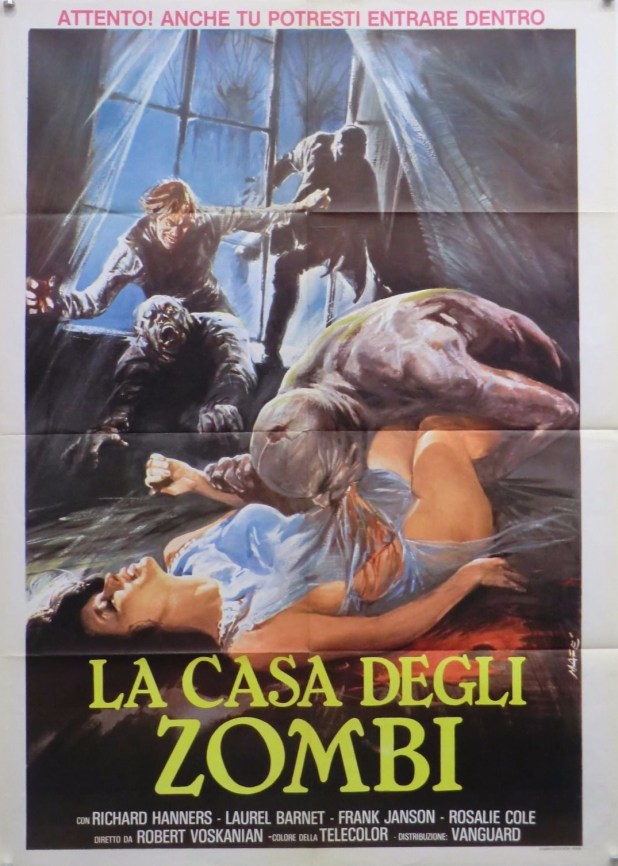
Producer Harry Novak acquired this film and made his money on it, even if director Robert Voskanian and producer Robert Dadashia saw no profit. It’s a story we’ve seen hundreds of times — an interesting movie taken, used and abused by conmen who have no interest in art.

Yet I wear a Harry Novak shirt all the time.

You can watch this on Tubi.

CBS LATE MOVIE MONTH: Curse of the Black Widow (1977)

EDITOR’S NOTE: Curse of the Black Widow was on the CBS Late Movie on April 13 and October 19, 1983 and June 6, 1984. Bill Van Ryn also covered this movie for the site.

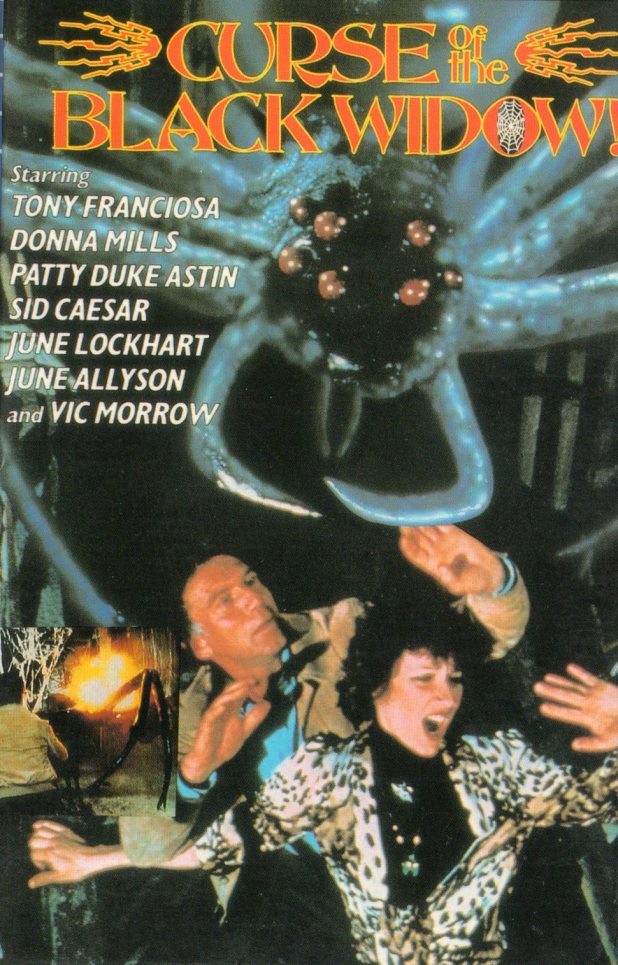
For the last few years, men have been found dead in Los Angeles with small bites all over them. It hits home for Mark Higbie (Tony Franciosa, Tenebrae)  when a woman picks up one of his friends and soon leaves him killed in the same way. As a detective, Mark knows some cops, like Lieutenant Gully Conti (Vic Morrow), who lets him in on the secret: the men are filled with spider venom and the same woman, Valerie Steffan (Patty Duke) is always near the scene of the murders.

One of the suspects, Leigh Lockwood (Donna Mills) — her sister Laura (also Duke) is the other the police are following — hires Mark, as she once dated every single one of the men who were killed. Also: the girls’ father was killed in a plane crash that they survived, after which one of them was bitten by spiders. When he meets the Native American who saved them, he’s told that some women are affected by an ancient curse passed through the female line. During the full moon, these women turn into giant spiders in times of stress — werespiders! — murder men, encase them in webbing and feed on them. These women have a red hourglass-shaped birthmark on their abdomens, like a black widow. The only thing that can kill them is fire. Also, a bartender says that he saw a giant spider kill one of the victims.

Spoiler: Valeria and Laura are the same person, driven by a hate of the sister and how successful she is with men. Only their mother (June Lockhart) — now in a coma after seeing her turn into her spider shape — and their nanny Olga (June Allyson) know the truth. Meanwhile, Mark is falling for Leigh when he should maybe pay attention to his assistant Flaps (Roz Kelly). But what do I know? I’ve never investigated a giant werespider murder mystery before.

I love this movie. It’s packed with character actors — Max Gail, Jeff Corey and Hard Boiled Haggerty are also in this — plus Sid Caesar makes an unexpected appearance. Directed by Dan Curtis and written by Robert Blees (Savage HarvestFrogs), this movie will teach you so many things but foremost that giant spiders sound like Rodan.

You can watch this on YouTube.

CBS LATE MOVIE MONTH: Crash! (1977)

EDITOR’S NOTE: Crash! was on the CBS Late Movie on November 6, 1981 and August 13, 1982.

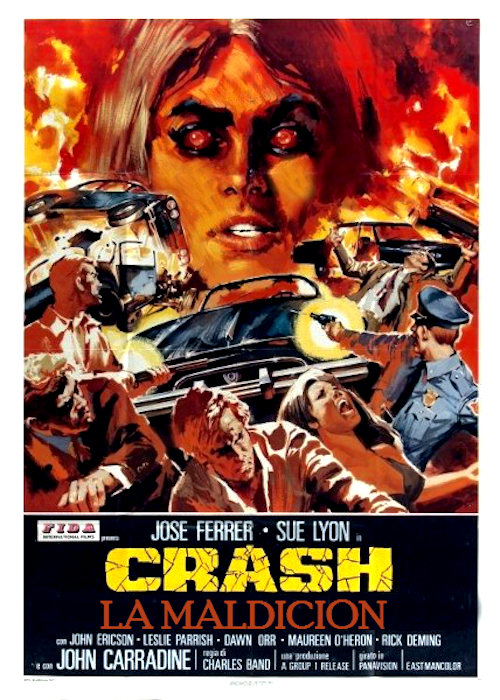
I have a real weakness for Charles Band’s movies. I think any study of the past articles on this site will point to this, but today’s example is 1977’s Crash!, a movie where Sue Lyon plays a wife who has to deal with a jealous husband played by José Ferrer who keeps trying to kill her. So she does what any one of us would do. She uses black magic to get back at him.

Will the burned visage of Reggie Nalder show up? How about John Carradine? What about the gorgeous Leslie Parrish, who pretty much created C-SPAN and was a major activist in addition to being a frequent talk and game show host? As you can see, Mr. Band knows exactly what I want, which is possessed cars and occult 1970’s buffoonery.

You have to love that Band has a best of montage right before the end of the movie, reminding us of all the vehicular non-driver homicide that we’ve already watched, which includes a giant dog against a possessed wheelchair.

This movie just barely beat The Car to theaters, but that movie blows it away in almost every way, except that this has Carradine cashing a check and Sue Lyon making my heart flutter. Otherwise, I’ll stick with Anton LaVey’s gas guzzler in the desert, if you make me pick. You didn’t, so I’ll just let you know that I enjoyed this, but I’m also a sucker for things blowing up real good and Satanic shenanigans.

You can watch this on Tubi.

CBS LATE MOVIE MONTH: The Uncanny (1977)

EDITOR’S NOTE: The Uncanny was on the CBS Late Movie on May 29, 1980 and December 11, 1981.

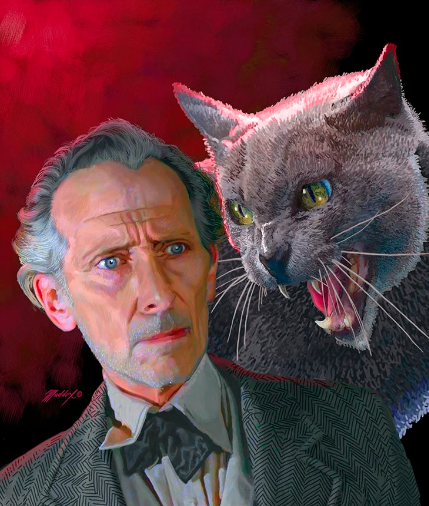
In 1977, legendary Amicus co-founder Milton Subotsky joined with  Canadian producer Claude Héroux (Scanners, Videodrome) to create a portmanteau movie in the grand Amicus style. The uniting story for this concerns a paranoid writer played by Peter Cushing who is trying to convince a publisher (Ray Milland) that cats are evil and that his book is the only way to save the human race.

Directed by Denis Héroux (Naked MassacreValerie) from a screenplay by Michel Parry (Xtro), this is a film that I’ve neglected over the past few years and can happily say lived up to my hopes for a fun anthology film.

The film begins the Montreal of 1977, as writer Wilbur Gray (Cushing) visits publisher Frank Richards(Milland) to discuss his new book. The writer is convinced that cats are actually Satanic creatures here to destroy humanity. He tells three stories to explain:

London 1912: Miss Malkin rewrites her will, leaving everything to her cats instead of her ne’er do well nephew Michael. The maid Janet, who is in love with Michael, tries to steal the will, but Miss Malkin catches her. Janet kills her, but the cats avenge her death.

Quebec 1975: Lucy (Katrina Holden Bronson, the adopted daughter of Charles Bronson and Jill Ireland) is an orphan who now lives with her aunt Mrs. Blake (Alexandra Stewart, who is also in Because of the Cats, which is appropriate). Her parents have died in a plane crash so she is allowed to keep her cat Wellington, who is an awesome fat black cat. However, her cousin covets the cat and any attention she can get. She’s played by Chloe Franks, who was the go to young girl in horror for this era, with appearances in Trog, The House That Dripped Blood (she’s Christopher Lee’s daughter), Whoever Slew Auntie Roo? and Tales from the Crypt (she’s Joan Crawford’s daughter). This section combines two of my horror loves — evil kids and Satanic hijinks.

Hollywood 1936: Actor Valentine De’ath (Donald Pleasence) replaces the blade of a fake pendulum to kill his actress wife, which gives him the opening he needs to give his young mistress a chance at acting. He didn’t count on her cat avenging her. This chapter features Samantha Eggar (DemonoidWelcome to Blood City), Sean McCann (Starship Invasions) and the always awesome John Vernon (CurtainsNational Lampoon’s Animal House).

This story has one of my favorite movie tropes, as when Cushing discusses Pleasence’s character, he holds up a photo that is in truth a publicity still of the actor as Blofeld and his cat Tiddes from You Only Live Twice.

For all the cat love in this, cinematographer Harry Waxman (The Wicker ManThe Beast In the Cellar) threatened to leave the film when he felt that the production was abusing cats.

That said — this is pretty much everything you want from an anthology. Modern filmmakers littering on demand services with their short films all assembled into one movie should take a moment and watch this to see how it’s done.

You can get this from Severin and watch it on Tubi.

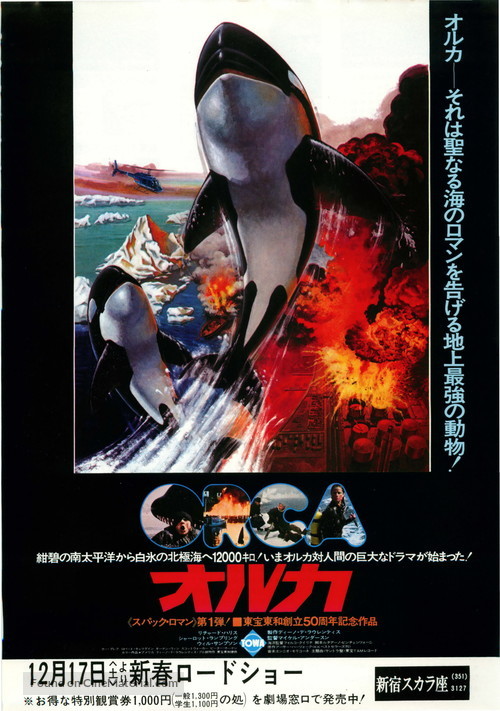
CBS LATE MOVIE MONTH: Orca (1977)

EDITOR’S NOTE: Orca was on the CBS Late Movie on May 19, 1982.

If you read comic books in the summer of 1977, there’s no way you didn’t know about Orca. Despite everything that nature — and SeaWorld — could teach us, it was time to meet a predator even more deadly to man than the great white shark. To quote Neko Case: “You know they call them killer whales.”

Orca raises the Jaws rip-off stakes: if the name Orca can be Quint’s boat, here, it can be an entire movie. Dino De Laurentiis called writer Luciano Vincenzoni (he also wrote The Good, The Bad and the Ugly) in the middle of the night and told to find a fish tougher and more terrible than the great white to make a movie that could go up against Spielberg’s. Vincenzoni’s brother told him all about the killer whales and the rest is scumtastic movie history.

Directed by Michael Anderson (Logan’s Run, Doc Savage), Orca is the kind of movie that critics have assaulted for years. I’m here to tell you that every single one of them is wrong. It’s a completely ridiculous film, a shameless reboot of both Jaws and Moby Dick, but by no means is it not entertaining as hell. And it has an incredible Ennio Morricone score, something that so many fish films could only wish they aspired to.

Captain Nolan (Richard Harris, who nearly died doing his own stunts and also would grow enraged if anyone dared compare this movie to any other film) catches fish and marine animals so that he can pay off his boat. His crew is looking for a great white, which comes after crewmember Ken (Robert Carradine, Lewis from Revenge of the Nerds). An orca saves Ken and Nolan decides to repay its kindness by capturing it. After he harpoons the whale, he learns that he’s killed its mate, which miscarries and drops a fetus onto the deck of the ship that the callous captain hoses off into the ocean while our titular hero/villain/sea mammal screams in anguish. This is when you wonder: how did this movie get a PG rating?

Novak (Keenan Wynn, The DarkPiranha), another crew member, cuts the female loose and its mate drags her dead body to shore. The villagers all rise up against the crew, who demand that Nolan kill the orca, who has gone wild and is ruining local fishing. When Nolan refuses to put the fish out of its misery, it retaliates by sinking all of the fishing boats and breaking all of the town’s fuel lines, because of course killer whales can hold grudges.

That’s what brings Dr. Rachel Bedford (Charlotte Rampling), a whale expert, into the movie. She believes that orcas are like humans, a fact that Nolan can understand. He sees himself as one of the whales, as his wife and unborn child were killed by a drunk driver. He promises not to fight the whale, but it kills Novak, attacks Nolan’s house and then bites off the leg of his injured worker, Annie (Bo Derek in her film debut).

Nolan and his crew, including Paul (Peter Hooten, who was also in Derek’s first actual filmed movie, Fantasies, as well as the 1970’s Dr. Strange TV movie and Just a Damned Soldier with Mark Gregory), all take off after the orca, along with Native American Jacob Umilak (Will Sampson, the magical Native American in films like One Flew Over the Cuckoo’s Nest and Poltergeist II). That’s when the orca goes buckfutter and wipes out nearly everyone by either grabbing them, biting them, crushing them and tossing icebergs at the boat.

The orca throws Nolan all the lace like a ragdoll, killing him, but leaving Bedford alive. We watch as Nolan sinks into the water in a crucified pose and the killer whale decides to swim under the ice. Now, there’s some conjecture here: is the killer whale trapped or has it decided that with its revenge complete, all it can do is die when faced with the path or revenge that it has wrought? I can see the poetry of this thought, but then I realize that I’ve just watched a film filled with no subtlety whatsoever, so perhaps the orca swam on, discovered a new mate and remains ready to wipe out all of humanity at a moment’s notice.

Orca is everything I love about movies: it’s big and dumb and bloody. It’s the kind of movie a fine actor like Richard Harris chews the scenery with just as much viciousness as a killer whale devours one of Bo Derek’s shapely gams. It also takes shark films to the next level. Every single one of the humans in this movie are amongst the dumbest people ever, doomed by the fact that they even know Captain Nolan. The moment he hoses Orca’s son into the icy waters, he’s sealed his fate. This is one of the few films where you root for the beast and savor its revenge.

You’ll laugh. You’ll cry. You’ll be amazed at Bo’s bloody stump. I want more people to love this movie even a fourth as much as I do.

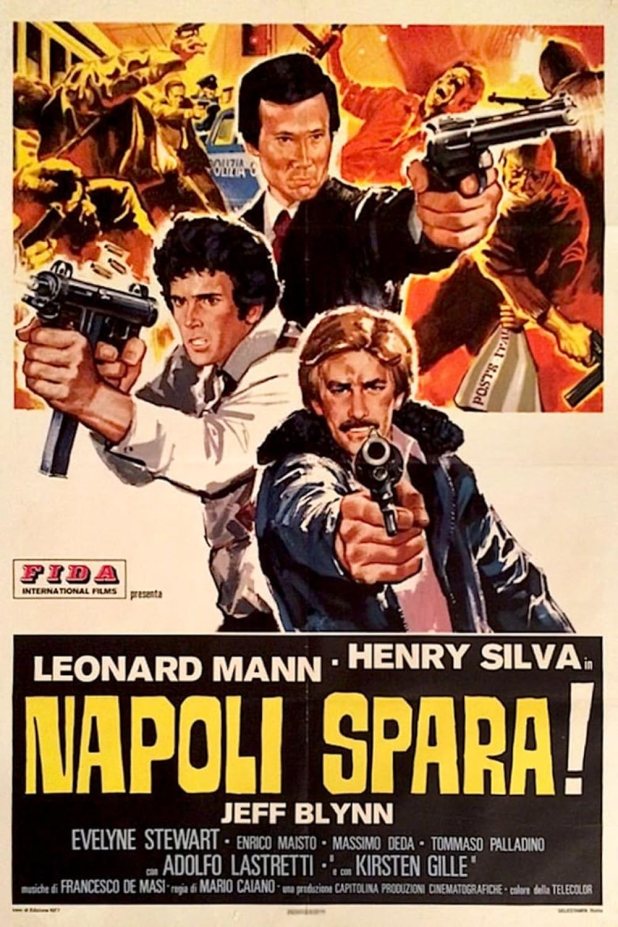
Junesploitation: Napoli spara! (1977)

June 18: Junesploitation’s topic of the day — as suggested by F This Movie— is Gangsters! We’re excited to tackle a different genre every day, so check back and see what’s next.

Weapons of Death comes from the Commissioner Betti (Violent Rome, Violent Naples and Special Cop in Action) cinematic universe as a spin off of the character Gennarino (Massimo Deda). Betti is also in this, except now he’s played by Leonard Mann instead of Maurizio Merli. And now, in the place of Umberto Lenzi, there’s Mario Caiano (Nightmare Castle) in charge of the show.

The villain is the main reason to watch this. Henry Silva is always absolutely perfect and here he’s as awesome as you’d hoped as a hit man named Santoro. He has the protection of crime boss Don Alfredo (Tino Bianchi). He’s able to train so many people to do robberies and murders that he puts not just Belli job in jeopardy, but his reputation. That’s because the one time that Santoro gets a gun on him, he lets the policeman live, telling him, “You go your way and I’ll go mine.” That’s how smart he is, as he gets more out of not killing Betti as he would have shooting him.

At the same time, the other crime families all begin to hate Santoro for how out of control he is — one of his major crimes has masked men running wild in the streets, shooting people and kicking women in the stomach — and they try to rub him out.

This movie lives up to the poliziotteschi madness that its fans want, as it has kids turned into young gangsters, a motorcycle rider getting beheaded and a man being castrated in prison. Also, Ida Galli. Or Evelyn Stewart. You know, whatever name you prefer. And it looks out of control because a lot of this was filmed without permits, closing streets or even informing the crowds of people in some of the scenes that they were filming. Instead, they had the camera inside a box on a truck. Italy, I will always love you.

You can watch this on YouTube.

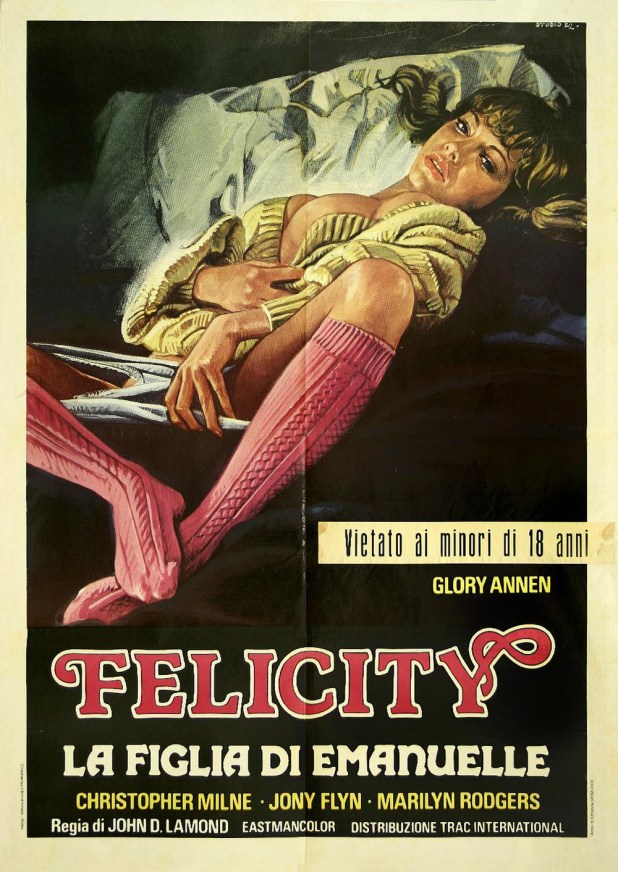
Junesploitation: Felicity (1977)

June 13: Junesploitation’s topic of the day — as suggested by F This Movie— is Ozploitation We’re excited to tackle a different genre every day, so check back and see what’s next.

John D. Lamond worked in promotion before directing his first two movies, Australia After Dark and The ABC of Love and Sex. These mondo films were both successes which led to him making his first narrative film, which is Felicity. He also wrote Sky Pirates and directed the slasher Nightmares.

For this one, he was inspired by Just Jaeckin’s Emmanuelle to the point that the book gets references multiple times and there’s even a similar wicker chair. He said, “The French have always been able to make their films NOT be pornographic, they’d be erotic. They were classy – the most they could ever say was softcore. And the way they did it, they made pretty images that looked like a Singapore Airlines TV commercial, they had nice fashion, good photography and nice music. And that way it dresses it up and makes it all chocolate boxy… I thought okay, the way to do that on a film budget is to go somewhere exotic. Make sure the people are pretty and they don’t have pimples. Don’t be sordid in any way, have pretty music and exotic locations, nice lighting and nice fashion. So even though it was a tiny film, we came up to Hong Kong and we got all the clothes tailor made for them, so that they fitted properly.”

Felicity Robinson (Glory Annen, PreyThe Lonely Lady) has spent most of her life in boarding school, forever dreaming of the kind of true love — and plenty of lust — she has read about. Well, she mostly reads Emmanuelle and The Story of O (you can even see Udo Keir and Corinne Clery on the cover). She also occasionally has sapphic interludes with her Willows End Ladies College classmate Jenny (Jody Hanson) that mean more to Jenny than Felicity.

Then, her father arranges a trip to Hong Kong to visit his friends Christine (Marilyn Rodgers, Patrick) and Stephen (Gordon Charles). As soon as she gets there, Felicity spies on the two as they make love. Christine realizes this and decides to introduce Felicity to the ways of love, first having her be deflowered by the much older Andrew (David Bradshaw) and then the exotic Me Ling (Joni Flynn, Monty Python and the Holy GrailOctopussy), who takes her on a journey through the erotic world of the East. But ah, Felicity remains traditional and eventually falls in love with a nice young boy named Miles (Chris Milne, Thirst).

There’s even a scene where the characters go to see The ABC of Love and Sex, which Lamond said was a “total Roger Corman.” He also intended to make a sequel, Felicity in the Garden of Pleasures, that the government organization known as the South Australian Film Corporation would invest in. Controversy resulted and the movie was never made.

Felicity’s voice — and the reason this might feel so charming instead of lecherous — belong to Diane Lamond, the director’s wife. They pull another Emmanuelle move by claiming that the story was written by Felicity Robinson.

Sadly, Glory Annen’s went through some dark times in her life. She was the partner of racehorse owner Ivan Allan for more than a decade and when the relationship ended, both she and her mother were evicted from their home. This led to a major British court case which “established that parties to ancillary relief court proceedings may generally expect the information they have provided about their finances to remain confidential and protected from publication.”

After Annen died in 2017, several documents she wrote regarding her relationship have been released and are currently being used to create an expose of Allan, the British legal system and the criminal elements in the world of horse racing. Her last role was in Lamond’s True Flies.

I had so much fun watching this movie. I’m certain I watched it furtively on Cinemax After Dark along with stand outs such as Eleven Days, Eleven NightsEmanuelle in BangkokGwendolineThe Secrets of Love: Three Rakish Tales and Young Lady Chatterley II. These movies seemed so naughty then — well, Joe D’Amato’s work still is sleazetastic — and watching this today, I felt the same way that people that once got arrested for watching nudie cuties must have felt as hardcore started playing legally.

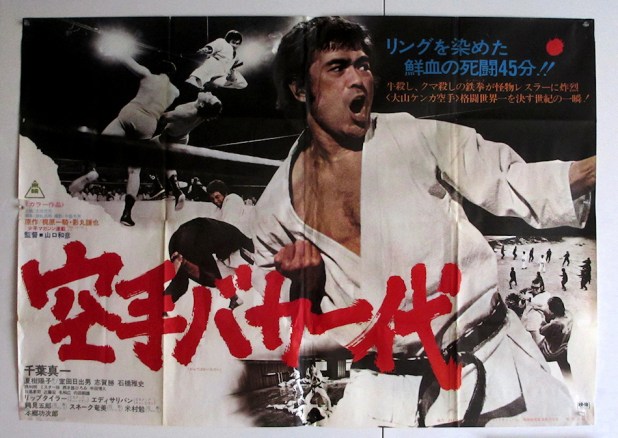
Junesploitation: Karate for Life (1977)

June 9: Junesploitation’s topic of the day — as suggested by F This Movie— is Kung Fu! We’re excited to tackle a different genre every day, so check back and see what’s next.

Karate for Life (Karate Baka Ichidai which means A Karate Crazy Life) is the third and final movie in Sonny Chiba and director Kazuhiko Yamaguchi’s series of movies about Kyokushin Karate master Mas Oyama. They’re based on the Karate Baka Ichidai manga that was drawn by Jirō Tsunoda and Jōya Kagemaru and written by Ikki Kajiwara. That comic book and the anime led to a karate boom in Japan and the artwork inspired the Street Fighter series and definitely is why you fight a bull in Karate Champ.

Chiba plays Oyama in all three movies and he has the belief that his martial arts is better than what he calls “dance” kung fu. There are some wild ways the movies prove this, as Chiba battles a bull in Kenka Karate Kyokushinken, which means Fighting Karate Kyokushin Fist. It was released in English speaking countries as Champion of Death and Karate Bullfighter. Not to be outdone, the sequel — Kenka Karate Kyokushin Burai Ken which means Fighting Karate-Brutal Ultimate Truth Fist — has Oyama literally battle a bear. Or a man in a bear costume, but what did you expect? That’s why it’s called Karate Bearfighter here.

Chiba actually studied for several years under Oyama — who has a cameo in the second movie — and achieved the rank of 4th Dan in the style. You can see his love for his master and the art in this movie, which mythologizes the abilities of Kyokushin Karate to somehow even more superhuman levels than the first two movies, minus the animal versus human battles.

This film is bookended by Oyama battling a karate school that he believes is inferior. He enters the school at the start of the film and battles nearly a hundred of their students, decimating them, before they cover the floor with oil to ruin his balance. It barely matters as he destroys even more of them and then plucks the eye out of the sensei, who follows him for the entire movie, waiting to attack, before Oyama fights him in a hall of mirrors as if this were a Japanese by way of Korean hero Enter the Dragon and climaxes with Oyama launching that man off a cliff.

In between, looking to make money to help street children, Oyama becomes involved with pro wrestling, which is used to entertain U.S. troops occupying post-war Japan. Despite giving up plenty of size, Oyama again obliterates everyone he faces and refuses to throw matches for the Yakuza organized crime figures that run it all. However, after he saves the life of a prostitute named Reiko (Yoko Natsuki) who is planning to kill herself after being assaulted by soldiers. Needing money to save a friend after they become sick, he finds himself coming back to wrestling but now he’s in death matches — ala the Tiger Mask manga and anime — that are real battles to one person being killed. Of course, as you expect, he absolutely crushes everyone.

There’s a lot to love here, from a hero that says, “Justice without power is nothing. Power without justice is just violence” which is kind of like Chiba renaming himself JJ Sonny Chiba and the JJ was for Japan Justice to pro wrestling scenes that have the names of each hold dynamically appearing on screen as if they were Shaw Brothers secret techniques, I was on the edge of my seat throughout.

Speaking of pro wrestling, this has Mr. Chin in the cast. According to a biography I found online, Mr. Chin was born Yuichi Deguchi and was a judo style martial artist who started his working life in the Hyogo prefecture’s riot police unit before becoming part of the “Pro Judo” International Judo Association that was founded by Tatsukuma Ushijima as a way for judo fighters to make money putting on bouts and touring before the rise of Rikidozan’s JWA.

After that, Deguchi joined the All Japan Pro Wrestling Association, an Osaka-based promotion that was the first to air pro wrestling on Japanese television. Mostly American soldiers were used as heels other than a man named P.Y. Chong, AKA Harold Watanabe, AKA Memphis legend Tojo Yamamoto (which makes sense to me finally as to how Phil Hickerson got his Asian name latter in his career, Py Chu Hi).

After being part of JWA’s interpromotional Japan Championship Series in October of 1956, Deguchi joined Osaka locals Michiaki “Fireball Kid” Yoshimura, future famous All Japan Pro Wrestling referee Kanji “Joe” Higuchi and Hideyuki Nagasawa in joining the JWA. He became Mr. Chin and dressed in Chinese clothes and became one of the first wrestlers to use the poison mist as well as being one of the first native heels.

Chin feuded with Giant Baba, who took him out of wrestling for two months with one of his big boot kicks. After time in the hospital and encouragement from the nurse who would become his wife, Mr. Chin returned and in one match bit Baba in the chest, giving him a scar that he would carry throughout his career.

After stomach issues, Deguchi did some acting and came back in 1970 for IWE. He traveled to the U.S. for several years on an excursion, reforming his team with Yamamoto and using the name Mr. Kamikaze. He returned in 1976 as a gaijin heel by the name of Mr. Yoto and would later become part of the Independent Gurentai Army with Goro Tsurumi and Katzuso Ooiyama as their managing, taking back his Mr. Chin name. Just before IWE went out of business, he would lose to Hiromichi “Samson” Fuyuki by DQ on the final show at a playground.

As for the IWA, when they went out of business, Masao Inoue, Ashura Hara, Tsurumi and Fuyuki would join AJPW and their biggest star Rusher Kimura would take Isamu Teranishi and Animal Hamaguchi with him to New Japan Pro Wrestling for the first invasion angle in Japanese wrestling history, one that would later inspire the battles with UWFI and the NWO. Meanwhile, IWE founder Isao Yoshihara would become one of NJPW’s bookers. As for Goro Tsurumi, he would run a local indy by the name of IWA Kakuto Shijuku, in which he was the only star and battle masked locals and other indy journeymen like Shoji Nakamaki and Yukihide Ueno.

But what about Mr. Chin? After IWE went out of business, he worked all over the world — even the Middle East — he would eventually debut for Frontier Martial Arts Pro Wrestling at the age of sixty in 1993. He was a comedy match character who would open shows, often wrestling young trainees like future ECW star Masato Tanaka. He also feuded with GOSAKU (who I once wrestled in WMF when he used the name Biomonster DNA) who was using the gimmick name of Undertaker Gosaku and Mr. Chin was Jinsei Chinzaki, taking off from Jinsei “Hakushi” Shinzaki. Sadly, Yuichi Deguchi died of chornic renal failure — after a life dealing with diabetes — in 1995.

Speaking of Japanese actors who would be famous and yet unknown to American audiences, Toshiyuki Tsuchiyama is in this. He’s better known for the mecha suit he wore as Johnny Sokko.

There was a two-part remake of this film, Shin Karate Baka Ichidai: Kakutōsha, directed by Takeshi Miyasaka and released in 2003 and 2004. The second film has pro wrestlers Keiji Mutoh, Masakatsu Funaki and kickboxer and former K-1 referee Nobuaki Kakuda in it.

You can watch this on Tubi.