BIGFOOT WEEK: The Mysterious Monsters (1975)

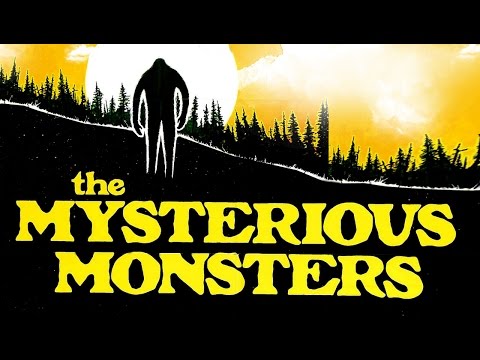
At the start of this movie, Peter Graves looks right at the camera and totally bullshits you: “Scientists representing the world’s most foremost research centers took part in the examination of the evidence. The facts that will be presented are true. This may be the most startling film you’ll ever see.”

Get ready for another piece of Sunn Classic Pictures magic. Yes, the same people who forced you to watch Chariots of the Gods and Hangar 18. This one reached an even bigger audience thanks to being broadcast in prime time on NBC.

Director Robert Guenette, according to Wikipedia, “was an American film producer, screenwriter, film director, television director and television producer, recipient of the Directors Guild of America Award. Guenette is considered as one of the first documentary directors to introduce the “newsreel style” in documentaries. He and his son, Mark, were co-founders of the International Documentary Association.”

Now I bet you $3 that Mark Guenette or someone else in the family wrote this Wiki page, because we’re also talking about the same dude who directed the movie that gave me nightmares every time HBO aired it (which is to say, nearly every afternoon for three years) The Man Who Saw Tomorrow.

From Bigfoot to the Loch Ness Monster, the Yeti and, well, that’s it — this movie is a mix of dramatic reenactments and Peter Graves going all over the world to get the story. It’s like no one told the future host of A&E’s Biography that he could simply do all his narration from the studio.

This is a movie replete with lie detectors, hypnosis, the Patterson-Gimlin footage, Bigfoot hunters, blurry photos and incredulous scientists forced to debate the existence of monsters with Jim Phelps from Mission: Impossible. In one of these instances, Graves wonders why the cops are good with verbal statements and scientists aren’t. The incredulous scientist responds with the simple fact that we know humans exist so it’s simple to believe the things they say. I was waiting for Graves to say, well, you I believe that my brother is The Thing.

To you kids with your streaming channels and cable TV, I opine that this movie was once awesome. We had to go to the theaters to see ridiculous stuff like this. There wasn’t an entire channel or ten devoted to it. In the 1970’s, we took what we could get and we liked it!

You can grab this at Amazon.

I Don’t Want to Be Born (1975)

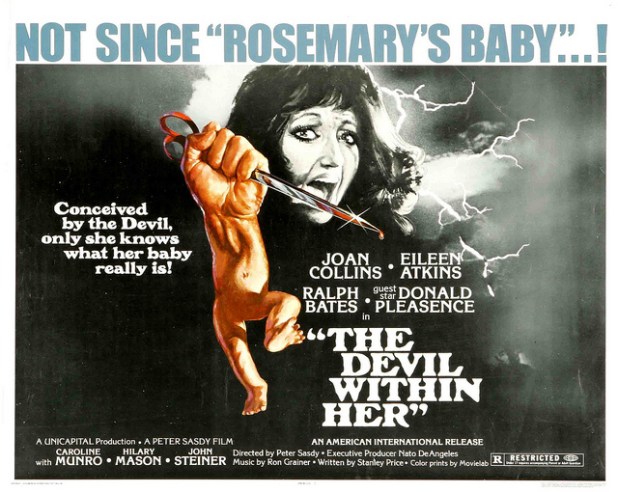
Also known as The Devil Within HerThe Monster and Sharon’s Baby, this mid-70’s film plays it so straight that it can’t be anything but a parody of The Exorcist. Yet here it is — screaming in your face, full of bad accents and horrible sex scenes, so earnest that it makes you want to believe that you can’t help but hold it tight and tell it that yes, everything will be OK.

Directed by Peter Sasdy, who also brought us Taste the Blood of Dracula, the Ingrid Pitt starring Countess DraculaHands of the RipperWelcome to Blood City and, of course, The Lonely Lady, this is probably the only film you’ll ever witness where Joan Collins and a little person engage in occult warfare.

Lucy (the lovely Ms. Collins) is a dancer and not the kind that does modern or ballet. Her stage act includes a routine with Hercules, played by George Claydon from Berserk!, a dwarf strongman. She invites him for a drink one evening but he declines, instead feeling like giving her a rubdown in the dressing room. Our heroine feels uncomfortable just as he goes for her breasts, making her scream and bringing in Tommy (John Steiner, Shock and, of course, The Overlord from Yor, Hunter from the Future), the stage manager, who kicks his ass out and then makes sweet, sweet love to Lucy. As she leaves the club that night, the dwarf curses her: “You will have a baby…a monster! An evil monster conceived inside your womb! As big as I am small and possessed by the devil himself!”

If you didn’t say, “Holy shit, I am all in,” after the above paragraph, you have no soul and no sense of what makes a horrible movie worth watching.

Months pass and Lucy has given up the exotic dancing lifestyle, settling down with wealthy Gino (Ralph Bates, The Horror of Frankenstein and Lust for a Vampire), who has set her up in a fancy townhouse. She has a long, arduous and painful delivery of her baby, who weighs in at 12 pounds (.86 stone for the British fans out there). Said baby is also fond of ripping at her with his nails, but Dr. Finch (Donald Pleasence, who never turned down a role ever) assures her that it will all be alright. Tell that to housekeeper Mrs. Hyde (Hilary Mason, Don’t Look Now and Dolls) when the baby almost bites off her finger!

The baby just won’t get along with anyone, a fact that Lucy relates to her galpal Mandy (Caroline Munro, livening up the proceedings) and Gino’s sister Albana (Eileen Atkins, a British stage star who deserves way better), a nun. Despite a series of tests — both religious and medical — the baby will not be stopped, even smashing and drowning his nurse (Janet Key from The Vampire Lovers).

Lucy even tries to talk to Tommy, saying that he may be her son. The baby reacts by punching the gangster in the nose, which makes Lucy happy until her son gets the face of Hercules.

Her husband tries to take her mind off everything with a night of, as they said in the 1970’s, sweet whoopie. After the most unsexual sex scene ever filmed, the baby lures him outside where he’s lynched and stuffed down a storm drain. Oh no, Gino! It gets worse! The infant also beheads Pleasence and stabs Lucy in the heart! Don’t let kids play with scissors, parents!

Albana finally realizes what she must do — rip off the ending of The Exorcist. As she goes through with the rite, Hercules is dancing on stage, but the moment she touches the baby’s head with a crucifix, he dies in front of the audience.

This one is a real crowd pleaser. Seriously, it may be talky and boring in parts, but you have to admire its drive to do anything to shock and surprise you. It keeps trotting out attractive British genre stars only to off them in ludicrous ways, all while Joan Collins screams her head off. Writing about this movie only makes me want to watch it again.

You can get this at Ronin Flix.

DEADLY GAME SHOWS: Death Race 2000 (1975)

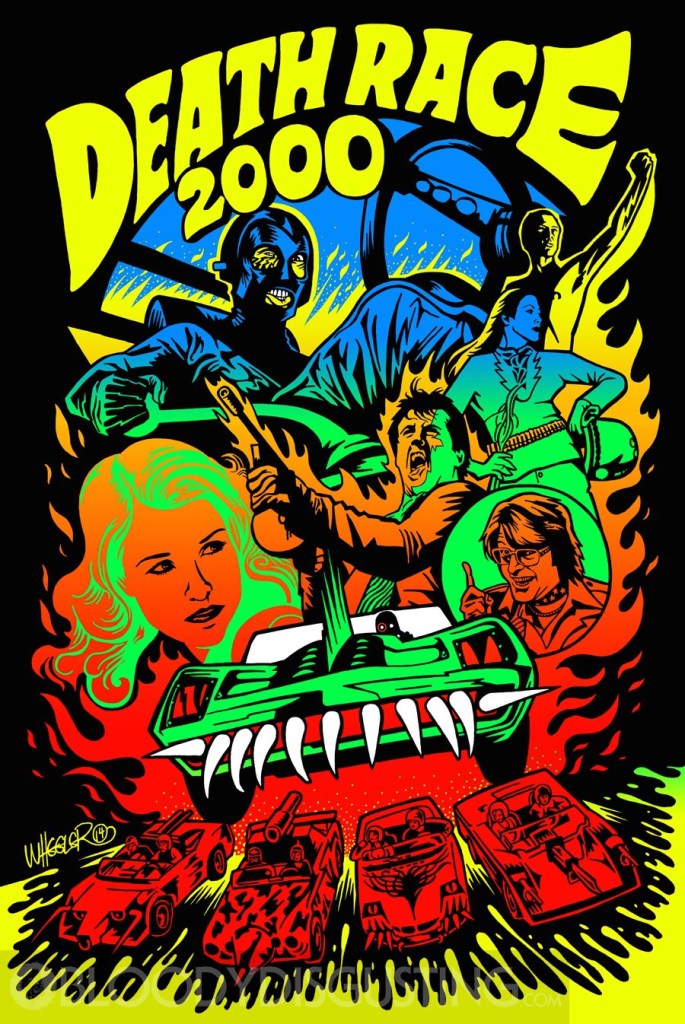
There are people that say there’s no such thing as a perfect movie. Those people have never seen Death Race 2000, a film that’s packed with pop culture references, ultraviolence, black humor, political commentary and great character moments.

After the “World Crash of ’79”, the United States government declares martial law. To keep the people happy, the Transcontinental Road Race is created. It’s a race across the country — ala Cannonball Run — except that drivers score points for killing people.

This is the twentieth race and each driver has their own character and themed car, including the mysterious champion Frankenstein (David Carradine, Kill Bill) who has been torn apart and rebuilt so many times, no one is sure what parts of him are real any longer; Machine Gun Joe (Sylvester Stallone, Rocky), a Chicago gangster who calls people mashed potato and will even drive over his own pit crew for points; Calamity Jane (Mary Woronov, Night of the Comet), a tough cowgirl; Nero the Hero (Martin Kove, Kreese from the Karate Kid!) and Matilda the Hun (Roberta Collins, Eaten Alive, Caged Heat), a Nazi. They each have a navigator who is also generally their sexual partner.

Covering the race is a parody of network news coverage — that would become even more true in today’s Fox News and CNN climate — which includes loudmouth Junior Bruce (Don Steele, Rockin’ Ricky Rialto from Gremlins), Harold, who is pretty much Howard Cosell and Grace Pander, the gossip columnist who refers to everyone as her close personal friend.

Meanwhile, Thomasina Paine, the great great great great and maybe even great-granddaughter of American Revolutionary Thomas Paine is sabotaging the race to rebel against the President. These revolutionaries have even placed Annie, Thomasina’s granddaughter, into the race as Frankenstein’s new navigator. That said — the government keeps covering up all of the deaths of the racers and blame it all on the French — who have already destroyed the country’s phone system — one of director Paul Bartel’s (Eating Raoul) favorite jokes. In fact, the film was packed with even more silliness before Roger Corman chopped out most of the strangeness that Bartel loved so much.

Everyone but Machine Gun Joe and Frankenstein are left in the race. Before the final day of the race, Annie learns that Frankenstein isn’t even the original man — he was a ward of the state who was raised from birth to compete in the Death Race. When he’s used up, another will take his place. And he’s closer to the spirit of the rebels than Annie would ever think — he plans on using his fake right hand to blow up the President. Of course, that was the plan. But Annie saves Frankenstein using this “hand” grenade in the final battle

Frankenstein is injured, so Annie takes his place and tries to stab the President. But her own grandmother shoots her, as she wants revenge thinking that the champion Death Racer had killed her granddaughter. And this all takes place after the President declares war on the French and appoints Frankenstein to lead his armies!

The real Frankenstein recovers and runs over the President to the roar of the crowd. He becomes President, marries Annie and runs over Junior Bruce as he puts an end to the Death Race.

This film may have been remade (and there are several sequels to that franchise) and Corman finally put out Death Race 2050, his own sequel to the film, in 2017. But do we need anything else when the original is so epic? It’s so much fun, punctuated by moments of sheer lunacy. Viva la Death Race 2000!

Wolfguy: Enraged Lycanthrope (1975)

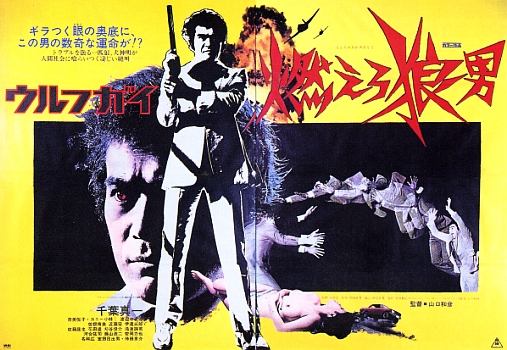
Ōkami no Monshō was a two-volume manga published in 1970 and then re-created in 2007. This film version — which wildly differs from its inspiration — hit Japanese screens in 1975 and stars Japanese actor, singer, film producer, film director, and martial artist (and the inspiration for a marijuana nickname) Shin’ichi “Sonny” Chiba. And it’s one of the wildest, strangest films I’ve ever seen.

Let me see if I can come close to summarizing the batshit insanity that is this movie: Akira Inugami (Sonny Chiba, of course), our hero, is the last survivor of a clan of werewolves. As a child, he watched his village and people get destroyed. Today, he uses his werewolf abilities to help him solve crimes — but never transform into a wolf.

His new case begins when a man is yelling in the street about being attacked by an invisible tiger that soon tears him apart. At the center of his investigation is Miki, who was abused by The Mobs, an evil rock band, and now only cares about heroin and killing everyone who hurt her. Now, a phantom government agency uses her to kill those they deem necessary of elimination.

Along the way to solving this mystery, Inugami will battle ninjas, the Yakuza, the Japanese CIA, assassins and more. It’s also worth noting that Wolfguy sleeps with more women in this movie than James Bond, but everyone he touches usually ends up dead. There’s one bonkers sex scene near the end with his true love, Taka, that has him remember sucking on his werewolf mother’s breast while doing the same to the woman he claims is his wife. Alright there, Wolfguy.

Sonny Chiba didn’t form the Japan Action Club for nothing. This group, created to develop and raise the level of martial arts techniques and sequences used in Japanese film and television, has him at its center. In this film, he has a multitude of battles and even gets thrown down a cliff and somehow front flips directly onto his feet, a stunt that completely astounded me.

Directed by Kazuhiko Yamaguchi (Sister Street Fighter) and written by Fumio Konami (Female Prisoner #701: Scorpion), this is the only Japanese werewolf that’s not a werewolf scored by Japanese jazz noise rock that sounds like Goblin featuring blood gushing FX that I have — and probably will ever — see. Imagine Wild Zero but played completely straight. I’ve also never seen a movie where the hero is able to control his intestines and pull them back into his body.

Imagine this: loud guitars, neon colors, dizzying camera angles, werewolf fistfights against ninjas and a love scene every fifteen minutes. This is a gloriously scuzzy, scummy, silly and majestic piece of film. It blew me away from start to finish and I can barely comprehend much of what I watched!

Credit for getting this movie back into the pop culture consciousness belongs to Arrow Video, which put out a gorgeously cleaned up release. You can grab that at Diabolik DVD. Even better, if you have Shudder, you can watch it now! It’s streaming and ready to blow your fucking mind.

Secret Night Caller (1975)

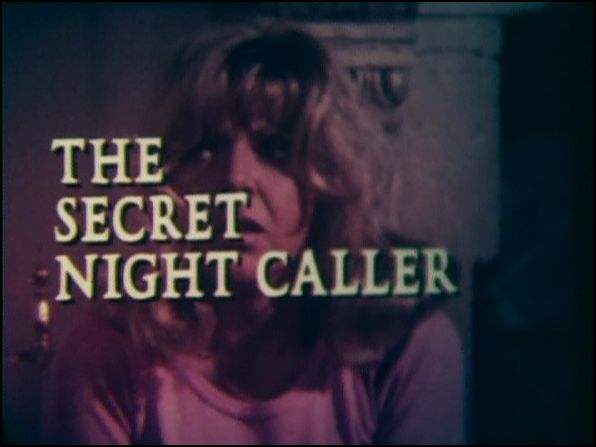
Fred Durant is an IRS agent by day, hen-pecked by his overbearing mother and left frustrated by his sexless marriage. Even his breakfast ritual is sad, as he squeezes an orange and stares out the window, wondering why he goes on. He needs a release and if it has to be calling young women up in the middle of the night and unleashing pure filth on them, then so be it!

Yes, in the 1970’s, we lived in a world without caller ID and cell phones, when we had no idea who was on the other side of the phone. In fact, for years a burglar who had stolen my family’s stereo equipment would call back and tell my mother that he could come back at any time. Years later, he would find religion and call her back, asking for forgiveness.

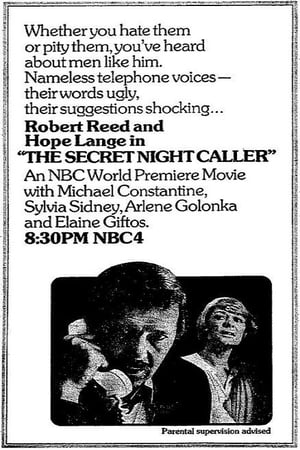
It’s in that world that we find Fred (played by Robert Reed, who will be forever typecast as the dad from the Brady Bunch, but who knows all about playing a man who is hiding a secret). On his way to work, he dreams about kissing the gorgeous woman next to him in traffic, to the point that he completely loses himself and cars beep their horns at him. If only he could feel that way about his wife (Hope Lange, Bronson’s doomed wife in Death Wish)

Directed by Jerry Jameson (Airport ’77, Raise the Titanic and The Bat People and numerous episodes of Murder, She Wrote), we soon realize that Fred is calling the women from his office, who find him sweet and old-fashioned. And while we never get to hear what he’s saying to them, it’s enough that it leaves them so confused that they can’t hang up.

He can’t even bring himself to tell his therapist what’s really going on. Oh, Fred. Your life is such a mess. At least you can get lost in your world of plants and dote on your teenage daughter (Robin Mattson, Are You in the House Alone?Candy Stripe Nurses). Or get upset when she shows up in a bikini. And throw in that mother (Sylvia Sidney, Damien: The Omen 2 and God Told Me To) and Fred just keeps giving in to his craziness, even if it leads co-workers to wreck their cars and him getting blackmailed by strippers that he has to choke out!

Between this movie and Haunts of the Very Rich, Robert Reed really could bring the acting to small screen movies.

Producer Charles W. Fries has brought us a wide array of films, from Trashin’ to 1987’s Flowers in the Attic and the Lifetime remakes (we did also all three sequels, Petals in the WindIf There Be Thorns and Seeds of Yesterday on our podcast), Phantom of the Mall: Eric’s RevengeTroop Beverly Hills, the Spider-Man TV Movies, The Initiation of Sarah and Amicus’ Tales from the Crypt and The Vault of Horror! What an IMDB page! What an arsenal of films to enjoy!

Sadly, this has never been released on DVD. You’re left to the mercy of the grey market and YouTube if you want to see this for yourself.

Strip Nude for Your Killer (1975)

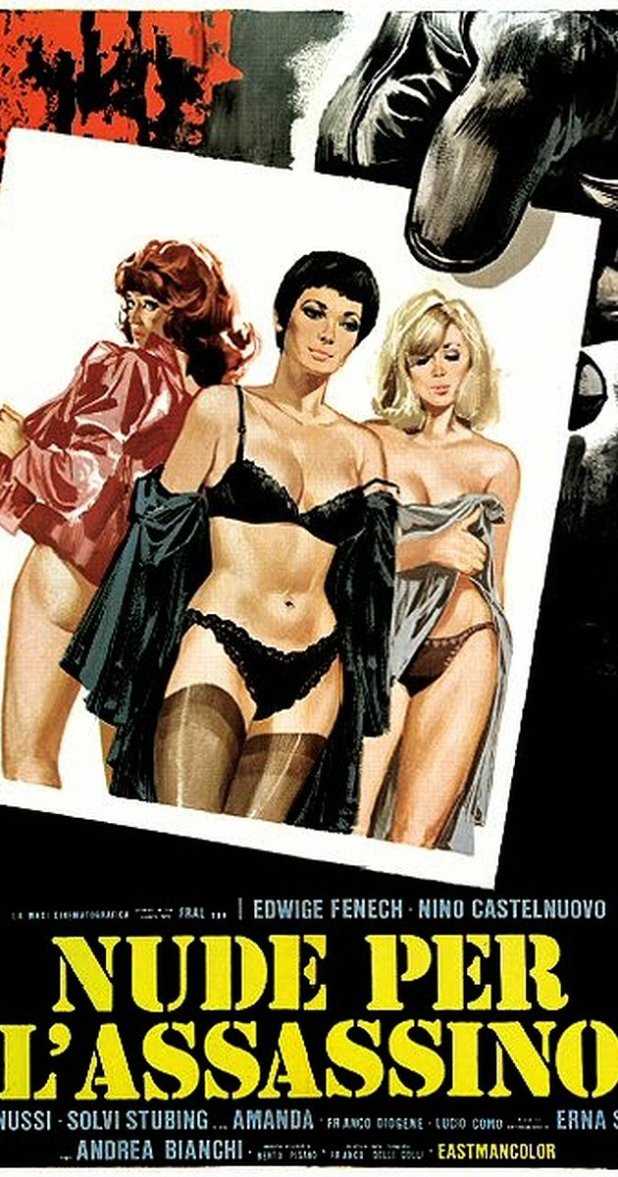
When a movie starts with a fashion model dying during a back alley abortion and it being covered up as a drowning, all before the opening credits, you know that you’re in for something demented. When you realize that the film was written and directed by Andrea Bianchi, who brought us Burial Ground, you will either run screaming or sit down and pay attention.

The doctor who performed the operation is killed by a maniac in a motorcycle suit, but nobody at the Albatross Modeling Agency cares. All Carlo, the head photographer, cares about is using his modeling connections to pick up women. That’s how he meets Lucia (Femi Benussi, Hatchet for the Honeymoon), whom he takes from the steam room to the modeling agency.

Magda (Edwige Fenech looks better than I’ve ever seen her look in any movie) is jealous, so she surprises Carlo with some black lace, and they begin an affair. We then see a photo of the main agency members, like Mario, Magda, Carlo, Stefano, Dorris, Maurizio and his wife, and the owner of the studio, Gisella. There’s one other person in the photo—Evelyn, who we saw die in the beginning.

Mario heads home, and the killer shows up. When their helmet is removed, Mario knows the killer. But it’s too late. He’s dead now. The killer takes the photo so that they have a checklist of who to kill.

So then there’s Maurizio, who is cheating on his wife with a prostitute. He takes her on a crazy ride through the streets and then takes her back to his place, where he begs and threatens her life before she suddenly wants to have sex with him — because, you know, that’s how things worked in the 1970s — before he lasts all of a minute and starts embracing his blow up doll. Honestly, what the fuck? Of course, he’s killed right afterward. Good riddance.

Carlo later witnesses Gisella being murdered and even photographs the attack, but he’s hurt in a hit-and-run accident. While he’s recovering, Magda develops the film, but the killer ruins the negatives.

After killing Doris and Stefano, the murderer tries to kill Carlo and Magda, but the killer is knocked down the stairs. So who is it? New model Patrizia — Evelyn’s sister — blames him for her sister’s death. However, she dies before she can tell the police of his involvement.

The movie ends with Carlo playing around by mock choking Magda before initiating anal sex with her, as she tells him not to, in a scene meant as a comedy but lost in translation and the fact that forty-plus-year-old Giallo could never anticipate the #metoo movement.

The title of this film says it all. It’s the most nudity I’ve ever seen in a movie. And it’s one of the most lurid I’ve seen, too. I do not know if Bianchi intended this as a comedy, but it feels like one.

It’s almost incredible that a movie with this much nudity and mayhem moves at a glacial pace. It felt like the film’s first hour was the entire running time and contained wall-to-wall misogyny. I know, I know, that’s the majority of Giallo, but it feels so overwhelming and alien when seen with today’s eyes. I mean, should I be shocked that a movie called Strip Nude for Your Killer is so sexist? And why do I love it so much? Maybe it’s because Edwige Fenech makes me watch anything that she is in.

The Bloodsucker Leads the Dance (1975)

Films just show up in my YouTube subscriptions and I watch them, always hungry to discover something new. Imagine my surprise when I looked up and this film went from a giallo to a totally NSFW affair!

http://www.dailymotion.com/video/x585zup

Dublin, 1902. As an acting troupe finishes their latest show, Count Marnack shows up and invites Evelyn and her friends — Cora, Rosalind, Penny and stagehand Samuel — to his castle. Once they get there, everyone but Samuel gets down — as we share a name I was displeased by this. But seriously, I was not expecting hardcore insert shots on YouTube. I figure they had a program to catch things like that (they caught a clip of a song in a trailer we used and took one of our podcast posts down and they let this go?)!

The secret is that the Count’s father and grandfather killed their brides with a ceremonial dagger. And the Count’s first wife went missing long ago. Soon, people start showing up with their heads missing. So whodunnit? The maid? The gardener? A ghost?

This film boasts some nice period costumes and settings, but it’s patently ridiculous. It wants to be a giallo but where those films are sexy, this is just plain rutting in the sheets. I feel like Jon Lovitz’s character Evelyn Quince from SNL’s Tales of Ribaldry. “No, no, no, no, we’ll have none of this! You’ve gone too far! You’ve ruined it for me!”

That said, I’ve never seen a movie go from pornography to an Agatha Christy style resolution within its running time. That said, the insert scenes weren’t in the original cut and were only added when the film was released in France as L’insatiable Samantha in 1977.

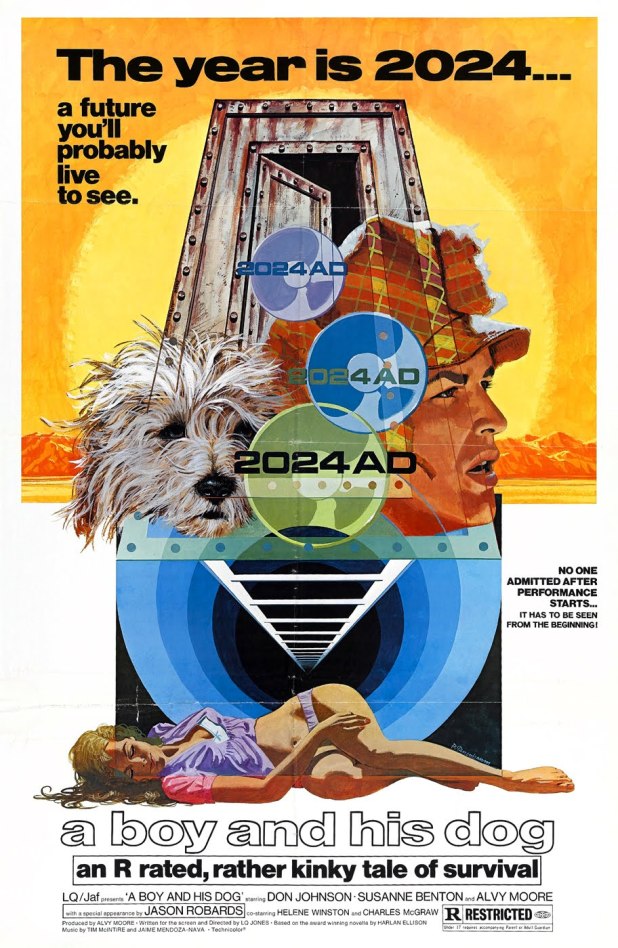
FUCKED UP FUTURES: A Boy and His Dog (1975)

There’s nothing like the bond between a man and his dog. So many of the entries on this site are written in the middle of the night, as our dog likes to wake me up at 3 AM to go for a walk, then I can’t go back to sleep.

Vic (a very young Don Johnson, who any of child of the 80’s knows instantly) and Blood (voiced by Tim McIntire, who was George Jones in the 1981 TV movie Stand By Your Man) are a human and dog team traveling through the post-apocalyptic fallout after World War 4. Unlike the way my dog just barks and barks until I wake up, Blood can speak telepathically.

That telepathy comes at the expense of his ability to search for food, so the incredibly intelligent, human-hating mutt uses Vic to help him. Vic’s only hungers are food and sex. He’s pretty much a moron with no basic standards of ethics or morals. While the two have an antagonistic relationship, they realize that they need one another.

While watching old porn movies at a makeshift drive-in, Blood smells Quilla Julia Holmes, who comes from “Downunder,” a town inside an underground vault. Vic saves her from mutants and the two have sex, despite Blood’s dislike of her. She leads him to the city, where Blood refuses to enter.

Quilla June’s father, Lou Craddock (Jason Robards, Something Wicked This Way Comes) has sent her to the surface to recruit new blood for Topeka, a biosphere city beneath ruined Kansas. The Committee rules all, forcing its people to dress in 1930’s costumes. Vic has been brought here to be a stud, donating his sperm at the expense of the pleasure that he needs. And even worse — once he impregnates 35 women, he’ll be sent to the farm and never seen again.

Quilla Jane breaks Vic out as part of her plot to kill off The Committee and their android goon, Michael. That said — Vic wants no part of this plot, only to get back to his home above ground and his friend Blood. Michael kills Quilla Jane’s other rebellion members before Vic takes him out. Quilla proclaims her love for Vic and asks to return to the surface with him.

When they find Blood, he is starving and near death. Quilla Jane tells him to leave the dog to die and spend the rest of his life with her. Vic makes his mind up — killing her off camera, so that Blood can eat her. Vic states that she should have never followed him as Blood jokes that she didn’t have bad taste. They walk off into the sunset together.

A Boy and His Dog comes from a series of stories by Harlan Ellison, whose prodigious output is only rivaled by his cantankerous nature. Two of his scripts for TV’s The Outer LimitsDemon with a Glass Hand and Soldier, were so close to The Terminator that Ellison has an “acknowledgment to the works of Harlan Ellison” credit in Terminator: Genisys (and Ellison was supposedly paid for his inspiration, which you can learn about here). He also wrote what many consider the greatest episode of the original Star TrekThe City on the Edge of Forever.

Ellison tried to write the screenplay, but hit writer’s block. The final script was written by producer Alvy Moore (Hank Kimball from Green Acres, who also produced The Witchmaker and The Brotherhood of Satan and appears in this film as Dr. Moore) and director L. Q. Jones (an actor in movies like The Beast Within and The Wild Bunch who also wrote The Brotherhood of Satan), which Ellison was either somewhat happy with or totally upset with, depending on who tells the story. What is known is that he was unhappy with Blood’s final line: “Well, I’d certainly say she had marvelous judgement, Albert…if not particularly good taste.” The book ends differently, with Vic remembering a question that Quilla had asked of him: “Do you know what love is?” Vic finally remembers the answer: “Sure I know. A boy loves his dog.”

If you’ve ever played the video game Fallout, then you’ll be delighted to learn how much comes from this film.

Vic and Blood would have further adventures, even one tale where Ellison tried to off the pair due to either his dislike of the film’s ending or being sick of fans asking for more stories about the duo. There was nearly a sequel, A Girl and His Dog, which would have had Blood team up with a female warrior named Spike.

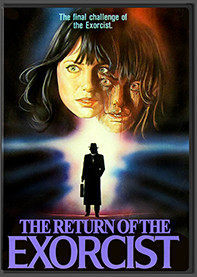
The Return of the Exorcist (1975)

I discovered this film at Cult Action, where they described it as “one of the most ridiculous clones of The Exorcist of all time,” and after a month or more of watching films that were — shall we say — influenced by that film, this one lives up to the hype.

This one has tons of titles, like Exorcist 3: Cries and Shadows, The PossessorUn Urlo Dalle Tenebre and Naked Exorcist. It lives up to those titles, trust me. Particularly the last one.

A nun learns that her brother, Piero, has become possessed due to a pendant he found and a mystery woman who he isn’t sure that he saw. Within minutes — no need for the build of the original here — Piero has chest pains, is flipping out on everyone and sometimes becomes the previously mentioned woman. His powers aren’t well defined, but you won’t care. Your jaw will be on the floor at the craziness that this film has in its grip.

Oh yeah. There was also a huge Satanic orgy in the house a few years ago. We know this because this scene is repeated throughout the movie. Luckily, the Exorcist (Richard Conte in his last film. Conte was going to play Don Corleone in The Godfather, but as the film increased in budget, A-list actors started competing for the part. He did end up playing one of the film’s villains, Don Barzini) is on hand to help save everyone.

If you watched The Exorcist and thought, “This would be so much better with b-roll footage of Rome and, oh by the way, could we make it a ton sleazier?” then yes, this film is exactly what you want. Franco Lo Cascio is the perfect director for this, as despite starting his career with 1975’s Mark of Zorro (starring George Hilton from All the Colors of the Dark as Zorro!), he’s worked mostly as Luca Damiano in the Italian porn industry.

For all the movies that Warner Brothers sued out of theaters, the fact that this one got through unscathed is a miracle. Then again, when we’re referring to movies about Satanic possession, perhaps that isn’t the best choice of words.

A warning: this film is not for the weak. If you were offended by The Exorcist, you’re in for it. If Amityville II: The Possession upset you, you are also in for it. If you’re looking for a film that doesn’t suddenly stop the narrative and starts showing b-roll footage of nightclubs, you are also in for it even more.

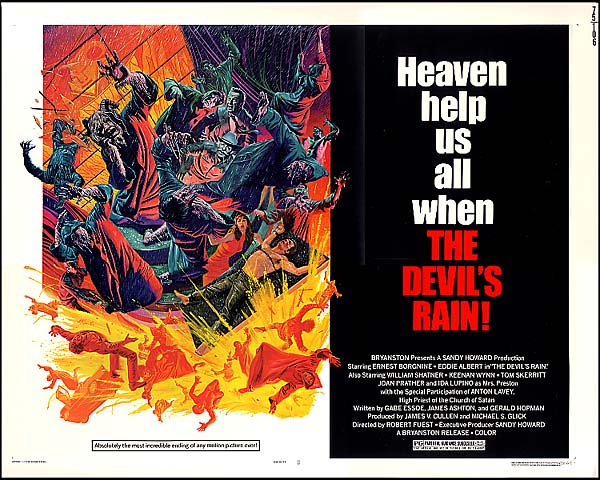
The Devil’s Rain! (1975)

The Devil’s Rain! is a movie that could only have been made in 1975. It united old Hollywood royalty, television stars, the visionary director of The Abominable Dr. Phibes and the Church of Satan in the Mexican desert.

It is not a perfect movie. You can’t even say that it has plot holes, as that would require something of a coherent plot — a fact director Robert Fuest was all too aware of. On the sparkling commentary track that accompanies the new Blu-ray release from Severin (picked up from the Dark Sky DVD release), he speaks about discussions with the writers (Gabe Essoe, James Ashton and Gerald Hopman, whose only credit is co-producing Evilspeak, so one assumes that he is Satan) where they assured him that the script made perfect sense. While Fuest claims that he did what he could to clear up his issues with the film, a movie that effectively decimated his promising directorial career emerged.

But you know what? I embrace plot holes the way some critics hold dearly onto their Criterion collection films and back issues of Premiere. There’s no way I can be objective about The Devil’s Rain! The only box it doesn’t check for me is a disclaimer stating that it’s based on a true story.

The film begins with close-ups of Bosch’s painting The Garden of Earthly Delights, along with the wails of the damned as they gnash their teeth in Hell. Then, we’re dropped into the lives of the Preston family, who have suffered under a curse for hundreds of years.

Turns out that at some point in the 18th century, the family screwed over Jonathan Corbis (Ernest Borgnine, Escape from New York), a Satanist who was eventually burned at the stake. He had a book containing the souls of all he had damned, which was stolen by Martin Fyfe (William Shatner, who I don’t need to tell you anything else about). Before he dies, Corbis vows revenge on the Fyfe family, which changes its name to Preston. He’s been stealing them one by one, selling their souls to Satan and trapping them in the devil’s rain. They then become living wax figures with melting eyes and black robes.

That’s how we meet Steve Preston, the leader of the family, who has escaped Corbis to warn his wife  (Ida Lupino, an actress (and director) known for noir classics like The Bigamist and On Dangerous Ground. She often referred to herself as the poor man’s Bette Davis, as she was usually offered the parts that Davis had turned down. She refused those parts so many times that Warner Brothers suspended her, so she used that time to learn the craft of directing on set. As roles for her slowed, she became the second female director admitted to the Director’s Guild, following Dorothy Arzner, the sole woman director of Hollywood’s “Golden Age.”) and son, Mark (also Shatner). As the old man tells them to return the Book of Souls, he melts in the rain.

So what does Mark do? He takes the book directly to Corbis, challenging him to a battle of faith in the desert. That battle quickly turns into Mark trying to escape, but Corbis’ disciples are too much for him. He shows a cross to the priest, who transforms it into a snake before using a ritual to erase Mark’s memory in preparation for a major ceremony.

Oh, the 1970s — when your main character gets wiped out minutes into a movie because he has to leave town for a three-day Star Trek convention in New York. That really happened, and I have no idea if that was why Shatner went from hero to geek in such record time.

Mark’s older brother Tom (Tom Skerritt, Alien) and his wife, Julie, must save the day. Oh yeah — they also have Dr. Sam Richards (Eddie Albert from TV’s Green Acres) along for the ride, as he’s a psychic researcher.

Finding Corbis’ church, Mark watches the ceremony that converts his brother into a wax follower. Anton LaVey shows up under a hood, and Corbis turns into a goat, which is an event that sent me scrambling through our living room in a paroxysm of glee. The Severin release also contains interviews with the Church of Satan’s High Priest Peter H. Gilmore, High Priestess Peggy Nadramia and LaVey’s wife and biographer Blanche Barton, all of whom share anecdotes of the Black Pope’s time on the set (indeed, it seems to be a madcap time by studying the photos they show, with LaVey in a jaunty leather cap smiling like a child on Walpurgisnacht) and input on the film. He’s nearly caught but also discovers that the source of Corbis’ power is the devil’s rain, a glass bottle containing the souls that the priest has captured.

But wait — if he has the devil’s rain, why did he need the book? If he came back to life, why does he need revenge? Look — perhaps these questions will derail your enjoyment of The Devil’s Rain! But not me.

During the final battle — the film moves incredibly fast, making ninety minutes feel like half an hour — the devil’s rain is destroyed by Mark, who finds his lost humanity. Then, it starts to rain.
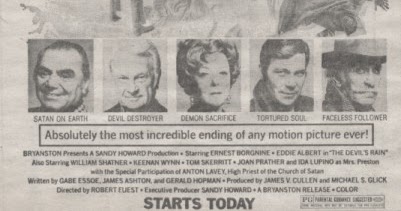
I love how the advertising for this film states that this is “absolutely the most incredible ending of any motion picture ever!” They aren’t lying. Corbis and his followers melt for nearly ten minutes of special effects, turning into piles of goop. It’s over the top and ridiculous and extraneous and totally awesome. I use This kind of scene to determine if I can be friends with someone. If you dismiss it, you’ll never share a beer with me.

Producer Sandy Howard (who also was responsible for MeteorBlue Monkey and the A Man Called Horse series) based his whole ad campaign around the end of the film, so he took over the final cut to ensure that this sequence would last and last.

Tom and his wife — whose ESP is the sole reason we can see the flashbacks to know why Corbis is doing what he does — make it out alive, but as he embraces his wife, we see that he’s really hugging Ernest Borgnine! Where’s his wife? Trapped in the devil’s rain, in a scene that comes back at the end of the credits that is harrowing as she looks out into the darkness with no hope.

Is The Devil’s Rain! a good movie? Well, that depends on your perspective. Despite the flimsy plot, Fuest succeeds at delivering plenty of pure weirdness and gorgeous visuals. And there’s so much talent on the screen — I didn’t even mention that this is one of John Travolta’s first films and that Keenan Wynn (Piranha, Laserblast) shows up as the sheriff.

Plus, like all 70’s occult movies, plenty of legends are behind the film. Like Ernest Borgnine claiming that there were so many accidents on set that he’d never work on a Satanic fmovieagain. Or he was saying that the Mafia produced the film and that he was never paid. Cinefantastique magazine even wrote that Fuest had suffered a nervous breakdown during the making of the movie, a fact he disputes on the commentary track. And LaVey claimed that he did a special success ritual for Travolta.

PS – Here’s the link to a June 1975 Argosy interview with LaVey during the filming of The Devil’s Rain! where he discusses buying the panties of “MGM’s most famous stars- from Greer Garson to Liz Taylor – with the labels still on them,” being minimized on movie sets and Ernest Borgnine accepting an honorary priesthood.