June 16-22 SNL Week: Saturday Night Live is celebrating 50 years on the air, can NBC last for another 50 years??
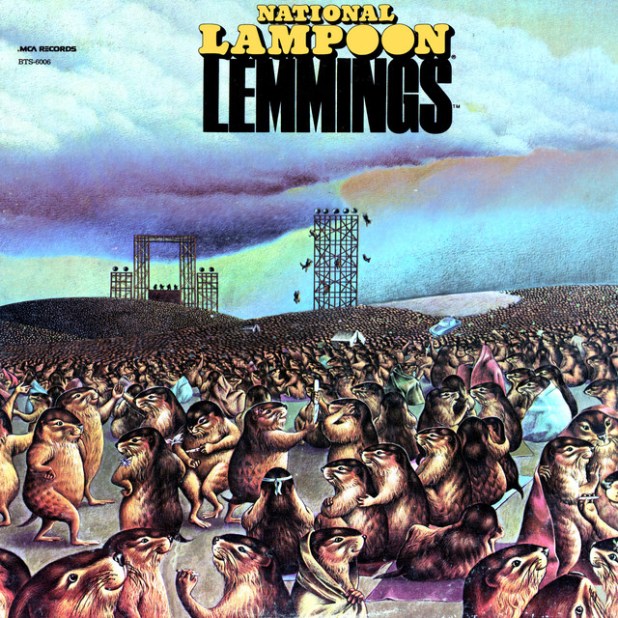
The magazine National Lampoon did a stage show that came out of the radio show. Directed by Tony Hendra, Michael Keady and Sean Kelly and written by Hendra, Kelly, David Axelrod, John Belushi, Chevy Chase, John Belushi, Rhonda Coullet, Christopher Guest, Paul Jacobs, Harold Ramis, Anne Beatts, John Boni, Garry Goodrow, Douglas Kenney, P.J. O’Rourke, Alice Playten and Henry Beard, just from that sentence you’ve already figured out that a lot of SNL people started here.
Starting at The Village Gate on January 25, 1973, this ran for 350 shows. It begins with Belushi coming out to welcome the audience to the Woodshuck Festival: Three Days of Peace, Love and Death. Then, Paul Jacobs from Neverland Express does “Lemmings Lament,” sounding just like David Crosby. Christopher Guest is Dylan singing “Positively Wall Street,” Chevy Chase does John Danver on “Colorado,” Rhonda Coullet is Joan Baez singing “Pull the Tregroes, Negroes” (which has a much worse title); Belushi does Joe Cocker, Guest is James Taylor and there’s even a band named Megadeath years before Megadeth.
Supposedly, this was filmed for HBO — which started in November 1972 — but the tapes were lost.
Most of the acts in this are dead or your parents’ music now. Yet in 1973, this was really going after them and started careers. It’s too bad that Chevy Chase ended up being Chevy Chase.
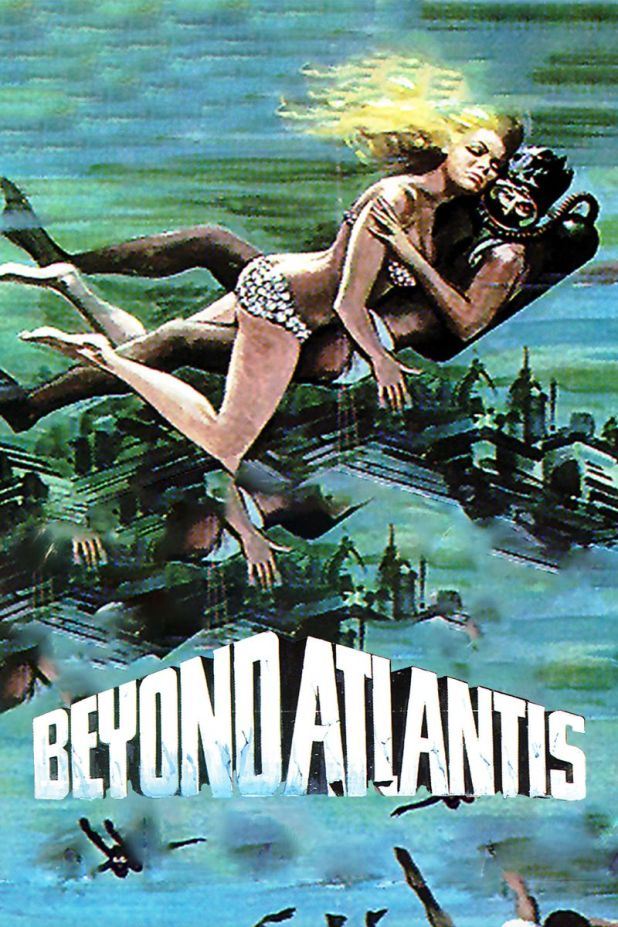
I was so loud while watching this movie that my wife had to come to check on me. The sheer delight had overtaken me when East Eddie (Sid Haig) appeared in a film where gigantic-eyed Atlantean people attempted to keep their undersea world alive thanks to a new queen named Syrene (Leigh Christian), who must constantly sire new children, as decreed by her adopted father Nereus (George Nader).
Eddie is part of a group trying to farm pearls for money, which includes what could be the exploitation movies made in the Philippines version of The Avengers: Manuel the Barracuda (Vic Díaz), Logan (John Ashley) and Vic Mathias (Patrick Wayne).
Producer Ashley had the idea that this would be a science fiction version of The Treasure of the Sierra Madre, which is a big idea, while Wayne would only be in the film if it was a family-friendly movie, but it’s also about rebuilding the DNA of a dying world of interbred bug-eyed merpeople, which is a fun juxtaposition.
The underwater scenes are gorgeous, and this has way better production values than many movies made in the Philippines. Yet if it had more exploitation—a fact that Ashley believed—I think it would be a more exciting movie.
This was released by Dimension Pictures in 1973 and rereleased by 21st Century.
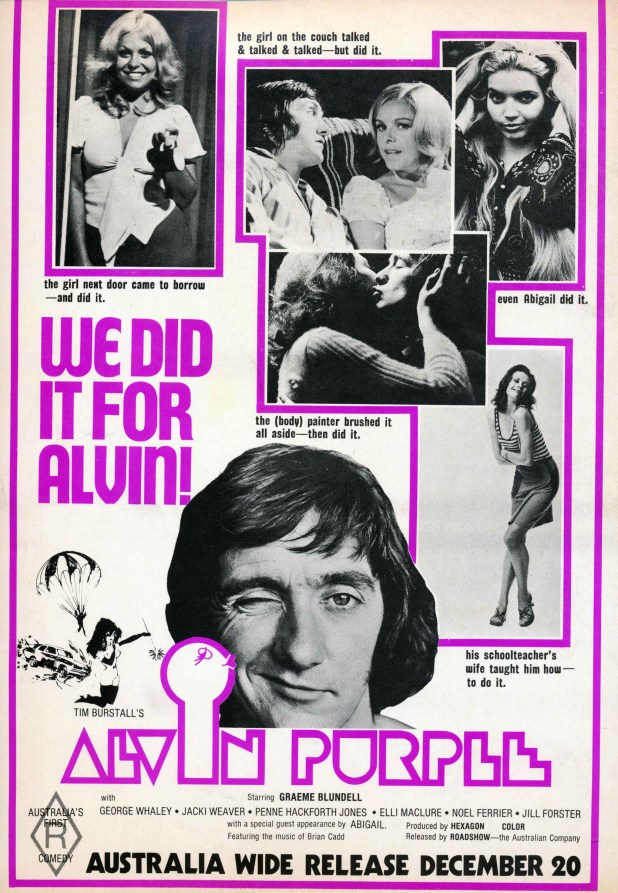
Alvin Purple (Graeme Blundell) is a door-to-door waterbed salesman — if we’ve learned anything from cinema, it’s that “The most beautiful thing in the world is smoking pot and fucking on a waterbed, at the same time.” — who is irresistible to women.
Somehow, this was made by director Tim Burstall, who was part of the new wave La Mama Theatre in Melbourne, established by his wife Betty Burstall. His first movie, 2000 Weeks, was well-reviewed outside of Australia, but failed at home. Did he get cynical and just make movies that would make him money? Sure seems like it. When adjusted for inflation, this is the seventh biggest movie made in Australia and had two sequels, Alvin Rides Again and Melvin, Son of Alvin.
It was released over here as The Sex Therapist.
Alvin somehow goes from sleeping around to seeing a therapist to a quack doctor who uses him to start a whorehouse and then make porn movies and then the one girl that he really loves becomes a nun, so he becomes a gardener.
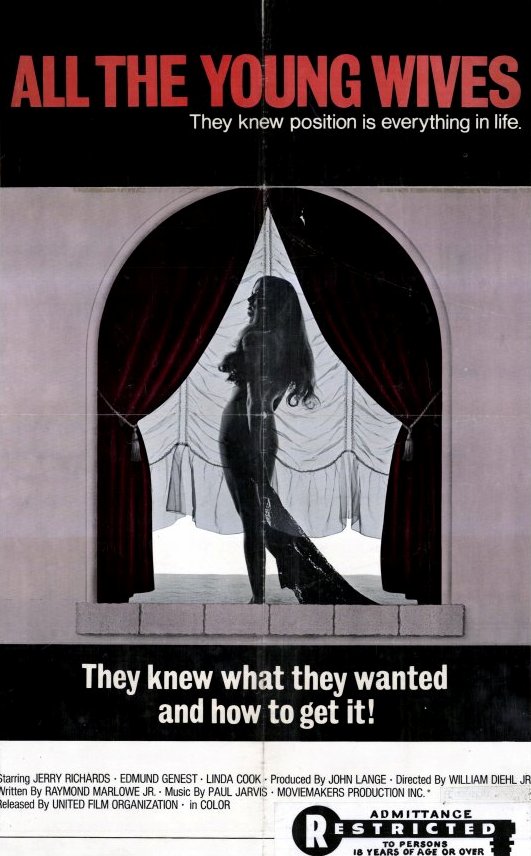
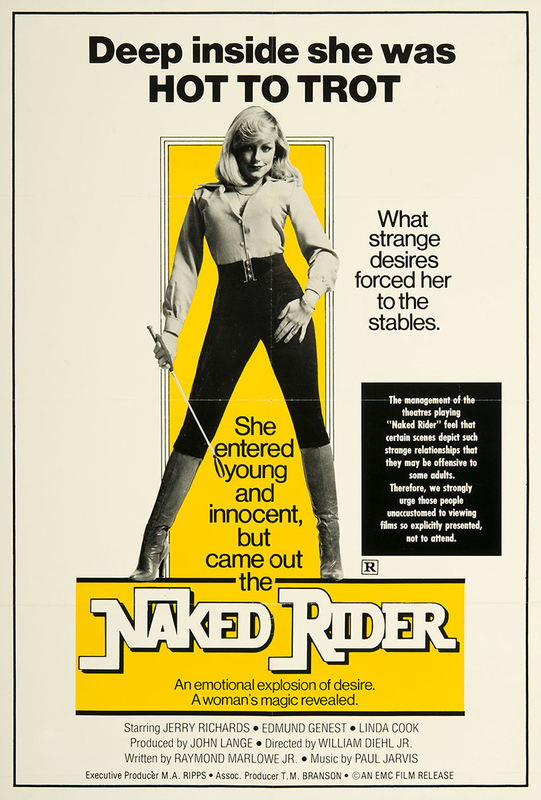
Directed by William Diehl (who also directed The Secretary and wrote the novel that Sharky’s Machine is based on) and written by Raymond Marlowe Jr., All the Young Wives is also known as Naked Rider and You All Come.
Big Jim (Gerald Richards, billed as Jerry) runs the town and all the women, too. But his much younger wife Melody (Linda Cook, the voice of Leech Woman in Puppet Master) starts sleeping with Sam (Edmund Genest), one of his workers — and perhaps stealing his money — and he has to re-evaluate his life, which is mostly spent chucking his friends.
The posters and titles make this sound sleazy, but it isn’t. It’s a Southern Gothic take on bad marriages and women trying to come into their own when you expect wall-to-wall balling. You may not recognize a single actor in this, but you’ll be surprised by just how good everyone is.
This is the story — well, movie tale — of Cheung Po Tsai, the pirate legend who eventually became a Qing dynasty Navy captain, helping other governments to battle pirates. That’s plenty to do in just 39 years, but the guy lived a life.
Played by Ti Lung in this Chang Cheh-directed movie, it seems like everyone is out to collect the bounty on his head, like former shipmate Hua Er-dao (Fan Mei-sheng), merchant Xiang You-lin (Tin Ching) and General Wu Yee (David Chiang), who grows to respect the rogue. This would be the eighteenth movie that Ti Lung and David Chiang made as a team!
This is less a piracy film — yes, there’s a swashbuckling scene to start it — and more a chronicle of two good men destined to battle one another. And if Cheung Po Tsai is a familiar name to you, you may remember when he was the villain of Project A.
All four films on the Horrible History box set from Eureka are presented on Blu-ray from HD masters supplied by Celestial Pictures. Extras include two new commentaries by East Asian film expert Frank Djeng (NY Asian Film Festival) and martial artist and filmmaker Michael Worth, two new commentaries by action cinema experts Mike Leeder and Arne Venema, interviews and essays on these films, an O-Card slipcase featuring new artwork by Grégory Sacré with a collector’s booklet featuring new writing on all four films in this set by writer and critic James Oliver. It’s all limited to 2,000 copies and you can get it from MVD.
April 18: Heavy Metal Movies: Pick a movie from Mike McPadden’s great book. RIP. List here.
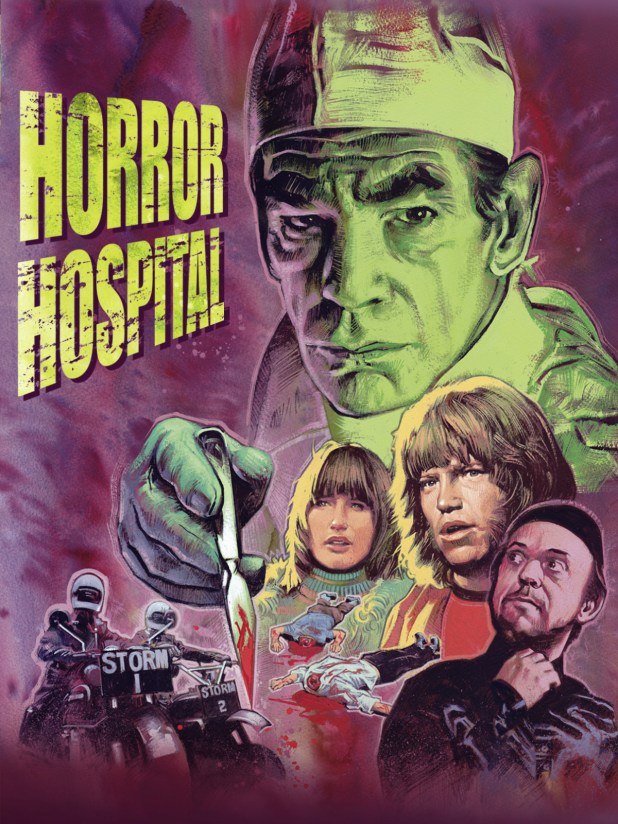
Jason Jones (Robin Askwith from the Confessions Of… movies) is a burned-out would-be rock star on his way to Brittlehurst Manor, a health escape that has also drawn in Judy Peters (Vanessa Shaw), who is looking for her aunt.
It’s no surprise or spoiler that this is really a…Horror Hospital!
Yes, Dr. Christian Storm (Michael Gough), Judy’s aunt (Ellen Pollock) and evil dwarf Frederick (Skip Martin) have been drawing hippies her and either turning them into brainwashed, motorcycle-helmet wearing zombies or outright killing them.
There’s even a band, Mystic, who play the movie’s theme “Mark of Death!” Their members are James IV Boris, Alan “The River” Hudson and Simon Lust. Those are some great stage names! The cross-dresser who is singing for them is co-writer Alan Watson. And Mystic is really the psychedelic group Tangerine Peel, who at one point had songwriter/producer Mike Chapman, who promised Blondie that he would make Parallel Lines into their biggest album. It includes “Heart of Glass” and he said of the album to Rolling Stone, “There’s loads of hits, it’s a great album, but who gives a fuck. It’s easy, you see. When we go into the studio, we go in and make hit records, and it just happens. We don’t think about it. If you’re going to be in the music business, you gotta make hit records. If you can’t make hit records, you should fuck off and go chop meat somewhere.” He also produced albums for The Knack, Suzi Quatro, Toni Basil, Pat Benatar, and more.
Vanessa Shaw is really Phoebe Shaw, who was mainly in commercials and dated Askwith after this. She also dosed the entire cast and crew at the wrap party with the cake she made. Ah, 1973!
This was directed and written by Antony Balch, who in addition to bringing all sorts of incredible movies to England — Don’t Deliver Us from Evil, Supervixens, Truck Stop Women — also directed one of my favorite movies ever, the mummy starring Secrets of Sex AKA Bizarre.
This movie is a total mess. Who cares? I loved it.
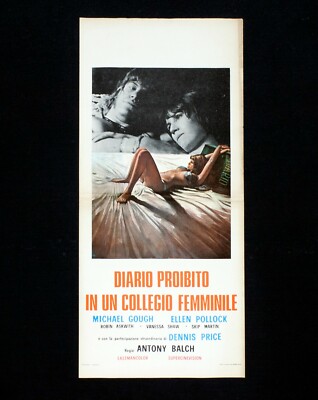
In Italy, this was known as Diario proibito di un collegio femminile, which means Forbidden Diary of a Girls’ Boarding School. That’s the type of title that gets you into the theater.
I have to speak with pride for my Italian filmmaking countrymen: they do not give a fuck.
Any other movie these days that would put a child in danger would not do what director Enzo G. Castellari and writers Tito Carpi, Gianfranco Clerici, Vincenzo Mannino and Leonardo Martín do in this movie.
When the question is asked, “Does this go too far?” I assume Castellari laughed and drank another shot of J&B, delirious in the director’s chair.
Castellari claims he saw Bullitt and wanted to make this, but he probably was thinking of The French Connection. I mean, Fernando Rey is in it, just to assure us that, yes, this Italian movie will be stealing a lot from that movie.
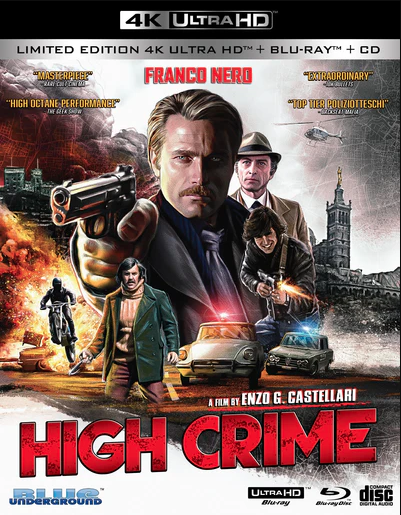
But who cares? This is the story of a tough cop, Vice-Commissioner Belli (Franco Nero), battling perhaps even tougher bad guys, the kinds of drug dealers that’ll blow up their own men just to take out a few lawmen. These new criminals are so disgusting that even the the old-school organized crime bosses like Cafiero (Fernando Rey) try to take them out, only to learn that some of their most loyal men have decided to work for the other side.
Even after all the work it takes to convince Commissioner Aldo Scavino (James Whitmore) that he has a case, Belli must watch as the old man is killed. Soon, the new mob beats his lover Mirella (Delia Boccardo) into submission and then well…runs his daughter over with a car.
Any other movie would hold back from this and do it off-screen.
Welcome to Italy.
In Erica Schultz’s The Sweetest Taboo: An Unapologetic Guide to Child Kills In Film, she refers to this scene as one of the best ever made: “…High Crime’s car death is definitely top tier.” It’s shocking, so wild that I had to rewind it to ensure I had just seen what I thought I had. So when Belli goes wild, killing off everyone in his path — and looking suave doing it, I’m secure enough in my manhood to say Franco Nero is smoldering — we understand. I mean, we just watched his kid fly over the roof of a car and get run over.
When I was researching this movie, I saw that someone on Letterboxd referred to its soundtrack as dull and plodding. I want to go total Inspector Belli on that person, throwing the kind of slaps that an Italian action hero is known for. I was humming along the entire film and it’s been trapped in my head ever since. I don’t know how anyone could watch this and not fall in love with this movie.
The Blue Underground release of High Crime has so much. It includes a 4K UHD and Blu-ray with the film on it, along with three commentaries (Castellari; Nero with Mike Malloy; Troy Howarth, Nathaniel Thompson and Eugenio Ercolani); interviews with Castellari, Nero, Massimo Vanni, Roberto Girometti and Oliver Onions (Guido and Maurizio De Angelis); a featurete by Eurocrime! director Mike Malloy; an alternate ending; a trailer; a poster and still gallery; and the soundtrack on CD.
EDITOR’S NOTE: Cinematic Void will be playing this tonight at 7 p.m. at the Sie Film Center in Denver, CO. (tickets here). It will be hosted by Theresa Mercado with very special co-host James Branscome of Cinematic Void.For more information, visit Cinematic Void.
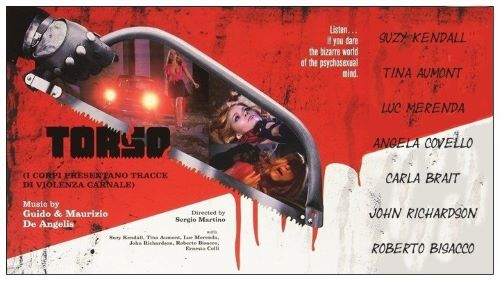
Torso is such a simple title. I’d rather call this film by its Italian name: I Corpi Presentano Tracce di Violenza Carnale, or The Bodies Bear Traces of Carnal Violence. Either way, it was directed by Sergio Martino and features none of the cast that he had come to use in his past films like George Hilton, Ivan Rassimov or Edwige Fenech.
It does, however, star Brtish actress Suzy Kendall, who played the lead role of Julia in Dario Argento’s seminal The Bird with the Crystal Plumage. She’s so associated with giallo that she appeared as the main character’s mother in 2012’s ode to the genre, Berberian Sound Studio.
This is a film that wastes no time being strange. Or salacious. A photographer is shooting a soft focus lovemaking session between three women amongst creepy, eyeless baby dolls. By the time we register what is happening, we’re now in a classroom, where swooping pans and zooms refer us to the main cast of the film as we overhear a lecture and later a discussion about Pietro Perugino’s painting of Saint Sebastian. Did he believe in God? Or was he just trying to sell sentimentality? Could an atheist find himself able to translate religion to those with faith?
We cut to a couple making out in a car as a figure stalks them through the eye of the camera, making us complicit in the act of the killer. Quick cuts reveal the white-masked face of this maniac. The man runs after him while the girl doesn’t even care that they had a voyeur watching. As she waits for him to return to the car, but grows impatient. The headlights of the car cast her shadow large across the columns of a bridge. And their light is quickly extinguished by black-gloved hands. The camerawork here is really striking, keeping us watching for the killer, as we’re no longer behind his eyes. His attack is swift and ruthless, juxtaposed against the images of fingers penetrating the eyes of a doll.
The art professor (John Richardson, Black Sunday, The Church) and Jane (Kendall) meet by chance at a church where she challenges him to change his views on Perugino. As she returns from their somewhat romantic afternoon, Jane spies her friend Carol arguing in the car with a man who she believes is married.
Meanwhile, ladies of the evening walk the street, ending up with Stefano, a student who has been stalking Julie. He has trouble performing and the prostitute he’s with tells him that all the men with hang-ups always come her way. That said — even if he’s queer, he better pay the money. He flips out and attacks her, but she makes her escape.
We’re then taken to a hippy party that looks like it’s taking place inside Edward Lionheart’s Theater of Blood. There’s weed, there are acoustic guitars, there are bongos, there are dudes with neckerchiefs, there are motorcycles. Truly, there’s something for everyone. But after leading on two men, Carol just walks out into the mud. They try and chase her, but she makes her escape into the foggy night. We hear her footsteps through the swamp as she walks, exhausted and covered in mud. What better time for our white-masked killer to return? We see glimpses of him through the fog and then he is gone. Whereas in past films Martino ignored the murder scenes instead of story, here the violence is extended, placing the killer and his actions in full view. After killing the girl, he rubs mud all over her body before stabbing her eyes — again intercut with the baby doll imagery. Her blood leaks into the mud as the score dies down.
This scene really feels like what the first two Friday the 13th movies were trying to achieve, but of course several years before they were made.
A police detective is in front of the art class, showing images not of art, but of the crime scene. A piece of cloth has been found under the fingernails of one of the murdered students, Flo. And that same scarf was found on Carol’s body. It’s their duty to report seeing anyone who wore this scarf to the police, who want to cooperate with the students who normally riot and throw rocks at them.
Two of the men in the class — Peter and George — were the last two people to be seen with Carol, the ones who she turned down at the party. Meanwhile, Stefano continues to stalk Jane. The music in this film is so forward-leaning — tones play when the killer shows or during moments of tension.
A man calls Daniela and tells her that if she ever tells where she saw the red and black scarf, she’s dead. Fearing for her life, she tells her uncle, who lends his country home to her and her friends so that they can get away from the city while the killer is at large.
Oh yeah — I forgot the pervy scarf salesman, who the police are leaning on. Right after talking to the police inspector, he calls someone and asks for money to buy his silence. Whoever it is, they bought the scarf from him and wouldn’t want anyone else to know. They’ll also get out of town and head to the country. Coincidence? I think not!
Stefano is all over Dani, telling her that he needs her. She wants nothing to do with him. When she stares at him, she remembers seeing him wear the red scarf. She escapes — slamming the door in his face. She tells Jane that she remembers seeing him wear the scarf — and never again — the day Flo died. The whole time, the creepy uncle is watching the two girls. Jane offers to speak to Stefano, then meet the girls at the vacation home.
The street vendor is flush with cash, creeping along in the dark. A car starts to follow him. We see the black-gloved hands again as the car hits its victim again and again, bright red gore pouring all over the screen.
Jane goes to speak to Stefano, finding only strange baby dolls and letters to Dani asking her to love him and remember the promise that she made as a little girl. Jane is surprised by Stefano’s grandmother, who tells her that he left town.
The other girls are asleep on the train as someone watches them. A strange man enters their train car and sits down.
The camerawork in this movie feels as predatory as the perverts and killers that exist within it. Speaking of pervs, when the girls arrive in the countryside, the local men pretty much lose their minds, particularly over Ursula (Carla Brait, the man wrestling dancer from The Case of the Bloody Iris). She and Katia make out as a peeping tom watches, only for the killer to show up and off the leering man. There’s an amazing scene of the killer dumping the pervert into a well, shot underwater and staring upward as the body falls toward the lens.
Man, every man in this movie is scum. They’re either frightened boys or perverts wanting one chance to knock up a woman or scarred from past sexual encounters. None of them are positive, as even the uncle who gives Dani the villa seems way too interested in her. Every man is a predator at worst and a leering pervert at best.
Jane hurts her ankle when she gets overly excited about breakfast. A doctor arrives — the mysterious man from the train — and he gives her a pill, which knocks her out.
The girls go sunbathing while Jane recovers. Dani thinks she sees Stefano — complete with the red scarf — watching them. They return home and drink champagne, which Jane uses to wash down her sleeping pills.
A few minutes later, the door rings. It’s Stefano — the girls all scream — but he’s dead — the girls scream again — and the killer is behind him, holding the red scarf — now scream even louder! Instead of showing us the murders, Martino switches form, cutting to a ringing bell and Stefano being buried.
Jane wakes up, asking where her breakfast is. She’s obviously slept late as a result of the pills. She walks around the apartment, looking for Dani, Ursula and Katia, only to find a mess. Tossed chairs, bottles of beer and every single one of her friends murdered. Suzy Kendall is amazing in this scene, caught between fear and nausea. Unlike so many wooden giallo performances, she’s actually believable.
She hides as the killer comes back, forced to stay quiet and watch as he saws her friends into pieces. Even the ordinary world routine of the milkman arriving cannot stop the butchering of her friends, with her trapped just feet away.
This final act is completely unexpected, as up until now, the film had played by the rules of the giallo, the large number of victims versus a large number of red herrings.
In fact, this film is so packed with red herrings, even the cast had no idea who the killer was. Martino wouldn’t tell them who it was, so each of the actresses had her own theory as to who the killer was. And in the original script, the killer survived.
Now, instead of that traditional giallo structure as I mentioned above, it is the last survivor — a near prototype for the final girl — against a killer. Throw in that Julie can’t move well due to her leg and Martino has set up quite the suspenseful coda.
Trapped in the house, Julie tries to signal with a mirror, using Morse code. But it totally misses the heroic doctor’s sight. He places a call, but it doesn’t seem like it’s to Julie. She looks out the window and sees the killer coming back.
It turns out that the killer was the professor, who saw a childhood friend die trying to reach for a doll. He compares the other kills to dolls, with only Julie as a flesh and blood person. Everyone else was a bitch or played games with him or blackmailed him. He hacked Ursula and Katia to pieces like dolls as a result. Dani saw him. Carol may have seen him. And he killed Stefano when he saw him in the village. Death, he says, is the best keeper of secrets and then he sees Julie as a doll and tries to hang her. She’s saved at the last second by the doctor.
They battle into a farmhouse, across the yard and to a similar rock where we saw the younger professor watch his friend die. We hear a screen and have no idea who has been killed — but luckily for Jane, the doctor survives. He discusses whether fate or providence had kept him in town, where he could save her. Perhaps it was written in the stars. Julie replies that Franz, the professor, would have been a realist and called it a necessity. Franz is dead and the dreamers live on.
The more times that I’ve watched this film, the more that I appreciate it and how it flips the genre conventions on their head and moves toward more of a slasher, with many of the giallo elements feeling tacked on somewhat to stay within the expected pieces of the form. A real clue that it’s really a slasher? The killings are more important than who the killer is.
EDITOR’S NOTE: Cinematic Void will be playing this on Thursday, Jan. 9 at 7:30 PM at the Little Theater in Rochester, NY (tickets here). For more information, visit Cinematic Void.
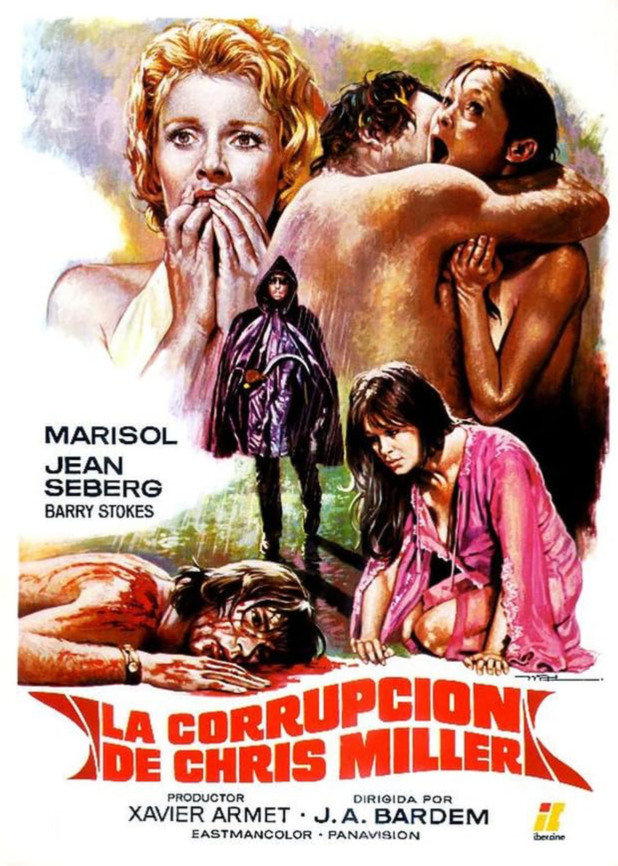
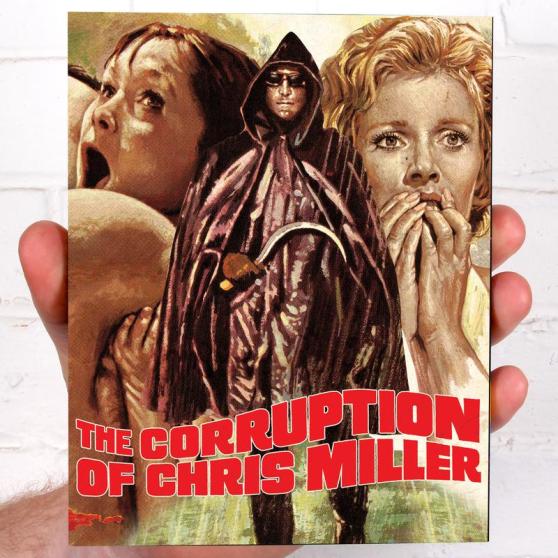
Chris Miller (former Spanish child star Marisol; when she married dancer Antonio Gades, Fidel Castro acted as their godfather) lives with her stepmother Ruth (Jean Seberg, the haunted and doomed beauty who was also in Breathless and Saint Joan). The loss of Chris’ father has damaged both of them, so when a drifter named Barney (Barry Stokes, Prey) shows up, it changes their lives. Maybe not for the better, what with a killer slicing his way through the village…
This Spanish giallo was directed by Juan Antonio Bardem (yes, the uncle of Javier) who also made Death of a Cyclist and wrote A Bell From Hell. It was written by Santiago Moncada, who was also the pen behind Hatchet for the Honeymoon, Ricco and The Fourth Victim.
Ruth blames Chris for her husband leaving, so she uses Barney to seduce her stepdaughter, who is recovering from the dual loss of her father and being assaulted at school. Her plan? When daddy comes home, he won’t love his daughter much any longer because she’s no longer a virgin. Meanwhile, the killer keeps on killing, including a scene where he dresses like Charlie Chaplin.
Also released as Behind the Shutters Sisters of Corruption and , this movie is also a proto-slasher, rife with bloody murders, including a moment when the rain slicker-covered villain kills an entire family in slow motion.
This is a film that deals as much with trauma as murder, that has the sound of running water causing horrifying flashbacks and has no easy ending for anyone in the film, as the guilt of the killings won’t disappear with the death of any suspect.
Vinegar Syndrome recently released this on blu ray, complete with a newly scanned 4K capture from the original 35mm negative. That version will be playing at The Little.
VIDEO ARCHIVES NOTES: This movie was discussed on the November 12, 2024 episode of the Video Archives podcast.
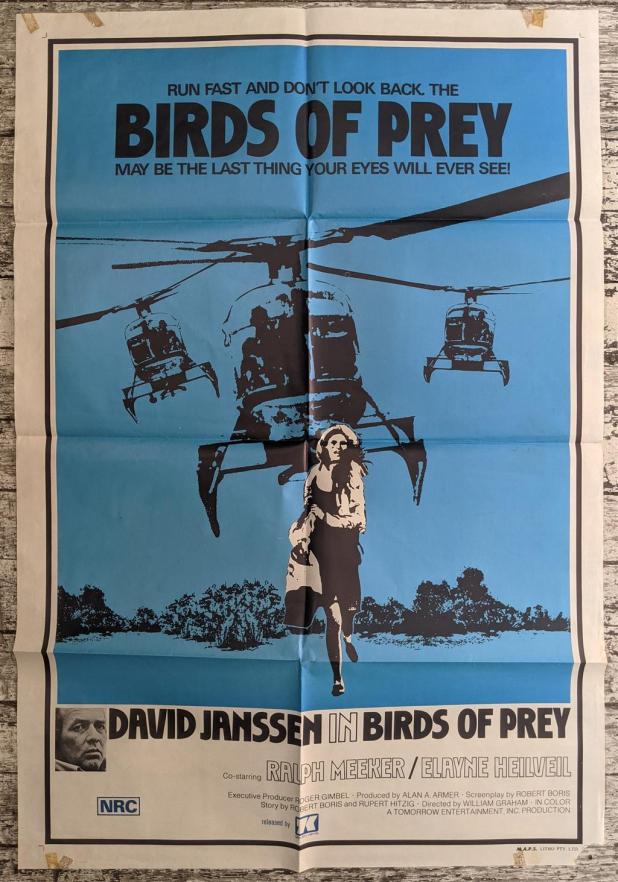
Directed by William Graham (Change of Habit, Calendar Girl Murders) and written by Robert Boris (Steele Justice, Some Kind of Hero, Electra Glide in Blue, Doctor Detroit), Birds of Prey debuted on January 30, 1973 on CBS.
Harry Walker (David Janssen) is a war vet who is now flying a helicopter for the news, checking in on traffic. He finally gets the action he missed when he sees a bank robbery and learns from his former commander, McAndrew (Ralph Meeker), that the criminals — former Vietnam vets — have kidnapped teller Teresa Janice “T.J.” Shaw (Elayne Heilveil), who is due to be married in a few days.
Pilot Jim Gavin told Flying Magazine, “Birds was a ground-breaking project. We took the helicopter out of its normal environment, put it in the city streets and did all the work with Janssen in flight for real. In fact, since he was a pilot Janssen did a lot of the flying, and I’d sit opposite him.”
If you watch this and wonder why Janssen is singing along to songs and his lyrics don’t match the songs, that’s because copyright issues caused the removal of the jazz standards that were originally in this movie.
As you can imagine, the IMDB trivia section for this movie is filled with deep cut helicopter facts.

 B&S About Movies
You must be logged in to post a comment.