CANNON MONTH 2: Family Killer (1973)

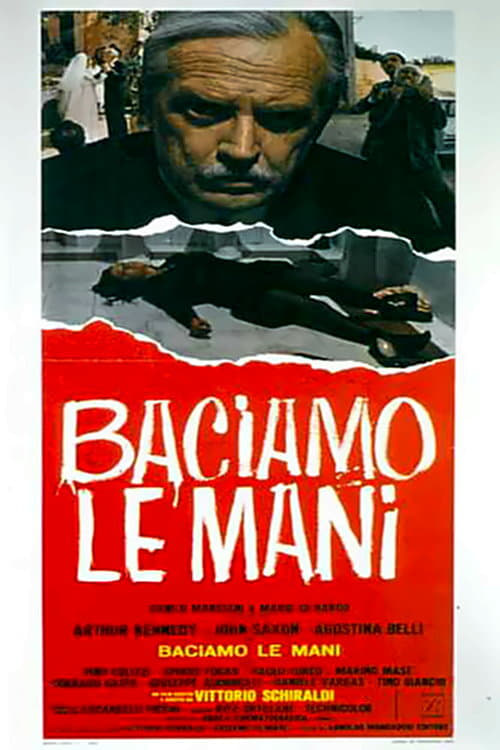
Directed and written by Vittorio Schiraldi (who also wrote Watch Me When I Kill), this was based on a novel that Schiraldi wrote.

Stefano (Joshua Sinclair), the son of Don Angelino Ferrante (Arthur Kennedy) has been shot in the back by the brutal Gaspare Ardizzone (John Saxon) — who is the start of a more violent and ruthless breed of criminal — for refusing to sell him land. Ferrante sends for a killer from America hoping for revenge.

The death of Stefano leaves behind a widow, Mariuccia (Agostina Belli), who is both protected and impregnated by a bodyguard named Massimo (Pino Colizzi). Meanwhile, Ardizzone goes to America and starts wiping out the New York bosses too and Don Ferrante still refuses to put a hit on him. Will his family and way of life survive?

Pretty much The Godfather with a different cast and some subtle changes, Family Killer still boasts an amazing Saxon performance as a total psychopath.

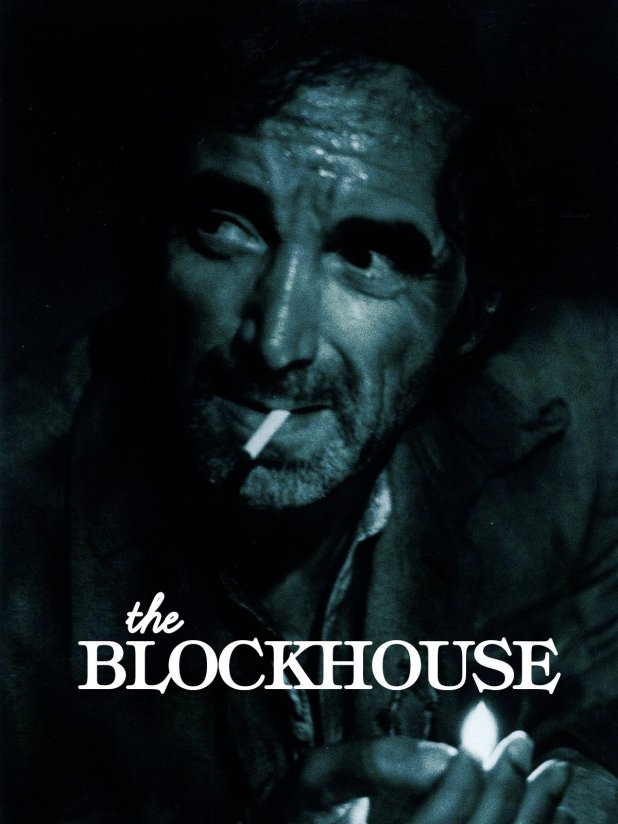
CANNON MONTH 2: The Blockhouse (1973)

On D-Day, a mixed group of forced labourers being held by German forces take shelter from the bombardment inside a bunker which gets blocked in by a bombing run. They have enough food to last for years and it turns out that they’re trapped there for the rest of their lives, as they wait and wait for help that never comes.

Based on Le Blockhaus by Jean-Paul Clébert, this was directed by Clive Rees, who co-wrote the script with John Gould. That book was based on a true story, as in 1951, two German soldiers claimed to have been trapped for six years in an underground storehouse in Babie Doły, Poland. They died within days of being rescued.

Aufret (Peter Vaughan), their leader in the world above, before they were trapped in this storehouse and inside the darkness, loses his power over the men and isolates himself while the others, like Visconti (Charles Aznavour) and Grabinski (Jeremy Kemp) try to play games and keep their spirits up. By the end, the survivors dwindle — Rouquet (Peter Sellers) and Lund  (Per Oscarsson) are the others — and even their matches and candles have started to run out. All that remains is a life trapped in a small space and no light will find them again.

This is a rough movie — not a bad one, but a bleak entry — and also one that should be discussed more.

You can watch this on Tubi.
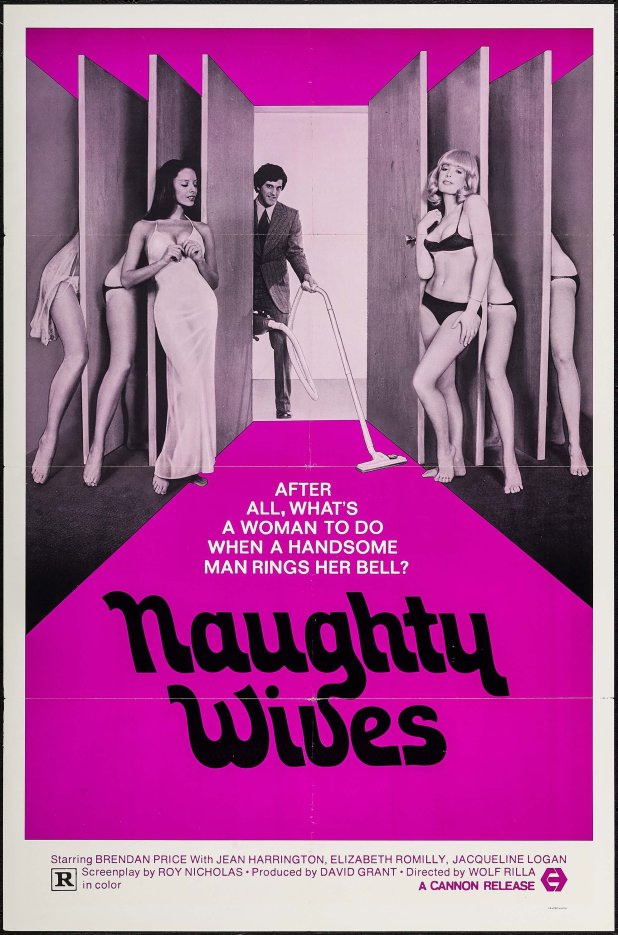
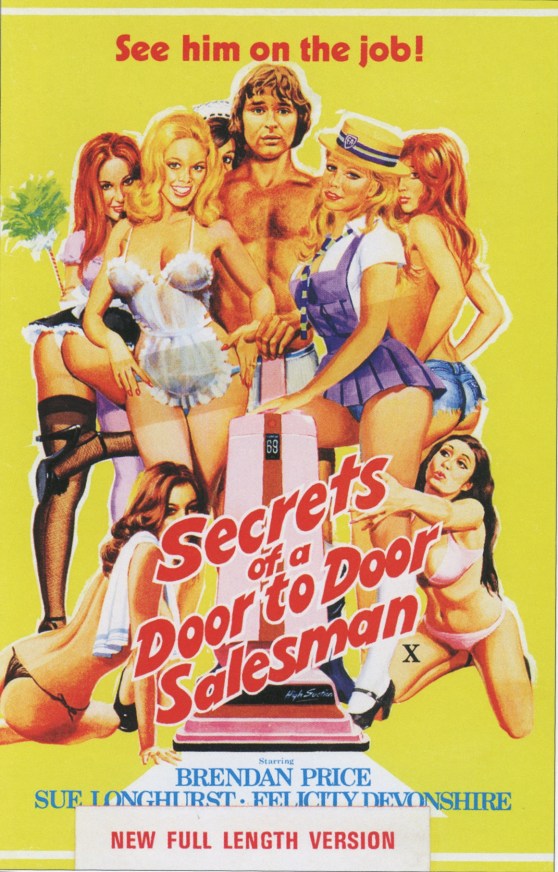
CANNON MONTH 2: Naughty Wives (1973)

The UK movie Secrets of a Door-to-Door Salesman was released in the U.S. by Cannon as Naughty Wives, which is definitely a dirtier if not better label for this.

David Clyde (Brendan Price, who was also in the British sex comedy The Amorous Milkman) gets a job as a vacuum salesman and soon finds that he’s being chased by women.

Director Wolf Rilla is best known for Village of the Damned while writers Joseph McGrath shot some of the first music videos with The Beatles and Denis Norden wrote a lot for David Frost.

This is pretty much true to form for most British sex comedies — a funny line here and there, some nudity there. Today it seems quaint but I’m sure in 1973 pulses raced.


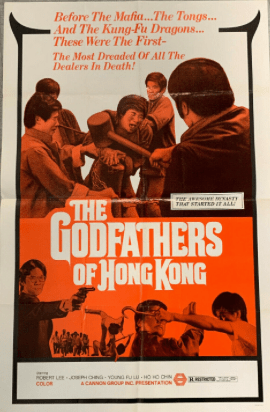
CANNON MONTH 2: The Godfathers of Hong Kong (1973)

Man zhou ren was released as The Godfathers of Hong Kong in the U.S. by Cannon.

According to the Lost Media Wiki, the Cannon English dub of the film is just about lost. The only known home video release with English audio was a heavily abridged 8mm print release by Ken Films. It’s on YouTube courtesy of Kerrie O’Keefe.

Kin Jin Pai plays a detective and wanderer called Man Tshu who comes into a town and challenges the crime family that owns it, burning their opium and taking away one of their prostitute wives as his love interest.

It was directed by Katy Chin Shu-mei — her only film and it’s rare to see a Hong Kong martial arts movie from a woman — and a young John Woo was the assistant director.

The end of this film gets incredibly intense and quite violent, which is why Cannon supposedly picked it up.

You can watch this on YouTube.

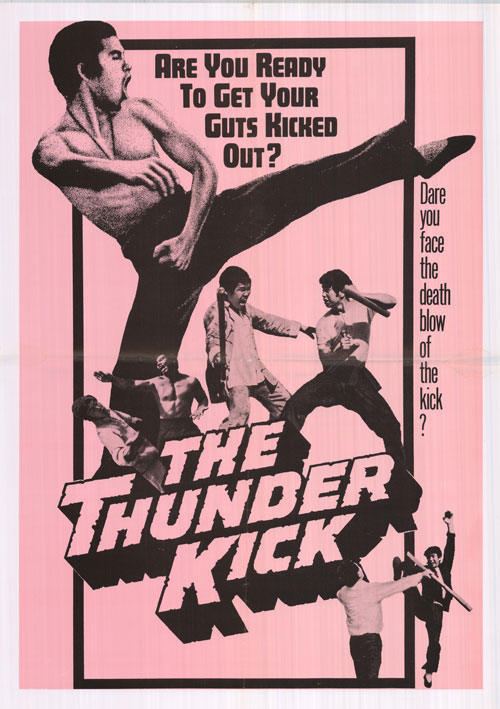
CANNON MONTH 2: The Thunder Kick (1973)

Are you ready to get your guts kicked out?

With those words, Cannon would release the Wing Cho-Yip film Yi wang da shu. Released in Germany as Der gelbe Teufel mit dem Superschlag (The Yellow Devil with the Super Punch), this is the story of Wong Kai Tai, a man looking to free his hometown of Wantchao from the Gang of Dragons and the three brothers Chun Tsi, Shing and Wang.

Despite his friendship with kung fu fighter Chi Sien (Chin-kun Li), Wong Kai Tai refuses to ask for help and pays the ultimate price, which means that now Chi Sen has to take up his battle. It’s not the most mindblowing martial arts movie you’ve ever seen, but hey, Bolo Yeung is in it and that’s always a good time.

But man — how good is that tagline? And who does want to get their guys kicked out?

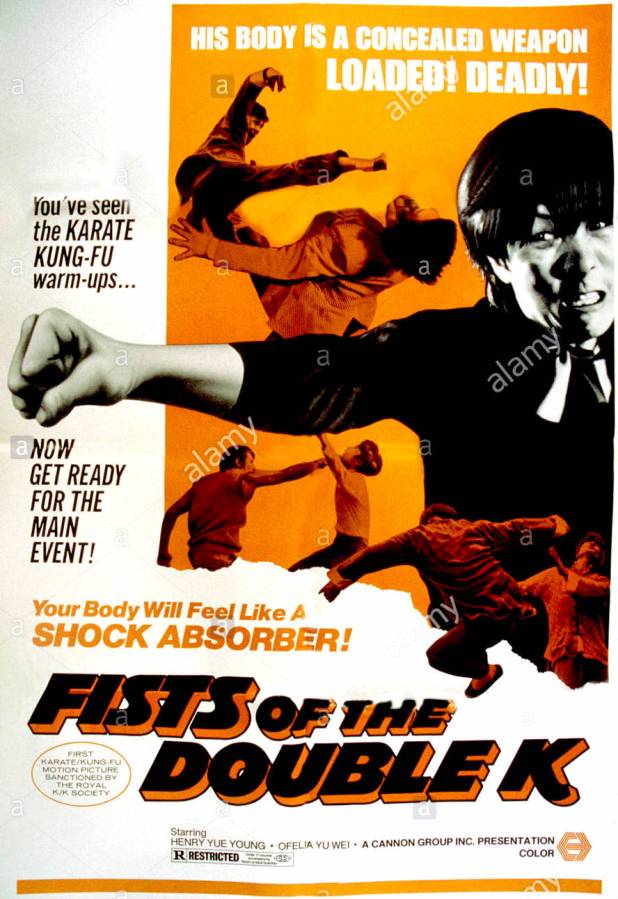
CANNON MONTH 2: Fist of the Double K (1973)

Also known in the U.S. as Fist to FistDragons of Death and Hong Kong Face-Off, Chu ba is directed, written and produced by Jimmy L. Pascual, who was assisted by a very young John Woo. It also has fight choreography by Yuen Woo-Ping.

With fifteen minutes cut from its runtime, it played American theaters with a running time of around 70 minutes.

It’s a simple story of Henry Yu Yung, a young cop who is sent to arrest a man in the same village where the man who killed his father lives.The fights are brutal and without a lot of the flash that American audiences may have been expecting from a Hong Kong movie.

There’s also the opportunity to see a very young Jackie Chan as a guard.

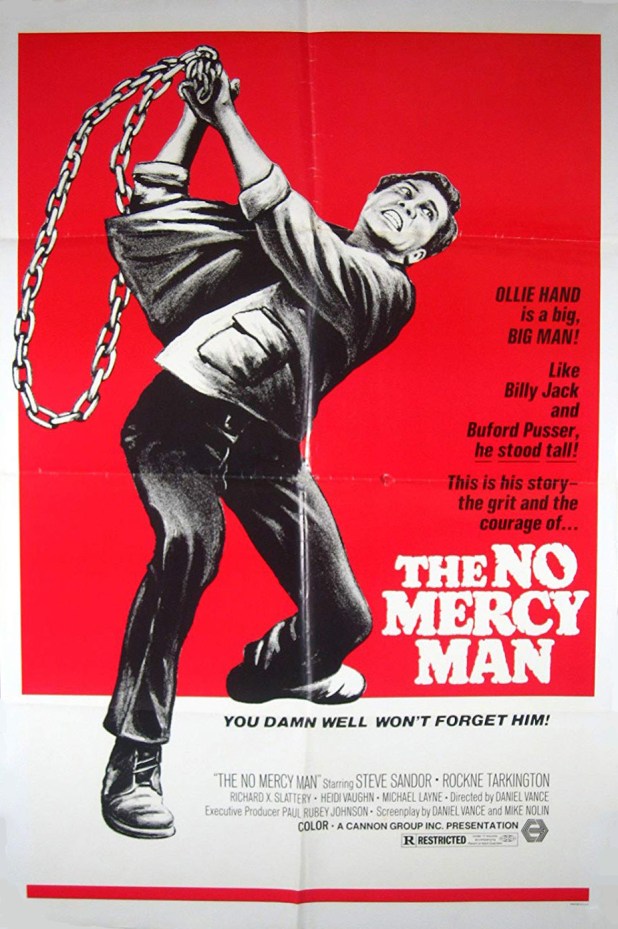
CANNON MONTH 2: The No Mercy Man (1973)

Bad Man, Trained to Kill and Trained to Kill USA to some, The No Mercy Man was the first and last film for director Daniel Vance, as well as Dean Cundy’s first movie ever.

Prophet (Rockne Tarkington, Black Samson) and his gang of carnies have come to the home of the Hands and nearly killed their patriarch Mark (Richard X. Slattery) and assaulted young Mary (Heidi Vaughn). And even after she stabs one and escapes into the desert, her Vietnam vet brother Steve Sandor — a Greenville, PA native as well as Darkwolf in Fire and Ice and the man himself in Stryker — just says that the cops can handle it.

Two of Olie’s fellow vets visit and we soon discover just how withdrawn Ollie has become, not even telling his family that he had been a decorated commander of an Army Ranger LARRP (Long Range Reconnaissance Patrol).

Meanwhile, Prophet, Dunn (Ron Thompson), their men and Pillbox’s (Sid Haig) motorcycle gang plan on breaking back into the Hand house, stealing their guns and killing pretty much everyone in town.

This movie also has its own theme song “The No Mercy Man,” which was written by Lois Vincent and Don Vincent (the composer of the music for Blood Mania and The Night God Screamed) and performed by Al Gambino and Glory, with these lyrics: “Love and lust are the same to him, like being raped by the devil.”

Pretty much a Western — and a Tarantino favorite — this may have come out a month before Walking Tall, but later posters had no problem putting this movie in the same cinematic universe, saying “Like Billy Jack and Buford Pusser, he stood tall!” You could also consider it a proto-Missing In Action, except Chuck Norris’ PTSD was soon forgotten so that he could sidekick the Vietnamese villains that still had American POWs into another dimension (they also come from the two versions of Cannon).

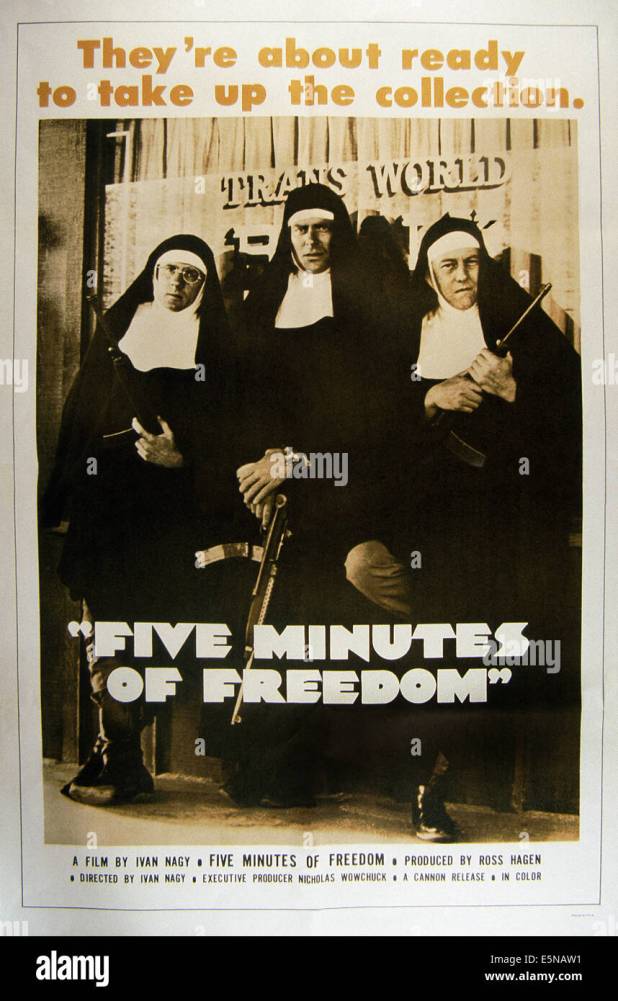
CANNON MONTH 2: Five Minutes of Freedom (1973)

Also known as Pushing Up Daisies, this was directed by Ivan Nagy (a former bookmaker for the mob and boyfriend of Heidi Fleiss; he also directed episodes of CHIPs and HBO’s The Hitchhiker, as well as the movies Captain America II: Death Too Soon and Skinner) and co-written by Ross Hagen (who wrote and directed The Glove and Click: The Calendar Girl Killer, as well as acting in 89 movies including this movie).

Four criminals — Maddux (Hagen), Kelly (Kelly Thordsen), Wilber (Hoke Howell) and A.J. (Eric Lidberg) — have just successfully broken two of their members out of jail, killed a whole bunch of cops via machine gun and make a big score while dressed as nuns. Soon, they’re on the run again, killing even more cops on the way to the Mexican border, if they make it.

Yet this is no normal movie, as the editing is jarring, the montages are frequent and there are even sequences made out of still photos. It also has a two-minute-long sequence of heavy reverb audio and slow motion of a racist prison guard stabbing a black jailbird that has nothing to do with the rest of the movie and has credits running over it.

It’s really something else and I have no idea who this is for or how they hoped to sell it. Not every movie can be Easy Rider, which only seems slapdash. A lot of movies learned just how difficult it is to make a movie that seems like it wasn’t all that difficult to make.

CULT EPICS BLU RAY RELEASE: Naked Over the Fence (1973)

Naakt over de schutting was the film that Sylvia Kristel made before becoming a worldwide star in Emmanuelle. She’s a small — but important — part of this crime movie, in which pinball arcade owner Rick Lemming (Rijk de Gooyer) becomes part of the drama surrounding singer Lilly Marischka (Kristel), who is dating his karate champ friend Ed Svaan (Dutch martial artist Jon Bluming, the first non-Japanese in being awarded the 6 dan in karate from Masutatsu Oyama and eventually reaching the rank of 10 dan; his students included Chris Dolman, Willem Ruska, Semmy Schilit and Gilbert Yvel).

All Rick wants to do is hang out with his pidgeons and manage his pinball games, but he keeps getting pulled into all sorts of crime and murder. He’s also renting a room to a young teacher named Penny (Jennifer Willems) who knows more than a little about karate.

Lilly has asked Ed to be in an art film with him that ends up being an adult movie; she runs from the set but afterward, nearly everyone involved is murdered and Kristel is injured in an accident while singing at a TV studio, which is a place filled with all manner of villains.

This movie is somehow a comedy, a murder mystery, a musical, a sexy film, a drama and a martial arts movie starring a legitimate martial artist who was such a controversial figure — the Japanese were upset that a foreigner had been given such a high rank — that his master made a challenge to all Asian martial artists to fight him and if Bluming lost, he’d be stripped of his black belt. In the only challenge he had to fight, against Kwan Mo Gun, Bluming won quickly with an open-handed strike.

Naked Over the Fence is definitely worth seeing as a curiousity as it has a very young Kristel singing in English and just being charming. I also really liked the sarcastic way that Rijk de Gooyer played his character; he was also in Herzog’s Nosferatu the Vampyre and played the Dutch version of Archie Bunker.

Cult Epics blu ray of Naked Over the Fence includes a new 4K HD restoration from the original negative, audio commentary by biographer Harry Hosman, behind the scenes features, an interview with director Frans Weisz, B-Movie Orchestra and interview with composer Ruud Bos, a promotional gallery, several trailers for other Sylvia Kristel movies and the limited edition of 1000 blu rays will include an exclusive bonus CD  with soundtrack by Ruud Bos & Slipcase. You can order Naked Over the Fence from blu ray and DVD from MVD and on blu ray from  Diabolik DVD.

Arnold Week: The Long Goodbye (1973)

Directed by Robert Altman and based on Raymond Chandler’s 1953 novel, with a script by Leigh Brackett (who co-wrote the screenplay for Chandler’s The Big Sleep), who said that United Artists demanded that “either you take Elliott Gould or you don’t make the film. Elliott Gould was not exactly my idea of Philip Marlowe, but anyway there we were.” — The Long Goodbye was revised to move the story to the 70s.

As for Gould, he hadn’t worked in two years, ever since battling with Kim Darby and director Anthony Harvey on A Glimpse of Tiger. He had to take a psychological examination before United Artists would sign him to be the lead.

Marlowe (Gould) is asked by his friend Terry Lennox (baseball player and author of Ball Four Jim Bouton) to take him to the border at Tijuana. When he gets home, the cops bring him in and question him about Lennox killing his wife Sylvia. After three days in jail — and refusing to help the police — Marlowe learns that Lennox is said to have committed suicide. He refuses to believe that story.

Marlowe is hired by Eileen Wade (Nina van Pallandt, who dated Hughes diary forger Clifford Irving and sings “Do You Know How Christmas Trees Are Grown?” in On Her Majesty’s Secret Service) to find her missing husband Roger (Sterling Hayden, who was drunk and stoned for most of the movie; he’s still great), which takes the detective — who never stops smoking — into the health and fitness world of well-off Californians. And of course, the Wade and the Lennox couples knew one another, as Eileen confesses that Roger was sleeping with Sylvia, and might have killed her, right after Roger walks into the sea and drowns. Oh yeah — there’s also the matter of mob boss Marty Augustine (Mark Rydell) who has some money owed to him by Terry.

All paths lead back to Mexico, where Marlowe soon realizes that he’s been played for a fool. However, he plans on having the last laugh. Altman referred to his character as Rip Van Marlowe, as he saw him as a man trapped in the 50s and “trying to invoke the morals of a previous era.”

The cast also includes David Arkin, Pancho Córdova, Amityville 2 and Mommie Dearest star Rutanya Alda, Jack Riley, David Carradine, Morris the Cat and a non-speaking role for an impossibly young Arnold Schwarzenegger.

Critics savaged this on initial release with Jay Cocks from Time saying, “It is a curious spectacle to see Altman mocking a level of achievement to which, at his best, he could only aspire.” Chris Champlin of the Los Angeles Times summed up what so many thought of Gould as Chandler’s hard boiled detective hero by writing, “He is not Chandler’s Marlowe, or mine, and I can’t find him interesting, sympathetic or amusing, and I can’t be sure who will.”

As for the actor, he has said that as ong as he is physically able, he holds out hopes that he will reprise the role. He has a screenplay entitled It’s Always Now based on the Chandler story “The Curtain.” The Chandler estate sold him the rights for $1.

With an always moving camera and the pastel cinematography of Vilmos Zsigmond, this movie still looks wonderful and has stood the test of its time, a time when it was not as well considered.