SHAWGUST: One-Armed Boxer (1971)

EDITOR’S NOTE: This is a Golden Harvest movie! Oh well! I already wrote it.

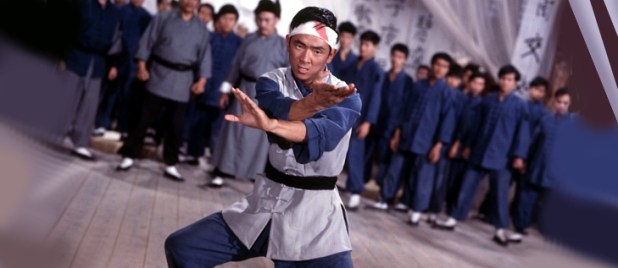
With one arm tied behind his back, Jimmy Wang Yu had already played the One-Armed Swordsman in two films for Shaw Brothers, One-Armed Swordsman and Return of the One-Armed Swordsman. He also became incredibly popular after The Chinese Boxer, the movie that kickstarted the unarmed combat genre. Then, he broke his contract with Shaw Brothers and lost the lawsuit that resulted, which meant he needed to go somewhere other than Hong Kong to work.

That’s where former Shaw Brothers executive Raymond Chow comes in. He started the rival studio Golden Harvest in 1970 and Wang Yu became his star, writing, directing and playing the main role in One-Armed Boxer.

Yu Tian Long (Wang) is the best fighter to come out of his local martial arts school. However, when he stops the Hook Gang from roughing up customers in a restaurant. The evildoers are part of the Ching Te school, which is the most prominent martial arts academy in town. Yet more than that, they run all sorts of businesses, legal and illegal.

After being defeated in combat twice, the Hook Gang return to their master Chao Liu (Yeh Tien) and tell him that Tien and others from the Ching Te school attacked them for no reason and insulted their group. Chao heads off to the school and is easily defeated by Master Han Tu (Ma Kei).

Chao has no honor and uses his money to get revenge, hiring a group of martial artists from Shanghai that includes Okinawa karate expert Erh Ku Da Leung (Wong Fei-lung) and his students Chang Ku Chua and Pan Tien-Ching, two lamas from Tibet (Ko Fu and Cho Lung, who are the disciples of the Fung Sheng Wu Chi from Master of the Flying Guillotine, which is about him trying to get revenge for his students against Yu Tian Long), Muat Thai fighters Mi Tsu (Blackie Ko, who went on to be a car stunt expert) and Ni Tsai, judo master Kao Chiao, Taekwondo master Chin Chi Yung and yoga fighter Mura Singh. They murder every single student in the Ching Te school, as well as the Master, leaving only Tien Lung alive yet only with one arm after Erh Ku Da Leung chops his arm clean off.

Hsiao Yu, a nurse, and her father bring our hero back to health and explain a special sklill that could help him get revenge, a method that will make his fighter super powerful even with just one arm. He only has to destroy all the nerves in his arm so he places his arm into an open flame in an incredible scene that shows just how devoted he is to avenging his master.

The end of the film is an example of why I love martial arts movies. Tien Lung fights every single one of the killers in a quarry while the Hook Gang throw bombs at him. There’s blood spraying everywhere and non-stop kicking, punching and violence.

When this was released in the U.S. by National General Pictures, it was called The Violent Professionals and used the theme from The Big Boss, a Bruce Lee film that was also made by Golden Harvest. As for the original film score, it outright takes the theme from Shaft — minus the talking about Shaft — over the opening credits, which is pretty much as outlandish an act of theft as it gets.

This movie is just magical. I was on the edge of my seat throughout and was astounded by how intense the fights were and I was beyond on the side of the hero, despite how brutal and cool Erh Ku Da Leung is, a man who takes an arm when someone breaks an arm. If you haven’t gotten into kung fu yet, this is a great place to get started.

Consider this movie highly recommended.

The Sizzlin’ Something Weird Summer Challenge 2024: There’s Always Vanilla (1971)

Softcore Smorgasbord (August 4 – 10) All of the movies on this list have at one time or another been available through Something Weird Video. I’m sure I’ve missed some but many of them are still available on their website (until the end of 2024). These are their vintage softcore movies listed under categories with ridiculous names like: Nudie Cuties, Sexy Shockers, Sexo a-go-go, Twisted Sex, and Bucky Beaver’s Double Softies.

Edgar Wright wrote a touching tribute to Romero the day after his death. There’s a line that struck me here: “We had coffee in a Toronto hotel with him and he asked me and Simon what we were doing next. I replied that we were making a police action comedy. ‘Oh, not a horror, then?’ he replied, ‘So you’re getting out.’ This was a telling statement, as there was always the sense that George had interests in film that stretched beyond the realm of horror. But even if he was pigeonholed somewhat in the genre realm, one of the reasons that his work resonates still is because of fierce intelligence and humour behind it.”

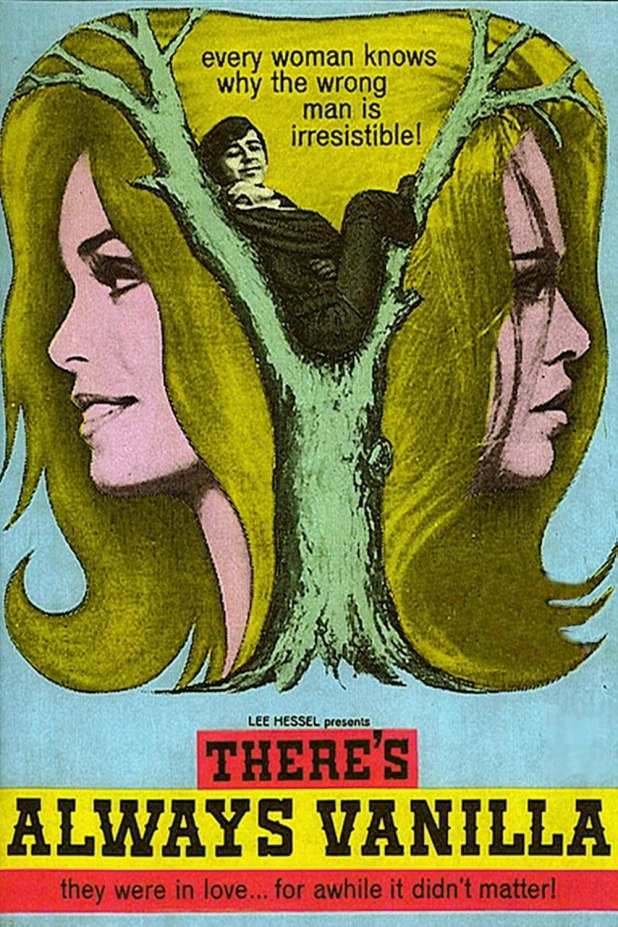
When I was 14 or so, I read and re-read and then read again Paul R. Gagne’s The Zombies That Ate Pittsburgh: The Films of George A. Romero. This was in the dark days when there was no internet, no way to instantly stream a film. Sure, I could rent Night, Dawn or Day, but hunting down MartinKnightriders or The Crazies was hard. And finding Season of the Witch was pretty impossible. What struck me was that Romero chose There’s Always Vanilla — a movie that even the book told me that I’d probably never see — was that as his second effort he was already avoiding being typecast as a horror director. He obviously failed — but for years, I struggled to find this movie. Anchor Bay and Something Weird released it awhile back and thanks to The Carnegie Library’s Oakland branch, I’ve found a copy (if you live in Pittsburgh, you owe it to yourself to visit this huge treasure trove of media, yours for the taking).

It’s the only film he created that has no otherworldly elements. Instead, it’s very much a view of America — and Pittsburgh, Romero’s adoptive hometown — at the start of the 1970s. While Vietnam and the looming Watergate scandal would erode the nation’s trust that the world would remain bright and cheerful and expected, Western Pennsylvania always had certainty in the face of uncertainty — surely the mills and mines of our region would constantly offer work, so even after the military was done with you or college didn’t fulfill you, you could always come back home, always find a job that paid more than well. I personally remember tales in grade school of the holiday parties for the kids of mill workers — every boy got a train set, every girl an Easy-Bake oven. My grandfather put forty plus years into the blast furnace; his friends all worked there or in other mills, gathered around the bar drinking Pabst or Iron City, telling tale of dealing with foremen or how much they could make off a double or triple shift.

There’s more of this erosion to come in Romero’s work as the 1970s go on in Season of the Witch and particularly Martin, which is a grisly reminder of how it only took eight years to make the Steel City look like the end of the world.

Also known as The Affair, Romero would say that this film was a “total mess” and that the budget hampered what could have been a better film. He’s also claimed that the writer was lazy and left halfway through the process of making the movie. Much like the aforementioned Witch, it concerns how women’s roles are changing in society, from providing emotional and monetary support to finally realizing — again in Witch — that their predestined roles are fading away, perhaps never to return.

Vanilla opens on some art that likens America to a machine, as well as the comments of local citizens as they walk past. The gray, dark skies of Pittsburgh — a marked contrast to the post-industrial age clean skies we enjoy now — is noticeable. We meet Chris Bradley, a soldier who’s had a variety of jobs, from pimp to guitar player. He feels like he’s lost the ability to think from all the noise of rock and roll music, so he’s going back home to Pittsburgh.

Then, for some reason, we’re on a commercial shoot. It’s disjointed and feels like b roll from one of the commercials that The Latent Image, Romero’s production company, was working on in between movies.

Chris’ dad owns a baby food factory and always wanted his son to be part of the family business; another big issue as the generation gap widened in Pittsburgh, a place rife with Catholicism and ingrained family values, where multiple generations would toil in the same mine or mill or operate the butcher shop or furniture store. Chris has been a drifter and avoiding the fate of his father — day after day of the same work, again and again. Chris remarks that he’s been gone for three years and his dad is still in the same bar, drinking a shot and a beer, the same way he was when he left. Pittsburgh was — and remains — a hard drinking town, where a boilermaker (slang for a shot of whiskey dropped in a beer) is served at lunch.

Chris meets up with an old girlfriend, Terri Terrific, at a bar that pretty much could be the Edison Hotel (note for anyone not from Pittsburgh, the Edison is a noted strip club that was, shall we say, rather rough — not as rough as the long since demolished Chez Kimberly or Roman V — and is now a cleaned up gentlemen’s club known as Blush) . Terri’s friend refers to Chris as a “jag off,” reminding anyone in town that this movie was definitely shot in Pittsburgh and confusing anyone from any other town in the world.

Oh yeah — Terri may or may not be have had a kid with Chris. His dad may hold true to family values, wondering why Chris doesn’t pay for child support, but he’s also hooked up with a blonde friend of Terri’s. Men and women of the 70s had weird relationships, where guys really did do whatever they wanted and kept their wives in the dark. He asks Chris how much he needs to pay the girl he slept with, showing again that cultural divide. A woman who has sex with an older man she doesn’t know has to be a prostitute in dad’s world. In Chris’ world, this is de rigueur behavior.

The film keeps cutting back to Chris, who directly addresses the camera in a way where we’re supposed to identify with him. Maybe I’m too far past the hippy days of the 60s, but I find nothing of value or kinship.

Chris meets Lynn (Judith Ridley, or Judith Streiner, who played Judy in Night of the Living Dead), a model who he moves in with. We’ve already seen her on that commercial shoot and how she wasn’t happy with another man, Michael. She starts to resent Chris after initially enjoying the escape he initially offered her. She keeps pushing him to get a steady job and after learning that she’s pregnant, she schedules an abortion without telling him (in 1970s Pittsburgh, an abortion was the scandal of scandals, again due to the city’s large Catholic contingent).

The romance in these scenes feels contrived — Chris basically negs on her, saying she isn’t that attractive and that she has a fat ass, which wins her over for some reason. They drive in his Jeep, shop for clothes, have a picnic and talk a whole bunch — in a scene that’s chopped up and edited ala a montage, but ends up feeling really confusing, like a romance version of Laugh-In. Franky, its fucking intolerable. Not really Romero’s fault, I guess, as this feels like plenty of films from the end of the age of Aquarius.

NOTE: One of these dates brings Chris and Lynn to the old Pittsburgh Zoo, where they get to walk up to baby lions and pick them up. They are carrying baby lions around like it’s no big deal, because in 1970 and in Pittsburgh life was fucking cheap and you’d probably die in a mine collapse or by tripping into the blast furnace anyway, so why not pick up a baby lion like it’s no big deal. After all, mother lions aren’t protective. At all.

ALSO: One of their dates, shown in montage, shows them going to the newly opened Monroeville Mall. Foreshadowing?

The search for a job brings Chris into advertising — an occupation that Romero knew only too well (and your author does, too. Why else would he be awake at 4:15 AM but to write script treatments, then be unable to sleep and watching a Romero rarity). Chris is going to be a copywriter and thinks he can do it with no education — again, in my experience, he’s in way over his head.Turns out that he can’t do it, finding that he hates his military past and can’t sell the promises that it offers to anyone else.

Chris also plays in the park with Terri and his maybe or maybe not son. Terri is so Pittsburgh it hurts; she eventually ended up with big claw hair after this,  has old episodes of Evening Magazine videotaped so she can show everyone that time that Patti Burns came to Dormont and knows all the words to “Ah! Leah!”

Lynn discovers that she can’t bring herself to get the abortion, so she moves in with a high school boyfriend who says he’ll raise the child as his own. Chris moves in with his dad and finds that he must embrace the old values — and the drudgery of it — that his father has. At a Howard Johnson’s — fancy dining in Pittsburgh circa 1970 — dad tells him that while life is like an ice cream parlor, packed with exotic flavors, there’s always vanilla to fall back on.

Note: Any time that the title of a movie comes up in the dialogue of the film, everyone should scream as loudly as possible, as if Pee Wee has just said the secret word.

There’s Always Vanilla closes by showing a very pregnant Lynn living in the suburbs (Mount Lebo, right, yinz guys?). A large package from Chris arrives, filled with helium balloons that she allows to drift away, his memory of the carefree time they shared that he will always remember. You know, the times when he called her a bitch and argued with her all the time and told her that she had a fat ass. Those carefree times.

Vanilla is about as night and day — sorry for the pun — from Night of the Living Dead as it gets. However, there were numerous times during it’s running time that I wished that a Venus probe would come back to earth and graves would cough up their dead.

Romero wouldn’t make another movie until 1973, which would find him creating two films, Season of the Witch and The Crazies, which will be getting to this week. I wouldn’t recommend you watch this unless you’re a completist or want to see how awesome downtown Pittsburgh looked in 1970.

You can watch this on Tubi.
The Sizzlin’ Something Weird Summer Challenge 2024: The Night Evelyn Came Out of Her Grave (1971)

Softcore Smorgasbord (August 4 – 10) All of the movies on this list have at one time or another been available through Something Weird Video. I’m sure I’ve missed some but many of them are still available on their website (until the end of 2024). These are their vintage softcore movies listed under categories with ridiculous names like: Nudie Cuties, Sexy Shockers, Sexo a-go-go, Twisted Sex, and Bucky Beaver’s Double Softies.

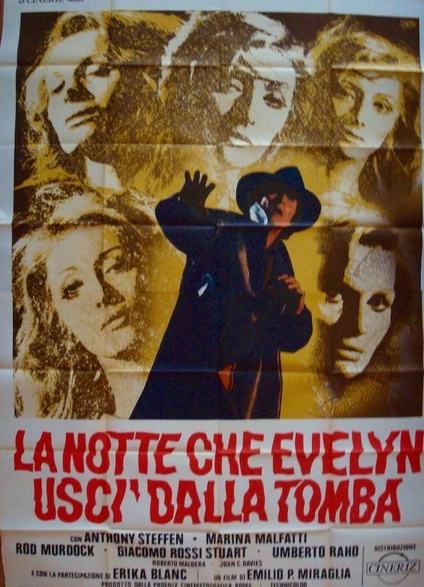
Emilio Paolo Miraglia created two giallo — this film and The Red Queen Kills Seven Times. This one goes more into the horror realm than the typical themes of the genre.

Lord Alan Cunningham starts this movie off by running away from an insane asylum, a place he’s been since the death of his redheaded wife, Evelyn, who he caught having sex with another man. To deal with his grief, Alan does what any of us would do — pick up redhead prostitutes and strippers, tie them up, then kill them.

A seance freaks Alan out so badly he passes out, so his cousin — and only living heir — Farley moves in to take care of him, which basically means going to strip clubs and playing with foxes. Alan nearly kills another stripper before Farley gives him some advice — to get over Evelyn, he should marry someone that looks just like her. Alan selects Gladys (Marina Malfatti, All the Colors of the Dark) as his new wife and comes back home.

Sure, you meet someone one night and marry them the next. But nothing could compare Gladys for the weirdness of living in an ancient mansion, along with a staff of identical waitresses, Evelyn’s brother and Alan’s wheelchair-bound aunt. Our heroine is convinced that Evelyn is not dead. And the other family members get killed off — Albert with a snake and Agatha is eaten by foxes!

Gladys even looks at the body in the tomb before Alan catches her and slaps the shit out of her, as he is going crazier and crazier. Finally, Evelyn rises from her grave, which sends him back to a mental institution.

The big reveal? Gladys and Farley were in on it all along. But wait, there’s more! Susan, the stripper who survived Alan’s attack, was the one who was really Evelyn and Gladys has been poisoned! Before she dies, the lady who we thought was our heroine wipes out the stripper and Farley gets away with the perfect crime.

But wait! There’s more! Alan had faked his breakdown and did it all so that he could learn that it was Farley who was making love to his wife and killed her when she refused to run away with him. A fight breaks out and Farley gets burned by acid. He’s arrested and Alan — who up until now was pretty much the villain of this movie — gets away with all of his crimes!

This is a decent thriller, but it really feels padded in parts and tends to crawl. That said, it has some great music, incredibly decorated sets and some twists. Not my favorite giallo, but well worth a Saturday afternoon watch. There are some moments of sheer beauty here, such as the rainstorm where Alan sees Evelyn’s ghost rise.


The Sizzlin’ Something Weird Summer Challenge 2024: Snake People (1971)

Golden Oldies Week (July 27 – August 3) Something Weird Video have released such a wide range of movies over the last 30 years that trying to categorize them can be tricky. They started out as a gray market mail order distributor (aka a bootlegger) not unlike the Cape Copy Center or Sinister Cinema and eventually moved into the niche se ploit titles that would set them apart. The movies on this list are the kind of cult genre titles that were the bread and butter of many of the bootleg companies of the 90s and most were not exclusive to SWV. If you look in the catalogs or on the website these would be under categories like “Nightmare Theatre’s Late Night Chill-O-Rama Horror Show,” “Jaws of the Jungle,” “Sci-fi Late Night Creature Feature Show,” or “Spies, Thighs & Private Eyes.” Many of these are currently available as downloads from the SWV site (until the end of 2024)!

Also known as Isle of the Snake People, the original title of this movie translates as Living Death. It was directed by Juan Ibanez, who also directed star Boris Karloff in The Incredible InvasionHouse of Evil and The Fear Chamber.

Karloff’s box office value led to these movies being financed by Columbia Pictures, which would then distribute them. Karloff received $100,000 per film, which is about $641,000 in today’s money. He rejected the scripts for all four movies, but agreed to make them when Jack Hill — yes, the maker of Spider Baby — rewrote the stories.

Filming was to take place in Mexico City, but Karloff’s emphysema (as well as the fact that he’d already lost a lung to cancer and had pneumonia in the other) would not allow him to work in the city’s altitude. He shot his scenes — with Hill directing — at the Dored Studios in Los Angeles, with additional scenes shot in Mexico with a Karloff stand-in named Jerry Petty.

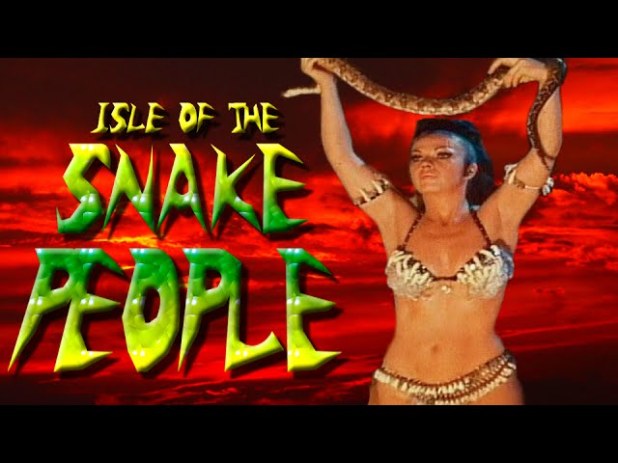
Captain Labesch has arrived at a far-flung island to stop the voodoo rites being carried out by Damballah (Karloff). He’s warned by local rich white man Carl van Molder (also Karloff) to leave well enough alone. There’s a temperance subplot too, but who cares when Kalea the snake dancer is turning women into zombies that eat policemen?

She is played by Yolanda Montes, who used the stage name Tongolele and was known as The Queen of Tahitian Dances. A vedette in the Mexican cabaret, Tongolele is a potent mix of Swedish and Spanish who was born in Spokane, Washington and continues to be a star in Mexico to this day. She even released an album at one point. I have to say, she looks like she stepped straight out of 2020, with her shaved head and fierce makeup. She’s seriously volcanic, taking over the film from the moment she appears,

Human sacrifice. Dance numbers. Near-psychedelic images. Zombies. Well, as to that latter part of this movie, Night of the Living Dead came out in the years between when this movie was made and when it was released. By that point, this seemed dated. No matter. Watching it today, I was beyond entertained by it.

You can watch this on Tubi.
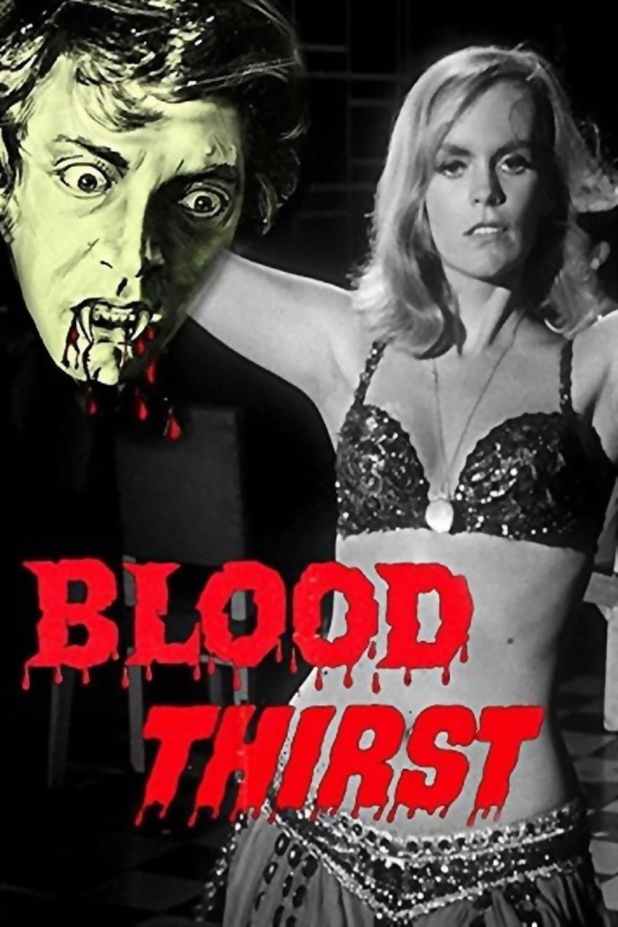
The Sizzlin’ Something Weird Summer Challenge 2024: Blood Thirst (1971)

Golden Oldies Week (July 27 – August 3) Something Weird Video have released such a wide range of movies over the last 30 years that trying to categorize them can be tricky. They started out as a gray market mail order distributor (aka a bootlegger) not unlike the Cape Copy Center or Sinister Cinema and eventually moved into the niche se ploit titles that would set them apart. The movies on this list are the kind of cult genre titles that were the bread and butter of many of the bootleg companies of the 90s and most were not exclusive to SWV. If you look in the catalogs or on the website these would be under categories like “Nightmare Theatre’s Late Night Chill-O-Rama Horror Show,” “Jaws of the Jungle,” “Sci-fi Late Night Creature Feature Show,” or “Spies, Thighs & Private Eyes.” Many of these are currently available as downloads from the SWV site (until the end of 2024)!

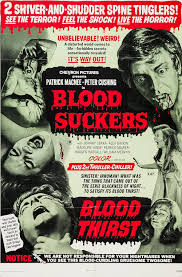
Whether you call this movie Blood Seekers, The Horror from Beyond or Blood Thirst, the biggest question is, “How was a black and white movie made in 1971?”

That’s because it was shot on location in the Philippines in 1965 and went unseen until it played double features with Bloodsuckers or as that movie was called in England, Incense for the Damned.

New York City detective and sex crimes specialist — years before Benson and Stabler — Adam Rourke (Robert Winston) has come to Manila to help Inspector Miguel Ramos (Vic Diaz) to solve a series of crimes. All of them have incisions on the inside of their arms, which means that maybe a blood cult is behind it.

Adam goes undercover as a writer seeking the story of the latest victim, Maria Cortez, who was a hostess at Mr. Calderone’s (Vic Silayan) Barrio Club, which is filled with beautiful women like Theresa (Judy Dennis), and Serena (Yvonne Nielson). When he comes back to his room, he’s attacked by an intruder and later meets his police contact, the one-legged Herrera (Eddie Infante).

Miguel’s sister Sylvia (Katherine Henryk) flips out on Adam, accusing him of not trying to solve the case. While this is happening, Theresa is attacked by a monster as Serena falls while dancing, suddenly appearing older. Seeing as how she and Calderone ran from Peru after the deaths of several young women, you can pretty simply determine that they are using the blood of women to keep her looking her best.

Adam is the worst detective ever and pretty much seemingly here in the Philippines to get laid. Don’t ask me how Sylvia goes from mad at him to in love or why Serena invites him home, then tells her at that Calderone killed his wife, made it look like suicide and forces her to dance at the club. She then drugs him and takes him under the club.

Serena ties Adam to a tree and tells him that was was chosen to become a golden goddesses. She must keep killing women to remain ravishing, mixing their blood with the powdered roots of ancient trees and the electrical energy of the sun harnessed in a small container. She takes too long explaining this and starts to age, which ends up with all of the men running after her. There, they meet the monster that does her bidding and defeat him with, well, an artificial leg.

Directed by Newt Arnold and written by N.I.P. Dennis, Arnold wouldn’t direct again for another 17 years — he mostly did second unit — and the movie that brought him back was Bloodsport.

This is at once a cheap monster movie and a film noir but it somehow outdoes expectations. It’s 74 minutes, with dancing women and a bubble faced monster that was recycled from the Outer Limits episode “A Feasibility Study.” Can a woman take the Aztec secret for eternal life and keep it going for centuries? The answer is yes.

You can watch this on Tubi.

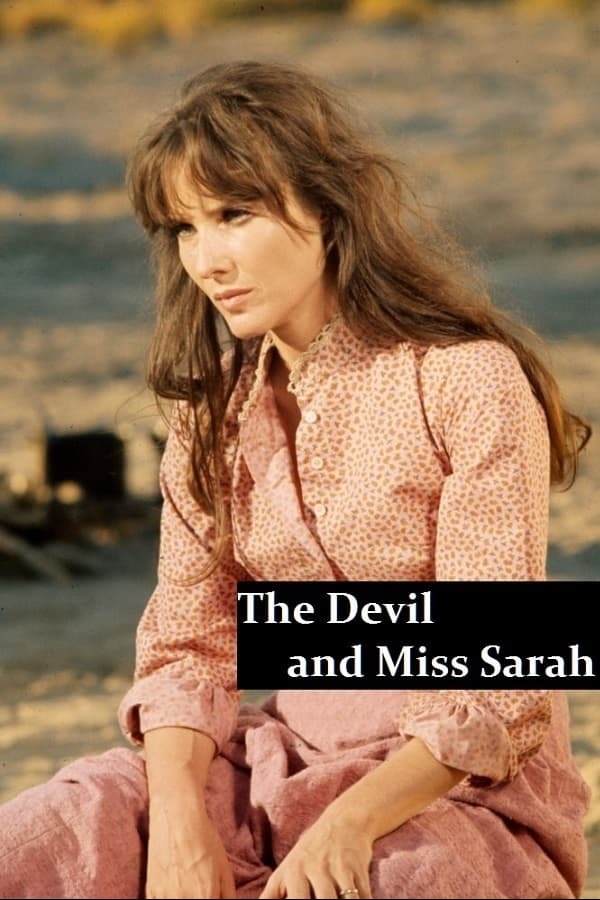
CBS LATE MOVIE MONTH: The Devil and Miss Sarah (1971)

EDITOR’S NOTE: The Devil and Miss Sarah was on the CBS Late Movie on February 24 and April 4, 1974.

Directed by Michael Caffey (who did a lot of TV, including the “Horror In the Heights” episode of Kolchak the Night Stalker) and written by Calvin Clements Jr. (whose career was also mostly in TV), The Devil and Miss Sarah has Gil Turner (James Drury), a farmer, escorting a criminal named Rankin (Gene Barry) to prison. Turner is bringing his wife Sarah (Janice Rule) along with him, which is a bad idea, because Rankin has occult powers and wants her.

Shot in the Utah desert, this has some great natural scenery and keeps the idea if the supernatural is real a mystery until the end. Sarah may or may not also have psychic powers, which means that she may see Rankin as a better partner than her husband. Or perhaps Gene Barry is so incredible in this it seems like he can dominate anyone.

A Manson-influenced Western about a Western outlaw who might be Satan. TV movies were bringing it in 1971.

You can watch this on YouTube.


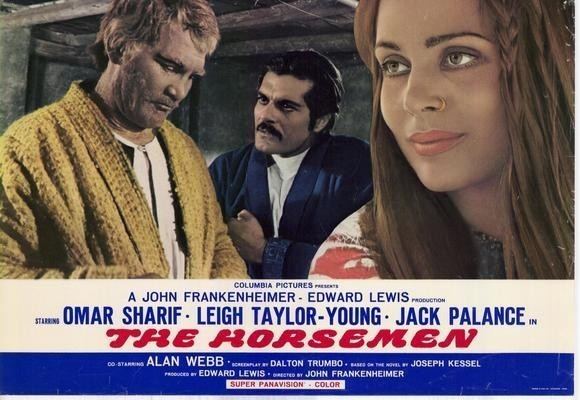
CBS LATE MOVIE MONTH: The Horsemen (1971)

EDITOR’S NOTE: The Horsemen was on the CBS Late Movie on October 26, 1973; September 20, 1974 and June 11, 1976.

Uraz (Omar Sharif) is the son of Tursen (Jack Palance), a stable master and retired buzkashi player, a sport in which horse-mounted players attempt to place a goat or calf carcass in a goal. He has lost his honor when he breaks his leg in a game that his father has bet all of the family’s money on, which means he has to learn how to ride and play again, despite most of his leg.

Based on Joseph Kessel’s Les cavaliers, this was scripted by Dalton Trumbo and directed by John Frankenheimer, who loved the movie even if it wasn’t a financial success.

There’s a lot of animal violence in this, so be warned. I mean, it’s a game played with a dead animal, after all. The same game is played in Rambo III, in case you wondered. Like that movie, the Afghanistan of this film is long gone.

It’s a big Hollywood film about a sport and a place that I can imagine very few people were interested in, which makes me interested in it.

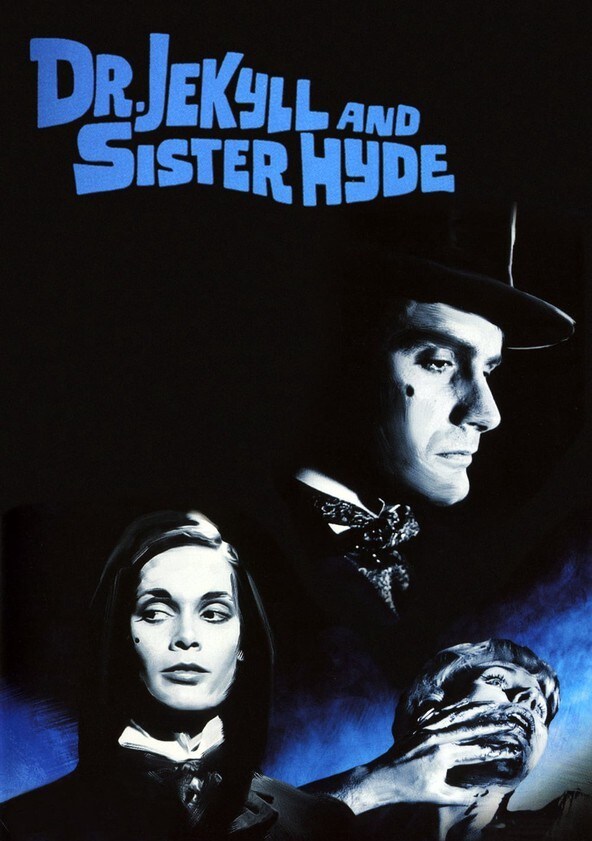
CBS LATE MOVIE MONTH: Dr. Jekyll and Sister Hyde (1971)

EDITOR’S NOTE: Dr. Jekyll and Sister Hyde was on the CBS Late Movie on February 8, 1974.

Hammer had already made two adaptions of Robert Louis Stevenson’s Strange Case of Dr. Jekyll and Mr. Hyde — The Ugly Duckling and The Two Faces of Dr. Jekyll. But what if they combined that story with the historical Jack the Ripper and Burke and Hare cases? And what if Jekyll turned into a female Hyde? Now we have a movie!

Dr. Henry Jekyll (Ralph Bates, Lust for a Vampire) has been trying to cure all known illnesses but his friend Professor Robertson (Gerald Sim, Dr. Phibes Rises Again) laughs that by the time his experiments are discovered and used, he’ll be long dead and unable to enjoy his achievements.

Jekyll then abandons his altruistic aims and starts looking for the elixir of life, which he feels uses female hormones that he takes from the bodies of women supplied by William Burke and William Hare, real life murderers that killed people and sold them to doctors for anatomy lessons. Never mind that those murders happened sixty years before the timeline of this film.

Meanwhile, Susan Spencer lives above him and they’re attracted to one another. However, he’s too absorbed by his work to do anything about it. Soon, he’s created a serum that not only changes his character, but transforms him into a gorgeous and amoral woman (Martine Beswick, who is in the first two Bond movies, plays the Queen of Evil in Seizure and was Xaviera Hollander in The Happy Hooker Goes to Hollywood) that he calls Mrs. Edwina Hyde. Susan instantly hates her, but her brother Howard (Lewis Fiander, Who Can Kill a Child?) falls for her.

Dr. Jekyll soon learns that his serum requires more female hormones than Burke and Hare can acquire for him. And when they’re finally caught, he’s forced to commit the crimes that the rest of London believes were those of Jack the Ripper. Jekyll hates what he has become, but Hyde loves it, even killing the Professor when he dares question her.

The male and female sides of his/her/its body all go to war with one another with Susan as the prize. Seriously, this is a movie that demands to be remade today.

Sadly, Caroline Munro was nearly Mrs. Hyde, but dropped out when she realized that the film required nudity. That said, Martine Beswick is pretty great in this. She was initially asked to do full frontal nudity and wouldn’t talk to director Roy Ward Baker (Asylum, The Vault of Horror) for a week.

CBS LATE MOVIE MONTH: Mongo’s Back in Town (1971)

EDITOR’S NOTE: Mongo’s Back In Town was on the CBS Late Movie on January 31 and October 10, 1973 and April 20, 1978.

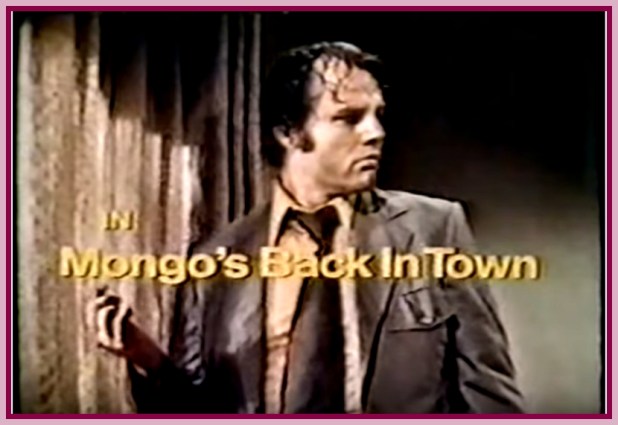
Lieutenant Pete Tolstad, the character played by Telly Savalas in this made for TV movie, feels like the early version of Kojak before that show would air in 1973. Tolstad grew up in the same neighborhood that is now his beat. He’s never had a real Christmas. He just does his job.

Directed by Marvin J. Chomsky (TankEvel KnievelRoots) and written by Herman Miller and based on the book by E. Richard Johnson. Johnson was a convicted armed robber and murderer who wrote all eleven of his books from his cell at Stillwater State Prison in Minnesota. He started writing to pass the time in prison and his novel Silver Street won the Mystery Writers of America’s Edgar Allan Poe Award for 1968 and the follow-up, which this movie is based on, was considered an even better book. Despite his success, he got into drugs while in prison. He escaped and went back into crime before being recaptured and stayed in jail until 1991.

Everyone is interested in the reasons why Mongo Nash (Joe Don Baker) is back in town and why he’s spending time with a young girl named Vikki (Sally Field) who has just come to town from West Virginia. Is he in town to do a hit for his brother Mike (Charles Cioffi)? Or does he just want left alone?

This has a great cast. Martin Sheen plays Tolstad’s partner Mike and Anne Francis is a gangster’s moll who Savalas has a flirty scene with. Baker is great and somehow makes a killer into someone that you feel some level of empathy for and the way he treats Vikki. Ah yes. He is a killer. On the way to the brutal ending, we have people get acid thrown in their faces and everyone is fair game for murder including kids.

Originally airing on CBS on December 10, 1971, this is also known as Steel Wreath, which is a strange title and probably one that makes more sense once Johnson and his books were forgotten. Perhaps they didn’t want people to think this was a Blazing Saddles sequel, which there was one that is forgotten and was a TV series.

You can watch this on YouTube.

CBS LATE MOVIE MONTH: Firehouse (1971)

EDITOR’S NOTE: Firehouse was on the CBS Late Movie on March 25 and August 20, 1975.

Richard Roundtree — a star from Shaft making a TV movie a year later, was that a step back? — is Shelly Forsythe, a black firefighter bringing racial tensions to a firehouse. This is even worse when Spike Ryerson (Vince Edwards), the oldest firefighter, claims that an arsonist has to be black. The men include Val Avery as cook Sonny Caputo, Richard Jaeckel as Hank Myers, Michael Lerner as Ernie Bush and Andrew Duggan as Captain Jim Barr.

This was based on Report From Engine Company 82 by retired FDNYC firefighter Dennis Smith. Another thing you may catch — the firehouse for this movie would one day be the Ghostbusters’ building.

What’s strange is that this became a TV series with Richard Jaeckel the only cast member to appear in both the TV movie and the series. They dropped the black firefighter angle for the show when that’s the main reason we’re watching this.

To save money, most of the firefighting is newsreel footage. That said, the idea that Shelly has to fit in with racist co-workers, have the black community not think he’s an Uncle Tom and still not die in a fire are all great plot elements.

Firehouse was directed by Alex March (Serpico, Shane and Paper Moon — the TV shows) and written by Frank Cucci (The Andros Targets).

You can watch this on Tubi.