CBS LATE MOVIE MONTH: The Traveling Executioner (1970)

EDITOR’S NOTE: The Traveling Executioner was on the CBS Late Movie on January 9, 1974 and April 9 and August 21, 1975.

ABOUT THE AUTHOR: A.C. Nicholas, who has a sketchy background and hails from parts unknown in Western Pennsylvania, was once a drive-in theater projectionist and disk jockey, Currently, in addition to being a writer, editor, podcaster, and voice-over artist, he contributes to Drive-In Asylum. His first article, “Grindhouse Memories Across the U.S.A.,” was published in issue #23. He’s also written “I Was a Teenage Drive-in Projectionist” and “Emanuelle in Disney World and Other Weird Tales of a Trash Film Lover” for upcoming issues.

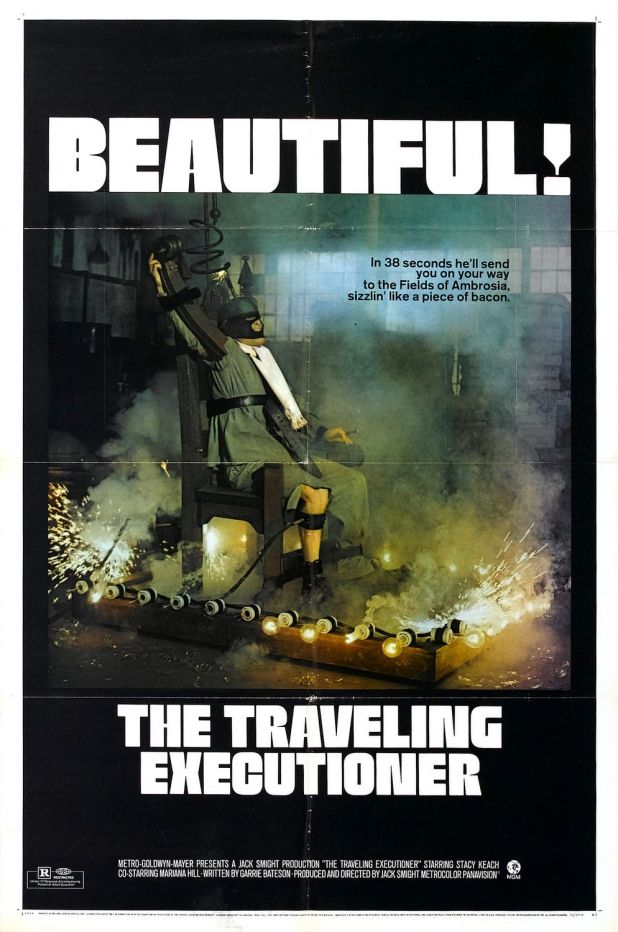
One of the classic tropes of American cinema is that of the snake-oil salesman, traveling the South at the turn of the last century in a medicine wagon and touting god-knows-what in a bottle that will cure everything from piles to anemia. The Traveling Executioner, an obscure, oddball film from 1970, subverts that trope into an unforgettable existential character study.

In 1918, Jonas Candide, an ex-carny and ex-con, played by Stacy Keach in the performance of a lifetime, travels the Deep South with his own electric chair. (Don’t question how a portable electric chair without a way to charge its generator would work; just go with it.) Acting as a private executioner, Candide sends convicts to the next life for $100 a pop. Candide is not a bloodthirsty villain but rather a charming rogue whose greatest gift is his ability to put the condemned at ease in their final moments. Before throwing the switch, he spins a story of how he was contacted through a medium by a man he executed who told of how wonderful the afterlife is—fields of Ambrosia. Hearing this story, the condemned pass on with a smile on their face, soon to go to a better life.

Candide is good at what he does, and all is well until one day he learns he’s scheduled to execute a German brother and sister convicted of murder. He falls head over heels in love with the sister played by Drive-In Asylum favorite Marianna Hill. From that moment on, Candide hatches as many schemes as he can in to save his love from his traveling chair. As you can imagine for a movie from the 70s, in E.C Comics fashion, it doesn’t end well.

The Traveling Executioner is one of the oddest, yet most unforgettable movies I’ve ever seen. Everything about it stamps it as a classy production. It was the only screenplay written by 21-year-old University of Southern California film student Garrie Bateson. And while the screenplay has a whiff of film-student earnestness and an ending that you’ll see coming early on, it nonetheless makes a serious impression. Directing with a sure hand was journeyman Jack Smight, who has Frankenstein: The True Story, The Illustrated Man and Damnation Alley among his credits. The dusty, depressing look of the film was the work of ace cinematographer, two-time Oscar nominee Philip Lathrop. Maestro Jerry Goldsmith supplied the score. Adding to the film’s cache are nice early supporting turns by M. Emmet Walsh, as a warden, and Bud Cort, as a mortician and Candide’s assistant. Things look and play like a late-period Western without the gunfights.

But the real joy here is watching the stage actor Stacy Keach giving it his all in an early film role. He’s a sympathetic protagonist even when he resorts to unsavory measures in the name of love. For me, Keach, later to make his mark on TV as the definitive Mike Hammer, has always been an underrated talent. Casting him in this role was a masterstroke.

MGM had no clue how to market The Traveling Executioner, which everybody describes as a “black comedy.” It’s not. At its heart, it’s a serious art film with some exploitation trappings. Indeed, the gauche, heavy-handed ad campaign promising unbridled fun did nothing to sell it to audiences. But then again, I can’t think of how any ad campaign could capture the film’s unique tone. Despite a few good reviews, it had a short, disastrous theatrical release in the fall of 1970. Afterward, apart from a few showings on The CBS Late Movie, it vanished and was almost impossible to see for decades. It finally became available on a DVD burn from Warner Archives in 2011, but it has yet to find its own fields of Ambrosia, a cult following. I wish Quentin Tarantino and Roger Avary would feature it on the Video Archives podcast. It’s a great film with a singularly great central performance awaiting rediscovery.

Epilogue. Unbelievably, in 1993, The Traveling Executioner was adapted into a stage musical, The Fields of Ambrosia. Despite some good reviews, the 1996 London show closed after only 23 performances. Déjà vu.
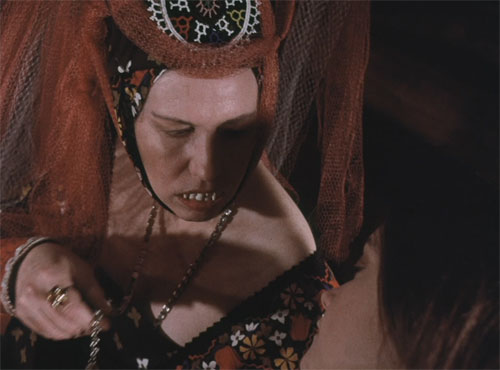
CBS LATE MOVIE MONTH: House of Dark Shadows (1970)

EDITOR’S NOTE: House of Dark Shadows was on the CBS Late Movie on July 16, 1976.

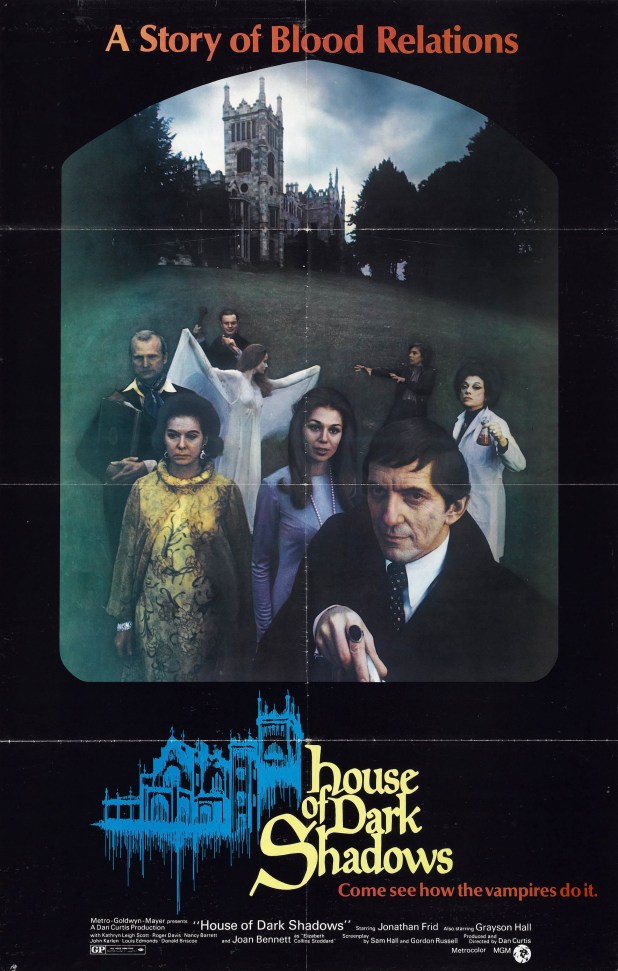
Dark Shadows was a phenomenon. The kind of big cultural deal that needed to be cashed in on is why producer and creator Dan Curtis started pitching a feature-length TV movie from 1968 onwards.

The original idea was to edit together old episodes of the show, but soon, the idea to tell the entire Barnabas Collins saga—complete with bloody bites and gore—took over. Several actors were written out while the TV series was still on the air. A writer trying to use the vampire for a biographical novel trapped Barnabas in a coffin for 28 episodes. Other characters were replaced in the 1970 parallel world story arc.

With a budget of $750,000 — that was probably enough for 750 episodes of the actual series — and on-location shooting at the Lyndhurst Estate in Tarrytown, New York and that town’s Sleepy Hollow Cemetery (as well as the Lockwood–Mathews Mansion in Norwalk, Connecticut), this movie looks gorgeous. And it’s a joy to see so much of the original cast come back and play modified versions of their roles.

However, what takes years on the soap opera now takes moments. It’s a bit disconcerting.

Like his entry on the show, Barnabas (Johnathan Frid) is found by handyman Willie Loomis (John Karlen) and, within moments, introduces himself as a long-lost European relative while taking bites out of almost every female cast member.

Daphne Budd? Bitten. Carolyn Stoddard? She gets a bite. Maggie Evans? Yep, her too.

Barnabas is also transformed into a human by Dr. Julia Hoffman, but she falls for him and jealously transforms him into his true age. No worries — actual bites from his chosen bride, Maggie, bring him back to vitality.

The only part you may not enjoy is Willie turning on Barnabas and the titular vampire succumbing to a crossbow to the back. That said, his bat flies away — Curtis was doing end-credit teases way before the Marvel movies — in a nod to a projected sequel that never happened, Curse of Dark Shadows.

There’s also a moment when Quentin Collins’ theme is heard, but he doesn’t show up. I’m sure many young ladies were crushed by this.

This is a fun movie if you haven’t watched the original episodes. If you have, you may be upset that they are glossed over. Regardless, I saw it at the drive-in, paired with its spiritual sequel, and I enjoyed it.

BONUS: We discussed this movie on our podcast.

Want to see something cool? The Collinsport Historical Society has an article about the Viewmaster from this movie.

CBS LATE MOVIE MONTH: The Losers (1970)

EDITOR’S NOTE: The Losers was on the CBS Late Movie on October 3, 1975 and October 8, 1976.

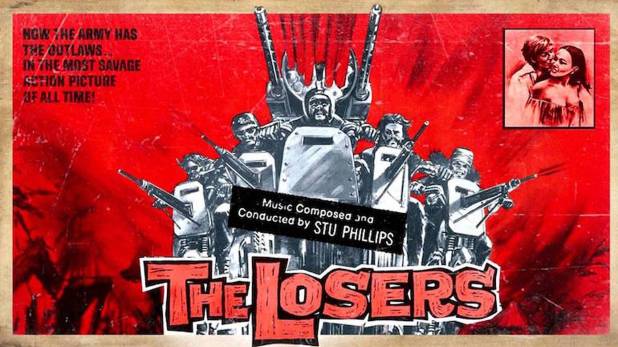
Also known as Nam Angels, this Jack Starrett-directed film (he also made Run, Angel, Run!Race with the Devil and Hollywood Man, among others) has a great high concept: a biker gang called The Devil’s Advocates is sent to Cambodia to rescue an American diplomat because they are the only ones who can get the job done.

They’re led by a Vietnam vet — and the brother of the Army Major who has recruited them — Link Thomas, played by the always dependable William Smith. They’re under the orders of Captain Johnson (Bernie Hamilton, who was Captain Harold Dobey on Starsky and Hutch) and include fellow vets Duke (Adam Roarke from Dirty Mary, Crazy Larry and Frogs) and Dirty Denny, as well as Limpy (Paul Koslo, Vanishing Point) and Speed (Eugene Cornelius, who was Space in Run, Angel, Run!).

They head to Vietnam,  but come on, we all know it’s the Philippines because the mechanic who works on their bikes, Diem-Nuc, is played by Vic Diaz. It doesn’t matter because by the time you start trying to figure out locations*, our heroes are doing wheelies and blowing things up with rocket launchers and machine guns while they do wheelies.

This movie does have some basis in reality. Sonny Barger, the Maximum Leader of the Hells Angels, sent LBJ a telegram offering the skills of his club in the Vietnam War. That inspired Alan Caillou, who originally wrote that The Losers would live. Starrett and Smith rewrote the script to the ending we know now.

If you watch Pulp Fiction, you can see a scene from this movie being watched by Butch’s girlfriend the day after his fight. When he asks what she is watching, she says, “A motorcycle movie, I’m not sure the name.”

*They’re reused from Too Late the Hero.

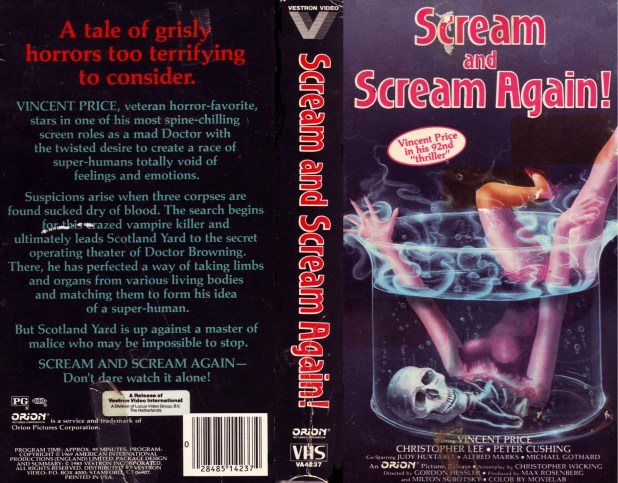
CBS LATE MOVIE MONTH: Scream and Scream Again (1970)

EDITOR’S NOTE: Scream and Scream Again was on the CBS Late Movie on March 22 and August 23, 1974.

Based on the novel The Disorientated Man by Peter Saxon*, this Amicus film boasts the best line-up potentially ever in a horror film. It features the iconic Christopher Lee, the legendary Peter Cushing, and the master of macabre Vincent Price, all delivering stellar performances.

The film opens with a man jogging, collapsing, and waking up in a hospital, missing his leg. He screams, and then the same scream repeats as he loses every appendage. Meanwhile, an Eastern European spy named Konratz (played by Marshall Jones, Cry of the Banshee) is on a killing spree, targeting his superiors, including Cushing. In another subplot, someone is killing young women in London, and it appears that Keith (Michael Gothard) is the murderer, a blood-drinking super-strong weirdo.

Price shows up as the sinister Dr. Browning, and it all ends up being a conspiracy movie that owes a fair deal to Invasion of the Body Snatchers. However, that movie didn’t end with much of its cast falling into acid.

According to Lee, the villains of this movie were going to be revealed as aliens, but that was cut out for some reason, leaving a lot of the movie unexplained.

This was directed by Gordon Hessler (Pray for DeathScream, Pretty PeggyKiss Meets the Phantom of the ParkThe Golden Voyage of Sinbad).

Team Price, Lee, and Cushing appear in only one other movie: House of the Long Shadows. They barely appear in any scenes together, though.

*A house pen name for multiple authors at Amalgamated Press; the Saxon that wrote this story is Stephen Frances, edited by W. Howard Baker.

Source

Film Still Scream and Scream Again Peter Cushing Christopher Lee 1970 – Richard Thornton Books. https://richardthorntonbooks.com/product/film-still-scream-and-scream-again-peter-cushing-christopher-lee-1970/

ARROW BLU RAY BOX SET RELEASE: Blood Money: Four Western Classics Vol. 2: Matalo! (Kill Him)(1970)

It would take other film industries decades to equal the sheer volume that the Italian exploitation machine could accomplish. In the four years since Django and five since A Fistful of Dollars and West and Soda, a traditionally animated movie whose creation predates Leone’s film, hundreds of cowboys thundered out of the European West and several genres emerged from comedies and Zapata westerns to films centered on the tragic hero, horror westerns and this film, Matalo! (Kill Him), which is uncategorizable but could maybe be an acid horror art deconstruction.

Cesare Canevari, with only nine movies under his belt, managed to traverse nearly every genre with his diverse direction: an early Western (Per un dollaro a Tucson si muore), Giallo (A Hyena In the Safe), an early Italian Emmanuelle (A Man for Emmanuelle), Eurospy (Un tango dalla Russia), Ajita Wilson’s first movie (The Nude Princess), late-era giallo with plenty of sleaze (Killing of the Flesh) and Naziploitation (the go all the way madness that is The Gestapo’s Last Orgy).

The film begins with a desperado named Bart (Corrado Pani) walking through the town as cocky as possible, even though he’s headed to the gallows. He even puts his own neck in the noose, knowing that some Mexican bandits are about to save his neck. His walk back out of town is even more audacious, as he’s just stood on the precipice of death and watched the chaos he ordered come true. He somehow tops that by killing off the men who saved him before meeting up with his friends Ted (Antonio Salines) and Phil (Luis Dávila) in a ghost town where the movie decides to slow down as they explore an abandoned hotel as electric guitars scream and wind blows through every frame of this film.

They’re joined by Mary (Claudia Gravy, Yellow Hair and the Fortress of Gold, Tuareg: The Desert Warrior), a snarling force of female nature that finds herself strong enough to be on the side of stagecoach robbing evil. That robbery seems to cost Bart his life, and the film switches gears as the gang hides out in the ghost town, abusing an old woman until Ray (Lou Castel) and a younger widow (Mirella Pamphili) arrive, and they too are abused by the gang. Luckily, Ray has a horse that seems smarter than him, and he’s pretty good with a boomerang, which this movie uses for wild POV shots as he whips them at the gunmen.

What’s wild is that a year earlier, Tanio Boccia directed Dio non paga il sabato (Kill the Wickeds), which is nearly the same movie but shot as if it were a normal film, not the sometimes wandering, other times hyperfocused Matalo!

 The Arrow Blood Money: Four Western Classics Vol. 2 set includes 2K restorations of all four films from the original 35mm camera negatives by Arrow Films, original Italian and English front and end titles, restored lossless original Italian and English soundtracks, English subtitles for the Italian soundtracks, brand new introductions to each film by journalist and critic Fabio Melelli, galleries for all four films, an illustrated collector’s booklet featuring new writing by author and critic Howard Hughes, a fold-out double-sided poster featuring newly commissioned artwork by Gilles Vranckx and limited edition packaging with reversible sleeves featuring original artwork and a slipcover featuring newly commissioned artwork by Gilles Vranckx. Matalo! is a significant inclusion in this set due to its unique and uncategorizable nature, making it a must-watch for fans of Italian cinema and exploitation films.

Matalo! (Kill Him) has brand new audio commentary by critics Troy Howarth and Nathaniel Thompson that I promise to listen to because I know how much Troy hates it when people just list the extras and don’t review them. I promise! There’s also an in-depth interview with filmmaker Davide Pulici discussing the career of Matalo! director Cesare Canevari, as well as another appreciation, this time of the soundtrack and its composer, Mario Migliardi, by musician and disc collector Lovely Jon. There’s also a theatrical trailer.

You can get it from MVD.

CBS LATE MOVIE MONTH: Wuthering Heights (1970)

EDITOR’S NOTE: Wuthering Heights was on the CBS Late Movie on April 20, 1973 and April 8, 1974.

American-International Pictures, known for its exploitation films, took a surprising turn when the 1968 adaptation of Romeo and Juliet proved to be a box office hit. This success prompted AIP to venture into the realm of classic romance adaptations, with Wuthering Heights being their next ambitious project.

Curtis Harrington was the announced director, but he made Whoever Slew Auntie Roo? instead.

Robert Fuest — yes, the director of Dr. Phibes and The Devil’s Rain! — would direct. He told the Evening Standard, “We shall show Heathcliff as a man completely fascinated by Catherine’s passion, sexuality, jealousy and cruelty. And the tempestuous Catherine will be seen as a woman hypnotized by Heathcliff’s violence, brutality and sadistic vengefulness.” This interpretation, with its controversial themes, aimed to stay closer to the book than the 1939 movie and saw the story as one about the generation gap that has always existed.

Producer Louis Heyward cut to the chase: “Heathcliff was a bastard and Cathy a real bitch, and that’s how they’ll be in this film.”

Unfortunately, the film did not resonate with either critics or audiences. The harsh reviews and lackluster box office performance led to the cancellation of AIP’s plans for future literary adaptations, including Return to Wuthering Heights, Camille, The House of Seven Gables, and A Tale of Two Cities.

If you read the book, you may know the story. Mr. Earnshaw (Harry Andrews) returns from a trip to the city with Heathcliff, who grows up to be played by Timothy Dalton. Earnshaw’s son Hindley (Julian Glover) detests his adopted brother of sorts, yet the ragamuffin grows to become the companion to Hindley’s sister Catherine (Anna Calder-Marshall). After the Earnshaws die, Heathcliff and Catherine are wild and in love on the moors — you’ve seen them run toward one another even if you don’t know the reference — as Hindley stews in resentment. But then Catherine meets a new love, Edgar (Ian Ogilvy). Heathcliff disappears for years, learning how to be more refined and cruel in the big city and comes back to not only pine for Catherine but to marry Isabel (Hilary Heath).

The significant difference from the book is that Hindley is more sympathetic. And, oh yeah, he gets to kill Heathcliff, who reunites with Catherine when they’re both ghosts. This unexpected twist, along with the controversial themes, forces writer Patrick Tilley (The Legacy) to contend with the ghost of Emily Bronte and the derision of English teachers everywhere.

That said, this movie is a visual feast, with lush cinematography that brings the moors to life. It also introduces the first open discussion that perhaps Heathcliff is the illegitimate son of Mr. Earnshaw, which makes Heathcliff and Catherine half-siblings. That sounds closer to the paperback trash and Italian movies that usually make it on this site, not works of Gothic romance.

CBS LATE MOVIE MONTH: The Dunwich Horror (1970)

EDITOR’S NOTE: The Dunwich Horror was on the CBS Late Movie on May 7, 1973; July 1 and August 28, 1975.

Following the triumph of the Poe movies, Roger Corman and American International Pictures embarked on a series of films inspired by H.P. Lovecraft. The announcement of The Dunwich Horror in 1963, set to be filmed in Italy by Mario Bava and starring Boris Karloff and Christopher Lee, sparked immense anticipation. However, a setback occurred when Dr. Goldfoot and the Girl Bombs failed, causing a delay in the production of this movie.

It took several years to make this movie happen—probably Rosemary’s Baby’s success is one reason why occult movies really started to come out in the early 1970s—and when it was made, Daniel Haller was hired to direct.

Daniel Haller, who started his career as an art director and designed the sets for Corman’s House of Usher and The Pit and the Pendulum, was a perfect fit for the director role. His first movie, Die, Monster, Die!, was based on Lovecraft’s The Colour Out of Space, further solidifying his suitability for this project.

At the Miskatonic University in Arkham, Massachusetts, a setting often used in Lovecraft’s stories, Dr. Henry Armitage (Ed Begley) gives a rare copy of Necronomicon to his student Nancy Wagner (Sandra Dee, breaking her Universal Pictures contract and making her first “adult” movie, so to speak) to return to the library. She’s followed by Wilbur Whateley (Dean Stockwell), a man who hypnotizes her to sneak a glance at the dreaded grimoire. Unlike everyone else in Arkham, Nancy is kind to the man and gives him a ride despite him, you know, staring into her soul.

I mean, maybe she should have because he soon drugs her and convinces her to stay the night inside the horrifying home of his ancestors.

It turns out that within the home, Wilbur’s twin brother from a demon father is waiting and will soon be let loose in town. Wilbur also lives up to all of the townsfolks’ fears as he attempts to sacrifice Nancy to the Old Ones. This leads to a dramatic spellcasting battle between him and Dr. Armitage, a scene heightened by a violent thunderstorm.

This was written by Ronald Silkosky, Henry Rosenbaum (Get Crazy) and Curtis Hanson, who, in addition to writing Sweet Kill and The Silent Partner, would go on to direct 8 MileL.A. ConfidentialEvil Town, and The Hand That Rocks the Cradle, so it wasn’t all Oscar-winning efforts!

One can only wonder what Lovecraft would think of the psychedelic treatment of his story in this film.

CBS LATE MOVIE MONTH: Cry of the Banshee (1970)

EDITOR’S NOTE: Cry of the Banshee was on the CBS Late Movie on April 10, 1973, 

“Who spurs the beast the corpse will ride?

Who cries the cry that kills?

When Satan questioned, who replied?

Whence blows this wind that chills?

Who walks amongst these empty graves

And seeks a place to lie?

‘Tis something God ne’er had planned,

A thing that ne’er had learned to die.”

That poem is Edgar Allan Poe’s “The Bells,” which sets the tone for this unique movie, the last of the American-International Pictures Poe movies. Directed by Gordon Hessler, this film, unlike its predecessors, had nothing to do with the Baltimorean author, offering a fresh take on the horror genre.

According to Peter Fuller on  Spooky Isles, AIP promoted this movie as the hundredth film that its star, Vincent Price, was in. The truth is that it was probably his seventy-sixth. Undaunted, AIP did the same publicity for his next movie, The Abominable Dr. Phibes.

This movie is a visual treat — it was shot in the Grim’s Dyke House, the same location as Curse of the Crimson Altar and The Devil Rides Out. The film opens with an incredibly excellent animation by Terry Gilliam, a visual masterpiece that, unfortunately, was cut from the American print, leaving the audience captivated from the start.

If you enjoyed Vincent Price’s portrayal as a witch hunter in Witchfinder General, you’re in for a treat! In this film, he plays the role of Lord Edward Whitman, a character who has taken it upon himself to rid England of every witch. His relentless pursuit leads to the disruption of Black Masses and the death of many witches, until one of them, Oona, possesses his loyal servant Roderick, complicating his mission.

The movie also inspired a band to name themselves Siouxie and the Banshees. Perhaps you’ve heard of them?

Bucheon International Fantastic Film Festival: Valerie and Her Week of Wonders (1970)

The film Jaromil Jires, directed before this one, 1969’s The Joke, has been described as “possibly the most shattering indictment of totalitarianism to come out of a Communist country.” As a result, it was banned for nearly twenty years.

Valerie and Her Week of Wonders is based on the 1935 Vítezslav Nezval novel. Much like that work, this movie is a work of surrealism and one of the films that I can best point to being part of a genre I’ve been referring to as ‘dark childhood’ films. This genre, which I’ve come to represent as movies that use the supernatural to explain the pains of oncoming adulthood, often features dreamlike sequences, allegorical storytelling, and a focus on the psychological aspects of growing up.

Valerie is asleep when a thief steals her earrings. She’s frightened by the masked Constable, who grows angry when the thief returns what he has stolen to her. That’s when she learns that the earrings were a last gift from her mother before she entered a convent, but they once belonged to the Constable.

The Thief and the Constable remain at odds over the earrings and Valerie. That night, she meets the masked man in the street, where he leads her to a chamber where her grandmother ritualistically whips herself all in the name of a past lover. Oh yeah — there’s also a woman named Elsa who was once the Constable’s lover and grows young again when she tastes blood.

The earrings pass through multiple owners, and Valerie’s blood is the key to nearly everyone’s survival. People transform into monsters and cats, and if you didn’t guess already, the movie has descended into a dream that only Valerie can wake up from.

Honestly, it’s hard to rationally write about this film. The film is a visual masterpiece, with magic infused in every frame. You’re either going to be captivated by its artistic brilliance, or you’re going to find it too arty or strange. Obviously, I belong to the former camp.

Members of the bands Espers, Fern Knight, Fursaxa and other musicians formed the Valerie Project in 2006, performing original songs while the film plays.

If you’ve ever read Angela Carter’s works or seen the film The Company of Wolves, which she wrote for director Neil Jordan, you’ve seen work directly influenced by Valerie.

Grab the Criterion blu of this and do yourself a favor. It’s a perfect film.

I watched this film as part of The Bucheon International Fantastic Film Festival (BIFAN), as part of the Folk Horror: Lands of Cruelty, Beliefs of Terror program which also includes Eyes of FireKill List, the 2019 French version of La LloronaWoodlands Dark and Days BewitchedBldg. NIn My Mother’s Skin and To Fire You Come at Last. You can learn more at their official site.

CBS LATE MOVIE MONTH: Trog (1970)

EDITOR’S NOTE: Welcome to an entire month of movies that played on the CBS Late Movie. Up first, Trog! This film played four times in the middle of the night on the Tiffany Network: February 24, 1972; May 30, 1972; September 14, 1973 and December 6, 1974.

Trog makes me sad. Beyond the fact that it feels a lot like King Kong or Son of Konga doomed monster from our past that just can’t survive in today’s horrible modern world—it’s also depressing at times to watch Joan Crawford act her heart out in a film where no one else can come close to her power.

That’s not to say this is a bad film. It’s delightful and well-directed by genre vet Freddie Francis (Tales from the Crypt and plenty of other wonderful Amicus portmanteau films). It’s also quick-moving and enjoyable.

But it’s still sad.

A troglodyte (TROG!) is found alive in the caves of England. Dr. Brockton (Crawford) has had some success communicating with him and sees him as the missing link. However, her neighbors do not like her having a monster in her house, mainly after it kills a dog when it steals his ball.

Local businessman Sam Murdock (Michael Gough, who appeared in many Hammer films and as Alfred in the 1980s and 1990s Batman films) worries that the creature will negatively impact local businesses. But he really has an issue with a woman being in charge.

Meanwhile, Trog undergoes multiple surgeries, which enable him to learn to communicate. In a trippy sequence, we see into his mind, which is filled with memories of the Ice Age and dinosaurs.

The court upholds Dr. Brockton’s goal of teaching Trog, so Murdock sneaks in and lets him loose. He kills several people, including the businessman, before taking a little girl and retreating to his cave. Dr. Brockton can communicate with Trog, and the girl goes free. Meanwhile, soldiers open fire on our titular caveperson, and he falls to his death, impaled on a stalagmite.

As Dr. Brockton leaves in tears, a reporter tries to interview her. She has no comment as she wanders away.

See? Depressing.

Due to the film’s low budget, Crawford used her own clothes. And it shows. She’s a beacon of fashion in a grimy town. She stands out like no one else. And speaking of suits, the one for Trog was left over from 2001: A Space Odyssey!

This was Crawford’s final film, but I don’t believe the TV show Feud: Bette and Joan. She’d continue to act afterward, appearing in an episode of TV’s The Sixth Sense called Dear Joan: We’re Going to Scare You to Death. If you’ve ever listened to My Life with the Thrill Kill Kult, that’s where the sample on the song “A Daisy Chain for Satan Comes From.”

PS: I would know none of this were it not for Bill from Groovy Doom.

I’m glad I watched Trog. But the sad ending — and thinking of Joan changing in her car during the breaks in filming — make me a little misty-eyed. That said, it’s one of John Waters’ favorite films, so there’s that.