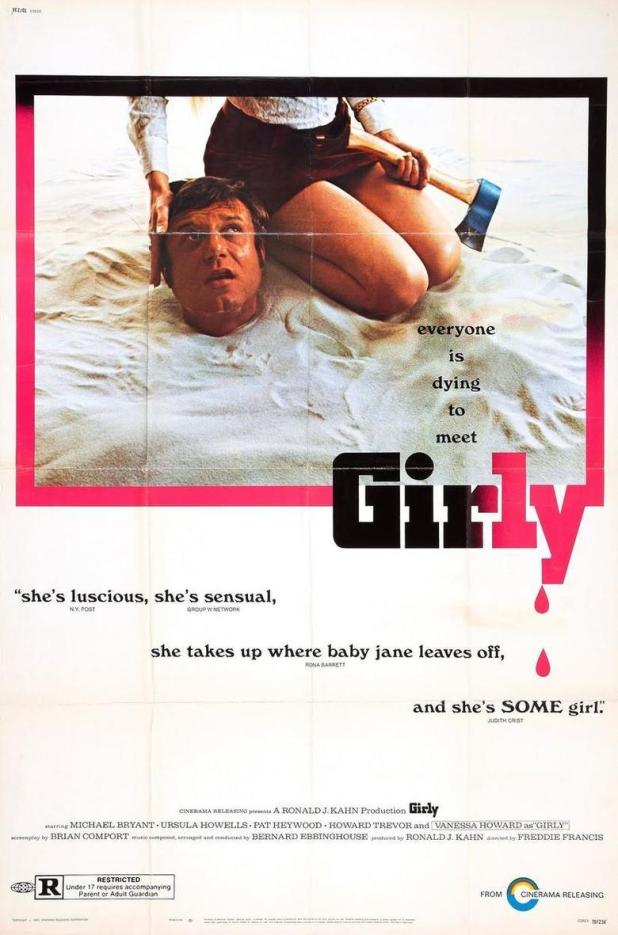
THE IMPORTANT CINEMA CLUB’S SUPER SCARY MOVIE CHALLENGE DAY 31: Mumsy, Nanny, Sonny and Girly (1970)

October 31: A Horror Film that Leaves You With a Smile

Known as Girly outside of the UK, this movie was the dream project of cinematographer-turned-director (turned cinematographer) Freddie Francis. He wanted a movie that he had complete creative control over, so he worked with writer Brian Comport to build the movie around Oakley Court. The film is based on the two-act play Happy Family by Maisie Mosco, which Comport had novelized as Mumsy, Nanny, Sonny, and Girly.

Mumsy (Ursula Howells), Nanny (Pat Heywood), Sonny (Howard Trevor) and Girly (Vanessa Howard) have turned their lives into an elaborate role-playing game they call The Game. The rules aren’t really clear, been if the first one is to play the game. They live in a secluded house in the countryside and Girly lures in men who are dressed as schoolboys and forced to play as New Friends. If they refuse, they are sent to the angels in playground games that are turned into killing rituals and captured by Sonny on camera so that the family can enjoy the snuff films that result.

Girly and Sonny attend a party in London where a prostitute (Michael Bryant) is attracted to her. He talks his client (Imogen Hassall) into following them to a playground. He’s so drunk he thinks that he’s killed the woman when it was really Girly and Sonny.  They make him play The Game and keep her body, using it to remind him that they could get him arrested at any moment.

Mumsy makes it known that she wants to have sex with the New Friend, as he is now known, so he turns the family against itself by sleeping with both her and Girly. Sonny tries to kill the New Friend before Girly kills him. Now, New Friend must bury Sonny under a fountain where he sees just how many New Friends have been killed. Nanny tries to kill Mumsy, only for Girly to kill her as well and use her head for cooking stock.

Mumsy and Girly decide to share New Friend, setting a schedule for days of the week that they can sleep with him. However, they will surely get bored of him. He already has a plan for that.

Mumsy, Nanny, Sonny and Girly was released as Britain had a backlash against indecency and sexuality in movies. There’s a moment where Girly sucks Sonny’s finger that really upset censors. If they’d only seen the play, where the incest isn’t suggested but shown, they would have freaked. That’s the scene, however, that everyone talked about. It didn’t help that this played double features with Goodbye Gemini, another movie about murderous siblings, but one that has even more brother obsessing over sister sexual content.

The film disappeared after its failure and as a result, Vanessa Howard retired. She didn’t know for a long time that the film did much better in the U.S. where it was retitled Girly. It came out on VHS in the U.S. but UK fans couldn’t even find a copy for a Freddie Francis festival in 2004. It took until 2010 for Salvation Films to release it there on DVD.

I love that in 2015, an event was held at Oakley Court to pay tribute to Vanessa Howard and Mumsy, Nanny, Sonny and Girly. There was the dedication of a memorial bench in Howard’s memory, a trip to some of the film’s shooting locations,and a dinner themed around the Family’s meal with New Friend.

This remained one of Francis’ favorite movies.
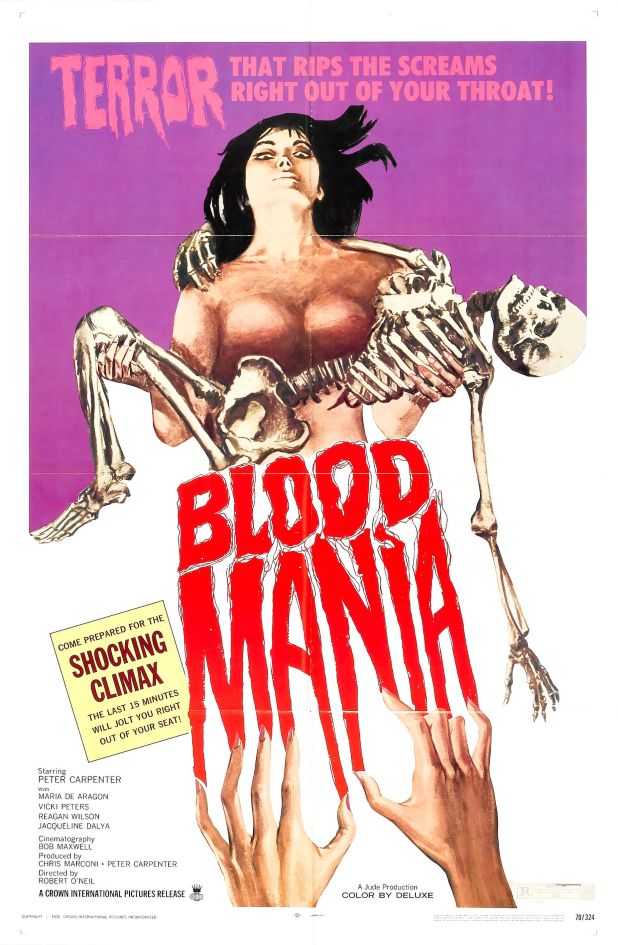
CHILLER THEATER MONTH: Blood Mania (1970)

EDITOR’S NOTE: Blood Mania was on Chiller Theater on Saturday, November 27, 1976 at 11:30 p.m. It was also on the show on April 14, 1979; December 20, 1980 and January 2, 1982.

Dr. Craig Cooper (Peter Carpenter) is overseeing the care of the dying Ridgeley Waterman (Eric Allison), who is tended to by his daughter Victoria (Maria De Aragon) and round the clock nurse Miss Turner (Leslie Simms).

Victoria has repeatedly tried to seduce the doctor, who has problems of his own. He used to perform abortions when that was illegal and he’s being blackmailed. He finally gives in to her and looks the other way when she poisons her father. Her sister Gail (Vickie Peterson) comes to contest the will, only to learn that she gets everything. She also has a would-be lover — maybe, it’s never outright said but come on — named Kate (Jacqueline Dalya), but once Gail hooks up with the doctor, she leaves. And this all puts Victoria from being bedridden over the will to absolutely a murderer when her sister reveals that she’s taken her doctor from her.

Then she paints in blood.

Shot in a home once owned by Bela Lugosi by Robert Vincent O’Neill, Gary Kent said of this, “Robert was a prop man to begin with. I had no idea he was a director. The next thing I knew he was doing it, and he called me in as a production manager. It was fun. He took it seriously, so you never got the feeling he was just in it for the bucks. I thought it just took him forever to get a shot. He was always fussing over it. It was murder. His movies were long and arduous, but nonetheless I had some affection for Robert.”

According to Leslie Simms, a year after production had commenced, she was called back to complete re-shoots for an alternate cut of the film intended for television broadcast. In order for the film to be shown on TV, the nudity and violence had to be cut. That left a lot of time. They added a subplot that has her nurse working with the blackmailer. Instead of the murders, we see Miss Turner report the killings to the blackmailer.

This movie also has Regan Wilson in the cast. She was Playboy‘s Playmate of the Month for October 1967. Those photos were taken to the moon inside the schedule of Apollo 12’s mission commander, Pete Conrad. Her co-star, Vicki Peters, was also the April 1972 Playmate of the Month.

You can also read Eric Wrazen and Bill Van Ryn‘s feelings on this movie.

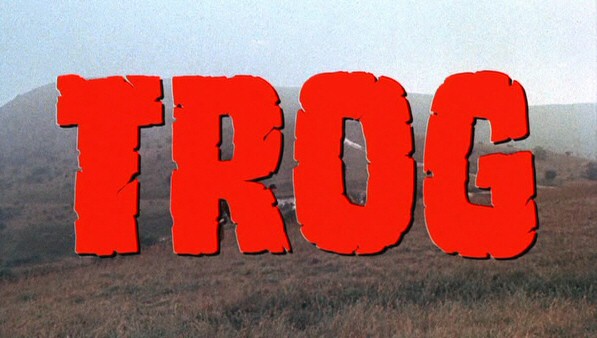
CHILLER THEATER MONTH: Trog (1970)

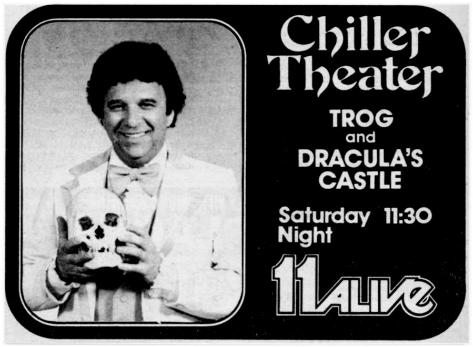
EDITOR’S NOTE: Trog was first on Chiller Theater on Saturday, November 18, 1978 at 11:30 p.m. It also aired on April 10, 1982.

Trog makes me sad. Beyond the fact that it feels a lot like King Kong or Son of Konga doomed monster from our past that just can’t survive in today’s horrible modern world—it’s also depressing at times to watch Joan Crawford act her heart out in a film where no one else can come close to her power.

That’s not to say this is a bad film. It’s delightful and well-directed by genre vet Freddie Francis (Tales from the Crypt and plenty of other wonderful Amicus portmanteau films). It’s also quick-moving and enjoyable.

But it’s still sad.

A troglodyte (TROG!) is found alive in the caves of England. Dr. Brockton (Crawford) has had some success communicating with him and sees him as the missing link. However, her neighbors do not like her having a monster in her house, mainly after it kills a dog when it steals his ball.

Local businessman Sam Murdock (Michael Gough, who appeared in many Hammer films and as Alfred in the 1980s and 1990s Batman films) worries that the creature will negatively impact local businesses. But he really has an issue with a woman being in charge.

Meanwhile, Trog undergoes multiple surgeries, which enable him to learn to communicate. In a trippy sequence, we see into his mind, which is filled with memories of the Ice Age and dinosaurs.

The court upholds Dr. Brockton’s goal of teaching Trog, so Murdock sneaks in and lets him loose. He kills several people, including the businessman, before taking a little girl and retreating to his cave. Dr. Brockton can communicate with Trog, and the girl goes free. Meanwhile, soldiers open fire on our titular caveperson, and he falls to his death, impaled on a stalagmite.

As Dr. Brockton leaves in tears, a reporter tries to interview her. She has no comment as she wanders away.

See? Depressing.

Due to the film’s low budget, Crawford used her own clothes. And it shows. She’s a beacon of fashion in a grimy town. She stands out like no one else. And speaking of suits, the one for Trog was left over from 2001: A Space Odyssey!

This was Crawford’s final film, but I don’t believe the TV show Feud: Bette and Joan. She’d continue to act afterward, appearing in an episode of TV’s The Sixth Sense called Dear Joan: We’re Going to Scare You to Death. If you’ve ever listened to My Life with the Thrill Kill Kult, that’s where the sample on the song “A Daisy Chain for Satan Comes From.”

PS: I would know none of this were it not for Bill from Groovy Doom.

I’m glad I watched Trog. But the sad ending — and thinking of Joan changing in her car during the breaks in filming — make me a little misty-eyed. That said, it’s one of John Waters’ favorite films, so there’s that.

CHILLER THEATER MONTH: The Blood Rose (1970)

EDITOR’S NOTE: The Blood Rose was first on Chiller Theater on Saturday, September 25, 1976 at 11:30 p.m. It also aired on October 1, 1977.

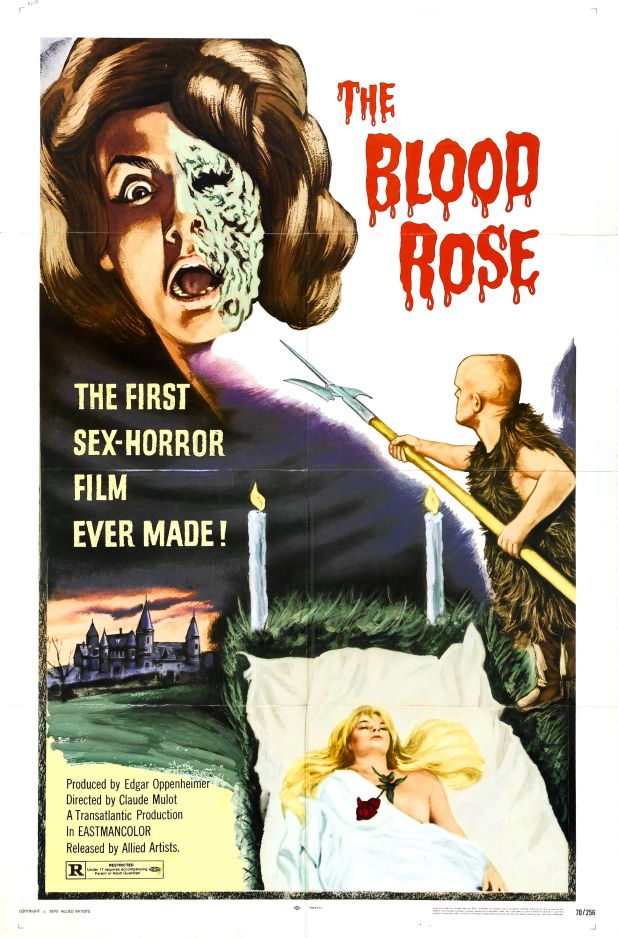
Directed and co-written by Claude Mulot (who sadly died at the age of 44), this is the story of Frederick Lansac (Philippe Lemaire). He’s a botanist, portrait artist and the owner of a beauty salon. After meeting Anne (Anny Duperey) at a dress ball and they are soon married. Somehow, some way, Anne gets her face shoved into a bonfire by the jealous Moira (Elizabeth Teissier) at one of Lansac’s painting shows, which is the wildest way to make a ripoff of Eyes Without a Face that doesn’t have Peter Cushing’s girlfriend have a studio light hit her in the face.

Lansac learns that one of his employees Dr. Rohmer (Howard Vernon), is a doctor who can only practice on criminals after an incident. Before you can say The Awful Dr. Orloff, they’re killing women to graft parts of their bodies to Anne’s face, who has gone into madness and also is having fantasies of her nurse Agnès (Michèle Perello) in scenes cut from the American version of this movie.

When a movie is sold as “The First Sex-Horror Film Ever Made!” it’s astounding that it aired on regular TV like Pittsburgh’s Chiller Theater. This isn’t afraid to get way weird, like Igor (Roberto) and Olaf (Johnny Cacao), two dwarf servants who dress in animal skins, randomly show up.

THE IMPORTANT CINEMA CLUB’S SUPER SCARY MOVIE CHALLENGE DAY 15: Dorian Gray (1970)

October 15: A Horror Film Set in the Fine Art World

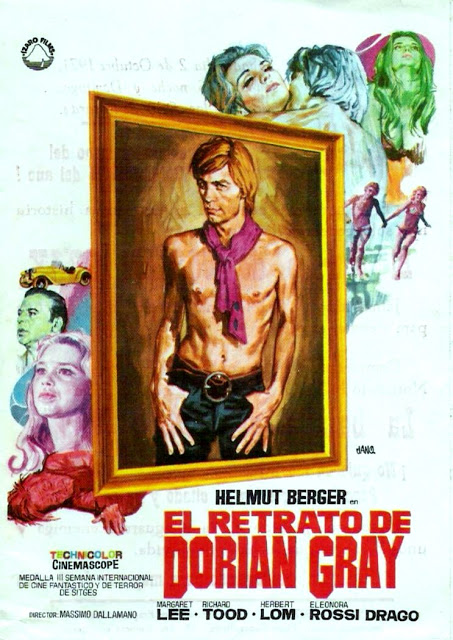
Massimo Dallamano — as Jack Dalmas — was the cinematographer for For a Few Dollars More and A Fistful of Dollars and also wrote and directed A Black Veil for LisaWhat Have You Done to Solange?What Have They Done to Your Daughters?Colt 38 Special Squad and many more. He also co-wrote this movie along with Marcello Coscia (The Living Dead at Manchester Morgue), Günter Ebert and Renato Romano.

Dorian Gray (Helmut Berger) once had his portrait painted by Basil Hallward (Richard Todd). The modeling session is interrupted by Henry Wotton (Herbert Lom) and his sister Alice (Maria Rohm), which sends Dorian into the evening, settling on a theater where he quickly mates with actress Sybil Vane (Marie Liljedahl) before abandoning her, which causes her to kill herself. Dorian won’t be young and vital forever, so why settle for anything?

He wishes that the painting could age for him and somehow, incredibly, it does. While the rest of his friends settle down, he’s still devoted to a lifestyle of excess in 1960s and 1970s London with all of the wild fashions that you need to make this movie incredible. Throw in a guitar score by Giuseppe De Luca and you have a freakout version of a classic novel made sleazy.

Is it any surprise that Harry Alan Towers produced this?

CHILLER THEATER MONTH: Hatchet for the Honeymoon (1970)

EDITOR’S NOTE: Hatchet for the Honeymoon was first on Chiller Theater on Saturday, April 30, 1977 at 11:30 p.m. It also aired on March 8, 1980 and August 8, 1981.

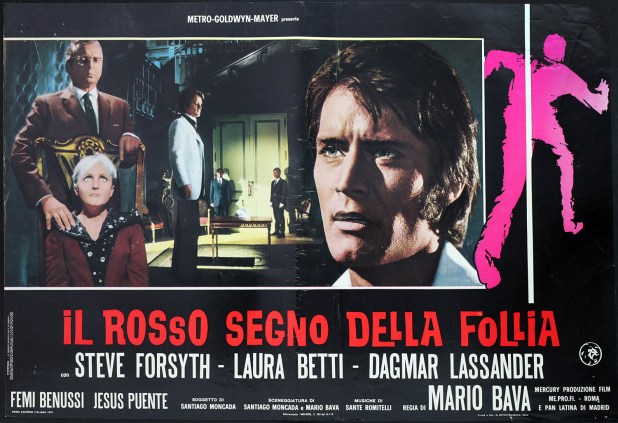
Do you need to love, trust and care about the hero of the movie? Mario Bava is here with Hatchet for the Honeymoon in an attempt to craft a story where the hero is the absolute worst person in the entire film.

Meet John Harrington. He’s 30, runs a bridal dress factory, lives in a gorgeous villa near Paris and kills young women to overcome his impotence and Oedipus complex. His wife, Mildred, refuses to divorce him. And he’s instantly smitten with Helen (Dagmar Lassander, Forbidden Photos of a Lady Above Suspicion, The House by the Cemetery), a young model who has come to replace a missing girl.

Why is she missing? She was one of the models at the salon who John took a liking to, giving her one of his dresses for her wedding. The moment she tried it on, he hacked her up with a meat cleaver, burned her corpse and used it to fertilize the plants in his greenhouse.

Inspector Russell knows that something isn’t quite right. After all, how can six models disappear from the same dress company? If only there was some evidence…

John, however, is falling in love with Helen. And he finally decides to do something about his wife. That something entails him putting on a wedding dress and killing her. But there’s one problem. Here’s where Bava twists the film from giallo into supernatural territory: she won’t stay dead.

While John can’t see or hear his wife, everyone else can. Even after burning her remains and placing them in a handbag, she keeps coming back. He takes the handbag with him to a club, where an attempt to bring another woman home fails when she sees his wife. Beaten by a bouncer and ejected, he cannot even use his charms to win over women. He throws his wife’s ashes into the night, but she remains with him

If John can’t be happy, at least he can murder Helen. He convinces her to wear a wedding dress and tells her that he never wanted to hurt her. She avoids the final blow of his cleaver, which unlocks a flashback where we learned the truth: John loved his mother and that love grew as he became the man of the house after his father’s death. But when she remarried — and started having sex again — he couldn’t take it and murdered her and her new husband. His mind erased the evidence until now.

Helen was an undercover cop all along, leading Inspector Russell and his men back to arrest John. While being transported to prison, he’s happy knowing that his many trials are over. Then, to his horror, he sees the handbag and notices his wife sitting next to him. Now, he’s the only person who can see her. She promised to be with him forever, even in Hell. He goes insane before accepting his fate.

Hatchet for the Honeymoon predates the slasher, yet many of its conventions can be found here and in other early Bava works. This film is a masterwork of both style and substance, with gorgeous fashion, sets and camerawork creating a gorgeous tableau. I love the scene where John uses Bava’s Black Sunday, playing on the TV, as an excuse for the screams that come from his apartment. And as his wife’s blood drips down onto the ground floor, it’s almost as if Bava dares you to empathize with a hero who is completely contemptible. What a predicament to be in!

This is part of the Nightmare Theater TV package, which also included Damiano Damiani’s The Witch, José Antonio Nieves Conde’s Marta, John Farris’ Dear Dead Delilah, Raúl Artigot’s The Witches Mountain, José María Zabalza’s The Fury of the Wolfman, Peter Sadsy’s Doomwatch, Francisco Lara Polop’s Murder Mansion, Carlos Aured’s Horror Rises from the Tomb and The Mummy’s Revenge, Joe D’Amato’s Death Smiles on a Murderer, Claudio Guerí’s The Bell from Hell and Amando de Ossorio’s The Night of the Sorcerers. Chiller Theater showed every single one of them.

CHILLER THEATER MONTH: Horror of the Blood Monsters (1970)

EDITOR’S NOTE: Horror of the Blood Monsters was on Chiller Theater on Saturday, July 16, 1977 at 11:30 p.m. It had the TV title Vampire Men of the Lost Planet

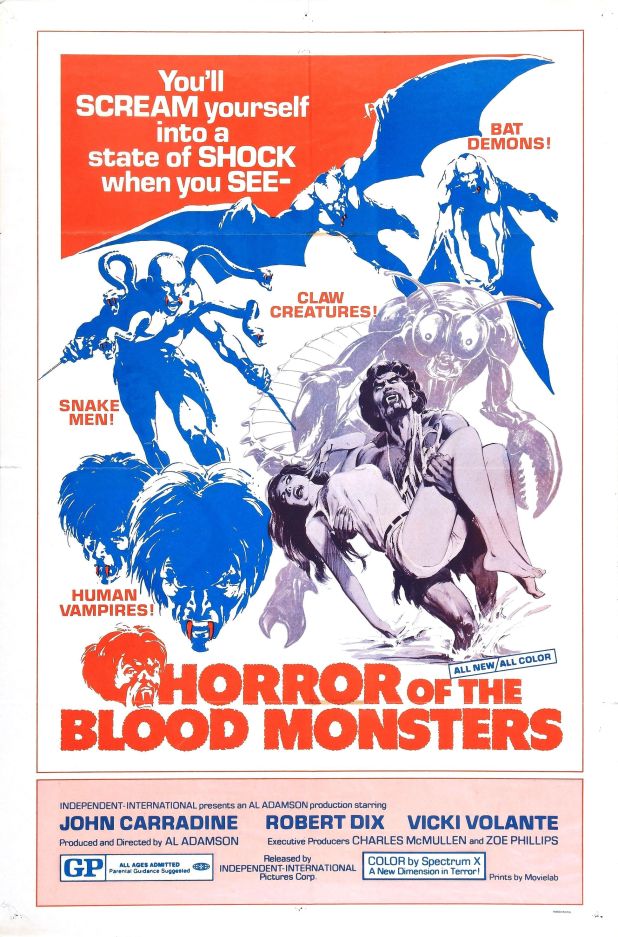
Al Adamson was remixing movies back in 1970. Invasion of the Blood Monsters has footage from Robot MonsterUnknown IslandOne Million B.C., the Filipino movie Tagani and The Wizard of Mars. By the time it was ready for drive-ins and theaters, that black and white footage looked old. Adamson used a process called Spectrum X that made everything a single color. It’s really strange when mixed with full color footage yet I kind of enjoy it.

Exploitation heroes like Gary Graver and Adamson play vampires in the beginning as we listen to Brother Theodore tell us what has happened to our home world and why a rocket must go into space and John Carradine will lead humans in their quest to save Earth.

Jennifer Bishop is the beautiful girl who will help them fight snake men, lobster people and more vampires — hey, Bud Cardos — and oh yeah, bat people! Sam Sherman produced this and it was originally started in 1966 with reshoots in 1970. It was getting renamed all the way up until it was a Star Wars clone — well, in title only — under the AKA Space Mission of the Lost Planet.

I just read a bad review of this movie and it made me dislike the person who dare say anything mean about this film. From the moment the Independent International logo shows up, I was happy. Like, deliriously joyous. How can you not love a movie like this? What’s next, people don’t like Brain of Blood?

VCI BLU RAY RELEASE: The Only Way (1970)

While Nazis deport the Danish Jews to extermination camps, the Danish people decide to fight them. One of the people in danger, Lillian Stein (Jane Seymour), wants to leave but her father (Ebbe Rode) wants to remain. Yet there comes a time when they must leave and it will take selling everything important to them and people giving their lives to get them away from this horror.

Directed by Bent Christensen and written by John Gould, this was Seymour’s first film and wasn’t available in the U.S. It’s a great lesson in the past and one that we should keep in mind for now, because I always believed that these things couldn’t happen any longer and today, I think that they could happen at any time. We need to study the past so that we avoid the future that is coming.

You can get The Only Way from MVD.

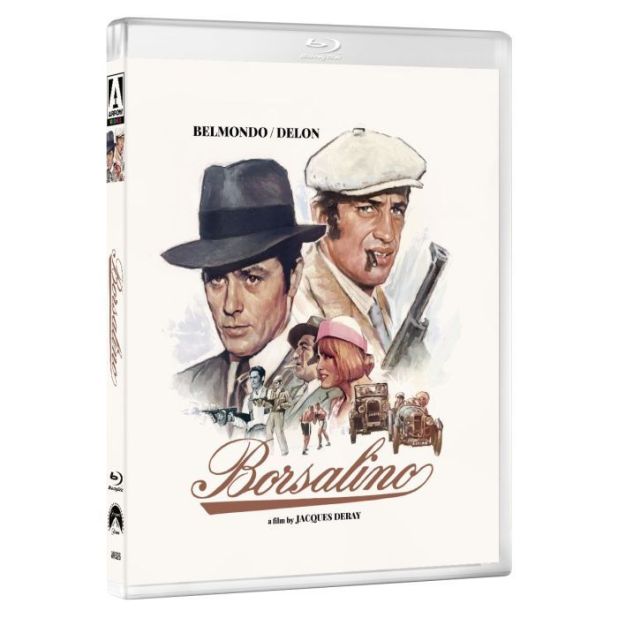
ARROW BLU RAY RELEASE: Borsalino (1970)

Roch Siffredi (Alain Delon) — and yes, this is where the porn star got his name — is out of the big house and looking for his lover Lola (Catherine Rouvel). She’s now with François Capella (Jean-Paul Belmondo), another criminal, and while they fight at first they soon become partners.

Rinaldi, a lawyer who works for Marello (Arnoldo Foà) and Poli (André Bollet), helps them take over the fish market, which is fine by the rules of organized crime, but when they take over the meat market, it’s revenge time, They kill Poli, but Rinaldi is murdered by a killing machine called The Dancer. Before it’s all over, Siffredi and Capella are the new kings, but when Capella tries to leave it all behind, he’s killed. Finally, Siffredi decides that his friend had the right plan and gets out of town.

This movie happened because Delon wanted to make a movie with Jean-Paul Belmondo. By the time he was promoting the movie, he wasn’t so high on working with the actor, saying “We are still what you in America call pals or buddies. But we are not friends. There is a difference. He was my guest in the film but still he complained. I like him as an actor but as a person, he’s a bit different. I think his reaction was a stupid reaction… almost like a female reaction. But I don’t want to talk about him anymore.”

That’s because they had a deal to have their names as equals, yet Delon’s production credit came up first. There was even an agreement to split the number of close-ups.

As for the movie, Delon’s inspiration was the crime team of French gangsters Carbone and Spirito. There was an idea to have it be about them, but they were worried about using real gangsters.

The title comes from the company who made the fedoras that gangsters wore, Borsalino. Of course, when the movie was released, there was a revival of these hats.

The Arrow blu ray release of this movie has new audio commentary by film scholar Josh Nelson, features on the music, the costumes and Belmondo, a trailer, an image gallery, an illustrated book, a double-sided poster, and six art cards. You can get it from MVD.

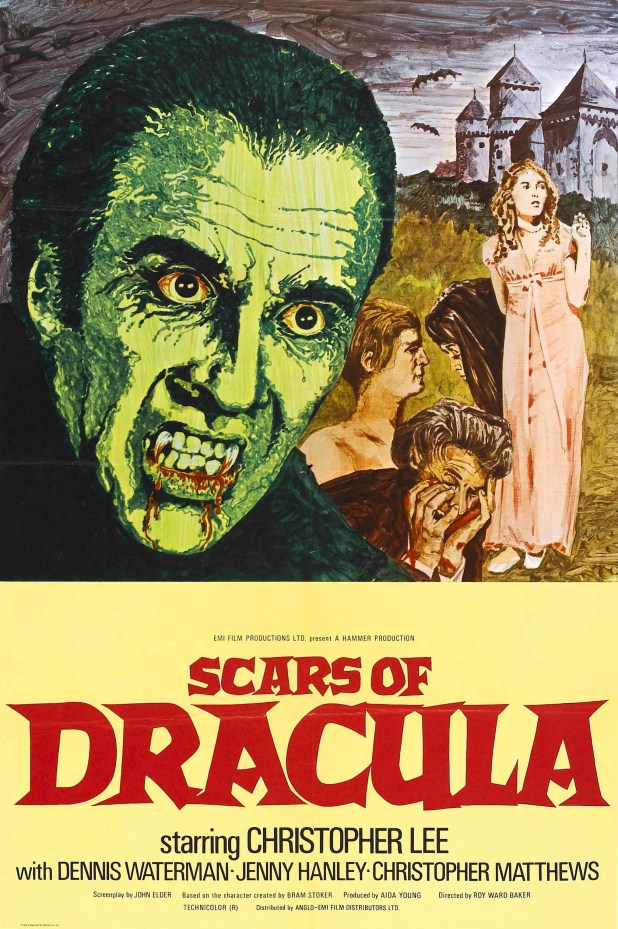
CHILLER THEATER MONTH: Scars of Dracula (1970)

EDITOR’S NOTE: Scars of Dracula was first on Chiller Theater on Saturday, September 28, 1974 at 11:30 p.m. It also played on February 21, 1976 and December 16, 1978.

Directed by Roy Ward Baker and written by Anthony Hinds, this Hammer film starts with Dracula’s dead body on a stone plinth in a chamber in his castle, defeated after Taste the Blood of Dracula. A bat flies in, gives him blood and Dracula is back and he even survives his castle being burned down. Weirdly, that’s the same footage from that movie played backwards because, you know, the budget.

He soon hs a new servant named Klove (Patrick Troughton) and a mistress named Tania (Anouska Hempel). Well, he did, because she tries to get with his new captive Paul Carlson (Christopher Matthews), so Dracula stabs her and tosses her into acid because, you know, he’s Dracula.

Paul’s brother Simon (Dennis Waterman) and his fiancee Sarah Framsen (Jenny Hanley) come to save him but you know how smart Dracula is about these things, even if Klove chooses Sarah over him, which gets him punished.

This one has perhaps the dumbest death for Dracula ever, as he holds a metal spike and gets struck by lightning. He catches on fire and just keeps burning, but come on. That doesn’t kill a vampire. That ending is forgotten about by Dracula A.D. 1972.

Warner Brothers and other American major studios didn’t want to deal with Hammer’s Sir James Carreras, so the budgets were cut to $200,000. Many think that the decline in Hammer movies starts here.

Christopher Lee said, “I was a pantomime villain. Everything was over the top, especially the giant bat whose electrically motored wings flapped with slow deliberation as if it were doing morning exercises.” Sure, he was sick of playing Dracula. You would be too if you played him four times in the same year in Count DraculaOne More Time and Taste the Blood of Dracula. He almost didn’t do this and would have seen John Forbes-Robertson take the role earlier. He eventually played the count in The Legend of the 7 Golden Vampires.

If you look close, Peter Cushing is one of the milkmaid in the opening village scenes. There was a delay on Scream and Scream Again and Lee dared him to sneak into the movie.