Batgirl (1967)

Detective Comics #359, the first issue of January 1967, featured “The Million Dollar Debut of Batgirl!” They were getting Batgirl into fan’s minds before she would debut on the show, even if there had already been another Batgirl, Bette Kane, who first showed up in Batman #139. Post-Crisis, her name would be changed to Flamebird.

The show was suffering from lower ratings, but producer William Dozier felt that if they introduced a younger female, it would do two things: introduce some new blood and refute any worries that Batman and Robin were gay.

ABC executives needed to be convinced that Yvonne Craig was the right person for the role, so this pilot — where she would fight Killer Moth (Tim Herbert), same as the first time she showed up in comics — was ordered. She also meets Batman (Adam West) and Robin (Burt Ward), setting up the next season of the show.

You can also spot future Peach Pit owner Joe E. Tata as one of the henchmen, as well as TV vet Guy Way and stuntman Al Wyatt Sr.

In an interview, Craig said, “…while Batgirl is an active type, she is also very feminine. None of that smacking people low with karate and kung-fu. In my opinion, three karate chops, and you’ve lost your femininity. If a girl goes on a date and a fellow gets fresh, she can’t very well give him a karate chop for a good-night. But if she ducks, she’s simply adept and feminine. Batgirl will be aiding and assisting Batman and Robin, not constantly rescuing then. I like that, too.” That’s because Batgirl wasn’t allowed to throw punches, as TV executives thought that the show Honey West got bad ratings because all of her brawling made her less feminine.

In spite of adding the sexier Batgirl, as well as Eartha Kitt taking over from Julie Newmar as Catwoman and female villains like Marsha, Queen of Diamonds (Carolyn Jones), Olga, Queen of Cossacks (Anne Baxter), Nora Clavicle (Barbara Rush), Minerva (Zsa Zsa Gabor) and Lorelei Circe (Joan Collins), the show fell out of favor, ending in the third season.

You can watch this on Daily Motion.

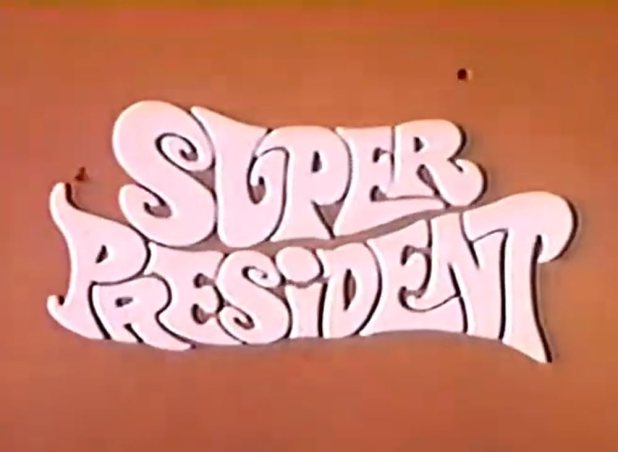
Super President (1967-1968)

When this show aired, it upset so many people. The National Association of Broadcasters said: “An all-time low in bad taste, with the President of the United States in a Superman role. NBC was responsible for this direct ideological approach to totalitarianism. We fear that there may be other broadcasters who are irresponsible enough to keep it in circulation.”

The idea of a super-powered American President seems dumb, but four years after the death of Kennedy and as America seemed to be on the verge of falling apart, maybe it seemed like a great plot for a cartoon. At least the DePatie–Freleng studio, who also made The Pink Panther cartoons, were commissioned to make Warner Brothers specials and also animated the lightsabers for Star Wars, thought so.

The President of the United States, former astronaut James Norcross, is voiced by Paul Frees, whose voice has been in almost everything you’ve ever watched. Other voice talent included Ted Cassidy, June Foray and Don Messick, whose voices would be in the few things that Frees didn’t work on.

Super President got his powers from a cosmic storm, just like the Fantastic Four, giving him increased strength and the ability to change his molecular composition like Metamorpho, plus he has a cave and special vehicle called the Omnicar like Batman and his Batcave and Batmobile.

Perhaps this cartoon, while forgotten today, inspired Calvin Ellis, the Kryptonian President of the United States on Earth-23 who is also the Superman of that reality (and just happens to look like Barack Obama).

You can watch all of the episodes of this show on YouTube.

Wonder Woman: Who’s Afraid of Diana Prince? (1967)

Eight years before Wonder Woman became a series with Linda Carter — after Cathy Lee Crosby appearing in the TV movie — William Dozier, who also worked on the 1967 Batman series — tried to get Wonder Woman on the air. We’re all the better that it never happened.

In this four-minute screen test, Ellie Wood Walker (Targets, Easy Rider) is Diana Prince and TV veteran Maudie Prickett is her mother, Hippolyta. They live in the big city, together, with mother needling daughter about growing too old without getting married with lines like, “How do you expect to get a husband flying around all the time?”

The narrator, who was Dozier, says that Wonder Woman has the strength of Hercules, the wisdom of Athena and the speed of Hermes — who is she, a female Captain Marvel? — but she only thinks she has the beauty of Aphrodite. This leads to her staring in the mirror, as we see her as she sees herself, as  “Oh, You Beautiful Doll” plays. In the mirror is Linda Harrison (Nova from Planet of the Apes) dressed in the famous Wonder Woman costume, as we get a full minute of her nearly touching herself.

It’s as if the women’s liberation revolution was never happening.

This was written by Stan Hart, Stanley Ralph Ross and Larry Siegel. Hart and Siegal were writers for Mad Magazine and would go on to be writers for The Carol Burnett Show. Ross worked as a voice actor and wrote several episodes of Batman, as well as developing the 70s Wonder Woman show, developing the Monster Squad and That’s My Mama series and becoming an ordained minister and marrying TV Robin Burt Ward to his third wife. He was also Ballpoint Baxter on the Batman show, a name he’d used on other projects, as well as the writer and producer of 200 songs, owned nine comedy clubs, two baseball teams and came up with the phrase “The thrill of victory and the agony of defeat” while working for ABC Sports.

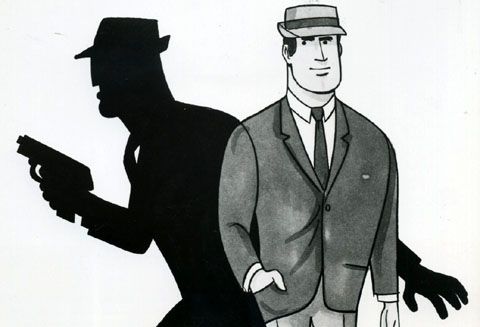
At one point, Dozier had three TV series on the air: Batman, The Tammy Grimes Show and The Green Hornet with plans to make a Dick Tracy series. The Chester Gould newspaper strip had been the original character that ABC wanted to make a show about before settling for Batman. The pilot for that show, “The Plot to Kill NATO,” had Dick Tracy (Ray MacDonnell) battle Mr. Memory (Victor Buono). Yet by 1967-1968, Batman was down from two days a week to one, Tammy Grimes had been cancelled and The Green Hornet wasn’t as big as the campy DC series. Dick Tracy would never be picked up, despite a fully produced pilot.

You can watch this on YouTube.

The Killing Game (1967)

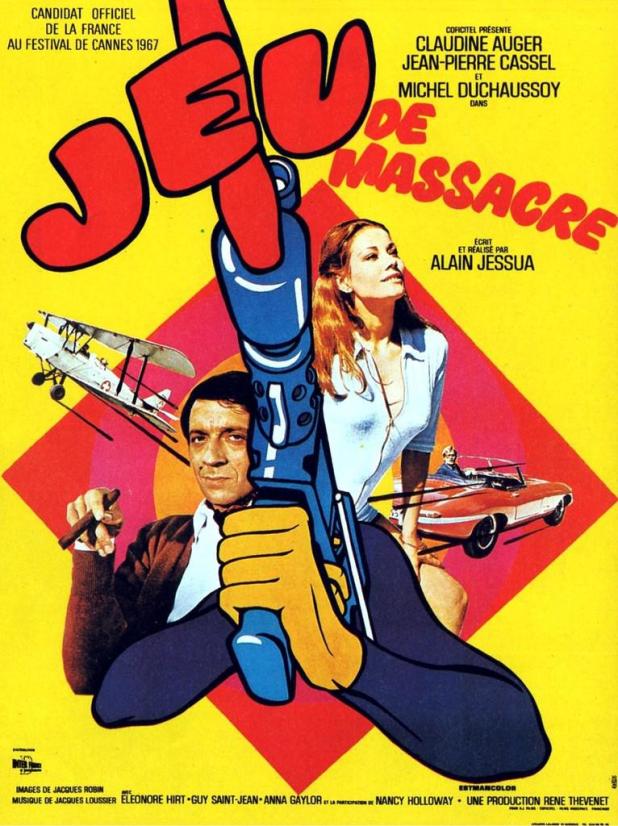
Directed and written by Alain Jessua, The Killing Game is a story about fantasy, the world of comic books, intersecting with our boring reality. Pierre (Jean-Pierre Cassel) and his wife Jacqueline (Claudine Auger) are collaborators on a series of popular comic books — they are drawn by a team of artists led by Guy Peellaert, who painted the cover for Bowie’s Diamond Dogs and whose painting, Frank Sinatra, which featured the headline “Frankie Goes Hollywood” which inspired the band’s name — and have been hired by a wealthy patron named Bob Neuman (Michel Duchaussoy). He wants them to transform him into a Diabolik type gentleman thief, which is quite different from his real life, where he’s controlled by his mother Genevieve (Eleonare Hirt).

Yet when we first meet Pierra and Jacqueline, they’re destitute, unable to make their bills and superfan Bob comes along at the right time, giving them an escape from the poorhouse. Bob is able to tell some wild stories about his life, yet he seems like a manchild who has barely left the house. He flies the couple to his Swiss estate and they go about recreating him in comic book form as The Killer of Neuchatel.

Auger is best known for playing Domino in Thunderball, but in my head, she’s a giallo queen of sorts, appearing in Bava’s nascent slasher A Bay of Blood and in one of the meanest of the yellow films, Black Belly of the Tarantula. Jacqueline is a woman trapped in her marriage, her writer husband believing he has control of her, whether its through his concepts and words or by just being a traditional male role as the husband. Yet her artwork is what makes his ideas so appealing and she’s a gorgeous and intelligent woman who begins to expand her agency through flirtation with Bob, despite how potentially dangerous he is.

I loved the look and feel of this movie, arriving as a Euroart film with hints of the aforementioned giallo and some Eurospy as well. While it didn’t intend to, it reminds me of the constant battle of who created things when it comes to the Marvel method, where Stan Lee has claimed creation of everything while artists like Jack Kirby and Steve Ditko were given at the most a sentence to go by and returned with fully formed stories and pictures that Lee would put the words to. It’s difficult to say who was the voice of making the damn thing, though my visual side has always been with the artists.

This hasn’t been released in the U.S., surprisingly, and is a great find for cinephiles.

MOVIES THAT PLAYED SCALA: The Trip (1967)

Thanks to the British Film Institute, there’s a list of films that played Scala. To celebrate the release of Severin’s new documentary, I’ll share a few of these movies every day. You can see the whole list on Letterboxd.

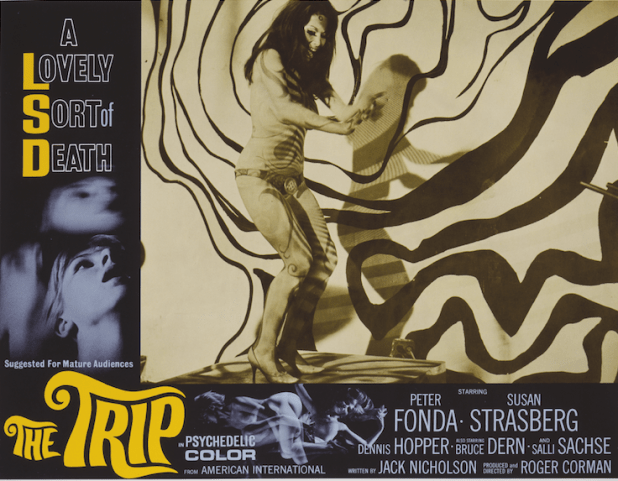
Directed by Roger Corman, written by Jack Nicholson and released by American-International Pictures, The Trip cost $100,000 to make and brought in $6 million dollars. Hollywood was listening, because within the next year, movies for the love generation were all over the place*.

In fact, seven years after this movie, AIP’s Samuel Z. Arkoff said, “Everybody else picked it up; and as late as last year they were still coming out with dope pictures. And there isn’t one single company that made a buck on dope pictures. The young people had turned off.”

You know what makes Paul Groves (Peter Fonda) try LSD? He gets his heart broken by his wife (Susan Strasberg) and joins John (Bruce Dern) to take his first trip. He runs in fear from John as the trip over takes him, wandering through a nightmare world of sex, death, commercialism and mental transformation.

Corman took LSD himself to understand what it should look like on film, which ends up being quick edits, paint on nude women and small people trying to frighten the viewer.

While you can see the International Submarine Band, with Gram Parsons on vocals, the music in the movie comes from The Electric Flag. Music is a big part of this movie, as Dern’s line “Turn off your mind, relax, and float downstream” comes directly from The Beatles “Tomorrow Never Knows.”

Other folks to look out for include Salli Sachse (How to Stuff a Wild BikiniWild in the Streets), Judy Lang (Count Yorga), Luana Anders (The Pit and the Pendulum), Dick Miller (I mean, it is a Corman movie after all), Michael Nader (so many beach movies), Michael Blodgett (Lance Rock from Beyond the Valley of the Dolls), Sunset Strip tastemake and KROQ DJ Rodney Bingenheimer, Peter Bogdanovich, Randee Lynne Jensen (so many bikers movies), Joyce Mandel (Return of the Ultra Vixens) and Angelo Rossitto (everything from Freaks to playing The Master in Mad Max Beyond Thunderdome).

The Trip attempts to film the unfilmable and for that, we should celebrate it.

*For example, the next year, Peter Fonda, Dennis Hopper, Jack Nicholson and Luana Anders would all appear in Easy Rider.

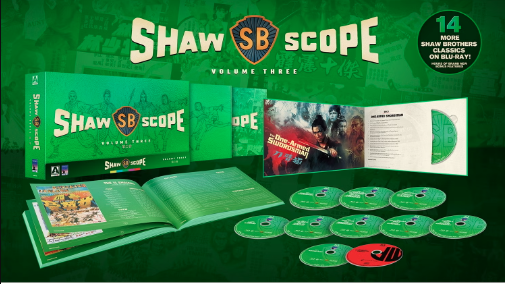
ARROW VIDEO SHAW SCOPE VOLUME 3 BOX SET: The One-Armed Swordsman (1967)

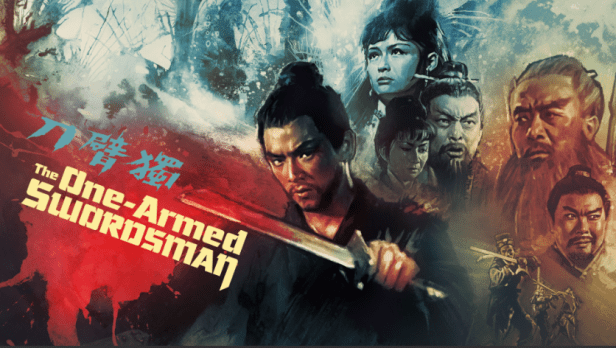
The first Hong Kong film to make HK$1 million at the box office, this movie make a star of Jimmy Wang, who plays Fang Kang. He’s a poor boy who has been trained by Qi Ru Feng (Tien Feng) after his father, the servant Fang Chang (Ku Feng) gave his life to save the master. To get past the guilt that he feels, Qi Ru Feng has been teaching the boy. However, he can’t escape the other students, who abuse him because he’s an orphan with no money. It gets so bad that he leaves the school and when his master’s daughter Pei Er (Angela Pan) tries to stop him, they have a sword battle that causes her to cut off his right arm. He falls off a bridge to what should be his death, but he is saved by Xiao Man (Lisa Chiao Chiao).

As she brings him back to health, they fall in love. He remains depressed, however, that he can no longer fight. She finds a martial arts manual that teaches him a new style that no one can defend against, using his one arm.

Back in the martial world, the master is celebrating his birthday and has invited all of his students, as he plans to choose a successor. However, Long-Armed Devil (Yeung Chi-hing ) and the Smiling Tiger Cheng Tian Shou (Tang Ti) have turned this into an opportunity to murder everyone.

Despite the promise to Xio Man, our hero re-enters the martial world to save his master. Nearly every student is already dead and the master is wounded, but with just one arm, Fang Kang is triumphant. Yet instead of taking back the school, he returns back to his small farm.

Chang Cheh went on to great fame, as did Shaw Brothers, after this film. As for Jimmy Wang, he would play several other one-armed characters in films such as Zatoichi and the One-Armed Swordsman, Return of the One-Armed Swordsman, One-Armed Boxer, that film’s sequel Master of the Flying Guillotine, One-Armed Swordsman Against Nine Killers and One Armed Swordsmen, which he co-directed and co-starred in with David Chiang, both playing one-armed killers. Yes, Jimmy Wang could beat you up with one arm literally tied behind his back.

To announce the new era of wuxia, Chang Cheh and Jimmy Wang made a hero so resilient that even losing the appendage that enabled him to be so dangerous can’t stop him. Everyone else had to catch up.

The Arrow Video Shaw Scope Volume Three box set has a brand new 4K restoration of The One-Armed Swordsman as well as commentary by David West, author of Chasing Dragons: An Introduction to the Martial Arts Film; a newly filmed appreciation of the One-Armed Swordsman series by film critic and historian Tony Rayns; interviews with Wang Yu, Chiao Chiao and Ku Feng as well as Daniel Lee, who directed the remake; an appreciation of director Chang Cheh’s work by film historian Sam Ho; One-Armed Side Hustles, a brand new video essay by Brandon Bentley on Wang Yu’s career playing amputee protagonists; theatrical trailers and trailers for other films by Chang Cheh films.

You can get this set from MVD.

RADIANCE FILMS BLU RAY RELEASE: Eighteen Years In Prison (1967)

Trying to survive post-war Japan, Kawada (Noboru Ando) and Tsukada (Asao Koike) are caught by the military stealing copper wire. While Kawada is arrested and goes to prison, Tsukada escapes and starts a gang with the money he’s made. As he suffers the cruel attention of Warden  Hannya (Tomisaburo Wakayama), Kawada dreams of getting out of prison and the revenge he must take.

Directed by Tai Kato, this was followed in the same year by a sequel, Choeki juhachi-nen: Kari shutsugoku. Noburo Ando volunteered for a suicide frogmen unit during World War II, but that ended before he could give his life. In 1952, he formed his own Yakuza family, the Ando-gumi, which had three hundred members at one point. He was sent to jail for six years after sending a hitman to kill a rival and when he got out, he dissolved the gang and went into acting.

He said, “In Japanese, the only difference between yakuza and yakusha — an actor — is one hiragana character. All yakuza have to be actors to survive.” He was also a singer and played himself in movies about his life, but American audiences probably know him best for New Battles Without Honor and Humanity and Graveyard of Honor.

As Kawada comes to terms with what the war has made him do, he rises to the defense of the underdog in jail life, all while Tsukada is the opposite, now firmly embracing power and ruthlessness.

Art imitates life, as Kawada also feels that he must atone for sending the brother of Hisako (Hiroko Sakuramachi) on a suicide mission during the war. Noburo Ando left prison to meet with the mother of the man he had killed and asked for forgiveness. In this movie, he tries for the same by attempting to mentor her brother Shuichi (Masaomi Kondo) when he is placed in the same cell.

When Kawada learns that his former partner hasn’t opened a market to help people but instead a brothel — and caused the suicide of a former lover — he must leave behind prison and the mentorship of the Yakuza elder Osugi (Michitaro Mizushima).

This is a movie that shows just how bad Japan was at the close of the war and how it had to both forgive itself and find a new path, even if it was one person doing so.

The Radiance Films blu ray of Eighteen Years In Prison has extras like an appreciation by critic and programmer Tony Rayns, a visual essay on Japanese prison films by author Tom Mes, a trailer, a reversible sleeve featuring original and newly commissioned artwork by Time Tomorrow and a limited edition booklet featuring new writing by Ivo Smits and an archival interview with Noboru Ando by Mark Schilling. It’s a limited edition of 3000 copies, presented in full-height Scanavo packaging with removable OBI strip leaving packaging free of certificates and markings.

You can order this from MVD.

CHILLER THEATER MONTH: Zontar, the Thing from Venus (1967)

EDITOR’S NOTE: Zontar, the Thing from Venus was on Chiller Theater on Saturday, September 7, 1968 at 11:20 p.m., Saturday, April 18, 1970 at 1:00 a.m. and Saturday, November 27, 1971 at 1:00 a.m.

Zontar, the Thing from Venus is one of the many remakes of Roger Corman movies — this one is It Conquered the World — directed by Larry Buchanan.

This starts at a dinner party. That’s where NASA scientist Dr. Keith Ritchie (Anthony Huston) reveals to Dr. Curt Taylor (John Agar) that he’s been secretly meeting with an alien from Venus named Zontar who is coming to solve all of Earth’s issues. A dinner party would not seem to be the time to do this.

Zontar ends up being a three-eyed, bat-winged, skeletal black creature and I don’t want to be one of those people that judges people by their outside appearances, but I don’t think Zontar has any intention of making the world a better place.

Not even when Zontar starts possessing people with lobster injecto-pods does Ritchie think this friend is a horrific alien monster. No, it takes his wife Martha (Patricia De Laney) dying before he does something about it. Scientists are really smart and also so dumb.

You can watch this on Tubi.

CHILLER THEATER MONTH: Son of Godzilla (1967)

EDITOR’S NOTE: Son of Godzilla was on Chiller Theater on Saturday, February 23, 1974 at 1:00 a.m. and Saturday, August 16, 1975 at 11:30 p.m.

Toho’s A-list was all working on King Kong Escapes while Godzilla got what was left behind, just like what happened with Ebirah, Horror of the Deep. It’s the first movie where Godzilla’s son Minilla appears, a character created not for kids but for young Japanese women on dates who adore kawaii — or cute — versions of characters.

Minilla is discovered within his egg buried deep in the Earth, his crying disrupting a weather control system — well, that seems like a bad idea — that scientists are setting up on Monster Island, of all places. Some giant bugs called Kamacuras (Gimantis in America) try to eat the egg and Godzilla shows up to save the child and decimate those annoying insects.

Minilla grows to half our hero’s size and while he can only blow smoke rings, he’s still willing to fight a giant spider named Kumonga to save some humans, who respond to this kindness by freezing the island so that they can escape. Godzilla says, “Screw this,” and goes to sleep.

When this was released in Italy, it was titled Il Ritorno di Gorgo (The Return of Gorgo), which is an absolute slap to to the green face of Godzilla, seeing as how Gorgo is an absolute ripoff of the original film.

UNSUNG HORRORS HORROR GIVES BACK 2024: El Enigma del Ataud (1967)

Each October, the Unsung Horrors podcast does a month of themed movies. This year they will once again be setting up a fundraiser to benefit Best Friends, which is working to save the lives of cats and dogs all across America, giving pets second chances and happy homes.

Today’s theme: Spain

Only a Coffin is also known as Les Orgies du Dr. Orloff and yes, that’s the title I prefer.

Howard Vernon wasn’t supposed to play Dr. Orloff in this, but once you realize that it has a lot of the same locations as The Awful Dr. Orloff and that, well, everyone just wanted him to be Dr. Orloff again, it makes sense.

He gathers all of his equally horrid relatives to his castle to tell them that he’s dying of cancer. And PS, he’s spent all of the family fortune. That said, he’s insures himself for millions and tells them that only one of them can get it at which point he kills himself.

The family covers it all up just in time for nephew Daniel (José Bastida) to get into bed with his secretary Judith (María Saavedra) and his poor, innocent wife Greta (Danielle Godet) to discover them. His body disappears as well — is this a giallo? — and then Greta thinks that she has found Orloff’s exhumed body before he attacks her.

Only Pablo (Adolfo Arlés), Daniel’s brother, believes her. So when he digs up Orloff, he finds his sibling’s body and…someone else. Someone not Dr. Orloff.

As you expect, Dr. Orloff is using this night to kill everyone he ever wanted to kill. Would we expect anything less? Well, a little, as this is a Santos Alcocer movie (he also made El Coleccionista de cadáveres, which was released in the U.S. as Cauldron of Blood). Which means it’s fine, but if Jess Franco made it, it would live up to that Orgies of Dr. Orloff name.

They tried, however, by adding BDSM inserts of a masked man and three naked women being tortured in scenes that have nothing to do with the plot. I love this idea and wish that movies I have no interest in watching but have to — holiday movies, romantic comedies — had random moments of gratuitous nudity and non-sex sex.

You can download this from the Internet Archive.